







(Most images via The Lucid Nightmare and John Kenneth Muir)
Surveying the Gen X landscape and the origins of geek


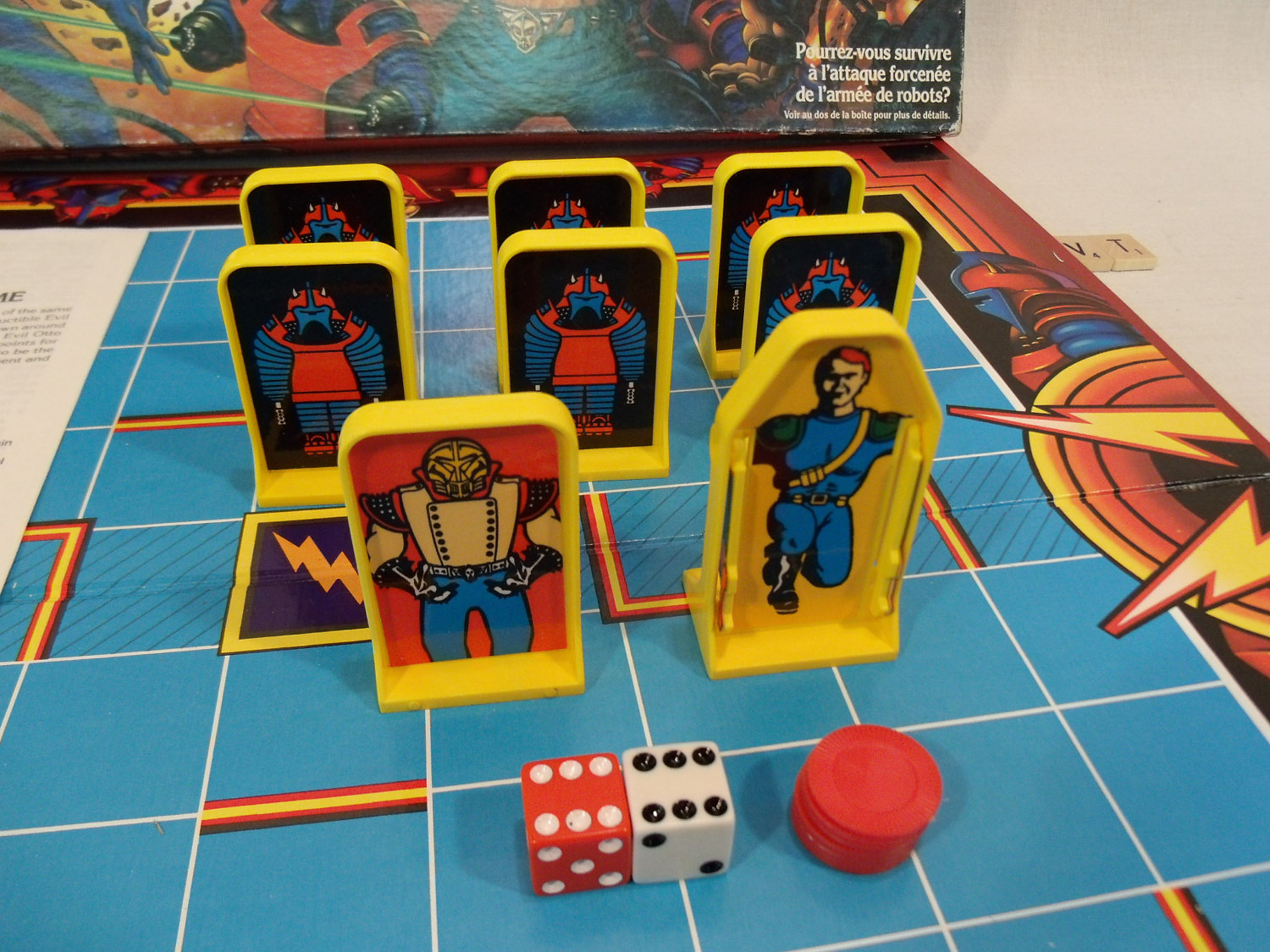
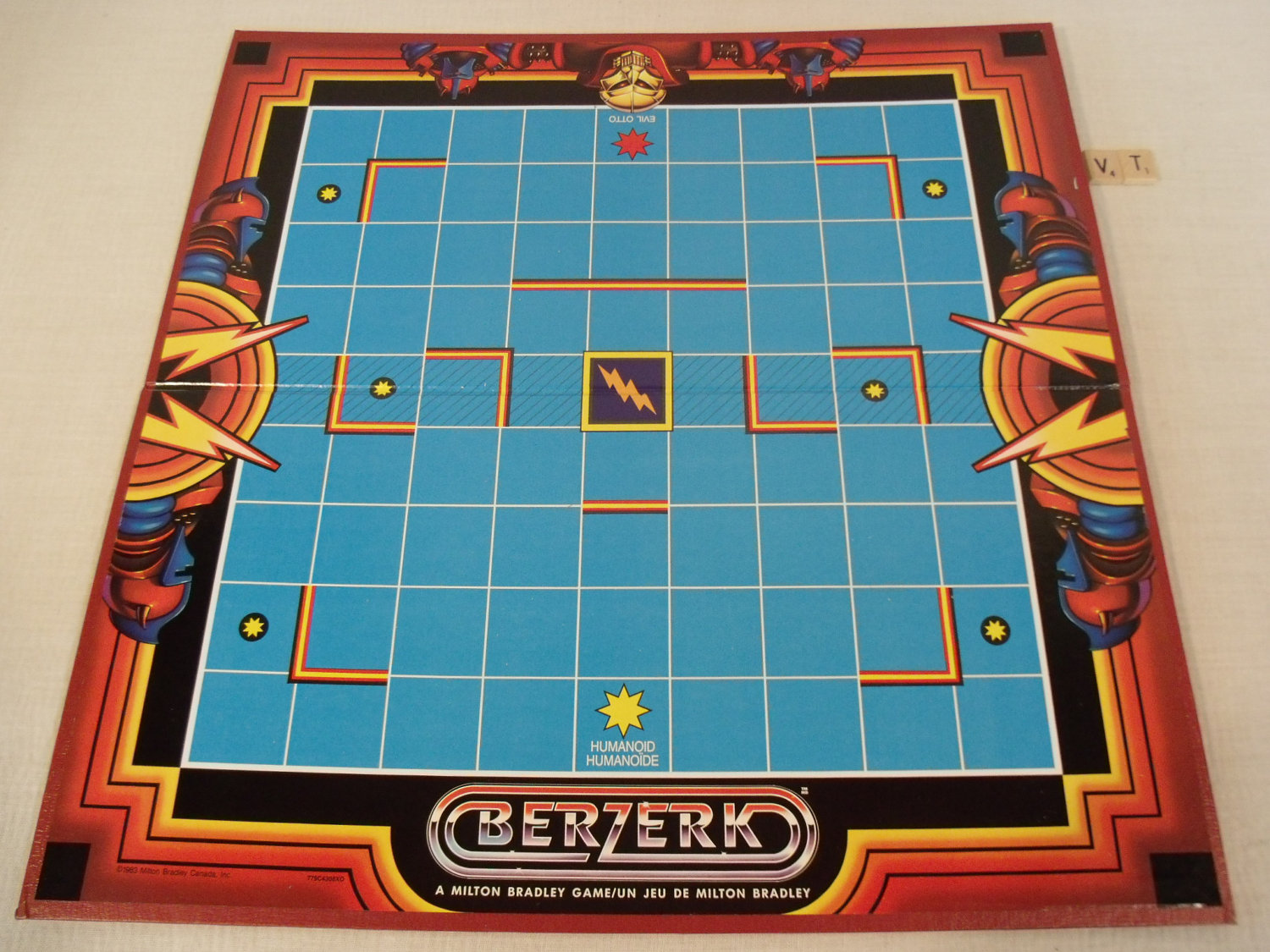
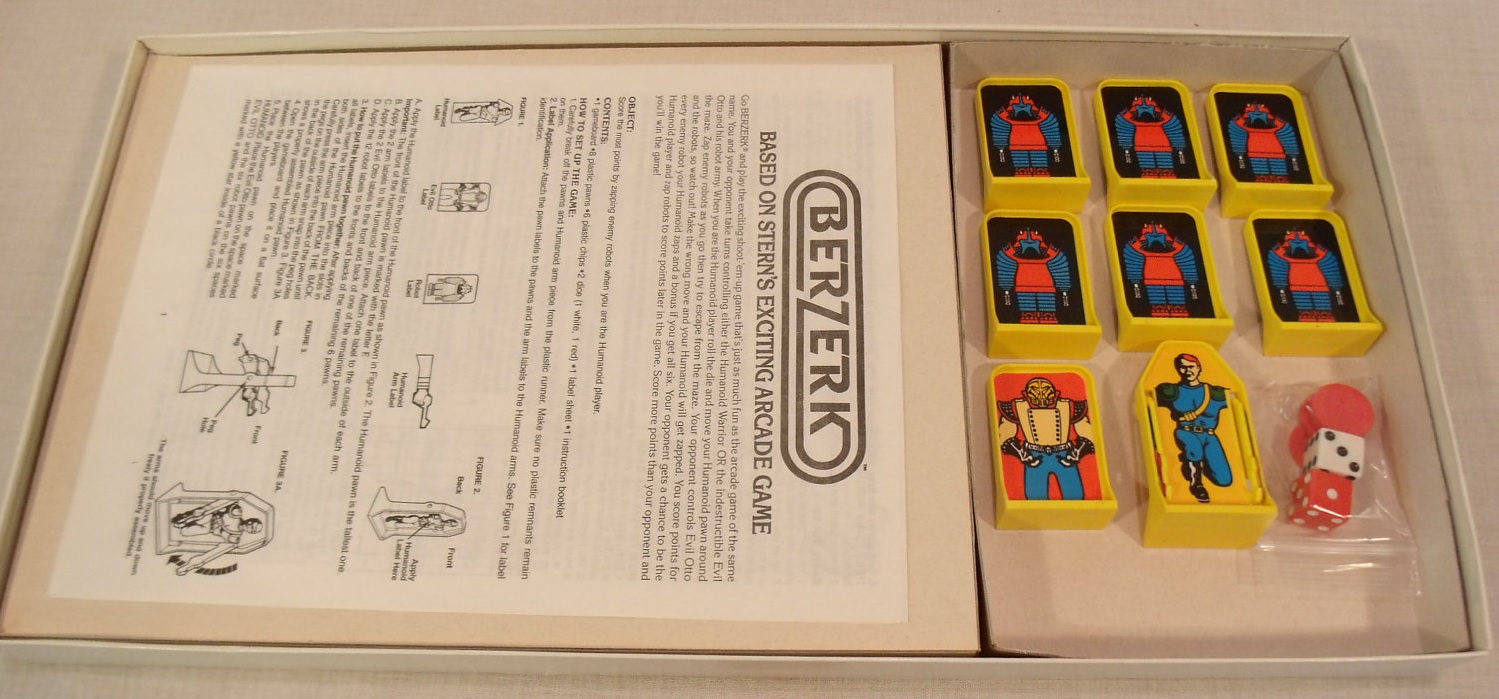


I know pop culture treasure when I see it. Look at that cover art! From the inside of the box: “Go BERSERK and play the exciting shoot-em-up game that’s just as much fun as the arcade game of the same name…”
You “shoot” your opponent by pressing down on the back of the game piece, activating laser-toting arms that swing up to knock over the enemy. (See a close-up detail of the maneuver in the last photo.)
Even though I’d love to play the game now, or at least sit down and analyze it as if I were a paleontologist and it were a well-preserved Velociraptor skeleton, in 1983 it would have been a far distant second to Berserk on a console or in an arcade. Hell, Berserk was already three years old in ’83, so I would much rather have been playing Atari’s Star Wars or, if I could find it, Discs of Tron.
And that’s what’s so curious. Themed tabletop games were meant to extend the experience of the product they referred to (i.e. The Black Hole: Space Alert Game or Star Wars: Escape from Death Star Game), but Stern’s Berserk, like nearly all Golden Age video games, had no real story or environment or universe to extend—the joy was only in playing for as long as possible. Berserk had no franchise, either, unlike Pac-Man, Donkey Kong, or Frogger, all of which had board games (and cartoons, etc.) named after them.
Tabletop games are making a comeback today, thanks in part to a diversifying gaming culture (inspired and celebrated by Wil Wheaton’s Tabletop), and thanks in part to the exhaustion starting to creep into our eyes and brains from staring at screens for so many hours every day.
It’s nice to see and touch a real game board and sit next to people in physical space. It’s nice to talk to the people you’re sitting next to, not just about the game you happen to be playing, but about whatever comes to mind as you all sit there together feeling grateful that you have the friends you have and that you’re able to be together once in a while, even if it’s only for a few hours.
Incidentally, Milton Bradley’s Berserk isn’t even listed on Board Game Geek.

I remember Dr. Brothers mostly for her witty cameos on various TV shows of the day, including The Love Boat, WKRP, and Happy Days, as well as her many appearances on The Tonight Show and several game shows.
But she was a real psychologist (with a Ph.D. from Columbia)—the first to use mass media to tackle everything from sex to suicide—and hosted several advice/discussion shows from the late 1950s through the ’70s. She died, at age 85, on May 13. (Read her obituary at the New York Times.)
The photo above, courtesy of Jon Peterson, shows Brothers in a 1980 TV appearance promoting the TSR board game Fantasy Forest.

At a time when D&D and role-playing were decried as tools of Satan, Brothers defended the practice and D&D in particular. In a 1984 radio interview with Neil McKenty, Brothers describes herself as a “consultant for TSR” and applauds D&D for being a “cooperative game” in which “everybody works together to overcome obstacles.”
Playing the game, she says, is a mentally healthy activity that demands intelligence, expands the imagination, and promotes joy. She even mentions Gary Gygax by name!
Brothers gave serious advice about touchy subjects and was a brilliant woman (an expert on boxing, among other things) who realized that taking herself too seriously would put off the people who needed help the most.
Lawful good human clerics can’t do much better than that.
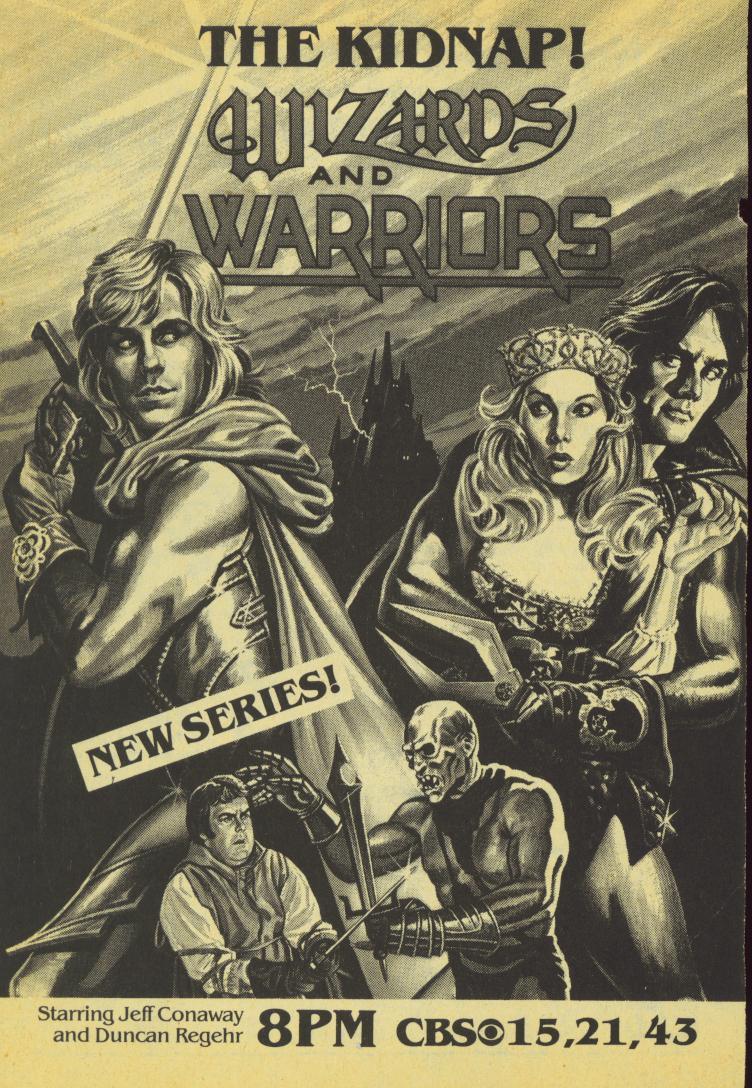
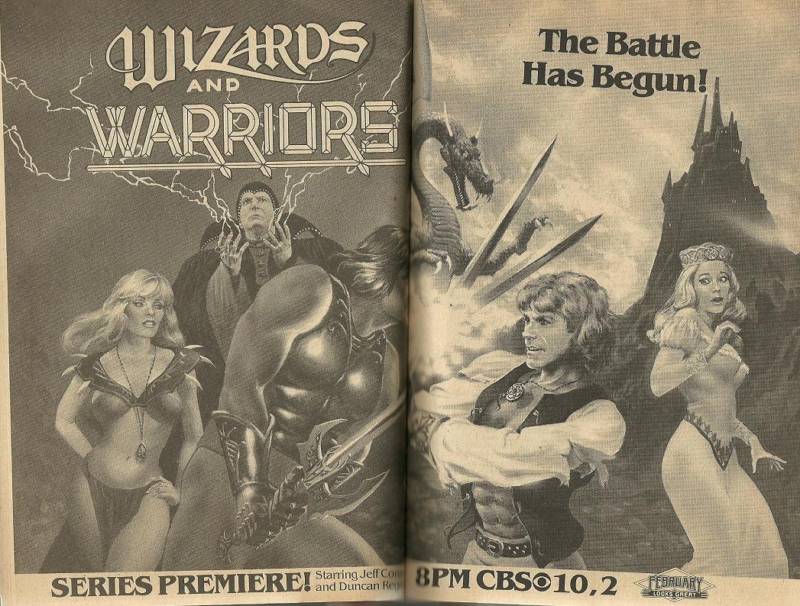
Real, yes. Good? No. Wizards and Warriors was developed and produced by Don Reo, a comedy veteran who had previously worked on M*A*S*H and Private Benjamin. He describes the origin of the show in a 1983 issue of Cinefantastique:
“I think the problem that most people have with fantasy is that so much of it is very grim,” said Reo, who got the idea for the show when his kids introduced him to Dungeons and Dragons. “I’ve gone to see films like EXCALIBUR, CONAN and CLASH OF THE TITANS, and those pictures were really somber. There just were not any lead characters that had a sense of humor, and when they tried it on NBC with FUGITIVE FROM THE EMPIRE, the show was so grim and boring that I was lost after the first five minutes.”
Actually, that grimness is precisely what drew us to fantasy. There was enough fluff and meandering optimism in the ’80s. Surely Reo knew how hugely successful John Milius’ Conan the Barbarian had been. Was he unfamiliar with the popularity of Robert E. Howard and Frank Frazetta, the godfathers of the grim, bloody, Romantic fantasy hero? Even The Lord of the Rings, the cornerstone of the fantasy genre, is an epic adventure as well as a sobering work about the nature of evil and the horror of war. The good-hearted humor in the series was not comedy but comic relief. Tolkien, Howard, and Frazetta were and are the main inspiration for D&D.
It takes a stroke of genius to make the fantasy-comedy combination work. The only screen example I can think of is The Princess Bride. Yes, Monty Python and the Holy Grail gets more brilliant each time I see it, but it’s pure satire. Maybe satire is what Reo was shooting for on Wizards and Warriors. He missed. (Today, he’s a writer and producer on Two and a Half Men.)
Reo mentions a show called Fugitive from the Empire, a pilot that premiered in April of 1981. The full title was The Archer: Fugitive from the Empire, a.k.a. The Archer and the Sorceress. From what I can tell, this was the first attempt at a feature length, live-action sword and sorcery movie produced for TV. The first post-D&D feature film in the same genre was Hawk the Slayer (1980).
As of now, you can watch the first episode of Wizards and Warriors here. Fugitive from the Empire is here.
(TV Guide images via eBay)
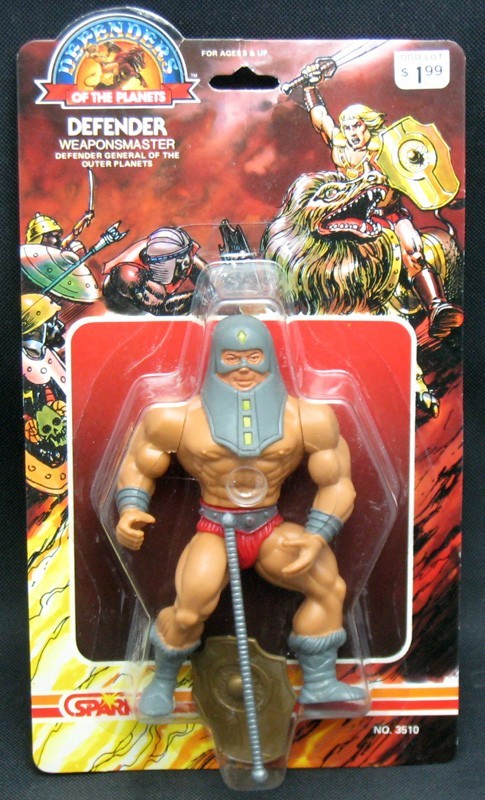
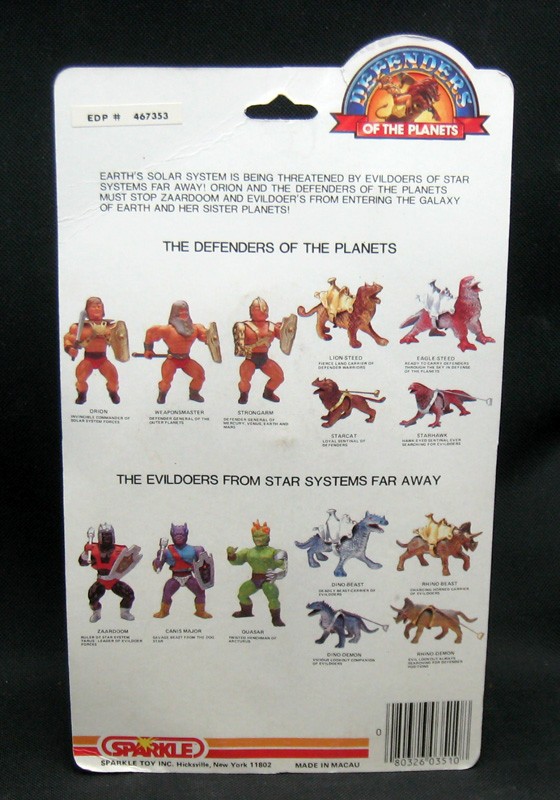
They’re not Masters of the Universe. They’re not Warriors of the Galaxy. They’re not Super Team of the Universe. They’re Defenders of the Planets!
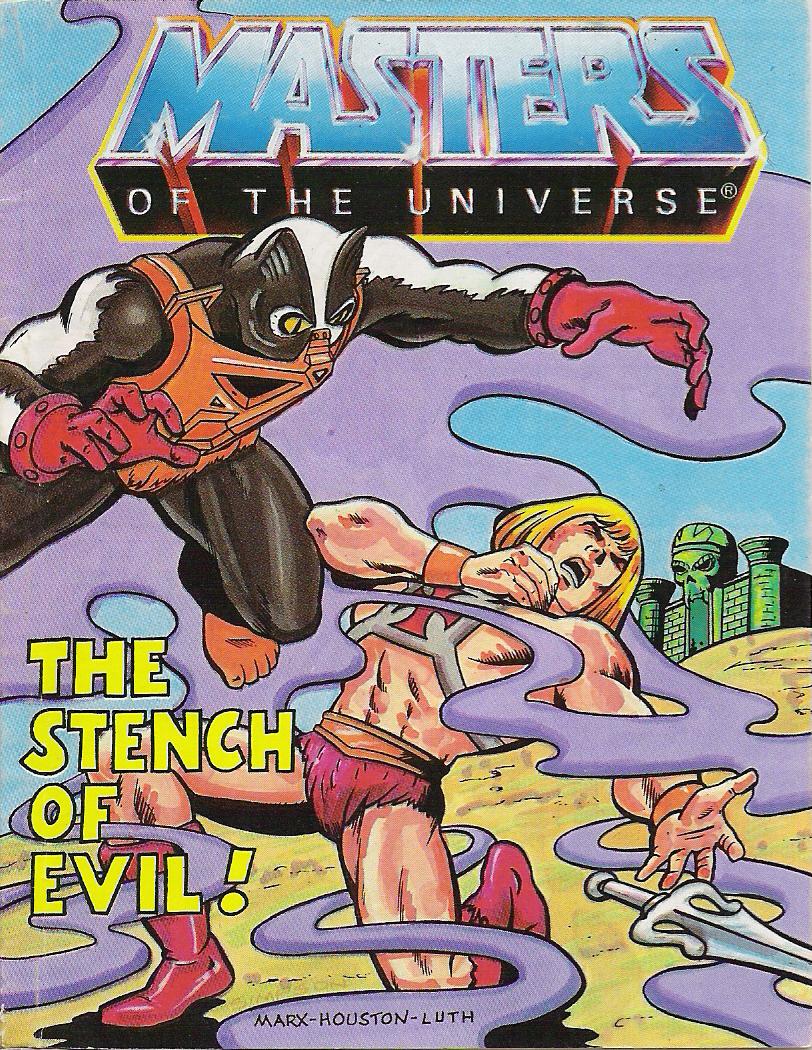
I wrote a piece for UnderScoopFire! that’s running today. It must be smelled to be believed.

If this is Escape from New York playing in New York, that’s pretty cool. Even better if it’s Manhattan.
Sign me up for Firecracker, also from 1981: “She’ll mix seduction with destruction in the screen’s first erotic Kung Fu classic.”
(Photo via Daniel Aull/Flickr; video via Shout Factory)
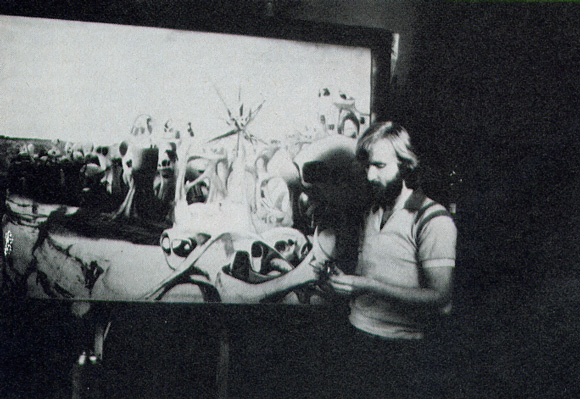
Above: Cameron paints the hero’s village—a beautiful, surreal design—from BBTS.
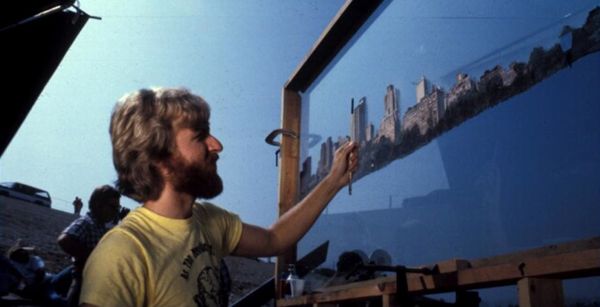
Below: Cameron painting the skyline for Escape from New York.
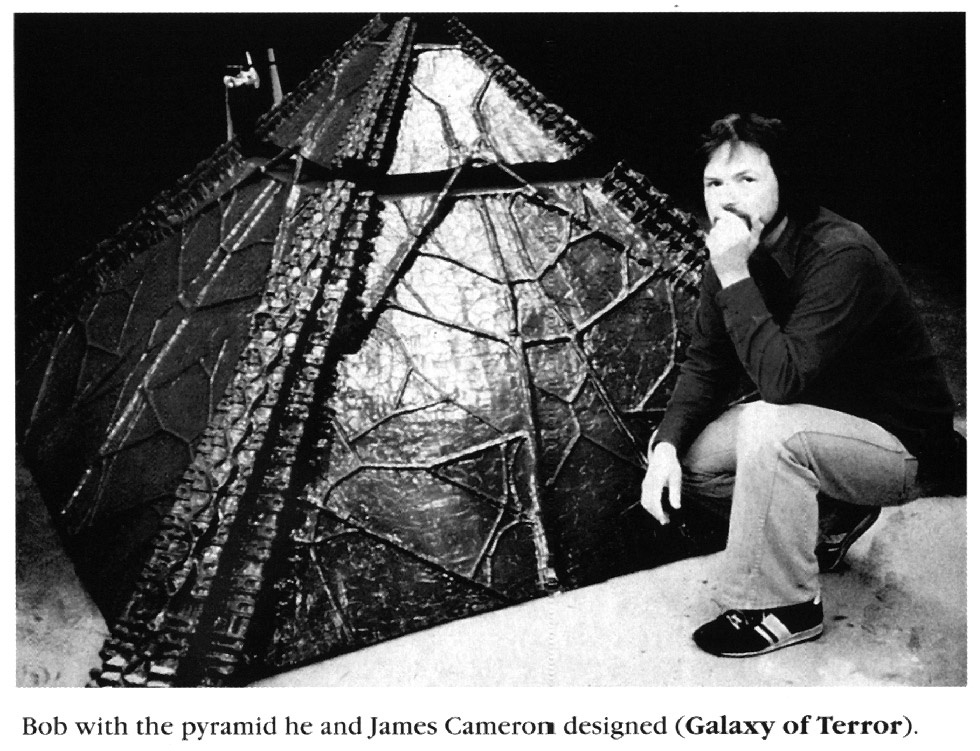
And here’s a short magazine blurb on Galaxy of Terror. The man squatting next to the pyramid is Robert Skotak. The two also worked together on Battle Beyond the Stars and Escape from New York, and Cameron later hired Skotak as visual effects supervisor for Aliens, The Abyss, Terminator 2: Judgement Day, and Titanic.
Cameron remembers his friends, I’ll give him that, and Aliens is the greatest sci-fi action movie ever made.

(Images via CHUD.com, Ain’t it Cool News, and Atomic Donkey)


Chuck Comisky was the special effects supervisor on Roger Corman’s Battle Beyond the Stars (1980), a fun, clever sci-fi adaptation of The Magnificent Seven. His interview defines what was great about B movies when the people who made them had the integrity and talent to turn serious time and money constraints into lasting artistic triumphs, many of the productions outdoing their big budget counterparts. Here’s Comiski summing it up:
And what we’re doing is we’re substituting ingenuity, hard work, and a little bit of common sense for a big budget. When you don’t have money and you don’t have a big budget, it forces you to think creatively. You have to say, “How the hell are we gonna’ get the shot and make it look good: We don’t have any money to do it with.” So then you find yourself manufacturing some of your models out of greeting card racks and terrariums and developing systems… to avoid matte problems.
Comiski has some curt words for the first art director on the film, who “never took the trouble to look at the [spaceship] models and try to match up the interiors to the ships.” Comiski and his crew had to sort all of that out in addition to doing all the effects. The first art director was fired before shooting started and Comiski hired a replacement: James Cameron*. It was Cameron’s big break, and he went on to do some really brilliant work for other notable B features, including Escape from New York and Galaxy of Terror (both from 1981).
Comiski has great things to say about the visual effects in Star Wars, but he pans The Black Hole and Star Trek: The Motion Picture for being bloated and unimaginative—for substituting money for “creative imagination.” Fantastic Films asks him if he would have done more elaborate effects if the budget had been bigger. “No,” he says. “If I had more money, the one thing I would do is pay my people more money.”
Cameron, after Titanic made all that money and won all those Oscars, would return the favor and hire Comiski as visual effects supervisor for Ghosts of the Abyss (2003) and, later, as 3D specialist on Avatar (2009). The irony is almost painful: Avatar is the most bloated sci-fi production in history, a textbook case of throwing money at effects to gloss over a hackneyed script. I won’t say it doesn’t look like shiny candy, or that it didn’t make a gazillion dollars, but I’d much rather rewatch Battle Beyond the Stars. It’s a superior film with, yes, better special effects.
_________________________________________
*In The Directors: Take One, Volume One (Ed. Robert J. Emery), Cameron says: “I was actually hired by the head of visual effects on a movie called Battle Beyond the Stars… Then they fired the art director because he wasn’t prepared… So I said, `Oh, I’ll do that.’ So I became the art director on the film.”
The Wikipedia entry on Battle Beyond the Stars reads, in part: “after the original art director for the film had been fired, Cameron became responsible for the special effects in Battle Beyond the Stars, or, as Cameron later put it, `production design and art direction.'” This is incorrect. Comiski was in fact responsible for special effects, which are not the same thing as production design or art direction.
Charles Breen appears to be the art director who was fired. Breen was assistant art director on, go figure, Terminator 2: Judgement Day.
(The first installment of Fantastic Films #20 is here.)


Both photos are dated October 22, 1977. I’m proud to say that I now have three shots featuring kids wearing Star Wars attire with wood paneling in the background. See the first one here.
(Photos via fotofraulein/eBay)

 2 Warps to Neptune