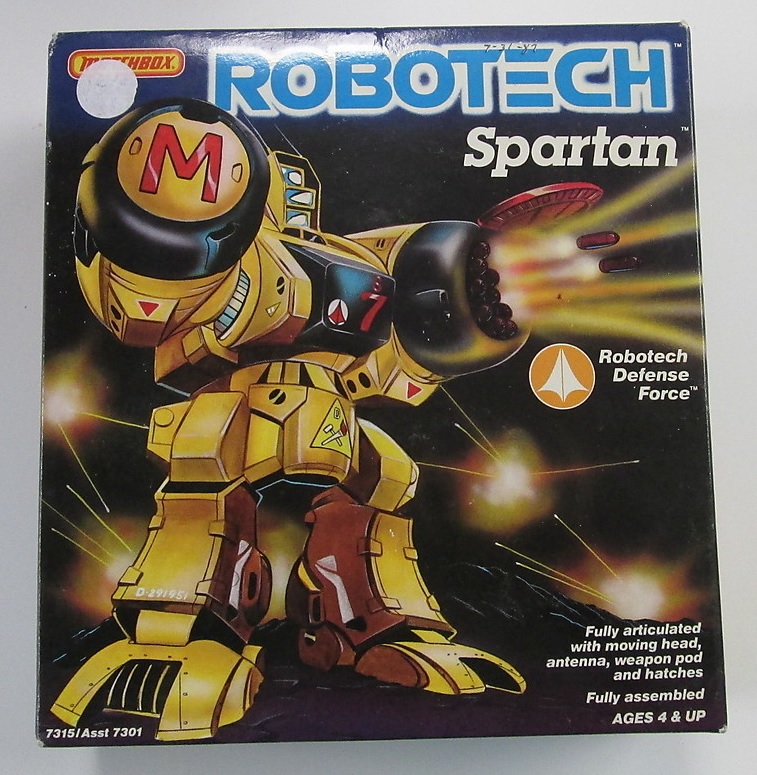
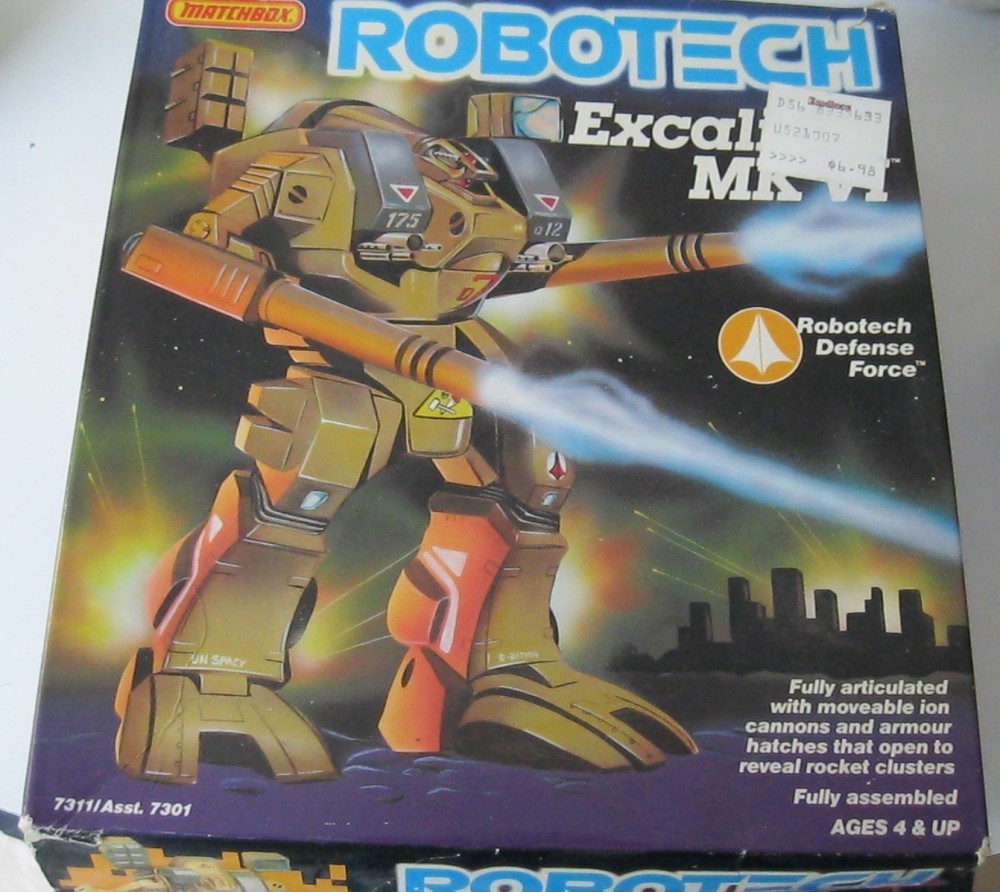
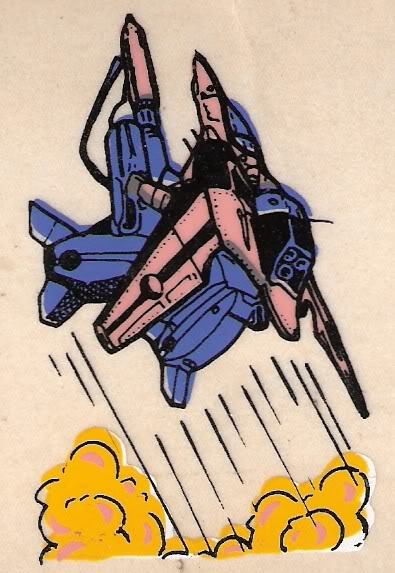
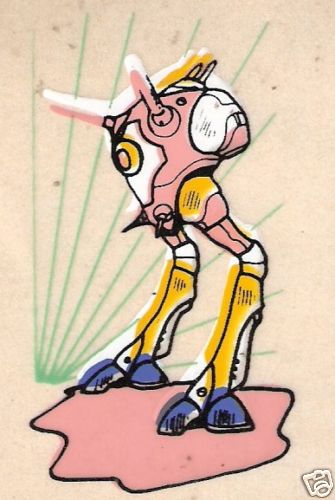
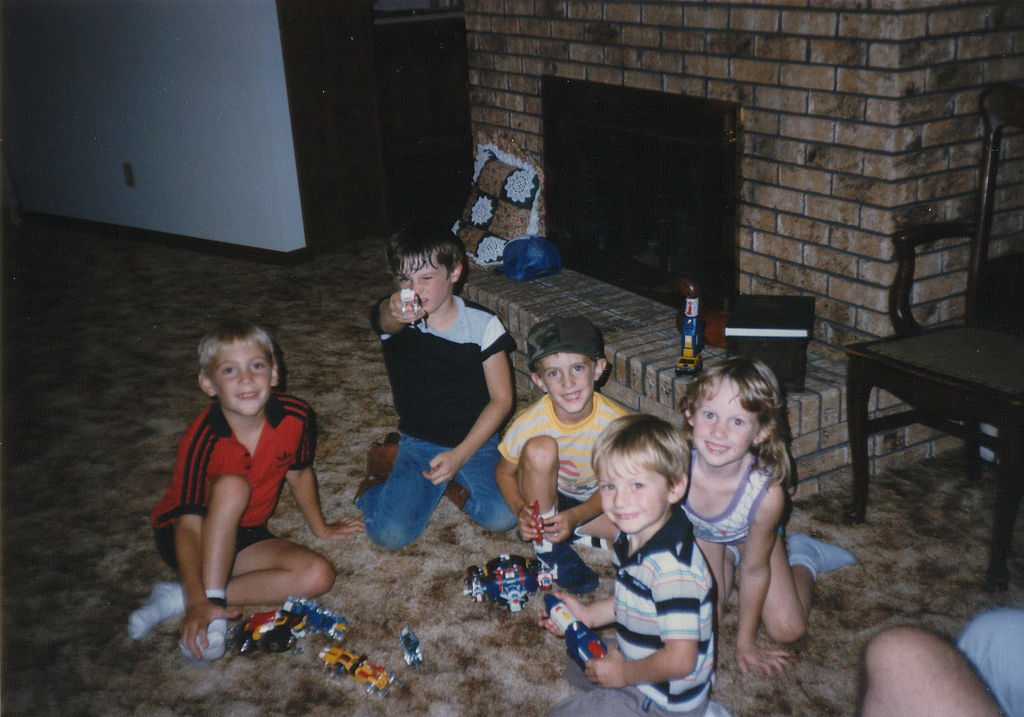
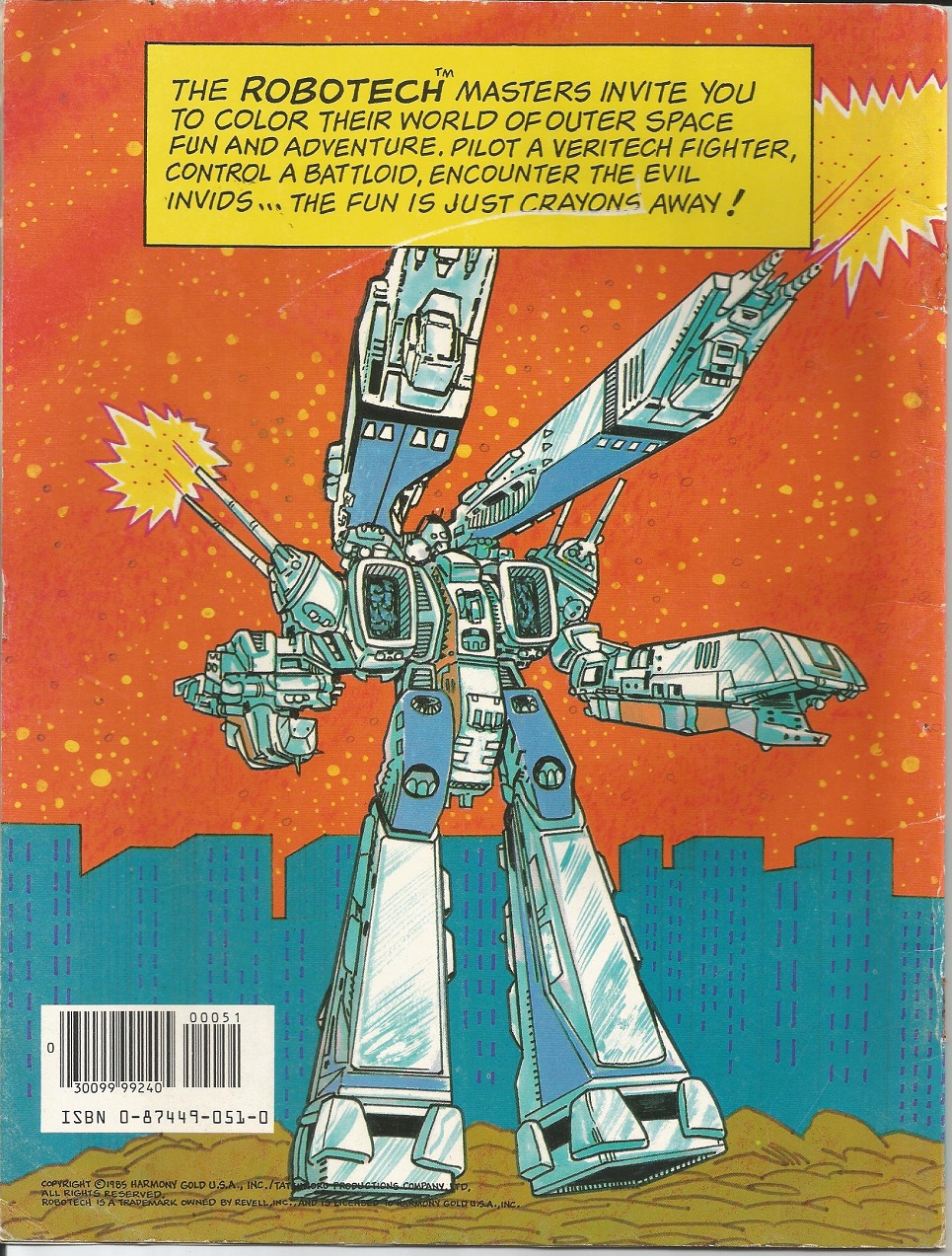
I’m not sure how sturdy the Matchbox toys were, because I never had any, but they sure do look good. The Robotech action figures are nice, too—fully articulated, like G.I. Joe. The line was not marketed or stocked well, and simply couldn’t compete with the Transformers.
The big addition to Mysterious Castle is the cheesy dragon and his/her lair. The mat is also a little different. Beyond that, it looks like all the pieces have been recycled from previous Multiple sets, including Castle Attack and Castle Warfare (1964), Battle of the Knights (1965), and Carry Case Castle (1969). The “fiend” figures are from the famous Pop-Top Horrors designs first produced in 1964.
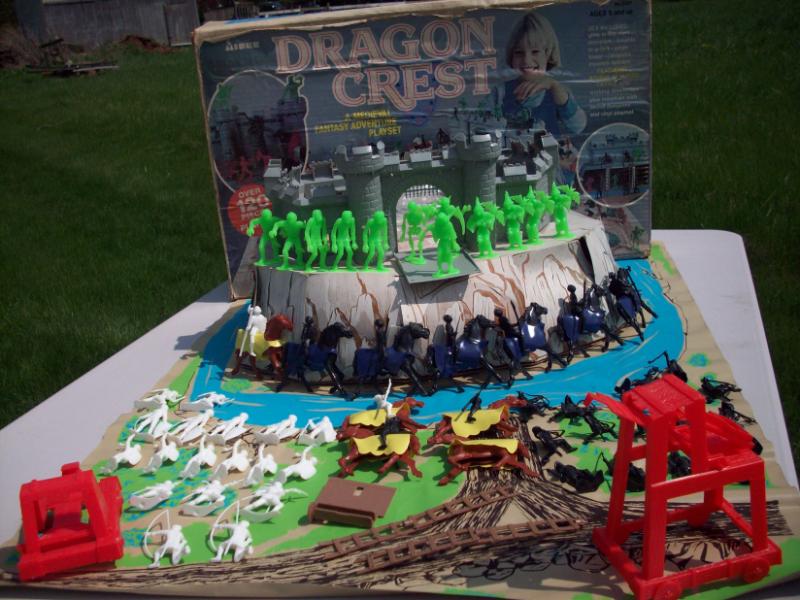
Marx started putting out medieval sets in the ’50s, but Dragon Crest marks the first time the traditional knights/castle theme was combined with monsters, including dragons, thanks to the booming fantasy/D&D market.
UPDATE (4/6/14): I’m now betting that DFC’s Dragonriders of the Styx Fantasy Playset (1981) was the first to present a theme inspired by D&D. That would mean Dragon Crest was released at some point after Mysterious Castle. I’m changing the date on the set from 1981 to 1983 for now.
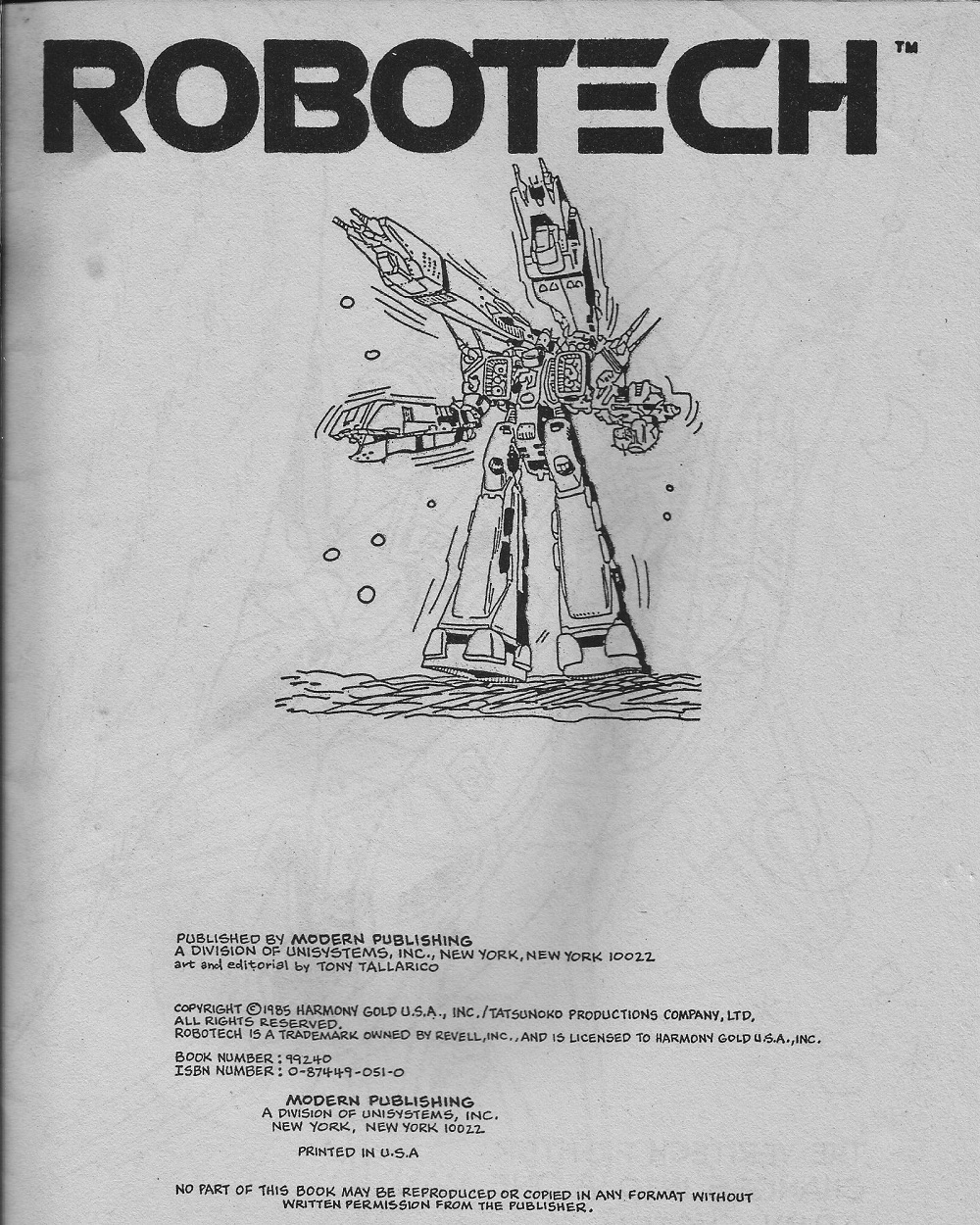
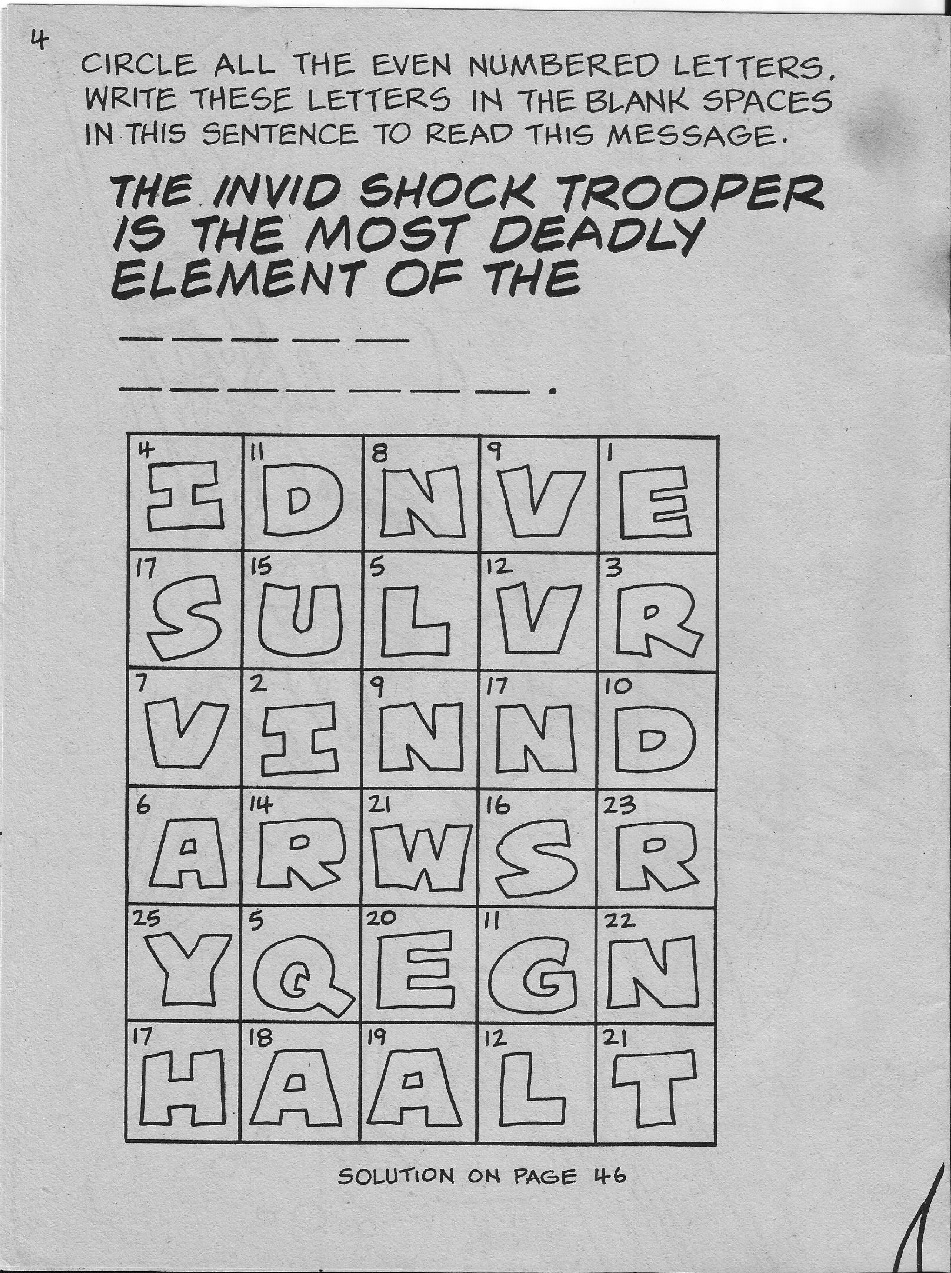
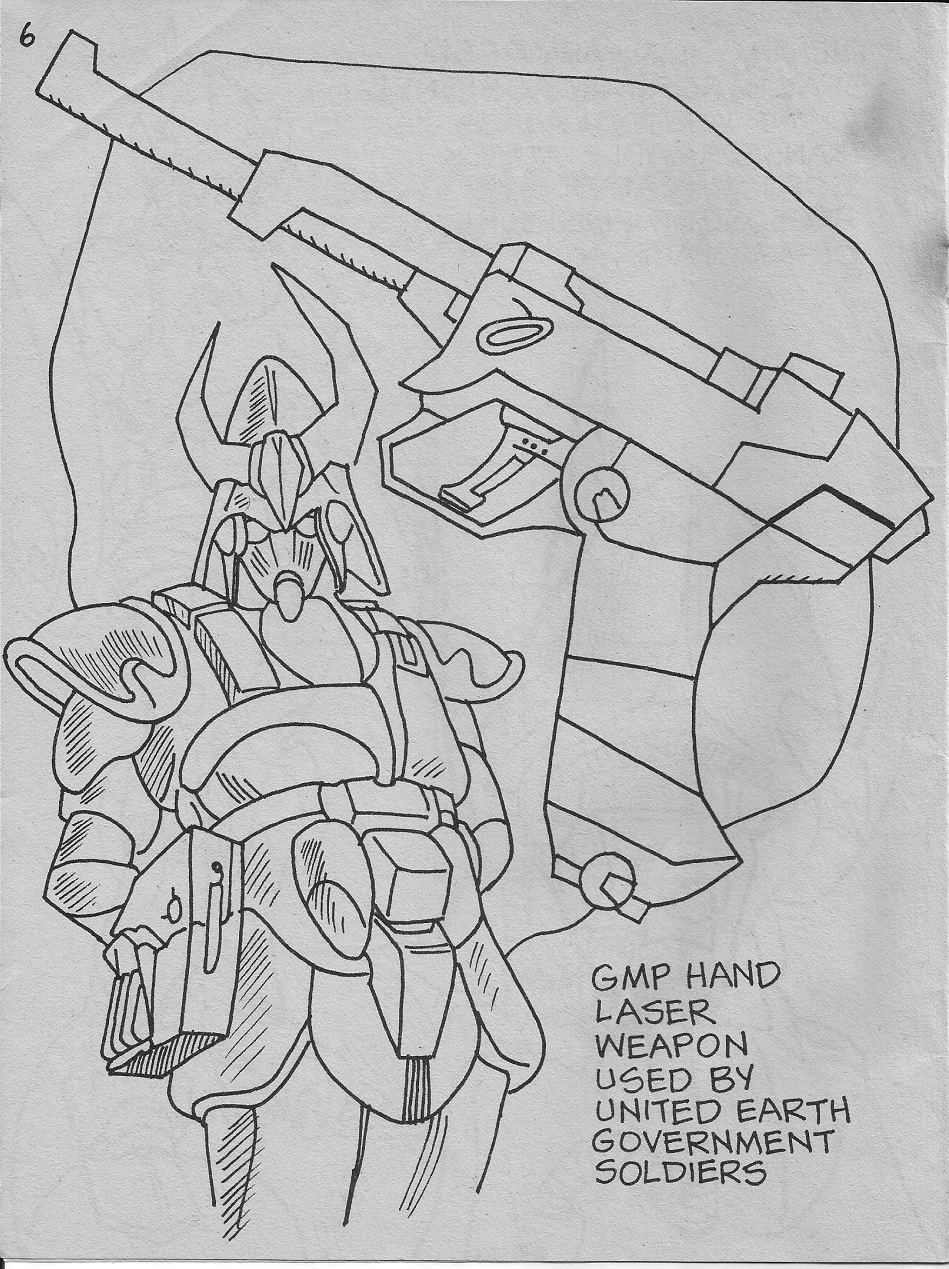
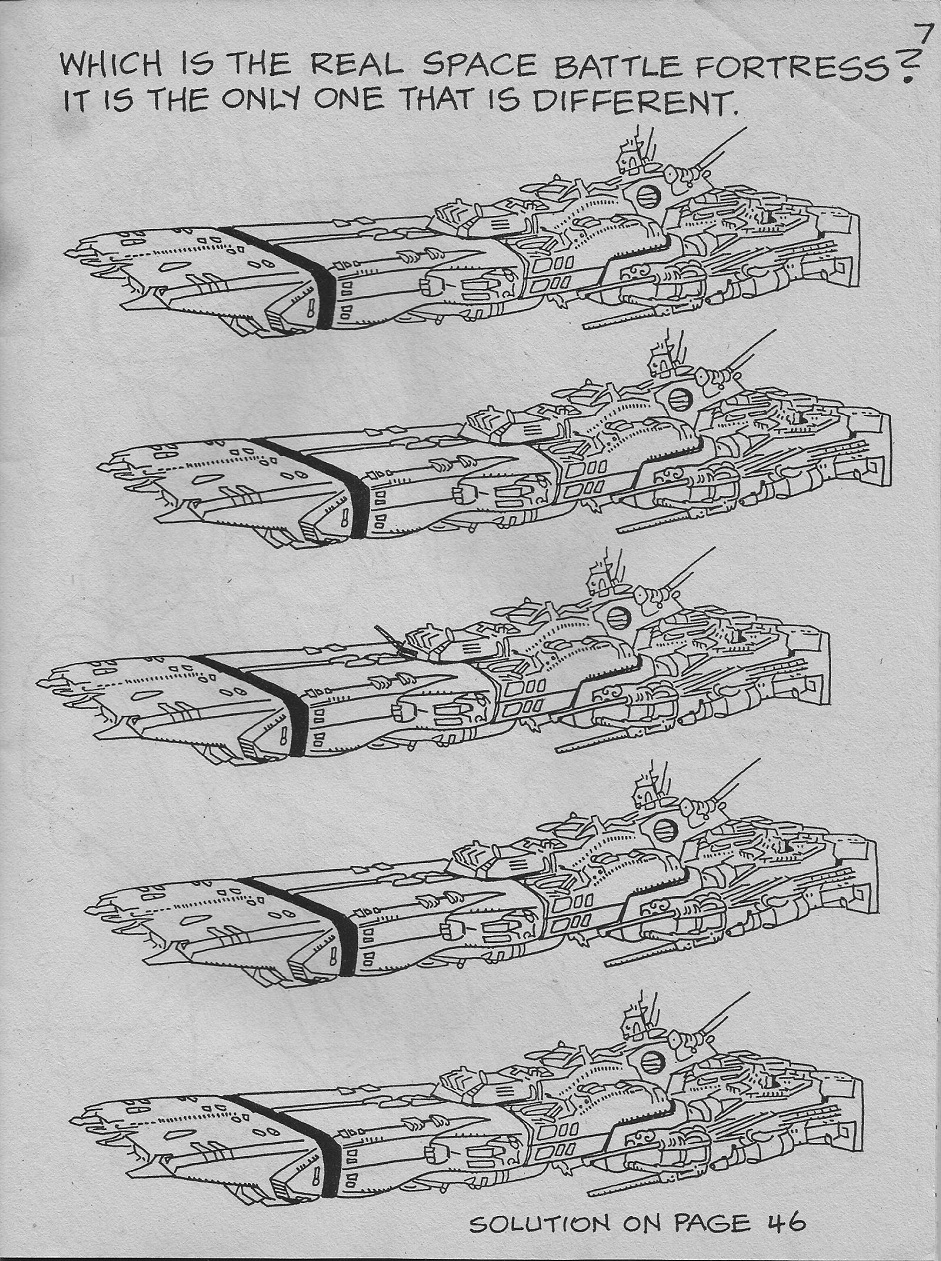
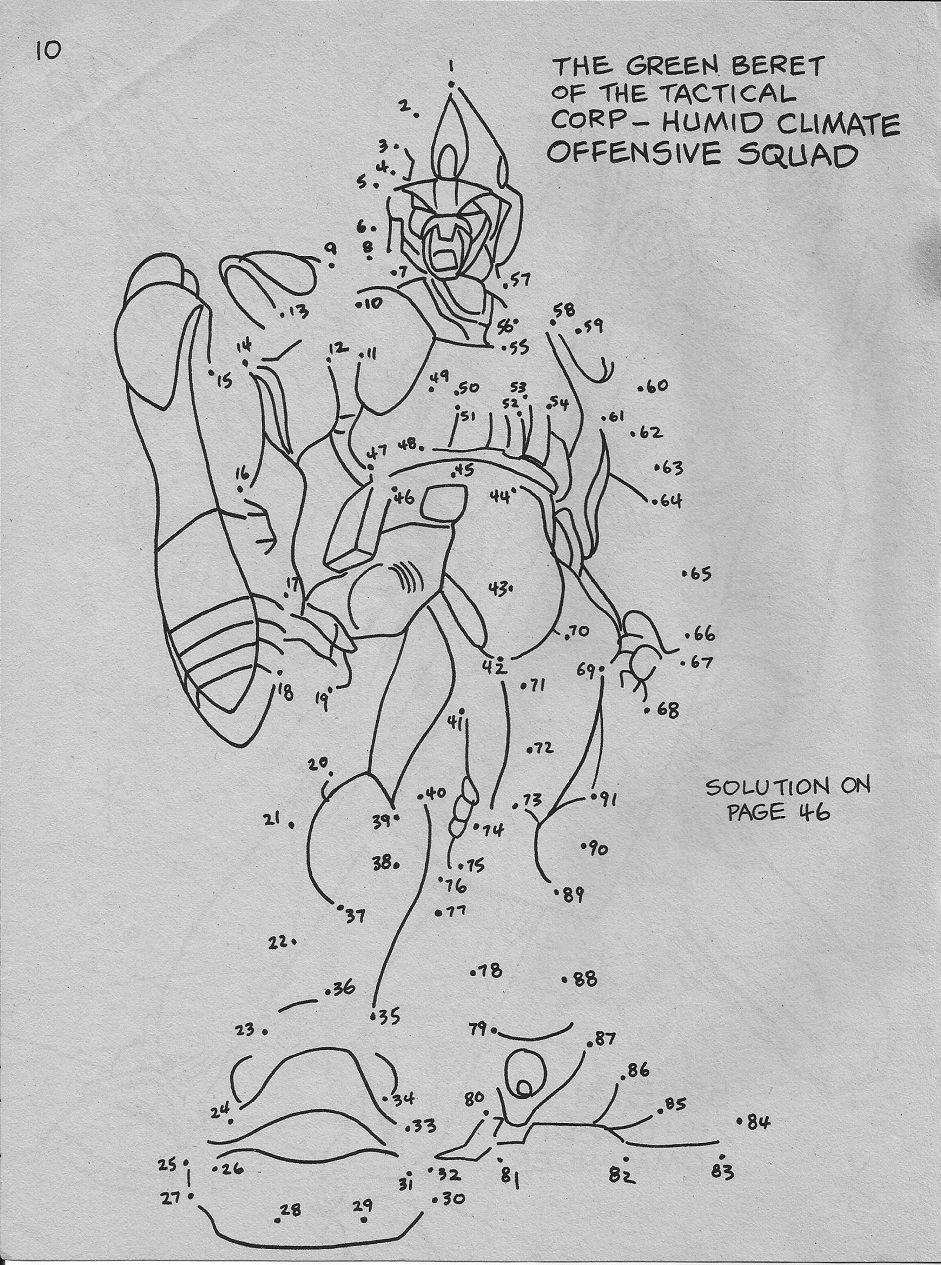
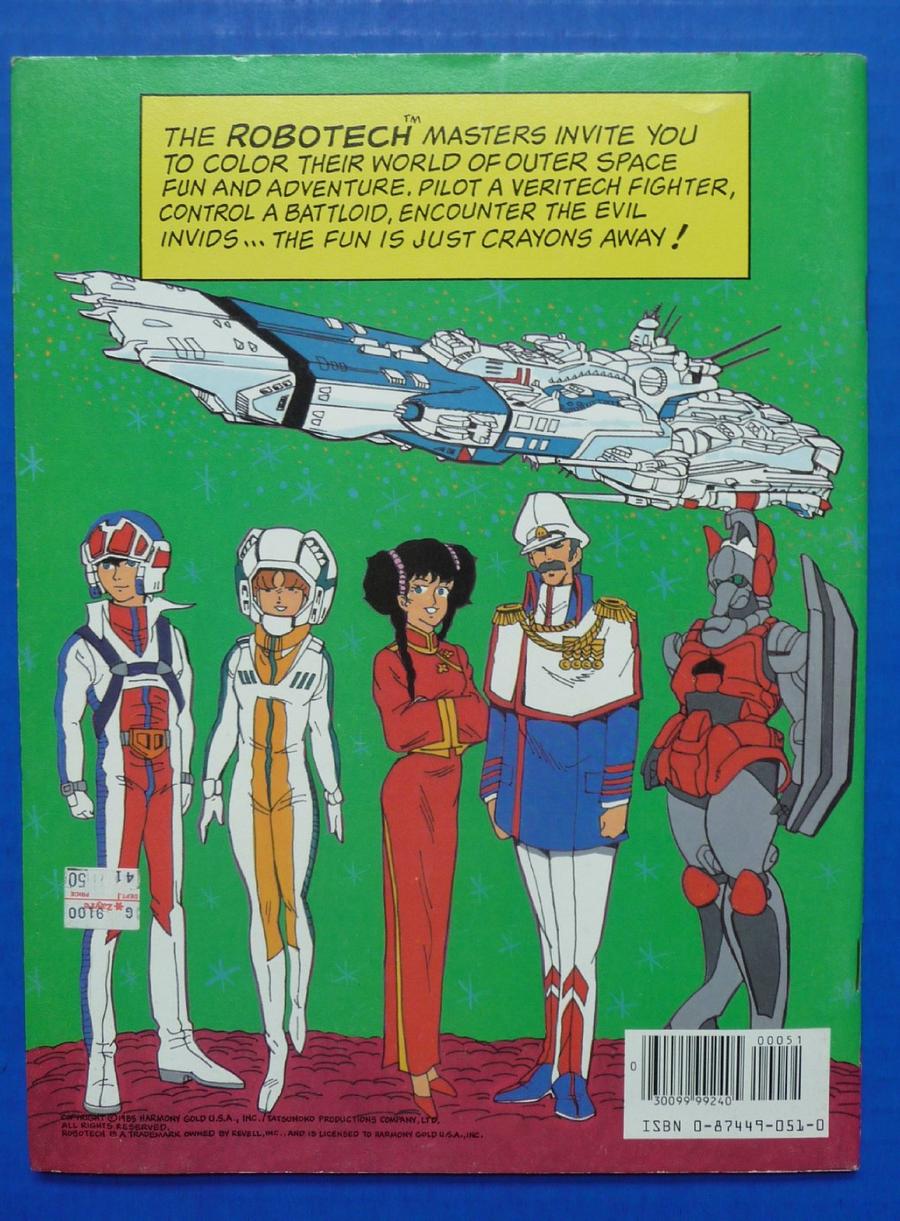
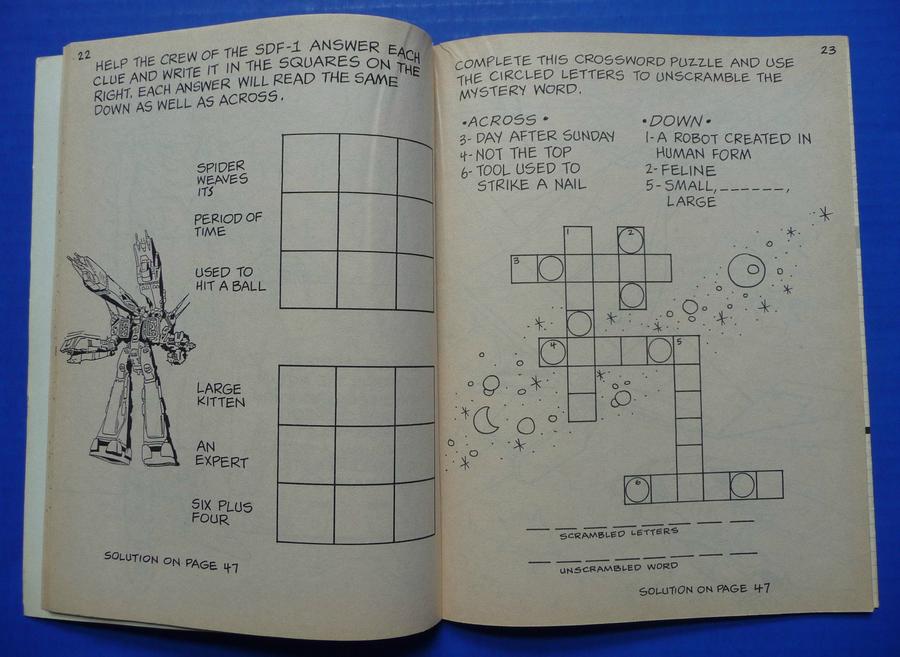
I’ve seen two versions of the book, both from 1985. I just got the one above. I’ll scan in the rest of the pages if there’s enough interest. What’s with the “humid climate offensive squad” on page 10?
The version below is on eBay. At least some of the content is different based on the sample pages on display.
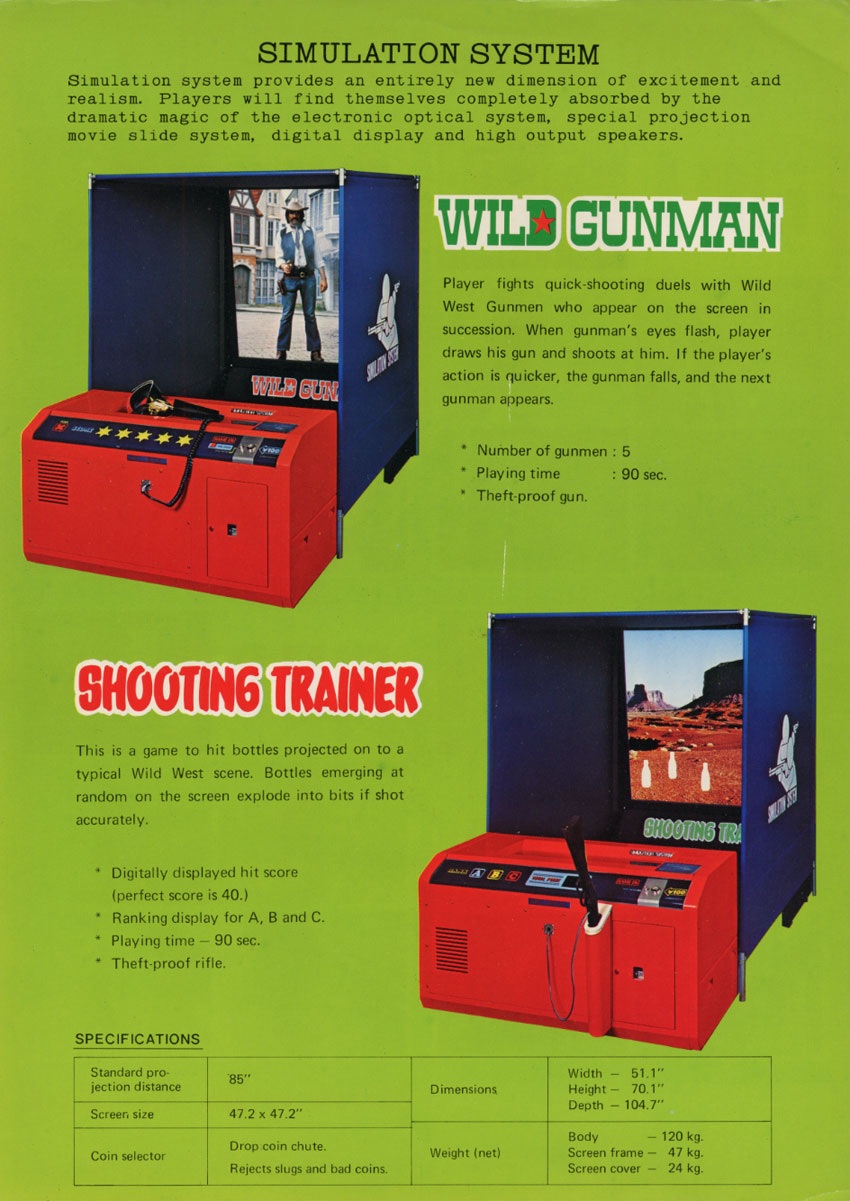
As far as I can tell, Wild Gunman is the first arcade video game to feature a replica gun used against replica people. A longer demo is here. I remember the experience with much bitterness, because the light gun was not very sensitive, and even if you drew and fired in time, the hit didn’t always register.
The flyer below shows the cabinet and the different cowboys you could duel. Shooting Trainer (1975) was the sequel. The player fired at white bottles that popped up against a Wild West backdrop.
I’ve never seen these before, but that’s not really a surprise. The mainstream expansion of D&D starting in 1983, when the action figure line and the cartoon were released, was a decadent mess. I have fond memories of both, but neither product broke new ground or had anything to do with D&D, and what’s worse, they lived in separate universes. It was a marketing disaster.
Had the cartoon featured the grittier action figure characters and Thundarr-like production and writing, D&D might have become a much different franchise.
I do get a kick out of the toy sets, and I think they’re interesting historically. Maybe I’ll be Warduke for Halloween.
According to the 1985 Sun Sentinel story, the toy gun in the photo belonged to 28-year-old Maria Ocana, who “was waving the gun near an outdoor cafe and pointed the weapon straight at Officer David Herring, 23.” When she disobeyed multiple orders to drop the gun, Herring shot her. An acquaintance of Ocana insisted “she was not well in the head.”
On March 3, 1983, a 5-year-old boy holding a plastic T.J.Hooker revolver was shot and killed by the LAPD. On June 4, 1986, a Washington, D.C. mother was shot and killed when she pointed a cap gun at an armed stranger. In early 1987, a 19-year-old holding a Laser Tag gun was shot and killed by police in California. The list goes on.
Then, on August 19, 1987, a man named Gary Stollman walked onto the set of an on-air KNBC news report, pointed a gun at reporter David Horowitz, and made him read a rambling, incoherent statement about a UFO-CIA conspiracy. The gun turned out to be a BB gun. Here’s the footage.
Horowitz, a consumer advocate who had started campaigning against the sale of realistic looking weapons before the incident, led the effort to ban replica weapons statewide in 1988. The ban was passed, but steamrolled shortly thereafter by a 1989 federal law requiring only that “some part of toy guns… be made of bright orange plastic.” Senator Bob Dole snuck the language into a last minute energy bill.
Skip to December of 2010, when a Los Angeles police officer shot and paralyzed a 13-year-old boy who was playing with a pellet gun at twilight. The gun had an orange tip, but the cop didn’t see it in the dark. Last year, an 8th grader in Texas pointed a pellet gun at officers in his middle school hallway and was shot and killed. The gun strongly resembled a real revolver and did not have any orange markings. (The 1989 law exempts BB guns and pellet guns.)
I talked about war toys. What about toy guns? We played guns a lot when I was a kid. We’d split up into teams and play in the hills, or we’d play in the house: the bad guy would hide upstairs and the good guys would try to sneak up and blast him before he blasted them. Identifying the “winner” was always problematic—“I got you, sucker. You’re toast.” “No way. I got you!”
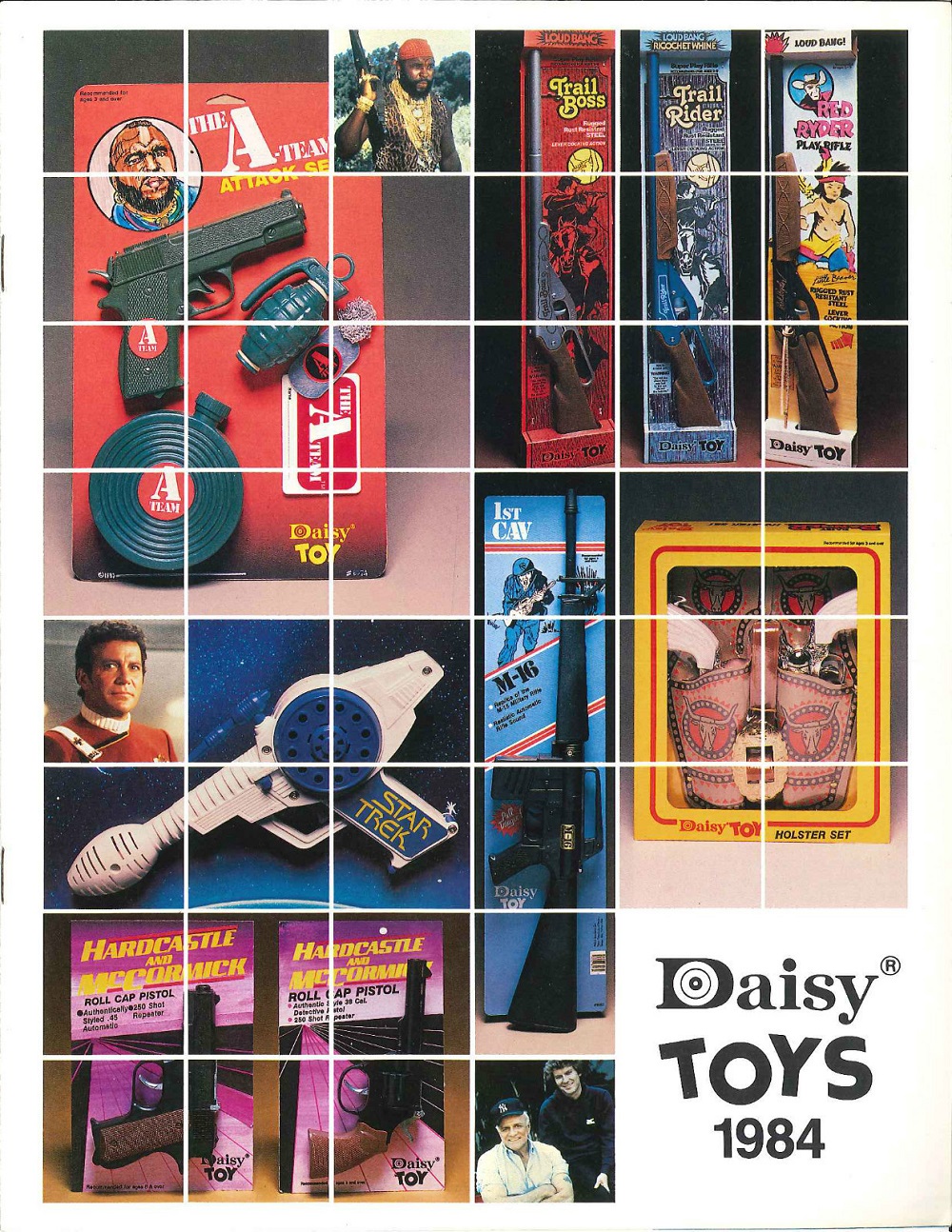
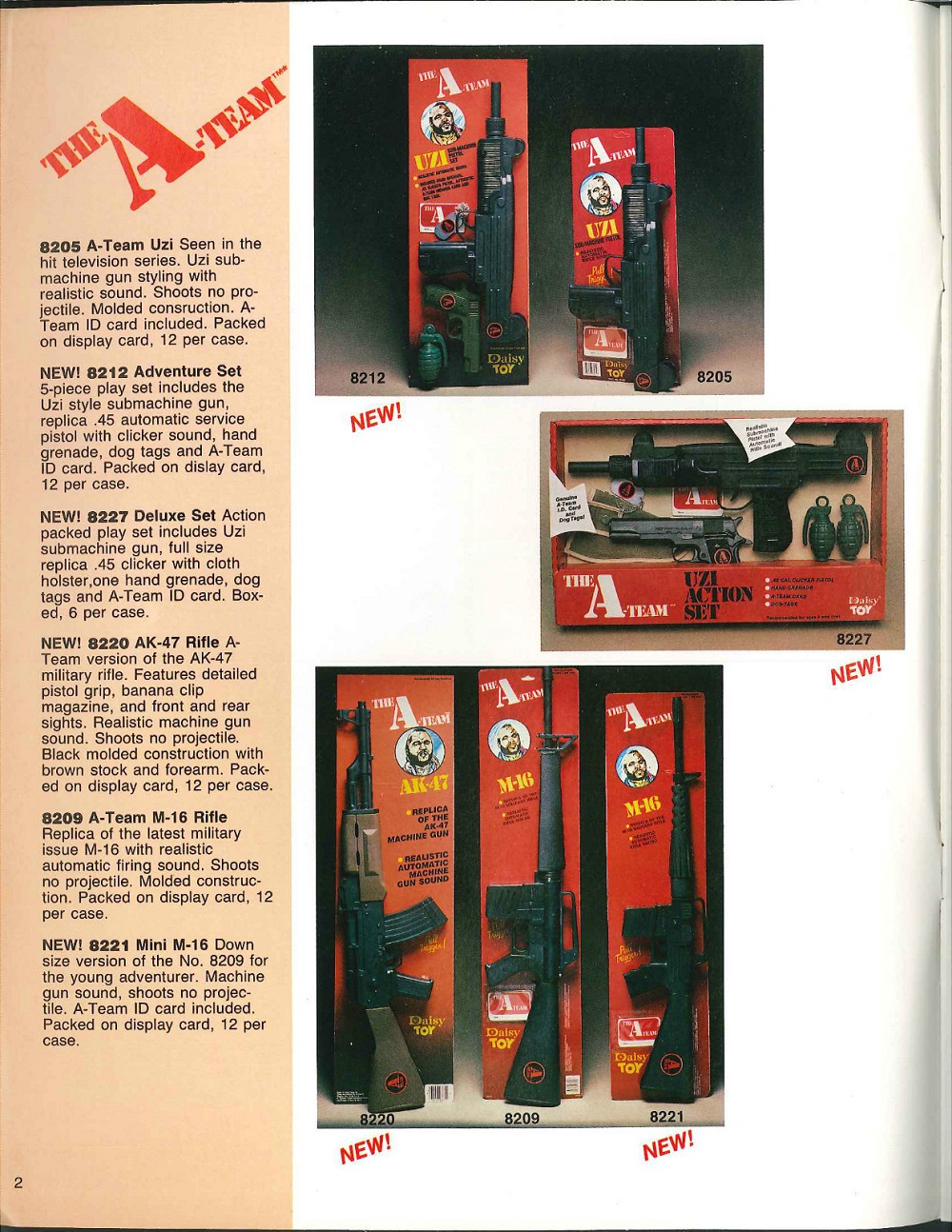
The funniest thing about The A-Team, of course, was that tens of thousands of bullets were fired, but nobody ever died. Same with the G.I. Joe cartoon. Hardcastle and McCormick (1983 – 1986) was a small scale Mod Squad: A retired judge gets a car thief out of jail under the condition that the car thief helps the judge nail the criminals he was forced to free on technicalities.
Both shows represent a quintessential ’80s narrative: (1) the American legal system is irreparably broken, (2) traditional law enforcement is ineffective and/or corrupt, and (3) justice depends on reluctant-but-righteous vigilantes who live on the fringes of the society they are morally driven to protect.
After a number of fatal shootings, “realistic-looking” toy guns were banned in Los Angeles and New York in 1987. In 1988, Congress passed a law requiring that all toy guns “be identified with a `blaze orange’ tip over the gun’s nozzle.” The law is easily gotten around today.
If you own the copyright to any of the material on this site and would like said material to be removed, please contact 2warpstoneptune [at] gmail [dot] com.
























 2 Warps to Neptune