
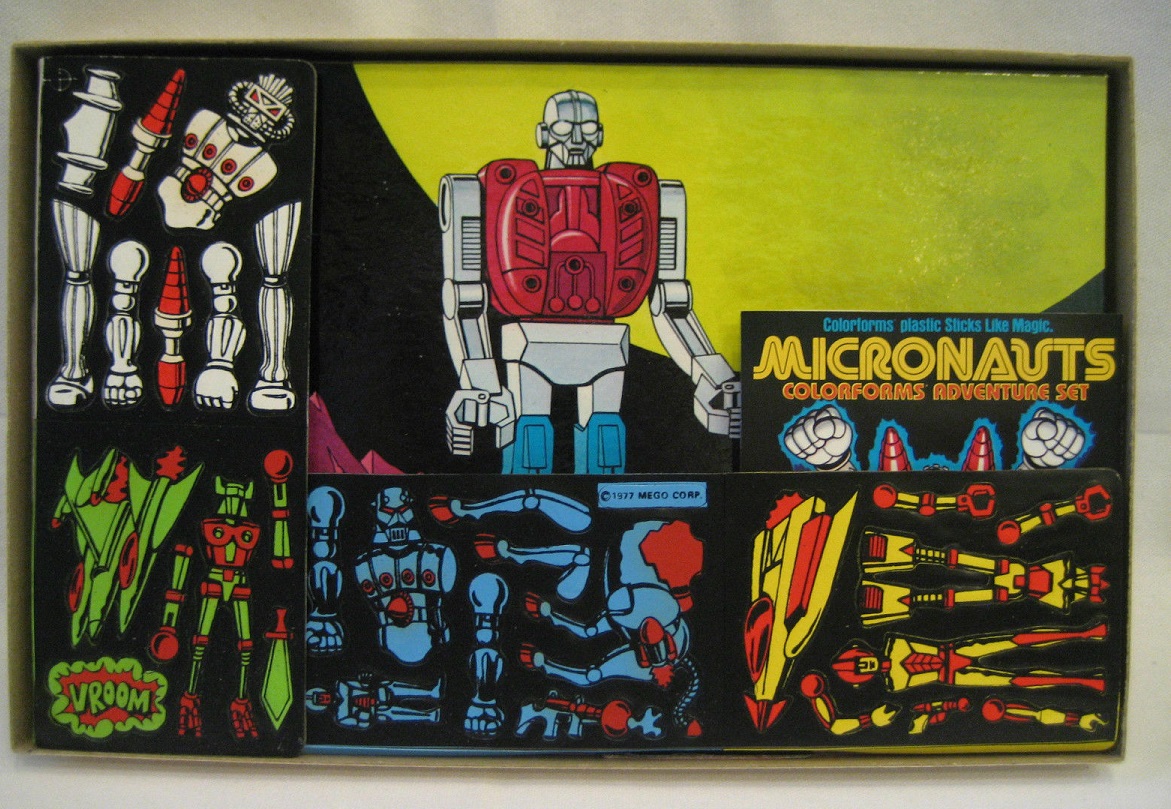
Vroom. I see Baron Karza, Force Commander, Acroyear (sort of), and Biotron. Who’s the yellow guy?
Surveying the Gen X landscape and the origins of geek
Vroom. I see Baron Karza, Force Commander, Acroyear (sort of), and Biotron. Who’s the yellow guy?

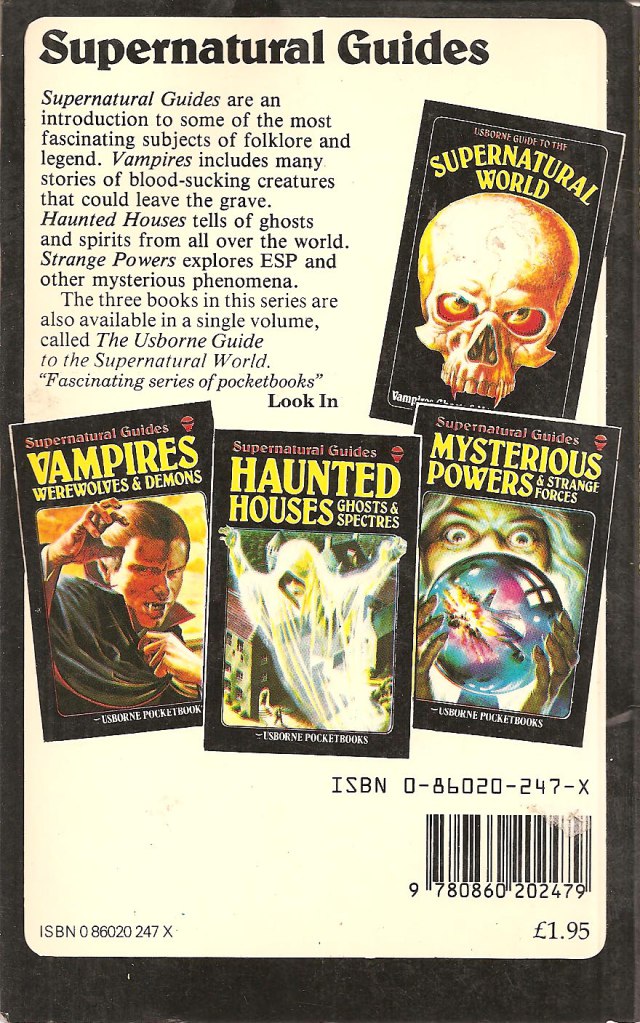


UK publisher Usborne released a number of memorable books in the late ’70s, starting with the World of the Unknown series in 1977. The Supernatural Guides followed in 1979 and covered the same territory.
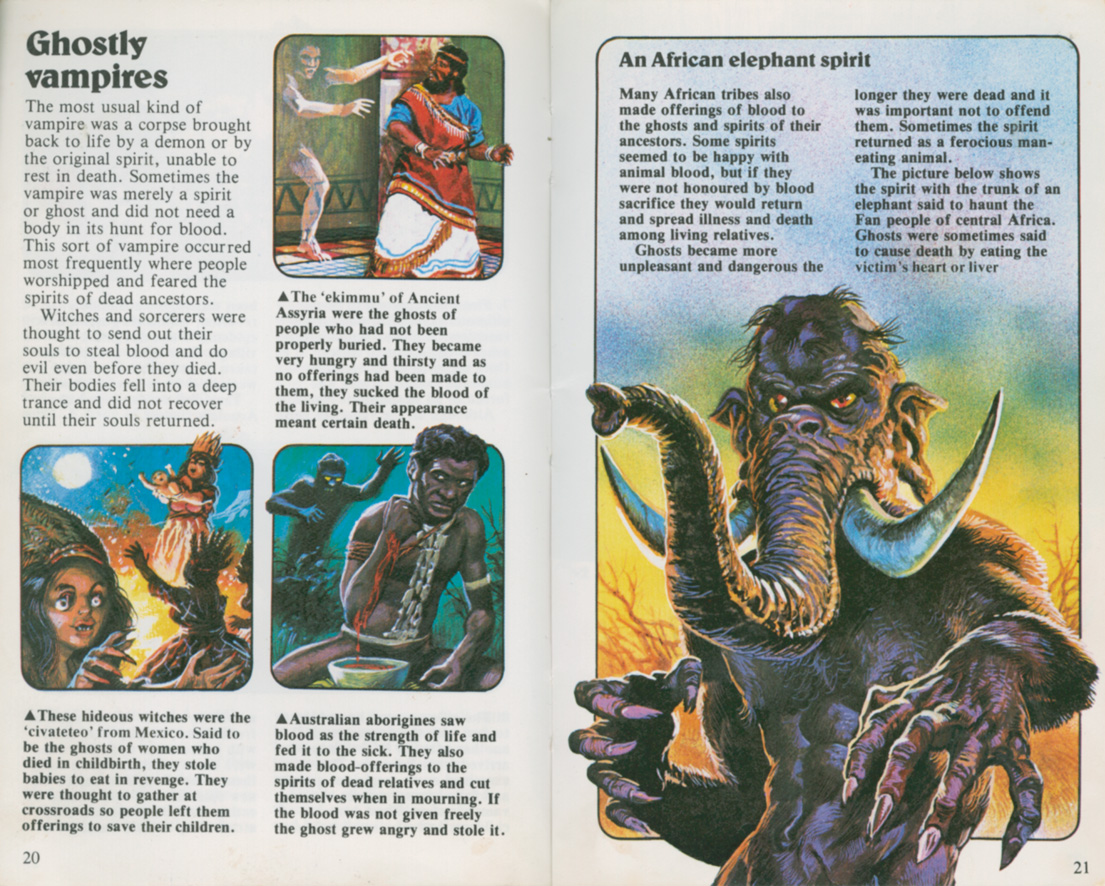
In the most matter-of-fact, dispassionate tone, the authors discuss all manner of gruesome scenarios and happenings. The accompanying illustrations, on the other hand, are incredibly graphic, disturbing, and over-the-top. That irony is what makes the books so brilliant. Take this:
Ghosts became more unpleasant and dangerous the longer they were dead and it was important not to offend them. Sometimes the spirit returned as a ferocious man-eating animal.
What kind of ferocious man-eating animal, you ask? How about an African elephant spirit that will eat your heart and liver?
How does one become a werewolf? Well, he or she puts “wolfsbane, opium, foxgloves, bat blood and fat of a murdered child into a pot” and boils them. Let me repeat that last ingredient, in case you missed it: the fat of a murdered child.
Usborne also released a World of the Future series around the same time that’s as fascinating, though not as insane. The World of the Unknown books were re-released in the late ’90s with different covers. The interiors are identical to the originals.
(Images via Found Objects and Horrorpedia)

I really enjoyed Ethan Gilsdorf’s homage to D&D over at Boing Boing. The game, now 40 years old, clearly changed his life for the better, and his affection for it is absolutely genuine. However, I was a little surprised when I got to this passage:
Like a 3rd level Spell of Suggestion, D&D generated subtle repercussions through the culture. The role-playing game opened new pathways for creativity, new ways for kids and young adults to entertain themselves. The game led a DIY, subversive, anti-corporate revolution, a slow-building insurrectionist attack against the status quo of leisure time and entertainment.
While D&D certainly did promote the DIY aesthetic and overturn the gaming status quo, it certainly did not lead any anti-corporate revolution. TSR was a corporation, and it became quite a powerful one. Its core products—rulebooks, modules, miniatures, various supplements—were damn expensive from the beginning, so much so that the game was out of reach for lots of kids who wanted to try it. There’s a reason treasure is so important in D&D, in some cases equaling experience points: art imitates life.
True, once players understood the essential ingredients of D&D, they could home brew their own modules and adventures, but it wasn’t a political act (there was no role-playing “movement”), and most everyone was using “corporate” props, from TSR or one of its legion of imitators. We thought D&D was cool. We were emulating, not disassociating.
By 1983, it was clear even to my 11-year-old self that TSR had “gone mainstream”: out came the action figures, the animated series, the profligate licensing, kid’s storybooks, pencil sharpeners, beach towels—all of the trappings of a runaway corporate culture looking to replicate itself for as long as possible. In short, the business expanded beyond role-playing: D&D became a brand. You can say what you will about the move. It worked. D&D is still around, still being discovered by successive generations, just like Macintosh and Vans and G.I. Joe.
Here’s Gilsdorf again:
The lesson of Dungeons & Dragons has always been this: make your own entertainment. By sitting around a table, face to face, and arming yourself with pencils, graph paper, and polyhedral dice, you can tap into what shamans, poets and bards have done all the way back to the Stone Age. Namely, the making of a meaningful story where the tellers have an emotional stake in the telling, and the creating of a shared experience out of thin air.
To go on this new adventure, you don’t absorb a movie or TV show passively, on the couch, or merely “read” a book. Nor are your options for “interacting” with a fantasy experience limited to collecting merchandise or playing with action figures. Best of all, the essential quality of this unique, narrative gaming experience can’t be co-opted as commercial entertainment. Role-playing games like D&D are a way to experience unstructured free time while imposing upon it a structure, a story.
I love that first paragraph. He totally captures what made D&D and role-playing so starkly novel and exciting: you’re an individual playing a character you created within a narrative you’re helping to write. I’m not sure what he means by the following, though: “this… narrative gaming experience can’t be co-opted as commercial entertainment.” No gaming experience can be co-opted—unless we’re talking about the Hunger Games. If I play Mouse Trap with my family, Hasbro doesn’t own our experience. If I play poker with my friends, Hoyle doesn’t somehow contaminate the proceedings. My point is that traditional games are just as meaningful to the people who play and enjoy them. Not everyone has the time required, or the players required, for a Greyhawk campaign.
I think it’s important not to overstate the importance of D&D and role-playing, especially with fewer and fewer young people picking up books, the bedrock of literature, philosophy, history, and a few other notable human endeavors. Nothing works the imagination like serious reading, with the exception of writing. The “passivity” of reading is a myth advanced by technophiles who make or stand to make fortunes on “interactive” digital technologies. “D&D beats digital hands down,” Gilsdorf writes in his essay. Damn straight. Reading beats both.
The truth is that D&D and fantasy role-playing games gave kids disenchanted with the tedious real world (i.e. the adult world) instructions on how to build new ones, unlimited by time or place or possibility. Once we were able to decipher those instructions, we became explorers of the mind. That’s the most we can or should expect from any game.
(Image via Hack & Slash)

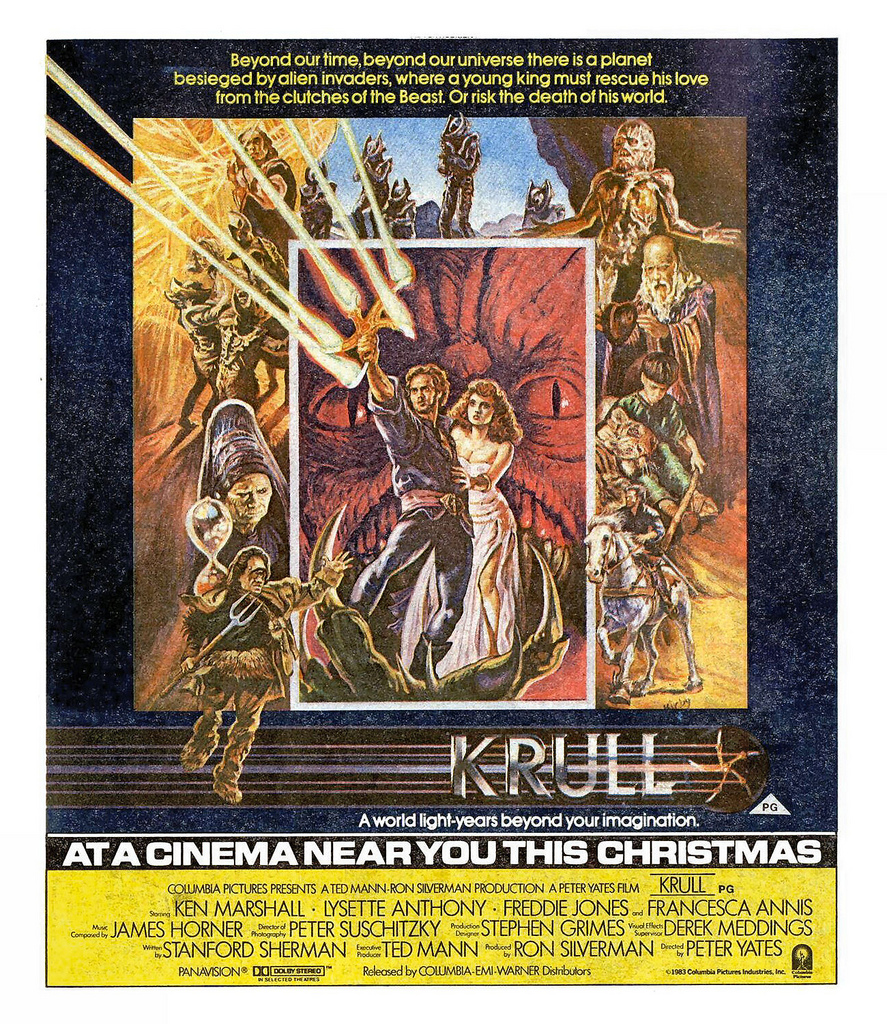
The art is from the UK poster by Josh Kirby. Much brighter and more intriguing than the American version.
(Images via combomphotos/Flickr)
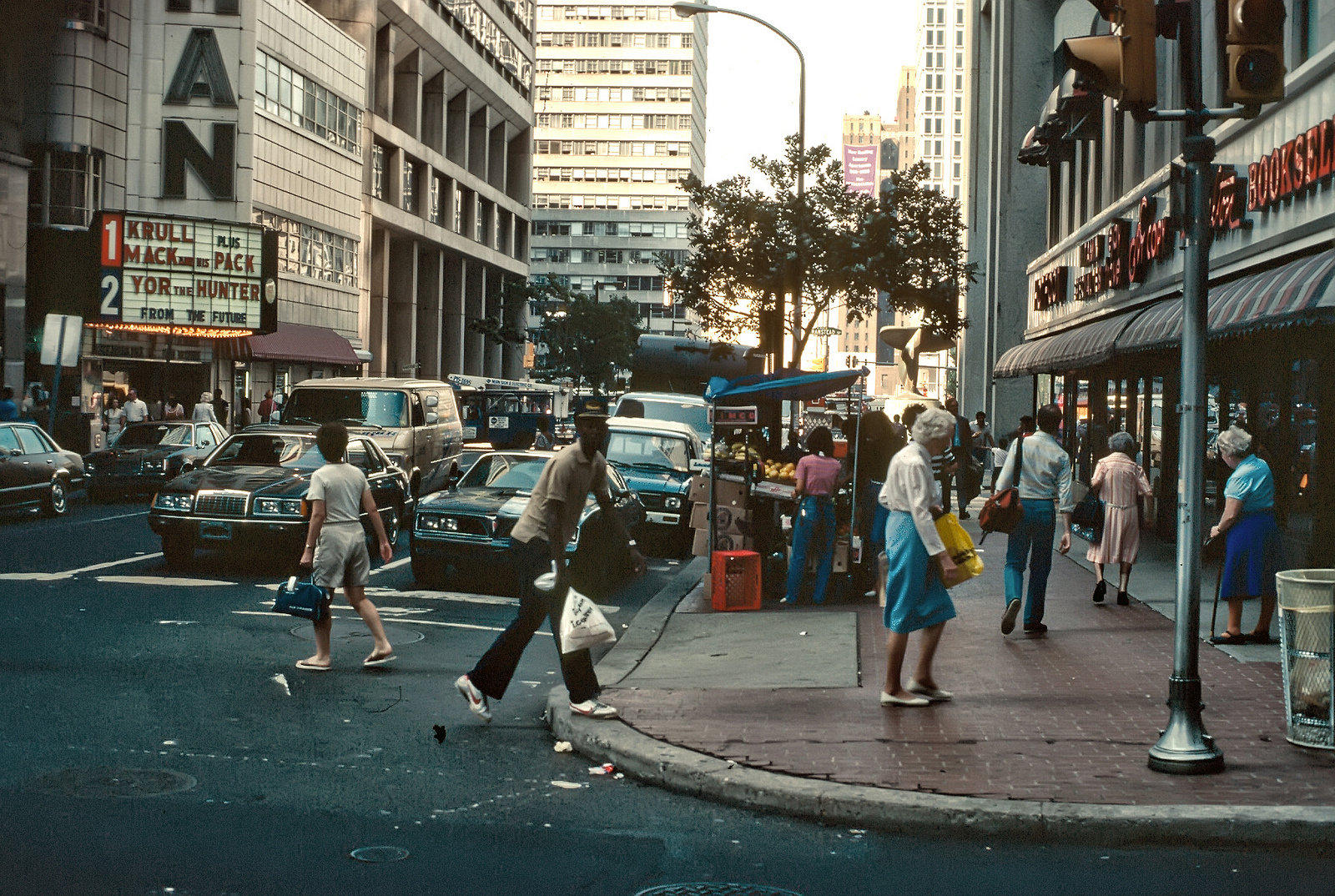
The location is Philadelphia. I don’t know the name of the theater. UPDATE (4/21/14): Howard Haas has identified it as the Goldman Theatre, which was demolished in 1984.
I have great affection for Krull. I think it’s a nifty, good-looking combination of the fantasy and sci-fi genres. As for Yor, you owe it to yourself to watch it at least once. The theme song and soundtrack are incredible. And, of course, there’s the hang glider scene.
(Image via milfodd/Flickr)
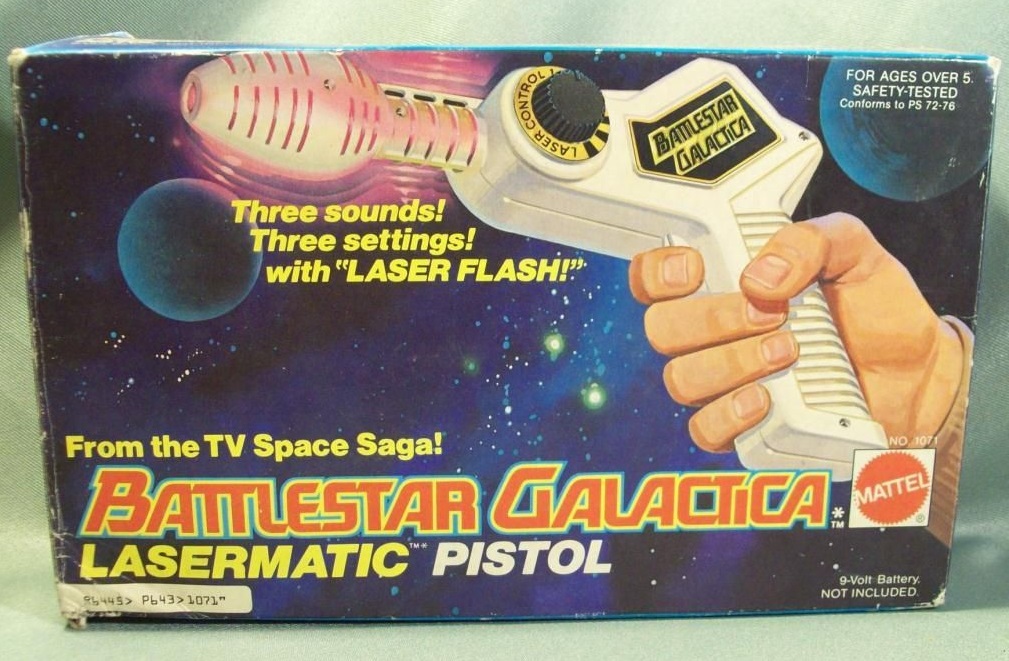


Pulsating “Laser Flash!” No luck finding a demo.
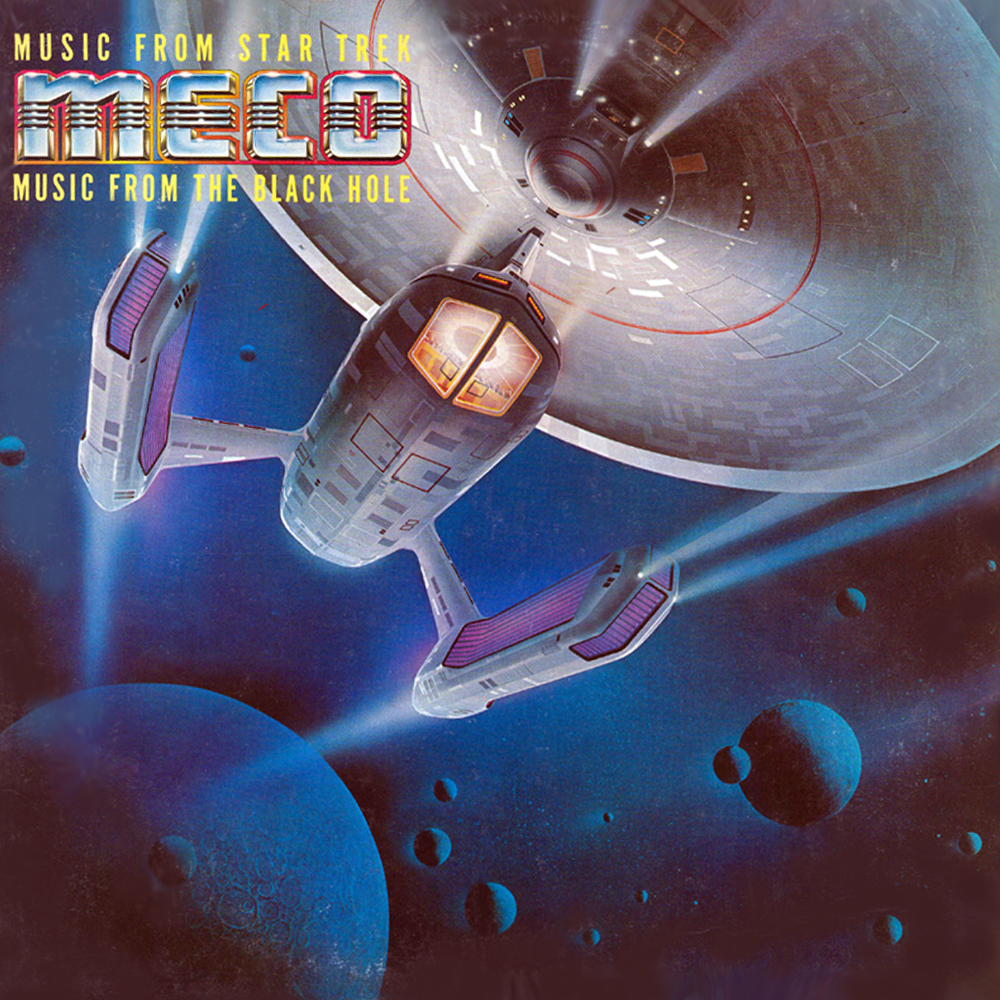
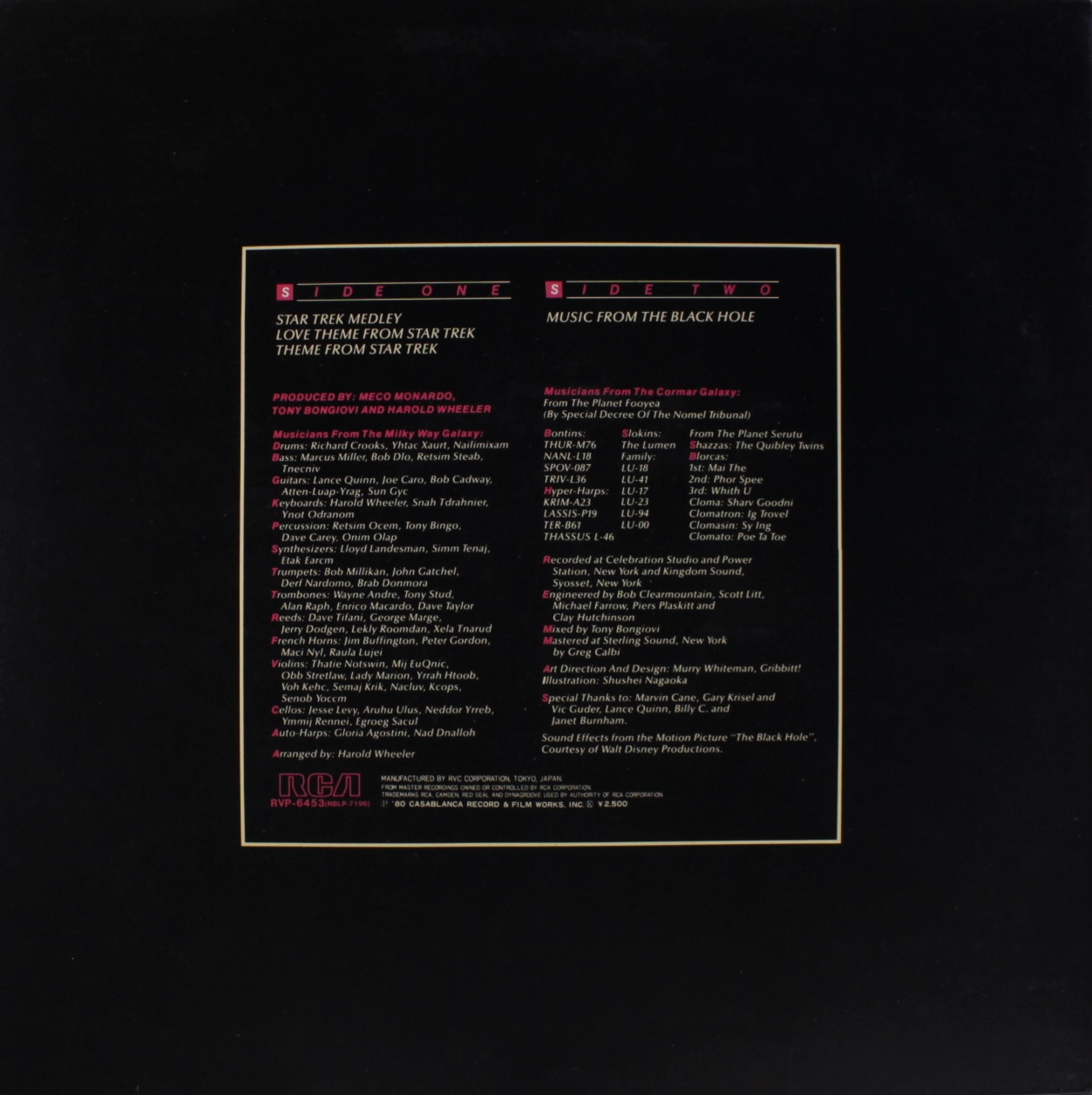
Meco (Domenico Monardo) launched the space disco era with Star Wars and other Galactic Funk (1977), which went platinum. He followed with several disco-ized soundtrack albums, including Encounters of Every Kind (1977), Superman and other Galactic Heroes (1978), and Christmas in the Stars: Star Wars Christmas Album (1980).
Music from Star Trek and The Black Hole (1980) didn’t go over well. The movies bombed at the box office, and the original, now classic soundtracks (by Jerry Goldsmith and John Barry, respectively), resisted the transition to upbeat funk. Meco knew it, and faked most of The Black Hole. The main theme is the only track that clearly resembles Barry’s score.
You can listen to Meco’s “Star Trek Medley” here. The entire Black Hole suite is below.
The album art is by Shusei Nagaoka, who did many memorable sci-fi-themed covers throughout the ’70s, including Out of the Blue (ELO) and Raise! (Earth, Wind & Fire).
A German group called Nostromo, following a very curious disco version of the Alien theme in 1979, released a 7″ called The Black Hole in 1980. It’s much more faithful to the original, although I like Meco’s misdirected space-funk a little bit more.


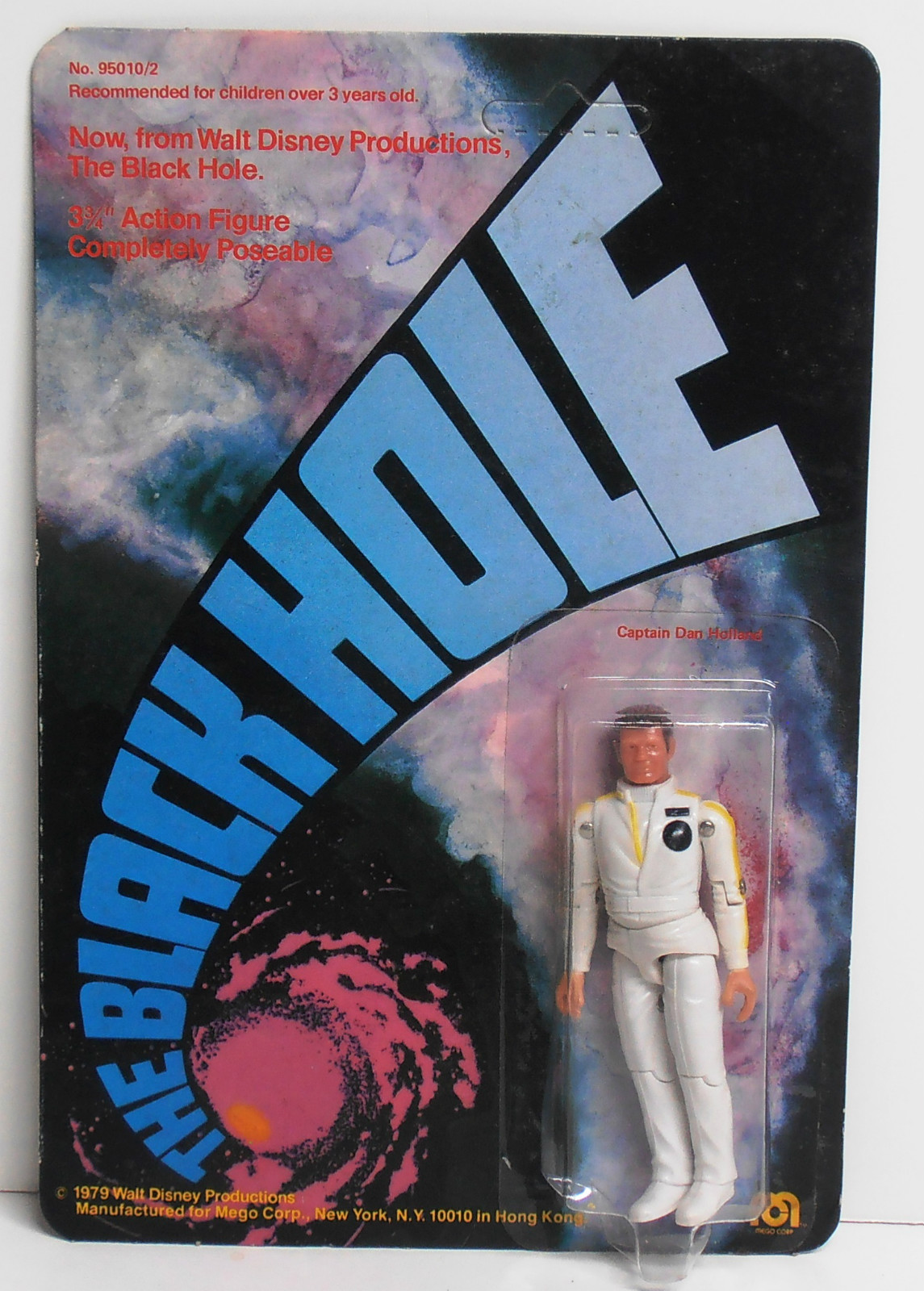



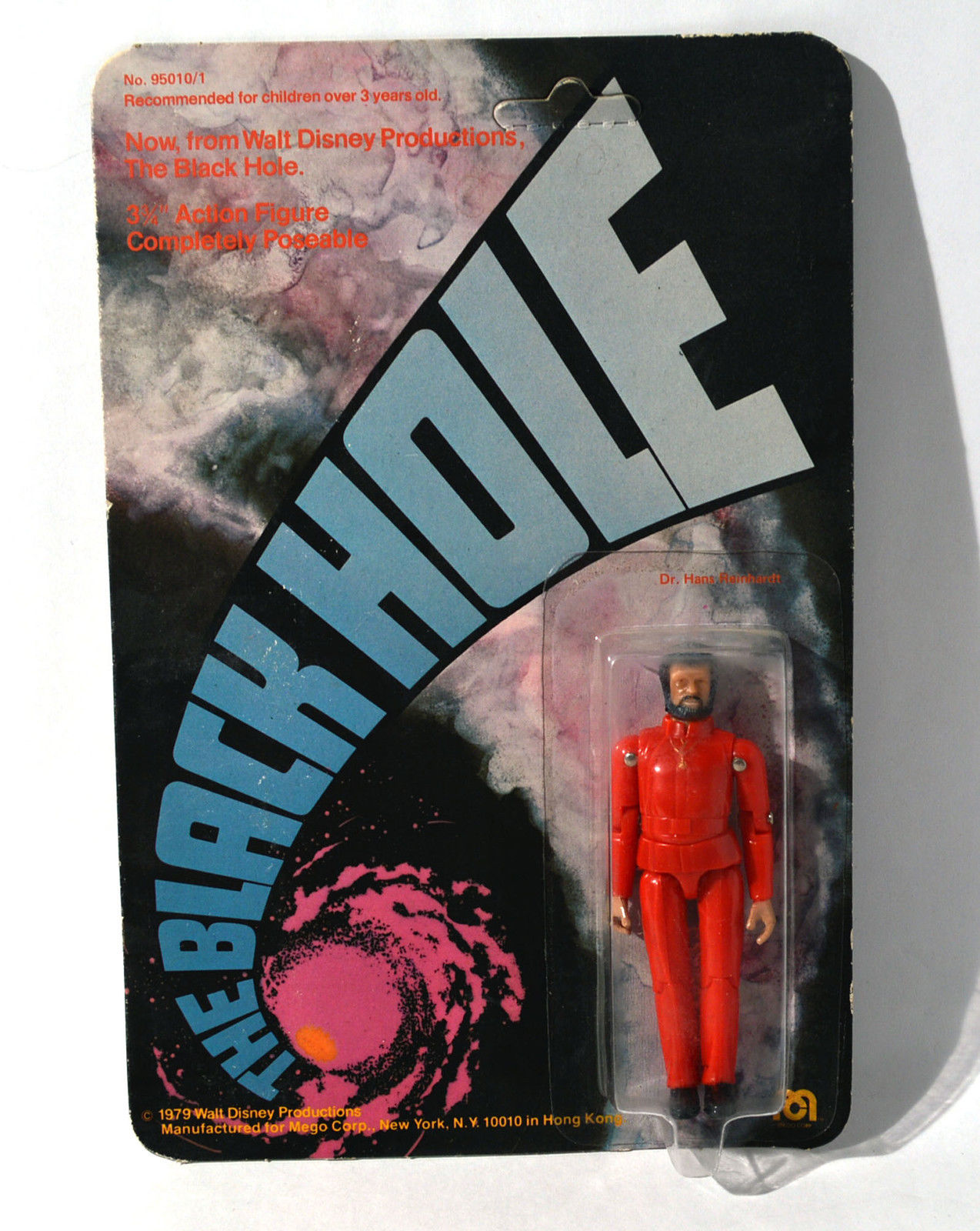
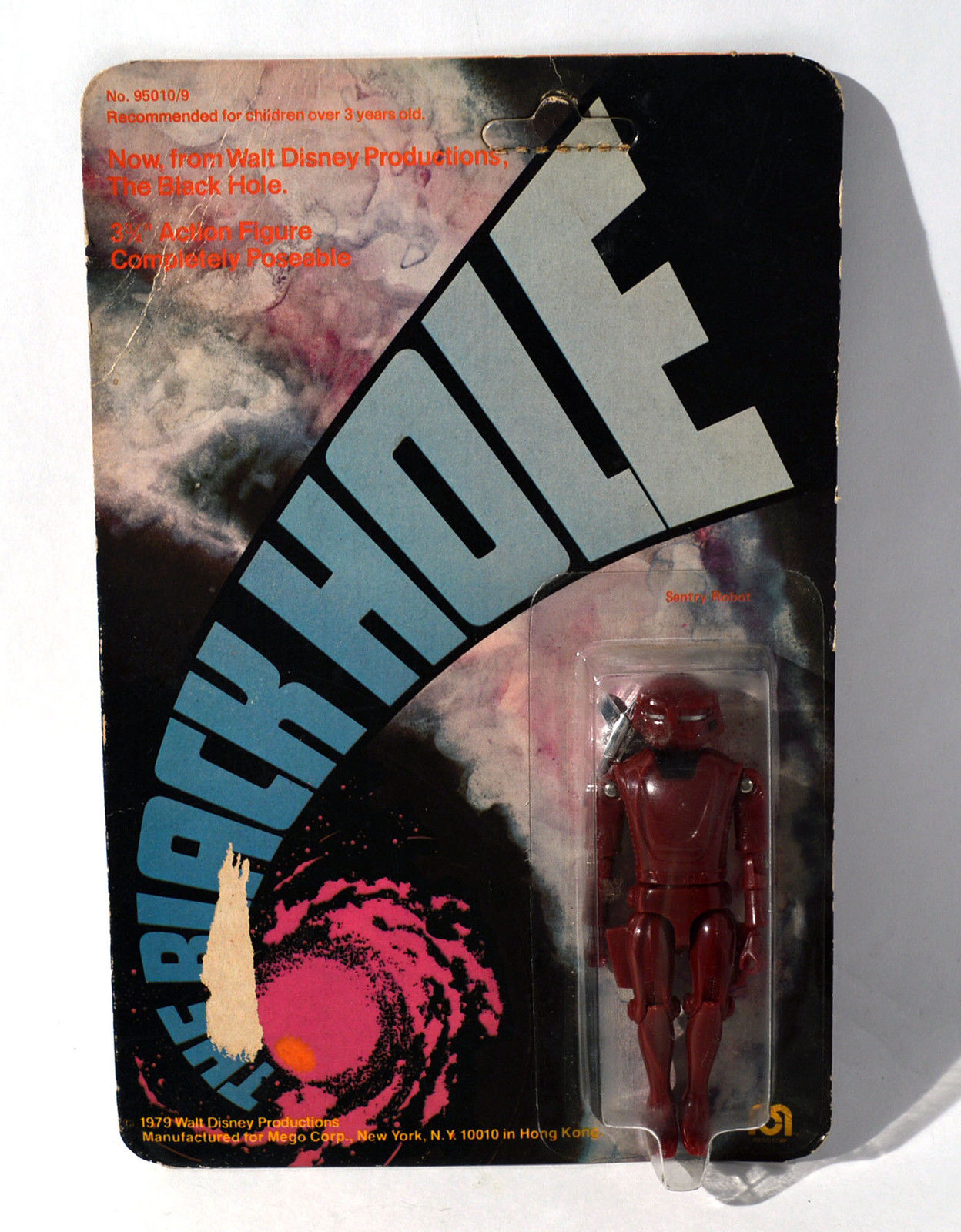


A closer look at all the Black Hole figures I talked about many internet ages ago—here. Old Bob, S.T.A.R., and Humanoid figures were released in Italy only.
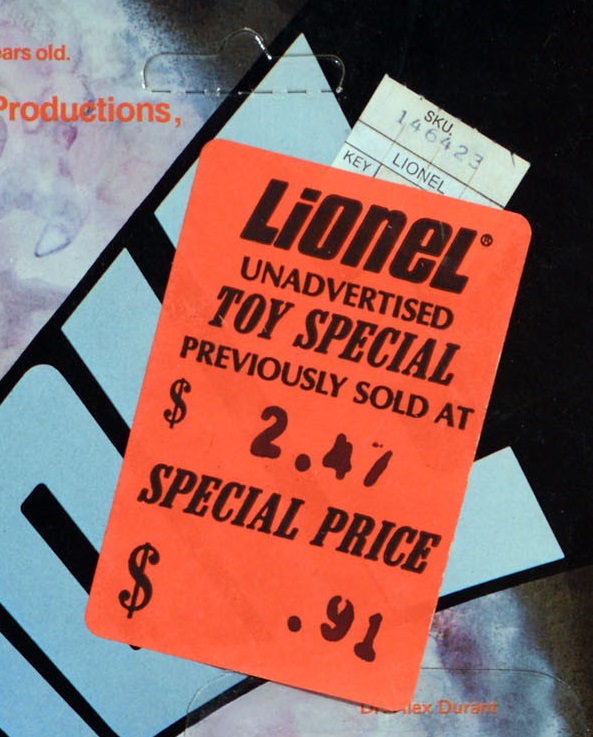
The highest price point I could find on a carded figure is $2.43 (Reinhardt). The lowest is $.91 (Durant). I also found one marked down to $.97 (Holland).
UPDATE (12/19/15): Adding a Harry Booth marked down to $.88. That’s what happens to traitors!



The footage comes from Patrick Scott Patterson, “the man who talks about video games for a living.” Patterson has amassed an impressive amount of historic arcade and gaming-related video on his YouTube channel.
It really is the best golden age arcade compilation I’ve seen. Music featured in the montage includes The Beepers’ “Video Fever” and “History Lesson” from the War Games soundtrack (two of my all-time favorites) and “Pac-Man Fever.”
Some of the video is from a 1981 news story I featured last year.
Thanks, Patrick!

 2 Warps to Neptune