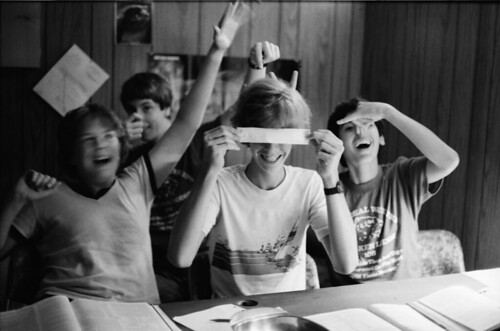
Gee, I wonder who stunk up the game room.
(Photo via elston/Flickr)
Surveying the Gen X landscape and the origins of geek

Via Wesley Stuart Smith, who is spotted here the following year getting cozy with a VIC-20. Traitor!
* * *
I’m running a special guest post tomorrow. I’ll be back next week.

(Via Paul Clarke/Flickr)


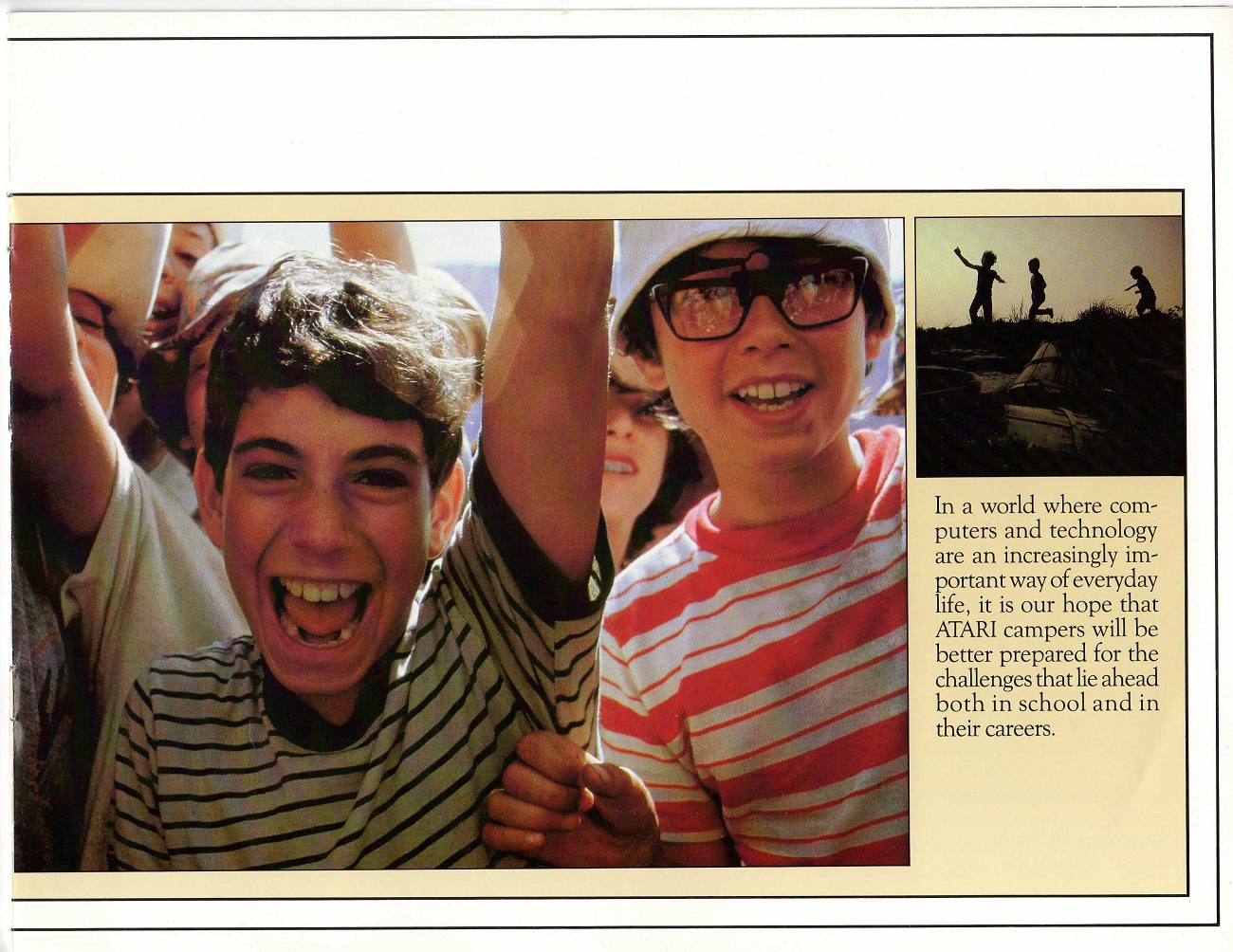
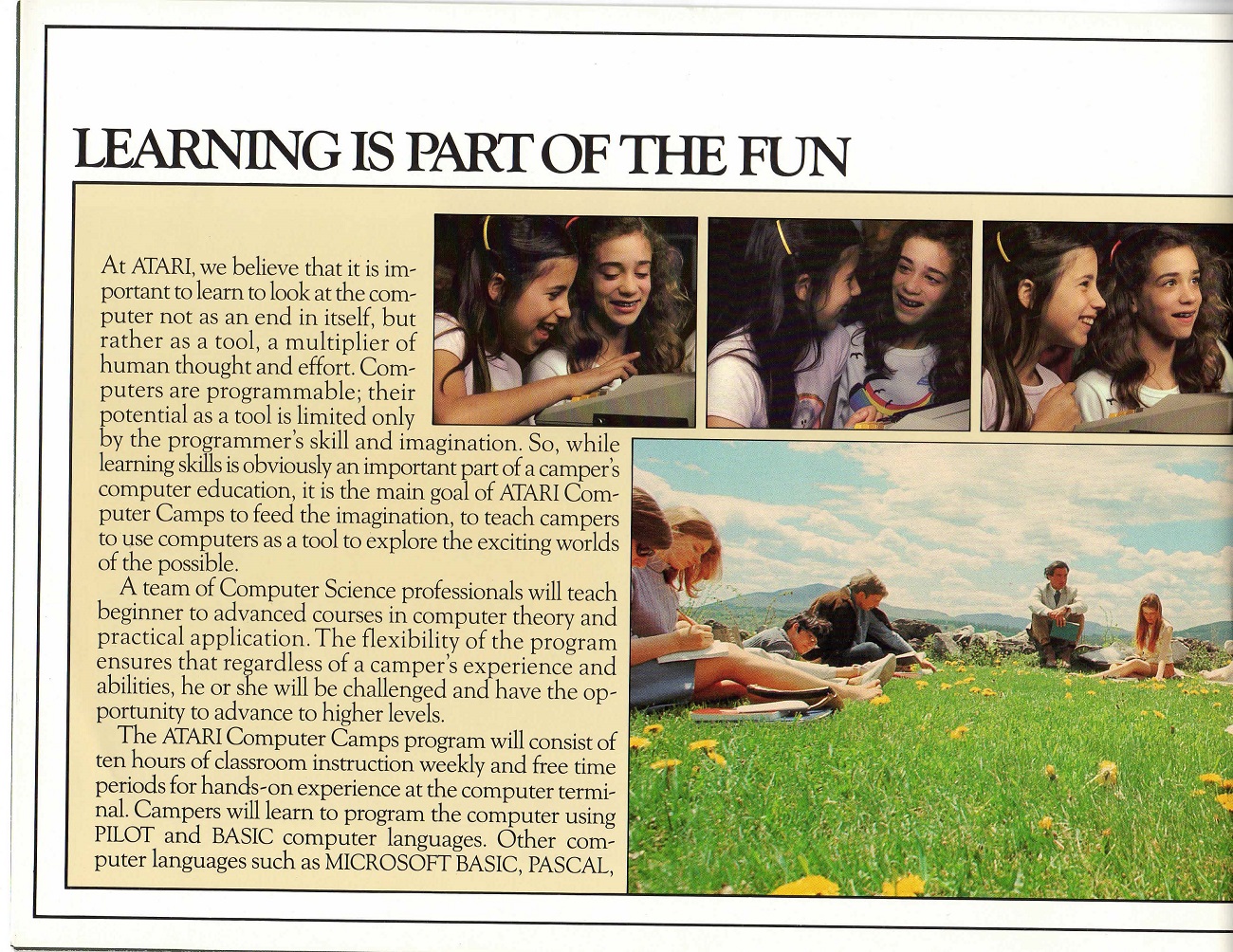

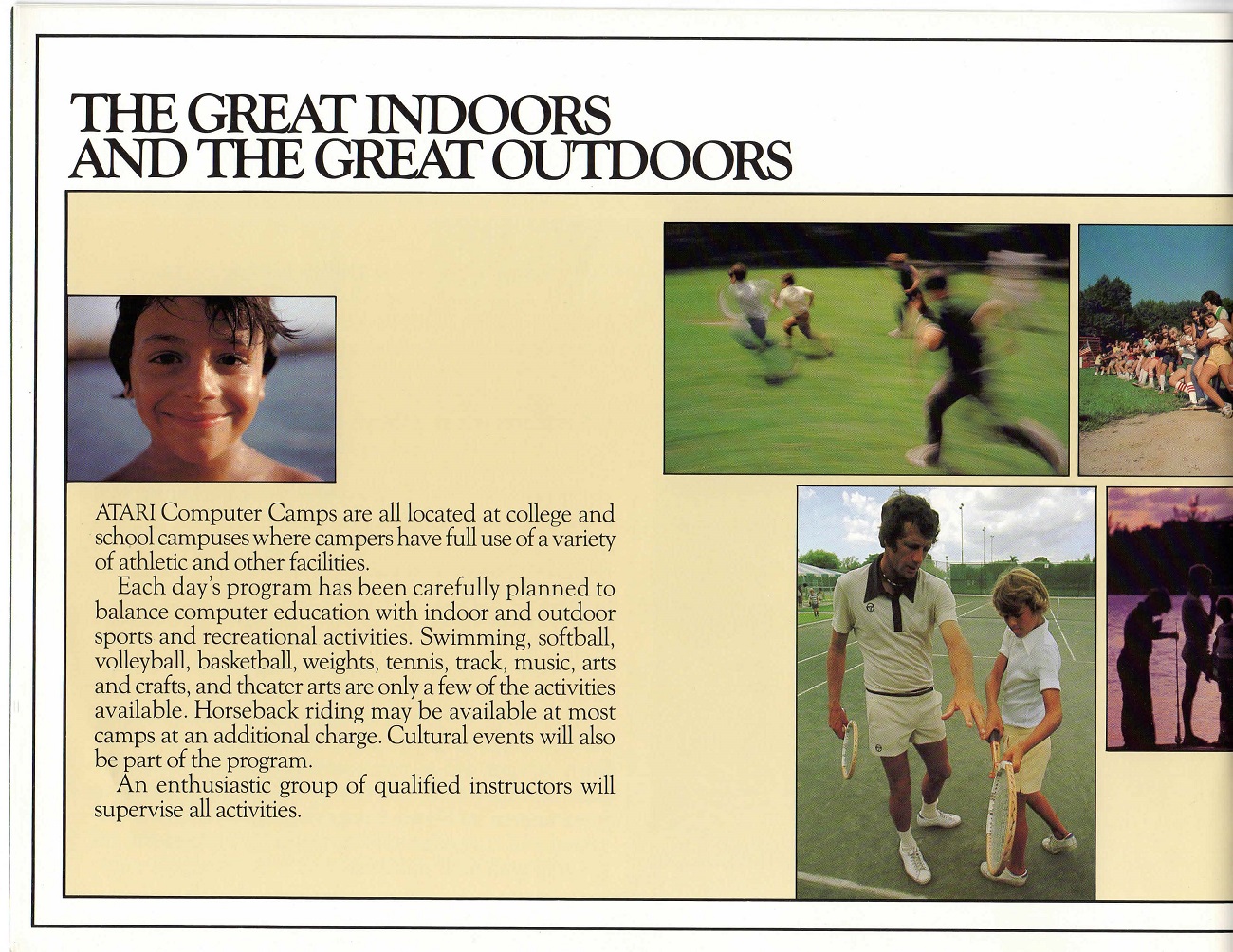


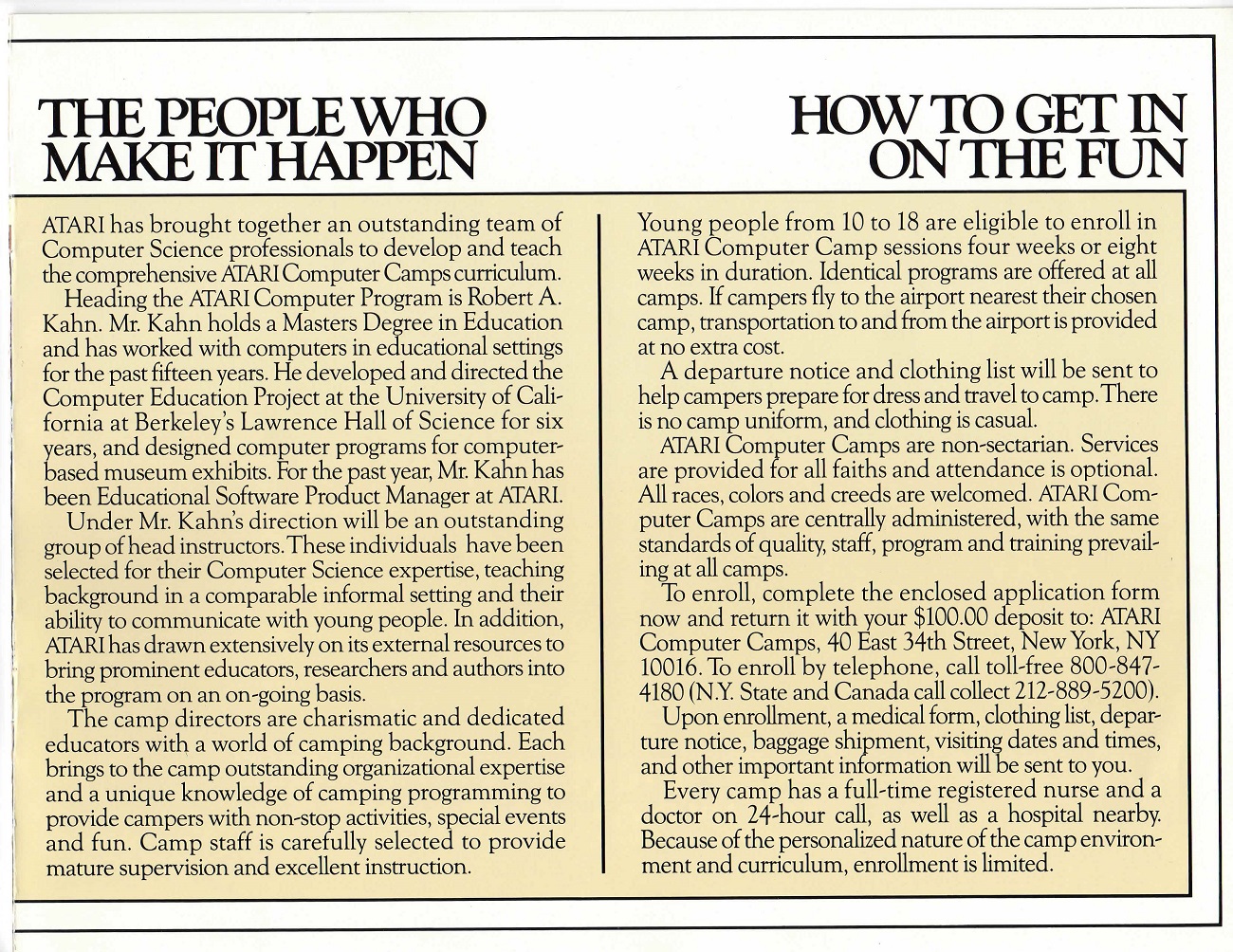

The computer camp concept was pioneered in 1977 by Dr. Michael Zabinski, a physics and engineering professor at Connecticut’s Fairfield University. Zabinksi had received “several federal grants to train teachers at the University to integrate computers into their classrooms,” and wisely thought of merging summer camp and computer training to reach young people. The first National Computer Camp was held in 1978. NCC is still going.
I talked about the Atari camps, with a breakdown of the hefty cost and daily schedule, here. There was a big push to get girls more involved with the Atari camps, as seen in the 1983 article here. Girls are also heavily represented on the brochure. Unfortunately, the male computer whiz stereotype established in the early ’80s stuck, and the number of women majoring in computer science peaked in 1984 at about 37%. That number has dropped steadily ever since and currently hovers at between 15-20%.
I have no doubt that the camp experience “lasts the rest of your life.” I don’t remember hearing about it at the time, or maybe I did and simply put it out of my head: my parents would never have been able to afford it.
I found the brochure at Robert A. Kahn & Associates, the company that designed it. The PDF is here. You have to admire how many activities were crammed onto the brochure cover, including, for some reason, catching butterflies.

From the ’82-’83 Quartz Hill High School yearbook. Quartz Hill is in California’s Antelope Valley, northeast of Los Angeles.
I do believe the gent in the middle is wearing a head armor piece and holding a wooden weapon of some kind. The gent to his left is holding the original AD&D Players Handbook. Is that a gorilla on his ringer tee?
The girl-guy ratio is damn near 50-50!
(Photo via QHHS Alumni)

The geek is Patrick Rothfuss, who discovered D&D in the early ’80s, became a writer of fantasy novels, and recently found himself listed in Appendix E of the new Dungeon Master’s Guide. Read the hilarious and heartfelt story—he takes the sleeveless t-shirt head on, don’t worry—at his website.
I bet you’d forgotten about the Aerobie, the “flying ring” first sold in 1984. Because so many of us demanded a more aerodynamic flying disc, preferably one designed by an engineer.

I don’t care how cool that chair is, kid—put a shirt on. And take those sunglasses off inside the house!
The console is a Magnavox Odyssey². I can’t make out the LP behind the second TV.
UPDATE (2/5/15): Lefty Limbo has identified the LP as Merle Haggard’s Someday We’ll Look Back (1971). The title is eloquently relevant, is it not? Nice work, Lefty-Deckard.
(Image via eBay)
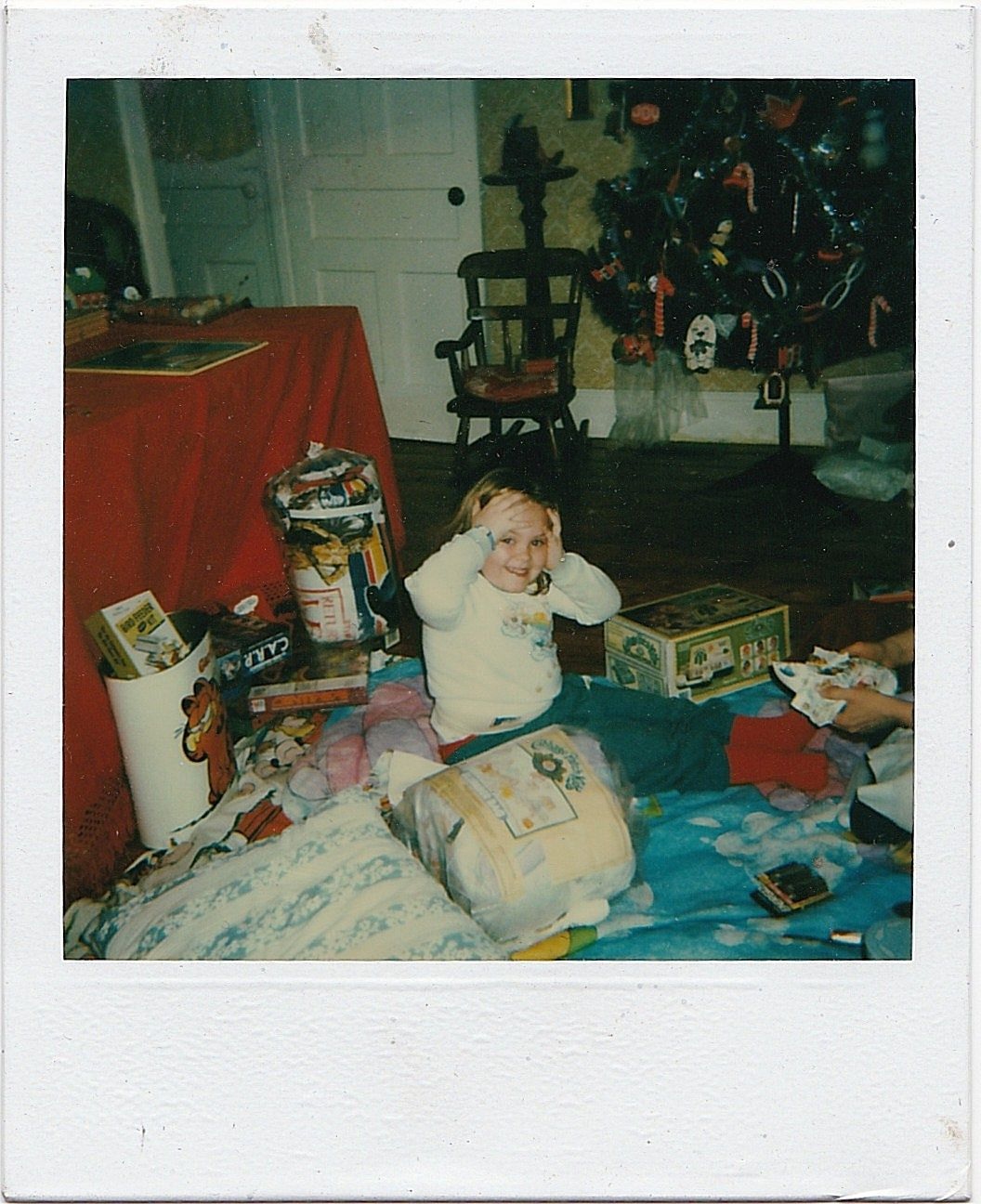
The happy kid has diverse tastes, and a sleeping bag (Cabbage Patch Kids for summer, Return of the Jedi for winter?) for every occasion. I think she’s wearing a Care Bears sweater.
Between ROTJ and the Garfield trash can is the Centipede (1983) board game. In a fascinating, sometimes clever, yet ultimately desperate attempt to compete with the new gaming paradigm, Milton Bradley released a number of board games based on popular (and not so popular) video games well into the ’90s, including Berserk and Zaxxon.
I don’t know what the C.A.R.P. box is. There’s a bird feeder kit in the trash can.
UPDATE: Thank you, Bradley Conrad, who figured out that C.A.R.P. is a Biotron clone (Cosmic Android Robot Probe) from the Inter-Changeables line. The Inter-Changeables were post-Mego and not technically Micronauts, although many of the molds are identical. Innerspace Online has the line being released around 1985, but I’m almost positive the photo above is from 1983. (Box images below are via Hake’s.) The title of this post has been updated to reflect Bradley’s great find.
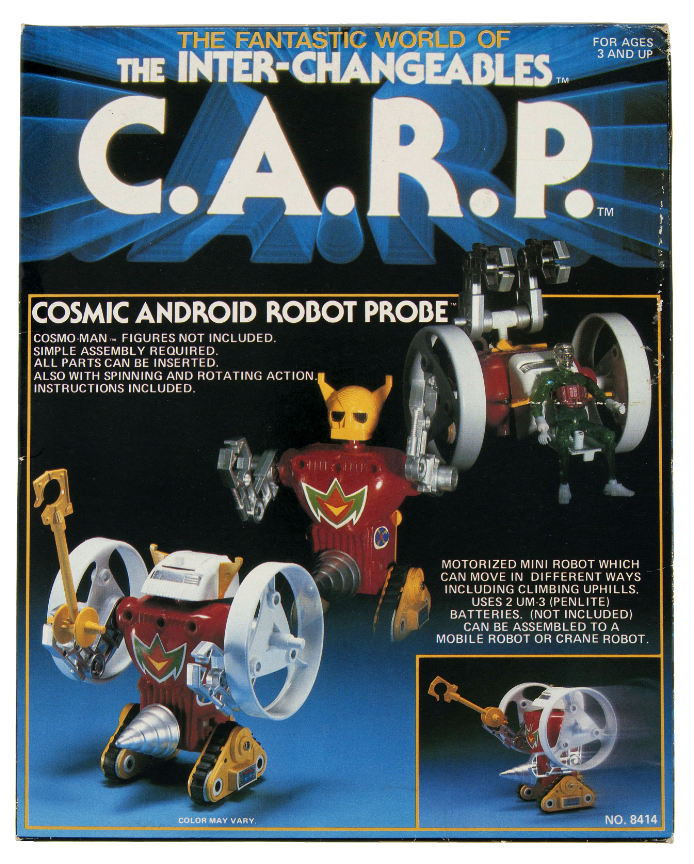

(First image via eBay)

The photo is via Corimarti, who nails down the scene: “
It’s also not fair that that gloriously raunchy carpet is not in my house. (MOTU goes best with rust-colored rugs, apparently.)

Here you see the Cobra Stinger, the Cobra Rattler, the Wolverine, and the Dragonfly—some of the most beautiful toys ever produced in arguably the most distinctive toy packaging ever designed. I still get butterflies in my stomach when I see the boxes and cards.
(Photo via Eric Anderson/Flickr)

 2 Warps to Neptune