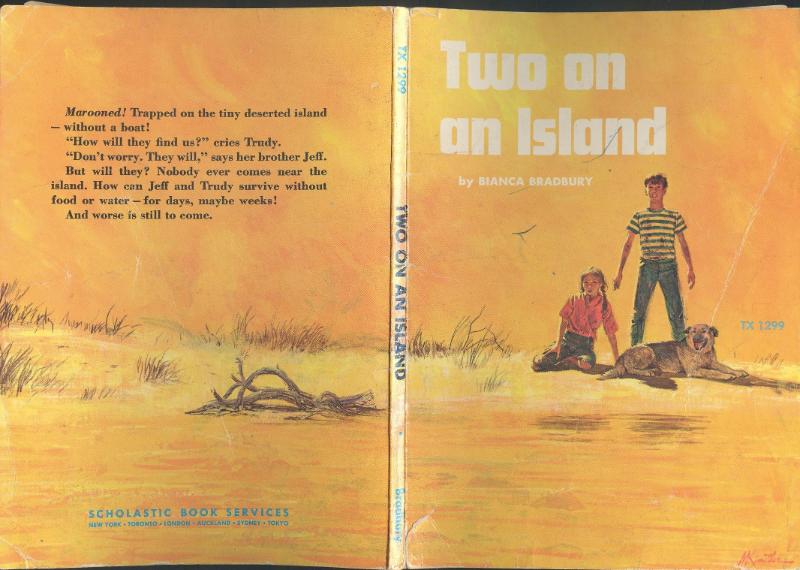
Maybe I read this as a kid and maybe I didn’t. All I know is that I want to read it right now.
Surveying the Gen X landscape and the origins of geek
Maybe I read this as a kid and maybe I didn’t. All I know is that I want to read it right now.

It reared up, seized the tower and gnashed at the glass. The foghorn and the monster cried.
I really dig this illustration (click to enlarge) by James R. Bingham for the Ray Bradbury story The Beast from 20,000 Fathoms, first published in The Saturday Evening Post in 1951. The story would become the basis for a 1953 movie of the same name featuring the brilliant stop-motion effects of Bradbury’s great friend, Ray Harryhausen. Having sold the rights to the title, Bradbury subsequently changed the name of the story to The Fog Horn. It appeared for the first time under that name in Bradbury’s first collection of short stories, The Golden Apples of the Sun (1953).

As I was searching eBay for all the Ray Bradbury books I read as a kid and somehow lost, I discovered this little gem, for which Bradbury provides an introduction. In 1969, Princeton physics professor Gerald O’Neill, “concerned over student disenchantment with science and engineering,” started seriously discussing space colonization with his brightest freshman students. He asked them, “Is the surface of a planet really the right place for an expanding technological civilization?” After much back and forth about atmosphere and energy requirements, “They concluded that the surface of a planet was not the best place for a technical civilization. The best places looked like new, artificial bodies in space, or inside-out planets.”
They kept at it. The ideas were discussed at a conference at Princeton, studies were conducted, and in 1975 O’Neill got a grant from NASA “to work full-time on space colonization.” That same year O’Neill testified before the space-science subcommittee of the House committee on science and technology, and the U.S. Congress increased NASA’s budget by 25% “to lay the foundation for advanced projects, such as moon bases and orbital colonies.” (Did you know there was a House Committee on Science, Space, and Technology? If not, don’t blame yourself.)
The book is absolutely fascinating, and lucky for us the whole thing is available online at The National Space Society, “an independent, educational, grassroots, non-profit organization dedicated to the creation of a spacefaring civilization.” Below are some of the amazing paintings and drawings included in the book (from Chapters 8, 10, and 15). The captions are exactly as they appear at the NSS. Also be sure to check out the Color Plates and all the beautiful Don Davis paintings in Chapter 15.
Thank you, NSS!

“Bernal Sphere” design for a space colony. The sphere is the central structure; the structure resembling coils of hose are where agriculture is conducted. The disks at either end are radiators for waste heat. (Courtesy NASA)

Cutaway view of “Bernal sphere” type of space colony. Some 10,000 people would live and work in the central sphere. A separate area, exposed to the intense sunlight of space, would be set aside for growing crops. (Courtesy NASA)
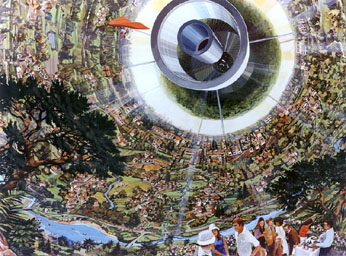
Interior of “Bernal sphere” colony. The hang-glider pilot actually is engaged in powered flight, which is possible in the low gravity of the colony center. He pedals a bicyclelike arrangement which drives the large propeller at his back.
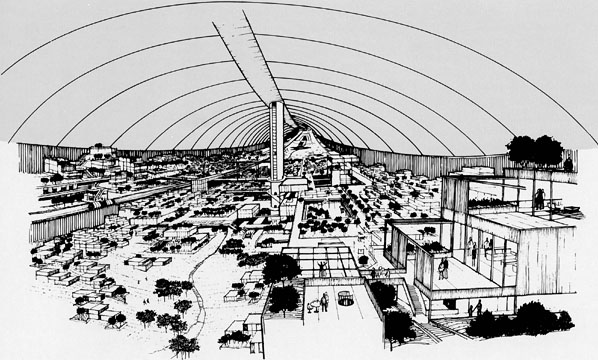
Residential district inside the colony. (Courtesy Pat Hill)

Downtown in a colony business district. (Courtesy Pat Hill)
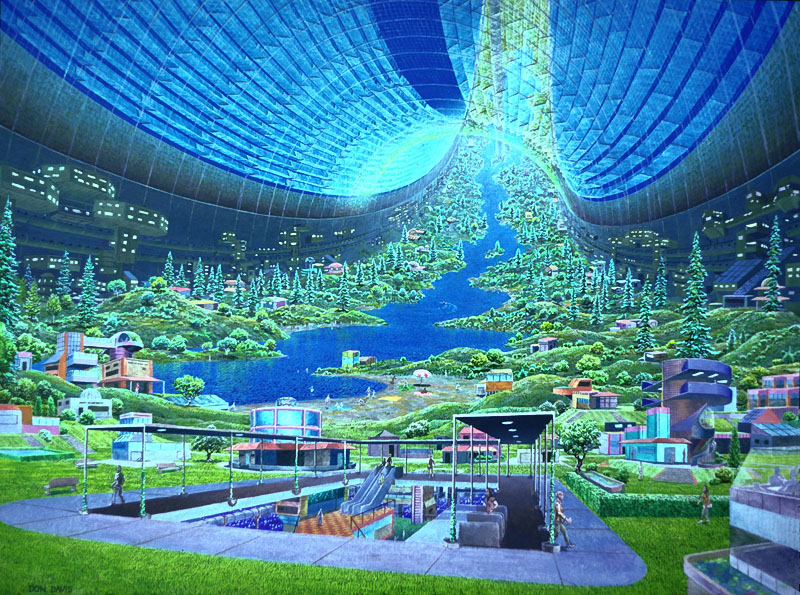
As the large colonies proliferate, the early Stanford toruses will still represent valuable living space. But their interiors will be rebuilt to suit the open, well-forested styles in vogue in the middle of the next century. (Donald E. Davis painting courtesy NASA)
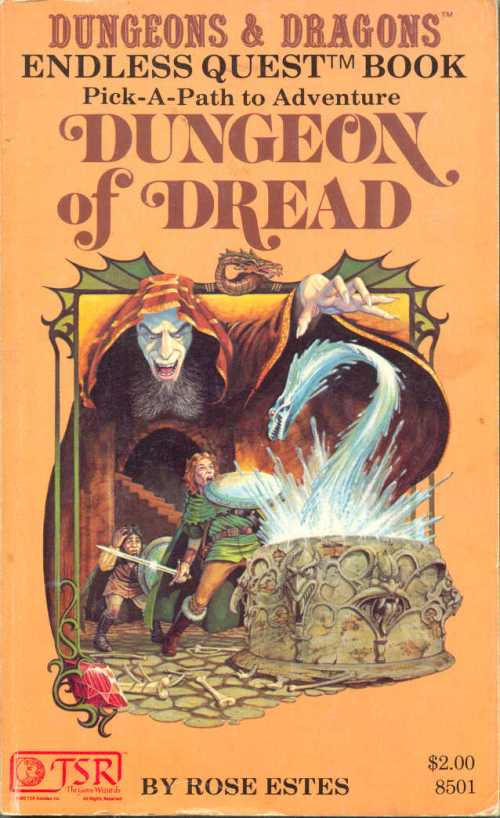


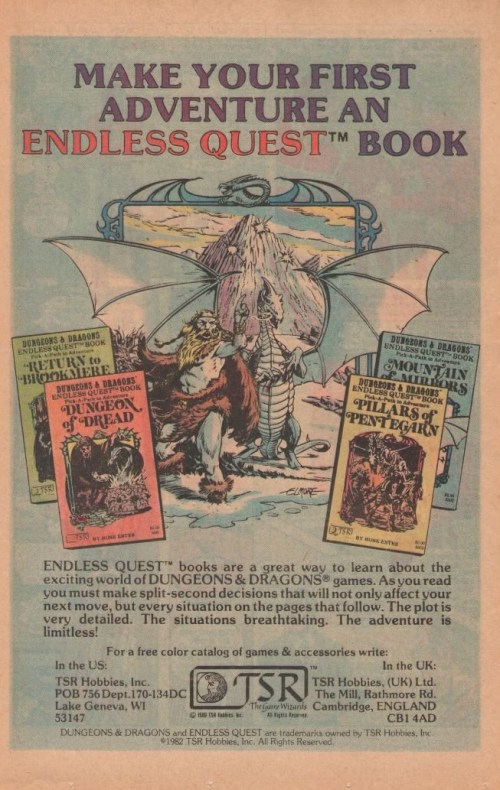
TSR’s Endless Quest series came out in 1982, and was promptly lapped up by D&D-heads everywhere. The “Pick-A-Path to Adventure” tag was a direct rip-off of the hugely successful Choose Your Own Adventure line, which I also loved, but Endless Quest was grittier and had cooler cover art (the covers above are by Larry Elmore).
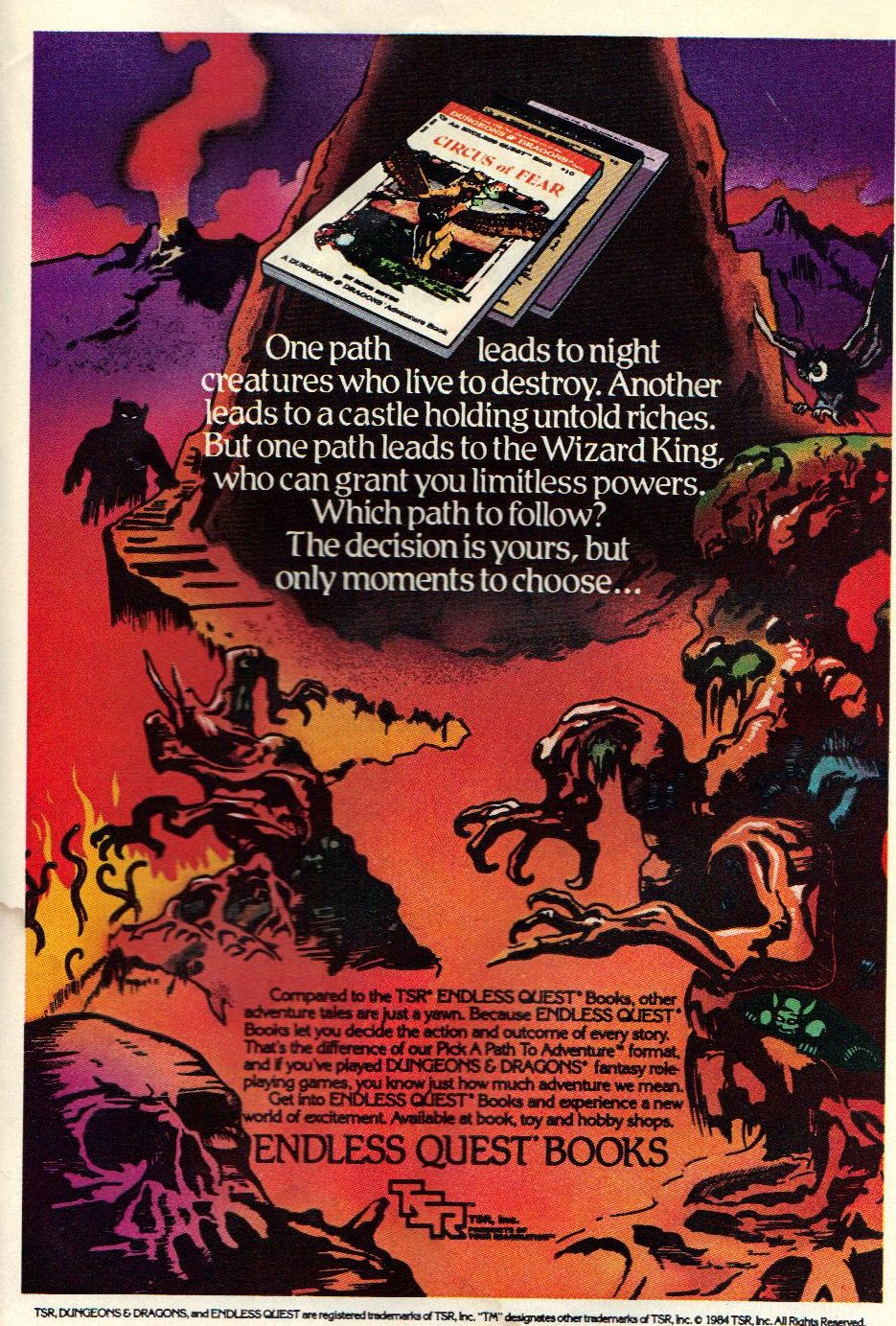
Thanks to Demian Katz for the book cover images, and for providing a comprehensive database of the series, including a summary and review of each volume. Some ads below.


 2 Warps to Neptune