Archive for the 'D&D Art' Category


The Art of the Dungeons & Dragons Fantasy Game (TSR, 1985) (Part Two)

Art of D&D078

Art of D&D079

“Death to Intruders!” acrylics, by Keith Parkinson

Art of D&D080

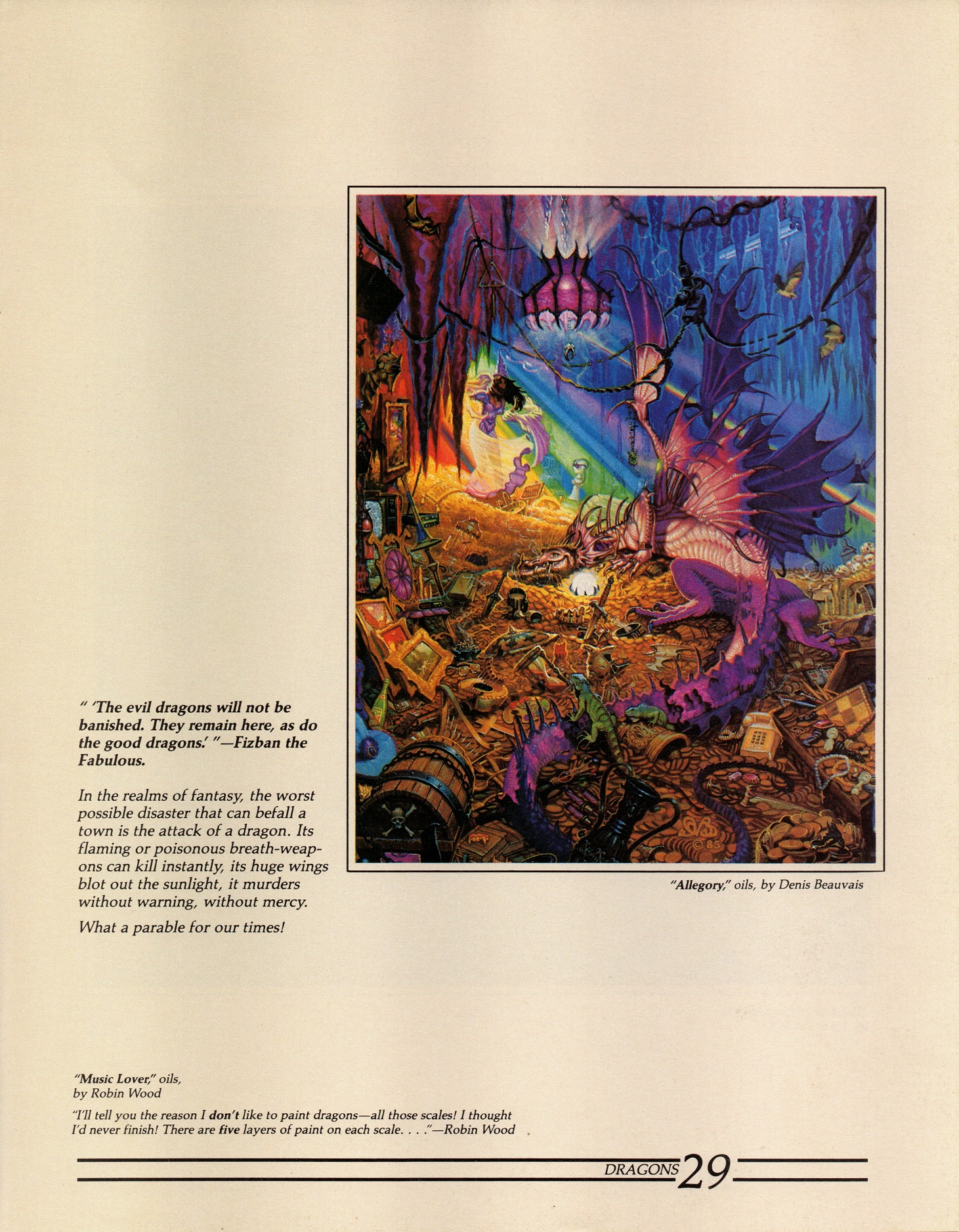
Music Lover,” oils, by Robin Wood

Art of D&D081

Art of D&D082

Art of D&D083

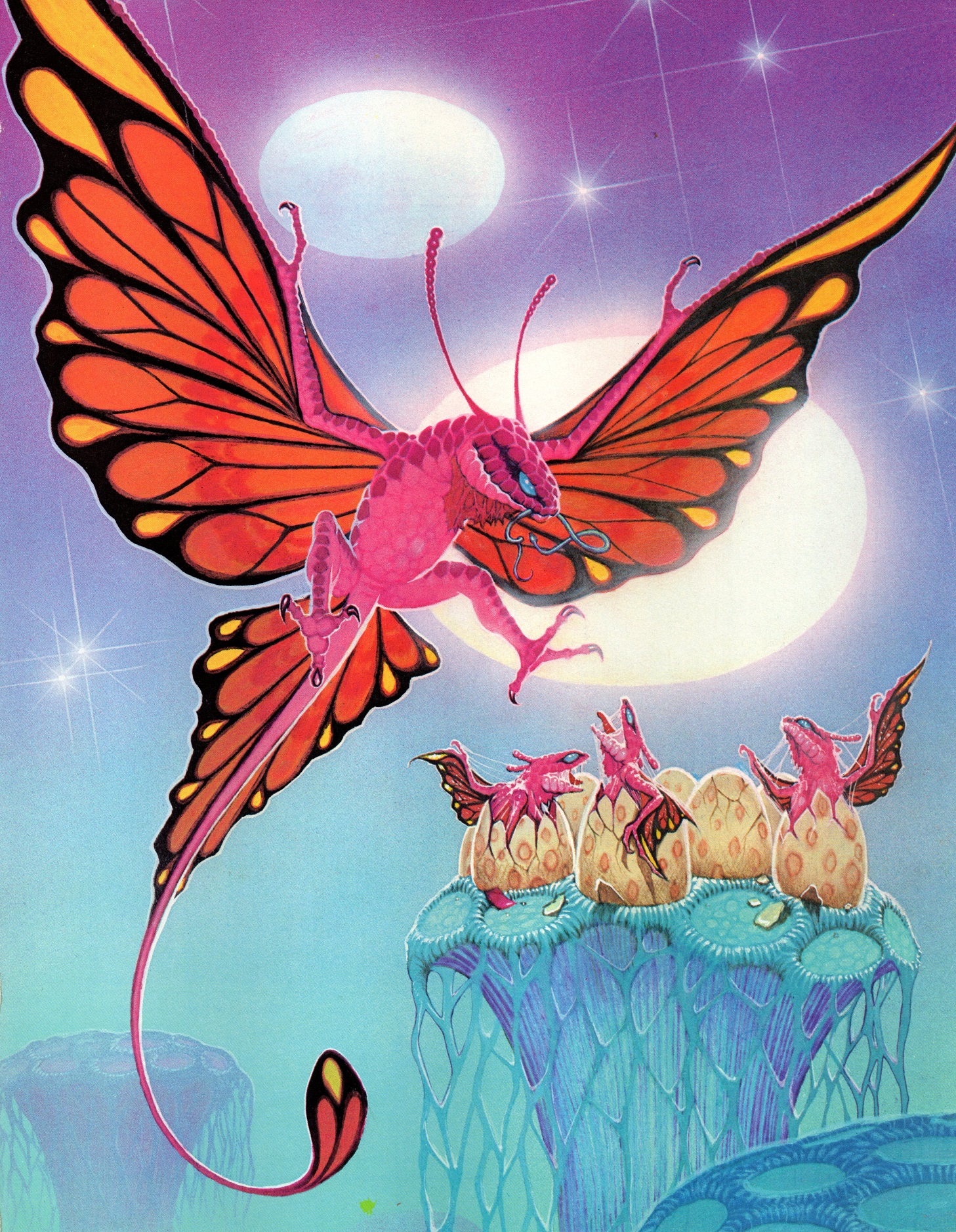
“Motherhood,” acrylic, wash, and color pencils, by Denis Beauvais

Art of D&D084

Art of D&D085

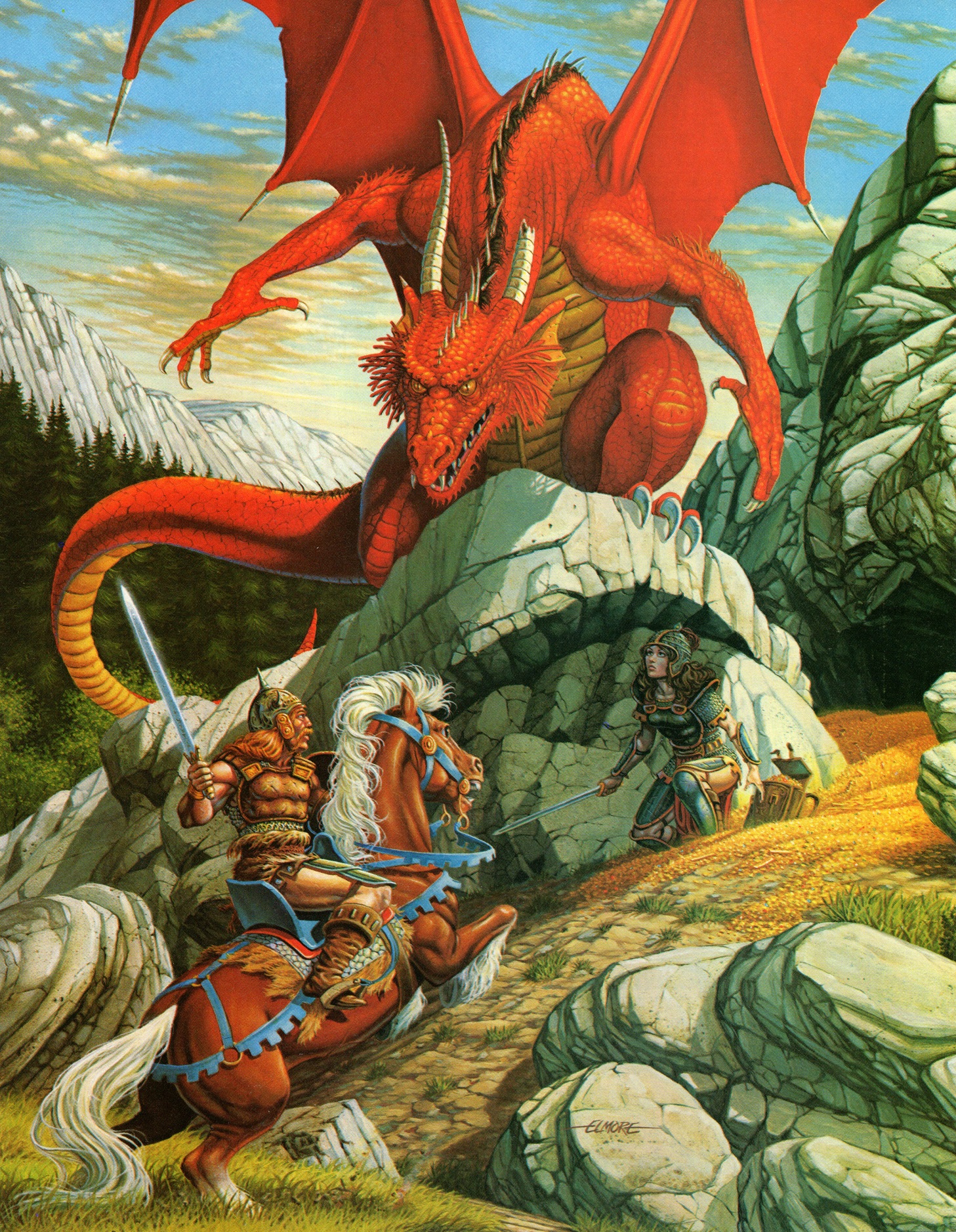
“Teamwork,” oils, by Larry Elmore

Art of D&D086

“Castle Caldwell,” oils, by Clyde Caldwell

Sources, from top to bottom:

Dragons of Doom (front cover) Endless Quest Book #13 by Rose Estes (1983)
Sabre River (front cover) Adventure Module CM3 by Douglas Niles and Bruce Nesmith (1984)
Dragon #97 (front cover) (May, 1985)
Dragon #98 (front cover) (June, 1985)
Dragon #92 (front cover) (December, 1984)
Dragon #78 (front cover) (October, 1983)
Poster designed exclusively for Sears (1984)
Castle Caldwell and Beyond (front cover) Adventure Module B9 by Harry Nuckols (1985)

The Robin Wood painting is my favorite by far. It’s the first cover she did for Dragon magazine. In the book she says:

I’ll tell you the reason I don’t like to paint dragons—all those scales! I thought I’d never finish! There are five layers of paint on each scale…

She has more to say here.

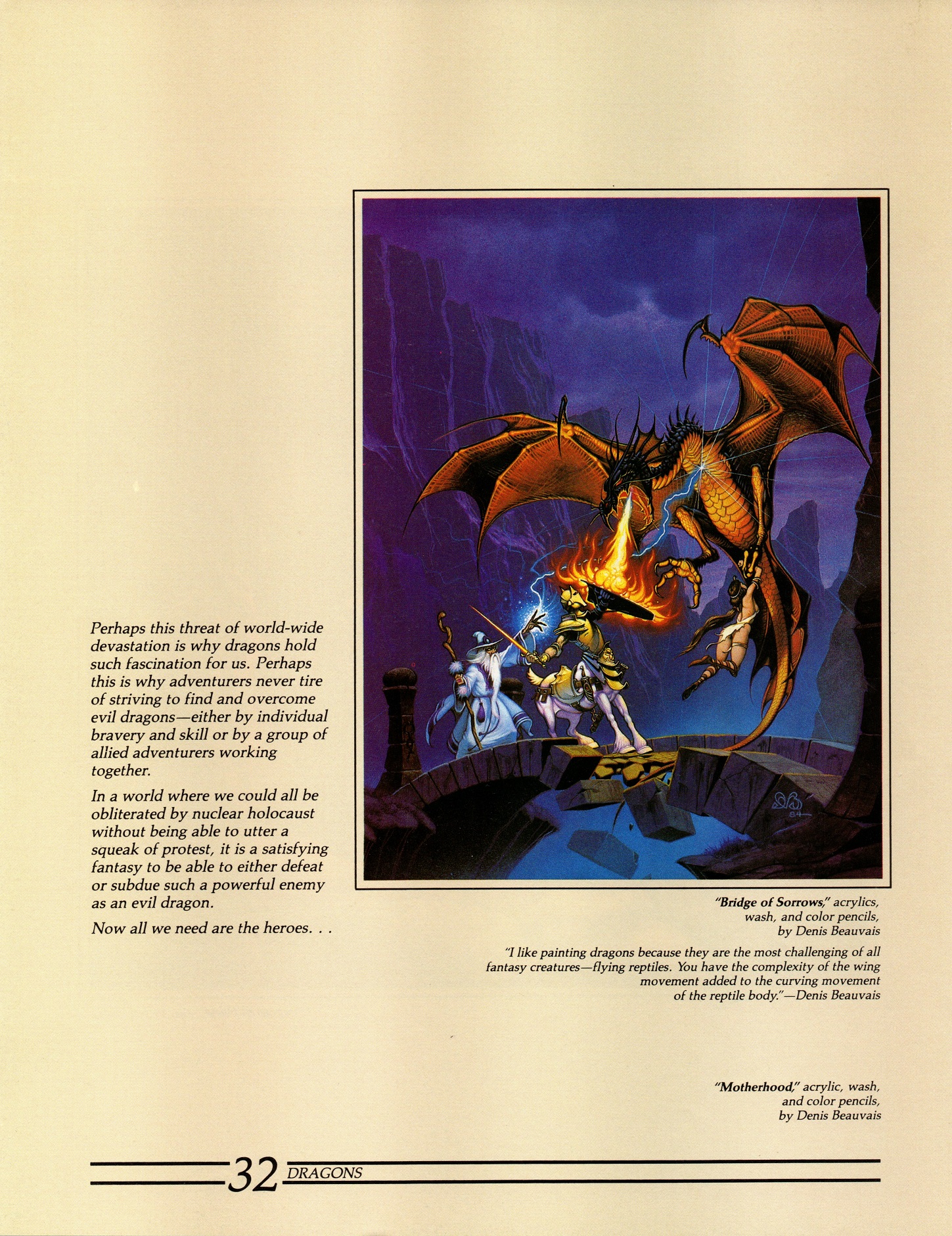
Beauvais is another favorite of mine. His color schemes and more abstract style set him apart from the reigning realism of the day.

Part one is here.

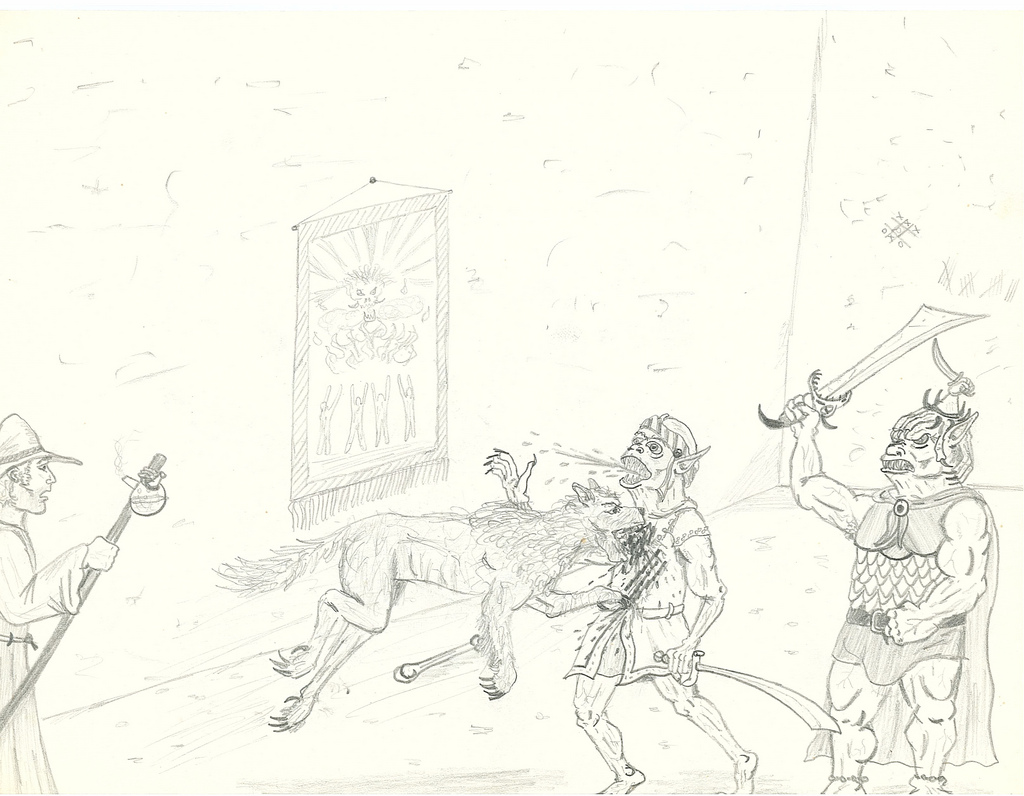
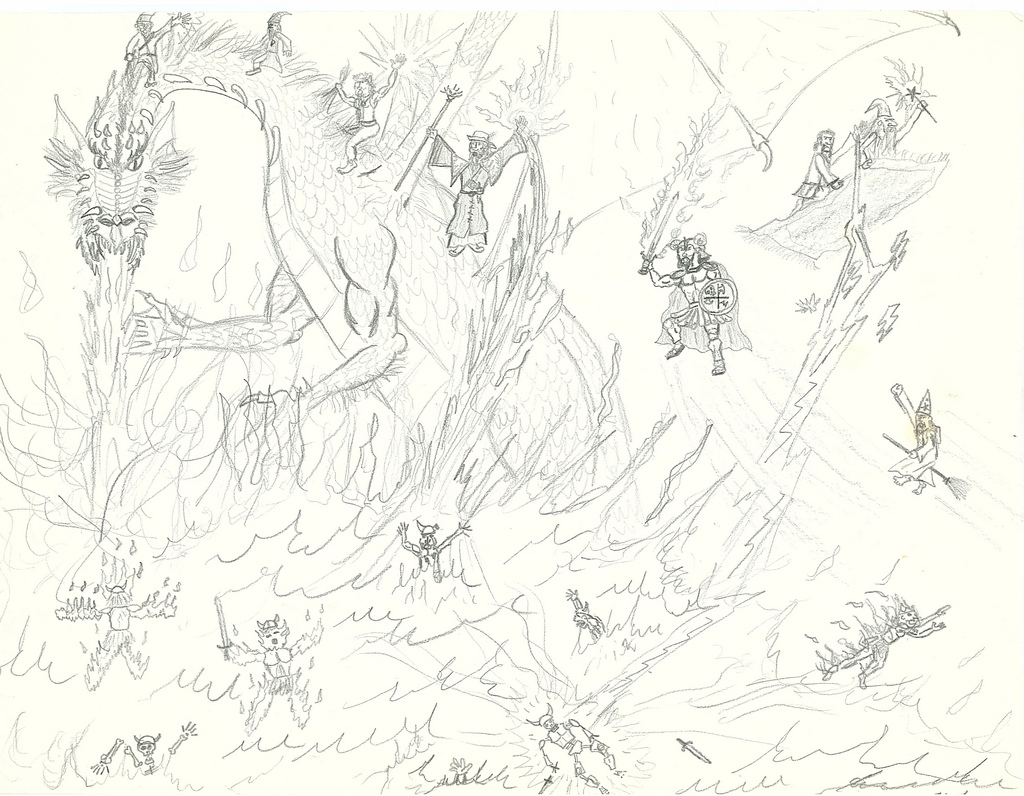
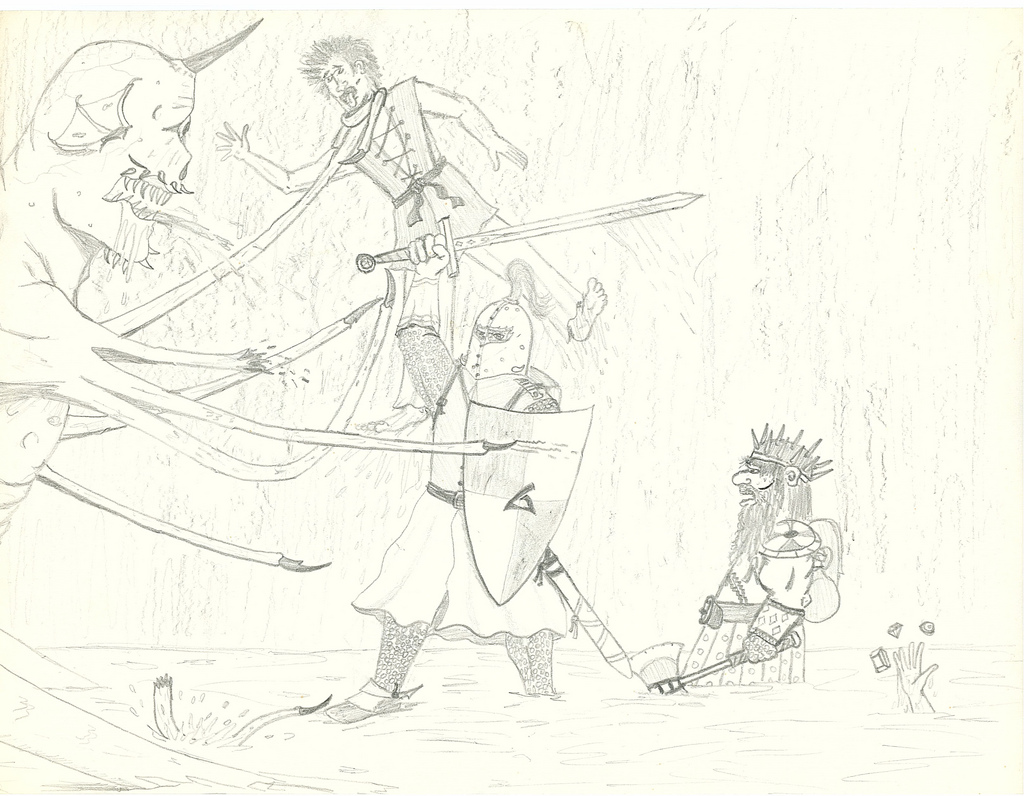
Kid Art (Circa 1980 – 1985): Dungeons & Dragons

D&D Sinclair-1

D&D Sinclair-3

D&D Sinclair-7

D&D Sinclair-6

D&D Sinclair-12

D&D Sinclair-2

D&D Sinclair-8

D&D Sinclair-11

D&D Sinclair-10

D&D Sinclair-9

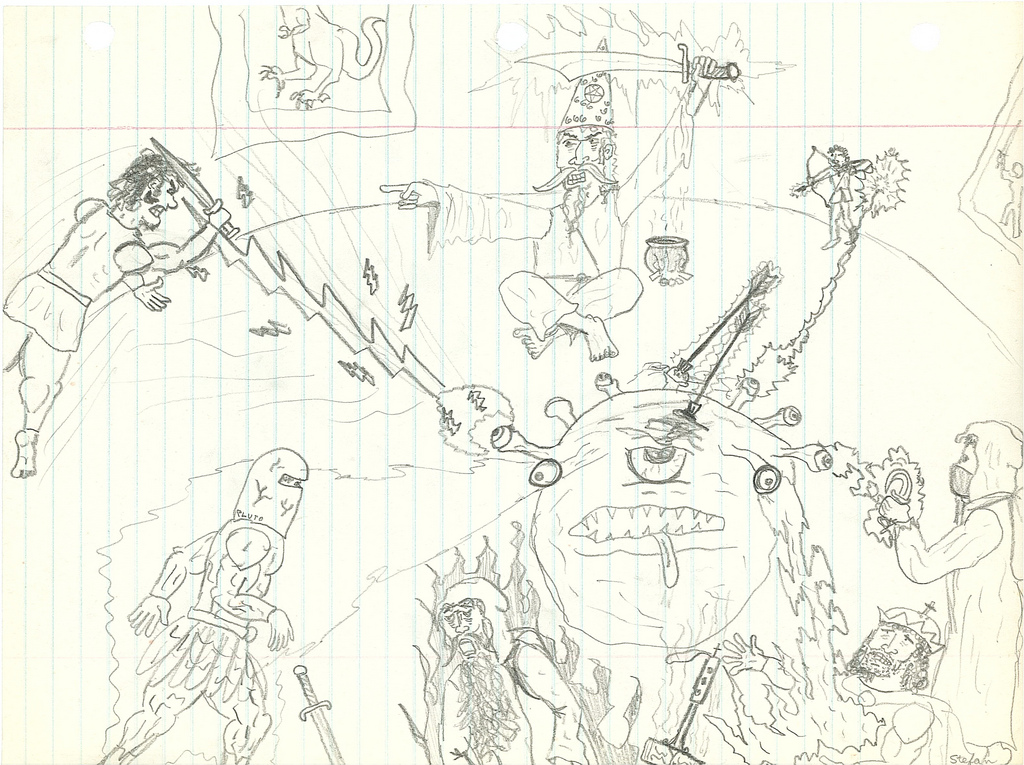
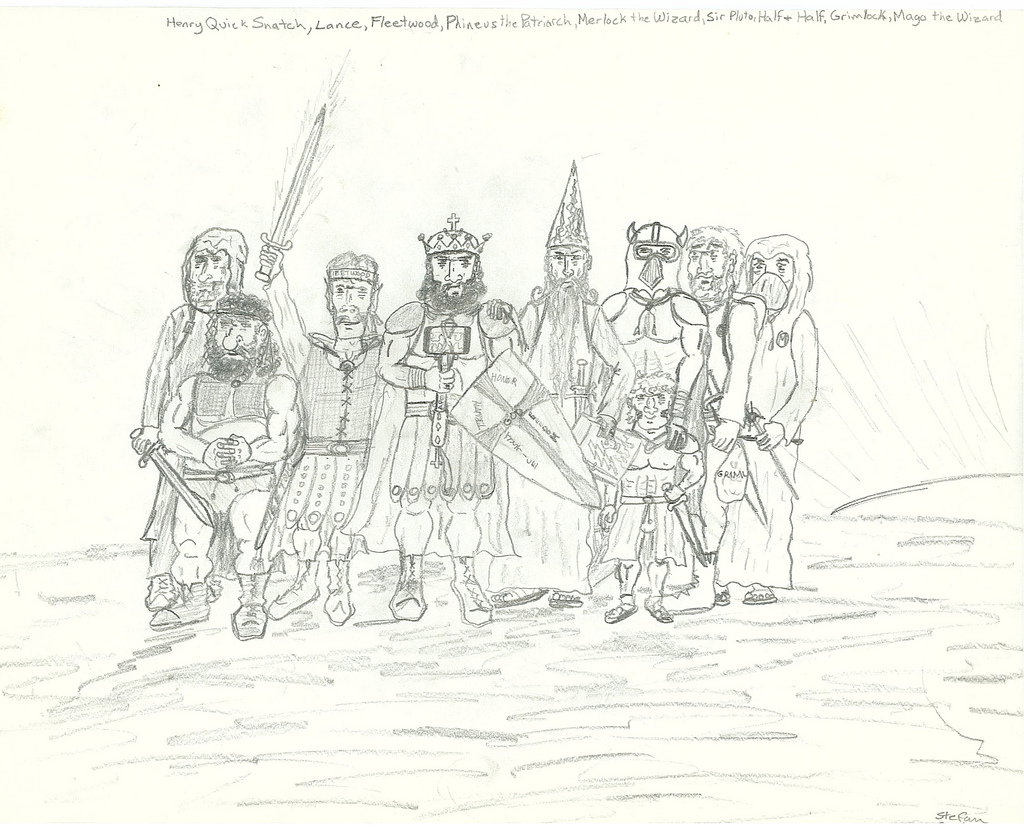
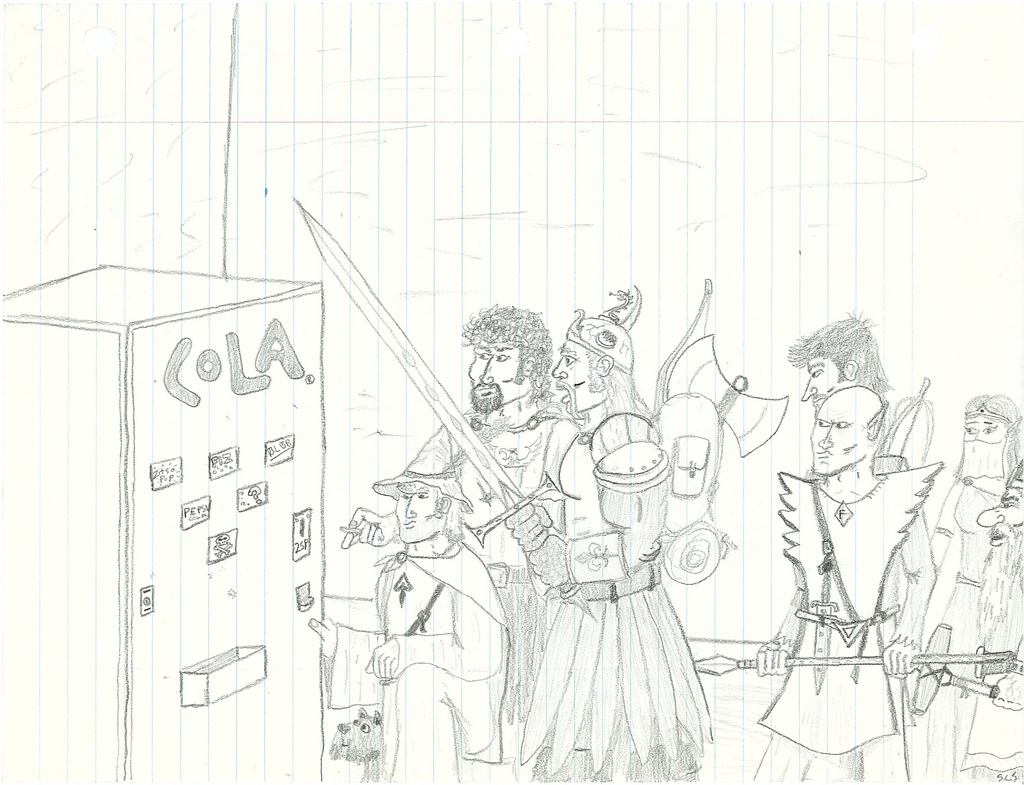
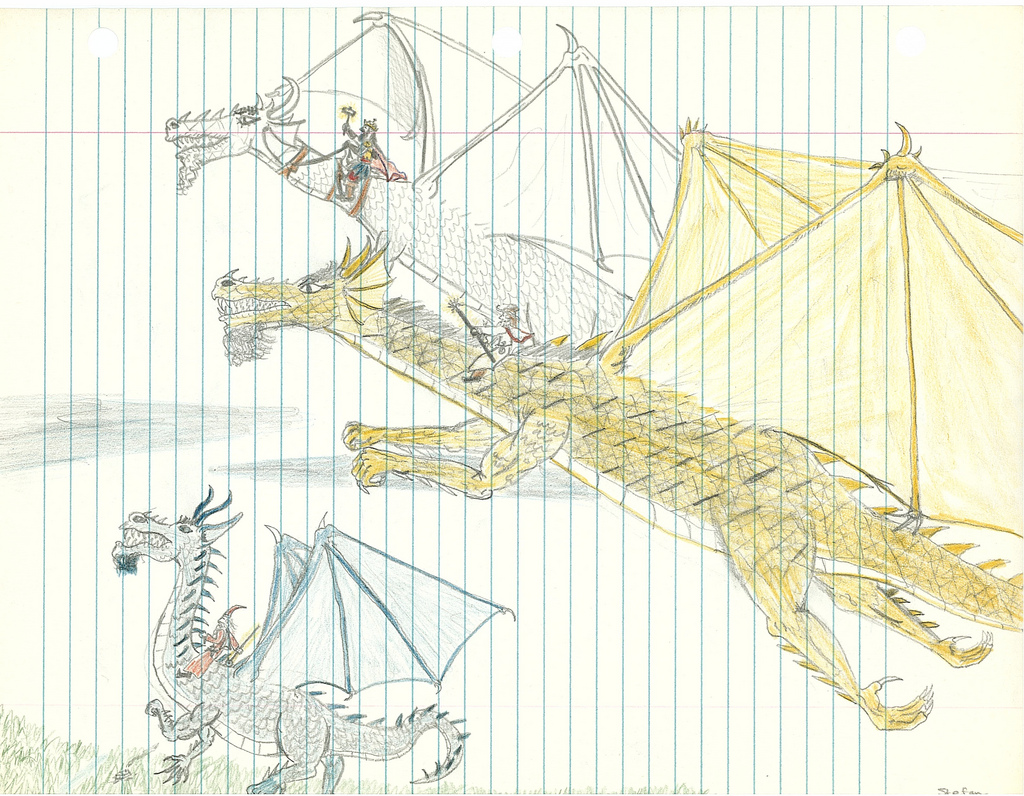
I’m going to go ahead and call these drawings masterpieces on par with the Orvis’s illustrations of Disney’s The Black Hole. They’re from Stefan’s Flickr, and there are 91 glorious pieces, all of them perfectly captioned, in his D&D Pencil Art album.

Note the soda machine that has fallen through a “dimensional rift” into D&D world, as well as the bank robbery (“we were low on GP,” says Stefan). Other art not featured here includes a decapitating ninja, a “giant robot warrior machine” shooting down an X-Wing Fighter, an “Apocalypse Arena,” an arm-wrestling dragon, a Sumo warrior, a wizard on a magic carpet dueling a giant eagle, and a bitch-slapping grizzly bear.

The set belongs in a museum.

Kid Art (1981): Dungeons & Dragons ‘Knight’

D&D 1981

Beautiful D&D-inspired piece artist Joe Linton did when he was in high school. Saved by mom, naturally. I found it on his blog, Homemade Ransom Notes.

The Art of the Dungeons & Dragons Fantasy Game (TSR, 1985) (Part One)

Art D&D Cover

Art D&D 1985063

Art D&D 1985064

Art D&D 1985065

Art D&D 1985066

Art D&D 1985067

Art D&D 1985068

Art D&D 1985069

Art D&D 1985070

Art D&D 1985071

Art D&D 1985072

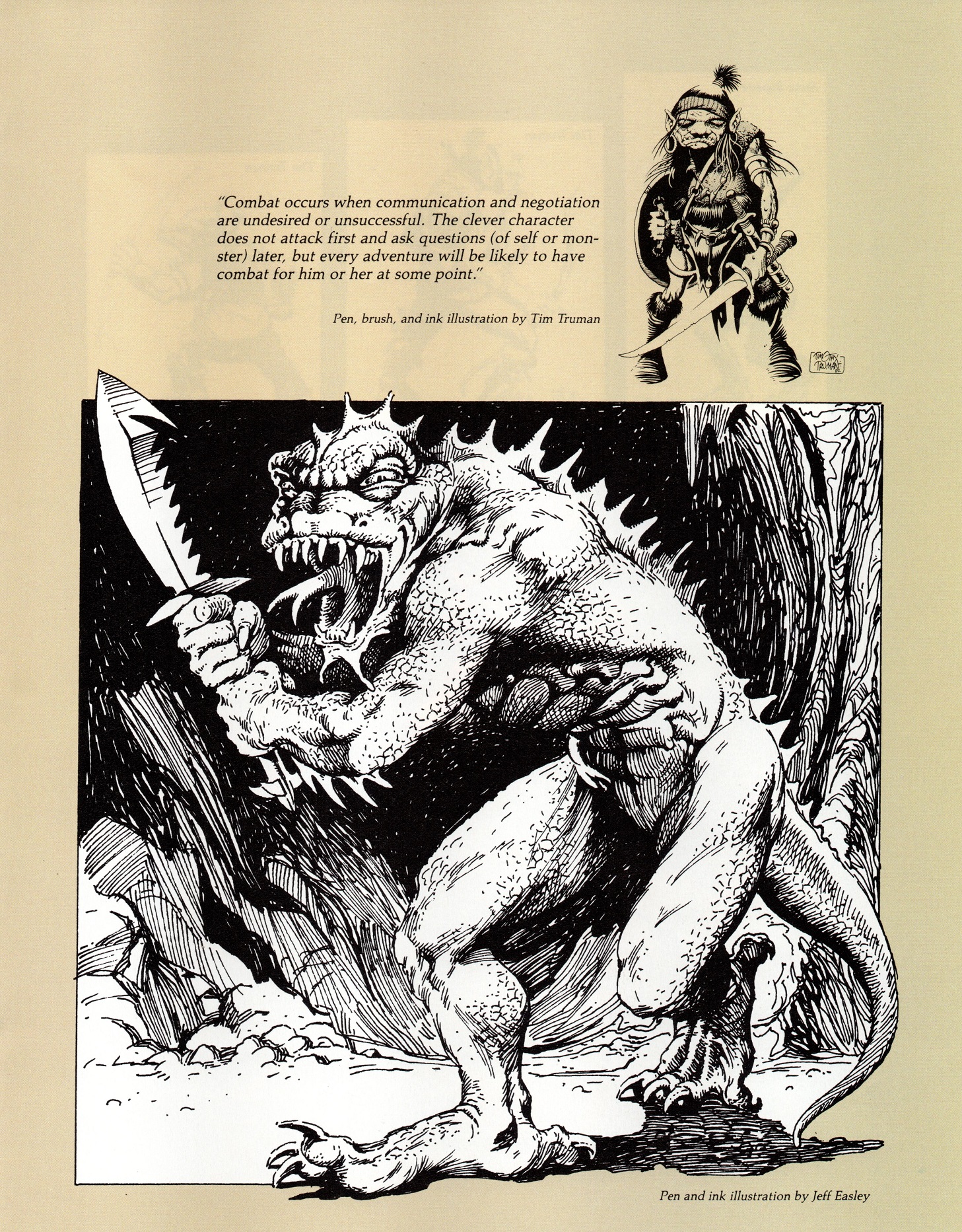
The Art of the Dungeons & Dragons Fantasy Game focuses on the heavyweights of the day: Easley, Elmore, Parkinson, and Caldwell. Thankfully, there’s also quite a selection of Timothy Truman, who I think is generally underrated. Almost all of the art above, most of it Truman’s, is sourced as “product design,” referring to the AD&D LJN toys released in 1983.

Many of Truman’s illustrations made it onto the action figure and adventure figure (PVC) cards, including the popular first series releases Warduke (Evil Fighter), Elkhorn (Good Fighter Dwarf), Zarak (Evil Half-Orc Assassin), and Melf (Good Fighter Elf). The same illustrations appear later in Quest for the Heartstone (1984), a module that includes many of the characters from the LJN line (and others that were meant to be part of the line but didn’t make the cut).

Truman’s gnoll illustration (sixth image down) is originally from Return to Brookmere by Rose Estes (1982), an Endless Quest book. His Orc (third image down) appeared on the back of the Orcs of the Broken Bone adventure figure card (below). His awesome Skeletal Warrior did not, for some silly reason, appear on the back of the Skeleton Soldiers of Sith card. The less awesome substitute is below.

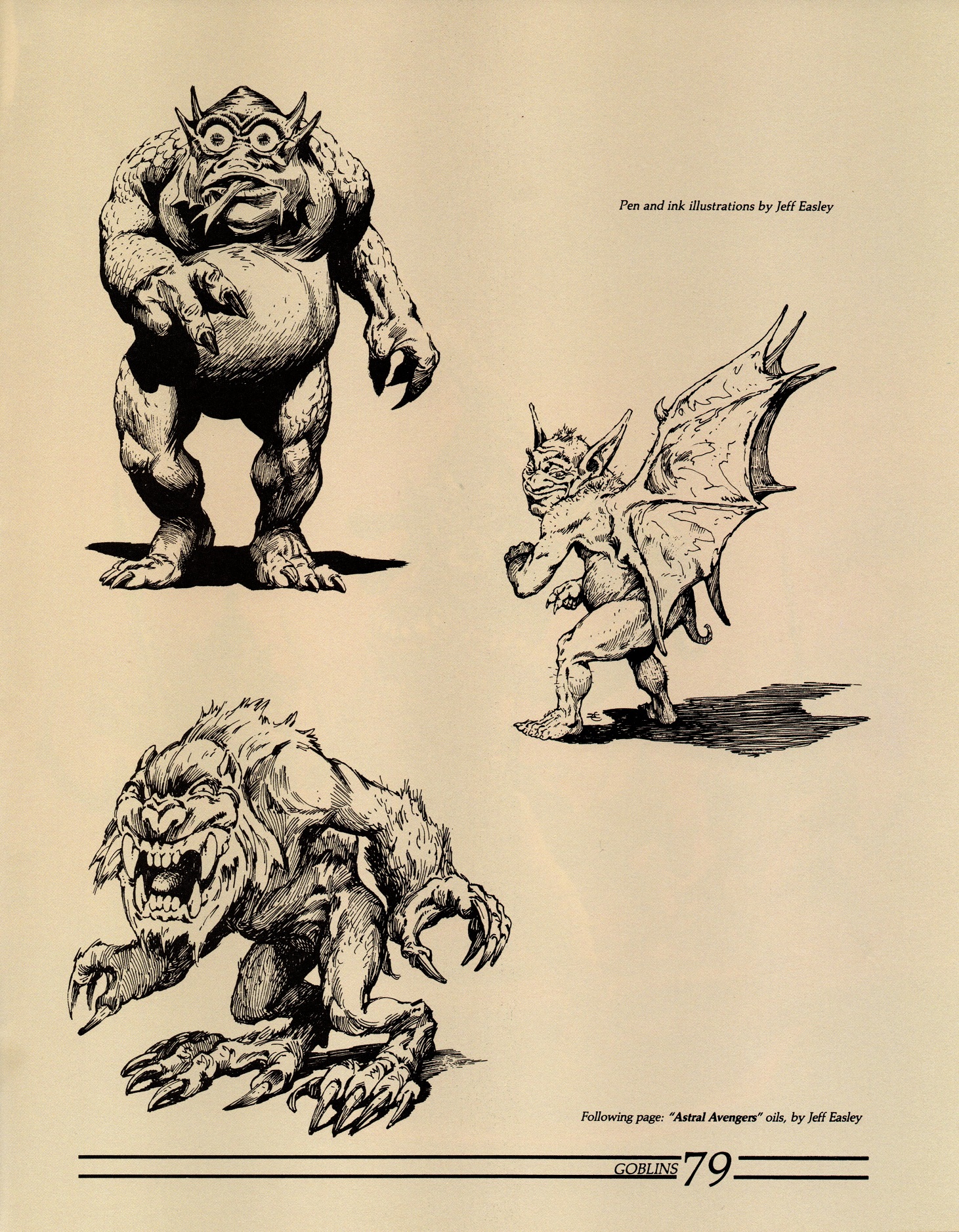
There’s a nice trio of inks by Jeff Easley (seventh image down), also sourced as product design. I’m not sure if or when they were published.

D&D Orcs of the Broken Bone

D&D Skeleton Figures of Sith

The Cthulhu Mythos in TSR’s Deities & Demigods (1980)

Cthulhu-1

Cthulhu-2

Cthulhu-3

Cthulhu-4

Cthulhu-5

Cthulhu-6

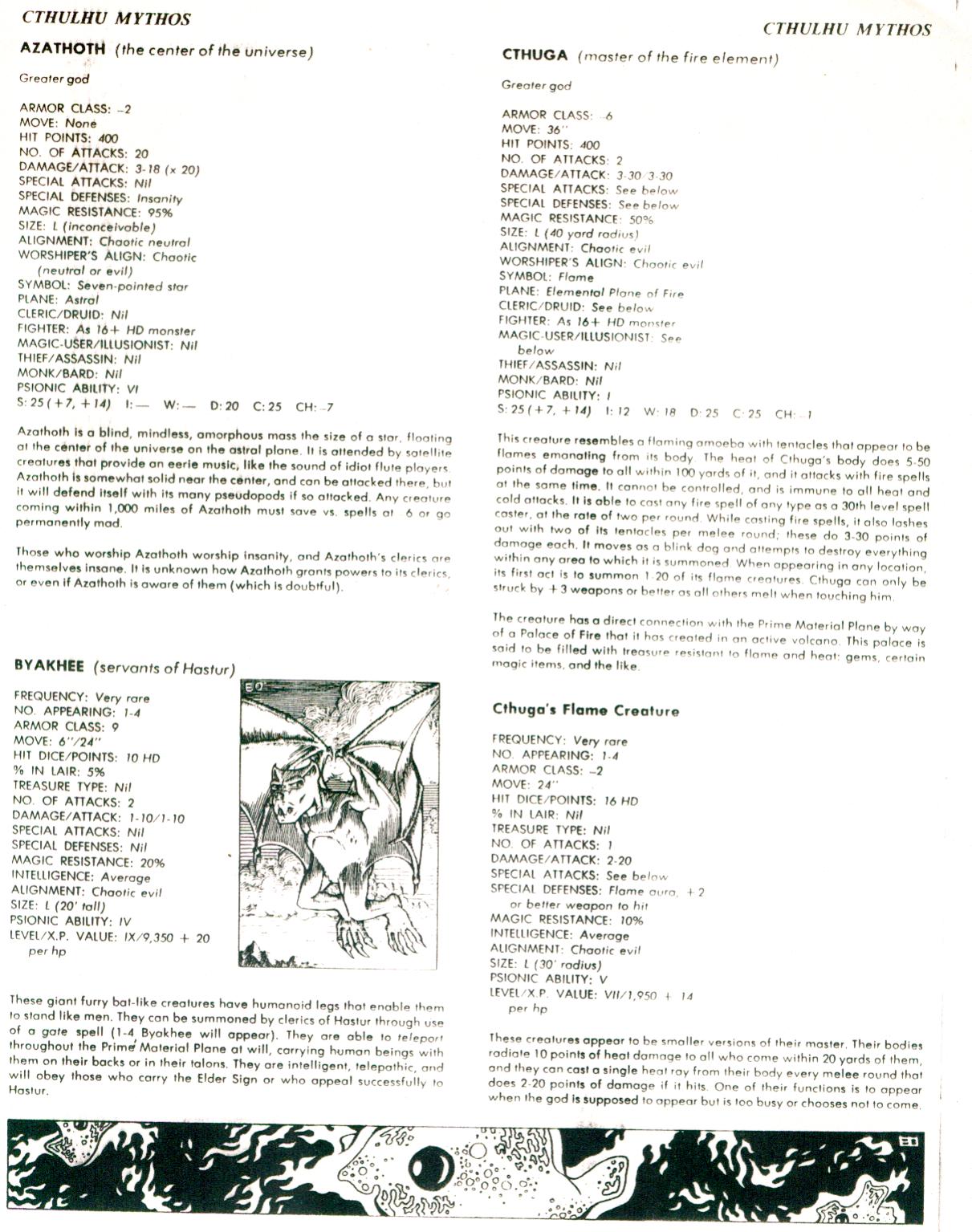
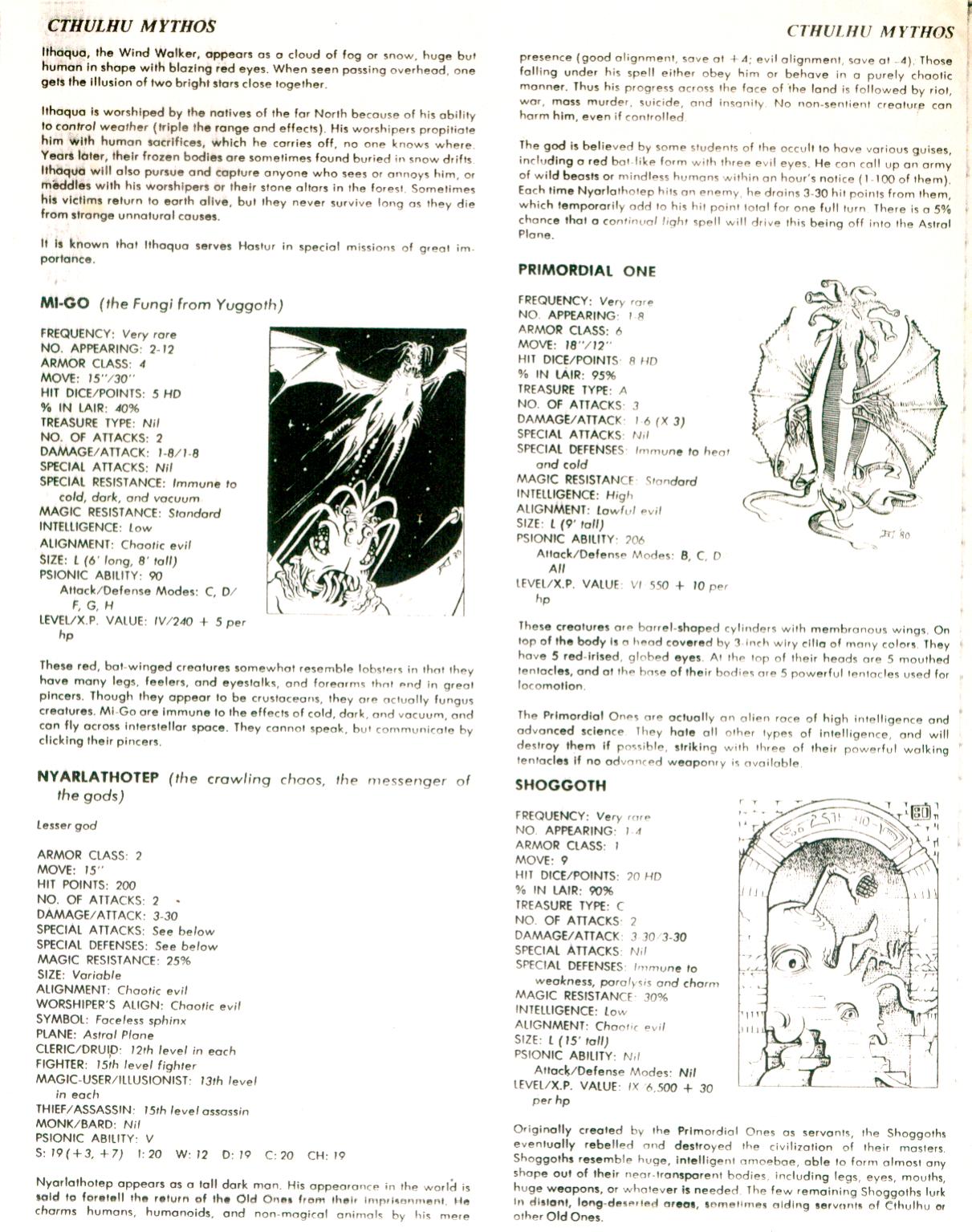
Compare the entries and stats here to the “Lovecraftian Mythos” article in The Dragon. Despite J. Eric Holmes blowing off a reader’s suggestion to raise the hit points of the Great Old Ones, that’s exactly what’s happened—and a number of other criticisms have been addressed as well. My favorite part of the Azathoth entry—about the universe collapsing and all life being destroyed in the event of the creator’s death—has been removed, and instead of being “the creator of the universe,” Azathoth is now “the center of the universe.” The idea is to make the gods appropriately awesome and intimidating while also making them approachable from a role-playing perspective.

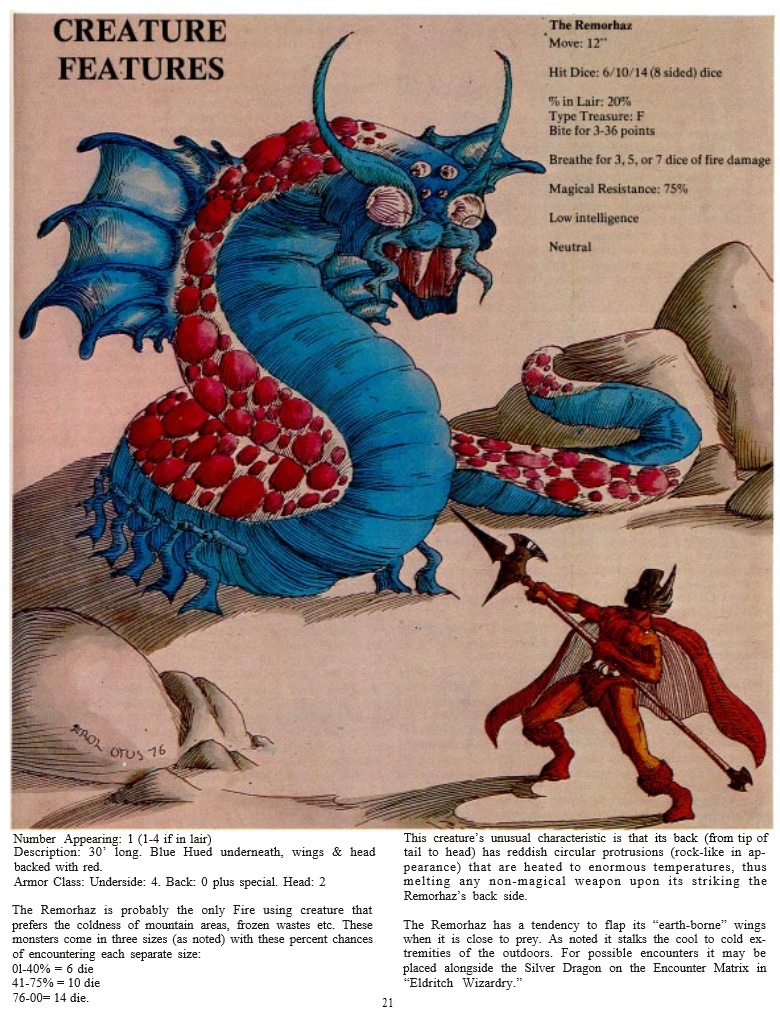
The illustrations are by Erol Otus, who, in my opinion, is the definitive early D&D artist and one of the greatest fantasy artists of all time. Lovecraft’s vibe suited him perfectly, and I wish he’d done—or would do—a portfolio or an illustrated edition. His smug Cthulhu is what I see when the name is invoked, and all the arcane denizens and their haunts shimmer with high strangeness and psychedelic mania.

To admire more Otus art from Deities & Demigods, visit The Erol Otus Shrine.

(Images via Dr. Theda’s Crypt)

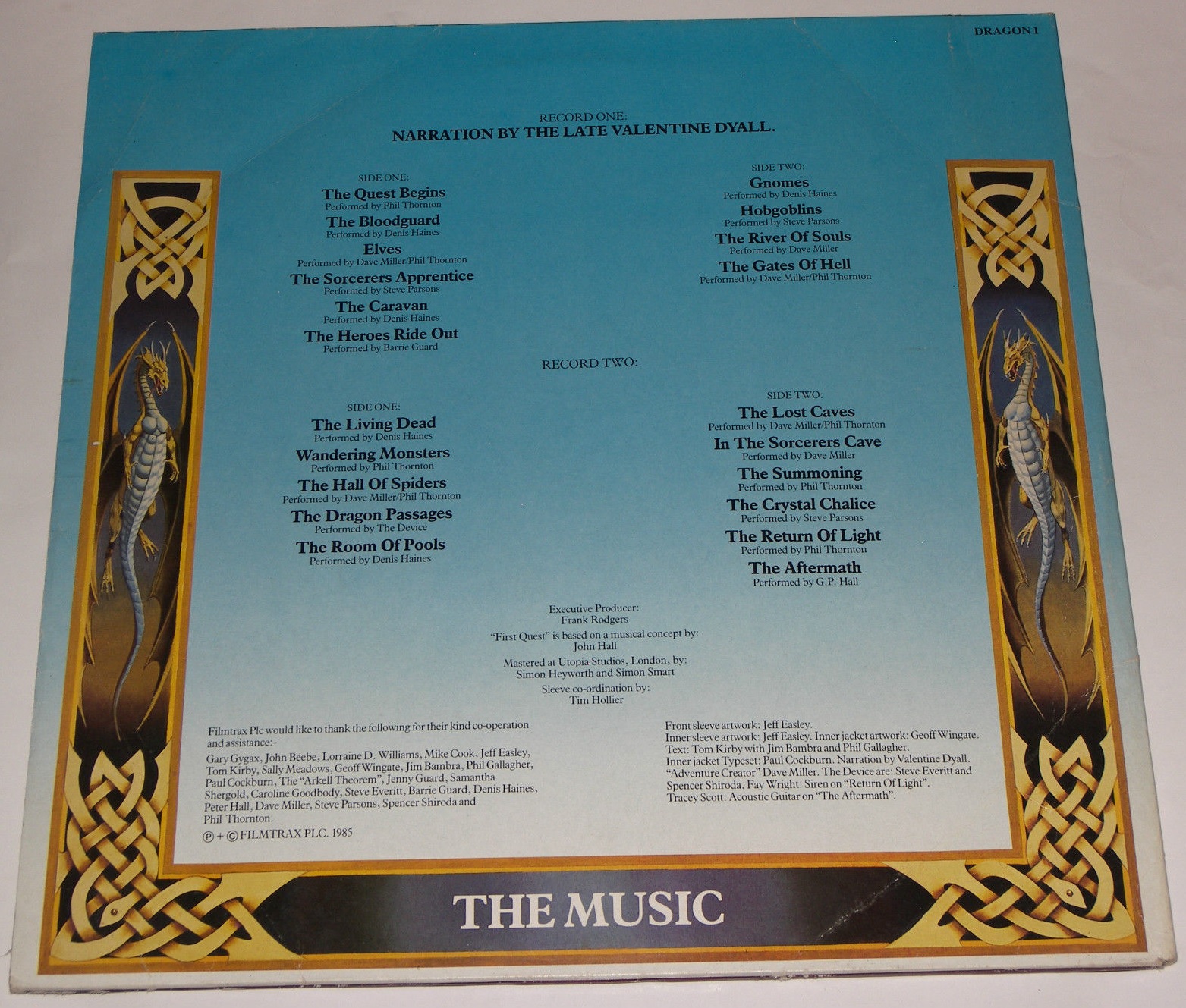
Advanced Dungeons & Dragons: First Quest – The Music (Filmtrax, 1985)

First Quest 1985-4

First Quest 1985-5

First Quest 1985-6

First Quest 1985-7

First Quest 1985-8

First Quest 1985-3

First Quest 1985-10

First Quest 1985-9

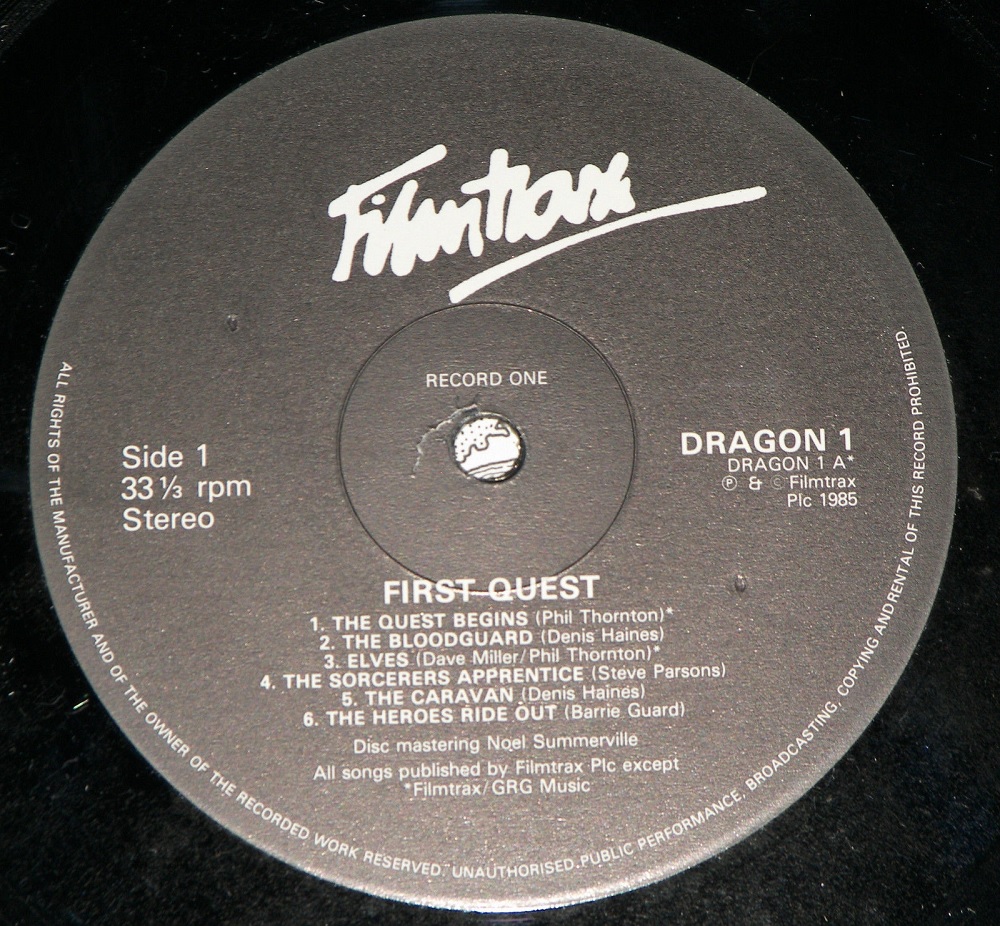
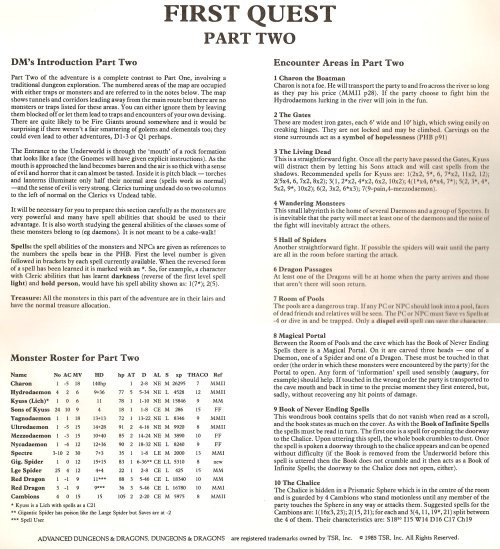
One of the most obscure pieces of D&D merchandise from the Gygax era, First Quest: The Music is a soundtrack to, and narration of, an adventure outline printed inside the LP (and cassette). The music is instrumental and electronic, most of it reflecting “the forbidding and grim atmosphere of the plot.” The author of Blogonomicon, where I found most of the images above, uploaded the album to YouTube, and I made a playlist featuring the songs in the order they appear on the LP. Give it a listen here.

I have to admit that I love it all, even the bits that are overdone or amateurish. It’s such a brilliant evocation of the time. If John Carpenter or Tangerine Dream had scored a Dungeons & Dragons film in the ’80s, it might have sounded something like the best parts of First Quest (recorded on better equipment.)

David Miller, who wrote the adventure (“It is not meant to be a cake-walk!”) and a lot of the music, and who appears to be the principle organizer, recalls approaching Gary Gygax about the project in a comment at Blogonomicon.

Greetings – my name is David Miller and I was one of the contributors/organizers of/for/to this album. It was a lot of fun getting it together. As anyone who’s played D&D knows, you can’t really play a loose, free-wheeling game to the constraints of the flow of the tracks but it was a gas, nevertheless. As part of all this I went to Los Angeles and visited E. Gary Gygax to get his blessing and support. He lived (as you might expect) in this weird, large old house that did, in fact, look somewhat spooky. As I knocked on the door I heard the sound of a very large and intimidating dog barking from somewhere inside – that was somewhat unsettling… Eventually Mr. Gygax let me in, listened to the album and he was well into it. He also demonstrated for me a variety of manoeuvers by which one could dispatch a varying quantity of orcs, depending on how they approached you, what armaments they were carrying and what mood they were in […]

[…] There were also First Quest T-Shirts (of which I have a couple, still unwrapped) and other stuff, I’m sure. I was responsible for bringing Valentine Dyall on board, more because I’ve always been a huge Goons fan and he was on those recording from time to time sounding quite menacing even amidst the madness. I’m afraid I wrote his voice-over script, which is, indeed, especially mediocre and I cringe even to this day when I hear it. He deserved much better than that, especially as he passed on soon after…not the most fitting swan song. My belated apologies to him. He hadn’t been getting any work for a long time and I hear he was very grateful for this so I’m glad of that, at least. I would have loved to have met him but was out of town when his recording sessions occurred.

Miller is in a “psychedelic synth pop” band called Expandis, whose first EP, Mystic Man, was released in 1983. Phil Thornton, another contributing artist to First Quest, is also in Expandis. Filmtrax was a small British record label active during the 1980s.

The narrator of the quest is Valentine Dyall (1908-1985), a famous British screen and voice actor well known for his portrayal of the Black Guardian in the Tom Baker-era Doctor Who.

The LP cover art is from Jeff Easley’s Dungeon Masters Guide (1983 printing) cover. The sprawling gatefold art is also by Easley.

Advanced Dungeons & Dragons Pinball Games (Larami, 1983): ‘Castle Maze’, ‘Myths & Magic’, and ‘The Quest’

AD&D Pinball 1983

AD&D Pinball Castle 1983

AD&D Pinball Castle 1983-2

AD&D Pinball Myths 1983

AD&D Pinball Quest 1983

AD&D Pinball Quest 1983-2

With Dragon Duel, we now have four AD&D handheld pinball games, all of them made by Larami. The packaging is different on these (cards instead of a box), and they appear to be smaller. Tome of Treasures suggests that there are at least five of the pinball handhelds. I wouldn’t be surprised if there were more.

All of the art is by Larry Elmore. The card art, as well as the game art for Castle Maze, are from the 1983 Basic Set cover. The game art for Myths and Magic is from the Mountain of Mirrors (Endless Quest series) cover. I’d be much obliged if someone can identify the original source used for The Quest. I know I’ve seen it before, and I’m nearly positive it’s Elmore, but I can’t dig up a match.

The regulation D&D pinball machine, also featuring the Elmore painting from the Basic Set, didn’t come out until 1987.

D&D Pinball Flyer

Dungeons & Dragons Club, Circa 1980

D&D Club 1980

The sign is cut off (and `Dungeons’ is misspelled!), but we’re looking at an AD&D club, hence all the core books and Tramp’s Dungeon Master’s Screen on proud display.

That’s got to be a homemade shirt in the middle, right? It’s not any TSR dragon that I’ve seen.

Our teacher rep, the only woman involved in the proceedings, seems quite happy to be there. I wonder what she thought at the time.

(Photo via Story Games forums)

Early Erol Otus Art from The Dragon (1976 – 1977)

Otus Dragon #2 1976

Otus Dragon #5 1976

Otus Dragon #7 1977

Otus Dragon #7 1977-2

Otus Dragon #8 1977

Otus’ “Featured Creatures” from issues #2, #5, #7, and #8, respectively. He’s experimenting with different mediums here, trying to find his style.

More on my persistent admiration of Otus here.

Advanced Dungeons & Dragons Characters Coloring Book (1983) (Part Four)

D&D Characters-1

D&D Characters-2D&D Characters-3


D&D Characters-4

D&D Characters-5D&D Characters-6


D&D Characters-7

D&D Characters-8D&D Characters-9


D&D Characters-10D&D Characters-11


D&D Characters-12

D&D Characters-13

AD&D Characters BC

The fourth and final installment of the AD&D Characters Coloring Book. My favorite page in this lot: “Mercion is a good cleric. Scary things like skeletons are afraid of her goodness.” I think Zarak looks appropriately sinister, but isn’t he a little short for a half-orc?

Parts one, two, and three of the book are here, here, and here, respectively.


Pages

Archives

Categories

Donate Button

Join 1,118 other subscribers