Welcome to the world of men’s adventure magazines, a genre that peaked during the placid ’50s, and continued to sell well through the late ’70s. The spread comes from a 1976 issue of True Action magazine, but Norem’s original illustration (top image) is from 1968. The story was probably reprinted several times. And why not, when you have art this good?
Nothing gets me through a Wednesday quite like an indignant circus bear bitch-slapping a cadre of deranged Nazi stooges.
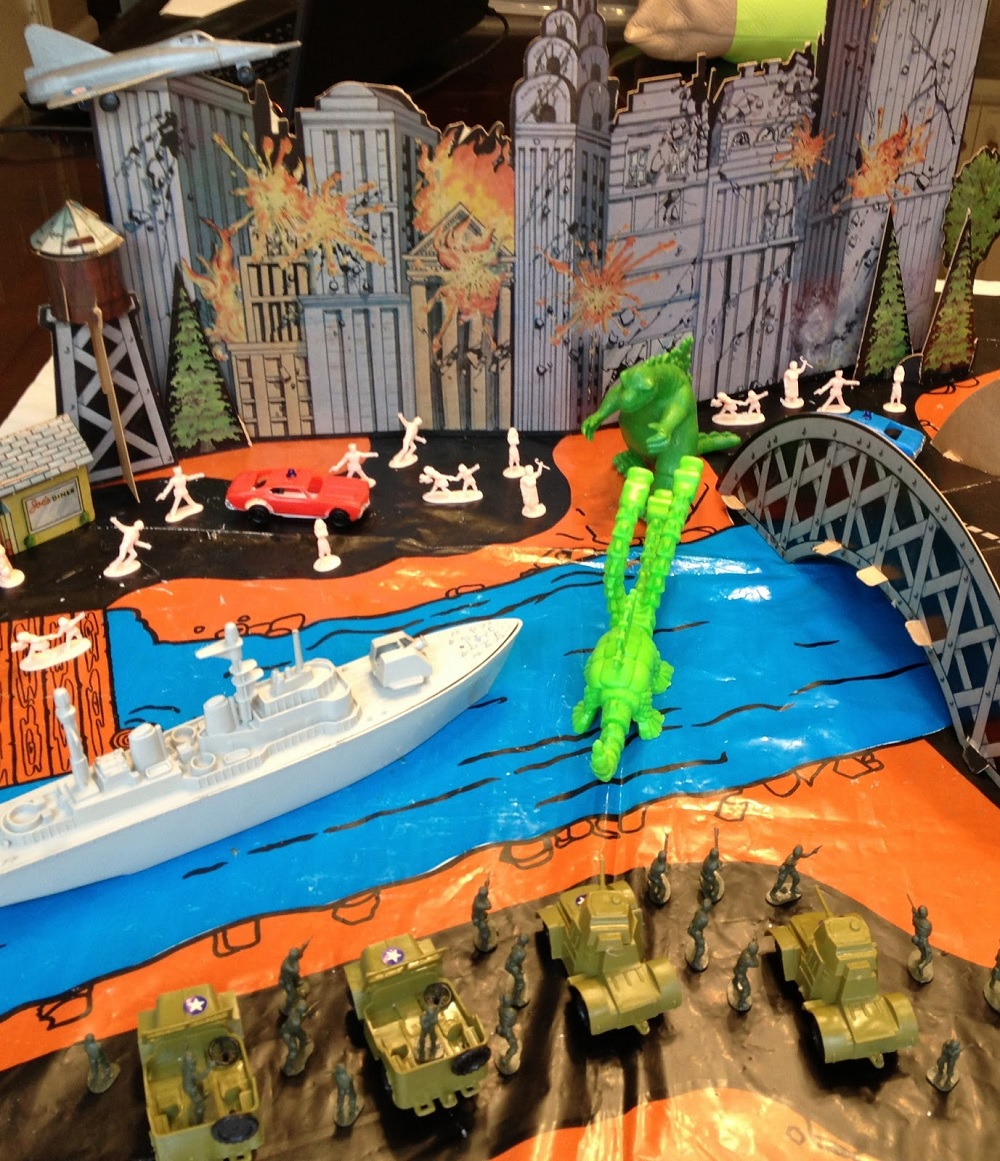
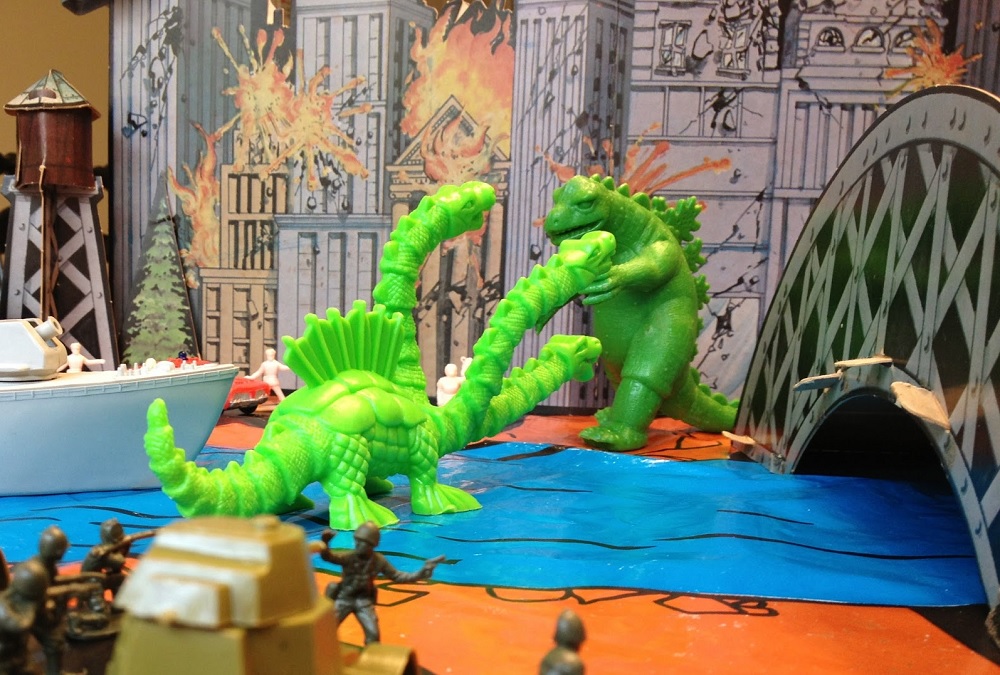
As far as I know, this is the only traditional playset featuring Godzilla produced by an American toy company in the ’70s and ’80s, and it’s interesting for a number of reasons (other than the one just stated).
First, it marks the only appearance of Tricephalon, an obvious attempt to mimic King Ghidorah without paying for the license. The box art depicts a mecha-hydra, anticipating both Mecha-King Ghidorah from Godzilla vs. King Ghidorah (1991) and Hyper Mecha-King Ghidorah from a 1997 Japanese TV series called Godzilla Island. (There was also a three-headed robotic dragon in the NES game Magmax, first released in 1986)
Second, the destroyer in the set is “missile-firing” (see warning on box) at a time when toys firing projectiles were being hastily recalled.
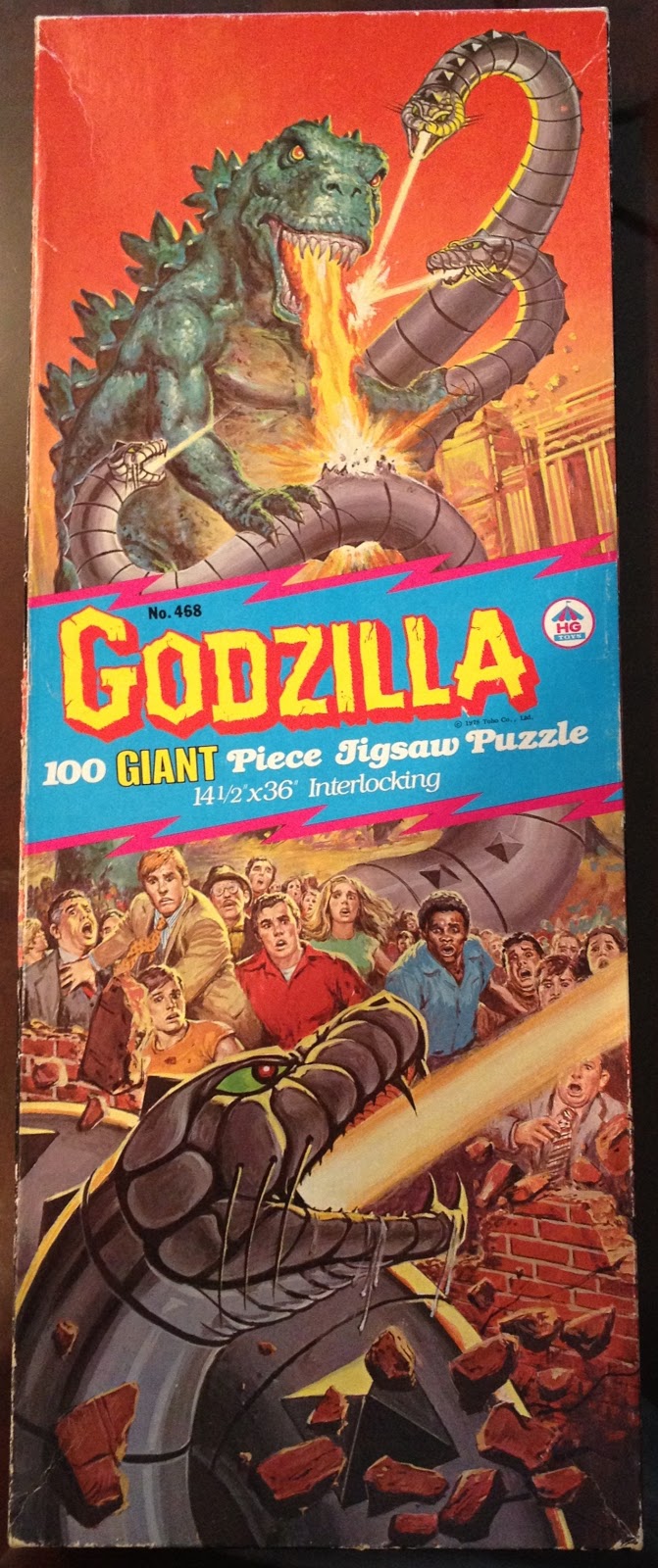
Third, the box artist is likely Earl Norem, who painted the cover for HG’s Buck Rogers Galactic Play Set from the same year. It looks very much like Norem’s color scheme and style. An expanded version of the playset art was used for a large Godzilla jigsaw puzzle, also issued by HG, also from 1979. The detailed human faces on the lower panel further convince me that Norem is the artist.
Check out The Sphinx (who makes the same point about Tricephalon anticipating Mecha-King Ghidorah) for close-ups of the Godzilla and Tricephalon molds, and for a listing of the set’s full contents.
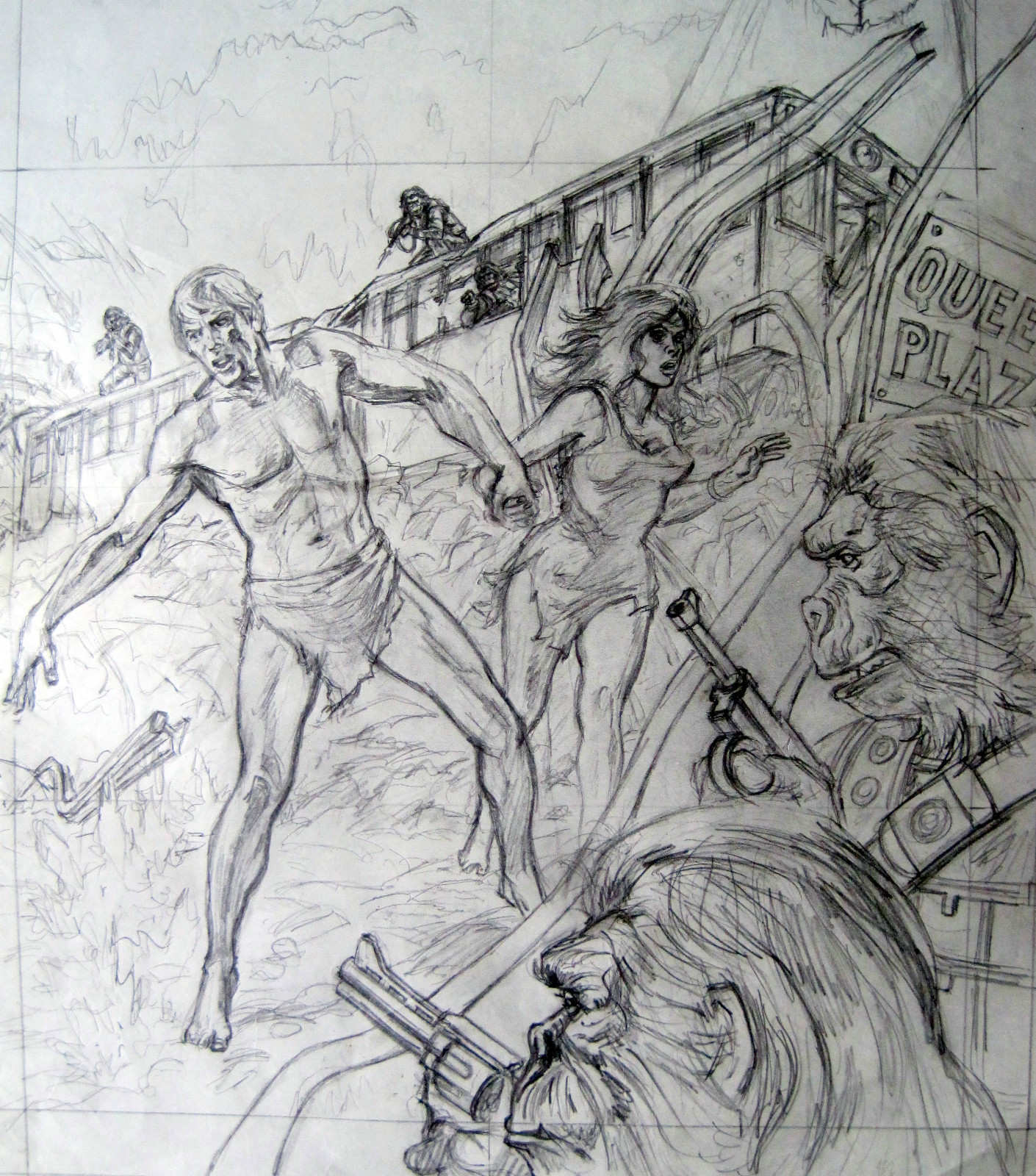
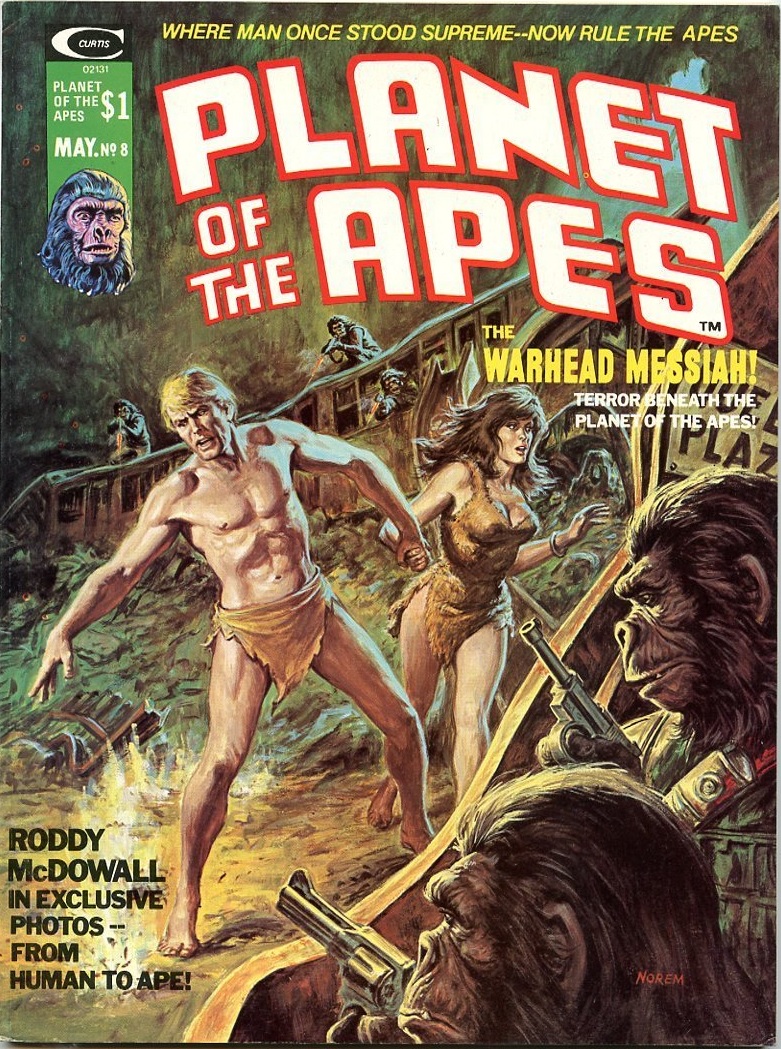
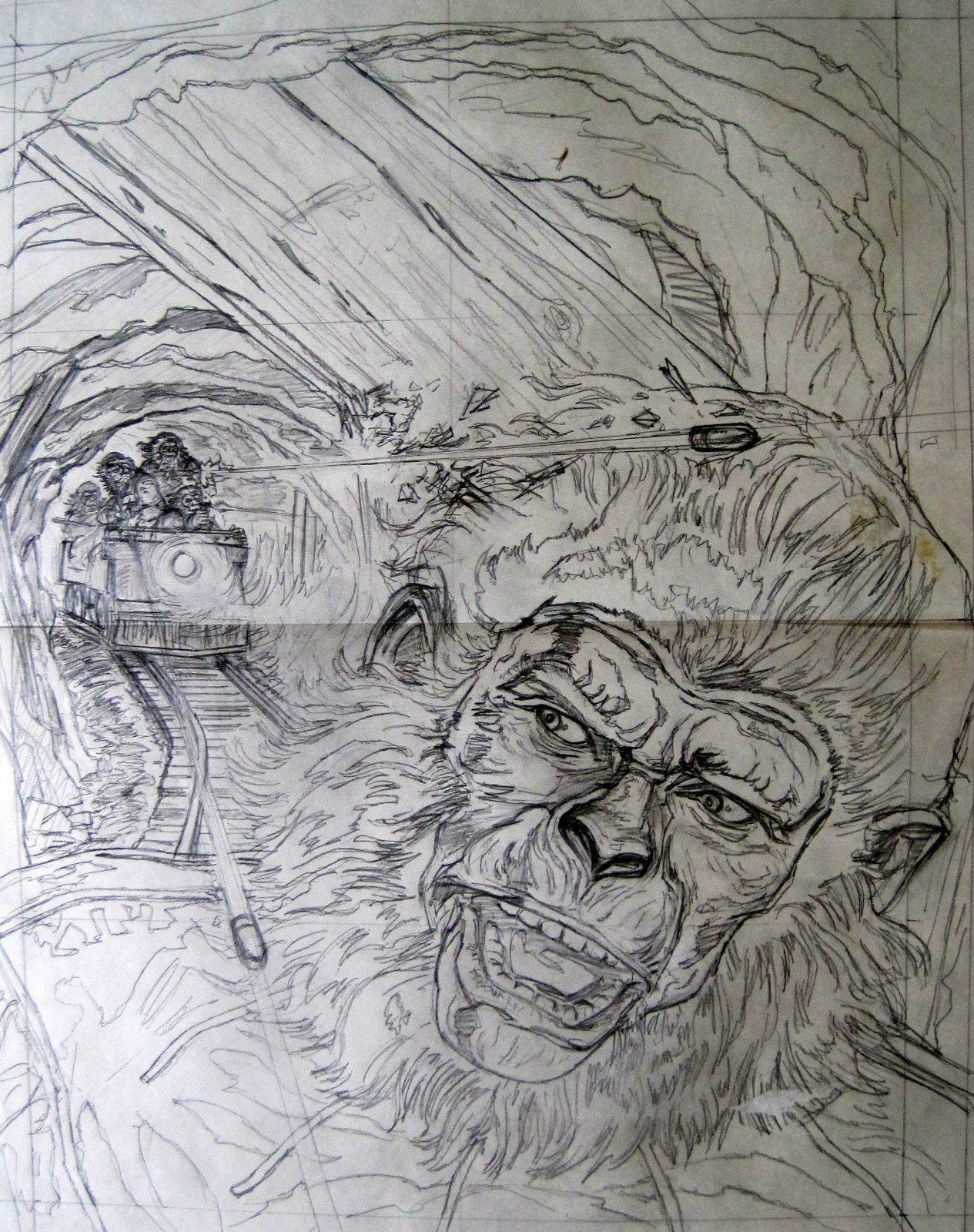
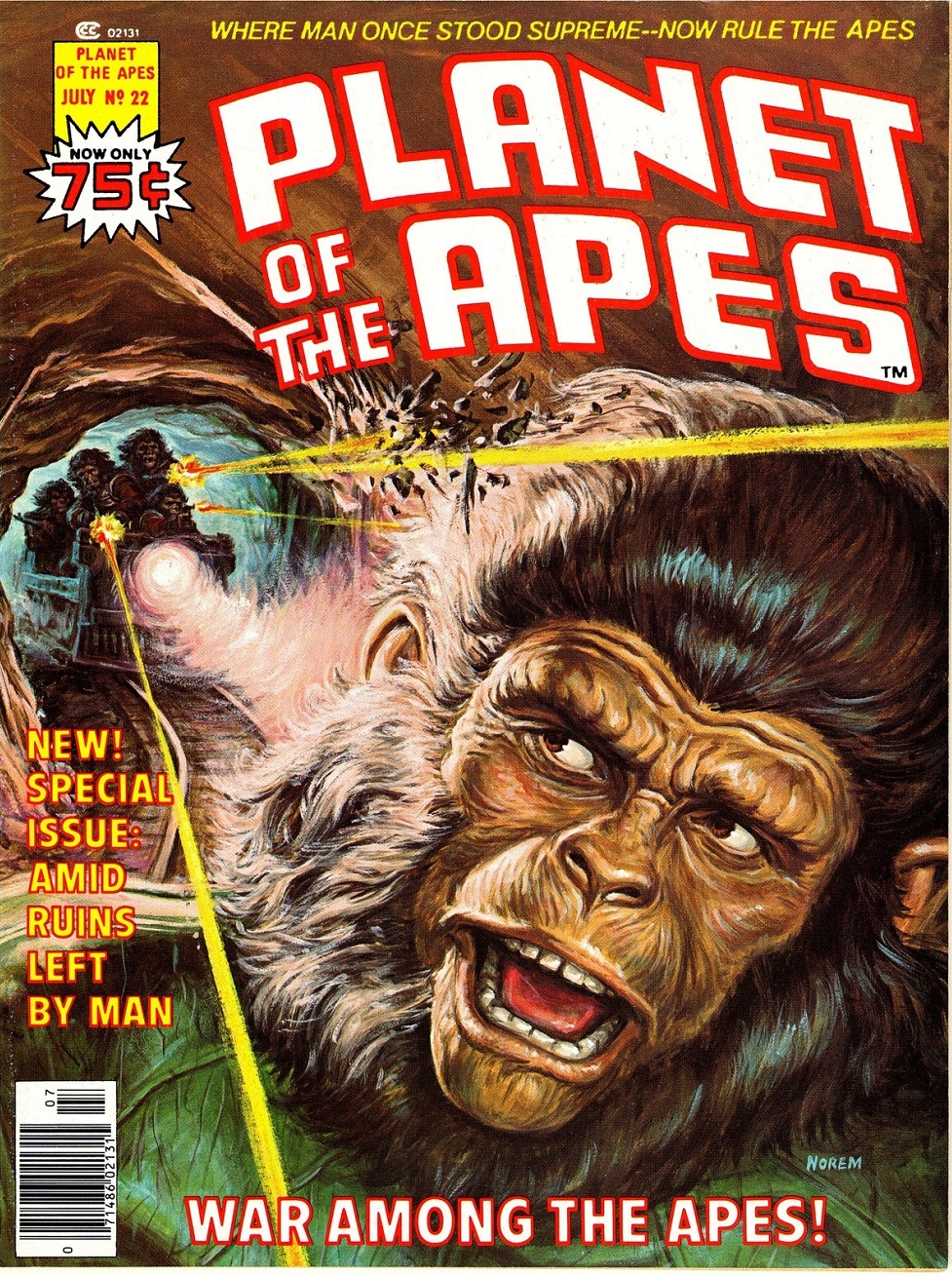
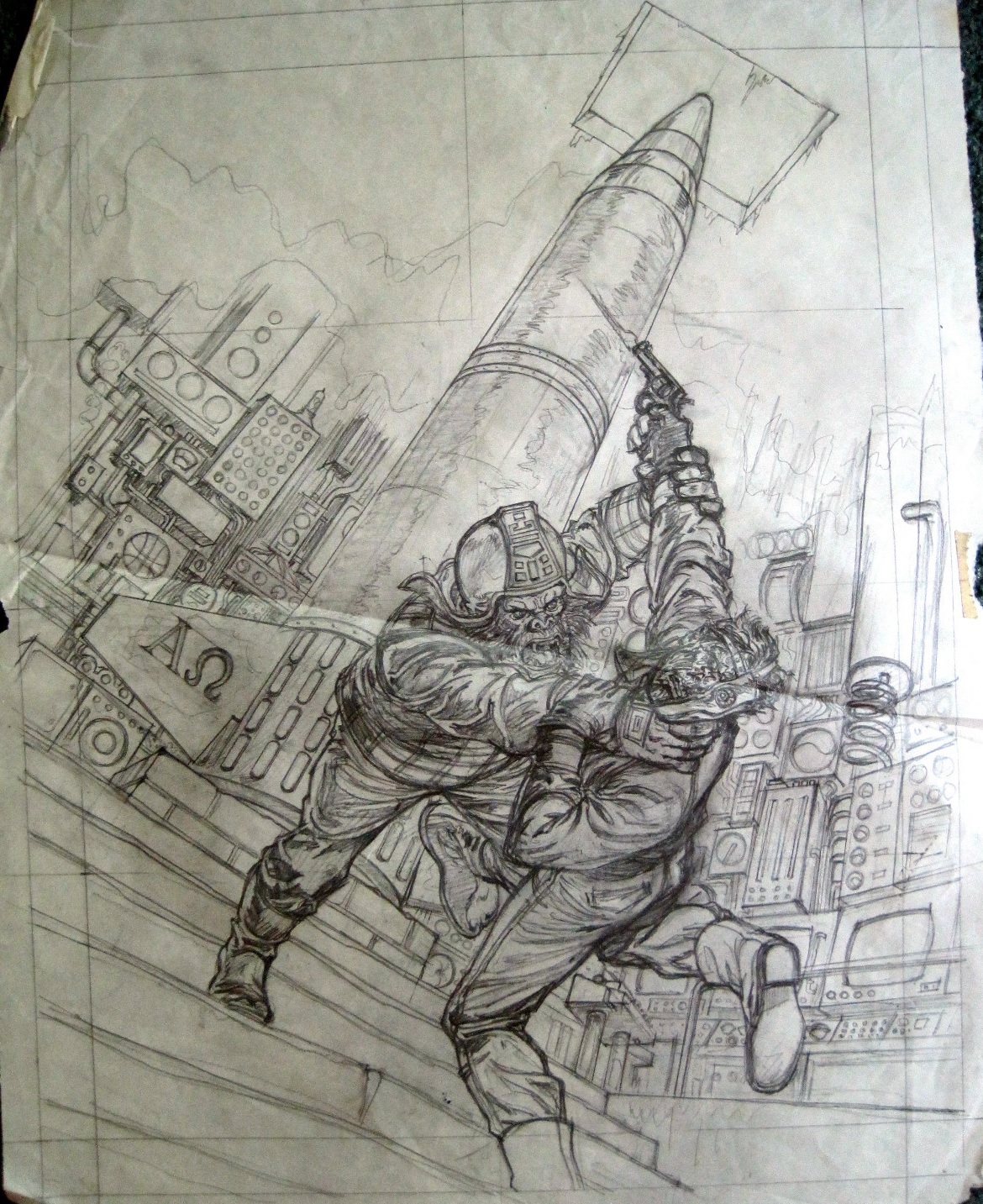
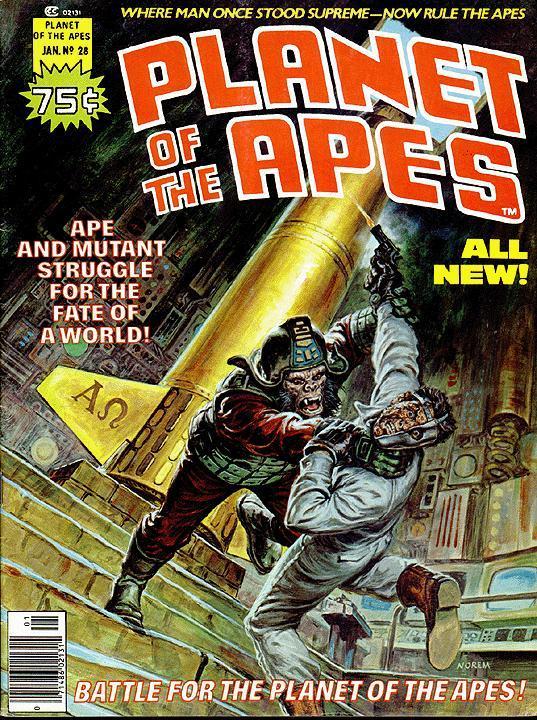
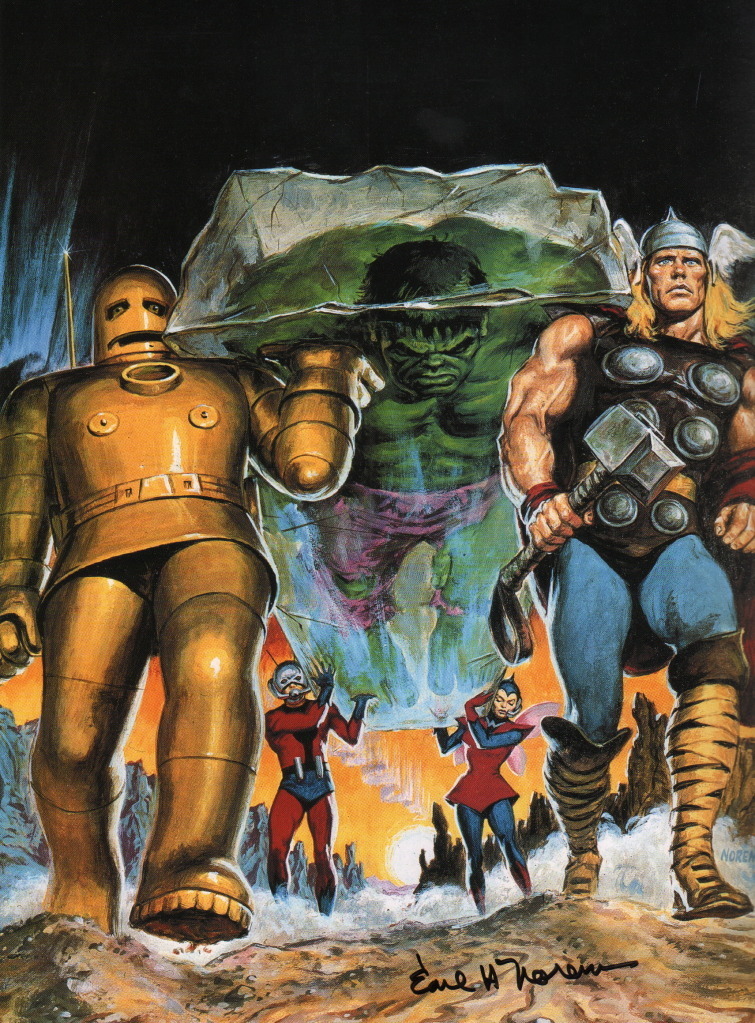
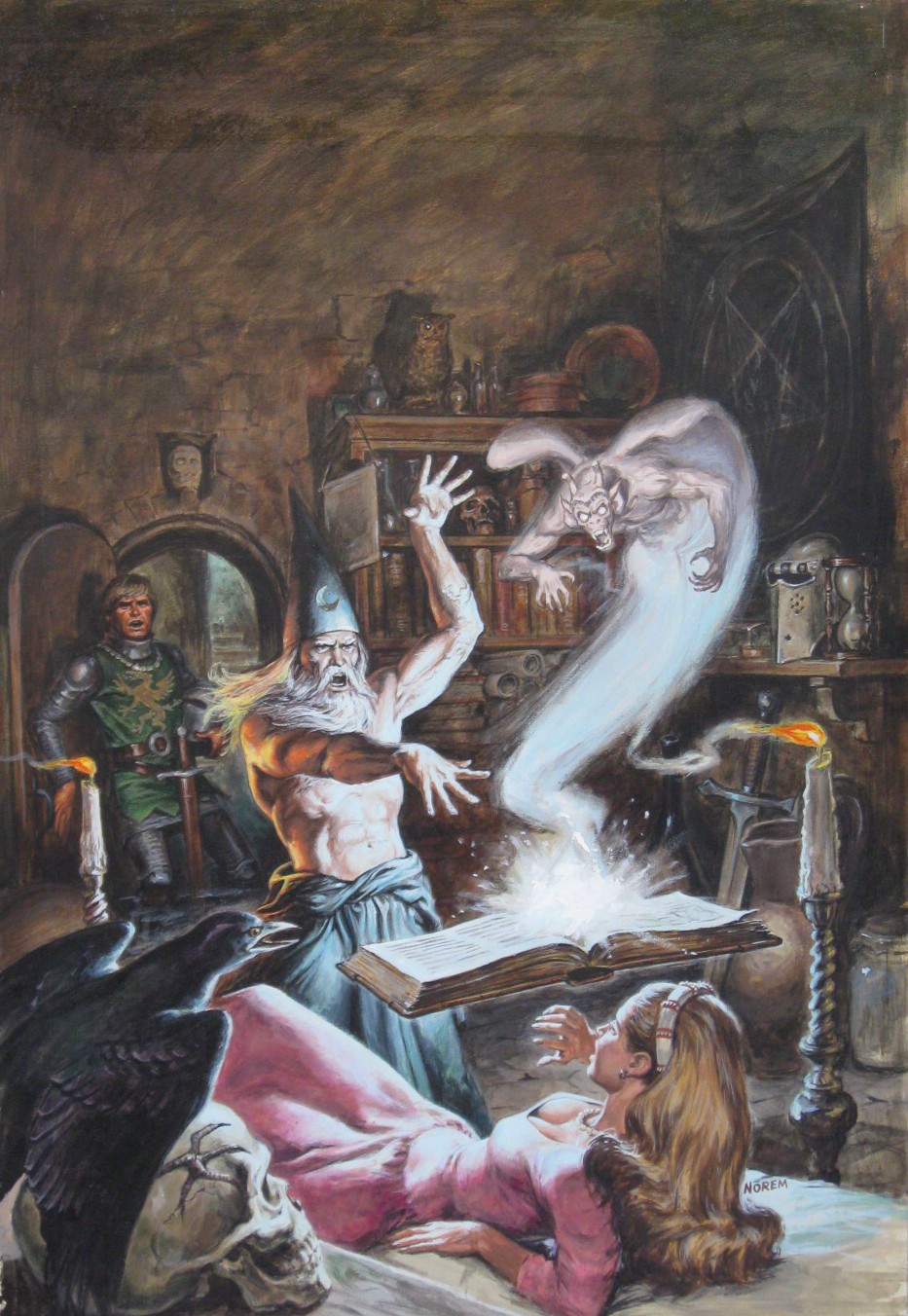
Many of Earl Norem’s original pencils and paintings, from the ’60s through the ’90s, are popping up on eBay. (The original pencils for Planet of the Apes #28 went for over $1000.) A lot of it is in pretty rough shape—multiple folds, tattering, yellowing. Illustration was a tough gig, and artists had to crank out page after page of quality work to make a living. Even for Norem, who was well established by this point, there was no time for sentimentality. It was all business.
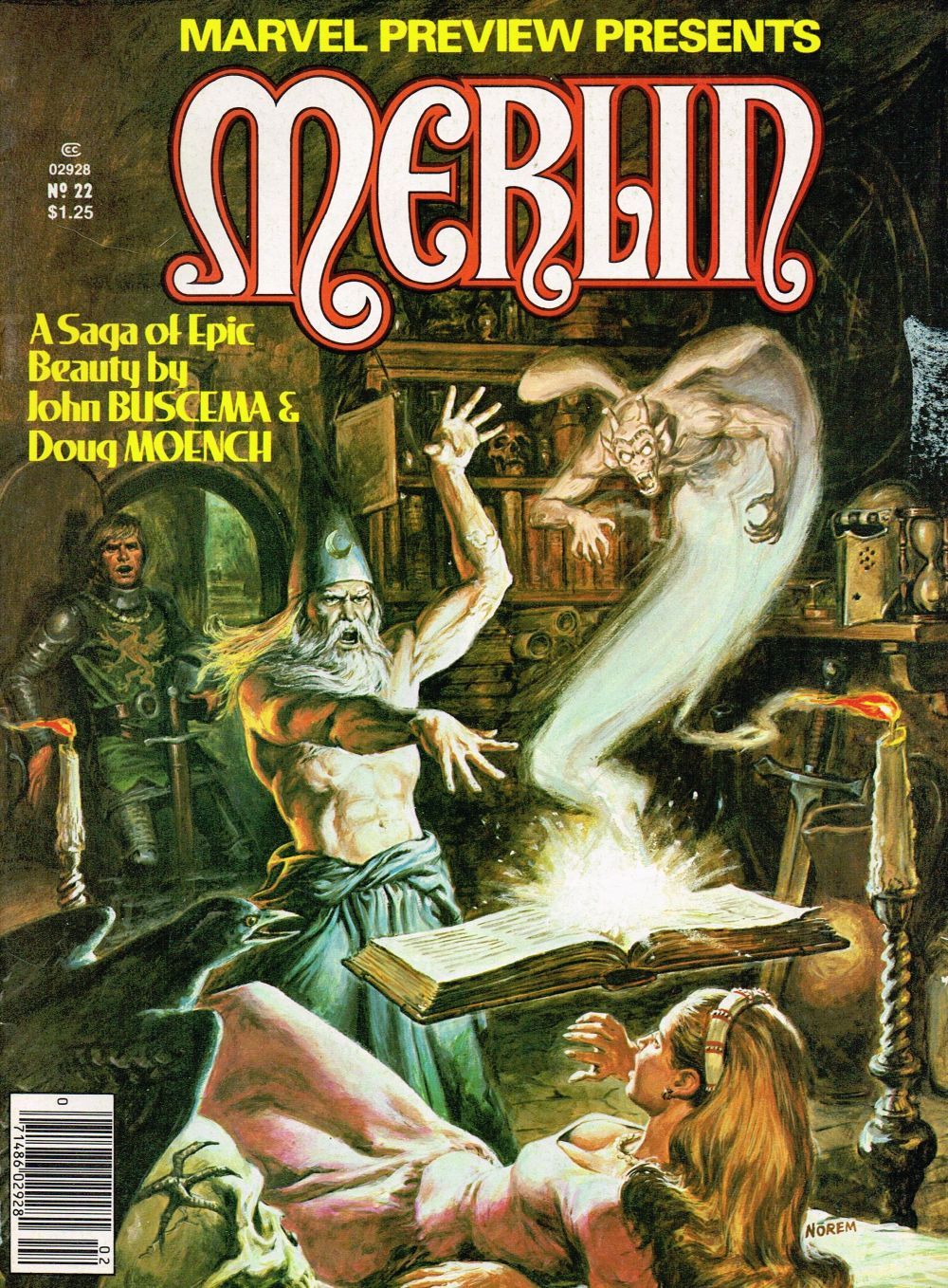
The more I see from Norem, the more I realize how much he contributed to the vision of almost every major kid’s property from the late ’70s through the late ’80s, including Conan, The Six Million Dollar Man, Indiana Jones, Planet of the Apes, Buck Rogers, Masters of the Universe, D&D, Marvel Comics (superhero and horror), G.I. Joe, and the Transformers.
The amount of detail he squeezes into his cover paintings is staggering. See the control panels in #28, the chimp’s hair in #22, and the dense, layered colors he uses to fill the big spaces in #8.
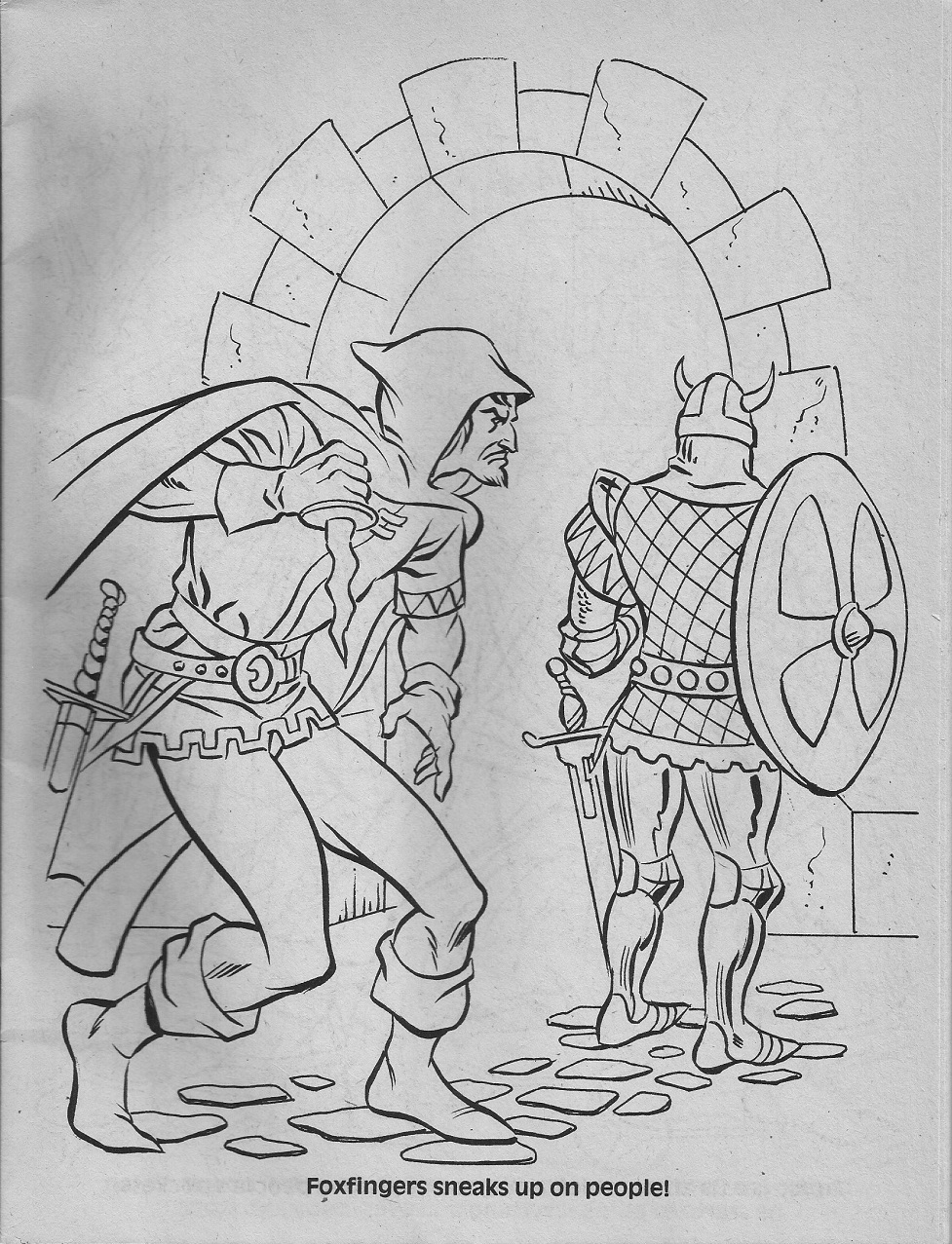
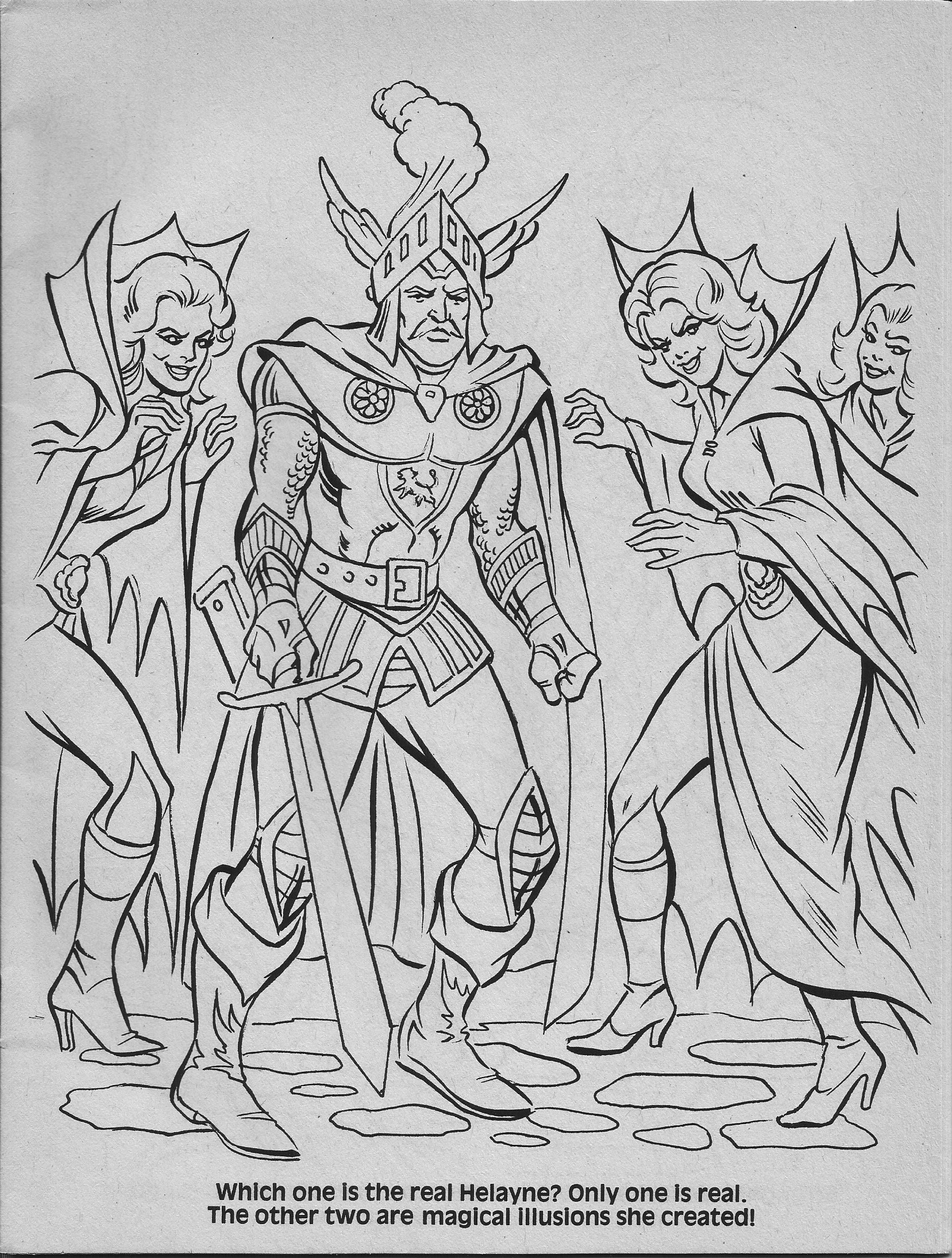
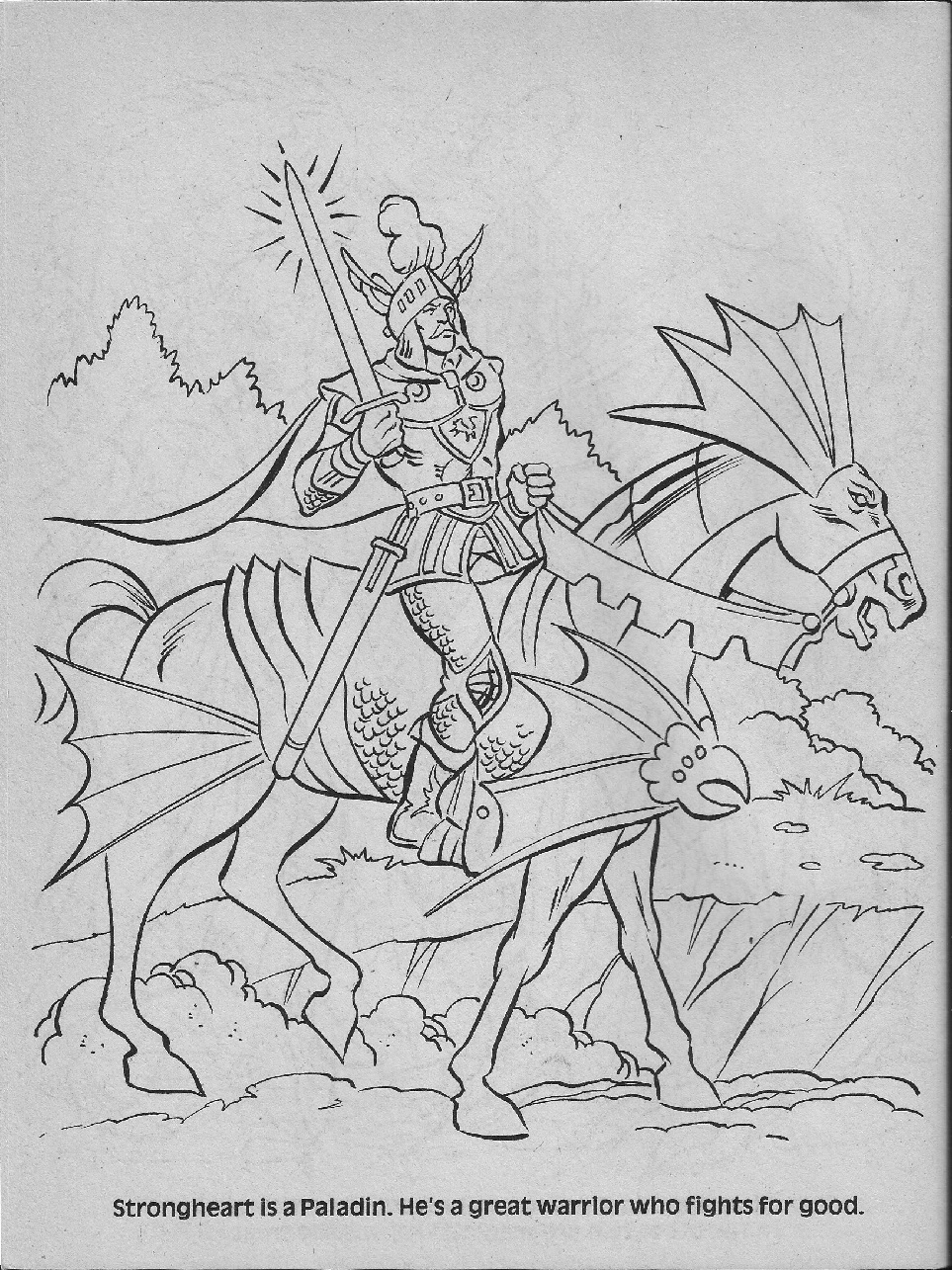
Along with the AD&D storybooks, Marvel and TSR collaborated on five coloring books featuring the same cast of characters, some of them from the toy line, others from The Shady Dragon Inn (1983), a game aid featuring pregenerated characters (and stats for the characters in the toy line).
Jane Stine, who co-wrote The Treasure of Time (1983), wrote the Characters coloring book. Earl Norem did the cover art. Jim Mooney, who worked for DC in the ’60s and Marvel in the ’70s and ’80s, and John Tartaglione, Silver Age inker of Sgt. Fury and Daredevil, did the interior art. (The lips look unmistakably Mooney to me, so I gather he did the pencils.)
The book is essentially a visual illustration of the different D&D character class attributes, alignments, and skills. It even covers some spells (feather falling) and magic items (helm of water breathing). Unlike the storybooks, there’s a definite link to D&D‘s role-playing core.
Parts two, three, and four of the Characters Coloring Book are here, here, and here.
The ad, showing Vancouver’s The Comic Shop, is from The First Vancouver Catalogue. The pic on top shows rows and rows of fantasy paperbacks in the glorious heyday of fantasy paperbacks. Several editions of Conan appeared between 1966 (Lancer Books) and the early ’80s. They included Howard’s original stories and new works by contemporary authors, notably L. Sprague de Camp and Lin Carter.
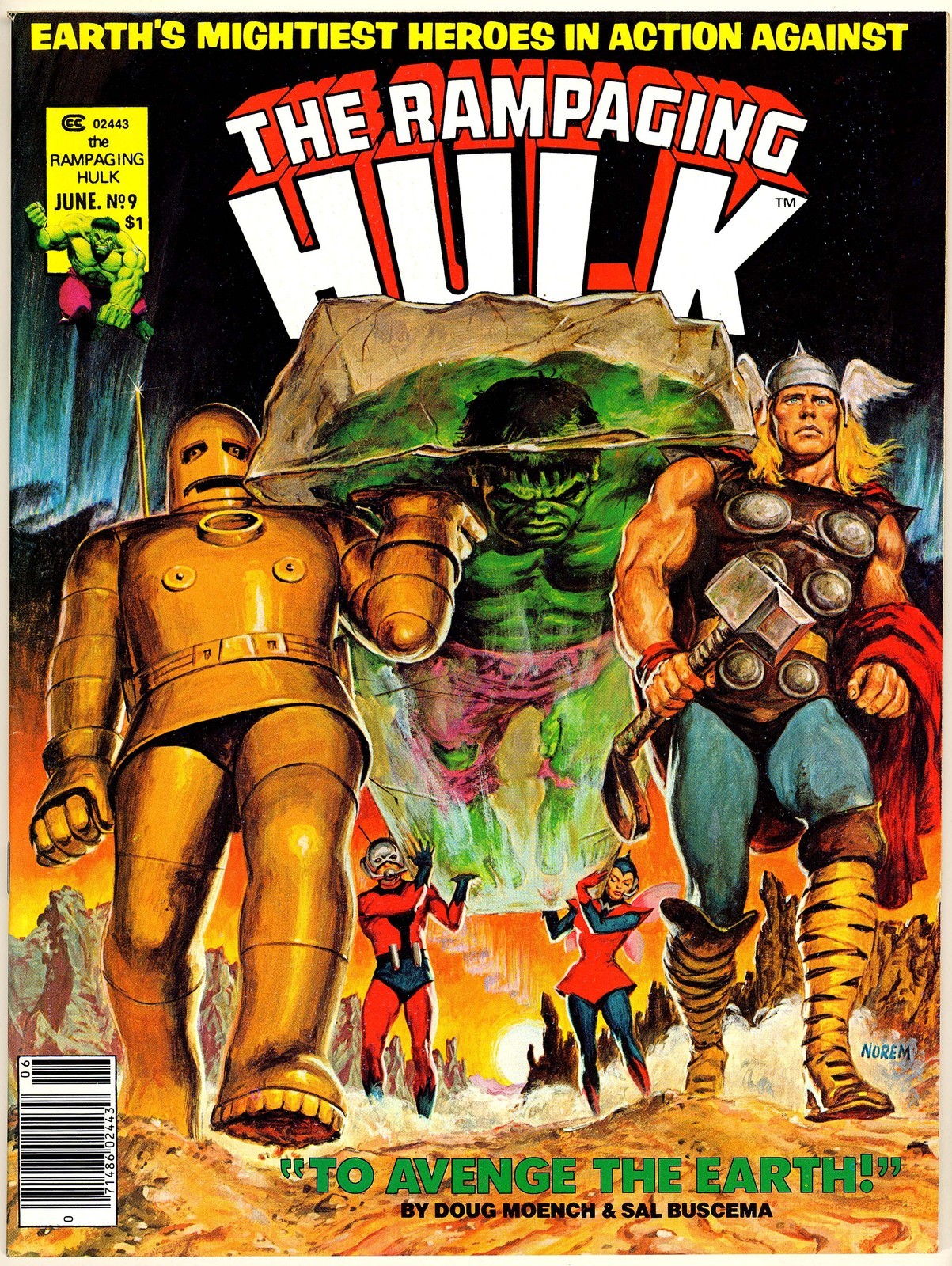
The Marvel titles in the bigger photo are mostly obscured, but what a great look at all the magazines. Will Eisner’s Spirit, 1984, The Hulk! (formerly The Rampaging Hulk) #10 (Val Mayerik cover art), and The Savage Sword of Conan #33 (killer Earl Norem cover). On the second row, you’ll see a `Jaws vs Ape’ headline. That’s Famous Monsters of Filmland #146.
Not cover specialist Bob Larkin’s best work, and why the hell is the ape beating on Jaws, anyway? Here’s my best guess.
1976’sA*P*E (no shit, it stands for Attacking Primate MonstEr) is compellingly awful, and introduces a young Joanna Kerns (the mom in Growing Pains). RKO sued the production company for its blatant attempt to rip off Dino De Laurentiis’s 1976 King Kong remake, hence the hilarious disclaimer at the end of the trailer.
Also, listen for the very poorly edited “See giant ape defy jaw-shark!” I’m sure the narrator originally used ‘jaws’, but was forced to change it due to legal pressure from Universal Pictures. So, in true exploitation fashion, they replaced the ‘s’ by dubbing ‘shark’ over it.
***
I’m happy to report that The Comic Shop is still there. On the website’s history page, I found a bonus photo of co-founder and owner Ron Norton in 1975. You can spot several more comic magazines behind him, including Unknown Worlds of Science Fiction #1, and more fantasy and sci-fi paperbacks (Zelazny, Silverberg) in the foreground.
In 1983 Marvel published a series of D&D storybooks and coloring books under license from TSR. (One year later, the roles would be reversed for the Marvel Super Heroes RPG, published by TSR under license from Marvel.) I believe these are the only two storybooks. You can read The Forest of Enchantmenthere. The Treasure of Time is here. Both PDFs are originally from Kuronons’ D&D Goodies Collection.
They’re kid’s books, so it’s pretty juvenile stuff, and there’s no effort to introduce the concept of role-playing (unlike the 1979 AD&D Coloring Album). All but two of the characters from LJN’s first run of AD&D action figures make appearances, so the books are basically long toy commercials.
Nevertheless, they’re notable for a few reasons: Bob Stine is Goosebumps author R.L. Stine, and Jane Stine, who founded Parachute Publishing, is his wife.
As for the art, Earl Norem did the interior work for The Forest of Enchantment, and Marie Severin did the cover and designed the book. She also illustrated The Treasure of Time. Severin was a colorist at EC until the notorious publisher was run out of town by the Comics Code. She worked for Marvel—as colorist, inker, and penciler—from 1959 until the early ’90s. She is one of the most well-respected artists in the comics field.
Famously, Severin was directed to soften the facial expression of the Hulk on one of the most innovative covers in Marvel’s history: The Hulk King Size Special #1 (1968). See both versions here. The artist who made the Green Guy too savage for public consumption? Jim Steranko.
A decorated World War II veteran, Earl Norem got his start in men’s action-adventure magazines and worked steadily in that genre throughout the ’50s and ’60s. He broke into comics in the mid-’70s, doing a large number of memorable covers for Marvel’s Curtis Magazines, including Savage Sword of Conan and The Rampaging Hulk.
Norem was a major contributor to the Marvel Books imprint from 1982 to 1986 (The Amazing Spider-Man, The Transformers, G.I. Joe), elevated the Masters of the Universe image in a slew of books and magazines, and painted the covers for a Choose Your Own Adventure-style book series called Wizards, Warriors & You (1984 – 1986). I think he also did some package art for G.I. Joe. I’m trying to track down the details.
I’ll be posting Norem’s art on an ongoing basis. He deserves the attention.
If you own the copyright to any of the material on this site and would like said material to be removed, please contact 2warpstoneptune [at] gmail [dot] com.









 2 Warps to Neptune