Archive for the 'Fantasy Art' Category


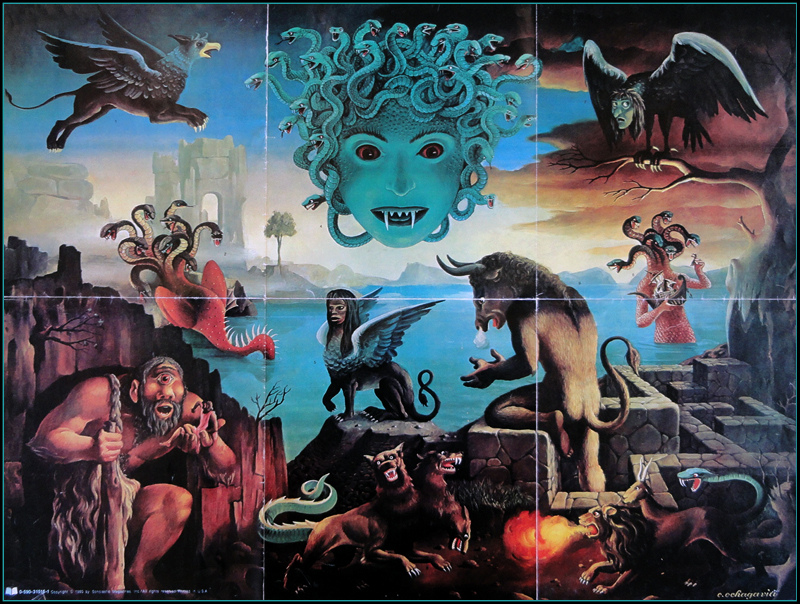
Monsters of the Greek Myths Poster (Scholastic Books, 1980)

Greek Myths 1980

From WesternOutlaw, who writes:

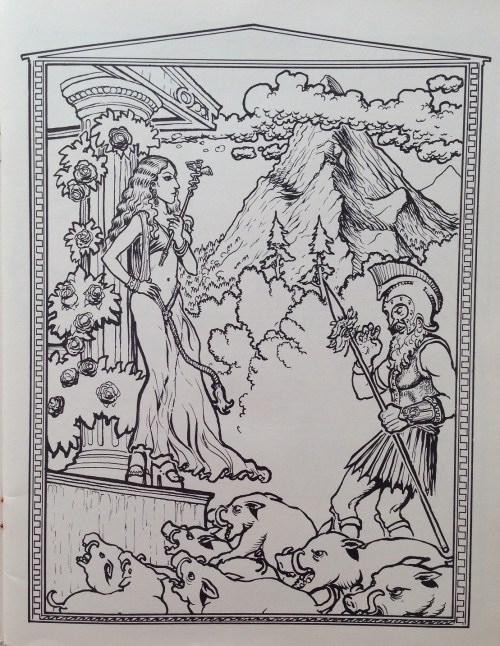
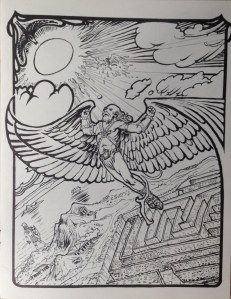
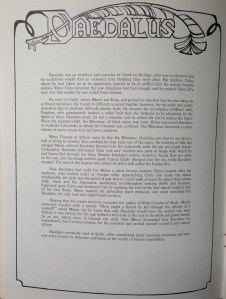
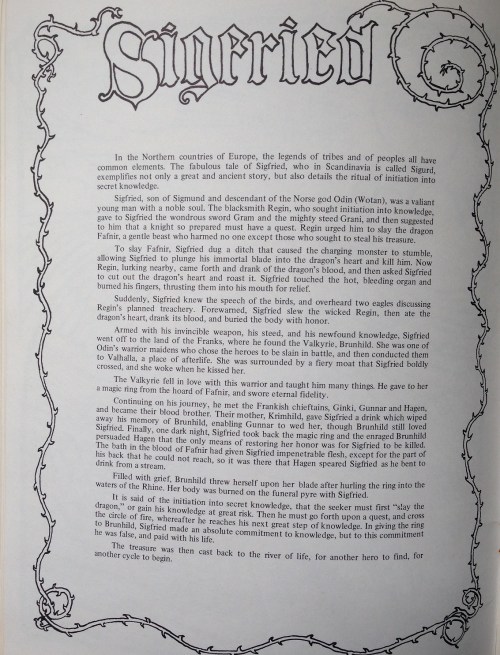
When I was a kid, I loved ordering books from the Scholastic book club. In addition to some exciting books, purchases over a specific amount would result in a free poster. This poster from 1980 is one of my personal favorites that I hung in my bedroom for some time. I was surprised to find it in an old stack of papers in the garage. On the backside is a description of the 10 mythical creatures pictured. What a great poster for a kid interested in Greek Mythology!

In doing a little research on the artist, I discovered the artwork is by Carlos Victor Ochagavia who created the original covers of the Illuminatus paperback books.

Can anyone name the 10 mythical creatures pictured?

All three novels in The Illuminatus! Trilogy came out in 1975. See Ochagavia’s striking covers here.

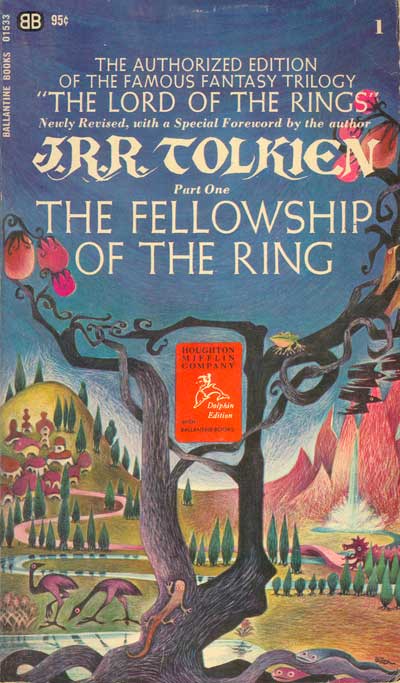
The First Authorized Paperback Edition of The Lord of the Rings (Ballantine, 1965)

Fellowship 1965

Towers 1965

Return 1965

Tolkien did not initially want his trilogy to appear in so “degenerate a form” as the paperback book. What happened is that Donald Wollheim, then editor-in-chief of Ace Books, released an unauthorized edition of LOTR in 1965, believing, or claiming to believe, that the soon-to-be literary phenomenon was in the public domain. The Ace edition, being affordable at 75¢/book, sold extremely well, and Tolkien immediately came to terms with the vulgar paperback medium. Ballantine’s revised and authorized edition, priced at 95¢/book, appeared in October, 1965 (The Fellowship of the Ring and The Two Towers) and November, 1966 (The Return of the King). Said Tolkien to his son in October of 1965:

Campaign in U.S.A. has gone well. ‘Ace Books’ are in quite a spot, and many institutions have banned all their products. They are selling their pirate edition quite well, but it is being discovered to be very badly and erroneously printed; and I am getting such an advt. from the rumpus that I expect my ‘authorized’ paper-back will in fact sell more copies than it would, if there had been no trouble or competition.

Wollheim’s unscrupulous maneuver—he was eventually forced to pay Tolkien the royalties he deserved—was the single most important event in the popularization of the fantasy genre and the birth of geek culture.

You can see the spines and back covers of the original Ballantine editions at Tolkien Collector’s Guide, where I found the images above. The cover artist is Barbara Remington.

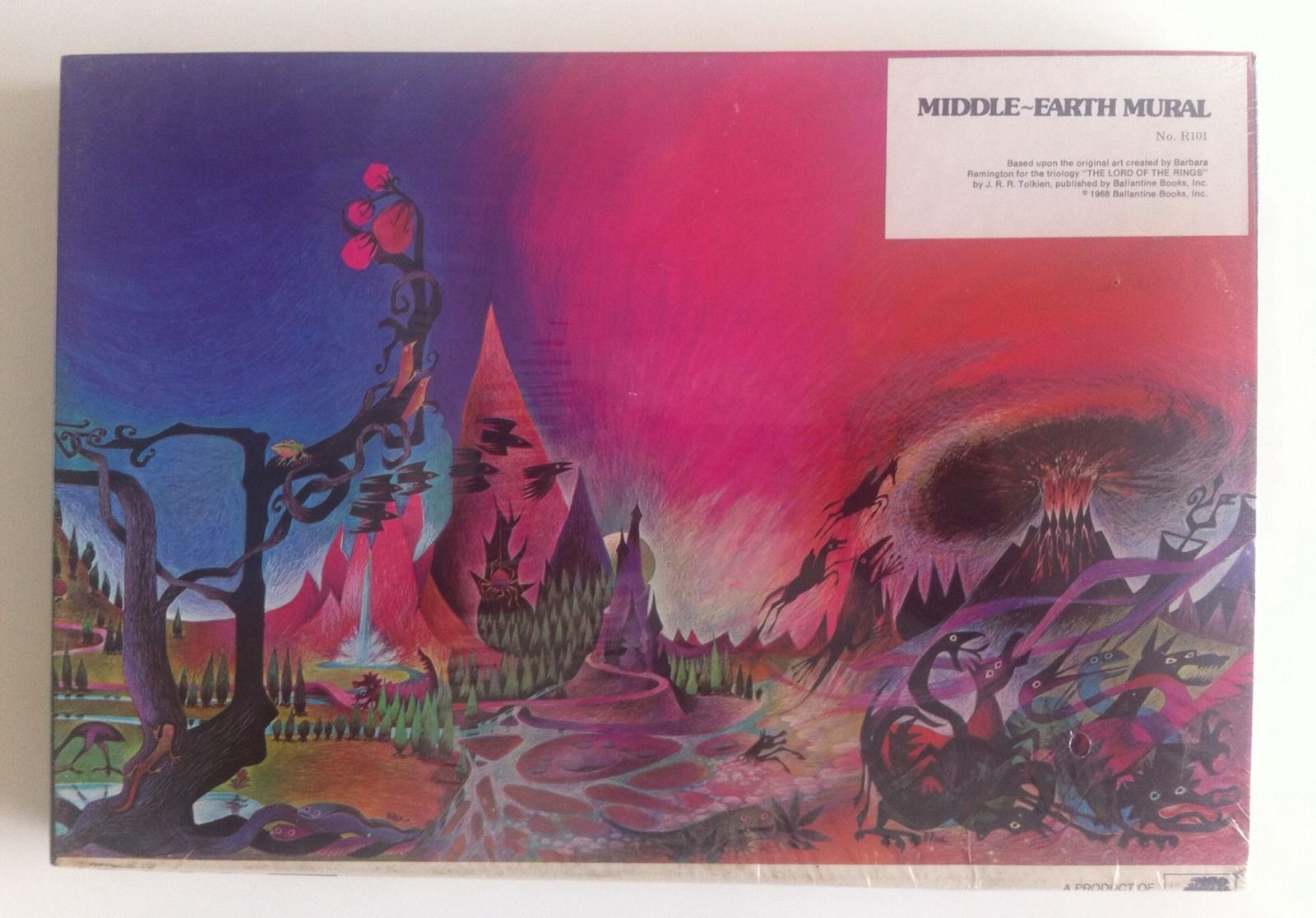
Middle-Earth Mural Poster Puzzle (1968)

Middle-Earth Puzzle 1968

Middle-Earth Puzzle 1968-2

Middle-Earth Puzzle 1968-3

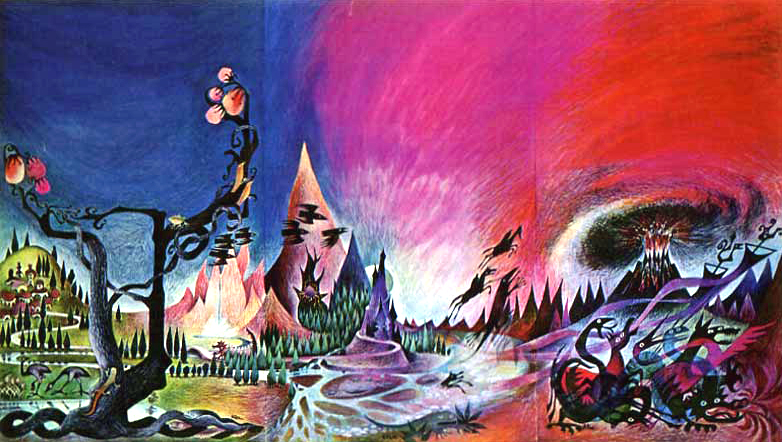
The art is from the first authorized paperback edition of The Lord of the Rings, released by Ballantine in 1965. Artist Barbara Remington famously had not read any of Tolkein’s books before completing the project; she had only heard accounts from friends. The end result befuddled and irritated Tolkien, but became hugely popular with his young fans—and most everyone attracted to mind-altering substances.

Remington’s bright canvas came in a poster version as well, seen below. The demarcations separating the individual covers are obvious.

Remington Poster

(Poster puzzle images via eBay)

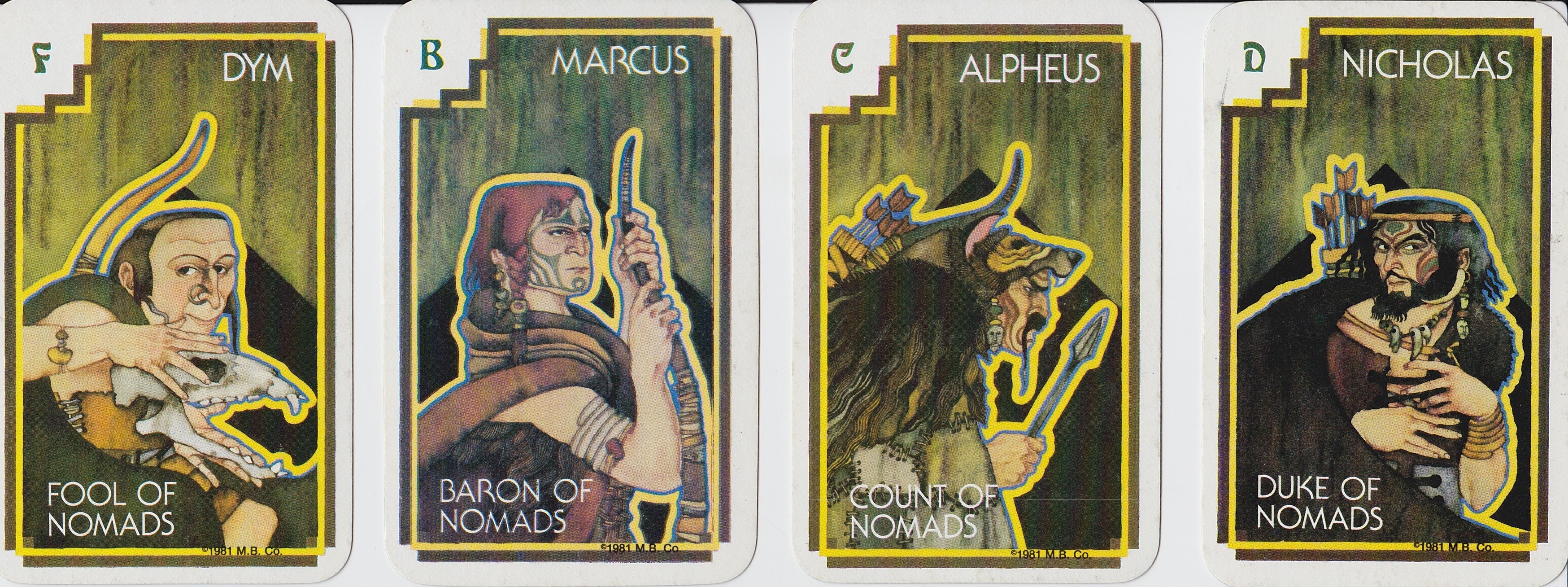
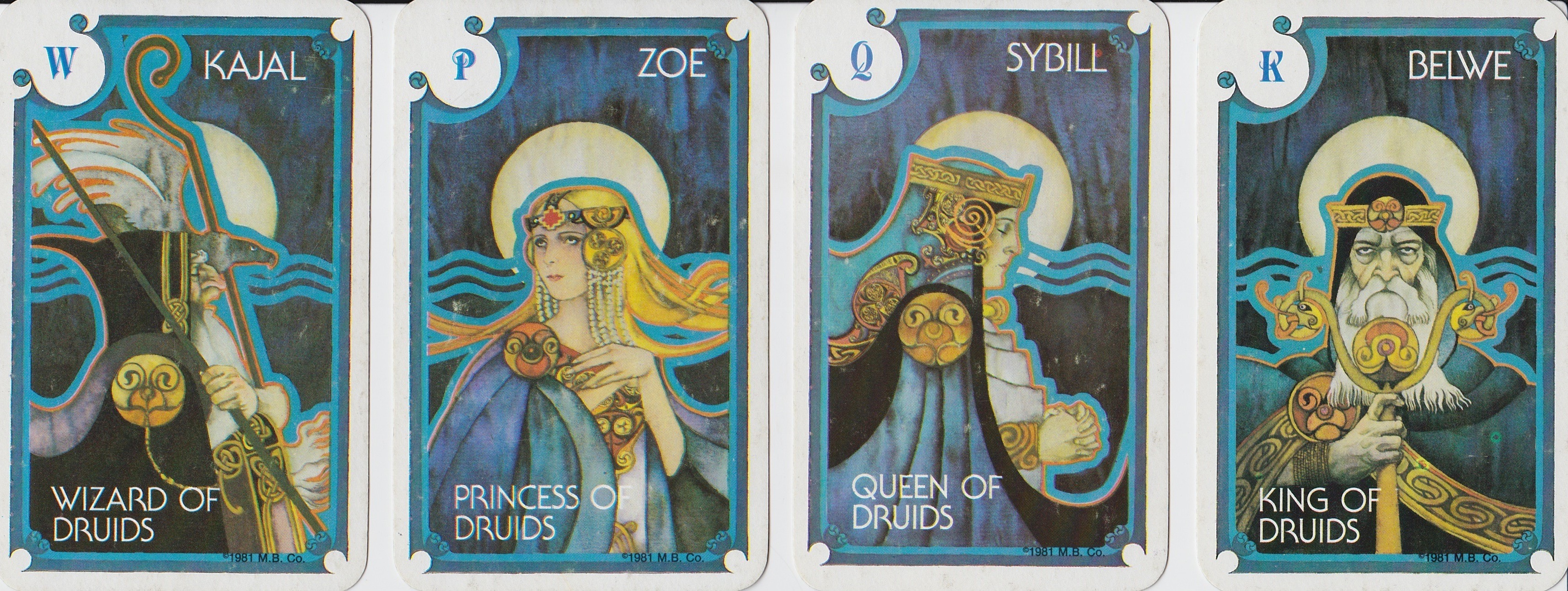
Complete Set of Bob Pepper’s Dragonmaster Cards (1981)

DM Nomads 1981

DM Nomads 1981-2

DM Dragonlords 1981

DM Dragonlords 1981-2

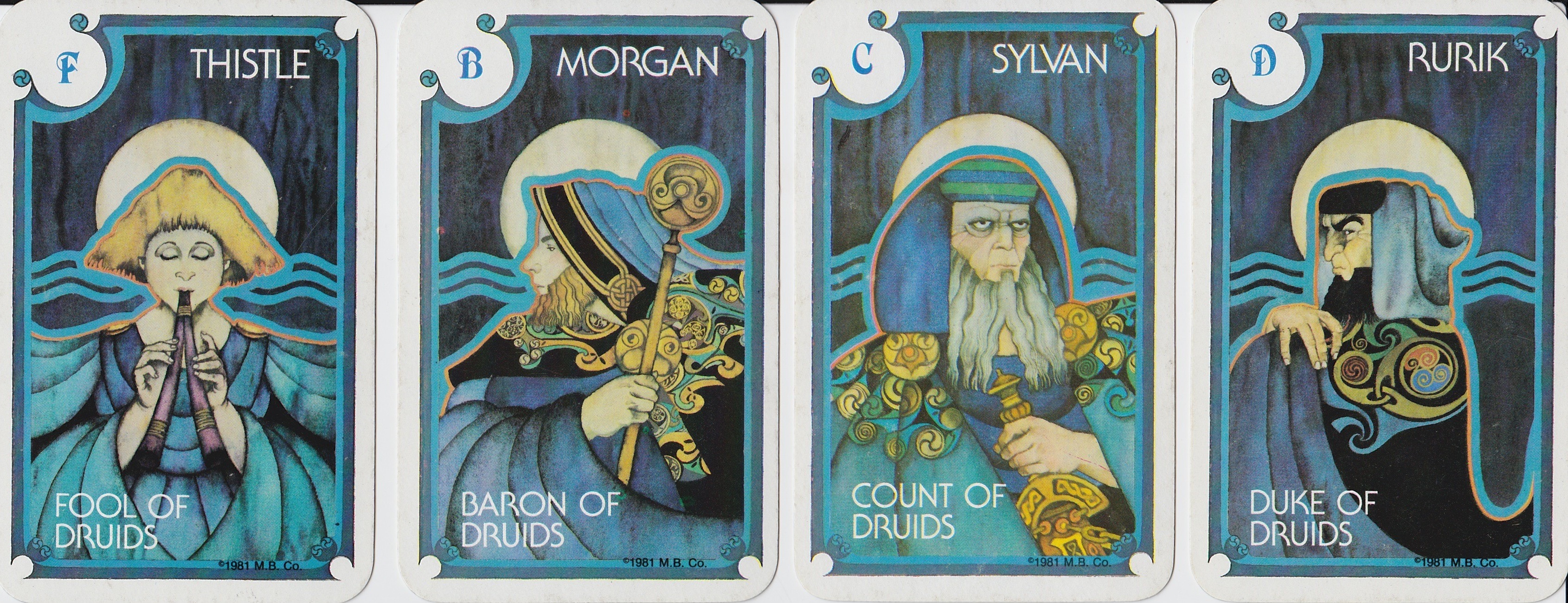
DM Druids 1981

DM Druids 1981-2

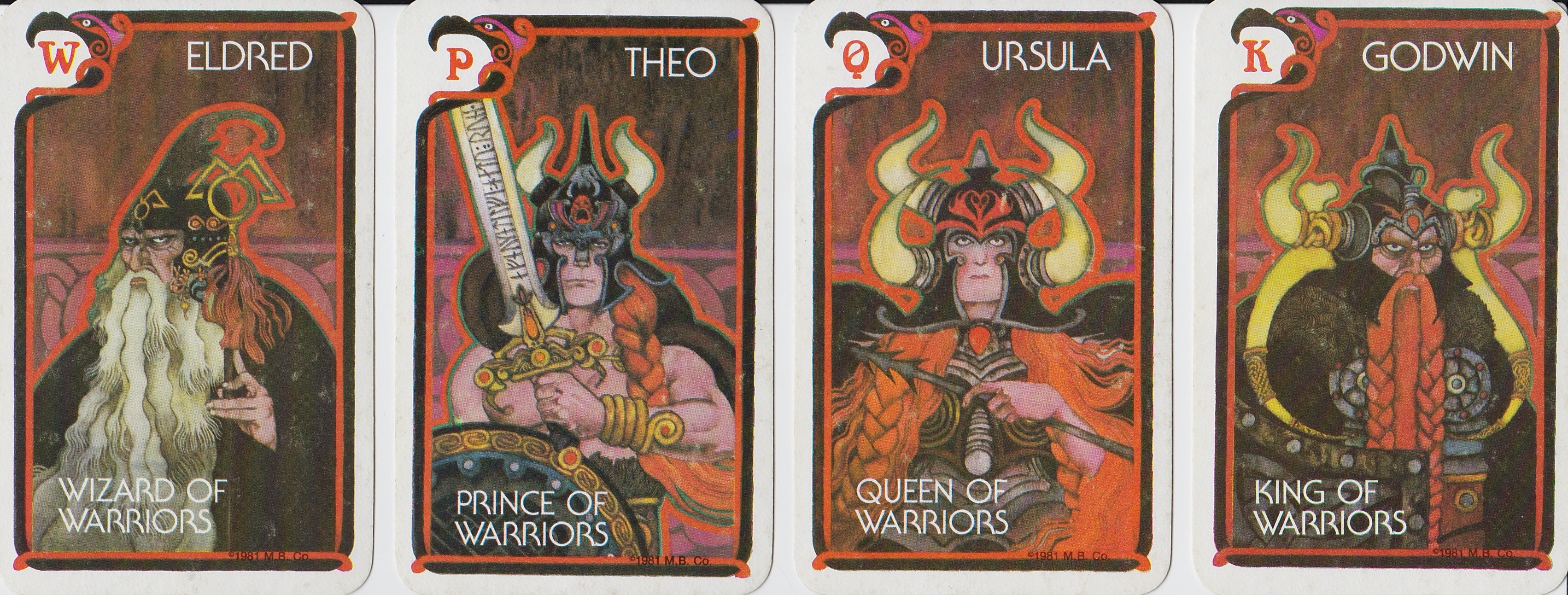
DM Warriors 1981

DM Warriors 1981-2

DM Gameplay 1981

DM Gameplay 1981-2

A sequel to my first post on Milton Bradley’s Dragonmaster. Click to make big. We owe the scans to Tom Beiter, champion of pop culture posterity and author of Garage Sale Finds, a detailed profile of “garage sale treasures and sometimes trash.” (You will not believe the amazing stuff that Tom finds—and often restores.)

It’s clear that Pepper had a deep understanding of Medieval, Renaissance, and Pre-Raphaelite art, and his method—mixing charcoal and watercolors—produced some incredibly vivid colors and textures. His impeccable imagination did the rest. Each card is a work of art, and the originals, if they still exist, belong in a museum. (Is there a fantasy art museum? A commercial art museum?)

I’m betting that one or more of you can come up with a game that does Pepper’s work some justice. From what I’ve heard, the original version is not very compelling.

Board Games: Dragonmaster (Milton Bradley, 1981)

Dragonmaster 1981

Dragonmaster 1981-2

Dragonmaster 1981-4

Dragonmaster 1981-3

Dragonmaster is a straightforward, trick-taking card game with a sword and sorcery theme. What makes it interesting is the spectacular art, which resembles that of another, better known Milton Bradley game from the same year, Dark Tower. Here’s a shot of the different screens in Dark Tower for comparison:

Dark Tower 1981

The same talented gent, Bob Pepper, illustrated both games. Pepper is probably most famous for his kaleidoscopic cover art for Forever Changes (1967), one of the greatest rock albums of all time. He also did numerous, ultra-stylized sci-fi/fantasy paperback covers from the late 1960s until the early 1980s, including a series of unforgettable Philip K. Dick covers for DAW. Less well known are his beautiful classical album covers—for Bartok, Schubert, Puccini, Bach. I’ll feature more from Pepper soon.

Once again we see the influence of the psychedelic movement of the 1960s on the fantasy renaissance of 1975 – 1985.

You can read a short interview with Pepper at Well of Souls, a Dark Tower fan site.

UPDATE: See a complete set of Pepper’s Dragonmaster cards here.

(Images via Board Game Geek)

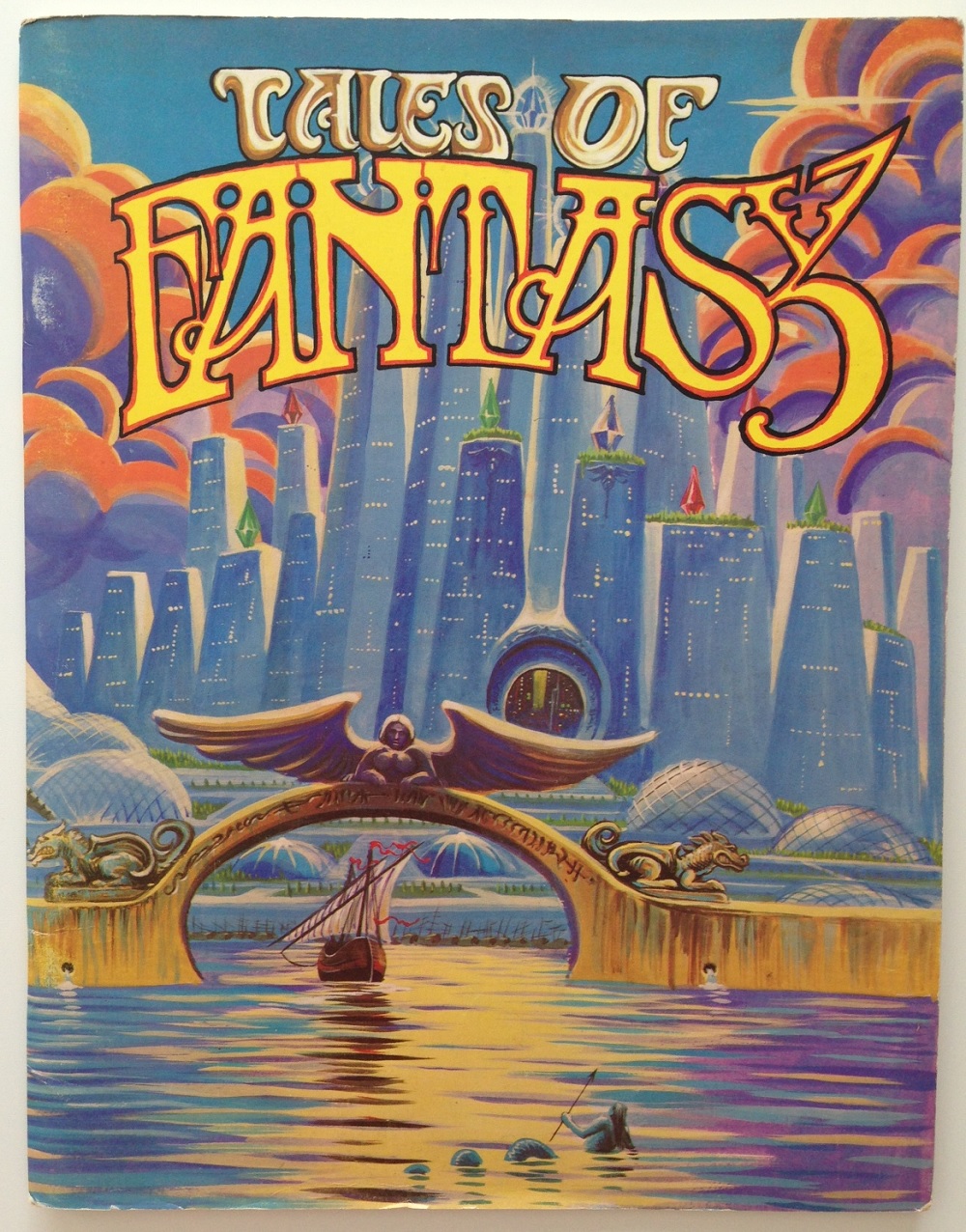
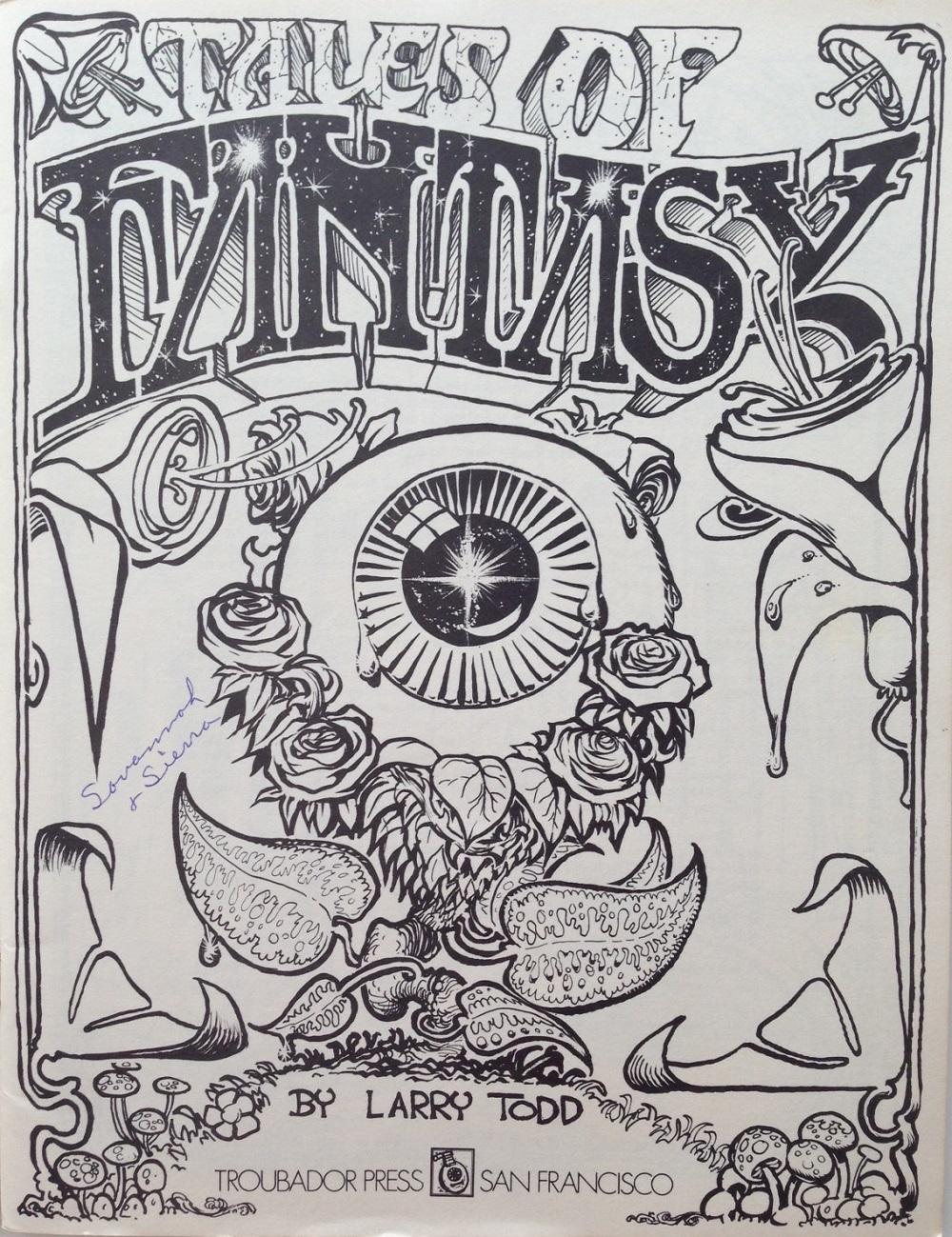
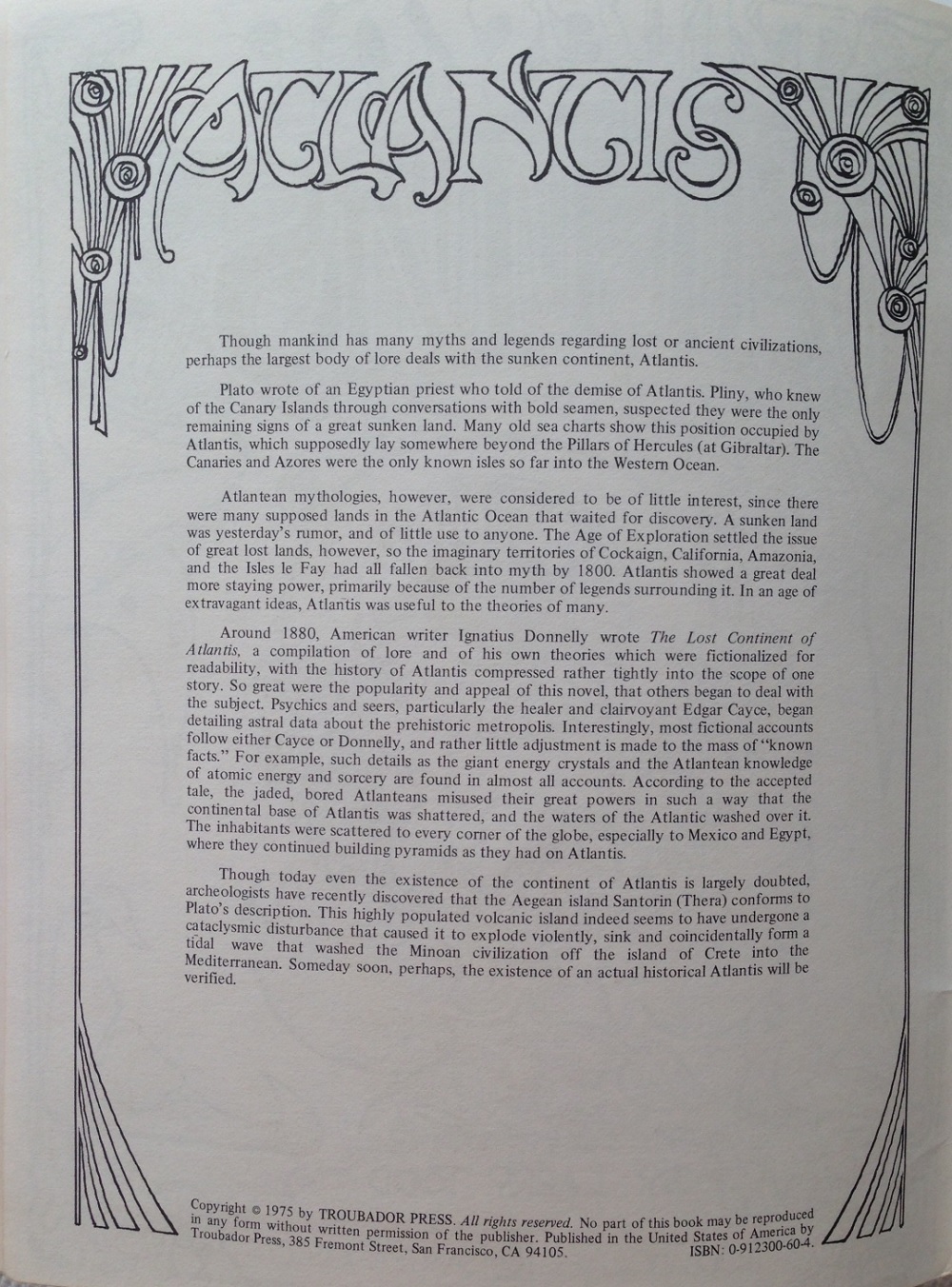
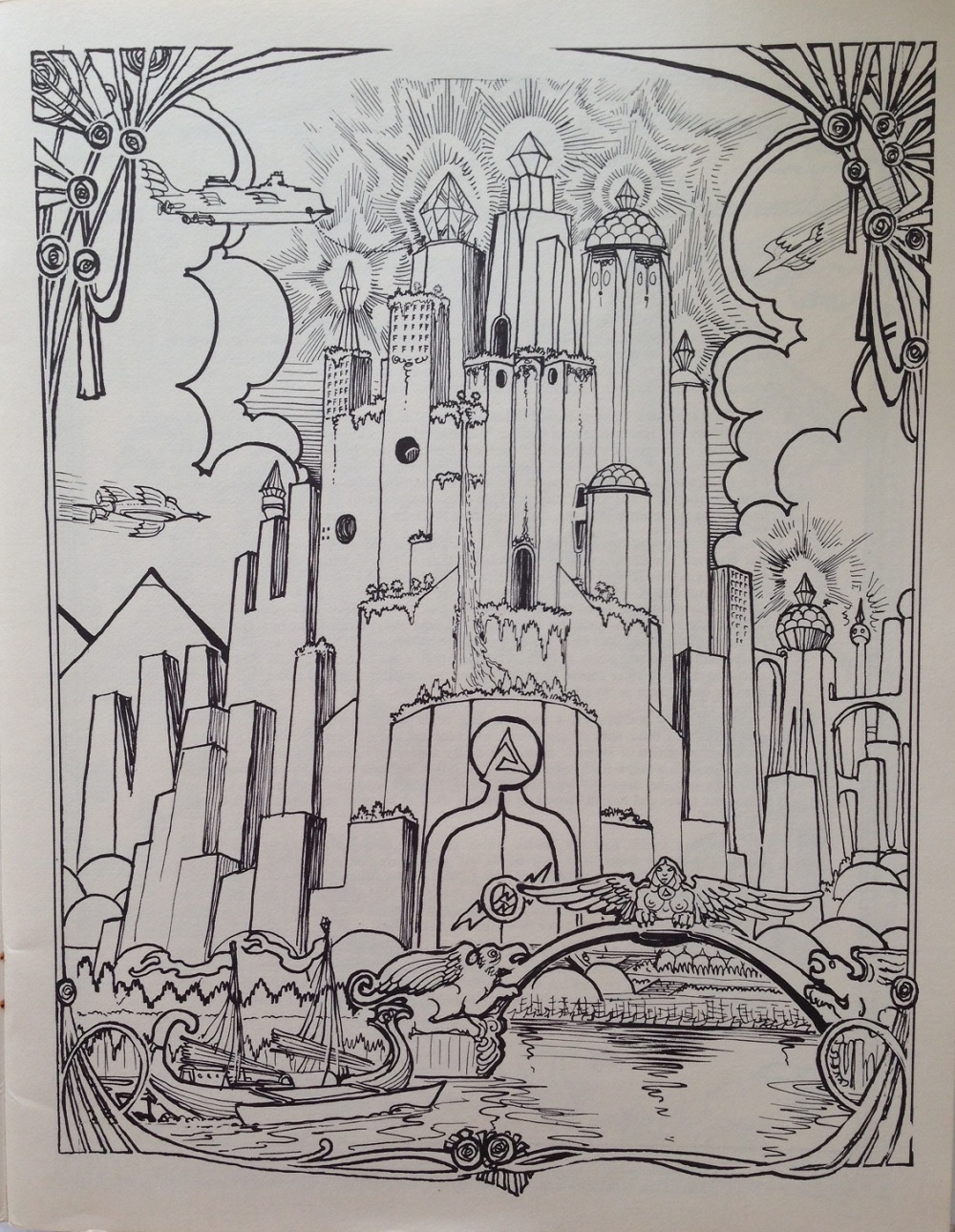
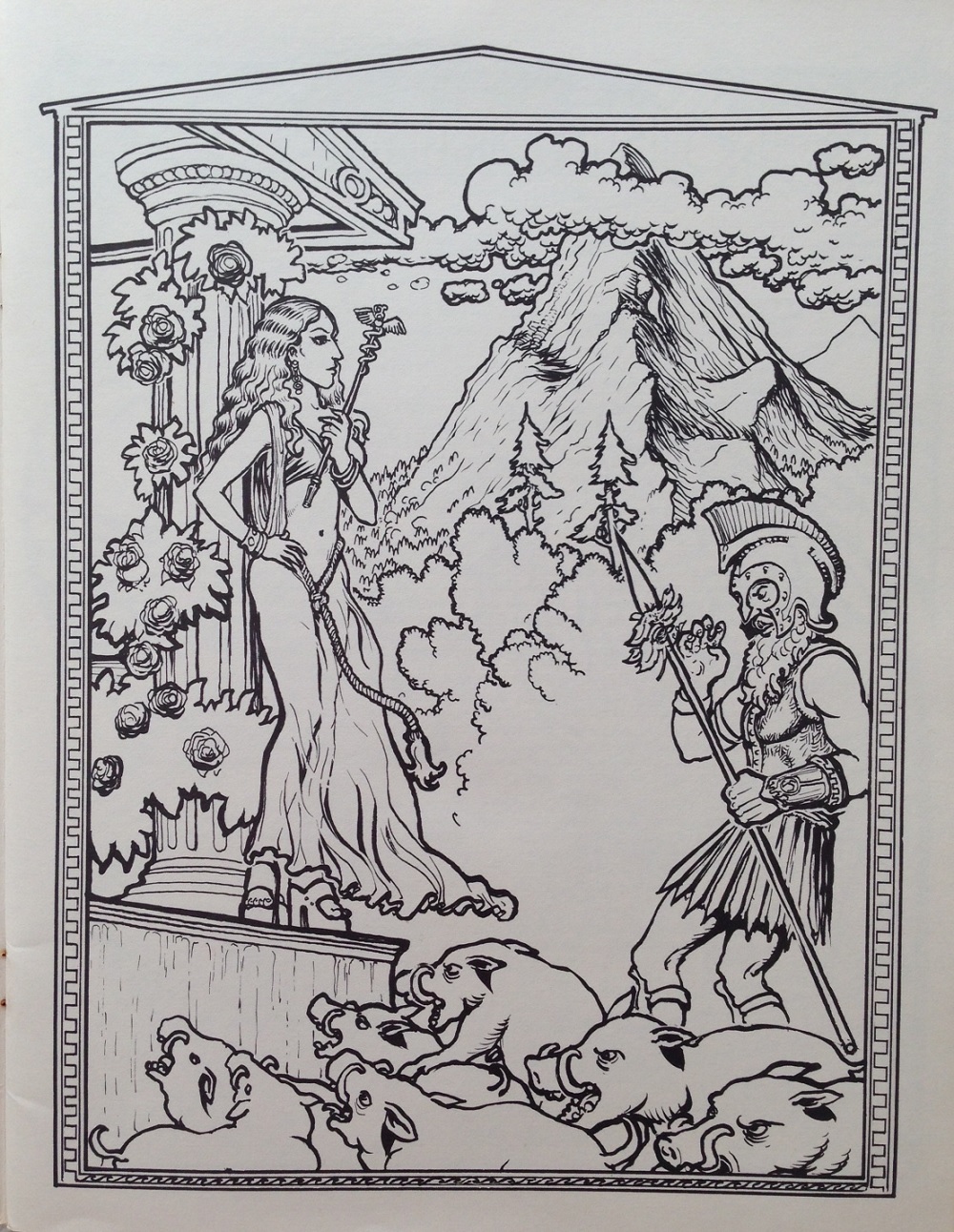
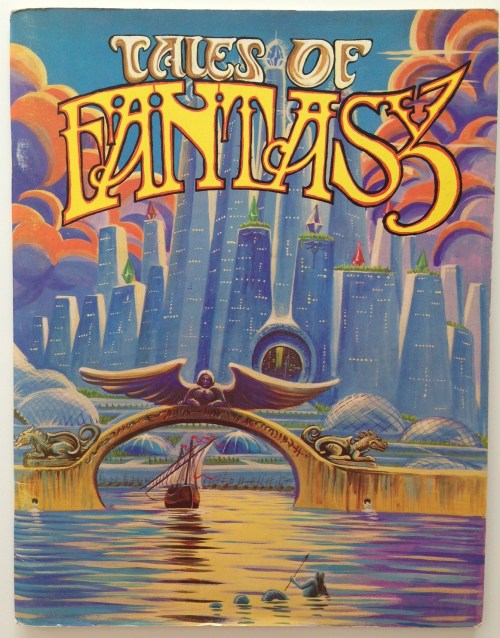
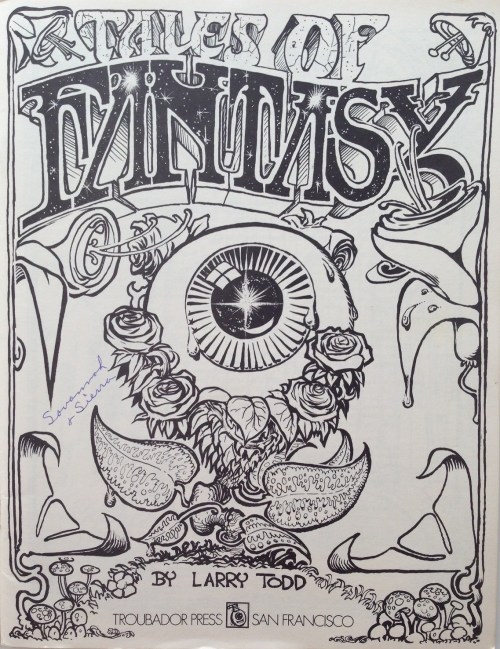
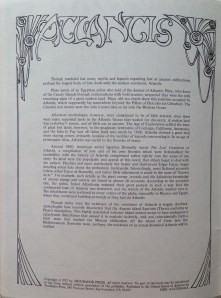
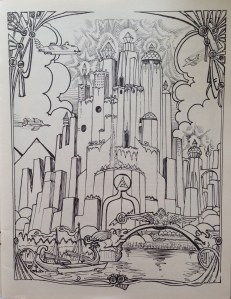
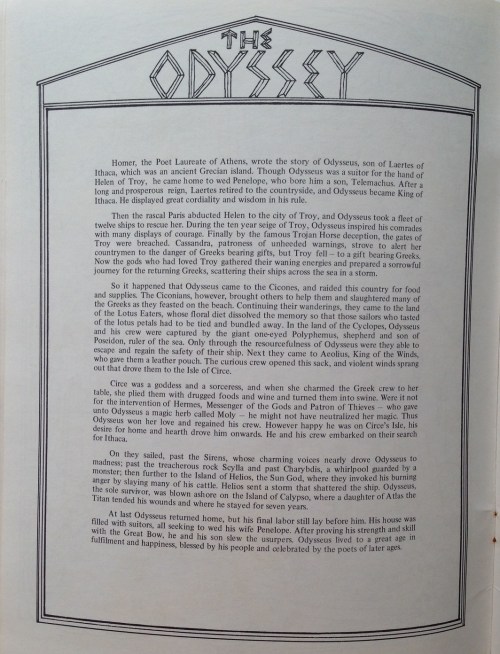
Tales of Fantasy by Larry Todd (Troubador Press, 1975) (Part One)

TOF FC 1975

TOF TP 1975

TOF-1TOF-2

TOF-3

TOF-4

TOF-5TOF-6

TOF-7

TOF-8

TOF-9TOF-10

TOF-11TOF-12

TOF-13

TOF-14

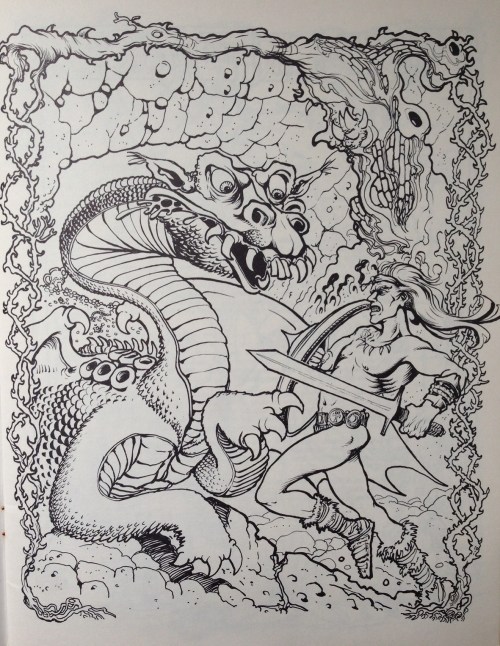
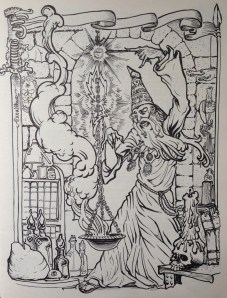
I’ve briefly talked about Tales of Fantasy before. It’s one of the formative books of my youth, and I was very fortunate to find a copy in good condition. I asked Malcolm Whyte, founder and longtime director of Troubador Press, whose idea it was and how the project came together, and here’s what he said:

Tales of Fantasy was my idea. I wanted to round out a trilogy—a fantasy trilogy—that started with Monster Gallery (1973) and included Science Fiction Anthology (1974). All three books were then marketed as a set: if someone had one of the books, he must have the other two. I was also interested in having some of the underground cartoonists illustrate Troubador books. I knew of Larry Todd’s interest in science fiction from the underground comix he wrote for and especially his wonderful Dr. Atomic character, and signed him up for Tales of Fantasy.

As we were discussing which tales to include in the book, I was astounded by Larry’s depth of knowledge of great fantasy authors and realized that he had to write the book as well as illustrate it. Tales of Fantasy has more text than most of the other Troubador coloring albums.

Larry is a sweet, engaging, literate, post-hippy eccentric… Last I knew he was one of the few of a dying breed of hand-done sign painters.

Troubador’s `fantasy trilogy’ marks a high point not only in coloring books (fine art coloring albums, actually), but in the kind of intelligent entertainment publishers and culture creators once offered young people. Todd’s descriptions of the various tales are exciting and comprehensive, and his art is as enthralling today as it was then.

Fantasy became a genre proper when the young people of the 1960s embraced and popularized The Lord of the Rings. In fact, there’s an important passage about Tolkien’s influence in Theodore Roszak’s definitive analysis of the `youth opposition’, The Making of a Counter Culture (1969):

The hippy, real or as imagined, now seems to stand as one of the few images toward which the very young can grow without having to give up the childish sense of enchantment and playfulness, perhaps because the hippy keeps one foot in his childhood. Hippies who may be pushing thirty wear buttons that read “Frodo Lives” and decorate their pads with maps of Middle Earth (which happens to be the name of one of London’s current rock clubs). Is it any wonder that the best and brightest youngsters at Berkeley High School… are already coming to class barefoot, with flowers in their hair, and ringing with cowbells?

The allure of fantasy literature was (and still is, to many) that it offers a vision of “the days when the world was uncrowded and unregulated and ‘natural’ man flourished.” Emulating Middle Earth and its intrepid adventurers—even channeling the Cthulhu mythos of H.P. Lovecraft—was a form of protest against the crass industrial establishment, which Roczak called the ‘technocracy’.

Most of the territory geeks claim today was inherited from literate post-hippies like Larry Todd, thanks in part to literate, daring publishers like Malcolm Whyte.
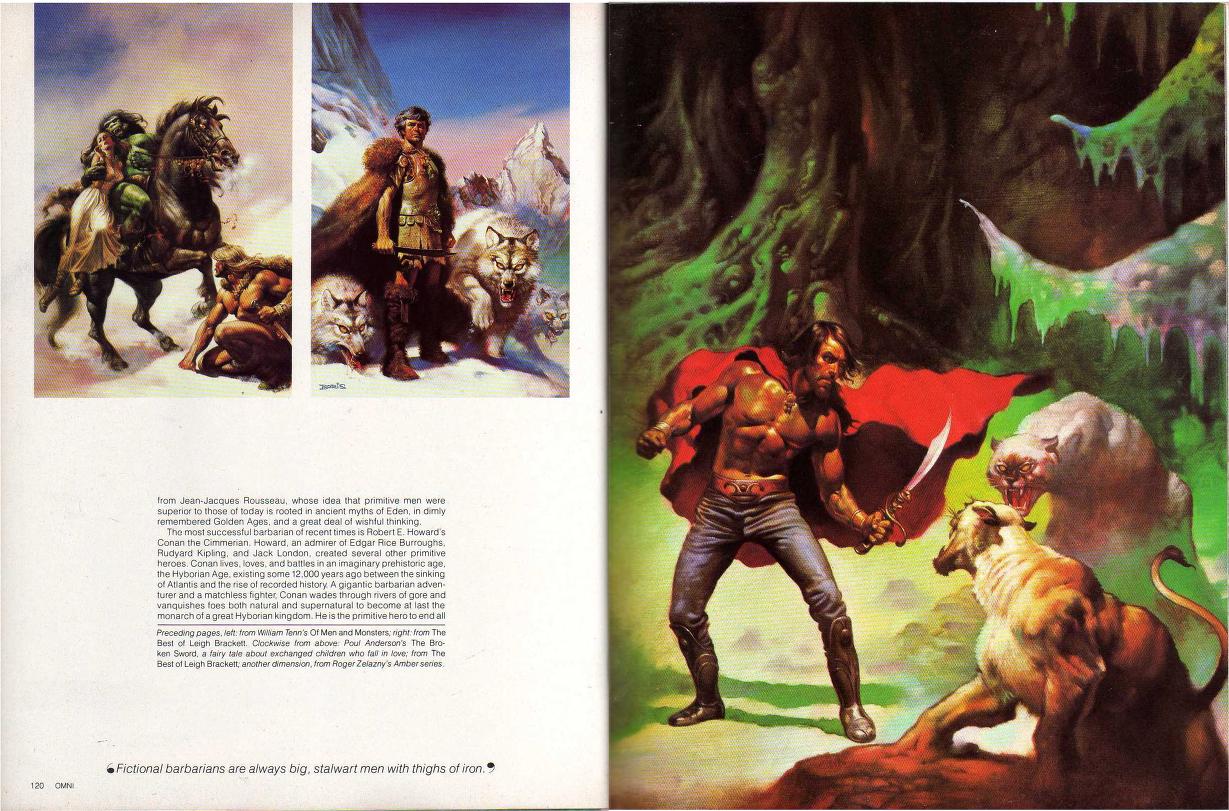
Omni Magazine (October, 1980): L. Sprague de Camp and Dungeons & Dragons

Omni 10-80 pg. 118-119

Omni 10-80 pg. 120-121

Omni 10-80 pg. 122-123

L. Sprague de Camp (1907 – 2000) was a prolific writer and popularizer of the fantasy genre, an engineer by trade, and something of a self-taught history and Classics scholar. (I just read his excellent, still relevant debunking of the Atlantis myth, Lost Continents). He edited the very first heroic fantasy or sword and sorcery anthology called Swords & Sorcery (Pyramid, 1963), which I’ll talk about in a later post. The phrase `heroic fantasy’ was coined by de Camp in 1963 (OED citation here); ‘sword and sorcery’ was coined by Fritz Leiber in 1961 (OED citation here).

His unsentimental grounding of the genre is right on, I think—from a traditional male perspective, anyway:

Heroic fantasy is alive and flourishing. The more complex, cerebral, and restrained the civilization, the more men’s minds return to a dream of earlier times, when issues of good and evil were clear-cut and a man could venture out with his sword, conquer his enemies, and win a kingdom and a beautiful woman. The idea is compelling, even though such an age probably never existed.

Here’s de Camp’s slightly less sexist description from the 1967 Ace edition of Conan:

Such a story combines the color and dash of the historical costume romance with the atavistic supernatural thrills of the weird, occult, or ghost story. When well done, it provides the purest fun of fiction of any kind. It is escape fiction wherein one escapes clear out of the real world into one where all men are strong, all women beautiful, all life adventurous, and all problems simple, and nobody even mentions the income tax or the dropout problem or socialized medicine.
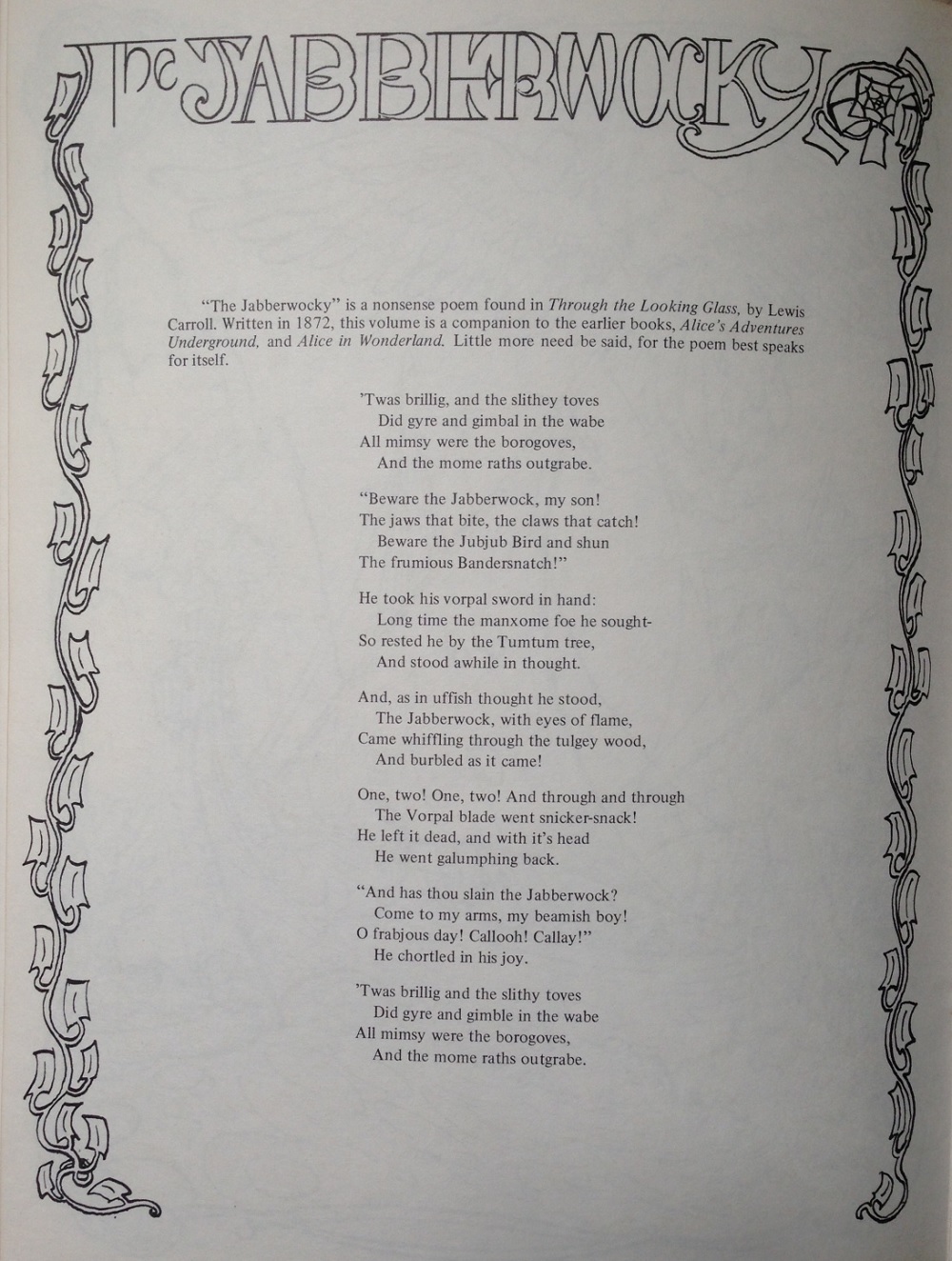
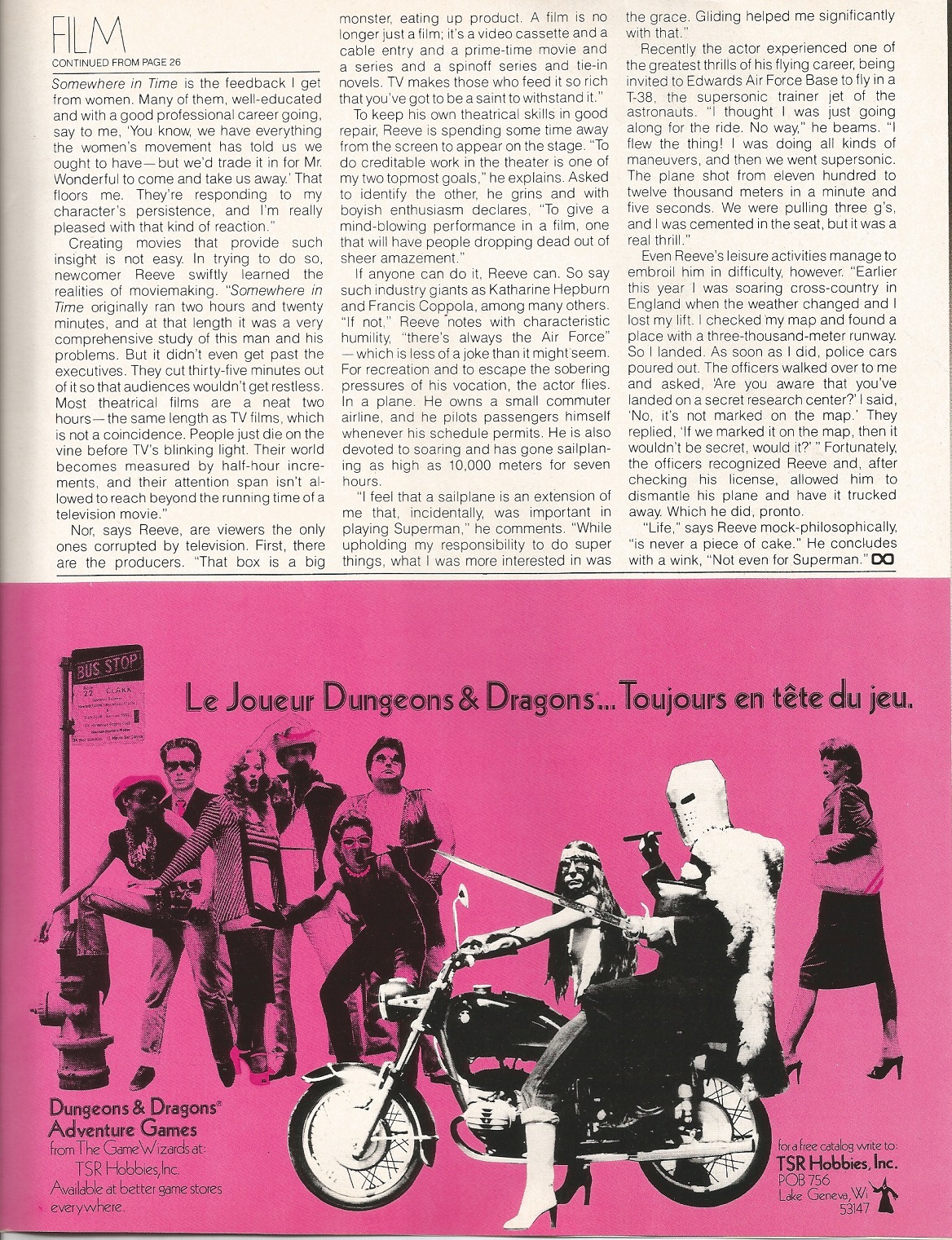
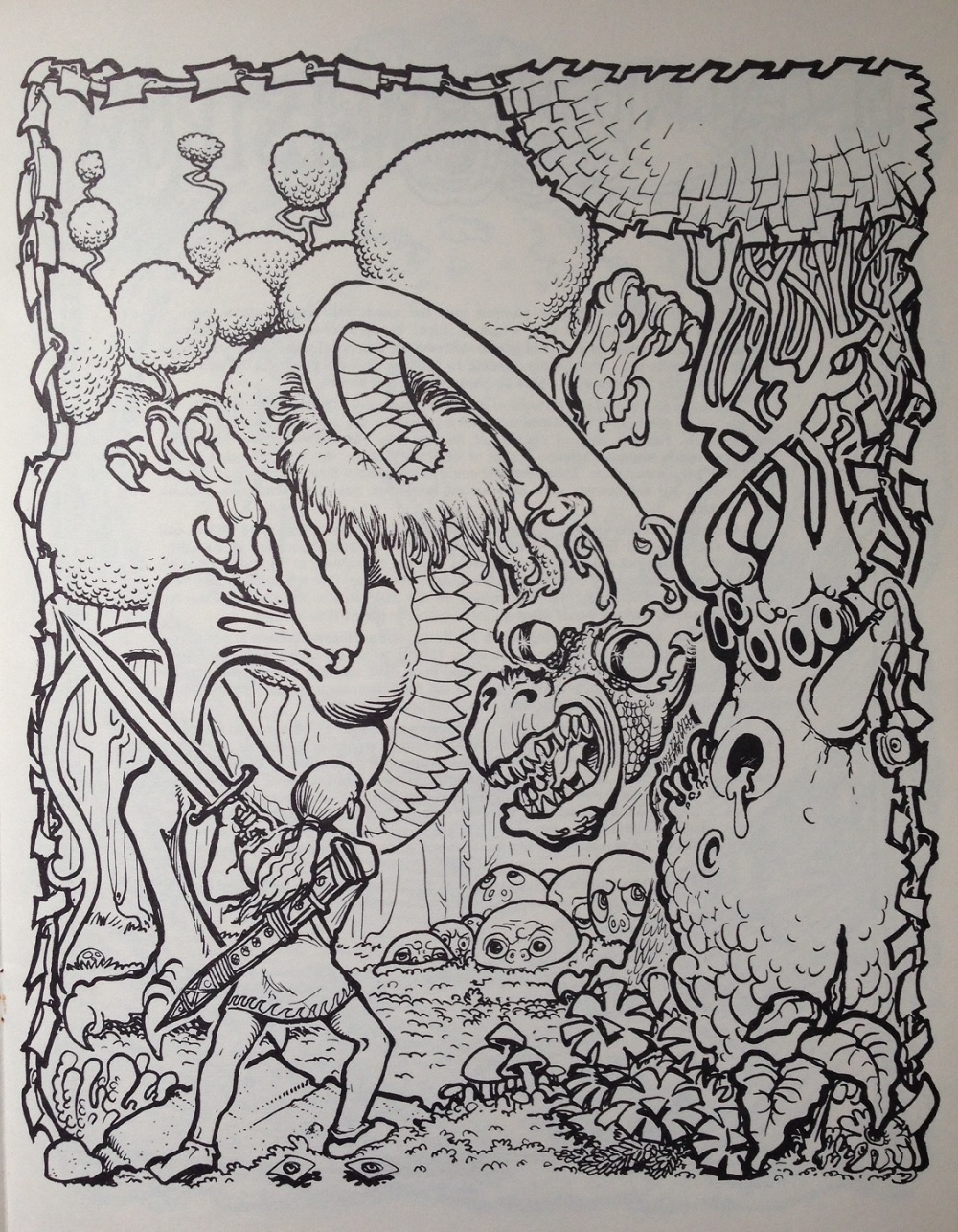
He doesn’t mention D&D, but, to prove the point of his short piece, there’s an ad near the back of the same issue (page 153 of 194).
Omni 10-80 pg. 153 of 194

What’s interesting is that the ad itself wants to be complex and cerebral, and tries to appeal to a more “sophisticated” audience. (The translation is “Play Dungeons & Dragons… Always ahead of the game.”) I’ve been going through a long run of Omni and will post all the D&D ads (and other interesting material). Archive.org has a large catalog of Omni for viewing, but the ads have been left out. That’s to be expected, considering the length of the magazine.

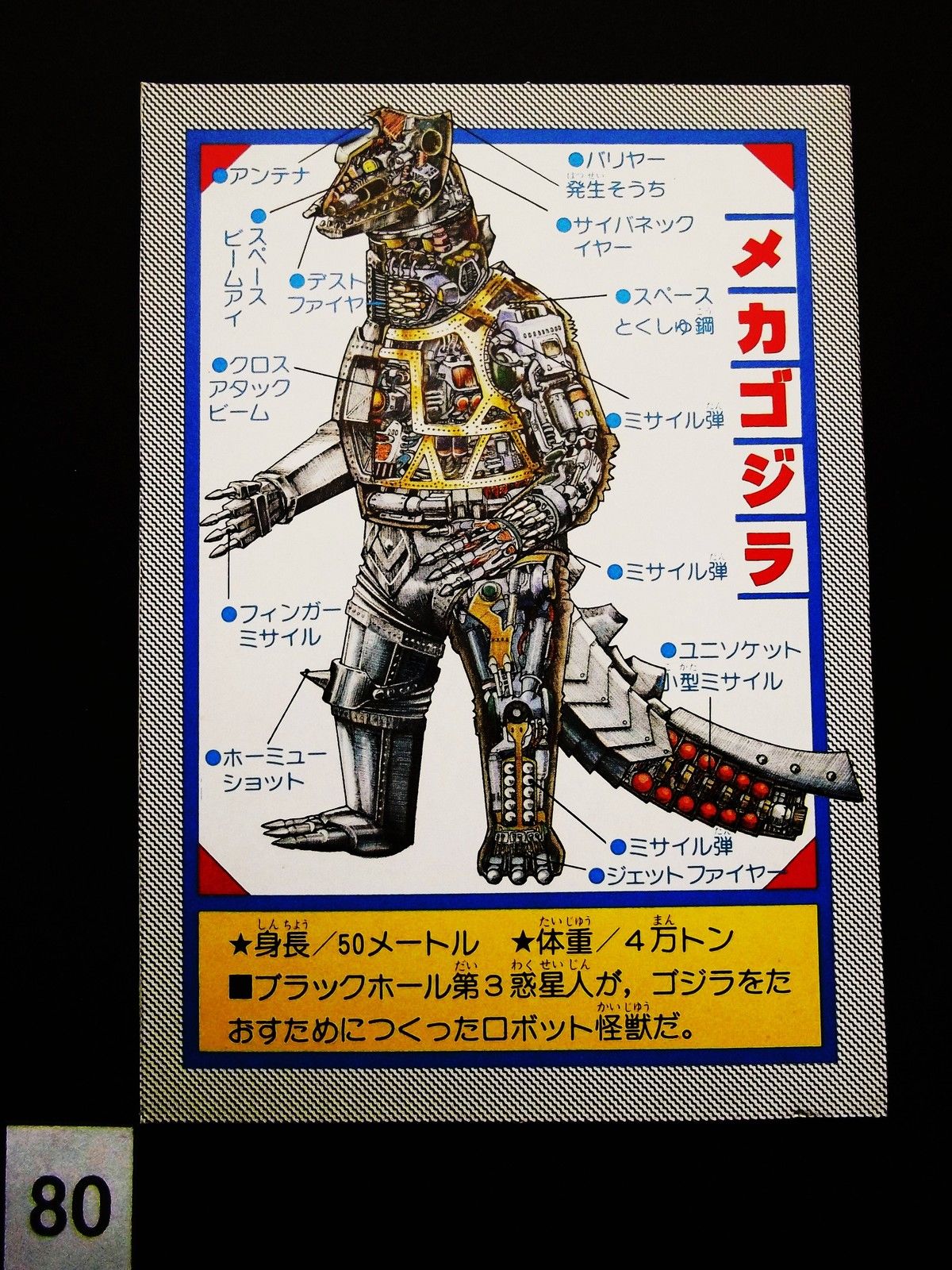
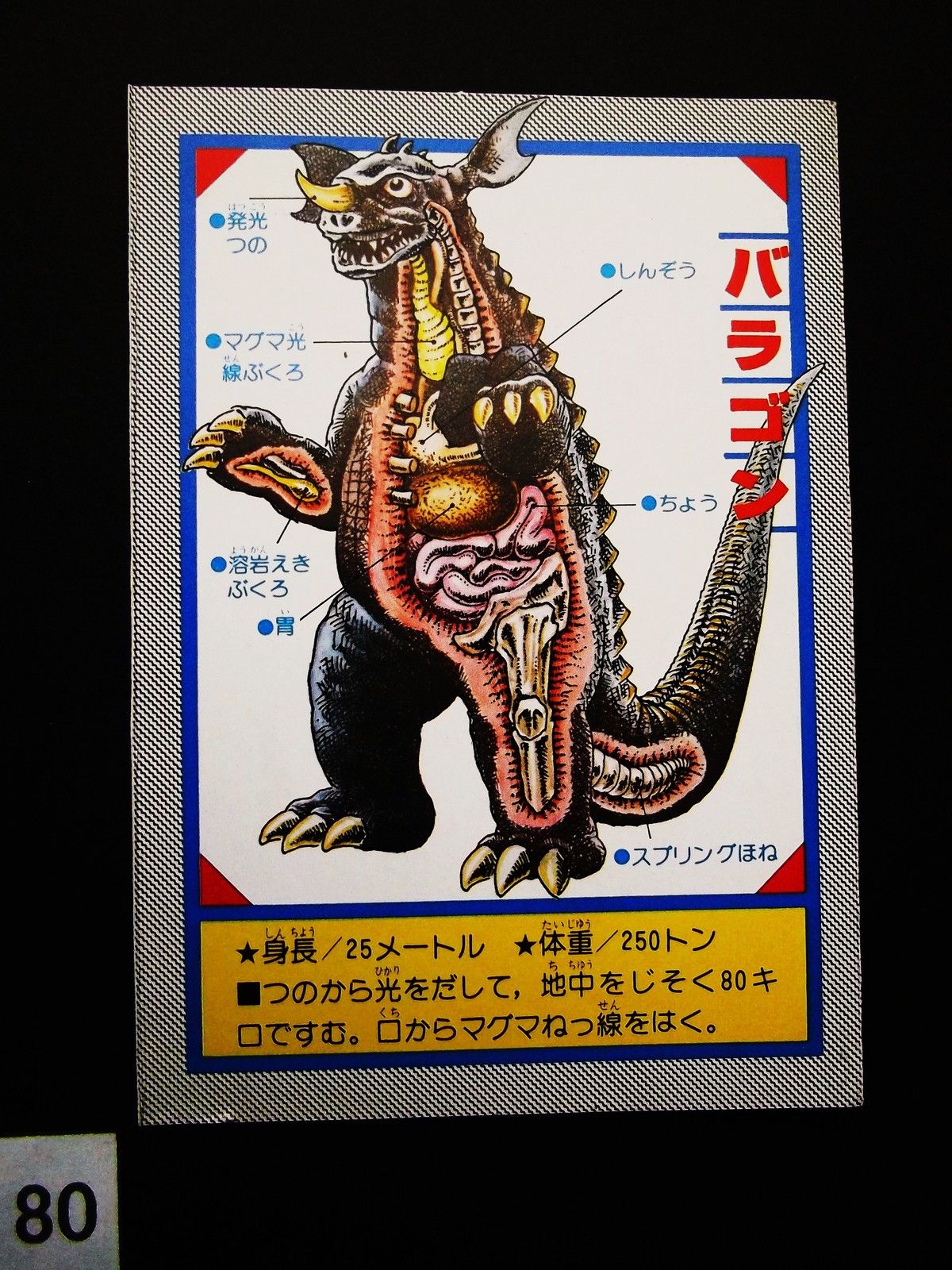
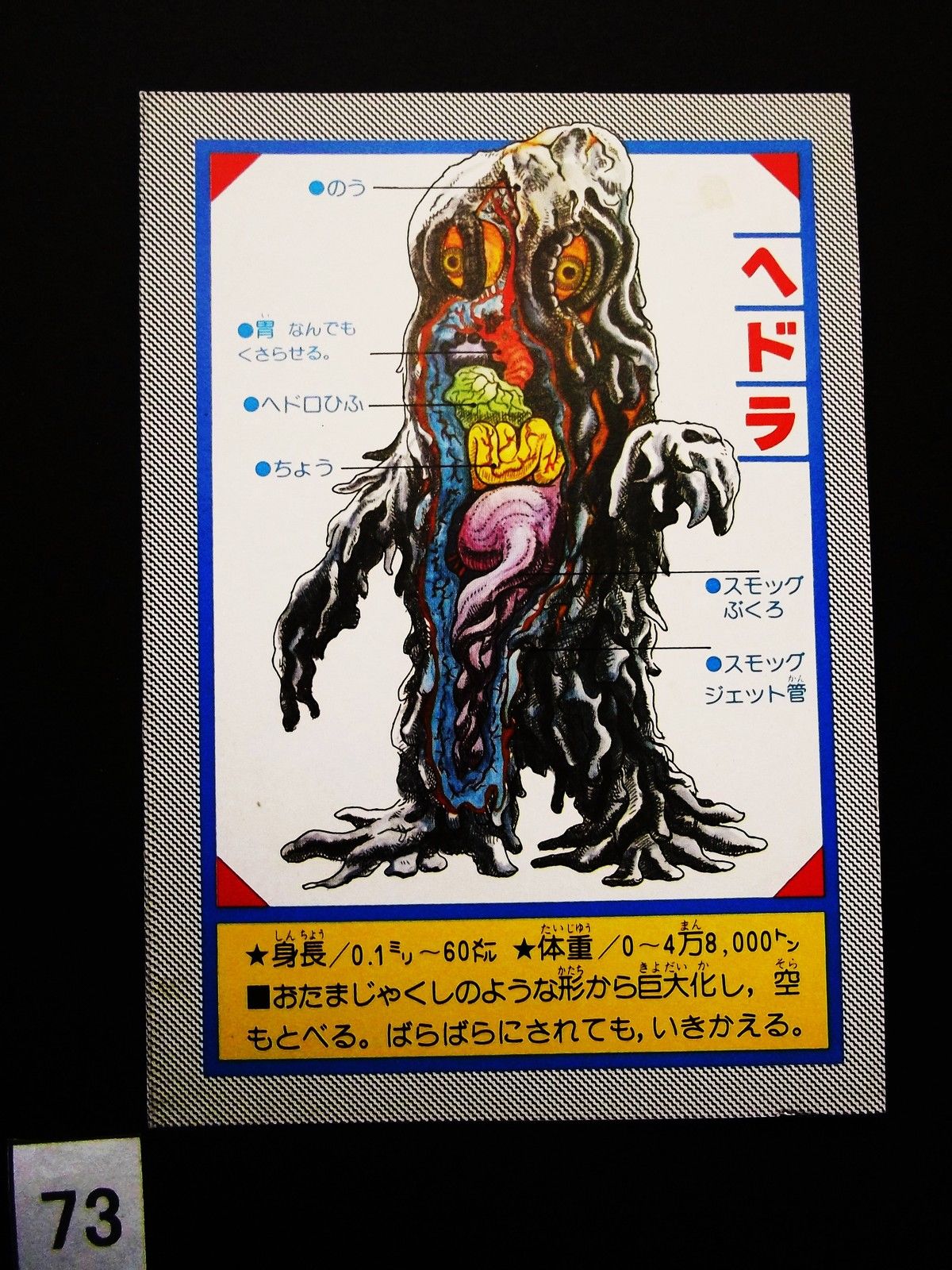
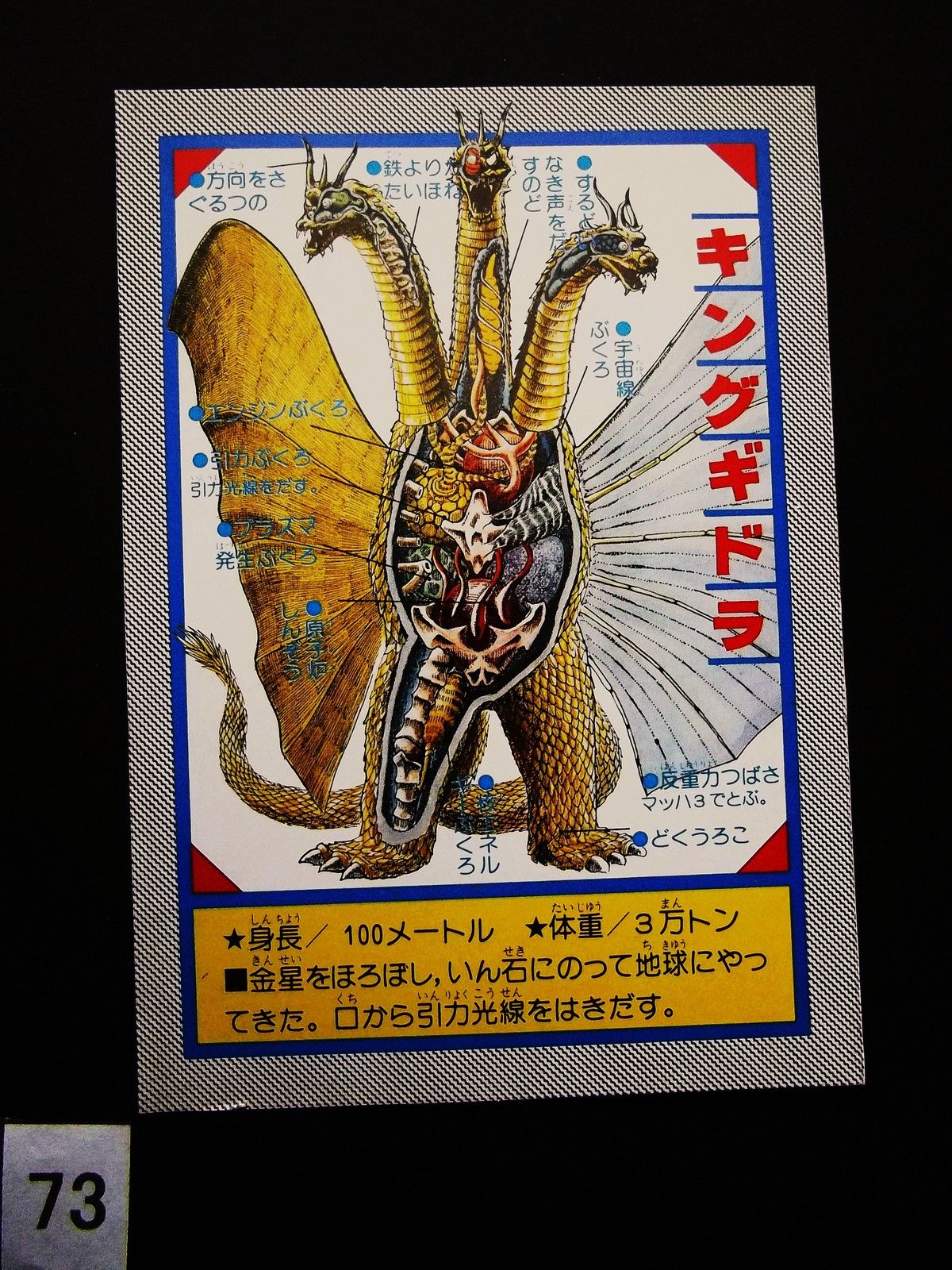
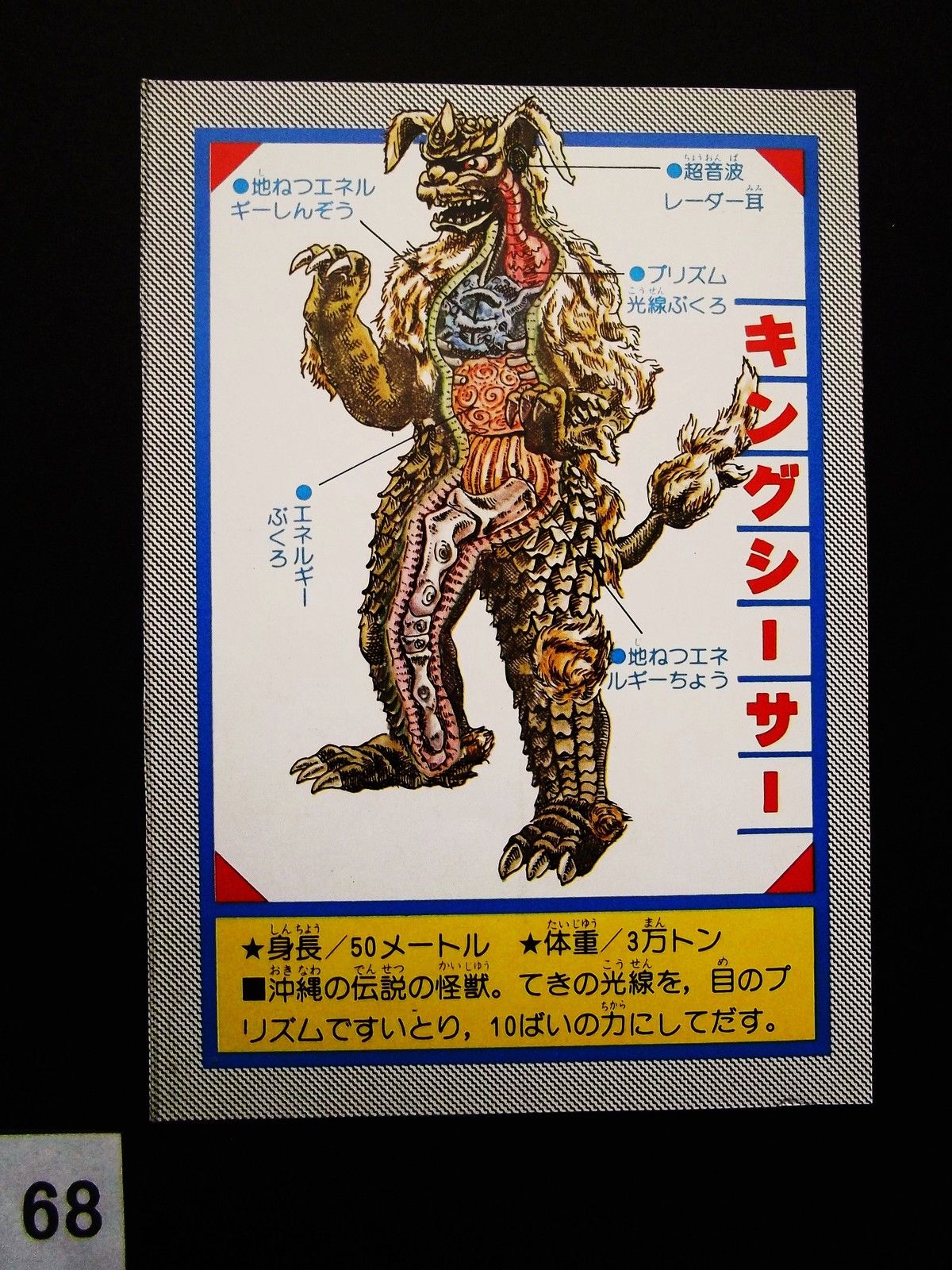
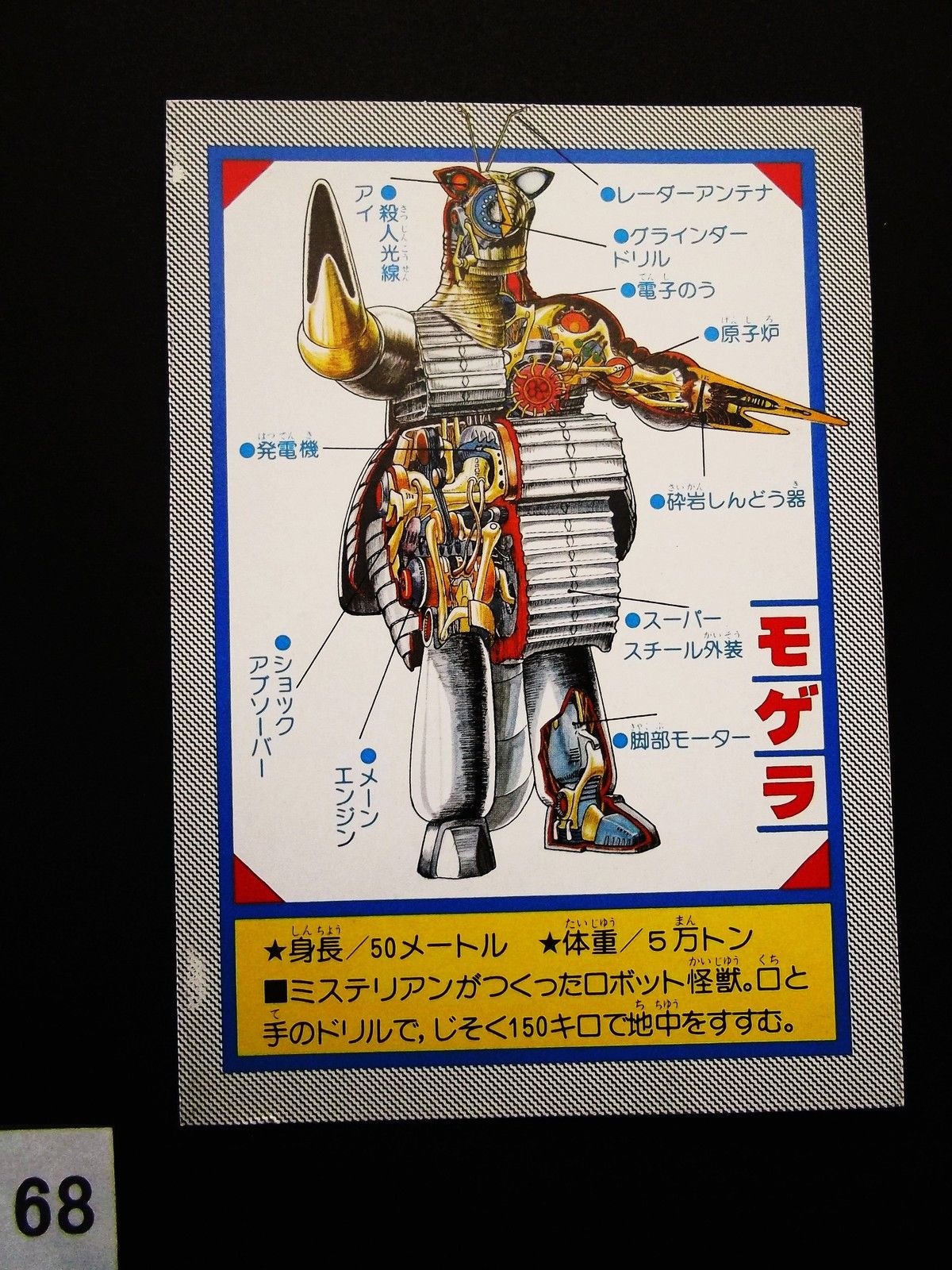
Kaiju Cross-Section Trading Cards, 1979

Mechagodzilla 80 1979

Baragon 80 1979

Hedorah 73 1979

King Ghidorah 73 1979

King Caesar 68 1979

Mogera 68 1979

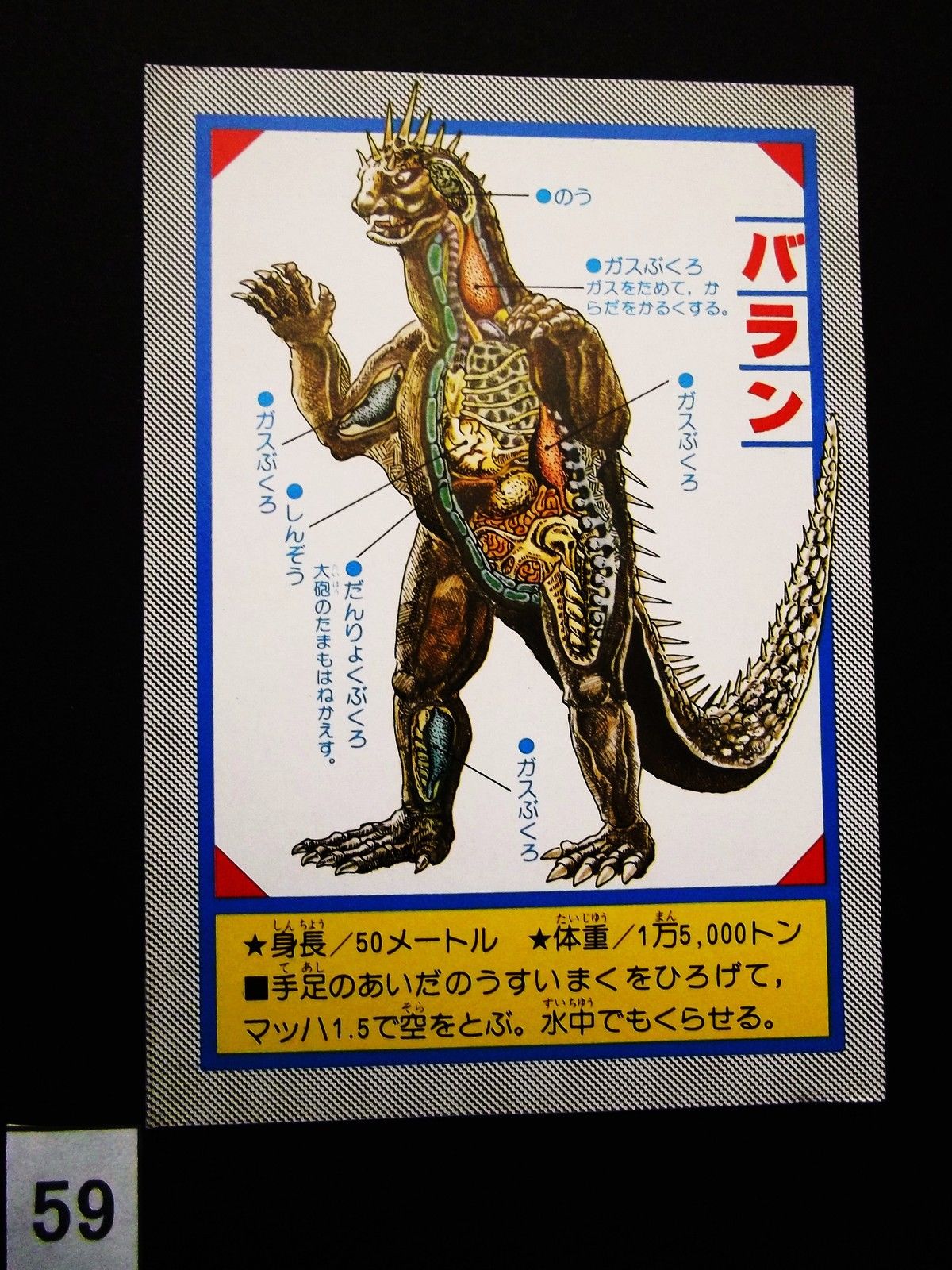
Balun 59 1979

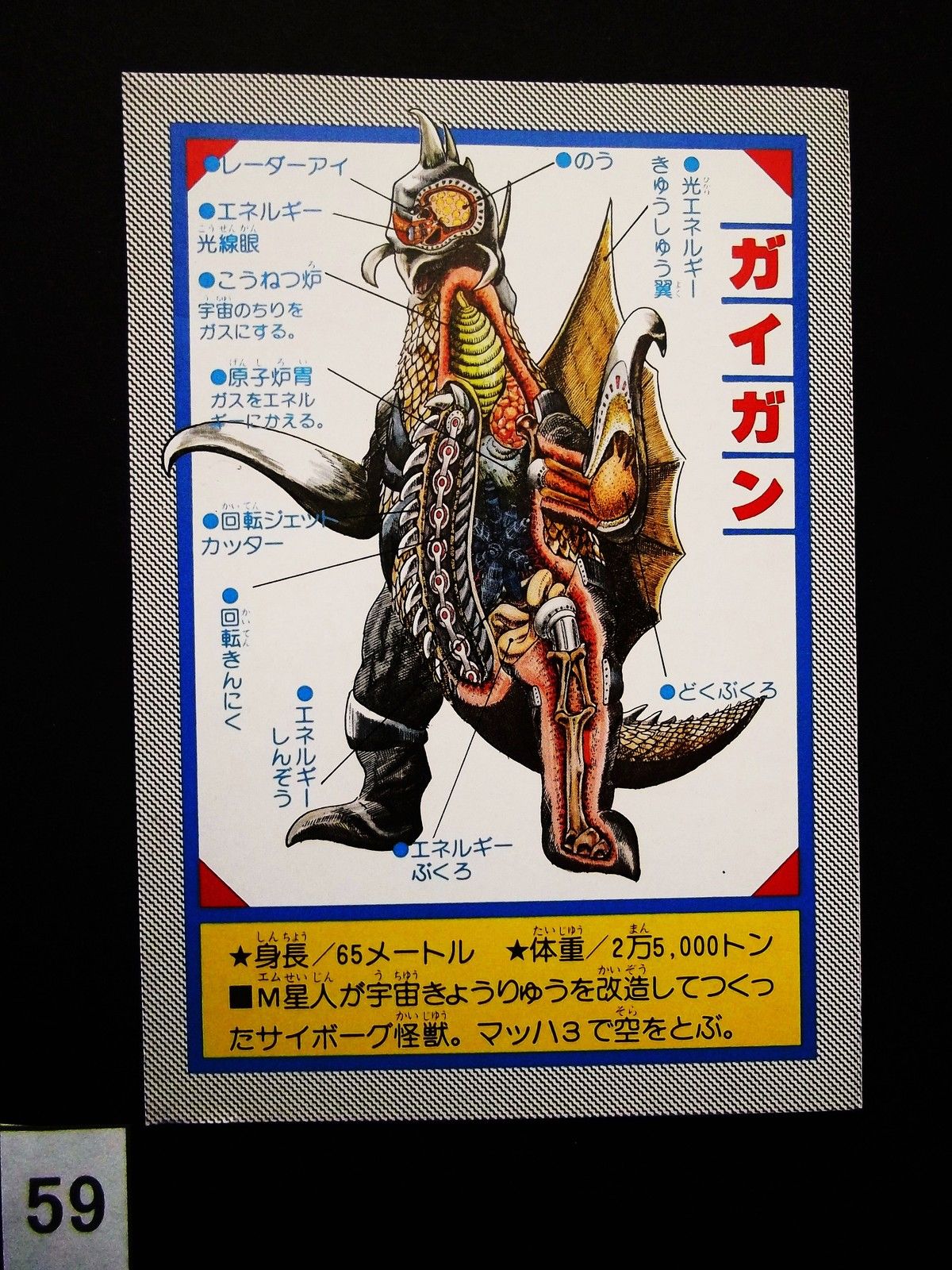
Gigan 59 1979

These large cards detached from a manga magazine published by Kodansha in 1979, demonstrating once again the Japanese art of cross-section. The kaiju pictured are, from top to bottom, Mechagodzilla, Baragon, Hedorah, King Ghidorah, King Caesar, Mogera, Varan, and Gigan.

I think it’s pretty fascinating that, on the one hand, the kaiju genre is all about sustaining an atmosphere of childlike wonder and fantasy; but on the other hand, all of the monsters here are presented as objects of science, methodically dissected and classified.

It sort of reminds me of the analytic-creative duality of D&D.

See more of this set and others at the Bromide Store on eBay.

Ken Kelly Cover Art for Richard Avery’s The Expendables (1975 – 1976)

Deathworms Kelly 1975

Tantalus Kelly 1975

Zelos Ken Kelly 1975

Argus Ken Kelly 1975

Ken Kelly and Frank Frazetta are family, and Kelly grew up admiring the work of his “Uncle Frank.” The Frazetta style—the overwhelmingly imperiled Romantic hero set against a backdrop of otherworldly colors and atmosphere—is obvious here.

Kelly would never completely escape his mentor’s shadow, but a lot of his sci-fi work is wonderfully unique. These are some of his earliest covers.

Original Micronauts Art by Ken Kelly

Repto Kelly

Membros Kelly

Hornetroid Kelly

Terraphant Kelly

If you’re a fantasy art aficionado and have $350,000 burning a hole in your pocket, head on over to eBay seller Mister Sluggworths and buy up these original Ken Kelly oils. They were commissioned by Mego in 1979 and used as card and box art for the Micronauts series 4 and 5 (1979 – 1980) alien figures and vehicles.

Above you see, from top to bottom, Repto, Membros, the Hornetroid, and the Terraphant. Also for sale are Centaurus, Kronos, and Lobros. That’s 7 out of 8 of the original commissions being sold as a lot. Antron is the only one missing.

(Images via Mister Sluggworths/eBay)


Pages

Archives

Categories

Donate Button

Join 1,118 other subscribers