Archive for the 'Interviews/Q&As' Category


The Story of Troubador Press: An Interview with Malcolm Whyte

Malcolm Whyte 1966-2

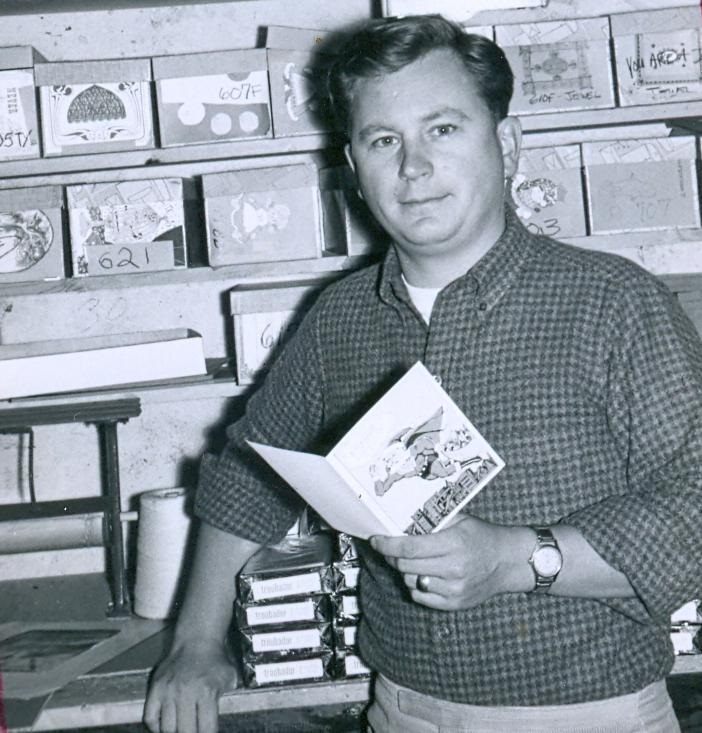
Malcolm Whyte making greeting cards, 1966.

When Malcolm Whyte published the first Troubador title in 1967, he did more than revolutionize the coloring and activity book format. Like George Lucas, Gary Gygax, and Nolan Bushnell would do years later, he paid young people (and the young at heart) the respect of treating their offbeat interests and ideas with importance. All the things we dreamed about—spaceships and robots, barbarians and sorcerers, magical creatures and famous monsters, dinosaurs and lost worlds—came to life, year after year, in spectacular new ways.

Troubador books stood out. They were beautifully designed and crafted, bigger (the publishing term is “oversized”) and much sturdier than traditional coloring books, with thick pages that could be safely detached. The illustrations were lavish and accomplished, and they were often accompanied by verses, or lively synopses of ancient myths and famous books, or instructions on how to build your UFO after you colored it.

Whyte, deeply influenced by twentieth century graphic art, particularly the underground comix of the late ’60s, hired many brilliant artists, emerging and established, ingeniously matching their unique styles to one or more of his lofty subjects. In retrospect, Troubador Press acted as a kind of conduit through which kids of the ’70s and ’80s were exposed to the styles and attitudes of the ’60s. It turned out that both “hippies” and “geeks” shared a kinship with all things fantastic, epic, idealistic, intellectual, and iconoclastic.

For those of you interested in owning a piece of American publishing history, Malcolm has a very limited number (2 to 3, at most) of uncirculated file copies of most Troubador titles (you’ll find a nearly complete bibliography at Cornell University Library). Please email Malcolm (wordplay@worldpassage.net) with the name or names of the books you’re interested in, let him know who you are and how you found him, and he will give you a quote.

* * *

2W2N: How did you get into publishing?

WHYTE: Troubador Press started with a partnership between two ex-Naval officers—Brayton Harris and me—who first started a greeting card printing business under that name in the late 1950s. Brady returned to the Navy in 1961 to eventually finish out his career there at a full captain. I carried the line on until incorporating the Press in 1970. The first book was The Fat Cat Coloring & Limerick Book, 1967. It was illustrated by Donna Sloan, expanded from a number of designs she did for Troubador’s greeting card line.

The greeting cards weren’t doing very well by the end of 1966 (especially considering the competition: Hallmark, American Greeting, Norcross, etc.), and I needed something new to get sales back up. I had enlarged one of Donna’s designs with the idea of making colored plaques to decorate kids’ rooms, the den, etc. My Northern California sales rep saw the big cat and said, “That’d make a great coloring book!” I said, “No way. Coloring books are passé.” However, there was a large Mandala coloring book done on sturdy paper at the time, and some other design coloring books sold by Price Stern Sloan, that were not the usual kid’s fare, and I needed something.
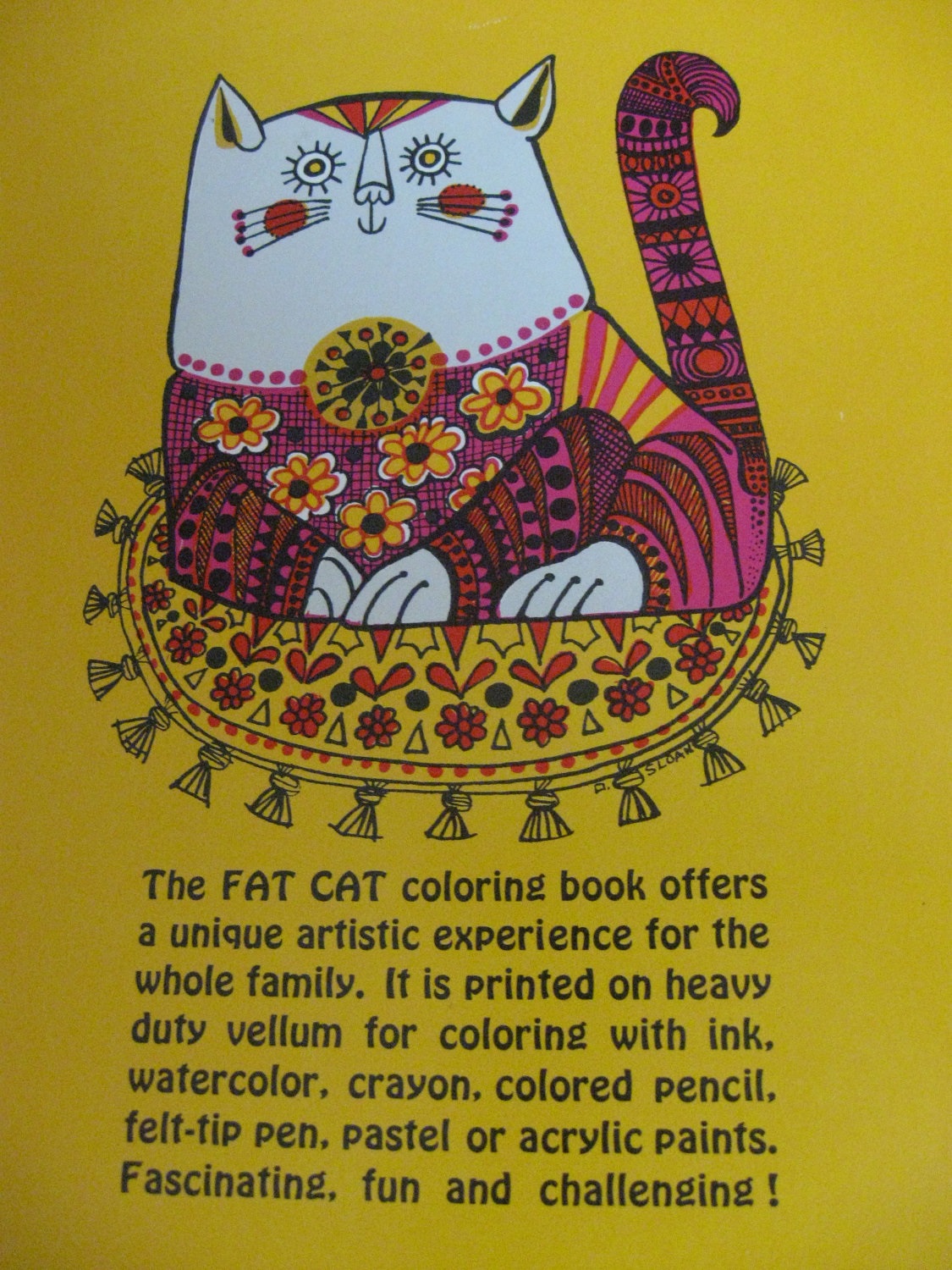
troubador-fat-cat-1967-2

So, I made a 32-page dummy with more of Donna’s art and took it to the post office. I wanted to see if it could be shipped at book rate. This was (and still is) much cheaper than regular package post, at which the greeting cards were shipped, so the books offered a price advantage to a buyer. Would Fat Cat ship as a book? The postal director took the dummy, counted the pages and handed it back. “Well, you’ve got a front cover, a title page, copyright page, 15 full-page drawings and a back cover. That’s 19 pages. You need 24 pages with printed matter on them to go book rate.”

I said: “You mean if I put something on these other pages, opposite the drawings, I’d have 32 pages and it could ship as a book?” “That’ll do it,” he agreed. Great! I hustled back to the shop (still doing lots of printing), wrote 15 limericks to go with the drawings, handset the lines, and printed the first 5000 copies of Fat Cat. It seemed to fit right into the hip aesthetic of the time. I never considered the designs “psychedelic,” but others did, evidently. Anyway, they sold fast, and I made more. The next year I followed with The Love Bug Coloring and Limerick Book (1968) with more of Donna’s designs and my verses. There were now two books in the Troubador line, and by 1968 I was in the book publishing business.

2W2N: Troubador books are tremendously unique, almost eccentric. I remember walking into bookstores in the late ’70s and instantly picking them out of the stacks, and this is before a publisher’s name meant anything to me. The illustrations were elaborate and exciting, not flat and dull like other coloring books. The writing was smart. And the books covered everything from wildlife to the zodiac to spaceships and monsters. How did the direction of the line develop?

WHYTE: The direction of Troubador books developed through a combination of form and content.

I was impressed with the heavy paper used in the Mandala Coloring Book, and chose to use it too. Actually, Troubador used the same stock on which we printed our greeting cards: #67 vellum, the same as authorized by the U.S. Postal Service for post cards. Its sturdiness allowed for coloring with almost any medium, especially the inexpensive felt-tip markers that emerged at the same time as Fat Cat, without the color coming through the other side (if not applied too lavishly). The large size allowed for detailed artwork without crowding the page. Illustrations were printed on only one side of a page so that they could be removed from the book and displayed by the diligent colorer and proud parent or teacher. Well, not a teacher: more about that later.

The expedience of adding verses to Fat Cat inadvertently made Troubador the initiator of significant text in coloring books. Librarians and teachers, especially art teachers, thought coloring books were an abomination, and I agreed, but only if coloring books were the beginning and end of a child’s art experience, and if children were never taken to art museums or galleries or shown colorful art books, etc. To counter this resistance, Troubador books needed more educational content (even though I felt that the verses in Fat Cat and Love Bug offered some good easy reading). Our third book, Ruth Heller‘s Color & Puzzle (1968), swung the door wide open. It’s large 12″ x 12″ format of crisply designed mazes, puzzles, and word searches created colorful mini-posters that teachers used as collateral material in their math lessons. They couldn’t get enough of them, and Troubador books obligingly expanded their educational tone.
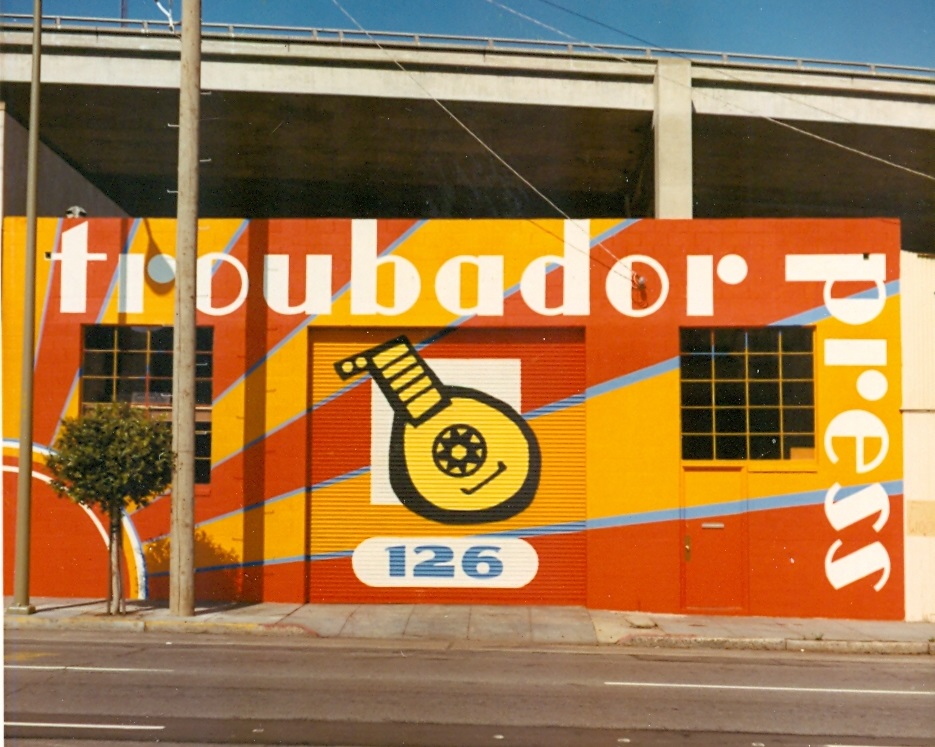
Troubador Building 1967

Troubador building at 126 Folsom Street, San Francisco. Supergraphics painted circa 1971-1972 by Gompers Saijo. (Photo: Malcolm Whyte)

As publisher, it was my joy and responsibility to select all the books that we published. I generated the idea for most of them based on (1) what was currently “out there”: ecology, “save the whales,” “what’s your sign?,” and, in the case of Dungeons & Dragons, what my kids were into; and (2) what interested me as a kid: wildlife, dinosaurs, pets, American Indians, and science concepts like 3-D views, optical illusions, and animation. We published books that were submitted to us, too. The Dinosaur Coloring Book (1970), 3-D Mazes (1976), and Paper Movie Machines (1975) were hugely successful.

All these elements added to the cost of making the book, of course. Selling a $2 coloring book in a 39-cent market at the time was a battle, but it worked.

2W2N: I’m glad you brought up the Dungeons & Dragons Coloring Album. Can you tell me more about how it came about? Did you speak with Gary Gygax about the concept and layout of the book? And what are your memories of illustrator Greg Irons, who passed away a few years after it was published?

WHYTE: Troubador published The Official Advanced Dungeons & Dragons Coloring Album (1979) on the heels of its first licensing venture, Gorey Games, by Larry Evans with art by Edward Gorey.

My youngest son, Andrew, had been playing D&D for a couple of years with his friends. When I suggested to the owner of our favorite local toy store that I might do a coloring book based on the game, he shouted, “You’ve got to do it!” I’m usually uncomfortable making “cold calls,” but when I found out the inventor, Gary Gygax, lived in Wisconsin, I felt a little more at ease: I was from Wisconsin, so we had that in common. I pitched the book idea to Gygax, suggesting that we’d get the game into markets he didn’t already have, namely gift and book stores. That made sense to him. He agreed not only to license his concept to Troubador and write profiles of each of the creatures in the book, but he even invented a unique game for it. We had to call the book The Official Advanced Dungeons & Dragons Coloring Album because Gygax was having a dispute with a partner about who owned what, but Gygax owned the exclusive right and title to the “Advanced” format.
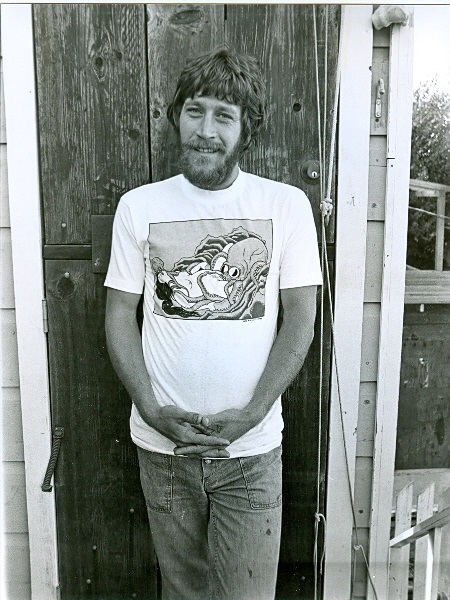
Greg Irons 1982

Greg Irons, circa 1982. (Photo: Clay Geerdes)

I admired Greg Irons’ art that he did for the underground comix. He had a strong sense of composition and was great with monsters. He enthusiastically agreed to illustrate AD&D. Greg was not only a thoroughly professional artist (he spent a couple of years in London working on the Beatles’ Yellow Submarine feature), but an easygoing, sweet man. His powerful visualizations of the AD&D monsters and their world really brought them to life. Larry Evans, who was art director for Troubador, worked with Greg on the book, pointing out Greg’s subtle sense of humor by noting: “he’s the only person I know who has a tattoo that says ‘tattoo’ on his arm.” He was a glorious guy.

It was a lucky hunch to publish AD&D. Shortly after its release a Michigan State student mysteriously disappeared. The only clues to his whereabouts were some odd symbols scratched on a classroom blackboard—symbols particular to the D&D game. The cryptic clues were all the news media need to flash the story—and the game—from coast to coast. The student reappeared a few days after vanishing, and headlines turned elsewhere—but not before putting the game on the map and helping to make a super seller for Troubador.

2W2N: The AD&D book wasn’t Troubador’s first foray into fantasy. I was mesmerized by Tales of Fantasy (1975), and refused to color it because I didn’t want to sully Larry Todd‘s illustrations. You seem to have anticipated the potential of the genre before D&D and the animated The Hobbit and The Lord of the Rings features made it so popular. Another of my favorites is How to Draw Monsters (1977), by the brilliant Larry Evans. Was the book inspired at all by Berni Wrightson’s The Monsters: Color-the-Creature Book from 1974? And how did you meet Larry?
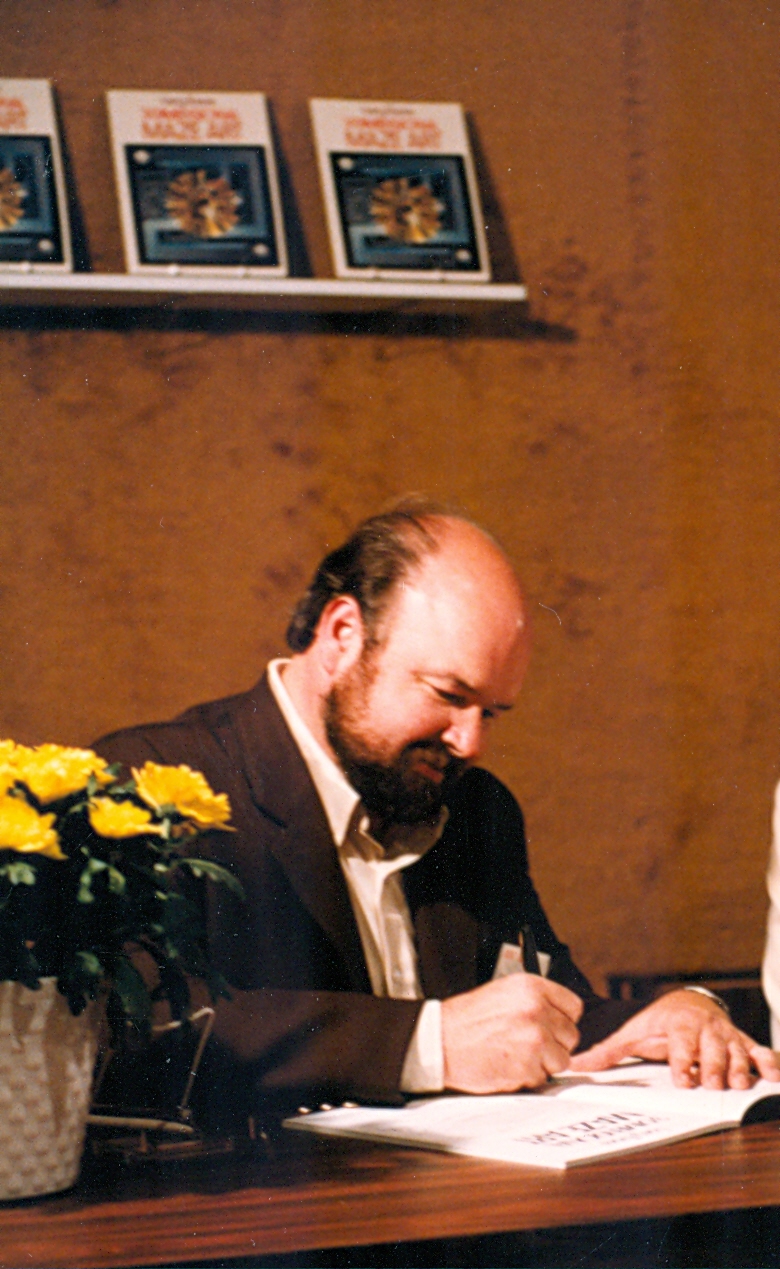
Troubador Larry Evans 1982 LANBC

Larry Evans at the National Book Convention, Los Angeles, 1982. (Photo: Malcolm Whyte)

WHYTE: In spring 1974 Larry Evans called on us with his portfolio of stunning 3-D mazes—he had seen Troubador books in many stores at the time. Troubador already had three fast-selling Maze Craze books, so adding a 3-D twist was irresistible. Besides his wonderful mazes, Larry had great credentials: he trained at the Art Students League in Pasadena and was rendering projects for major architects. With dashing beard and mustache and barrel chest, he cut an impressive figure that stood six feet tall and could bench press 240 pounds!

I lusted for those mazes, but a couple of things gave me pause. His art was so good, I was afraid we couldn’t afford to publish it, and his confident, self-possessed demeanor made me think that he might be hard to work with. So, I said as we moved toward the door, “Larry, these mazes are terrific. Your work is excellent, but you’re just too good for us. Thank you for stopping by.” And off he went looking both proud and perplexed. For the next year and a half he went to other publishers with his drawings. In spring 1975 Larry called back to make publishing his work easy for Troubador. Larry Evans’ 3-Dimensional Mazes was launched in spring 1976, and was joined by his 3-Dimensional Monster Mazes in fall of 1976.

Troubador published its first monster book, Monster Gallery, in 1973. Written by Leah Waskey, Troubador’s bookkeeper, and drawn by Mark Savee, it was a big hit. Science Fiction Anthology quickly followed in 1974 with Savee’s robust art and text by his father, Ken Savee. Underground cartoonist Larry Todd completed our “monster coloring book trilogy” with Tales of Fantasy in 1975. Obviously this genre was working well, so I asked Evans if he could make a How to Draw Monsters book. Of course, he could do anything, and the book came out in 1977, unaware of Berni Wrightson’s coloring book.

I had a grand time working with Evans after all. He was a great friend and collaborator, who created 20 books for Troubador.

2W2N: I have to know about 1971’s The Occult Coloring Book. The writer, Richard Garvin, had written a few novels at that point, I believe. He also went on to write a fairly popular book called The Crystal Skull (1973), about the possible occult origins and powers of a quartz skull discovered in 1924. (This artifact was the inspiration for Indiana Jones and the Kingdom of the Crystal Skull.) Gompers Saijo, another wildly talented artist, illustrated the book. How did the project come about, and did you have any problems getting the book into stores?
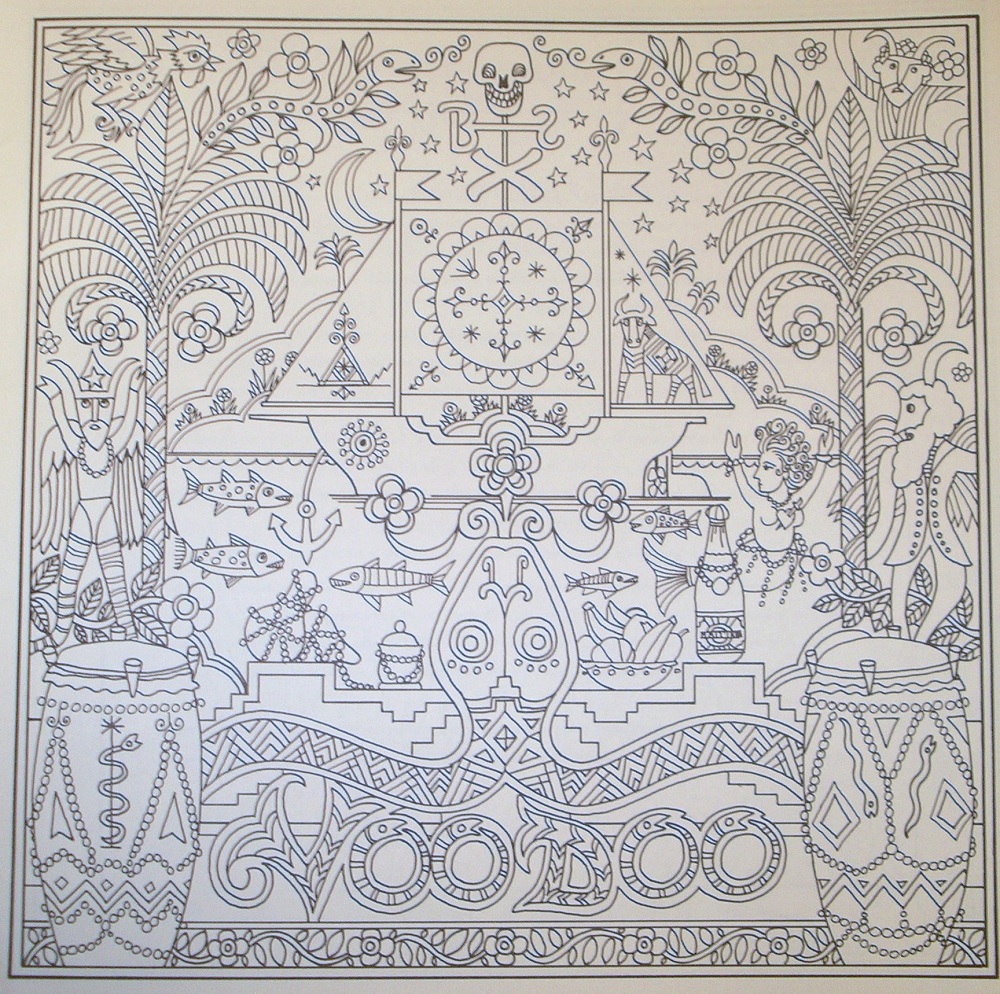
Troubador Occult 1971

A page from The Occult Coloring Book (1971). Art by Gompers Saijo.

WHYTEThe Occult Coloring Book followed after the continuing interest in all things zodiac (in addition to our Zodiac Coloring Book, we had a Zodiac Cookbook and a Zodiac Sign-In Book, an autograph book for friends and celebrities to sign under their sign). I had known Dick from his working at a local bookstore that sold our books. I believe he suggested we should do an occult book. I agreed and put a call into Art Jobs Agency, run by Dora Williams, for an artist. She suggested Gompers Saijo. He turned out to be a perfect partner for Dick. It wasn’t too long after that that Garvin’s The Crystal Skull was published.

The only problem we had selling the book was its size: I loved the 12″ x 12″ mini-poster size that was initiated with Ruth Heller’s Color and Puzzle, but it was awkward for stores to display. Some stores did think it was kind of spooky and resisted buying it: they found it a bit odd coming from the same publisher as the cute Fat Cat books.

I was so taken with Gompers art—and his story—that I asked him to illustrate our North American Wildlife (1972) book, then North American Birdlife (1972), then North American Sea Life (1973), Jungle (1975), etc. Gompers’ father was a strong labor supporter. He admired Samuel Gompers so much that he named his son after the labor leader. As a child, Gompers was sent to an internment camp with his family during WWII. He eventually settled in San Francisco as a very successful product designer. His supergraphics for our first building is a result of his design sense on a great scale.
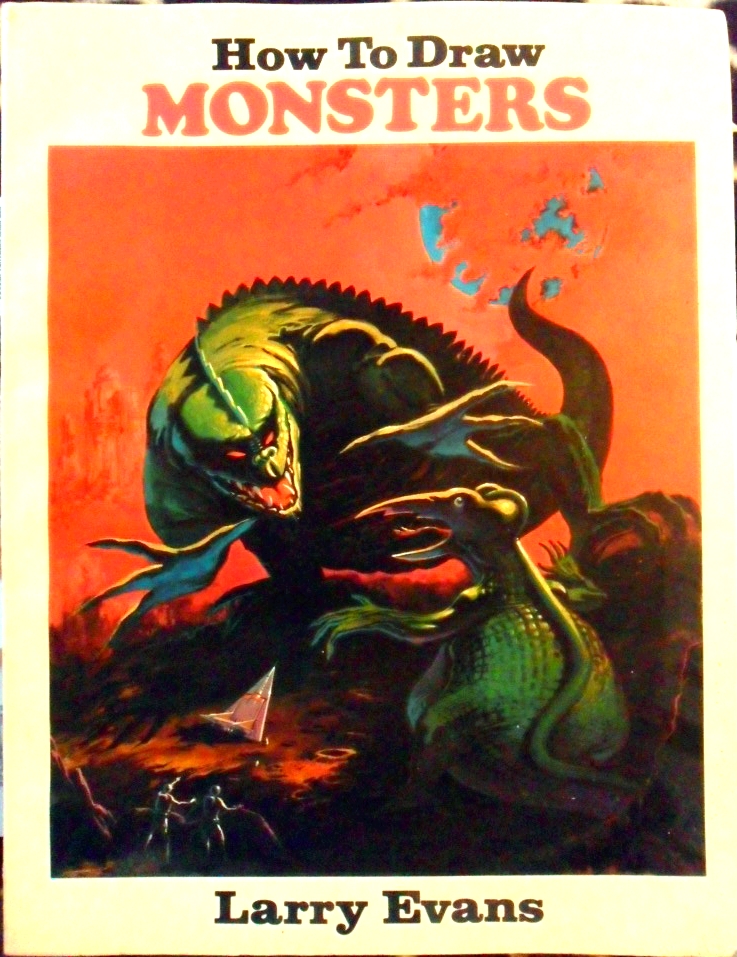
Troubador Monsters 1977

2W2N: You were an independent (“indie”) publisher before that definition really came into popular use. Can you tell me about the process of marketing and selling a book before the big bookstore chains transformed the nature of the business? How long did it take to get a book into the stores once it was complete? Was Troubador West Coast only?

WHYTE: Troubador’s book distribution grew out of its already established sales through gift reps; that is, sales reps who called on gift stores to take orders for our greeting cards. So we got our first book in the stores right away. In fact, Fat Cat was so successful that it eclipsed the greeting card sales, and showed me which direction to turn the business. Some of our best orders came from National Wildlife Federation (Ranger Rick magazine), science museums, aerospace centers, and (ironically) teacher stores.

With Fat Cat we added our first book rep, then more reps, as the book line grew (the company was about 15 in the office and warehouse, including me). We added toy reps at the same time, so eventually we had three teams of reps calling on stores—and most of them were independent stores—all over the country. We were strongest on the West Coast and East Coast, then the Midwest. The South was always a challenge. We sold to the chains, especially B. Dalton, at the time, but finally cut them off after they kept returning books from the same store that was ordering them! Central buying was poorly managed.

2W2N: Troubador put out a number of books focusing on spaceships and robots in the late 1970s, including Paper Starships (to Color, Cut-Out and Fly) (1979), Space WARP (Warrior Activated Robot Patrol) (1978), and How to Draw Robots and Spaceships (1982). Was this a direct response to the popularity of Star Wars? What do you remember about Space WARP (1978) in particular, another stellar Larry Evans design?
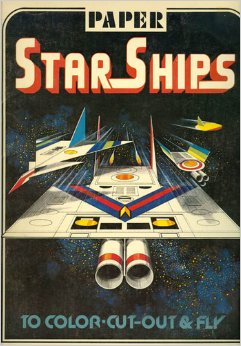
Troubador Spaceships 1979

WHYTE: The robot/spaceship books of the late ’70s were indeed a response to the great success of Star Wars, Star Trek (TV & movies), Battlestar Galactica, etc., but were also launched with the on-going success behind them of our best-selling Paper Airplanes book (1974), with dazzling Art Deco designs by Marc Arceneaux. We were fortunate to find a charming Korean artist, Yoong Bae, to create the many flying models. Asked if the robots would actually fly, he’d say with a twinkle: “They make good fry.”

Since the late 1960s, I had been collecting Japanese anime die-cast figures—Kamen Rider, Kikaider, Raideen, etc.—for their unique design: colorful, exotic, I’d never seen anything like these fabulous inventions. Working with Larry Evans—and it was great fun brainstorming ideas with him—during the space movie/TV phenom, I said we should do something that reflected these Japanese toys. Before I could say “Take us out, Mr. Sulu,” he came up with the outline and the art for Space WARP. The actual story was written by Frank Fox, of American Indian descent, who had recently written the text for Troubador’s North American Indians (1978). Larry’s concept for Baron Zax, with reference to old comics’ Iron Jaw, the beautiful lady, Charmion, and the faith(less/ful) pet dog, Kurr, are all a hoot. Also, his schematic of Space WARP’s interior is an absolute prize! I miss Larry: his brilliance, his chortle, his companionship.

2W2N: You sold Troubador in 1982, is that right? If so, what happened?

WHYTE: I sold Troubador to Price Stern Sloan of Los Angeles in 1982 and stayed on as Editorial Director until 1996. I produced four books a year for PSS and they published those books. Somewhere near the end of that term, PSS was bought by Grosett Publishing, which in turn merged with the Putnam-Berkeley-Penguin Group. Troubador then began an around the world tour. In 1994 Penguin-Putnam was bought by MCA/Universal (film), which was owned by the Japanese conglomerate Matsushita, which later sold MCA to Seagrams, the Canadian booze company, which unloaded the whole book business on Pearson, publishing giant of Great Britain. Troubador is now part of PSS, an imprint of Penguin-Putnam, owned by Pearson—although I don’t think Troubador books (or the Troubador name) are currently active.

In the middle of all this, 1984, I founded the Cartoon Art Museum in San Francisco with several other cartoon art collectors.

2W2N: Have you ever thought about reissuing a selection of the original Troubador books? Is that even possible, business-wise? Many of us who grew up treasuring the line have kids of our own now. I sure would like to introduce my daughter to those experiences.
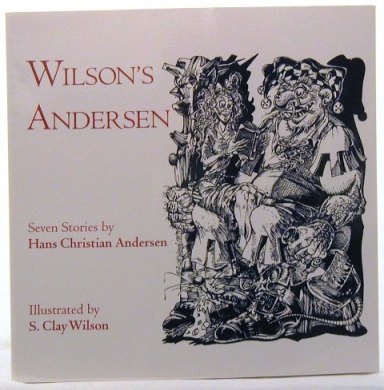
Wilson's Andersen 1994

WHYTE: It would be great if someone brought some of the old titles back. I never wanted to get back into such mass publishing again: that’s why I started the Cottage Classics line: publish one book at a time, sell it out, and publish the next one—all short run, under 2000 copies. No inventory, no warehouse, no staff. That all worked out very nicely.

When I sold Troubador all rights that Troubador owned went to PSS: about 50% of the books I published I bought as “work for hire”; that is, I bought the rights to the art and/or text. Those rights that the authors and artists owned still belong to them, but only if they renewed their copyrights (in those days rights were good for 54 years: 27 years, then 27 years more if re-registered.)

Actually, I did obtain the copyright to the Fat Cat/Love Bug books and tried to resell them to a publisher, but they were declared “dated” even though I had cleaned up the art a bit. Also, coloring books seemed to have vanished from the independent book and toy store shelves—along with the stores themselves. Now kids can do coloring on their computers, mobiles, tablets, etc.

No new Troubador books have been released by PSS since the late 1990s, and those that were good sellers finally went out of print about 7 or 8 years ago.

2W2N: Tell me more about Word Play Publications. You started the company in 1994?

WHYTE: After I sold Troubador to PSS, I reincorporated as Word Play in 1982, still making books for Troubador/PSS, but also operating as an independent editor and publisher. After creative work wound down at Troubador/PSS and the Cartoon Art Museum was running fairly steady with a director and staff, I sorely missed active book publishing, so I embarked on producing very limited edition books.

The first Word Play book, published in 1994 under the Cottage Classics imprint, was Wilson’s Andersen, seven Hans Christian Andersen tales illustrated by underground cartoonist S. Clay Wilson. The idea of having one of ZAP Comix founders—creator of Ruby the Dyke, Captain Pissgums, and, of course, his ever popular Checkered Demon—illustrate (among other stories) “The Little Match Girl” was too juicy to pass up. My only admonition to Wilson was, “no exposed genitalia, no slicing and dicing of body parts.” He agreed, and executed a wonderfully faithful-to-the-story set of illustrations that are some of the best work he’s ever done. You can find the book on eBay or AbeBooks. More books followed, but that’s another story.

2W2N: Has there ever been a Troubador exhibit at the Cartoon Art Museum, “the only museum in the western United States dedicated to the preservation and exhibition of cartoon art in all its forms”? If not, can we look forward to one?
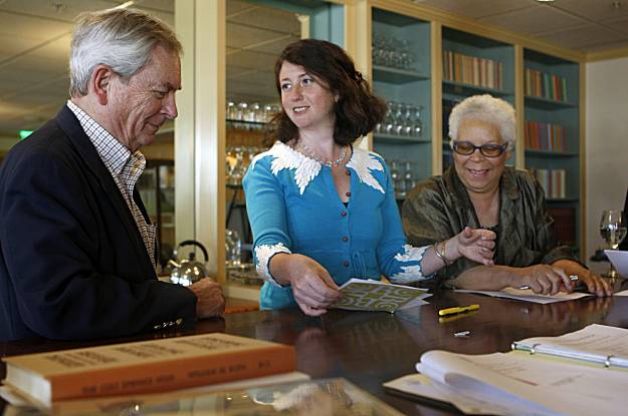
Malcolm Whyte 2010

Whyte during his tenure as a Director of the Book Club of California, with fellow Directors Danya Winterman (middle) and Anne W. Smith (right), 2010. (Photo: SF Chronicle/Liz Hafalia)

WHYTE: No, there has not, nor do I expect one. The books are old stuff now, dated, and probably irrelevant to most people.

2W2N: I notice there’s a Neil Gaiman Sandman exhibit going on right now, and the Sandman comic didn’t come out until 1989. I guess Troubador art is illustration rather than comic or cartoon art, but the books deserve an exhibit somewhere. They’re art, and they’re a lasting piece of American pop cultural history.

WHYTE: The original Sandman came out in the 1930s; I remember his gas gun and his cool WWI gas mask—he wore a short, green cape, yet.

Love what you say about the Troubador books: I think I’ll have it bronzed!

2W2N: Malcolm, thank you so much for talking to me. As a pretty awkward kid, I was inspired by all the Troubador books and thrilled that someone finally “got” me. I feel the same way today, and so do many others. Thanks for giving us so many amazing experiences.

WHYTE: My pleasure. Great to know there are those of you out there who “got” Troubador as well. Quite moving in my advancing years.

* * *

© 2013 M.K. Whyte and 2 Warps to Neptune. All images © their respective creators. No part of this article may be reproduced or transmitted in any form without the express written permission of the copyright holders.

Interview with a Geek: Chris Hart

Wells-1

Chris as a young lad, mentally preparing for the annual British Open Dungeon Crawl Championships.

Wells-2

Chris today, rendered impressionistic by so many years of hard role-playing.


Full name and/or handle: Chris Hart, a.k.a. Dirk Malcolm
Birth year: 1968
Hometown: Bolton, United Kingdom
Occupation: Customer Service Manager (Call Centre)
Website(s): http://dirkmalcolm.wordpress.com


2W2N: You wrote recently about a 1981 Starburst article that “lured” you into the world of role-playing games. There was a powerful advertisement in that issue we likely wouldn’t have seen in the U.S., because at the time D&D and the concept of role-playing were met by adults with trepidation or outright hostility. What was the overall attitude in the U.K. towards the new games?

CHRIS: An interesting question. Certain sections of the British Press have a hard won reputation for creating hysteria and using inappropriate methods in the name of freedom of speech. They liked to stoke up a moral panic about D&D and role-playing games, making a connection with paganism and the occult. Gamers didn’t really help themselves in the early days as it was part of the heavy metal lifestyle. Many gamers would be photographed with Black Sabbath and Iron Maiden tees, so the moral majority got the quivers. I was once interviewed by a group of students at college who produced a documentary entitled Devil Games (complete with a red spot-light).

What is interesting about those adverts that you refer to is that there is a sense that Games Workshop, who were responsible for importing games into the UK, were reaching out beyond the core audience of war-gamers and heavy metal fans. Livingstone and Jackson, who founded the company, were entrepreneurs who realised that in a small country like ours, they would need their company to reach the mainstream games market. At the age of 12 my life revolved around Starburst magazine and 2000 AD (the home of Judge Dredd), so the adverts reached me perfectly.

However, it wasn’t quite a mainstream hit. It remained a narrow audience. I spent most of my teenage years trying to recruit people to play. We put an advert in White Dwarf, the Games Workshop house magazine, to find more people to play with. My friend Steven and I were desperate to build up a club, but everyone we recruited either got bored, got on our nerves, or got a girlfriend.

Games Workshop had an interesting strategy. Their business model was really about selling lead figures through their sister company, Citadel. We bought the lead figures before we understood the games. They produced some brilliantly sculptured models for Runequest and Traveller, which were the two games that we played the most. D&D was not really part of our game playing until later. We had an unwritten rule that you could not Gamesmaster a game that was being run by another player. This resulted in us playing some real odd-bod games: Gangbusters, Gamma World, Top Secret and (another favourite) Stormbringer.

D&D has become a shorthand for the hobby now, but I think most of the trouble with role-playing back then is that it was difficult to explain it without it sounding weird. “Does it involve dressing up?” We managed to persuade our local community that it wasn’t anything to be scared about and ran a sponsored dungeon to raise money for the church.

Wells-4

D&D Basic Set ad from 2000 AD (1983)

2W2N: There wasn’t a real connection between the heavy metal crowd and D&D in the U.S., except in the sense that D&D and heavy metal were both lumped together in the apparent things-Satan-really-enjoys category. I had the same problem finding people to play, so most of the time I just read and re-read the manuals, drew dungeons on graph paper, etc. It was sort of like trying to start a rock band, wasn’t it? Except not nearly as cool. Among the young, even punk and heavy metal were better understood, even by those who didn’t like the music. Role-playing was just weird.

You’re right that D&D is shorthand for the industry today, and that’s unfair. To be honest, I only remember seeing D&D ads at the time, thanks to TSR’s unrelenting marketing. This is the first I’ve heard of Runequest, Traveller, and Stormbringer. I just found out that there was an RPG based on Watership Down called Bunnies and Burrows!

Wasn’t it confusing switching from game to game, or were the rules pretty similar? You mentioned that your favorite game is Runequest. Why? How does it differ from D&D?

CHRIS: It is interesting that you compared it to being in a band, because when people ask us what role-playing is all about, we always reply, “it was our punk.” What we mean by the comparison is that the punk ethos was all about doing it yourself and having the guts to be creative in the face of people who said you can’t do it.

It was never confusing playing different games at different houses. It made life easier when there was only one Games Master who knew the rules as it stopped any arguments. We have started playing Runequest and Call of Cthulhu again recently. Now that we are all Games Masters there are endless debates over the finer points of the rules. Sometimes it is fun to have a debate, but when we were 12 it got in the way of the flow of the game, so we were much more willing to concede to the greater knowledge of the GM.

Wells Geeks 1985

Young geeks pause for a photo after a late night Call of Cthulhu session (Chris is on the left).

Runequest and Call of Cthulhu are both based on Chaosium’s Basic Role-Playing (BRP) system. It is great. Comparing it to D&D is a bit like comparing an early PC (MS DOS) with a Mac. It is an intuitive system based on percentage chances, and most situations can be dealt with by converting attributes into percentages or competing one attribute against an opponent. The fights are more of a simulation of real battles with hit locations, critical hits, impales and fumbles that can turn a skirmish in an instant. It’s possible for a lucky, well-aimed sling shot to bring down a giant, for example.

The unique selling point of Runequest was Glorantha: a fully realised game-world. The backdrop is ancient rather than medieval, where the gods are worshiped in Cults and progression as an adventurer is measured through advancement through the cult. Imagine Jason and the Argonauts with new, out of this world monsters, such as Broos (chaos hybrids), Morakanth (who keep humans as slaves) and a complex society of trolls with many different breeds. The whole backdrop is very atmospheric, but a bit stifling for a young teen. We felt like we needed to have all the supplements and adventures to really understand the world. I also felt a bit inhibited by the world as I didn’t want to make significant changes just in case a future supplement disagreed with what I had done.

Another downside to Runequest was having to have fully rolled NPCs [non-player characters]. The NPCs had the same complicated stats as the PCs so that the battles and the interactions could be more authentic, but it put a lot of work on the Games Master.

Gangbusters was set in 1920s America in Lake Front City, a game-version of Chicago. It was part of the TSR stable of games and loosely based on D&D rules (like Top Secret and Gamma World). The problem with RPGs involving guns is that they are lethal when the combat begins. There is no escaping that the PCs will probably die on impact, which always caused a problem in Traveller. Our planet hopping was often cut short by a laser gun!

2W2N: In the Starbust post I brought up earlier, you joke that you would have “had a rich and interesting adolescence” and generally could’ve been somebody (to use Brando’s phrase) if not for the 1981 role-playing article that sent you down the rabbit hole. Any real regrets? What’s the downside to “playing mind-games with dice”?

I sometimes wonder where I would have ended up without RPGs, comic books, Ray Harryhausen, and everything else I held dear before “geek culture” was cool. Banking? Competitive cycling?

CHRIS: It’s difficult to have regrets as I had so much fun. I look back on my adolescence with nothing but affection. Role-playing games were the main focus of our activity, but we were doing other stuff and I suspect that if I went back in time, and did it all again, there would be another distraction in the way.

It’s a paradox. The frustration and the joy of role-playing is that it is so consuming. When you are not playing, you are preparing, reading and thinking about it. Who knows what would have happened if I hadn’t fallen into the ‘Wonderland’ in the rabbit hole.

If I hadn’t spent so long reading the Five Eyes Temple supplement for the borderlands campaign, would I have got better exam grades at school?

If I wasn’t carefully constructing Azir Voon, a sorcerer in the world of Elric, would I have been engaging with interesting people and entering into fun and exciting relationships with exotic women?

If I’d have read the works of James Joyce, Emile Zola and Leo Tolstoy instead of numerous rule-books and gaming magazines, would I be a more fluent bon viveur?

I doubt it.

Being a geek has served me well in corporate life, providing me with a prism to see the world through in a way I can understand. Every day I seem to encounter people with high CHA and low WIS. Runequest equipped me with the ability to calculate every situation as a percentage chance of success or failure.

You are right about the ‘geek chic’ thing too. I found myself in a bar the other day with a range of Star Wars figures lined up on a bookcase containing Space: 1999 and Happy Days annuals. Where were these people in the early ’80s?

Wells-5

2W2N: Your blog, The Dirk Malcolm Alternative, is primarily focused on the intelligent discussion of film. Do you think your geek tendencies and activities led you to a finer appreciation of the higher arts? My first love is English literature (especially the Romantic and Victorian eras) and the entire Western humanistic tradition, really. I feel like the imaginative experiences I had as a kid kind of prepped me for Joyce, Byron, Dickens, et al.

CHRIS: It’s very kind of you to say that it is an ‘intelligent’ debate about film. You’re probably right about FRPGs exercising the imaginative muscles to appreciate the finer aspects of culture, but it has also affected my approach to everything: borderline obsessive and based on insane challenges.

The site came from Derek Malcolm, a well-known film critic in the UK who created a list of 100 greatest films at the end of the 20th century. His list was peppered with controversial, obscure and extremely esoteric choices from all over the world that set a challenge for any film buff. Me and my friend Dominic set about trying to find and watch them all.

It was hard work, like eating cultural vegetables, and I think it was after watching Shoah for 9 hours that we started to waiver.

Part of Derek Malcolm’s motivation was to convince the multiplex generation that cinema history didn’t begin with Star Wars. This seemed like a gauntlet being slapped in my face.

Dirk Malcolm was born, and I have set about selecting a personal list that imagines that film history did begin with Star Wars. It’s interesting because unlike most of the films in Derek Malcolm’s list, all of these films have been released in my lifetime and there is interplay between the films and my memories of them. To support the film selections that I have made I have been exploring my collection of old magazines and books.

As a geek, I suppose my response is to see everything as a challenge and a list to be conquered. I am keen on literature too, but I must admit I take a similar approach. I am presently working through the complete works of Charles Dickens, as it was his 200th birthday last year, so I wanted to get through them before it reaches his 205th.

So, you’re right, RPGs gave me breadth of imagination to explore literature and film, but it also gave me an interest into pointless games too!

2W2N: You mentioned that you were doing “other stuff” in addition to role-playing. How much of your time was spent obsessing over Star Wars? And why do you think Star Wars was as big as it was? Lucas was much criticized by the sci-fi community at the time for making this lowbrow kiddie movie, but that’s exactly what he had set out to do. He knew what we were all dreaming about, and he put those dreams on the screen. As much as I hate what he’s become, and as awful as the prequels are, I’ll always cherish him for giving us that gift.

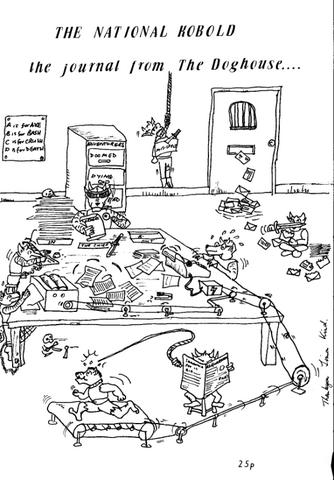
Wells National Kobold

Homemade gaming newsletter – only 25p!

CHRIS: I think I could do a pie chart of how my activity was composed in the early ’80s. School would be in there, but FRPGs would dominate and inform other things too, such as watching TV and renting VCR tapes: we would spend hours working out how many dice damage a long bow from Hawk the Slayer would inflict. I was into progressive rock—Genesis, Marillion, Yes—and would spend many hours listening in a dark room to songs that would go on for hours and hours. I also spent many hours on my Sinclair Spectrum, the first mass market computer that was a massive seller in the UK. It would take ages to load the games, but then I would spend hours trying to progress on Manic Miner, Chuckie Egg or Jet Set Willy.

Star Wars works because it is bigger than the films. Its success has been hooking successive young kids into its force; decade after decade, pitching itself differently, to appeal to a different wave of kids. I often wonder if George Lucas would trade all of the gazillions of dollars that he has made in exchange for artistic credibility. He never strikes me as being happy with his lot; he is disappointed, deflated by the realisation that he was a better entrepreneur than filmmaker. I admire his courage to produce Empire Strikes Back using his own money. Its success was not guaranteed and he has gone on to build and build his universe with careful attention to his core audience—very young children.

I love Star Wars, but I wouldn’t call myself a fan. I am not that precious about the universe or what directions Lucas/Disney take the idea. Of course the prequels were rubbish and compromised the narrative of the original trilogy, but it doesn’t matter. They introduced some new characters that kids love. My 5-year-old loves the Star Wars characters from the prequels—Darth Maul, Obi-Wan Kenobi (McGregor-style) and General Grievous. He hasn’t really seen the films, he has just picked the culture up by osmosis.

I am about to do some pieces about Empire Strikes Back for the site. It’s interesting because we knew much about the film before we saw it, as it was released in the US months before we could see it in the UK. We read the comic and the tie-in novel and collected magazines containing stills, so our anticipation was increased. I remember talking about the AT-AT walkers months before I saw the film!

2W2N: You brought up 2000 AD earlier, a British comic that debuted in 1977 (what a year!). I ate it up in the early ’80s when it was reprinted by Eagle Comics. Judge Dredd is the most famous character to come out of the series, as you mentioned, but there were many other brilliant strips (Strontium Dog was another favorite). Many now-famous writers got their start in 2000 AD, including Alan Moore and Neil Gaiman. And Brian Bolland‘s artwork literally destroyed the notion that the comics industry could not produce fine art. His Eagle covers are nearly peerless, and when I think about his black and white interior work the only comparison that comes to mind is Albrecht Durer. How many light years ahead of its time was this series?

CHRIS: 2000 AD was an important part of my life from ages 10 to 13. I was totally absorbed in the stories of Dredd, Nemesis the Warlock and The Mean Arena. You are right, there were some great comic book artists and writers working with them at that point who would go on to be recognised internationally. At the time they were considered ‘droids’ in the employ of Tharg the Mighty, who had come to Earth to charge ‘Earthlets’ with ‘Zarjaz Thrill Power’.

What may have been missed to some US readers is that many of the strips were clever satires on the emerging social policy in Britain. Mrs. Thatcher and her brand of monetarism was causing a great deal of social unrest, high unemployment and increased deprivation in parts of the country. The stories were reflecting the growing unease about the increased powers that were being given to the police and authorities to marginalise people who opposed the regime.

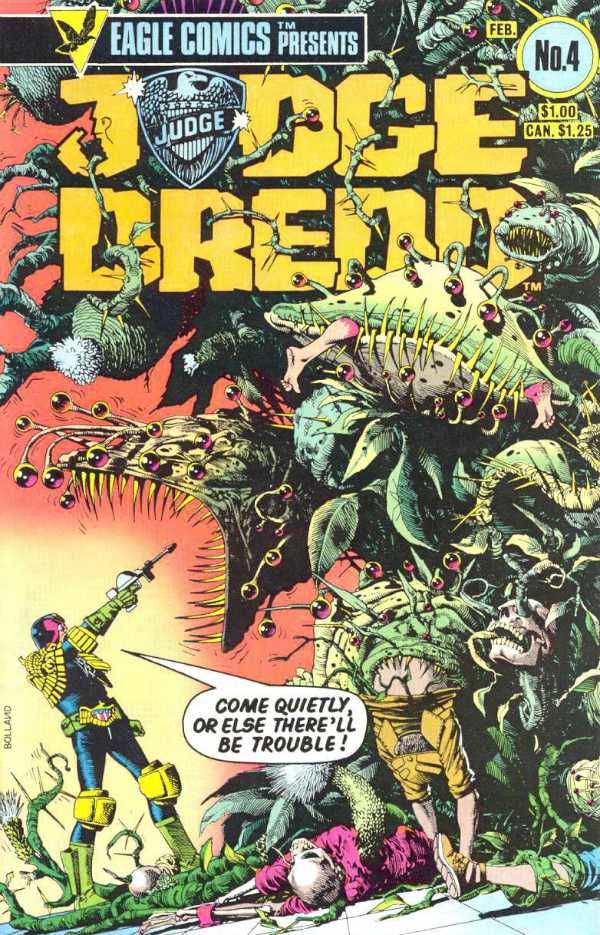
Judge Dredd #4 Bolland

Judge Dredd #4 (1984) with cover art by Brian Bolland.

So, in answer to your question, it was incredibly ahead of its time thanks to the quality of the work it published, but in many ways it was firmly located in that period when Thatcherism began its economic revolution: turning a country that was based on fair play and reason into one motivated by greed and oppressive policing towards anyone who opposed this redistribution.

2W2N: I think it took American comics longer to experiment with satire and social commentary, but we were dealing with similar policies starting around the same time. (Reagan and Thatcher were great friends, of course.) There’s a tendency to romanticize the 1980s today, but it was a hard time for a lot of people: the inner city was born, violent crime reached an all-time high, the divorce rate peaked, pollution was rampant, and so on. For me, it was a great time to be a kid. I realize now that it was because my parents worked long and hard to give me that largely worry-free childhood.

Chris, I really appreciate you taking the time to talk to me. I hope we can do it again sometime.

CHRIS: Thank you. I have really enjoyed the discussion and it has been very revealing how it’s possible for people living thousands of miles apart to have a common experience lived through pop culture.

***

All personal photos and illustrations used in this interview are © Chris Hart.

‘Press Any Key To Begin Your Mission’: Space Assault Lives!

Space Assault 1

Space Assault 2

Space Assault 3

Space Assault 4

Space Assault 5

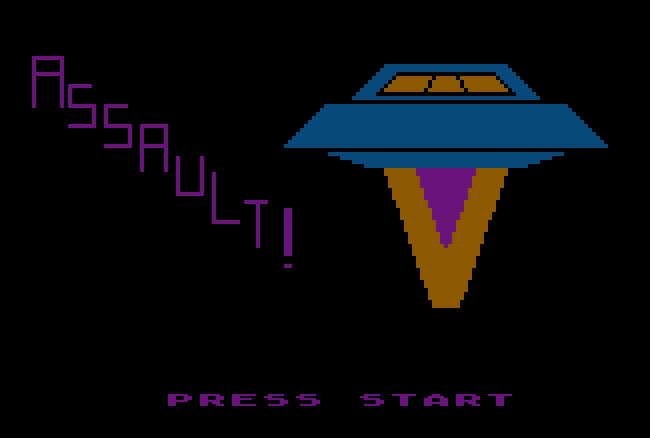
If you read my interview with Mikey Walters last month, you’ll know that he wrote an Atari BASIC game called Space Assault in 1983 that was published in A.N.A.L.O.G. magazine.

Well, Lefty Limbo and I basically begged him to get it up and running again, so he retyped all that code, plugged it into an emulator, and bam!—the Clovis Aliens are back!   

I’d say we were all in the process of kicking old school alien ass (last I heard, friend J. was up to 8500 points), but in my case, the aliens are the ones doing the ass-kicking. That’s okay. The ‘Game Over’ music is so cool, I don’t really mind.

If you want to give the game a try (you really should), send me an email and I’ll pass along the game file and instructions.

A profound thanks to Mikey for giving us back a piece of 1983, and for being awesome enough to create the game in the first place.

You can see more Space Assault screenshots on his Flickr.

Interview with a Geek: Mikey Walters

Walters Trekkie 76-77

Mikey, clearly not yet a geek, in ’76 or ’77

Walters 2010 Batcave

Mikey posing as Superman at the Batcave (Bronson Canyon), 2010


Full name and/or handle: Mikey Walters (WEBmikey)
Birth year: 1967
Hometown: Sacramento, California
Occupation: Software Developer
Website(s): http://www.webmikey.com (updated from 2000 to 2012)


2W2N: I’ve been raiding your Flickr for months now. When I saw your homemade D&D modules, I just had to get the scoop. How and when did you get into D&D? Do you still play?

MIKEY: My experience with Dungeons & Dragons began with my love of animation, which led me to see Ralph Bakshi’s version of Lord of the Rings in 1978. Seeing the movie led me to reading Tolkien, and my naturally geeky tendencies led me to some great school friends with similar interests. I really don’t remember which one of us bought the first Basic Set (in the classic blue box), but soon we were all reading D&D books and literature (such as Dragon magazine) like crazy. Right from the beginning I loved the idea of being the Dungeon Master, not from a power trip standpoint, but because I got to act out the parts of all the non-player characters (NPCs)!

My friends and I would get a private meeting room at the local public library and experience our adventures together. I was actually more taken with the creative aspect of the game than the actual play, which is why I got so into making my own modules and monsters, painting pewter figures, and so on. I loved working with felt-tip markers, construction paper, my typewriter (I didn’t have my beloved Atari 800 yet), and designing all this peril for my friends to enjoy! Most of my D&D works were created in the early 1980s. Eventually all of us became dedicated to Star Wars fandom and our D&D days slowly ended, but I’ll always have fond memories of those times and the way they inspired my creative side.

2W2N: I can’t remember if I saw Bakshi’s Lord of the Rings before or after I started reading Tolkein’s books, but LoTR is definitely how I got into D&D as well. Your modules are incredibly sophisticated and accomplished, especially considering you were about 13 when you made them. Do you remember how long it took you to finish them? Did you get to play them with your friends? You also wrote and drew an entire sci-fi comic book, Questar, when you were even younger. All the text is typewritten!

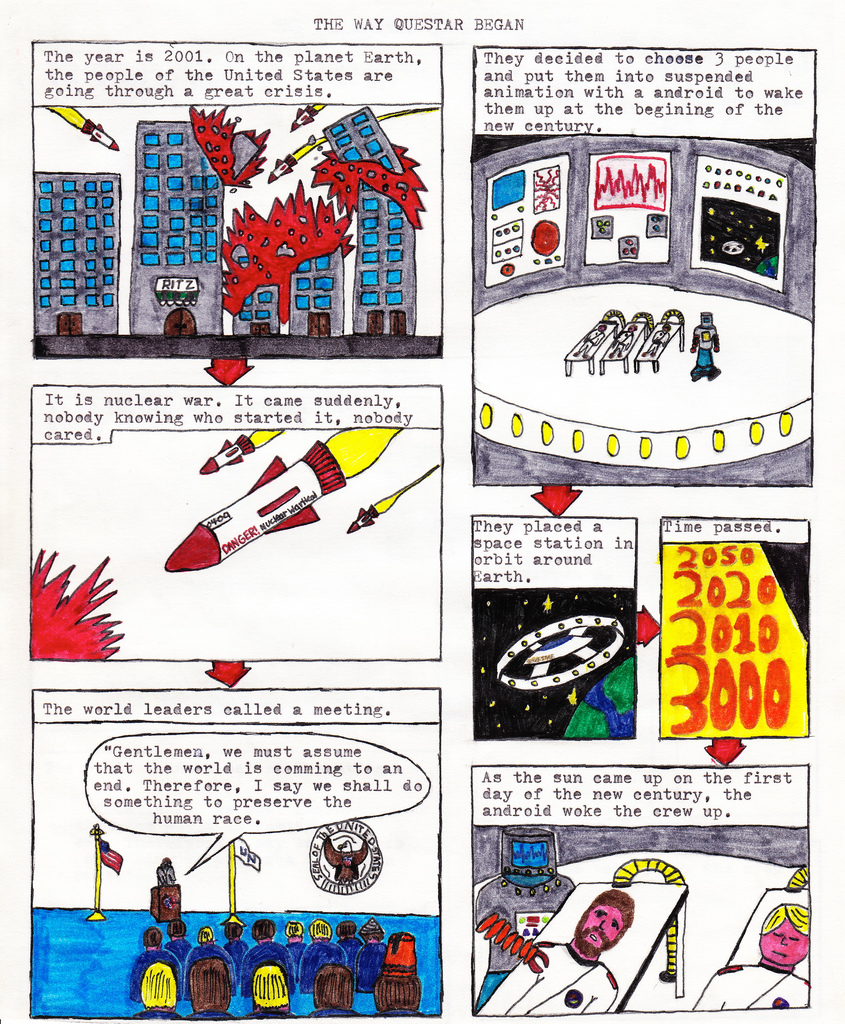
Walters Questar

Questar, pg. 1: “DANGER! Nuclear WarHead”

MIKEY: One of the things I enjoyed about D&D was the complexity of the rules and the detail found in the hardback manuals and official modules, so I wanted my work to have the same feel, including illustrations and maps. Sometimes it was difficult to get my entire group together at the library, so I made “mini-modules” that a friend and I could complete separately. These were finished very quickly, with most of the time spent cutting out construction paper covers. We played these several times (with variations), almost as a way to “level up” characters. The huge Golden Scepter of the Troll Fens module took quite a while to evolve, but we played sections of it as I finished them, and some parts were edited based on player response, especially the “DM Notes” section, which answered common questions that came up during the game.

My typewriter was one of my favorite childhood possessions, and I used it all the time to try to make things look “professional.” I wouldn’t have been happy with my Questar comic book if the word balloons were filled with my childish printing, so I insisted on typing everything, even when I had to do extensive cutting and pasting (before those were only metaphors!).

2W2N: Your modules and artwork really capture the unique spirit of the era we grew up in. Compared to kids from different generations, I think we spent a lot more time in our own heads, dreaming up new worlds and trying to express them, whether it was drawing comics, inventing games, writing stories, learning to program, role-playing, building models, and on and on. Do you think it’s because we were exposed to so many different inspiring and motivating novelties (Star Wars, D&D, arcades, the PC revolution, etc.)? Or were we just killing time waiting for the internet?

MIKEY: I really think the ’70s and ’80s were an explosion of inspiration for budding geeks like me. It seemed like everywhere things were totally new, exciting, and unbelievably cool, and the ability to create and emulate was in our grasp. However, the tools to do what we wanted weren’t handed to us, so we had to figure things out ourselves. For example, after reading about special effects secrets in Starlog magazine, I couldn’t just fire up iMovie and apply a laser beam plug-in. Instead, I kept reading until I discovered that I could shoot a Super 8 movie and scratch my own laser beams on each frame with an X-Acto knife! I have such fond feelings and appreciation for nearly everything created in these decades: beautiful hand-drawn animation, 8-bit video games introducing amazing new things like “scrolling,” movie special effects with handmade models, and so on.

However, I think creativity always finds a way out. The incredible environments my friend’s kids have built in Minecraft are just as fantastic as the space stations I used to build out of paper towel rolls. And although I would rather admire the miniature buildings in a Godzilla movie, I’m still blown away by the CG characters and environments in today’s films. It’s an interesting question, and ultimately I really don’t know why I created what I did, other than the fact that it was so much fun!

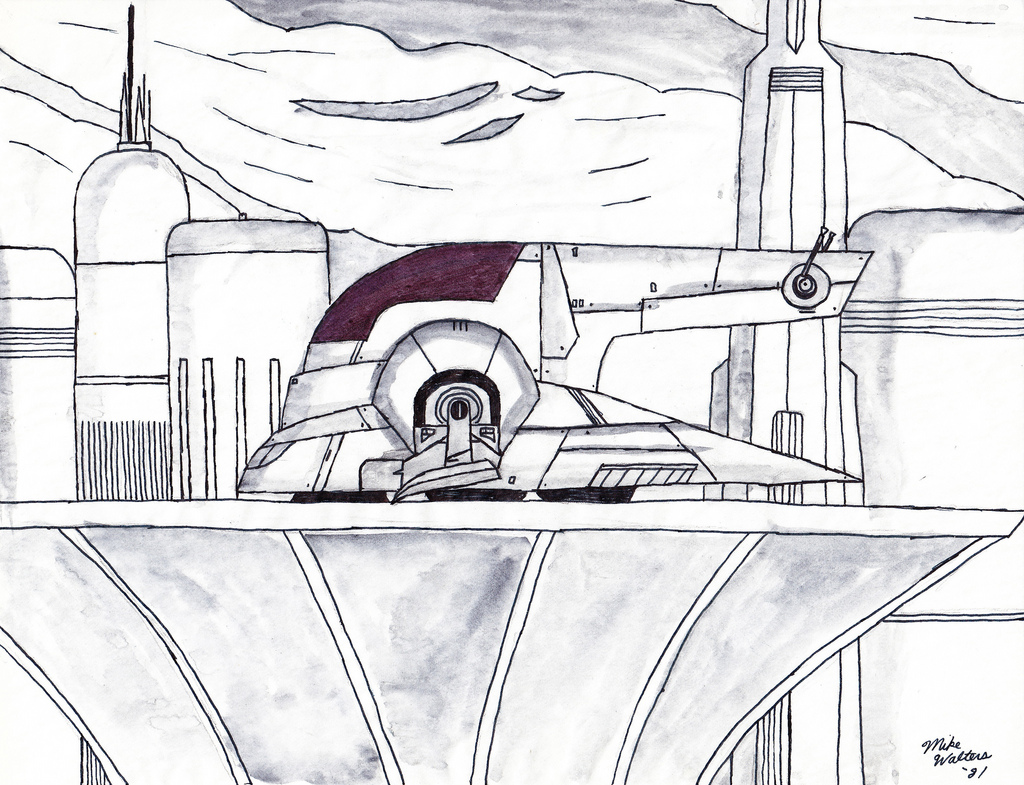
Walters Slave I

Ink washed Slave I, 1981

2W2N: Are you an only child, by any chance? I am, and that certainly played a part in the development of my daydreaming, bookish, nerdy tendencies. I had friends, but when they weren’t around I had to find ways to entertain and challenge myself.

MIKEY: Excellent guess! I am indeed an only child and happy to be one. Having time to be alone simply allowed my childhood mind space to breathe and express itself in ways that might not have been possible otherwise. I was lucky to have great friends and fantastic parents (who always encouraged my creative side), so I was rarely “lonely,” but even today I cherish times of solitude. My friends in my adulthood have learned that I need extra time to putter around with my toy collection and read comic books to recharge!

2W2N: I want to talk about your experience with computers for a bit. You mentioned your “beloved” Atari 800 earlier. That’s exactly the word I would use to describe mine. It was the best gift I ever got. When did you get yours? What’s the first computer you ever used? Would you say Tron and War Games are partly responsible for the career (Software Developer) you eventually chose?

MIKEY: My first computer was a Sinclair ZX-81, complete with the awesomely overheating 16K RAM expansion pack. I think I started programming almost simultaneously with the release of Tron, so I don’t know which came first, but of course I was a huge fan. I started writing text adventure games and simple graphics programs, but then one day a friend showed me his Atari 800 with its incredible graphics and games, as well as the world of BBSes he could access via modem (very War Games-esque).

Thankfully, my dad loved to play video games (hence our huge collection of Intellivision cartridges), so it was easy to convince him that we needed this amazing new computer to really have some fun! We bought our Atari 800 in late 1982, first with the classic cassette tape drive, and later stepping up to multiple floppy drives. Along with the hours of game time my dad and I put in together, I became obsessed with programming in Atari BASIC, and started submitting my own source code to Atari computer magazines like Antic and A.N.A.L.O.G. One day in 1983, I was reading the latest issue of A.N.A.L.O.G., and suddenly realized my original game Space Assault was published! A few days later a check arrived in the mail for $360, which was huge money to a 16-year-old-kid in 1983. From that moment on, my career path was set!

Walters Analog #13

Walters Analog #13-2

2W2N: What a great story! You know what my next question’s going to be: what did you buy with that $360? My mind boggles at the possibilities.

MIKEY: I wish I had a more spectacular answer for you, but most of the money went towards an Epson FX-80 dot matrix printer (bought jointly with my dad), which was pretty exciting to me since I could print using interesting Atari fonts. The printer quickly usurped my typewriter, and I was soon using it to print letters, art projects, and even college papers as I got older. I can still hear that lovely printing noise!

Considering the year, the rest of the money probably went towards Return of the Jedi action figures (I still have my complete Kenner set today) and comic books, since in the early ’80s I had a 15-issue per week habit and over 2,000 bagged and boxed! I finally gave up single issue collecting, but now I can’t stop buying trade paperbacks.

2W2N: This was all in Sacramento? Tell me about your extended neighborhood. What were your favorite places to go? I grew up in the San Gabriel Valley, about 30 minutes away from Disneyland, the mere mention of which would send me into a state of near rapture. There was also the comic shop, the pizza place, the hobby shop, the book store with the huge sci-fi/fantasy section, the used book store that sold old comics, the mall arcades, a Malibu Grand Prix, a Chuck E. Cheese, the batting cages, three small movie theaters, a drive-in theater, the bike jump behind Stater Bros. It sure seems like kids had more to do 30 years ago.

MIKEY: My childhood was neatly divided between California (1st to 6th grade) and Oklahoma (7th grade and up), so I have fond memories of both places. My family made several treks to Disneyland, by the way, lighting the fuse that causes me to visit there nearly once a year even today! One of my favorite things to do with my California friends was ride the bus to Sunrise Mall where we could shop for toys and things to our hearts’ content – I usually ended up buying Star Trek posters. My neighborhood was pretty amazing, with a dentist who always gave away 3-packs of comic books on Halloween, a professional magician who levitated his wife in his front yard, and a great hill where I learned to ride my bike with no hands.

In Oklahoma, some of my favorite places were Crystal’s Pizza (where I spent way too many quarters playing Tempest), Le Mans Speedway at Crossroads Mall (where I spent way too many quarters playing Dragon’s Lair), the comic book store, plus a local Atari-focused computer store where my dad and I would decide what we should upgrade next. I remember buying the slick, black Indus GT floppy drive there, which was a big improvement over the Atari brand drive!

2W2N: Mikey, thanks so much for the interview. It’s really generous of you to share all of this with us. How about talking some kaiju next time?

MIKEY: You’re welcome! It was great to have a chance to dig through my own memories, which seem to be so similar to yours (and to your readers’ as well, I’m sure) and as precious. And I’m willing to talk some kaiju or tokusatsu anytime!

***

All images used in this article are © Michael Walters.


Pages

Archives

Categories

Donate Button

Join 1,117 other subscribers