Archive for the 'Sci-Fi/Space Art' Category


Disneyland Map and Guidebook (1976): ‘Space Mountain is Coming’

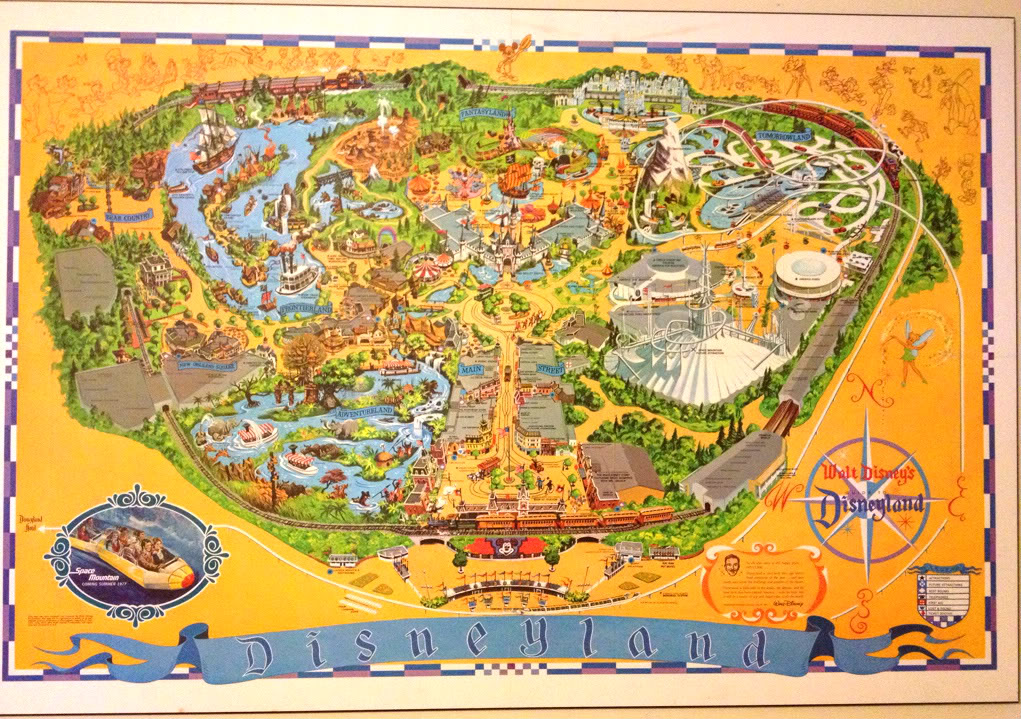
Disneyland Map 1976

Disneyland Map 1976-2

I just love the detail on the Space Mountain advertisement. The rocket is going fast enough to get the kids excited, but not fast enough so that the men can’t put their arms around their wives. And space looks like the ocean.

One more ‘coming soon’ ad, this one from the inside cover of the official Disneyland 1976-1977 guidebook. What about that righteous title font? Where has all the style gone?

Disneyland Guidebook 1976

(Images via Mouse Planet, eBay, and Vintage Disneyland Tickets)

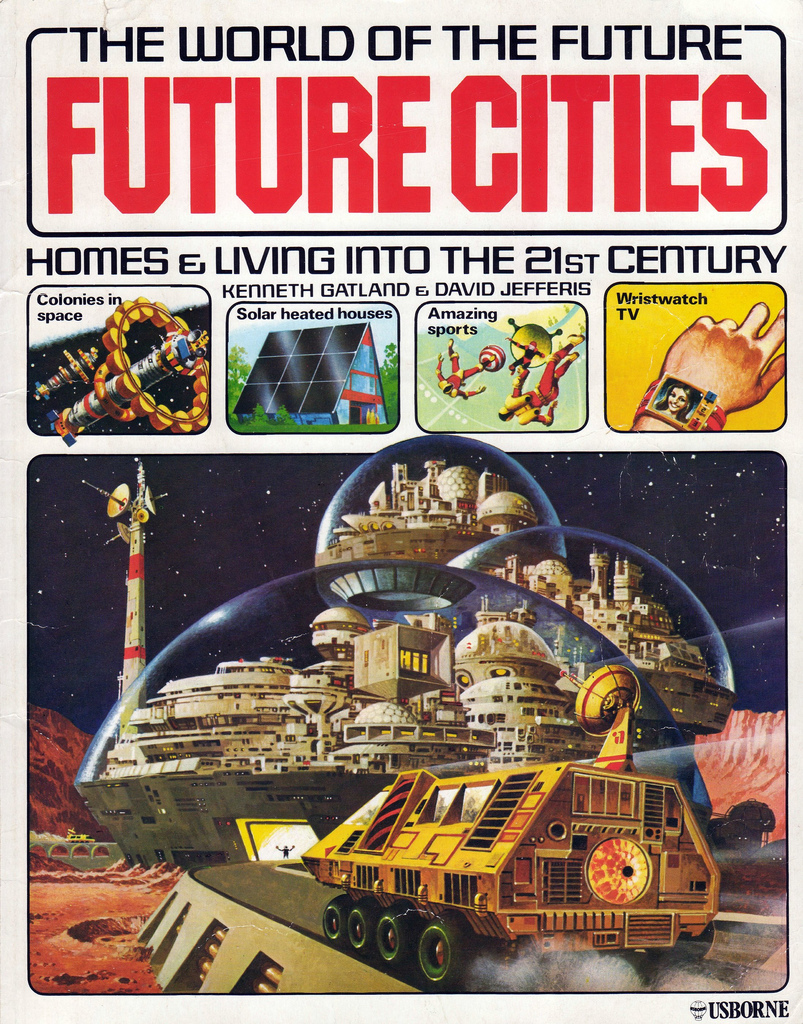
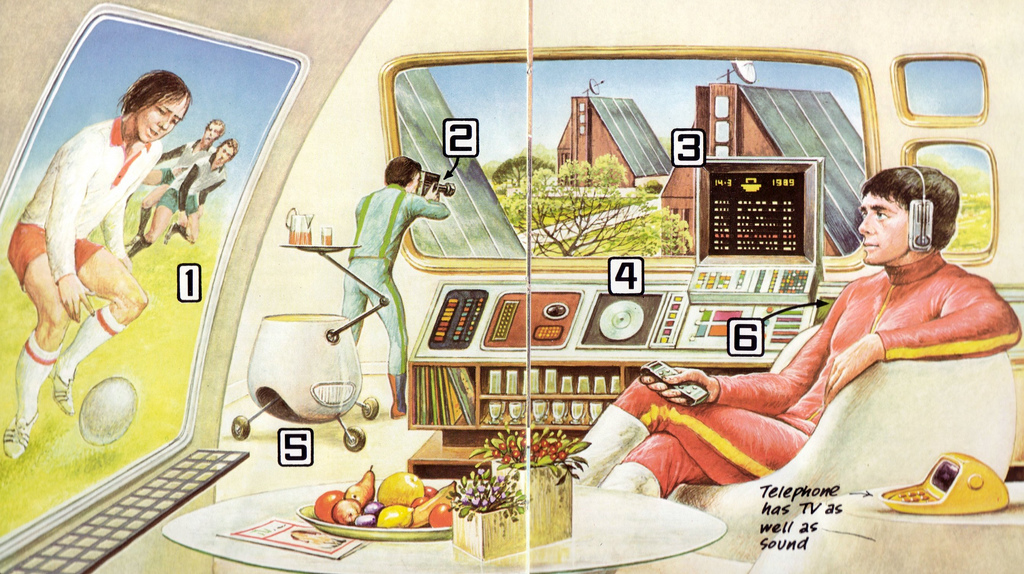
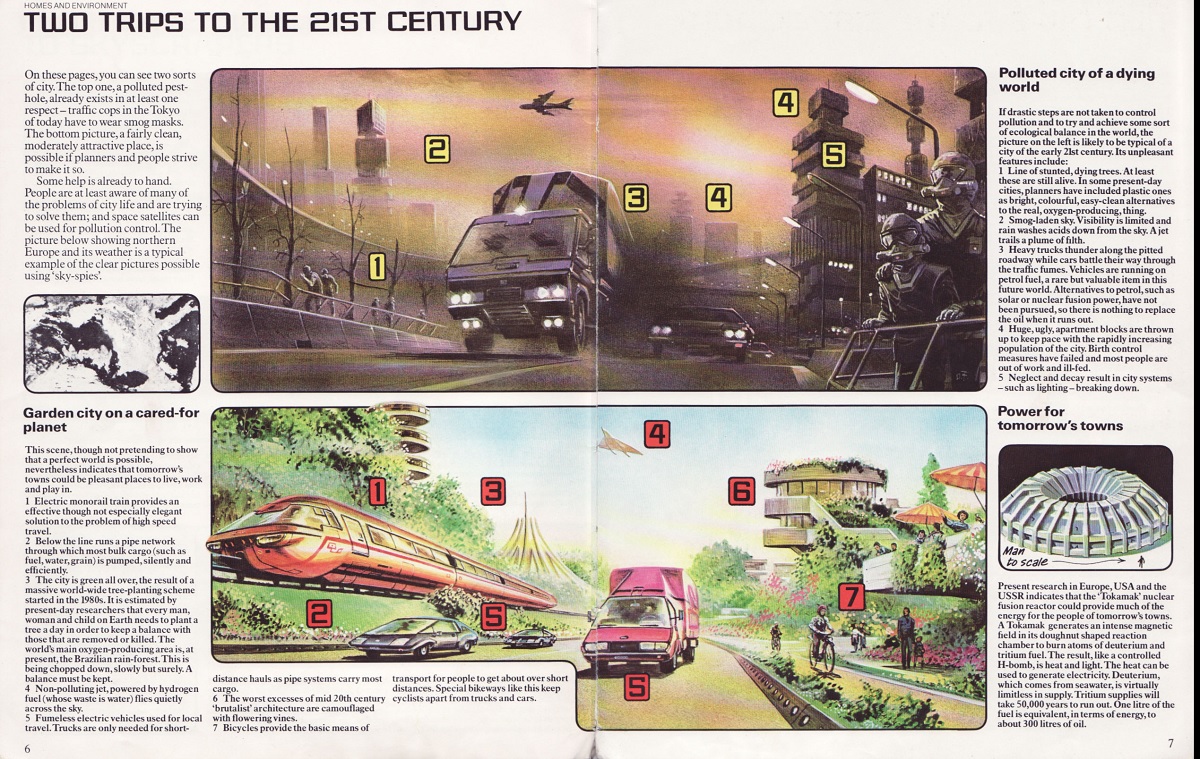
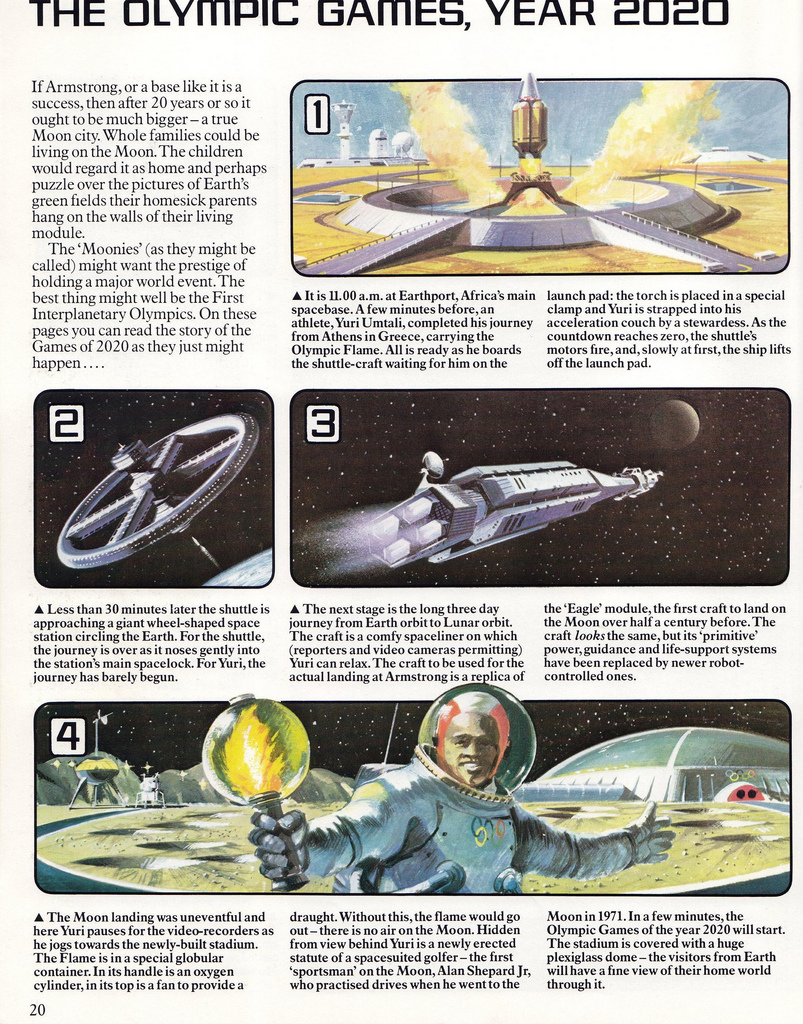
The World of the Future: Future Cities (Usborne, 1979)

Usborne Future-1

Usborne Future-2

Usborne Future-3

Usborne Future-6

Usborne Future-4

Usborne Future-7

Usborne Future-5

There were four books in Usborne’s The World of the Future series: Future Cities, The Book of the Future: A Trip in Time to the Year 2000 and Beyond, Star Travel, and Robots. All of them were written by Kenneth Gatland and David Jefferis, and all of them were published in 1979. I have not been able to pinpoint the illustrators yet.

UPDATE (4/12/14): Author David Jefferis kindly shed some light on the series and its creators. The post has been revised accordingly.

I worked with the sadly late Ken Gatland to create these books, but the editorial direction, page visuals for illustration briefings, and the words were mine.

Ken and I worked on the ideas and flat plans together, and Ken approved all, tweaked where needed, and added chunks of text as necessary .

Reasonably enough, we put our bylines in alphabetical order.

The books are, as you can see, amazing, and somewhat prescient—with the exception of the Olympic Games on the Moon. The last page draws heavily on concepts explored by NASA in the 1970s: see T.A. Heppenheimer’s Colonies in Space (1977), for instance.

The very last panel is a nearly line by line lifting of a lunar colony design by artist Rick Guidice, who did other work for NASA, as well as the visionary Basic Programming cover art for the Atari 2600 cartridge, also from 1979.

Atari Basic Programming

(Book images via Will S and Robert Carter)

Ken Kelly Cover Art for Richard Avery’s The Expendables (1975 – 1976)

Deathworms Kelly 1975

Tantalus Kelly 1975

Zelos Ken Kelly 1975

Argus Ken Kelly 1975

Ken Kelly and Frank Frazetta are family, and Kelly grew up admiring the work of his “Uncle Frank.” The Frazetta style—the overwhelmingly imperiled Romantic hero set against a backdrop of otherworldly colors and atmosphere—is obvious here.

Kelly would never completely escape his mentor’s shadow, but a lot of his sci-fi work is wonderfully unique. These are some of his earliest covers.

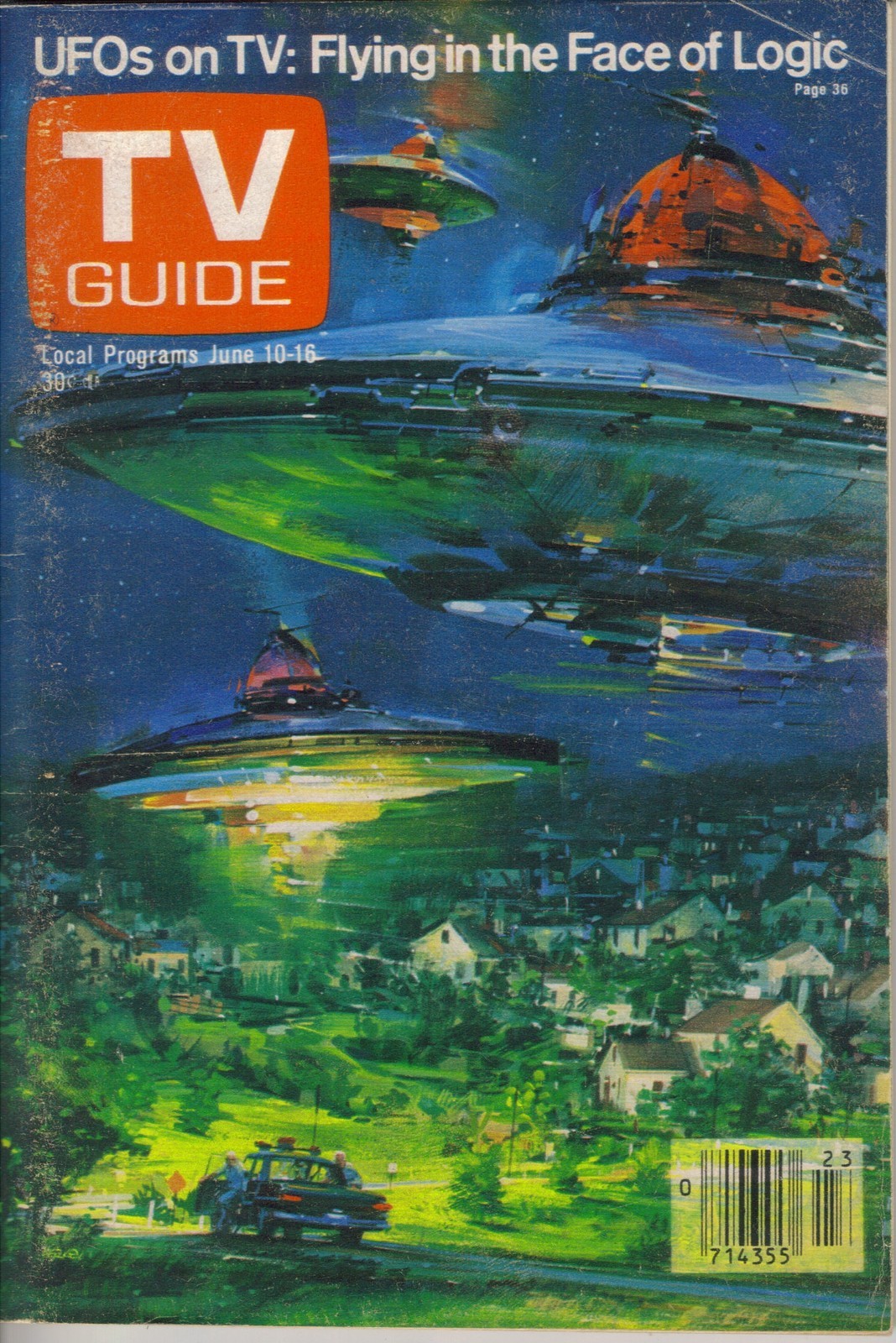
The Art of John Berkey: UFO TV Guide Cover (1978)

tv guide berkey 1978

tv guide berkey 1978-2

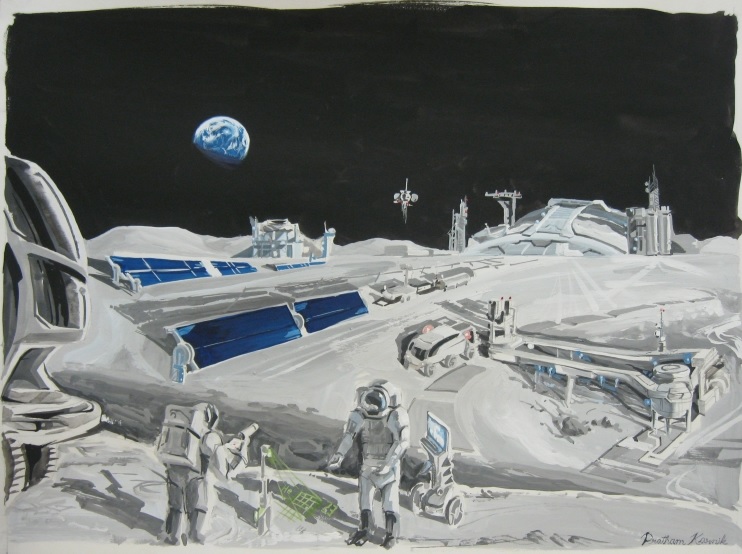
‘Visions of Lunar Life’: 2009 NASA Art Contest Winners

NASA 2009

Life and Work on the Moon
by Pratham Karnik
Walt Whitman High School, Rockville, MD

NASA 2009-2

The Worlds First Civilization on the Moon
by Josh Kim
Kent Mountain View Academy, Auburn, WA

NASA 2009-3

Coexisting in Harmony
by Sarah Han
Vision 21 Art and Design Portfolio School, Los Angeles, CA

NASA 2009-4

Moon Base
by Jan Fahlbusch
Arendell Parrott Academy, NC

NASA 2009-5

Amid the Stars
by Kristen Fahy
Hopatcong High School, NJ

Damn good stuff from the high school division—better than the university division, in my opinion. See all the winners here. The Nasa Art Contest was discontinued in 2012 due to—guess what?—lack of funding.

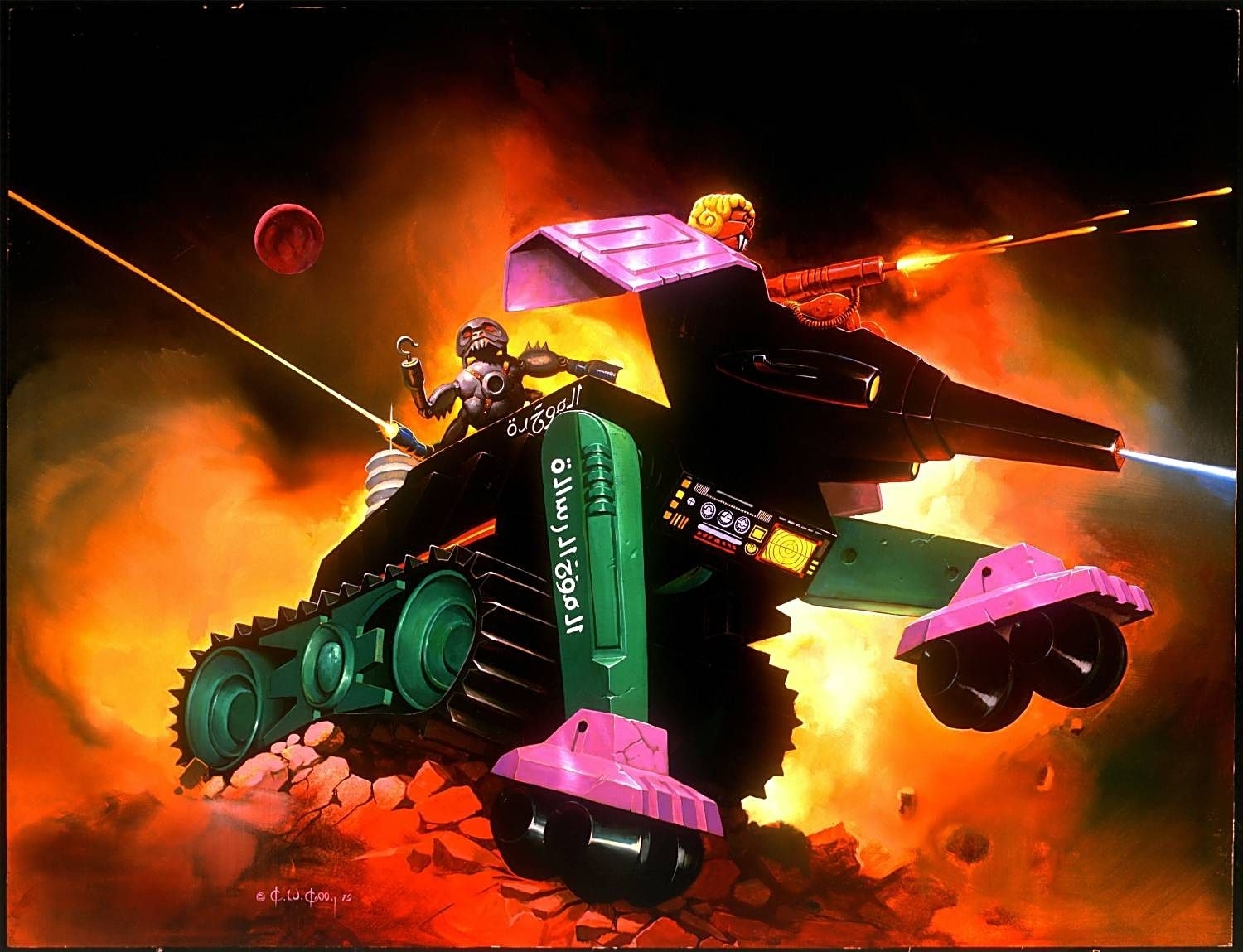
Original Micronauts Art by Ken Kelly

Repto Kelly

Membros Kelly

Hornetroid Kelly

Terraphant Kelly

If you’re a fantasy art aficionado and have $350,000 burning a hole in your pocket, head on over to eBay seller Mister Sluggworths and buy up these original Ken Kelly oils. They were commissioned by Mego in 1979 and used as card and box art for the Micronauts series 4 and 5 (1979 – 1980) alien figures and vehicles.

Above you see, from top to bottom, Repto, Membros, the Hornetroid, and the Terraphant. Also for sale are Centaurus, Kronos, and Lobros. That’s 7 out of 8 of the original commissions being sold as a lot. Antron is the only one missing.

(Images via Mister Sluggworths/eBay)

The Space Art of John Berkey

berkey 2

berkey 7

berkey 9

berkey 5

berkey 3

berkey

berkey 6

berkey 4

My favorite artist is J.M.W. Turner (1775 – 1851), a Romantic landscape painter and watercolorist known for his impressionistic use of light and color. John Berkey (1932 – 2008) is the Turner of the late 20th century.

Turner emphasized the terrible grandeur and capriciousness of nature, while Berkey depicted humanity’s attempt to tame that fickle grandeur through technology. Turner, like the nature he portrays, is indifferent to human beings. They are too small. In Berkey’s visions, humanity has been resurfaced, enlarged and prolonged by mechanization but also defaced by it, in effect dehumanized by the mortal impulse to break orbit and touch the infinite, to get out of the here and now.

Turner’s work revolves around the sun and contends with the interplay of light and fire with smoke and fog, storms and dust clouds. Berkey’s massive, eloquent spacecraft are self-lighting candles in the interstellar bleakness, slight visitations on a nearly universal blankness. There is a fundamental loneliness in the work of both artists. Turner’s burning skies and Berkey’s eerie ships are so lastingly sublime because the people under them and inside them are not.

Below are Turner’s famous The Fighting Temeraire tugged to her last berth to be broken up (1839) and Berkey’s Intrusion, an Unpleasant Visitor (1990). The similarities, to me, are remarkable.

fighting temeraire

berkey 8

Berkey claimed that he wasn’t a fan of science fiction because “It isn’t literature.” The statement doesn’t surprise me. He’s a Romantic in the grand tradition, and if he had depicted subject matter deemed “fine” and “high” enough (a giant dachshund, for example, or a hairy butt) by the snobs who write art columns and control art galleries and museums, he would be revered today as one of the greatest American artists of his time.

Read a 2005 interview with Berkey at City Pages.

The official website of the John Berkey Estate is here.

(Berkey images via Astrona; Turner image via WikiPaintings)

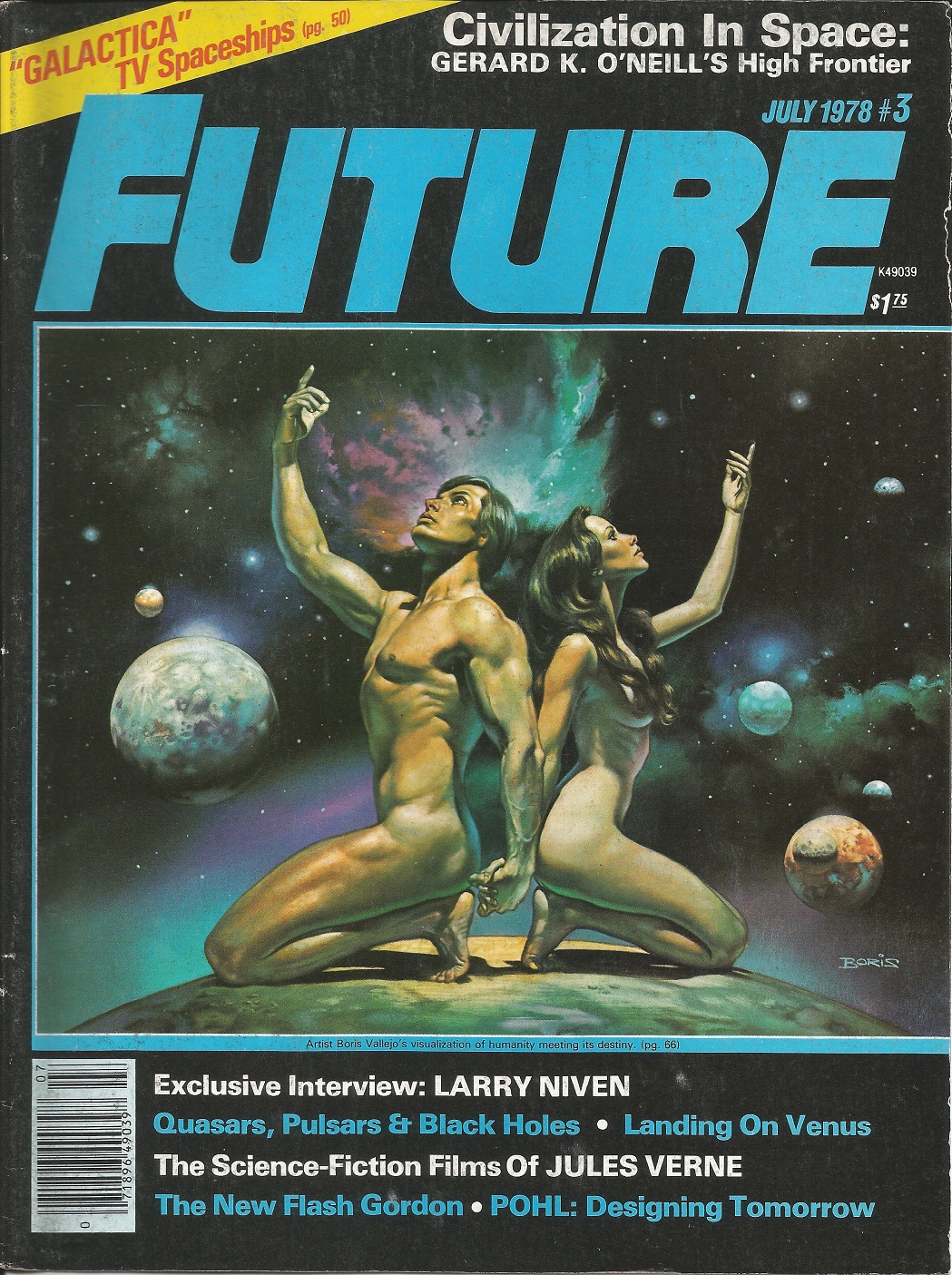
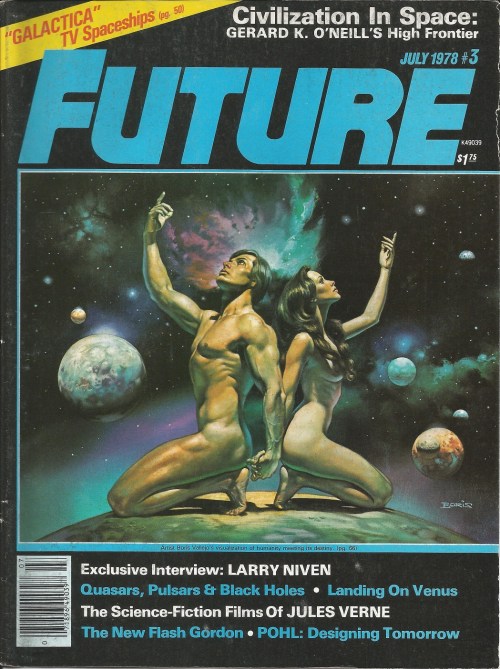
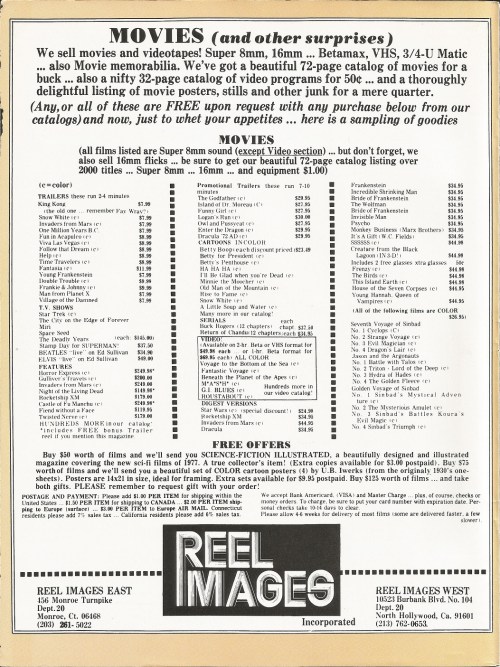
Future Magazine #3 (July, 1978): New York Toy Fair, Filmation’s Flash Gordon

Future Life #3 FC

Future Life #3 IFC

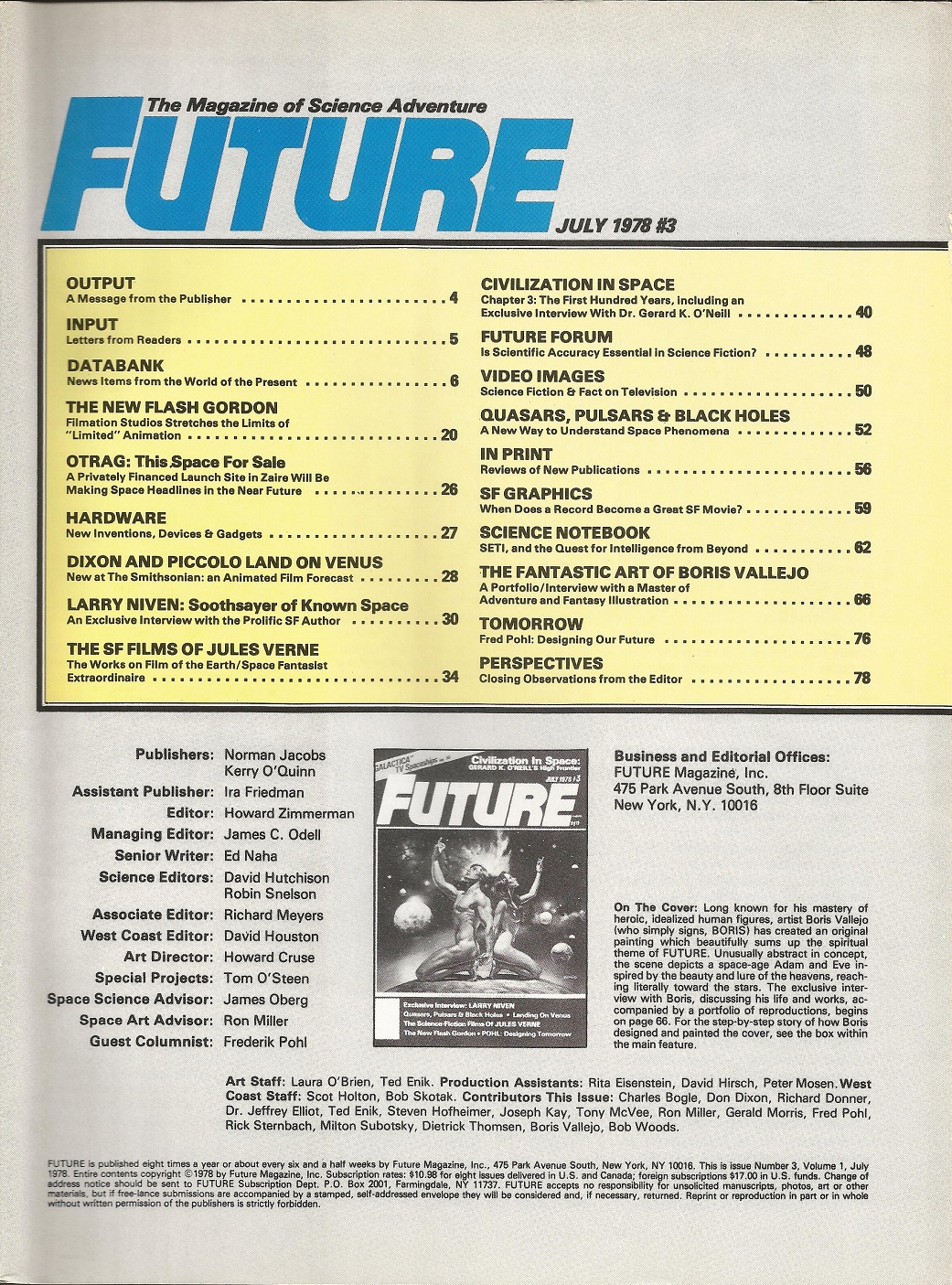
Future Life #3 TOC

Future Life #3 IBC

Future Life #3 BC

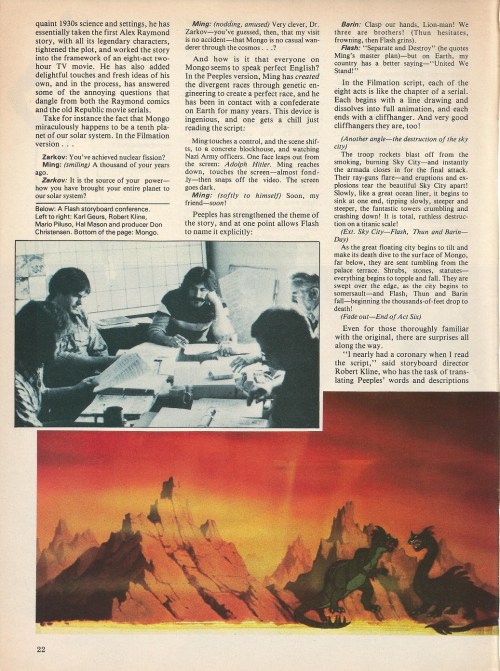
Future Life #3 pg. 14

Future Life #3 pg. 15

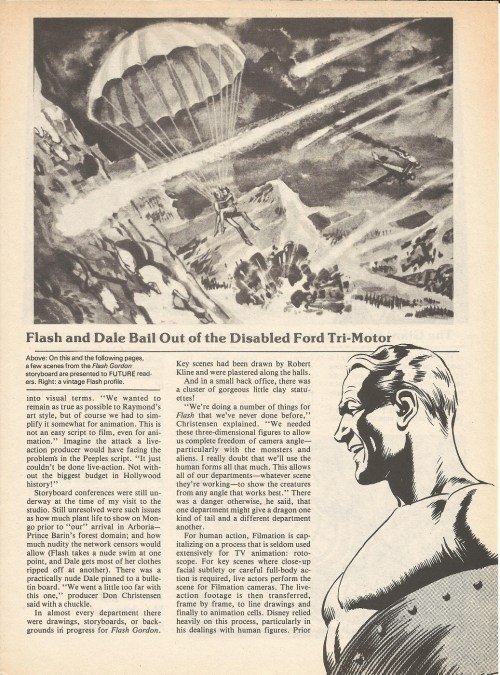
Future Life #3 pg. 20

Future Life #3 pg. 21

Future Life #3 pg. 22

Future Life #3 pg. 23

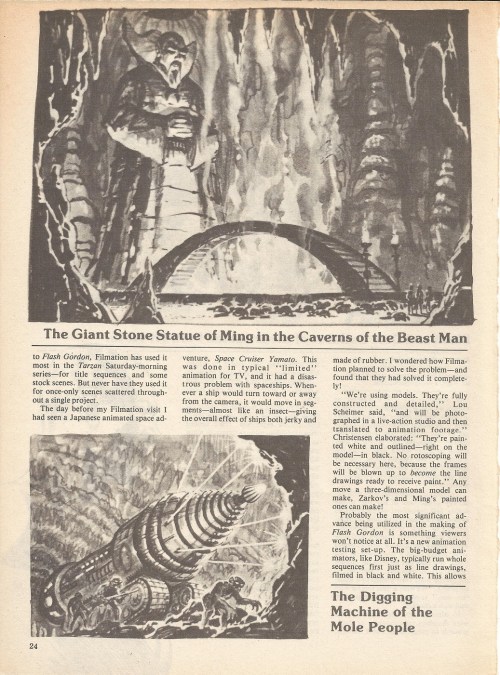
Future Life #3 pg. 24

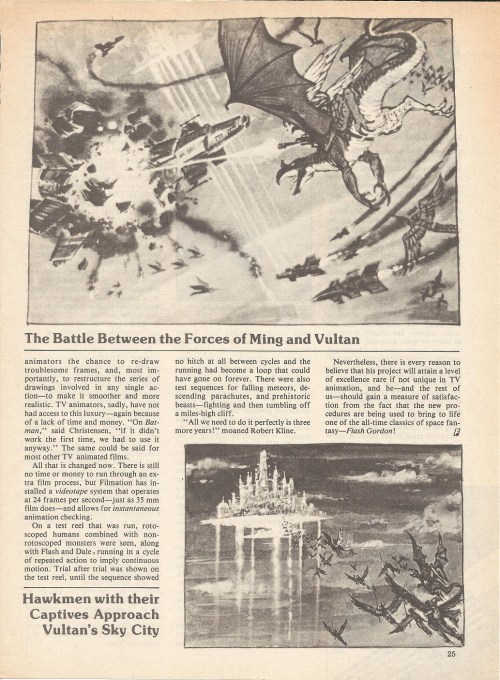
Future Life #3 pg. 25

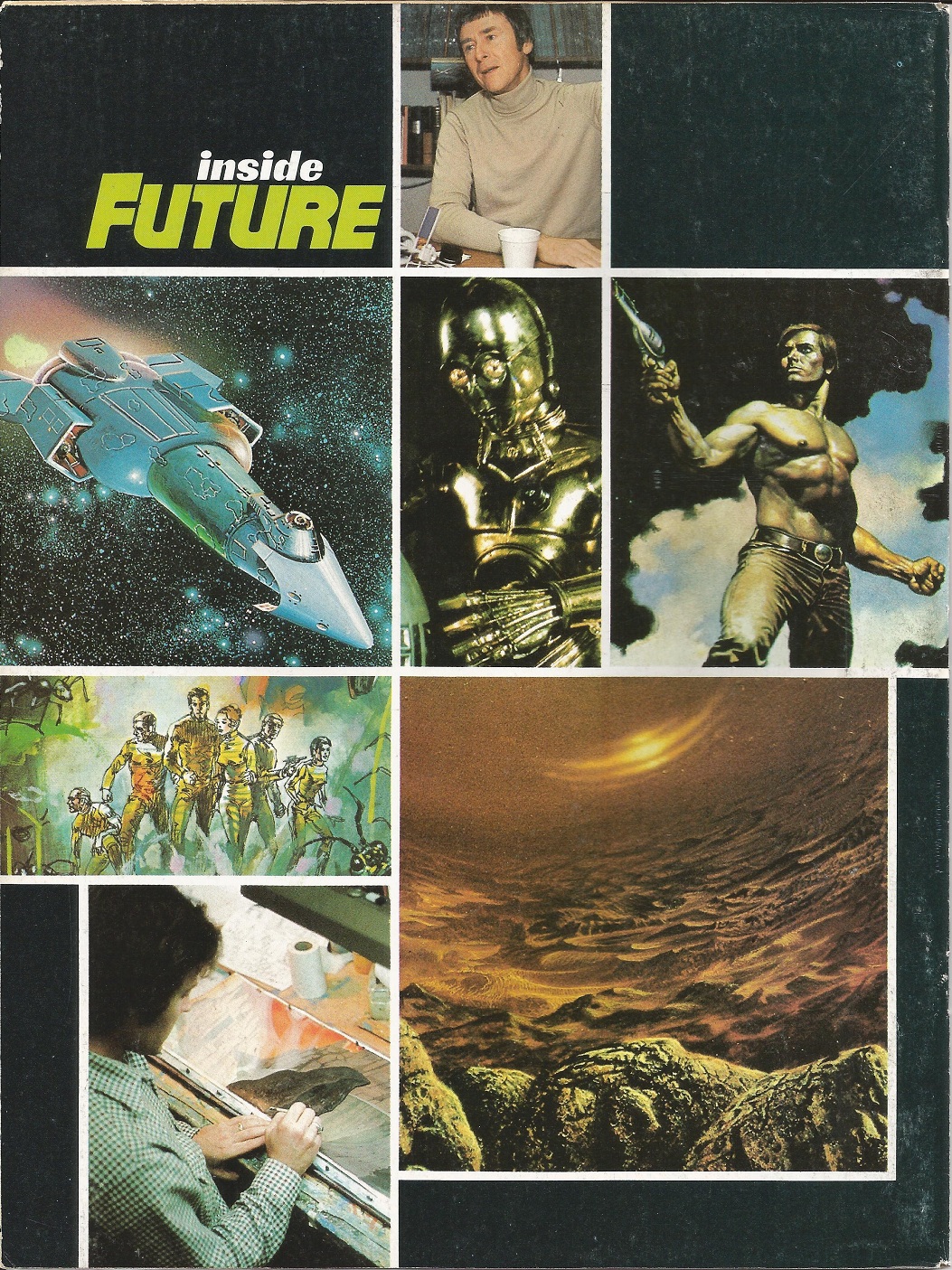
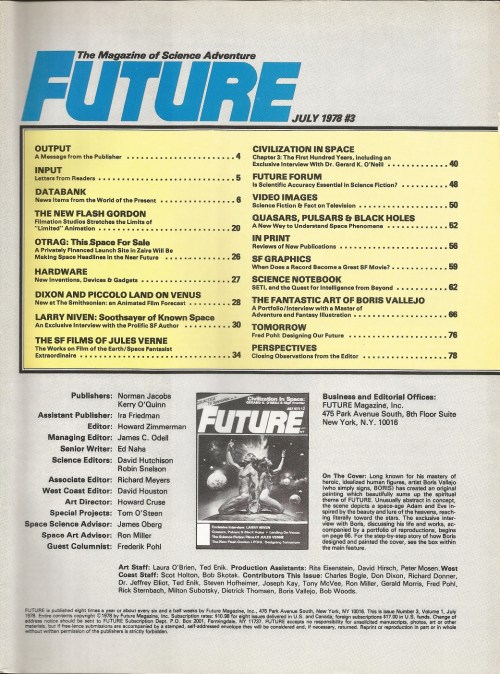
Future magazine, later called Future Life, was published from 1978 to 1981 for a total of 31 issues. It featured a combination of science fiction commentary and criticism, futurism/futurology, interviews with luminaries in relevant fields, and space exploration/travel activism. I’ve got about half of the run at this point, as well as a number of other cool sci-fi mags of the era. I’ll be scanning and posting them as time allows.

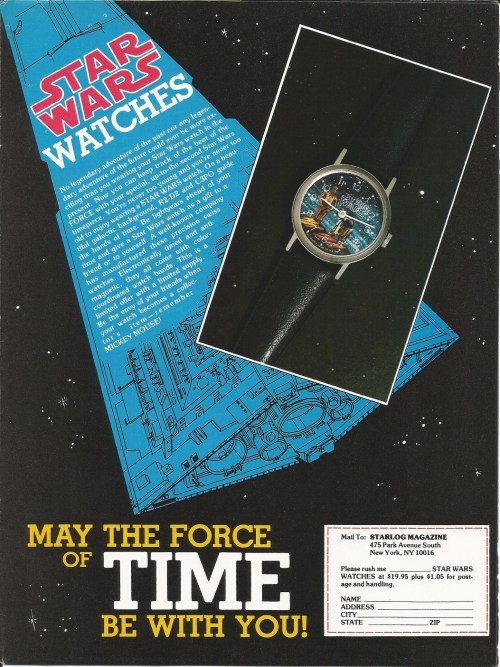
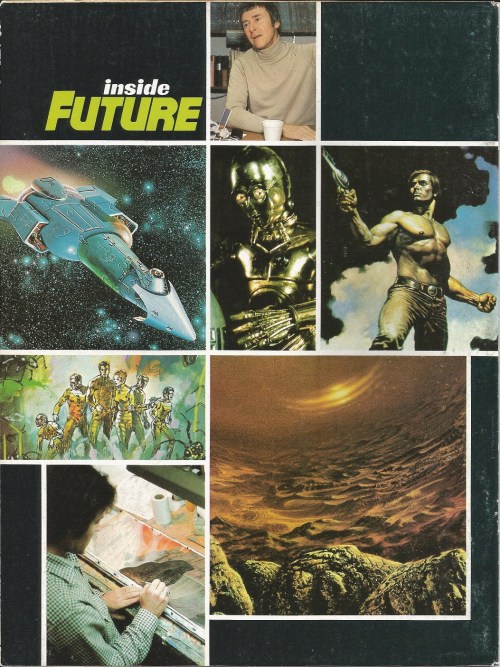
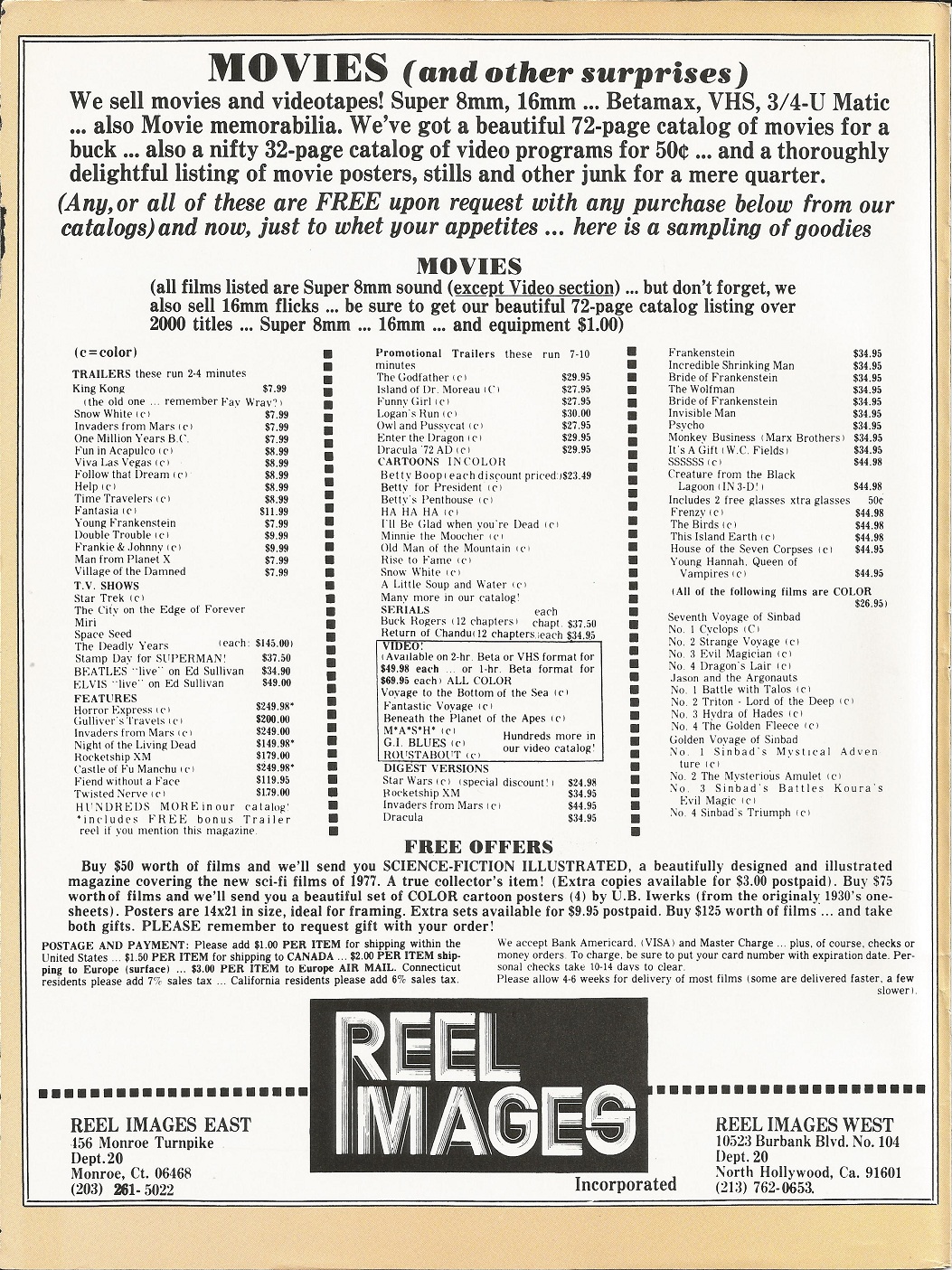
Above you’ll find the front cover of Future #3, as well as the inside front cover, table of contents, inside back cover, and back cover. (Click pages to enlarge.)

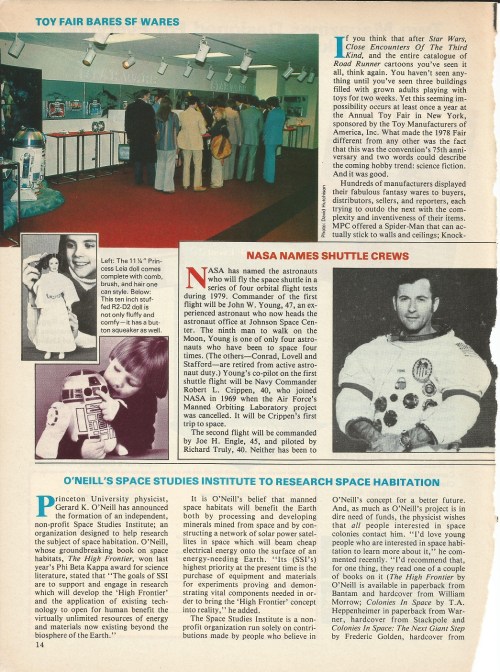
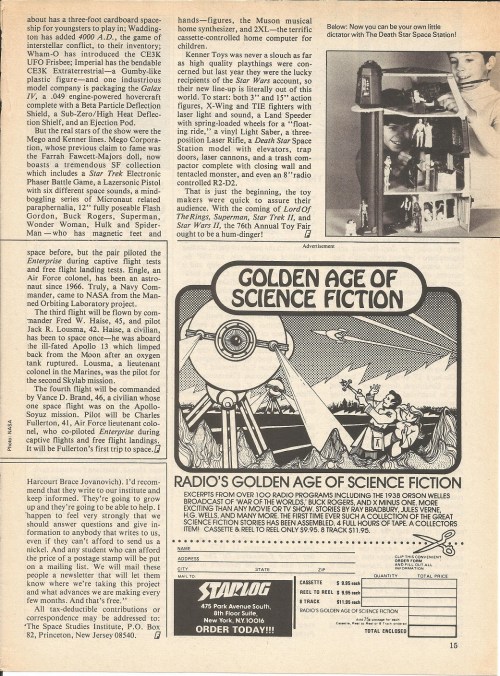
After that there’s a short piece on the Annual Toy Fair in New York (1978) discussing the post-Star Wars sci-fi trend, led by the “real stars of the show,” Mego and Kenner. I find it revealing that “three buildings with grown adults playing with toys for two weeks” is referred to as a “seeming impossibility.”

On the same page there’s a blurb on Gerard K. O’Neill and the formation of his Space Studies Institute (SSI), a non-profit organization “designed to help research the subject of space habitation.” I talked about O’Neill and his initiative here.

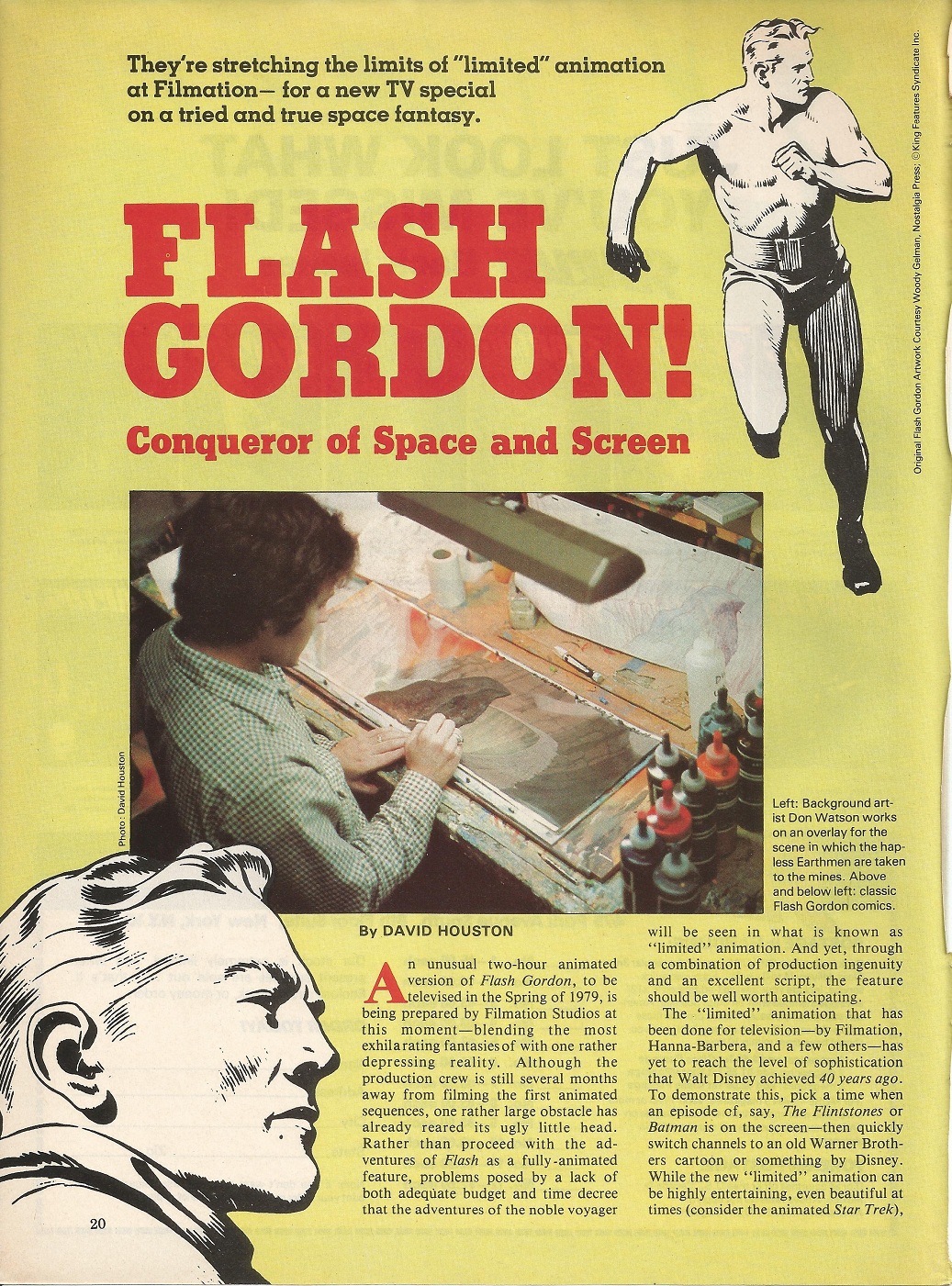
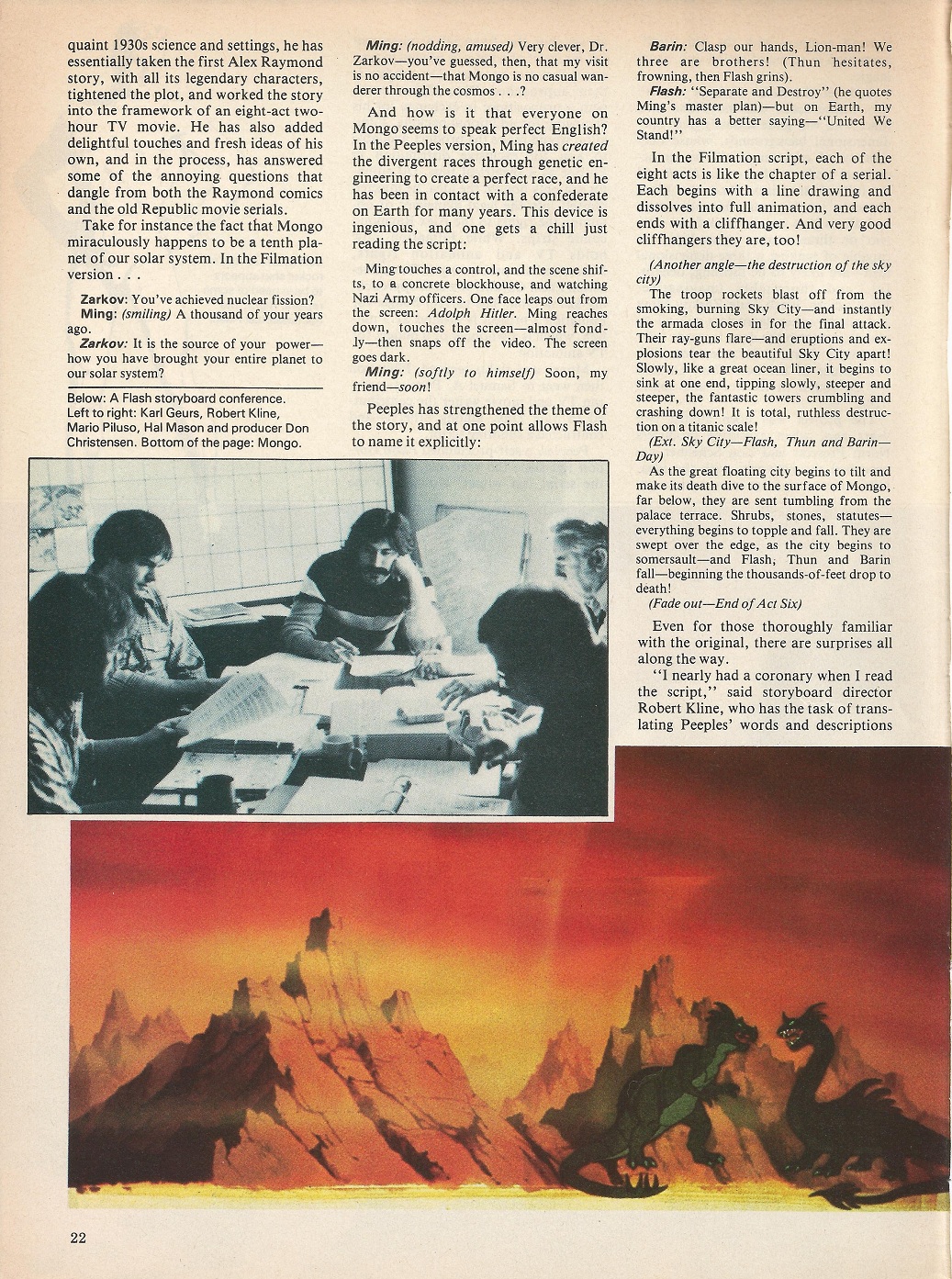
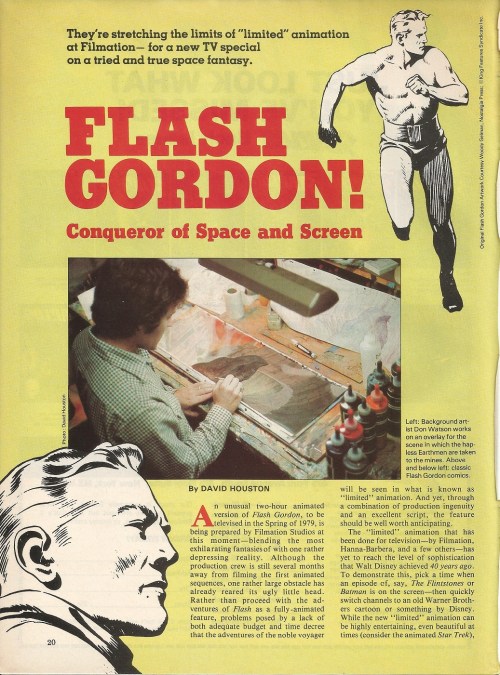
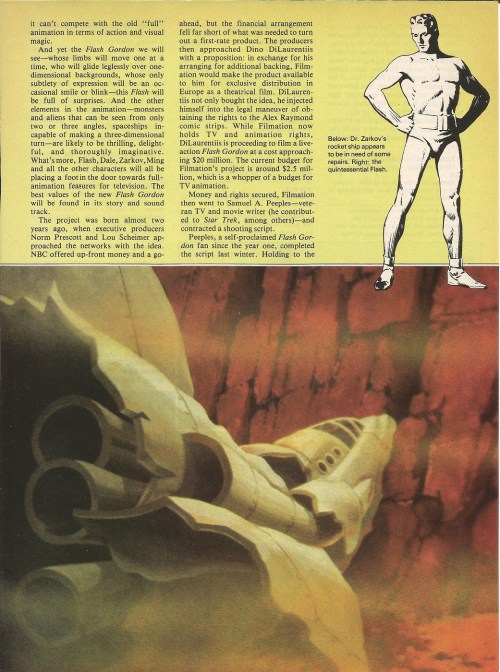
Following that is a feature on Filmation’s Flash Gordon, originally planned as a made-for-television animated movie. NBC later decided to turn the production into an animated TV series that ran for two seasons starting in 1979. Upon cancellation of the series in 1982, NBC went back to the original material and assembled it for a prime time movie, Flash Gordon: The Greatest Adventure of All. Neither the series nor the movie is currently available on DVD. You can see the series intro here. Watch the movie (pretty sophisticated for the time, and fun) on YouTube.

Interestingly, the producers at Filmation could not secure the necessary funding from NBC for the project, so they offered producer Dino De Laurentiis “exclusive distribution in Europe as a theatrical film” in exchange for additional backing. Laurentiis promptly agreed and “injected himself into the legal maneuver of obtaining the rights to the Alex Raymond [creator of Flash Gordon] comic strips.” Filmation ended up with animated and TV rights, while Laurentiis secured feature film rights. He immediately began working on the live-action Flash Gordon (1980).

You’ll find a nice homage and issue-by-issue synopsis of Future/Future Life at Weimar World Service, John Zipperer’s website.
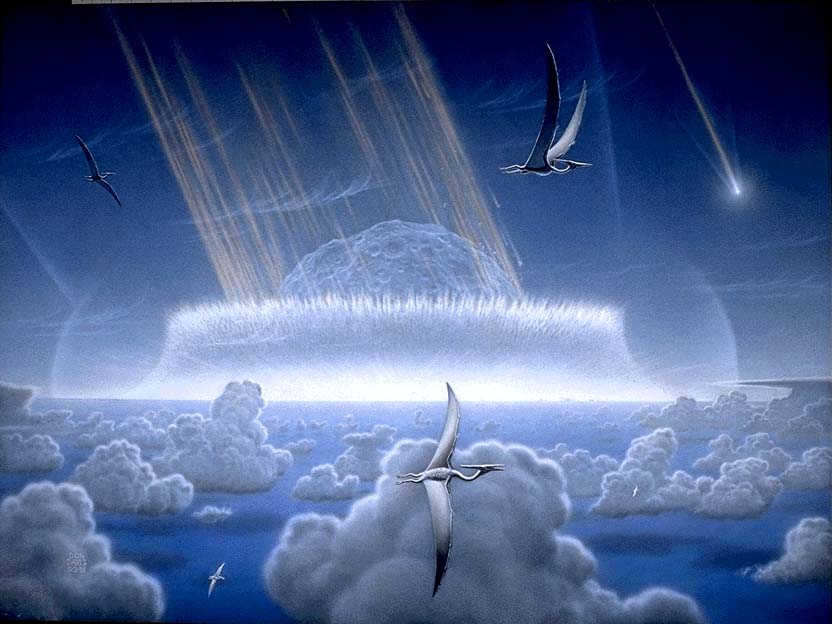
The Asteroid Apocalypse Art of Don Davis

asteroid don davis

asteroid don davis-2

asteroid don davis-5

asteroid don davis-3

asteroid don davis-4

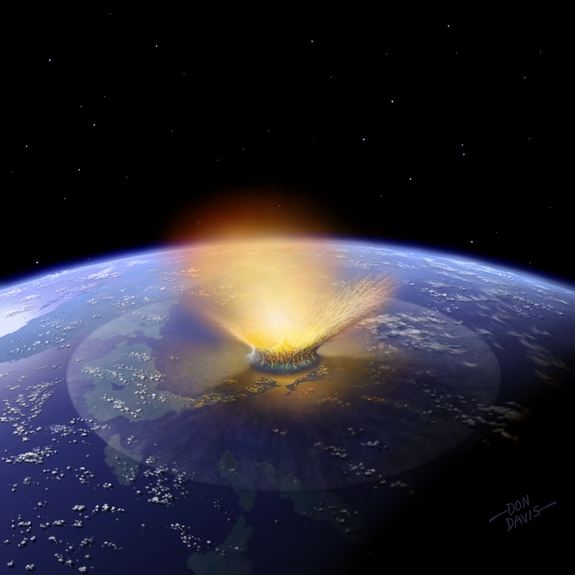
According to NASA, an asteroid about half the size of a football field and with a mass of about 130 metric tons “will pass very close to Earth on February 15, so close that it will pass inside the ring of geosynchronous weather and communications satellites.” In fact, this will mark “the closest ever predicted Earth approach for an object this large.”

The asteroid is called 2012 DA14 (I prefer EARTHSHAKER!, but those damn scientists are so set in their elitist classification systems), and it was discovered by the La Sagra Sky Survey in Spain last February.

So, in honor of 2012 DA14, I give you these righteous paintings of extinction-level impacts from the eminent space artist, Don Davis.

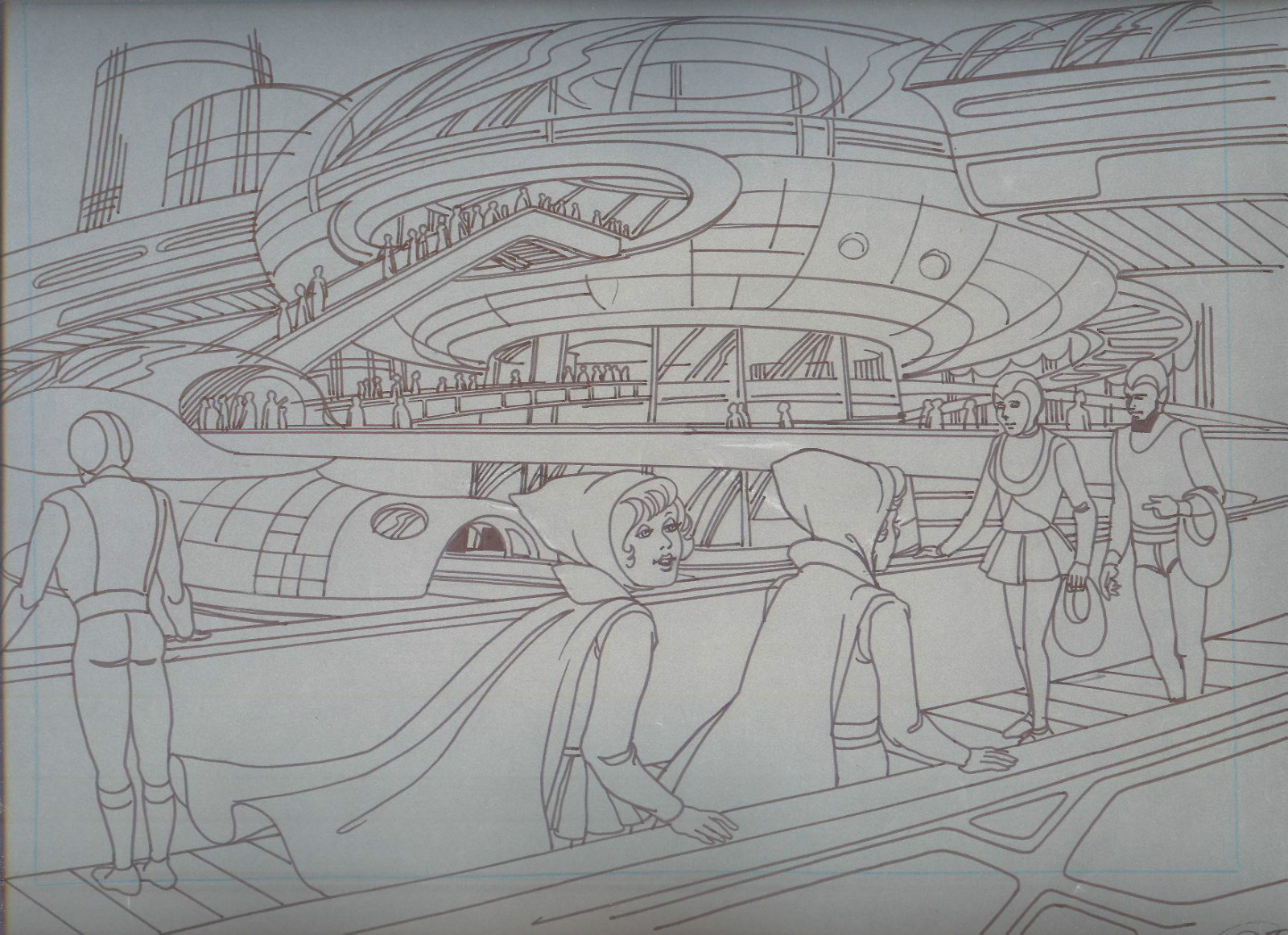
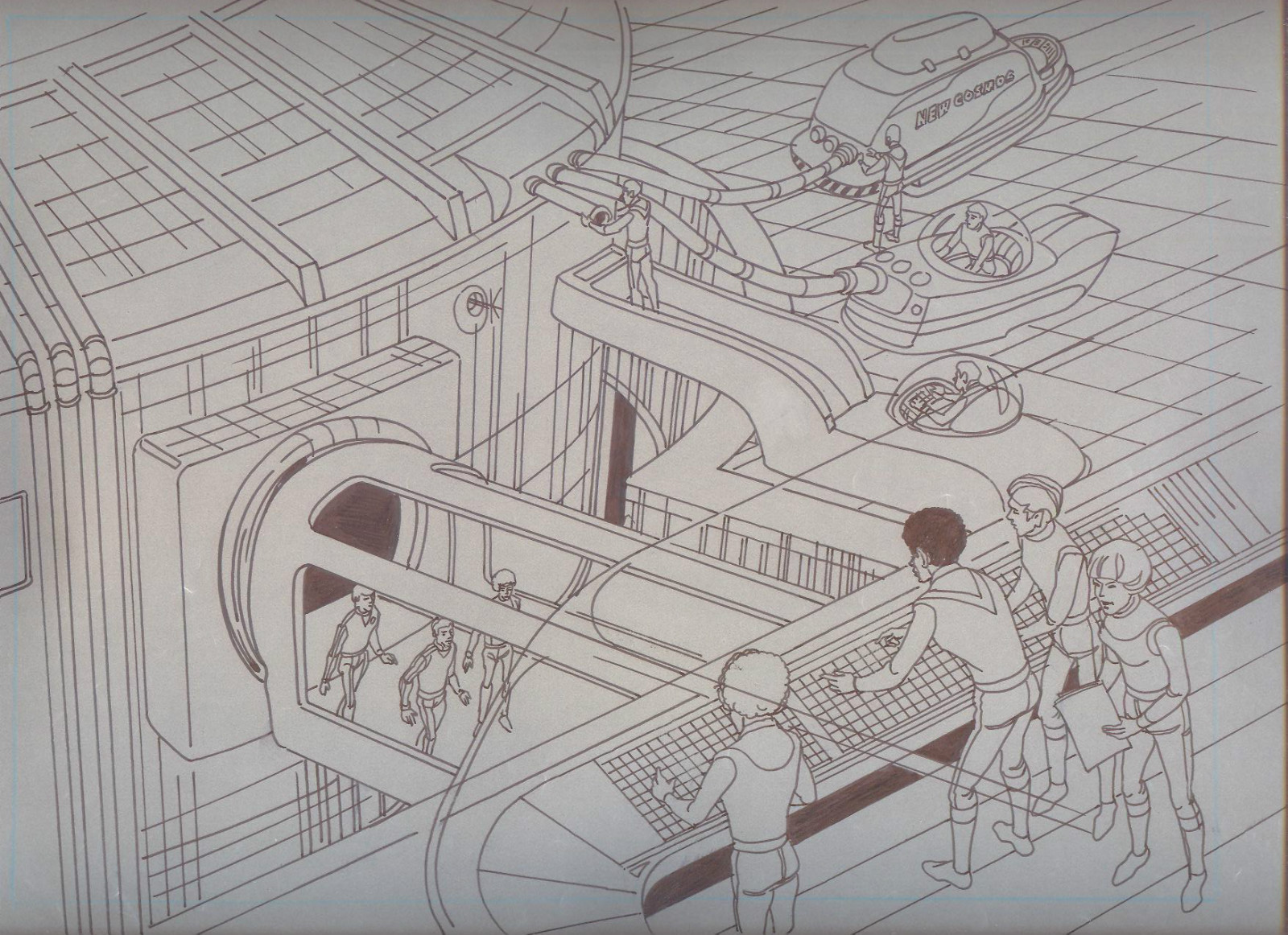
The Black Hole Concept Sketches (1978/1979)

Black Hole PD

Black Hole PD-2

Black Hole PD-3

Black Hole PD-4

Black Hole PD-5

Black Hole PD-6

Black Hole PD-9

Black Hole PD-7

Black Hole PD-8

According to the seller (Beach Parking/eBay), these are from the estate of a Disney animator. It’s a shame we don’t know his/her name or the history of the drawings, because I find them pretty interesting. The basic storyline appears to be in place, but instead of the gorgeously gothic vision we ultimately (and thankfully) got, the artist here presents much cheerier (i.e. typical Disney) fare.
In place of the dreary, massive, cathedral-esque Cygnus, we have the rotund, smiley-faced New Cosmos. And instead of lobotomized zombie slaves, we have a perfectly jovial crew traipsing about the amenity-laden ship like so many Eloi.

The miracle of The Black Hole is that its darker elements were allowed to shine through. That’s a big reason I’m so fond of the film despite the mediocre script.

UPDATE (4/3/13): Please see AcroRay’s comment and link below. These sketches appear to be of prequel stories designed for educational media kits. The kits are, naturally, very rare. If anyone comes across one or has more info, please let me know.


Pages

Archives

Categories

Donate Button

Join 1,118 other subscribers