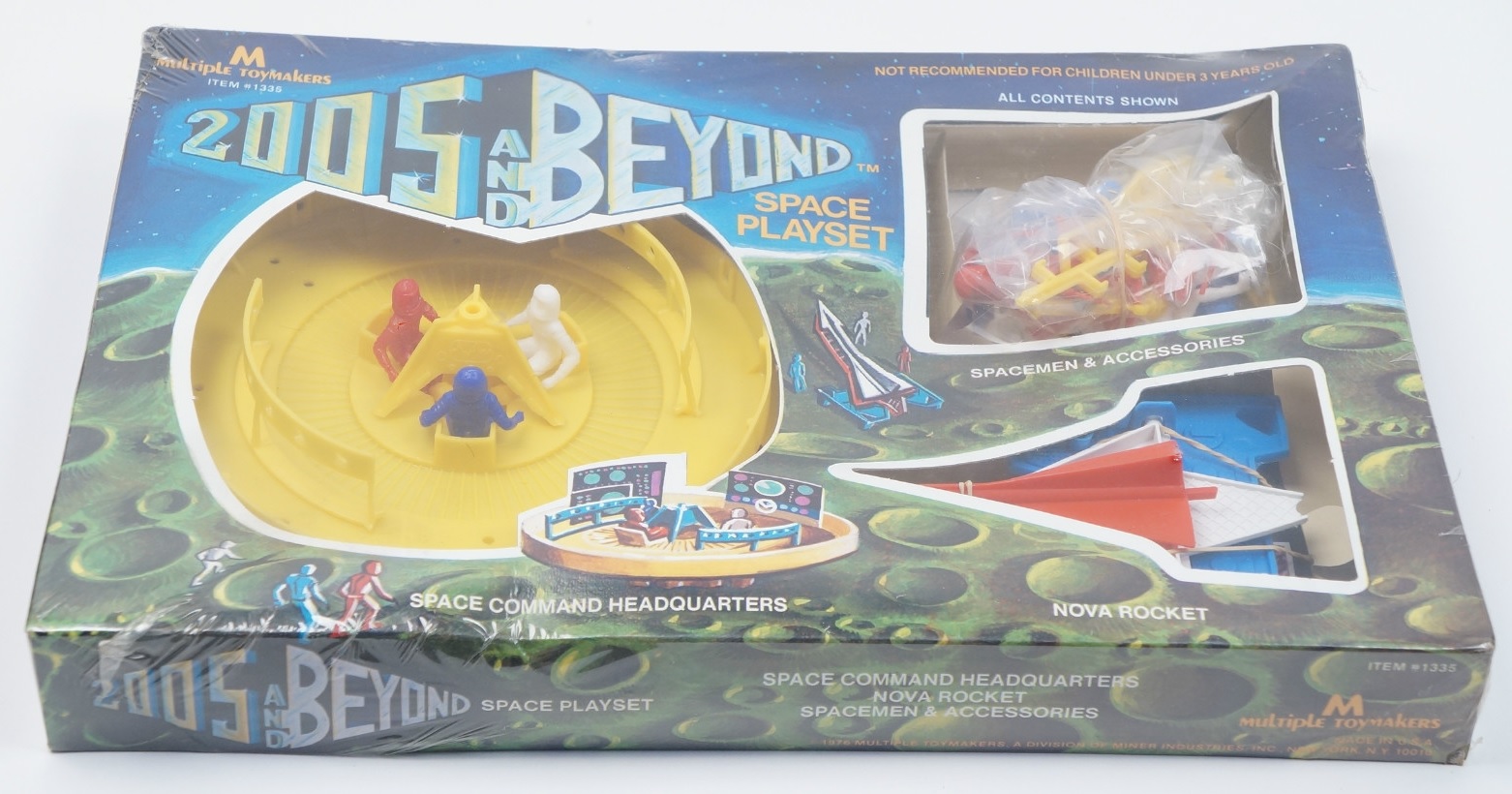

I have been to 2005 and beyond, and I’m sorry to say that we still don’t have a Command Base on the Moon.
We’ve got an International Space Station, though. And Mars rovers. That’s not so bad.
Surveying the Gen X landscape and the origins of geek
I have been to 2005 and beyond, and I’m sorry to say that we still don’t have a Command Base on the Moon.
We’ve got an International Space Station, though. And Mars rovers. That’s not so bad.


In 1980, toys from the ’50s and ’60s were considered vintage, and transformable robots like the DX Daimos (far right) were the hot new thing.
Today, toys from the ’50s and ’60s are forgotten relics, transformable robots are vintage, and the hot new thing is selling vintage toys (and replicas thereof) to 40-year-olds because kids don’t really play with toys anymore.
The “Thank you, Canada” sign refers to what’s now known as the Canadian Caper, the 1979 rescue of American diplomats in Iran fictionalized in Ben Affleck’s Argo.
(Photos via ed/Flickr)


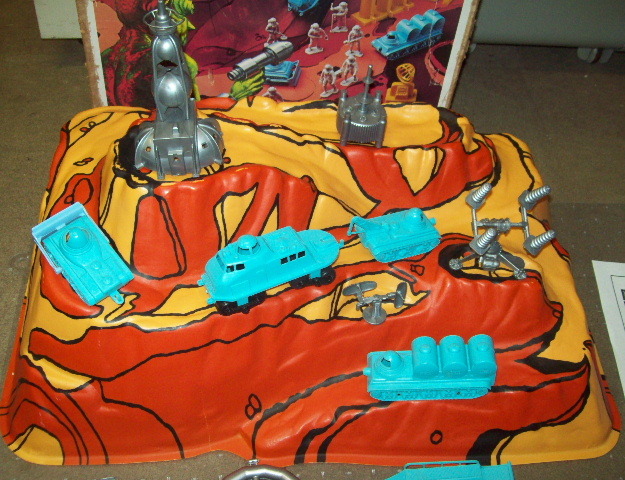
According to the article (probably from Playset Magazine) in this Hake’s listing, the Martian Landing set was originally released in 1972. Marx was in decline throughout the ’70s, and the traditional toy soldier format was displaced by Kenner in 1977. (What’s an action figure but a cross between a toy soldier and a doll?)
The idea of the set and the box art are way cooler than the finished product. It’s just a repackaging of the far superior Operation Moon Base. Pieces/molds used in Martian Landing were used in Marx’s later space-themed sets, including Star Station Seven and Galaxy Command.
(Images via eBay)

Coolest toy ever that you’ve never heard of. It makes all kinds of space sounds (lasers, explosions, warp drive, alarms), spaceships flash on the view screen, and it swivels around when you turn the control handles, just like when I used to bull’s-eye womp rats in my T-16 back home. Check out a demo here. Listen to the trippy sci-fi sounds here.
The photo is from 1979, and I’m pretty sure that’s when the Star Rider came out. Here it is in the 1979 Sears Wishbook. I found zip in the ’78 catalogs.

And here are a couple of newspaper ads from November, 1979 (Toledo Blade) and December, 1980 (Deseret News). It cost more in 1980 because that’s when Empire came out.


Empire was the problem, though. All the space-crazy kids wanted the new Kenner toys—especially the pricey AT-AT—so the Star Rider collected dust on the shelves. Also, the epic Playskool toy had a built-in demographic: it was for smaller kids only (ages 3 to 9, according to the ads).
(Images via Look-Around Lounge Photos, Wishbook Web, and Google News)


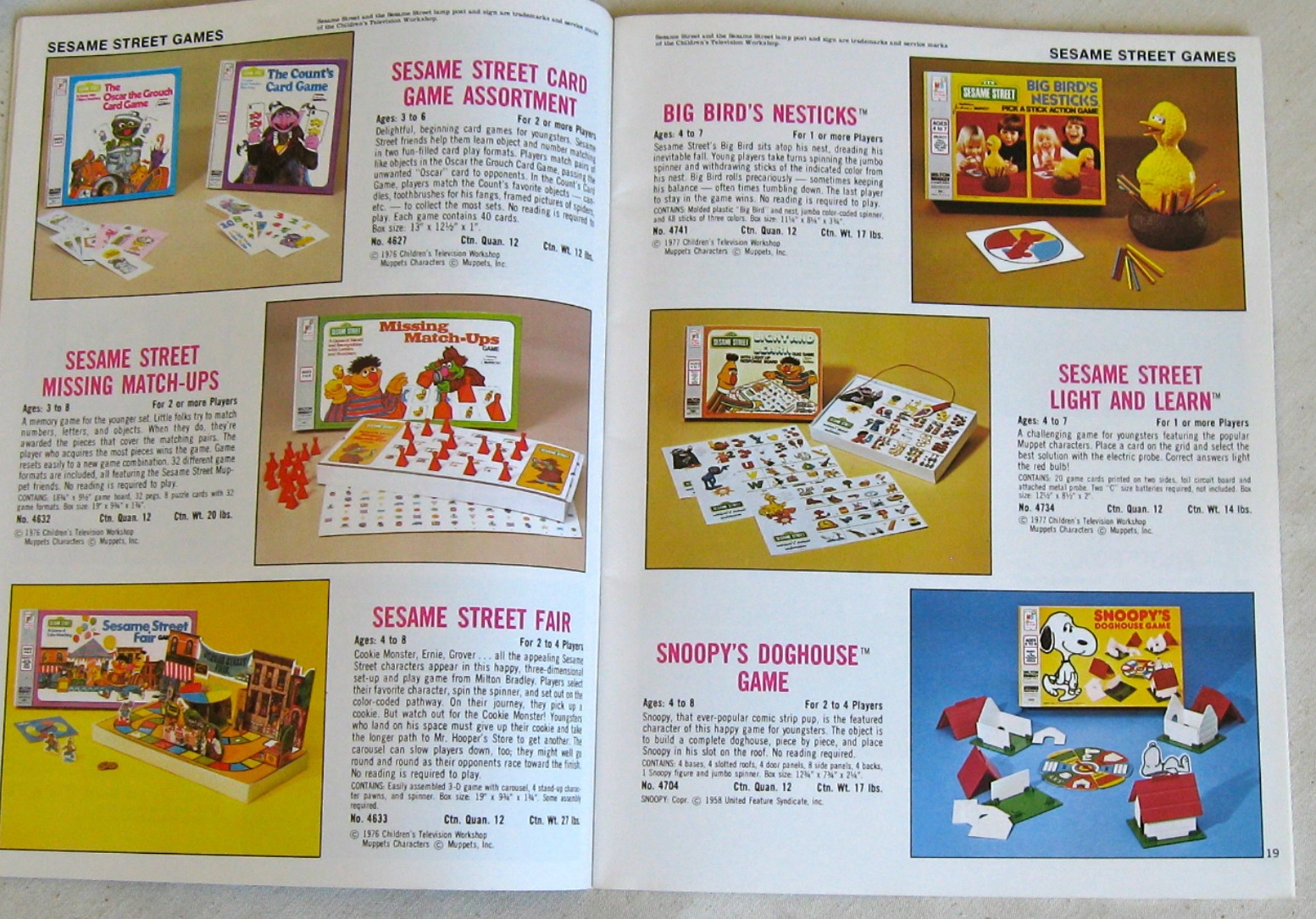
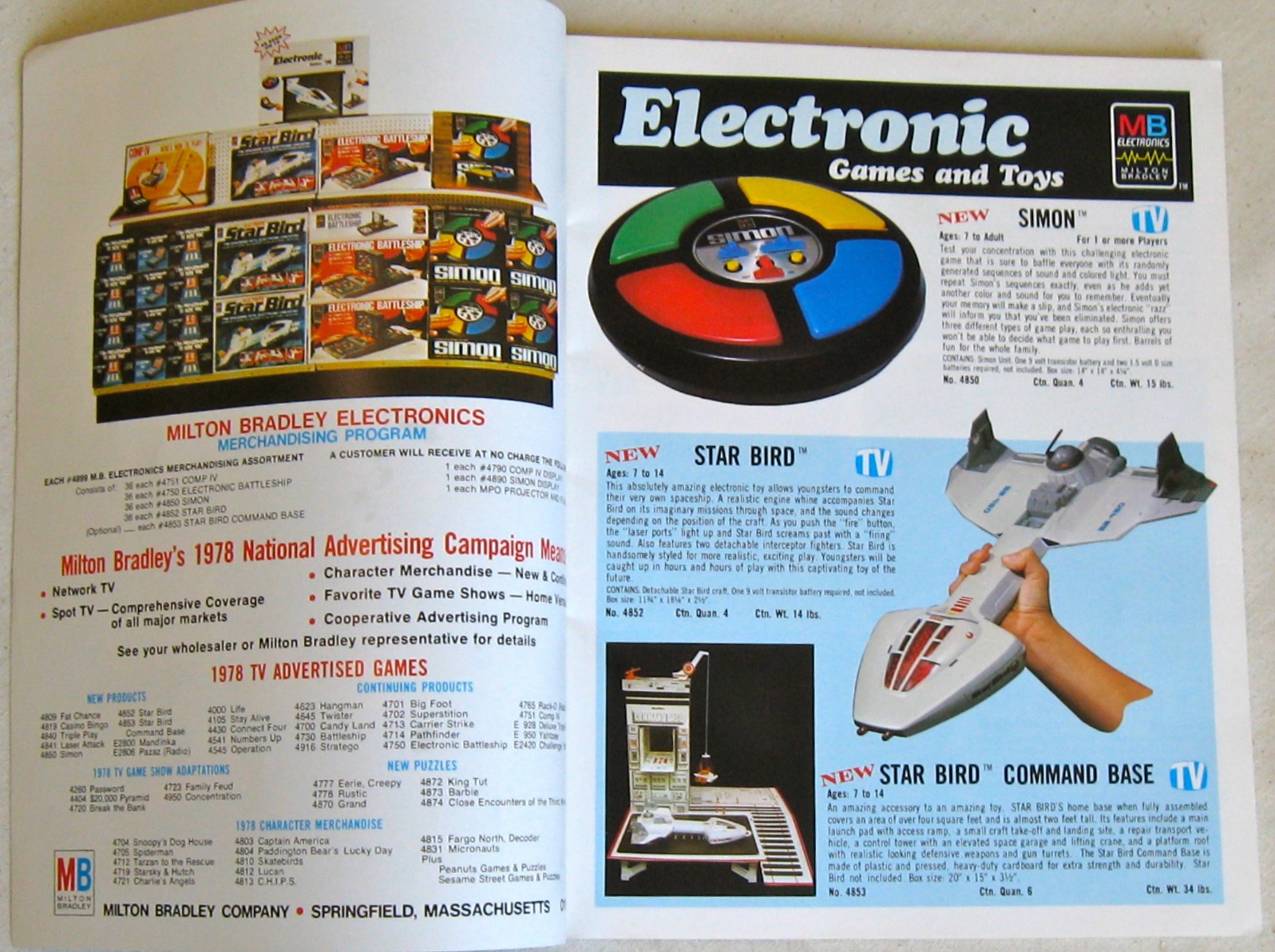


More and more, it’s the board games I want.
The live-action Amazing Spider-Man pilot premiered in September, 1977, and the series didn’t resume until April of 1978. The live-action Captain America TV movie was heading into production for an early 1979 release. Hence the “heaviest promotional support ever” for the games.
Starsky and Hutch was in the last year of its four-year run. The Scooby-Doo game is from ’73, and Casper is from 1959. Talk about staples. Scooby has turned out to be as enduring a character as Spidey.
I’m still not feeling the Star Bird. It’s so aseptic. Cool noises or no, ships by themselves have no personalities. I think a little plastic guy came with it, but it’s not the same. Same reason I never understood the Star Wars die cast vehicles.
The corporate letter is a nice prize: “I am certain that your sales will reflect a commensurate increase.”
(Images via eBay)
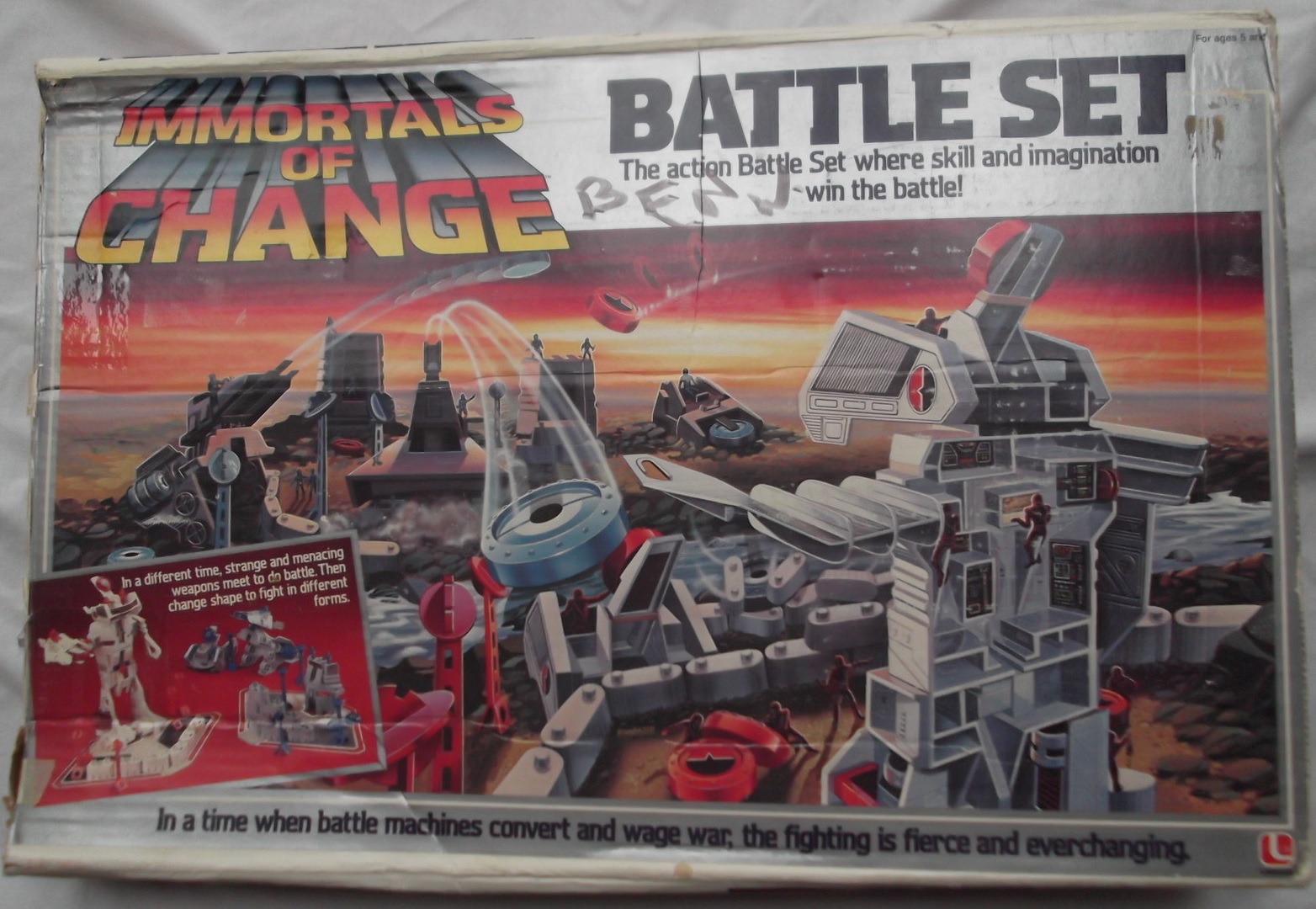


It’s Crossbows and Catapults, but in the future, and with shape-changing robots. Lakeside Games made both sets. Crossbows came out in 1983, a pretty brilliant concept that successfully cashed in on the D&D action. Immortals of Change came out in 1985, a cool-looking bomb that badly wanted to sop up some Transformers spillover.
Why did it tank? The name is awful, first of all. What the hell does it mean? Second, the game was overly complicated and didn’t work the way it was supposed to (the glider in particular, as I recall). Third, the concept made no sense the second time around.
The cool thing about Crossbows was that armies actually used giant crossbows and catapults in the Dark Ages. Why would immortal “battle machines” from the future hurl rocks at one another? Transformable robots have lasers and stuff. Everybody knows that.
The commercial below is very low quality, but it’s the only one I can find. You can tell they’re really trying to give the game an edgy feel. The volcanic landscape, the red lights, the smoke—it looks great.
(Images via eBay and Wishbook Web; video via xntryk1/YouTube)


Radon is a radioactive element, so that’s kind of scary and cool, but Exceller? Nobody likes an overachiever. I wonder if Exnon comes from Xenon, another element. Switching the ‘x’ and the ‘e’ gives it a crunchier sound, and it’s easier for kids to say. I can just see some guy in a cheap suit looking at his kid’s chemistry textbook and rattling off names for his company’s knockoff robots.
Then again, Avatar is a pretty Hindu word meaning a god who comes to Earth and assumes human form. Too bad Jim Cameron’s shitty movie ruined it forever.
The art on the cards is smart and polished. The robots themselves are not, but they didn’t have to be. Notice the line at the bottom: “Scaled to play with all fantasy figures”. The kids could figure that out from one look at the package, but the parents (and grandparents, etc.) couldn’t. And knockoffs were what the parents brought home either (1) thinking they were the real deal, or more likely (2) as a stop gap measure to keep us from pestering them for the real deal, which was either too expensive, perpetually out of stock, or both.
There was a “battle beast” line in this series as well. I’m keeping an eye out.

This thing might be more obnoxious than the U.S.S. Flagg, but I’ll take one if you have an extra. See specs and views at Yo Joe! The commercial is below.


If you had told me last week that Woman’s Day magazine and Star Wars had something in common, I would have fallen on my lightsaber. Now I know better. Two issues of the magazine (November, 1978, and November, 1980) featured intricate, Star Wars-themed playset designs and do-it-yourself instructions. Actually, the Outer-Space Station from the first issue doesn’t mention Star Wars specifically (note the Micronauts stuff in the second photo), but it looks incredible nevertheless.
The instructions were ridiculously complicated. Here’s how we’re told to assemble the Solar Power Unit of the Space Station:
Materials 1/2″x24″x30″ plywood; 3/4″x12″x30″ plywood; 1″x1″x20″ pine; 1/4″x12″x24″ mirrored acrylic; 18″x36″ plastic-laminate; 12′ of 1/8″-diam. plastic aquariam tube; 18″ of No. 18 soft steel wire; 36″ of 1/4″-diam. clear acrylic dowel; 18″-wide acetate strips, 1′ each of pink, yellow, green and blue.
From 3/4″ plywood, cut pieces A, B, C and D (all 4′ high), with mitered sides following Top View diagram. Also cut 2 triangular sides and cross support for the heat (or sun) collector. From 1/2″ plywood, cut long outer side and base. Drill for acrylic pegs.
Assemble sides around base with heat collector parts. Paint edges and sides that will be visible. Laminate outer surface of outer side. Cut 1/4″ acrylic mirror: for sides with mitered corners, and for heat collector with top and bottom to fit. Sand cut edges to remove saw cuts, which will reflect in mirrors. Cut top (catwalk) and laminate. Glue mirrors and top in place.
Cut acrylic dowel pegs; insert in base holes. Cut plastic tubing for each pair of pegs. Cut colored acetate in 1/4″ strips (3″ shorter than its tube), slip into tubes and place tubes on pegs.
Trim frame pieces for heat collector from 1/2″ stock. Assemble with glue, pressing pieces together; paint. Glue frame in place with many dots of glue.
Cut and bend wire for ladder rungs. Place tape over acrylic and mark rung holes. Drill holes, remove tape and insert rungs.
Are you shitting me? Apparently the Woman’s Day editors realized that no one could actually build the Space Station, because the Empire Strikes Back sets (Hoth and Dagobah) were a bit more manageable—for someone with an endless supply of dedication and patience.
Speaking of which, I found evidence of only one of the sets completed back in the day. (Click to enlarge.)

According to Alicia Policia on Flickr, her mom made the Hoth set between Thanksgiving and Christmas in 1980, when Alicia’s brothers were at school and Alicia, then 2 months’ old, was napping.
Ron Salvatore discusses the sets in length at the Star Wars Collectors Archive (part one here, part two here). The original instructions are posted as well. All Woman’s Day images are from Salvatore’s articles.
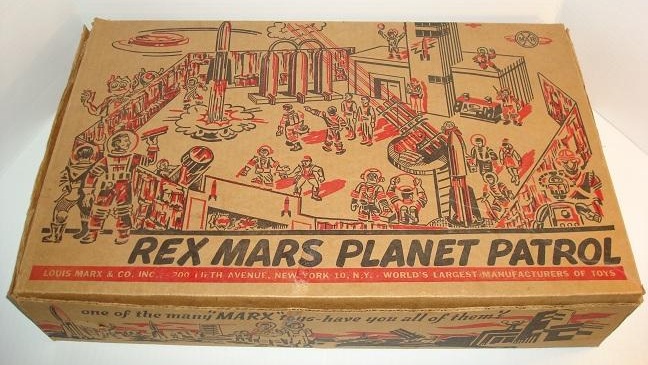


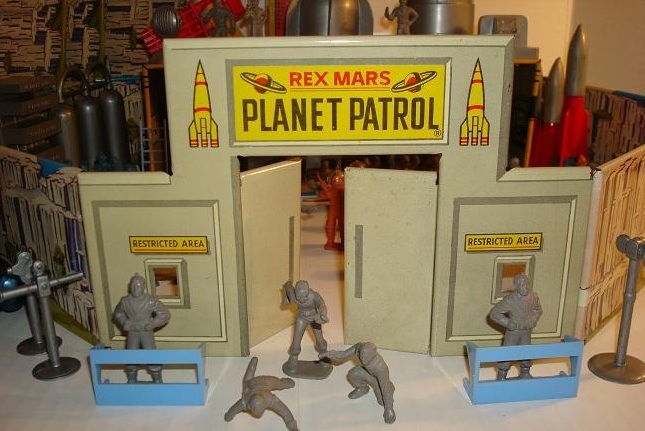

This one is circa 1953, which explains the quaint phrase on the side of the box—“Have you all of them?”
Why, no, Marx Toys, I do not have quite all of you at the moment. But I shall do my best to rectify that oversight. In fact, as soon as I finish my tea, I’ll ask grandmama to drive me to the toy emporium…

 2 Warps to Neptune