Archive for the 'TSR' Category


Advanced Dungeons & Dragons Characters Coloring Book (1983) (Part Three)

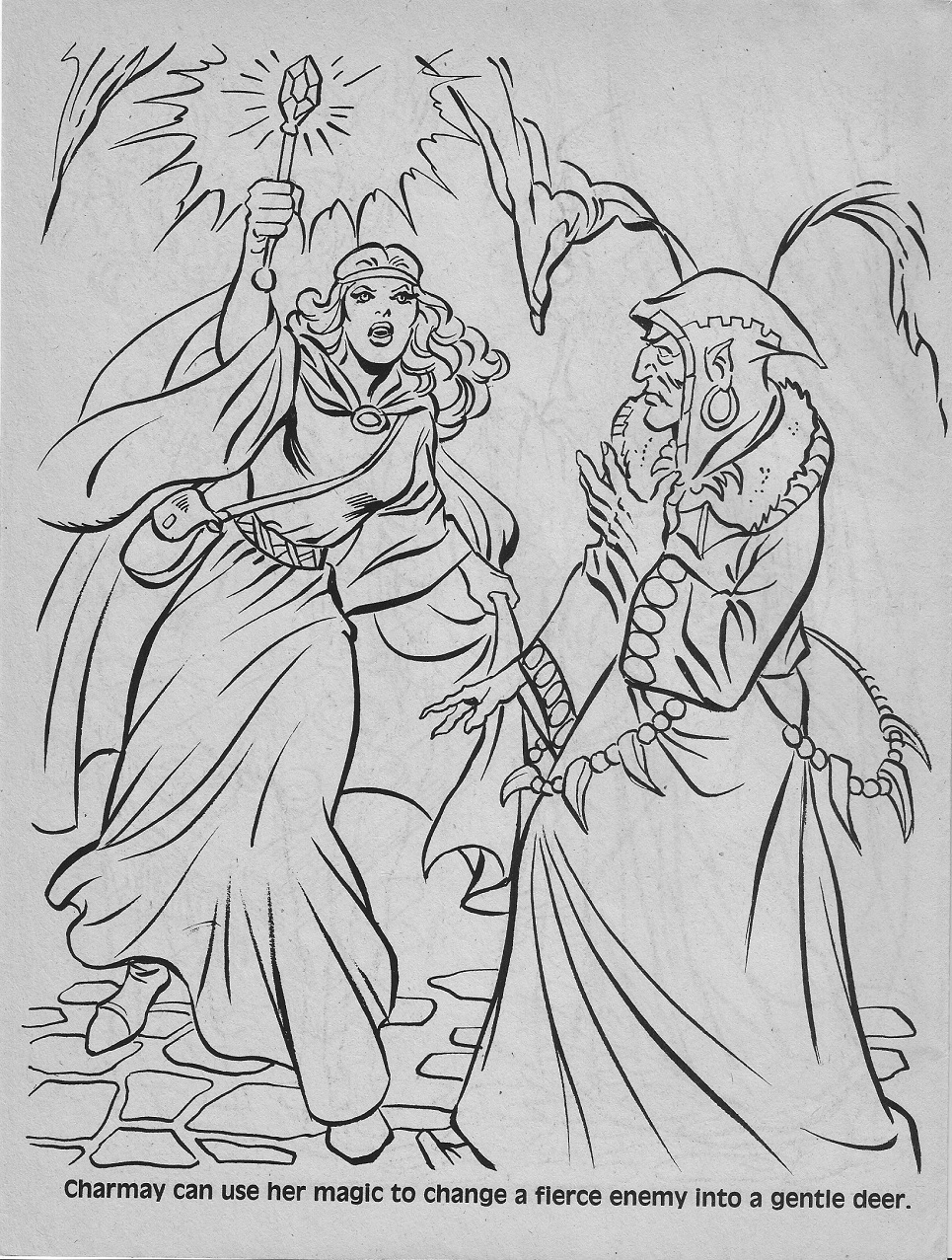
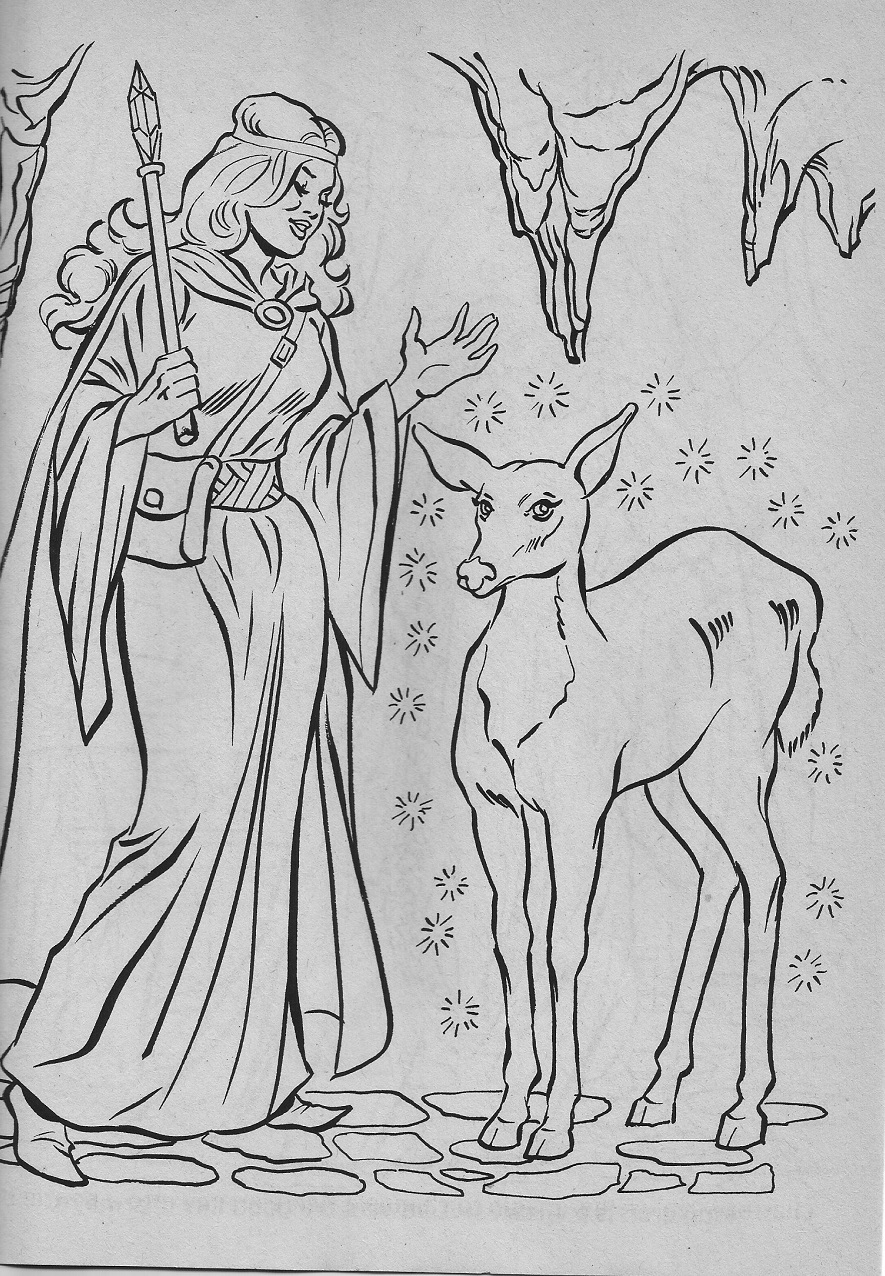
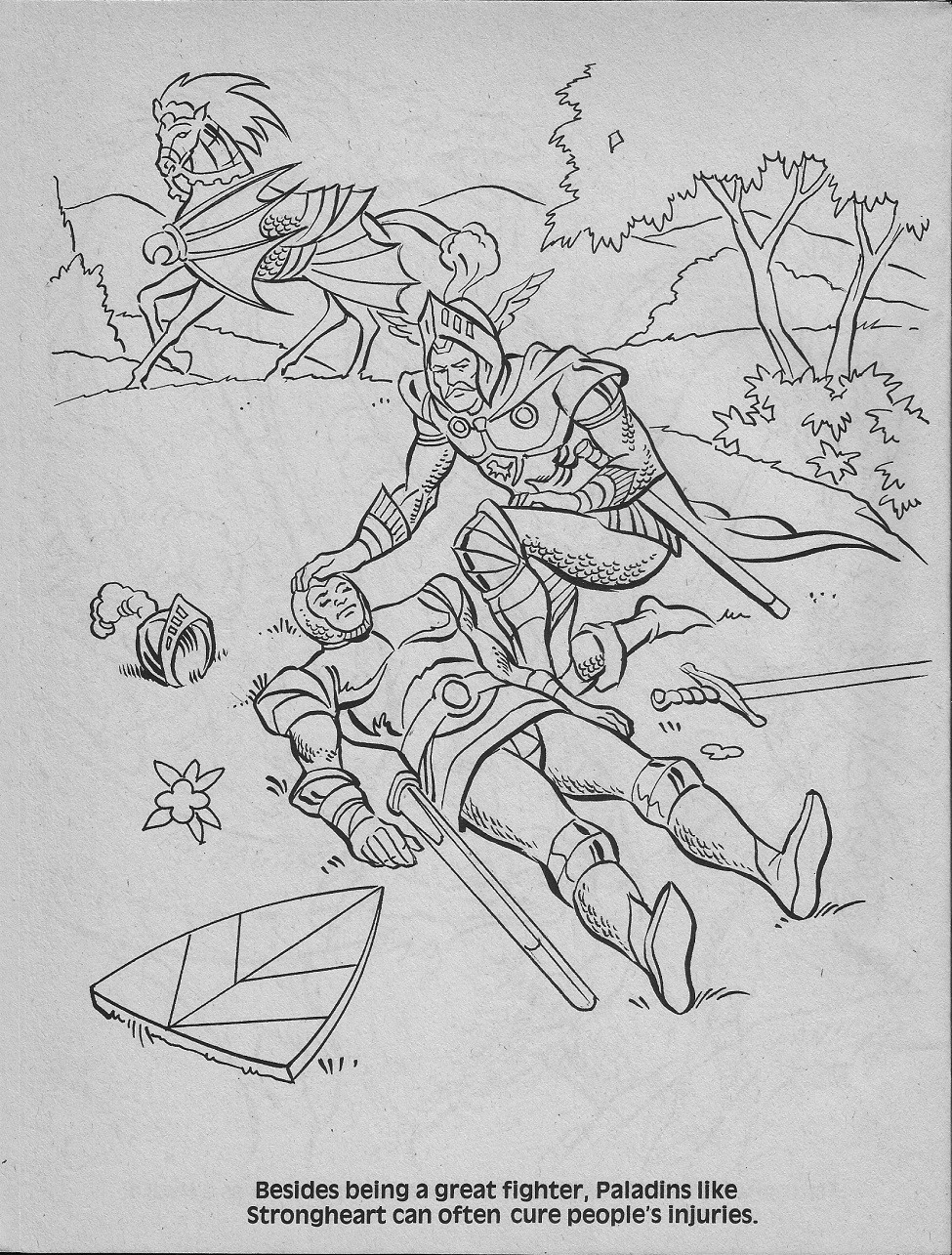
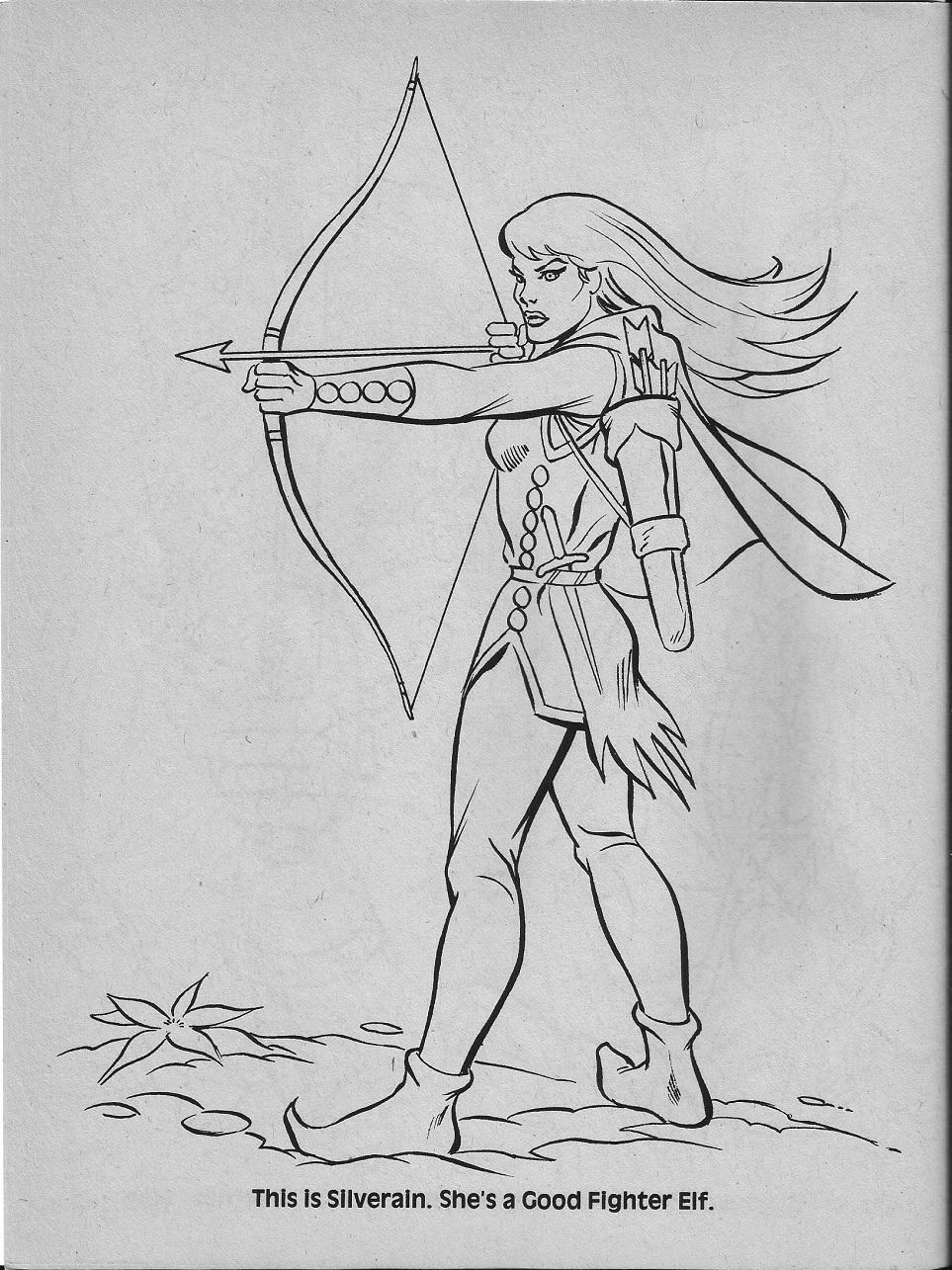
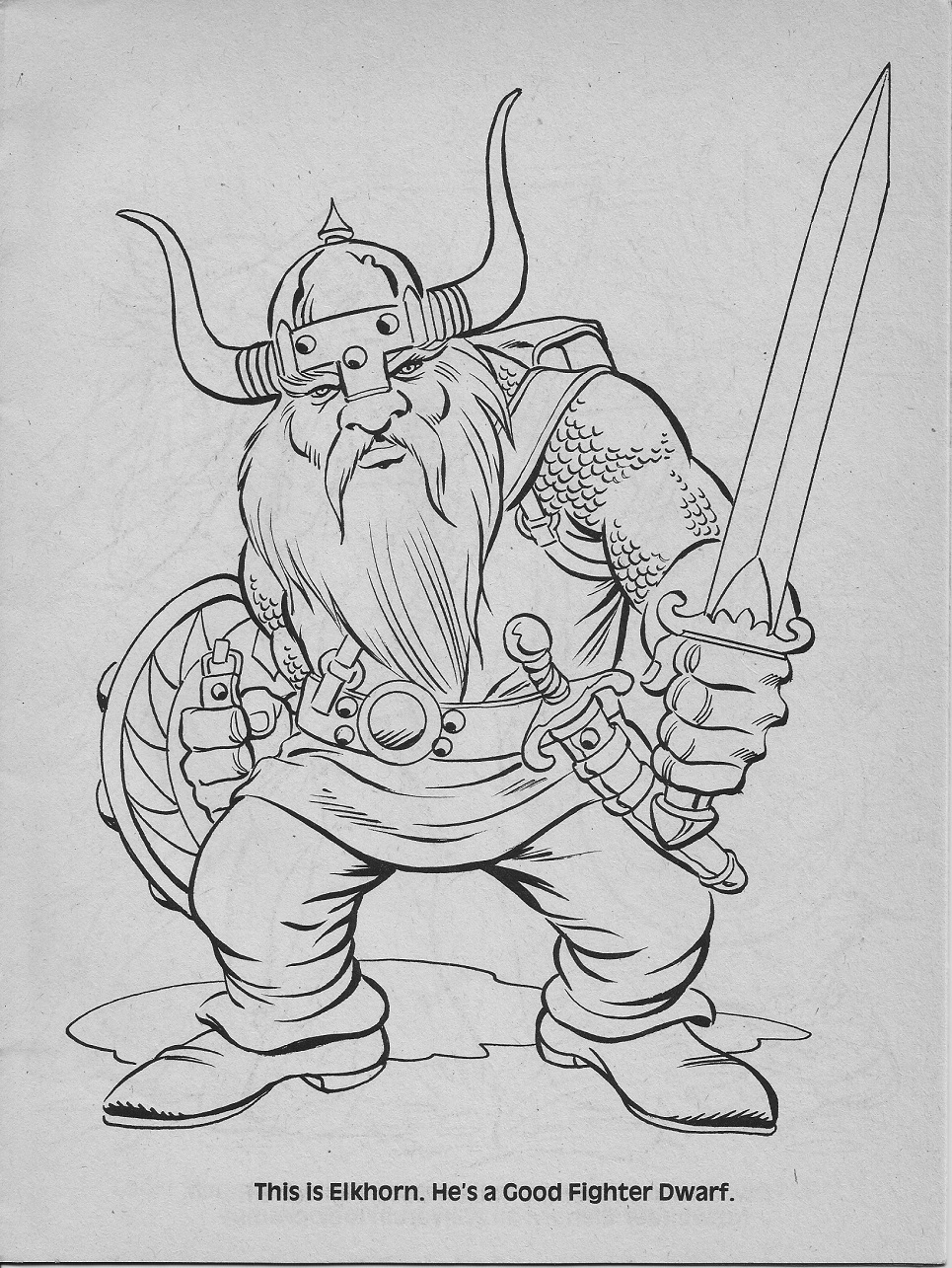
AD&D Characters pg. 21AD&D Characters pg. 22

AD&D Characters pg. 23AD&D Characters pg. 24

AD&D Characters pg. 25AD&D Characters pg. 26

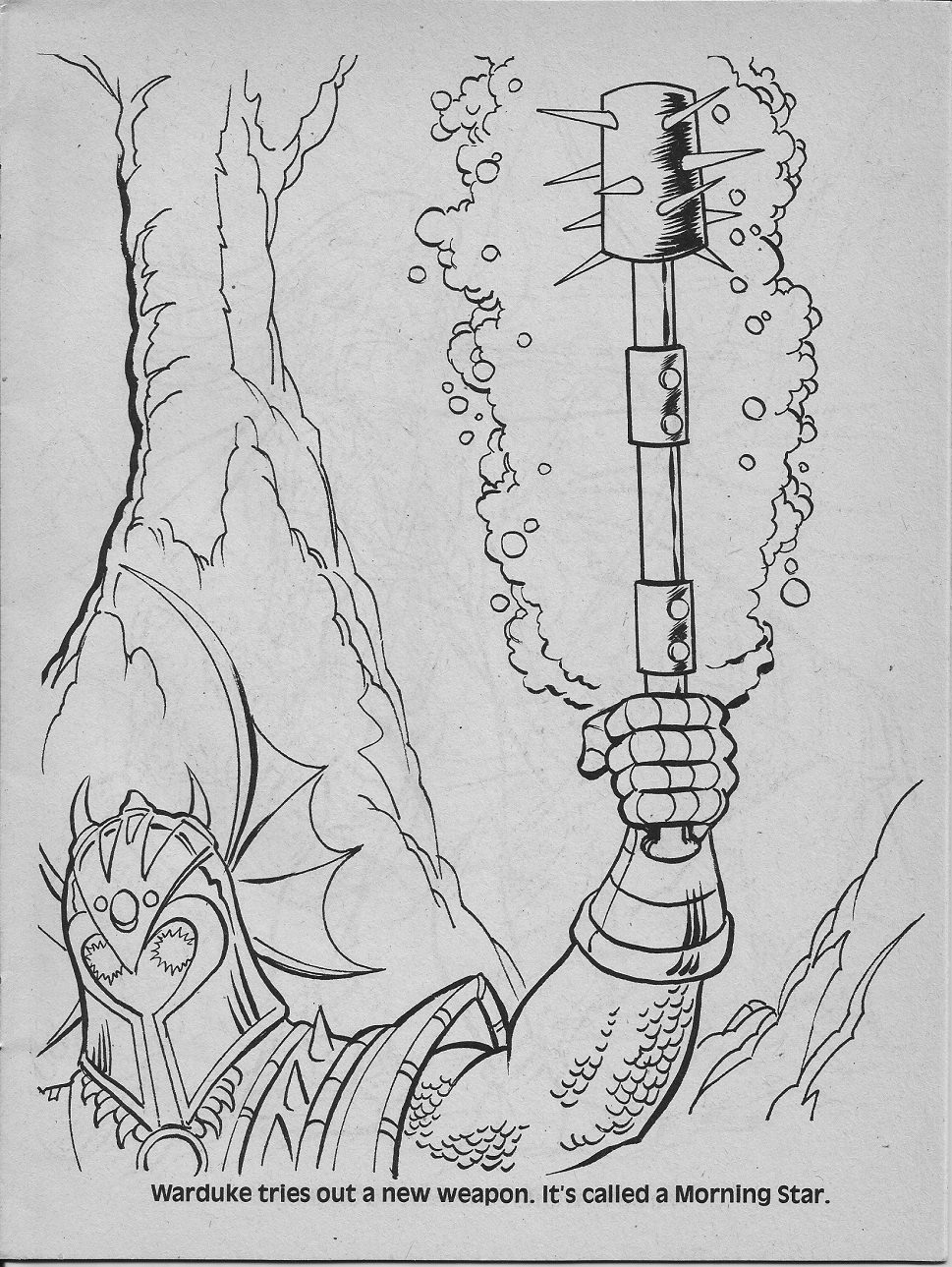
AD&D Characters pg. 27AD&D Characters pg. 28

AD&D Characters pg. 29AD&D Characters pg. 30

AD&D Characters pg. 31AD&D Characters pg. 32

AD&D Characters pg. 33AD&D Characters pg. 34

AD&D Characters pg. 35

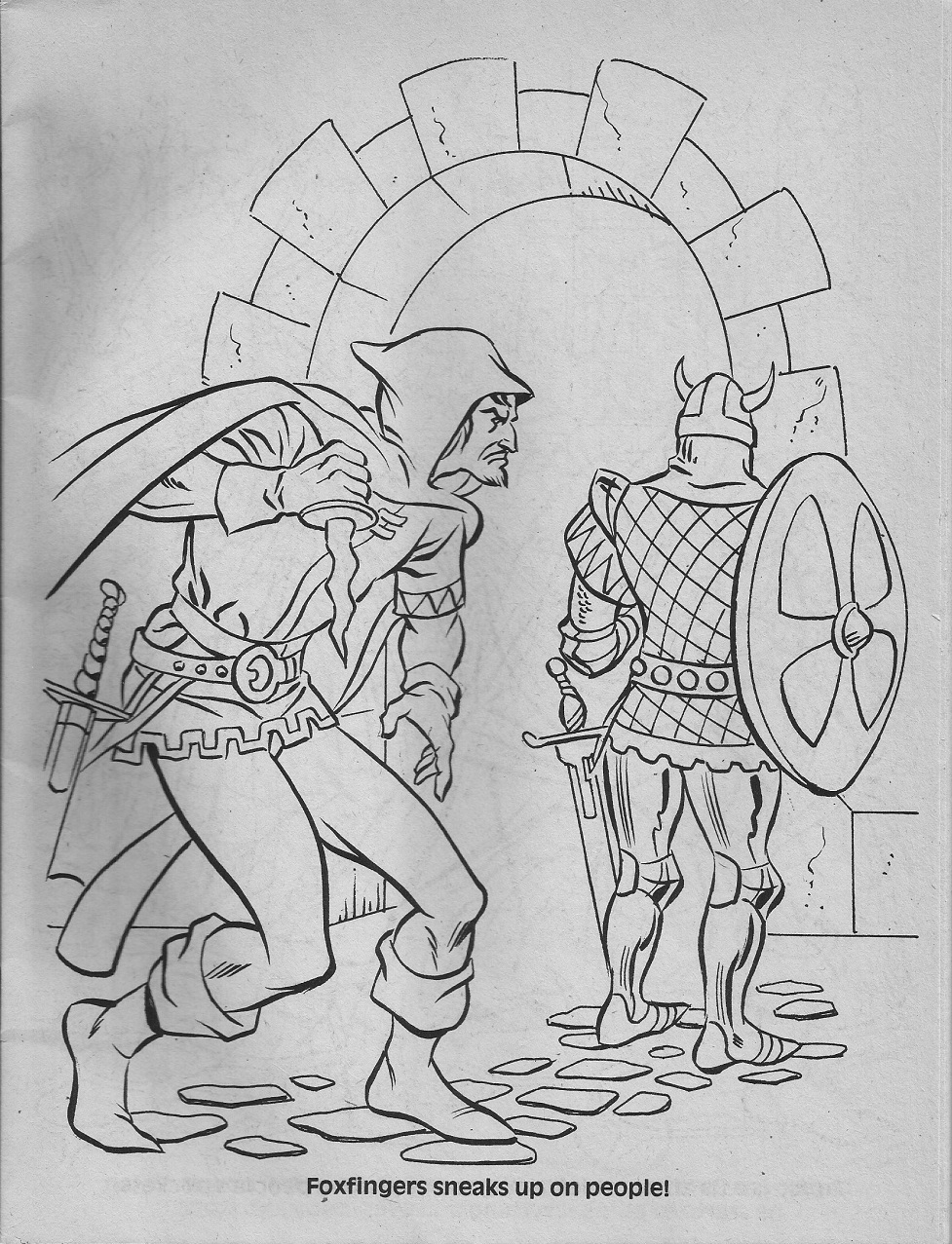
Page one: Stine continues to play fast and loose with the spells. It gives the artists more freedom.

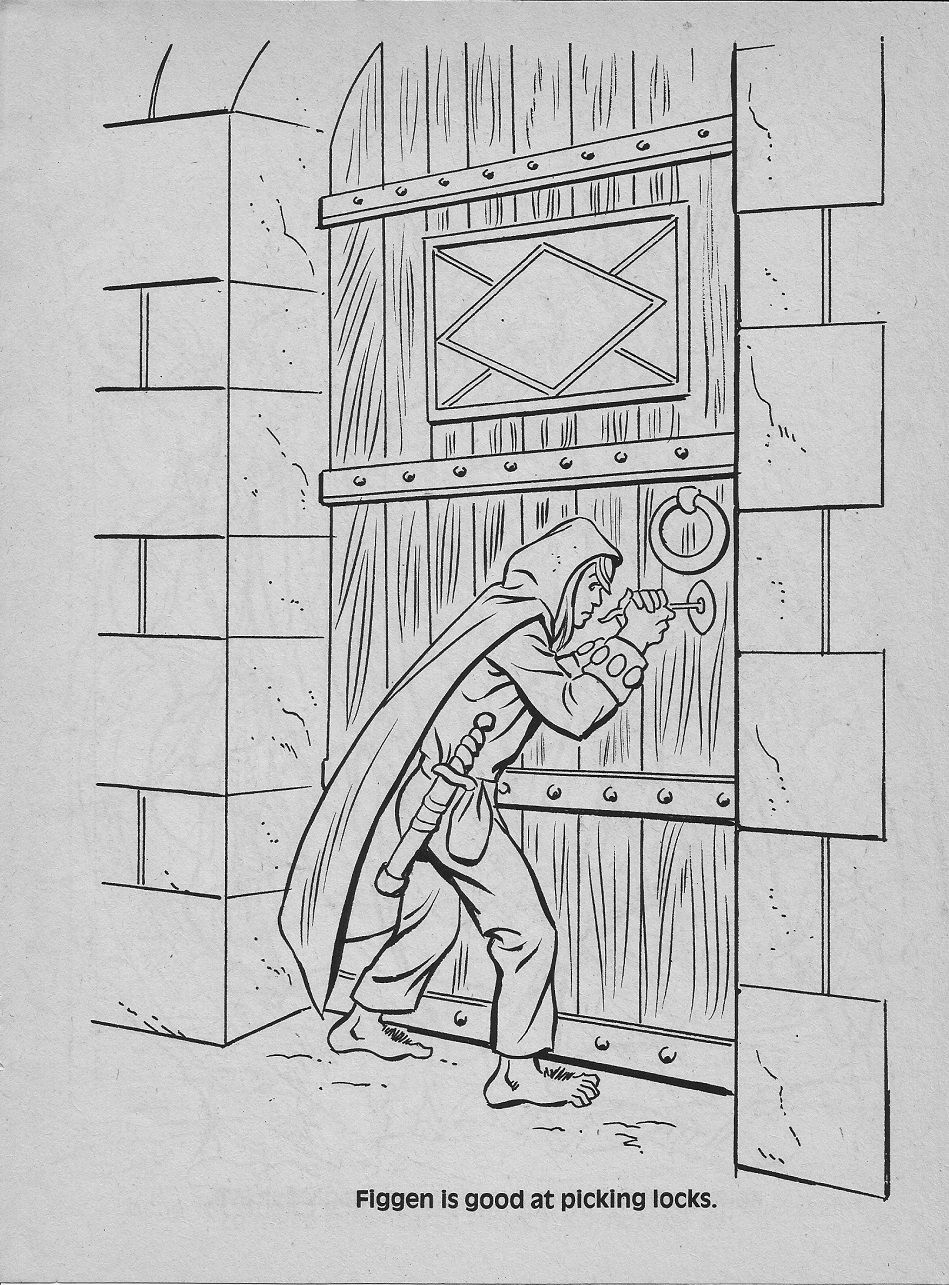
Page three: Thieves do not enter buildings through the front door.

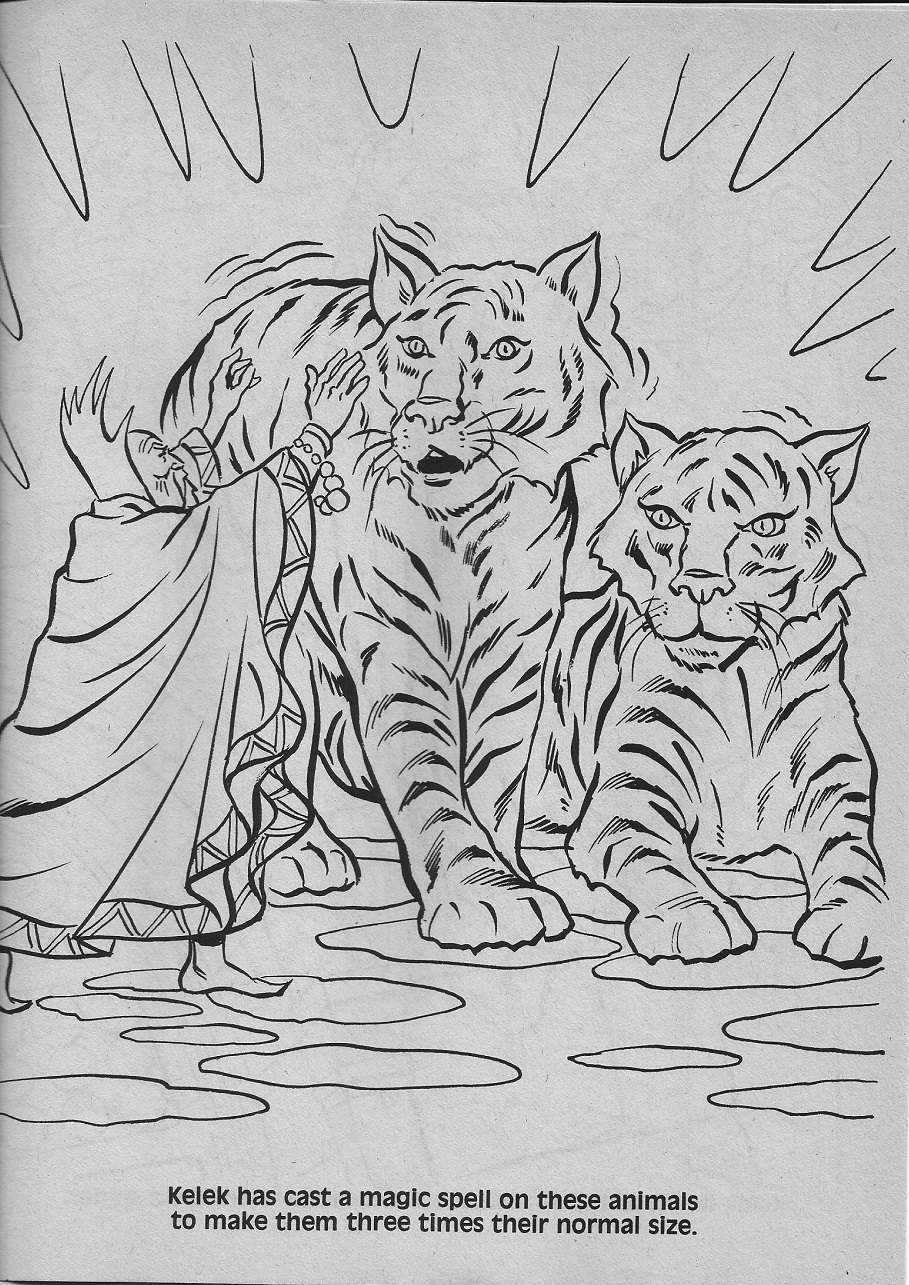
Page four: Not really a revelation that evil sorcerers use magic for evil purposes.

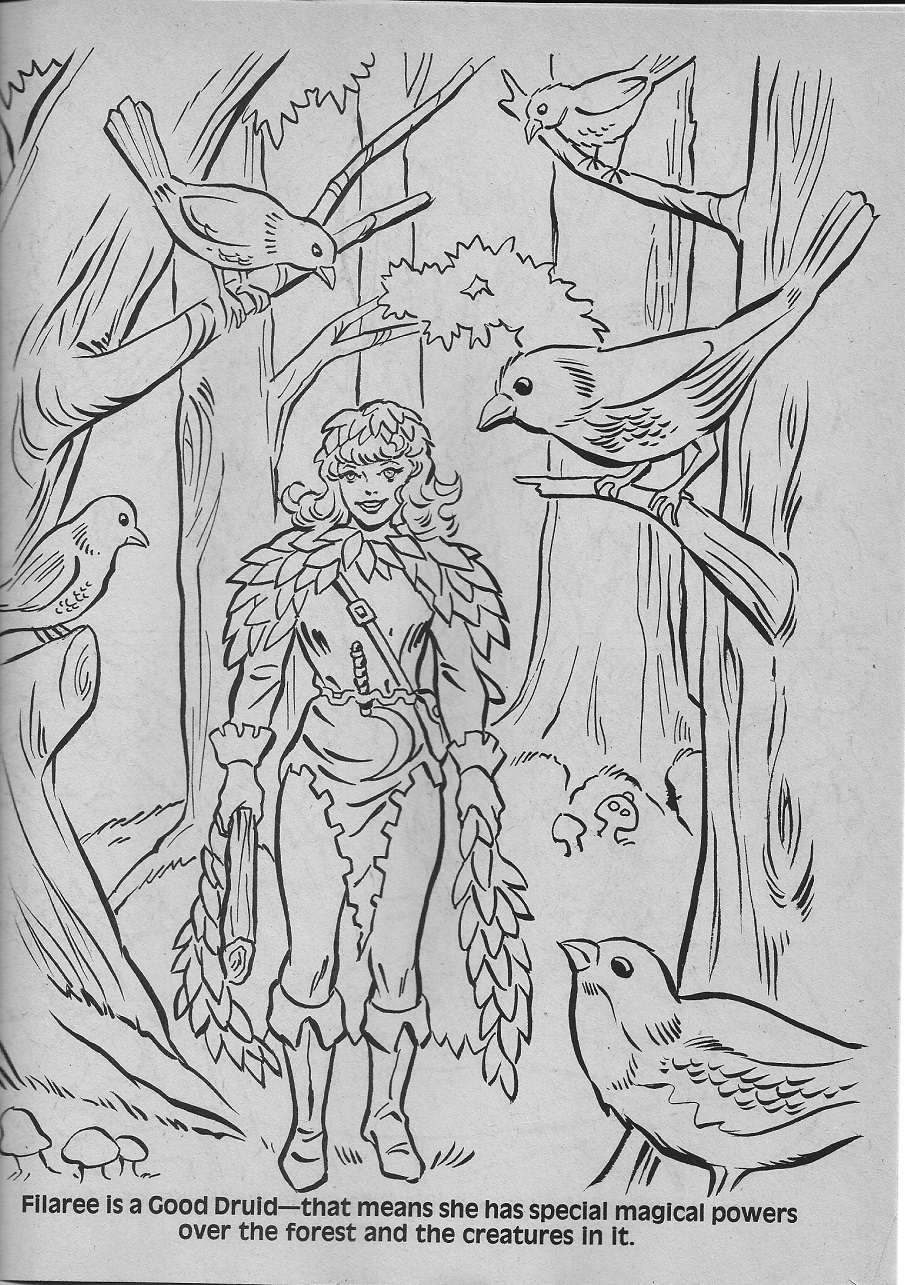
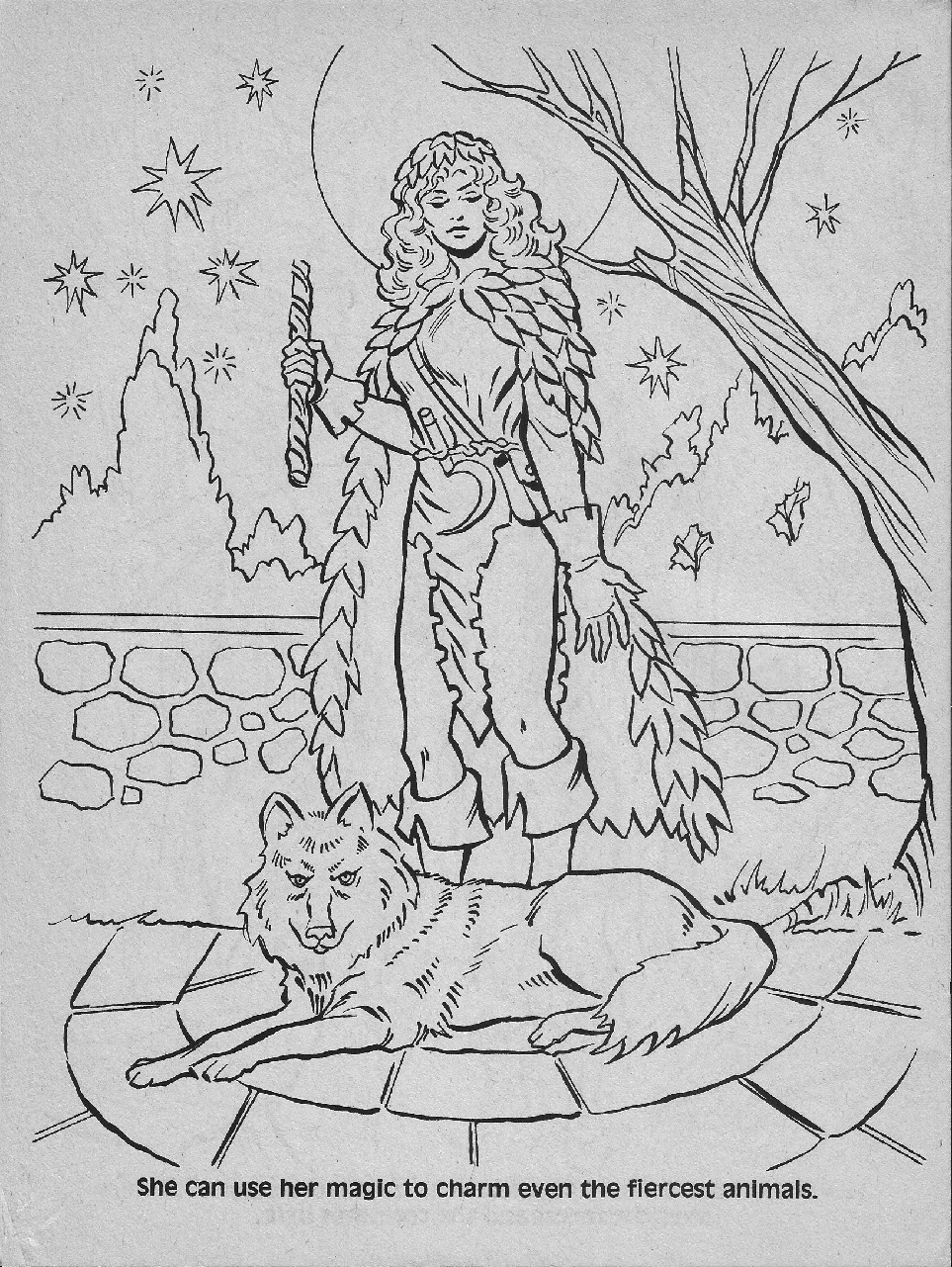
Page five: A real druid spell.

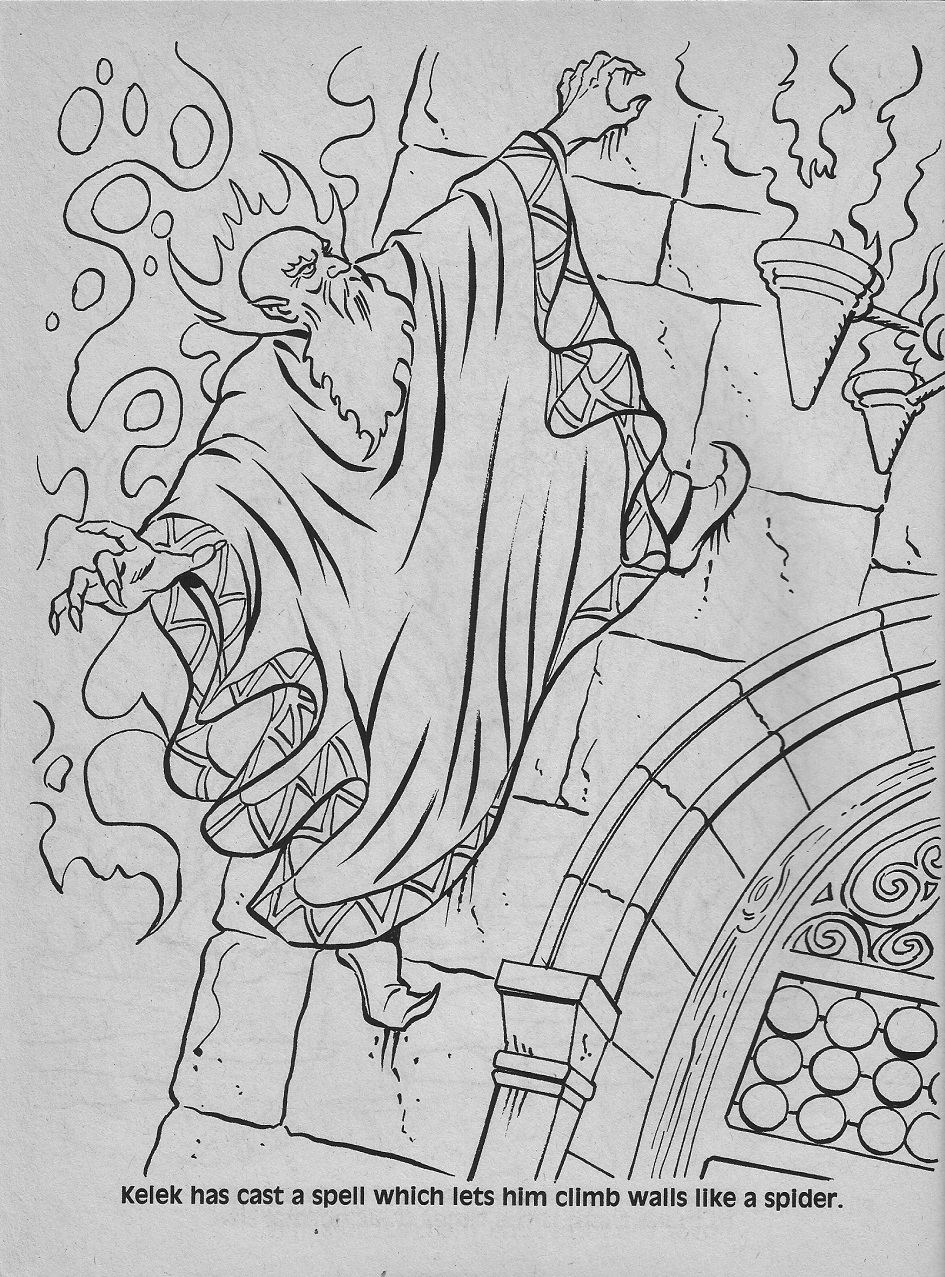
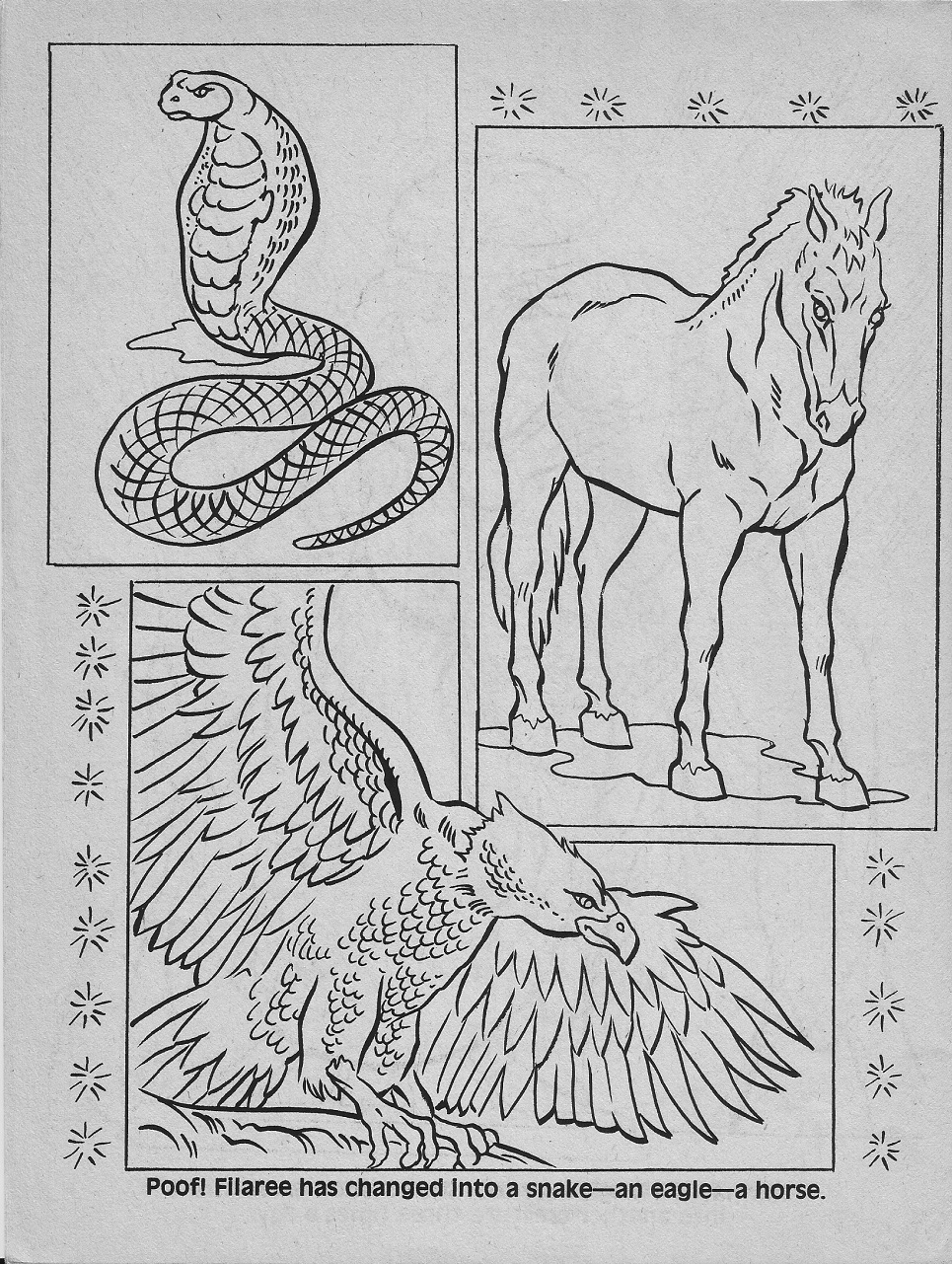
Page six: The Amazing Spider-Mage!

Pages seven through ten: The druid is about as fearsome as the bard in part one.

Page eleven: Jazz hands!

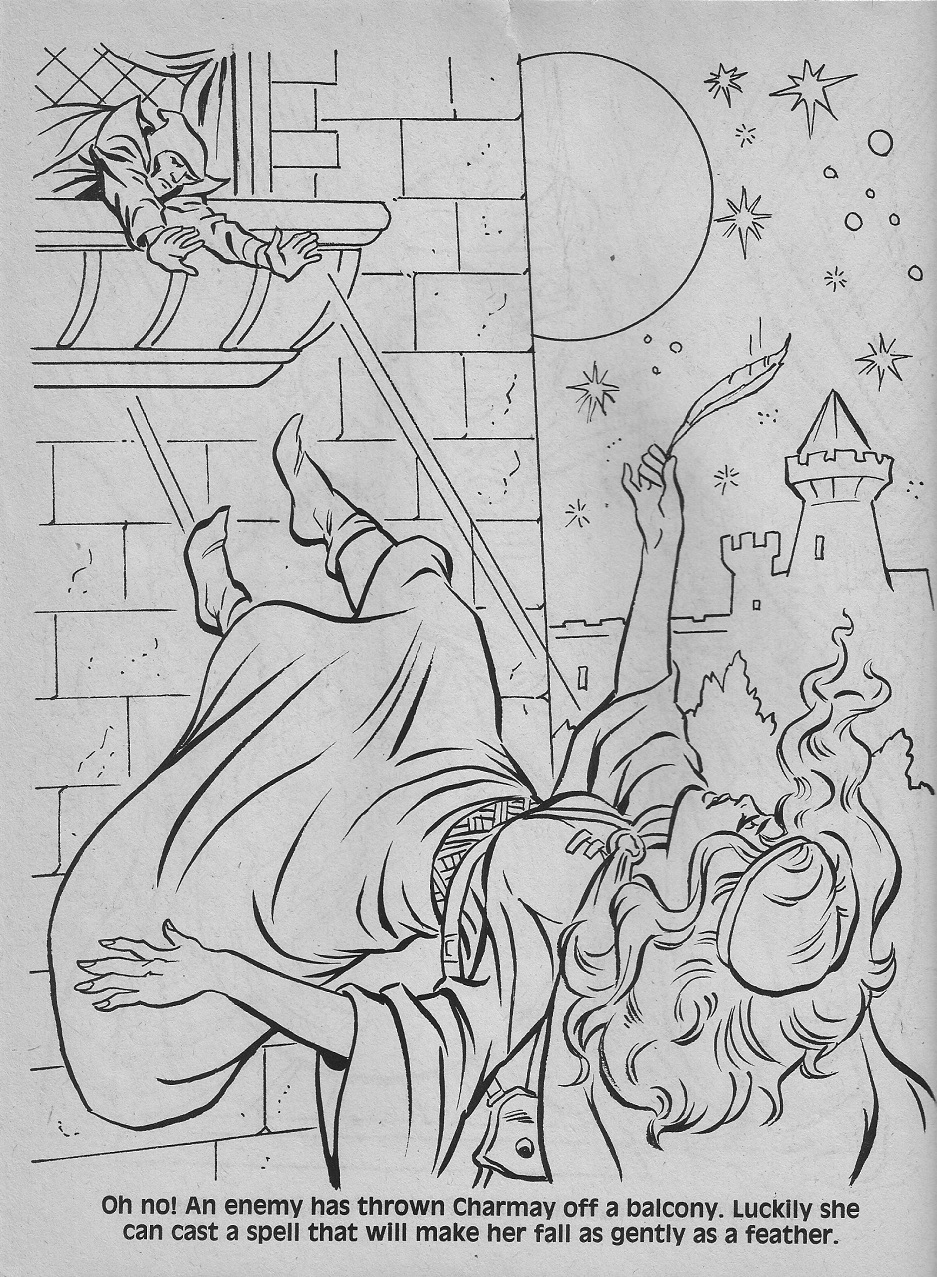
Page twelve: My favorite from this bunch. Love the feather.

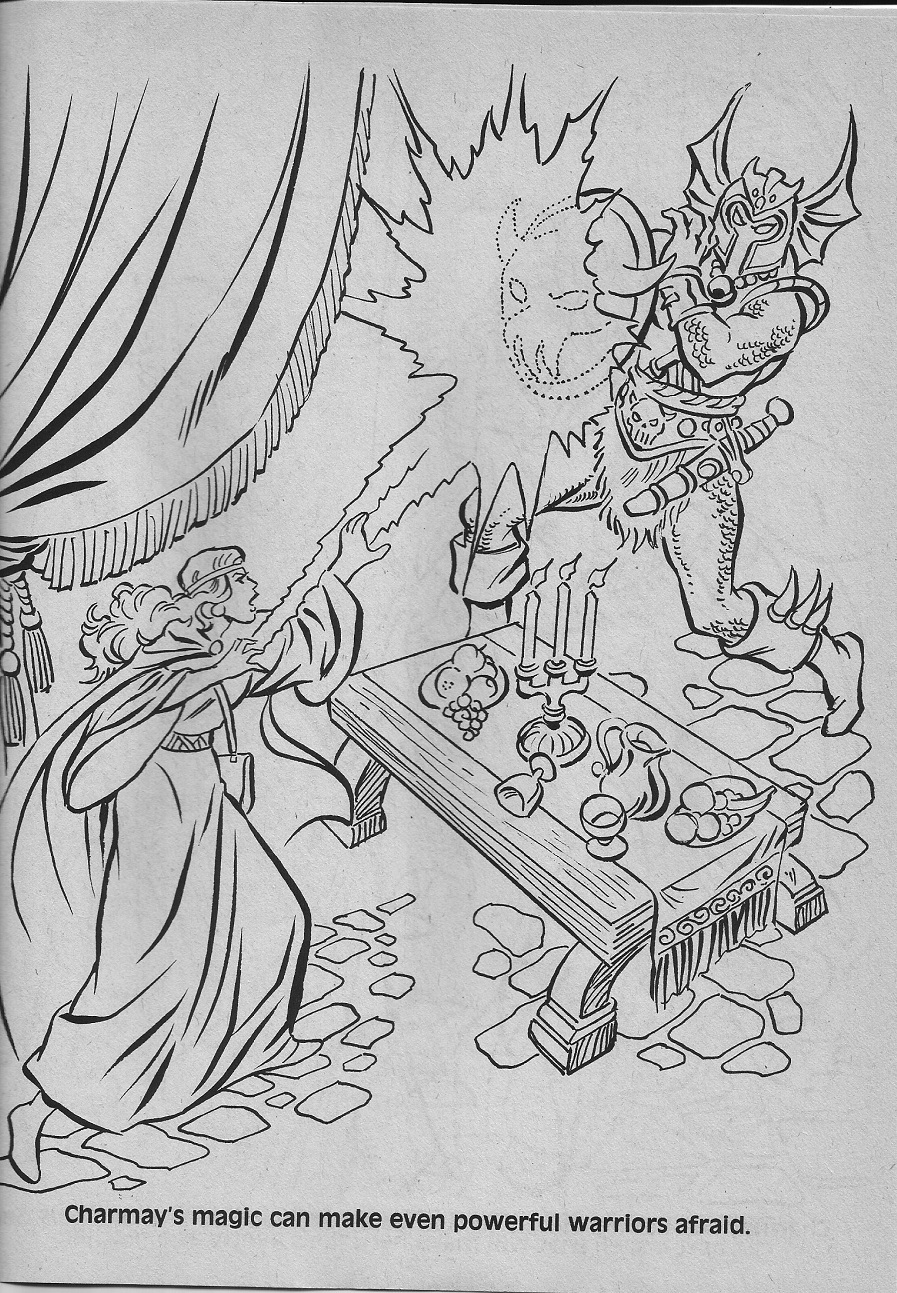
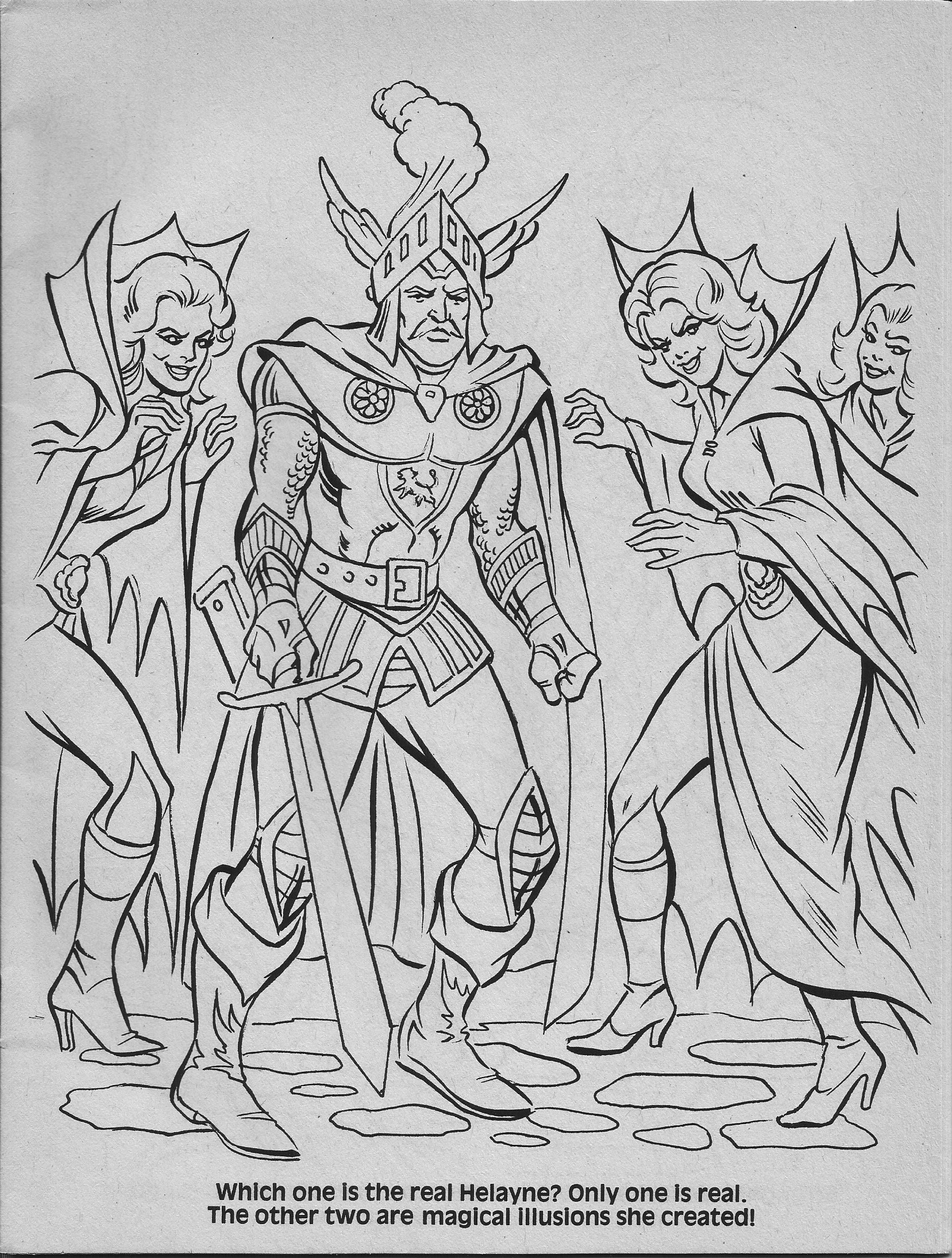
Page thirteen: Warduke does not look afraid to me, merely annoyed.

* * *

Parts one and two of the coloring book are here and here.

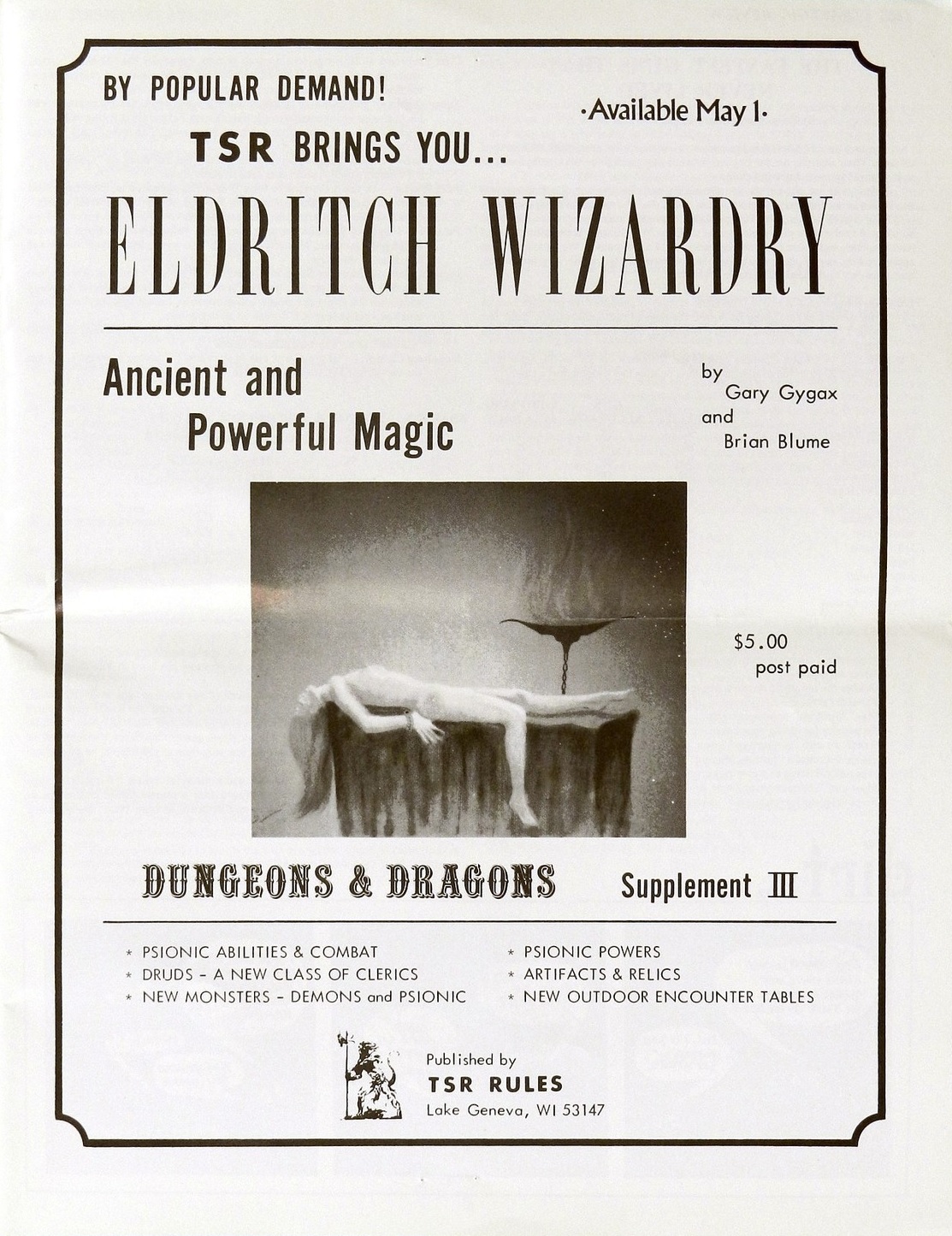
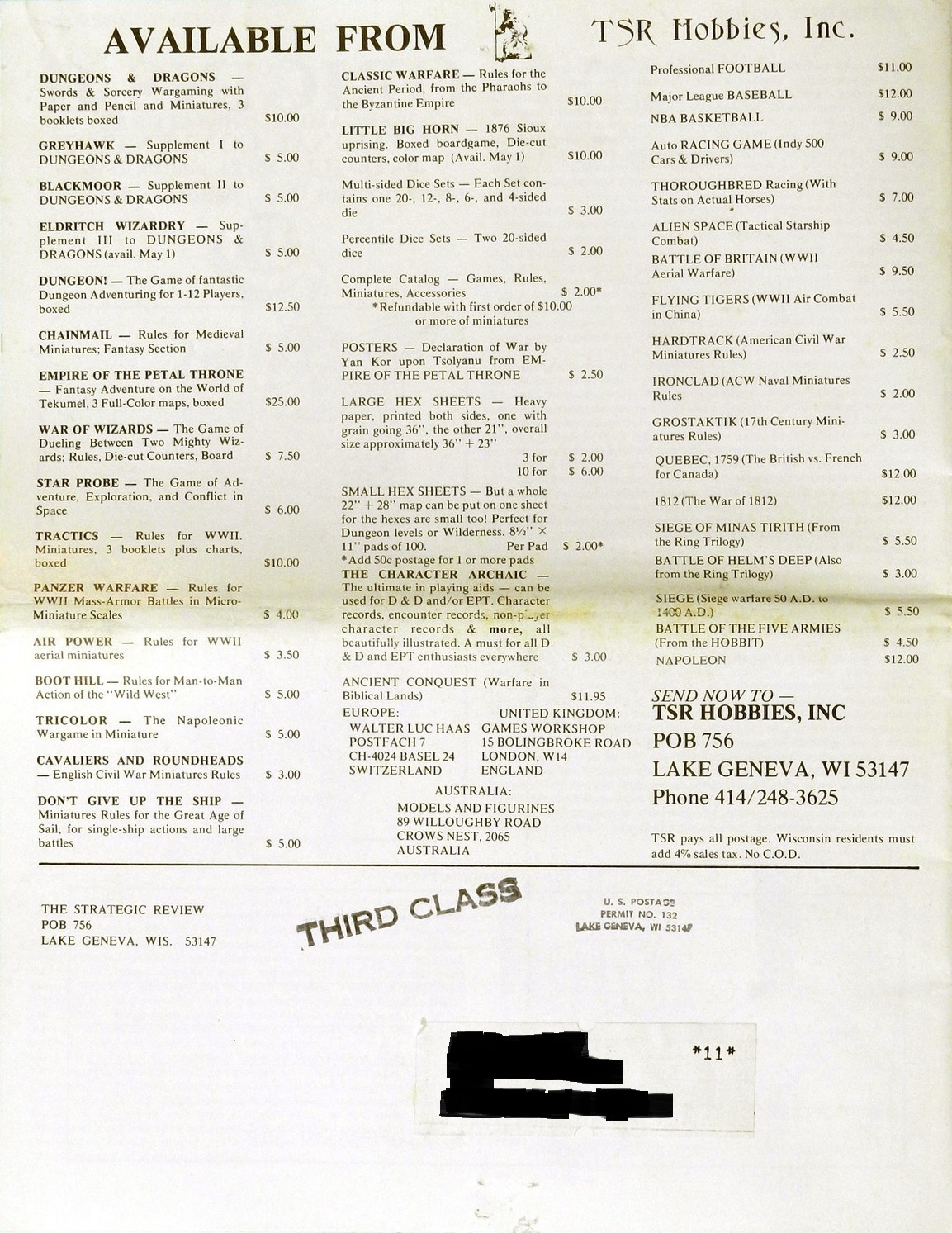
TSR’s The Strategic Review (April, 1976)

Strategic Review April 76

Strategic Review April 76-7

Strategic Review April 76-8

Strategic Review April 76-6

Strategic Review April 76-3

Strategic Review April 76-9

Strategic Review April 76-4

Strategic Review April 76-5

Strategic Review April 76-2-2

Several pages from the last issue of TSR’s first magazine, including a brilliant two-page photo spread announcing the grand opening of the now famous Dungeon Hobby Shop. The Strategic Review would become Dragon magazine in June of ’76 (see the announcement on the top left of the second photo).

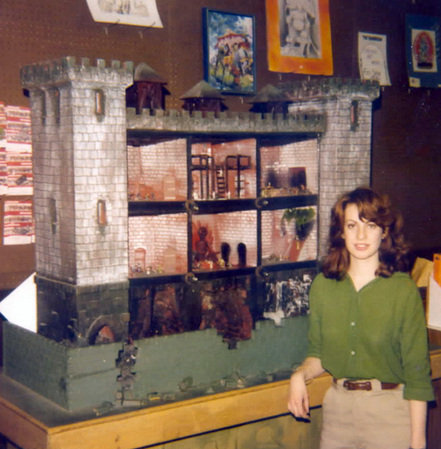
Huscarl gives a pretty comprehensive history of The Dungeon Hobby Shop (Ernie Gygax ran the place) at Wizards of the Coast. He talks about the “three-level dungeon built by Dave Sutherland,” showing “the same group of adventurers in nine vignettes as they fought their way down […] They slowly got whittled down along the way until, in the final chamber, just three of them confronted the demon lord of the dungeon.”

Dungeon Hendryx

Mary Hendryx with Sutherland’s dungeon. (Photo: Kevin Hendryx)

And below is a view of the shop counter. Behind Mary and Linda we’ve got

[…] a full range of Metagaming’s microgames, which were enormously popular around 1980; Advanced Wizard and Advanced Melee, two of the three rulebooks for Metagaming’s RPG The Fantasy Trip; a few bags of Snits! miniatures for Tom Wham’s Snit Smashing and Snits’ Revenge boardgames; and copies of the 1981 editions of D&D Basic and Expert (still my favorites). There’s also a fishbowl of `High Impact Dice’!
Dungeon Hendryx Simpson

Mary Hendryx and Linda Simpson. (Photo: Kevin Hendryx)

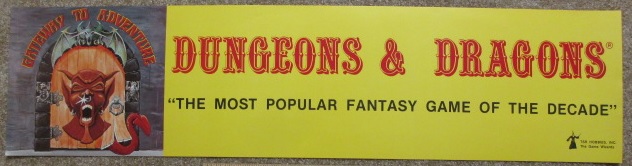
Beneath the Basic and Expert sets (Otus covers), you’ll see a “Gateway to Adventure” banner poster.

D&D Poster 1979

The photo links at the Huscarl post are down, unfortunately, but Al at Beyond the Black Gate has them on view here, along with some other spectacular shots, ads, and a beautifully illustrated Dungeon mailing envelope. (Another mailer and some order forms are at Tome of Treasures. Thanks to Zenopus for the heads up in this Grognardia post.)

(Strategic Review images via pikelett/eBay)

Star Frontiers and Mr. T Doll Commercials (1983)

TSR’s Star Frontiers commercial is up first. The animation is impressive for 1983, and the concept is clever. As the doors to the hobby shop open, you can see the 1983 D&D Basic Set update (red box, revised by Frank Mentzer) and Fantasy Forest on display to the right. You can download the Alpha Dawn rulebook (the art is exquisite throughout), modules, character sheets, and other cool stuff at  starfrontiers.com.

My original objective was to post all the available TSR commercials here, but the Mr. T spot that starts at 1:03 lured me off course. Won’t you sing along?

Mr. T! He’s got legs that move, he’s twelve inches high-igh.

Mr. T! He’s got a real cool haircut and a mean, mean look in his eye-eye.

He’s got arms that move and a fistful of rings…

You can pretend that Mr. T is real tough and mean.

Mr. T!

Mr. T!

I’m currently speechless, so I’ll leave the comments to you.

(Video via Genius7277/YouTube)

Advanced Dungeons & Dragons Characters Coloring Book (1983) (Part Two)

AD&D Characters pg. 11AD&D Characters pg. 12

AD&D Characters pg. 13AD&D Characters pg. 14

AD&D Characters pg. 15AD&D Characters pg. 16

AD&D Characters pg. 17AD&D Characters pg. 18

AD&D Characters pg. 19AD&D Characters pg. 20


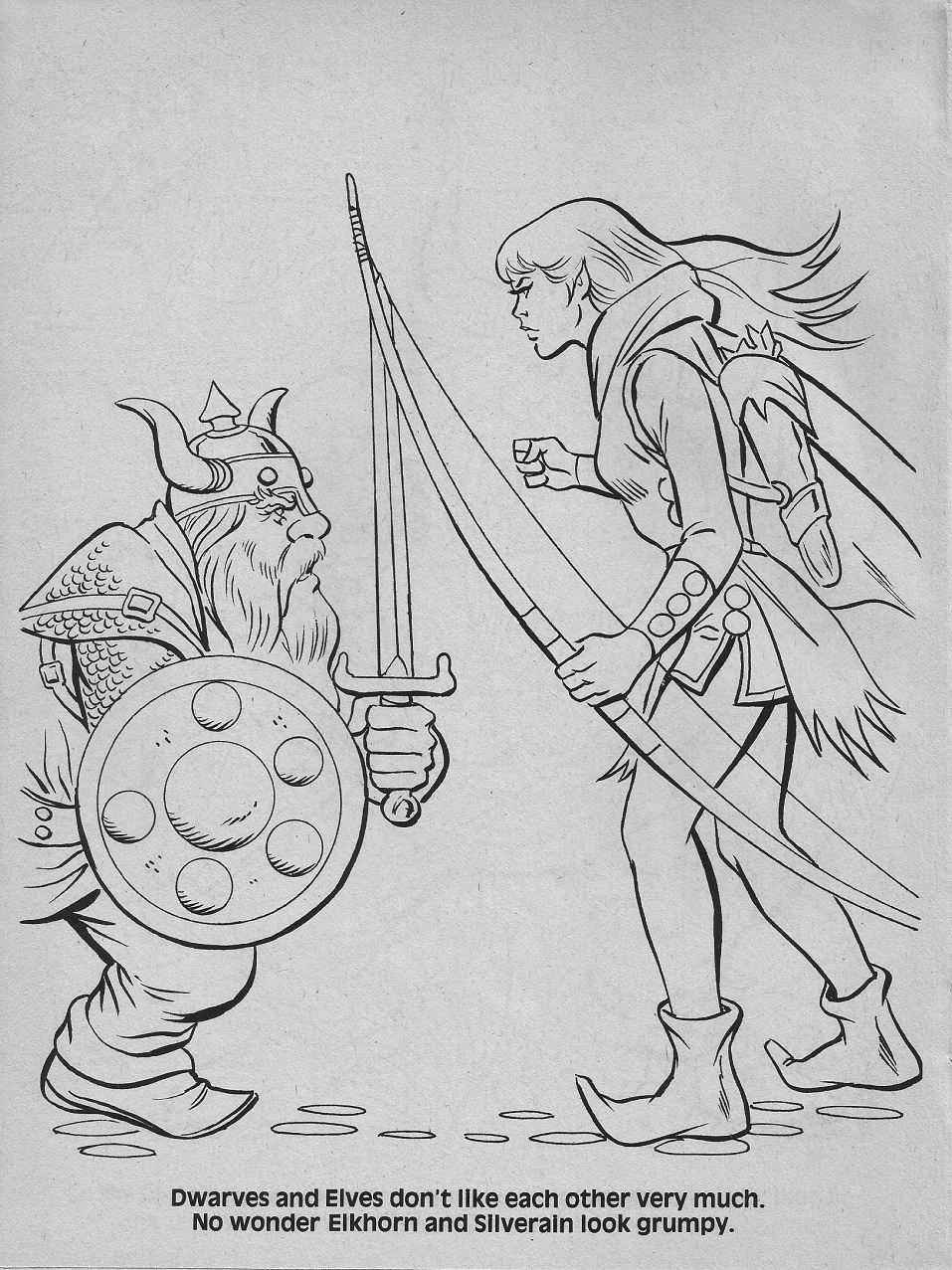
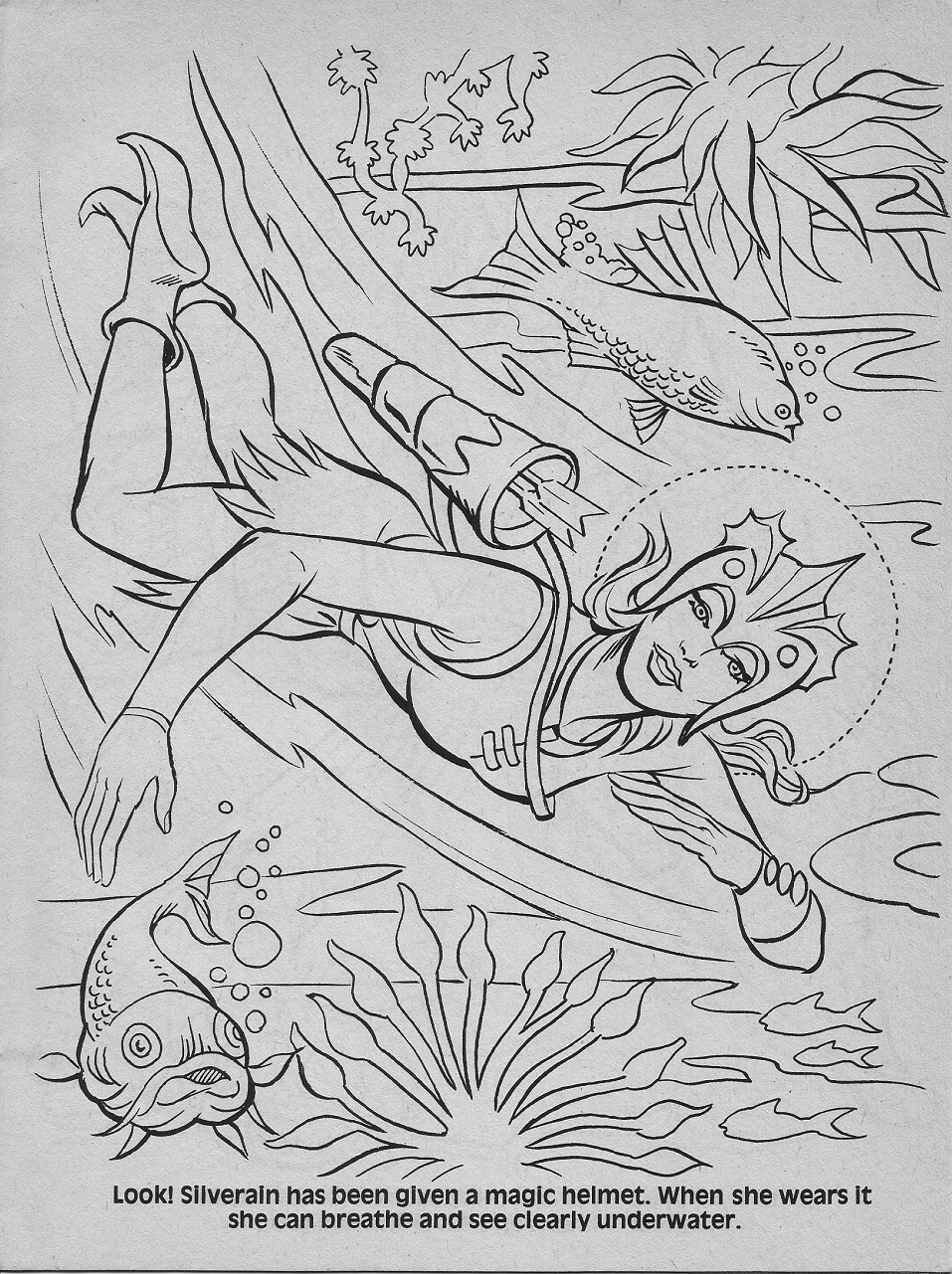
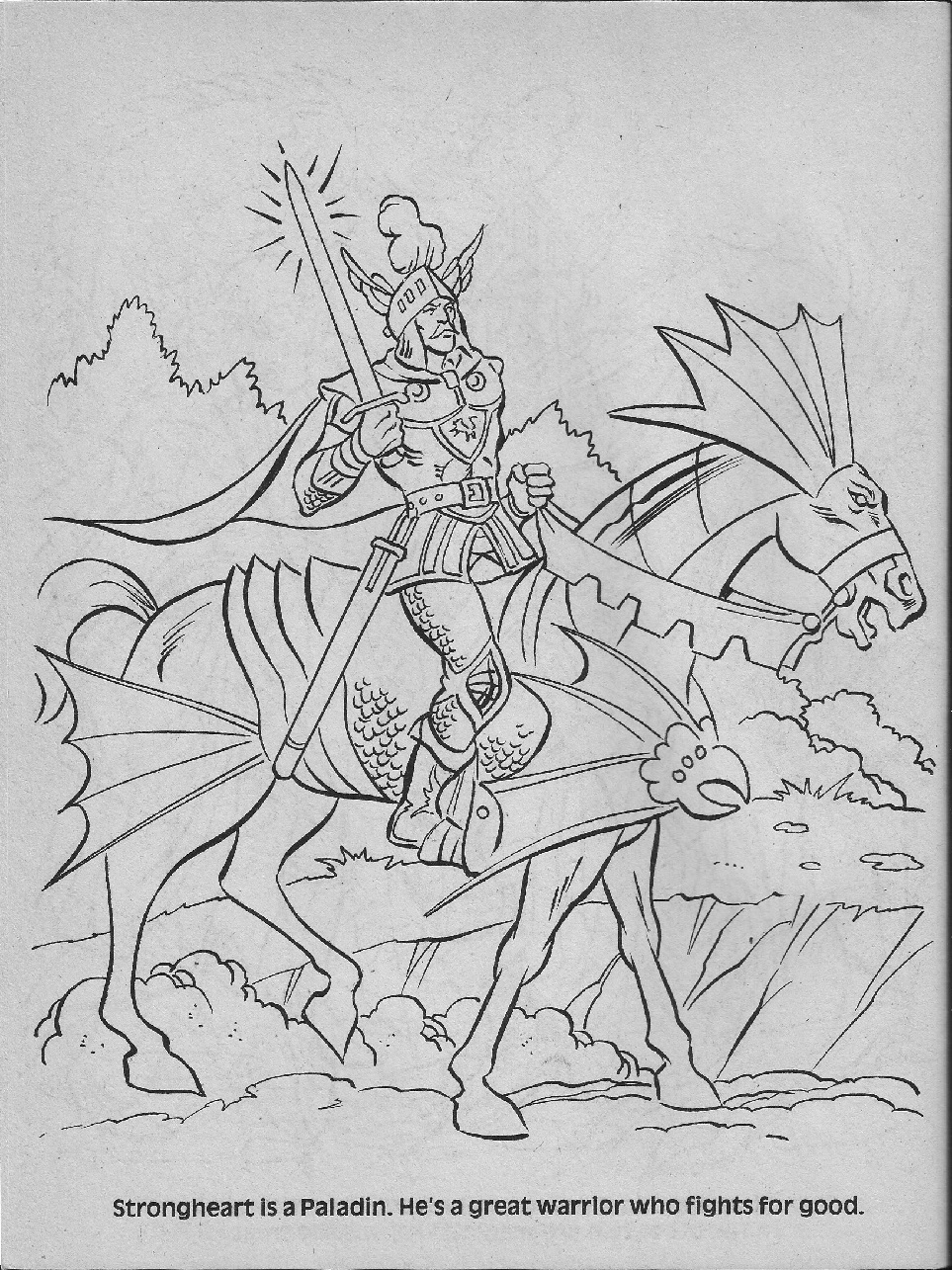
The action picks up in part two. We’ve got a five-headed hydra, the paladin’s Lay on Hands ability, lots of Warduke, the historic dwarf/elf antagonism (from Tolkien), and a helm of water breathing (my favorite page—those fish are flummoxed!).

On the last page, the evil cleric Zargash is charming a snake, but I don’t think clerics have access to the Charm Animal or Charm Monster spells. Maybe I’m wrong.

Part one of the Characters Coloring Book is here.

Advanced Dungeons & Dragons Characters Coloring Book (1983) (Part One)

AD&D Characters FC

AD&D Characters pg. 1

AD&D Characters pg. 2

AD&D Characters pg. 3AD&D Characters pg. 4

AD&D Characters pg. 5AD&D Characters pg. 6

AD&D Characters pg. 7AD&D Characters pg. 8

AD&D Characters pg. 9AD&D Characters pg. 10


Along with the AD&D storybooks, Marvel and TSR collaborated on five coloring books featuring the same cast of characters,  some of them from the toy line, others from The Shady Dragon Inn (1983), a game aid featuring pregenerated characters (and stats for the characters in the toy line).

Jane Stine, who co-wrote The Treasure of Time (1983), wrote the Characters coloring book. Earl Norem did the cover art. Jim Mooney, who worked for DC in the ’60s and Marvel in the ’70s and ’80s, and John Tartaglione, Silver Age inker of Sgt. Fury and Daredevil, did the interior art. (The lips look unmistakably Mooney to me, so I gather he did the pencils.)

The book is essentially a visual illustration of the different D&D character class attributes, alignments, and skills. It even covers some spells (feather falling) and magic items (helm of water breathing). Unlike the storybooks, there’s a definite link to D&D‘s role-playing core.

Parts two, three, and four of the Characters Coloring Book are here, here, and here.


1981 TSR ‘Gateway to Adventure’ Catalog

TSR Catalog 1981

TSR Catalog 1981-2

TSR Catalog 1981-3

TSR Catalog 1981-4

TSR Catalog 1981-5

You can thumb through a PDF of the whole catalog at Recycled Thoughts from a Retro Gamer. You can also see the complete catalog at Mikey Walters’ Flickr. The images above are from eBay, where you can usually find a copy for $5 – $10.

The shirts are very cool, but apparently not very well-made. Here they are, courtesy of Grognardia.

D&D Shirts 1981

The D&D Basic Set advertised in the catalog is the just released 1981 edition, written by Tom Moldvay with cover art by Erol Otus. The images on the t-shirts on the top left are from Sutherland’s cover to the original Basic Set—written by M.D. and fantasy writer-promoter John Eric Holmesfrom 1977.

I found the Grognardia post via the Original D&D Discussion forums. Zenopus, who writes a terrific blog “exploring the underworld of Holmes Basic,” posted a number of different photos showing the famous Sutherland red dragon, including this beauty:

It’s from the magazine Games Merchandising (a retailer magazine), and shows the TSR booth at the Hobby Industry of America (HIA) 1981 trade show. Dig the red Face logo chairs!

TSR Booth 1981

Board Games: Dawn of the Dead (1978) and Electronic Mall Madness (1989)

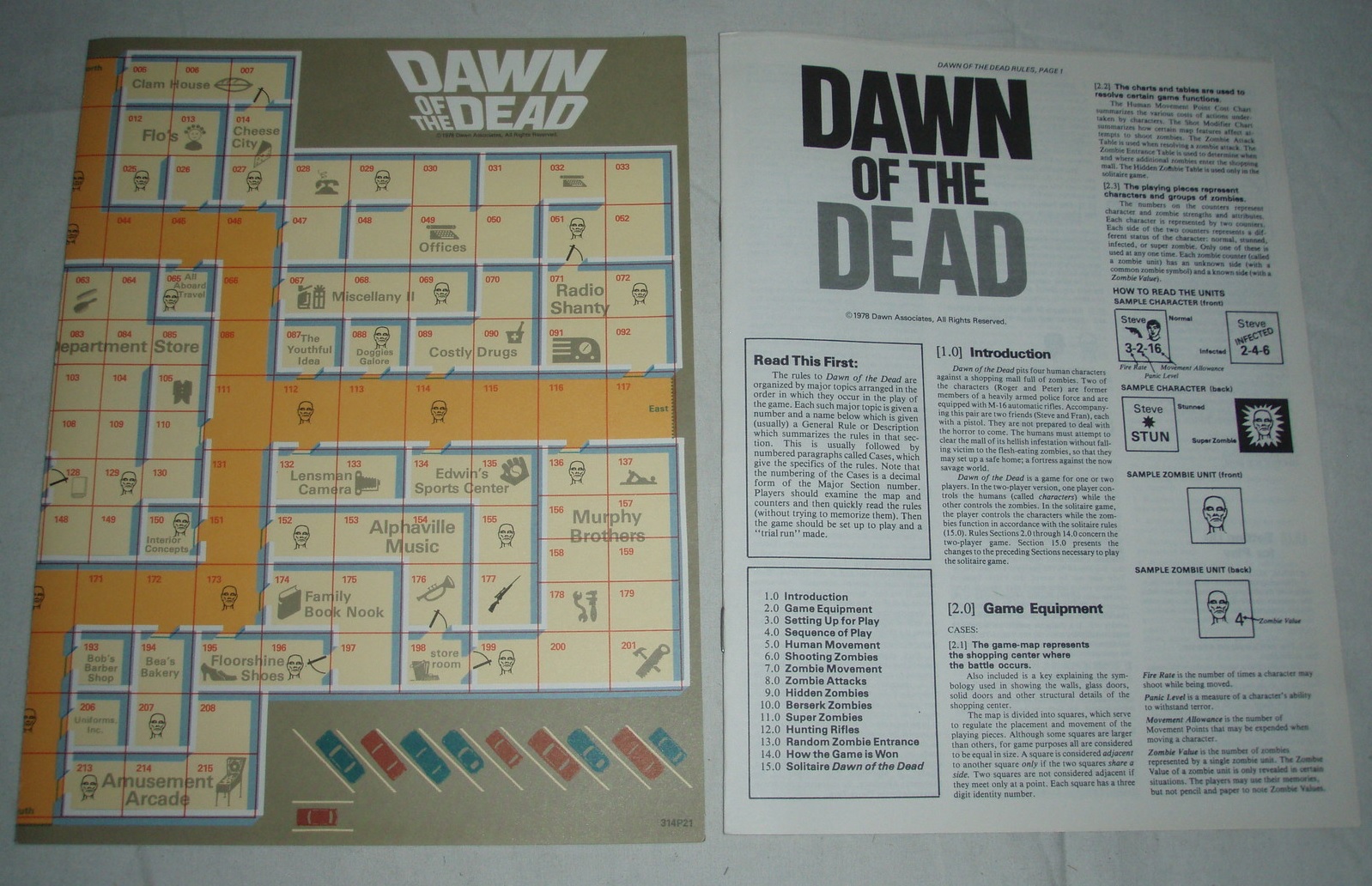
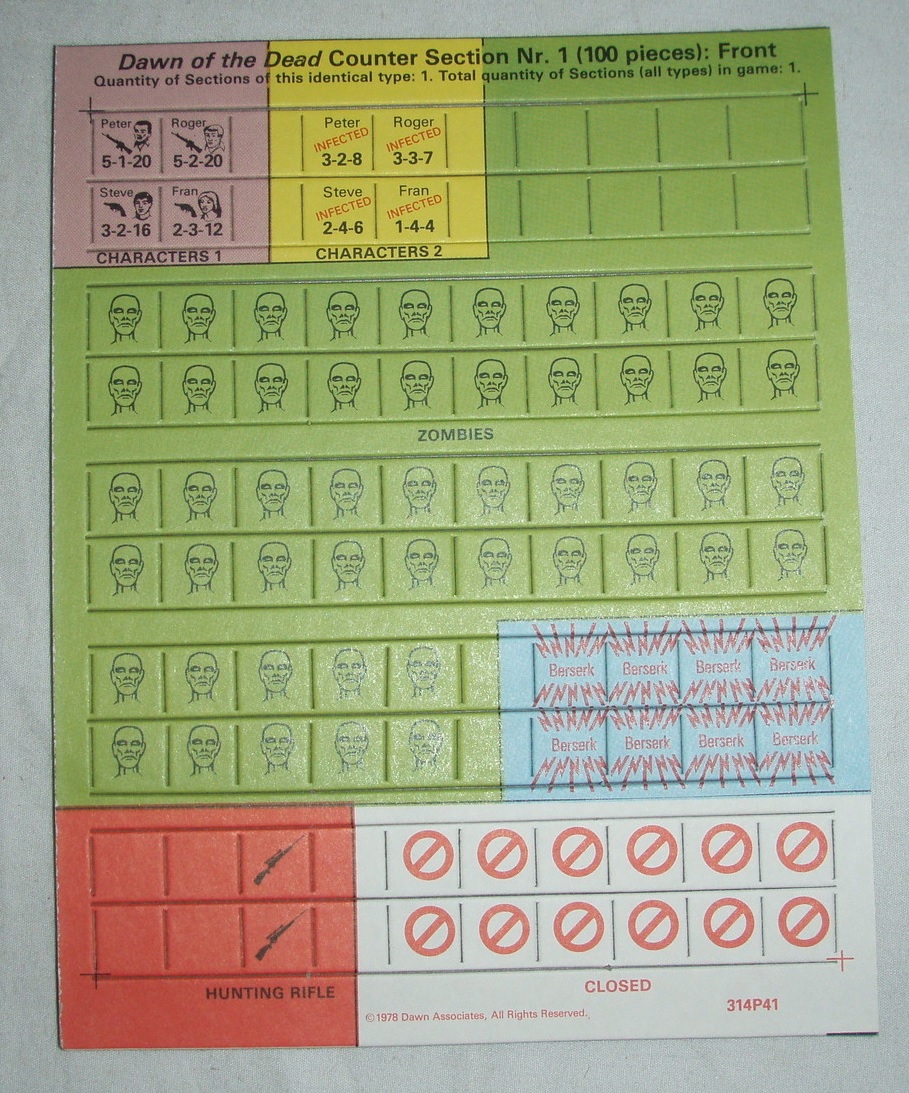
DOTD Game 1978

DOTD Game 1978-2

DOTD Game 1978-3

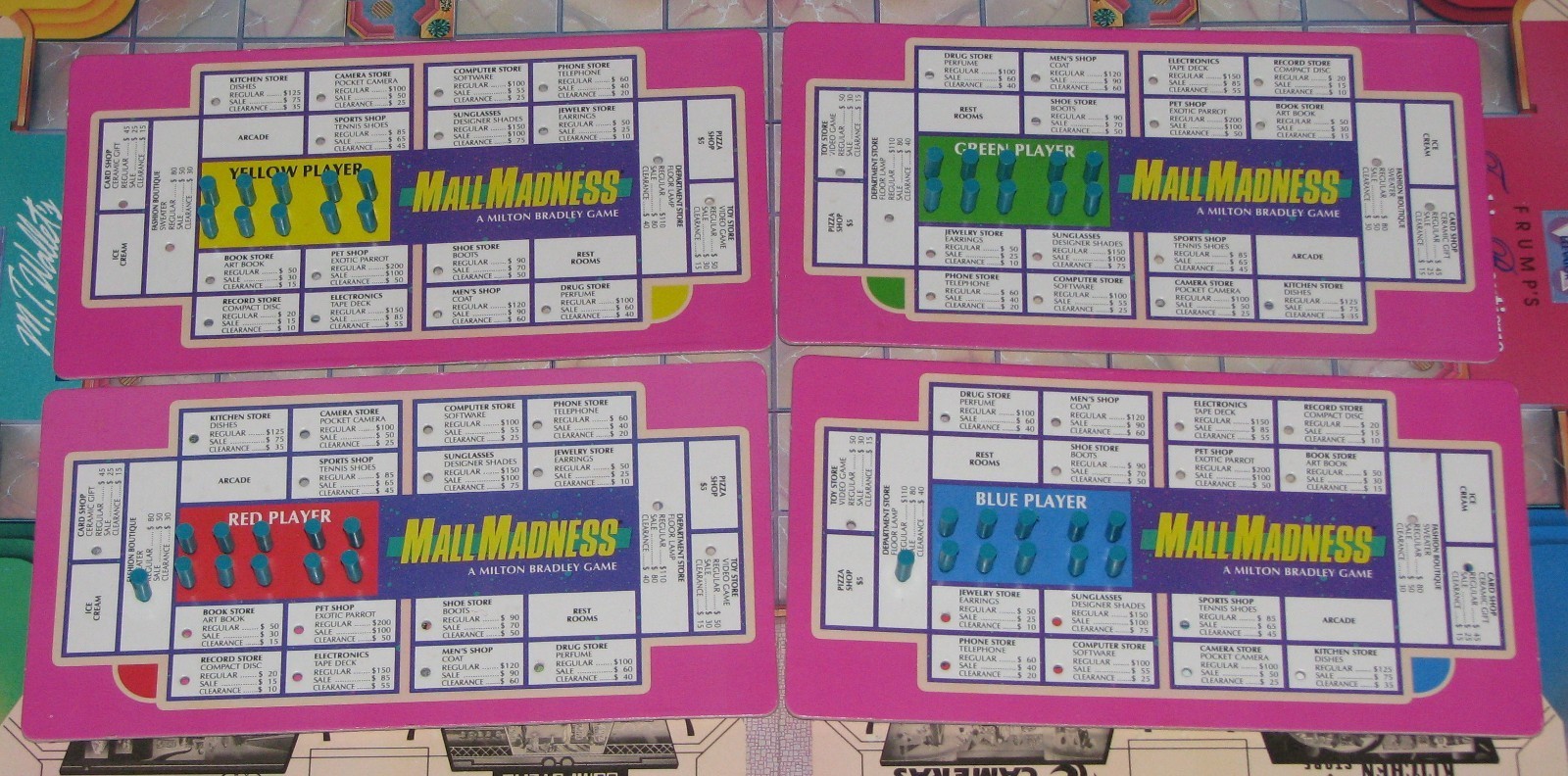
Mall Madness 1989

Mall Madness 1989-2

EMM 1989

EMM 1989-3

What a double feature.

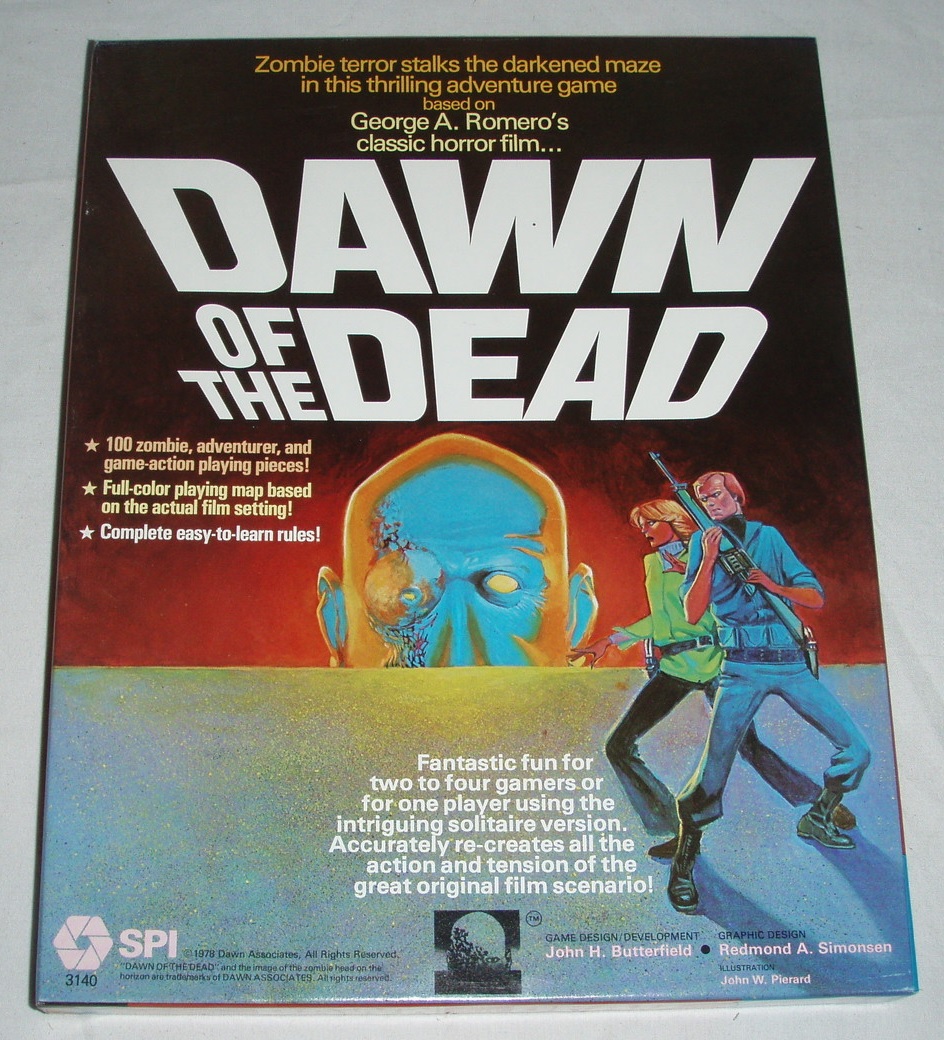
The Dawn of the Dead game is a collector’s item, and it’s priced accordingly. Luckily, you can download the whole thing at Home Page of the Dead. From Board Game Geek:

Dawn of the Dead (based on the classic 1978 horror film) can be played as a two-player game (humans vs. zombies), as a solitaire game, or as a cooperative game with two to four players controlling the human heroes. The game map represents the shopping mall from the movie. Cardboard counters signify the human characters and zombies. To win, the zombie player must kill any three characters; the human player must secure the mall by closing all four entrances and eliminating all zombies within.

SPI (Simulations Publications, Inc.) was a leading publisher of board wargames throughout the ’70s. The company went bankrupt in 1982. Because SPI defaulted on a loan from TSR, Gygax and co. acquired its trademarks and copyrights in 1983.

Electronic Mall Madness precisely represents the degenerate vanity and vacuity satirized by Romero in DotD. I’m not sure where that leaves me, because I think it’s really pretty and I want to hear the mall talk.

Geekery in the UK: Games Workshop and the Early Selling of ‘Mind-Games with Dice’

Games Workshop Ad 1981

I’ve talked a little bit about TSR’s early marketing campaign in the U.S., and now, thanks to Dirk Malcolm of The Dirk Malcolm Alternative, we see how game makers won over the kids in Britain.

The ad above is from the December 1981 issue of Starburst, “the world’s longest-running magazine of sci-fi horror and fantasy.” I don’t remember seeing anything like it in the U.S. It’s very effective, the staid schoolboy quietly conjuring his inner barbarian. The message is a moral: reality comes with escape hatches, and it’s okay to use them. (For the low, low price of £7.95!)

Games Workshop was (and is, they’re still very successful) a British company that started to import D&D and other U.S.-produced RPGs in 1978. In a 2008 interview, Gary Gygax talks about granting GM, founded by Steve Jackson and Ian Livingstone, “a license to produce TSR products in the UK, even print their own material unique to the UK.” The cost of importing was high, so the deal effectively unleashed the swelling nerd-thusiasm of the new market. (There was even talk of a TSR-Games Workshop merger at one point, but the parties couldn’t come to terms.)

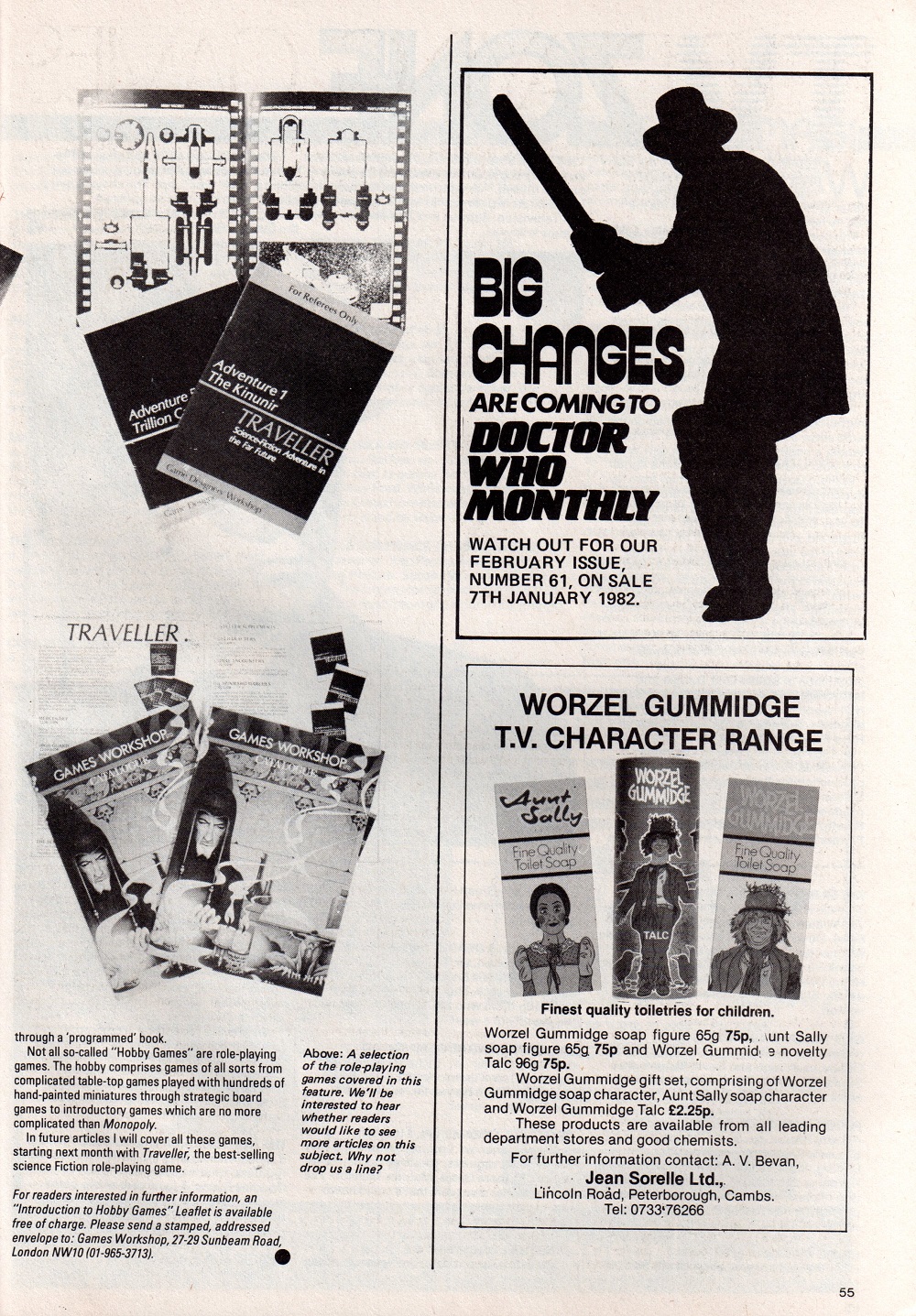
RPG Article 1981

RPG Article 1981-2

In the same Starburst, there’s an article (above) written by Steve Jackson introducing the concept of role-playing games. In his post, Starburst Memories: Tired of Reality?, Dirk talks about the impact it had on him at the time.

When I read this article back in 1982, everything seemed to click into place, and those mysterious games that sat in the corner of Boydell’s Toy Shop in Bolton, became a tantalizing gateway into a new world.

He also nicely describes the stark novelty of the hobby when it first appeared:

It is difficult to appreciate now how much of a conceptual leap it was to play a game that didn’t have a board. This was before Fighting Fantasy (choose your own adventure books), before Zelda, before Warhammer, before Total Warcraft and before Second Life. Most people are used to hypertextual narrative games, they are part of everyday life, but back in the early 1980s it took a leap of faith to move from Monopoly to playing mind-games with dice.

STAY TUNED: Dirk (a.k.a. Chris) has kindly agreed to participate in my Interview with a Geek series. I’m super excited about getting a non-American perspective on living life “with funny-shaped dice,” among other things.

(All images are courtesy Dirk Malcolm/Chris Hart)

Dr. Joyce Brothers (1927 – 2013): Psychologist, Media Personality, Defender of Dungeons & Dragons

Joyce Brothers 1980

I remember Dr. Brothers mostly for her witty cameos on various TV shows of the day, including The Love Boat, WKRP, and Happy Days, as well as her many appearances on The Tonight Show and several game shows.

But she was a real psychologist (with a Ph.D. from Columbia)—the first to use mass media to tackle everything from sex to suicide—and hosted several advice/discussion shows from the late 1950s through the ’70s. She died, at age 85, on May 13. (Read her obituary at the New York Times.)

The photo above, courtesy of Jon Peterson, shows Brothers in a 1980 TV appearance promoting the TSR board game Fantasy Forest.

Fantasy Forest

At a time when D&D and role-playing were decried as tools of Satan, Brothers defended the practice and D&D in particular. In a 1984 radio interview with Neil McKenty, Brothers describes herself as a “consultant for TSR” and applauds D&D for being a “cooperative game” in which “everybody works together to overcome obstacles.”

Playing the game, she says, is a mentally healthy activity that demands intelligence, expands the imagination, and promotes joy. She even mentions Gary Gygax by name!

Brothers gave serious advice about touchy subjects and was a brilliant woman (an expert on boxing, among other things) who realized that taking herself too seriously would put off the people who needed help the most.

Lawful good human clerics can’t do much better than that.

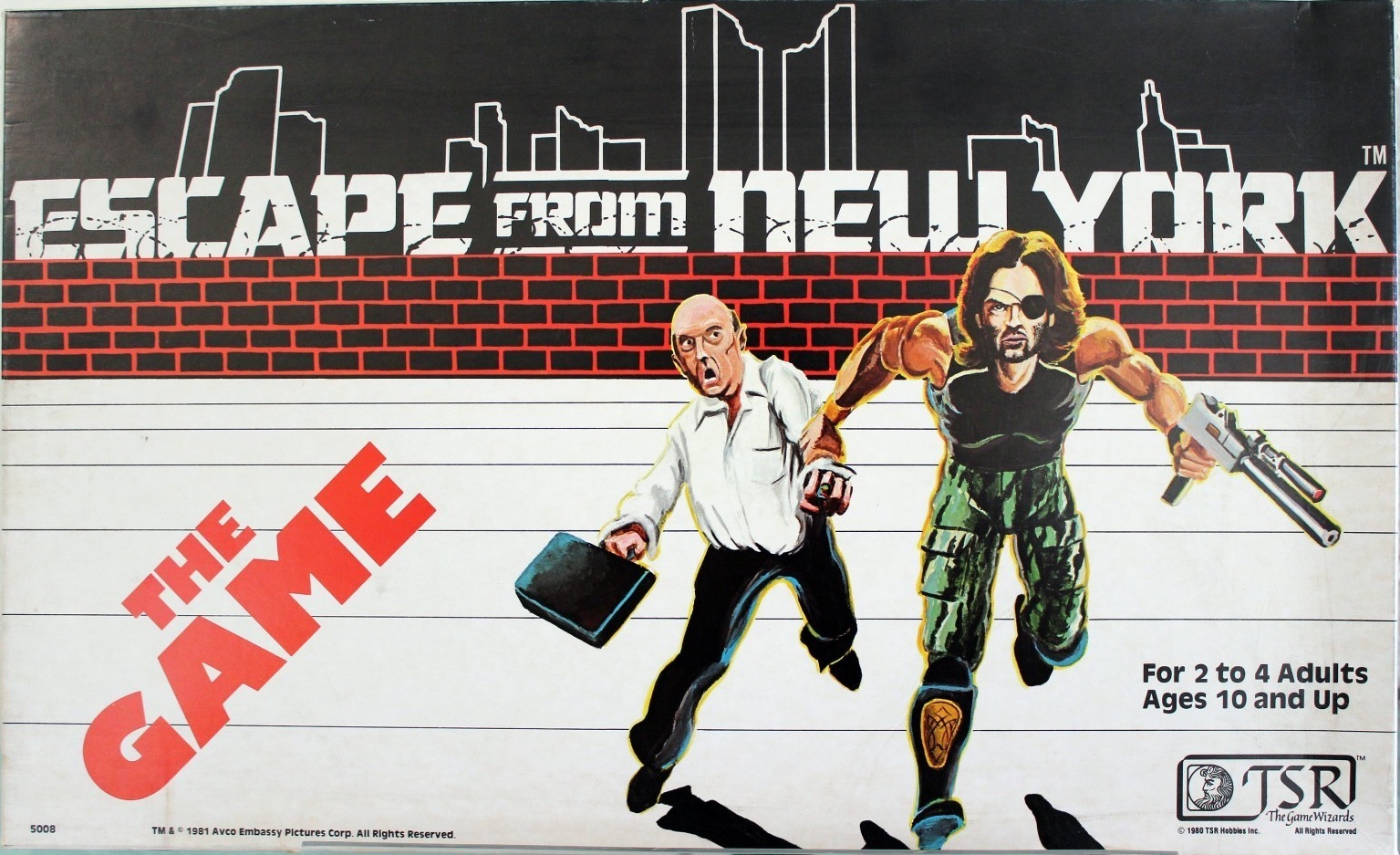
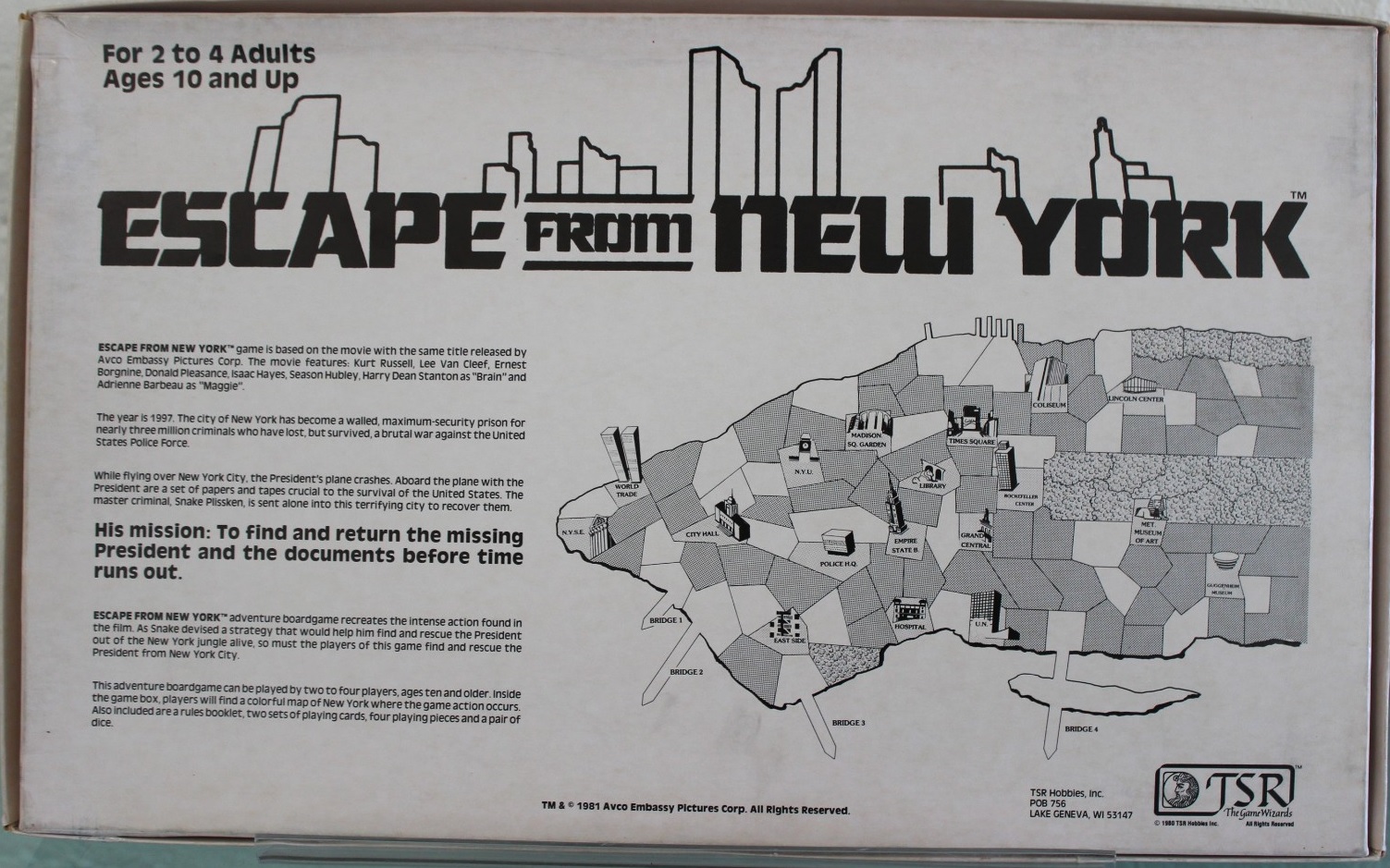
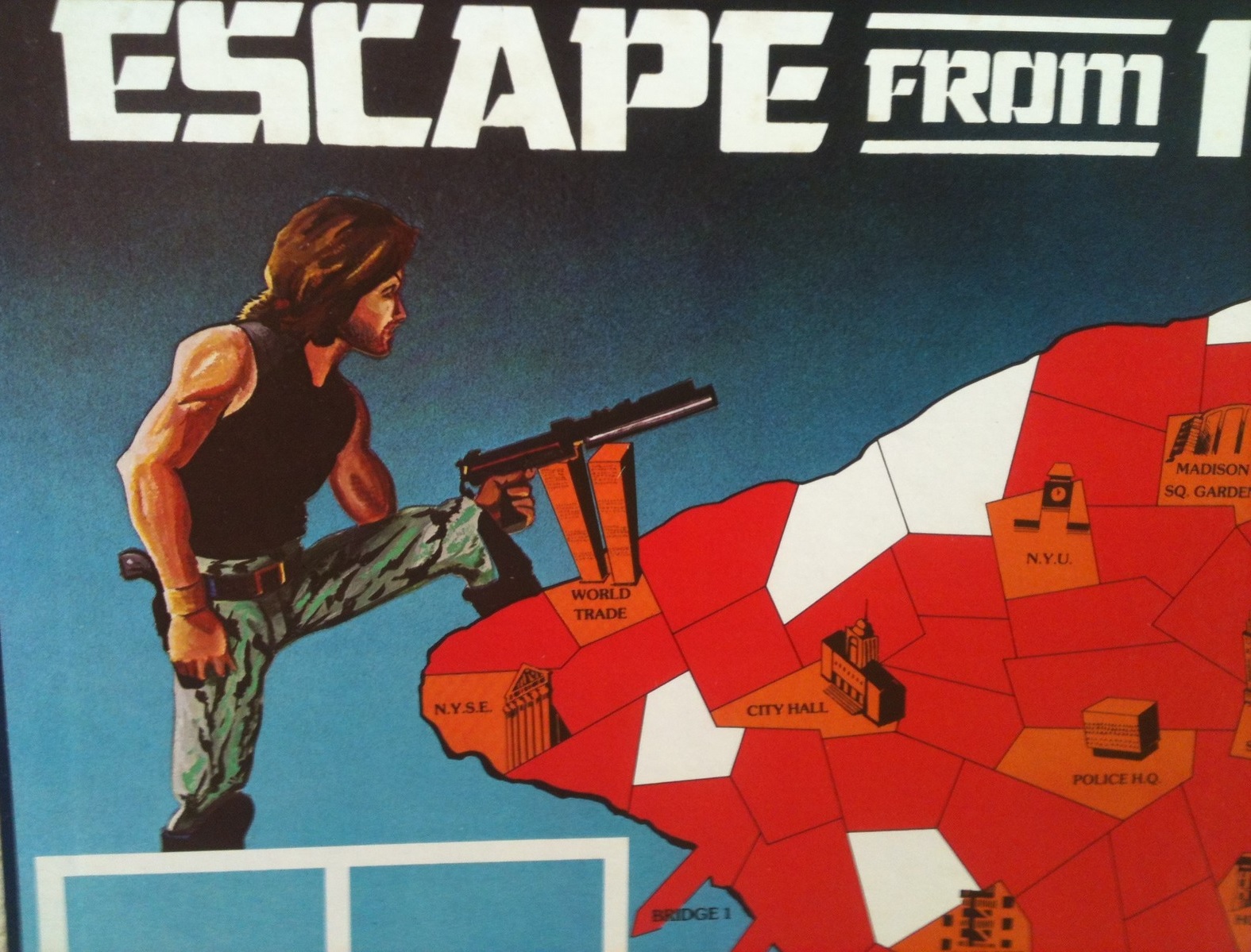
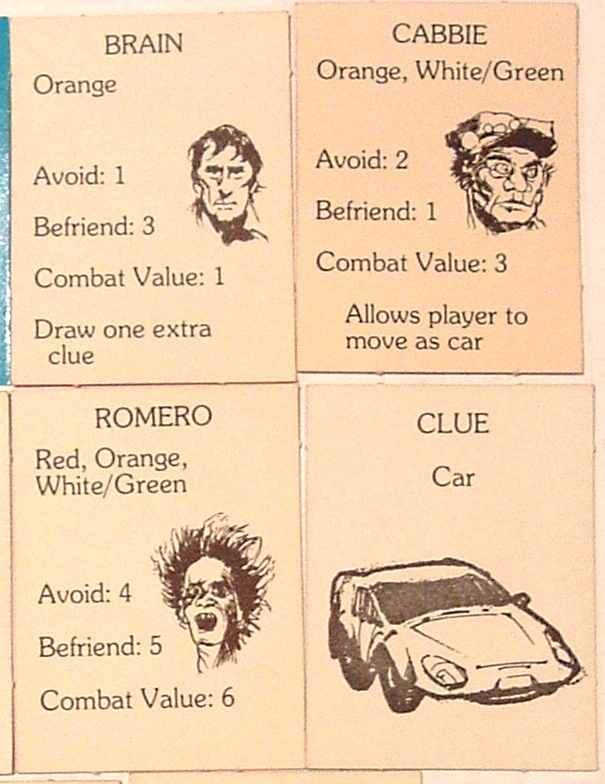
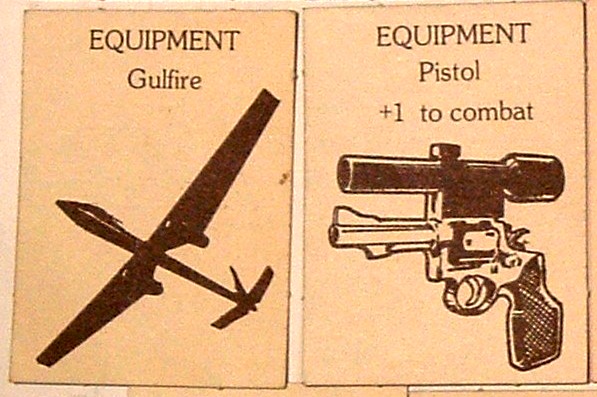
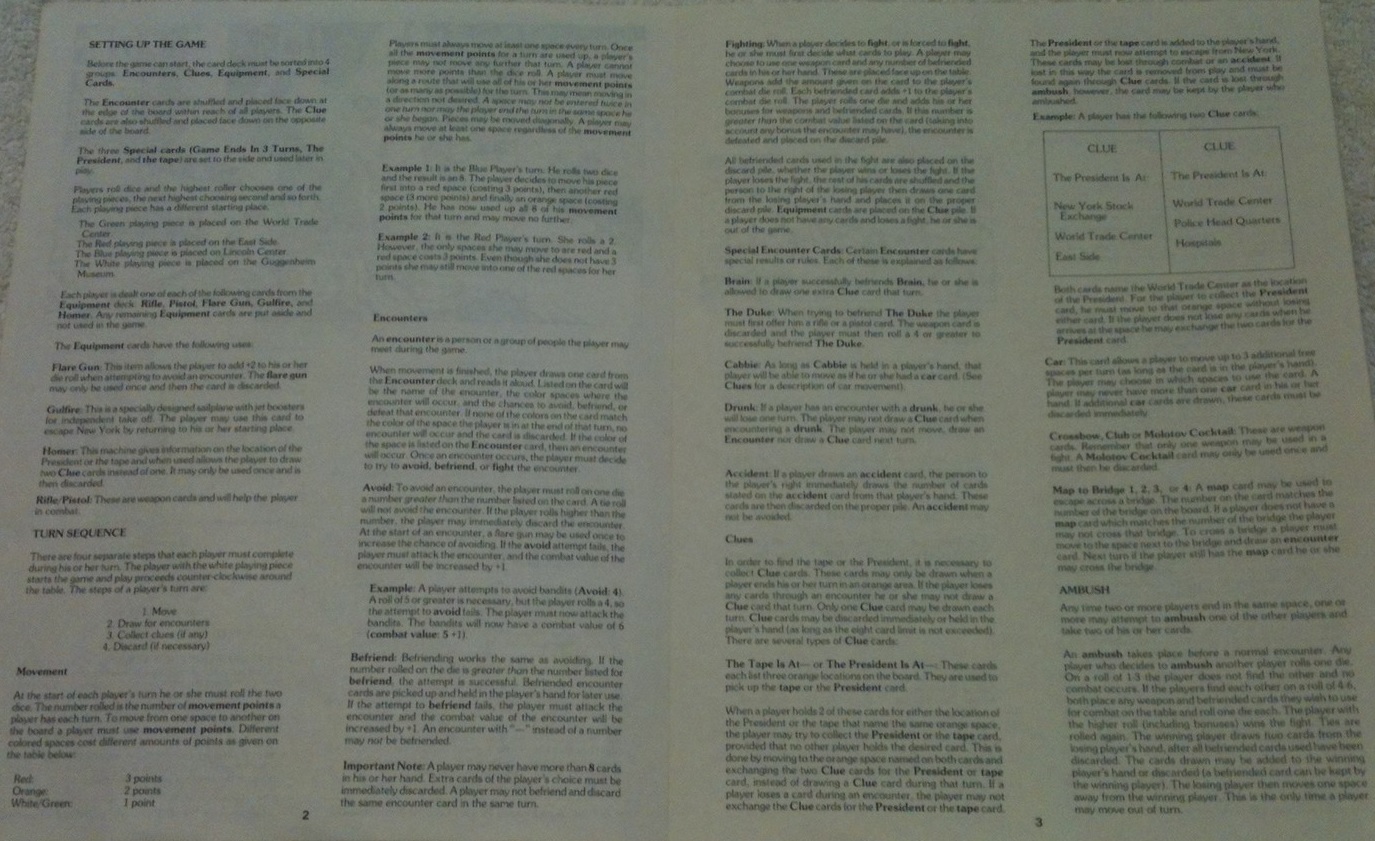
TSR’s Escape from New York: The Game (1981)

EFNY Cover

EFNY Back

EFNY Board

EFNY-4

EFNY-6

EFNY-7

EFNY-8

EFNY-9

EFNY Instr

Toshiba Digital Camera

EFNY-12

EFNY-11

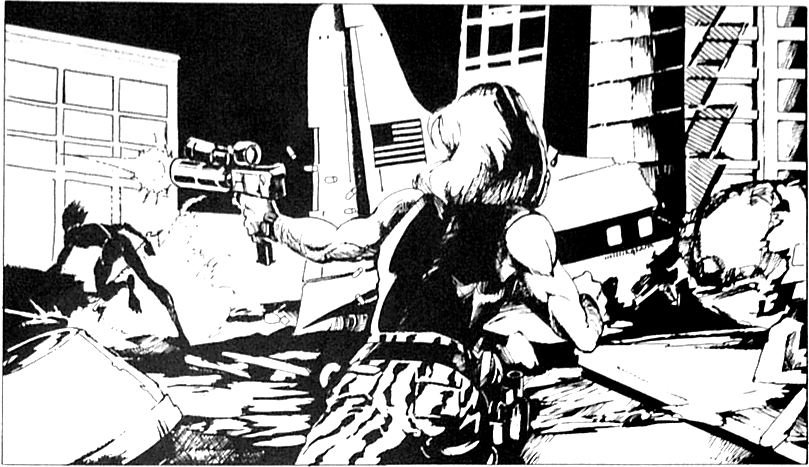
Really? I must have seen this movie a hundred times when it first came out on video (it’s still one of my all-time faves), but I had no idea there was a game. The cool illustration on the instructions title page is by Bill Willingham. You can see his signature on the plane. The second drawing—the “crazies” coming out of the sewer—might be an Erol Otus. Isn’t that an “EO” in the top right corner?

I would love to play this baby.

(Images via Board Game Geek and eBay)


Pages

Archives

Categories

Donate Button

Join 1,117 other subscribers