Archive Page 29

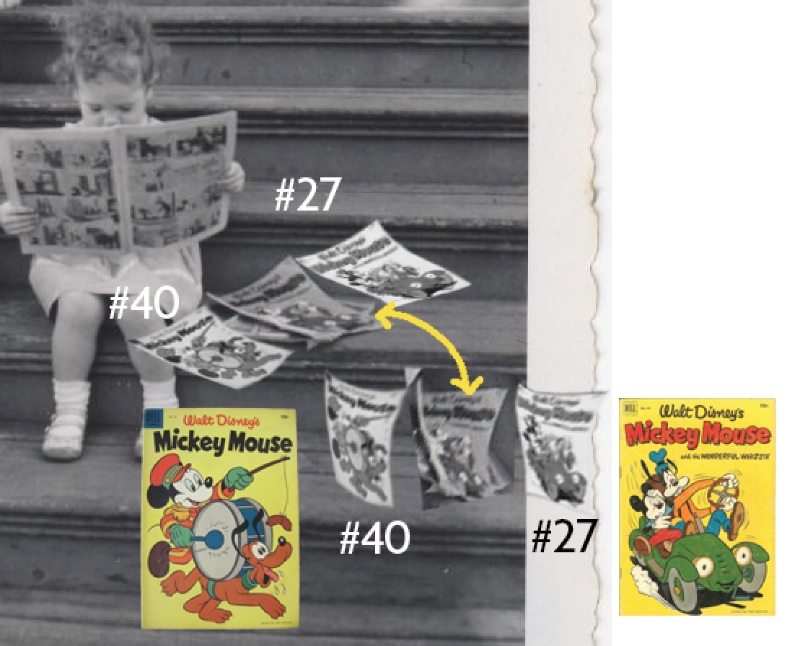
Girl Reading Comic Book, 1955

Girl Comic 1955

Beautiful found photo, but I can’t for the life of me figure out what the book is on top of the pile. A Walt Disney title? Anyone?

UPDATE: I think it’s Walt Disney’s Mickey Mouse #40.

UPDATE: Thanks to Dave Stephens’ impeccable detective work, we now know it’s Walt Disney’s Mickey Mouse #27. See his proof below. Thanks again, Dave!

Mickey #27

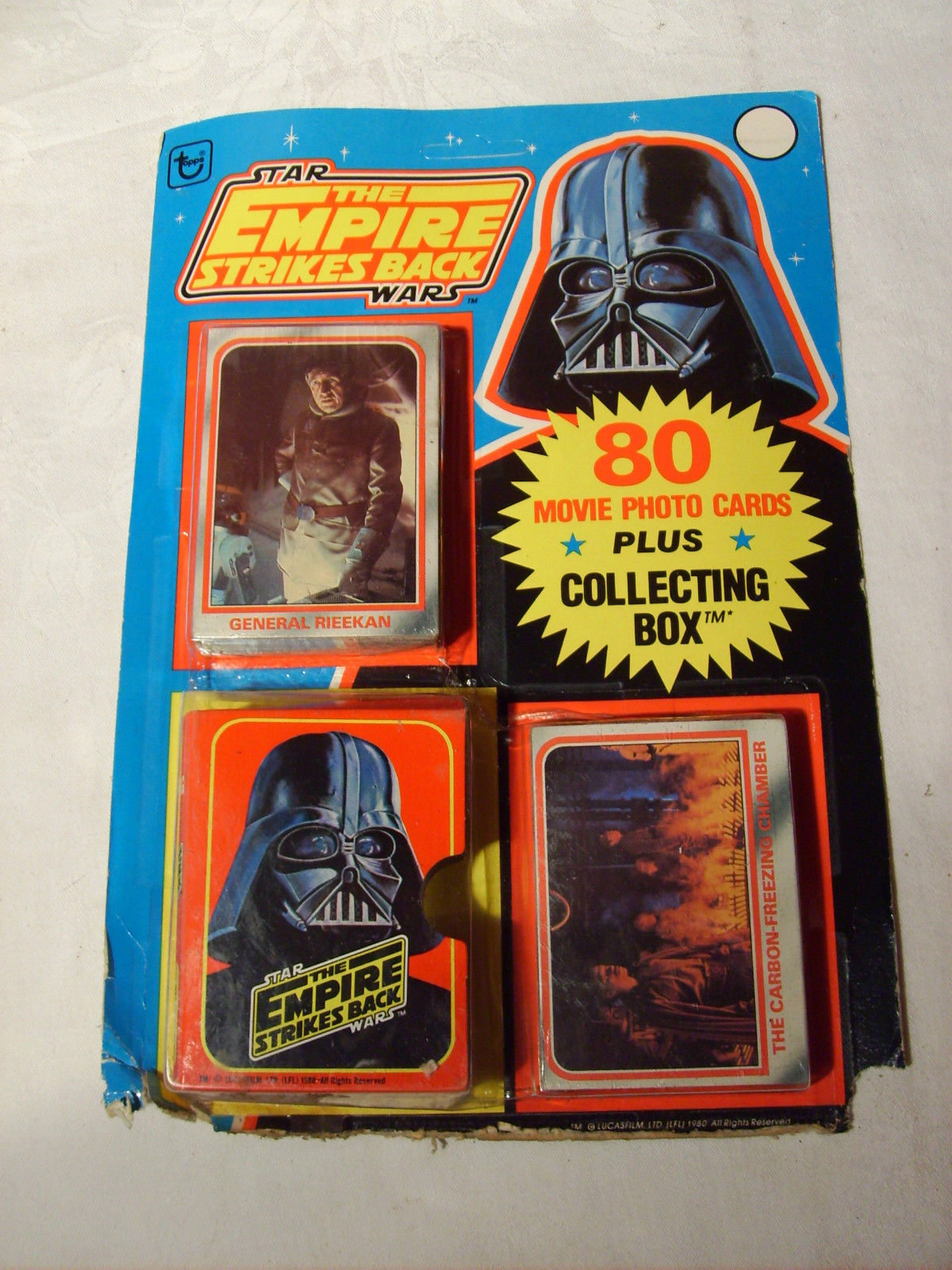
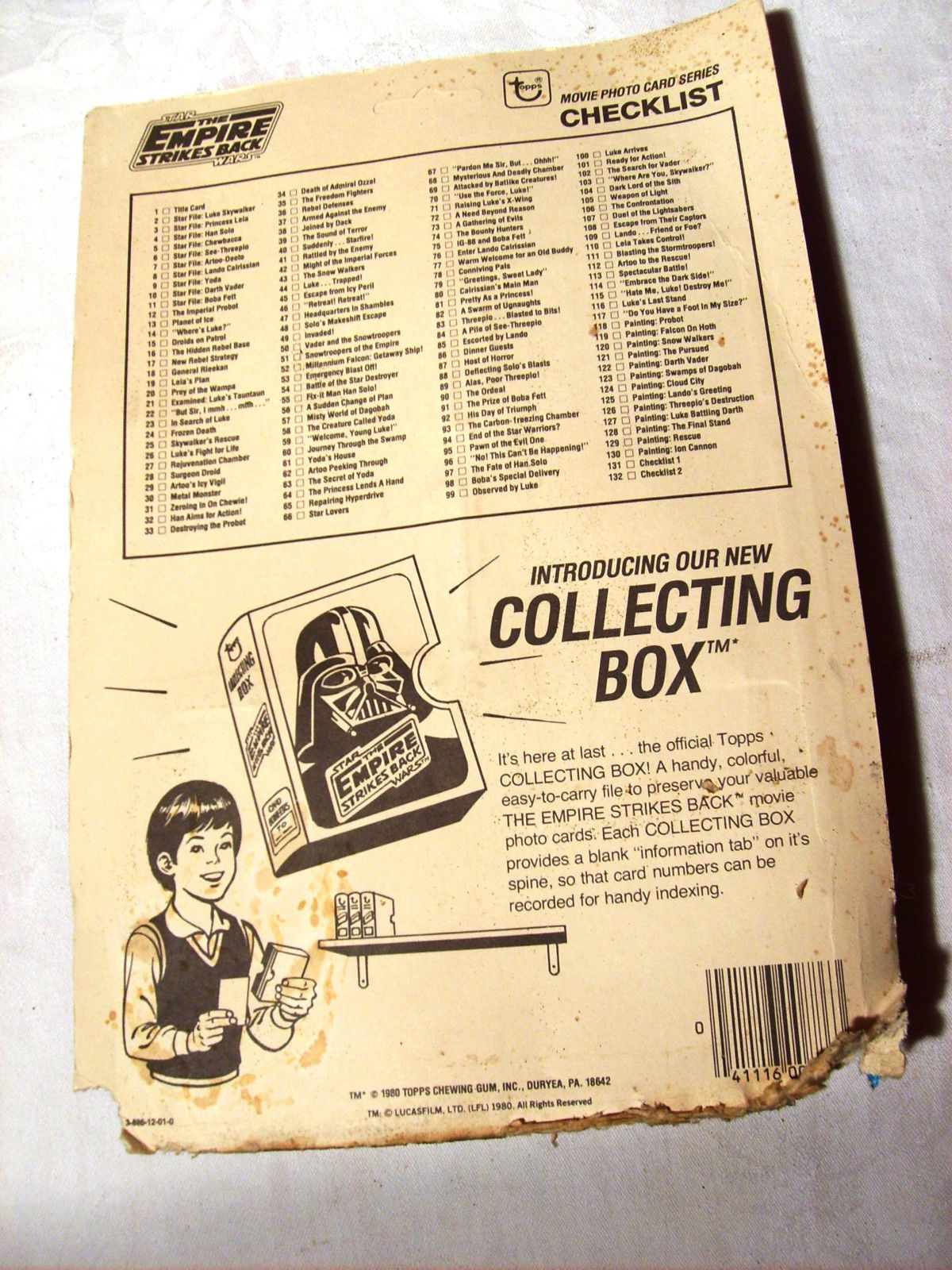
The Empire Strikes Back Trading Cards and Collecting Box (Topps, 1980)

ESB-1

ESB-2

First time I’ve seen this particular package and the “collecting box.” What’s wrong with a rubber band or a shoebox?

For many consecutive weekends in 1980 a neighbor girl and I would walk to the local liquor store and buy as many of the ESB packs as we could afford. During the week I would comb the house and the car for loose change, squirrel away what I was supposed to be using for milk at school, rake through hundreds of pay phone slots, try to sell old football cards. I had most of series one (red border) and series two (blue border), but I don’t think I had any of series three (yellow border).

You can see all the series one cards, as well as a whole bunch of classic card and geek ephemera, at jeffliebig‘s Flickr.

(Images via eBay)

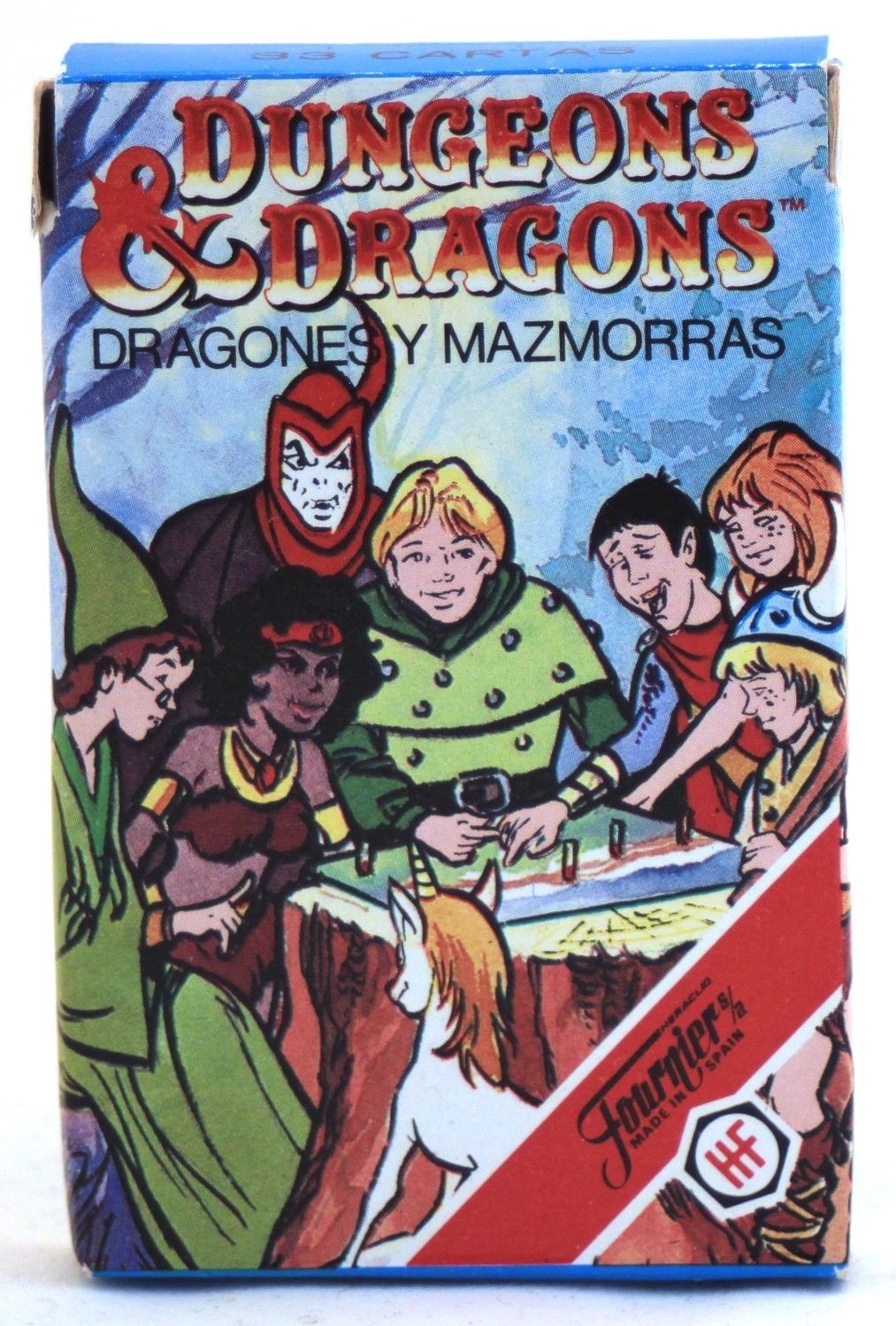
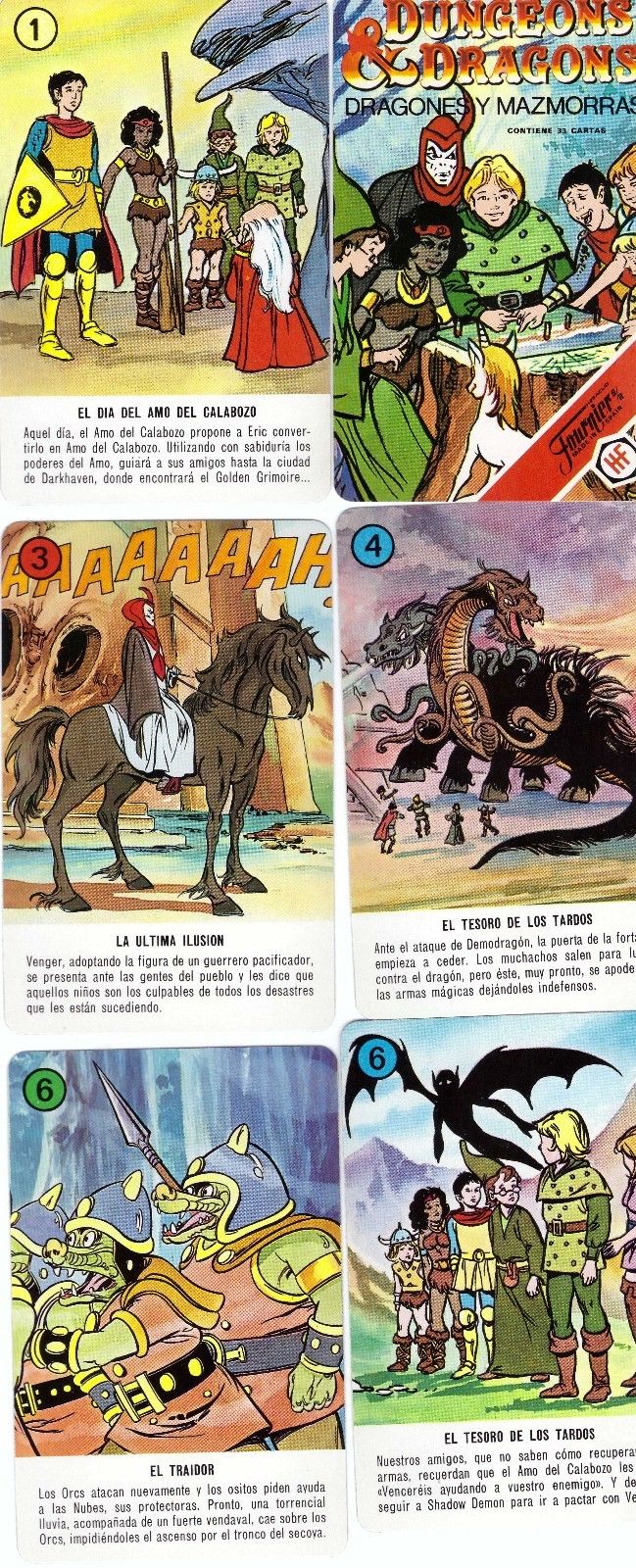
Dungeons & Dragons Playing Cards (Heraclio Fournier Vitoria, 1985)

D&D Fournier-1

D&D Fournier-2

D&D Fournier-3

From Spain, where the animated series was very big and the kids ran around in D&D sweatsuits.

(Images via eBay)

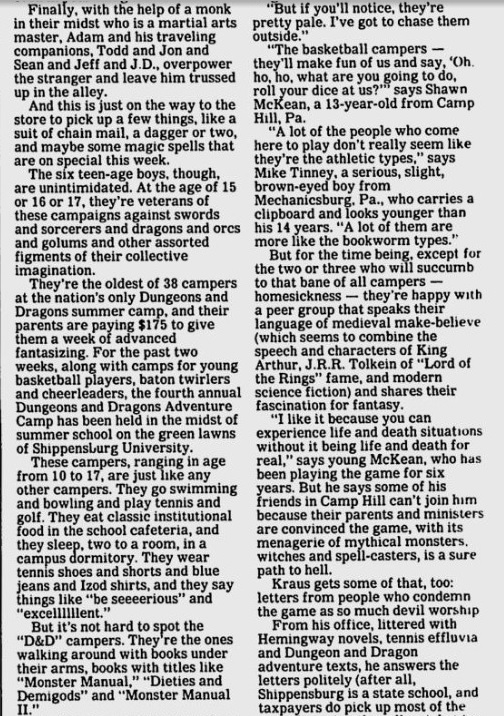
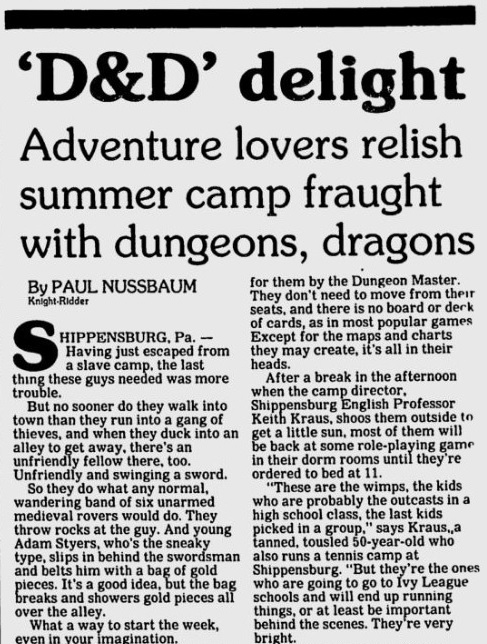
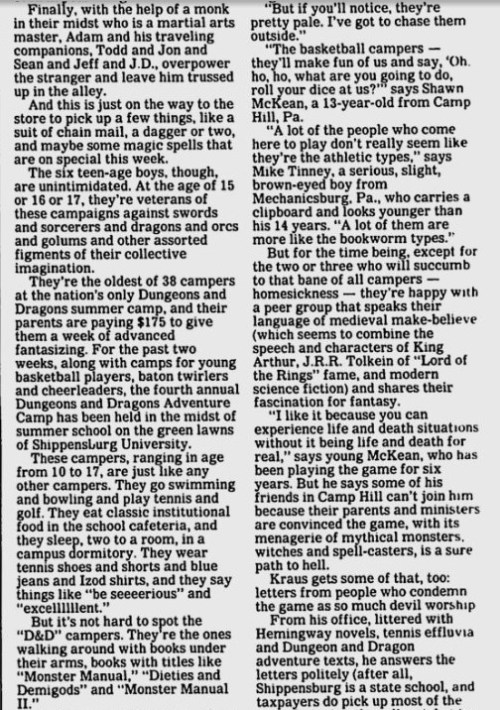
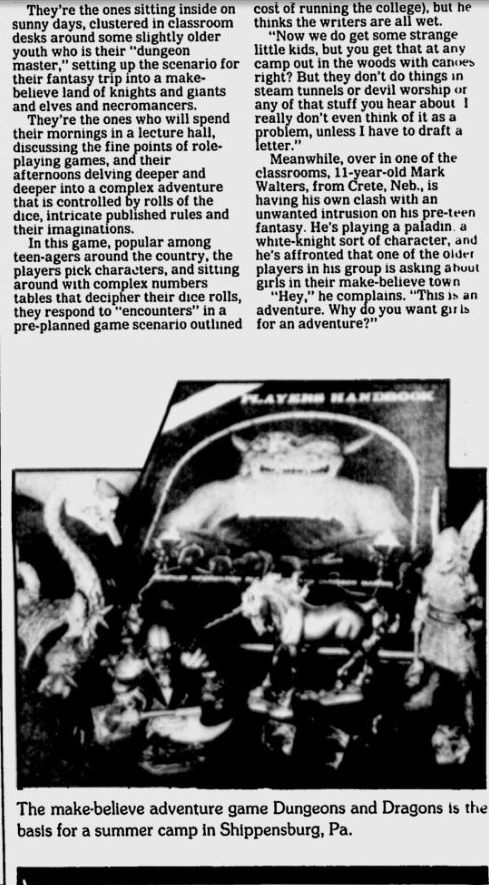
1984 Article on the Shippensburg Dungeons & Dragons Camp

D&D-1

D&D-2

D&D-3

I talked about the old-school-nerd-historic Shippensburg Dungeons & Dragons Adventure Camp a couple of years ago. It ran for two separate one-week sessions every summer from 1981 to 1985. So much to talk about here. First, the writer’s description of the “D&D campers,” as opposed to the kids at the sports camps:

They’re the ones sitting inside on sunny days, clustered in classroom desks among some slightly older youth who is their ‘dungeon master,’ setting up the scenario for their fantasy trip into a make-believe land of knights and giants and elves and necromancers.

Says one of the kids, Mike Tinney: “A lot of the people who come here to play don’t really seem like they’re the athletic types… a lot of them are more like the bookwork types.” (I bet this Mike Tinney is the game designer and former President of CCP Games North America [Eve Online] who, irony alert, launched a start-up in 2012 to apply the principles of interactive games to fitness.)

The camp director, Keith Kraus, who comes off as a stereotypical jock here, was actually a “professor of English with a specialization in adolescent literature at [Shippensburg University].” Right after he calls the D&D kids “wimps” and “outcasts”—the words “geek” and “nerd” do not appear in the article—he goes on to say that they’ll end up going to the Ivy League and “running things.” Ben Robbins, who went to the camp all five years, was interviewed at Gaming Brouhaha and talks about Kraus’s indiscreet comments in the Spokesman-Review article, which was published during the 1984 camp:

But in the last week of camp [in 1984] there was a furor because Dr. Kraus was interviewed by a local reporter, and he let his guard down and was quoted as saying “basically, these kids are the wimps.” Oops. Remember he wasn’t a gamer in the first place, just the university facilitator. He was used to running athletic camps like tennis or swimming. The story was printed while camp was still in session, the campers got a hold of it, torches and pitchforks were issued, and he wound up apologizing to the assembled camp while the incensed gamers booed him down. Not pretty.

To Kraus’s credit, he does dismiss the identification of D&D with “devil worship,” even though the media-induced moral panic is probably why the camp was canceled.

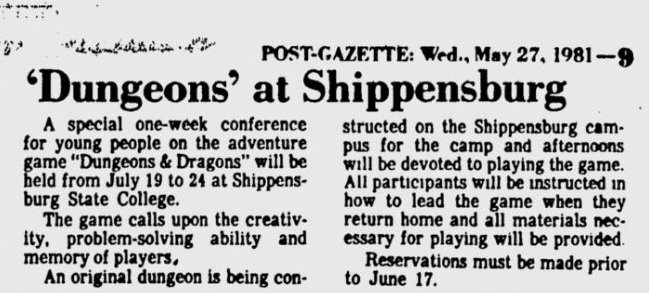
Two other press mentions of the camp are below. The first one is a notice from 1981, the camp’s inaugural year (Frank Mentzer was a “guest lecturer,” according to Robbins). I assume the “original dungeon” is a miniature. The second notice is from 1983 and shows all the available Shippensburg camps.
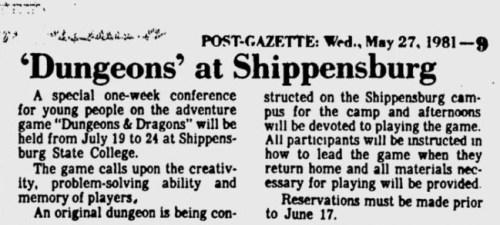
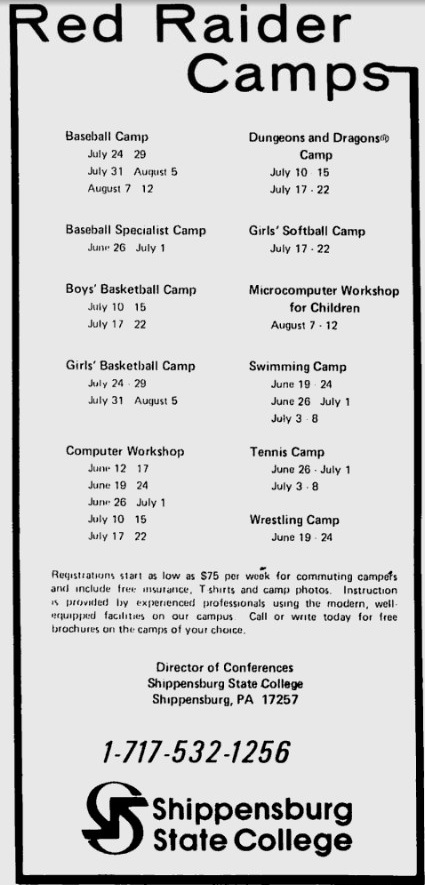
D&D-5

D&D-4


Arcade Zen (1982)

Arcade 1982-1

Los Angeles arcade, May 20, 1982. (Photo: Nick Ut/AP)

Only games I can make out are the two nearest the camera: Phoenix (1980) and Circus (1977).

I’m pretty sure that’s a Chuck E. Cheese’s hat next to the Yankees hat, as seen here.

(Photo via Forbes)

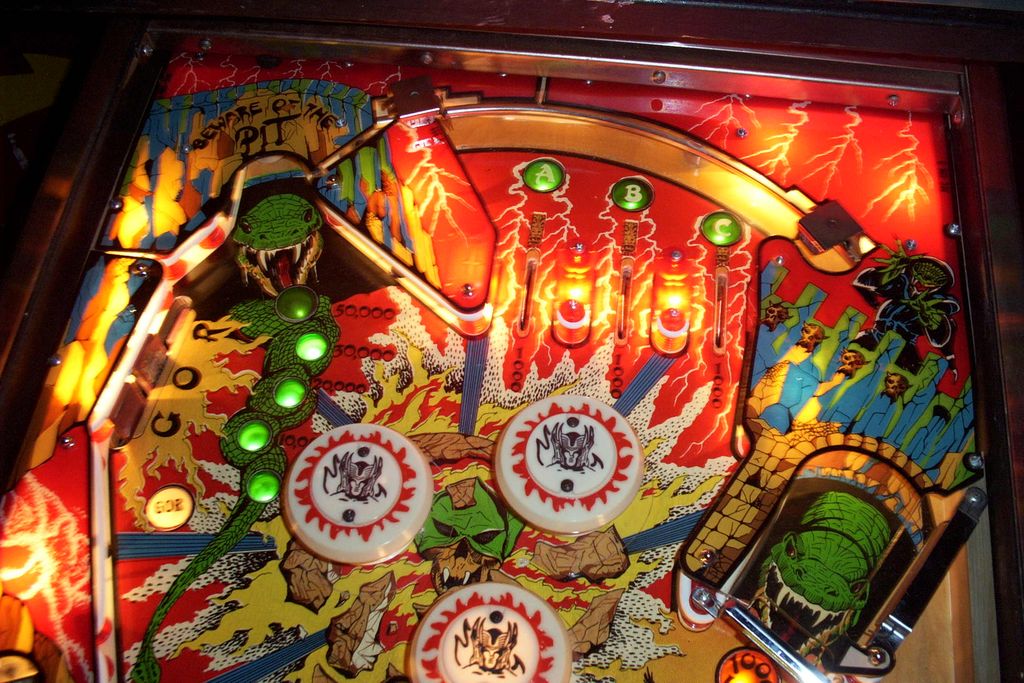
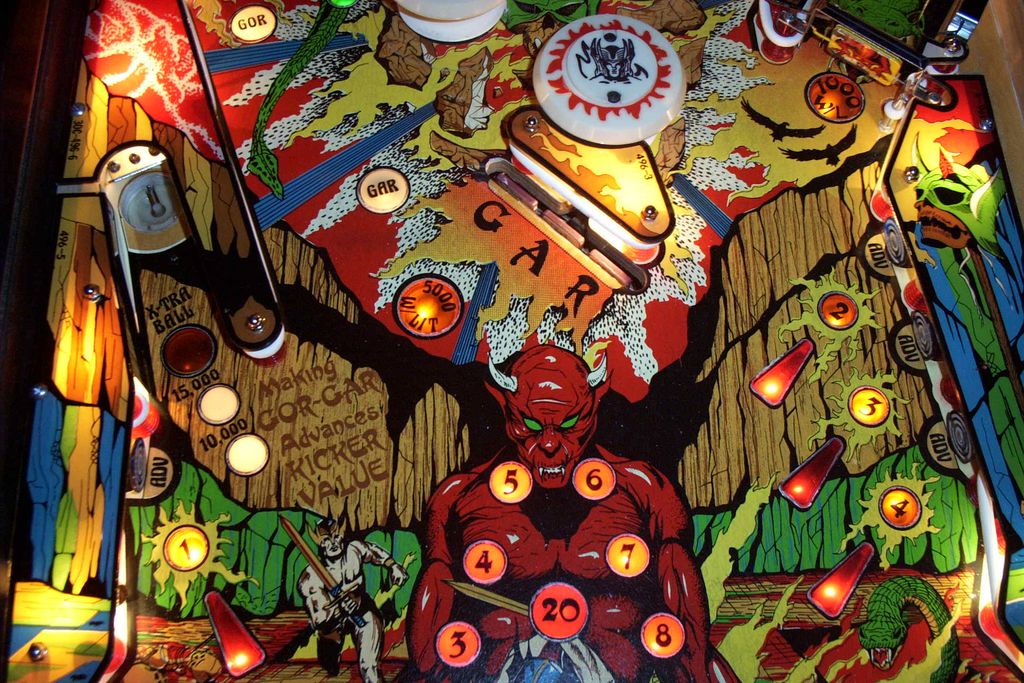
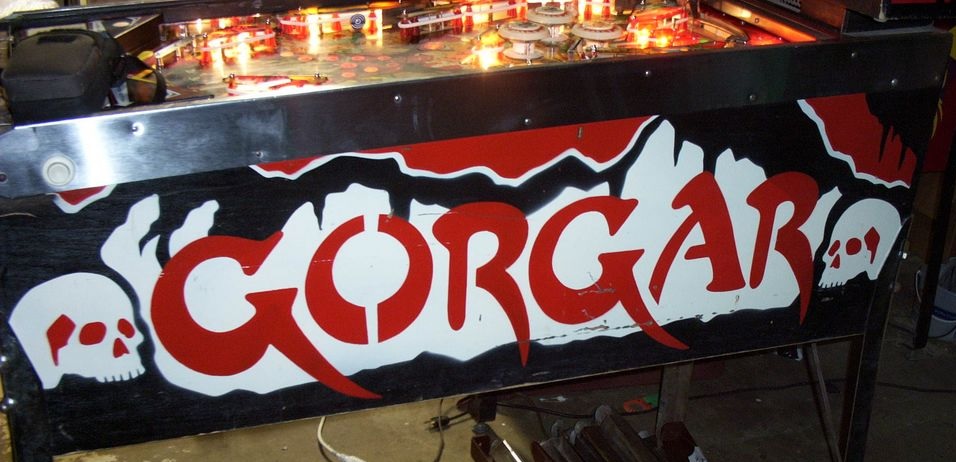
Pinball Machines: Gorgar (Williams, 1979)

Gorgar

Gorgar-1

Gorgar-6

Gorgar-7

Gorgar-8

Gorgar-4

Gorgar-3

It was fun when the devil was in style. Before Satan’s Hollow (Bally Midway, 1982), there was Gorgar. Designed by Barry Oursler, who designed the Joust and Defender pinball machines, with art by Constantino and Janine Mitchell, Gorgar was the first commercially released pinball machine to feature synthesized speech (I believe the first video game to do the same was 1980’s Berserk). There were seven words total—Gorgar, Speaks, Beat, You, Me, Hurt, Got—used in a number of different variations: “Gorgar Speaks,” “Me Gorgar,” “Me got/hurt you,” “You Beat Me,” and so on. See a demo, including speech, here.

Images are from The Internet Pinball Database, where you can see a lot more. Below is the last page of the flyer and a promo poster. Because nothing makes a dude want to play with metal balls and flippers like an attractive young woman scantily clad in bearskin.

Gorgar-9

Gorgar-5

Williams Joust Poster, 1982

Joust 1982

The artist’s signature is on the bottom left, but I can’t read it. Let me know if you know who it is or have a closer close-up.

UPDATE: Andy Goldman pins the artist as Python Anghelo, the gentleman who actually designed the game and did the cabinet art (why was the poster art here not used for side art?), who passed away last year. Thanks again, Andy.

(Image via Video Game Auctions)

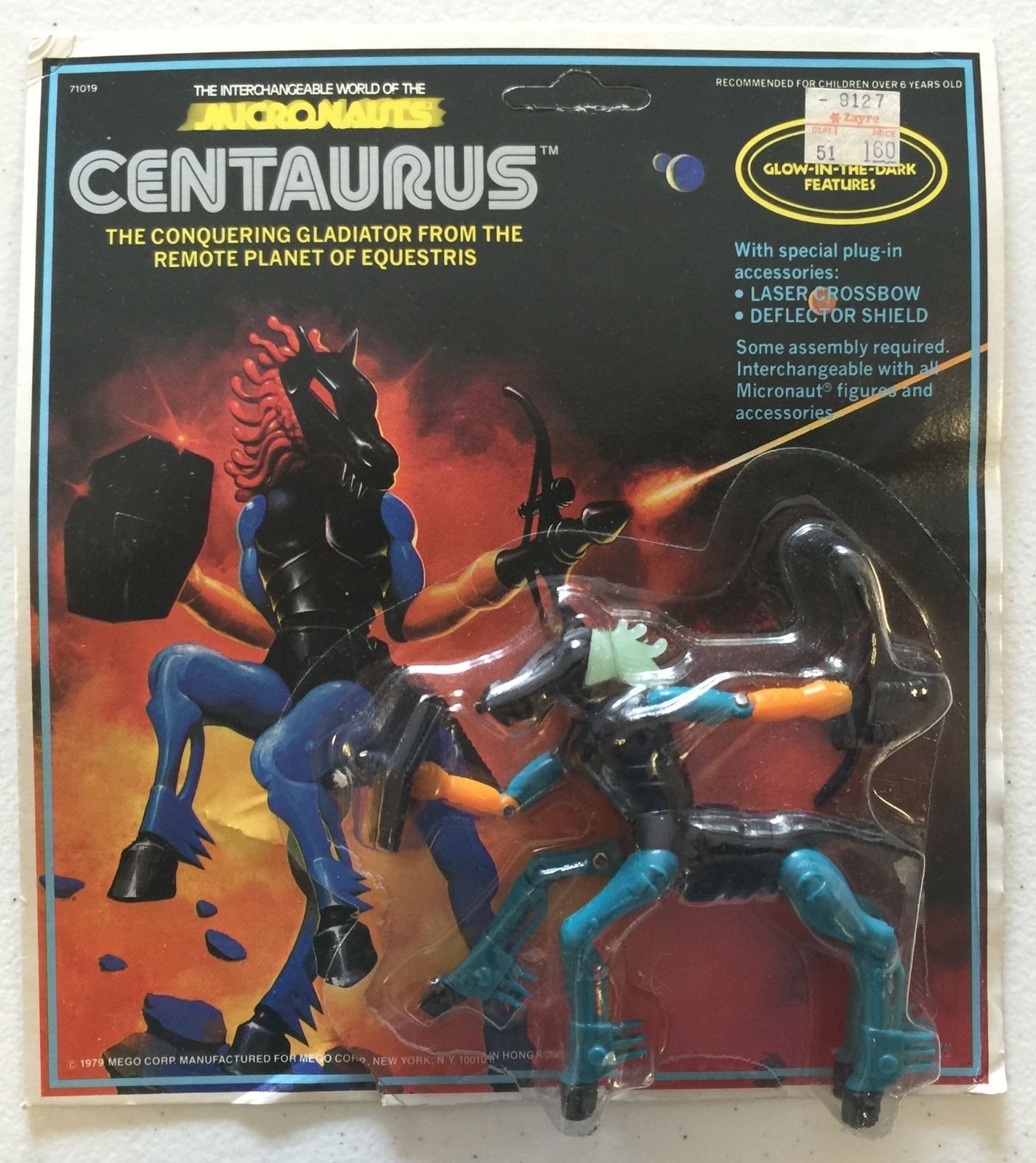
Micronauts: Centaurus and Kronos (Mego, 1979)

Micronauts Centaurus

Micronauts Kronos

Micronauts Kronos-2

Carded Antron, Membros, and Repto are here. That’s all the aliens except for Lobros. Ken Kelly changed the nature of toy art, and arguably the nature of action figures, with these paintings.

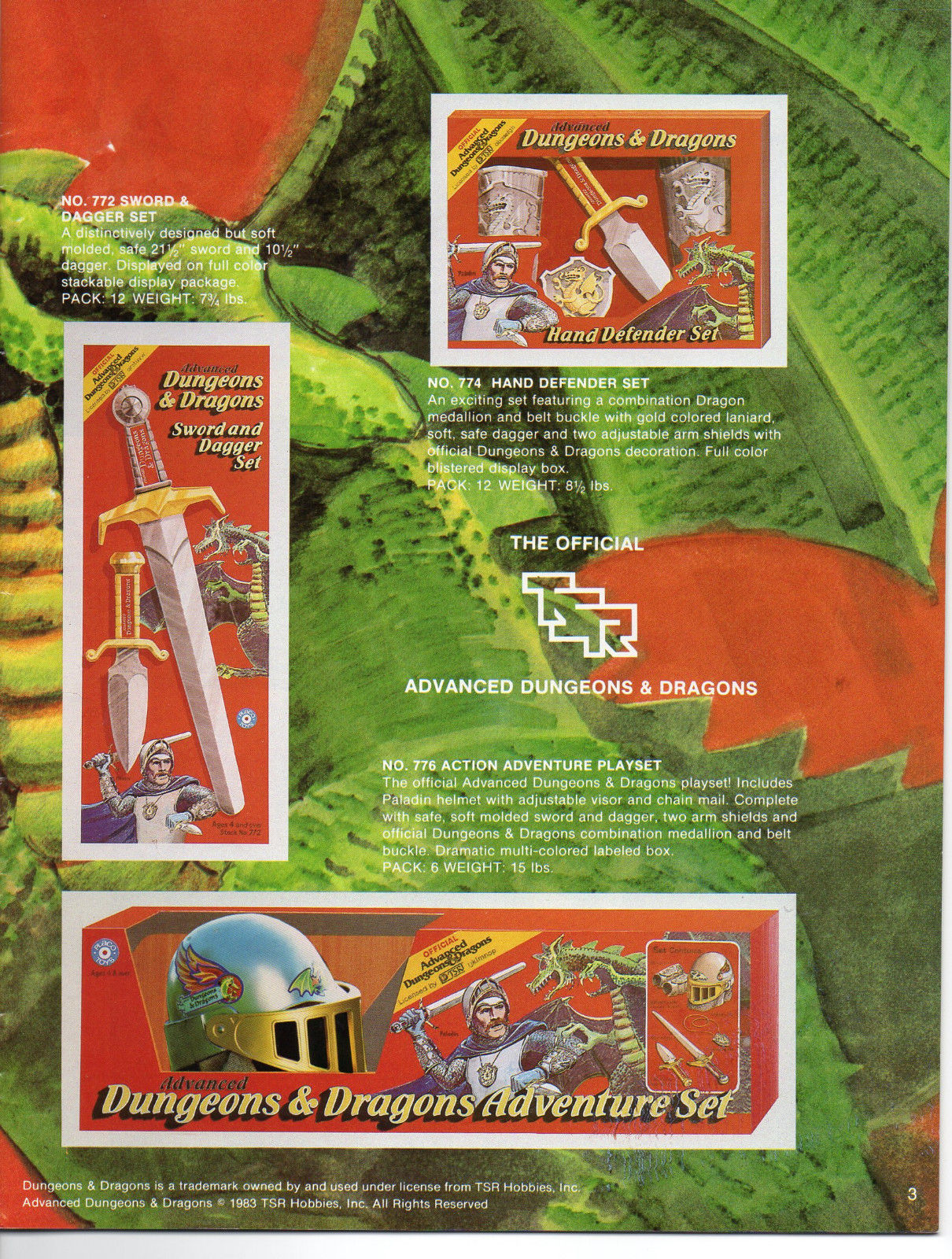
1983 Placo Toys Catalog: Advanced Dungeons & Dragons Weapon Sets

Placo-1

Placo-2

Placo-3

There’s “chain mail” on the Paladin helmet! All the sets and more, including Warduke gear, appear in the 1984 Placo catalog.

The Strongheart illustration is similar to that used on Coleco’s D&D Power Cycle (1984).

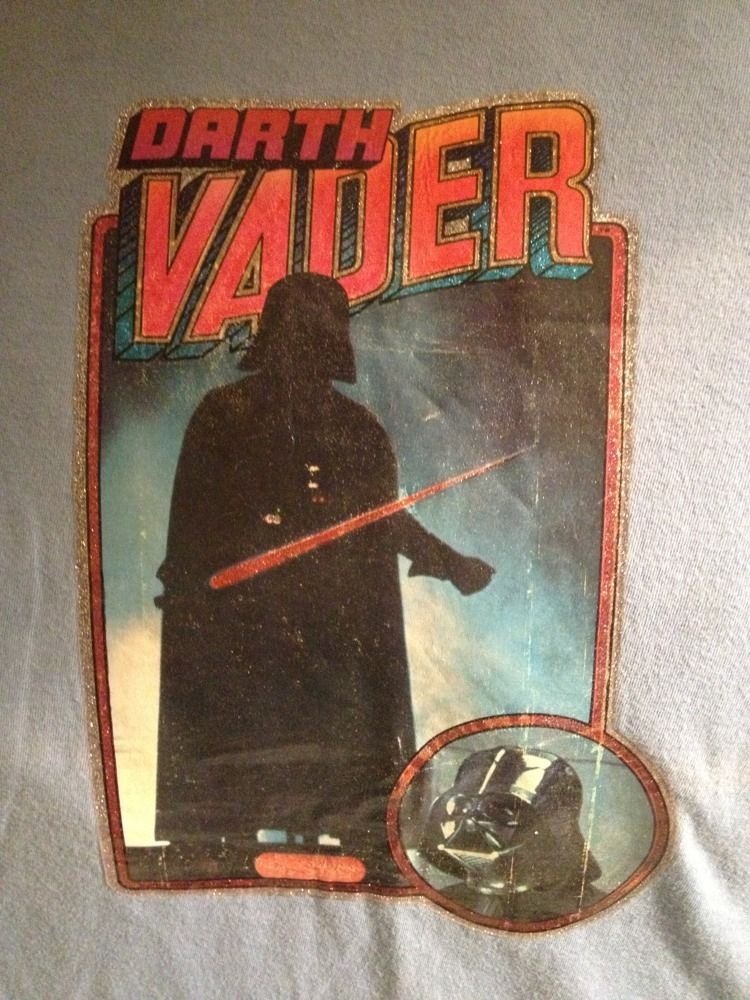
Star Wars T-Shirt Transfers, 1977

SW Transfer 1977-5

SW Transfer 1977-3

SW T-Shirt 1980

SW T-Shirt 1977-3

SW Transfer 1977-8

SW Transfer 1977-6

Lots of Empire Strikes Back transfers here and here.

(Images via eBay)


Pages

Archives

Categories

Donate Button

Join 1,118 other subscribers