Archive Page 70

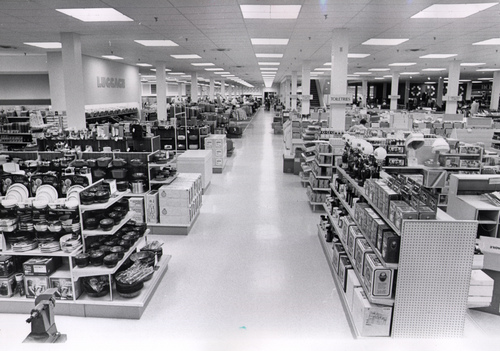
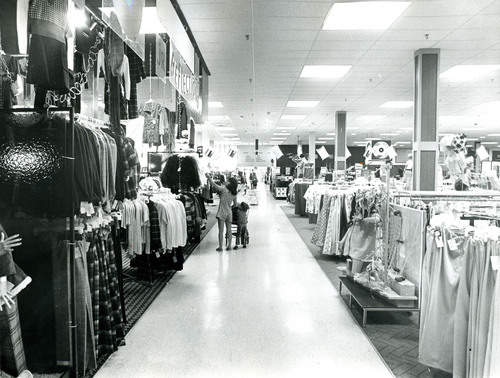
Inside J.C. Penney and Montgomery Ward, 1973

JC-1

Women’s clothing

JC-2

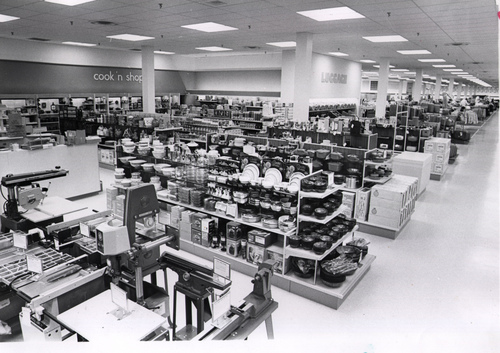
Main aisle at housewares

JC-4

Housewares, featuring power tools and the `cook ‘n shop’ section

JC-3

Camera department, with sportswear in the far background on left

JC-5

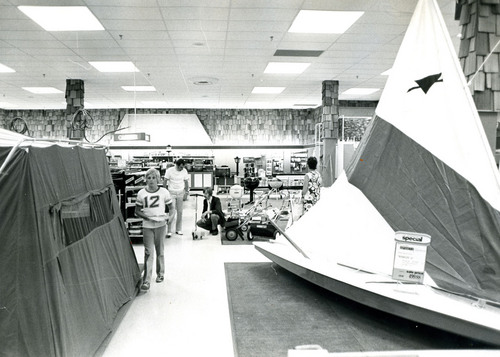
Sporting goods and toys

JC-6

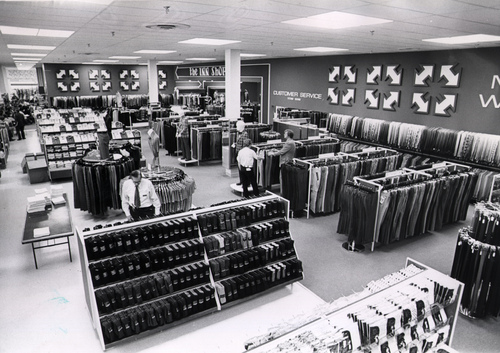
Men’s suits

JC-7

Furniture department with bar sets

I found the photos at News Tribune Attic, an archive of the Duluth News Tribune. Miller Hill Mall opened in 1973, anchored by J.C. Penney (above) and Montgomery Ward (below). JCP is still there. Ward was replaced by DSW Shoe Warehouse, Barnes & Noble, and Old Navy in 2001.

What I noticed right away was the lavish amount of space, not just in the aisles but in the respective sections themselves. The mall wasn’t just a warehouse of merchandise, but a place of comfort, a journey into the fantasy of the American Dream.

I wish the photos enlarged. The toy section in the fifth shot down stretches out on both sides of the aisle, and I can’t make out a damn thing.

My obsession with shopping malls goes back a ways.

MW-1

Food court/’buffeteria’

MW-2

Sporting goods. The sailboat is on sale for $499.88.
MW-3

Juniors (‘Reflections’) and women’s clothing departments


Clash of the Titans Lunch Box and Thermos (1980)

COTT LB 1980

COTT LB 1980-2

COTT LB 1980-3

COTT LB 1980-4

COTT LB 1980-6

COTT LB 1980-5

COTT LB 1980-7

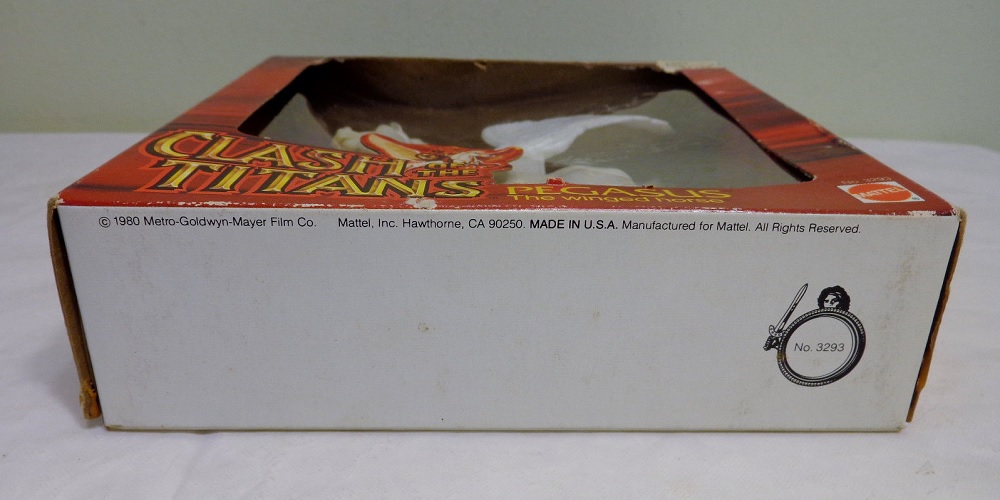
Mattel’s Clash of the Titans Toys: Pegasus the Winged Horse (1980)

COTT Pegasus Front

Pegasus 1980-3

Pegasus 1980-4

Pegasus 1980-2

COTT Pegasus Back

No coloring, hair, or articulation whatsoever. The wings were rubber and flexed—that’s about it. The color and hair aspects would be rectified when Mattel reused the mold for Arrow, from the Princess of Power line (1985 – 1987). Pegasus also came packaged with Perseus.

COTT Peg

Pers Peg

The infamous Kraken figure is here, and I’ve since added some new pics of the box. I’ll post photos of the carded figures next week. The only thing special about the line, in my opinion, is the eye-popping packaging.

(Images via eBay and he-man.org)

Father and Son Playing Intellivision, 1981 (Part One)

Intellivision 1981

The box on top, and the game they’re playing, is NBA Basketball. The game on the bottom belongs to the Strategy Network (Intellivision cart boxes were color coded according to game type). I bet it’s Utopia, one of the first sim games and a favorite of mine.

(Photo via Adam Pratt/Flickr)

French Wizard of Wor Ad (CBS Electronics, 1982)

WoW French 1982

Au coeur du jeu: Inside the game, or in the heart of the game.

(Image via Atari Mania)

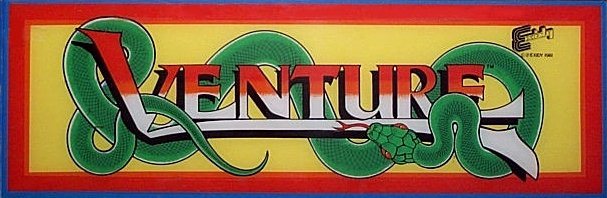
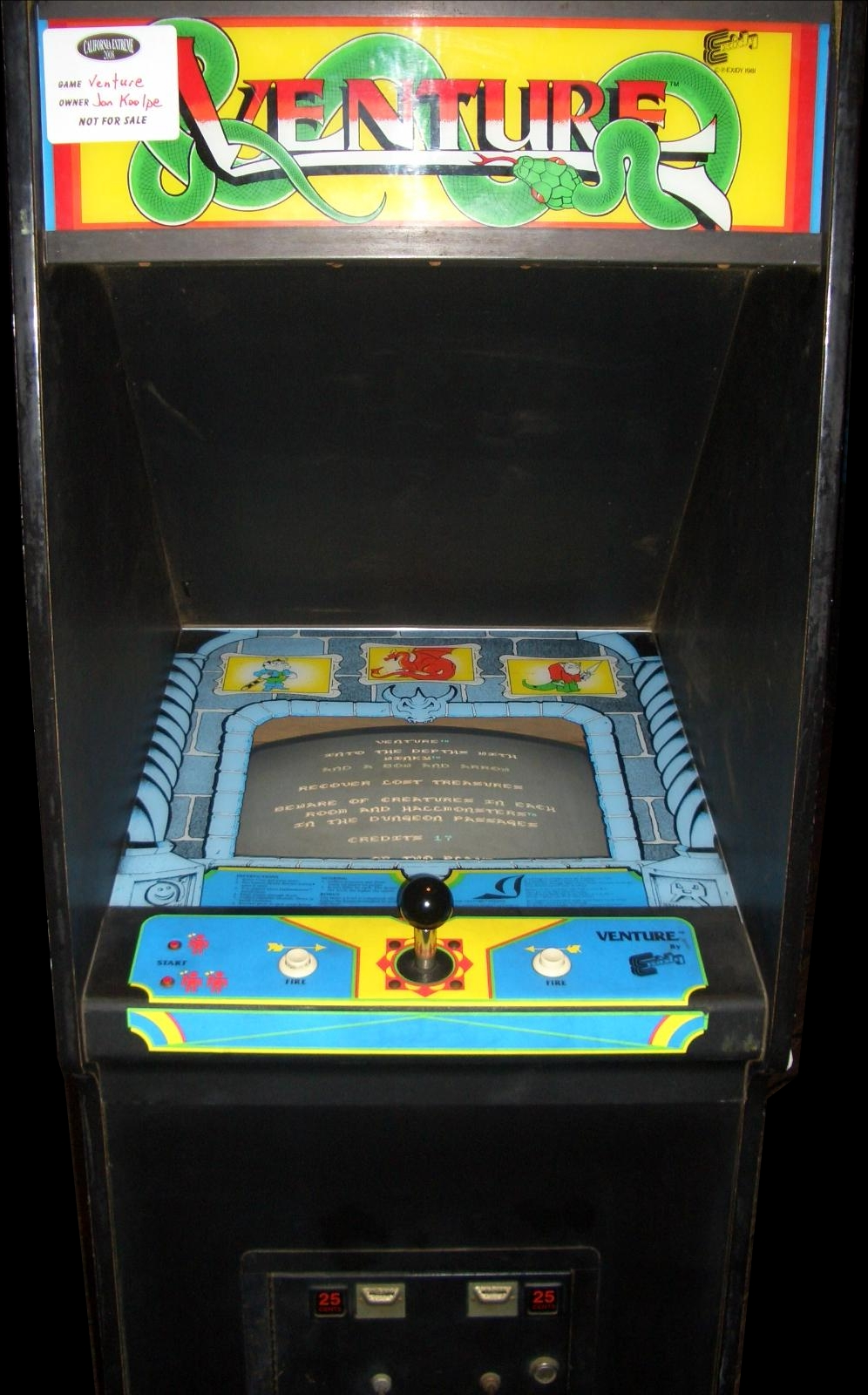
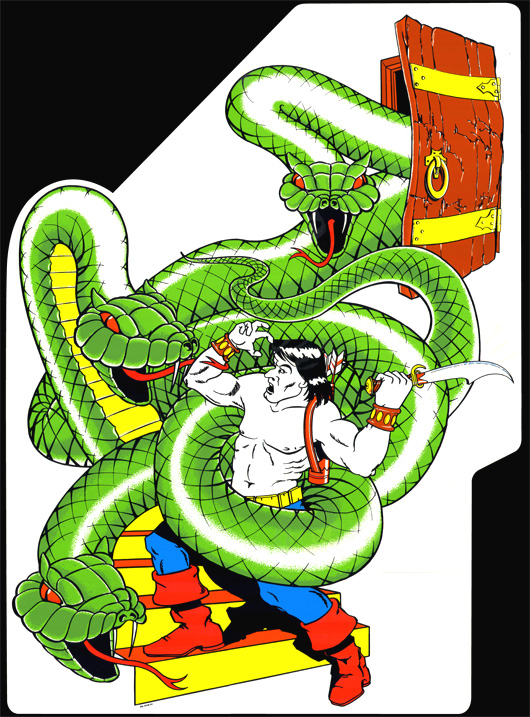
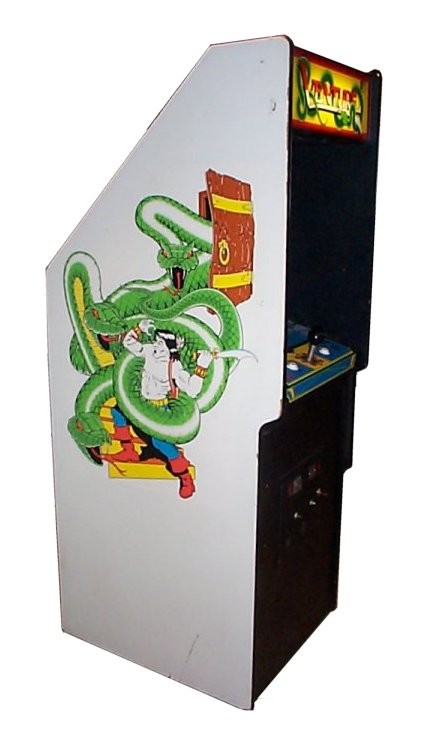
Arcade Cabinets: Venture (Exidy, 1981)

Venture-1

Venture-2

Venture-3

Venture-4

Venture is probably the first arcade game directly influenced by Dungeons & Dragons. From the original arcade flyer:

VENTURE is played in a dark dungeon of multi-levels. The player forges through one level of rooms at a time, displayed on the screen as a floor plan. Armed with bow and arrow, the player learns to avoid confrontation with the wandering green Hall Monsters…

Each room is a new and completely different challenge. For example, one room has a pot of gold of high point value, guarded by goblins. Another has a magic bow giving the players special powers when shooting at creatures. Other rooms have hazardous conditions such as shrinking walls… or deadly ooze…

After strategically and skillfully collecting all the treasures on one level, the player ventures further into the depths of the dank and threatening dungeon…

Sound familiar? As the Golden Age Arcade Historian notes, Midway’s Wizard of Wor, released the same year as Venture, also employs a fantasy theme (with a sci-fi element), but the gameplay itself is standard clear-the-maze fare. The flyers and ads for Wizard do seem to emulate the TSR vibe of the time. Here’s some of the language:

Worriors descend into various dungeon mazes, battling visible and invisible monster Worlings, and maybe the Wizard himself.

Dungeon maze patterns appear at random and have escape doors at either end. These are used for strategic exit and entry.

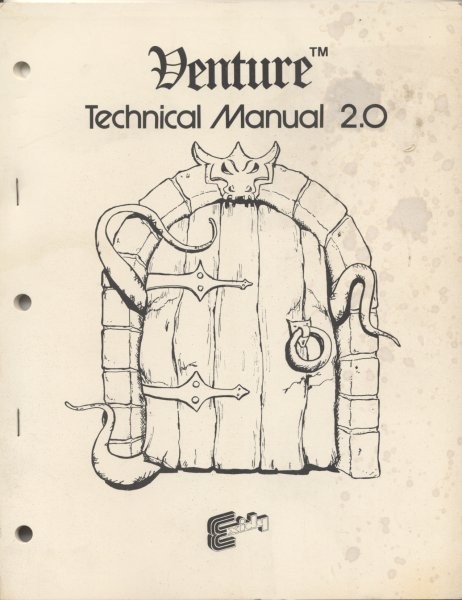
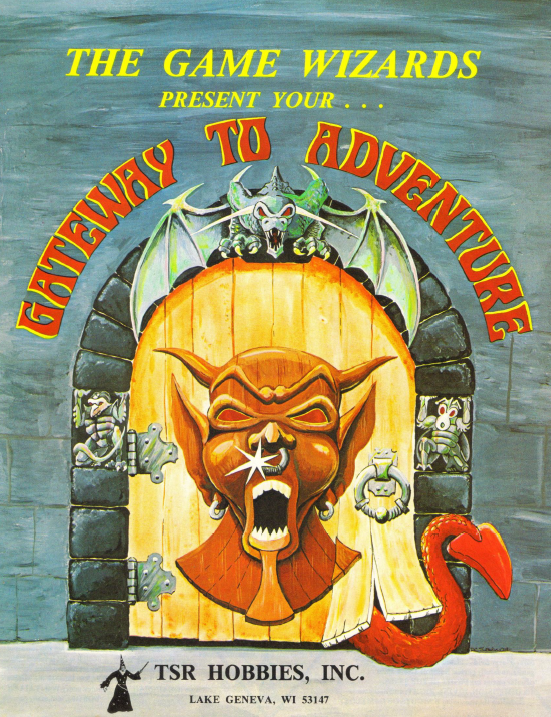
Also, compare the cover of Venture‘s Technical Manual to TSR’s “Gateway to Adventure” catalog cover circa 1980.

Venture-10

Gateway 1980

UPDATE (7/25/14): Post has been revised for accuracy. Thanks, Alex.

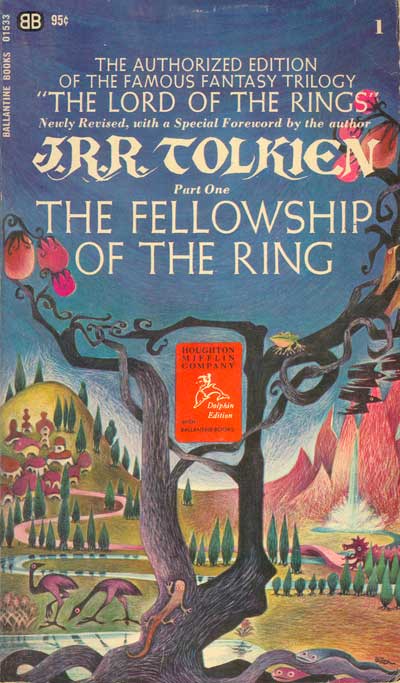
The First Authorized Paperback Edition of The Lord of the Rings (Ballantine, 1965)

Fellowship 1965

Towers 1965

Return 1965

Tolkien did not initially want his trilogy to appear in so “degenerate a form” as the paperback book. What happened is that Donald Wollheim, then editor-in-chief of Ace Books, released an unauthorized edition of LOTR in 1965, believing, or claiming to believe, that the soon-to-be literary phenomenon was in the public domain. The Ace edition, being affordable at 75¢/book, sold extremely well, and Tolkien immediately came to terms with the vulgar paperback medium. Ballantine’s revised and authorized edition, priced at 95¢/book, appeared in October, 1965 (The Fellowship of the Ring and The Two Towers) and November, 1966 (The Return of the King). Said Tolkien to his son in October of 1965:

Campaign in U.S.A. has gone well. ‘Ace Books’ are in quite a spot, and many institutions have banned all their products. They are selling their pirate edition quite well, but it is being discovered to be very badly and erroneously printed; and I am getting such an advt. from the rumpus that I expect my ‘authorized’ paper-back will in fact sell more copies than it would, if there had been no trouble or competition.

Wollheim’s unscrupulous maneuver—he was eventually forced to pay Tolkien the royalties he deserved—was the single most important event in the popularization of the fantasy genre and the birth of geek culture.

You can see the spines and back covers of the original Ballantine editions at Tolkien Collector’s Guide, where I found the images above. The cover artist is Barbara Remington.

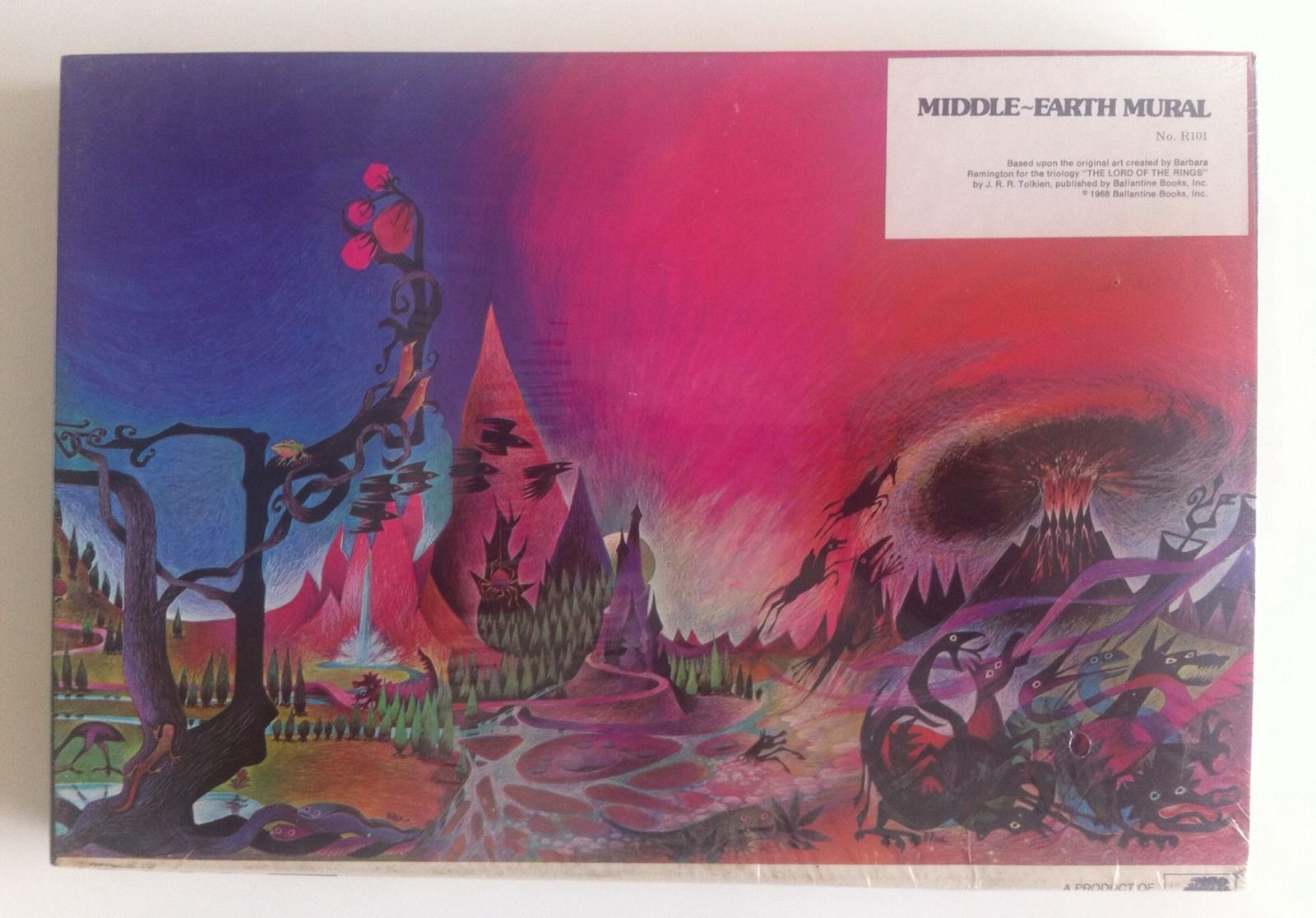
Middle-Earth Mural Poster Puzzle (1968)

Middle-Earth Puzzle 1968

Middle-Earth Puzzle 1968-2

Middle-Earth Puzzle 1968-3

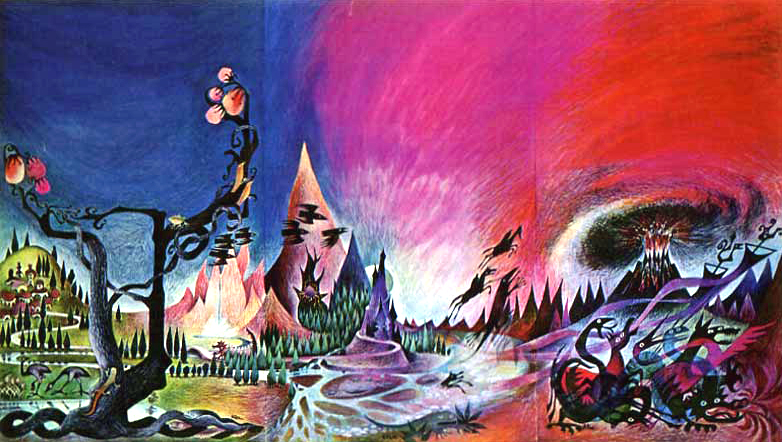
The art is from the first authorized paperback edition of The Lord of the Rings, released by Ballantine in 1965. Artist Barbara Remington famously had not read any of Tolkein’s books before completing the project; she had only heard accounts from friends. The end result befuddled and irritated Tolkien, but became hugely popular with his young fans—and most everyone attracted to mind-altering substances.

Remington’s bright canvas came in a poster version as well, seen below. The demarcations separating the individual covers are obvious.

Remington Poster

(Poster puzzle images via eBay)

Photos from the Inaugural World Fantasy Convention, 1975

WFC Bloch deCamp Munn

From left to right: Robert Bloch, L. Sprague de Camp, and H. Warner Munn

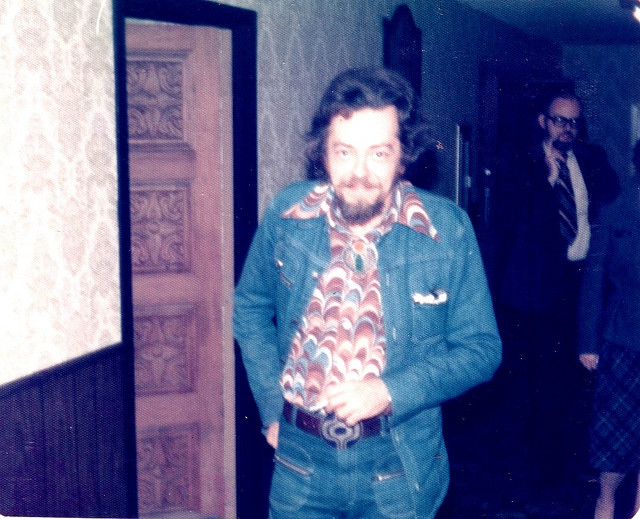
WFC Lin Carter 1975

Lin Carter

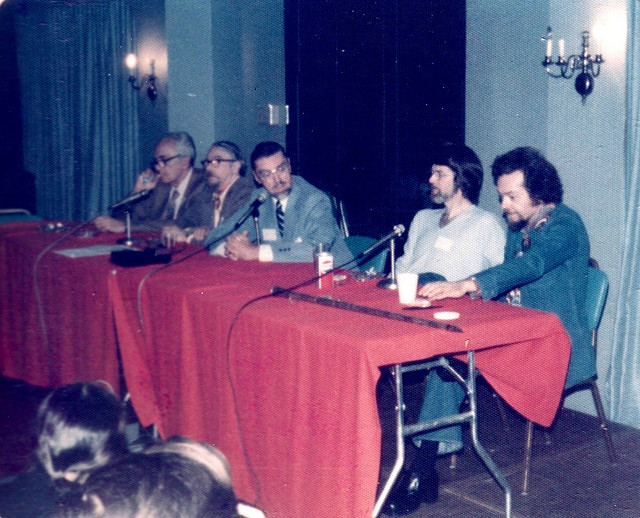
WFC Epic Fantasy 1975

The `Epic Fantasy’ panel. From left to right: Fritz Lieber, Lester del Rey, L. Sprague de Camp, Andrew J. Offutt, and Lin Carter

WFC Ramsey Campbell 1975

Ramsey Campbell

WFC Ackerman 1975

Forrest J. Ackerman

WFC Wellman 1975

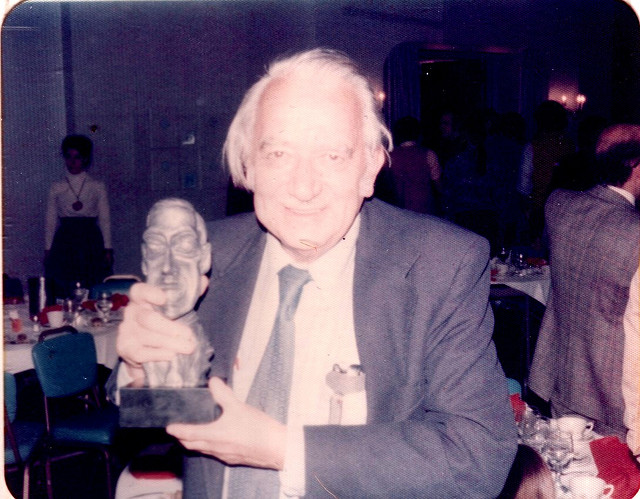
Manly Wade Wellman holding his World Fantasy Award, a bust of Lovecraft sculpted by Gahan Wilson

WFC Williamson 1975

Chet Williamson at Lovecraft’s grave

All of the photos come from Hunding’s Flickr set, with the following note:

I attended the First World Fantasy Convention in 1975 in Providence, Rhode Island, where I took the following pictures. They were starting to fade badly, so I decided to scan them, tweak them a bit, and post them here, where they may be of historical interest.

The theme of the convention was “The Lovecraft Circle.” Quite a few noteworthy speakers attended, including Lin Carter and L. Sprague de Camp, two of heroic fantasy’s greatest popularizers. Robert Bloch, who started corresponding with Lovecraft when he was in his teens, is famous for the novel Psycho. Like many of Lovecraft’s friends and Weird Tales contributors, Bloch extended and expanded the Cthulhu Mythos in his own works.

According to this 1975 Hour article, the three-day convention began on Halloween, and 400 people were expected to attend. The Sarasota Herald-Tribune has the figure at 500.

The World Fantasy Convention was modeled after the World Science Fiction Convention (Worldcon), first established in 1939. Both conventions are still going, with focus on intelligent conversation at the expense of dressing up like comic book characters.

More pictures—including a young Jeff Jones—at the first link. You can hear audio of some of the panels at archive.org.

Fisher-Price Alpha Probe Ad (1980)

FP AP 1980


Pages

Archives

Categories

Donate Button

Join 1,118 other subscribers