Archive Page 79

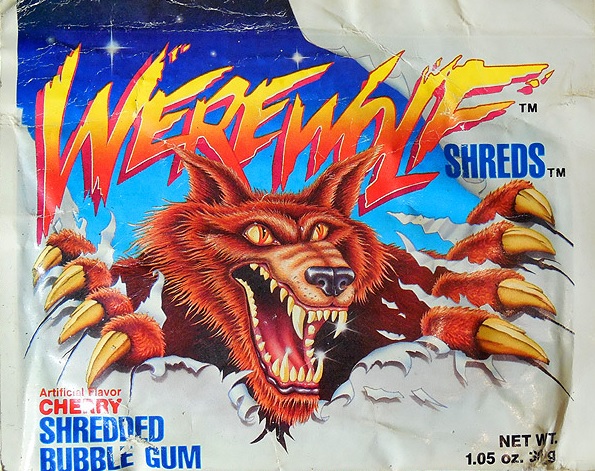
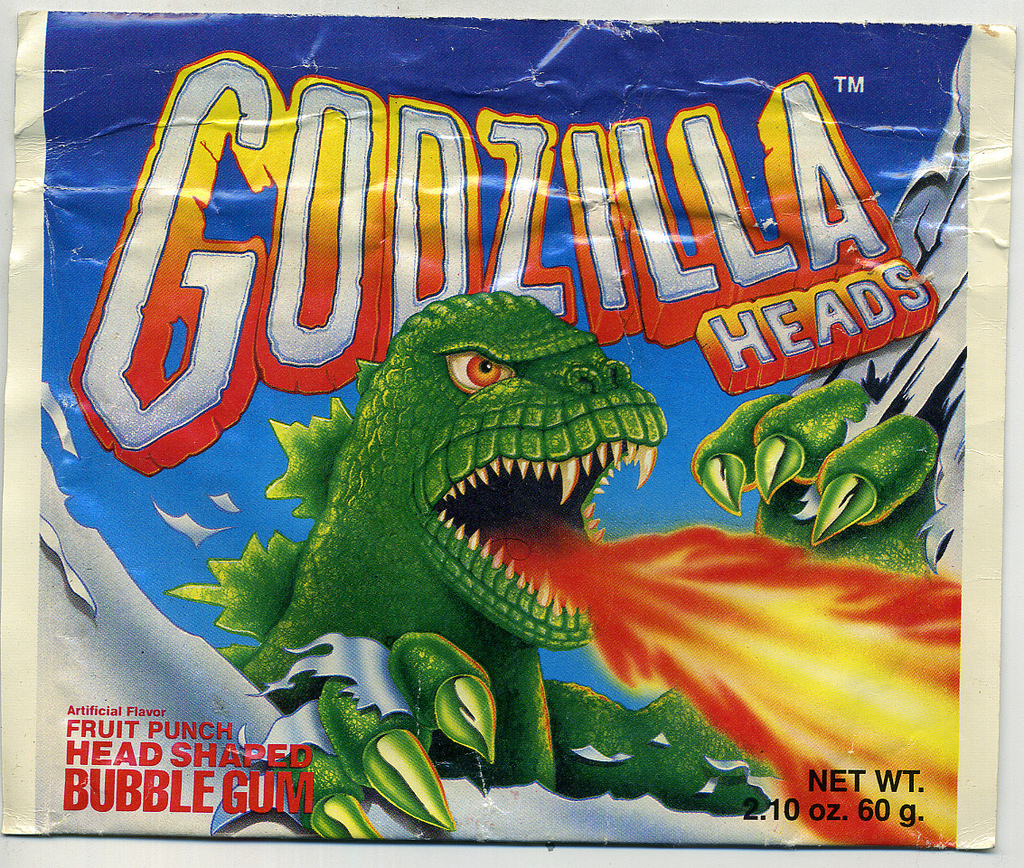
Godzilla Heads Bubble Gum (1988)

Godzilla Heads 1988

Godzilla Heads 1988-2

Pieces of bubble gum in the shape of Godzilla’s head? Yes, please. There were at least three monsters in the “Heads” series: King Kong and Werewolf were the other two. It seems a bit curious for 1988, but I have no doubt kids literally ate it up. Such is the power of sensational illustration. All three monsters also came in a “Shreds” variety, similar to Big League Chew, probably the best bubble gum experience any of us will ever have.

Below are the other package images I found.

King Kong Heads 1988

King Kong Shreds 1988

Werewolf 1988

(Images via Dan Goodsell/Flickr and Dinosaur Dracula)

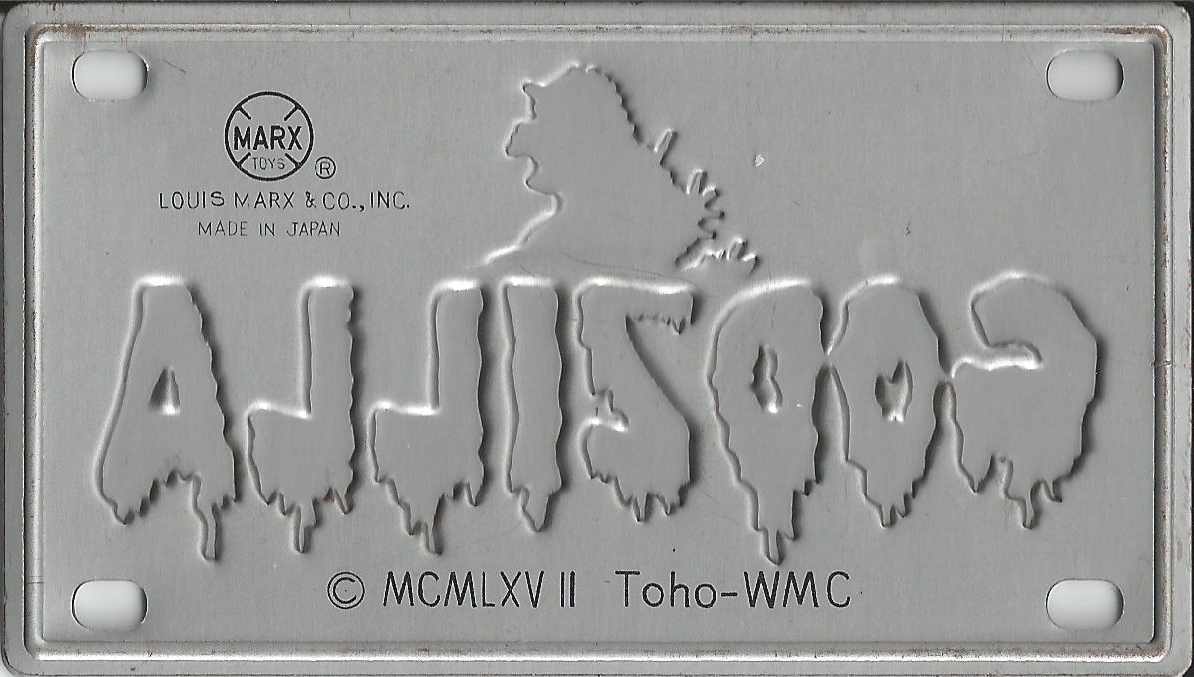
Marx Toys: Godzilla Bicycle License Plate (1967)

Godzilla Marx 1967

Godzilla Marx 1967-2

Incredible find by The Sphinx. Marx produced many plates in the 1960s featuring Spider-Man, Batman, Disney characters, and so on, but I had no idea they licensed and distributed one featuring the big guy.

Also, check out Sphinx’s ongoing checklist of Godzilla merchandise available in America up to 1985, with in-depth coverage of each item. Very cool.

Dungeons & Dragons Club, 1984

D&D Club 1984

You can’t hide from me, Greyhawk Grognard! Every time a portrait of old school D&D geeks appears on the internets, a little alarm goes off on my aging laptop and I spring into action (i.e. I click on my Google homepage and type in a couple of keywords).

All hail the Pingry School Dungeons and Dragons Club of 1984! They can’t beat you on the football field, but they will, if you cross them, destroy you and your cheerleading lapdogs with various applications of black magic, telekinesis, and Lankhmarian-made rapiers.

How many polo animal mascots can you spot?

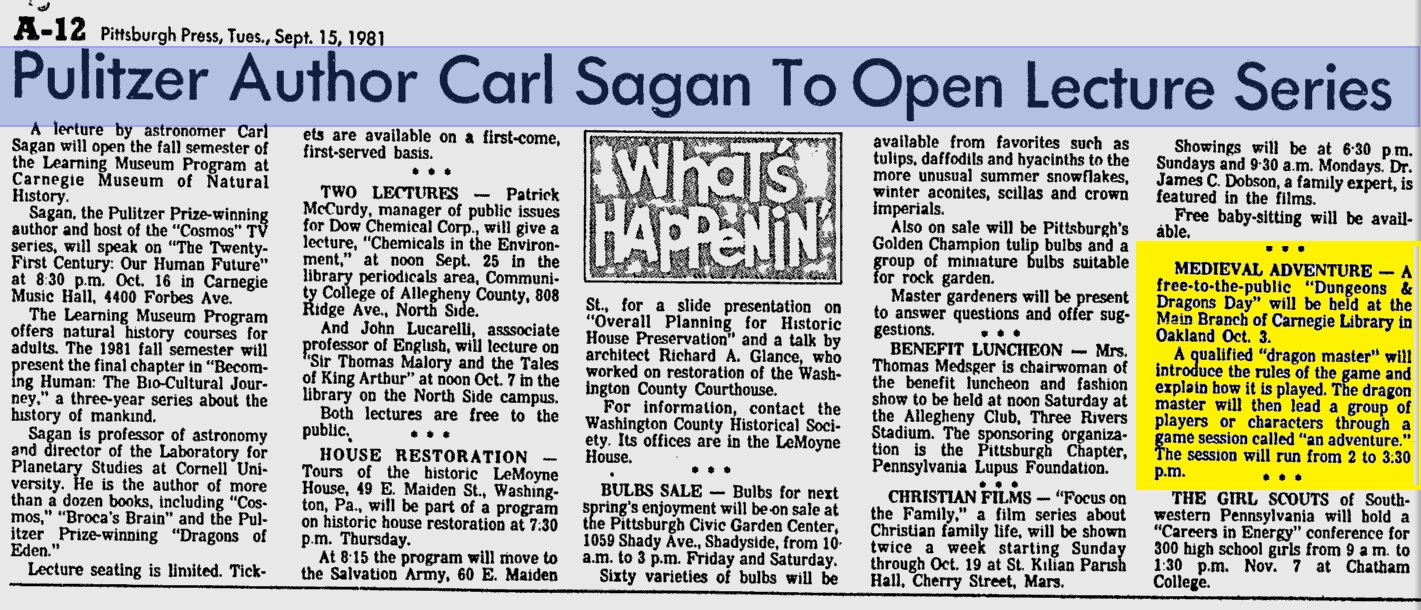
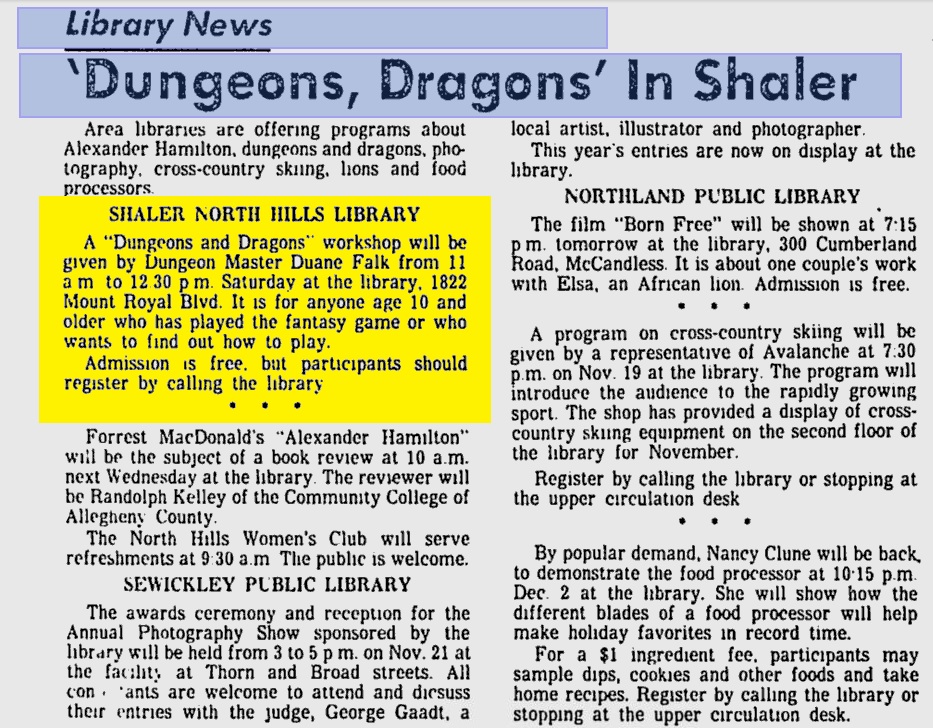
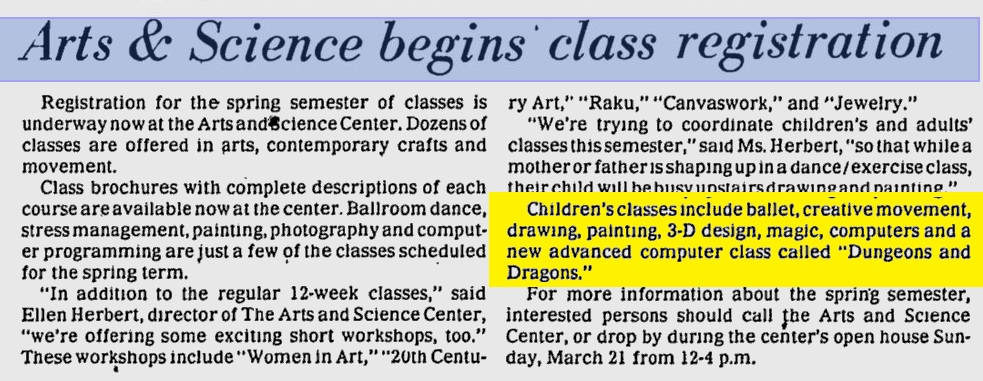
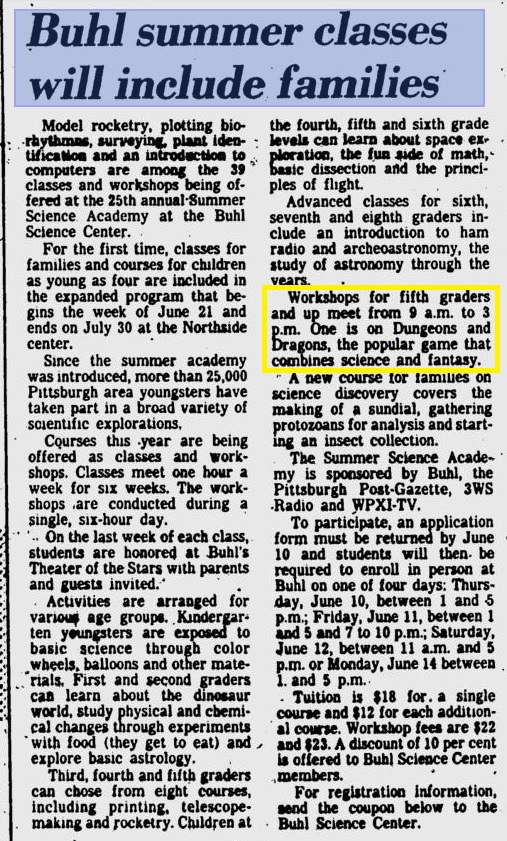
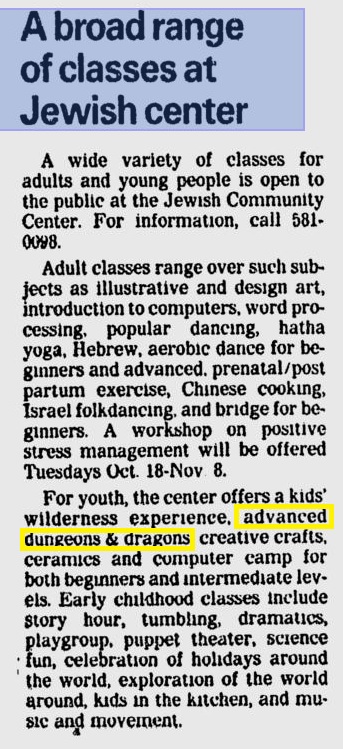
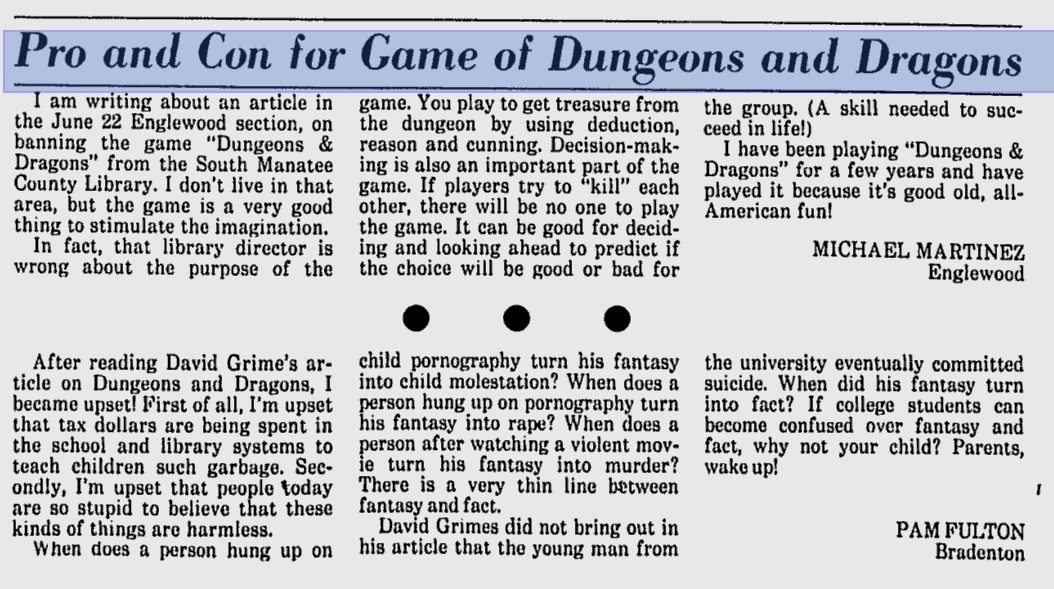
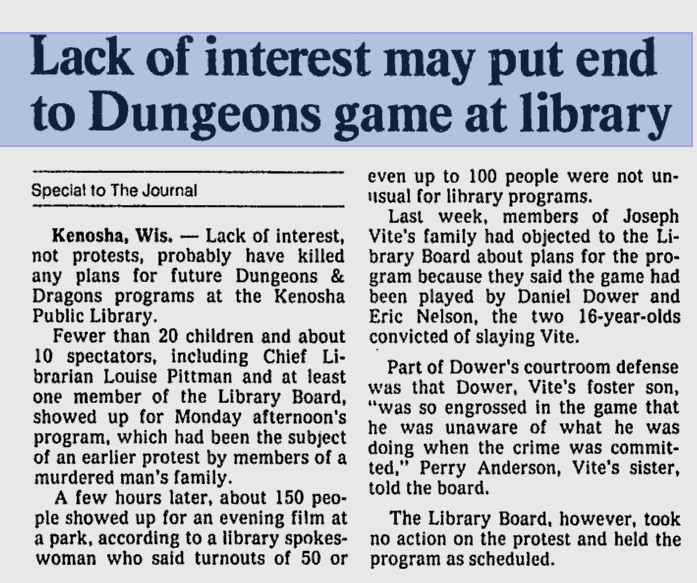
`Dungeons & Dragons Day’ at the Public Library, 1981 – 1985

D&D 9-15-81

D&D 11-10-81

D&D 3-12-82

D&D 5-15-82

D&D 9-29-83

D&D 7-1-84

D&D 7-16-85

The clippings are from (top to bottom) The Pittsburgh Press (9/15/81), The Pittsburgh Press (11/10/81), New Hampshire’s Nashua Telegraph (3/12/82), Pittsburgh Post-Gazette (5/15/82), Utah’s Deseret News (9/29/83), Florida’s Sarasota Herald-Tribune (7/1/84), and The Milwaukee Journal (7/16/85).

Certainly not an exhaustive list of ongoing D&D events sponsored by public institutions, but the narrative told in just these few cases is interesting enough. (I’ve mentioned D&D in science museums here and here). In the midst of all the nonsense spouted about the game, most adults managed to keep an even head about it. My parents didn’t understand how it worked or why I found it so enthralling, but they trusted me enough to let me play, and, if I felt it was necessary, to stop playing.

That’s what’s changed. It wasn’t the Religious Right that killed all the quality, kid-friendly events and institutions of the ’70s and ’80s (arcades, youth centers, public playgrounds, roller rinks, summer camp, etc.), it was helicopter parents and their distrust (overprotection is a form of distrust) of their own children. If kids aren’t allowed to hang out by themselves with other kids, then all the fun places for kids get shut down, and they’re left thinking Angry Birds and Facebook are as good as it gets.

We need more places—more physical spaces—for kids to inhabit so that they can develop their own communities, languages, ideas, and rules. Otherwise, they’re never going to grow up. And they’re never going to understand what fun really is.


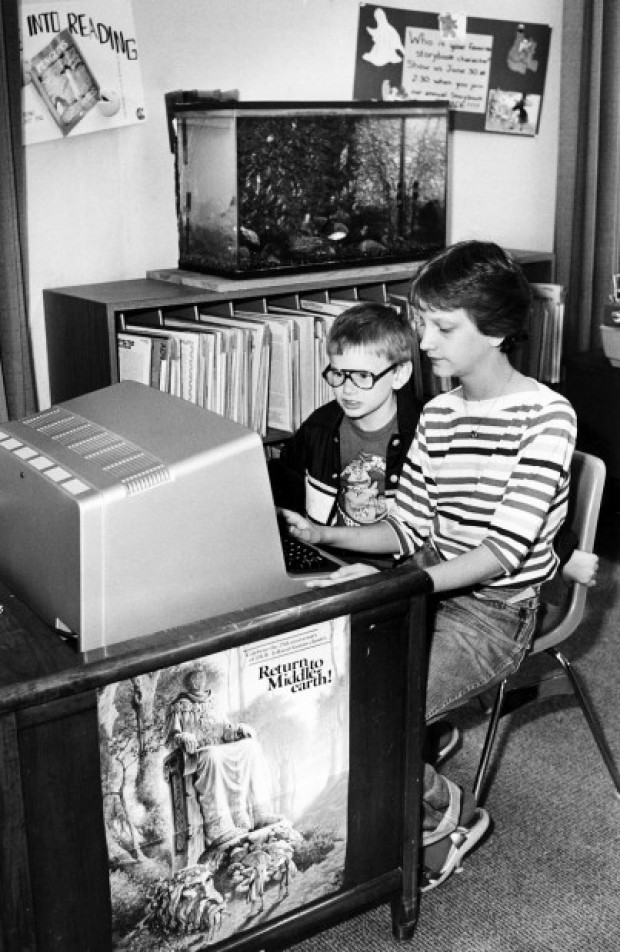
Kids Using Library Computer, 1982

Library 1982

Caption, from JournalStar.com: Bennett Martin Public Library volunteer Laura McKee, age 12, shows her cousin David Nolan, 7, how to use the computer in 1982.

The Bennett Martin Public Library is in Lincoln, Nebraska. Dig that Lord of the Rings poster! It’s the Darrell Sweet cover for Ballantine’s Silver Jubilee Edition of The Two Towers (1981).

My mom took me to the local library once a week. I was that kid.

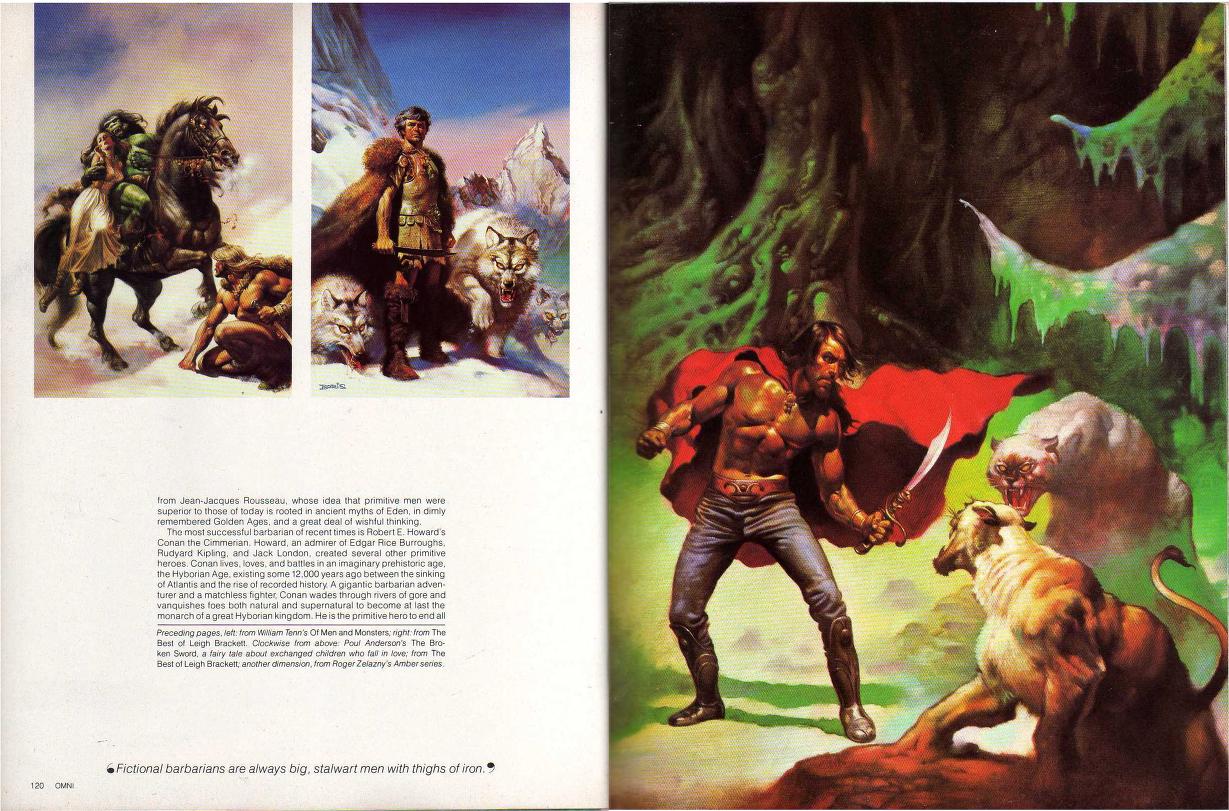
Omni Magazine (October, 1980): L. Sprague de Camp and Dungeons & Dragons

Omni 10-80 pg. 118-119

Omni 10-80 pg. 120-121

Omni 10-80 pg. 122-123

L. Sprague de Camp (1907 – 2000) was a prolific writer and popularizer of the fantasy genre, an engineer by trade, and something of a self-taught history and Classics scholar. (I just read his excellent, still relevant debunking of the Atlantis myth, Lost Continents). He edited the very first heroic fantasy or sword and sorcery anthology called Swords & Sorcery (Pyramid, 1963), which I’ll talk about in a later post. The phrase `heroic fantasy’ was coined by de Camp in 1963 (OED citation here); ‘sword and sorcery’ was coined by Fritz Leiber in 1961 (OED citation here).

His unsentimental grounding of the genre is right on, I think—from a traditional male perspective, anyway:

Heroic fantasy is alive and flourishing. The more complex, cerebral, and restrained the civilization, the more men’s minds return to a dream of earlier times, when issues of good and evil were clear-cut and a man could venture out with his sword, conquer his enemies, and win a kingdom and a beautiful woman. The idea is compelling, even though such an age probably never existed.

Here’s de Camp’s slightly less sexist description from the 1967 Ace edition of Conan:

Such a story combines the color and dash of the historical costume romance with the atavistic supernatural thrills of the weird, occult, or ghost story. When well done, it provides the purest fun of fiction of any kind. It is escape fiction wherein one escapes clear out of the real world into one where all men are strong, all women beautiful, all life adventurous, and all problems simple, and nobody even mentions the income tax or the dropout problem or socialized medicine.

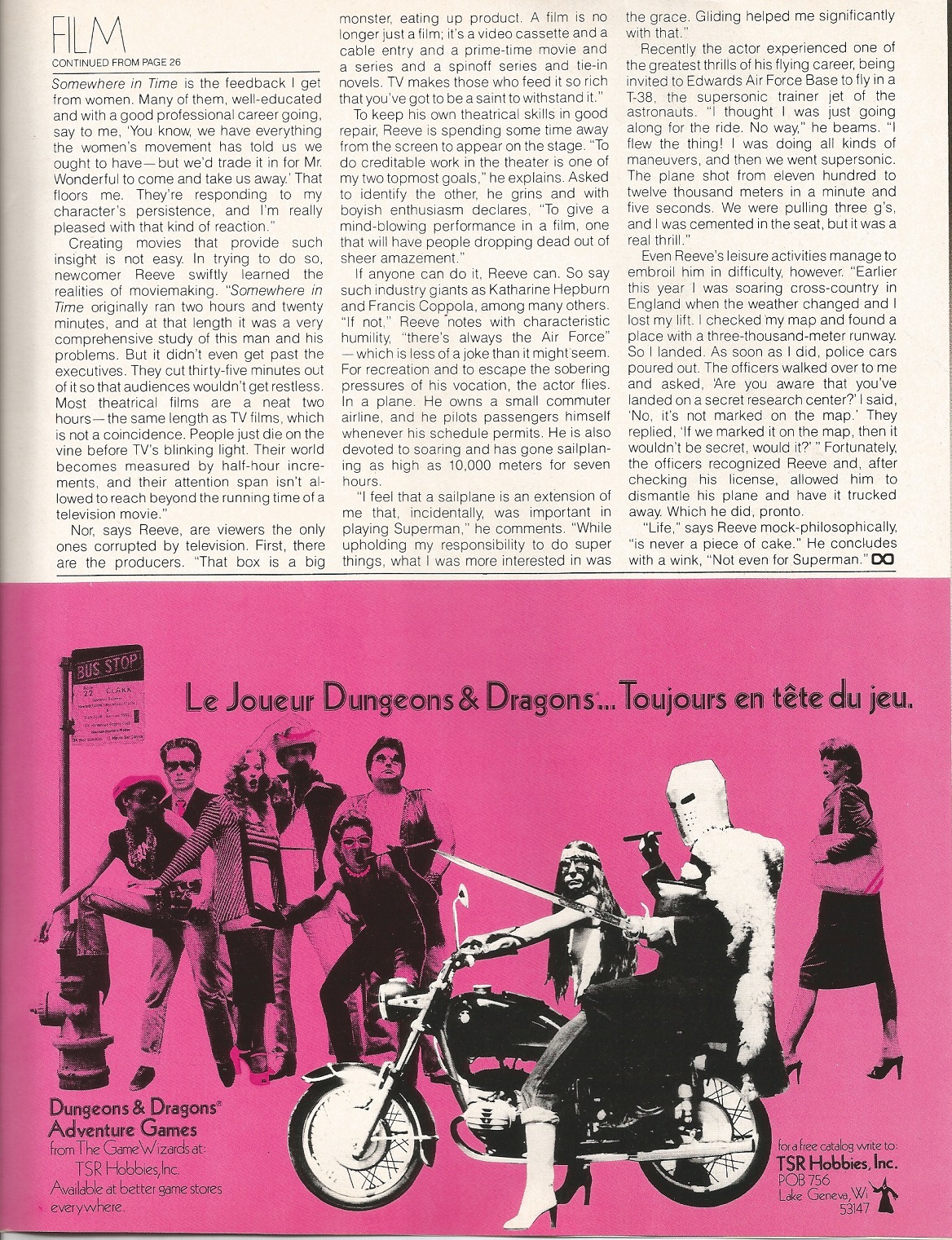
He doesn’t mention D&D, but, to prove the point of his short piece, there’s an ad near the back of the same issue (page 153 of 194).

Omni 10-80 pg. 153 of 194

What’s interesting is that the ad itself wants to be complex and cerebral, and tries to appeal to a more “sophisticated” audience. (The translation is “Play Dungeons & Dragons… Always ahead of the game.”) I’ve been going through a long run of Omni and will post all the D&D ads (and other interesting material). Archive.org has a large catalog of Omni for viewing, but the ads have been left out. That’s to be expected, considering the length of the magazine.

Destroy All Computer Generated Monsters (Part Three): Mikey Walters’ Top Five Kaiju Films Not Featuring Godzilla

1. Mothra (1961)

Mothra Poster 1961

1962 U.S. theatrical poster

What It’s About: Infant Island’s kaiju protector retaliates against atomic testing and the kidnapping of the Shobijin (“small beauties”).

Why It’s Unique: Filled with wonder, beauty, and mysticism, Mothra’s introduction is essential viewing.

Favorite Scene: The Shobijin’s “dinner show” featuring the famous Mothra song is entrancing, but watching Mothra emerge from her cocoon in her full winged glory is even better.

Watch the original trailer here.

2. Rodan (1956)

Rodan Poster 1956

Japanese theatrical poster

What It’s About: Giant pteranodons awaken and wreak havoc.

Why It’s Unique: Another great kaiju introduction, made even better by the suspenseful plight of miners being attacked by giant insects.

Favorite Scene: I love kaiju films that build the tension as long as possible before the first reveal, and Rodan manages to build for 45 minutes before the flying beast appears.

Watch the original trailer here.

3. War of the Gargantuas (1966)

War Gargantuas Poster 1966

French theatrical poster

What It’s About: In this sequel to Frankenstein Conquers the World (1965), which almost made the list, humanoid kaiju Gaira and Sanda battle in all kinds of terrain, from mountainside to city.

Why It’s Unique: Humanoid kaiju allow for some great battle scenes and highlight the detail of the wonderful forest and mountain miniatures.

Favorite Scene: I’m a fan of all the Maser Cannons used in the film, but the “shock” scene winner has to be Gaira casually swallowing a woman whole, then spitting out the bouquet of flowers she was holding.

Watch the trailer here.

4. Gamera (1965)
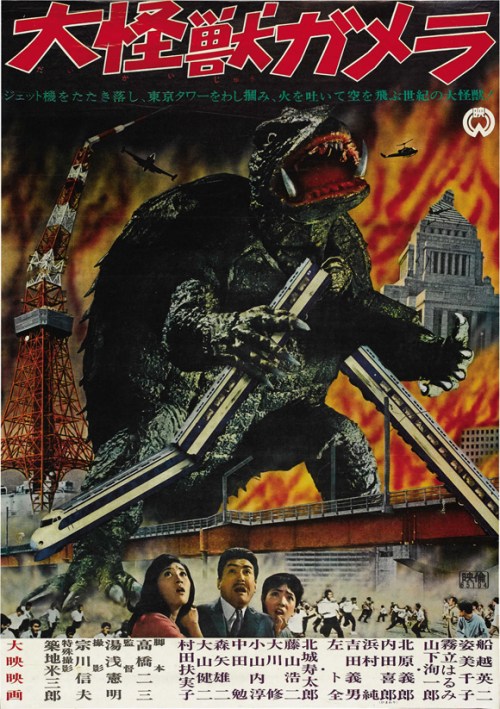
Gamera Poster 1965

Japanese theatrical poster

What It’s About: A prehistoric giant turtle who consumes fire and flies with rocket power must be stopped.

Why It’s Unique: The first film of the second most popular kaiju series has a serious tone—unlike the rest of the franchise, aimed squarely at children—and features wonderful effects.

Favorite Scene: While Gamera destroys a ship stuck in the ice, tiny animated figures run away from the wreckage. Also, as Gamera stomps through the city, people can be seen running by in building windows (achieved with a filmstrip-like effect).

Watch the original trailer here.

5. Gamera: Guardian of the Universe (1995)

Gamera Poster 1995

Japanese theatrical poster

What It’s About: Through a mystical bond with a young girl, Gamera awakes to defend Earth against his ancient foe, Gyaos.

Why It’s Unique: Gamera’s first Heisei film features incredible effects and a more mature tone, so this is a great one to show your friends who don’t “get” kaiju.

Favorite Scene: In the middle of fantastic fighting and destruction effects, watching poor Asagi (the young girl mentioned above) feel Gamera’s pain is intense!

Watch the trailers here.

___________________________________

Parts one and two of Destroy All Computer Generated Monsters are here and here, respectively.

Movie poster image credits: Wrong Side of the Art, Godzilla Wikia, Wrong Side of the Art, Movie Poster Shop, and Wikipedia
Rare Footage of New Jersey’s Action Park (1979 – 1980)

Jason G. (of Contra Dextra Avenue) told me about New Jersey’s Action Park last year, an infamous late ’70s institution that offered kids thrills beyond belief—provided they survived the experience. The park was notorious for causing injuries and even several deaths. (The wave pool was called the “grave pool,” etc.) A few days ago, according to Deadspin, former Action Park director of operations Adam Ringler uploaded some rare park footage to YouTube from video taken in 1979 and 1980.
The video starts off with some commercials, moves to live footage of the inner tube attraction (they disappear into caves!), on to breakdancing, some kind of projectile-firing tank slash demolition derby attraction, a supersonic raft slide (watch the jump the raft full of kids takes at the 5:00 mark!), more commercials, a bobsled-like attraction (no helmets, please), and then the coup de grâce: the legendary, short-lived cannonball loop slide, i.e. a water slide that does a loop de loop.

A smiling boy in one of the commercials sums up the park and the long gone era that gave it life: “There are lots of big things for little kids to do.”

Thank you, Adam Ringler! Viva Action Park!

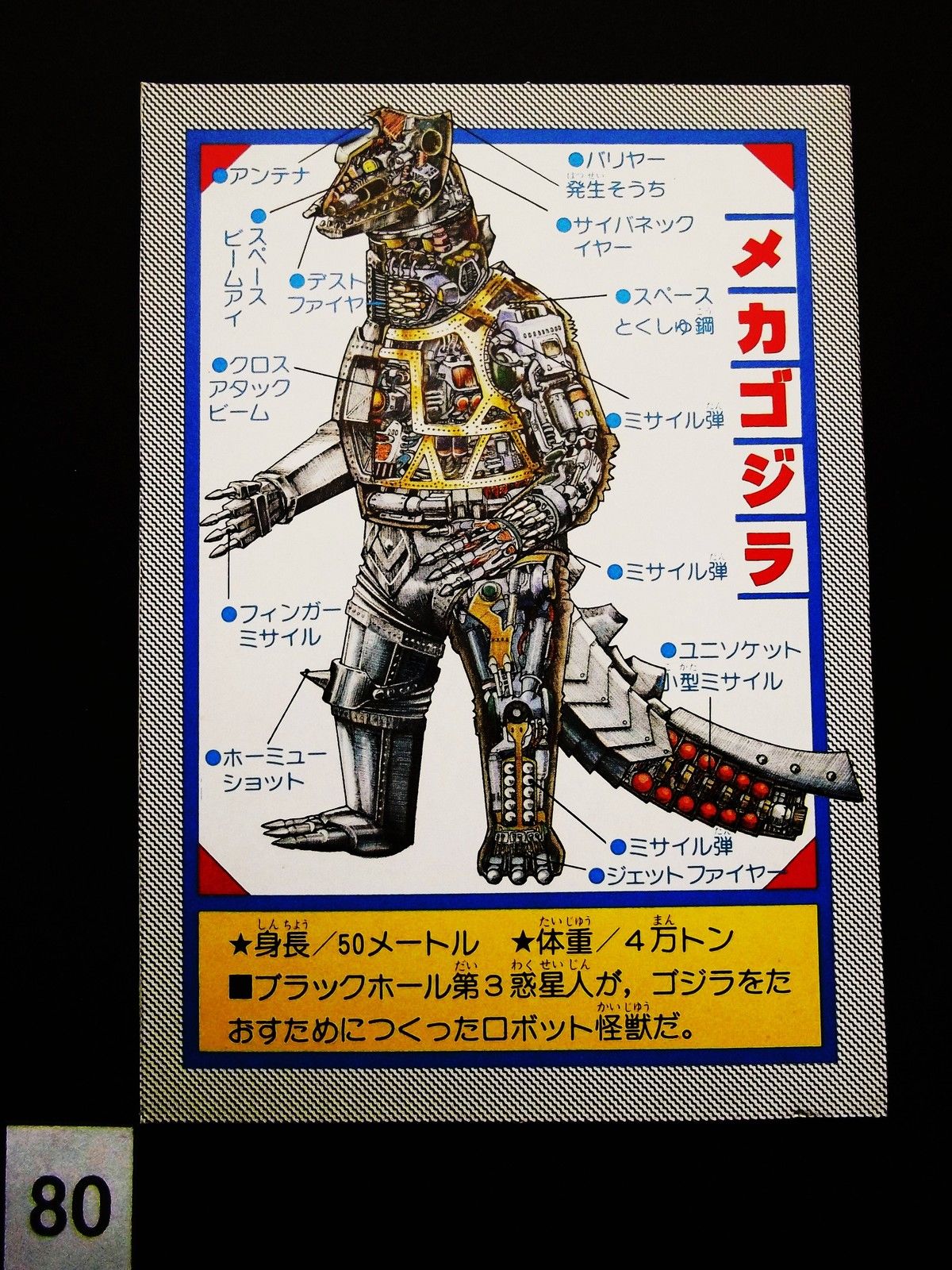
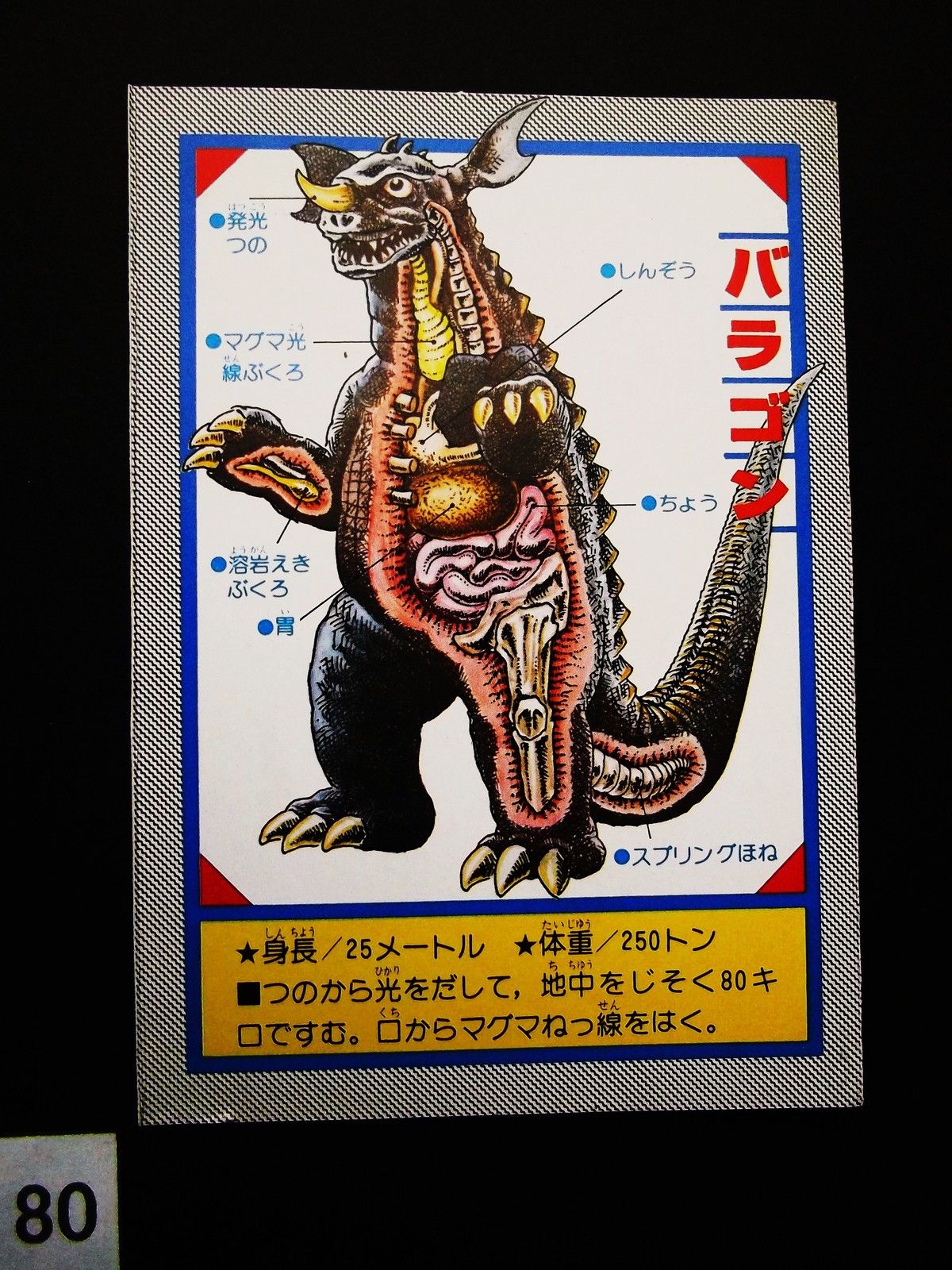
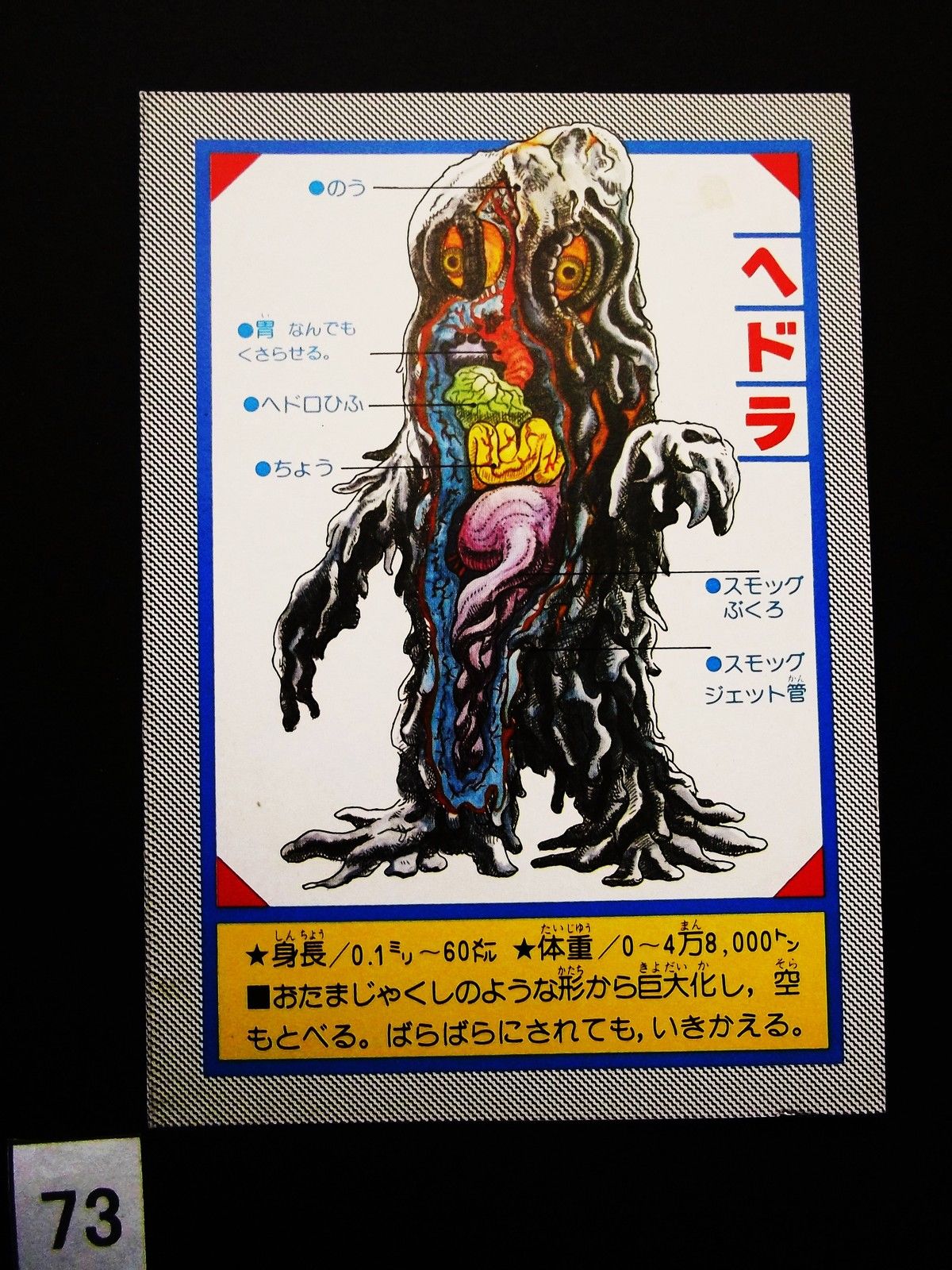
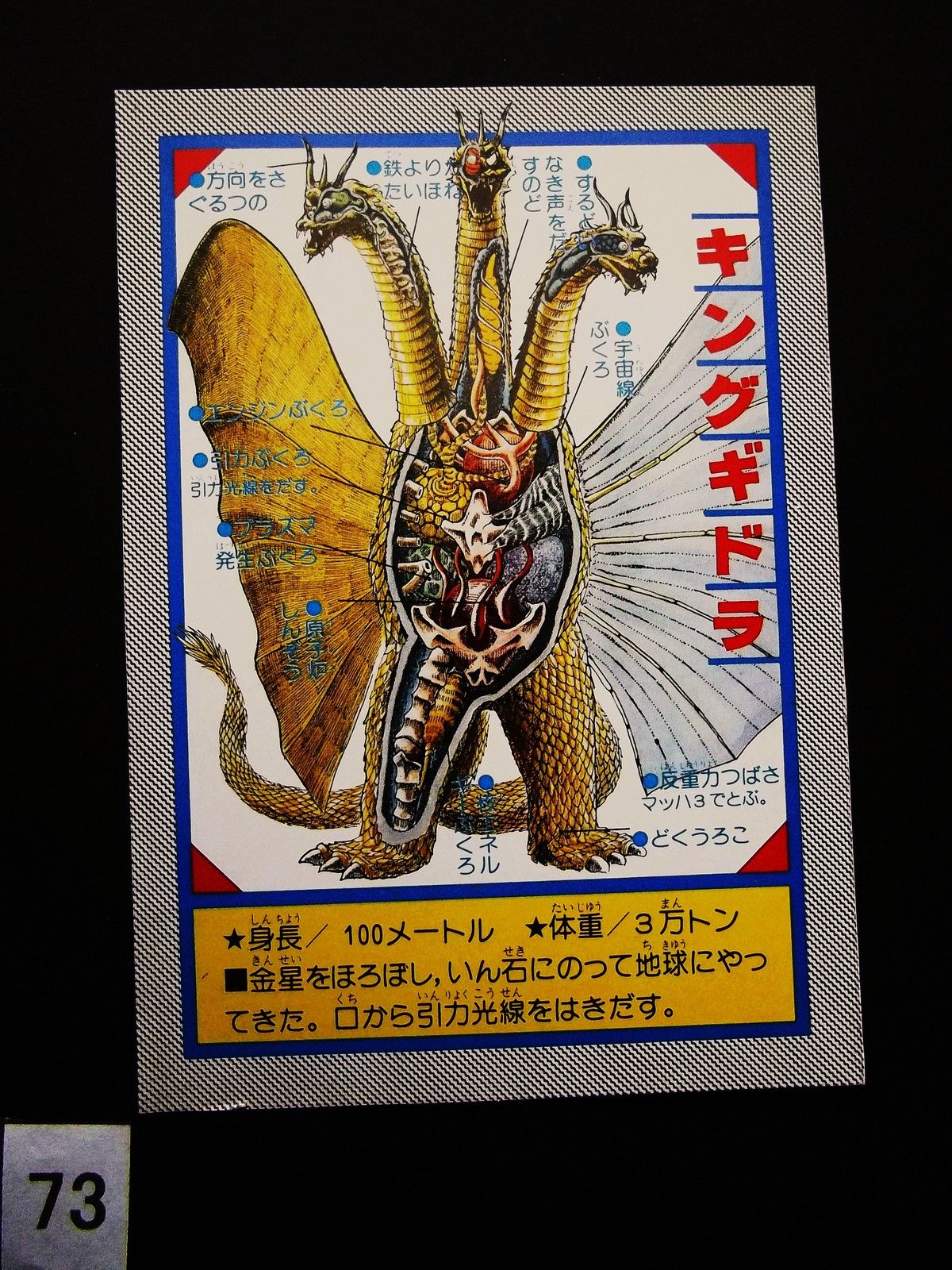
Kaiju Cross-Section Trading Cards, 1979

Mechagodzilla 80 1979

Baragon 80 1979

Hedorah 73 1979

King Ghidorah 73 1979

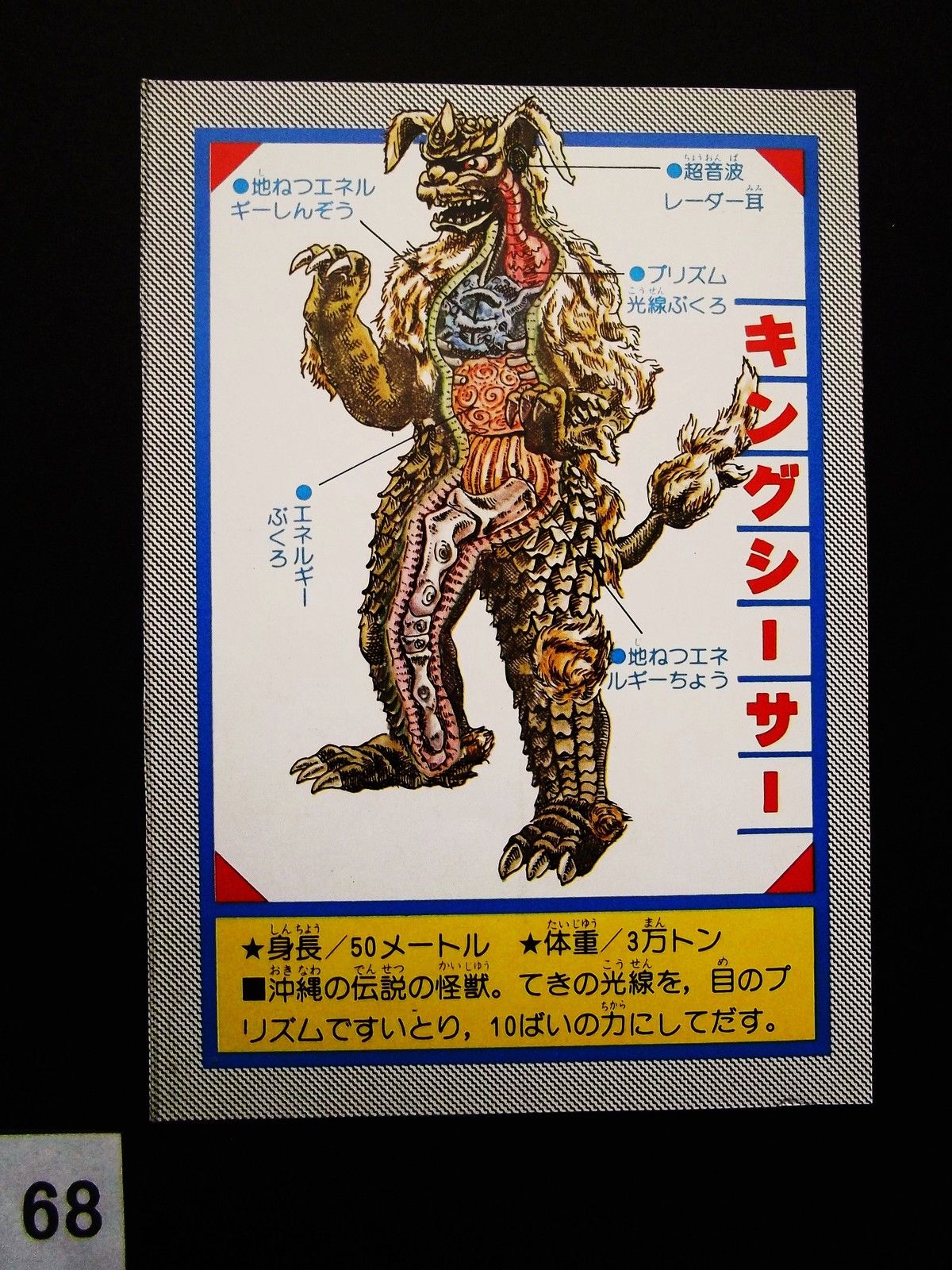
King Caesar 68 1979

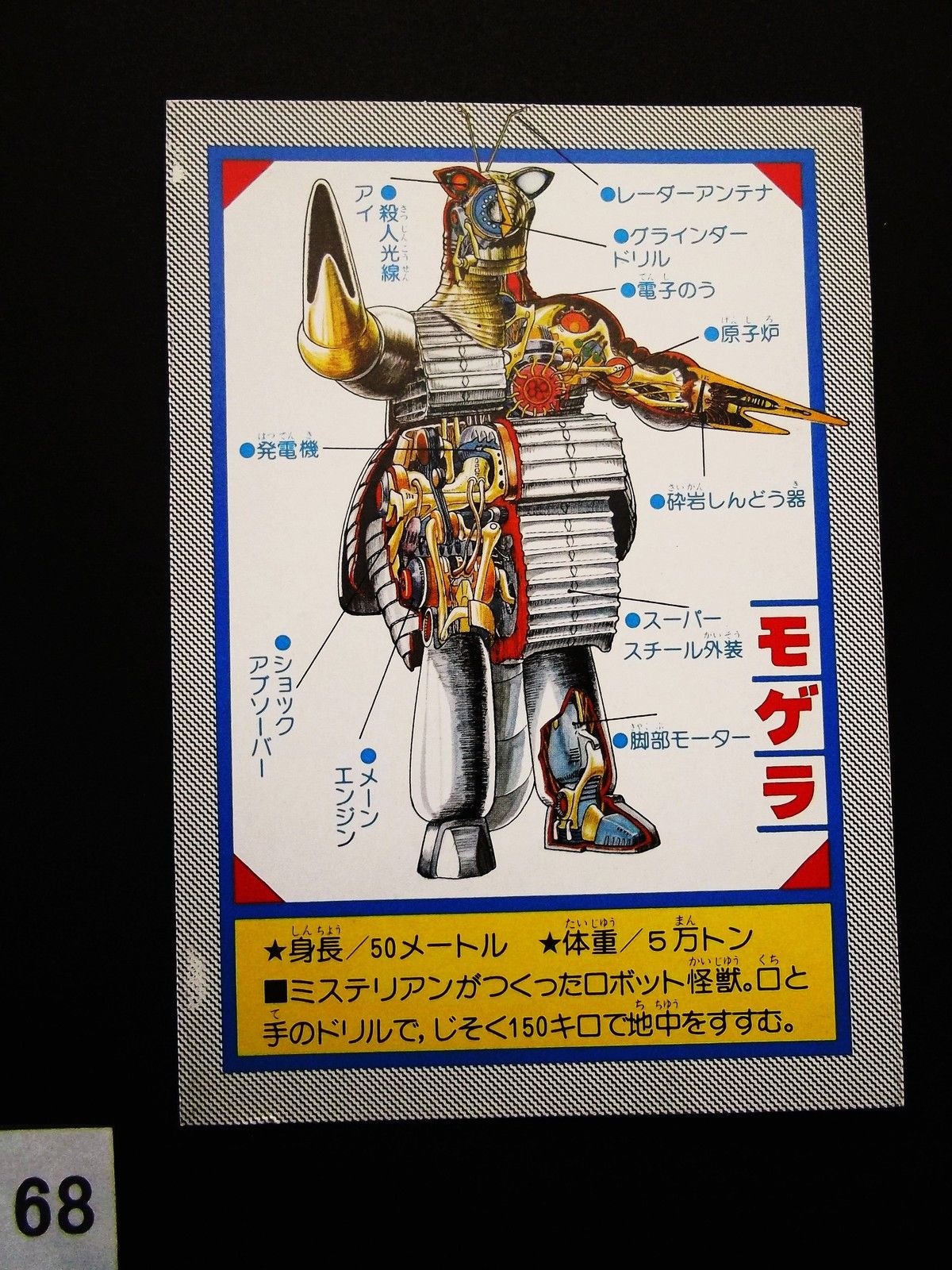
Mogera 68 1979

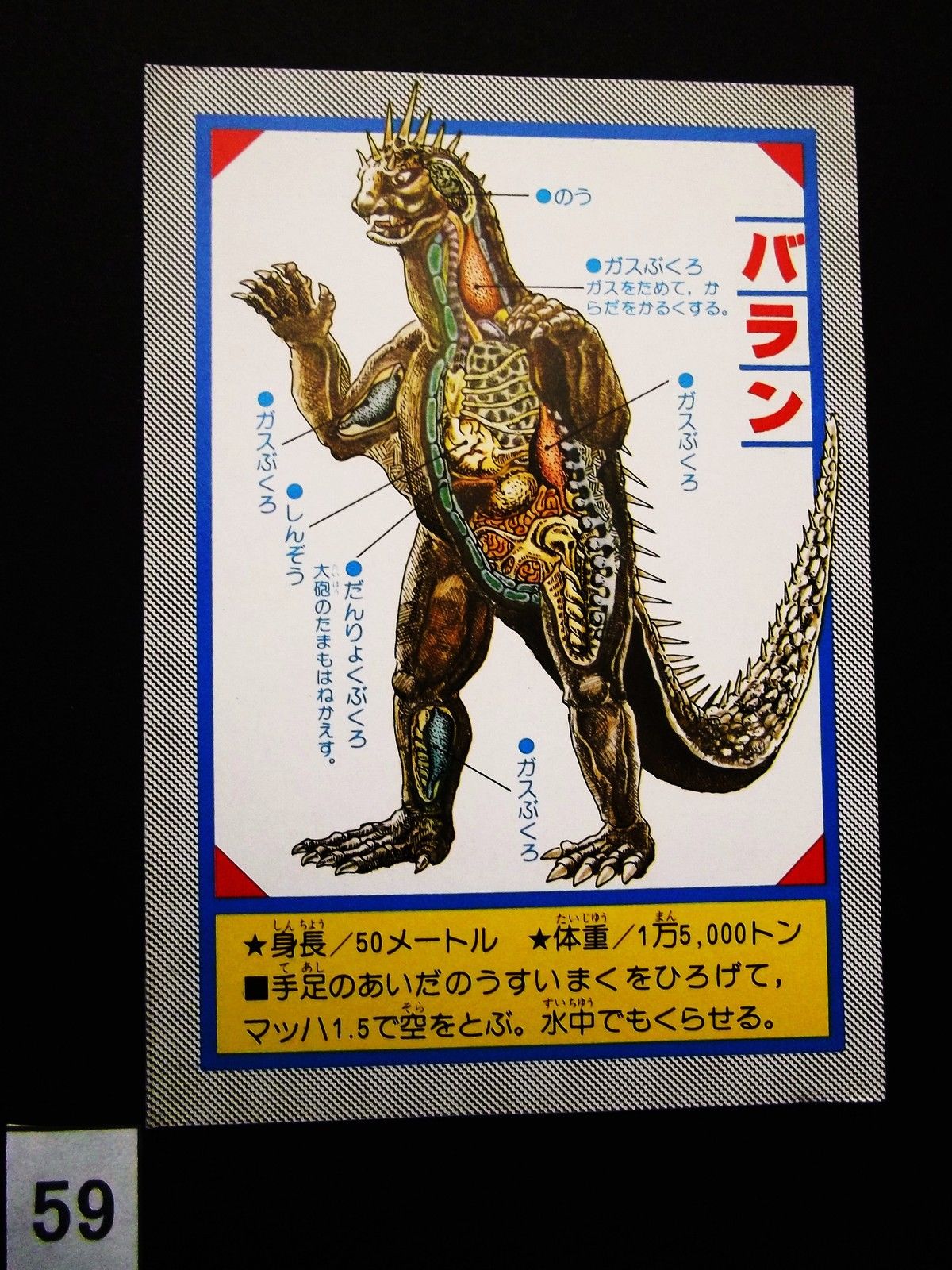
Balun 59 1979

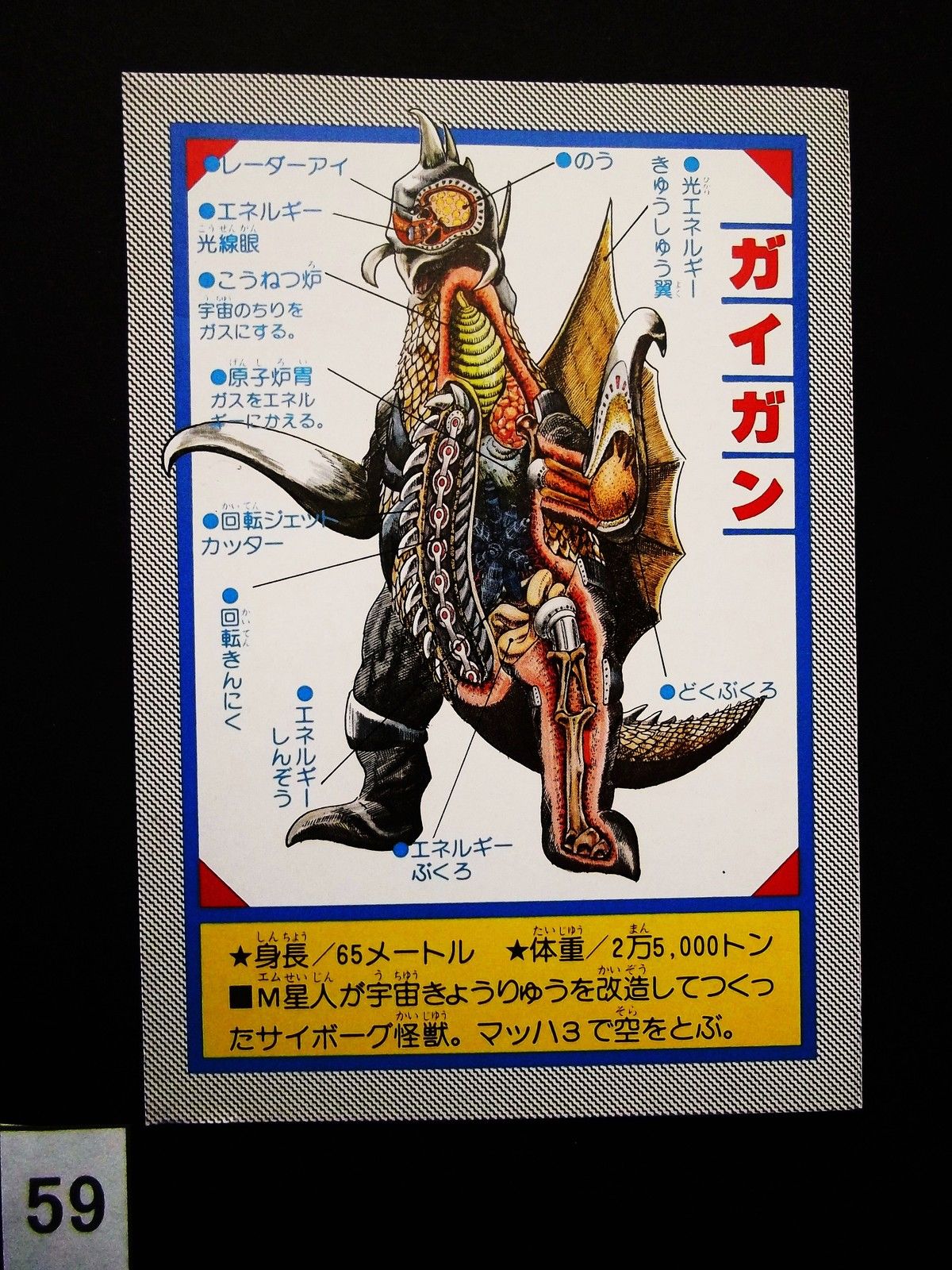
Gigan 59 1979

These large cards detached from a manga magazine published by Kodansha in 1979, demonstrating once again the Japanese art of cross-section. The kaiju pictured are, from top to bottom, Mechagodzilla, Baragon, Hedorah, King Ghidorah, King Caesar, Mogera, Varan, and Gigan.

I think it’s pretty fascinating that, on the one hand, the kaiju genre is all about sustaining an atmosphere of childlike wonder and fantasy; but on the other hand, all of the monsters here are presented as objects of science, methodically dissected and classified.

It sort of reminds me of the analytic-creative duality of D&D.

See more of this set and others at the Bromide Store on eBay.

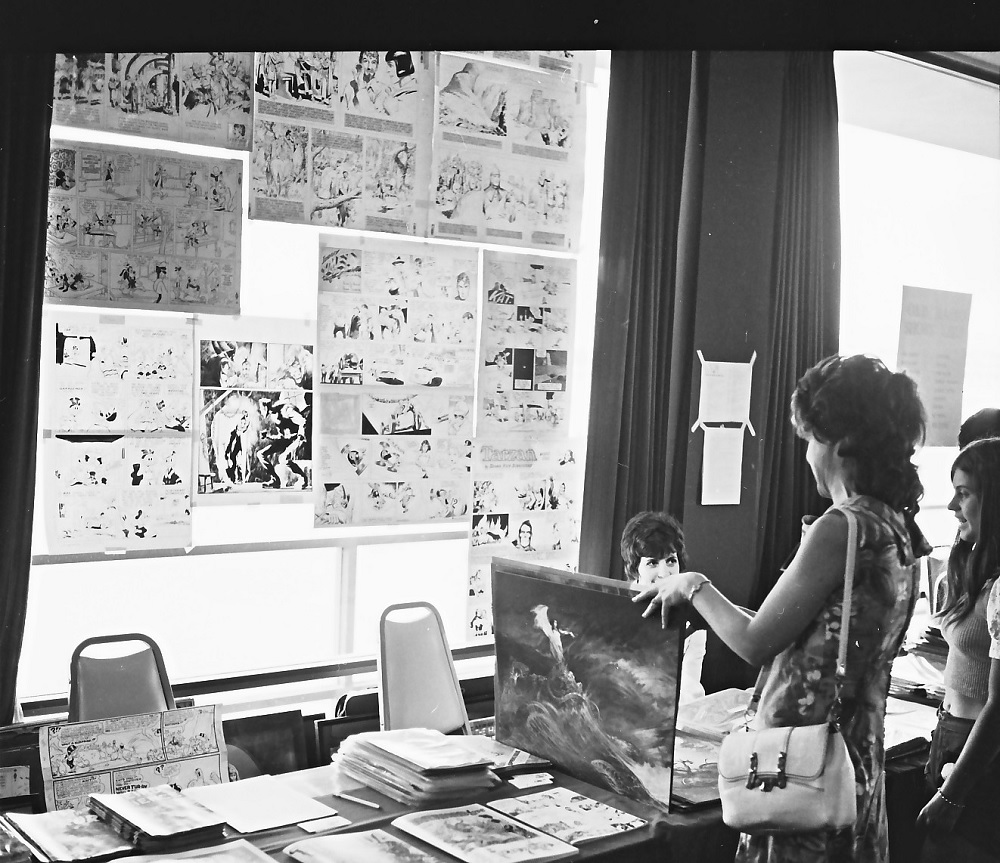
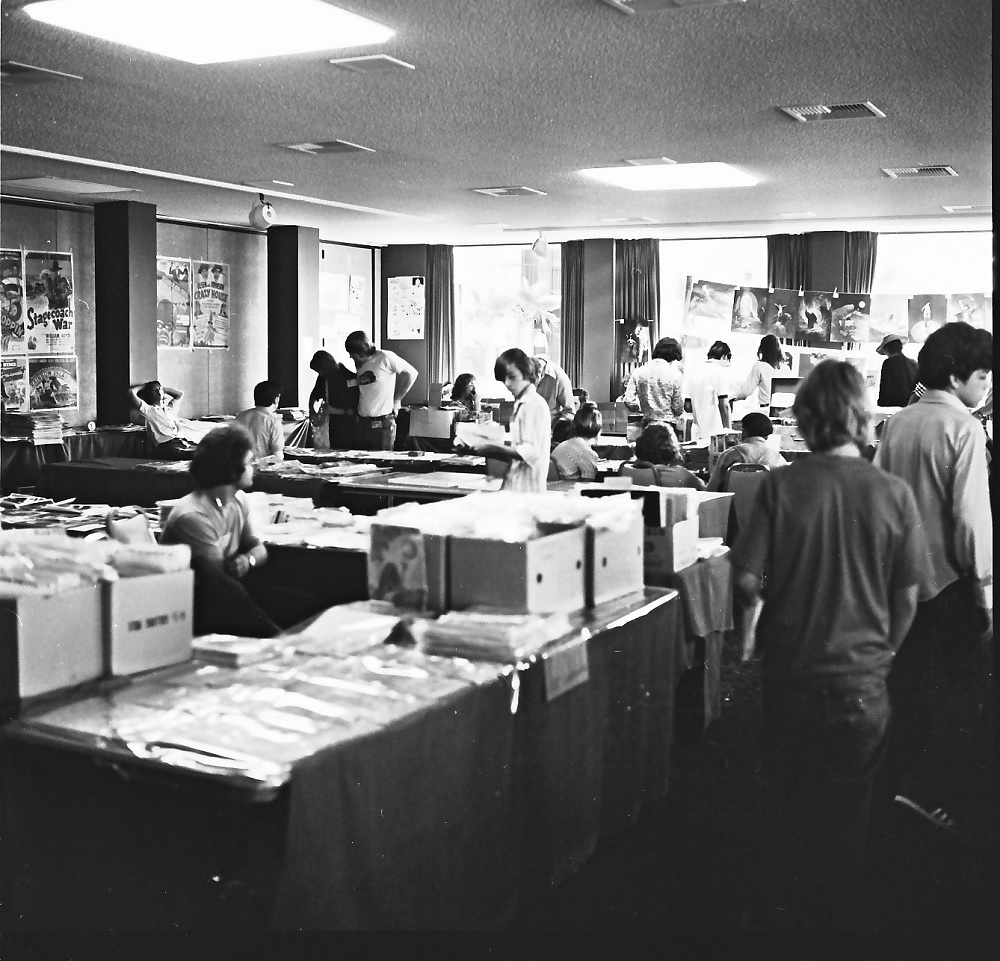
Photos from the San Diego Comic-Con, 1973

CC 1973-1

CC 1973-2

CC 1973-3

CC 1973-4

CC 1973-5

CC 1973-6

CC 1973-7

I went to the San Diego Comic-Con once, in 2008 or 2009. Never again. It no longer caters to the intelligent, discerning patrons you see above.

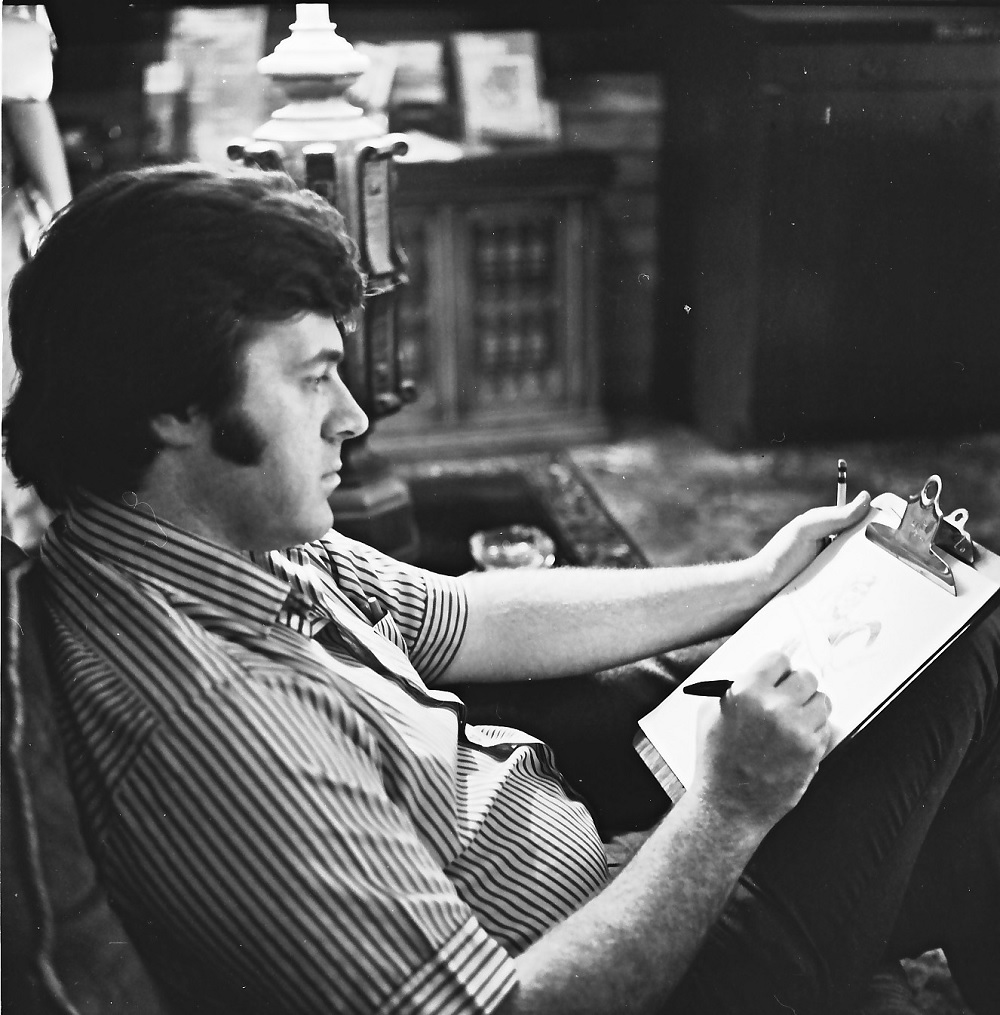
I’m intrigued by the Orange County Nostalgic Society seen in the second photo. That’s Neal Adams in the last photo.

The pictures are from Comic-Convention Memories, an amazing love letter to the early cons and the people who got them started. It’s run by Mike Towry, one of the founding members of the SDCC.


Pages

Archives

Categories

Donate Button

Join 1,118 other subscribers