Archive Page 85

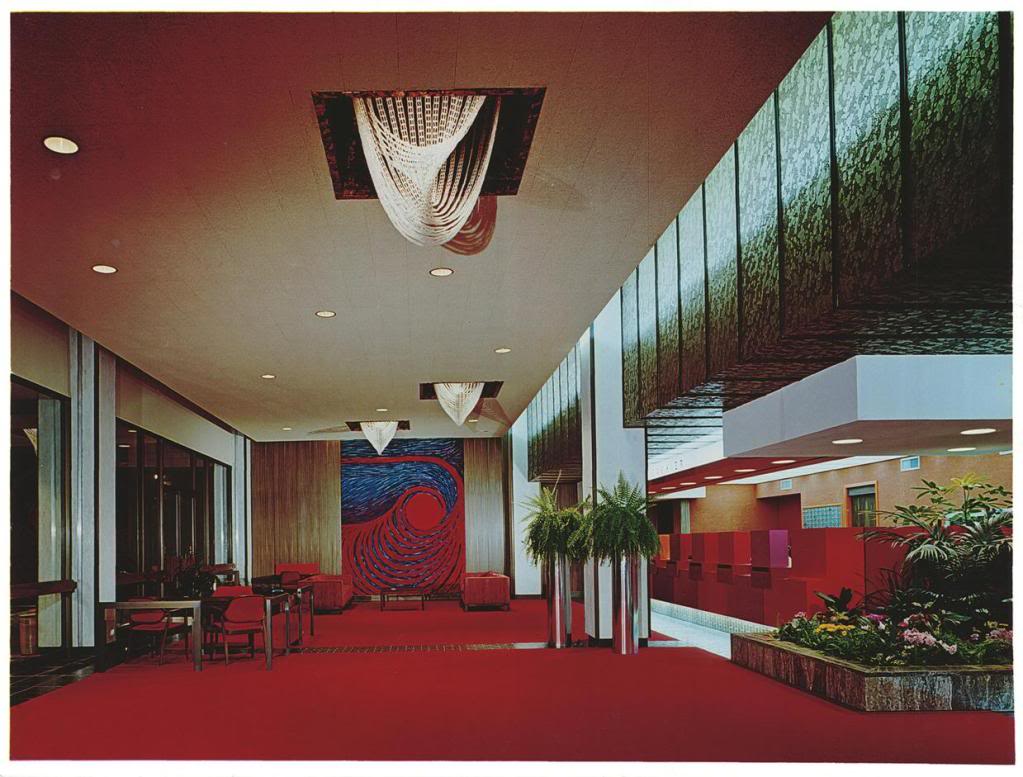
The Disneyland Hotel, 1970

D1

D2

D3

D4

I believe this is called decor porn. I found the photos at Mice Chat. They’re originally from a 1970 Japanese magazine.

Here’s some more, supposedly from the hotel architect, Alfred Nicholson. Look at those colors, the beaded light fixtures, the lush ferns.

D6

D5

D-7

I want to visit these places and talk to the ghosts who live there. (Remember the empty shopping malls?)

Here’s a shot of the hotel lobby today (via USA Today) for comparison. It could be much worse. Pretty soon every space we inhabit will look like the waiting room at a doctor’s office.

D7

Ken Kelly Cover Art for Richard Avery’s The Expendables (1975 – 1976)

Deathworms Kelly 1975

Tantalus Kelly 1975

Zelos Ken Kelly 1975

Argus Ken Kelly 1975

Ken Kelly and Frank Frazetta are family, and Kelly grew up admiring the work of his “Uncle Frank.” The Frazetta style—the overwhelmingly imperiled Romantic hero set against a backdrop of otherworldly colors and atmosphere—is obvious here.

Kelly would never completely escape his mentor’s shadow, but a lot of his sci-fi work is wonderfully unique. These are some of his earliest covers.

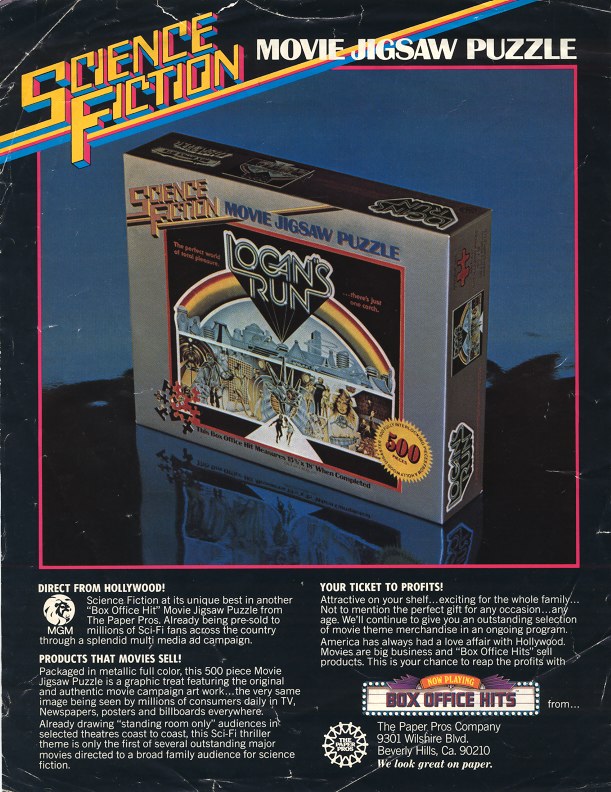
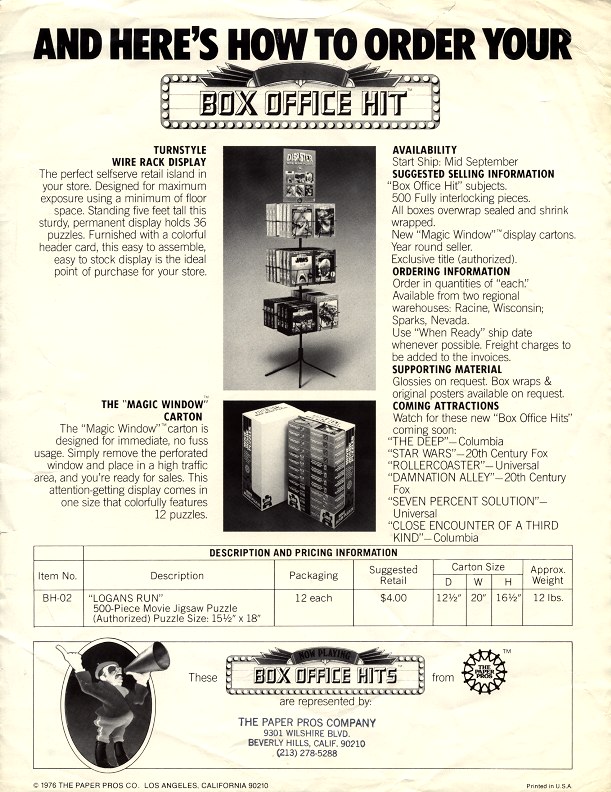
Logan’s Run Jigsaw Puzzle Ad (1976)

Logan's Run Puzzle

Logan's Run Puzzle-2

The “sci-fi thriller theme is only the first of several outstanding major movies directed to a broad family audience…” Compulsory death at age 30 has broad family appeal? Hilarious.

The second page lists more puzzles in the works based on “family” films: The Deep, Rollercoaster (terrorist plants bomb on rollercoaster), Damnation Alley (not as exciting as it sounds), and The Seven-Per-Cent Solution (cocaine-addled Sherlock Holmes undergoes psychoanalysis with Freud).

The puzzle does look pretty amazing, if you’re into puzzles (I am). It’s based on the movie poster art by Charles Moll, best known for his sci-fi and fantasy paperback covers.

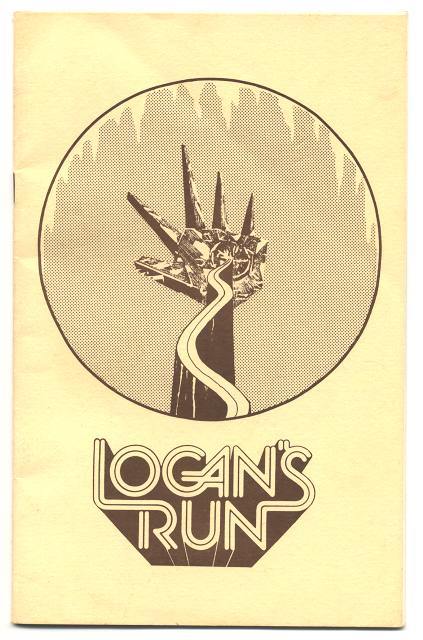
At the same Logan’s Run fan site, I found a couple of pages of a play-by-mail RPG based on the novel and movie. What a great idea. Was there never a comprehensive RPG based in this extended universe?

Logan's Run Game

Logan's Run Game-2

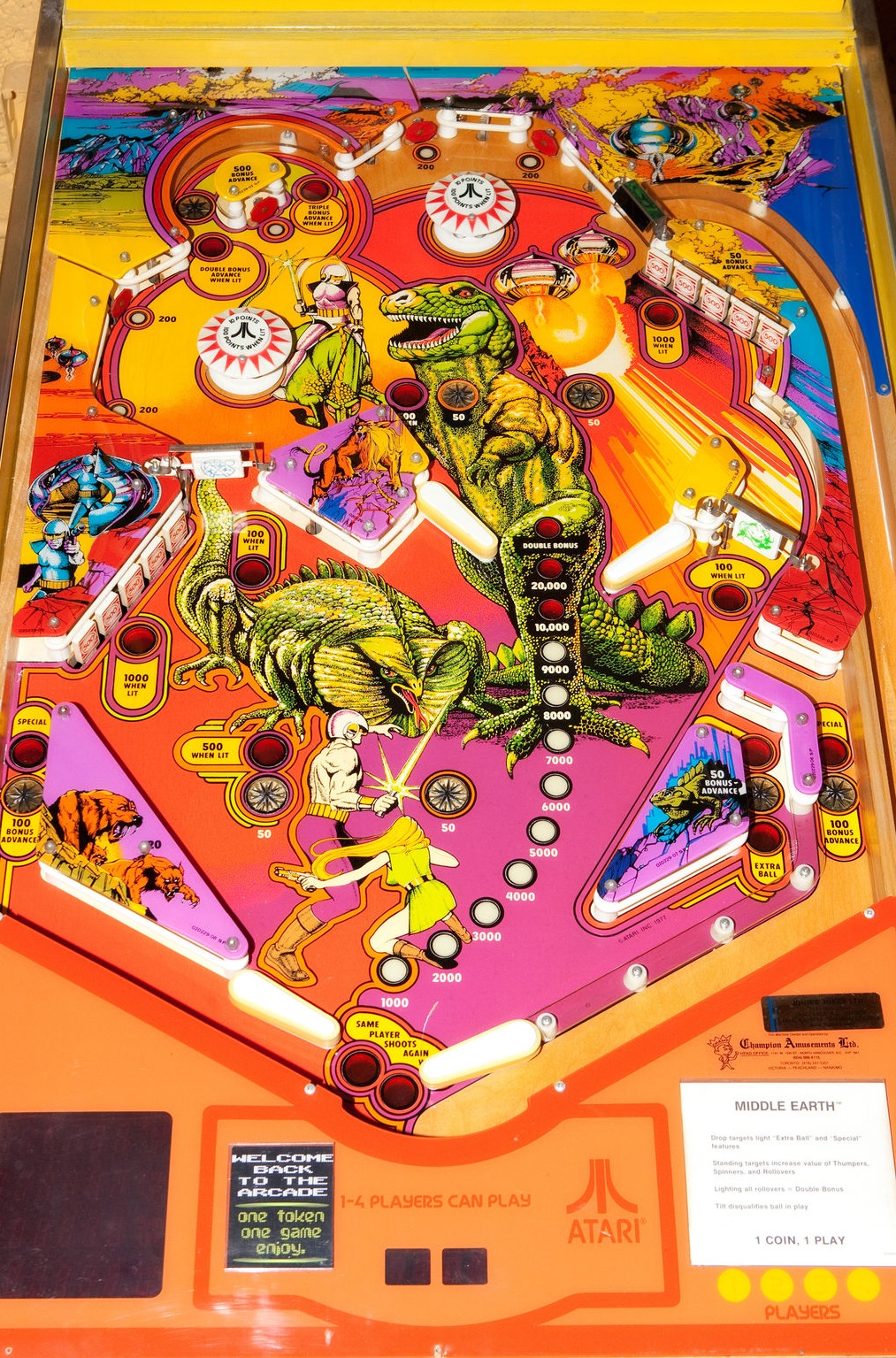
Atari’s Middle Earth Pinball (1978)

Atari ME BG 1978

Atari ME Playfield 1978

Atari ME Pinball 1978

Atari ME Flyer 1978

Middle Earth was released in February of 1978. I’m not sure how early in development it was named, but I bet Atari was banking on the fanfare surrounding the upcoming LOTR animated feature. The Rankin-Bass Hobbit TV special had aired the previous year.

The theme has nothing to do with Tolkien, obviously. What we’re seeing is a futuristic Lost World scenario, which is why Atari could get away with using `Middle Earth’ without any copyright issues. The concept also plays off of Dino De Laurentiis’ King Kong (December 1976) and the Godzilla-mania of the late ’70s.

The spectacular art is by George Opperman, who created the Atari logo.

(Images via the Internet Pinball Machine Database, where you can find more views of the game, and The Arcade Flyer Archive)

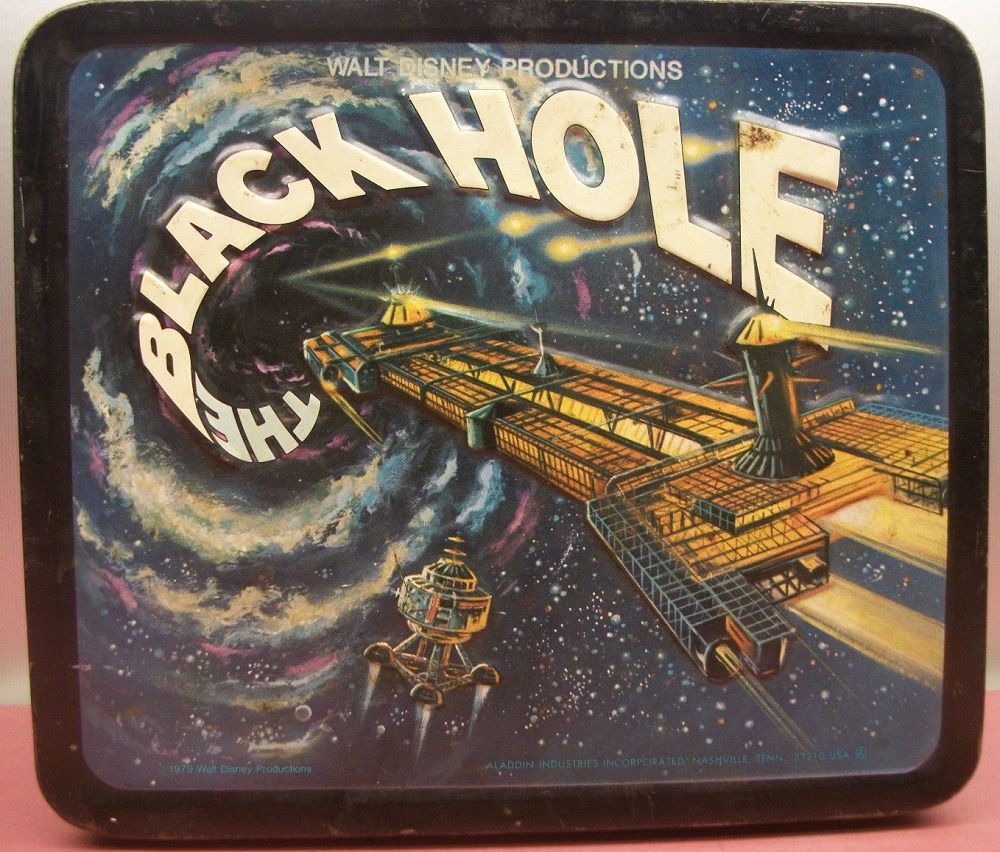
The Black Hole Lunch Box and Thermos (1979)

BH Lunchbox 1979-2

BH Lunchbox 1979-1

BH Lunchbox 1979-3

BH Lunchbox 1979-4

BH Lunchbox 1979-5

BH Lunchbox 1979-6

BH Thermos 1979

BH Thermos 1979-2

BH Thermos 1979-3

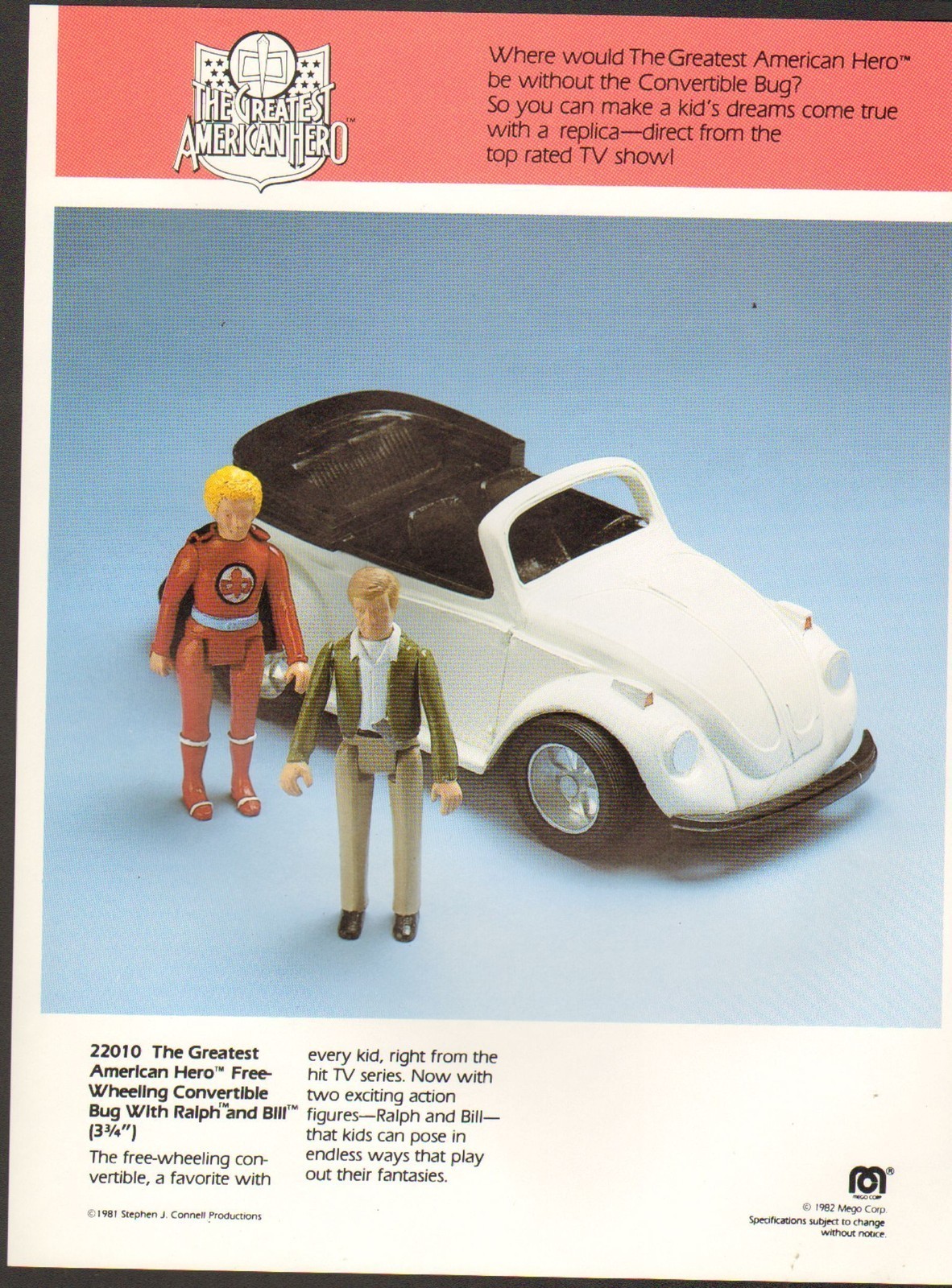
Mego’s The Greatest American Hero Action Figures (1982)

Mego Ad 1982

Mego Ad 1982-2

Ever wonder why Mego went bankrupt? Here you go. According to the Mego Museum, it’s “the last licensed product” the company produced, although only the “Free-Wheeling Convertible Bug” set made it into stores, and in very limited quantities. The 8″ figures are positively frightening. Check out the forehead on Connie Sellecca!

“Kids love him because he’s goofy.” No. No we don’t.

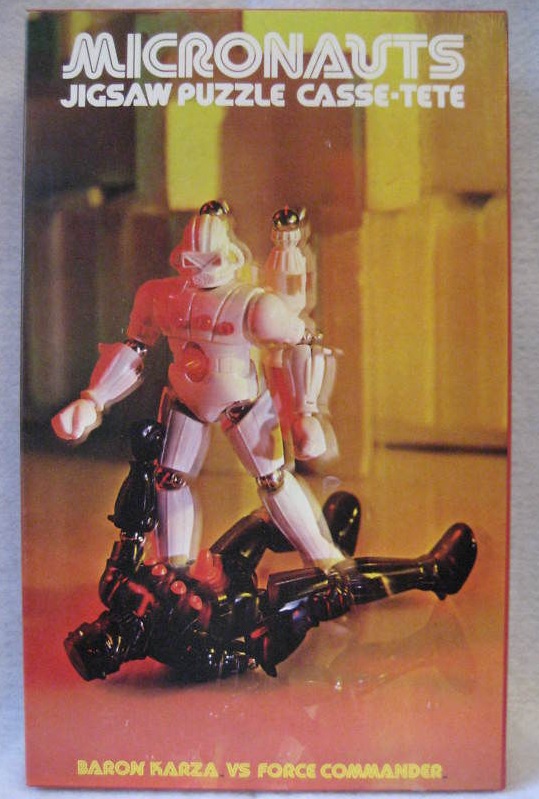
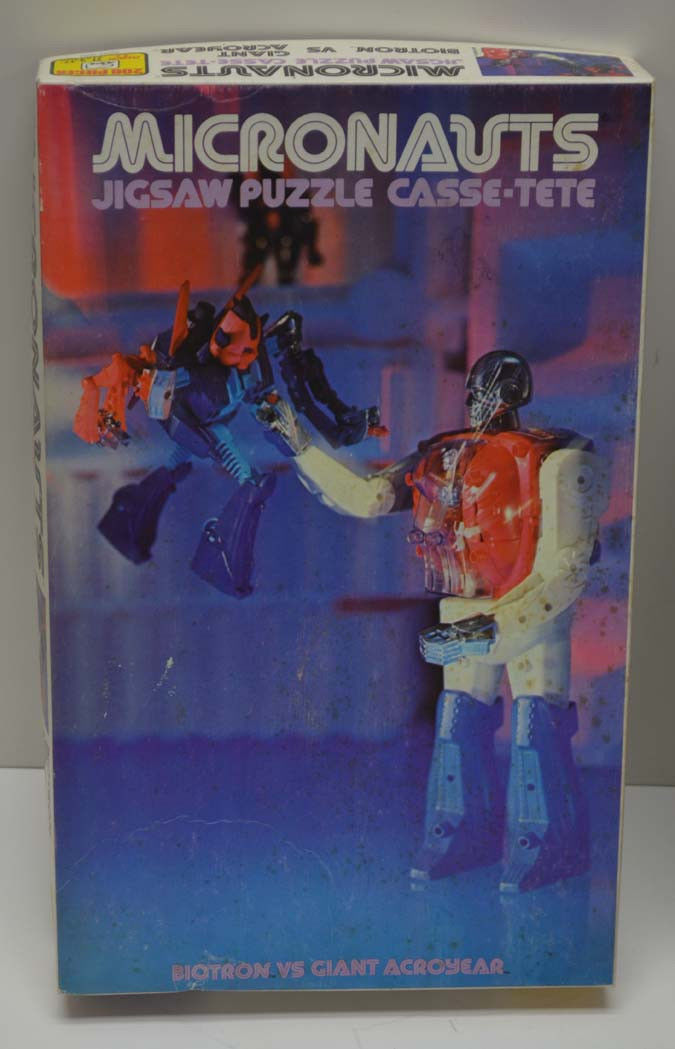
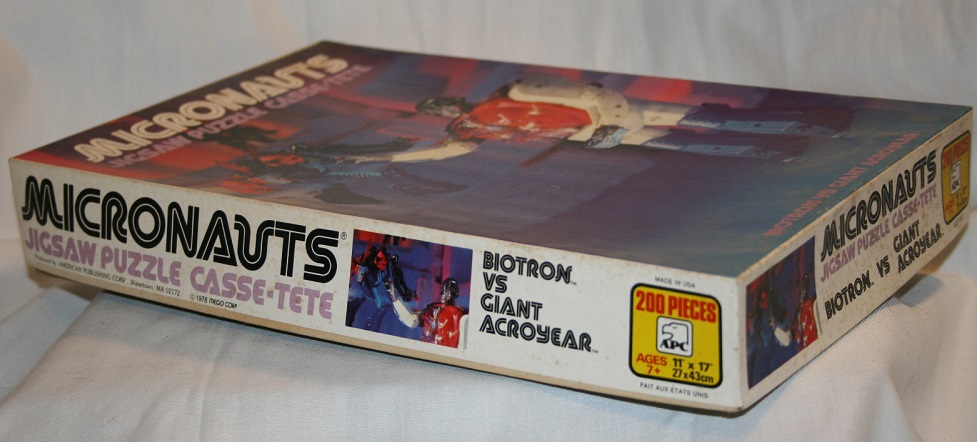
Micronauts Jigsaw Puzzles (1978)

Micronauts Puzzle Karza 1978

Micronauts Puzzle Force 1978

Micronauts Puzzle Biotron 1978

Micronauts Puzzle 1978-2

Three puzzles were released. That’s three too many. Hire an artist, cheapskates! The blur effect isn’t fooling anyone. Someone took a picture of some action figures and slapped it on a box.

American Publishing Corp. published a ton of puzzles well into the ’80s, including a series of D&D puzzles starting in 1983.

(Images via eBay)

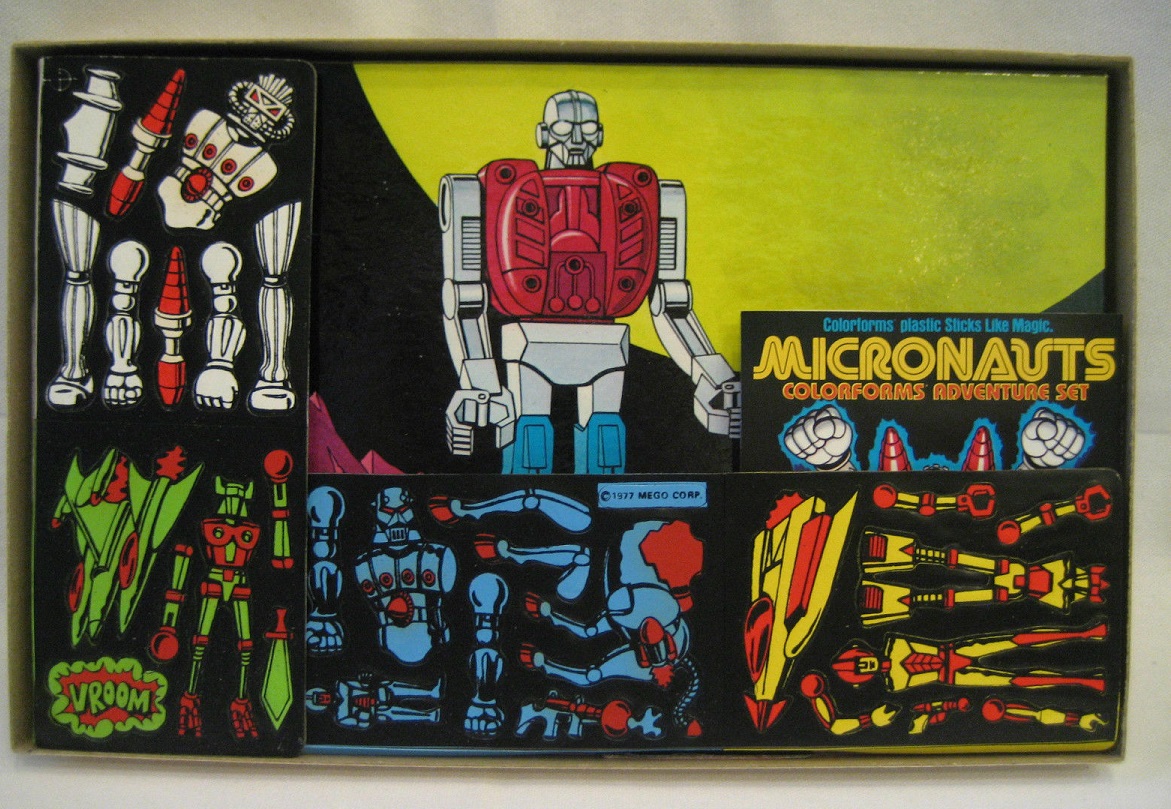
Micronauts Colorforms Adventure Set (1977)

Micronauts Colorforms 1977

Micronauts Colorforms 1977-2

Vroom. I see Baron Karza, Force Commander, Acroyear (sort of), and Biotron. Who’s the yellow guy?

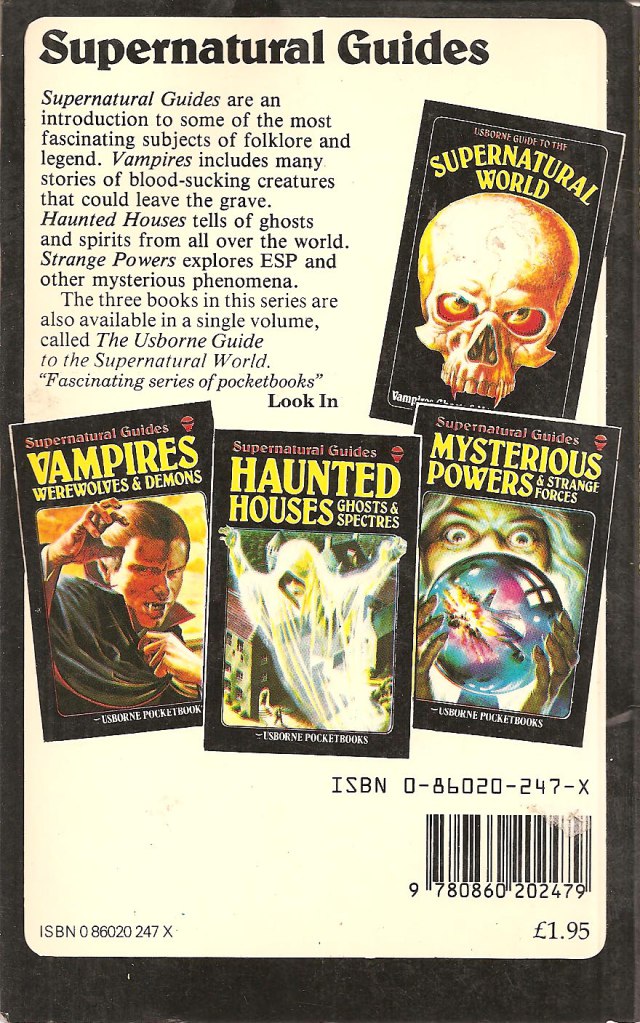
Usborne Publishing: Supernatural Guides: Vampires, Werewolves & Demons (1979)

Usborne-7

Usborne-6

Usborne-5

Usborne-4

Usborne-2

Usborne-3

UK publisher Usborne released a number of memorable books in the late ’70s, starting with the World of the Unknown series in 1977. The Supernatural Guides followed in 1979 and covered the same territory.

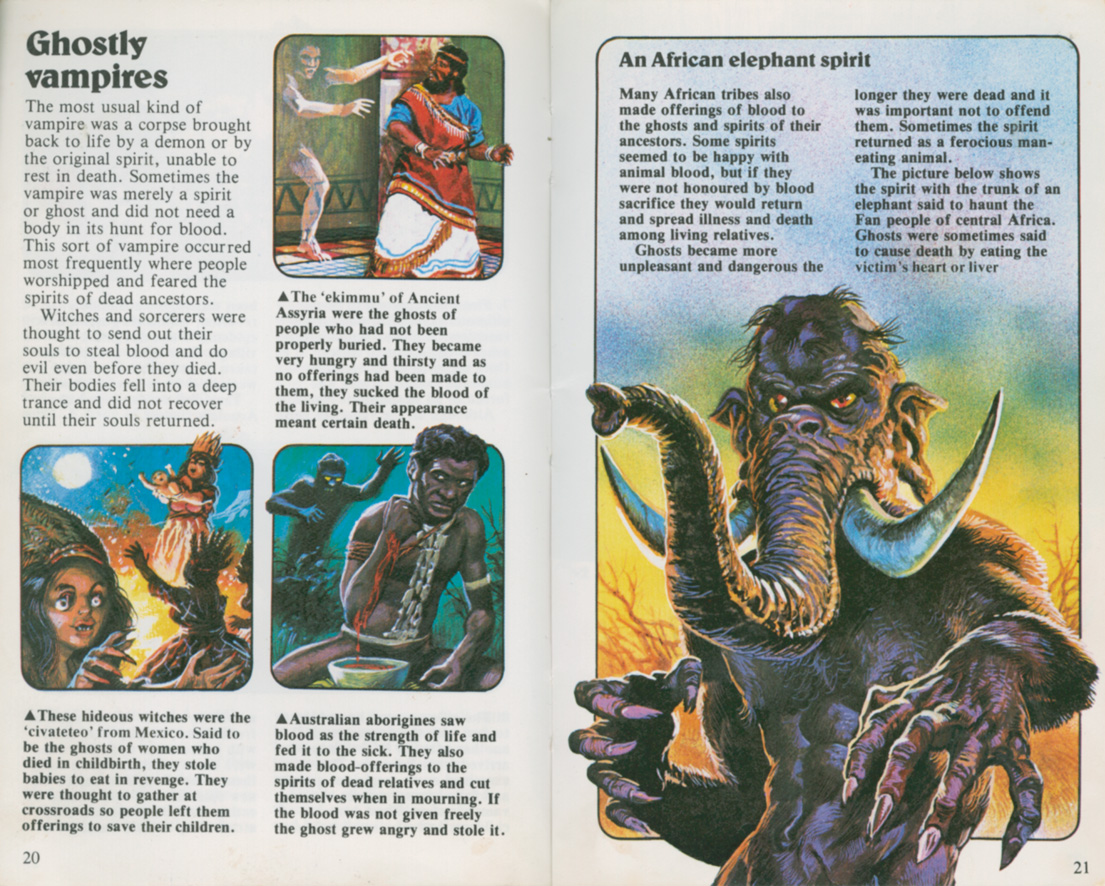
In the most matter-of-fact, dispassionate tone, the authors discuss all manner of gruesome scenarios and happenings. The accompanying illustrations, on the other hand, are incredibly graphic, disturbing, and over-the-top. That irony is what makes the books so brilliant. Take this:

Ghosts became more unpleasant and dangerous the longer they were dead and it was important not to offend them. Sometimes the spirit returned as a ferocious man-eating animal.

What kind of ferocious man-eating animal, you ask? How about an African elephant spirit that will eat your heart and liver?

How does one become a werewolf? Well, he or she  puts “wolfsbane, opium, foxgloves, bat blood and fat of a murdered child into a pot” and boils them. Let me repeat that last ingredient, in case you missed it: the fat of a murdered child.

Usborne also released a World of the Future series around the same time that’s as fascinating, though not as insane. The World of the Unknown books were re-released in the late ’90s with different covers. The interiors are identical to the originals.

(Images via Found Objects and Horrorpedia)

Did Dungeons & Dragons Lead an ‘Anti-Corporate Revolution’?

Treasure

I really enjoyed Ethan Gilsdorf’s homage to D&D over at Boing Boing. The game, now 40 years old, clearly changed his life for the better, and his affection for it is absolutely genuine. However, I was a little surprised when I got to this passage:

Like a 3rd level Spell of Suggestion, D&D generated subtle repercussions through the culture. The role-playing game opened new pathways for creativity, new ways for kids and young adults to entertain themselves. The game led a DIY, subversive, anti-corporate revolution, a slow-building insurrectionist attack against the status quo of leisure time and entertainment.

While D&D certainly did promote the DIY aesthetic and overturn the gaming status quo, it certainly did not lead any anti-corporate revolution. TSR was a corporation, and it became quite a powerful one. Its core products—rulebooks, modules, miniatures, various supplements—were damn expensive from the beginning, so much so that the game was out of reach for lots of kids who wanted to try it. There’s a reason treasure is so important in D&D, in some cases equaling experience points: art imitates life.

True, once players understood the essential ingredients of D&D, they could home brew their own modules and adventures, but it wasn’t a political act (there was no role-playing “movement”), and most everyone was using “corporate” props, from TSR or one of its legion of imitators. We thought D&D was cool. We were emulating, not disassociating.

By 1983, it was clear even to my 11-year-old self that TSR had “gone mainstream”: out came the action figures, the animated series, the profligate licensing, kid’s storybooks, pencil sharpeners, beach towels—all of the trappings of a runaway corporate culture looking to replicate itself for as long as possible. In short, the business expanded beyond role-playing: D&D became a brand. You can say what you will about the move. It worked. D&D is still around, still being discovered by successive generations, just like Macintosh and Vans and G.I. Joe.

Here’s Gilsdorf again:

The lesson of Dungeons & Dragons has always been this: make your own entertainment. By sitting around a table, face to face, and arming yourself with pencils, graph paper, and polyhedral dice, you can tap into what shamans, poets and bards have done all the way back to the Stone Age. Namely, the making of a meaningful story where the tellers have an emotional stake in the telling, and the creating of a shared experience out of thin air.

To go on this new adventure, you don’t absorb a movie or TV show passively, on the couch, or merely “read” a book. Nor are your options for “interacting” with a fantasy experience limited to collecting merchandise or playing with action figures. Best of all, the essential quality of this unique, narrative gaming experience can’t be co-opted as commercial entertainment. Role-playing games like D&D are a way to experience unstructured free time while imposing upon it a structure, a story.

I love that first paragraph. He totally captures what made D&D and role-playing so starkly novel and exciting: you’re an individual playing a character you created within a narrative you’re helping to write. I’m not sure what he means by the following, though: “this… narrative gaming experience can’t be co-opted as commercial entertainment.” No gaming experience can be co-opted—unless we’re talking about the Hunger Games. If I play Mouse Trap with my family, Hasbro doesn’t own our experience. If I play poker with my friends, Hoyle doesn’t somehow contaminate the proceedings. My point is that traditional games are just as meaningful to the people who play and enjoy them. Not everyone has the time required, or the players required, for a Greyhawk campaign.

I think it’s important not to overstate the importance of D&D and role-playing, especially with fewer and fewer young people picking up books, the bedrock of literature, philosophy, history, and a few other notable human endeavors. Nothing works the imagination like serious reading, with the exception of writing. The “passivity” of reading is a myth advanced by technophiles who make or stand to make fortunes on “interactive” digital technologies. “D&D beats digital hands down,” Gilsdorf writes in his essay. Damn straight. Reading beats both.

The truth is that D&D and fantasy role-playing games gave kids disenchanted with the tedious real world (i.e. the adult world) instructions on how to build new ones, unlimited by time or place or possibility. Once we were able to decipher those instructions, we became explorers of the mind. That’s the most we can or should expect from any game.

(Image via Hack & Slash)


Pages

Archives

Categories

Donate Button

Join 1,118 other subscribers