
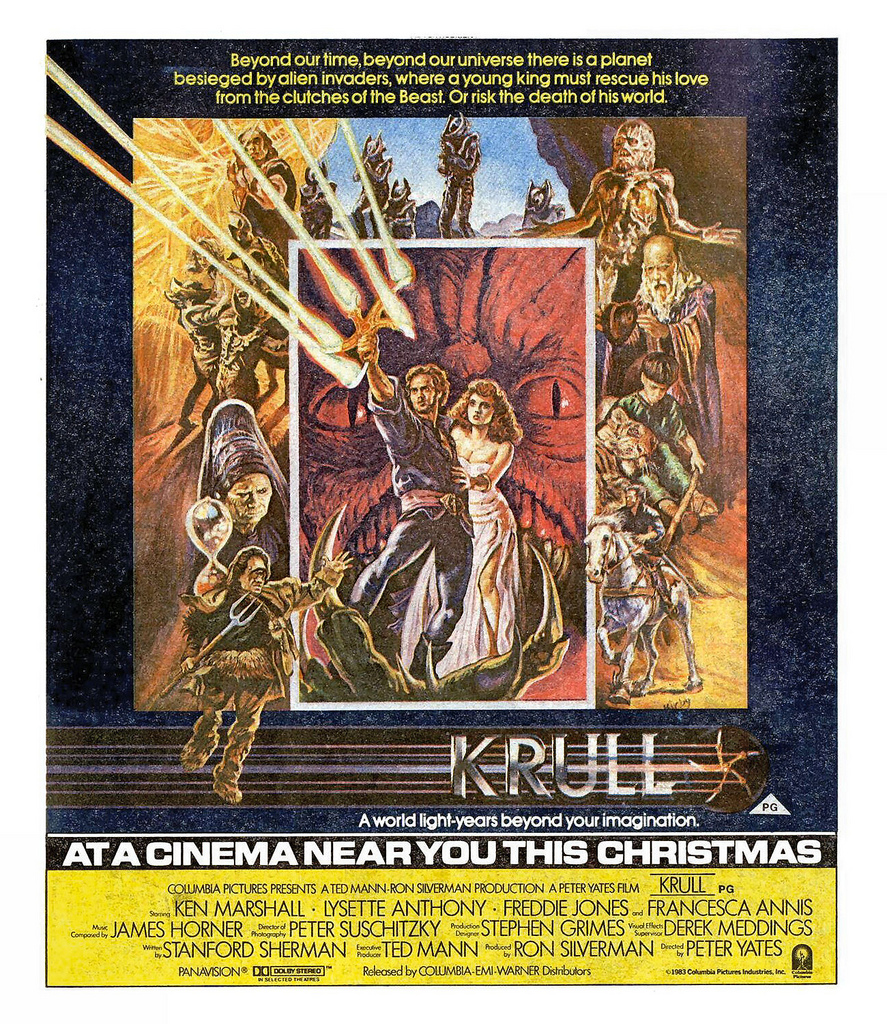
The art is from the UK poster by Josh Kirby. Much brighter and more intriguing than the American version.
(Images via combomphotos/Flickr)
Surveying the Gen X landscape and the origins of geek
The art is from the UK poster by Josh Kirby. Much brighter and more intriguing than the American version.
(Images via combomphotos/Flickr)
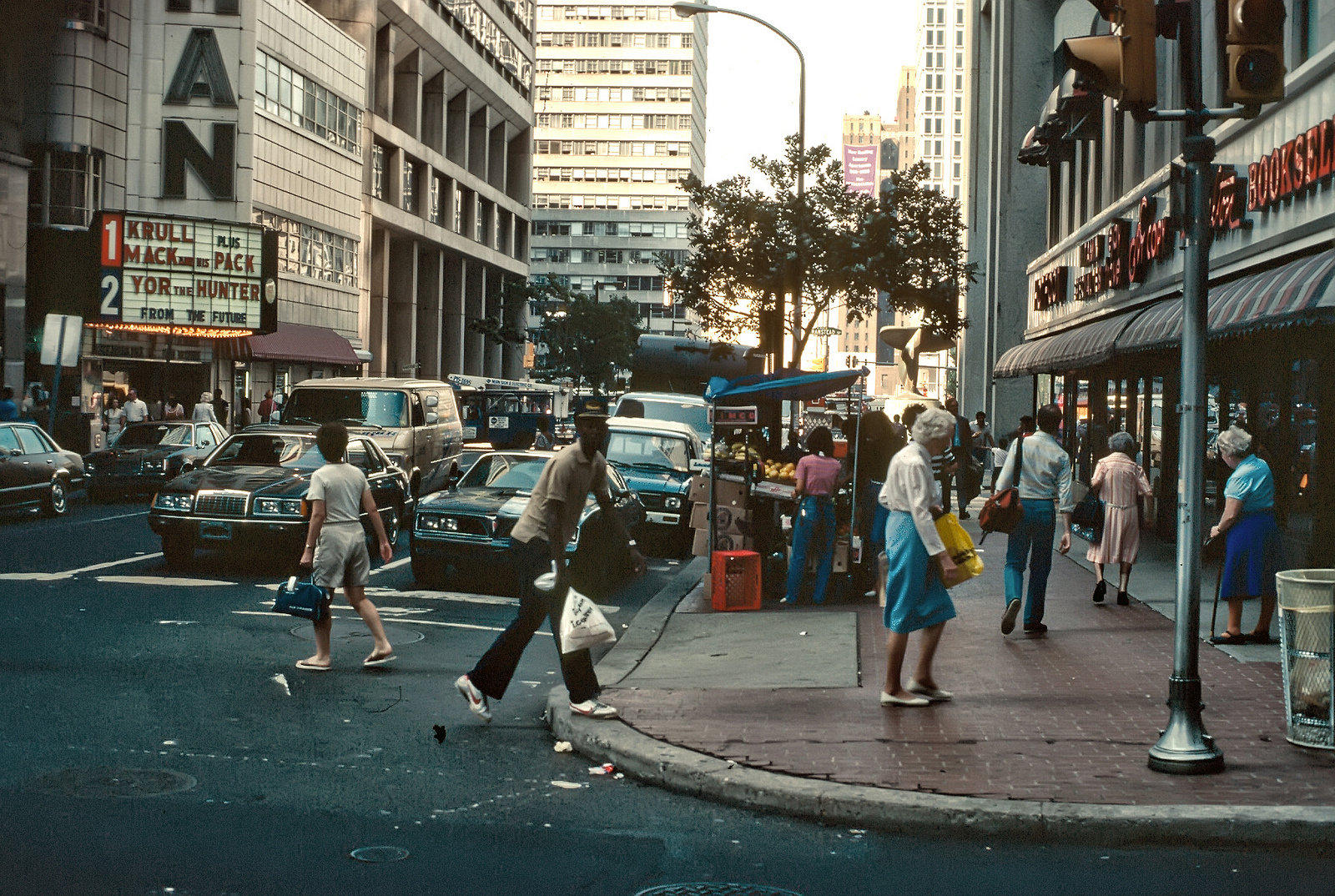
The location is Philadelphia. I don’t know the name of the theater. UPDATE (4/21/14): Howard Haas has identified it as the Goldman Theatre, which was demolished in 1984.
I have great affection for Krull. I think it’s a nifty, good-looking combination of the fantasy and sci-fi genres. As for Yor, you owe it to yourself to watch it at least once. The theme song and soundtrack are incredible. And, of course, there’s the hang glider scene.
(Image via milfodd/Flickr)
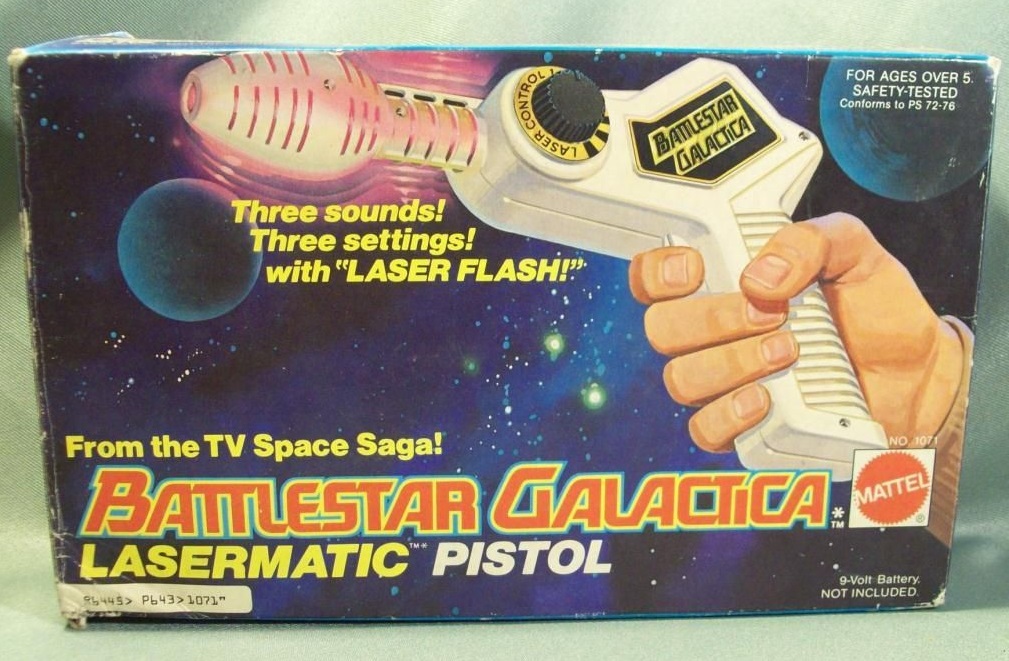

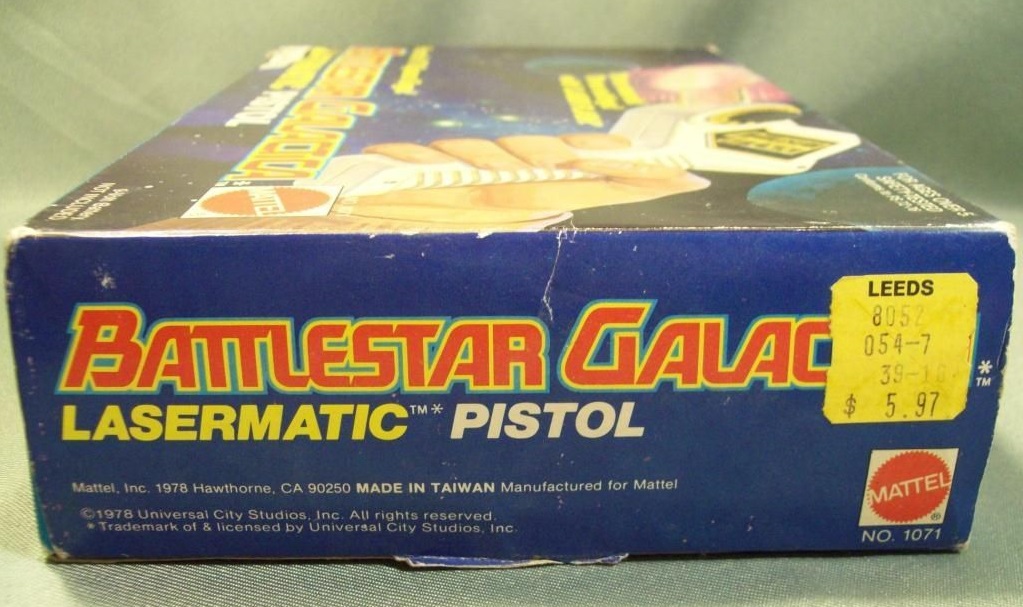
Pulsating “Laser Flash!” No luck finding a demo.
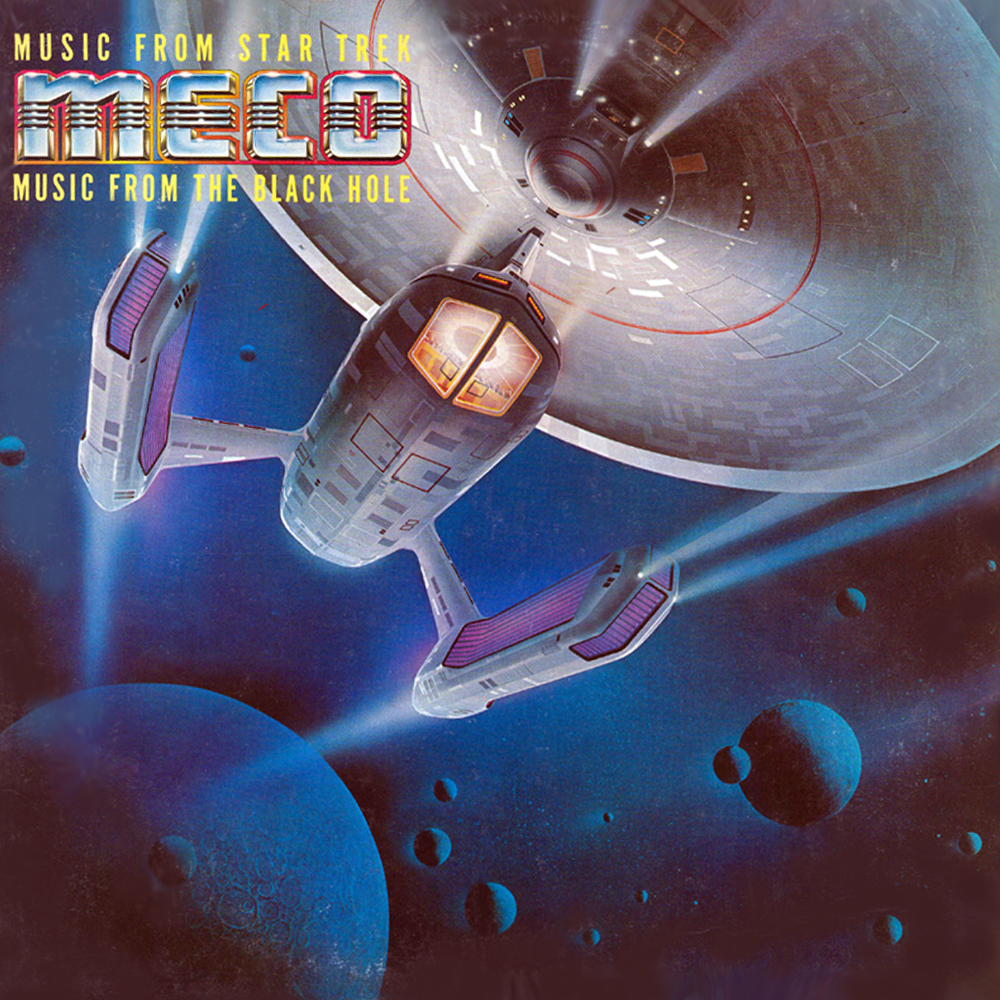
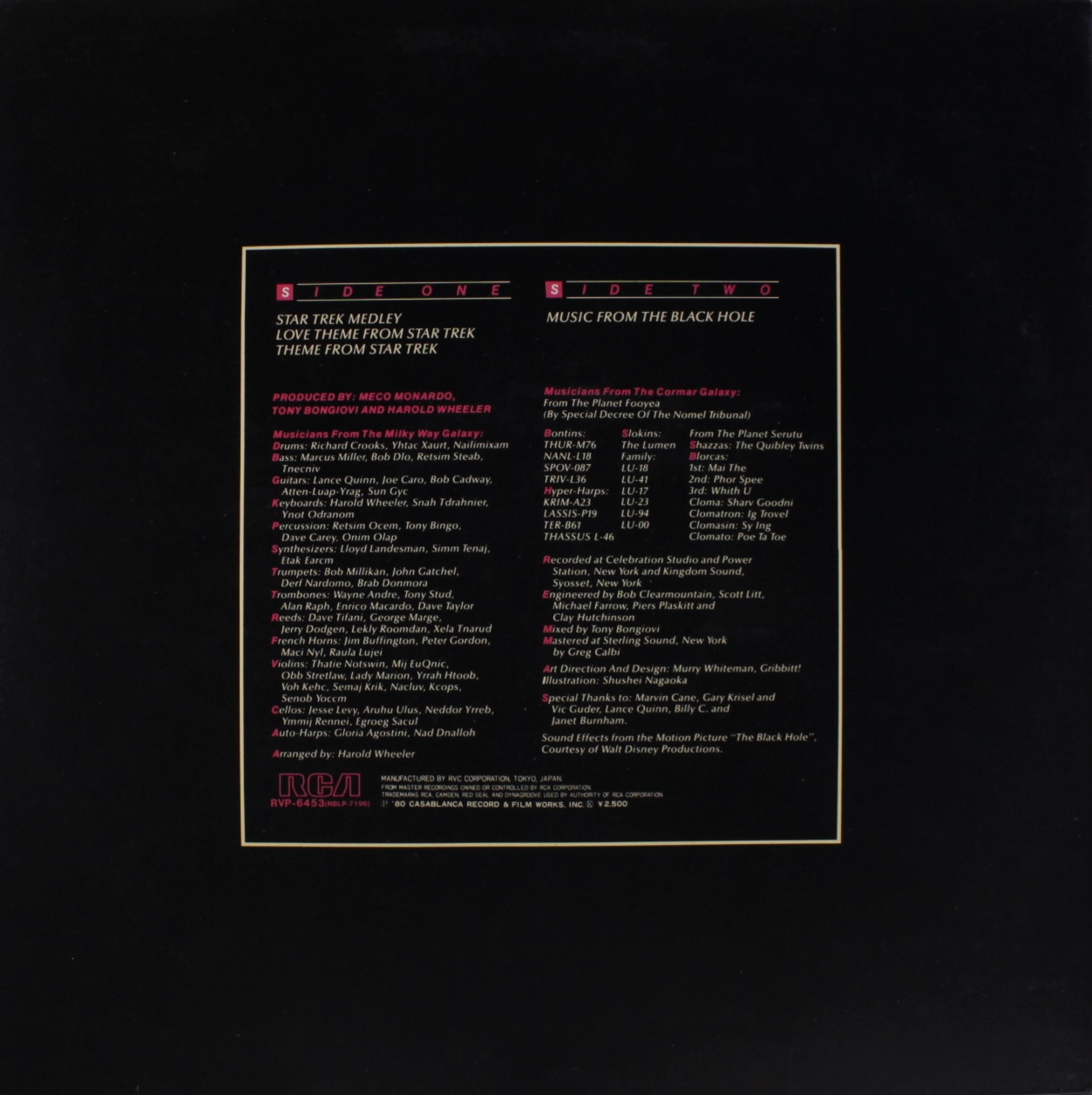
Meco (Domenico Monardo) launched the space disco era with Star Wars and other Galactic Funk (1977), which went platinum. He followed with several disco-ized soundtrack albums, including Encounters of Every Kind (1977), Superman and other Galactic Heroes (1978), and Christmas in the Stars: Star Wars Christmas Album (1980).
Music from Star Trek and The Black Hole (1980) didn’t go over well. The movies bombed at the box office, and the original, now classic soundtracks (by Jerry Goldsmith and John Barry, respectively), resisted the transition to upbeat funk. Meco knew it, and faked most of The Black Hole. The main theme is the only track that clearly resembles Barry’s score.
You can listen to Meco’s “Star Trek Medley” here. The entire Black Hole suite is below.
The album art is by Shusei Nagaoka, who did many memorable sci-fi-themed covers throughout the ’70s, including Out of the Blue (ELO) and Raise! (Earth, Wind & Fire).
A German group called Nostromo, following a very curious disco version of the Alien theme in 1979, released a 7″ called The Black Hole in 1980. It’s much more faithful to the original, although I like Meco’s misdirected space-funk a little bit more.

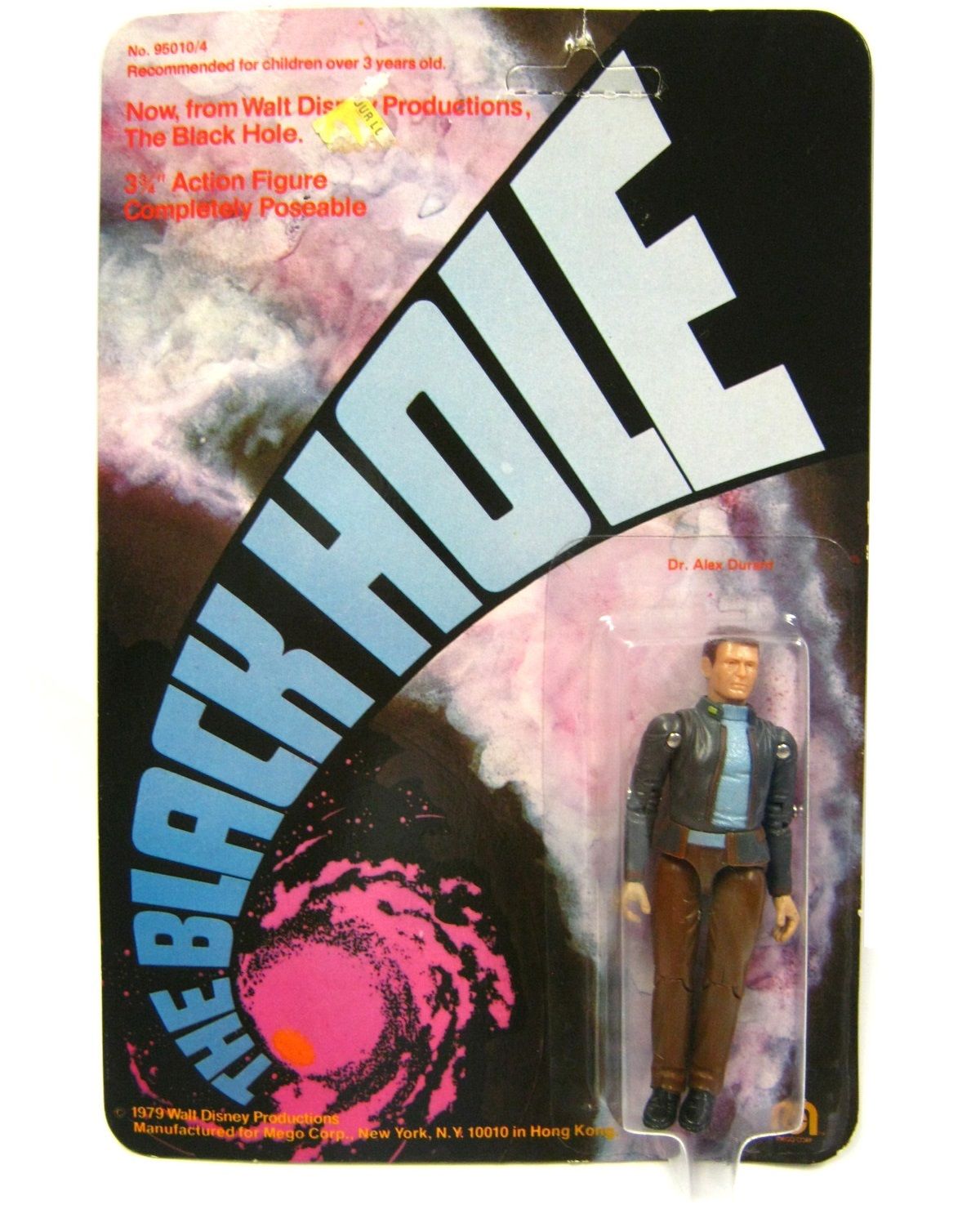
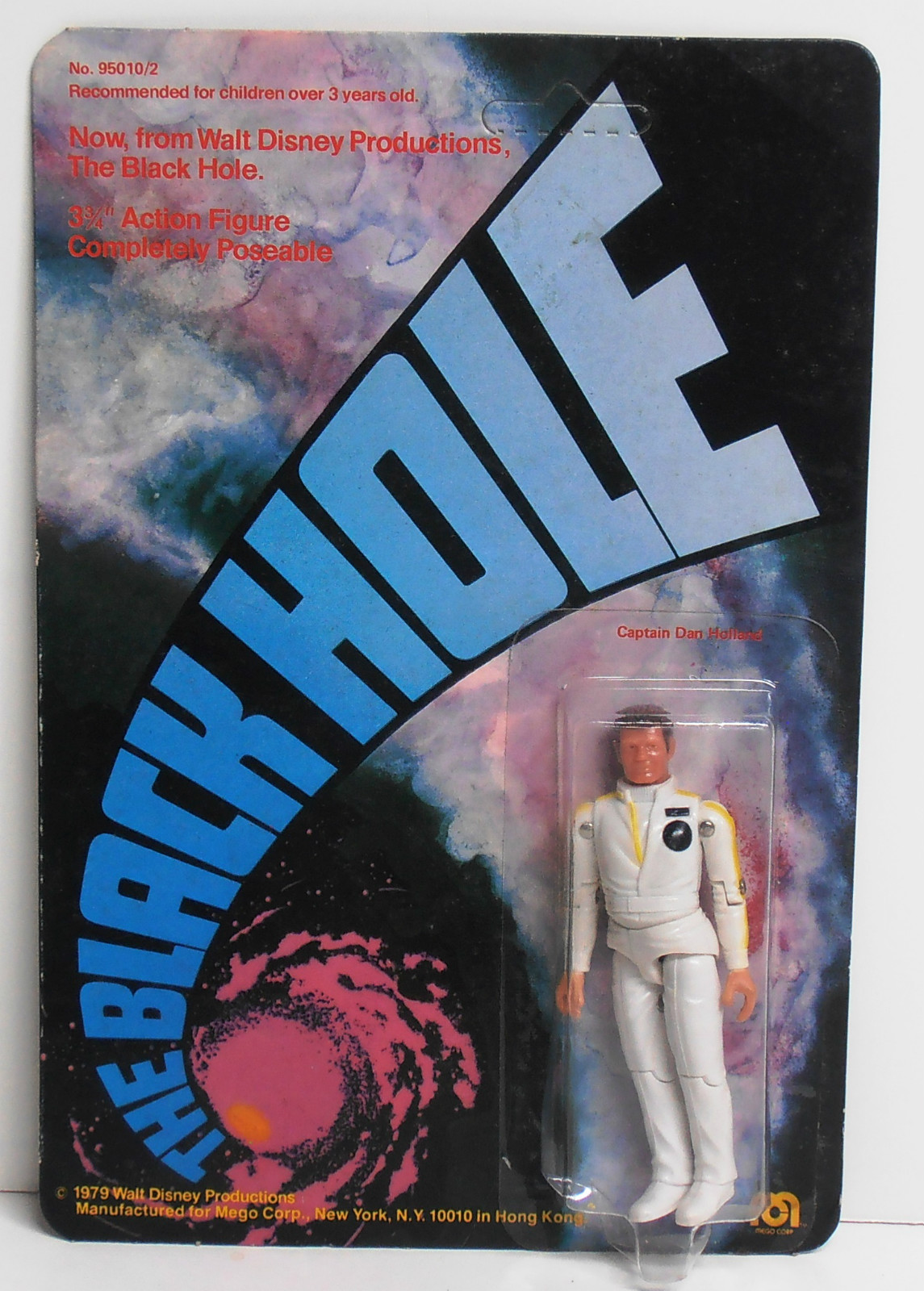


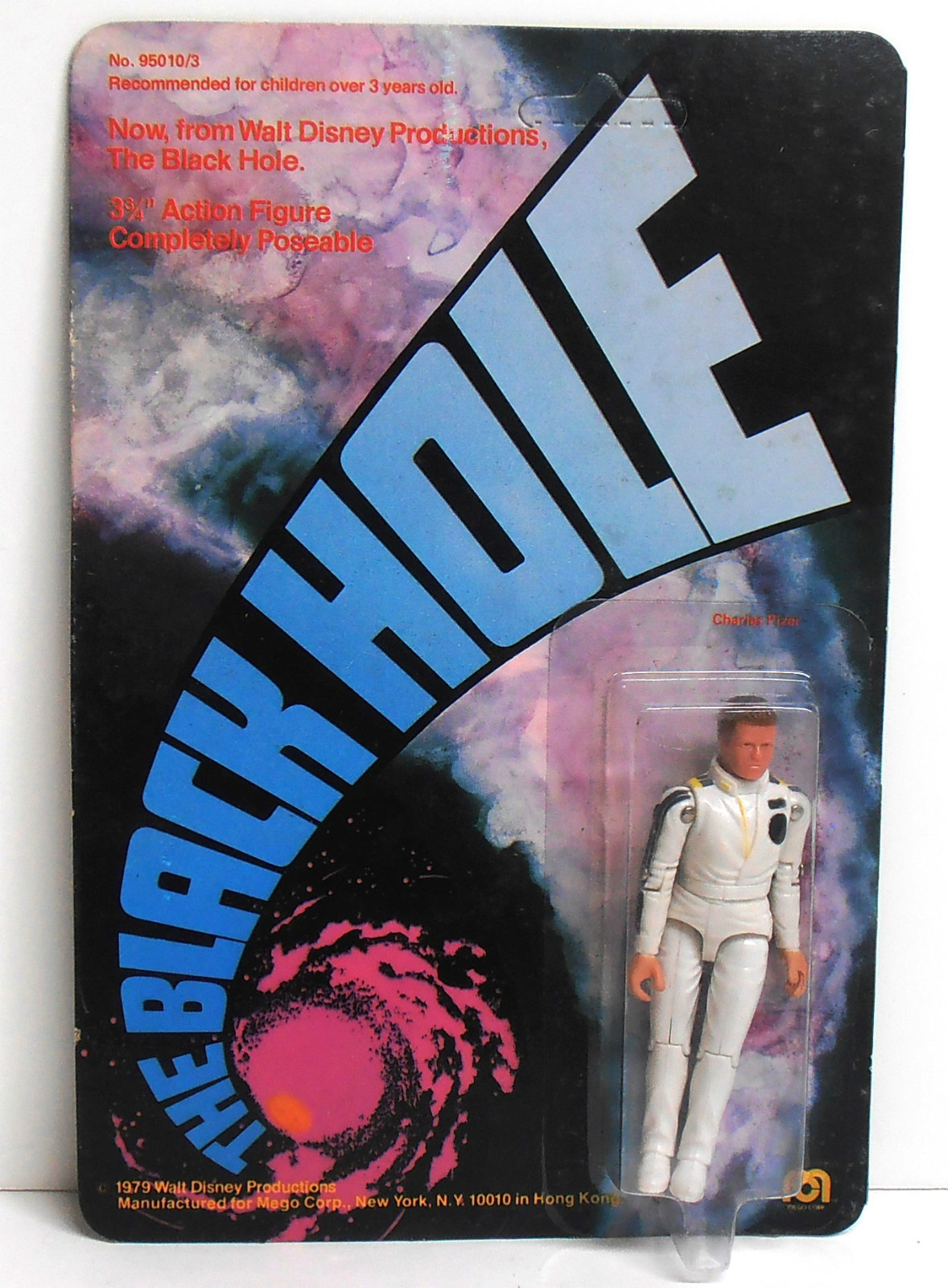
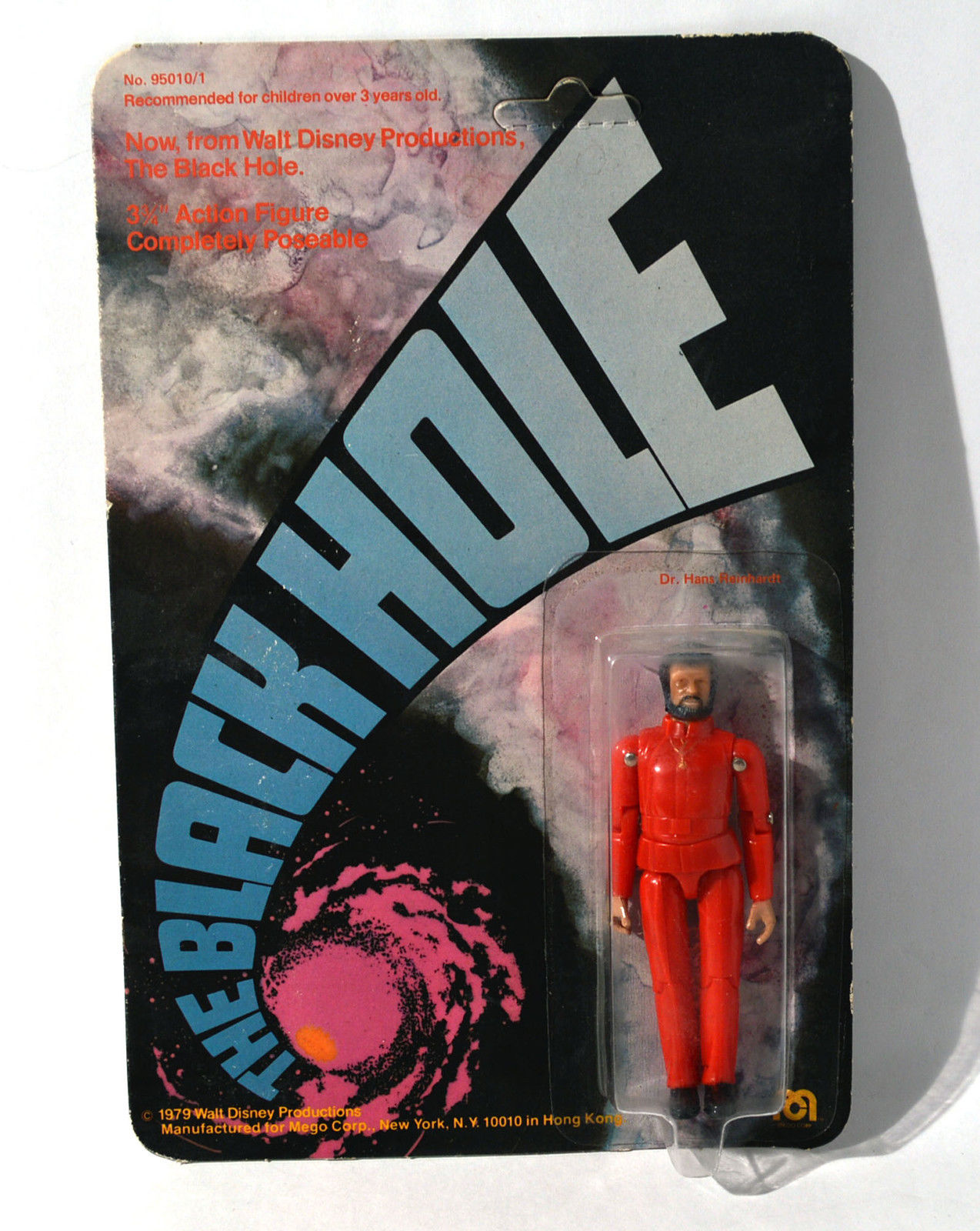
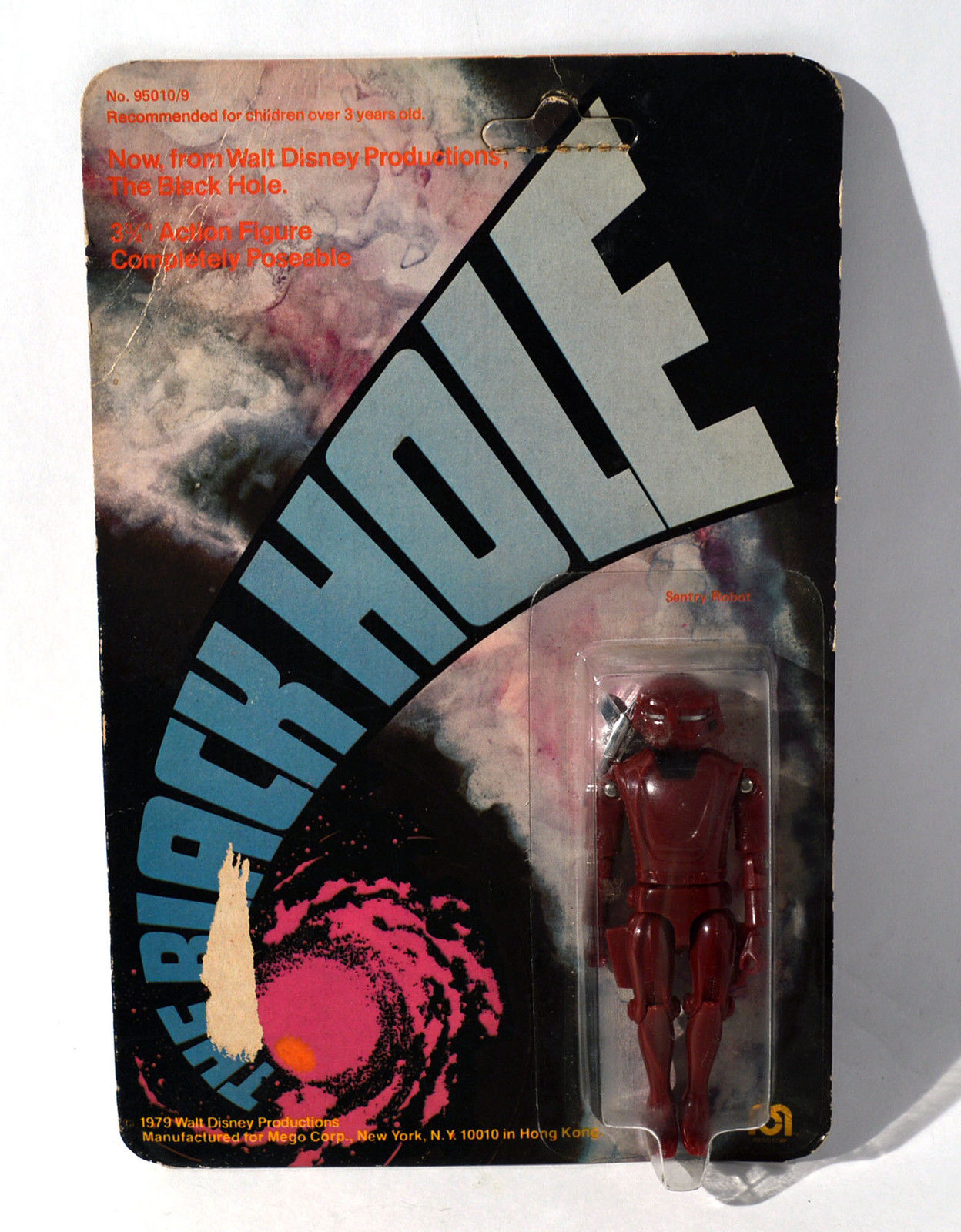


A closer look at all the Black Hole figures I talked about many internet ages ago—here. Old Bob, S.T.A.R., and Humanoid figures were released in Italy only.
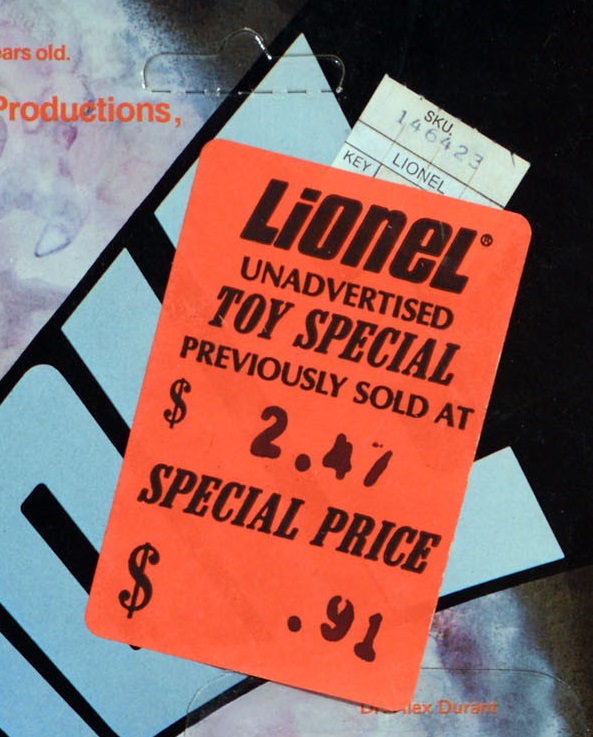
The highest price point I could find on a carded figure is $2.43 (Reinhardt). The lowest is $.91 (Durant). I also found one marked down to $.97 (Holland).
UPDATE (12/19/15): Adding a Harry Booth marked down to $.88. That’s what happens to traitors!



The footage comes from Patrick Scott Patterson, “the man who talks about video games for a living.” Patterson has amassed an impressive amount of historic arcade and gaming-related video on his YouTube channel.
It really is the best golden age arcade compilation I’ve seen. Music featured in the montage includes The Beepers’ “Video Fever” and “History Lesson” from the War Games soundtrack (two of my all-time favorites) and “Pac-Man Fever.”
Some of the video is from a 1981 news story I featured last year.
Thanks, Patrick!


From the back of the box:
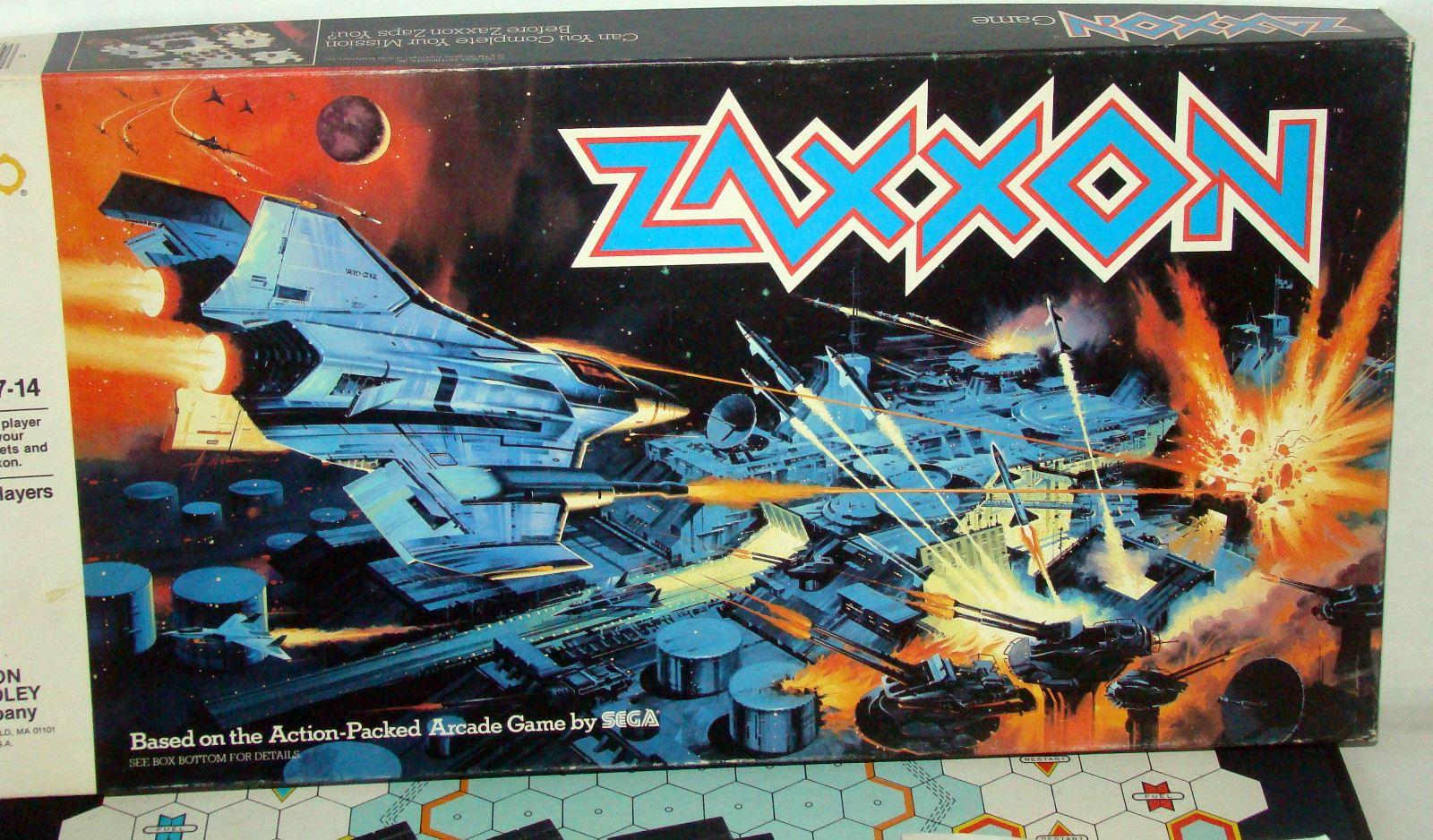
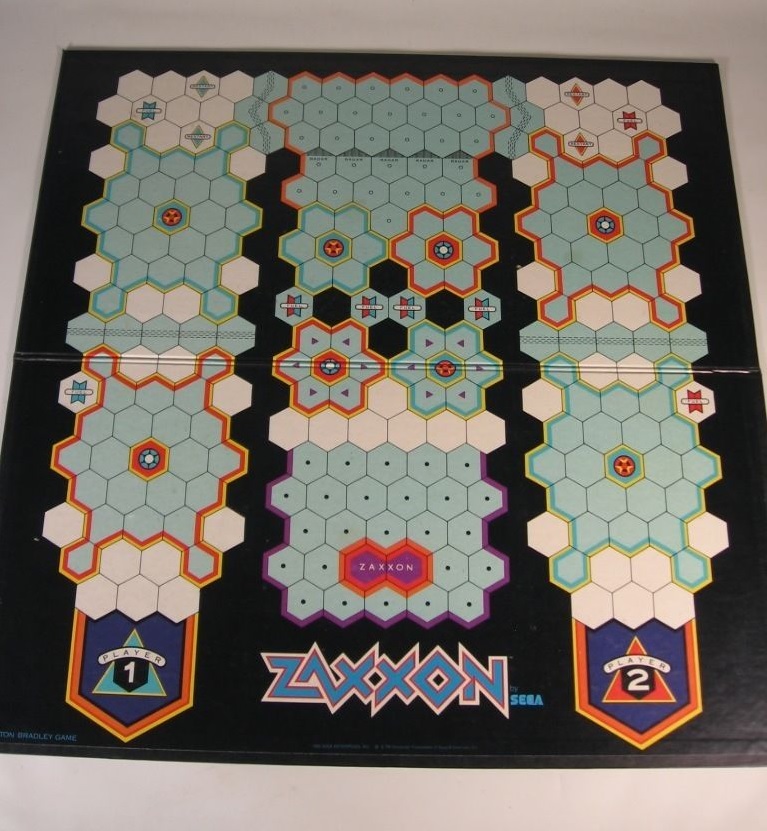
You and your opponent compete to be the first to execute your perilous mission. Maneuver your fighter planes over the enemy fortress by die roll. “Fly” at high or low altitude by raising or lowering your planes on their bases for real 3-dimensional game play. Zoom up and over fortress walls and dive down to blast enemy targets. Engage in dogfights at close quarters to force your opponent to retreat. Penetrate enemy radar to challenge Zaxxon to a showdown!
Much like Milton Bradley’s Berserk, Zaxxon is a curiosity. Why play the board game when the cabinet was fresh in the arcades? And there was always the kid down the street who had the faithful ColecoVision port.
Basically, traditional board game companies knew they were losing to video games and, to a lesser extent, RPGs. If you can’t beat ’em… Also, maybe the folks at MB played the Zaxxon cab and thought, “This game is fucking hard. Let’s give the kids a version that lasts longer than 30 seconds.”
I think the board version is cleverly designed, emulating the 3D aspect that made Sega’s Zaxxon so novel. And the game pieces are pretty. And the box art is Berkey-esque.
All of which adds up to: I want.
UPDATE: Check out the UK/European version of the game.

It’s a “family version of the arcade game,” allowing for up to 4 players. The American version is 2 players only. As for the box cover, it amuses me how MB approaches the different markets. They give the Brits a bright, comprehensive demonstration of how the game works, whereas the Americans get a giant spaceship blowing shit up. Sounds about right.
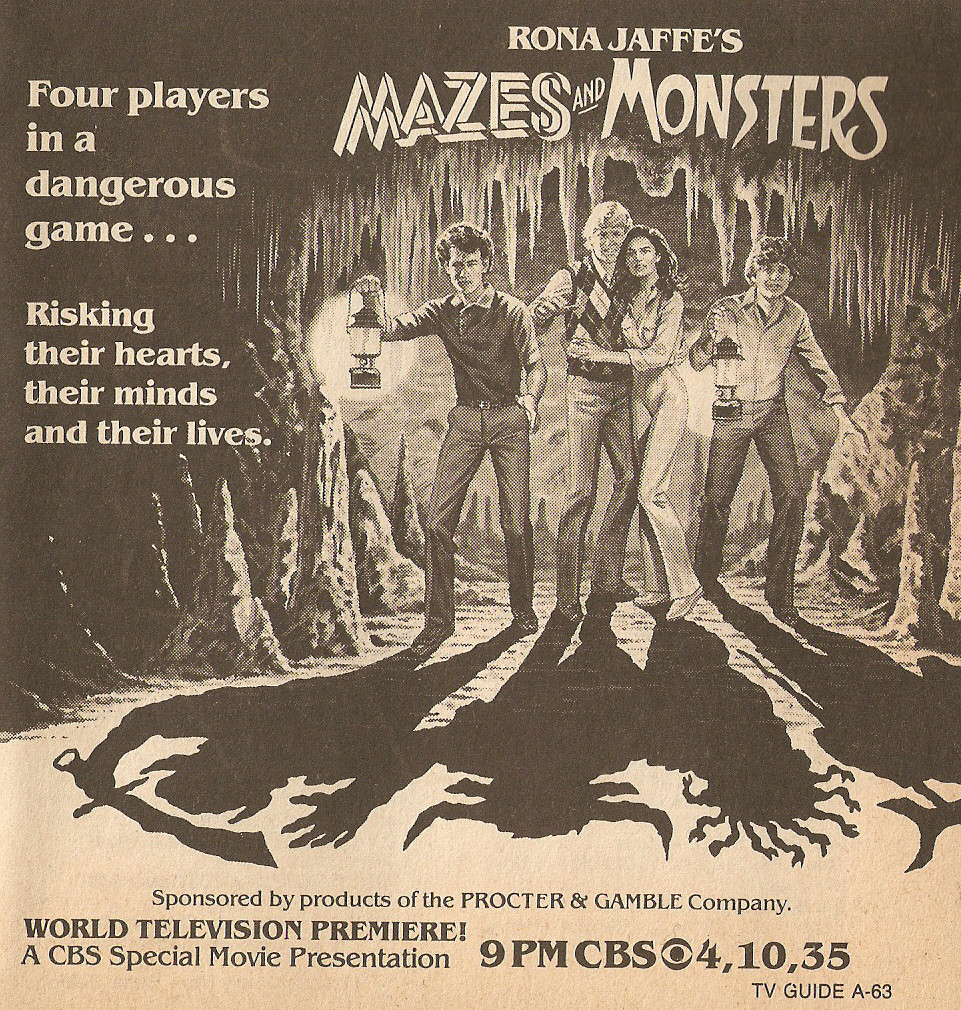
In Mazes and Monsters, four privileged college students get involved in fantasy role-playing as a way to escape painful (for the privileged) personal problems. One of them loses it, has a complete psychotic break, and ends up living with his parents and believing he’s a cleric.
In both the bestselling novel, written by Rona Jaffe, and the TV adaptation, role-playing is presented as addictive, a playground for idle hands, something to be conquered on the journey to mentally healthy adulthood. The ad brilliantly reflects the story’s sensationalistic propaganda. The players’ shadows are nothing less than their inner demons coaxed into the physical world by the game (called Mazes and Monsters). It’s very Freudian.
The ad concept, with a shadow or shadows revealing the underlying nature of the appearing figure or figures, has been used many times before and since. The Changeling (1980) and Warlock (1989) movie posters are a couple of examples.
Here’s an article, written by Jaffe, that appeared in the same TV guide.
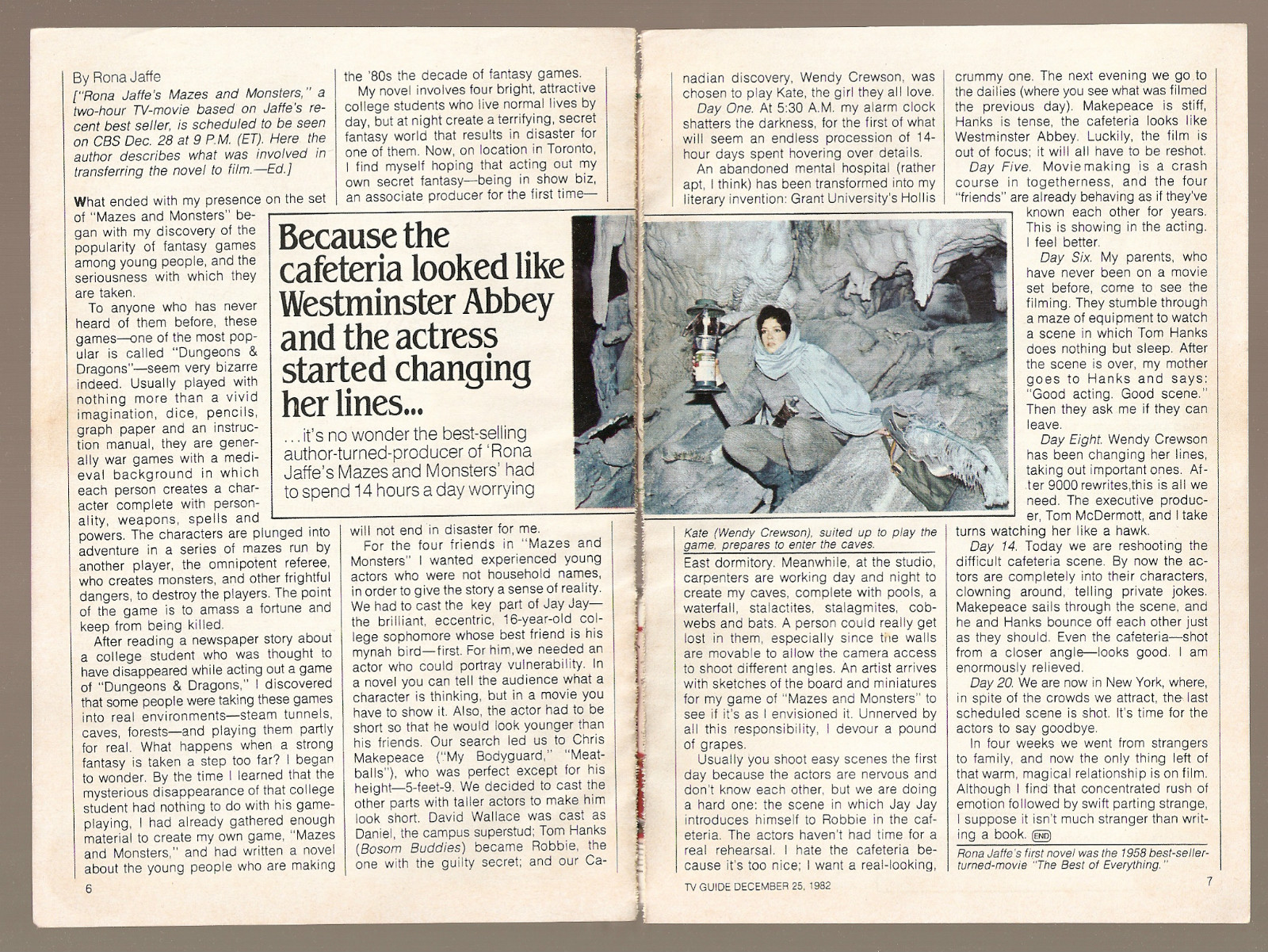
It’s mostly about her experience as an associate producer, but she does discuss how she came to write the novel, and what she says about “fantasy games,” specifically D&D, is pretty interesting.
The characters are plunged into adventure in a series of mazes run by another player, the omnipotent referee, who creates monsters, and other frightful dangers, to destroy the players. The point of the game is to amass a fortune and keep from being killed.
The italics are mine. Funny, but I thought the point of the game was to have fun. The characterization of the DM/GM as omnipotent and sinister was and is taken seriously by a number of powerfully ignorant, unsavory collectives.
Jaffe neglects to mention that her novel is also a “strong fantasy,” and that it too might be “taken a step too far,” with pernicious results.

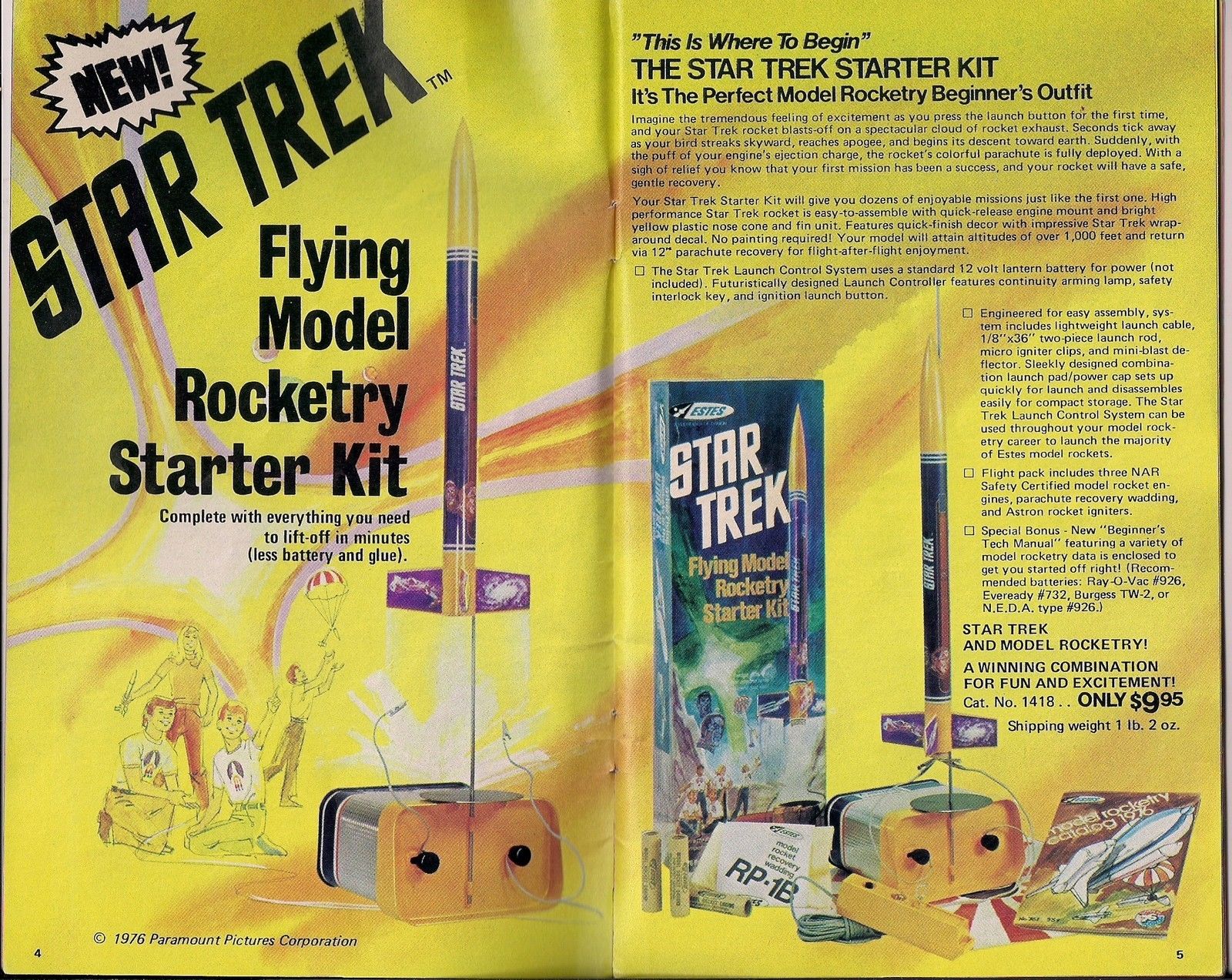
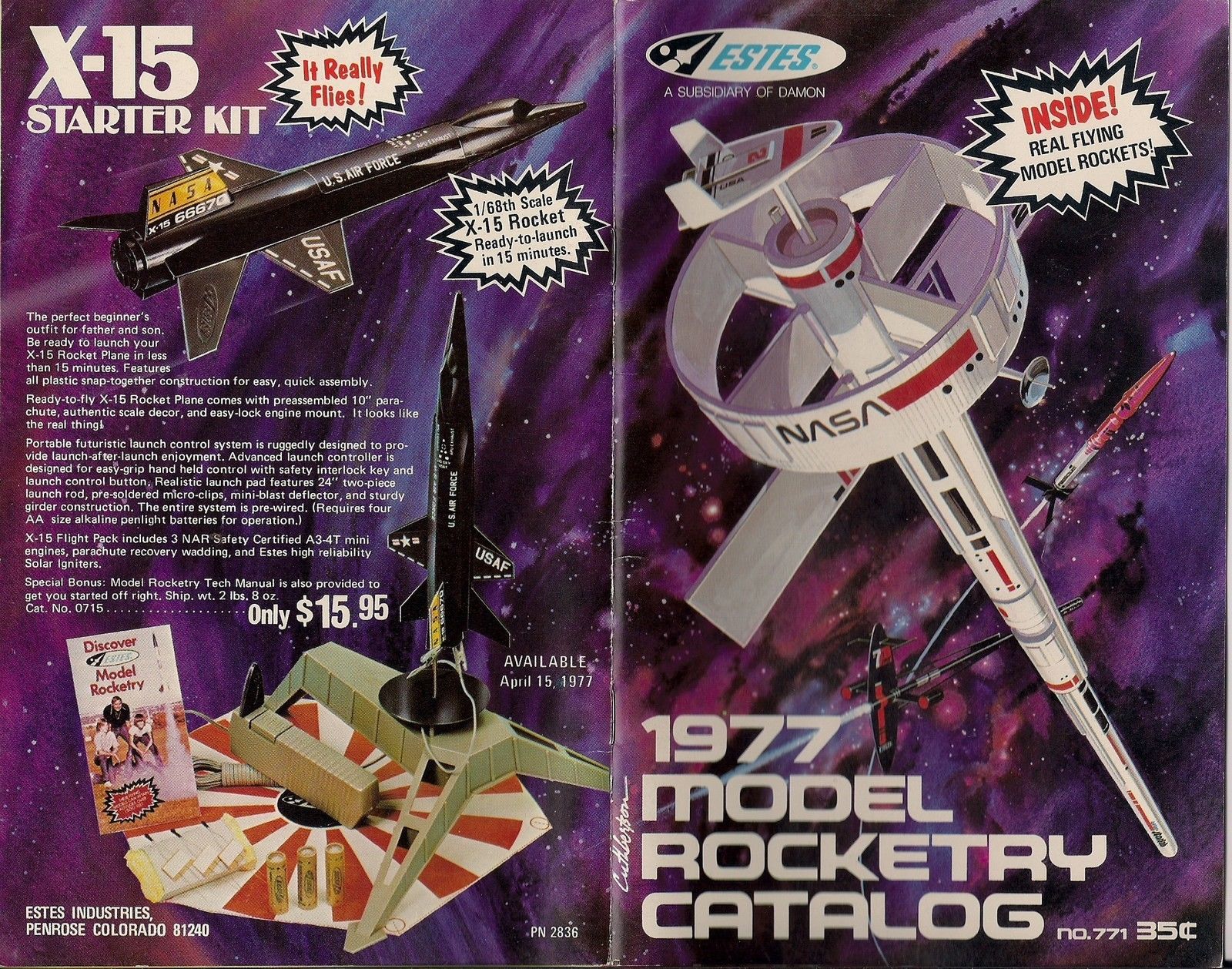
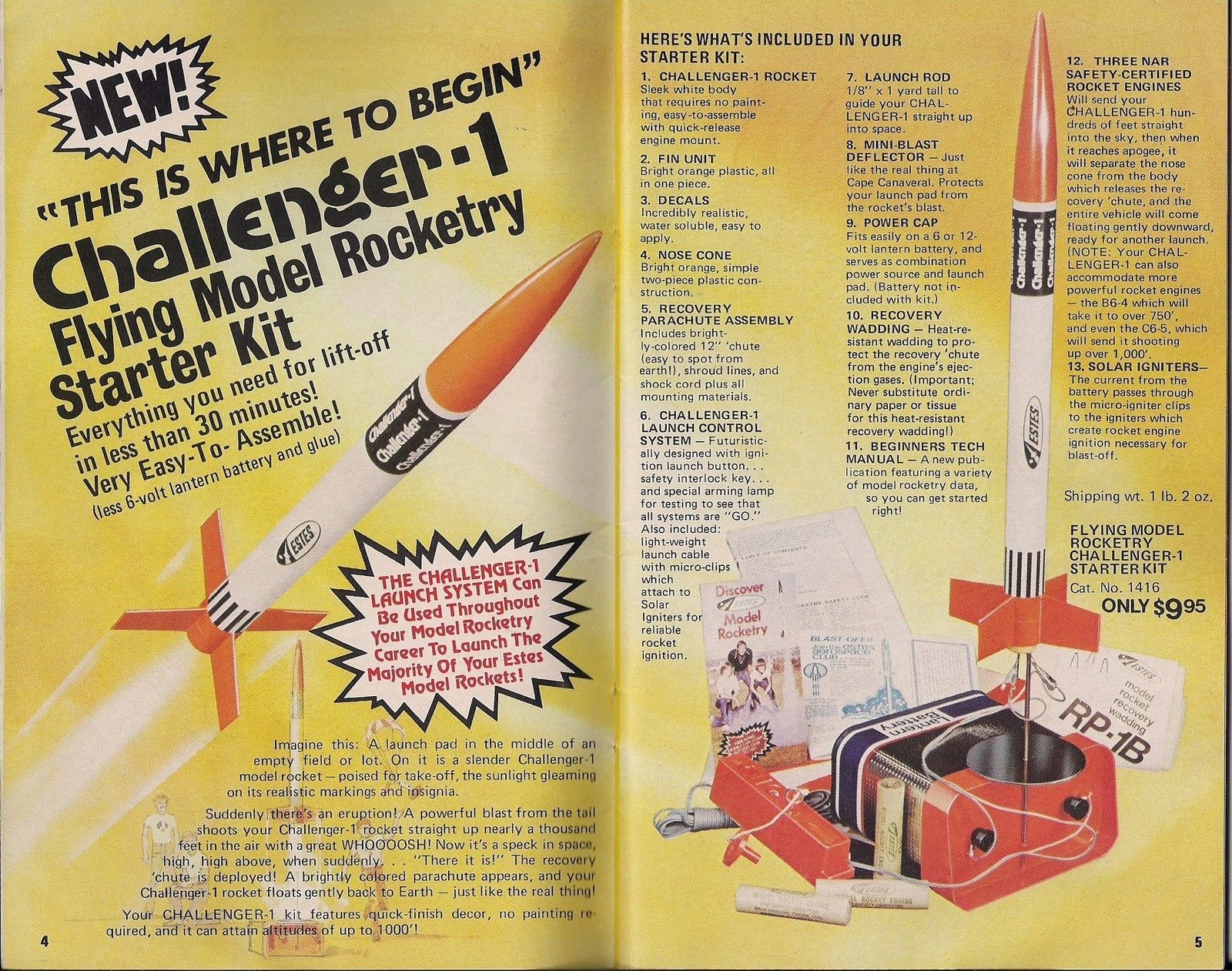
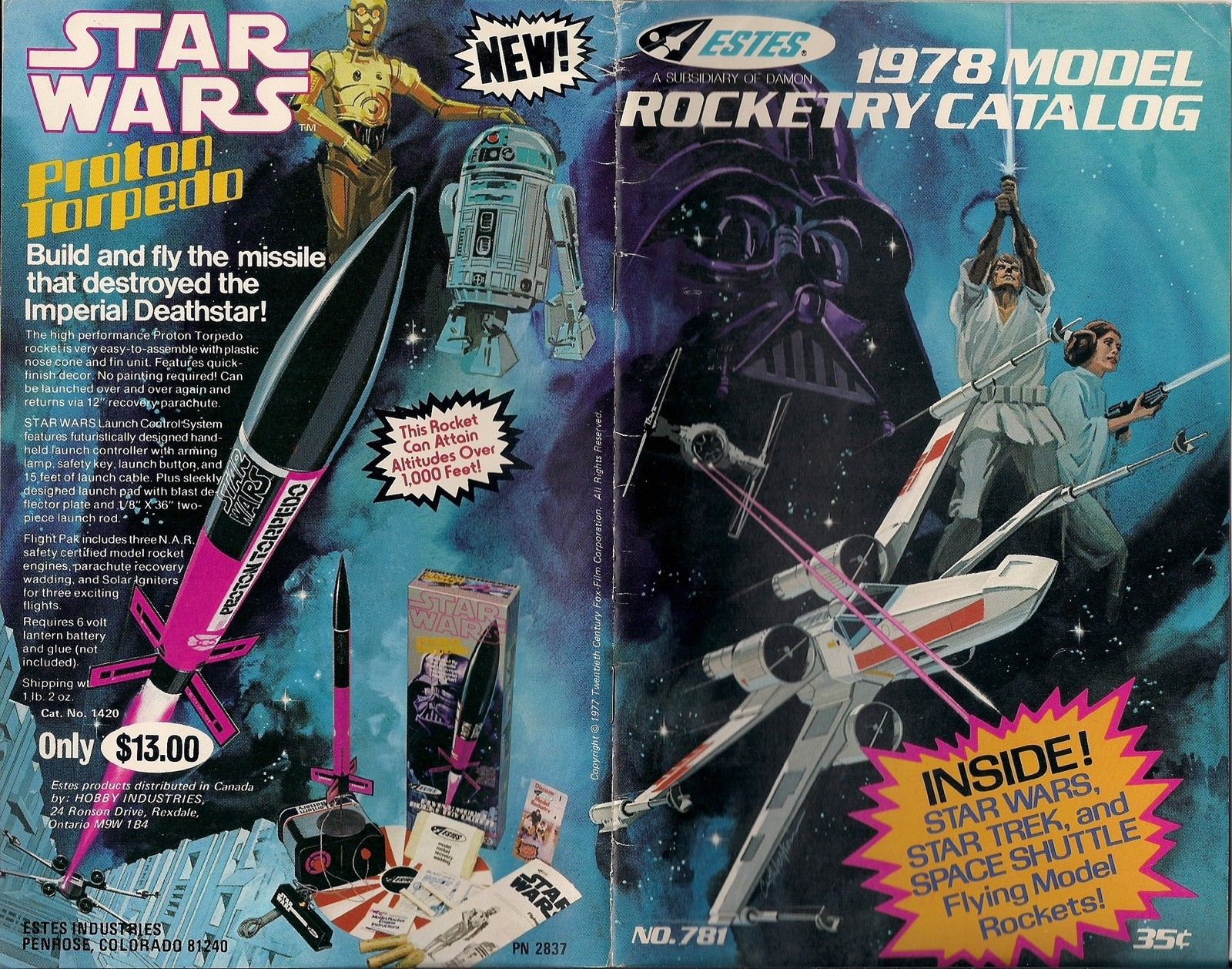
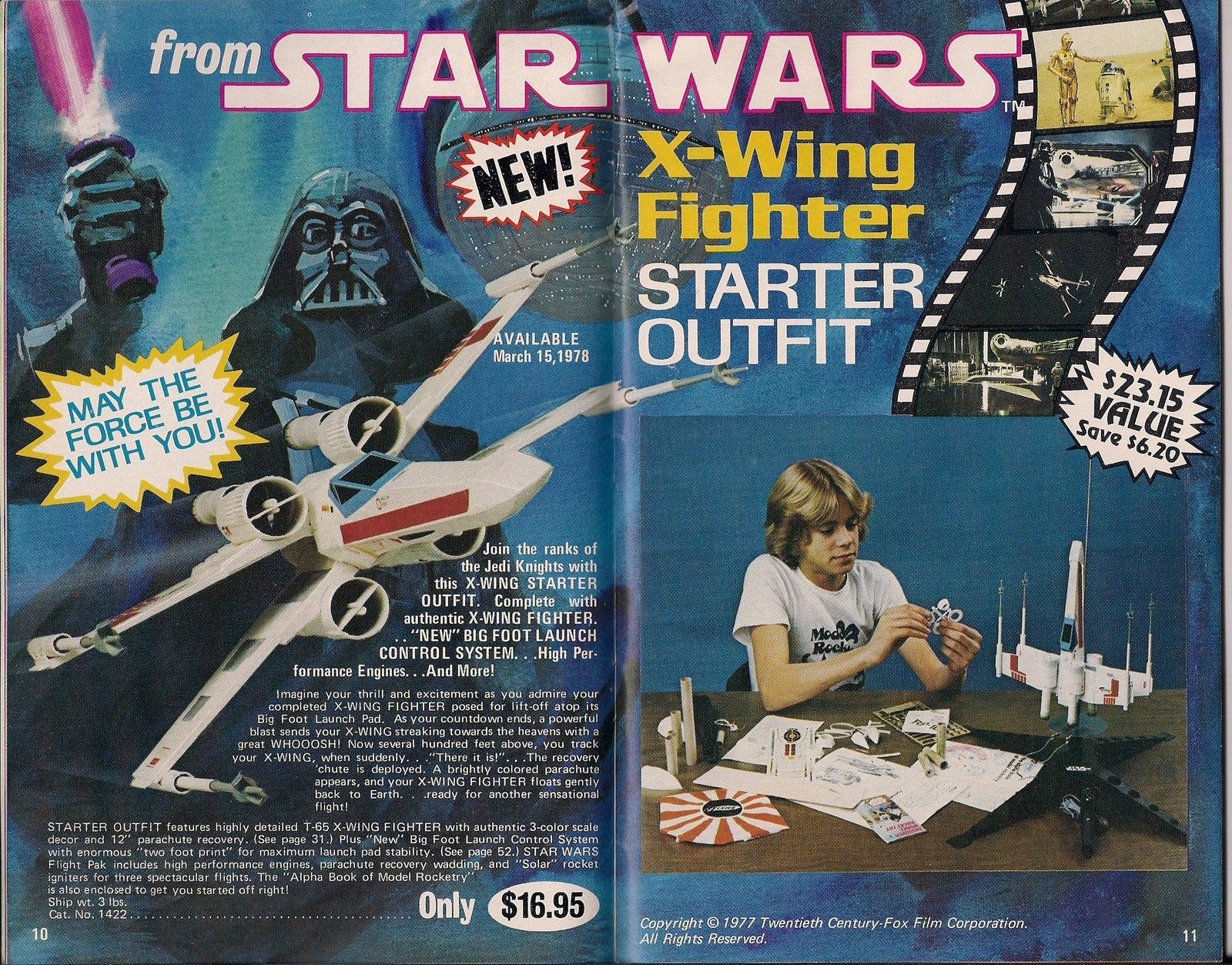
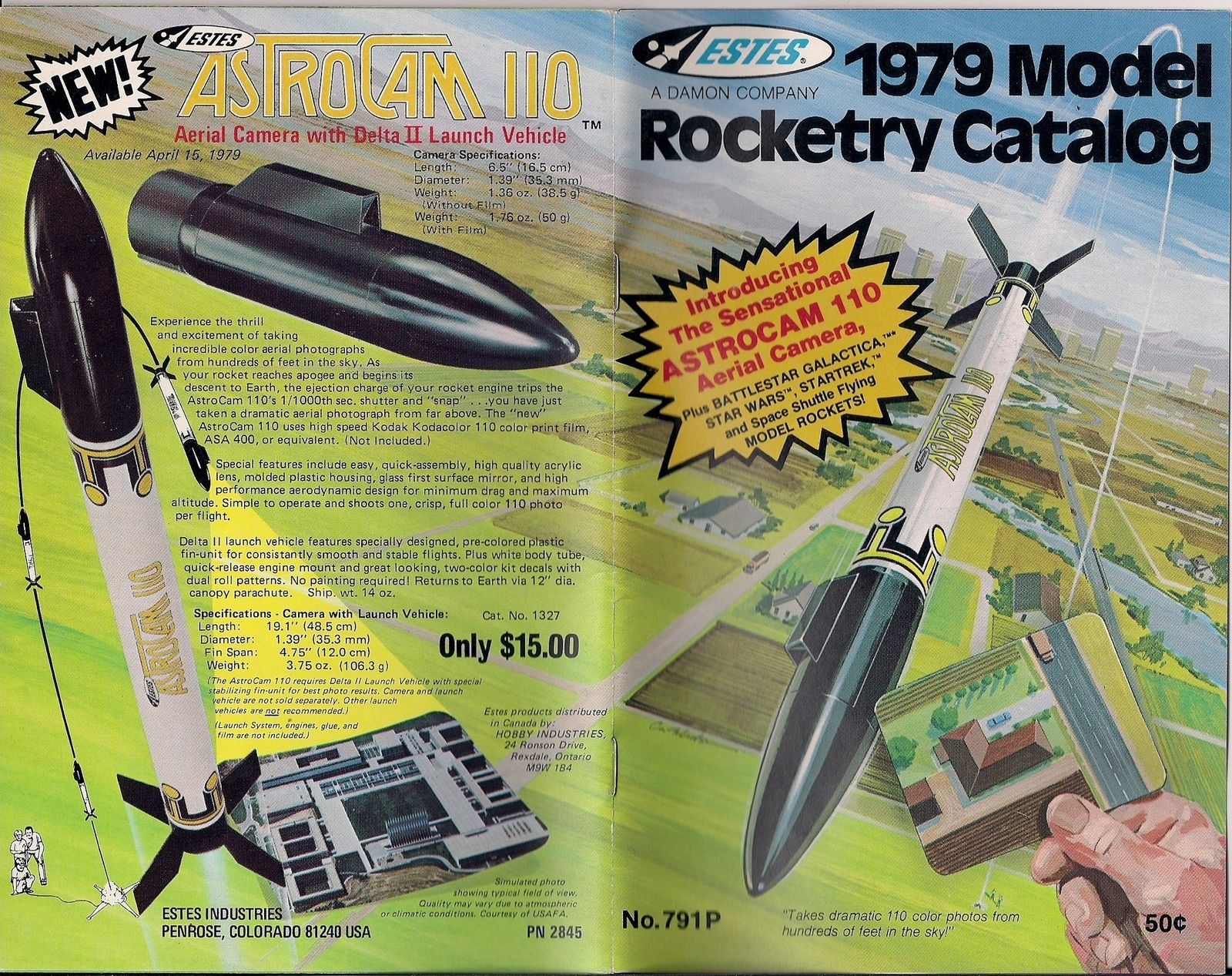
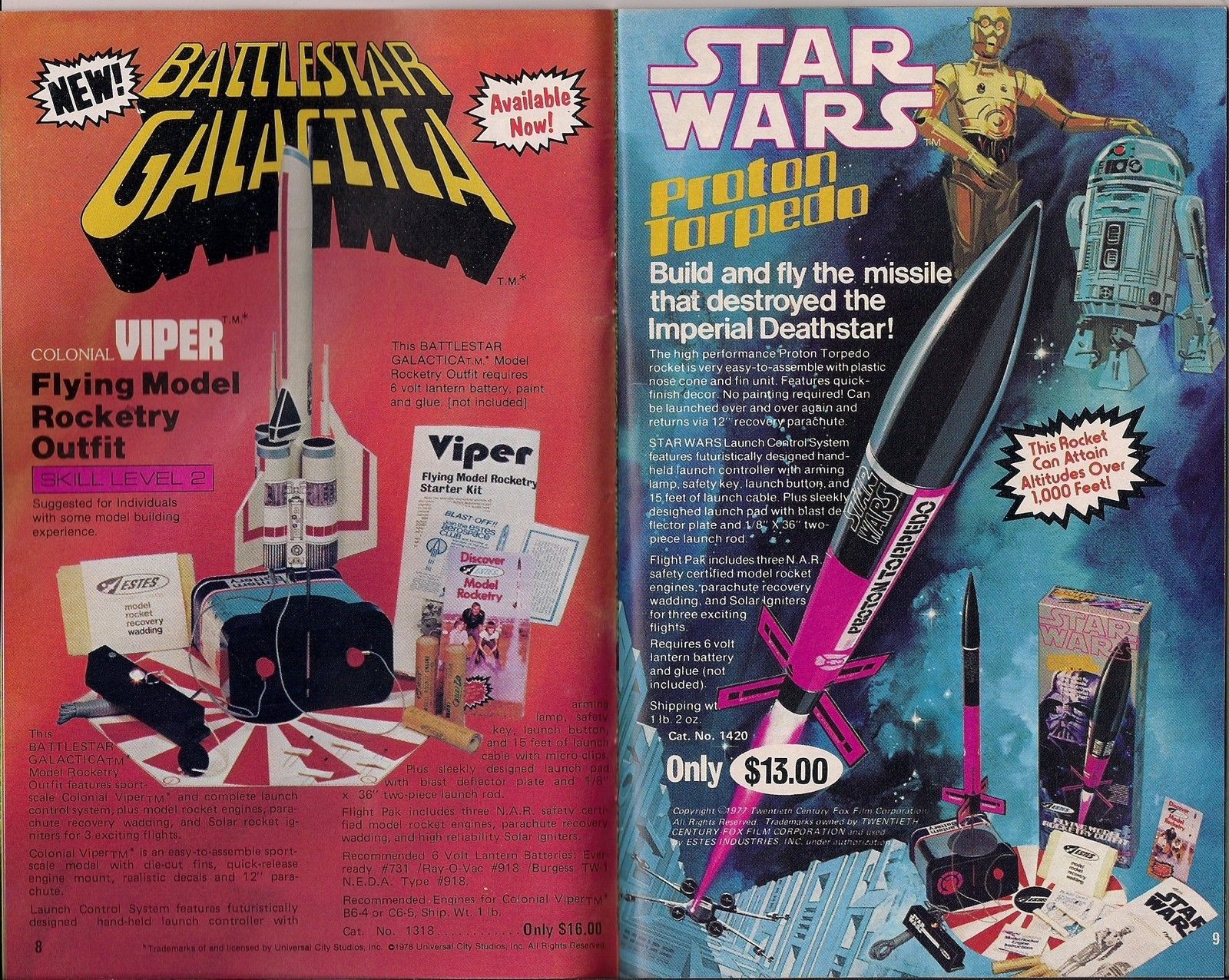
Just the front and back covers and a two-page spread from each catalog, but it’s enough to give you an idea of the once proud art of advertising to kids. Beautiful colors, beautiful layouts. Estes was the biggest model rocket company in the ’70s and ’80s. Centuri was second.
(Images via Myndscrape’s Paper Trail)
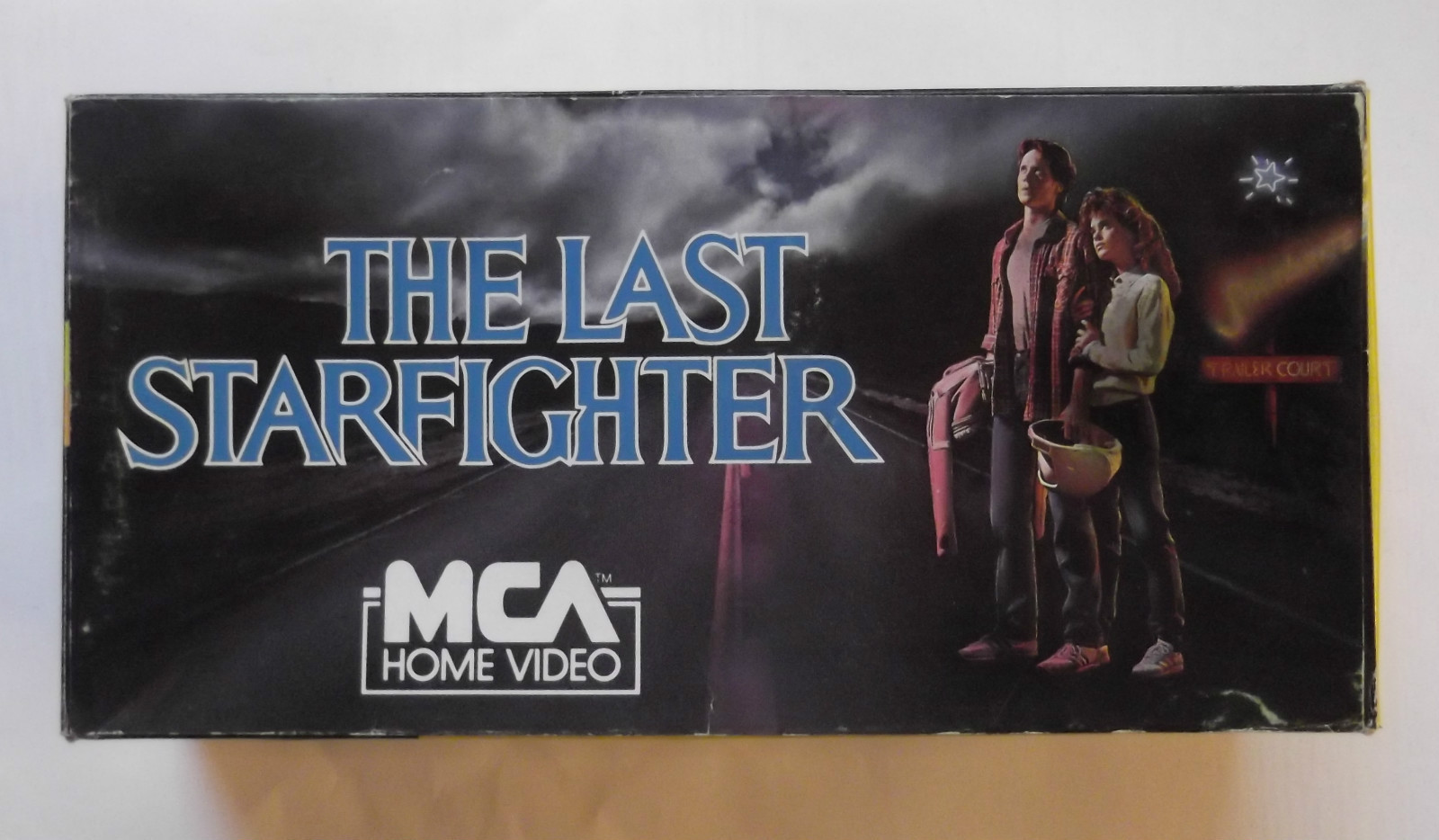



The “Super Electronic Gun” was a promotional item given away with purchase of The Last Starfighter on VHS. Nothing resembling it appeared in the movie, but no matter. The phallic, ribbed tip lights up after you “pull the battery magazine out for battery inserting.” If only it vibrated.
UPDATE (3/17/15): The gun was in the movie, as seen in the screenshots below. I’m not sure if it’s supposed to be part of robot Alex’s equipment or Louis’ toy, but there it be!


 2 Warps to Neptune