





Surveying the Gen X landscape and the origins of geek
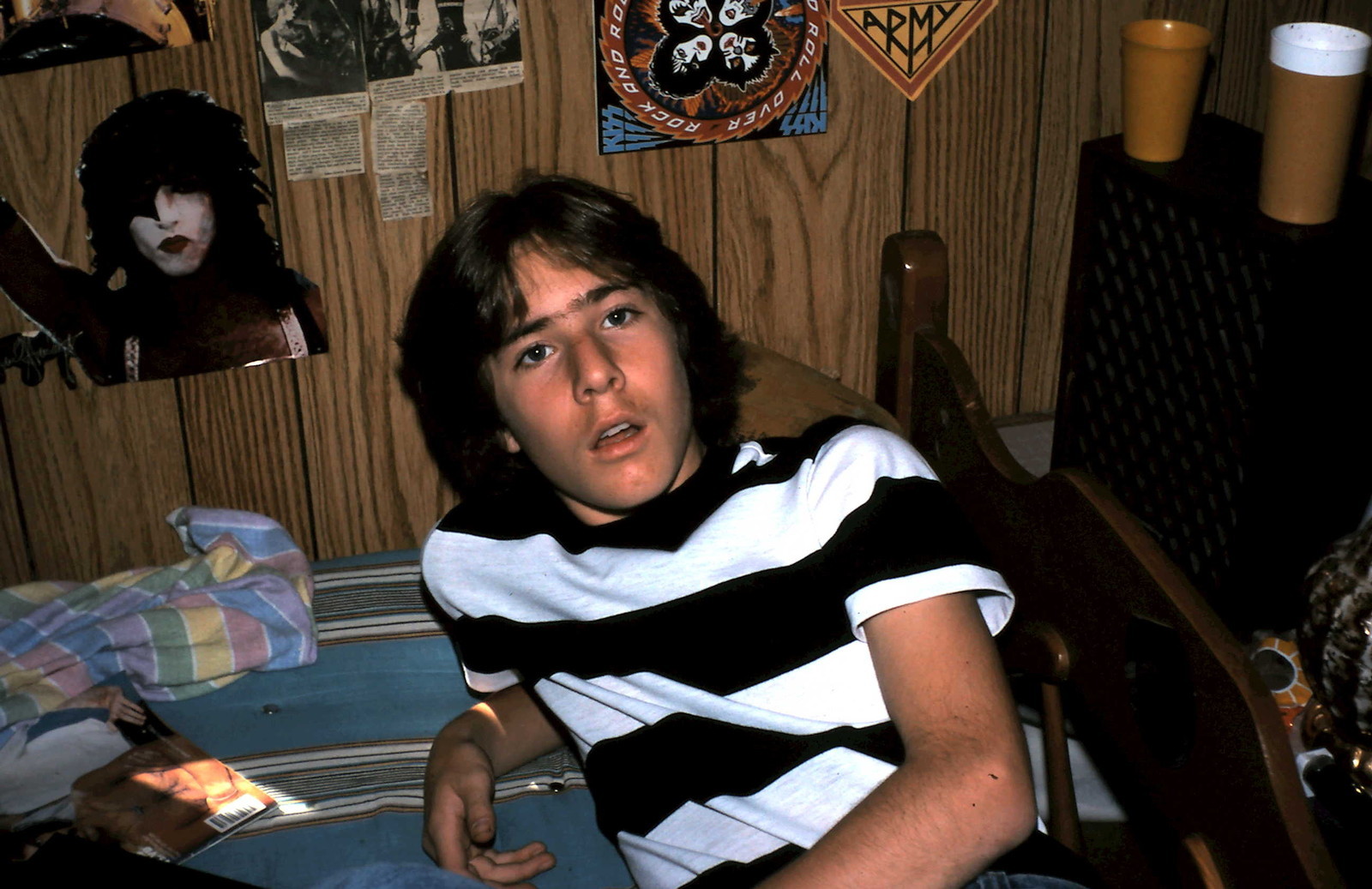
It was such a pain in the ass keeping sheets on the bed. The solution was one of our defining gestures.
Rock and Roll Over is a KISS album from 1976, and KISS Army is the name of the official KISS fan club started in 1975 (it survives online today). Here’s a patch from around the same time sporting the logo.

Can anyone tell (1) who’s in the article on the wall, and (2) who’s on the magazine on the bed?
UPDATE: Eagle-eyed Sam Staley pegged the magazine as Circus #165 (October, 1977), with Hall & Oates on the cover. Put on a shirt, Oates!

(Photo via Pacific Coast Trade/eBay)


The coolest, and maybe the earliest, D&D-inspired fantasy playset I’ve seen so far. (I don’t count Warriors of the Galaxy, which is more of a MOTU-chasing spacy-fantasy.) The set is huge, first of all: it’s almost as big as the kid laying next to it on the box cover. Second, the figures are a good, creative mix, even if the dragon mount looks kind of like a Tauntaun. Third, I dig the maze with the gold prize in the middle, the obvious place for the green dragon to crouch.
UPDATE (4/6/14): As I said here, my assumption now is that Dragonriders is the first playset to be packaged and produced in response to the popularity of D&D.
‘Dragonriders’ was likely taken from Anne McCaffrey’s popular Dragonriders of Pern trilogy, released under that name in a collected edition in 1978. The Styx is a river in Greek Mythology running into the underworld. It’s also the name of a rock band—you’ll remember them from the 1983 hit single “Mr. Roboto.” Paradise Theater, the band’s only album to hit #1 on the US charts, came out in January, 1981.
Here’s the set—pretty expensive, compared to Castle Greyskull—in the 1982 J.C. Penney catalog.

Read a firsthand account of someone who owned it at Two-Bit Nonsense.
DFC also released an action figure line of the same name starting in 1983. I’ll talk about that in a future post.
(Images via eBay and Wishbook/Flickr)

Very clever. I can’t tell what the backpacks are made of, but the proton guns are Uzis. The kids’ names are sewn on the uniforms.
UPDATE (10/23/13): Nick sent me details regarding the costumes:
The costumes were built with a pattern that had come out during that year for costumes. The backpacks were simply spray-painted cardboard boxes with shoulder straps. However, a special opening at the top allowed people to drop candy inside, so we could have theoretically mopped up some serious candy because the boxes could hold a lot. While we never got a photo of the rear of the backpacks, my brother designed the outside with all sorts of hoses and accouterments so it would have a “wow” factor that made it look very fancy and techie. The Uzis were just the standard toy gun from K-Mart that you could buy at the time. Through standard rubber hoses, they were then attached to the backpack.
(Photo via nick_cw1861/Flickr)
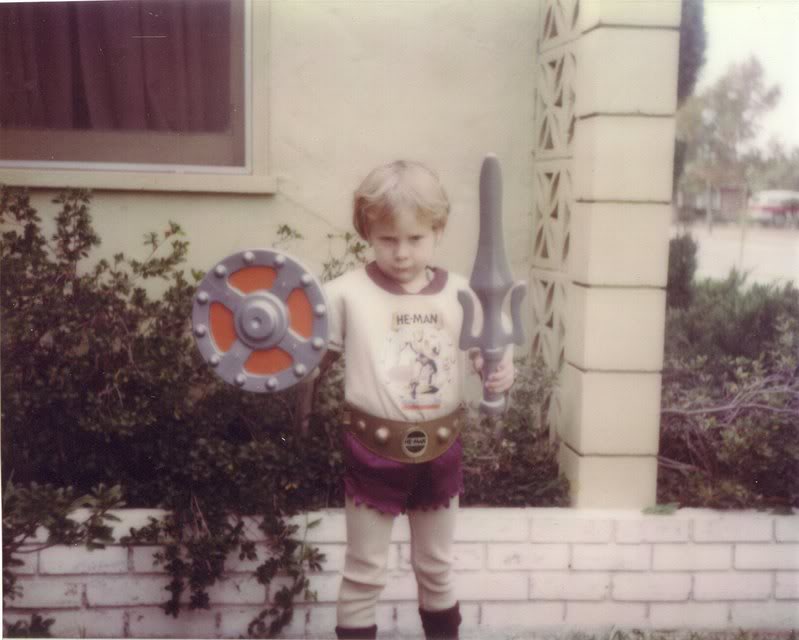
It’s hard to look tough in long johns and a purple tunic-skirt, but the kid kind of pulls it off. Speaking of classic MOTU, have you seen this guy?
(Photo via the he-man.org message boards)


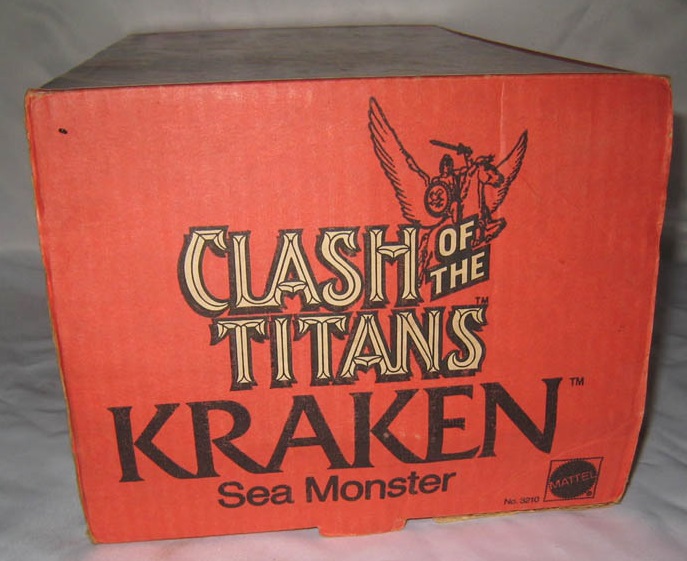

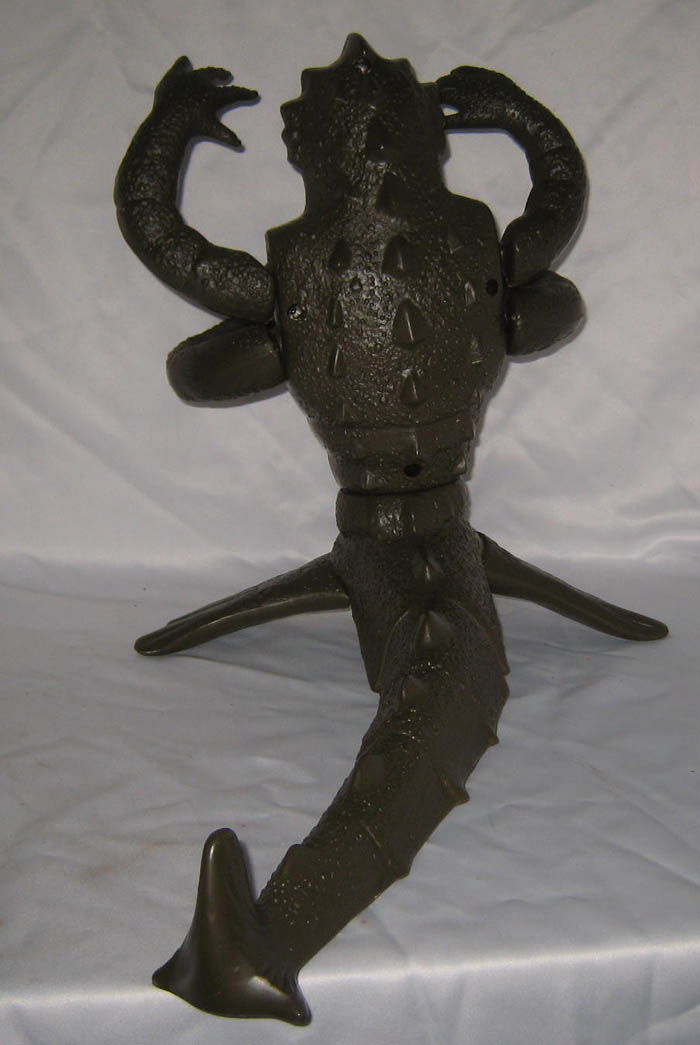
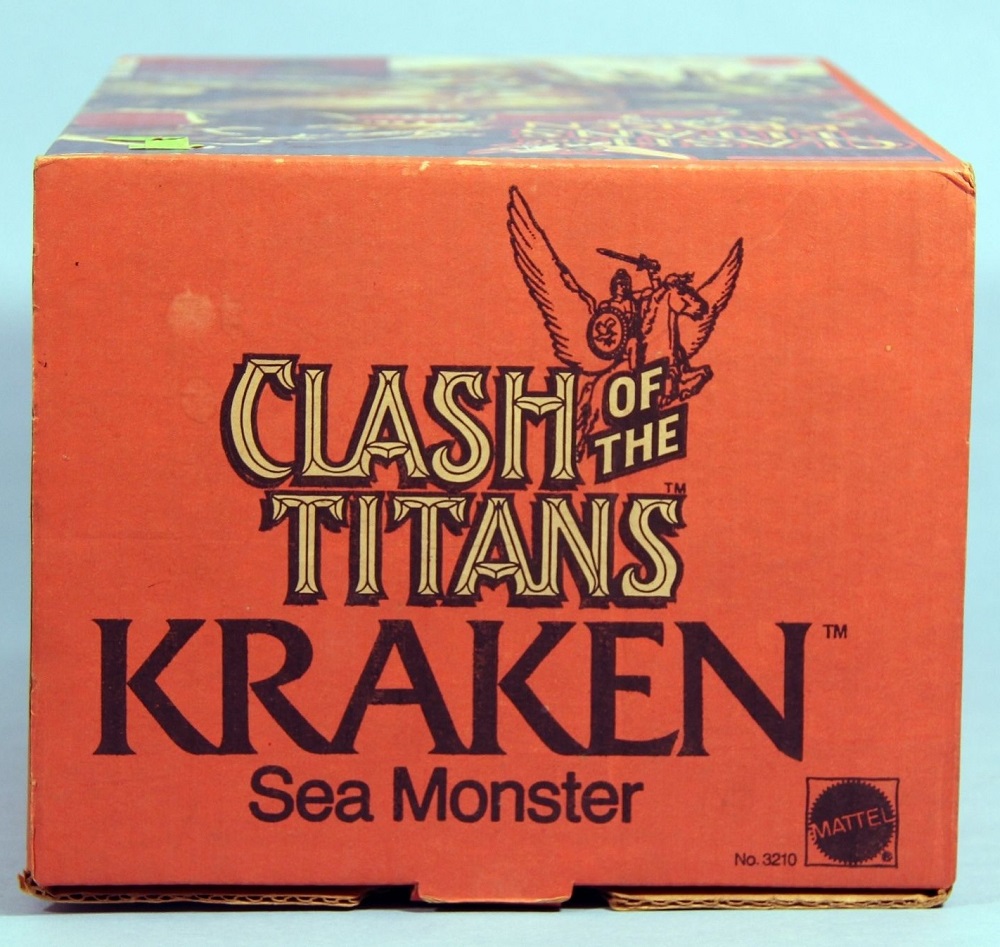
Crappen would have been a more appropriate name, because the thing actually looks like a turd. If you snapped off the arms and dropped it in a toilet, nobody would know the difference. In fact, the next time you’re hunkered down to do some business, feel free to cry out: Release the Crappen! (Sorry, couldn’t resist.)
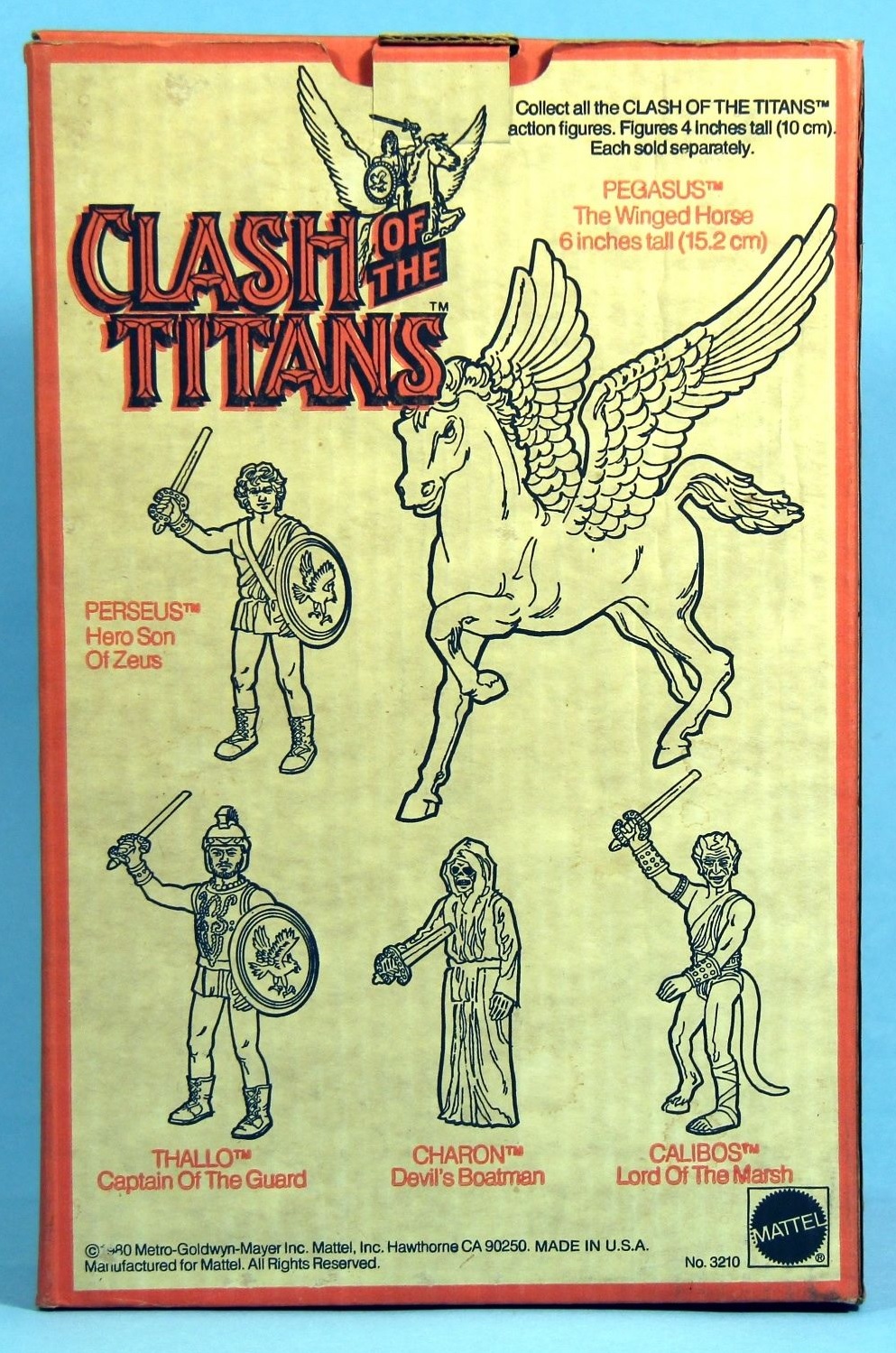
The Clash of the Titans action figures look much better in comparison, though the whole line is forgettable, even compared to other second-tier efforts of the time like Mego’s The Black Hole and Star Trek figures (both from 1979).
You can see all the Clash toys at Plaid Stallions. The line tanked for the same reason all of the other lines tanked: Kenner’s Star Wars franchise was a ravager of allowances, the absolute ruler of wishlists, and it wouldn’t face any serious competition until G.I. Joe: A Real American Hero and Masters of the Universe crashed the party in 1982.
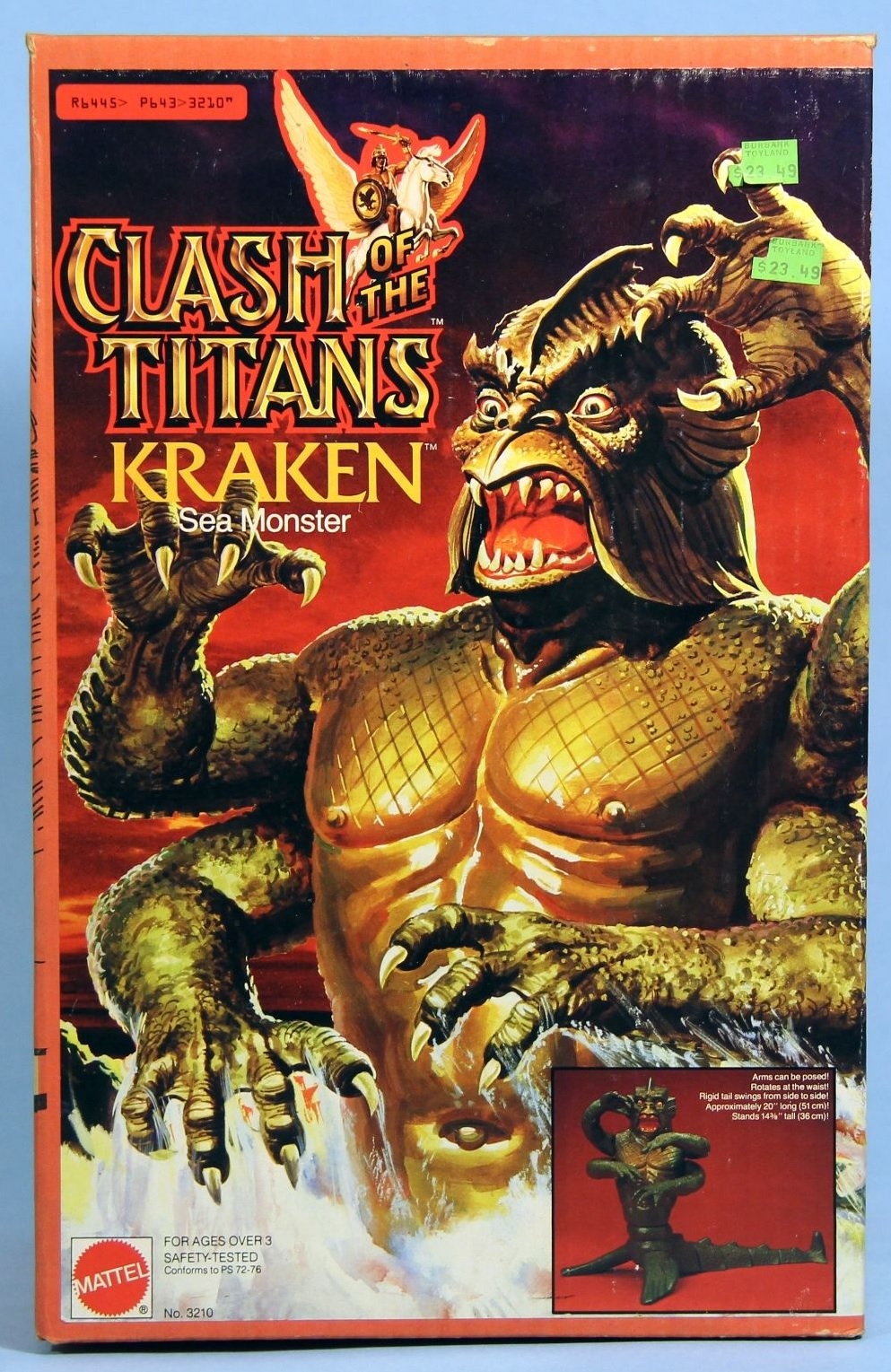
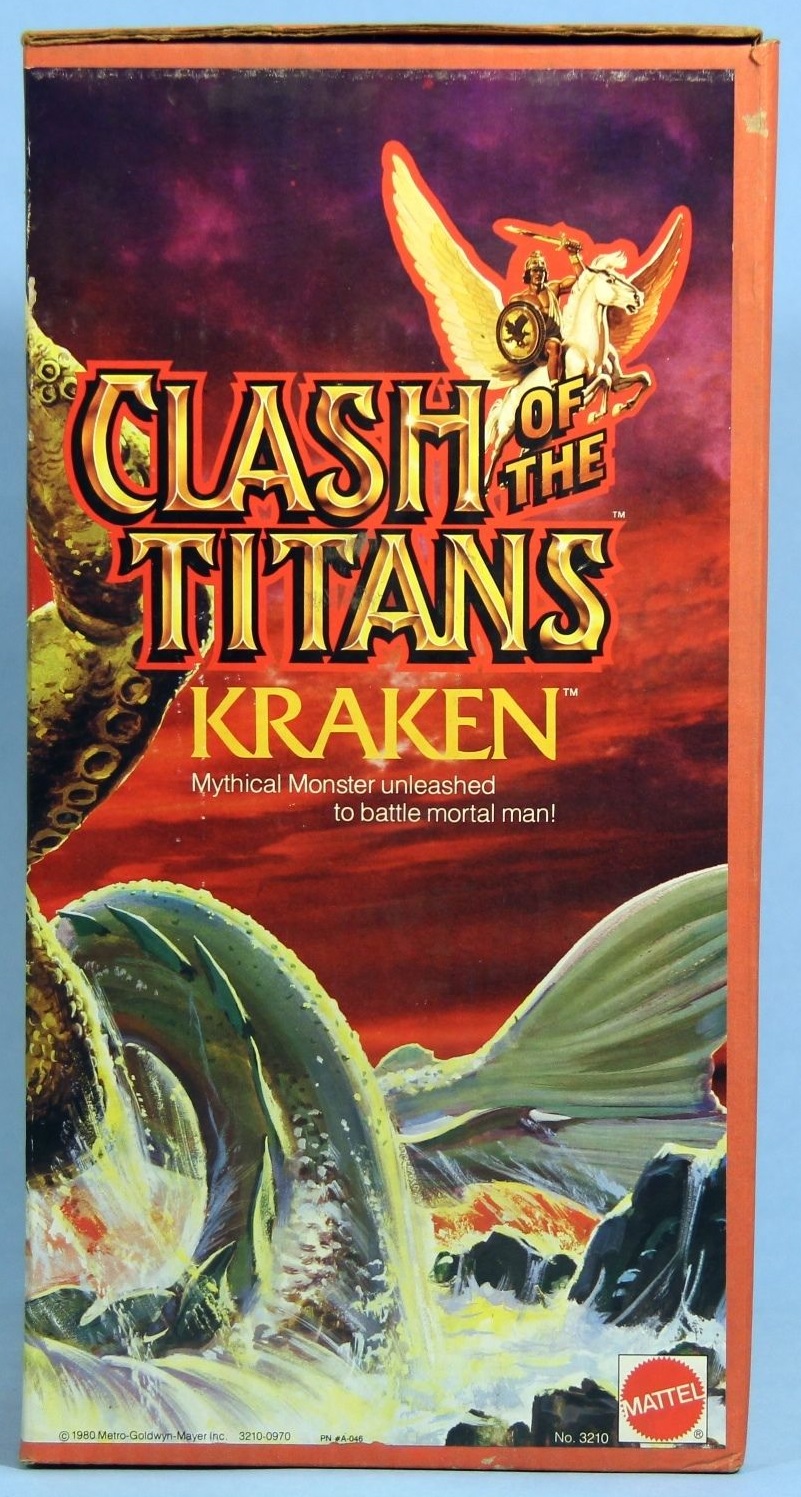
I’ll be posting the carded figures, and Pegasus, as soon as I gather them all. Mattel did get the packaging right. I love the lurid reds and purples—reminds me of Harryhausen’s breathtaking Medusa scene. The art isn’t bad either.
Side note: Clash of the Titans premiered on June 12, 1981, the same day as Raiders of the Lost Ark. What a summer.
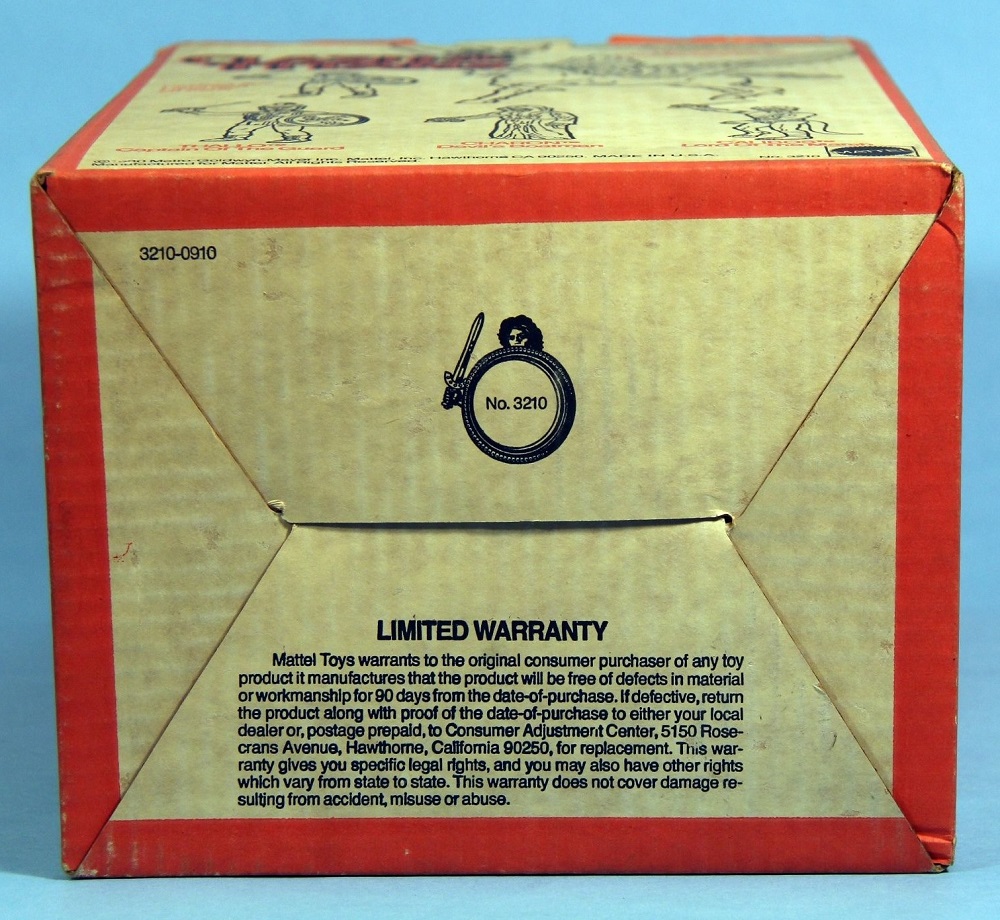
UPDATE (6/20/14): I’m posting exhaustive images of the box below. Notice the price tag in the first photo: $23.49. For comparison, Kenner’s Empire Strikes Back Millennium Falcon retailed for $30 or just under.


Remember when I said that the Amazing Spider-Man Rockomic From Beyond the Grave (1972) was the weirdest, scariest shit ever marketed to kids? I stand corrected. That honor (for now, anyway) has been passed along to Night of the Laughing Dead. The story, by Steve Gerber, is adapted from Man-Thing Vol. 1 #5. (Beware: spoilers ahead.)
Our story begins with a weeping clown, his copious make-up smeared from tears, putting a gun to his head and pulling the trigger. The Man-Thing, a tortured, unreasoning beast who vaguely and painfully recalls his former life as a human being, hears the shot and finds the dead clown face down in the swamp. The creature picks him up, intending to bury him. The music kicks in: it sounds like a cat being sawed in half in slow motion.
Meanwhile, the clown’s girlfriend, who’s upset because she “betrayed” him, gets beat up by the carnival manager. Two hippies rescue her and they all go looking for “her clown.” They find him on the side of the road. He seems to be fine. But he’s not. Because he’s dead. The kids follow the silent apparition into the marsh.
The carnival manager and his meathead henchman, the carnival strongman, speed after the hippies and the clown’s girlfriend. They find the clown too, seemingly alive, and swerve to miss him. The truck hits a tree and explodes. The carnival manager burns to a crisp. The clown taunts the meathead in an evil clown voice, laughing the laugh of an evil, dead, insane clown. The meathead takes the bait and plows after him/it.
 Not too far away, the kids, lost in the poisonous marsh, see the Man-Thing carrying the dead clown’s body. Ayla, the girlfriend, screams and rushes to her man, cradling the dead body in her arms, weeping. The hippies wonder: hey, if the clown is dead, what exactly was it we saw head into the swamp a few minutes ago?
The strongman arrives, picks up the clown corpse and implores it to “stand up and get beat to death like a man.” One of the hippies tries to stop him, and the meathead knocks him out. The Man-Thing intercedes, fighting the strongman and eventually drowning him in the swamp.
The ghost of the clown rises from the corpse and explains in the evil, insane clown voice that he’s finally found peace. You see, all clowns want to do is make people laugh, and clowns can’t make people laugh when they’re betrayed and all they feel is pain. But now, because his soul is free and there’s no more pain, he can laugh forever. He laughs his evil clown laugh, and the Man-Thing thinks to his miserable self: never has laughter made me feel so sad. Eerie rock music fades in. The End.
As Sanctum Sanctorum Comix notes, the story continues in Man-Thing #6, but Power Records didn’t produce the second act. I wonder if that’s because all the kids who listened to the first act crapped in their pants before dying of terror.
Read the whole book at Rob Kelly’s Power Records blog. Listen to the whole record below, if you dare.
(First image via My Comic Shop; video via Brandon Hex)

Witchiepoo is the antagonist in Sid and Marty Krofft’s H.R. Pufnstuf, which originally ran in late 1969 but stayed in syndication until 1985. The bat costume has an image of Vampira on it—I have a better shot I’ll post soon. I also see a Tweety Bird costume. What’s the yellow costume with the blue tie and suspenders? It looks familiar. Any others I’m missing?
They’re all eating cupcakes on a Halloween napkin, drinking out of Halloween cups. The cupcakes are not gluten-free or sugar-free. Construction paper jack-o’-lanterns hang from the blinds. And those desks!

The year is a guess, and the exact location is unknown. I’m going with 1980 because that’s when Intellivision (carts in the glass cabinet on the left) was released nationwide. The Atari 400 and 800 came out in November of ’79, and the Odyssey² came out in ’78. The original Magnavox Odyssey hit shelves in 1972. The ping-pong game that came with it inspired Pong.
I can’t tell what’s playing on the 400, but somebody’s playing Space Invaders on the screen to the far left. It doesn’t look like any of the Atari versions, so maybe my year is off after all. It could be Intellivision’s Space Armada (1981), but there’s more space between the aliens in that game.
UPDATE: The year is at least 1981. Lefty Limbo spotted the Asteroids 2600 cart (1981) on the top row of the front glass cabinet. Title updated accordingly.
(Photo via Historic Images/eBay)

Photo via Detective21
Oh, how they gleam with fresh-off-the-press-ness. I can smell them from here.
Horror titles (comics and magazines) were immensely popular at the time, and comic back issues will cost you a grip today, even in poor condition. The genre saw a huge resurgence in the ’70s for a number of reasons, all of them mutually reinforcing: the commercial success of 1968’s Night of the Living Dead and especially Rosemary’s Baby; changes in the Comics Code (1971) that permitted the depiction of “vampires, ghouls and werewolves”; the proliferation of syndicated horror showcases across the nation: Fright Night (1970), Creature Double Feature (circa 1972), Chiller Thriller (circa 1974), etc. (I’ll post some of the intros later on Facebook.)
As much as I love The Tomb of Dracula and all of Marvel’s monster titles, DC really set the comics standard with The Unexpected, House of Mystery, House of Secrets, The Witching Hour, and Ghosts. Weird War (not pictured here) was a brilliant combination of the horror and war genres. If I had a choice of a full run, that’s the one I’d want.
Above the comics you’ll see some magazines, including Monsters Unleashed, Vampirella, and Famous Monsters of Filmland. The pile of Mad magazines on the bottom right is #174. Cheap!


 2 Warps to Neptune