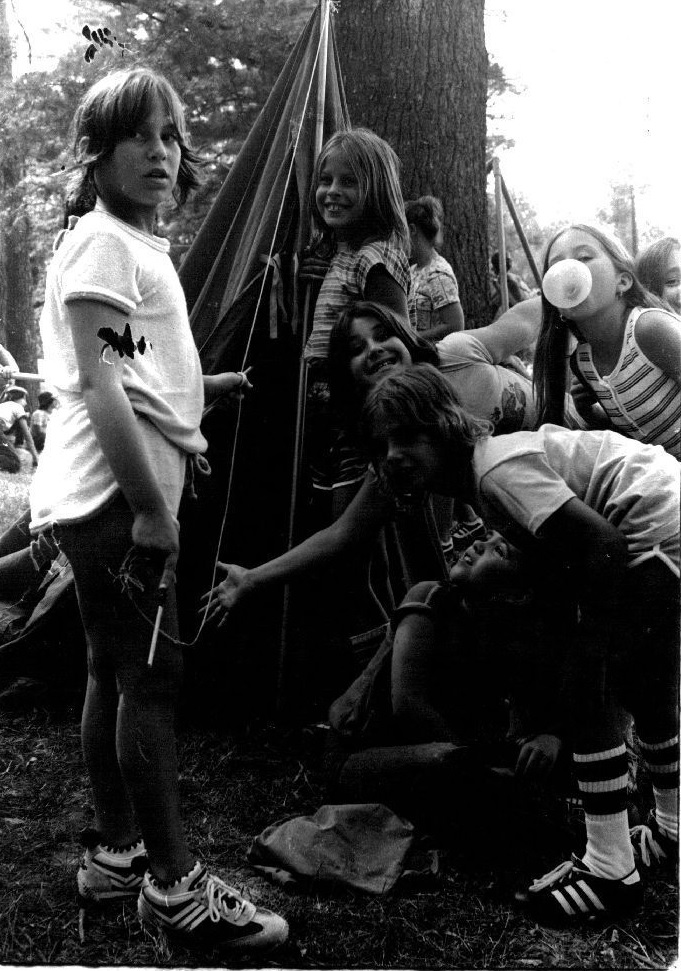
The thing about girls in the ’70s is that they would kick your ass, verbally and/or literally, if you gave them any sort of shit whatsoever. Remember Tatum O’Neal’s character in The Bad News Bears?That’s what the girls were like—in my neighborhood, anyway—when I was a boy.
Pacific Science Center, Seattle, Washington, 1980. (Photo: Unknown)
Original caption:
The Pacific Science Center’s PET Computer Lab helps introduce the public to the capabilities and limitations of computers. The Lab features 16 PET microcomputers which are available to Science Center visitors on weekends and weekdays for limited times. Programs run from games to simulations to educational in nature. The Lab is also used for teacher workshops and School for Science classes, as shown in this picture.
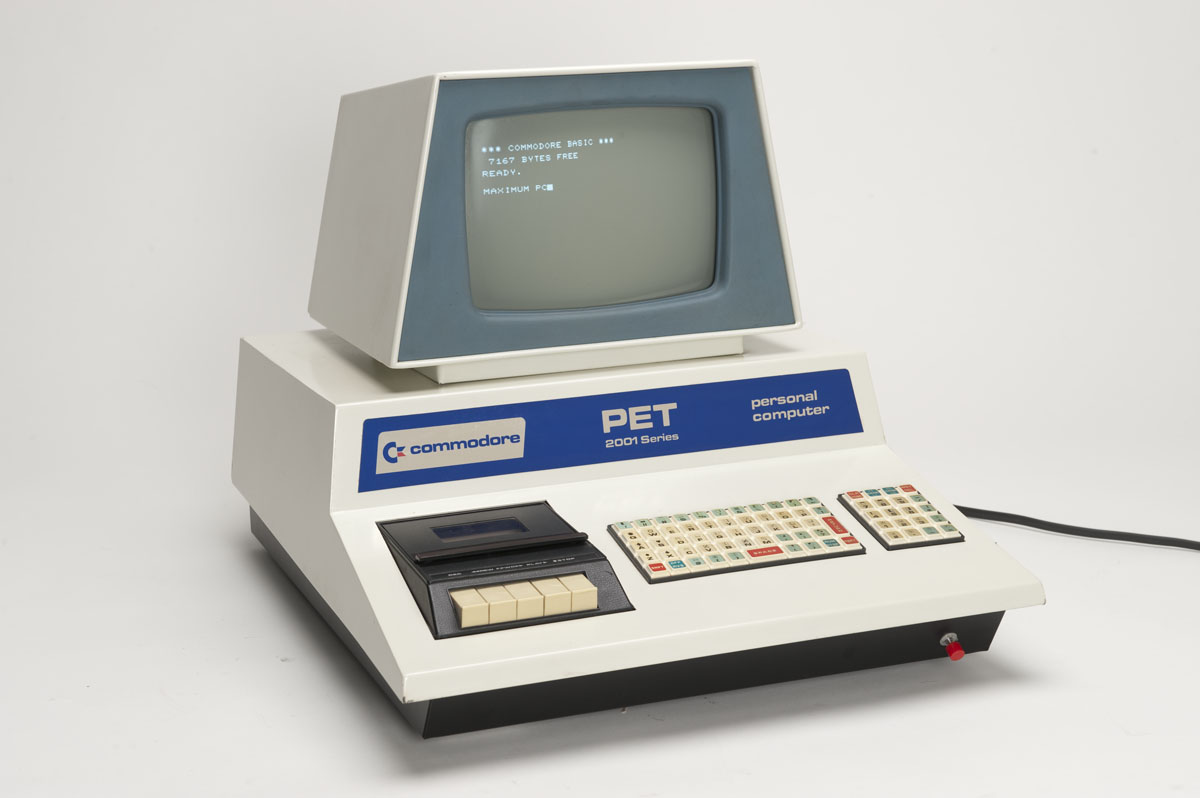
What we have here is the Commodore PET (Personal Electronic Transactor), Commodore’s first true PC, released in 1977. The original model (2001) came with 4K RAM, a built-in tape deck, and a “chiclet keyboard,” as seen below.
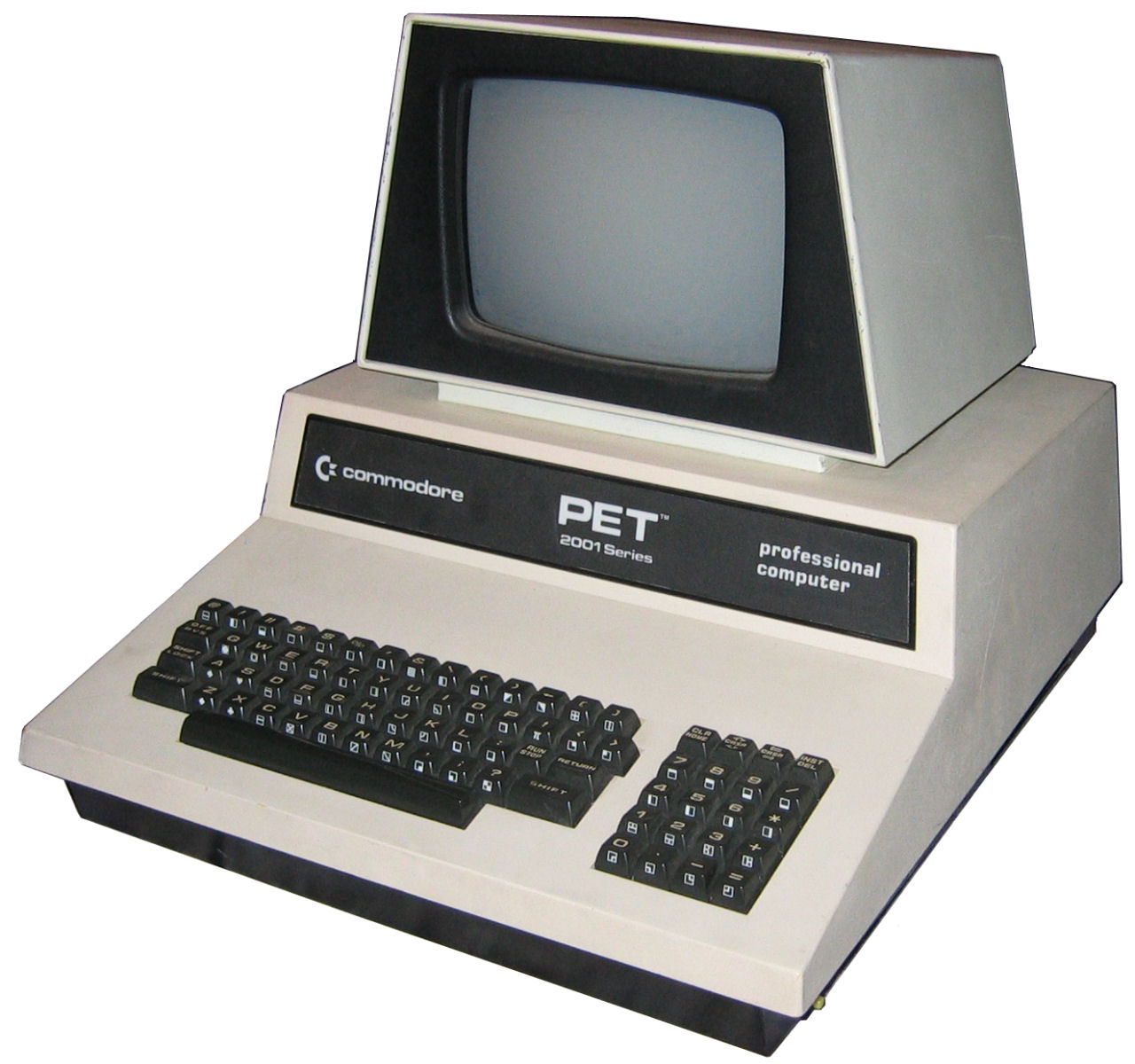
In 1979 the 2001-N was released. 8K, 16K, and 32K models were offered. The tape deck was removed, and a full-sized keyboard was added.
The 2001-N is what the folks are using in the first photo.
I’m still trying to figure out if these recordings are really what they say they are. Originally released in five volumes in 1989, they were collected in compilation form in 1992. From the back cover of volume one:
Share the journey of a 5 billion mile trek to the outer limits of our solar system. Hear the beautiful songs of the planets. The complex interactions of the cosmic plasma of the universe, charged electromagnetic particles from the solar wind, planetary magnetosphere, rings and moons create vibration “soundscapes” which are at once utterly alien and deeply familiar to the ear. Some of these sounds are hauntingly like human voices singing, giant Tibetan bowls, wind, waves, birds and dolphins. Many are familiar in a way unique for each listener.
Voyager has left our Solar System forever. The sounds on this recording will never be made again in our lifetime.
This sounds like New Age bullshit to me. In fact, the series is licensed by and appears to be copyright of the Center for Neuroacoustic Research (CNR), “dedicated to the healing of the Global Body of the Universe through the healing of individuals of which it is composed.” End of story, right? Well, the “Space Recording Series,” for sale individually (and not cheaply) at the CNR site,
is dedicated to the memory of Fred Scarf, PhD, who developed the acoustic recording project for Voyager and is directly responsible for the sounds you hear on these recordings from space.
Dr. Fred Scarf happens to be the real deal. According to a 1981 Christian Science Monitor article (“Voyager 2 sending back eerie ‘music of the spheres’“), Scarf developed the plasma wave detector on Voyager 2 and “rigged up a microcomputer and music synthesizer to turn the noise of space and planets into a `Star Wars’-style siren song.” His 1988 obituary in the Los Angeles Times confirms this. However, I can’t find any confirmation on NASA’s site or anywhere else that the sounds on Symphonies of the Planets were supplied and/or endorsed by NASA and/or Scarf.
I did find some raw Voyager and Cassini recordings at NASA, prefaced by the remark that “Some spacecraft have instruments capable of capturing radio emissions. When scientists convert these to sound waves, the results are eerie to hear.” So, in theory, the sounds synthesized on the Symphonies disc(s) really could be from Voyager. But are they? I’ve emailed NASA about it via its public inquiry address. We’ll see what happens.
You can listen to the recordings for free if you’re on Spotify. Here’s a taste of what Jupiter “sounds” like:
I do find a starkness and a uniqueness in all of the different “soundscapes,” but that could very well be my mind clinging to the notion that they were captured by 35-year-old probes that have sailed past our solar system and are currently on the verge of interstellar space.
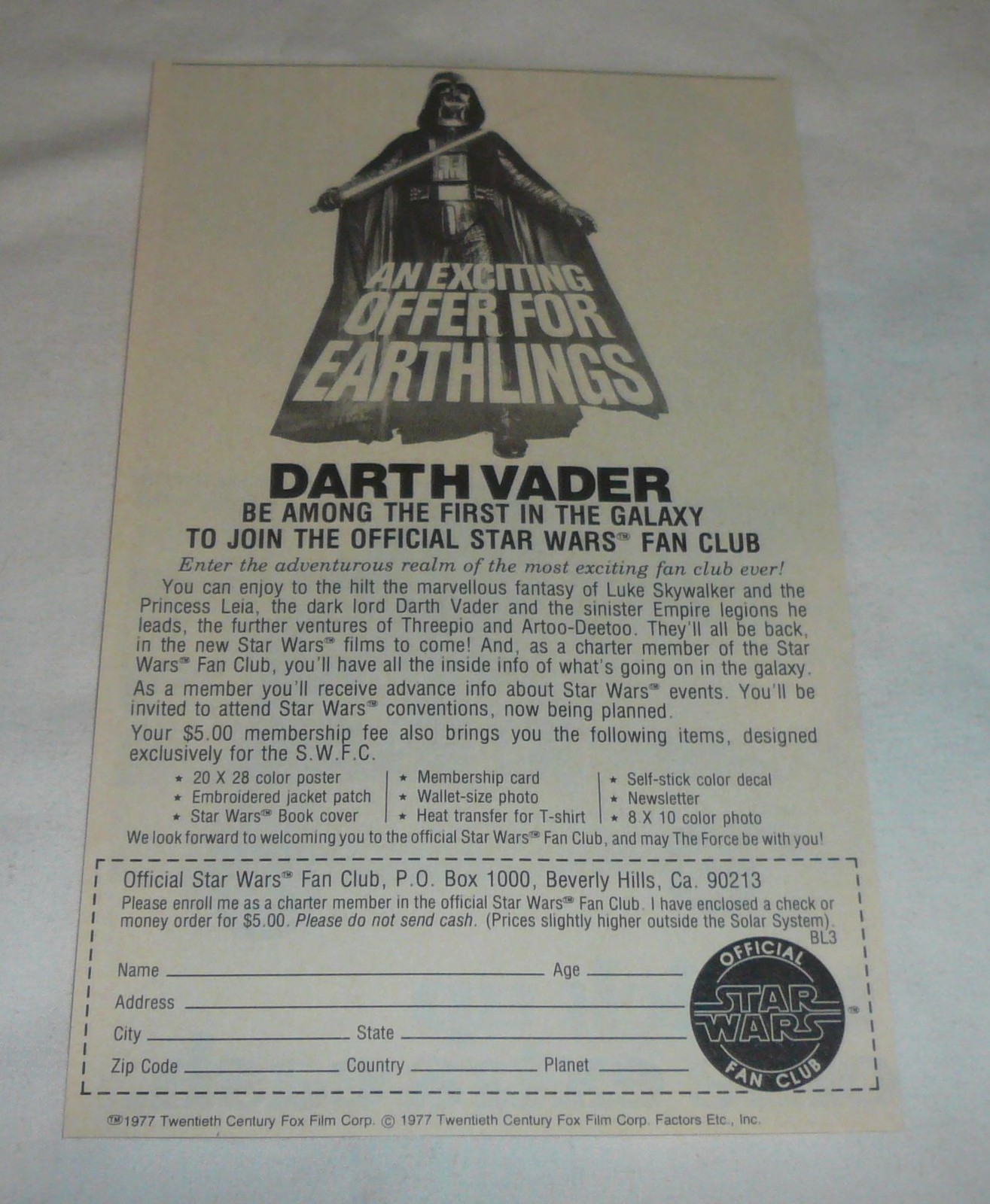
The first two ads are variations of a previous post. The last ad shows pictures of what you get when you send in your five bucks. Not bad.
The full color poster is by the legendary Ralph McQuarrie, production designer and concept artist for the Star Wars trilogy that didn’t suck. McQuarrie passed away last year.
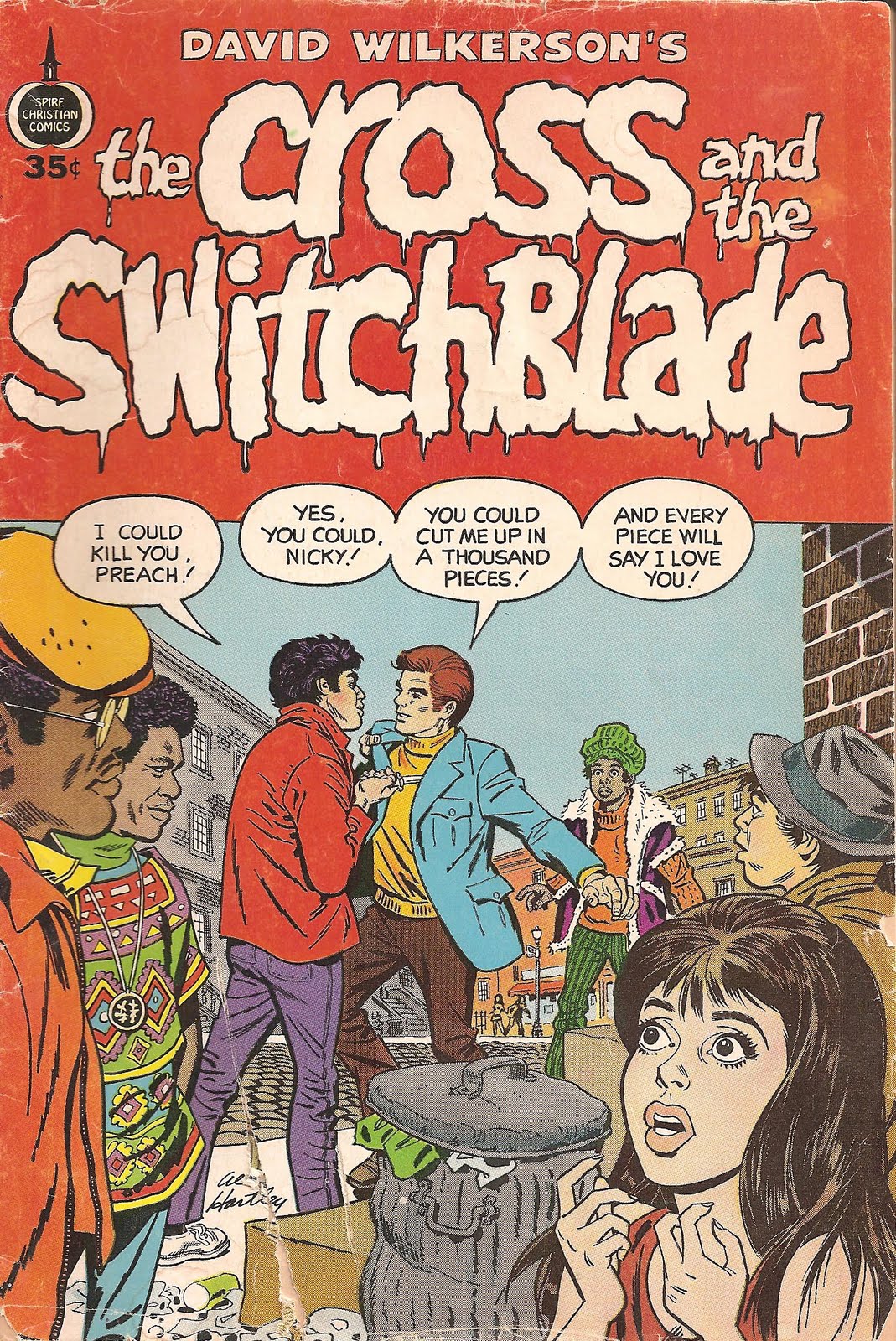
The Cross and the Switchblade is a book written in 1962 by pastor David Wilkerson with John and Elizabeth Sherrill. It tells the true story of Wilkerson’s first five years in New York City, where he ministered to disillusioned youth, encouraging them to turn away from the drugs and gang violence they were involved with. The book became a best seller, with more than 15 million copies distributed in over 30 languages.
The comic book adaptation came out in 1972. I’m not so sure even one of the good pastor’s thousand pieces would be able to say I love you, but it’s the thought that counts.
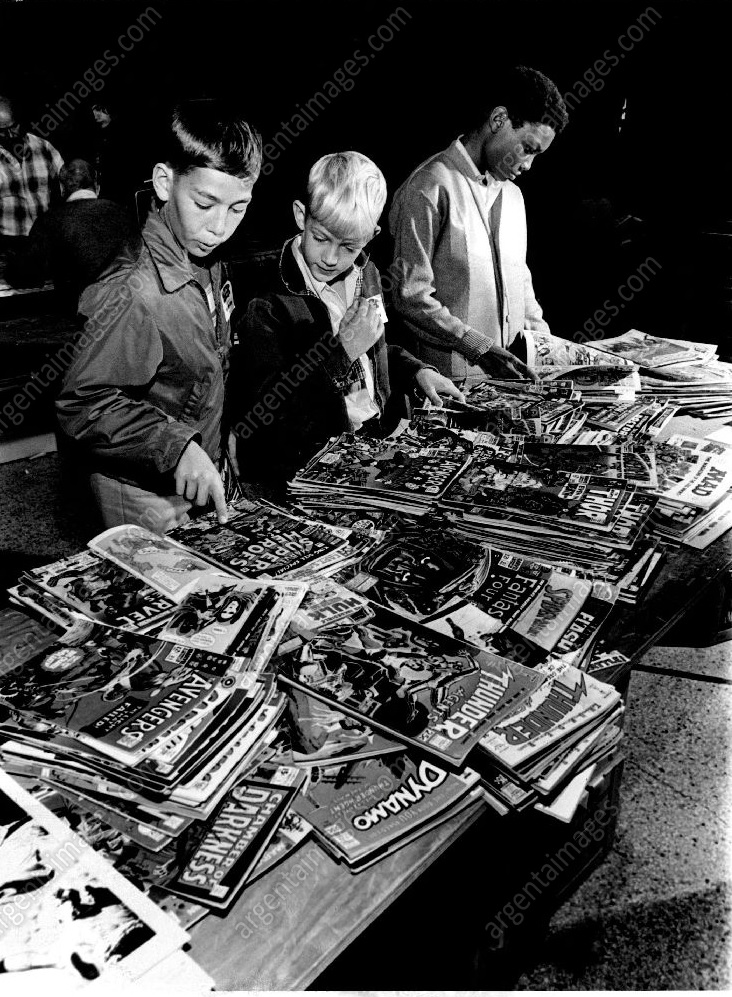
Cherry Creek High School, Englewood, CO, 1983. (Photo: Denver Post/Aaron E. Tomlinson)
Actually, these dudes are editors of the school paper, the Union Street Journal, after winning an award from the Columbia Scholastic Press Association. I love it when nerds try to look tough.
This might be a new regular feature. Made for TV movies were a big, big deal from the late ’60s through the mid-1980s. Even after cable was introduced, most people couldn’t afford it, so we depended on TV fare and older theatrical films that could be purchased relatively cheaply by the networks.
The Bermuda Depths premiered on January 27, 1978. Carl Weathers is the only name I recognize in the cast.
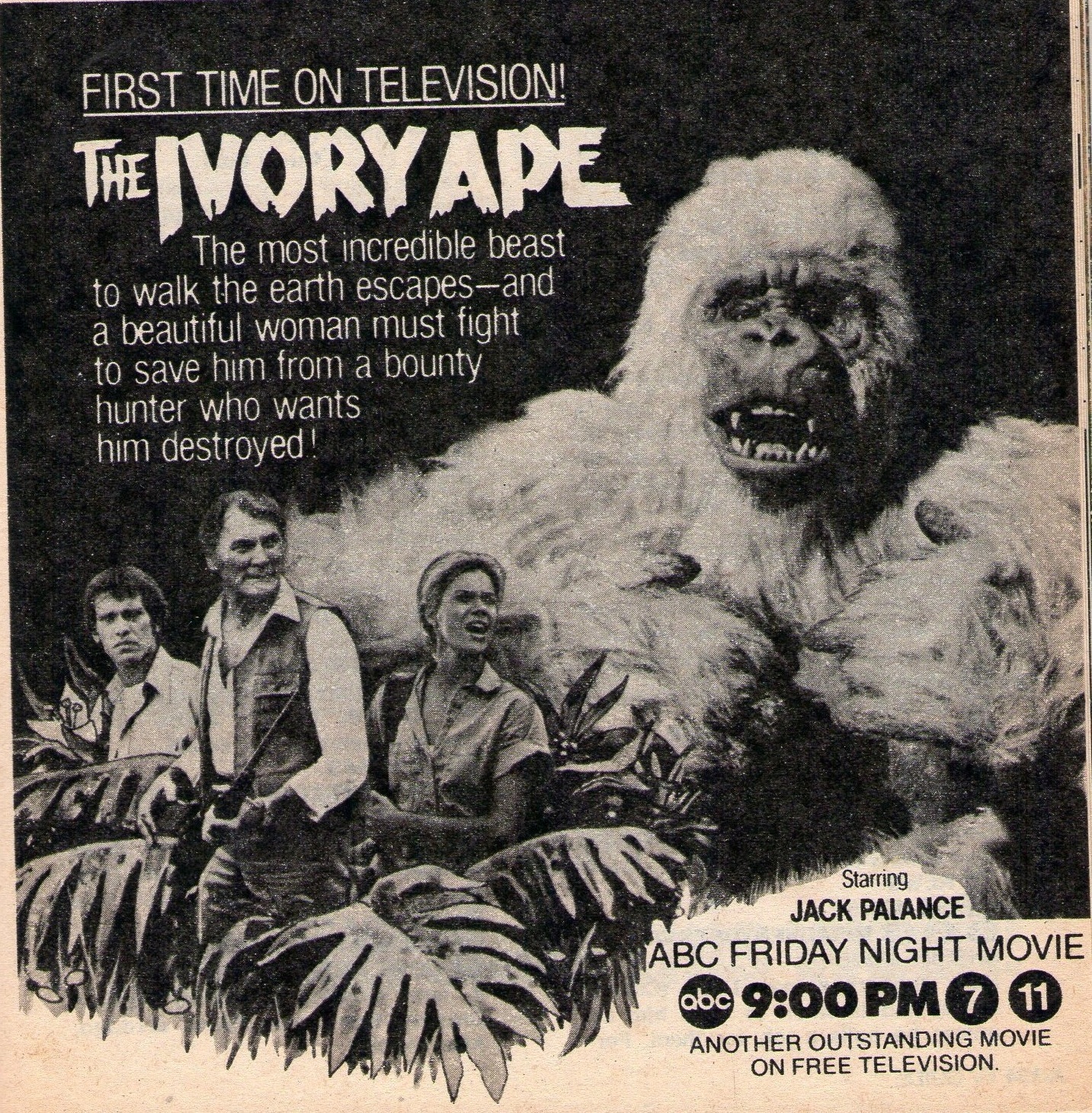
The Ivory Ape premiered on April 18, 1980. Jack Palance plays the big-game hunter hired to dispose of the escaped ape.
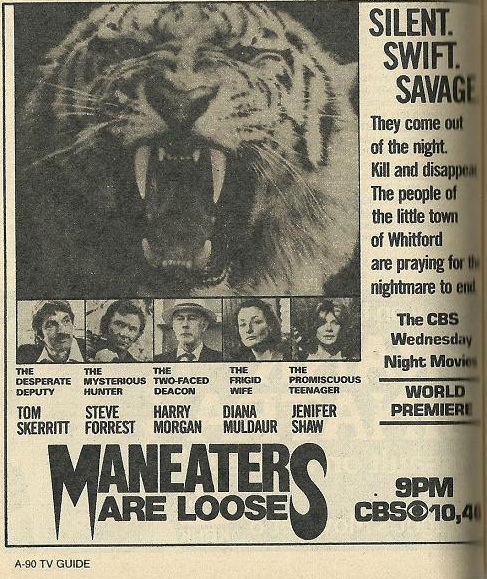
Maneaters Are Loose! premiered on May 3, 1978. Man-eating tigers terrorize a small California town! Star Trek‘s and Star Trek: TNG‘s Diana Muldaur plays “the frigid wife.”
S.O.S. Titanic premiered on September 23, 1979. I’m 100% certain that the two-page spread is more exciting than the movie.
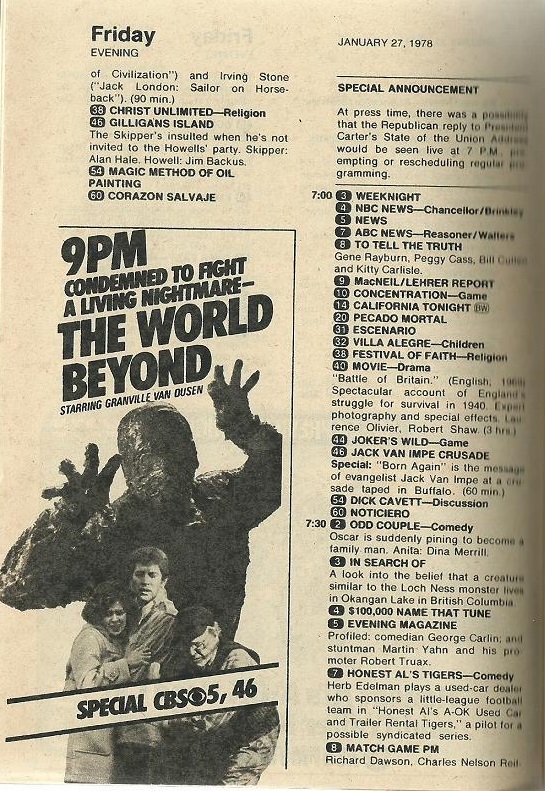
The World Beyond premiered on January 21, 1978. I put this one in my YouTube queue because of the IMDB description: “A golem made of mud terrorizes a couple on a remote Maine island.” Sign me up. There’s a “Special Announcement” at the top right of the page warning of a possible preemption of normal programming due to the Republican response to President Carter’s State of the Union address.
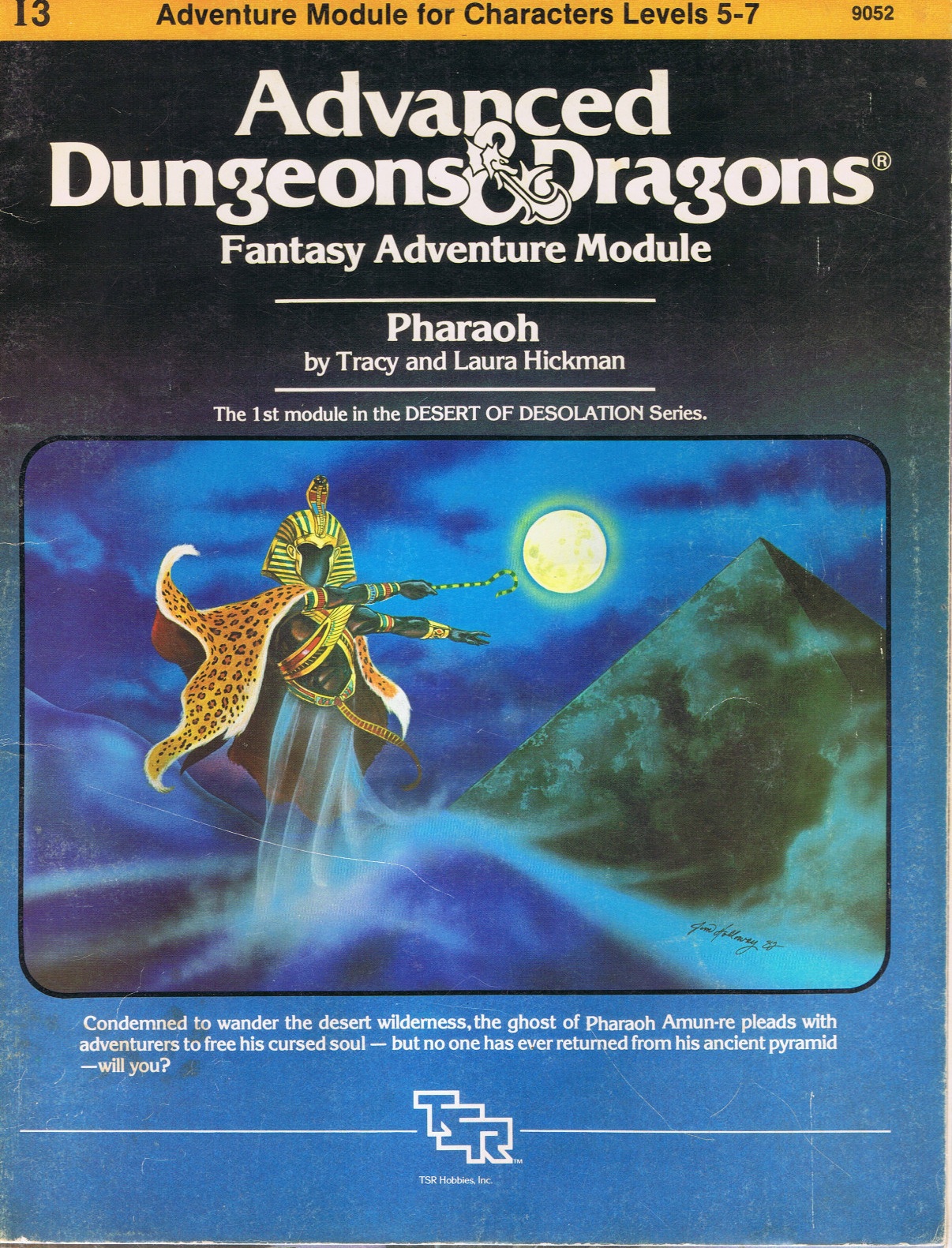
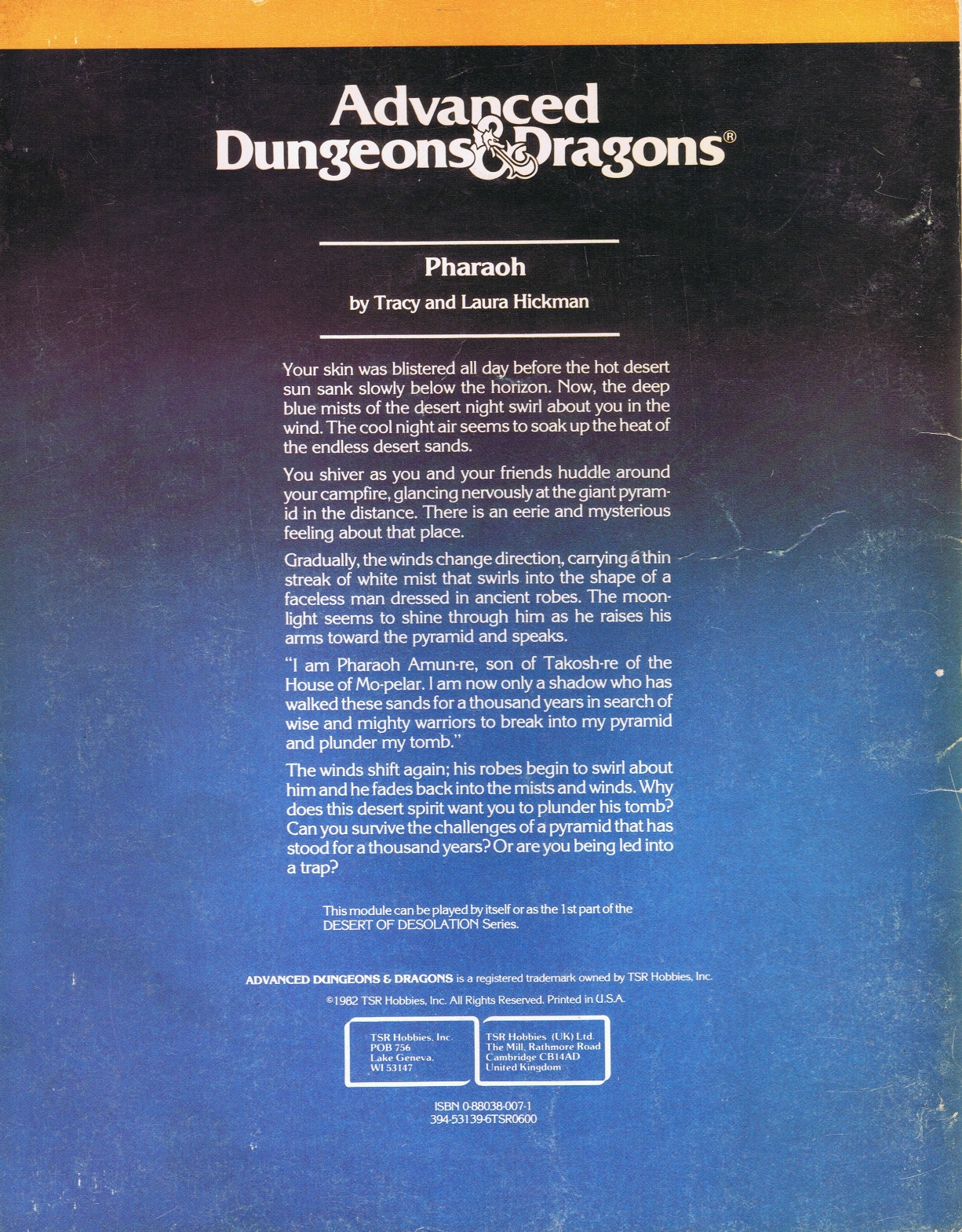
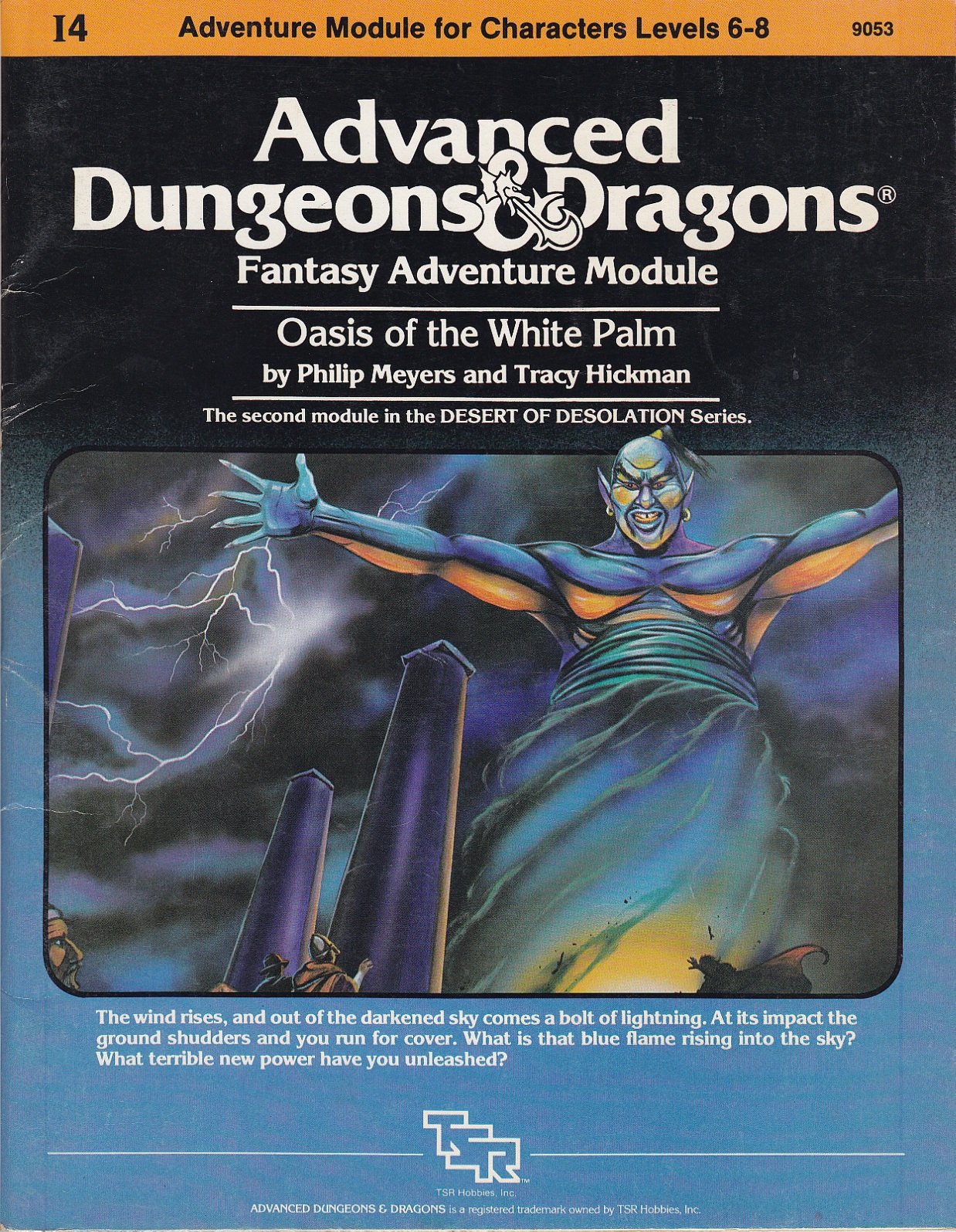
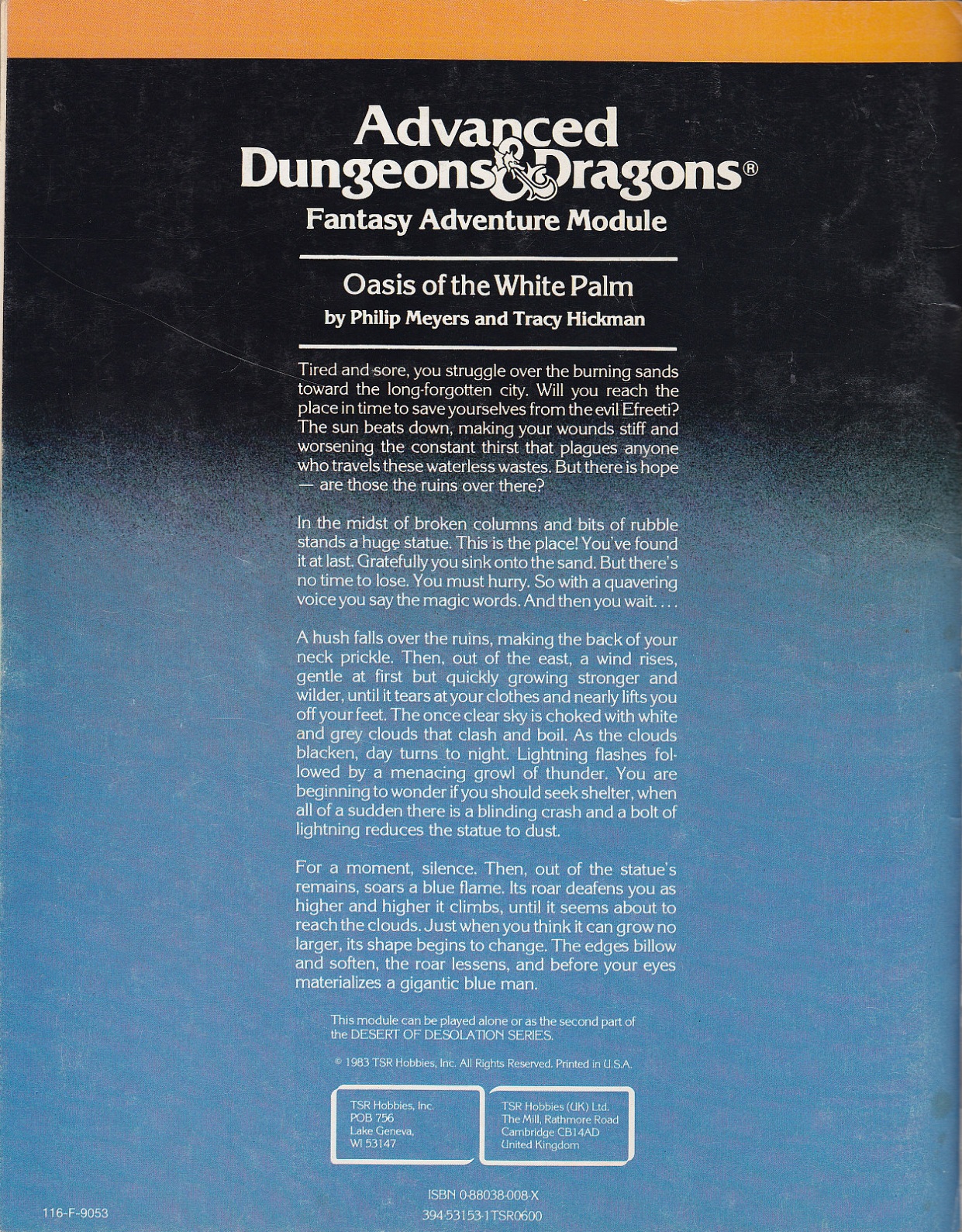
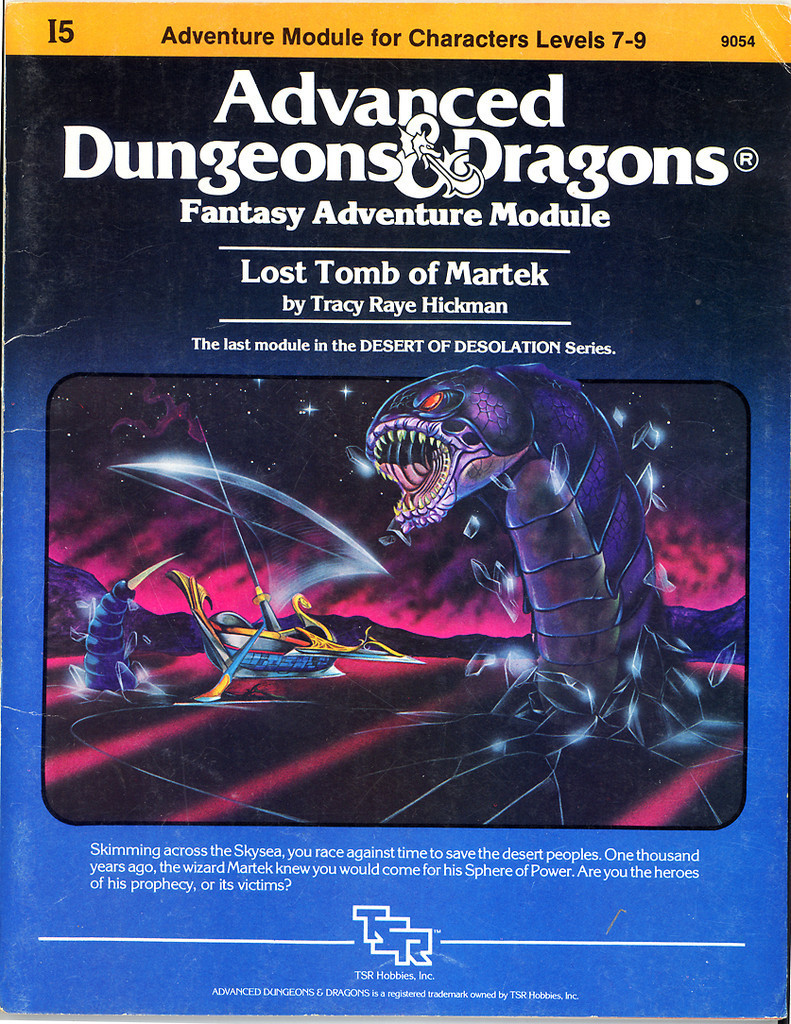
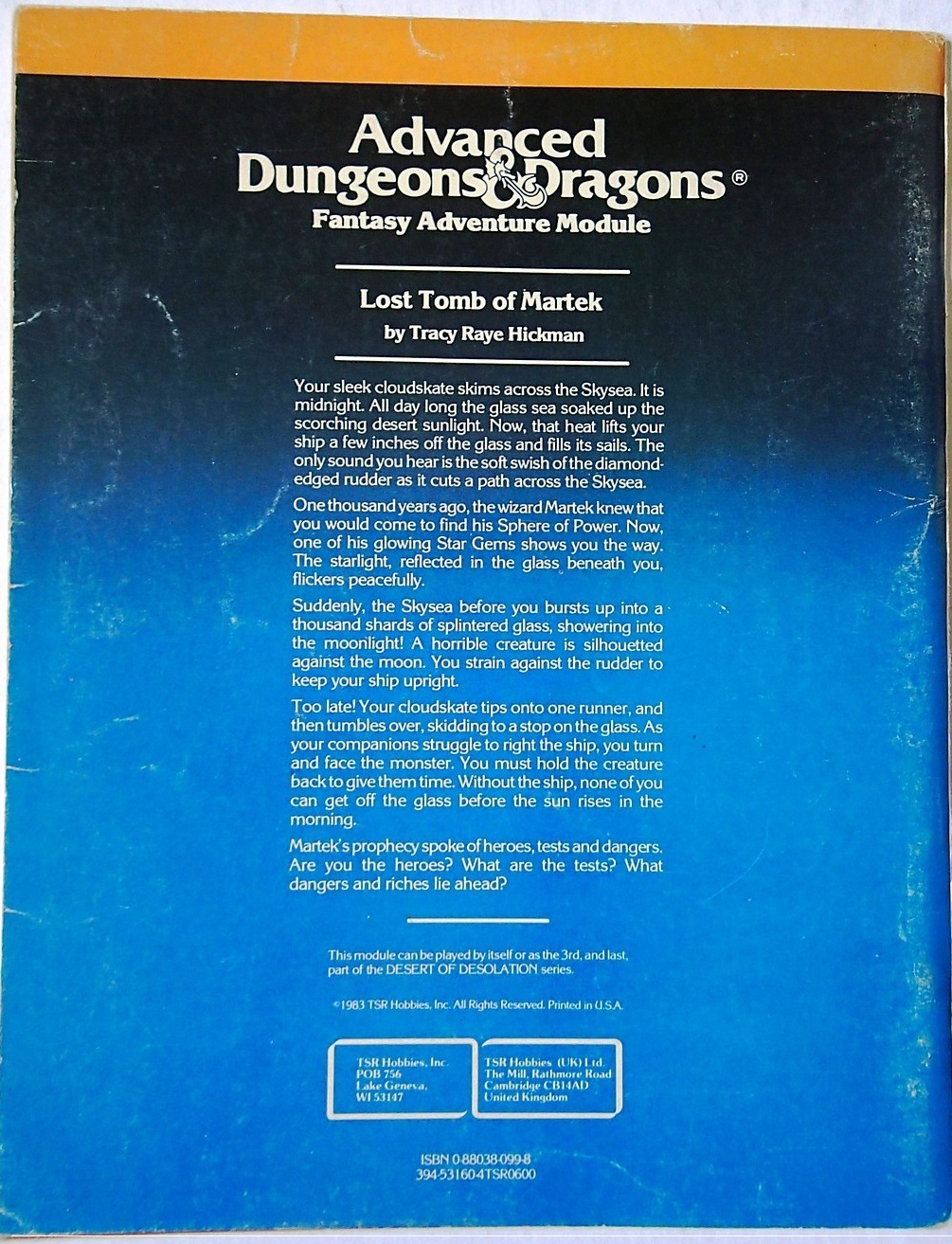
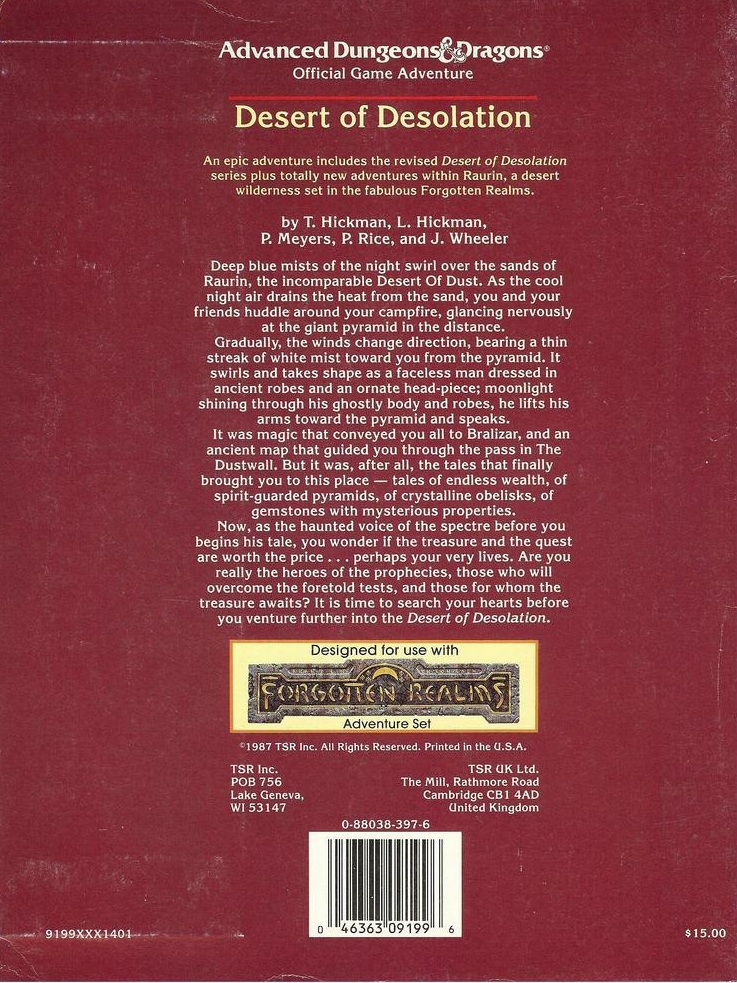
The Desert of Desolation series included Pharaoh (1982), Oasis of the White Palm (1983), and The Lost Tomb of Martek (1983). They were all written or co-written by Tracy Hickman, who co-wrote the original Dragonlance trilogy. The exotic, uncanny module covers are by Jim Holloway.
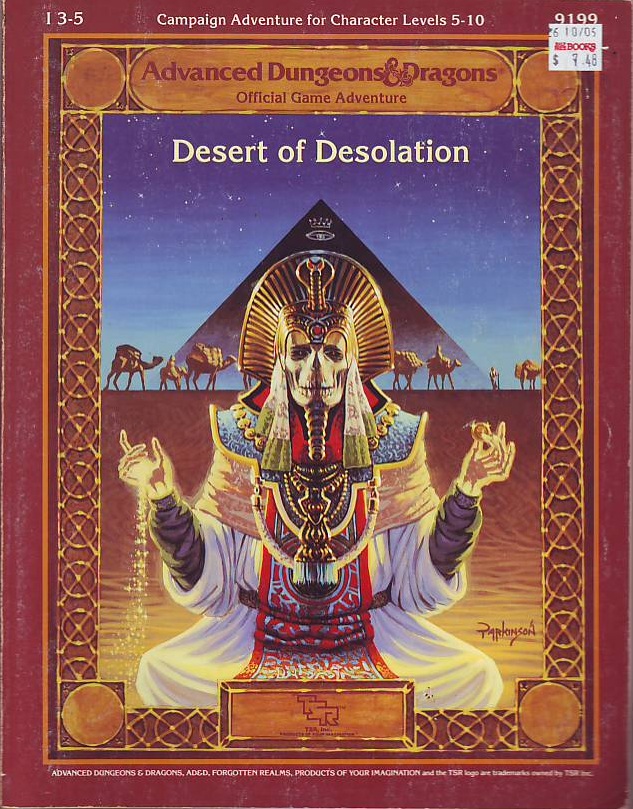
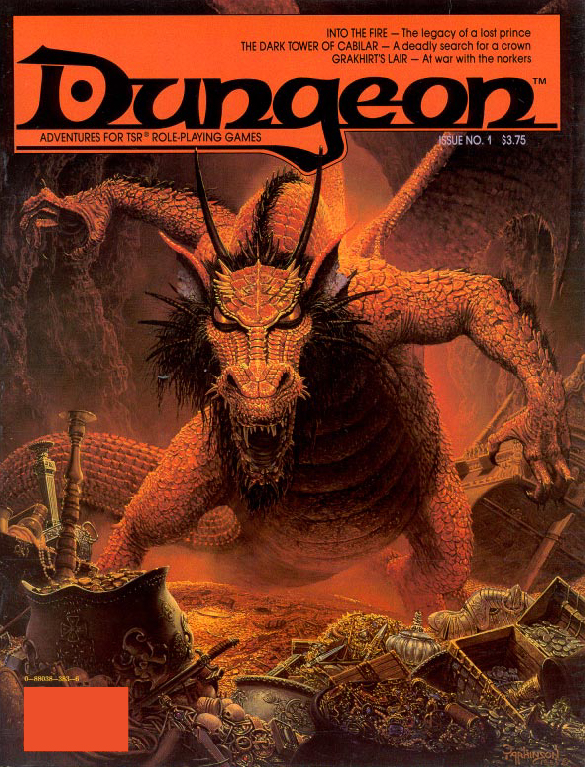
The modules were released as a compilation, “reworked to fit into the Forgotten Realms setting,” in 1987. The compilation cover is by Keith Parkinson, whose first work for TSR appears to have been interior art for Oasis of the White Palm. Parkinson, with Larry Elmore and Jeff Easley, did much to define the polished, epic look of D&D in the mid-’80s. Here’s a painting I remember well. (See more cool Dungeon covers here.)
Parkinson died of leukemia in 2005. He was only 47.
If you own the copyright to any of the material on this site and would like said material to be removed, please contact 2warpstoneptune [at] gmail [dot] com.










 2 Warps to Neptune