Archive for January, 2014

Board Games: Zaxxon (Milton Bradley, 1982)

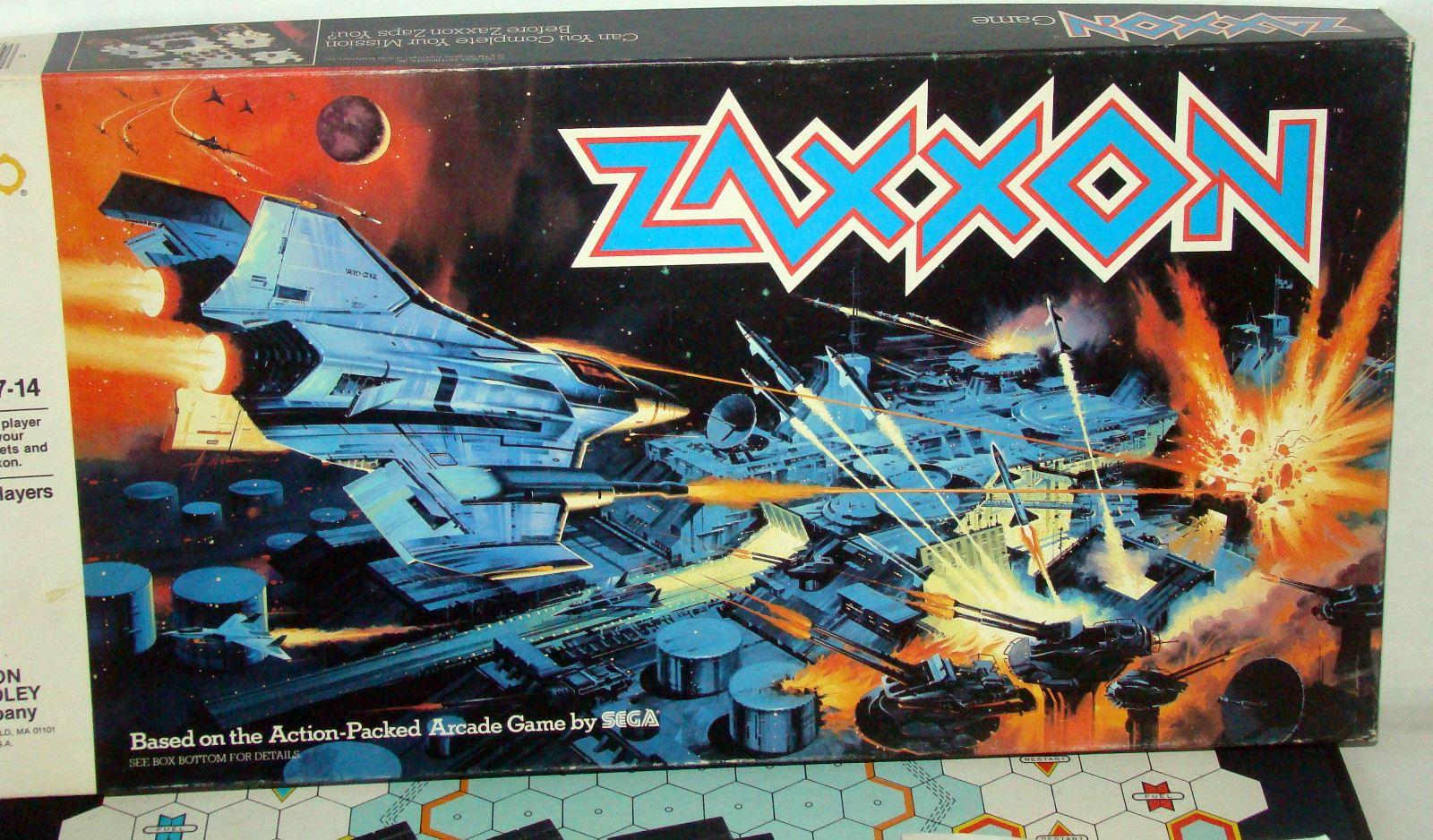
Zaxxon Game

Zaxxon Game-5

Zaxxon Game-3

Zaxxon Game-7

Zaxxon Game-6

From the back of the box:

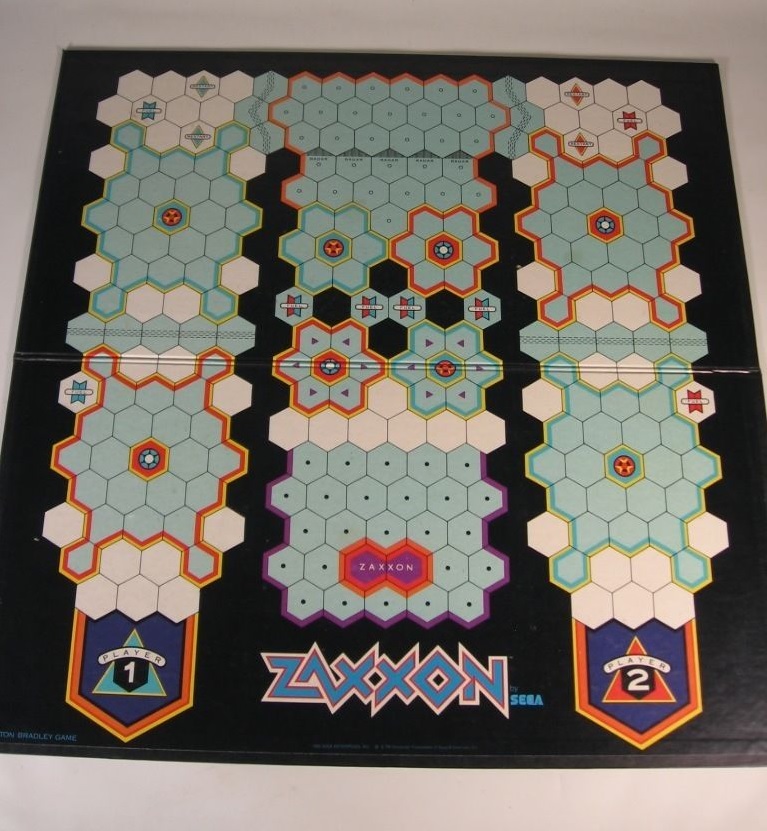
You and your opponent compete to be the first to execute your perilous mission. Maneuver your fighter planes over the enemy fortress by die roll. “Fly” at high or low altitude by raising or lowering your planes on their bases for real 3-dimensional game play. Zoom up and over fortress walls and dive down to blast enemy targets. Engage in dogfights at close quarters to force your opponent to retreat. Penetrate enemy radar to challenge Zaxxon to a showdown!

Much like Milton Bradley’s Berserk, Zaxxon is a curiosity. Why play the board game when the cabinet was fresh in the arcades? And there was always the kid down the street who had the faithful ColecoVision port.

Basically, traditional board game companies knew they were losing to video games and, to a lesser extent, RPGs. If you can’t beat ’em… Also, maybe the folks at MB played the Zaxxon cab and thought, “This game is fucking hard. Let’s give the kids a version that lasts longer than 30 seconds.”

I think the board version is cleverly designed, emulating the 3D aspect that made Sega’s Zaxxon so novel. And the game pieces are pretty. And the box art is Berkey-esque.

All of which adds up to: I want.

UPDATE: Check out the UK/European version of the game.

Zaxxon UK

It’s a “family version of the arcade game,” allowing for up to 4 players. The American version is 2 players only. As for the box cover, it amuses me how MB approaches the different markets. They give the Brits a bright, comprehensive demonstration of how the game works, whereas the Americans get a giant spaceship blowing shit up. Sounds about right.
TV Guide Ads for TV Movies: Mazes and Monsters (1982)

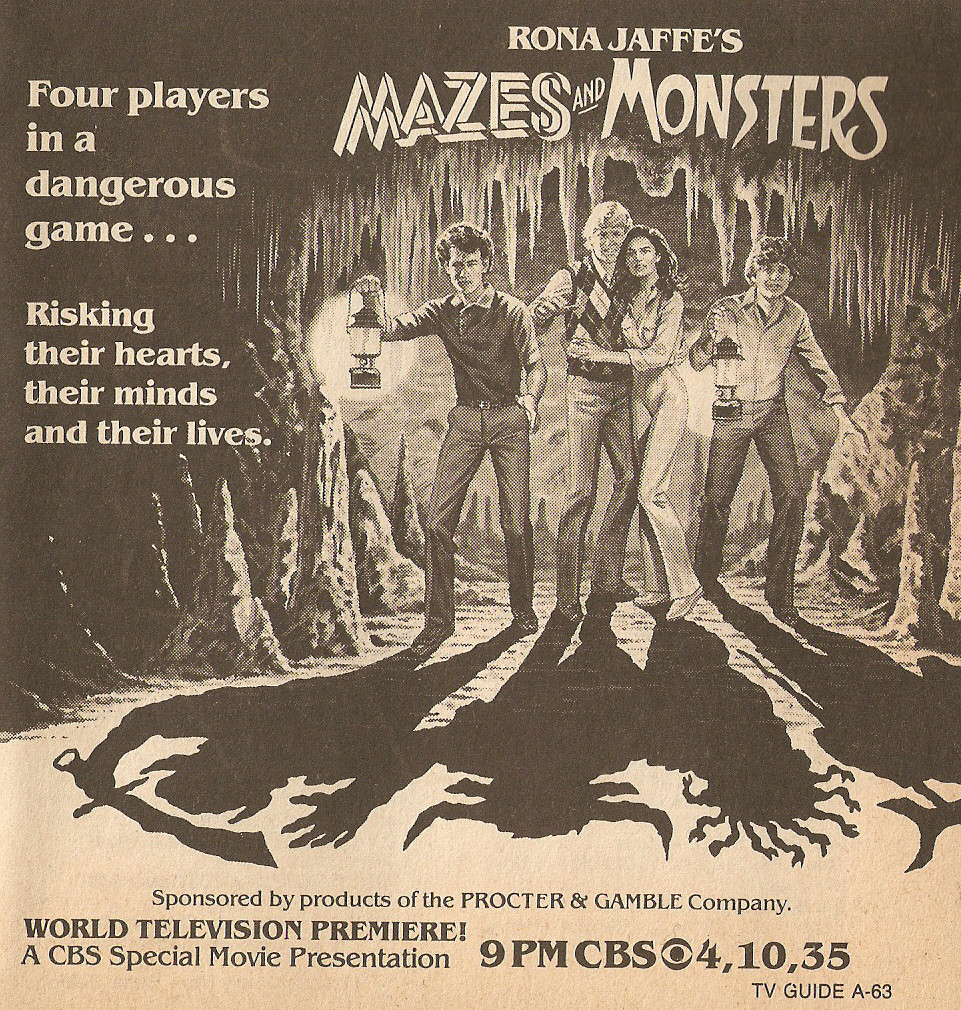
In Mazes and Monsters, four privileged college students get involved in fantasy role-playing as a way to escape painful (for the privileged) personal problems. One of them loses it, has a complete psychotic break, and ends up living with his parents and believing he’s a cleric.

In both the bestselling novel, written by Rona Jaffe, and the TV adaptation, role-playing is presented as addictive, a playground for idle hands, something to be conquered on the journey to mentally healthy adulthood. The ad brilliantly reflects the story’s sensationalistic propaganda. The players’ shadows are nothing less than their inner demons coaxed into the physical world by the game (called Mazes and Monsters). It’s very Freudian.

The ad concept, with a shadow or shadows revealing the underlying nature of the appearing figure or figures, has been used many times before and since. The Changeling (1980) and Warlock (1989) movie posters are a couple of examples.

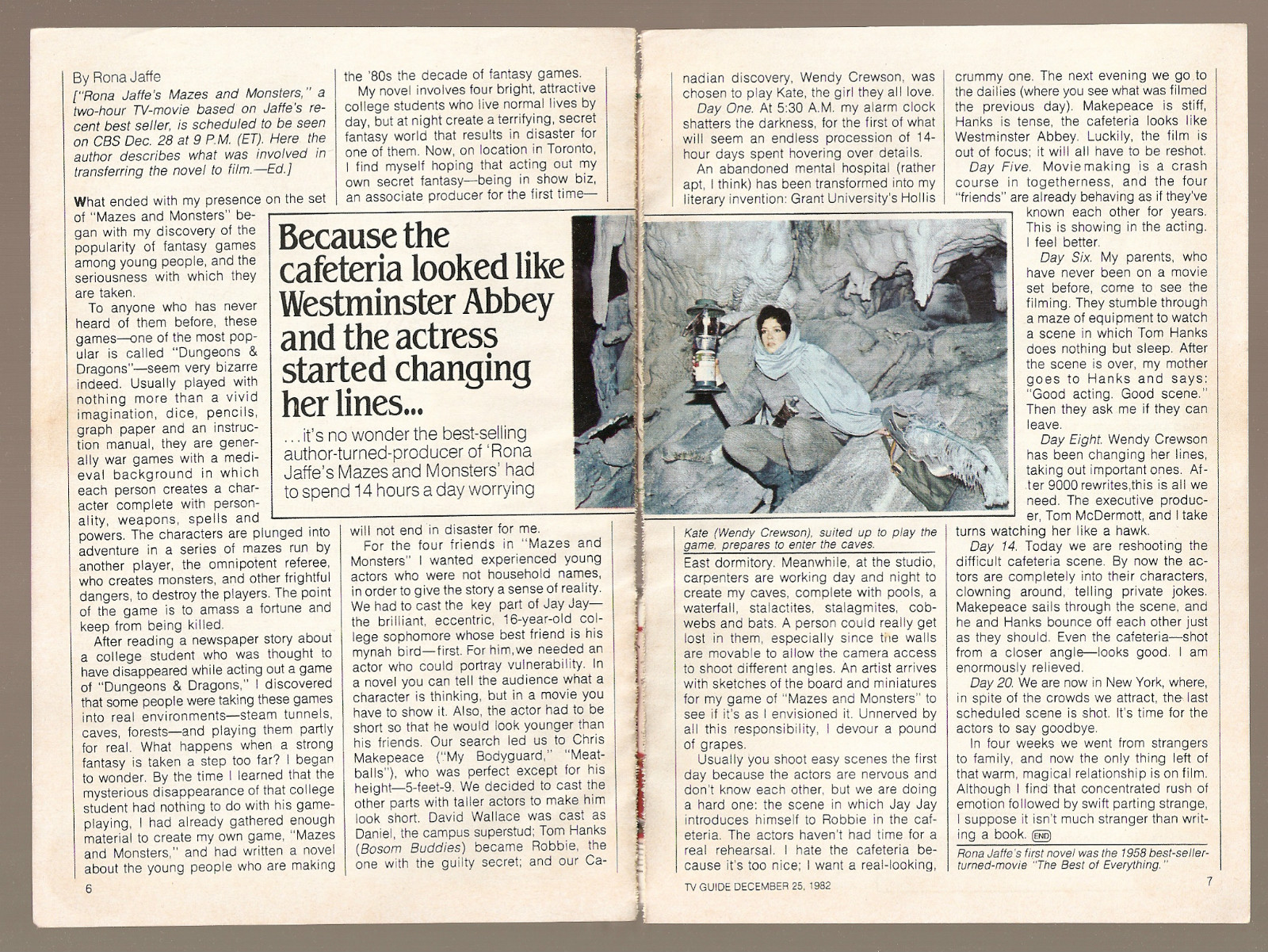
Here’s an article, written by Jaffe, that appeared in the same TV guide.

Mazes and Monsters TV Guide 1982

It’s mostly about her experience as an associate producer, but she does discuss how she came to write the novel, and what she says about “fantasy games,” specifically D&D, is pretty interesting.

The characters are plunged into adventure in a series of mazes run by another player, the omnipotent referee, who creates monsters, and other frightful dangers, to destroy the players. The point of the game is to amass a fortune and keep from being killed.

The italics are mine. Funny, but I thought the point of the game was to have fun. The characterization of the DM/GM as omnipotent and sinister was and is taken seriously by a number of powerfully ignorant, unsavory collectives.

Jaffe neglects to mention that her novel is also a “strong fantasy,” and that it too might be “taken a step too far,” with pernicious results.

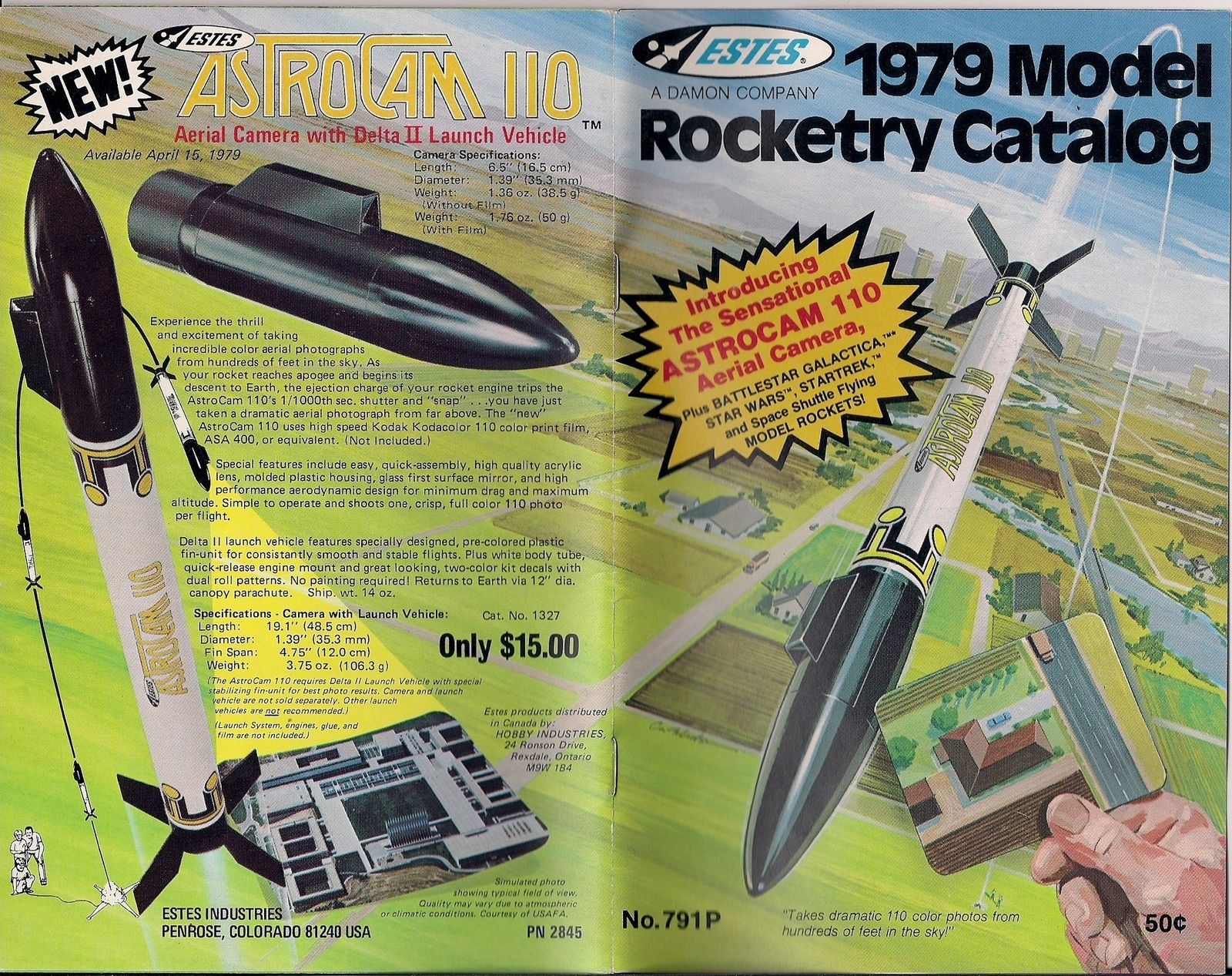
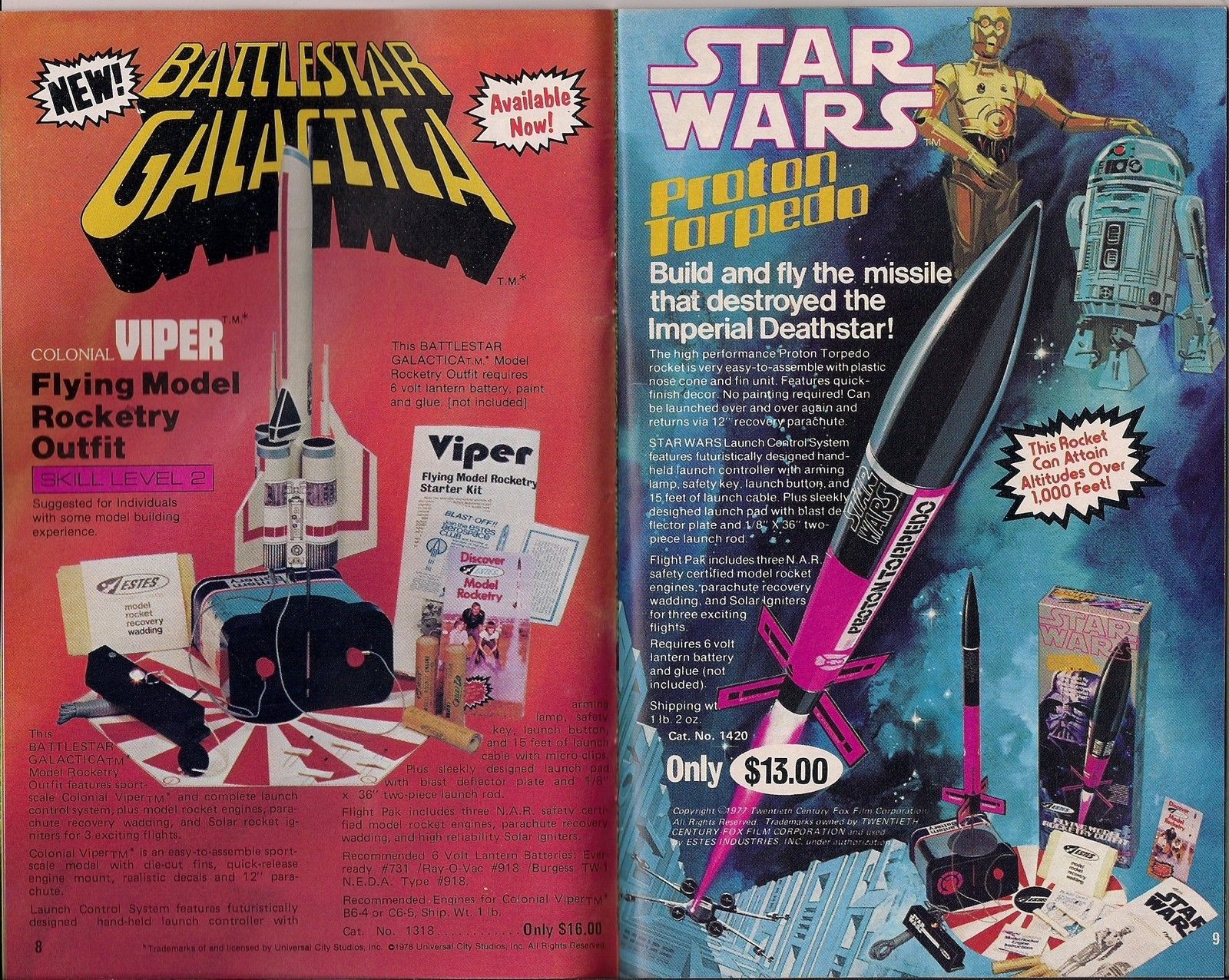
Estes Model Rocketry Catalogs, 1976 – 1979

Estes 1976

Estes 1976-2

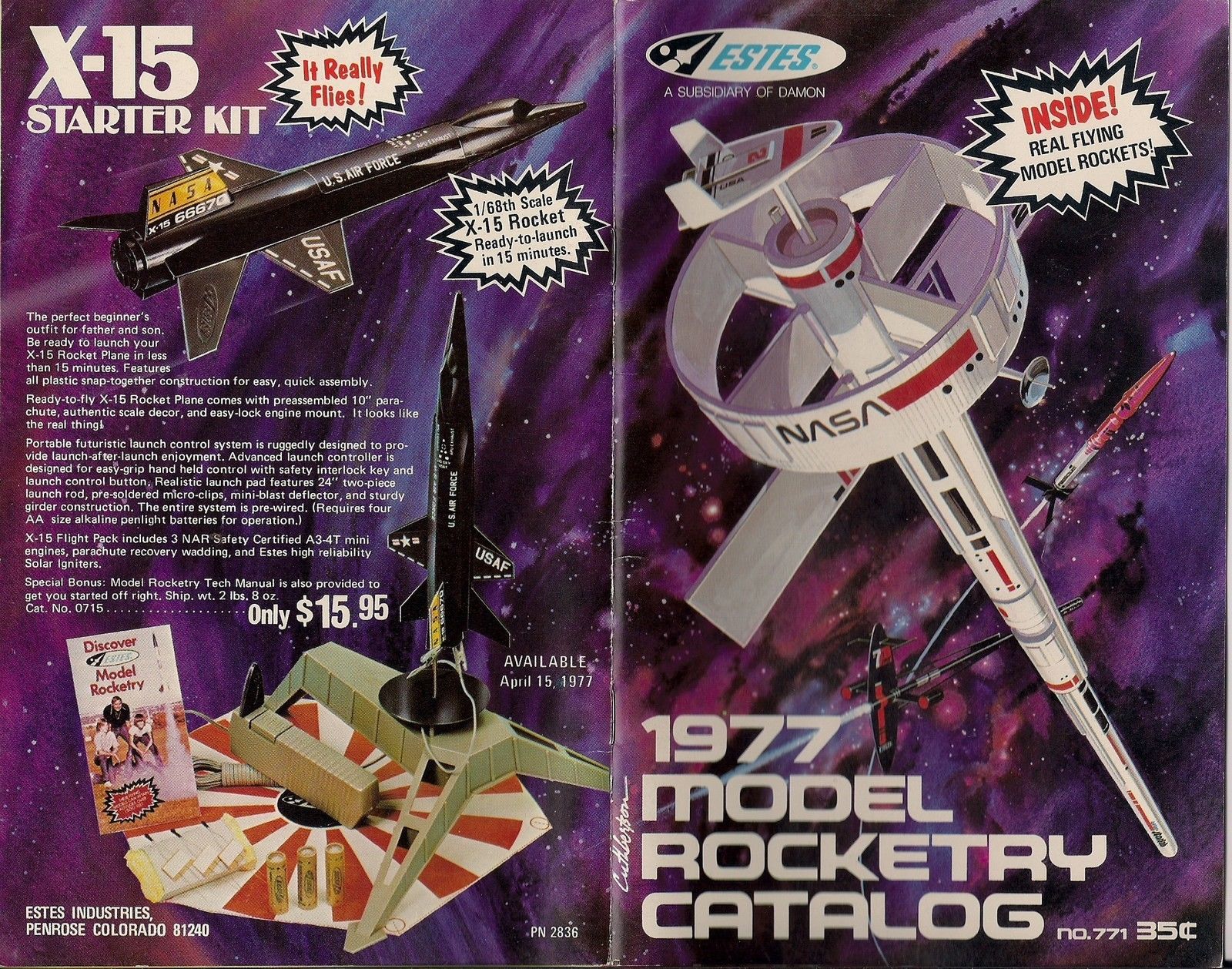
Estes 1977

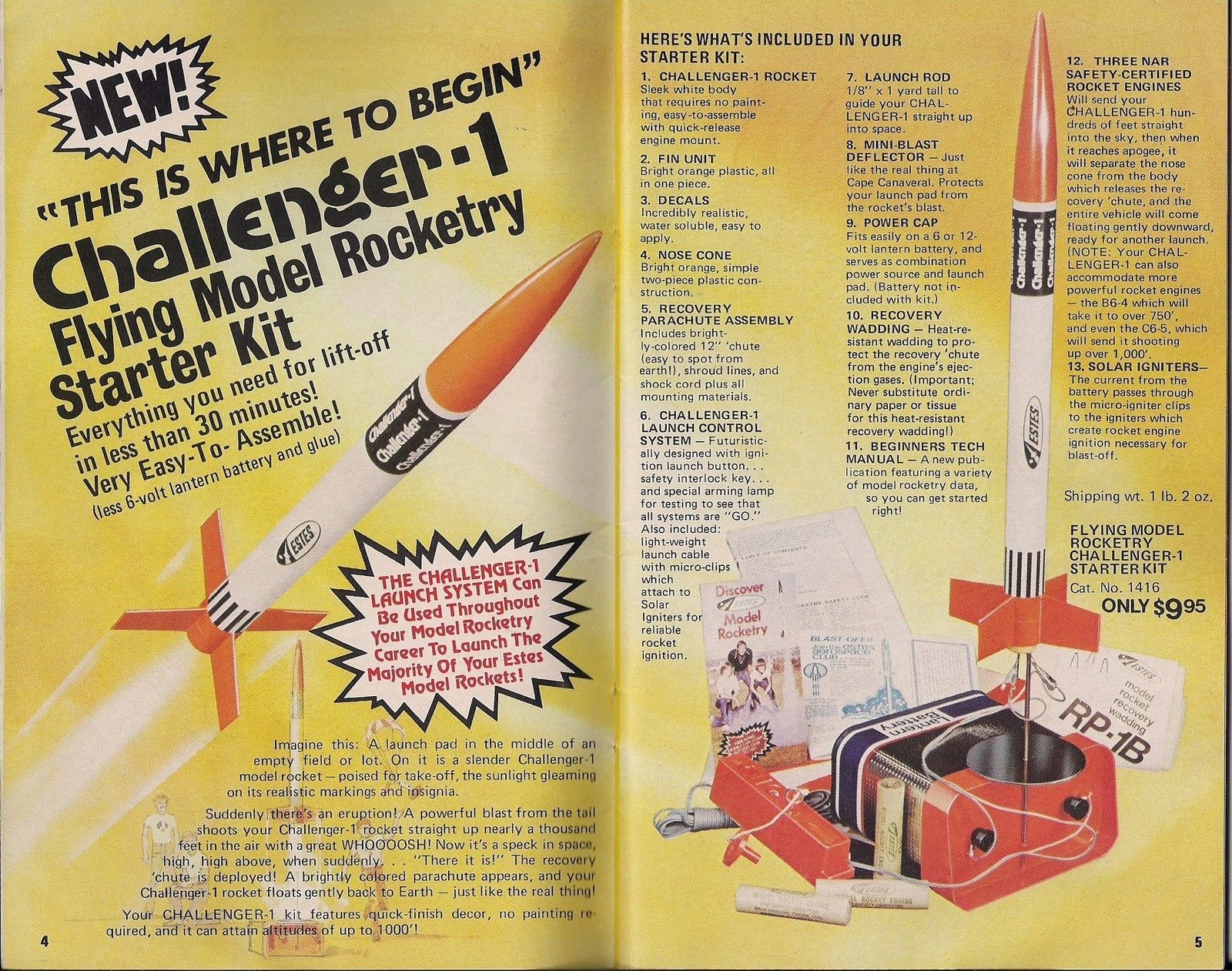
Estes 1977-2

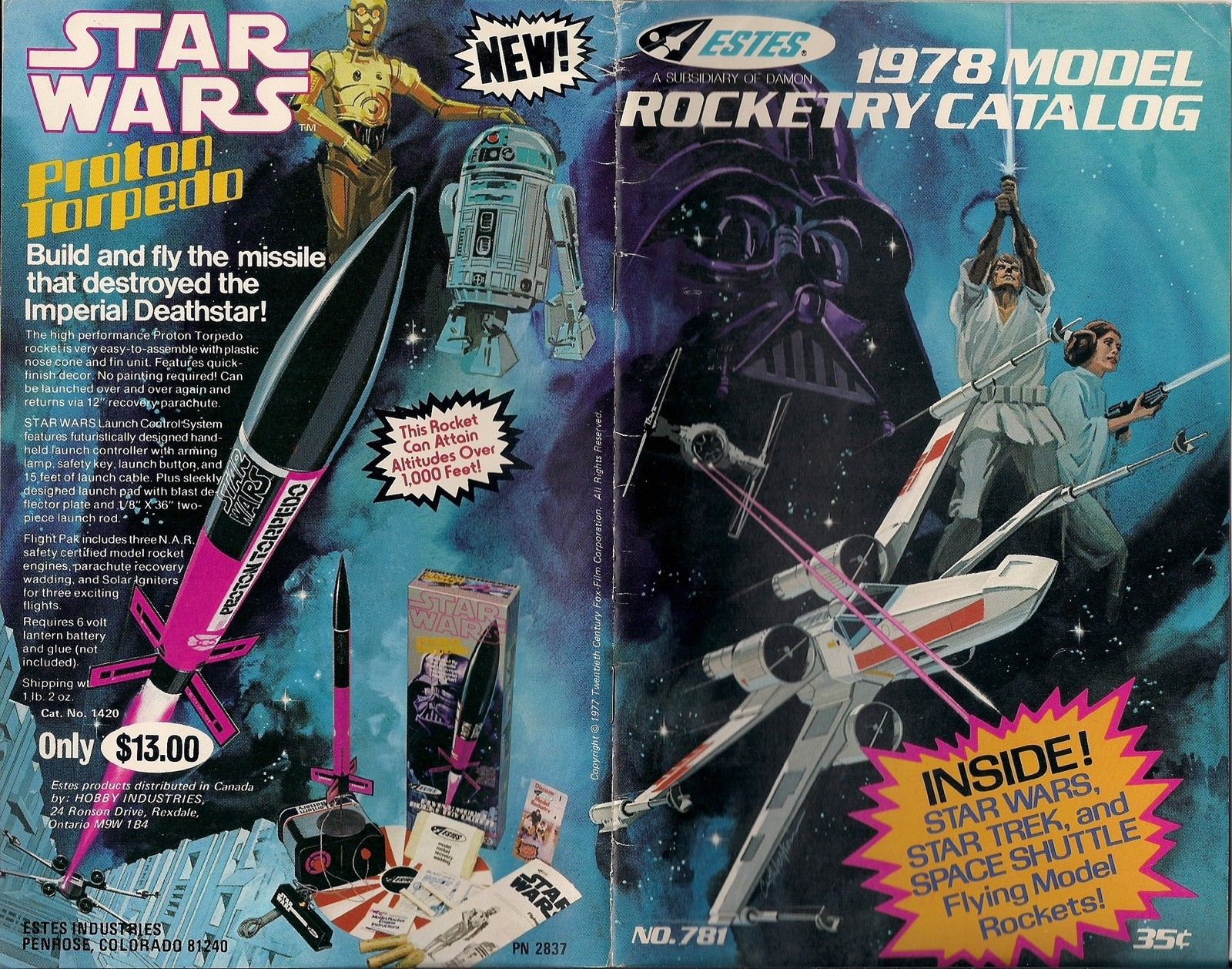
Estes 1978

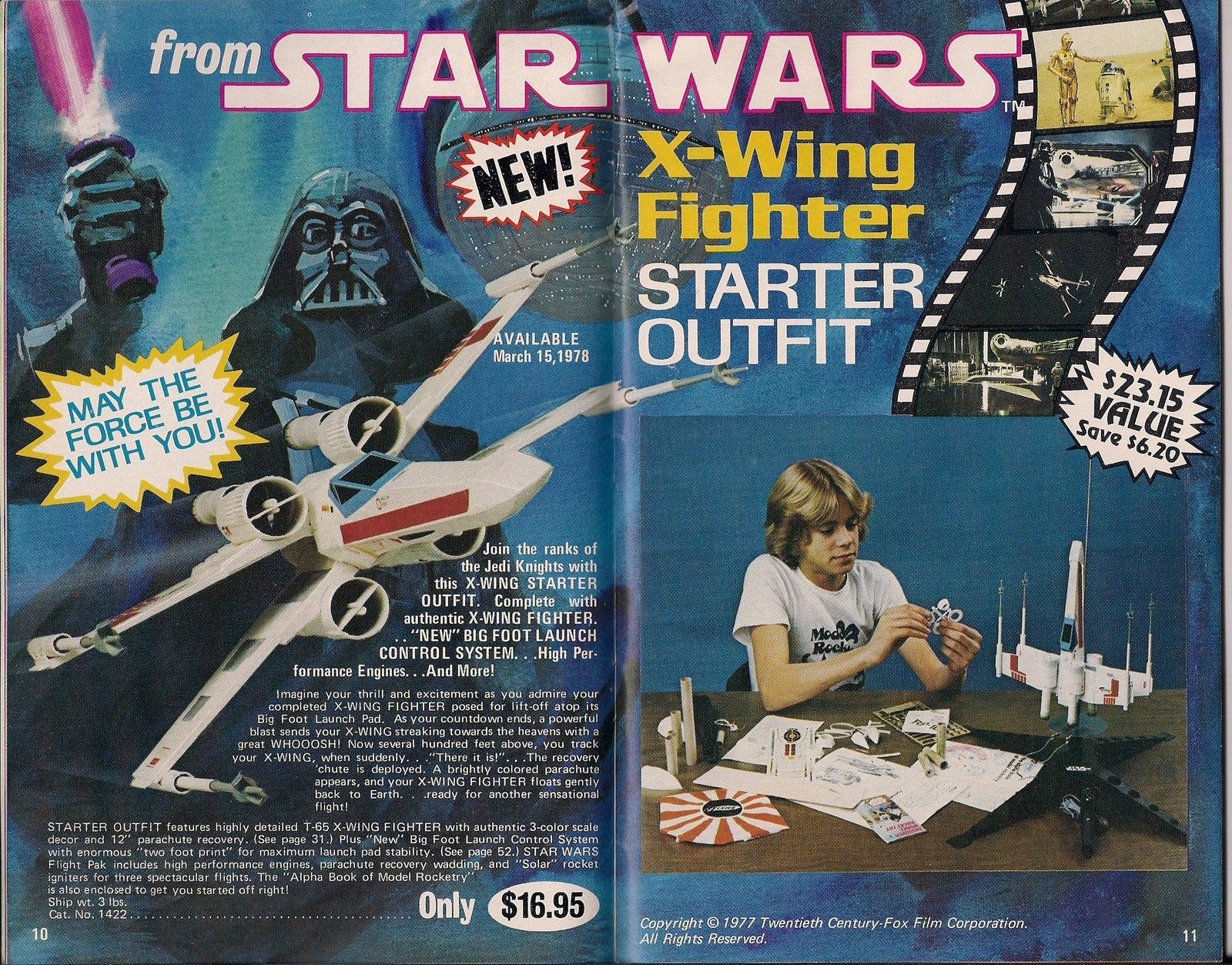
Estes 1978-2

Estes 1979

Estes 1979-2

Just the front and back covers and a two-page spread from each catalog, but it’s enough to give you an idea of the once proud art of advertising to kids. Beautiful colors, beautiful layouts. Estes was the biggest model rocket company in the ’70s and ’80s. Centuri was second.

(Images via Myndscrape’s Paper Trail)

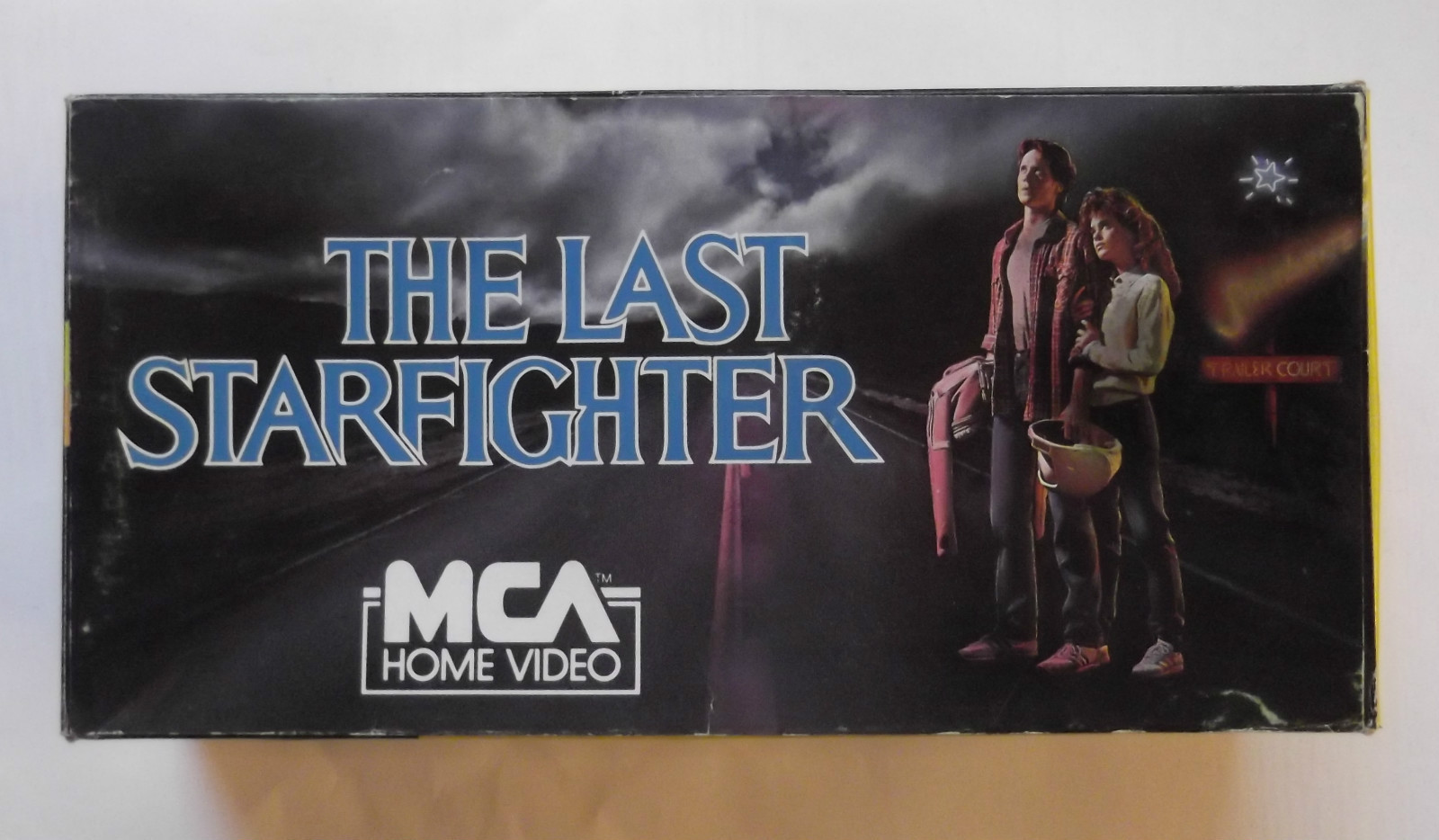
The Last Starfighter Super Electronic Gun (1985)

TLS Gun-1

TLS Gun-2

TLS Gun-3

TLS Gun-4

The “Super Electronic Gun” was a promotional item given away with purchase of The Last Starfighter on VHS. Nothing resembling it appeared in the movie, but no matter. The phallic, ribbed tip lights up after you “pull the battery magazine out for battery inserting.” If only it vibrated.

UPDATE (3/17/15): The gun was in the movie, as seen in the screenshots below. I’m not sure if it’s supposed to be part of robot Alex’s equipment or Louis’ toy, but there it be!

LS-1

LS-2

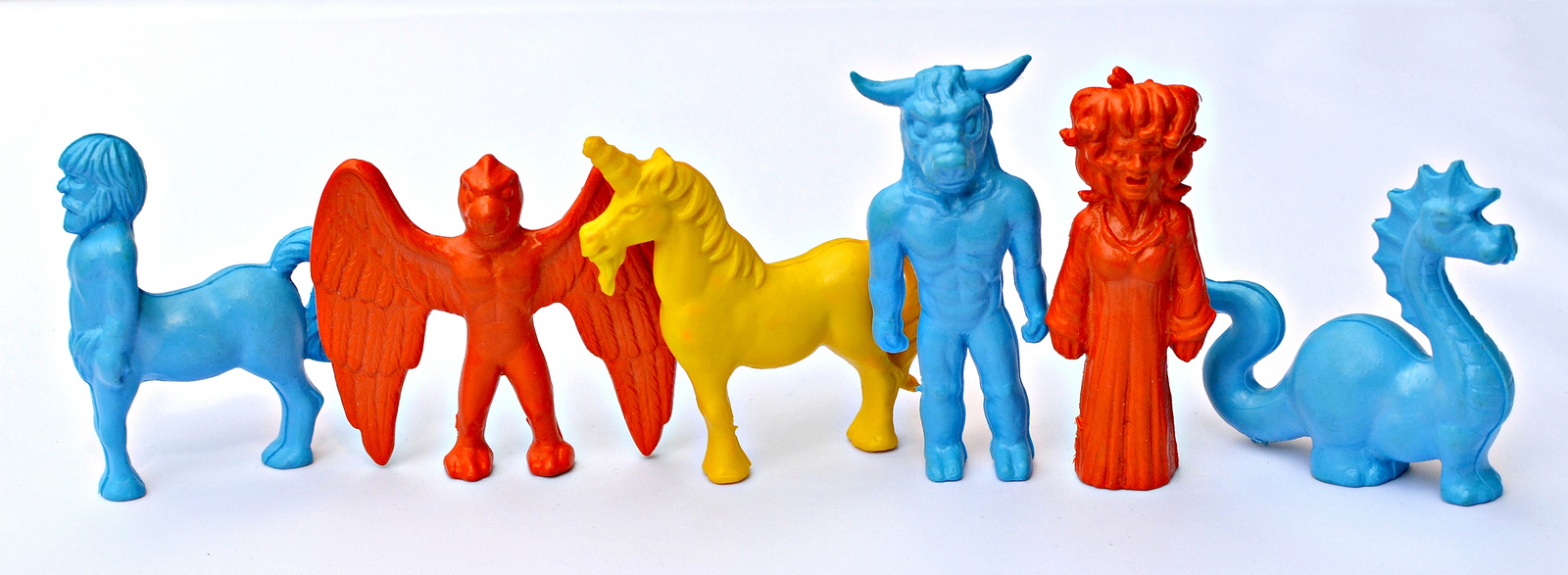
Diener Industries: Mythological Creatures (Circa 1980)

Diener Mythical Creatures

Diener Medusa

Diener Minotaur

All of the info I have on the set, as well as the photos, come from Little Weirdos, a cool site focusing on mini monster figures.

We don’t know when they were first produced. I suspect they were a response to the popularity of Bakshi’s The Lord of the Rings and D&D, which would put them around ’79/’80, same as the Space Raiders and Space Creatures figures.

Does anyone remember them? Is the Medusa wearing a bra?

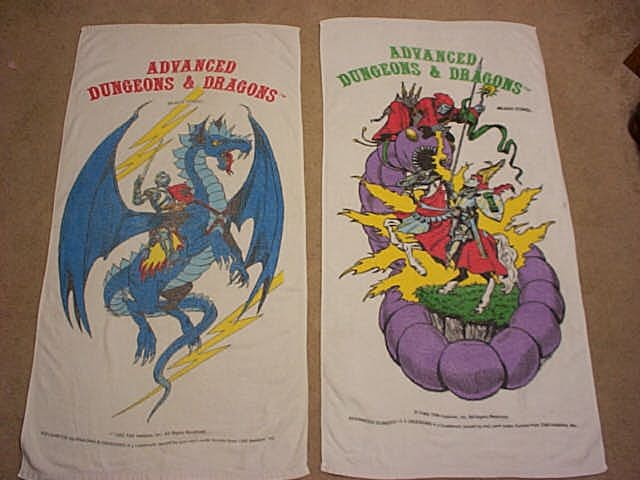
Advanced Dungeons & Dragons Beach Towels (1982)

AD&D Towels 1982

AD&D Beach Towel 1982

AD&D Beach Towel 1982-2

Because if there’s two things that go together, it’s AD&D and the beach. And the towels must be used at the beach, because “beach towel” is printed right there at the top. Try not to lose your dice in the sand, gamers.

David Sutherland art appears on both towels. In fact, the two in the first photo belonged to Sutherland and appear at The Collector’s Trove. The second and third images are via eBay.

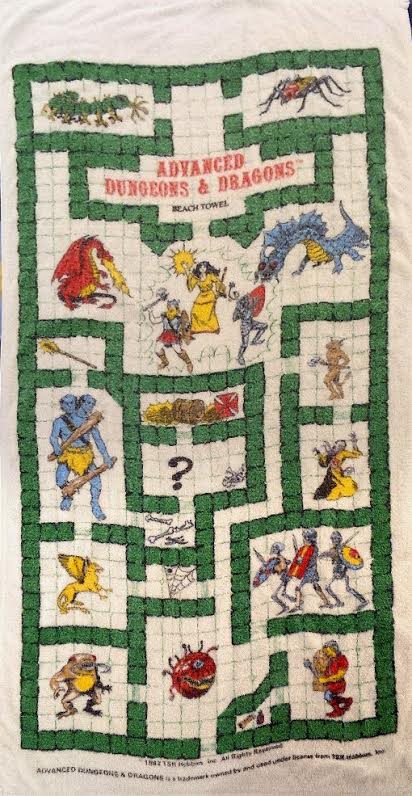
UPDATE: Zenopus (of Zenopus Archives) kindly sent in this photo of a third towel. (Thanks again, Z.)

AD&D Beach Towel 1982-3

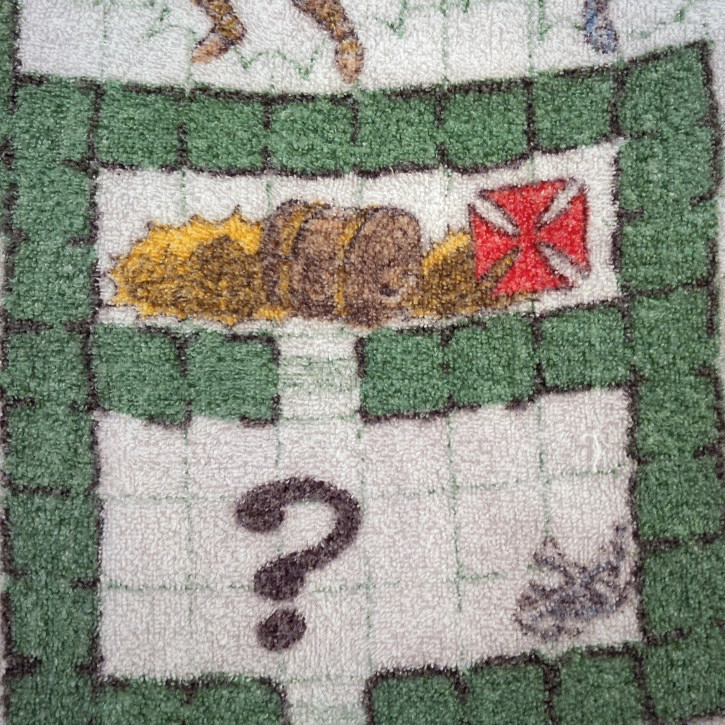
It’s definitely from the same series, but I can’t tell who the artist is. I don’t recall seeing the design anywhere else. What monster do you think is guarding the treasure (‘X’ marks the spot), considering the adventurers are already tackling a red dragon?

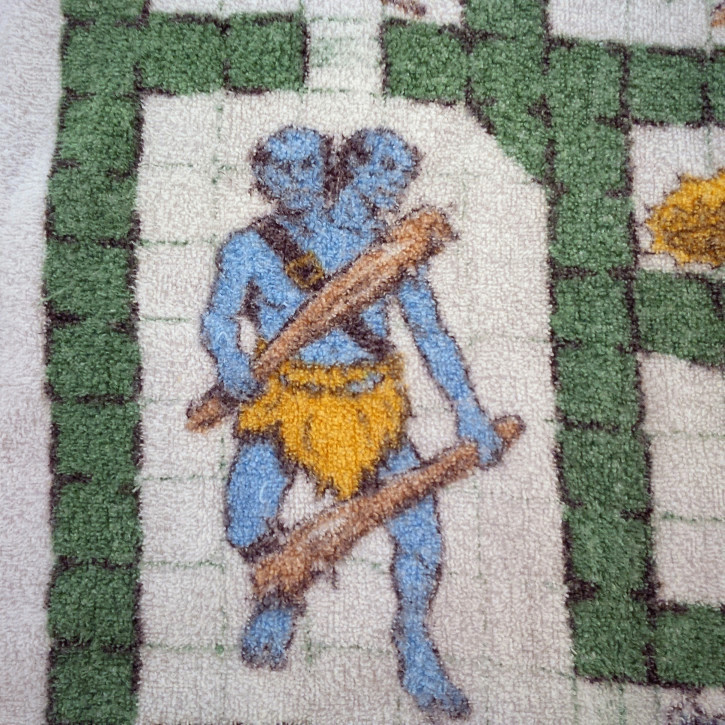
Please contact me (2warpstoneptune@gmail.com) if you spot a different towel, or if you find close-ups of the giant centipede/dungeon towels.

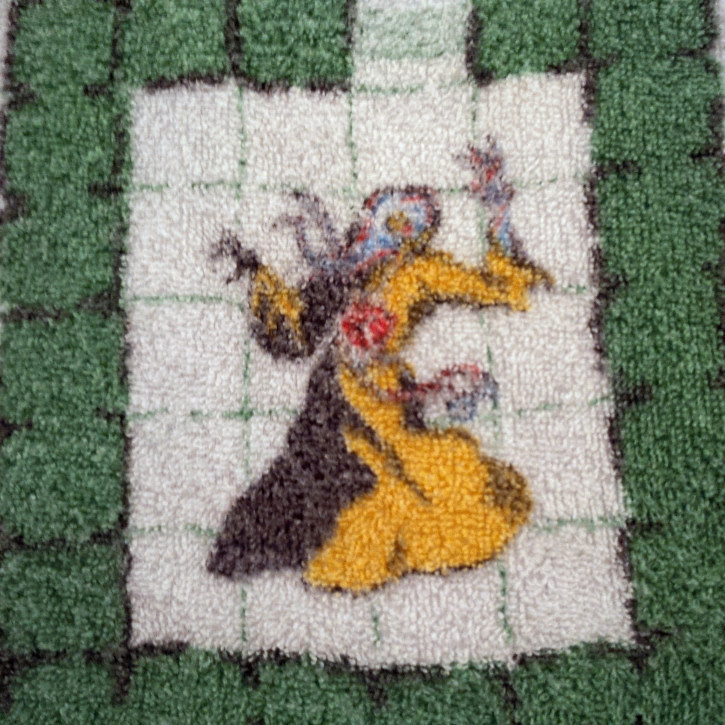
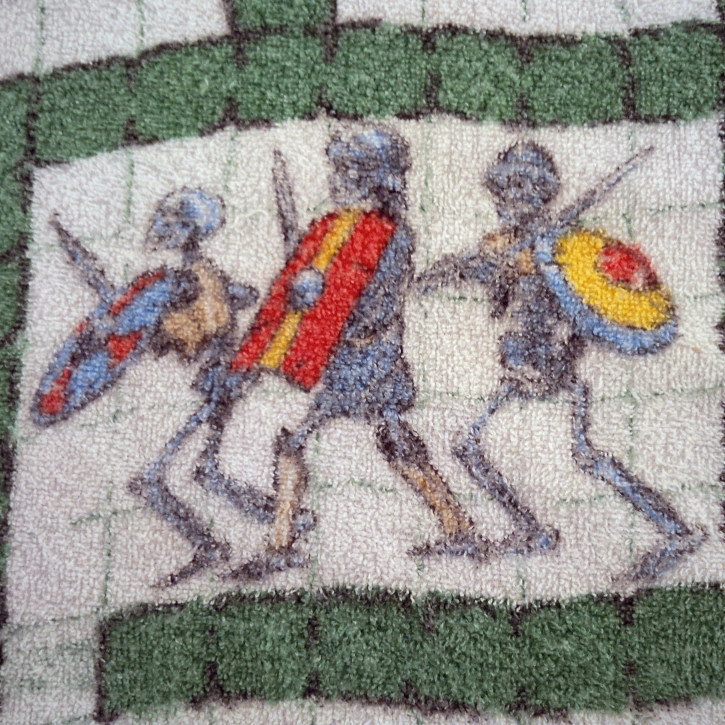
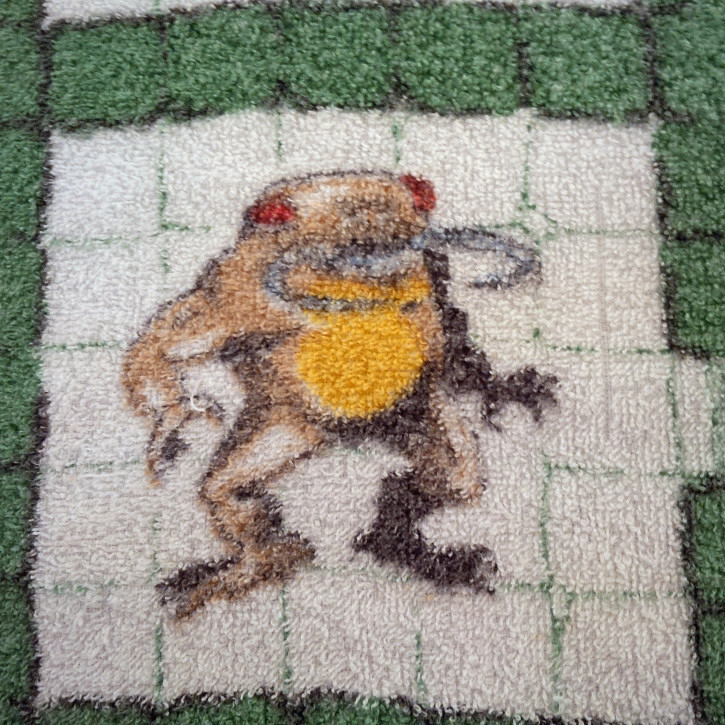
UPDATE (6/30/14): The righteous “Mr. D.” sent in these detailed views of the dungeon crawl towel seen above. Great stuff.

T-1

T-1.5

T-2

T-3

T-4

T-5

T-6

T-7

T-8

T-9

T-10

T-11

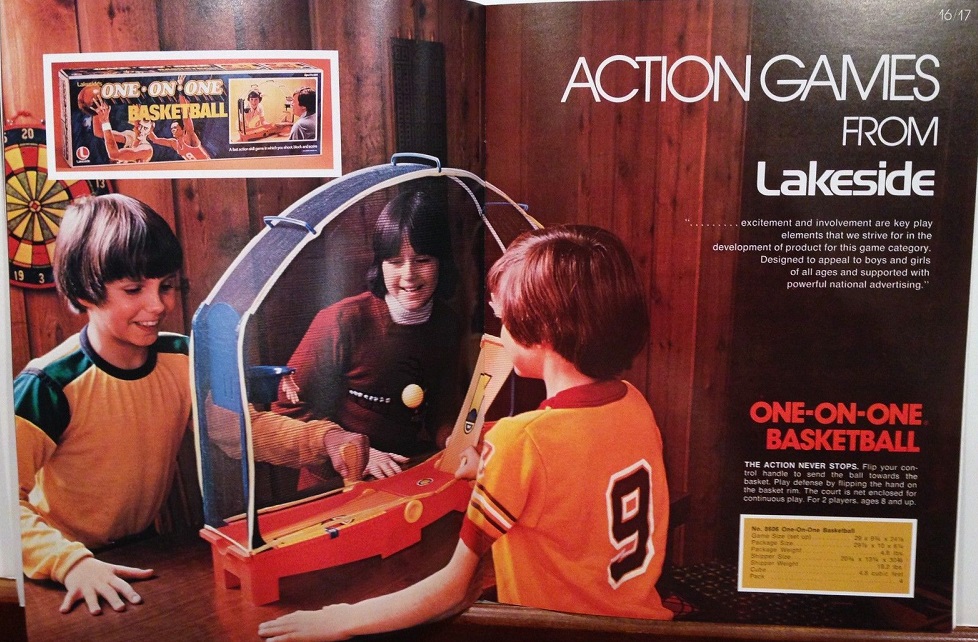
1977 Lakeside Toys Catalog

Lakeside Catalog 1977

Lakeside Catalog 1977-7

Lakeside Catalog 1977-2

Lakeside Catalog 1977-3

Lakeside Catalog 1977-4

Lakeside Catalog 1977-5

Lakeside Catalog 1977-6

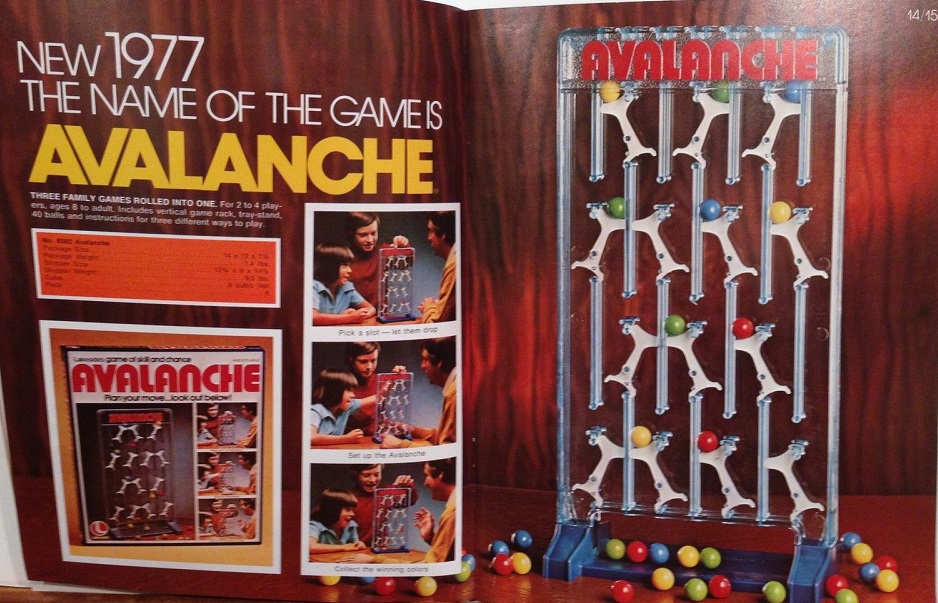
I would like to play these games. I’d also like to know how staged these photo shoots were. Did they just tell the kids to play and start taking pictures? The scene with the adults was obviously forced.

Lakeside published Crossbows and Catapults in 1983 and Immortals of Change in 1985.

(Images via Dadric’s Attic/eBay)

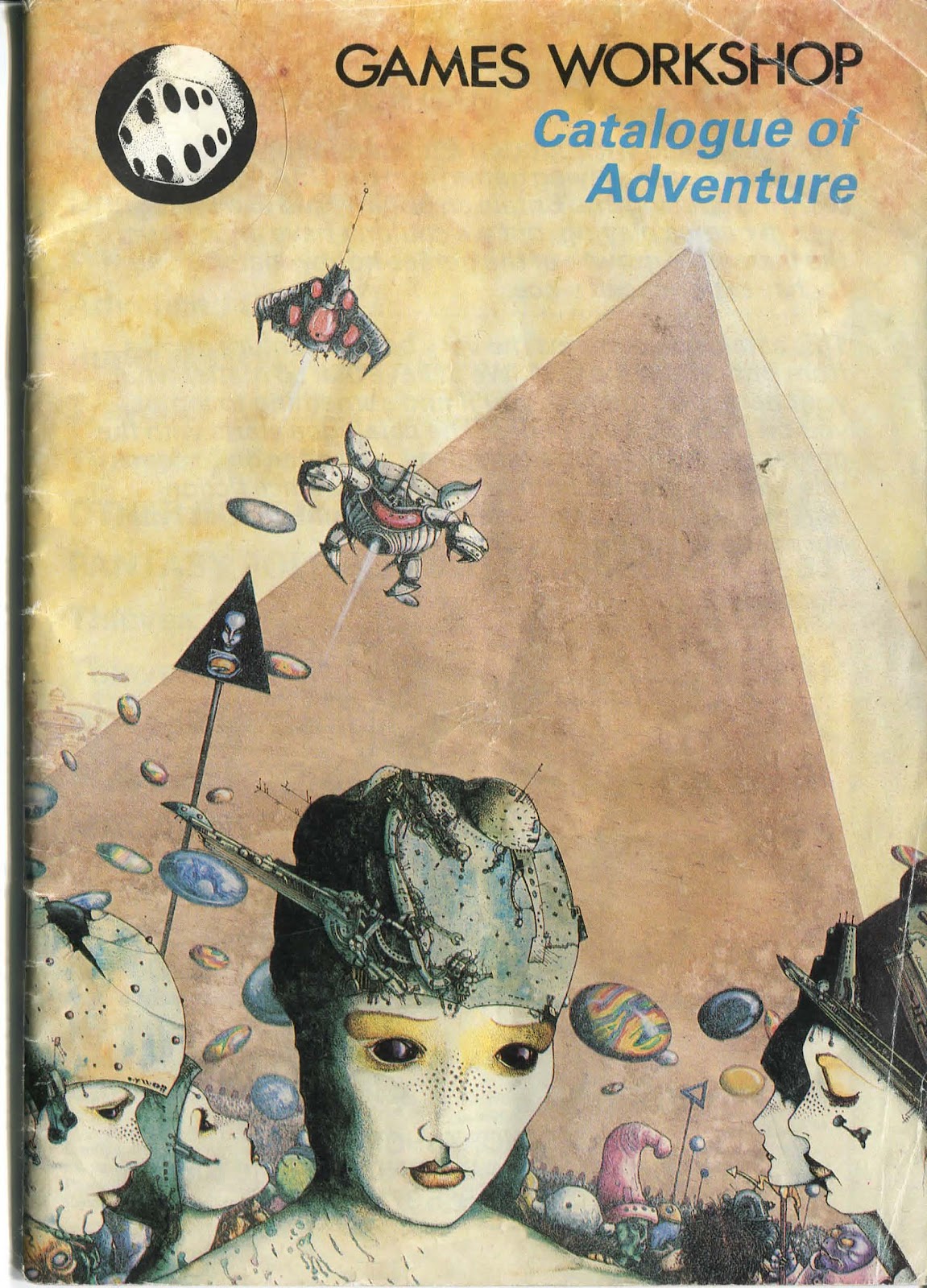
1983 Games Workshop `Catalogue of Adventure’

GW 1983

GW 1983-2

GW 1983-8

GW 1983-3

GW 1983-4

GW 1983-5

GW 1983-6

GW 1983-7

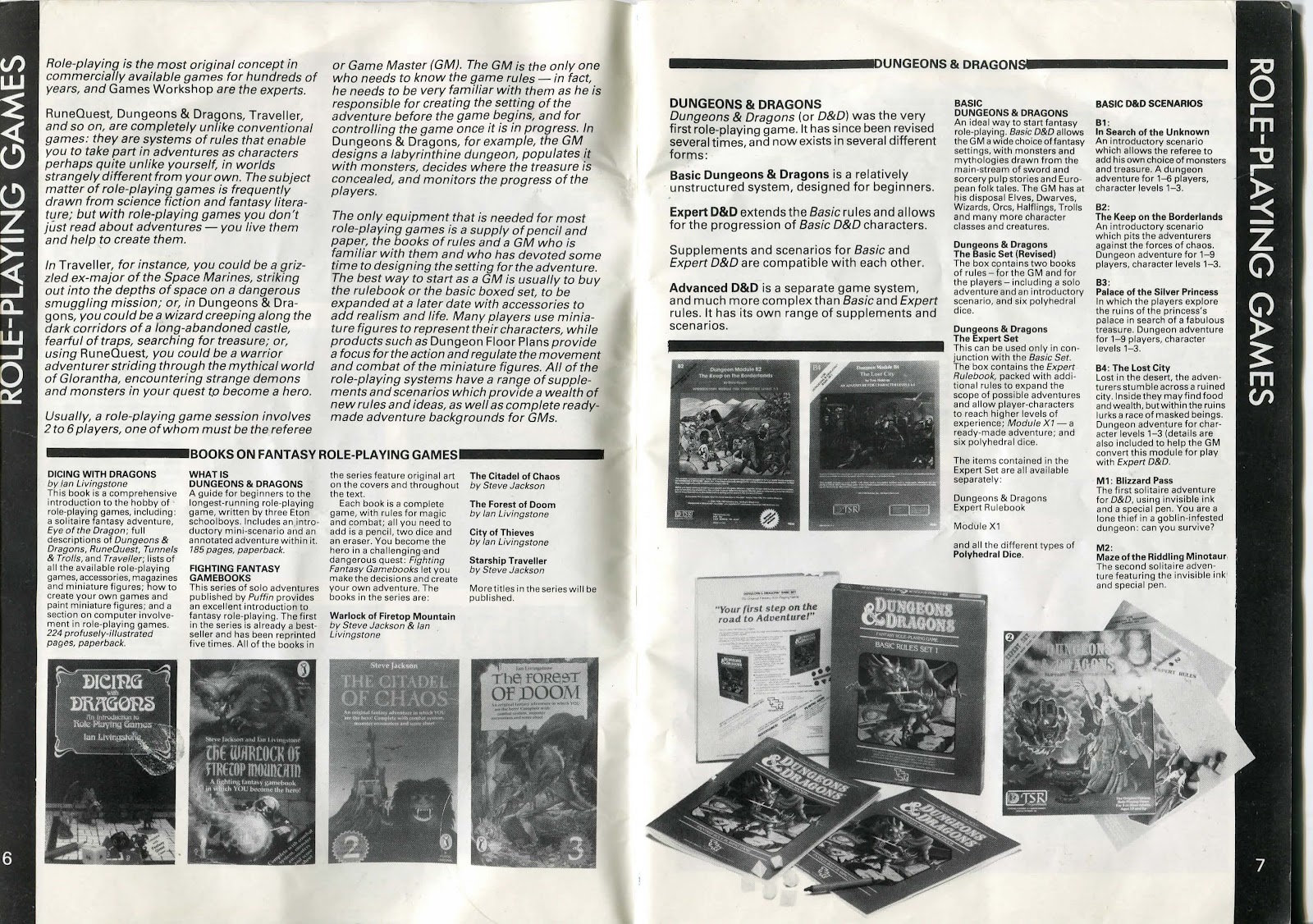
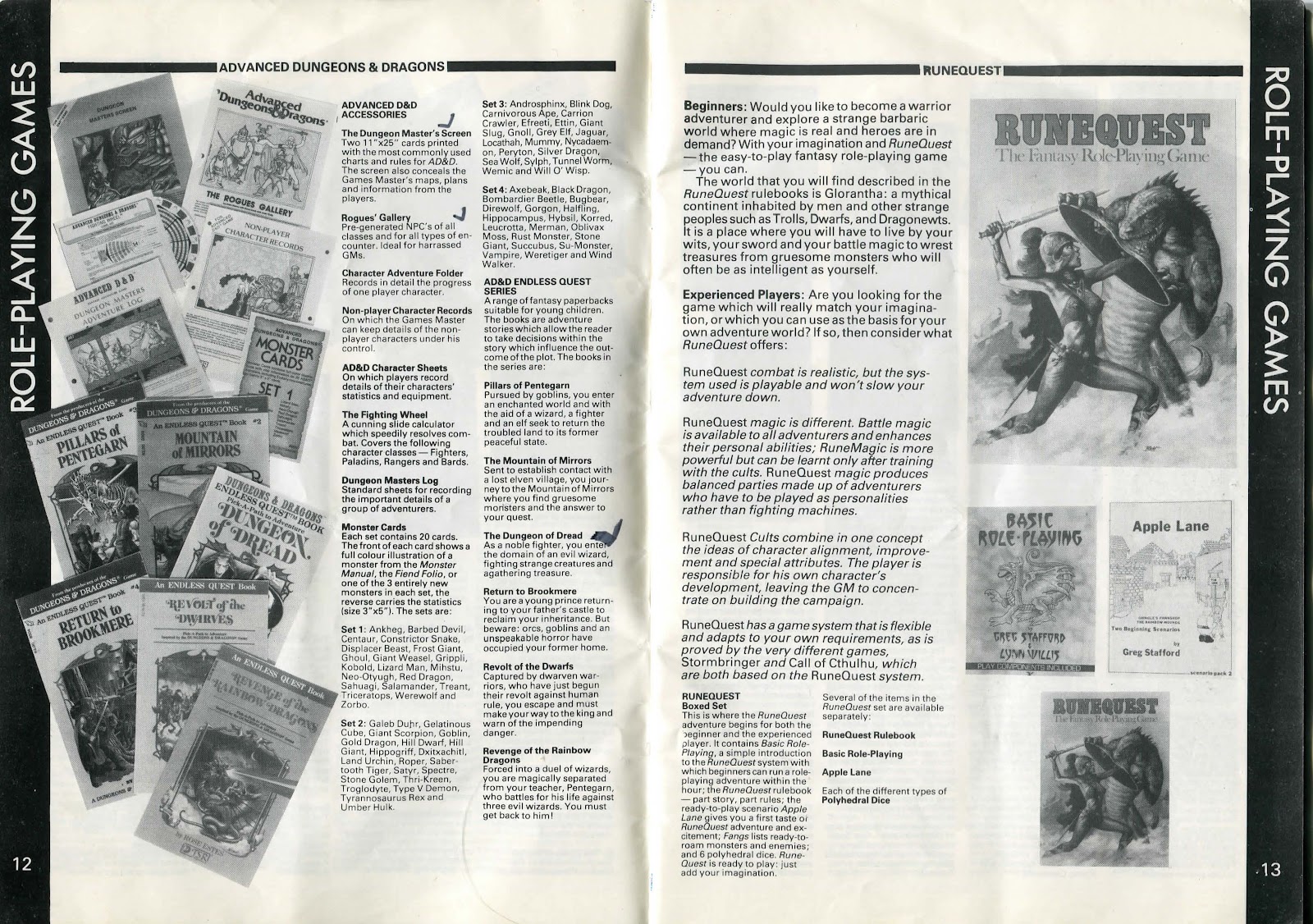
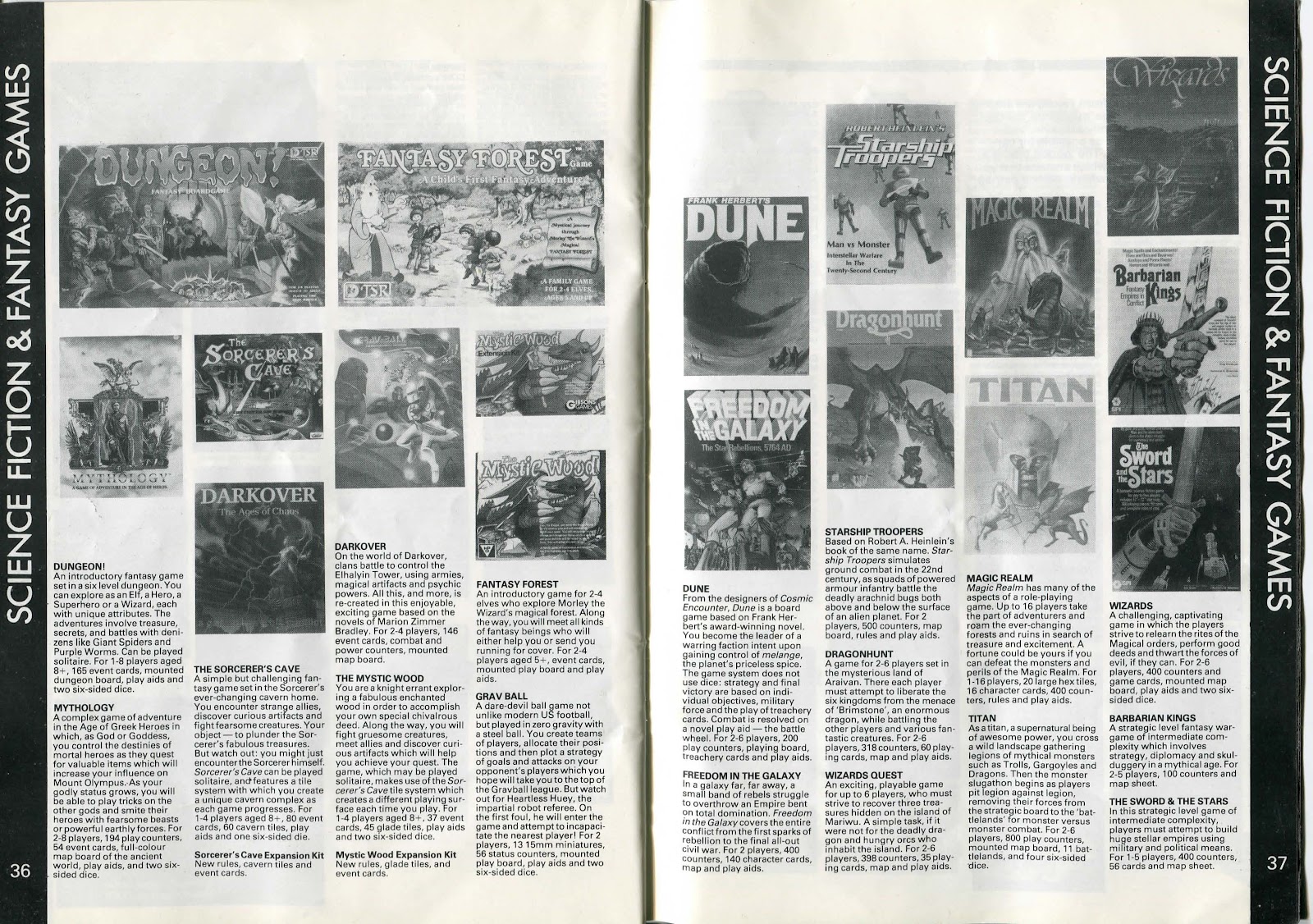
Thank you, Pitch & Putt, for posting the whole catalog. It’s glorious. The number of role-playing games and non-traditional board games available by 1983 is incredible, as Livingstone and Jackson admit in their introductory note. The games are based on every genre, and nearly every workable property (Judge Dredd, Dune, Starship Troopers, Watership Down, The Road Warrior).

As I mentioned here, GW’s approach was much more cerebral than TSR’s. They focus on the novelty and sophistication of role-playing (“the most original concept in commercially available games for hundreds of years”), diversity of rules systems, and sheer range of game titles.

Compare the GW catalog to this 1981 TSR catalog.

Play Make Toys: Robotech SDF-1 Battle Fortress (1985)

Robotech SDF-1 1986

Robotech SDF-1 1986-2

It’s a giant, cardboard SDF-1! Assembly damn well required. The Evil King Macrocranios takes us through all the steps here.

The Empire Strikes Back Home Video Reservation Brochure (1984)

EHB Res 1984

EHB Res 1984-2

EHB Res 1984-3

The Empire Strikes Back was released on home video, LaserDisc, and CED in November 1984. CED stands for Capacitance Electronic Disc (catchy, no?), basically a phonograph that played back audio and video. The format was discontinued in 1986, having lost RCA a reported $600 million.

Star Wars was released on video, for rental only, in 1982, although you could pay a small fortune for a “lifetime rental.” Some sources say the movie was released for true purchase later in ’82; other sources say 1984. The brochure leads me to believe it had been available before 1984, but possibly discontinued after a certain period of time.

The Empire tape cost $79.98 upon release and sold a record 400,000 copies. Rambo beat it in 1986, selling 425,000 copies at the same price.

(Images via Star Wars Seller/eBay)


Pages

Archives

Categories

Donate Button

Join 1,118 other subscribers