Archive for March, 2014

HG Toys: Godzilla Battles the Tricephalon Monster Play Set (1979)

HG Godzilla 1979-3

HG Godzilla 1979-2

HG Godzilla 1979

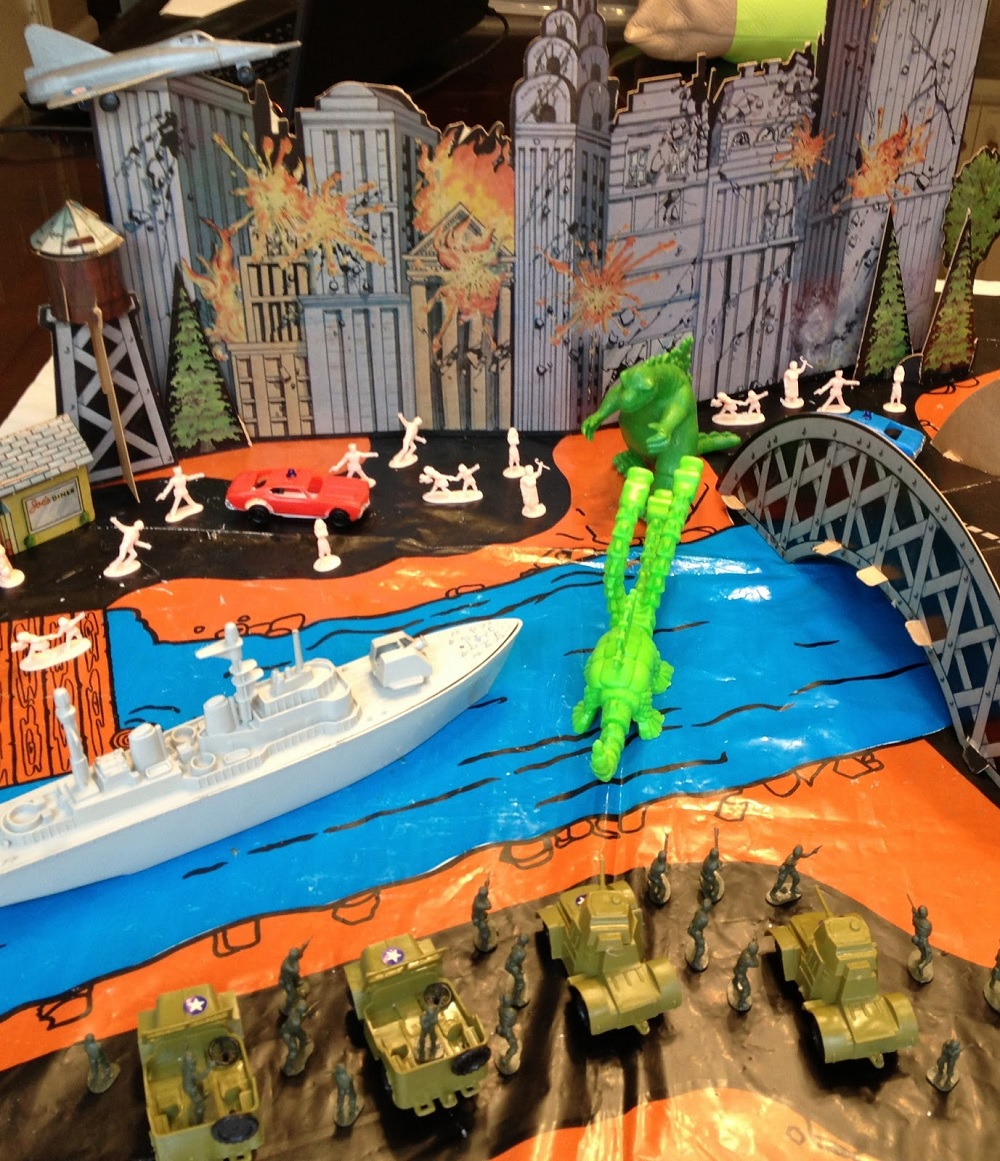
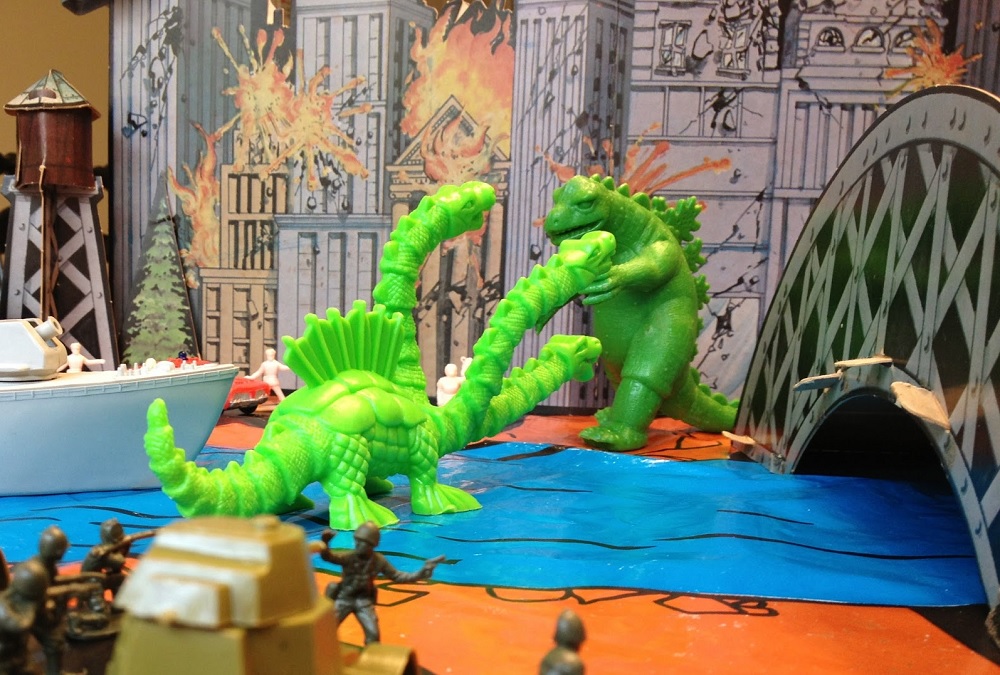
As far as I know, this is the only traditional playset featuring Godzilla produced by an American toy company in the ’70s and ’80s, and it’s interesting for a number of reasons (other than the one just stated).

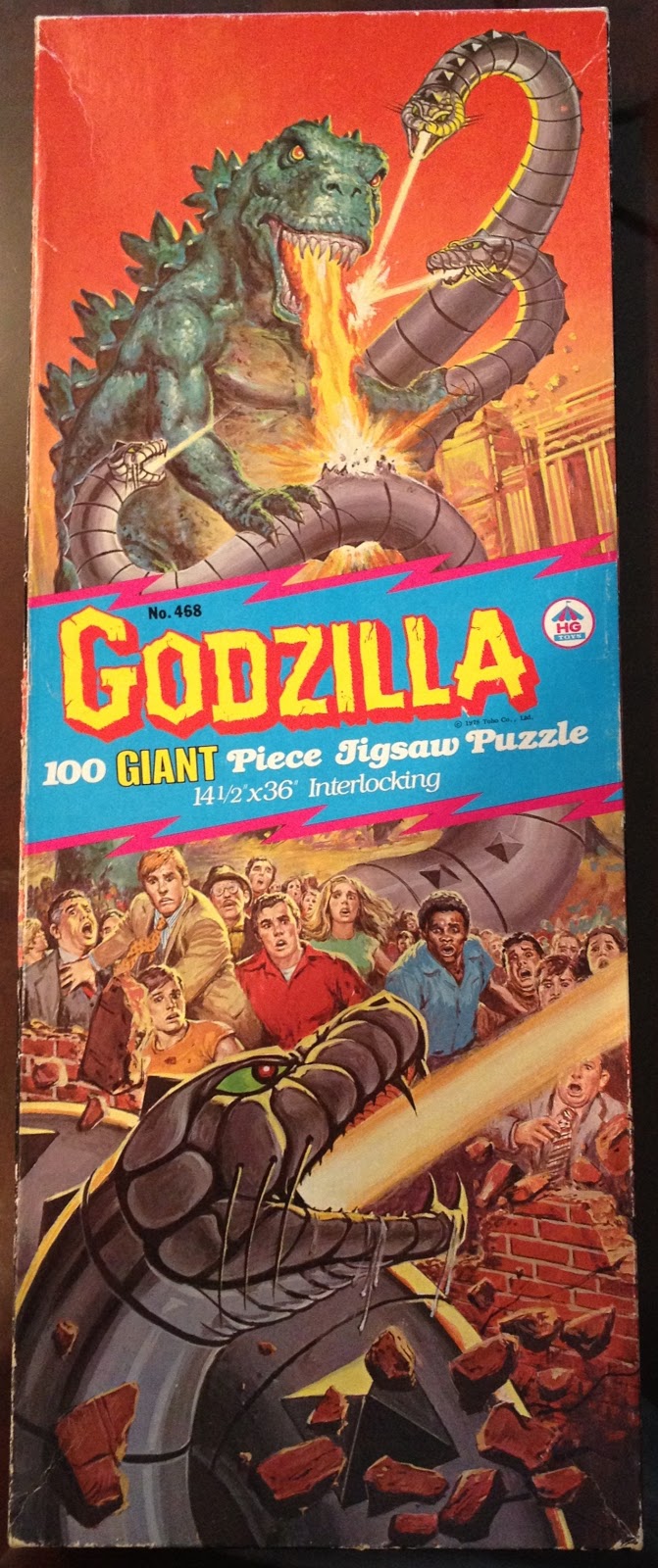
First, it marks the only appearance of Tricephalon, an obvious attempt to mimic King Ghidorah without paying for the license. The box art depicts a mecha-hydra, anticipating both Mecha-King Ghidorah from Godzilla vs. King Ghidorah (1991) and Hyper Mecha-King Ghidorah from a 1997 Japanese TV series called Godzilla Island. (There was also a three-headed robotic dragon in the NES game Magmax, first released in 1986)

Second, the destroyer in the set is “missile-firing” (see warning on box) at a time when toys firing projectiles were being hastily recalled.

Third, the box artist is likely Earl Norem, who painted the cover for HG’s Buck Rogers Galactic Play Set from the same year. It looks very much like Norem’s color scheme and style. An expanded version of the playset art was used for a large Godzilla jigsaw puzzle, also issued by HG, also from 1979. The detailed human faces on the lower panel further convince me that Norem is the artist.
HG Godzilla Puzzle 1979

Check out The Sphinx (who makes the same point about Tricephalon anticipating Mecha-King Ghidorah) for close-ups of the Godzilla and Tricephalon molds, and for a listing of the set’s full contents.

(Images via Materialist Zen and The Sphinx)
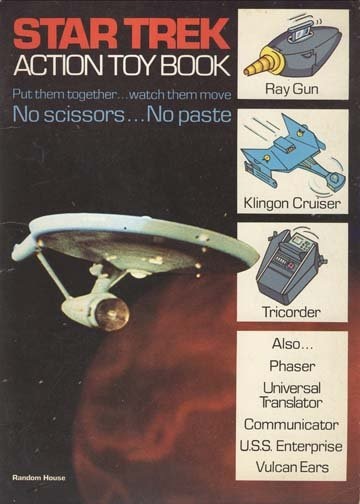
 

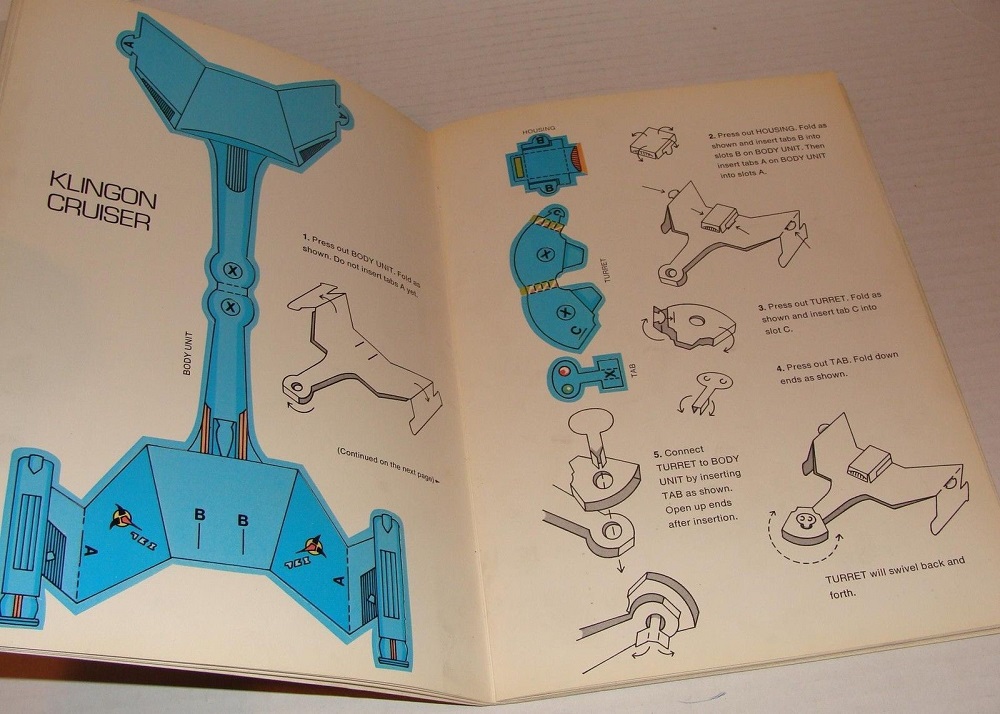
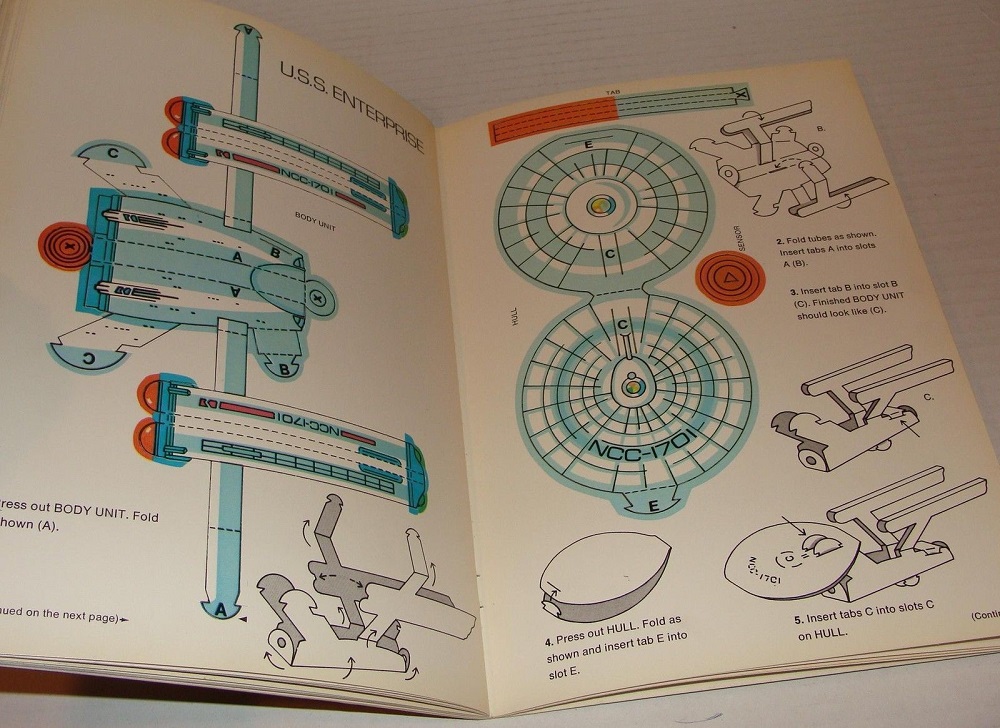
Star Trek Action Toy Book (1976)

ST Book 1976-4

ST Book 1976-3

ST Book 1976-2

ST Book 1976

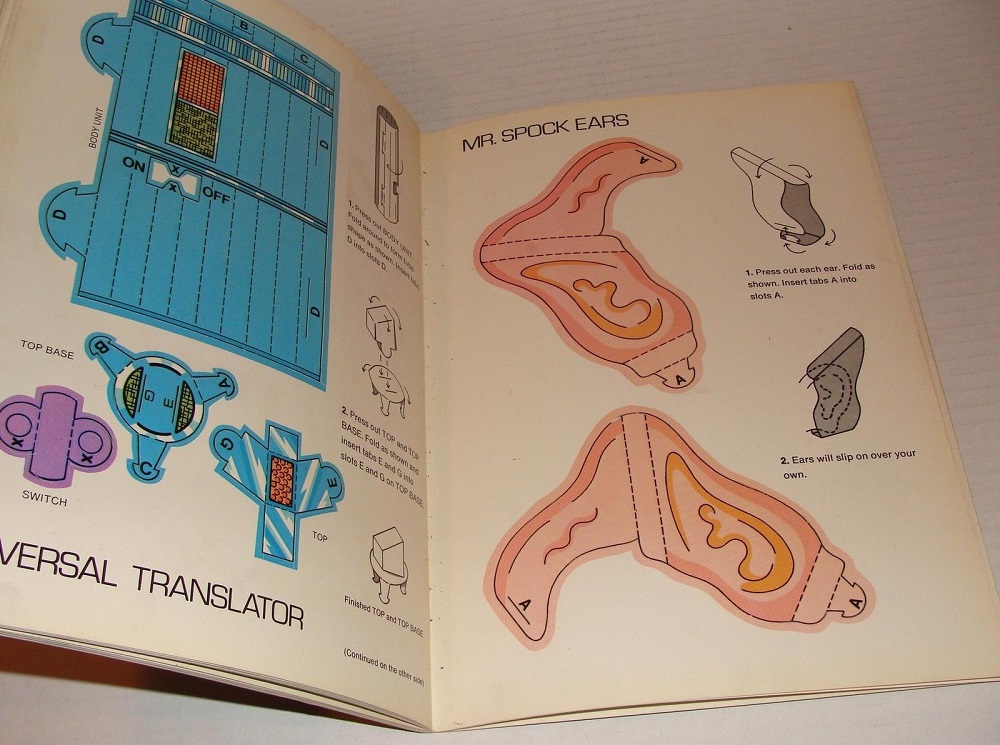
Cardboard Vulcan ears, anyone? Are we sure those those aren’t Vulcan sexual organs? It is a book of action toys.

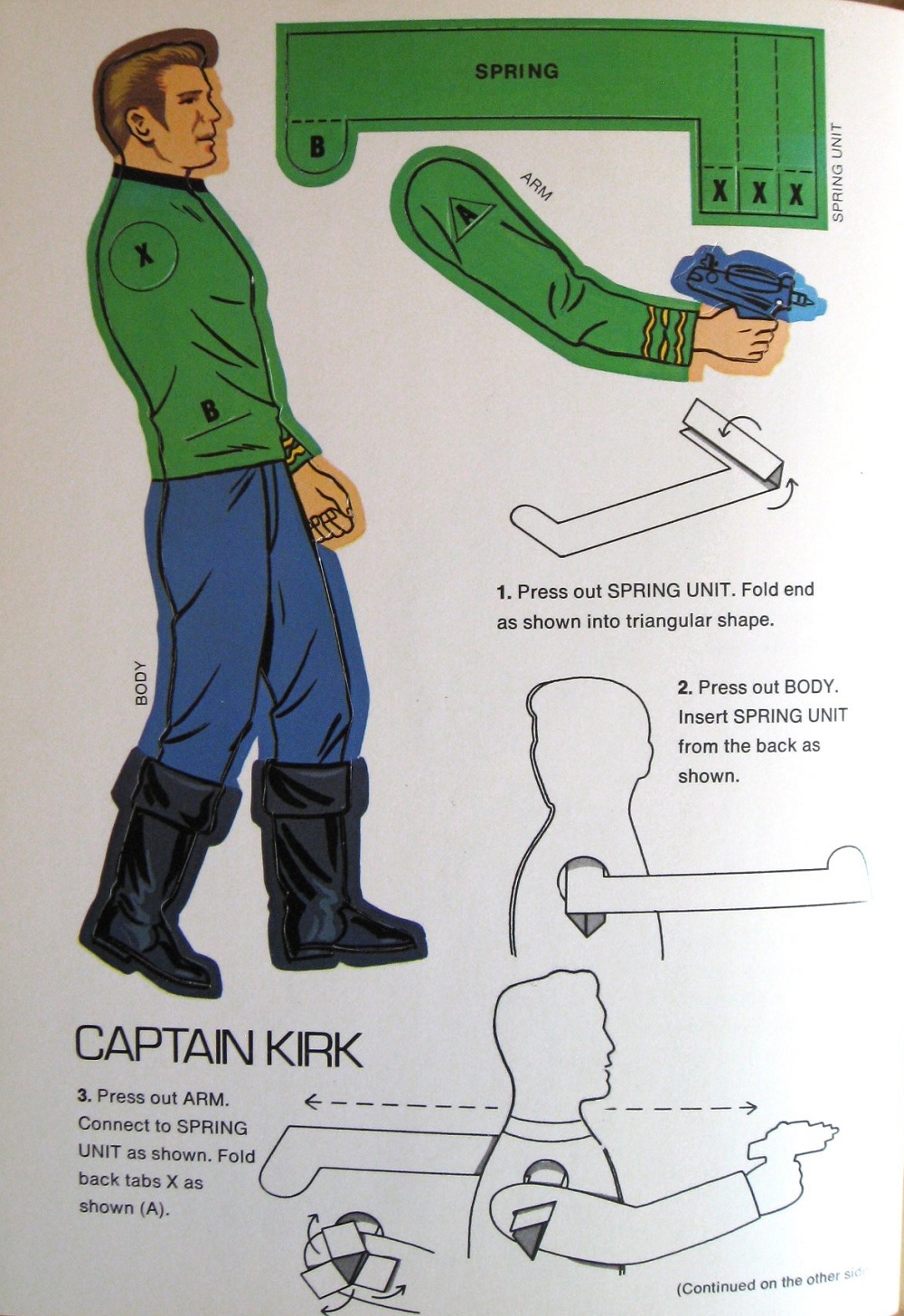
Various parts of the models moved. From Memory Alpha:

  • Ray gun, with a trigger that can be pushed
  • Klingon cruiser, with a swiveling forward section
  • Tricorder, with a top that swivels open and closed
  • Phaser, with a trigger that opens the front of the phaser into position
  • Communicator, flips open
  • USS Enterprise, with sensor array that moves forward and back
  • Universal translator, with an on/off switch
  • Vulcan ears

There’s also a Kirk with a “spring” arm. (Insert William Shatner overacting to the max joke/scene here.)

ST 1976-2


Space Raiders Notebooks, 1978/1979

Space Raiders 1978-3

Space Raiders 1978

Space Raiders 1978-2

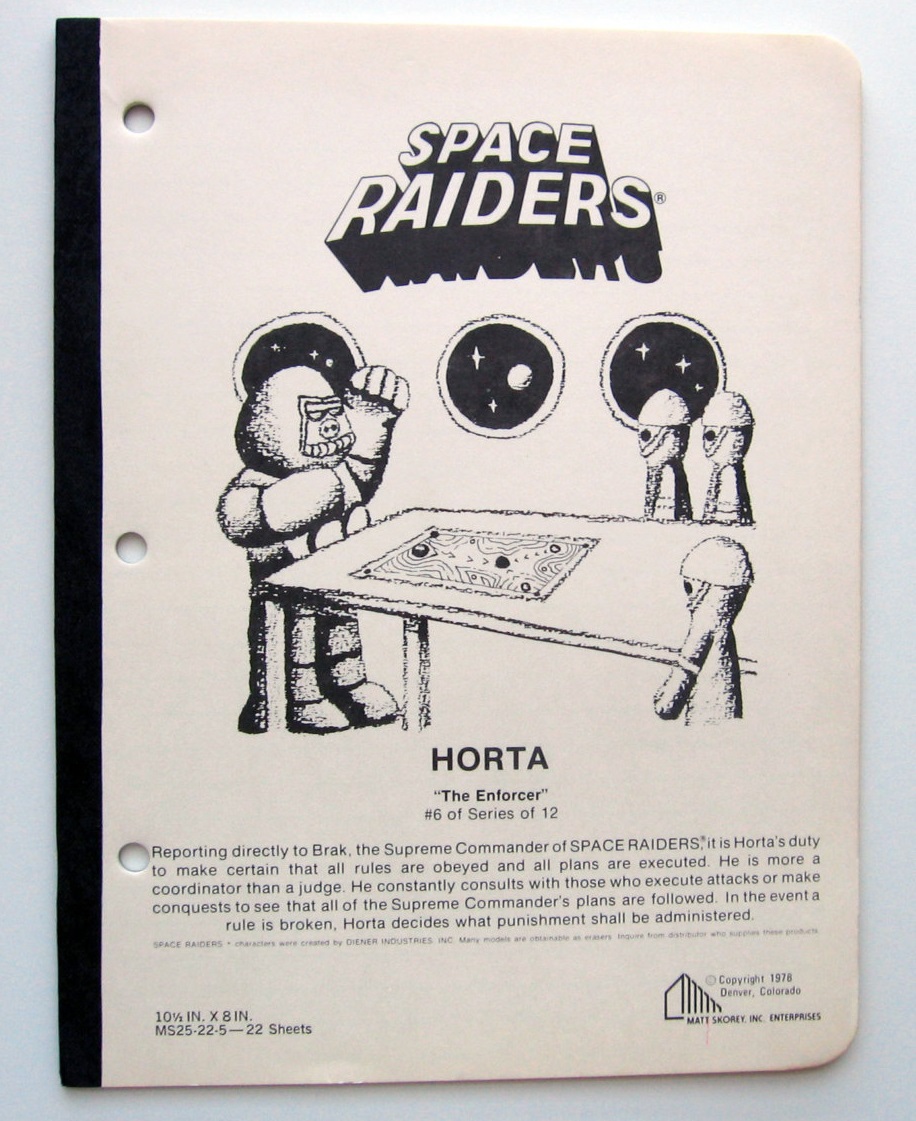
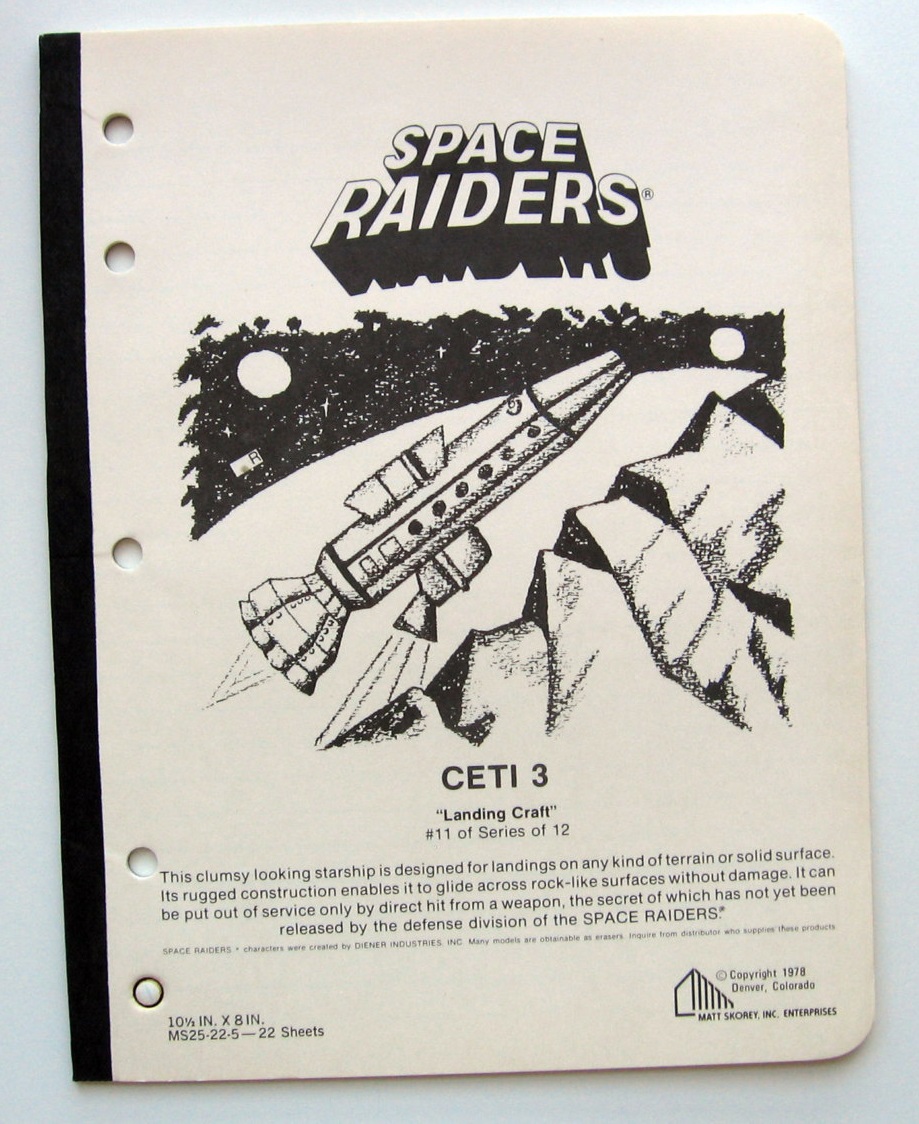
You remember Diener’s popular Space Raiders and Space Creatures erasers. What we’ve got here are a couple of notebooks in a series of 12 based on the Raiders designs. There were only eight Raiders, so I’m not sure what the other four notebooks covered. I can’t wait to find out.

What’s interesting about the notebooks is that (1) they provide a backstory for each Raider, (2) they tell us that “many models” of the erasers were sold individually at the time, and (3) the company that produced them bought the license from Diener the same year Diener unveiled their sci-fi line at the 1978 toy fair.

Thanks to James Agee for the reminder about these beauties. Please let me know if you remember having any, or if you see photos of others.

(Images via Etsy; both items sold)

Pool Hall with Pong Cabinet, 1973

Pool Pong 1973

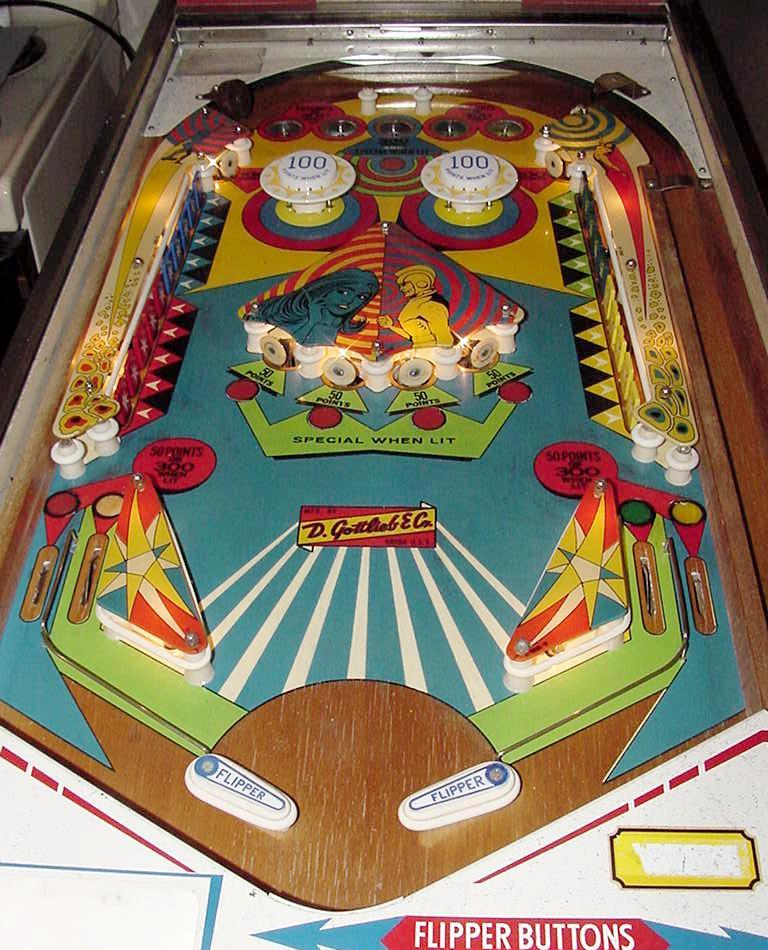
SS Billiards in Hopkins, Minnesota. The gentleman on the right is playing Gottlieb’s 2001, released in 1971. Like Atari’s Middle Earth, the title cashes in on a popular cultural event, but the game itself slyly avoids any direct allusion to that event—and any resulting copyright infringement.

The 2001 artist is prolific Gordon Morison, who also worked on the Close Encounters of the Third Kind (1978) machine, Orbit (1971), and The Incredible Hulk (1979), among many others.

UPDATE: I’m pretty sure the sign on the wall reads: “Any games on machines at closing time will be forfeited”.

2001 BG 1971

2001 PF 1971-3

2001 PF 1971-2

(Original photo via pinrepair.com; 2001 photos via pinrepair.com and The Internet Pinball Database)

Advanced Dungeons & Dragons Pinball Game (Larami, 1983): ‘Dragon Duel’

DD 1983

DD 1983-2

DD 1983-3

I realize that the D&D name is not on the product, but it’s a TSR license and the art is from Larry Elmore’s cover for Pillars of Pentegarn (1982). A partial license would have cost less than a full, hence Dragon Duel. Made in Hong Kong. A product of your imagination.

UPDATE (5/28/14): I stand corrected. The AD&D name is on the box, per the pictures below:

AD&D Pinball

AD&D Pinball-2

AD&D Pinball-3

(Images via Gene and Troy’s Toys/eBay)

Heavy Metal Kids on Skateboards, Circa 1986

Kids Skateboards 1986

The Iron Maiden shirt on the left shows the cover from “Stranger in a Strange Land,” a single from Somewhere in Time (September, 1986). See both covers here. The artist is Derek Riggs, whose killer art nudged a lot of kids toward metal.

Another good portrait of a blossoming subculture, from the hair styles to the dark clothes—even the pose on the right. Tucking the pants into the tongue of the basketball shoes wasn’t just a metal thing, if I recall. Speaking of which, I can’t identify those shoes, and it’s bothering me. They’re not Jordan’s, they don’t look like Pony’s, and this kid wouldn’t have been wearing Reebok. Any other ideas?

The skateboards are generic deals. The one on the right might even be partially homemade.

(Photo via The Kat’s Meow Antiques)

The Black Hole Japanese Theater Program (1979)

BH Max 1979

BH Vincent 1979

BH Cygnus 1979

Gorgeous cutaway views courtesy of ByYourCommand.net. Zoom in to inspect the incredible detail. Our good friend Mikey Walters, who’s been studying Japanese for years, says that “Most of the descriptions are in katakana, a special Japanese alphabet used for `loan words,’ which means they are English in this case.” Here are some random translations:

Maximilian: Image Processor, Drill, Sub-computer, Memory, Main Computer, Rocket Engine (that’s interesting), Rocket Blaster, Block Condenser, Compressor, Motor, Computer Interface, Main Stabilizer, Sub-stabilizer, Balance Sensor

Vincent: Magnetic Head Protector, Computer, Image Processor, Drill Arm, System Indicator, Laser Gun, Graphic Display, Main Manipulator Computer Interface, Battery, Sensor

Cygnus: Transporter Terminal, Transporter Tube, Docking Port, Laser Dome, Main Engine, Charging Room, Shuttle Ship, Shuttle Ship Docking Port, Main Computer Tower, Control Center

This isn’t the whole program, obviously, but it’s the most unique section by far.

Thanks again, Mikey!

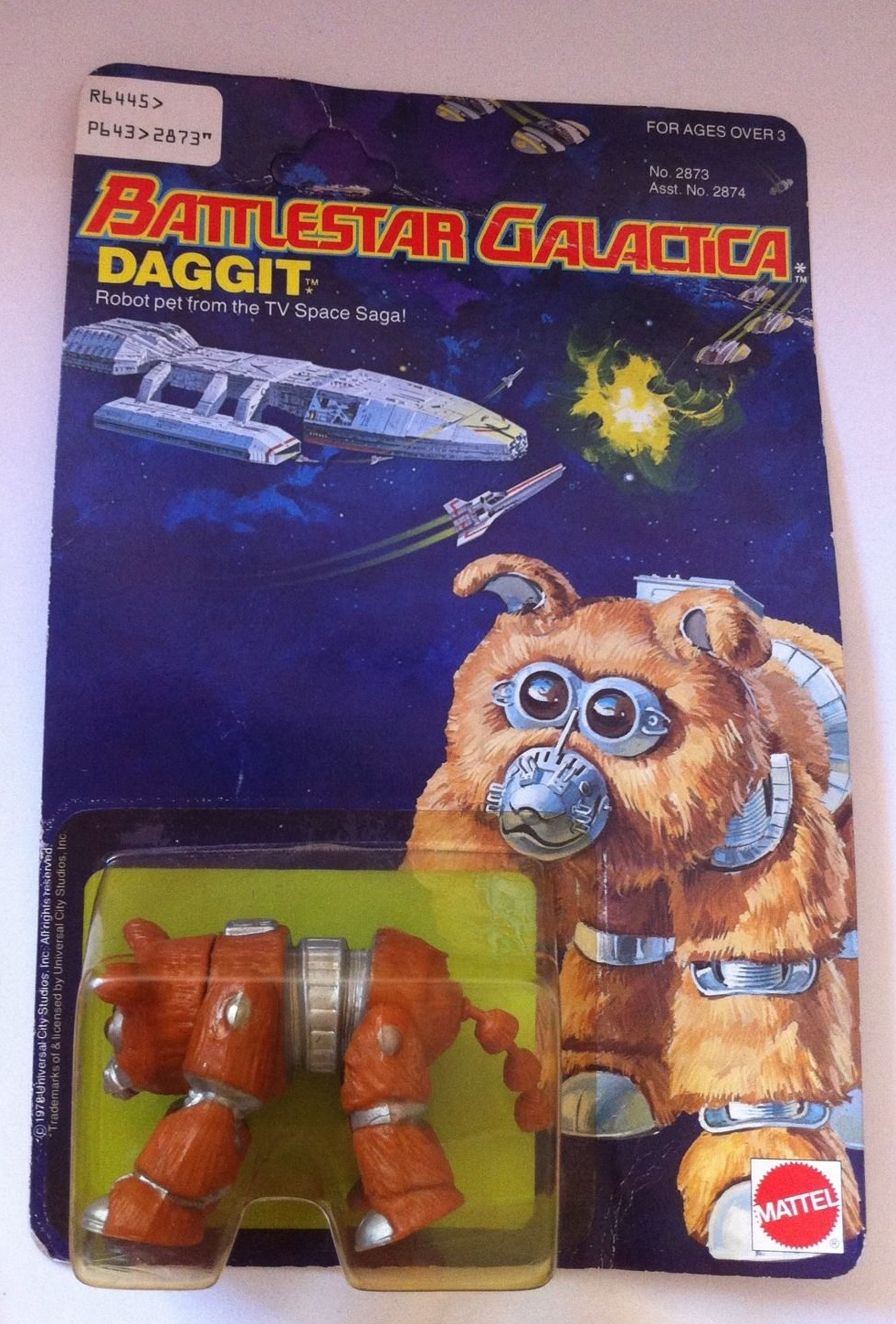
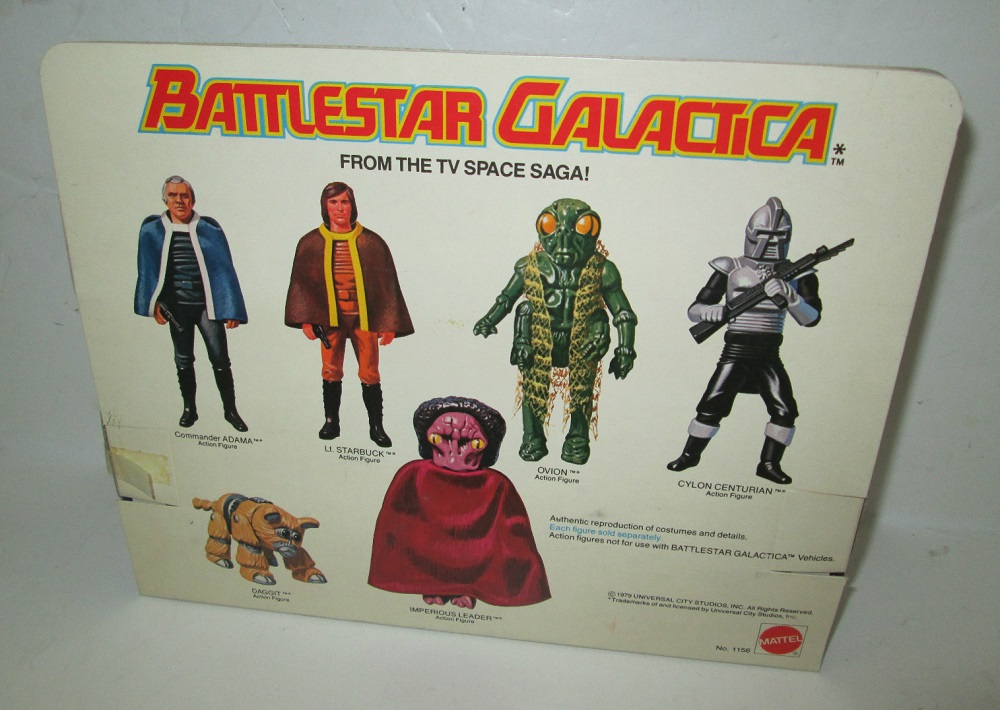
Mattel’s Battlestar Galactica Action Figures (Series One) (1978)

BSG Cylon 1978-2

BSG Imperious Leader

BSG Ovion 1978

BSG Adama 1978-2

BSG Daggit 1978

BSG Starbuck 1978-3

BSG Starbuck 1978-2

BSG 4 Pack 1979

BSG 4 Pack 1979-2

BSG 4 Pack 1979-3

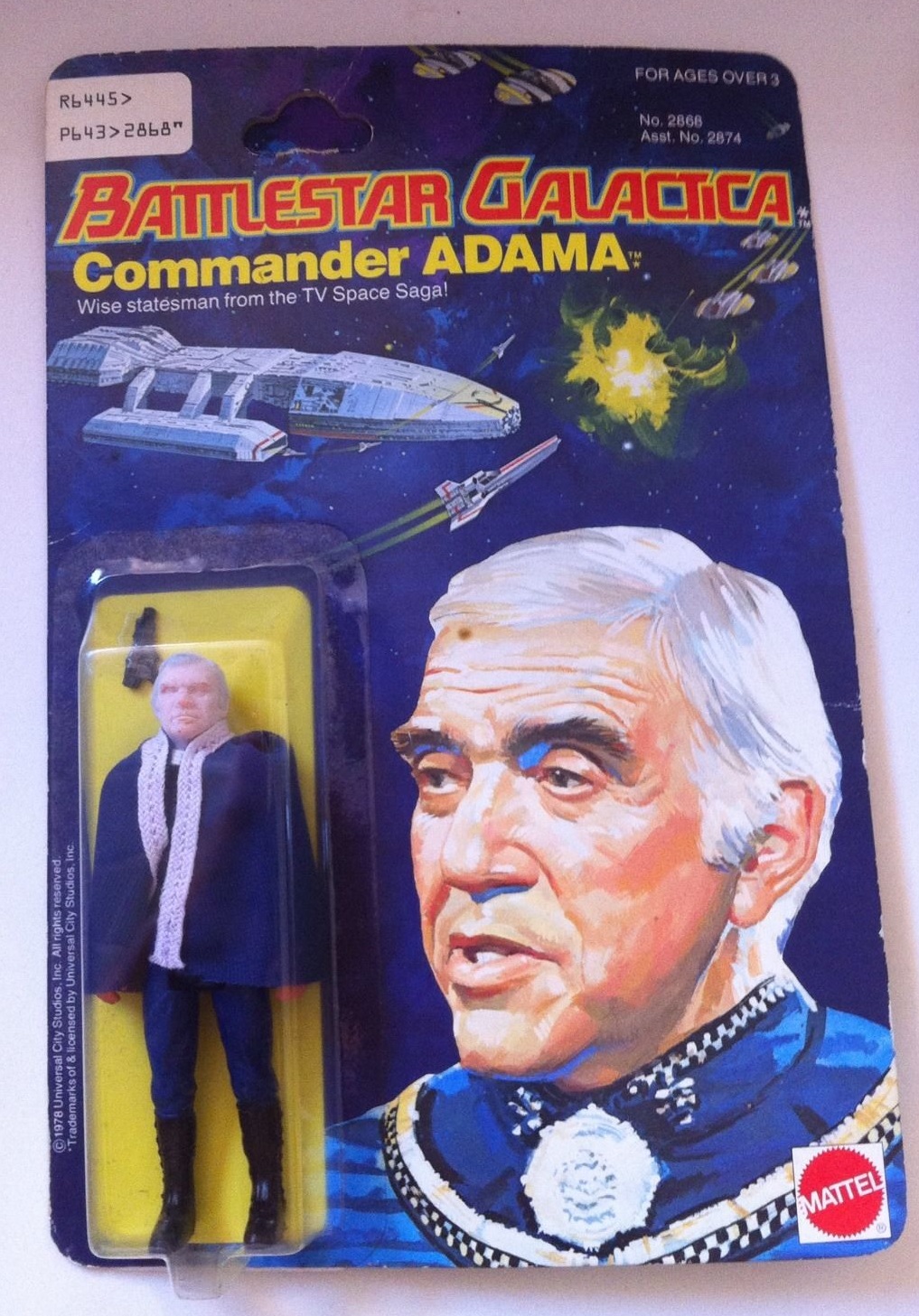
All of the series one figures (click to enlarge), including the hard to find 4 pack released in ’79. More BSG here.

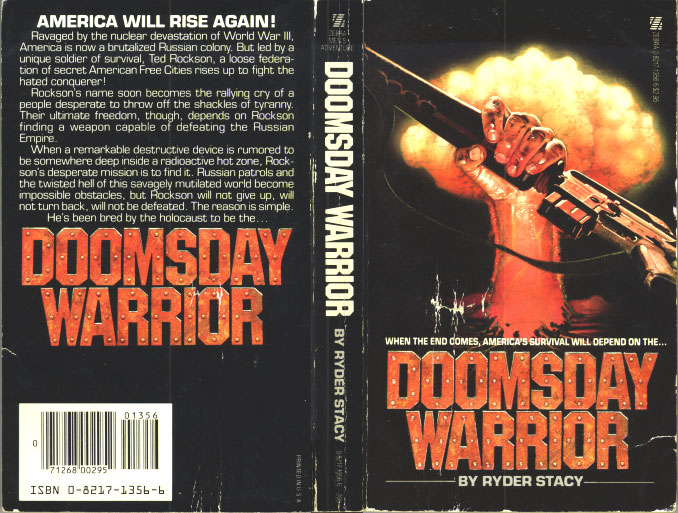
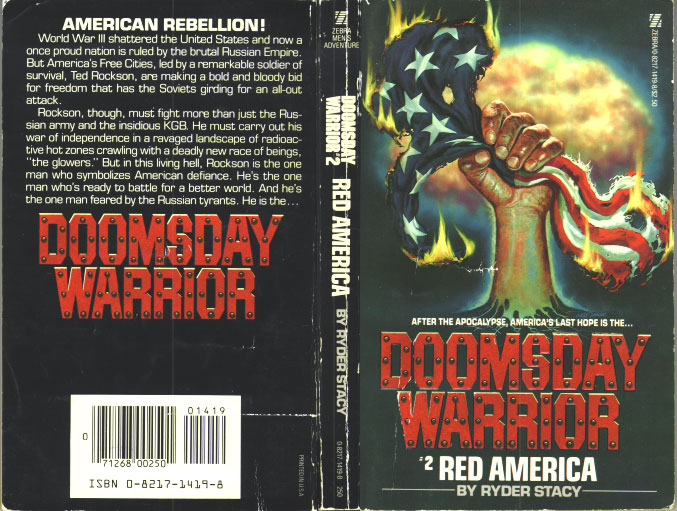
Post-Apocalypse Now: Ryder Stacy’s Doomsday Warrior Series (1984 – 1991)

DW #1

DW #2

DW #5

DW #6

DW #7

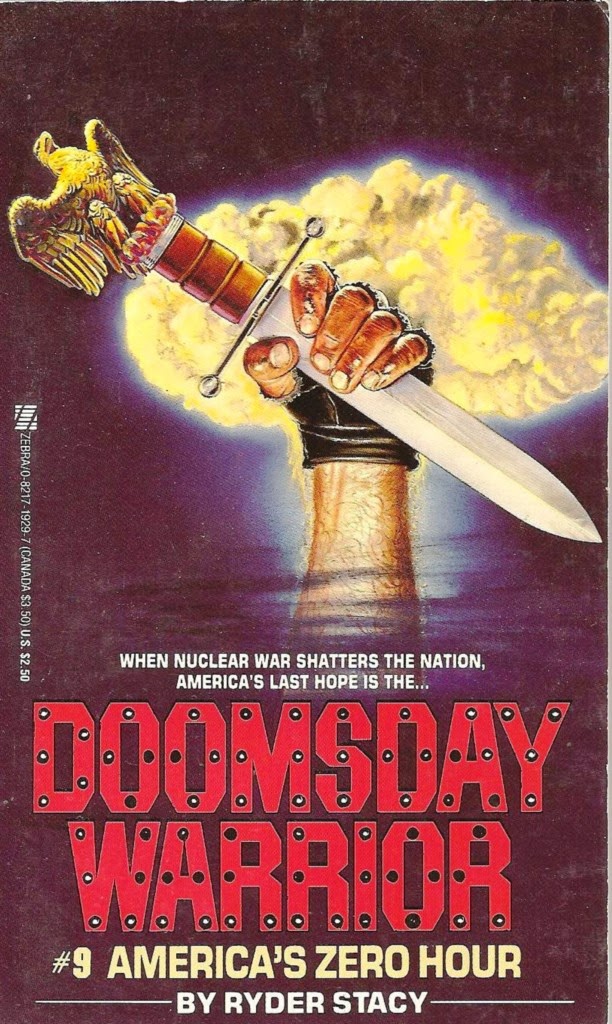
DW #9

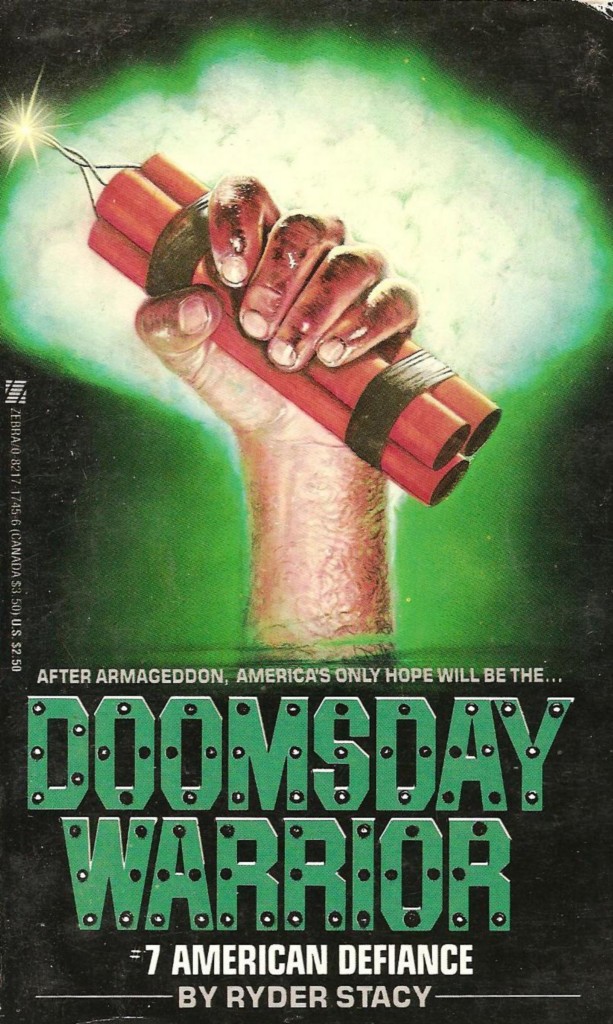
A combination of The Survivalist, The Executioner, and 2000 AD, the Doomsday Warrior series follows the exploits of Ted Rockson (“Rockhard” would’ve been better) and “his high-tech guerilla army of Freefighters” as they try to wrest America from Russian occupation while battling radioactive “glowers,” cultists, and all manner of post-nuke nasties.

Ryder Stacy is actually Ryder Syvertsen and Jan Stacy, both of whom wrote various men’s action-adventure fiction throughout the 1980s. Doomsday Warrior was the most successful, running to 19 volumes. There were an incredible amount of post-apocalyptic books and book series written during the Reagan era, including popular young adult novels like Gloria Miklowitz’s After the Bomb. The Hunger Games is nothing new, and it’s tame by comparison.

Fictional accounts of Russians taking over the U.S. date back to the Red Scare. Conelrad Adjacent, a treasure trove of Cold War ephemera, posted an early example from 1942, a comic book called Is This Tomorrow: America Under Communism.

The cover design of the Doomsday series—with the defiant fist and forearm doubling as the stem of the mushroom cloud that ended the old ways—is magnificent. The writing is not. From #7, American Defiance:

The whole Russian fort was coming to life and there was only one chance to escape. Gripping the long wooden pole in his hands, Rockson ran toward the sixteen-foot-high barbed wire fence and without breaking stride planted the pole in the dirt. With every ounce of strength he kicked off with his piston legs and climbed up in the air in a perfect arc.

A spotlight suddenly caught Rockson dead on, and a stream of Red slugs headed toward him like a swarm of man-eating locusts. The top of the fence was coming and Rock made it over—barely. The very upper strands of barbed wire ripped across his right calf, slicing open a three-inch-long gash that oozed a stream of blood. Then he was arcing down to the ground, curling as he made contact, rolling over and over into the blackness where the circle of searchlights ended.

This particular bunch of Reds wasn’t going to get the Doomsday Warrior. Not tonight.

The cover images come from two great blogs: The Post-Apocalyptic Book List, an exhaustive list and description of genre titles, and Glorious Trash, a pulp review site heavy on 1980s survivalism and action-adventure, Doomsday Warrior included.

`If the A-Bombs Burst’ (1951)

A-Bombs 1951

A-Bombs 1951-2

The residents of New York or Gary, Washington or San Francisco must face the crushing reality that an atom bomb destined for his [sic] neighborhood might even now be winging its way across the curve of the world.

Thank you for the pep talk, article from a 1951 issue of Popular Mechanics. I feel much better now. The photo of the man collapsing from fatal radiation burns also inspires me with a sense of security.

The diagram on page two is tremendous, isn’t it? You’re probably safe if you’re a couple of miles away from the blast, unless you’re downwind!

(Images via Modern Mechanix)

Pages

Archives

Categories

Donate Button

Join 1,118 other subscribers