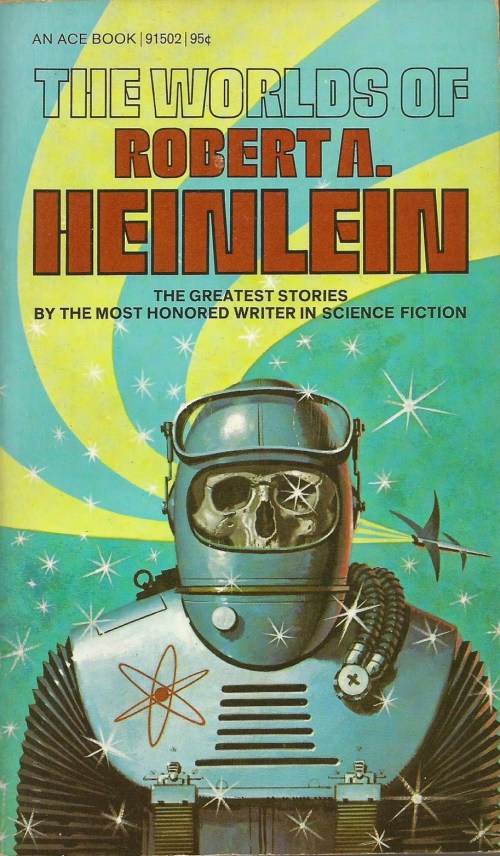
The book is a collection of short stories, none of which feature a dead astronaut. See more of Valigursky’s work here.
(Image via MPorcius Fiction Log)
Surveying the Gen X landscape and the origins of geek
The book is a collection of short stories, none of which feature a dead astronaut. See more of Valigursky’s work here.
(Image via MPorcius Fiction Log)
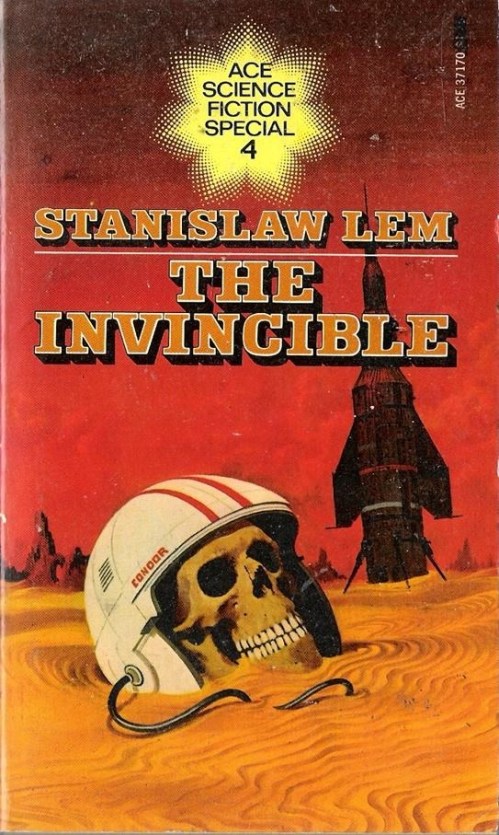
Very similar to the Angus McKie piece that was published the following year. The artist of the Lem cover is unknown, and you can see details on the book here. More skeleton astronauts, a recurring theme in sci-fi since the genre’s beginning, here.
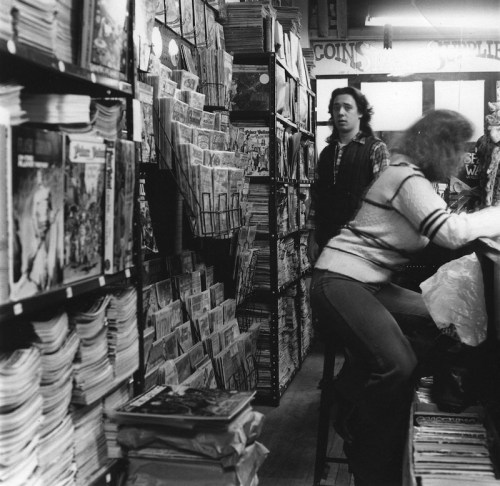


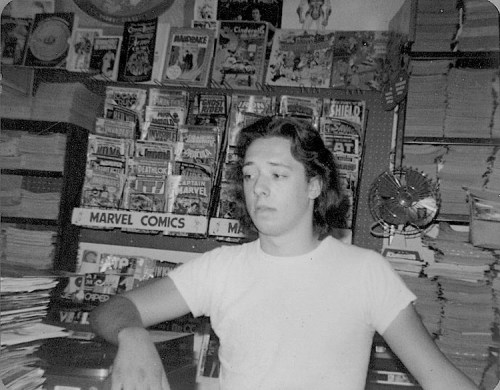
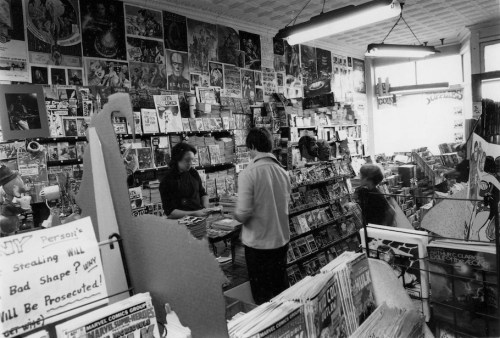
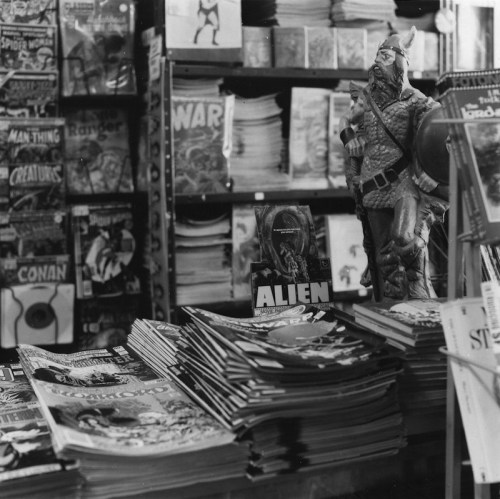
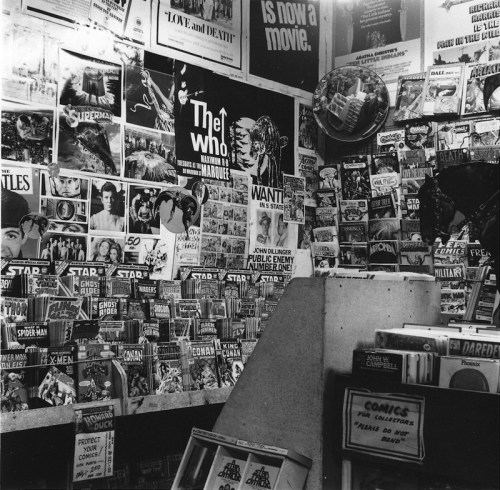
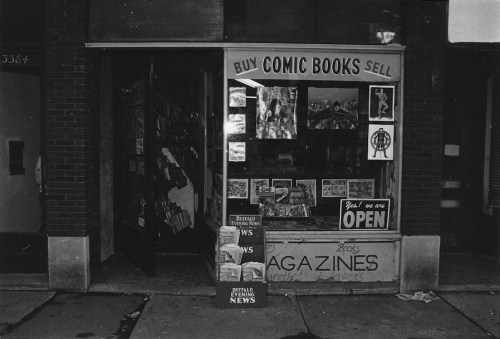

Emil J. Novak, Sr. opened Buffalo, New York’s Queen City Bookstore in 1969. He and his family still own and run the place. I found all of the remarkable photos on the website’s history gallery. Some of the gems I spotted are posted below.
What can I say that I haven’t said before? We need more stores like this. Kids need more awesome stuff like this. They deserve the chance to roam around in places that exist with them in mind (I’m talking about libraries too), flip open a random book, and have their minds blown forever. What we now dismiss as “obsolete physical media” once propped up local communities and ignited the imagination of generations. It’s not just books that influenced and inspired me, but the places I found them in.
You can see more book stores and comic book stores here.
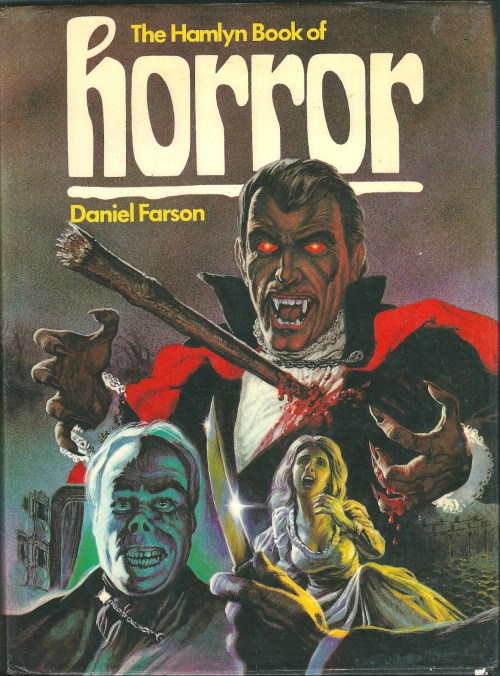
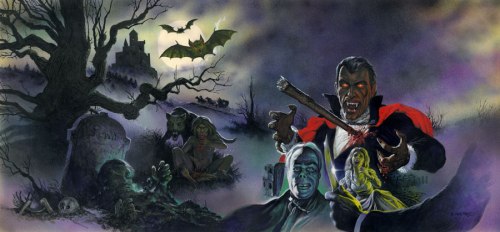
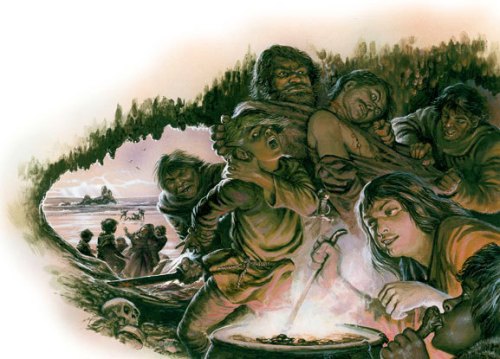
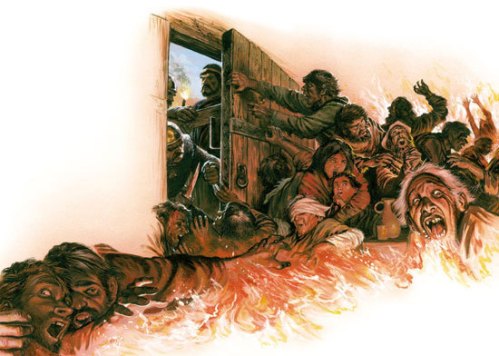

The second book in Hamlyn’s horror/occult series is the hardest to find at a reasonable price, and I couldn’t locate any pages online. Luckily, I found some of the interior paintings at series artist Oliver Frey’s site.
Following the two cover images, we have depictions of the legend of Sawney Bean and his incestuous, cannibal clan, who, according to legend, ate more than 1,000 people; peasants set on fire by Vlad the Impaler; and “wolf boys” allegedly found in India in 1920 (the boys were actually girls, and the story is likely a hoax). In other words, nightly reading for ’70s kids.
The Hamlyn Book of Horror was published originally, minus the illustrations, as The Beaver Book of Horror (1977), seen below. The excellent cover of the Beaver (a Hamlyn imprint) edition is by Alan Lee.
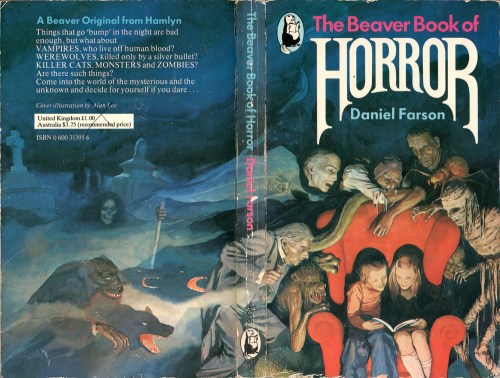
(Images via The Cobwebbed Room, Oliver Frey, and misen 23)
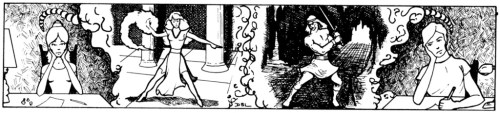

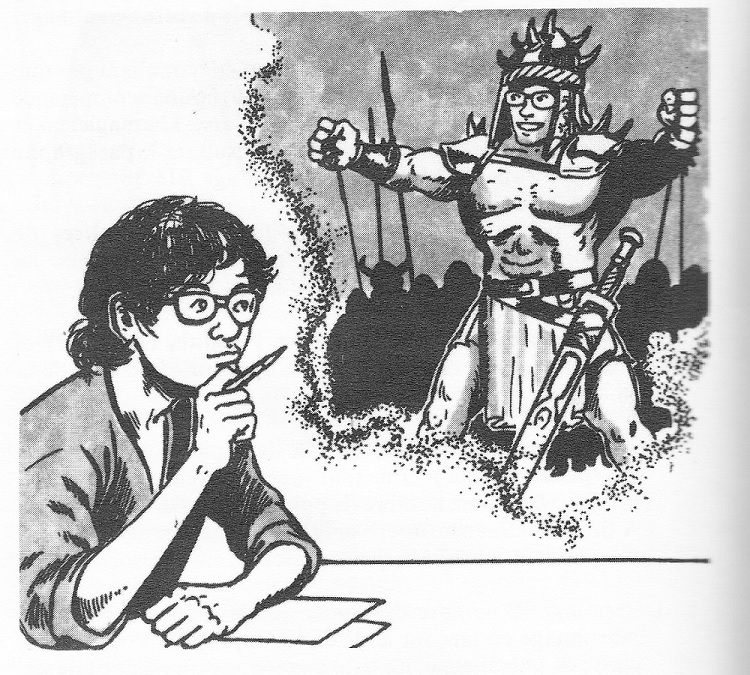
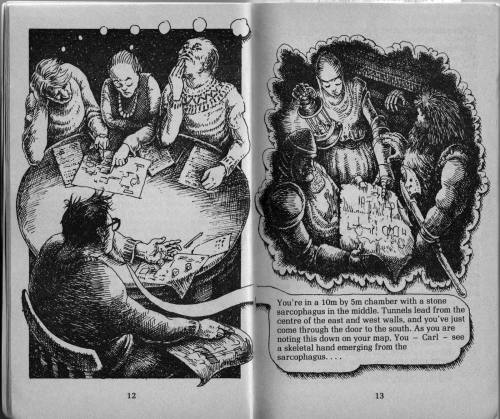
The illustrations are from (top to bottom) the 1981 D&D Basic Set (Moldvay edition; art by David S. LaForce), a 1981 Games Workshop ad (artist unknown), and the 1982 French edition of the D&D Basic Set (Moldvay edition; art by Jim Holloway). I find it fascinating that the concept of role-playing was once so alien that it had to be explained with thought balloons. And I still can’t get over how awesomely bloody the GW sketch is.
If anybody knows of similar illustrations, please let me know.
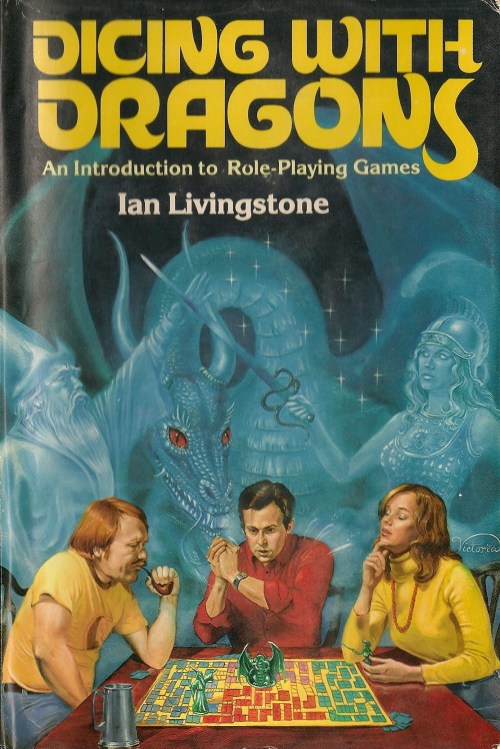
UPDATE (2/11/2016): Thanks to Kai S. and Steve Wall, I’ve added two more illustrations. The first one (fourth image down) is the book club edition cover of Dicing with Dragons (1982), with art by Victoria Poyser. The second is from Dragon Warriors: Book One (1985), and the artist is Bob Harvey (see here and here). Brilliant stuff.


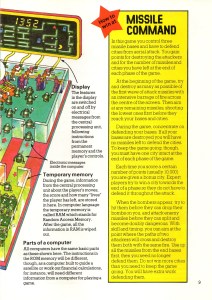

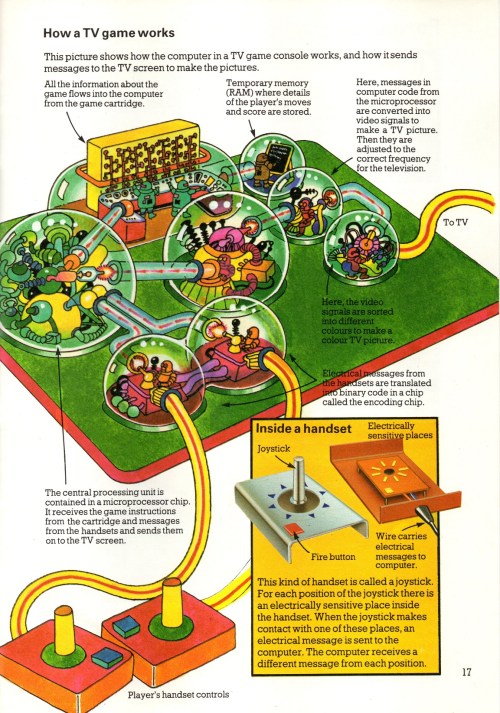
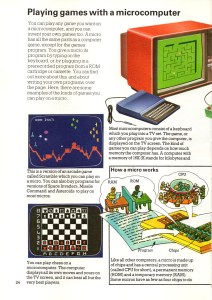


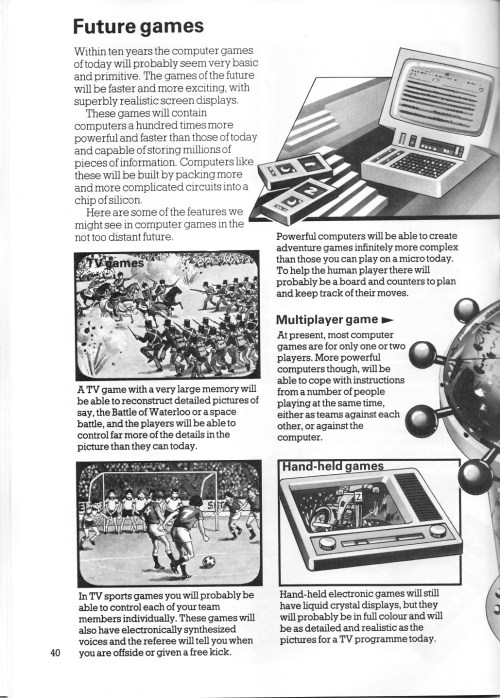
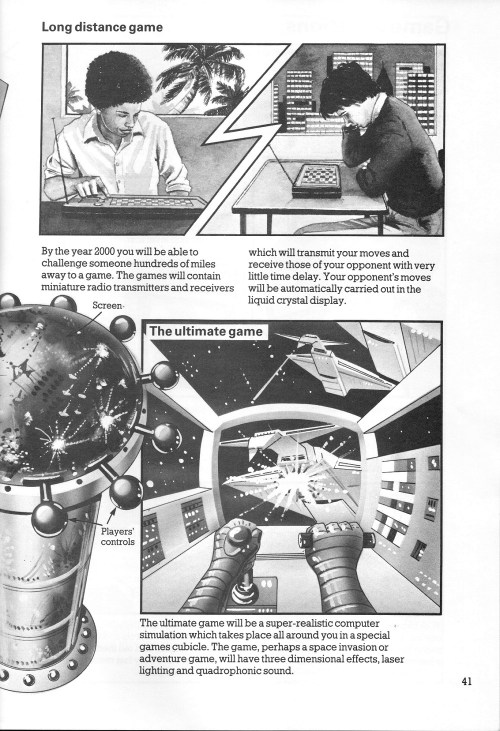

Just a few pages I scanned from my copy—this particular book is not yet available at the Usborne site. Note the “long distance game” predicted “by the year 2000,” somewhat anticipating the internet. The irony is that the internet has enabled an attention deficit disordered culture that, with few exceptions, no longer has the patience or smarts to play a game of chess.


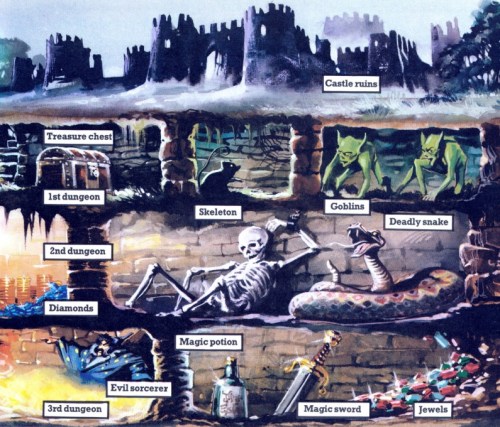
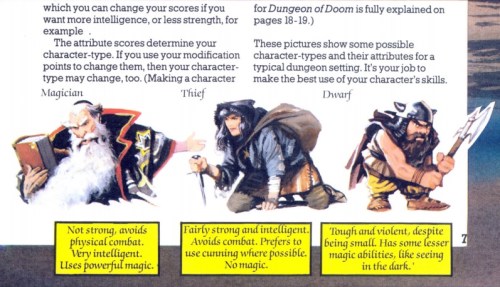
I’m happy to say that Usborne has made this wonderful book available, along with several other early computer and coding books, right here.
Sirs, since when is a scholar a good fighter?
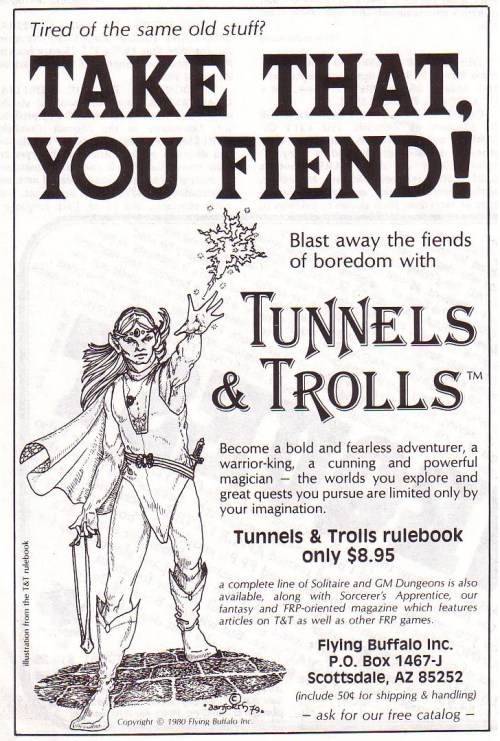
I found this at RPG Geek. “Blast away the fiends of Boredom”! I would have gone with even more alliteration: “Blast away the beast of Boredom!” Not quite as amazing as the “Tired of Reality?” Games Workshop ad, but close.
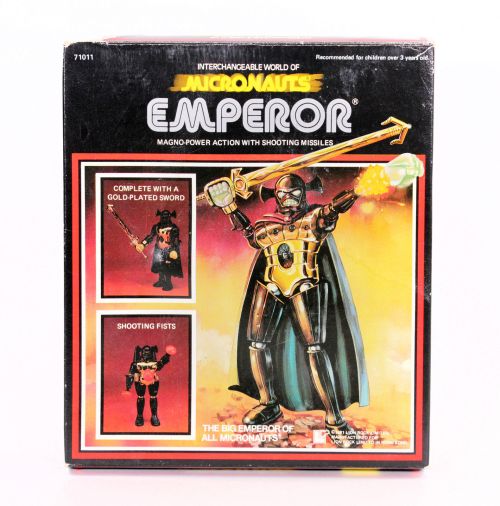
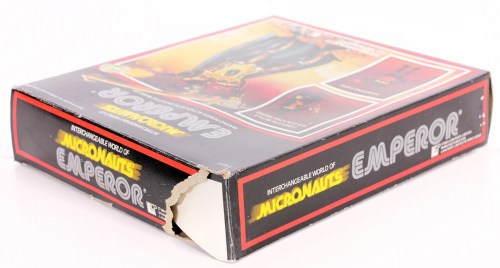
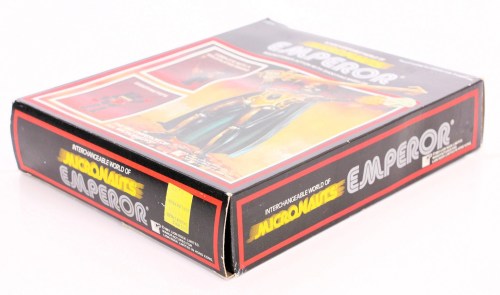
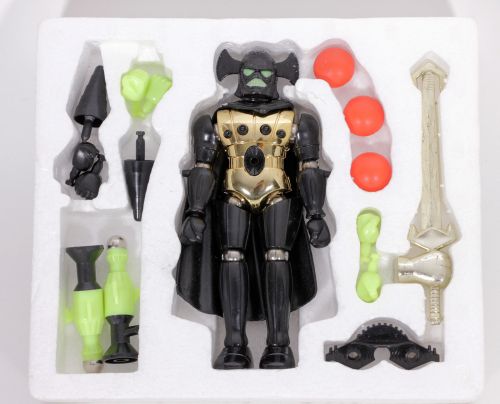
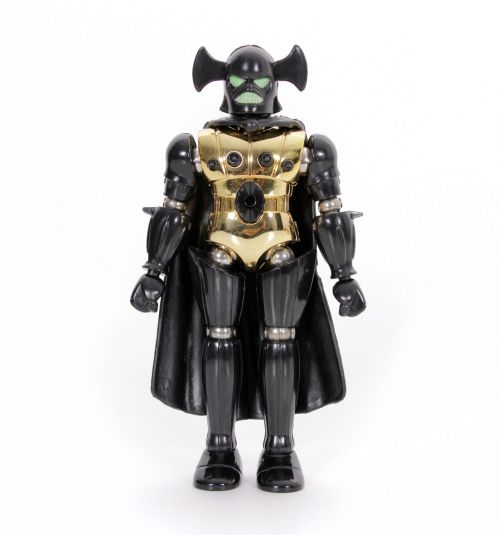
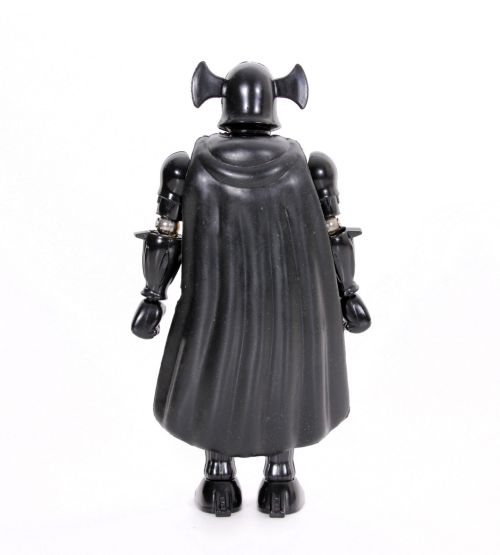
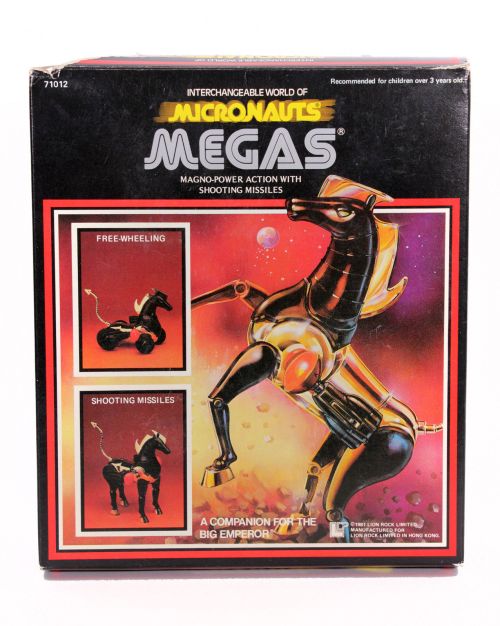
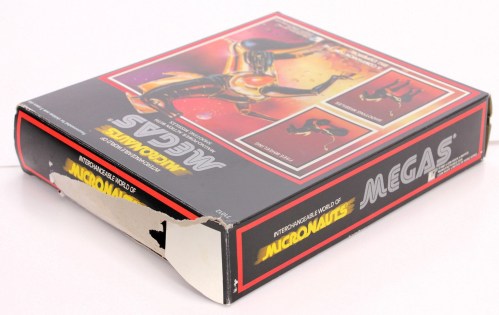
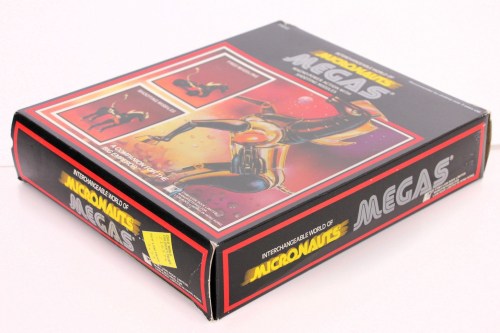
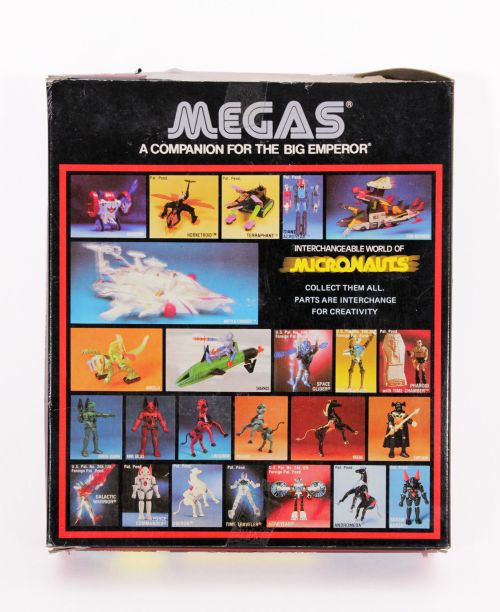




Emperor and Megas were among the last original Micronauts produced, and they are beauties. Mego went bankrupt before most of Series 5 could be released, and the toys were bought up by GiG in Italy (GiG also distributed large quantities of Eagle Force and The Black Hole toys) and Lion Rock in the U.S. The torso of the Emperor could be detached and put on the body of Megas, as seen at Micro Outpost.
It’s interesting that Mego veered into mythology and fantasy for these final ‘magno‘ designs. Had the company invested more in similarly creative concepts, as opposed to banal efforts like The Greatest American Hero and The Love Boat, who knows?
The box art is not by Ken Kelly, though clearly his revolutionary style is being copycatted.
—Review by Richard McKenna
Beware: spoilers ahead.
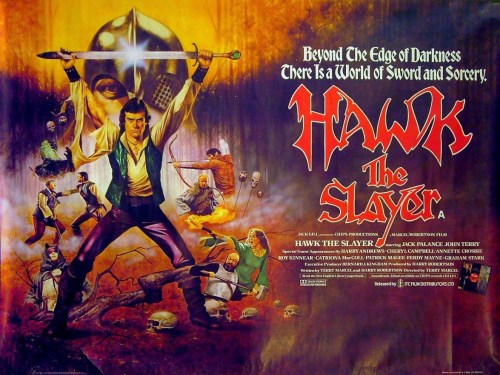
1980’s Hawk the Slayer is what a semi-cynical British attempt to crossbreed Star Wars mania with the cover art of Wishbone Ash’s Argus looks like, and its channeling of Roger Dean by way of Roger Corman is—in its small way—as awesome as that sounds.
The film flopped when it came out, and if it made it to the grim provinces I inhabited at the time, it didn’t stay long, more’s the pity. It would be nice to be able to claim that the ten-year-old me who spent most of his waking hours trying to wish a copy of Tunnels and Trolls into his possession envisioned fantasy film (or “Sword and Sorcery,” as we then knew it) as being possessed of the production values of Peter Jackson’s The Lord of the Rings and the socio-political nous of Game of Thrones, but that would be a lie of the most egregious kind: this is how I envisioned fantasy—an insane soup of lasers, elves, disco, tacky props, and plenty of folk in capes running through chilly woods tricked out with plastic skulls, dry ice, and green lights while swinging a sword. It’s exactly the type of film that I would have made in 1980, had I only been given the opportunity. Oh, and no girls allowed!

Britain’s Starburst magazine panned Hawk the Slayer at the time, disappointed that the first film “with a sword and sorcery slant” should be such a “cheap little” one, so I never bothered trying to see it in subsequent years, and perhaps that was wise—it’s definitely the type of thing best seen before you hit twelve or after you hit forty. Hard to believe that within two years of its release, films like Dragonslayer (1981) and Conan the Barbarian (1982)—which seem almost to come from another decade, if not another century altogether—would appear, though there are echoes of Hawk the Slayer‘s cheap pleasures in The Sword and the Sorcerer (1982), and, weirdly, Excalibur (1981).
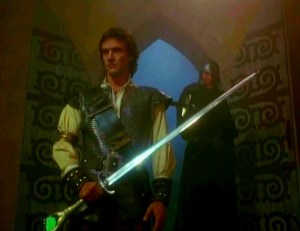
A prologue in a golden sauna sets things up: brooding Hawk (the disconcertingly Mike Oldfield-like John Terry) is good, while his disfigured brother Voltan (Jack Palance) is evil (obviously—his name starts with a ‘v’). Voltan kills their father after the “old man” (who looks a lot younger than Palance) refuses to give Voltan “the last of the Elven mind-stones,” which goes instead to Hawk after it lights up green, floats through the air, and is grasped by the cool living-hand pommel of Hawk’s sword. Hawk announces that he will kill Voltan and avenge their father.
 After titles telling us that we have Chips Production to thank for what we’re watching (and what, to a Brit, could be more inviting, more dreamy, than the cozy domestic pleasures of a plate of chips?) come credits so dense with Harrys, Erics and Bernards that they look like something from the late 1940s: a good third of the crew seem to be actually called Terry, and the cast list reads like a postprandial fever dream of parochial British TV and cinema, although strangely it was the two American stars, Terry and Palance, who were singled out for criticism at the time for their respective lack of animation and overacting. In the second case, at least, that seems a little unfair—how the hell do you want Jack Palance to play an evil warlord in a no-budget fantasy world?
In blurry flashbacks which include one of the oddest tracking shots I’ve ever seen, we discover that a jealous Voltan killed Hawk’s beloved bride (City of the Living Dead‘s Catriona MacColl) before setting off on a rampage of cruelty around the land, and, flash forward, learn that he has now taken hostage the mother superior of a monastery (seemingly and incongruously a Christian monastery), promising that she will be put to death unless his demands for gold are met. Thus begins a lot of to-ing and fro-ing in the woods as a wounded survivor of Voltan’s cruelty seeks out Hawk, who, with the help of a handy witch, reassembles his crack squad of elf, dwarf, and giant. In the meantime, Palance bickers with his headstrong son and repeatedly pops off to another dimension to have the scars on his face laser-anesthetized by the evil entity protecting him. You can practically smell the heat coming off the d12s.
 As it turns out, Baldin the dwarf and Gort the giant are useless except for some laboured comic relief, and even Hawk himself does far less slaying than you might expect, given his name. It’s Crow the rapid-fire elf, Ranulf the crippled warrior with the hundred-rounds-a-minute wrist-crossbow, and the Sorceress with her polystyrene storms and crazy-string mummify spell who contribute most to Voltan’s eventual downfall in the film’s absurd denouement.
The soundtrack, written by the film’s producer and co-writer, Harry Robertson, who scored several Hammer films starting in the late 1960s, runs the gamut of inappropriateness, from spooky baroque harpsichord riffs to disco space-rock, and each time Hawk appears, his signature synth trill is heard—even the synth sound that starts Jon and Vangelis‘ virgin romance anthem “I Hear You Now” is in there. The matte paintings seem to have been taken from some completely unrelated book of fairy tales, there’s a laser hula-hoop teleport device, Patrick Magee (!) as a druid, and, were proof of metal intent needed, what must be a tip of the hat to Judas Priest’s 1978 Killing Machine in the line of dialogue, “What manner of man are you?”

Director Terry Marcel’s assertion that he wanted to create “something to top spaghetti westerns and kung-fu films” was obviously hugely optimistic (unless he was talking about the Foley work, with its incredible crushing-a-polythene-bag punch noises), and yet, for all its faults, the damn thing is just so enormously entertaining: enthusiastic, pacey, and ridiculous, its garish joke-shop world is engaging enough not to outlive its welcome, in part thanks to the almost total lack of character development, subtext, or anything except battles, magic, and Medieval/Renaissance/D&D yo-ho-hos, the naive cardboard-cut-out shallowness of the whole undertaking somehow serving to reinforce its archetypal power. It’s also, for anyone British, a weird window back into a country which was so much less sophisticated and demanding than it is today—though given the short shrift the feature got at the box office, perhaps not quite that undemanding.
Or maybe it’s just the fact that the whole thing seems to have been improvised in a British wood one overcast March that lends it peculiar resonance for those like me, who were acting out our longed-for fantasy worlds to even smaller audiences in similarly wintry and provincial woods at the same time.
__________________________________________________________________________________
Richard McKenna grew up in the visionary utopia of 1970s South Yorkshire and now ekes out a living as a translator among the crumbling ruins of Rome. He dreams of being one day rescued by the Terran Trade Authority.

 2 Warps to Neptune