Archive for the 'Board Games/Tabletop Games' Category


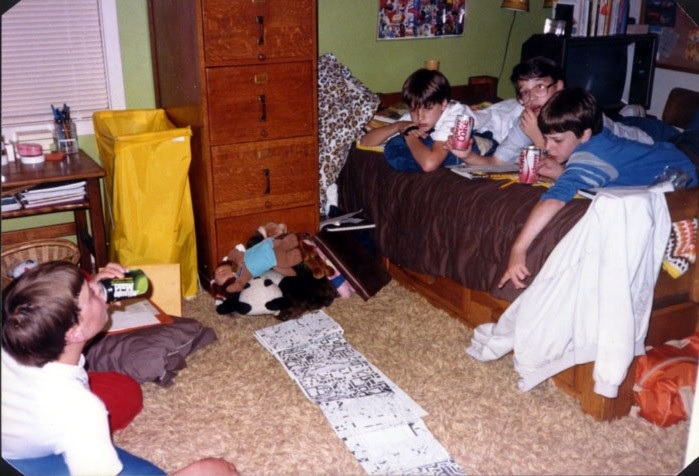
A Portrait of Young Geeks Playing D&D (1986)

D&D 1986

D&D 1986

The photos are via heath_bar/Flickr. We’re in Houston, Texas. Summer of ’86. First shot: if all those maps are connected, I’m impressed. The kids on the bed are drinking Cherry Coke, which was introduced in 1985 after the New Coke disaster. Just seeing that can brings back the essence of summer when summers were free. How about one of the greatest ’80s commercials ever to jog your memory?

The kid on the left is drinking a Minute Maid Lemon-Lime Soda. I found a commercial for that too. Pay close attention to the giant can at the very end taking the water bucket challenge.

Second shot: The blue book on the right is the rulebook for the first D&D Basic Set, a.k.a. “Holmes Basic,” released in 1977. Just above that, mostly obscured by the green dresser, is a board game called All the King’s Men. Originally released as Smess: The Ninny’s Chess in 1970, Parker Brothers re-released the game with a Medieval theme in 1979. I doubt that the revision was a coincidence.

AtKM 1979

Board Games: Dungeon Dice (Parker Brothers, 1977)

Dungeon Dice 1977-1

Dungeon Dice 1977-2

Dungeon Dice 1977-3

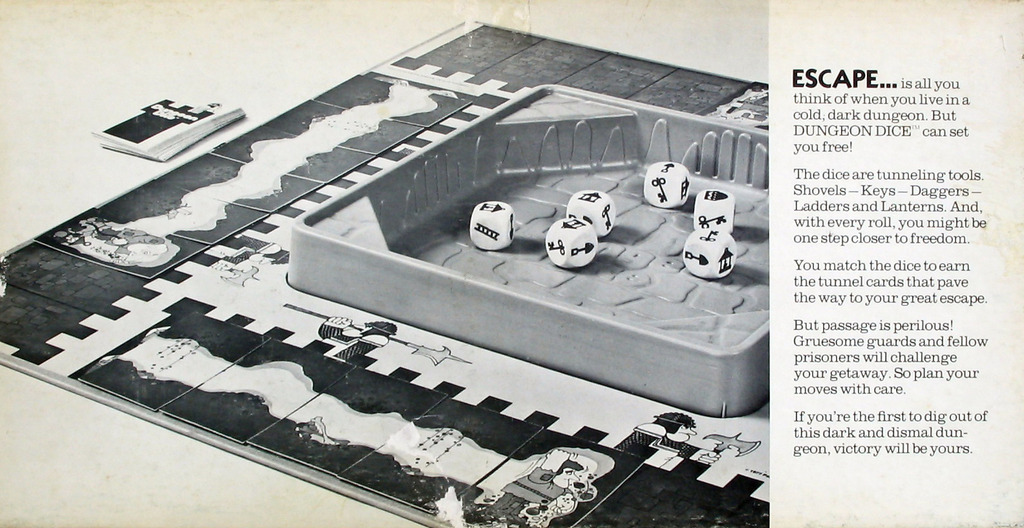
“ESCAPE… is all you think of when you live in a cold, dark dungeon.” Well, to be honest, some of us had other ideas about what to do with dungeons. Dungeon Dice was designed by Paul J. Gruen, who invented the Parker Brothers bestseller Pay Day in 1975.

TSR’s Dragon Dice (below) came out in 1980/1981, although TSR was selling sets of polyhedra dice prior to 1977.

Dragon Dice 1980

(Images via Board Game Geek, eBay, and Dragonsfoot)

All My Children Game Commercial (TSR, 1985)

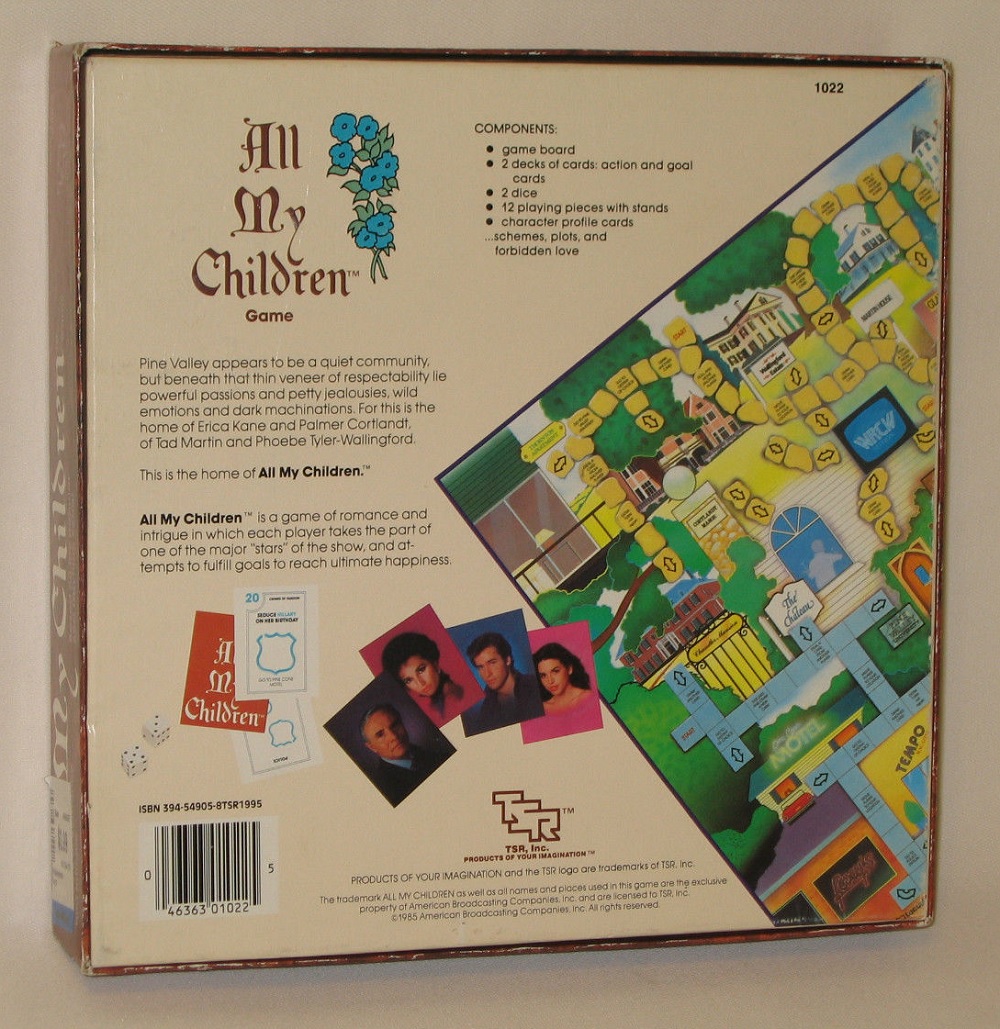
Because TSR wasn’t making enough money at the time—from $27 million in 1981-1982 to a projected $60 million in 1982-1983—the “products of your imagination” crew decided to lap up a license for the second most popular daytime soap. General Hospital, consistently first in the ratings, already had a game.

College girls (note the Yale flag in the dorm room) and yuppies are the clear marketing demographic.

“To be good, you’ve got to be bad.” Indeed. TSR had embraced the Reagan era. The shark had been jumped.

All My Children 1985

All My Children 1985-2

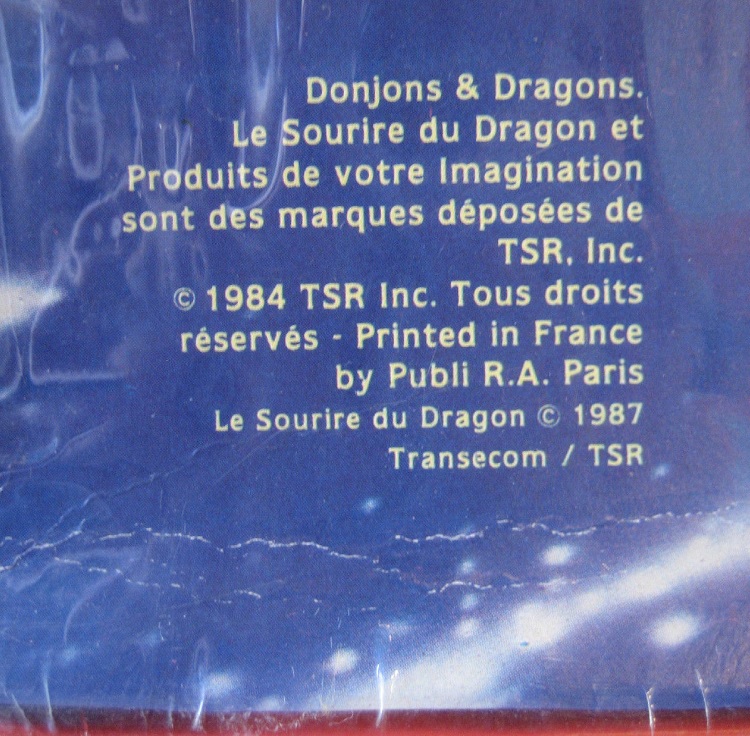
Le Sourire du Dragon (Transecom/TSR, 1987)

Sourire 1987-1

Sourire 1987-2

Sourire 1987-6

Sourire 1987-3

Sourire 1987-4

Sourire 1987-5

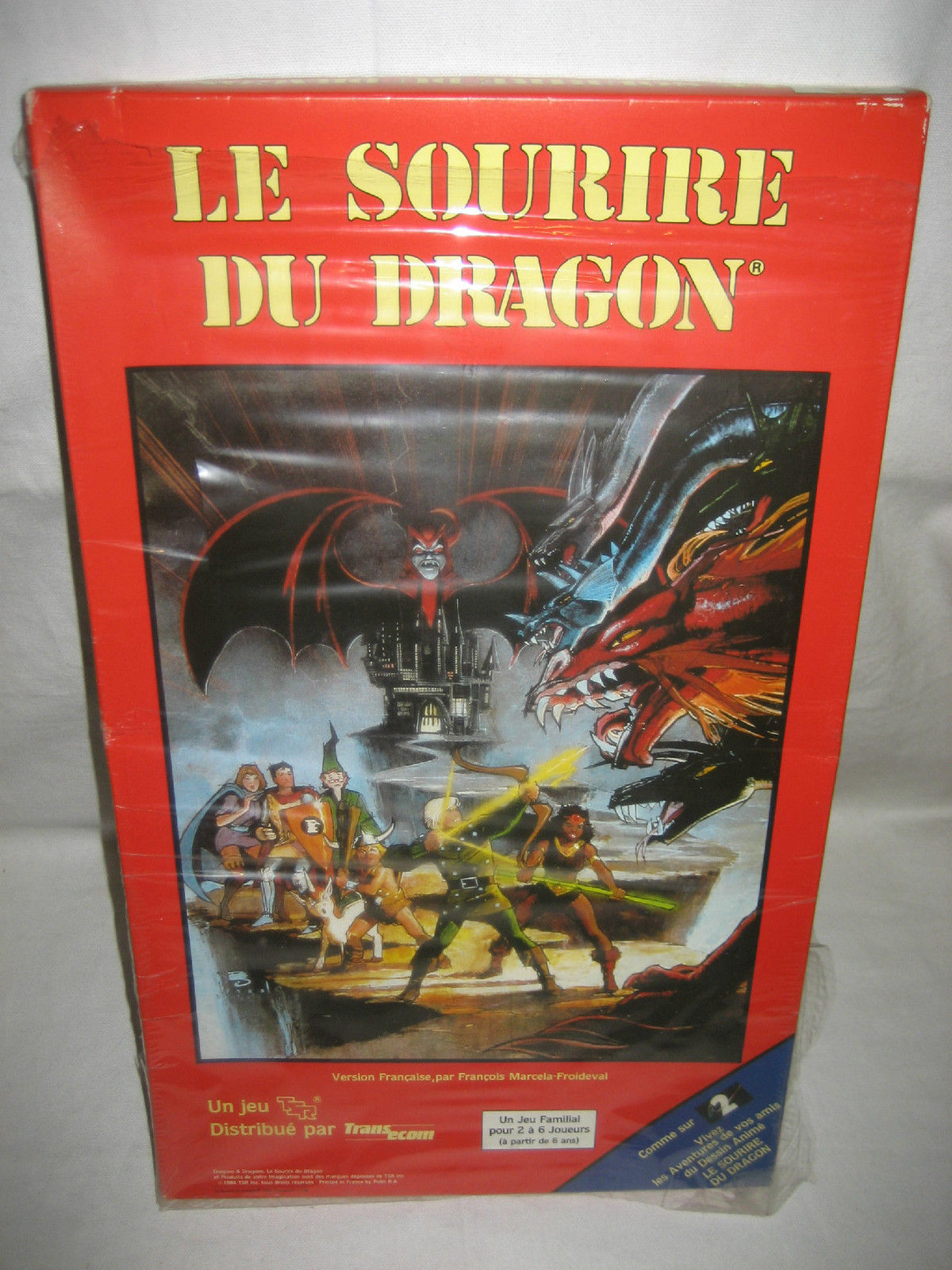
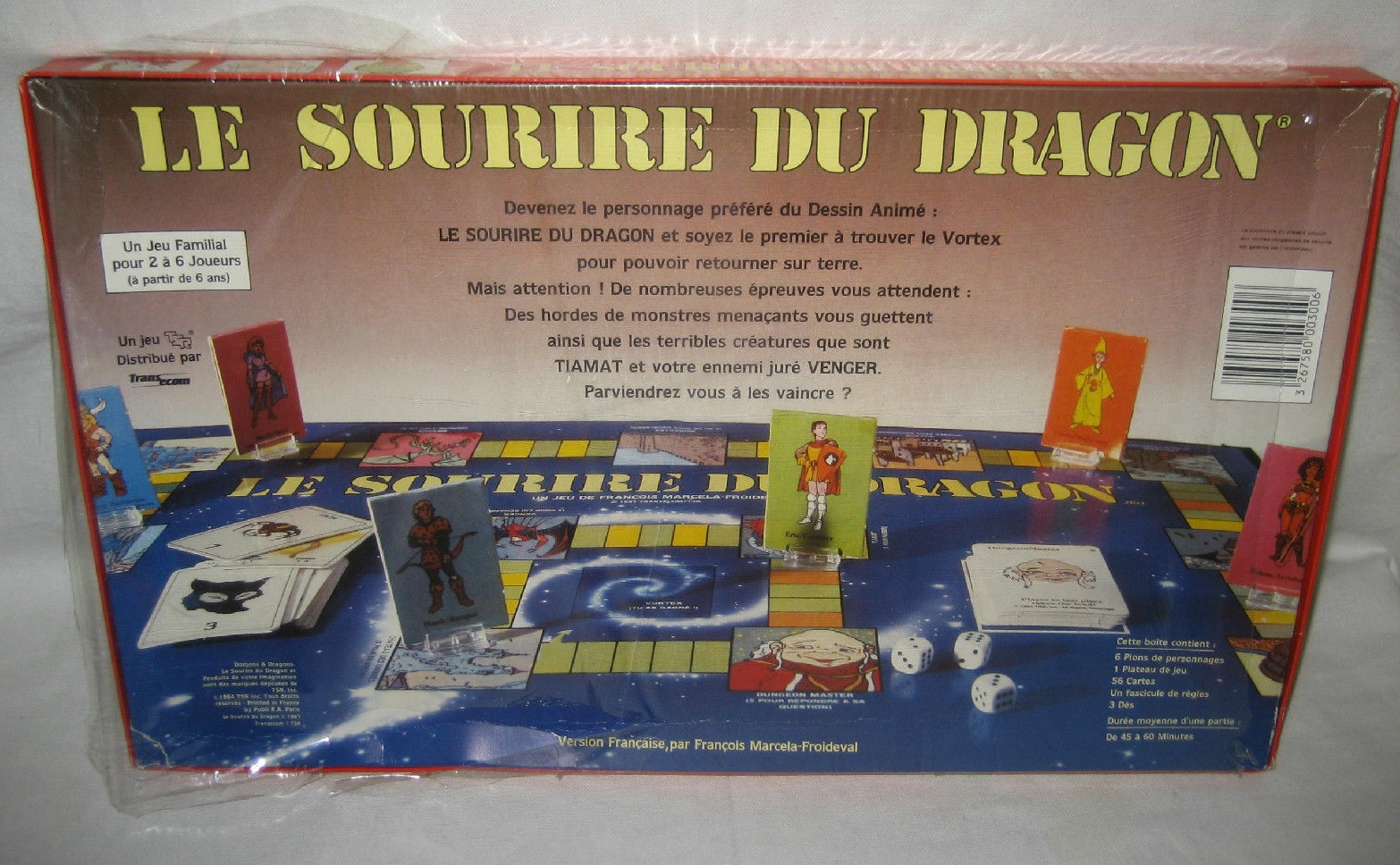
According to French Wikipedia, the Dungeons & Dragons animated series premiered in France in 1984 (IMDb says 1987, as do other sources), and was rebroadcast starting in 1986. The series was called Le Sourire du Dragon (The Smile of the Dragon), as was the song used for the intro, sung by Dorothée. Listen to the full version here, and watch the actual intro here. It’s very sweet, but also kind of creepy, maybe because it reminds me of the Twin Peaks soundtrack.

The game was designed by François Marcela-Froideval, an influential figure in the introduction of RPGs in France. He came to the U.S. in 1982 to work for TSR, where he collaborated with Gary Gygax on Oriental Adventures (1985), among other projects.

Tignous is credited as the interior artist, and comics innovator Bill Sienkiewicz painted the cover. Sienkiewicz got his start on Moon Knight and The New Mutants, and went on to do mind-blowing art for Elektra: Assassin and the Daredevil: Love and War graphic novel, both of them written by Frank Miller.

See detailed views of all the game pieces and instructions at Dungeons & Dragons Cartoon Encyclopedia.

(Images via eBay and Dungeons & Dragons Cartoon Encyclopedia)

The World of Micronauts Game (Milton Bradley, 1978)

WoM 1978-1

WoM 1978-2

OLYMPUS DIGITAL CAMERA

WoM 1978-4

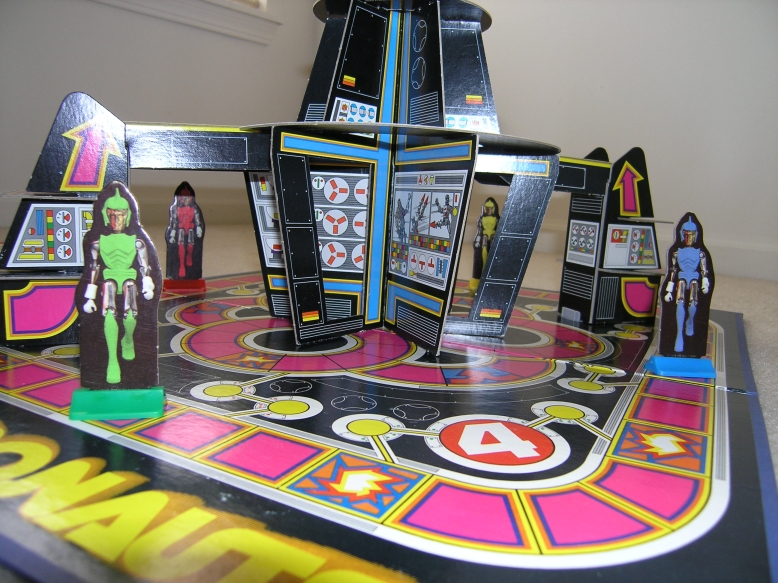
“Lose your earthly identity and become a Micronaut!” One of the more beautiful game boards out there, from the illustrations to the design and decor. Who knew fuschia could look so good? We’d call the ensemble retro-futuristic today. Plus, the damn thing can double as a playset.

Read more about how to play the game—basic kid stuff—at Innerspace Online.

(Images via eBay and Board Game Geek)

Kid Scores Dungeons & Dragons Computer Labyrinth Game for Birthday, Circa 1981

D&D 1981

Mom, can I go over to Danielle’s house?

See the game stacked up in a 1980 toy store here.

(Photo via Brutal Chaos)

Complete Set of Bob Pepper’s Dragonmaster Cards (1981)

DM Nomads 1981

DM Nomads 1981-2

DM Dragonlords 1981

DM Dragonlords 1981-2

DM Druids 1981

DM Druids 1981-2

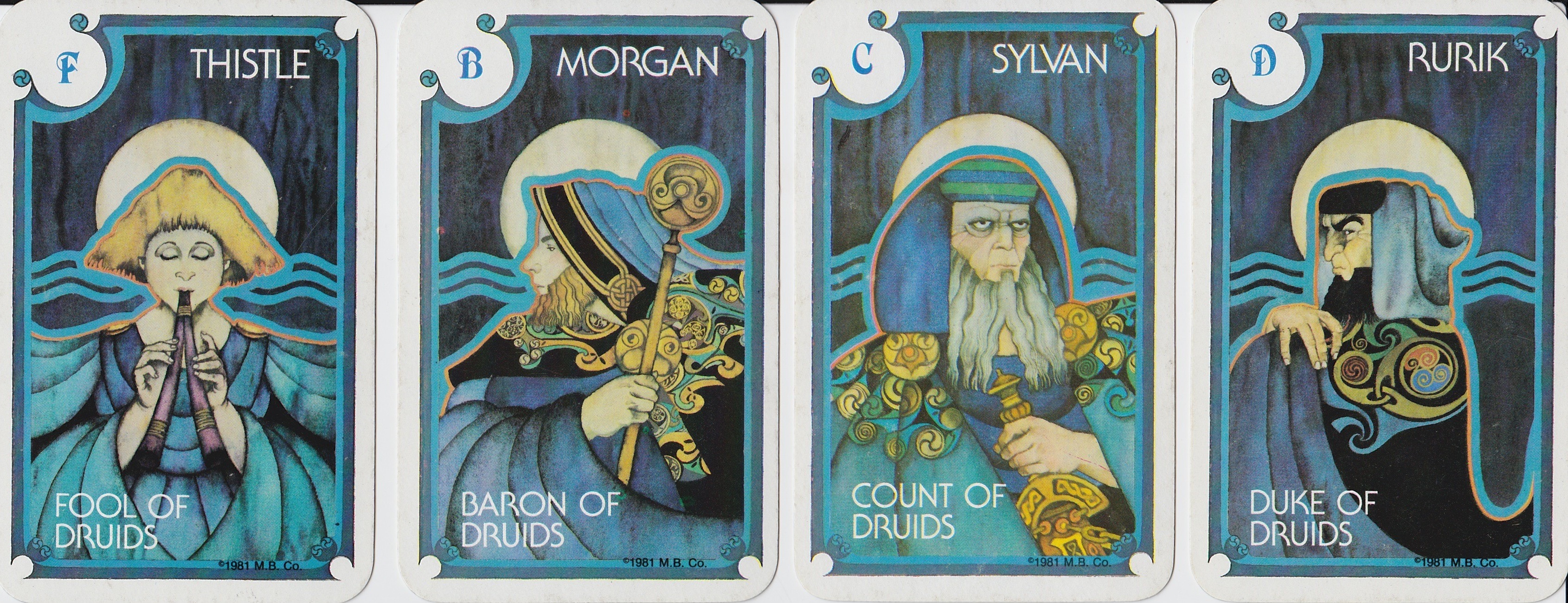
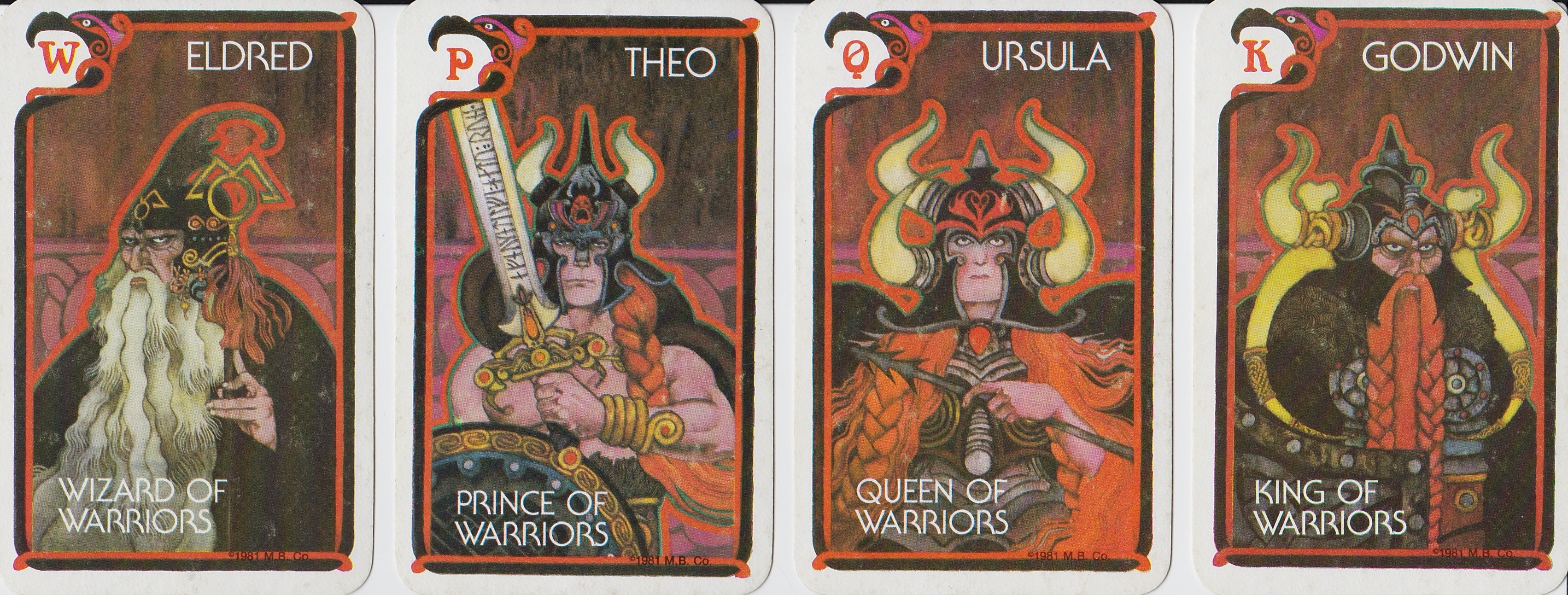
DM Warriors 1981

DM Warriors 1981-2

DM Gameplay 1981

DM Gameplay 1981-2

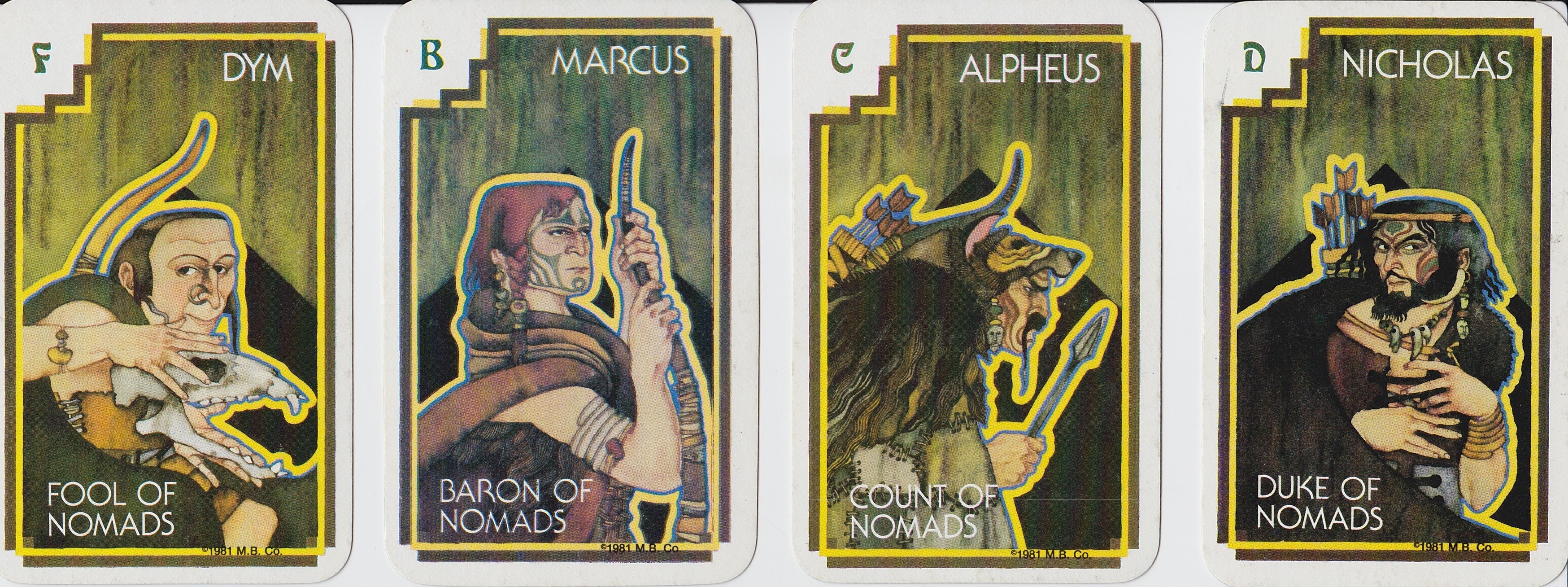
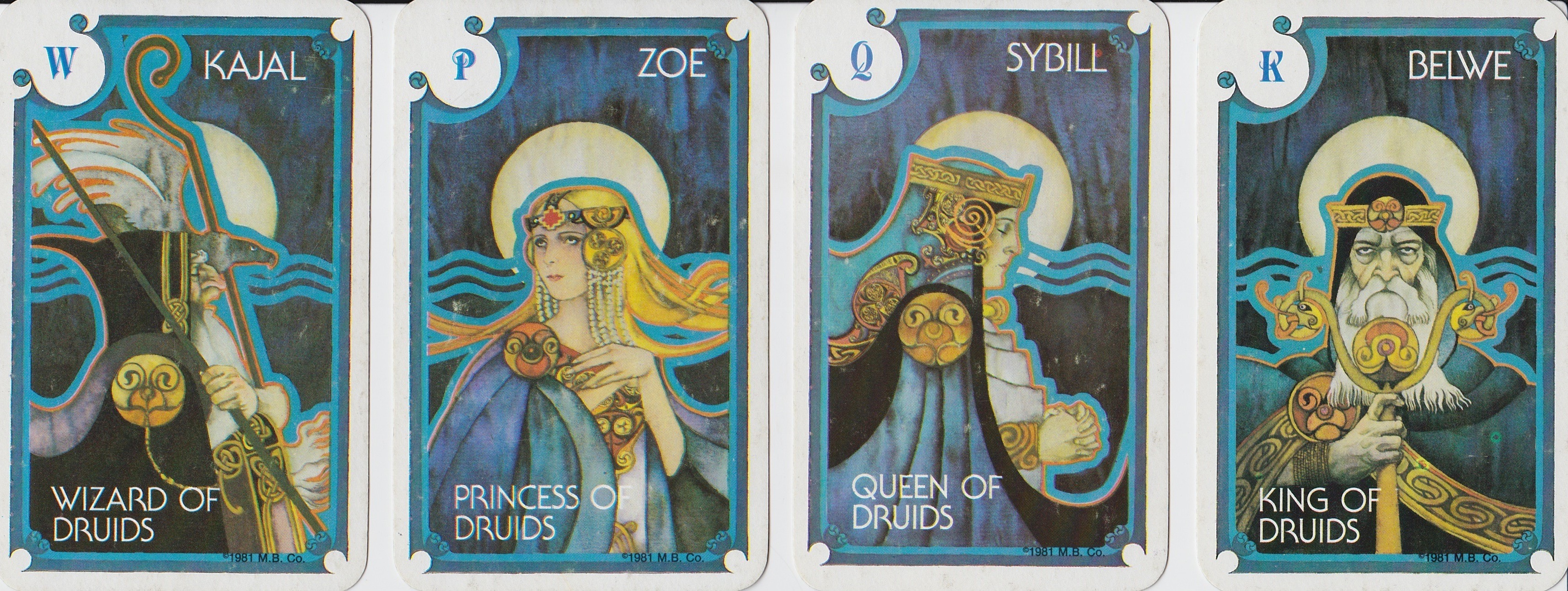
A sequel to my first post on Milton Bradley’s Dragonmaster. Click to make big. We owe the scans to Tom Beiter, champion of pop culture posterity and author of Garage Sale Finds, a detailed profile of “garage sale treasures and sometimes trash.” (You will not believe the amazing stuff that Tom finds—and often restores.)

It’s clear that Pepper had a deep understanding of Medieval, Renaissance, and Pre-Raphaelite art, and his method—mixing charcoal and watercolors—produced some incredibly vivid colors and textures. His impeccable imagination did the rest. Each card is a work of art, and the originals, if they still exist, belong in a museum. (Is there a fantasy art museum? A commercial art museum?)

I’m betting that one or more of you can come up with a game that does Pepper’s work some justice. From what I’ve heard, the original version is not very compelling.

Board Games: Dragonmaster (Milton Bradley, 1981)

Dragonmaster 1981

Dragonmaster 1981-2

Dragonmaster 1981-4

Dragonmaster 1981-3

Dragonmaster is a straightforward, trick-taking card game with a sword and sorcery theme. What makes it interesting is the spectacular art, which resembles that of another, better known Milton Bradley game from the same year, Dark Tower. Here’s a shot of the different screens in Dark Tower for comparison:
Dark Tower 1981

The same talented gent, Bob Pepper, illustrated both games. Pepper is probably most famous for his kaleidoscopic cover art for Forever Changes (1967), one of the greatest rock albums of all time. He also did numerous, ultra-stylized sci-fi/fantasy paperback covers from the late 1960s until the early 1980s, including a series of unforgettable Philip K. Dick covers for DAW. Less well known are his beautiful classical album covers—for Bartok, Schubert, Puccini, Bach. I’ll feature more from Pepper soon.

Once again we see the influence of the psychedelic movement of the 1960s on the fantasy renaissance of 1975 – 1985.

You can read a short interview with Pepper at Well of Souls, a Dark Tower fan site.

UPDATE: See a complete set of Pepper’s Dragonmaster cards here.

(Images via Board Game Geek)

Board Games: Apocalypse: The Game of Nuclear Devastation (1980)

Apoc 1980-1

Apoc 1980-5

Apoc 1980-2

Apoc 1980-3

Apoc 1980-4

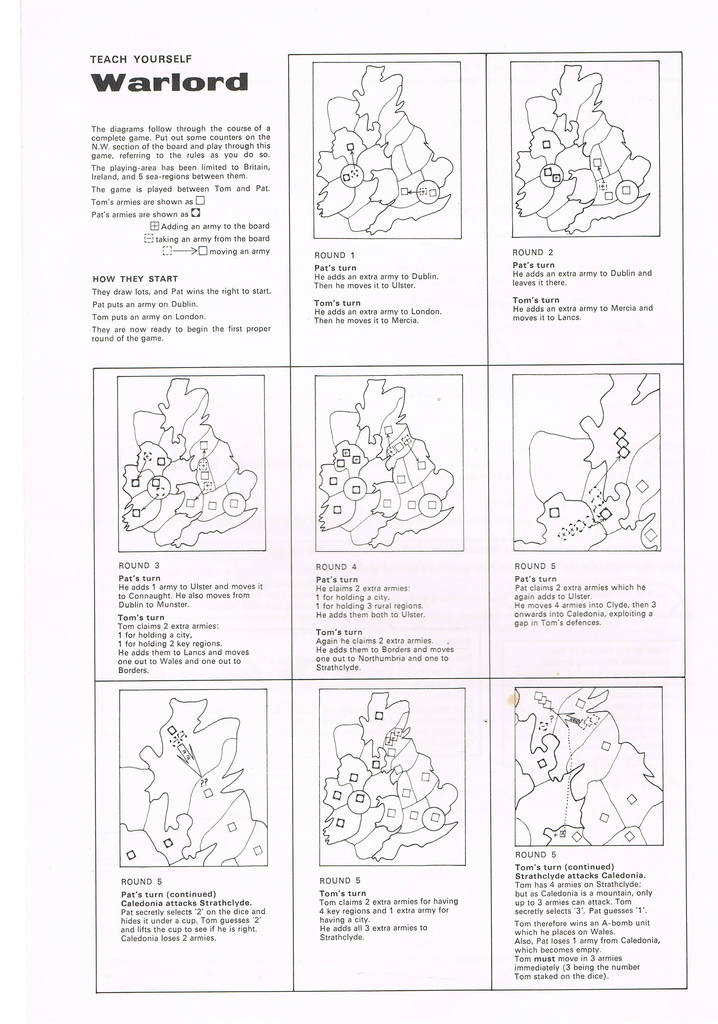
Apocalypse originally appeared as Classic Warlord, self-published by designer Mike Hayes, in 1974. The name changed to Warlord in 1978. Both of these versions came in plain red and blue boxes, respectively. Games Workshop, displaying its usual marketing prowess, released what you see above in 1980. The kids ate it up, despite the fact that the game board was cut in half. How could we resist playing out the “nuclear devastation” that grown men were on the verge of playing for real?

Here are some directions from the 1978 version. See if you can follow them.

Warlord 1978

We were not a squeamish generation, clearly, apart from the wankers who ran out of the theater during Gremlins.

(All images via Board Game Geek)

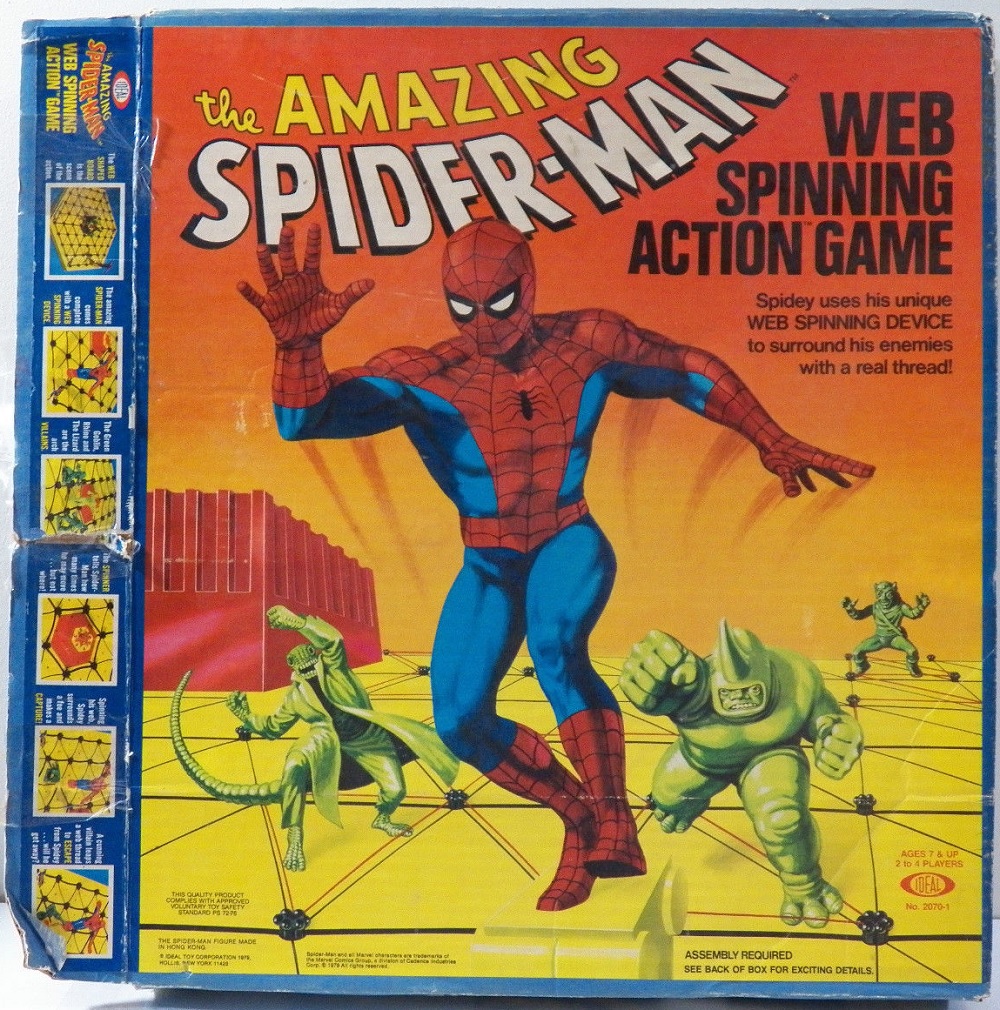
The Amazing Spider-Man Web Spinning Action Game (1979)

Spider-Man 1979

http://www.youtube.com/watch?v=W5dq5e5U16U

They couldn’t come up with a better pose for Spidey? The villain molds look great.

The Amazing Spider-Man live-action pilot premiered in 1977, and the series resumed in 1978. The witty web-slinger, Marvel’s most relatable and engaging (in my opinion) hero, was everywhere.


Pages

Archives

Categories

Donate Button

Join 1,118 other subscribers