Archive for the 'D&D' Category


Did Dungeons & Dragons Lead an ‘Anti-Corporate Revolution’?

Treasure

I really enjoyed Ethan Gilsdorf’s homage to D&D over at Boing Boing. The game, now 40 years old, clearly changed his life for the better, and his affection for it is absolutely genuine. However, I was a little surprised when I got to this passage:

Like a 3rd level Spell of Suggestion, D&D generated subtle repercussions through the culture. The role-playing game opened new pathways for creativity, new ways for kids and young adults to entertain themselves. The game led a DIY, subversive, anti-corporate revolution, a slow-building insurrectionist attack against the status quo of leisure time and entertainment.

While D&D certainly did promote the DIY aesthetic and overturn the gaming status quo, it certainly did not lead any anti-corporate revolution. TSR was a corporation, and it became quite a powerful one. Its core products—rulebooks, modules, miniatures, various supplements—were damn expensive from the beginning, so much so that the game was out of reach for lots of kids who wanted to try it. There’s a reason treasure is so important in D&D, in some cases equaling experience points: art imitates life.

True, once players understood the essential ingredients of D&D, they could home brew their own modules and adventures, but it wasn’t a political act (there was no role-playing “movement”), and most everyone was using “corporate” props, from TSR or one of its legion of imitators. We thought D&D was cool. We were emulating, not disassociating.

By 1983, it was clear even to my 11-year-old self that TSR had “gone mainstream”: out came the action figures, the animated series, the profligate licensing, kid’s storybooks, pencil sharpeners, beach towels—all of the trappings of a runaway corporate culture looking to replicate itself for as long as possible. In short, the business expanded beyond role-playing: D&D became a brand. You can say what you will about the move. It worked. D&D is still around, still being discovered by successive generations, just like Macintosh and Vans and G.I. Joe.

Here’s Gilsdorf again:

The lesson of Dungeons & Dragons has always been this: make your own entertainment. By sitting around a table, face to face, and arming yourself with pencils, graph paper, and polyhedral dice, you can tap into what shamans, poets and bards have done all the way back to the Stone Age. Namely, the making of a meaningful story where the tellers have an emotional stake in the telling, and the creating of a shared experience out of thin air.

To go on this new adventure, you don’t absorb a movie or TV show passively, on the couch, or merely “read” a book. Nor are your options for “interacting” with a fantasy experience limited to collecting merchandise or playing with action figures. Best of all, the essential quality of this unique, narrative gaming experience can’t be co-opted as commercial entertainment. Role-playing games like D&D are a way to experience unstructured free time while imposing upon it a structure, a story.

I love that first paragraph. He totally captures what made D&D and role-playing so starkly novel and exciting: you’re an individual playing a character you created within a narrative you’re helping to write. I’m not sure what he means by the following, though: “this… narrative gaming experience can’t be co-opted as commercial entertainment.” No gaming experience can be co-opted—unless we’re talking about the Hunger Games. If I play Mouse Trap with my family, Hasbro doesn’t own our experience. If I play poker with my friends, Hoyle doesn’t somehow contaminate the proceedings. My point is that traditional games are just as meaningful to the people who play and enjoy them. Not everyone has the time required, or the players required, for a Greyhawk campaign.

I think it’s important not to overstate the importance of D&D and role-playing, especially with fewer and fewer young people picking up books, the bedrock of literature, philosophy, history, and a few other notable human endeavors. Nothing works the imagination like serious reading, with the exception of writing. The “passivity” of reading is a myth advanced by technophiles who make or stand to make fortunes on “interactive” digital technologies. “D&D beats digital hands down,” Gilsdorf writes in his essay. Damn straight. Reading beats both.

The truth is that D&D and fantasy role-playing games gave kids disenchanted with the tedious real world (i.e. the adult world) instructions on how to build new ones, unlimited by time or place or possibility. Once we were able to decipher those instructions, we became explorers of the mind. That’s the most we can or should expect from any game.

(Image via Hack & Slash)
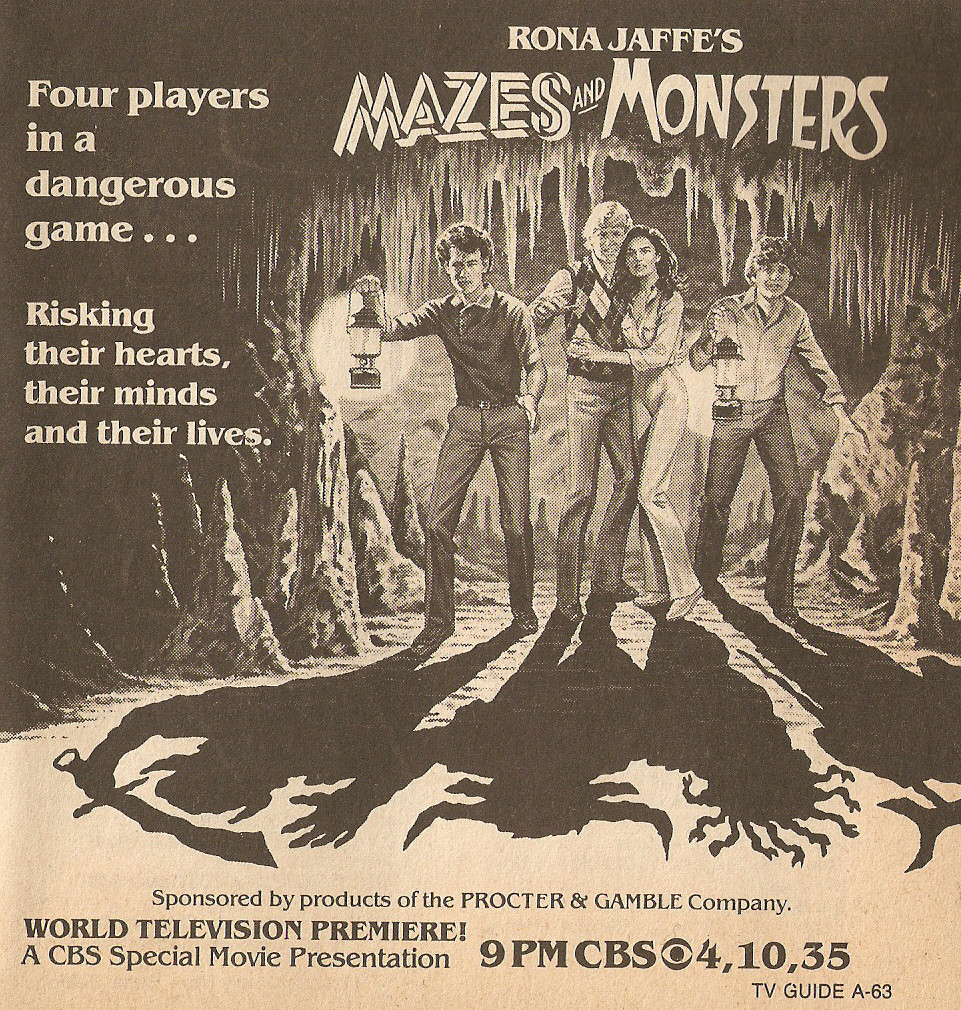
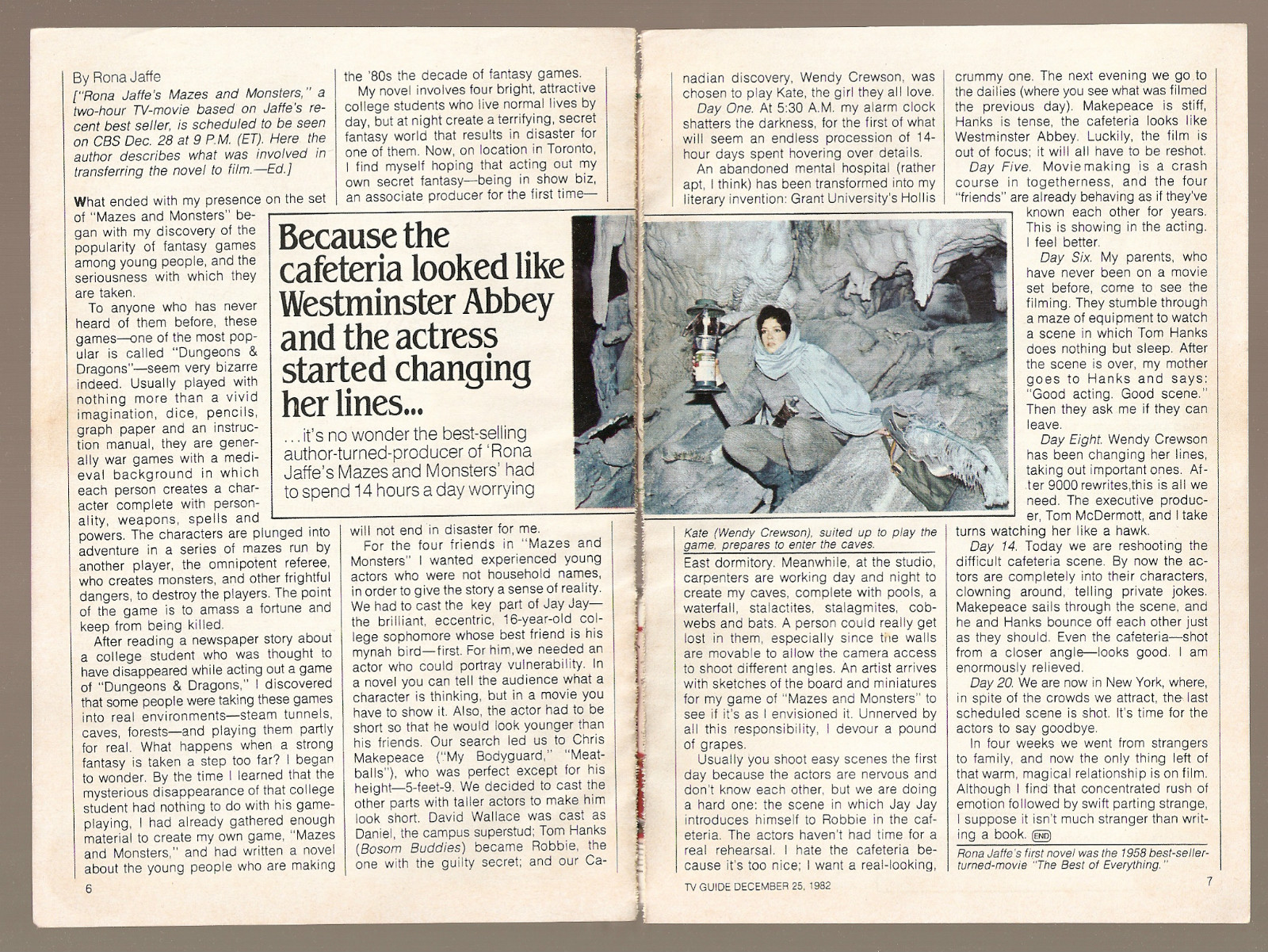
TV Guide Ads for TV Movies: Mazes and Monsters (1982)

In Mazes and Monsters, four privileged college students get involved in fantasy role-playing as a way to escape painful (for the privileged) personal problems. One of them loses it, has a complete psychotic break, and ends up living with his parents and believing he’s a cleric.

In both the bestselling novel, written by Rona Jaffe, and the TV adaptation, role-playing is presented as addictive, a playground for idle hands, something to be conquered on the journey to mentally healthy adulthood. The ad brilliantly reflects the story’s sensationalistic propaganda. The players’ shadows are nothing less than their inner demons coaxed into the physical world by the game (called Mazes and Monsters). It’s very Freudian.

The ad concept, with a shadow or shadows revealing the underlying nature of the appearing figure or figures, has been used many times before and since. The Changeling (1980) and Warlock (1989) movie posters are a couple of examples.

Here’s an article, written by Jaffe, that appeared in the same TV guide.

Mazes and Monsters TV Guide 1982

It’s mostly about her experience as an associate producer, but she does discuss how she came to write the novel, and what she says about “fantasy games,” specifically D&D, is pretty interesting.

The characters are plunged into adventure in a series of mazes run by another player, the omnipotent referee, who creates monsters, and other frightful dangers, to destroy the players. The point of the game is to amass a fortune and keep from being killed.

The italics are mine. Funny, but I thought the point of the game was to have fun. The characterization of the DM/GM as omnipotent and sinister was and is taken seriously by a number of powerfully ignorant, unsavory collectives.

Jaffe neglects to mention that her novel is also a “strong fantasy,” and that it too might be “taken a step too far,” with pernicious results.

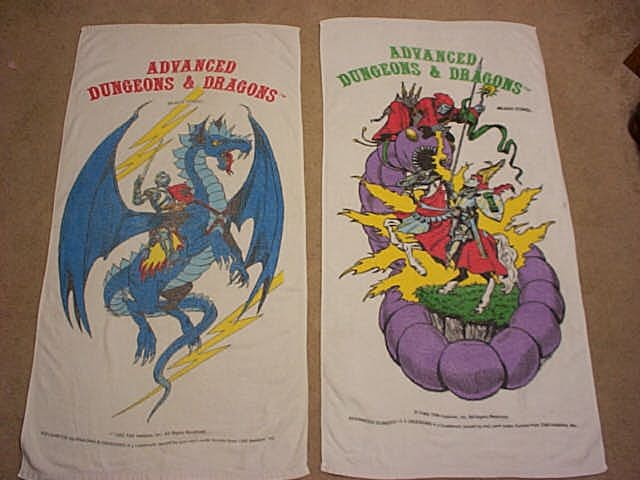
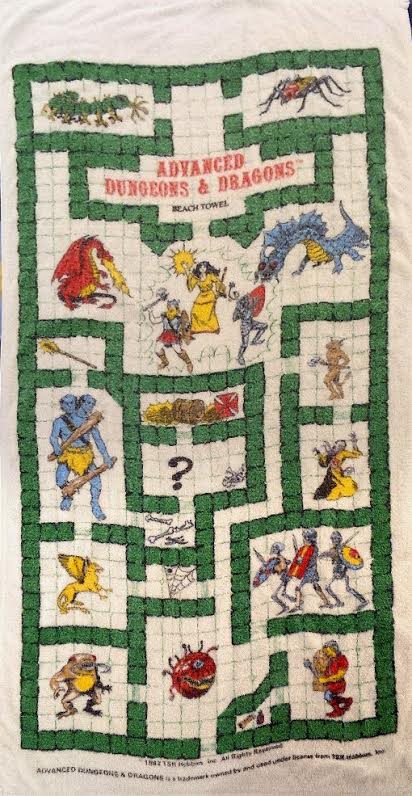
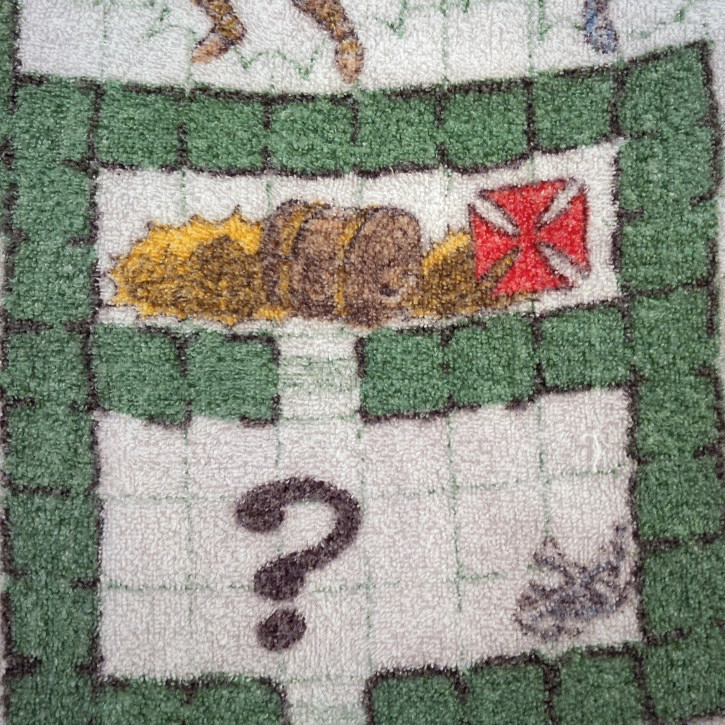
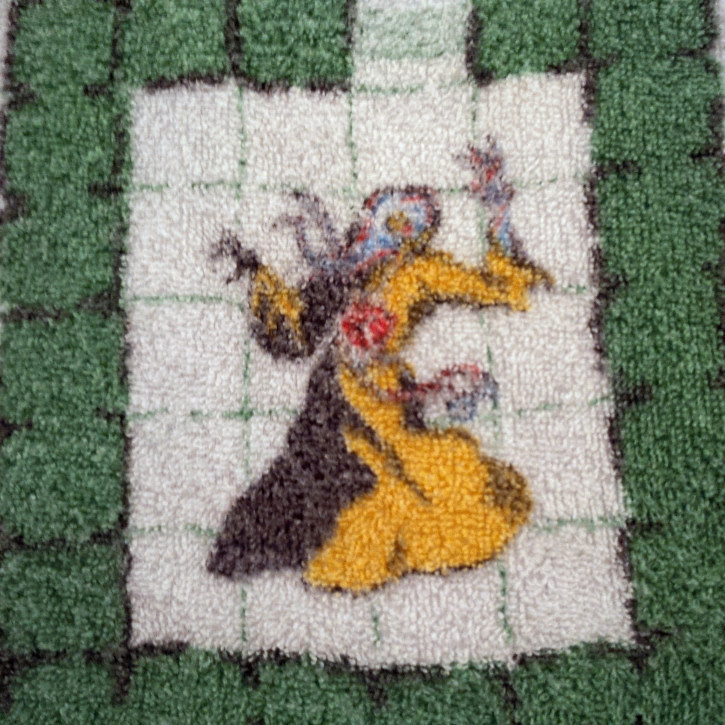
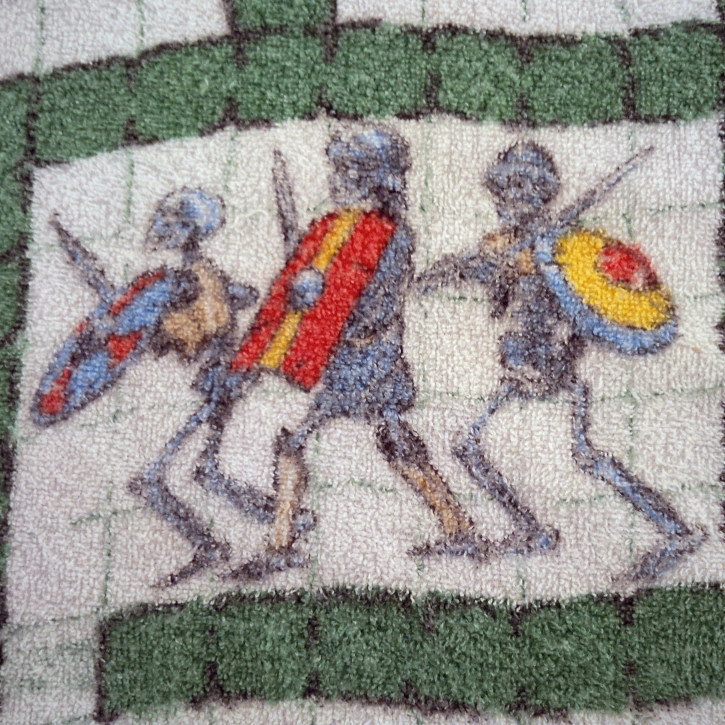
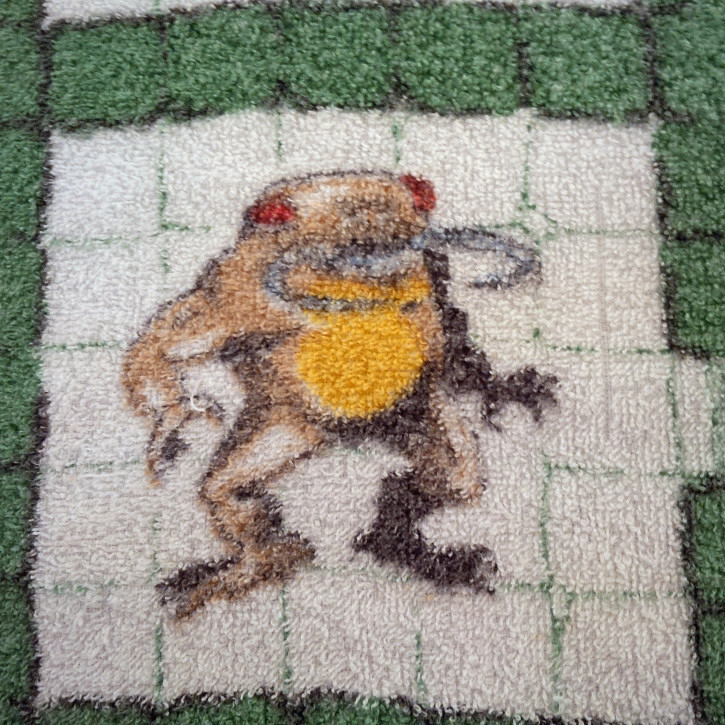
Advanced Dungeons & Dragons Beach Towels (1982)

AD&D Towels 1982

AD&D Beach Towel 1982

AD&D Beach Towel 1982-2

Because if there’s two things that go together, it’s AD&D and the beach. And the towels must be used at the beach, because “beach towel” is printed right there at the top. Try not to lose your dice in the sand, gamers.

David Sutherland art appears on both towels. In fact, the two in the first photo belonged to Sutherland and appear at The Collector’s Trove. The second and third images are via eBay.

UPDATE: Zenopus (of Zenopus Archives) kindly sent in this photo of a third towel. (Thanks again, Z.)

AD&D Beach Towel 1982-3

It’s definitely from the same series, but I can’t tell who the artist is. I don’t recall seeing the design anywhere else. What monster do you think is guarding the treasure (‘X’ marks the spot), considering the adventurers are already tackling a red dragon?

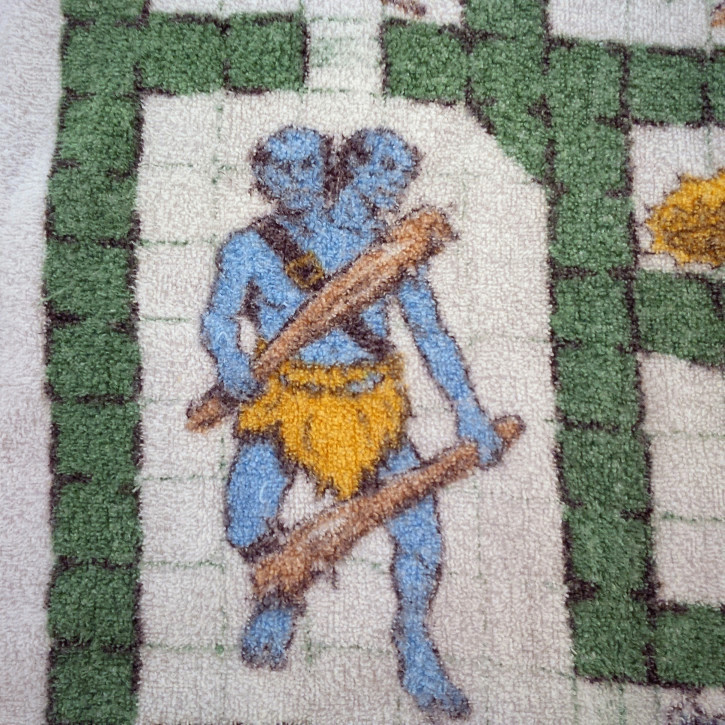
Please contact me (2warpstoneptune@gmail.com) if you spot a different towel, or if you find close-ups of the giant centipede/dungeon towels.

UPDATE (6/30/14): The righteous “Mr. D.” sent in these detailed views of the dungeon crawl towel seen above. Great stuff.

T-1

T-1.5

T-2

T-3

T-4

T-5

T-6

T-7

T-8

T-9

T-10

T-11

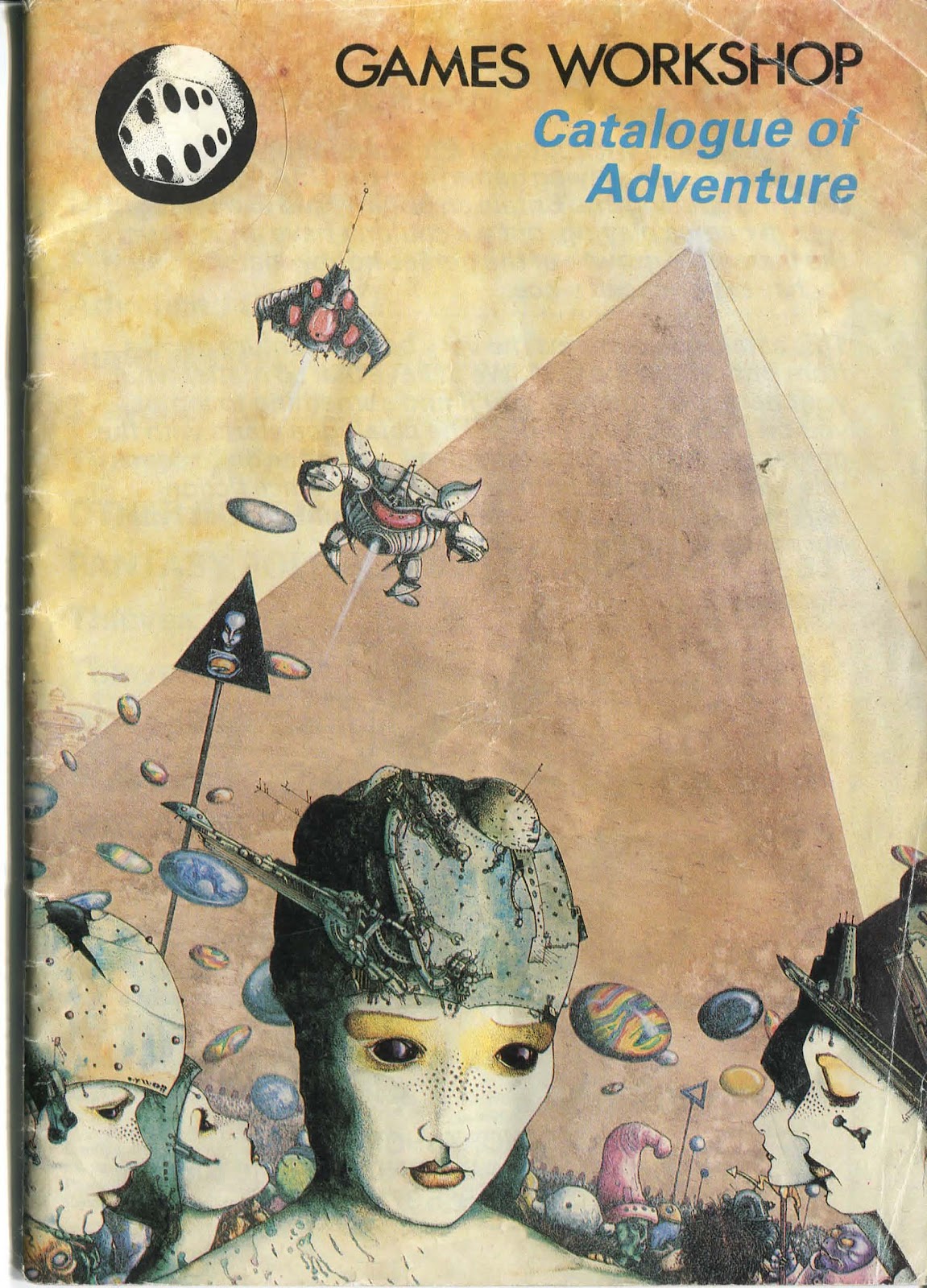
1983 Games Workshop `Catalogue of Adventure’

GW 1983

GW 1983-2

GW 1983-8

GW 1983-3

GW 1983-4

GW 1983-5

GW 1983-6

GW 1983-7

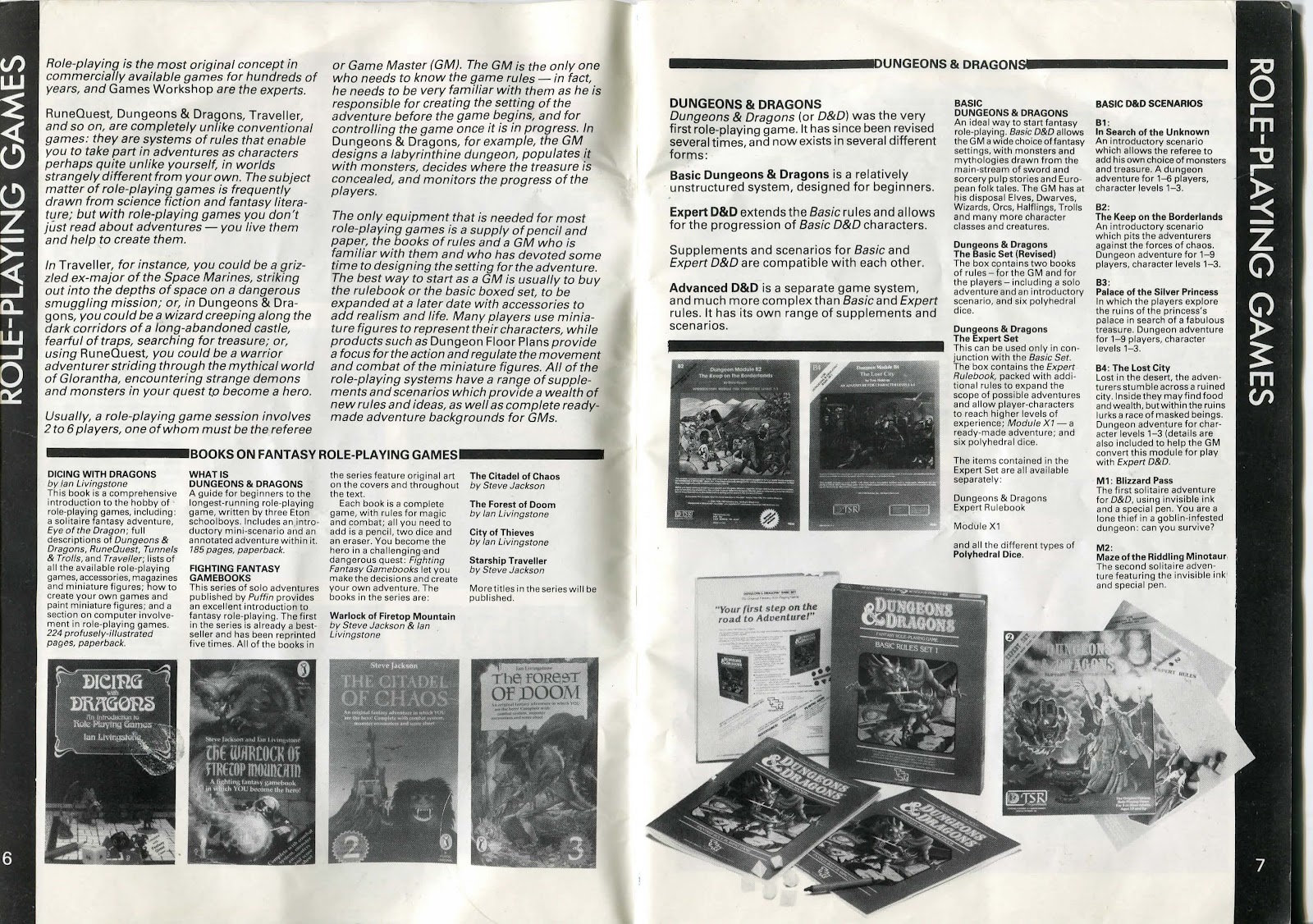
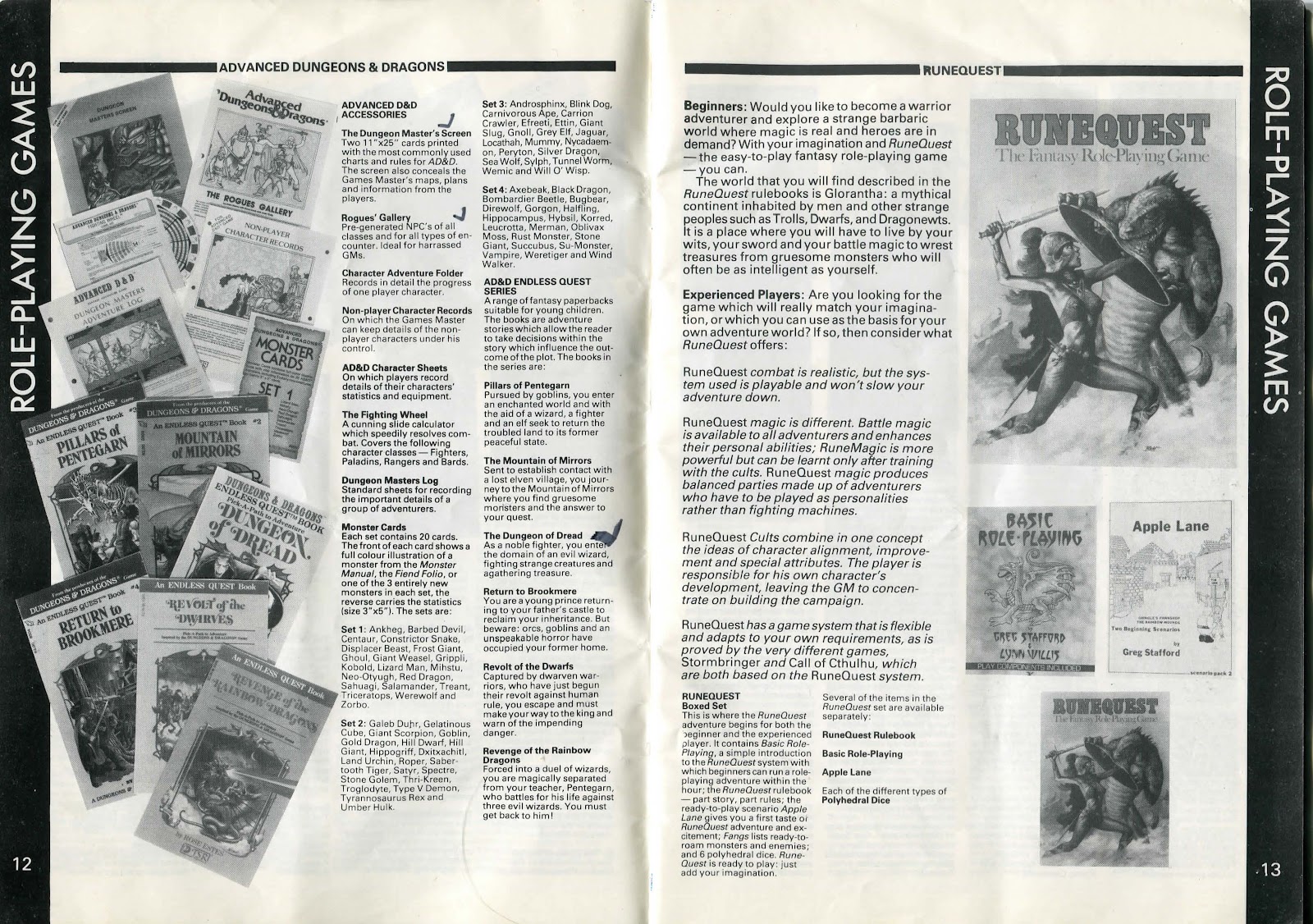
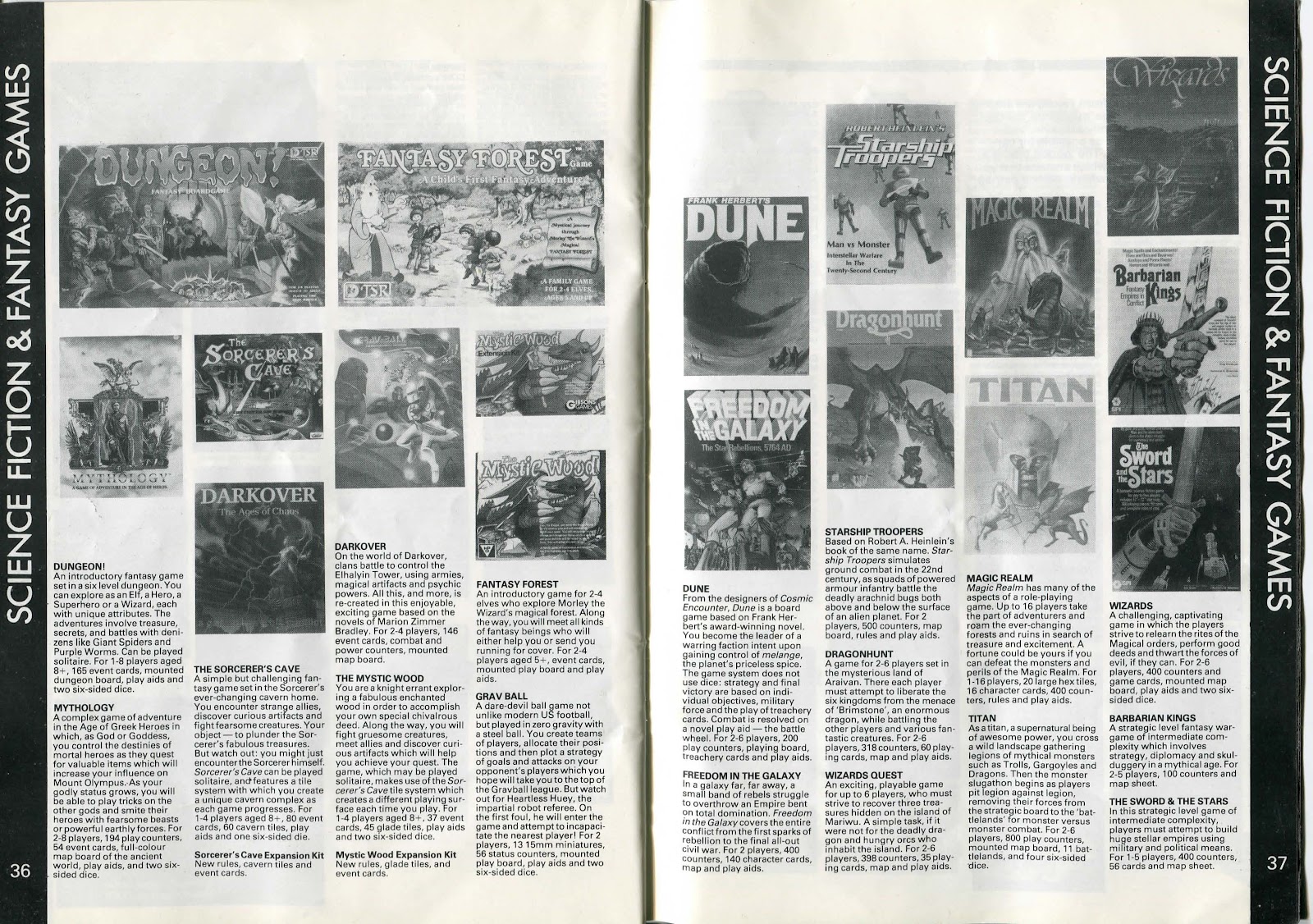
Thank you, Pitch & Putt, for posting the whole catalog. It’s glorious. The number of role-playing games and non-traditional board games available by 1983 is incredible, as Livingstone and Jackson admit in their introductory note. The games are based on every genre, and nearly every workable property (Judge Dredd, Dune, Starship Troopers, Watership Down, The Road Warrior).

As I mentioned here, GW’s approach was much more cerebral than TSR’s. They focus on the novelty and sophistication of role-playing (“the most original concept in commercially available games for hundreds of years”), diversity of rules systems, and sheer range of game titles.

Compare the GW catalog to this 1981 TSR catalog.

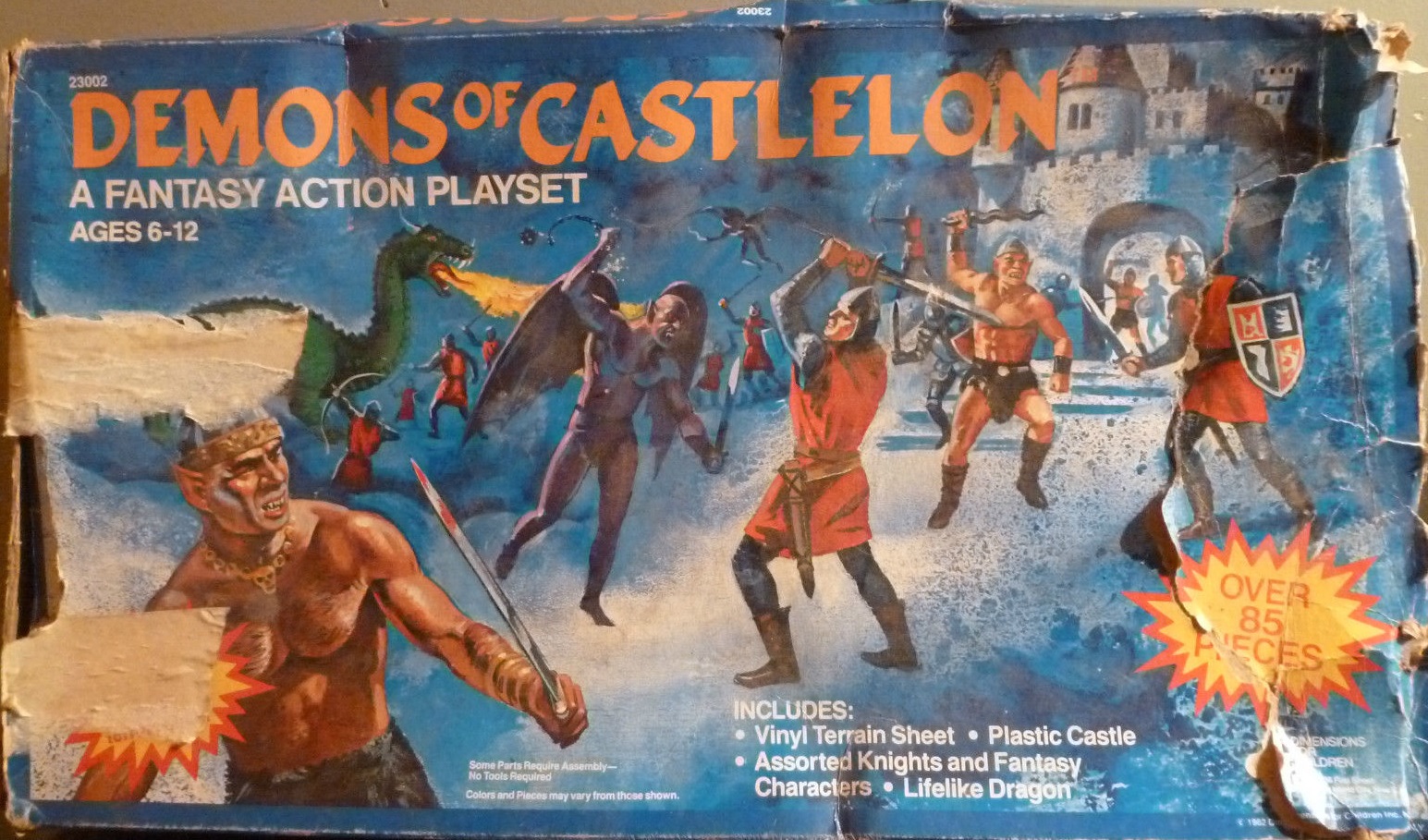
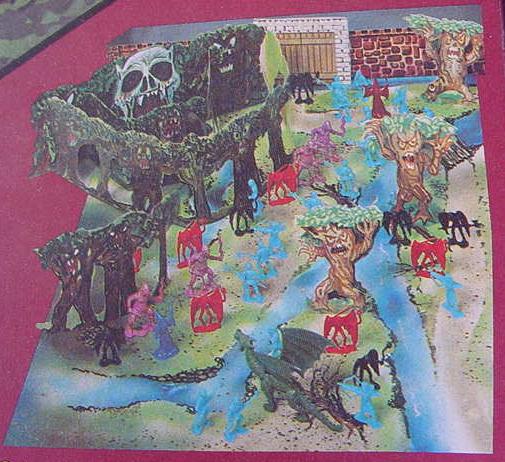
DFC Toys: Demons of Castlelon Fantasy Action Playset (1982)

DFC Demons 1982

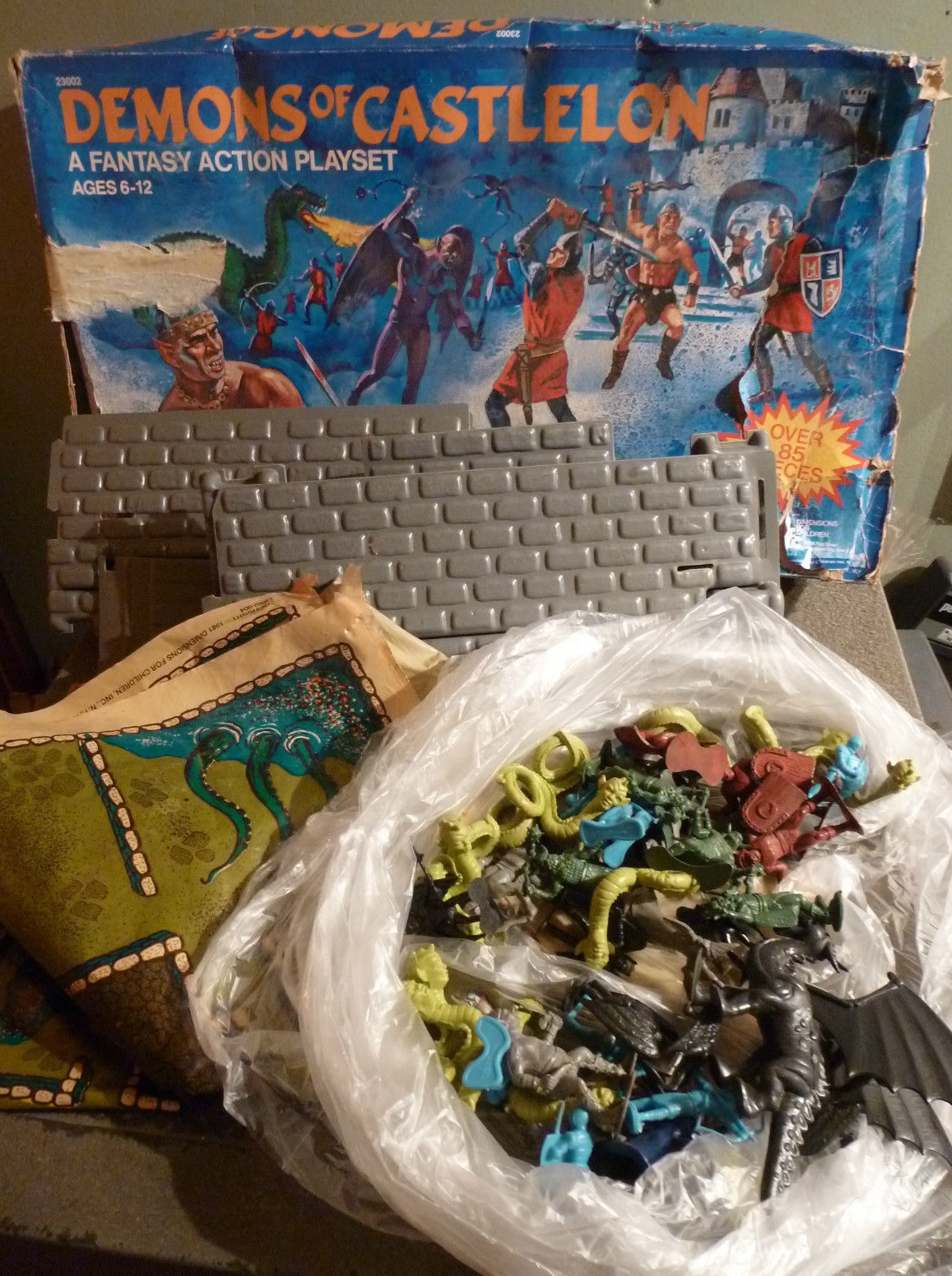
DFC Demons 1982-3

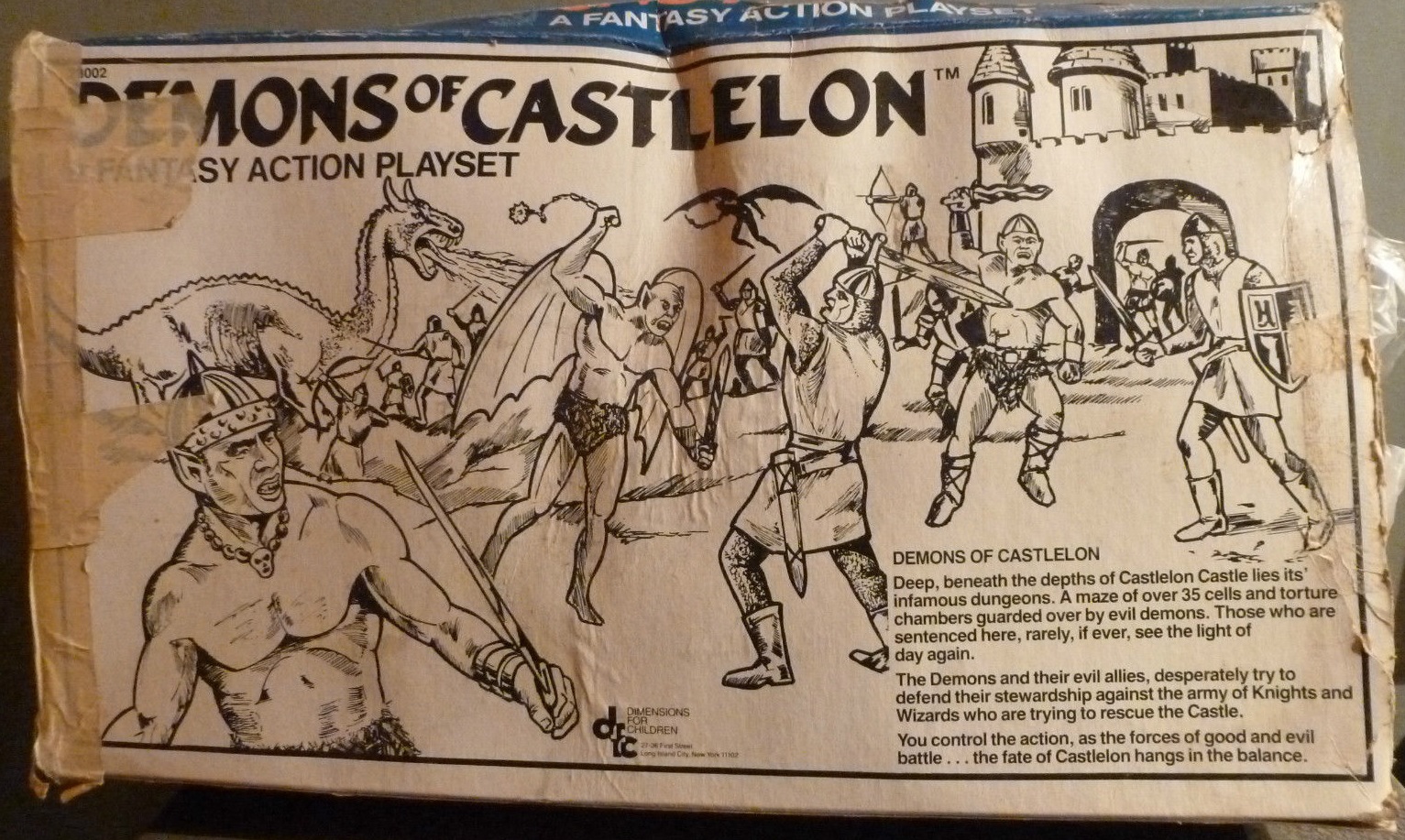
DFC Demons 1982-2

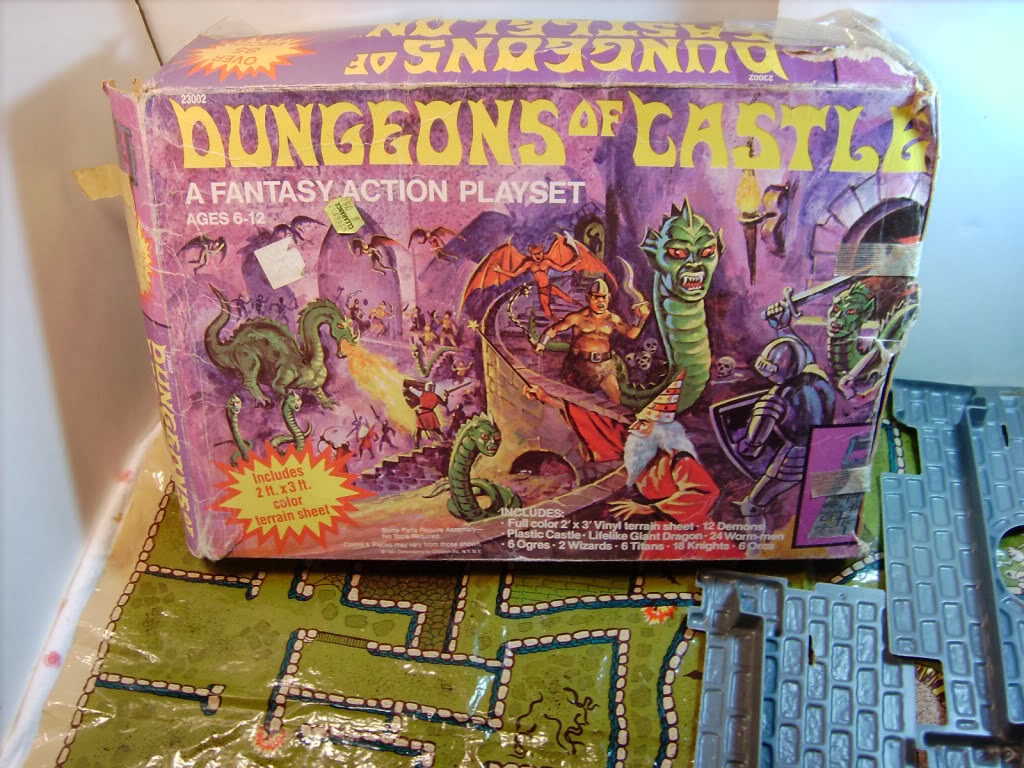
DFC (Dimensions For Children) put out at least six fantasy playsets in the early ’80s. You’ve seen Dragonriders of the Styx (1981), probably the first to be released, and the only one I’ve seen in a major catalog. This is the first time I’ve seen Demons of Castlelon. There’s another version called Dungeons of Castlelon—same figures and playmat, different box.

DFC Dungeons of Castlelon

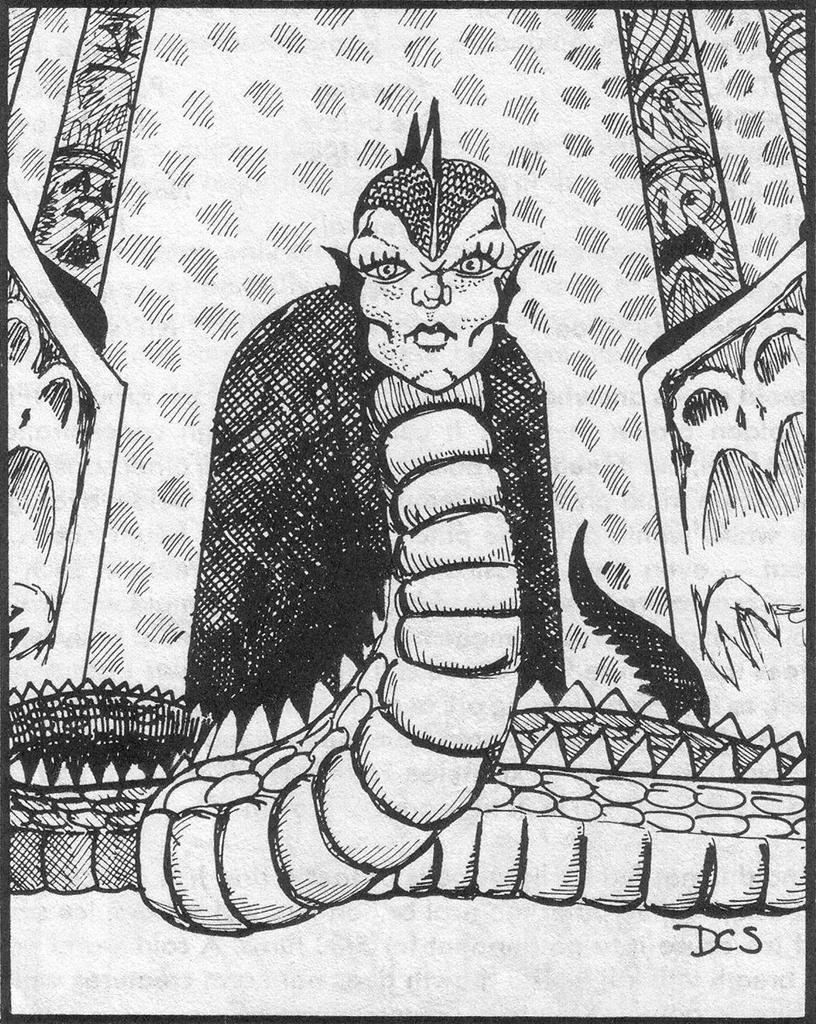
As others have noted, the green snake figure looks suspiciously like David Sutherland’s Naga from the first edition Monster Manual.

Sutherland Naga

At some point, DFC started producing the figure without facial features or ears, no doubt due to copyright issues. UPDATE (1/19/14): Here’s a photo of both versions of the Naga, courtesy of Little Weirdos/Flickr.

DFC Naga

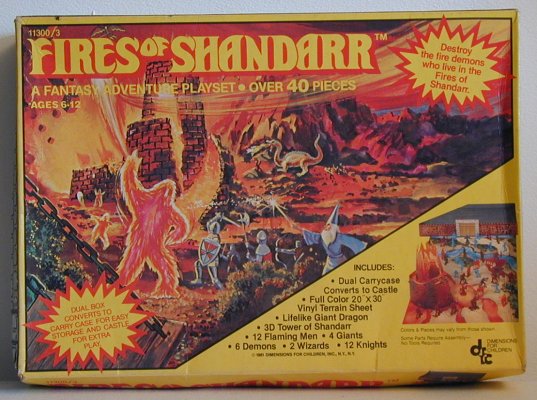
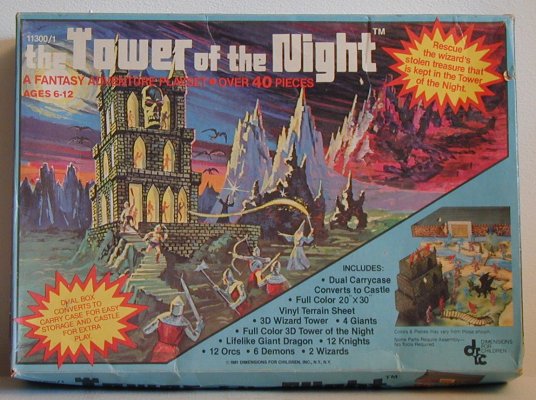
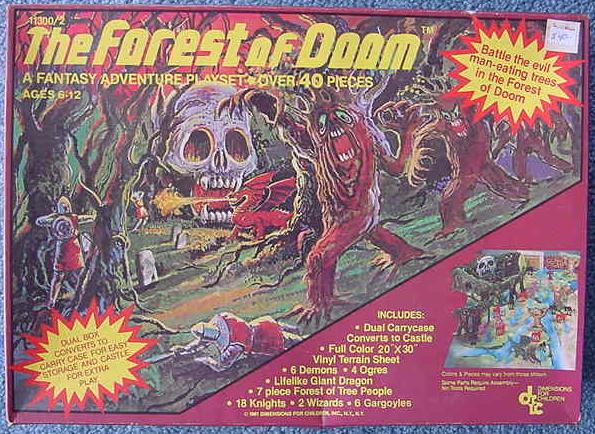
Other known sets include Fires of Shandarr, The Tower of the Night, and The Forest of Doom.

DFC Fires of Shandarr

DFC Tower of the Night

DFC Forest of Doom

DFC Forest of Doom-2

I’ll do separate posts on each set as I score better photos.

(Image credits: Demons of Castlelon: eBay seller The Lost Item Carousel; Dungeons of Castlelon: Tales from the Big Board; Naga: James Brady; Fires of Shandarr and The Tower of Night: Virtual Toy Chest; The Forest of Doom: Action Figure Archive)

Portrait of an Older Geek Learning to Play D&D (1982)

d&d portrait 1982

Boston, Massachusetts, March 19, 1982. (Photo: Unknown)

Probably from a Boston Herald story, the caption reads:

Chris Magliaccio, who helped organize the Dungeons and Dragons tournament at Museum of Science, playing the game. For the first time, I might add.

D&D tournaments were fairly common at museums of science in the early ’80s. You’ll recall this ad for a tournament in Miami. The game appealed to the kids who liked science because both enterprises are systems of knowledge organized around testable explanations.

I was more creative than analytical, so I enjoyed the fantastic, narrative aspect: building characters, adventures, exotic weapons, inescapably deadly dungeons, etc. That’s the genius of D&D, really. It captures both sides of the brain.

Good luck learning to play in such a short time, Chris. Can you see the beads of sweat on his forehead?

Advanced Dungeons & Dragons Characters Coloring Book (1983) (Part Three)

AD&D Characters pg. 21AD&D Characters pg. 22

AD&D Characters pg. 23AD&D Characters pg. 24

AD&D Characters pg. 25AD&D Characters pg. 26

AD&D Characters pg. 27AD&D Characters pg. 28

AD&D Characters pg. 29AD&D Characters pg. 30

AD&D Characters pg. 31AD&D Characters pg. 32

AD&D Characters pg. 33AD&D Characters pg. 34

AD&D Characters pg. 35

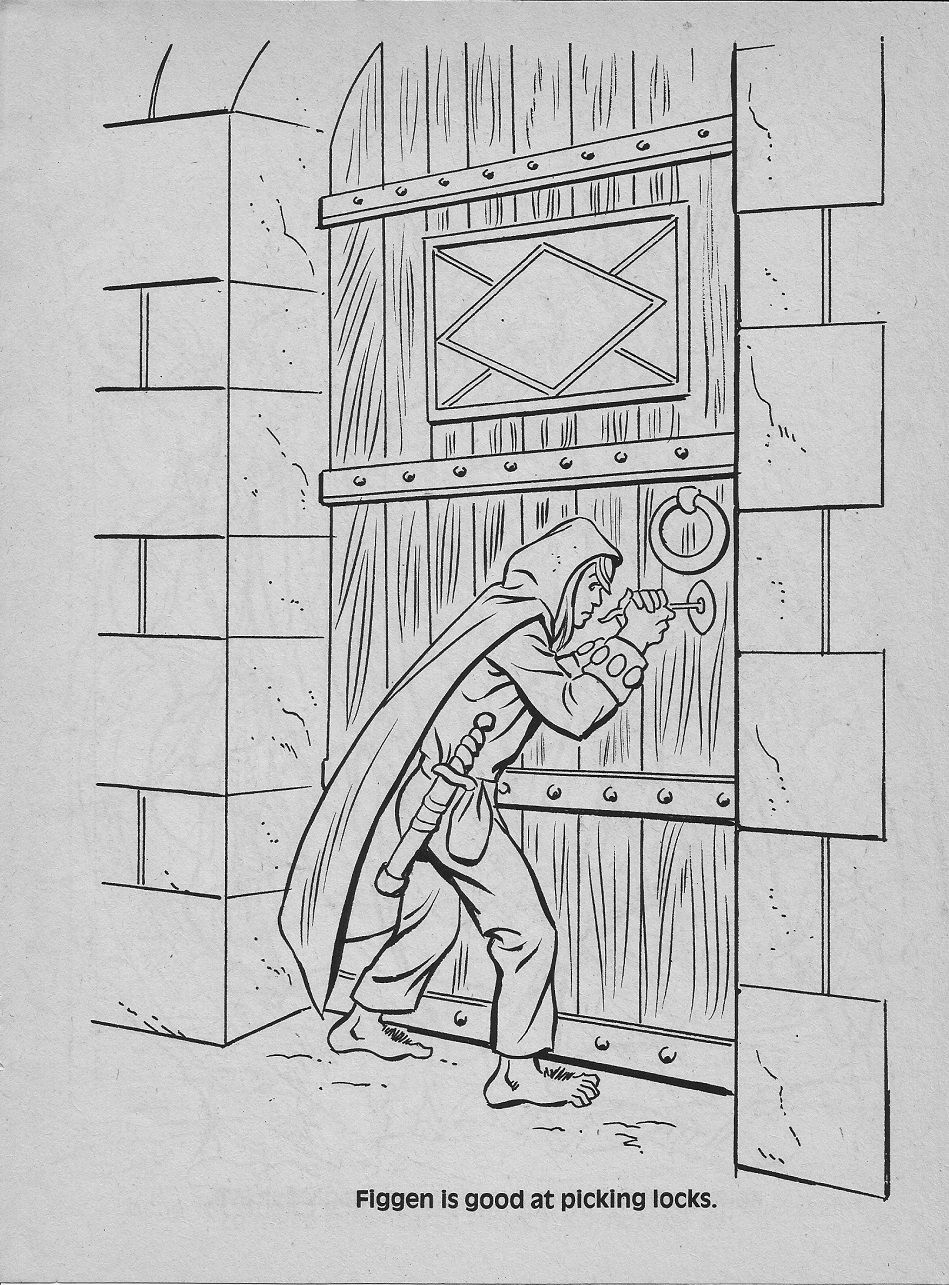
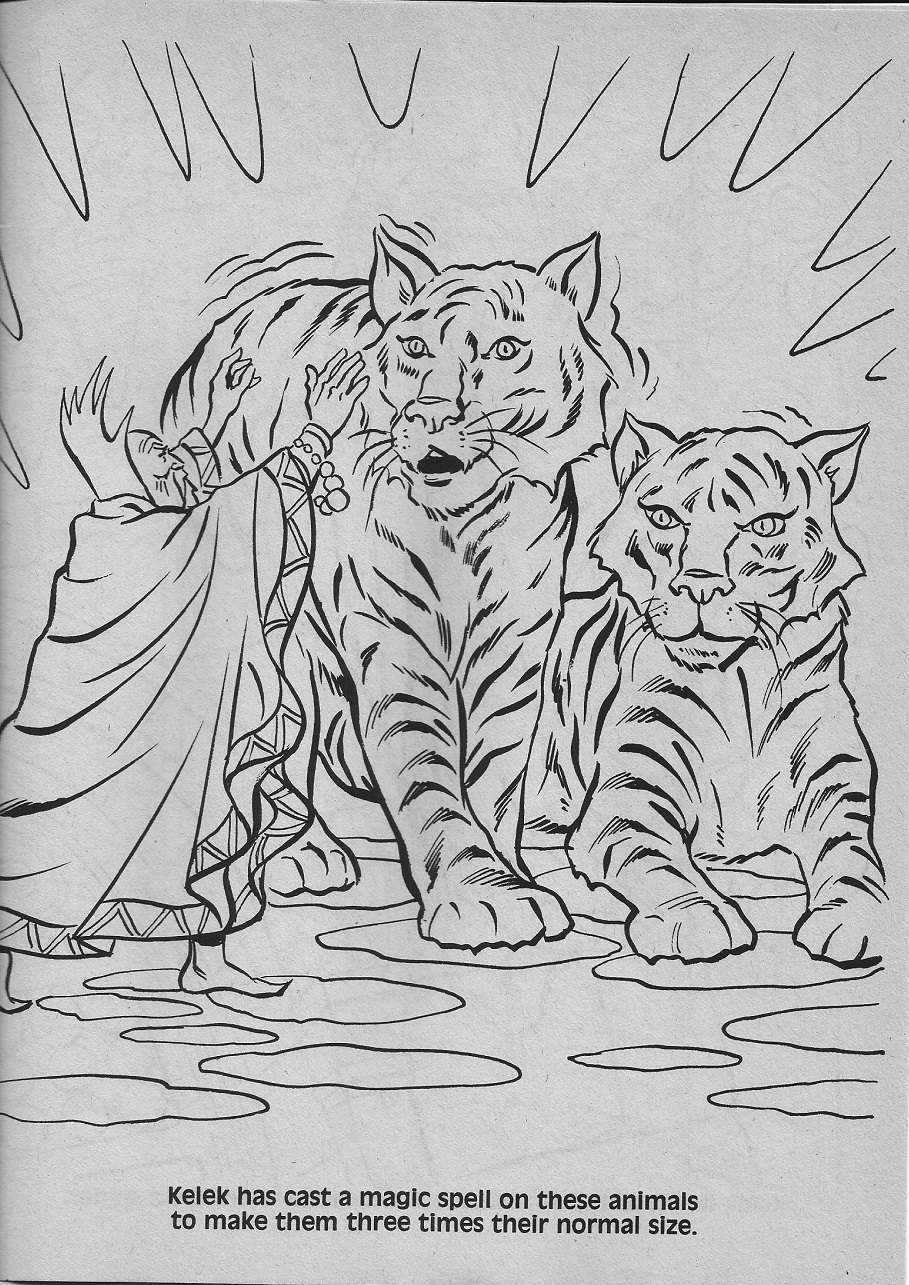
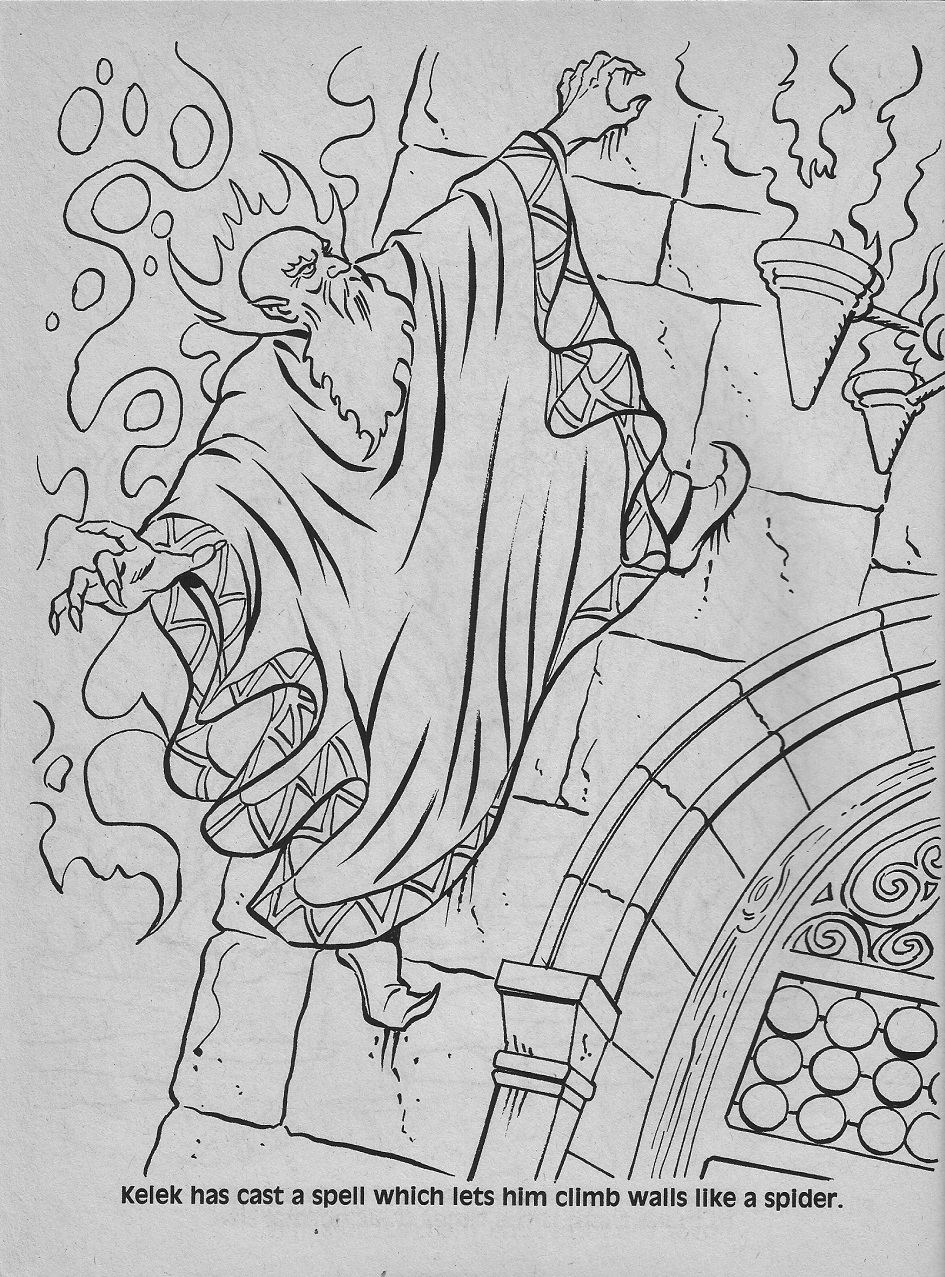
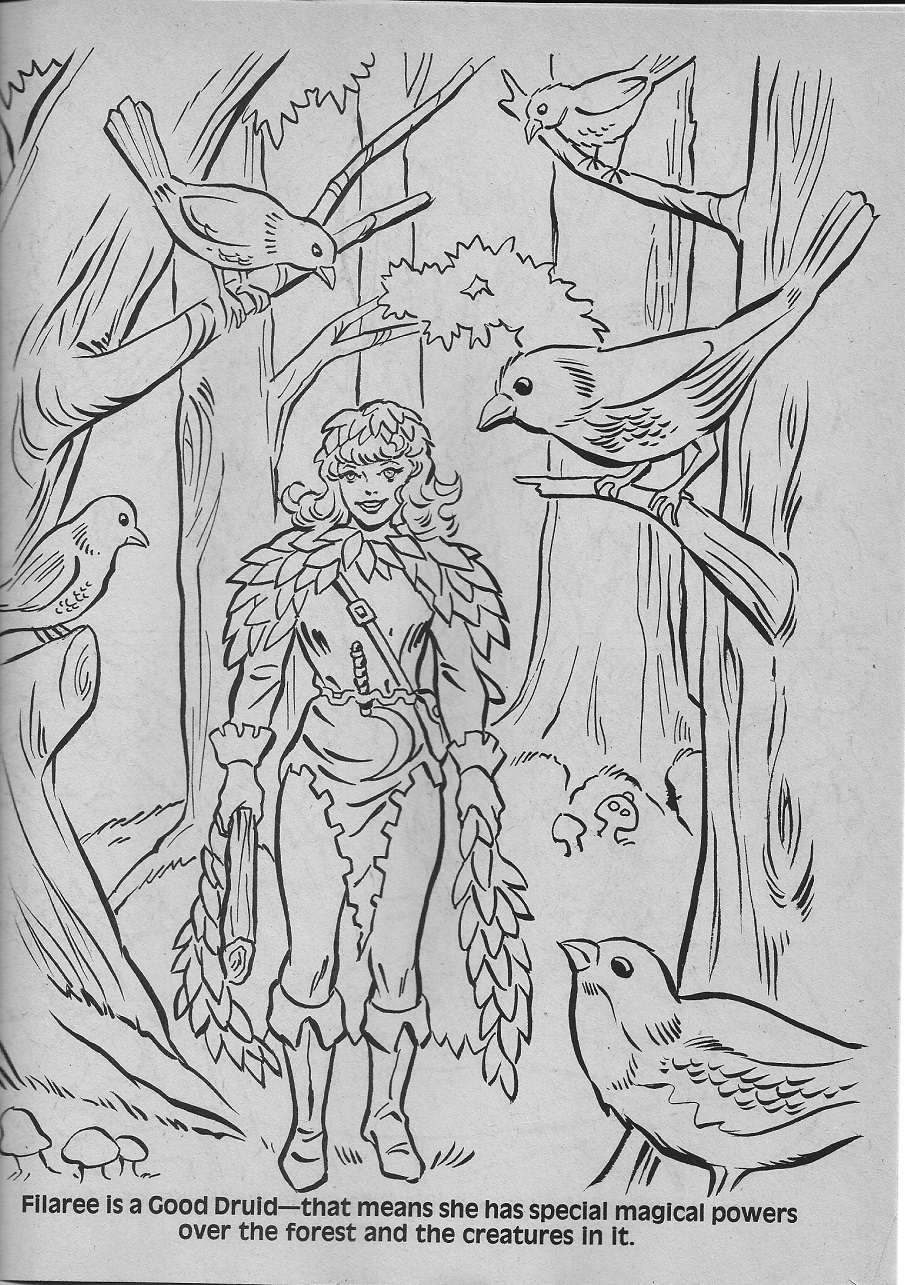
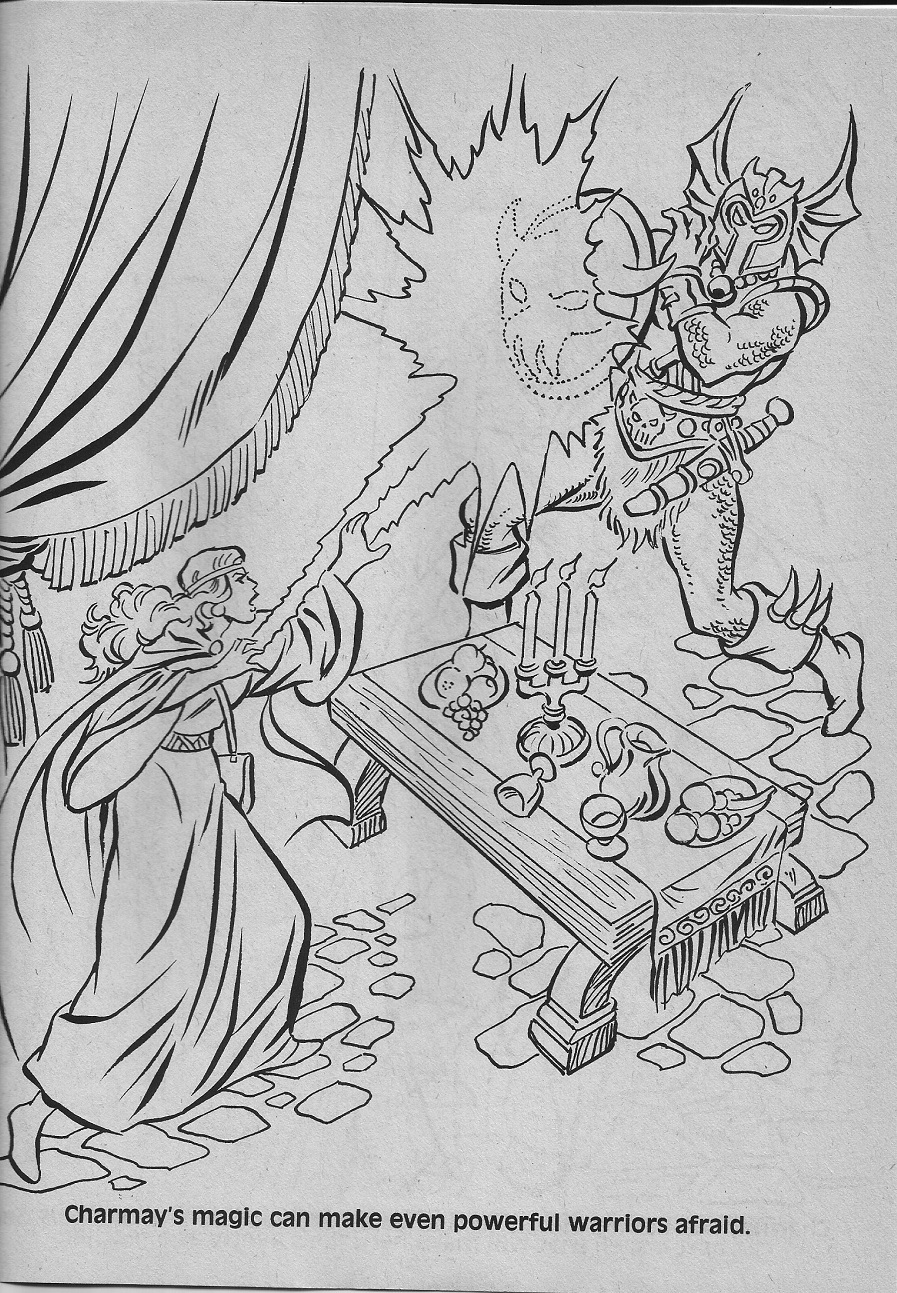
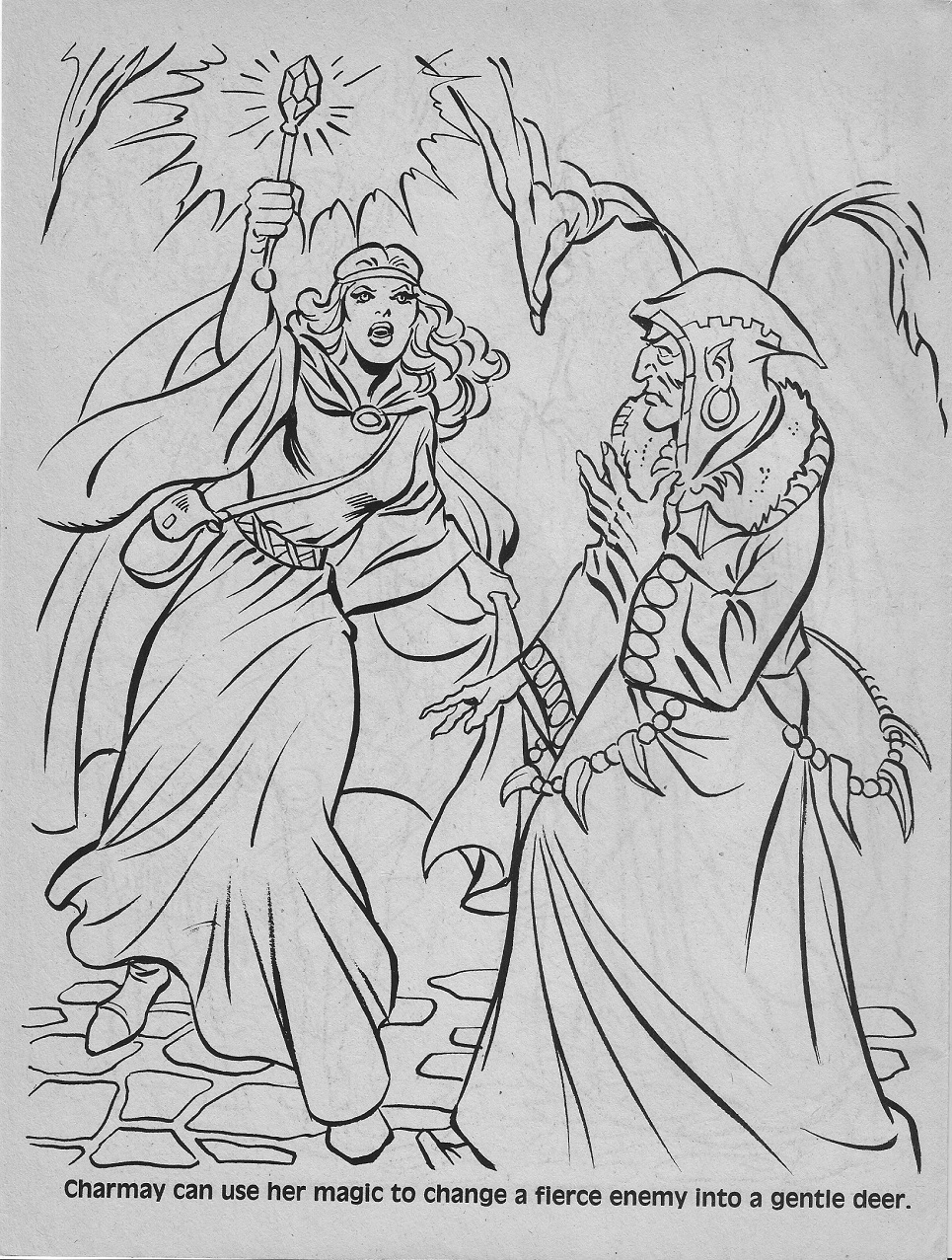
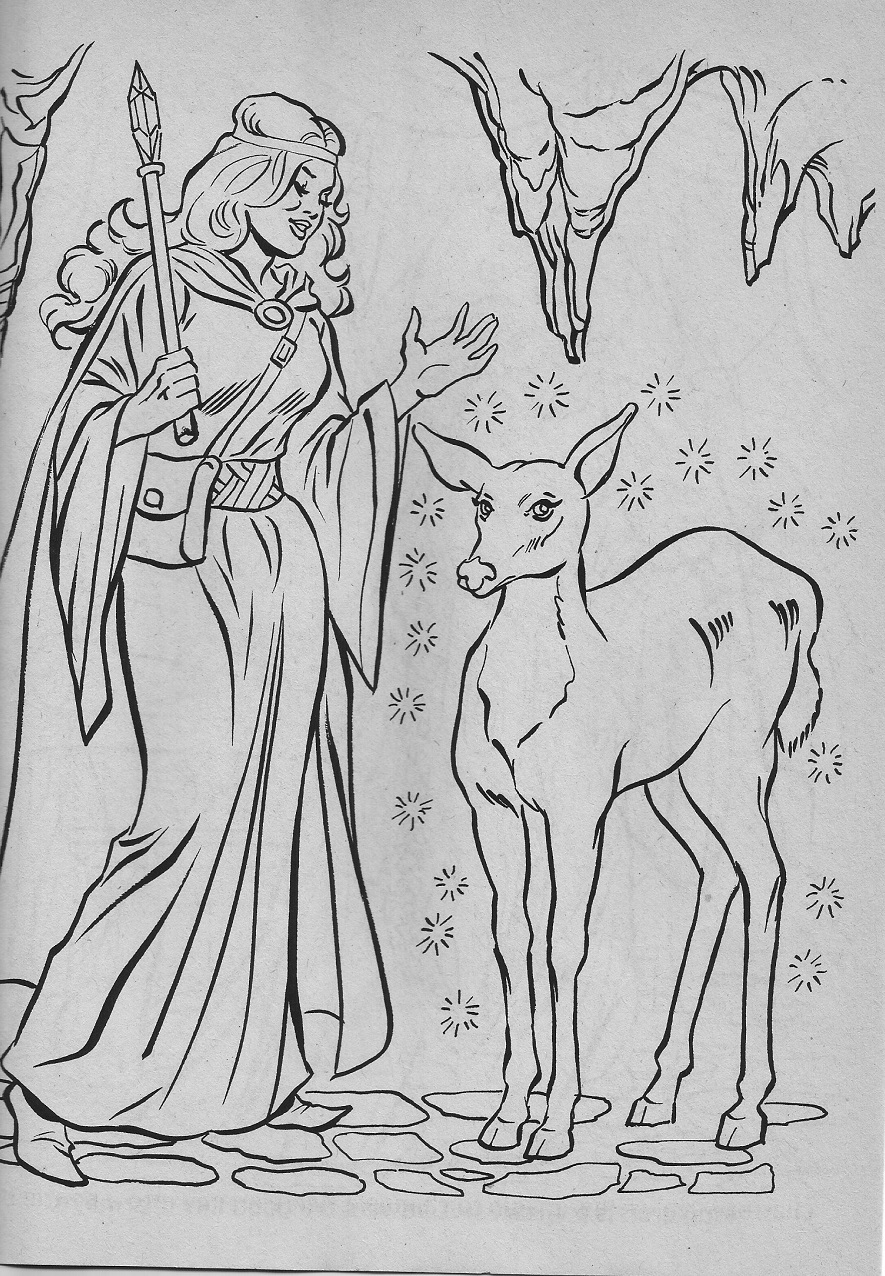
Page one: Stine continues to play fast and loose with the spells. It gives the artists more freedom.

Page three: Thieves do not enter buildings through the front door.

Page four: Not really a revelation that evil sorcerers use magic for evil purposes.

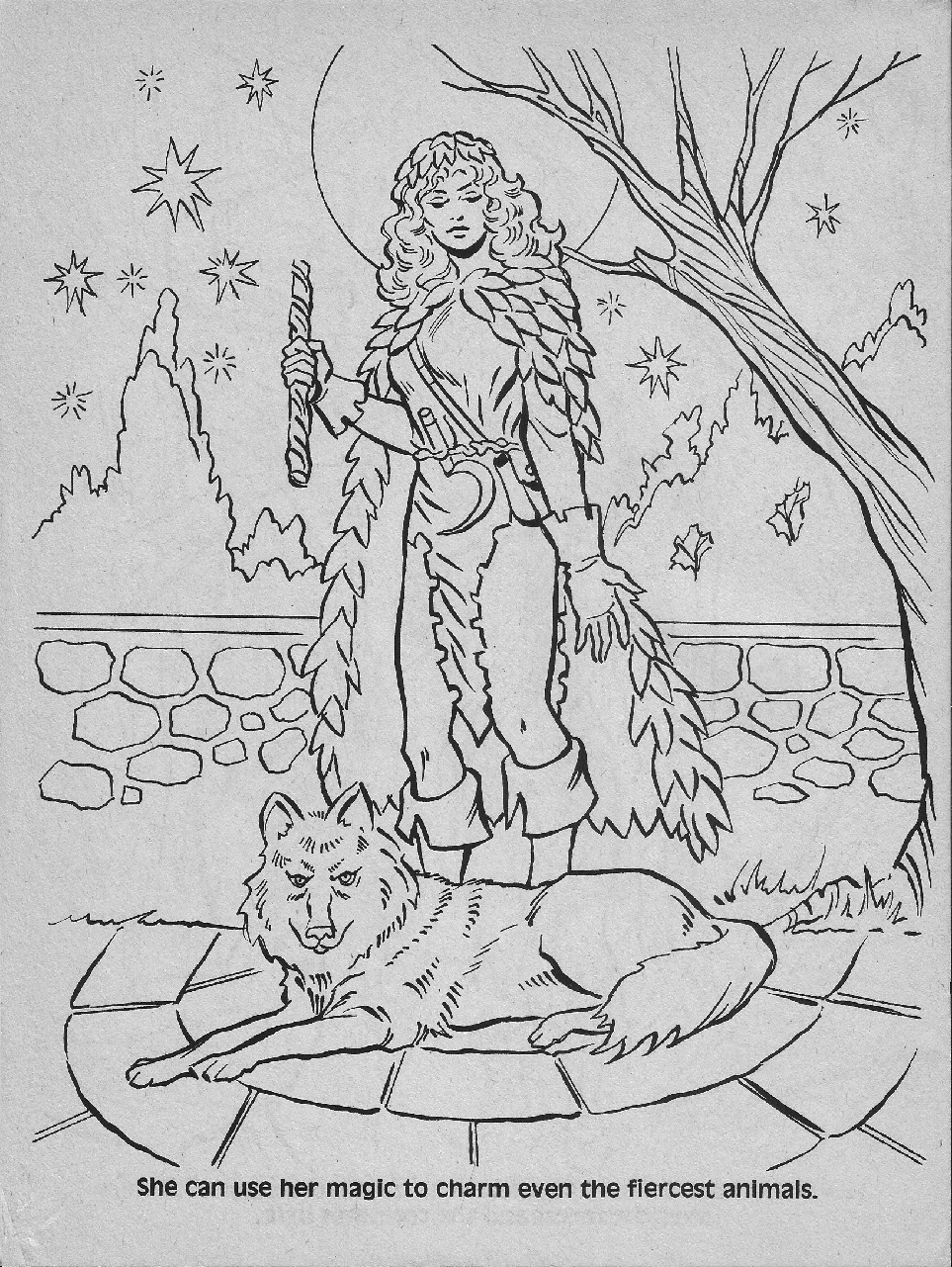
Page five: A real druid spell.

Page six: The Amazing Spider-Mage!

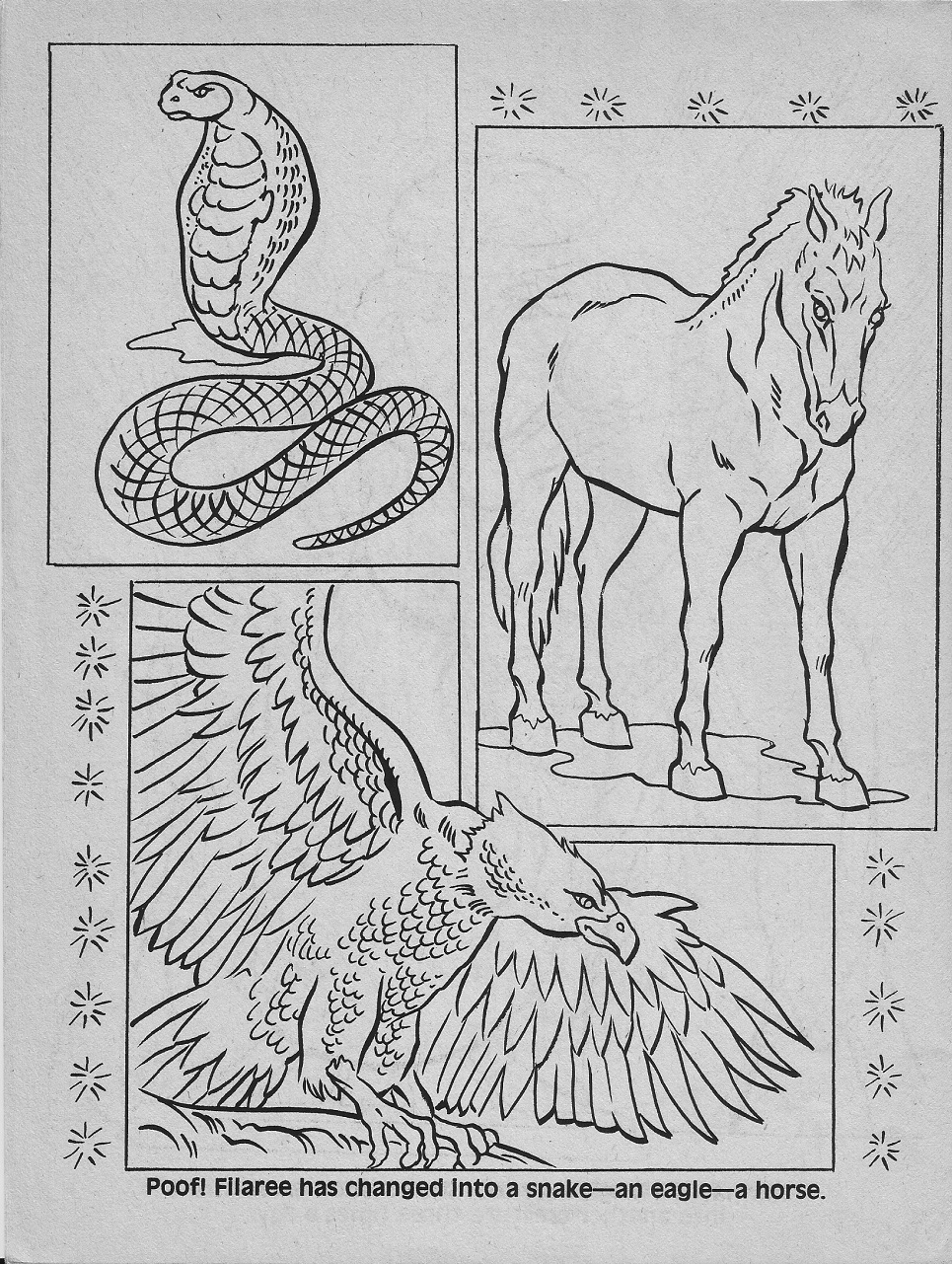
Pages seven through ten: The druid is about as fearsome as the bard in part one.

Page eleven: Jazz hands!

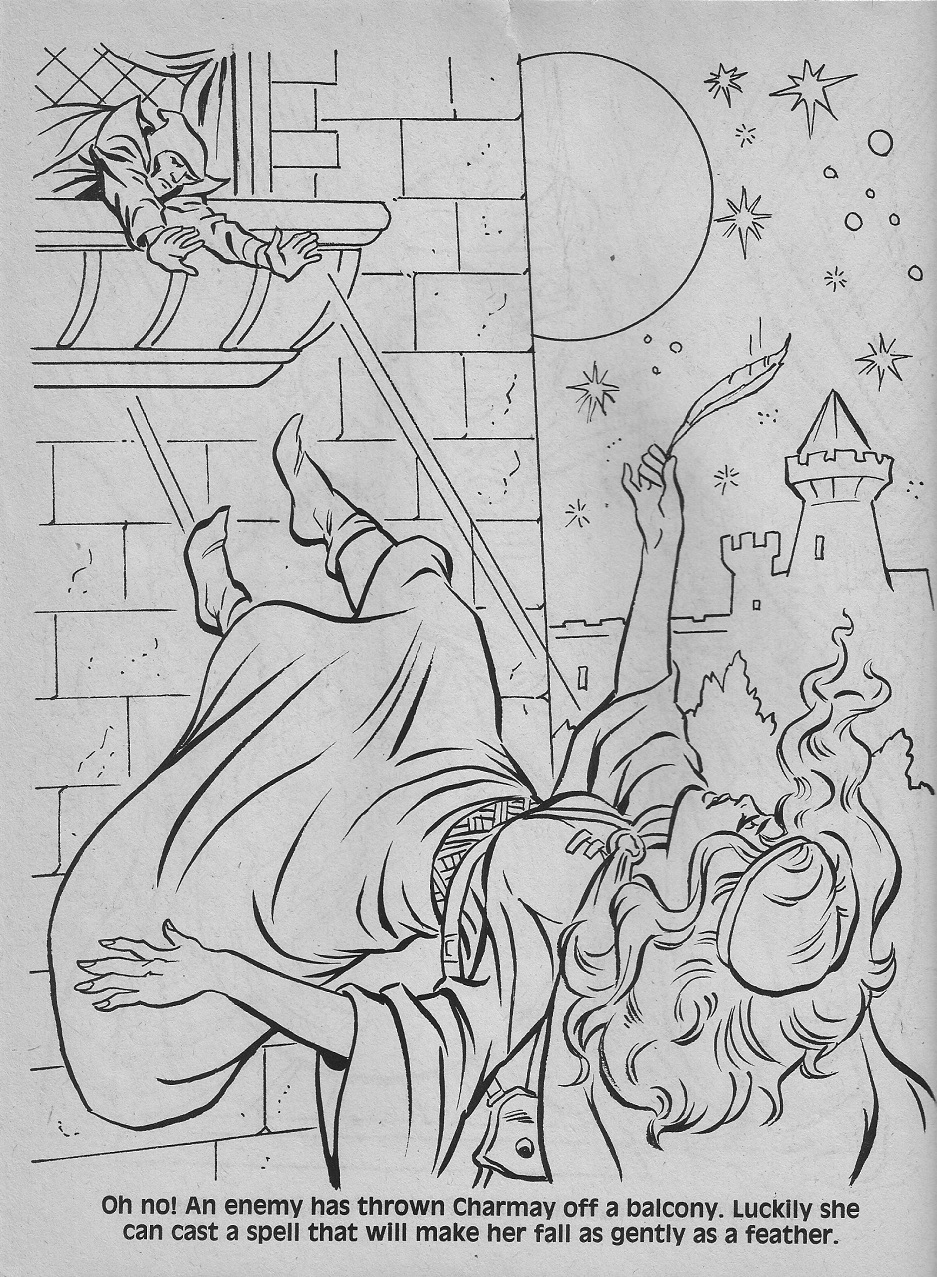
Page twelve: My favorite from this bunch. Love the feather.

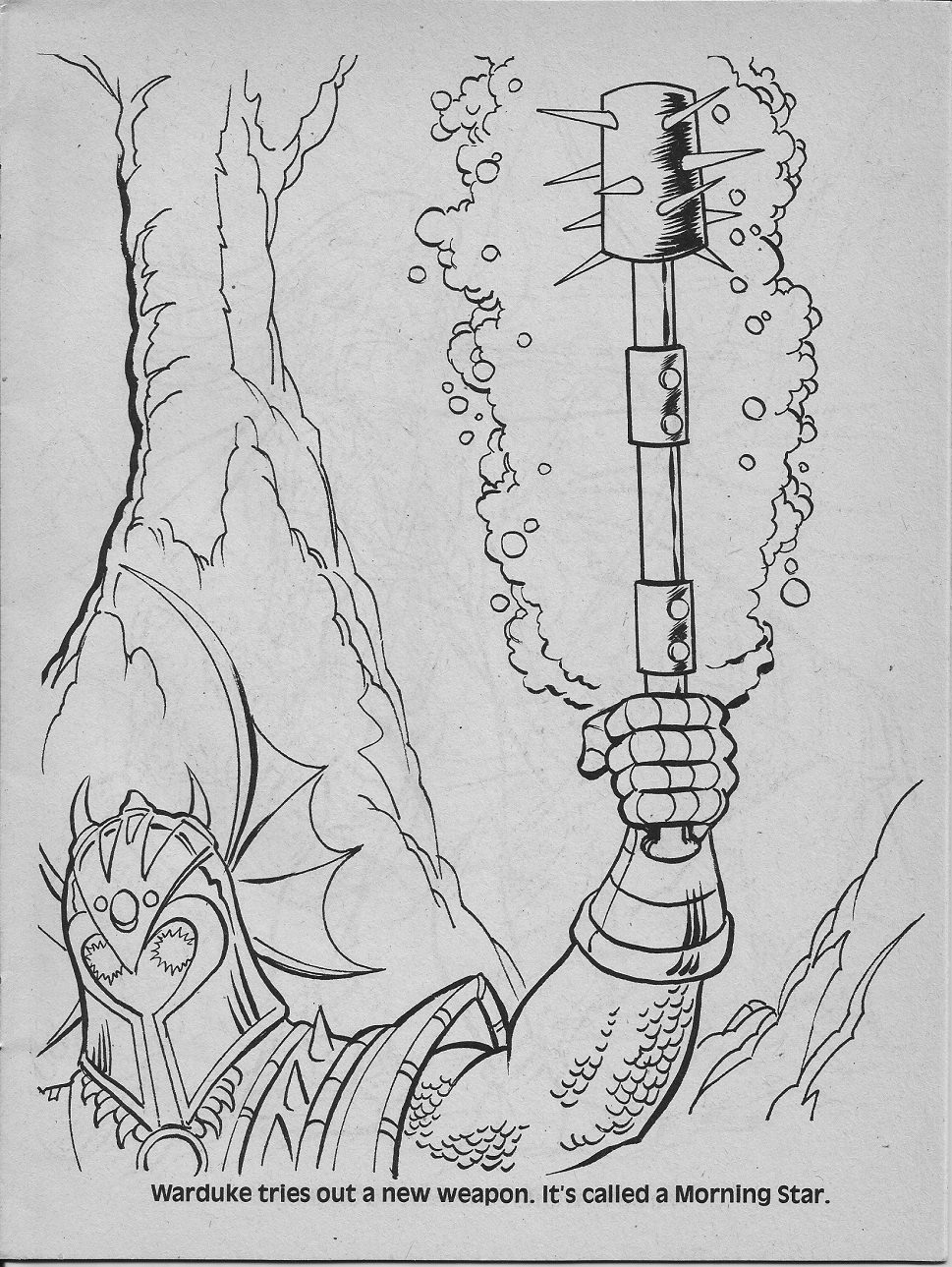
Page thirteen: Warduke does not look afraid to me, merely annoyed.

* * *

Parts one and two of the coloring book are here and here.

TSR’s The Strategic Review (April, 1976)

Strategic Review April 76

Strategic Review April 76-7

Strategic Review April 76-8

Strategic Review April 76-6

Strategic Review April 76-3

Strategic Review April 76-9

Strategic Review April 76-4

Strategic Review April 76-5

Strategic Review April 76-2-2

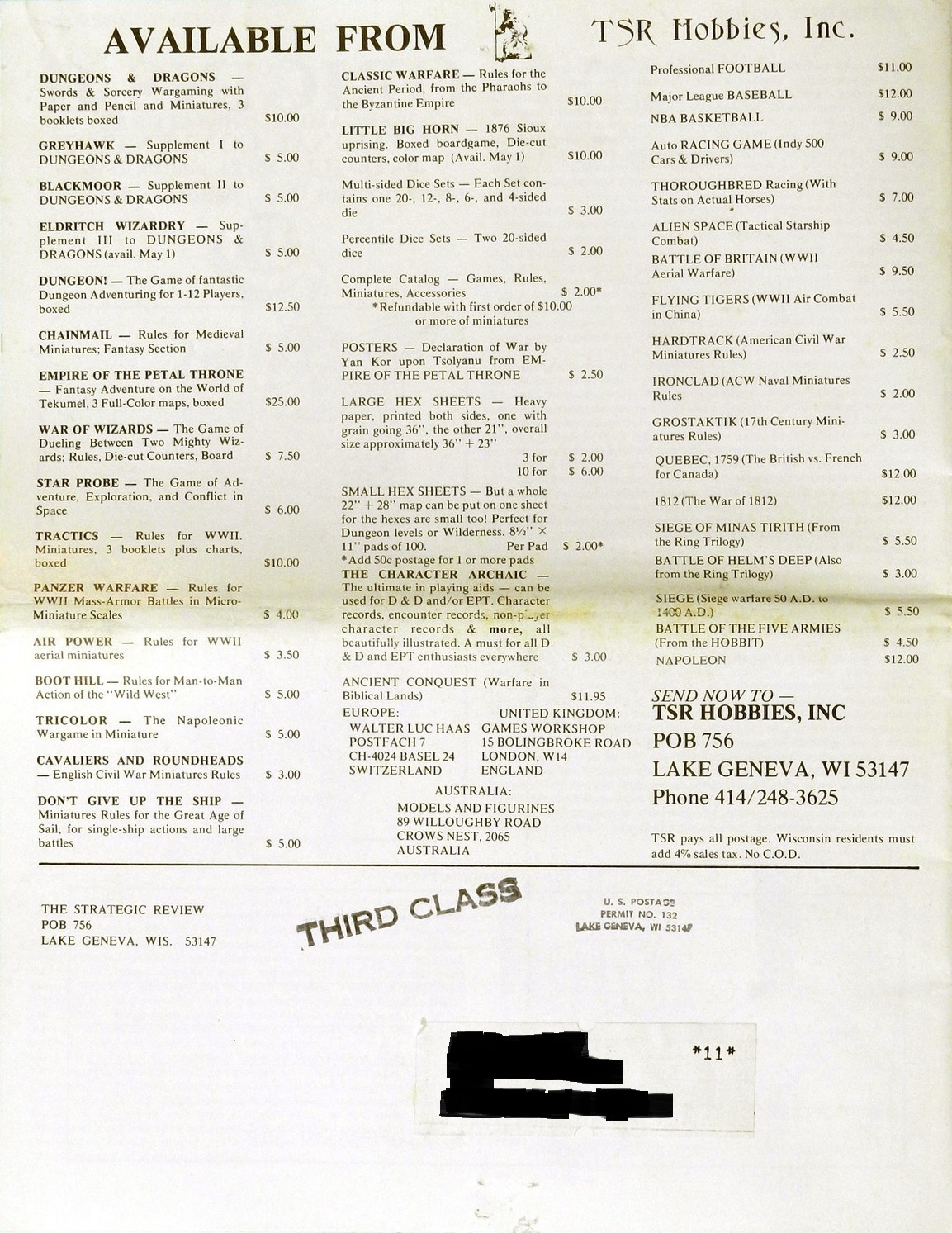
Several pages from the last issue of TSR’s first magazine, including a brilliant two-page photo spread announcing the grand opening of the now famous Dungeon Hobby Shop. The Strategic Review would become Dragon magazine in June of ’76 (see the announcement on the top left of the second photo).

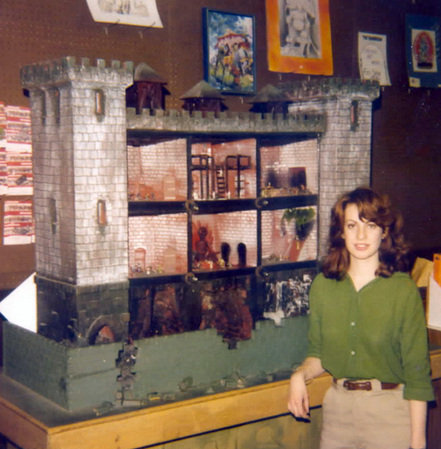
Huscarl gives a pretty comprehensive history of The Dungeon Hobby Shop (Ernie Gygax ran the place) at Wizards of the Coast. He talks about the “three-level dungeon built by Dave Sutherland,” showing “the same group of adventurers in nine vignettes as they fought their way down […] They slowly got whittled down along the way until, in the final chamber, just three of them confronted the demon lord of the dungeon.”

Dungeon Hendryx

Mary Hendryx with Sutherland’s dungeon. (Photo: Kevin Hendryx)

And below is a view of the shop counter. Behind Mary and Linda we’ve got

[…] a full range of Metagaming’s microgames, which were enormously popular around 1980; Advanced Wizard and Advanced Melee, two of the three rulebooks for Metagaming’s RPG The Fantasy Trip; a few bags of Snits! miniatures for Tom Wham’s Snit Smashing and Snits’ Revenge boardgames; and copies of the 1981 editions of D&D Basic and Expert (still my favorites). There’s also a fishbowl of `High Impact Dice’!
Dungeon Hendryx Simpson

Mary Hendryx and Linda Simpson. (Photo: Kevin Hendryx)

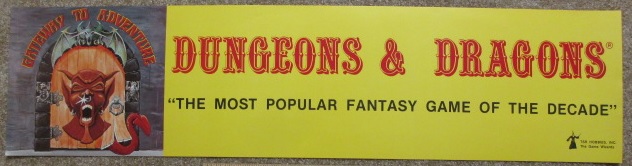
Beneath the Basic and Expert sets (Otus covers), you’ll see a “Gateway to Adventure” banner poster.

D&D Poster 1979

The photo links at the Huscarl post are down, unfortunately, but Al at Beyond the Black Gate has them on view here, along with some other spectacular shots, ads, and a beautifully illustrated Dungeon mailing envelope. (Another mailer and some order forms are at Tome of Treasures. Thanks to Zenopus for the heads up in this Grognardia post.)

(Strategic Review images via pikelett/eBay)

TRON Review and D&D Tournament Ad (1982)

Tron Review 7-9-82

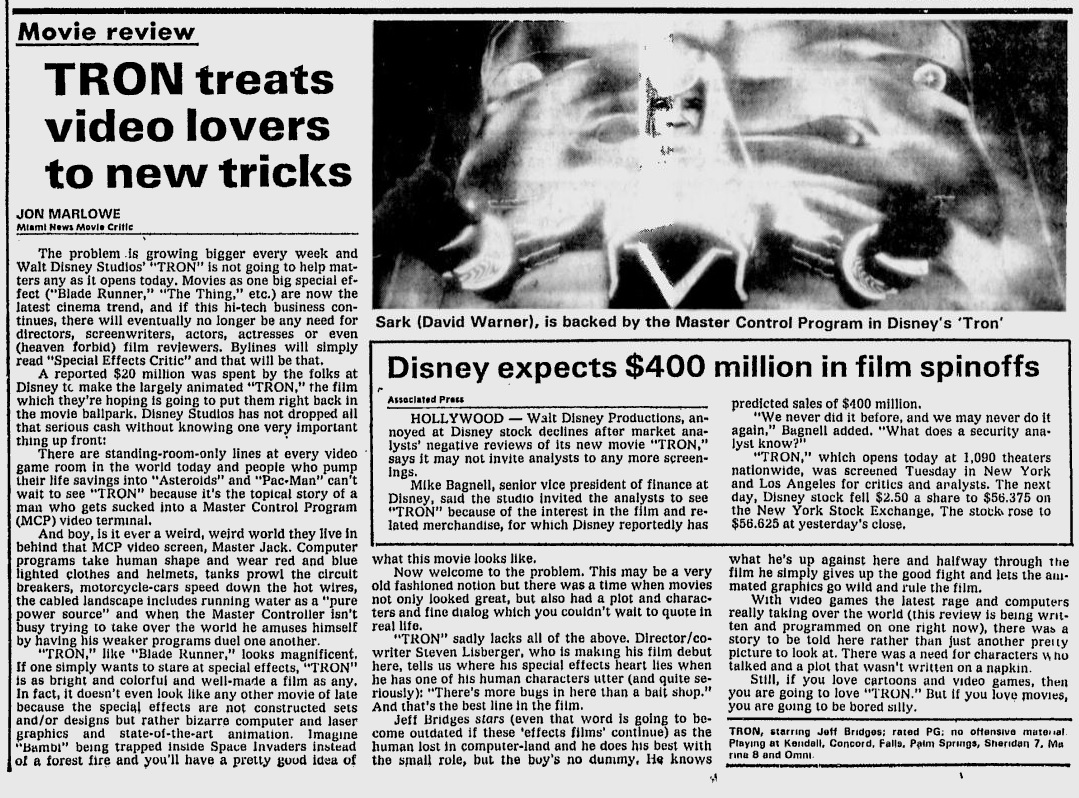
From the July 9, 1982 edition of The Miami News. I thought the review was interesting because it’s basically how I feel about every sci-fi movie from the last 20 years, except for Moon, Children of Men, and a handful of others. Is it possible that gratuitously vacuous blockbusters like Avatar and Prometheus will be considered classics in 30 years? I’ll admit that TRON is far from a perfect movie, but it does have a soul.

The ad below was on the same page of the paper. What makes a geek a geek is not keeping “that precocious little imagination occupied,” but keeping it challenged. At least that used to be what made a geek a geek. Now you can just dress up in elaborate costumes and prowl your Con of choice, and I guess that’s enough.

D&D Tournament 1982

Advanced Dungeons & Dragons Characters Coloring Book (1983) (Part Two)

AD&D Characters pg. 11AD&D Characters pg. 12

AD&D Characters pg. 13AD&D Characters pg. 14

AD&D Characters pg. 15AD&D Characters pg. 16

AD&D Characters pg. 17AD&D Characters pg. 18

AD&D Characters pg. 19AD&D Characters pg. 20


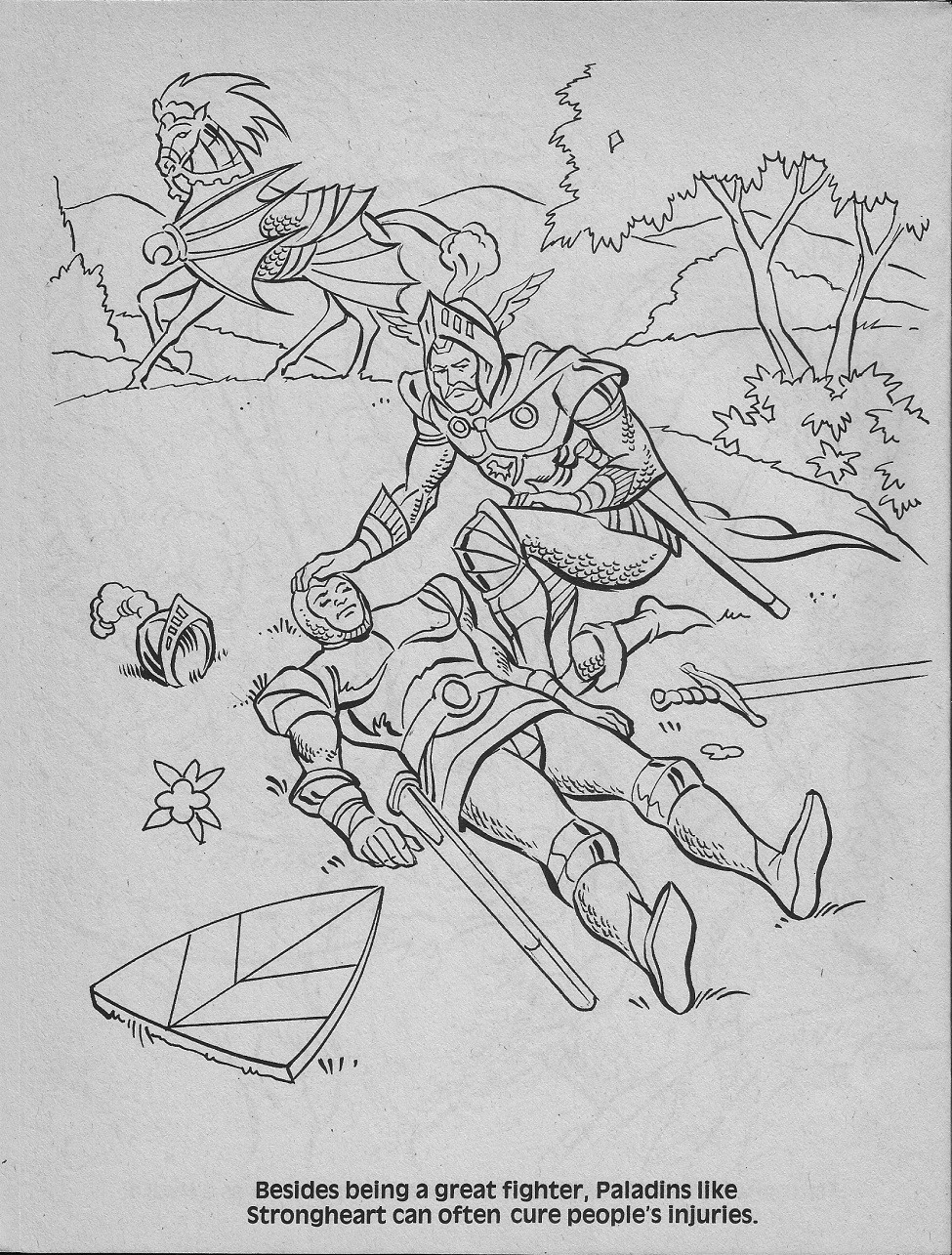
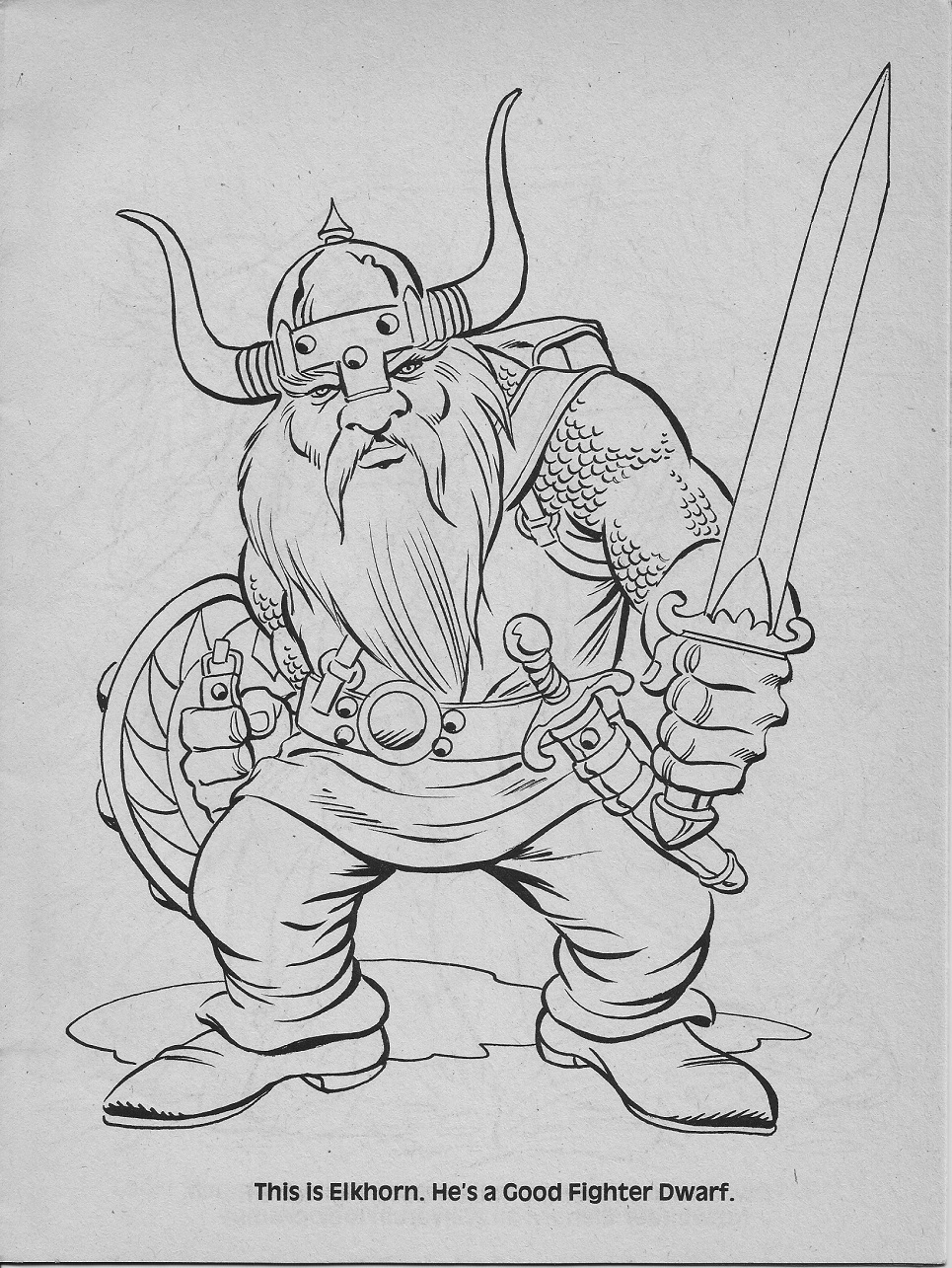
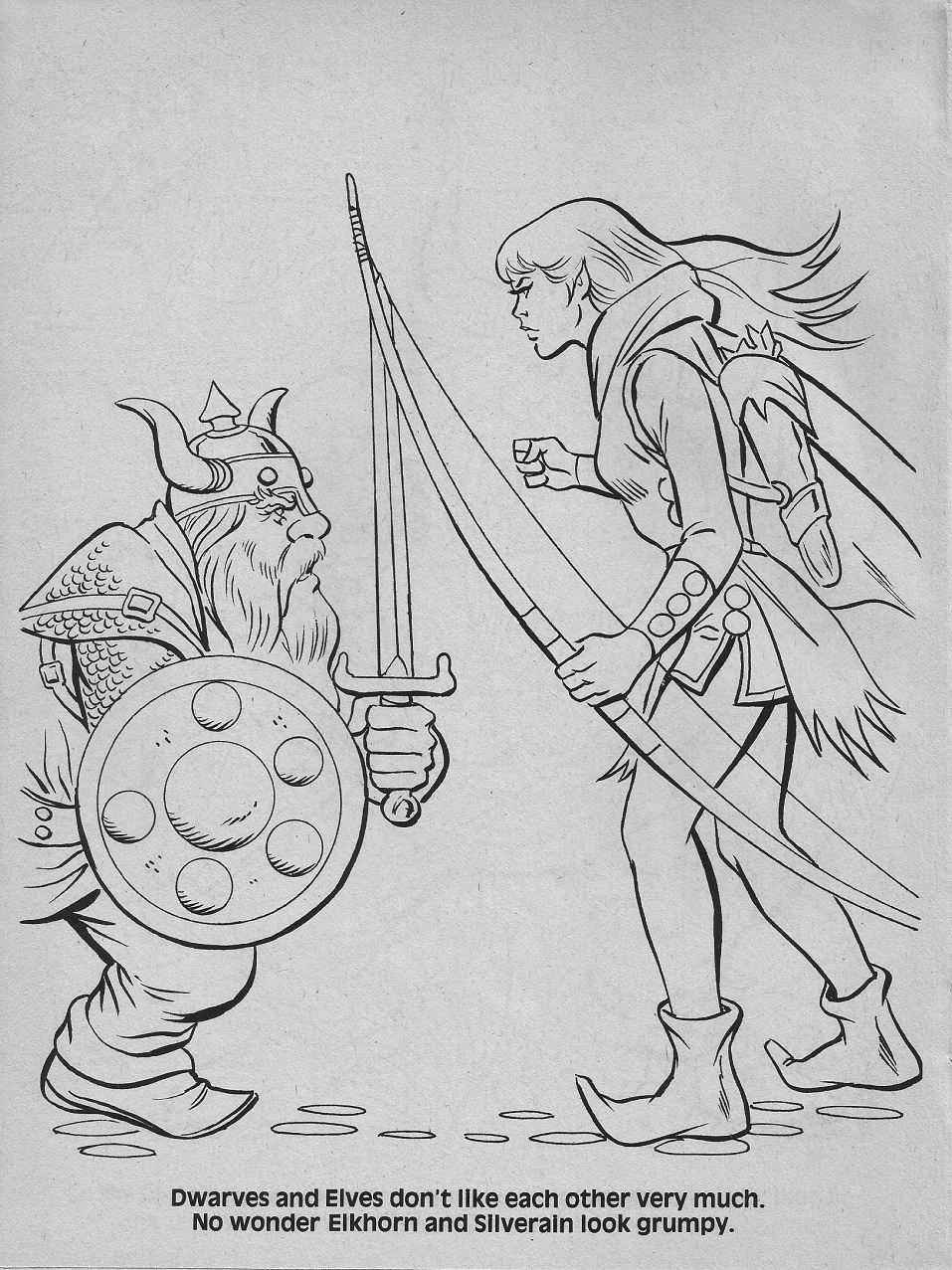
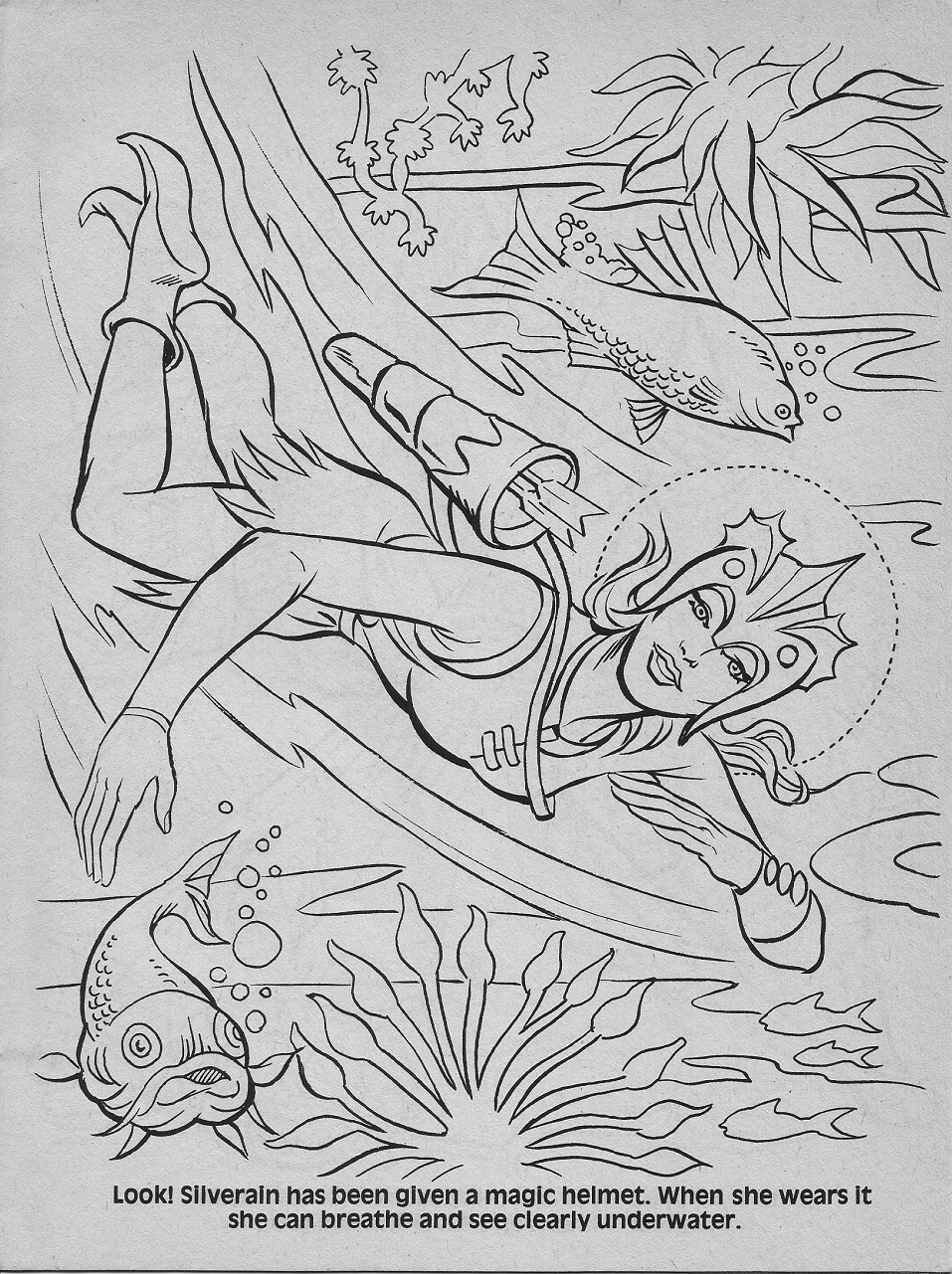
The action picks up in part two. We’ve got a five-headed hydra, the paladin’s Lay on Hands ability, lots of Warduke, the historic dwarf/elf antagonism (from Tolkien), and a helm of water breathing (my favorite page—those fish are flummoxed!).

On the last page, the evil cleric Zargash is charming a snake, but I don’t think clerics have access to the Charm Animal or Charm Monster spells. Maybe I’m wrong.

Part one of the Characters Coloring Book is here.


Pages

Archives

Categories

Donate Button

Join 1,118 other subscribers