Archive for the 'Magazines/Zines' Category


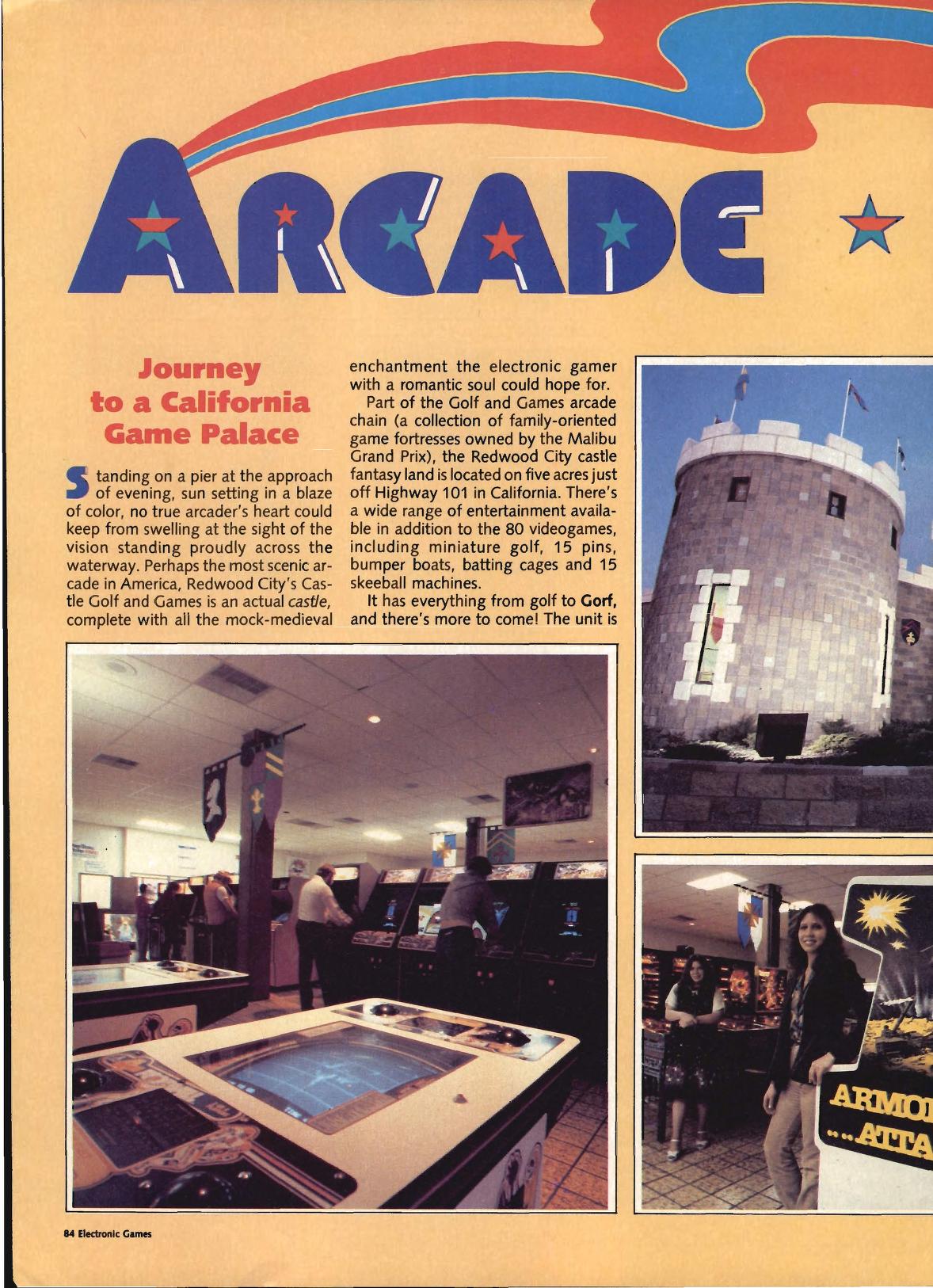
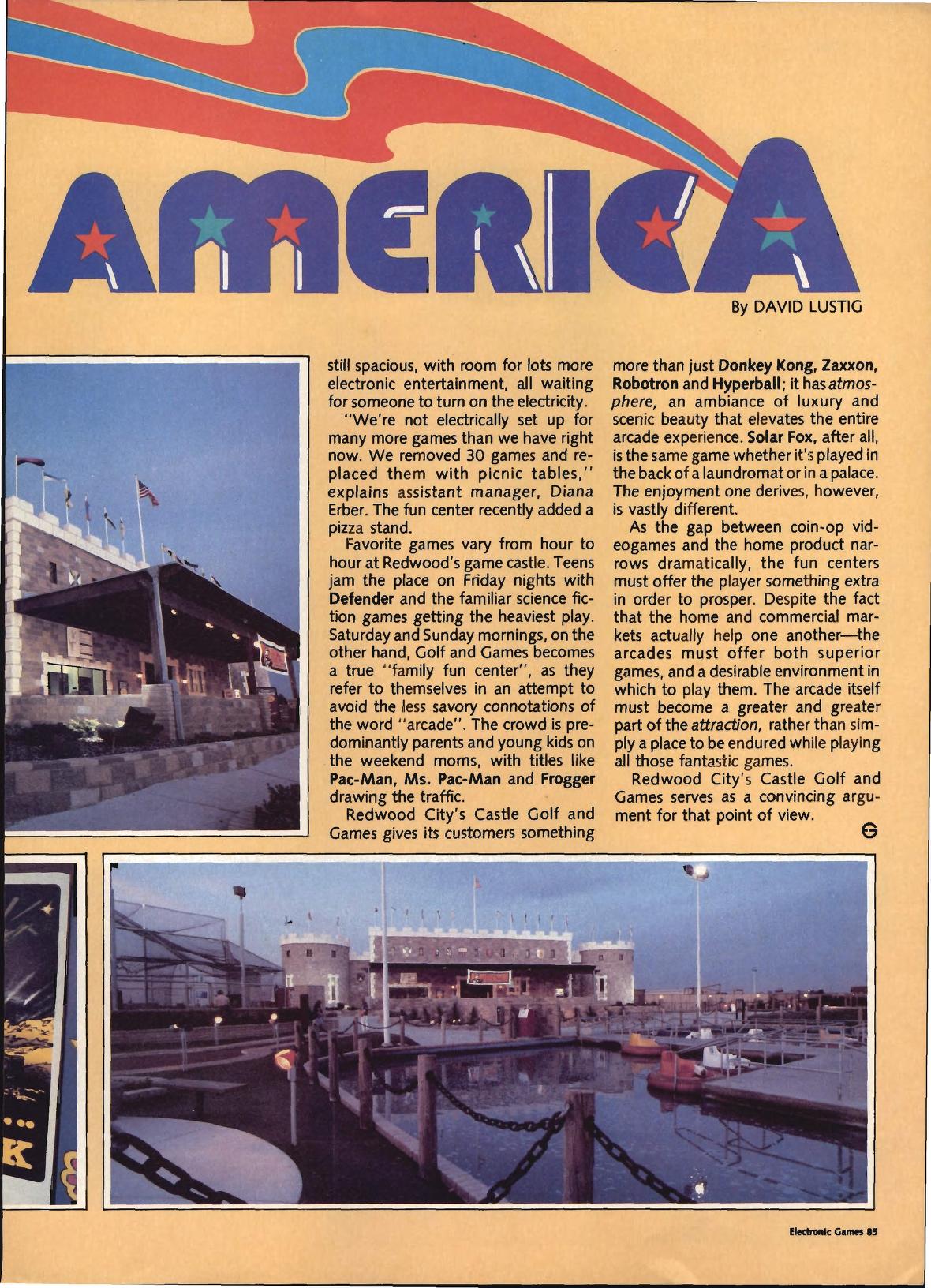
Arcade Zen: Malibu Castle Golf and Games, 1982

Arcade 1982Arcade 1982-2


The Redwood City Golf and Games was owned by Malibu Grand Prix and survived more than 35 years. Interesting that the “the mock-medieval enchantment” of the place is so closely associated with “the electronic gamer with a romantic soul.”

The article makes some historically interesting points about the “family fun center” trying to distance itself from the “less savory connotations of the word ‘arcade'”. The Redwood City location, says the writer, had an “atmosphere” and “ambiance” that “elevates the entire arcade experience.” And because the home consoles were becoming more popular, the arcade had to “become a greater and greater part of the attraction, rather than simply a place to be endured” while playing the games.

Craig Stieglitz, who grew up in the area and managed the center for 18 years, had this to say when it closed in 2013 due to exorbitant rent:

I grew up in the area, and I came here as a kid… I got a job here for the summer, and 18 years later, here I am. That’s the sort of place this is.

Another resident added:

It’s sad—it’s a piece of your childhood taken away from you… There’s nothing quite like it out here.

The property was bought by a developer less than a month later. Upscale office buildings are in the works. God bless America.

The article is from Electronic Games #8 (October, 1982).


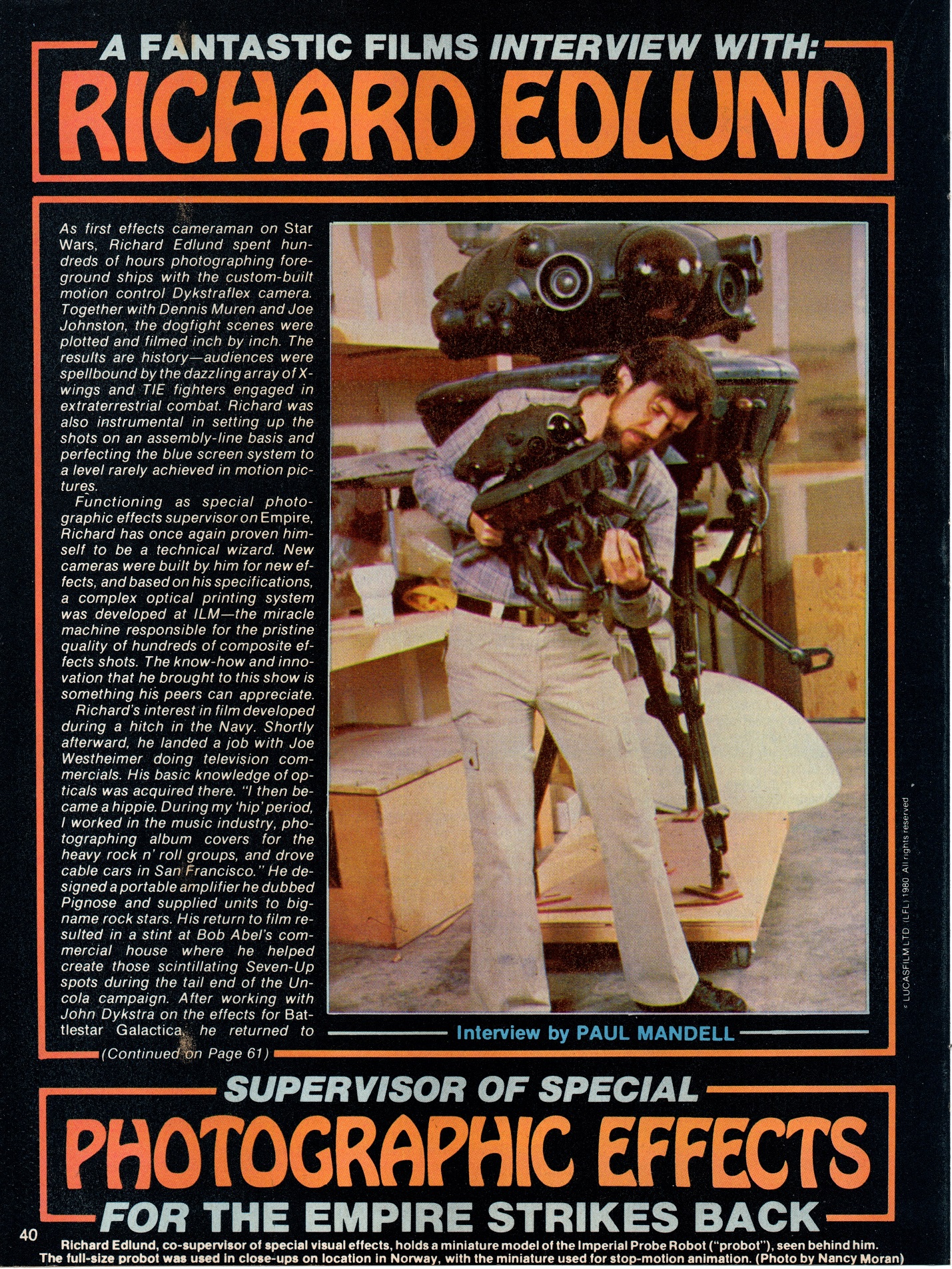
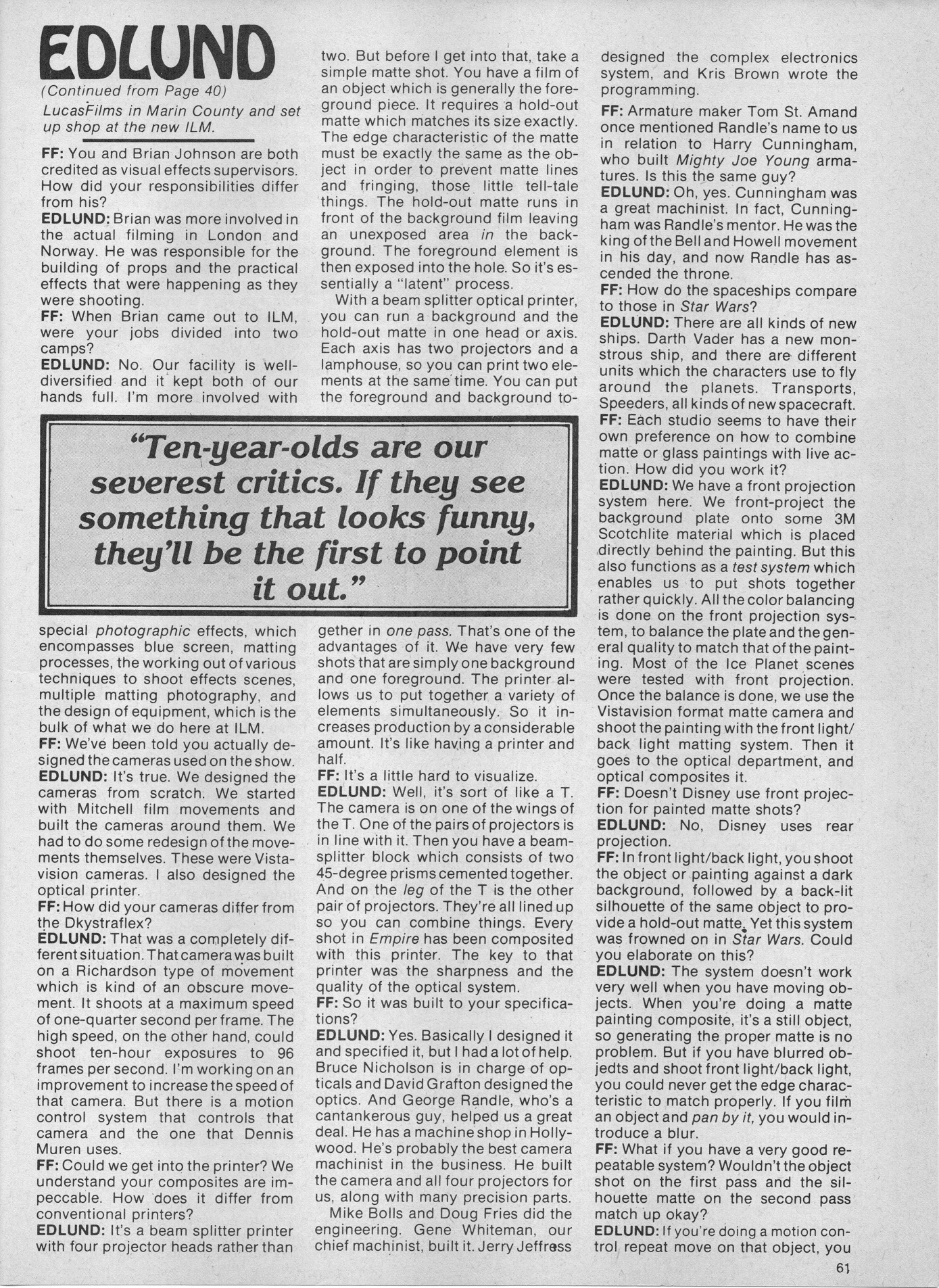
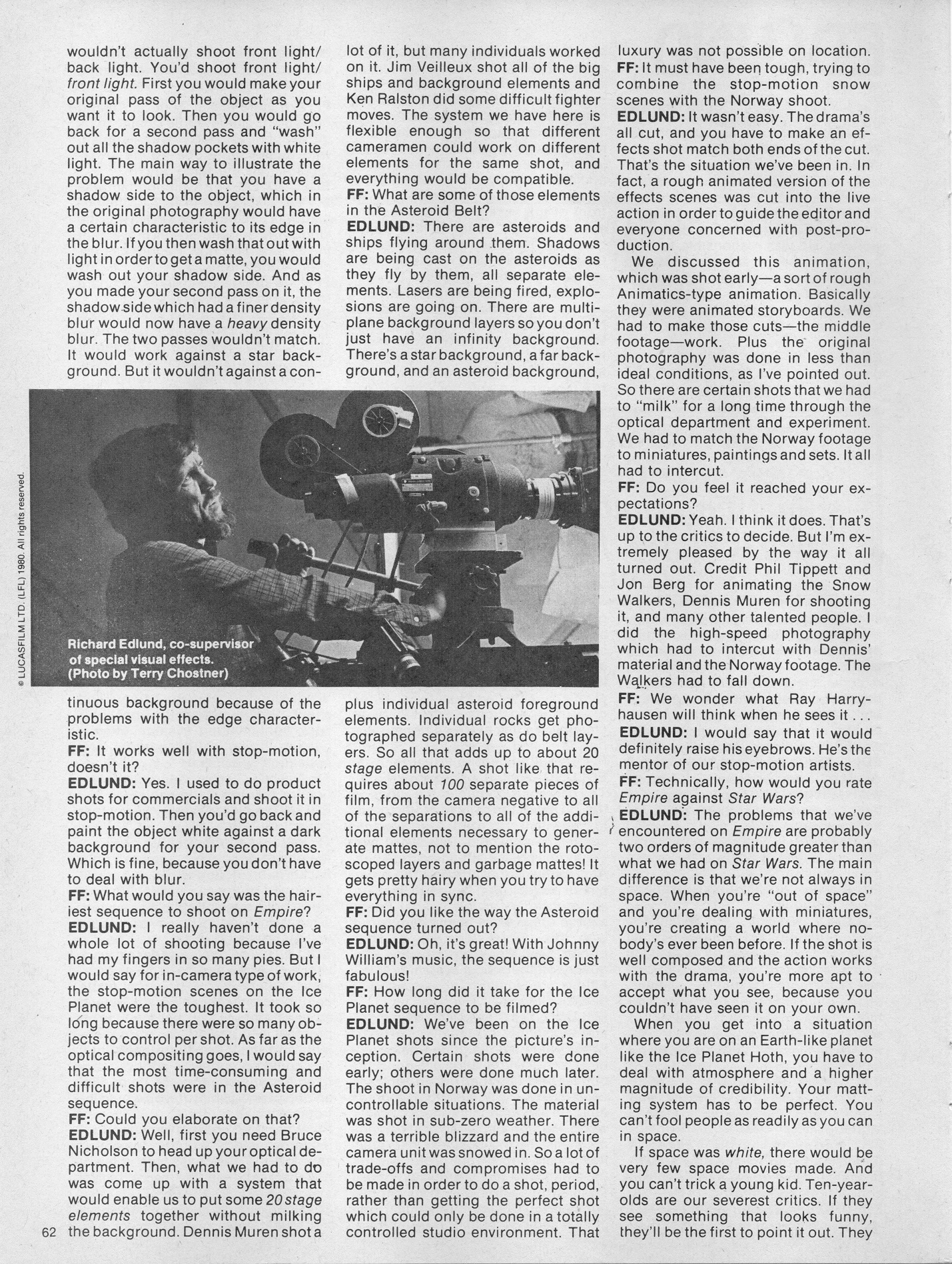
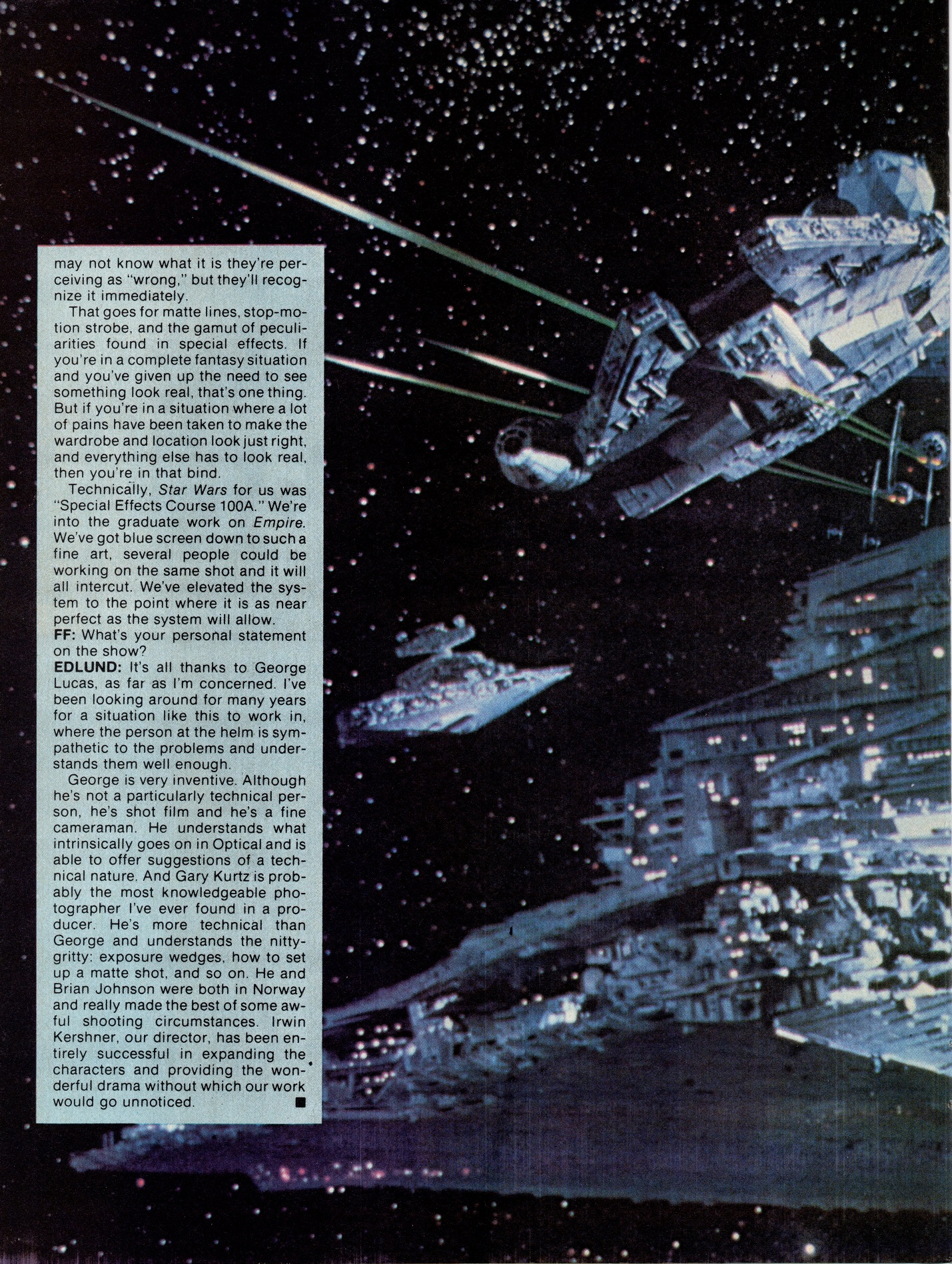
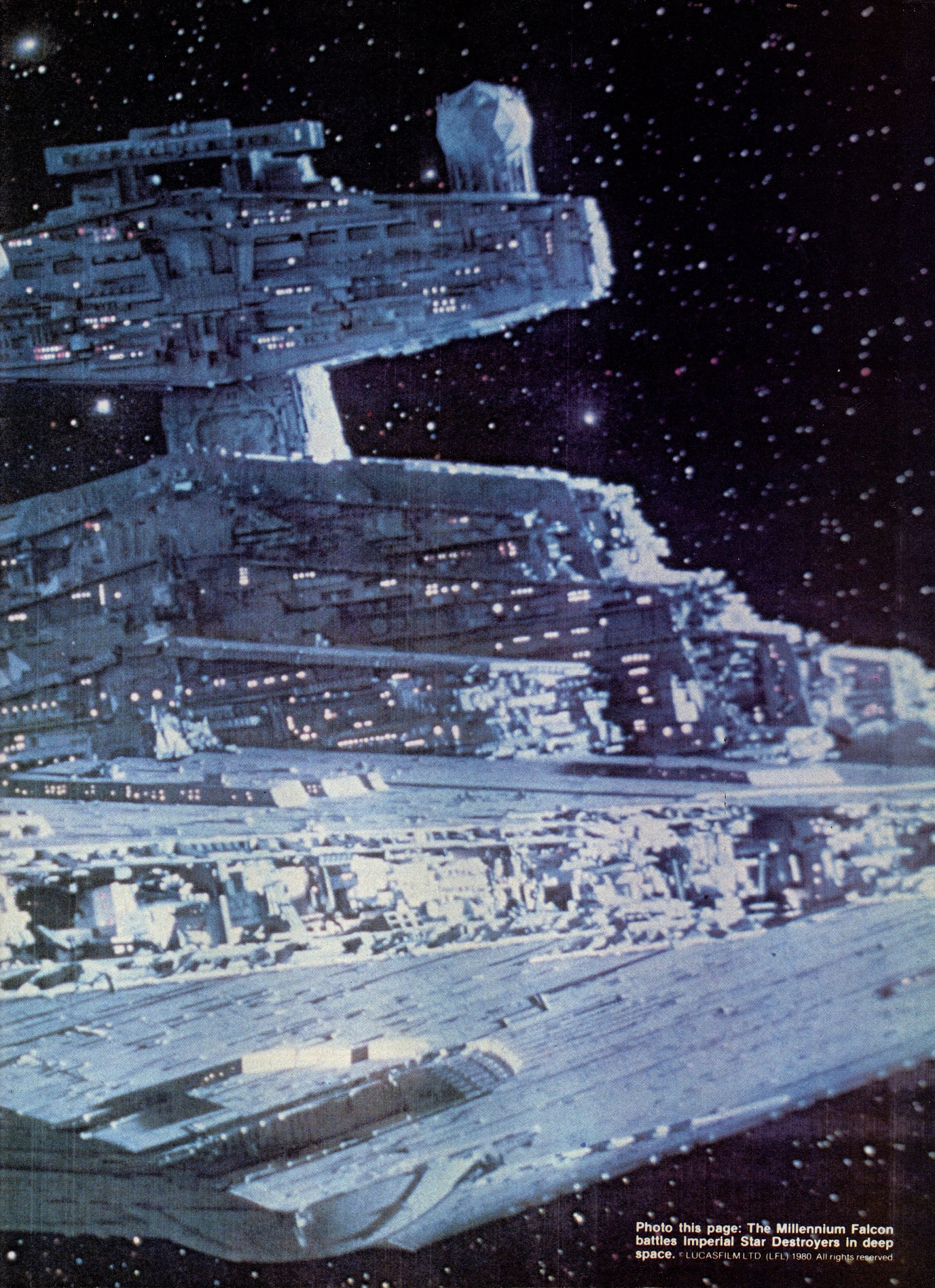
Fantastic Films #17 (July, 1980): Interview with Richard Edlund

FF #17 1980-1056

FF #17 1980-2057

FF #17 1980-3058

FF #17 1980-4059

FF #17 1980-5060

There were a number of interviews with the special effects crew of The Empire Strikes Back in Fantastic Films #17. Here’s the first. It gets pretty technical, because that’s Edlund’s field, but anyone can appreciate what he says about the now famous asteroid chase sequence:

There’s a star background, a far background, and an asteroid background, plus individual asteroid foreground elements. Individual rocks get photographed separately as do belt layers. So all that adds up to about 20 stage elements. A shot like that requires about 100 separate pieces of film…

Notice that Edlund says “he became a hippie” during his early career. Some of the album covers he photographed and designed can be seen at Discogs. A couple of the psychedelic 7 UP commercials he worked on for visual effects pioneer Robert Abel are here and here. A shot of Edlund working on Star Wars is here.

Edlund went on to do visual effects for films like Raiders of the Lost Ark, Poltergeist, Ghostbusters, Fright Night, Big Trouble in Little China, Die Hard, and, of course, Return of the Jedi.

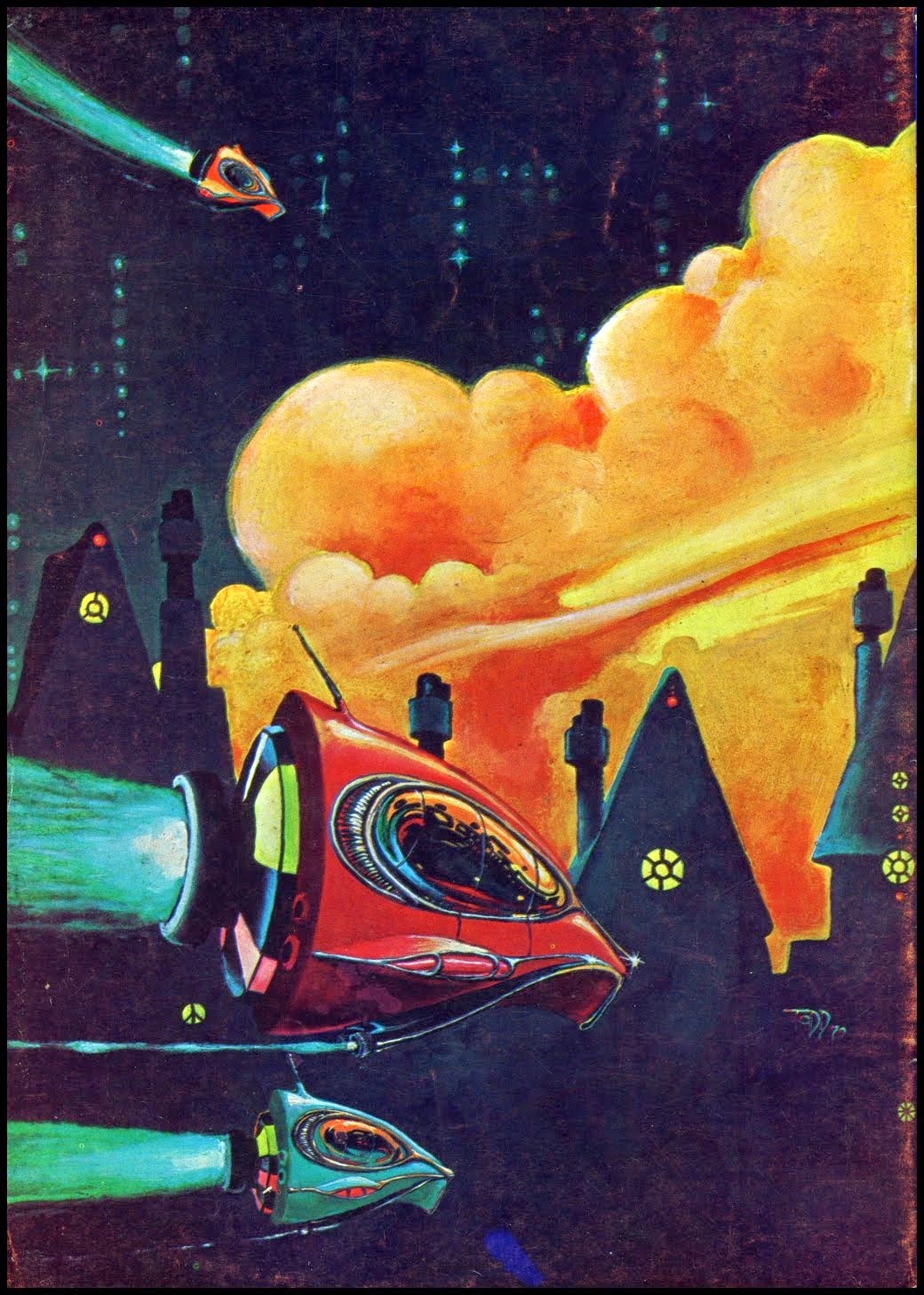
Michael Gross Back Cover Art for Heavy Metal (January, 1982)

Heavy Metal 1982 Michael Gross

Compare to the Angus McKie art seen here. The skeleton in a spacesuit, representing the long dead astronaut, is a very powerful sci-fi trope that’s been around since the dawn of the genre. The decomposing explorer is often buried in sand and surrounded by a dead world. The attempt to colonize space, especially as a a result of escalating social upheaval or widespread devastation (i.e. a nuclear war) on Earth, is a deeply troubling idea to many and dates all the way back to the myth of Icarus.

The image is a warning against the hubris of flying too high, of crossing thresholds we were not meant to cross, of challenging God. Ray Bradbury’s The Martian Chronicles (1950) is a famous example of the theme, as are the early sci-fi films Rocketship X-M (1950) and Flight to Mars (1951), to name just a few examples.

I can’t find much information on Michael Gross. He has entries at the Internet Speculative Fiction Database under both Mike Gross and Michael Gross, for a combined ten cover works. Heavy Metal is not mentioned, but I know he did more than one cover for the magazine.

(Image via The Por Por Books Blog)

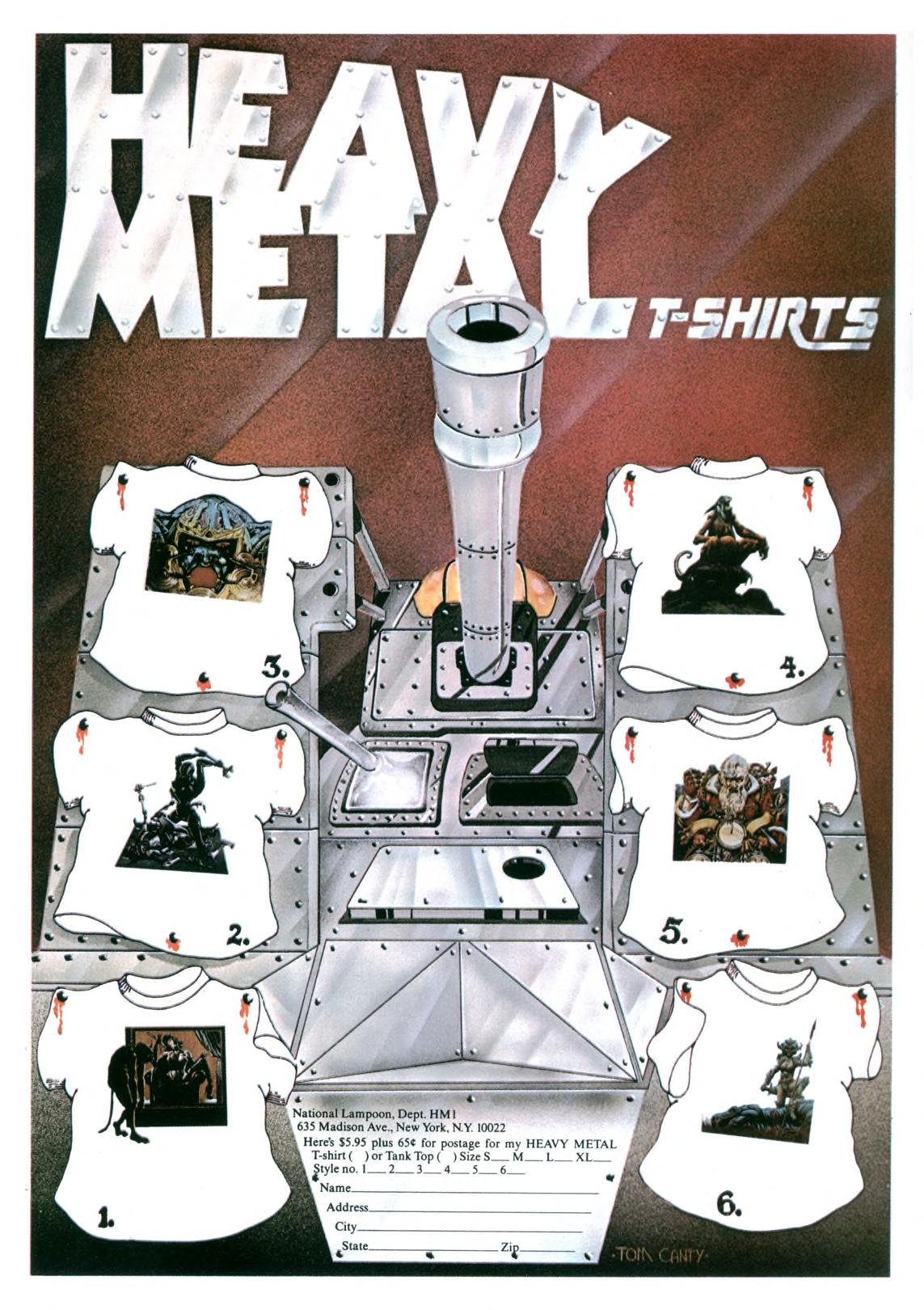
Heavy Metal T-Shirts Ad, 1977

Heavy Metal Ad 1977

From the first issue of the magazine, which you can read at the Internet Archive. The ad was designed by a young Tom Canty, who has since won multiple World Fantasy Awards for Best Artist.

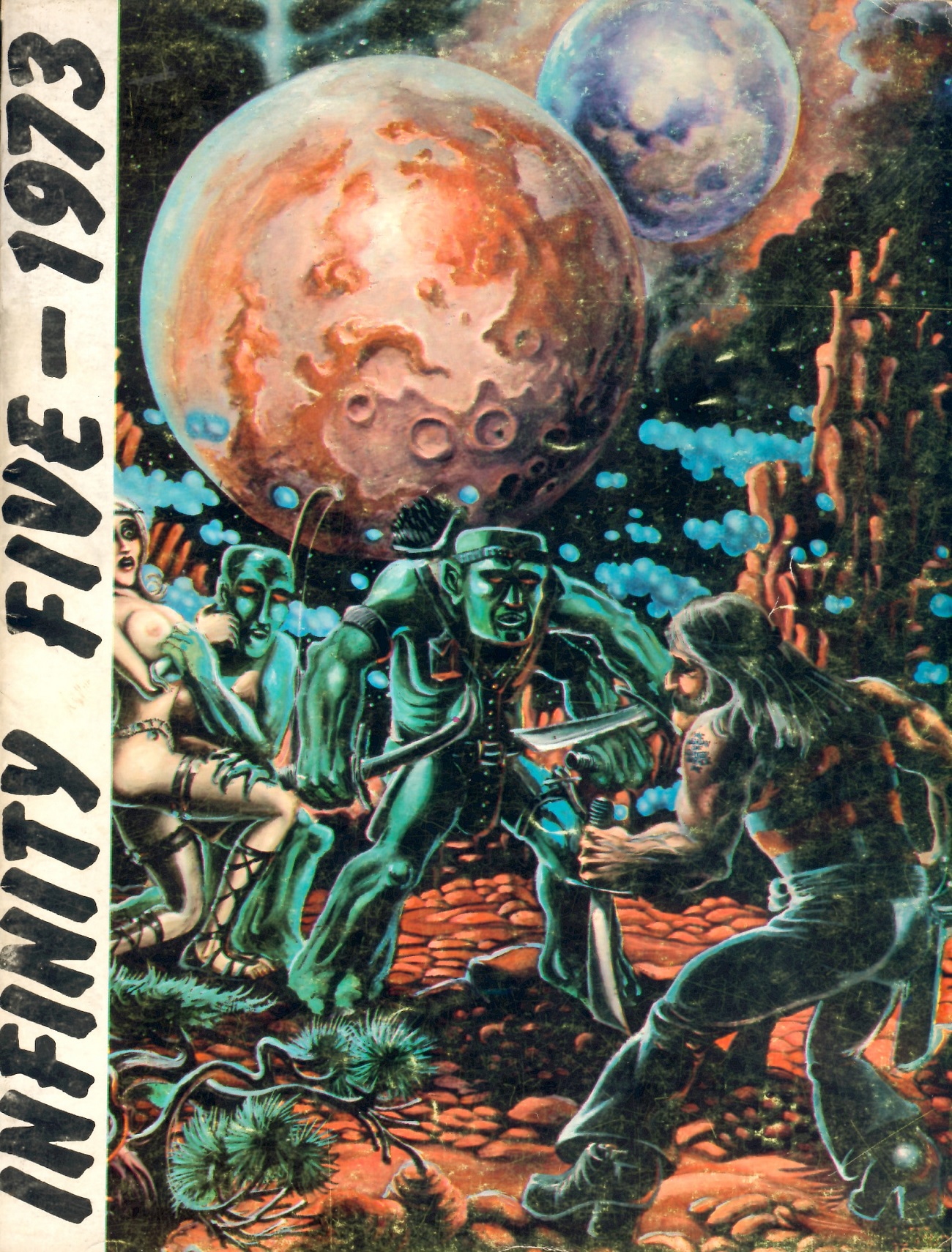
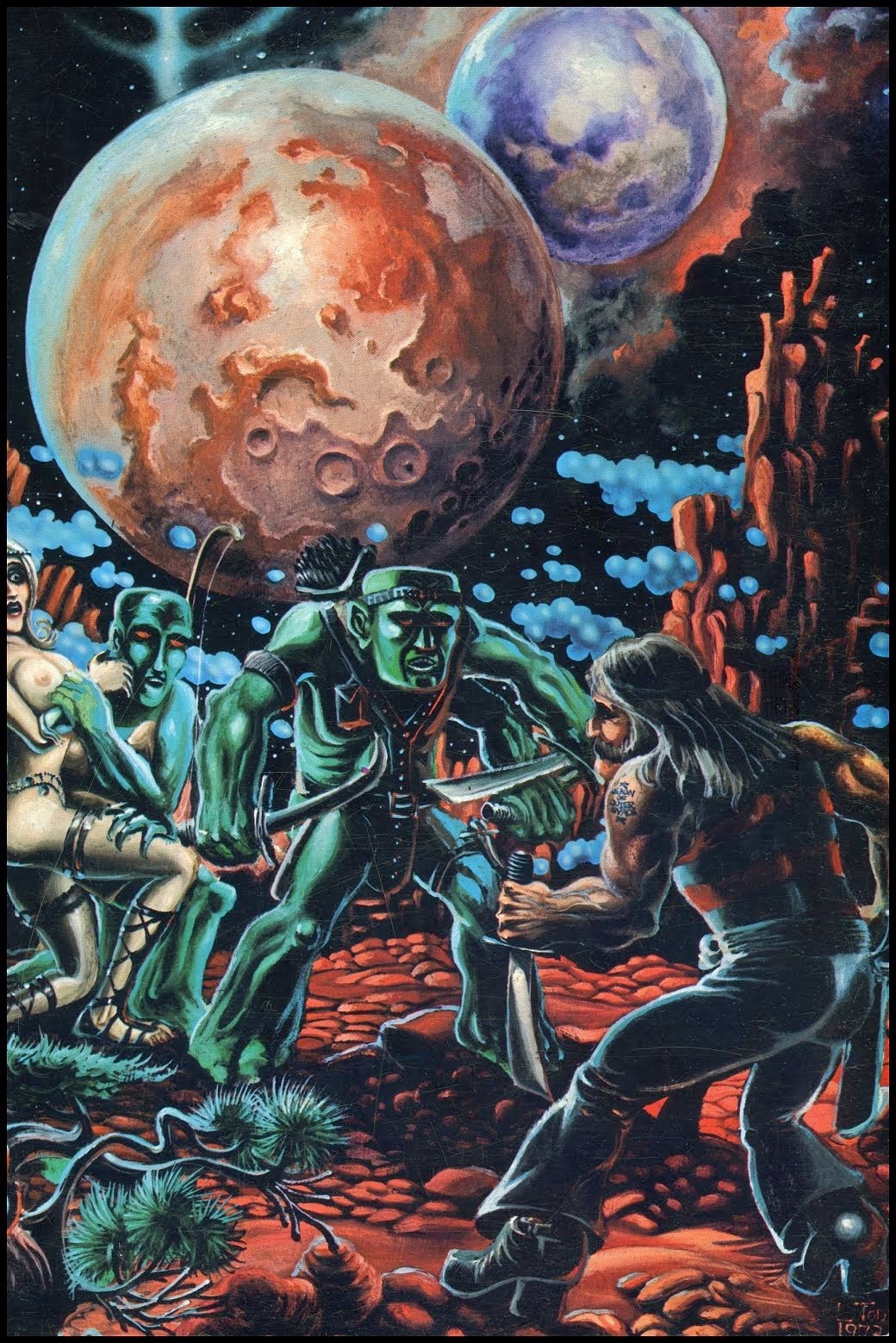
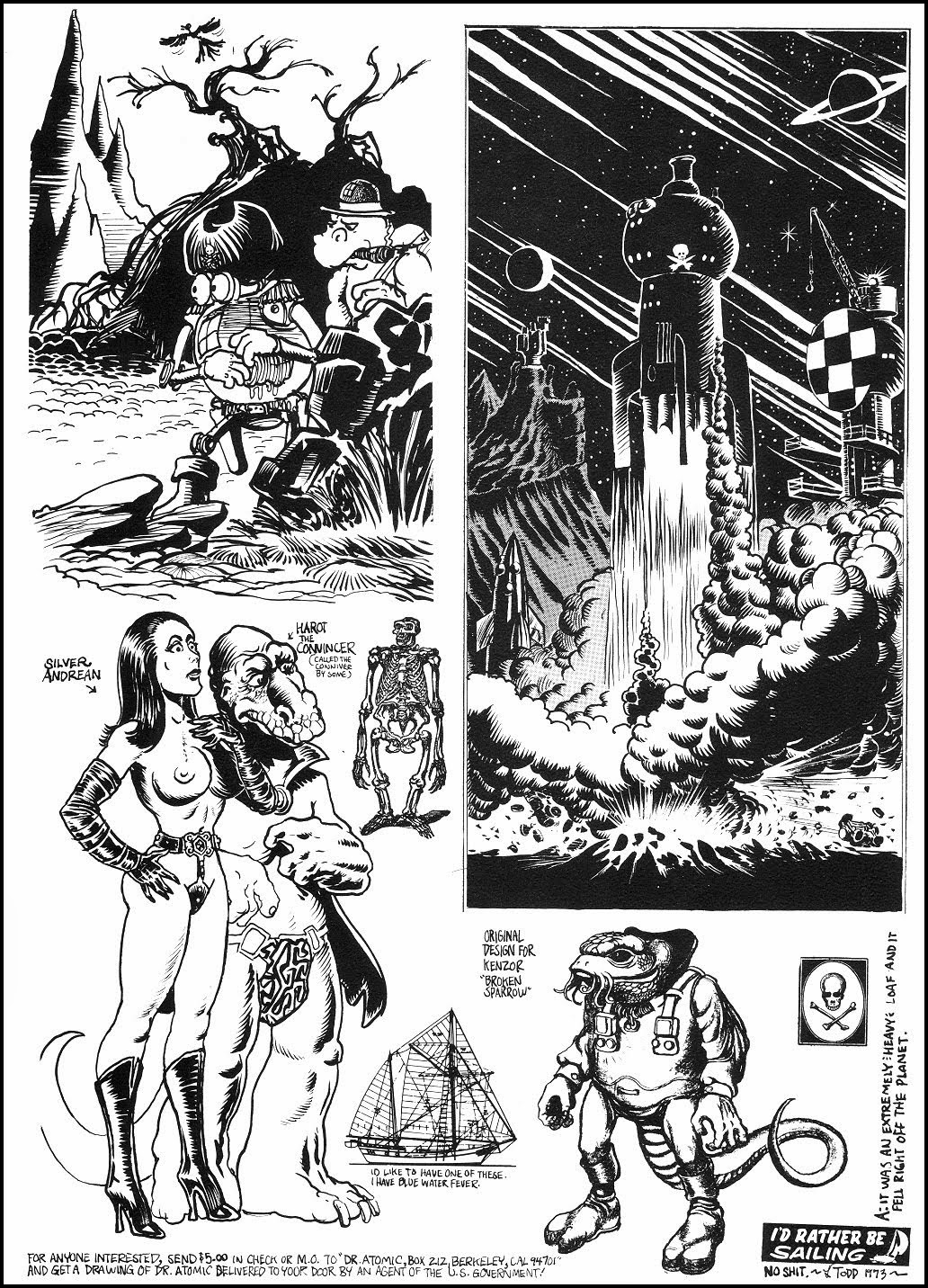
Larry Todd Art: Infinity #5 (Summer, 1973)

Todd Infinity #5 1973-2

Todd Infinity #5 1973

Todd Infinity #5 1973-4

Todd Infinity #5 1973-5

Todd Infinity #5 1973-6

Todd Infinity #5 1973-3

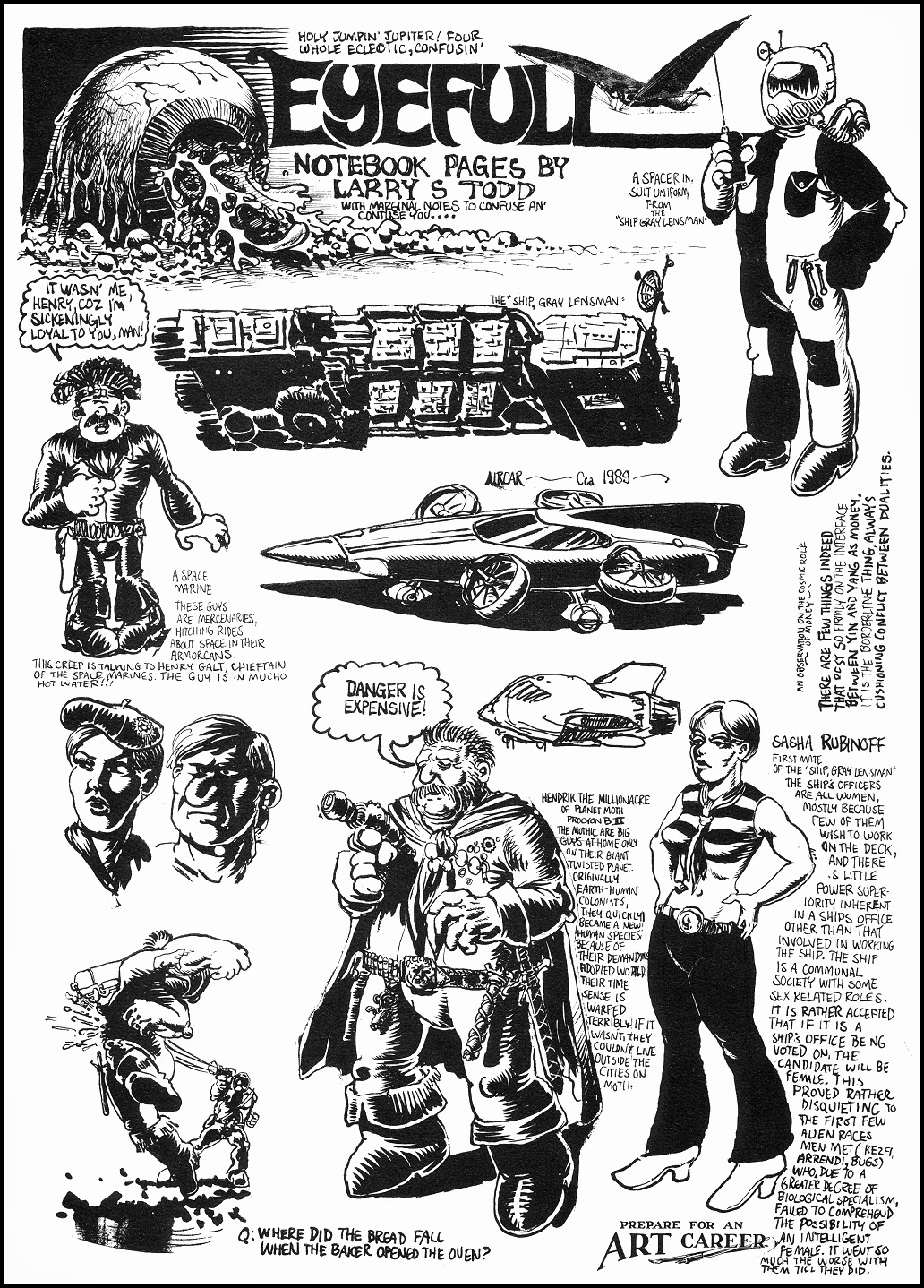
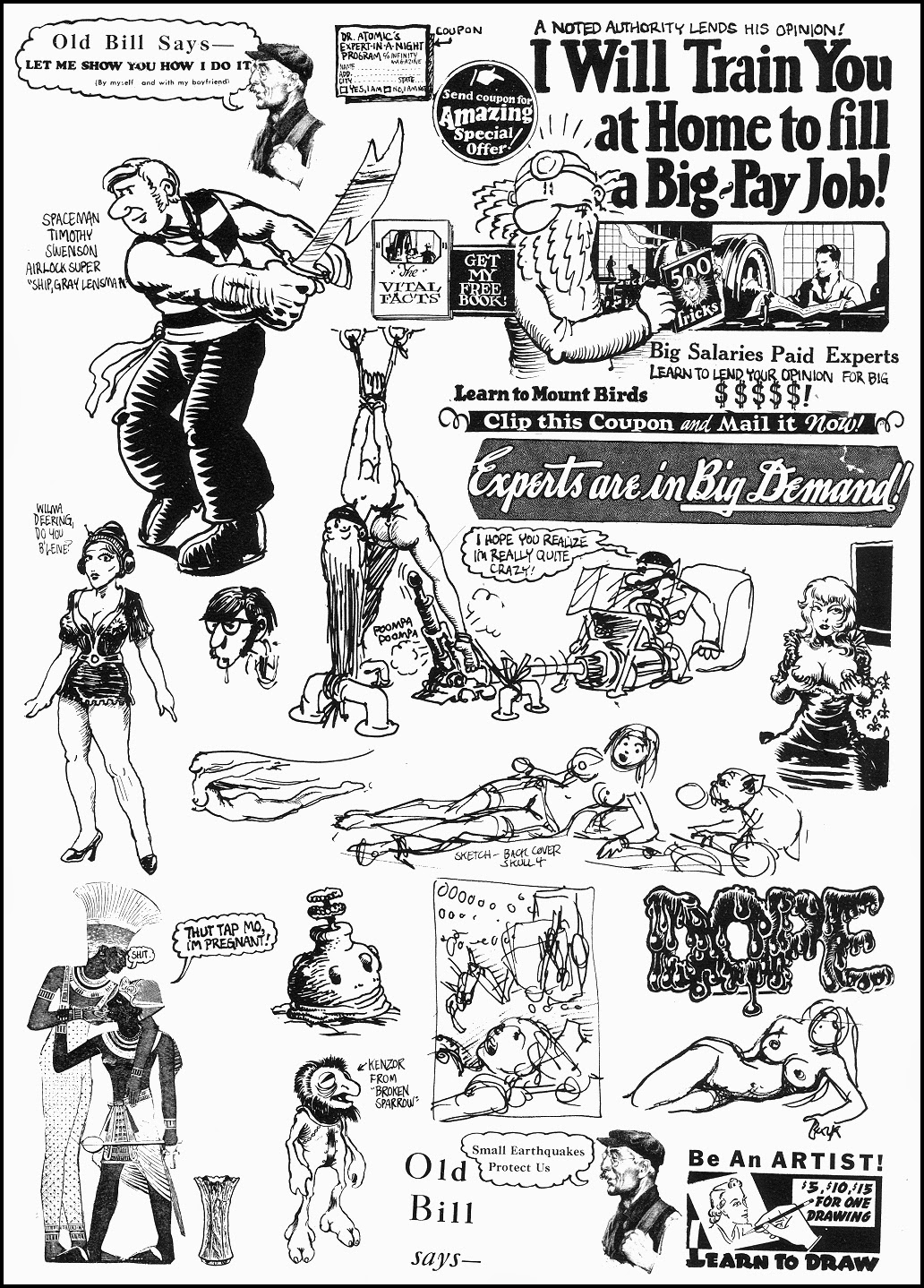
Todd, who created the notable underground comic Dr. Atomic, was very active in the sci-fi/fantasy zine circuit of the 1970s, including Warren (Creepy, Eerie) and Skywald (Nightmare, Psycho) Publications. He and friend Vaughn Bodē did a number of terrific cover collaborations as well.

The above work is a smashing example of the intersection of counterculture themes (psychedelics, Native American culture, the American biker lifestyle, anti-authoritarianism, sexual freedom, and so on) and the expanding sci-fi and fantasy community. Per psychotropicis ad astra!

The “Aircar circa 1989” on the second page kind of reminds me of the Spinner cars in Blade Runner.

(Images via The Golden Age and Comic Attack)

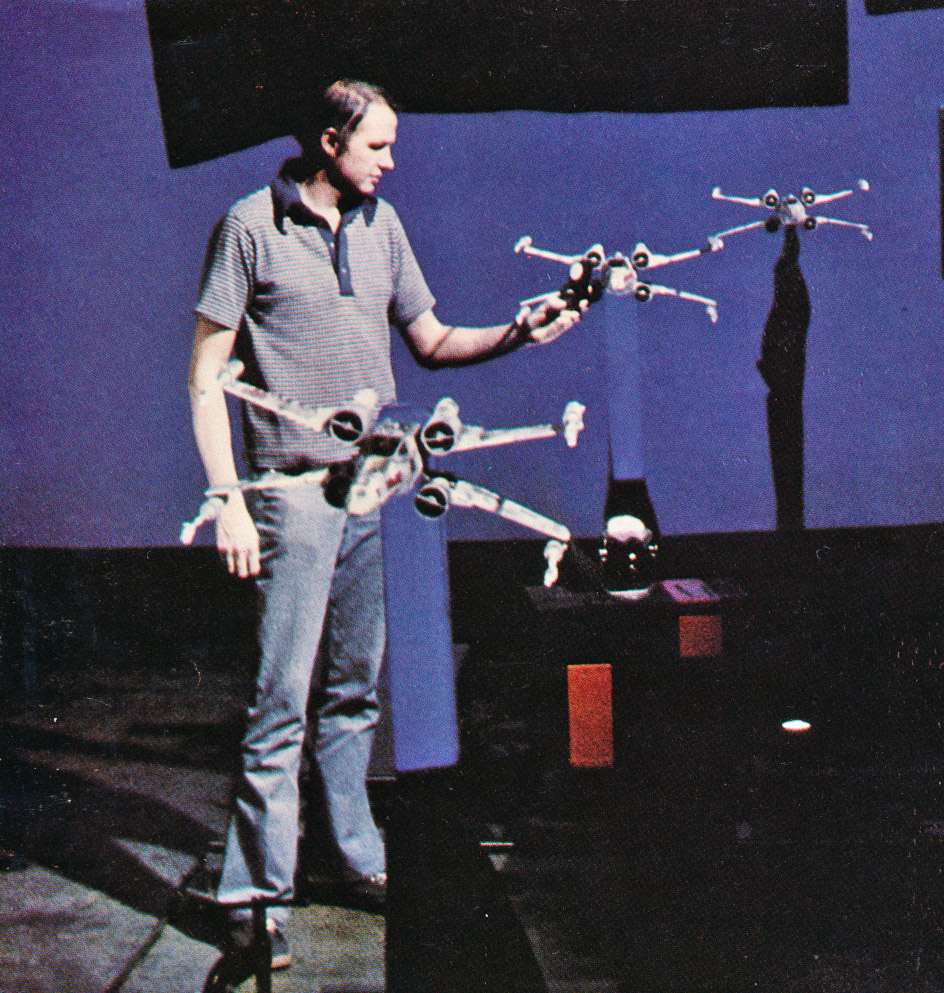
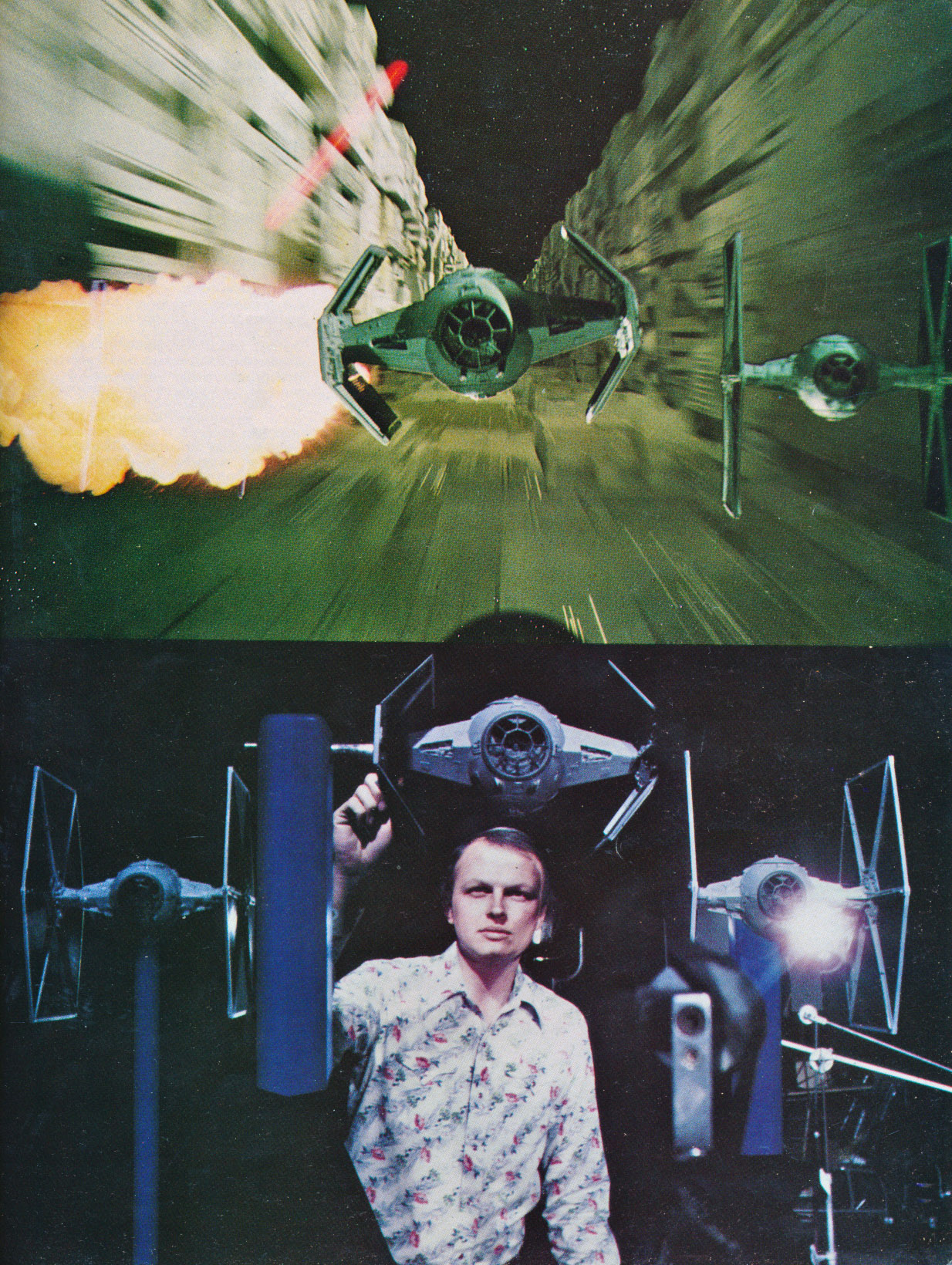
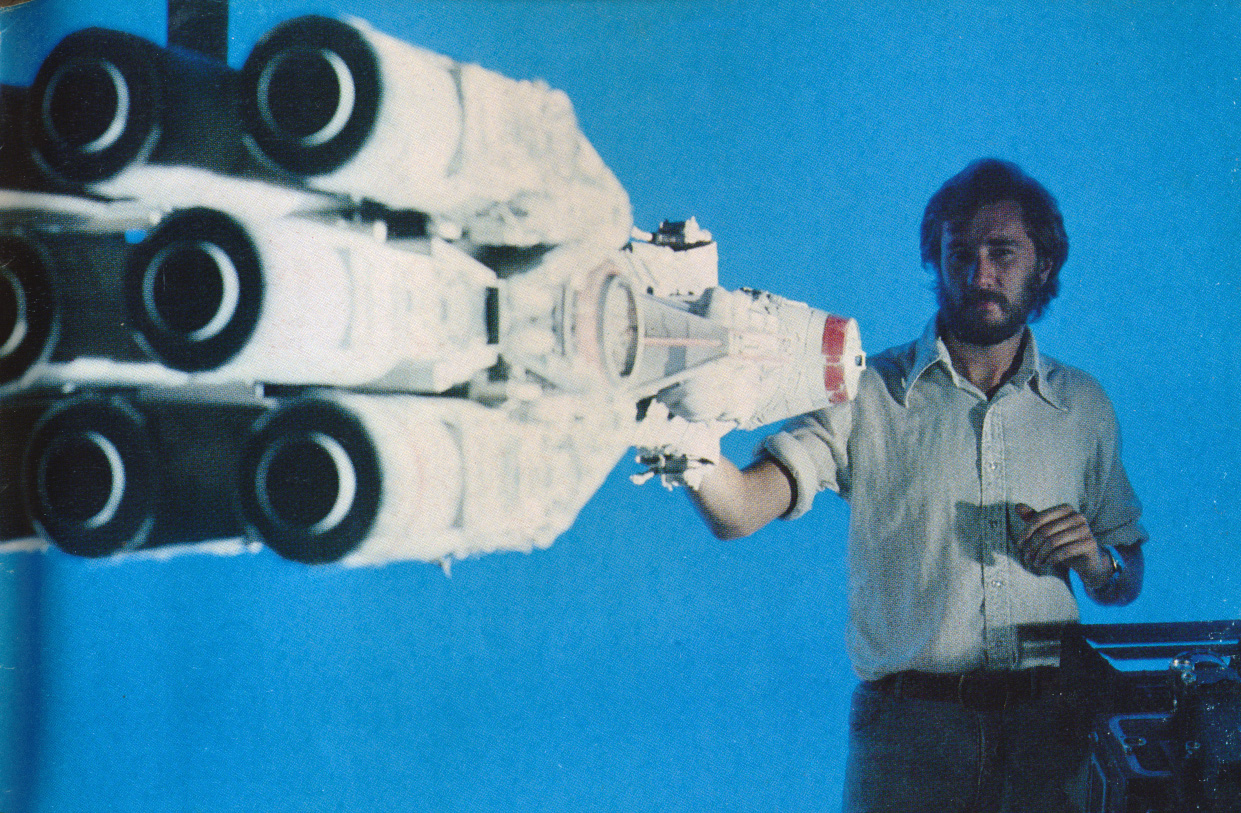
Cinefantastique Volume 6, Number 4 (1978): Filming the Special Effects for Star Wars

Cine Edlund 1978-2

Cine Star Wars 1978

Cine Muren 1978-1

Cine Muren 1978-4

Cine Viskocil 1978-3

Cine Viskocil 1978-5

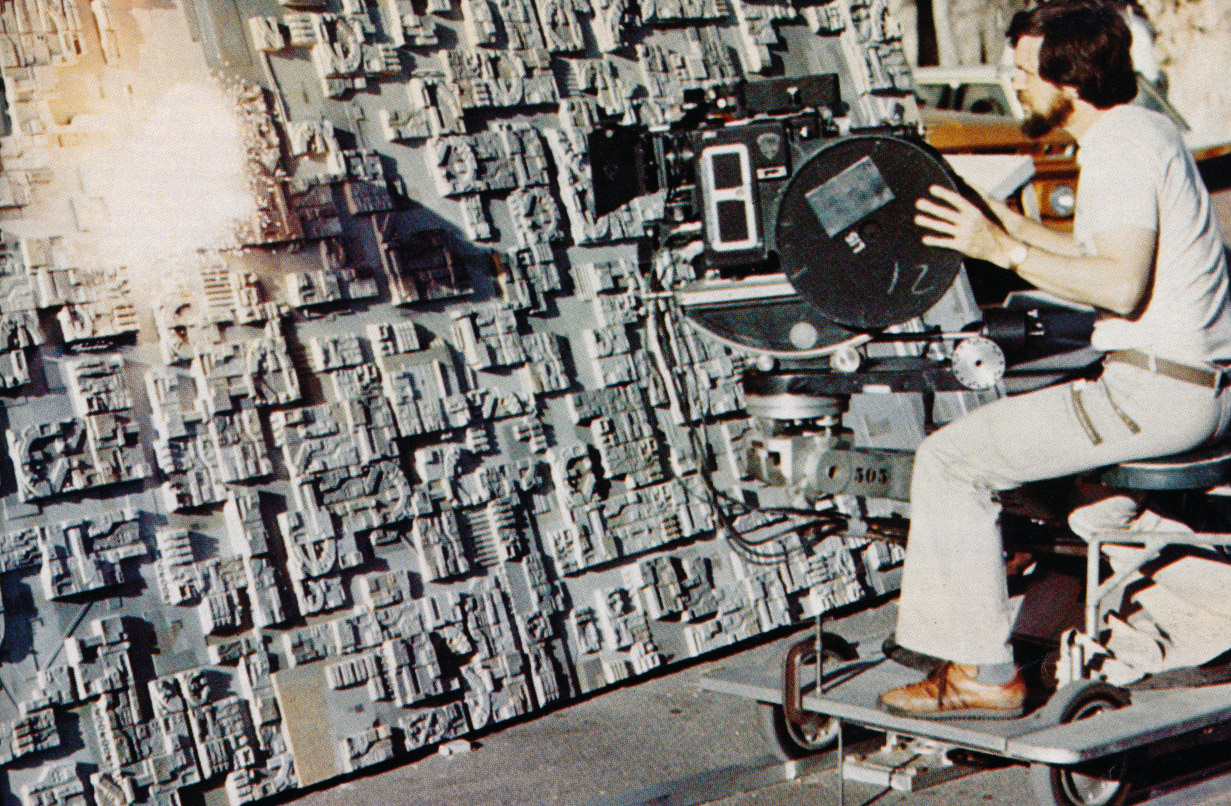
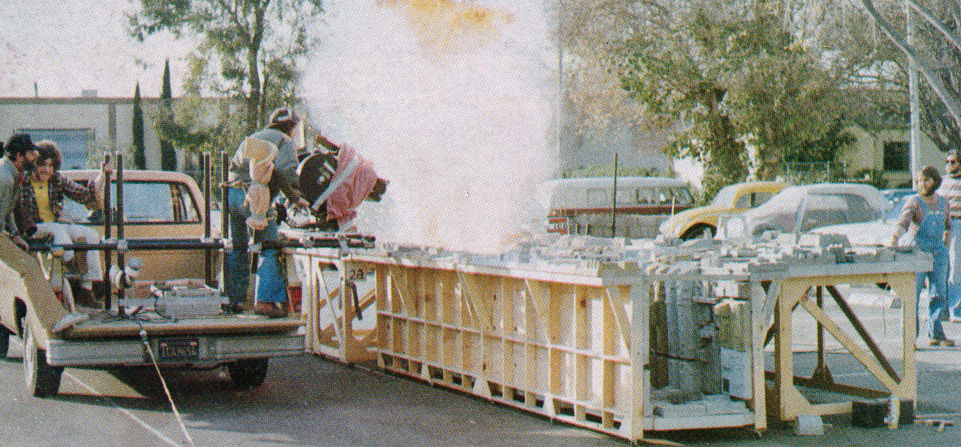
The photos are from Martin Kennedy’s exquisite Sci-fi Art Tumblr. More at the link, and good luck getting any work done ever again.

You see, from top to bottom, Richard Edlund filming Death Star explosions, Dennis Muren setting up X-Wing and Tie Fighter shots, and Joe Viskocil with the Blockade Runner. All of the guys were hand-picked by John Dykstra for Industrial Light & Magic, a little visual effects company founded by some guy named George Lucas in 1975.

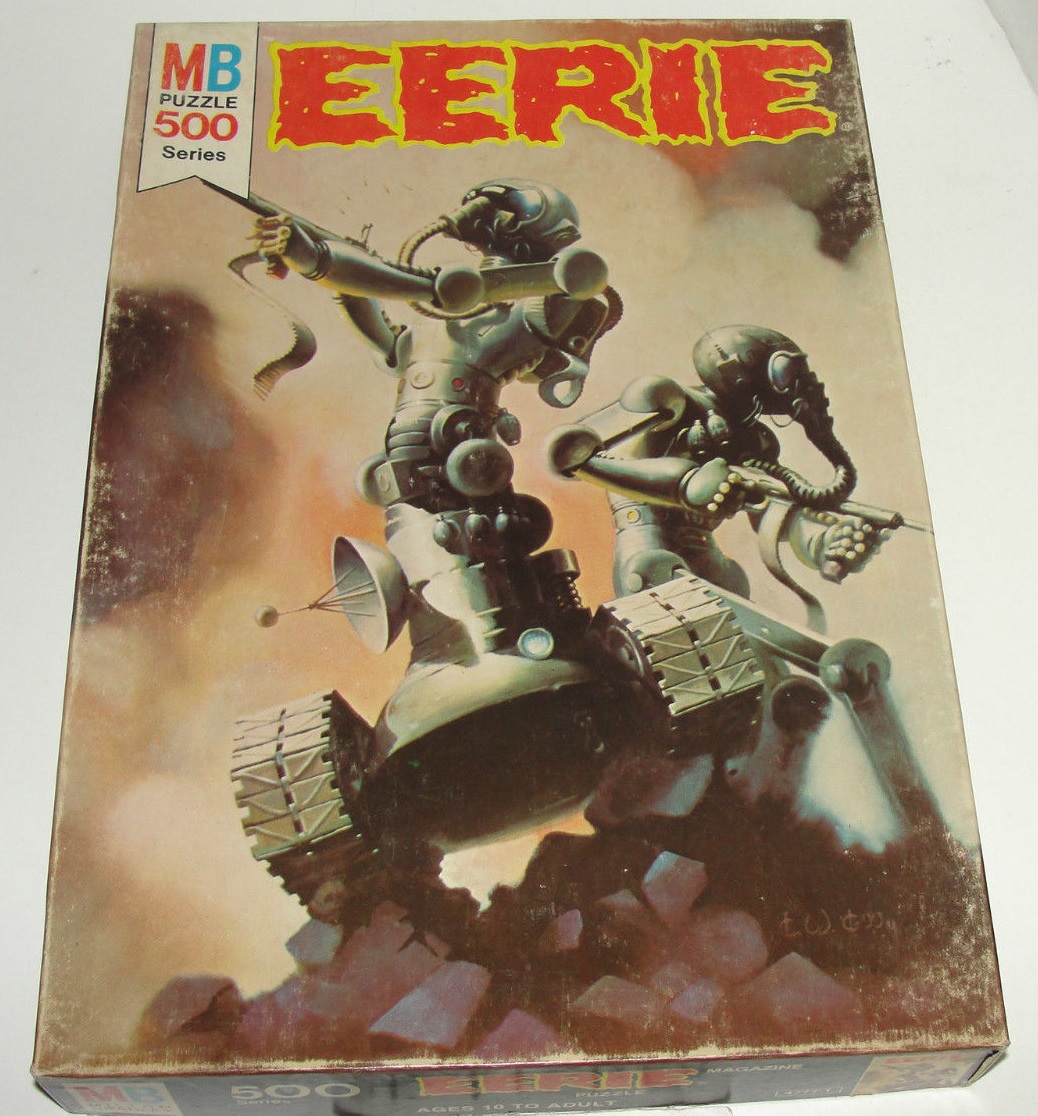
Eerie Jigsaw Puzzle (Milton Bradley, 1977)

Eerie Puzzle

Eerie Puzzle-2

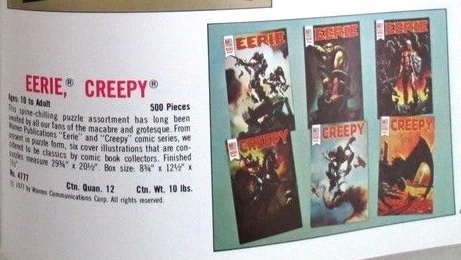
There were six puzzles in the series, per the entry below from the 1979 Milton Bradley catalog*. I’ve got a close-up of another puzzle here.

The brilliant art on the one above is from Ken Kelly for Eerie #64. Kelly’s cover work is featured on four of the six puzzles.

MB Cat 1979

*The blurb reads

This spine-chilling puzzle assortment has long been wanted by all our fans of the macabre and grotesque. From Warren Publications “Eerie” and “Creepy” comic series, we present in puzzle form, six cover illustrations that are considered to be classics by comic book collectors…

“Considered to be classics by comic collectors” is a backhanded compliment, isn’t it?

(Images via eBay)

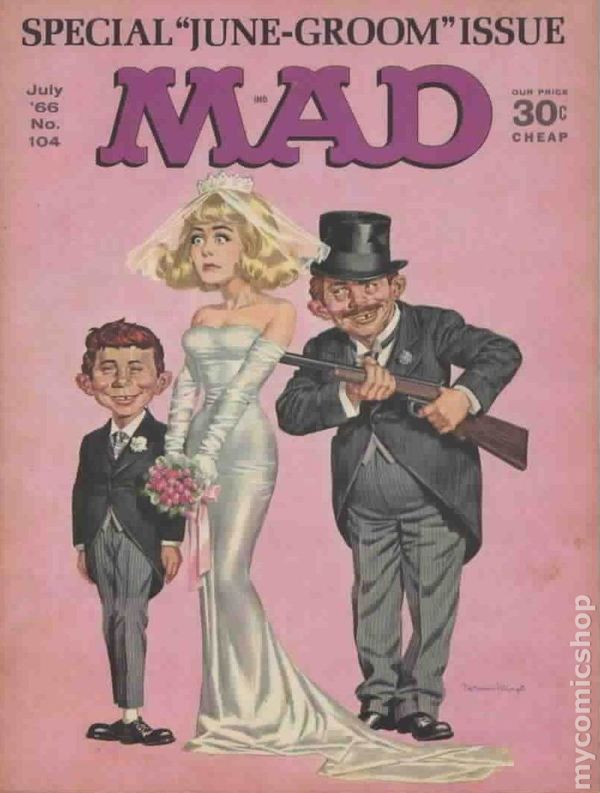
Kid Reading Mad Magazine and Drinking Pepsi, Circa 1966

Boy Reading Mad 1966

Mad 104 1966

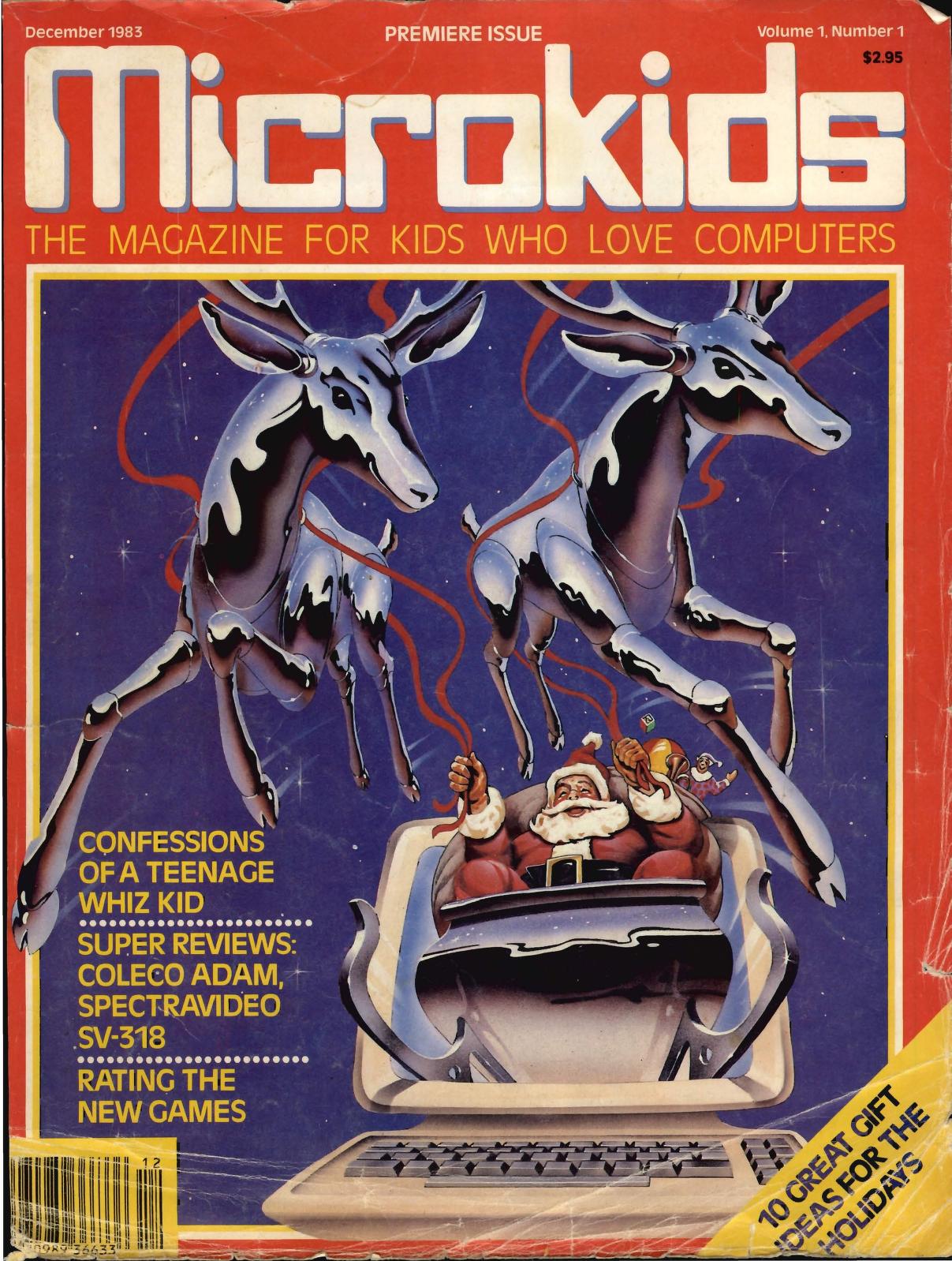
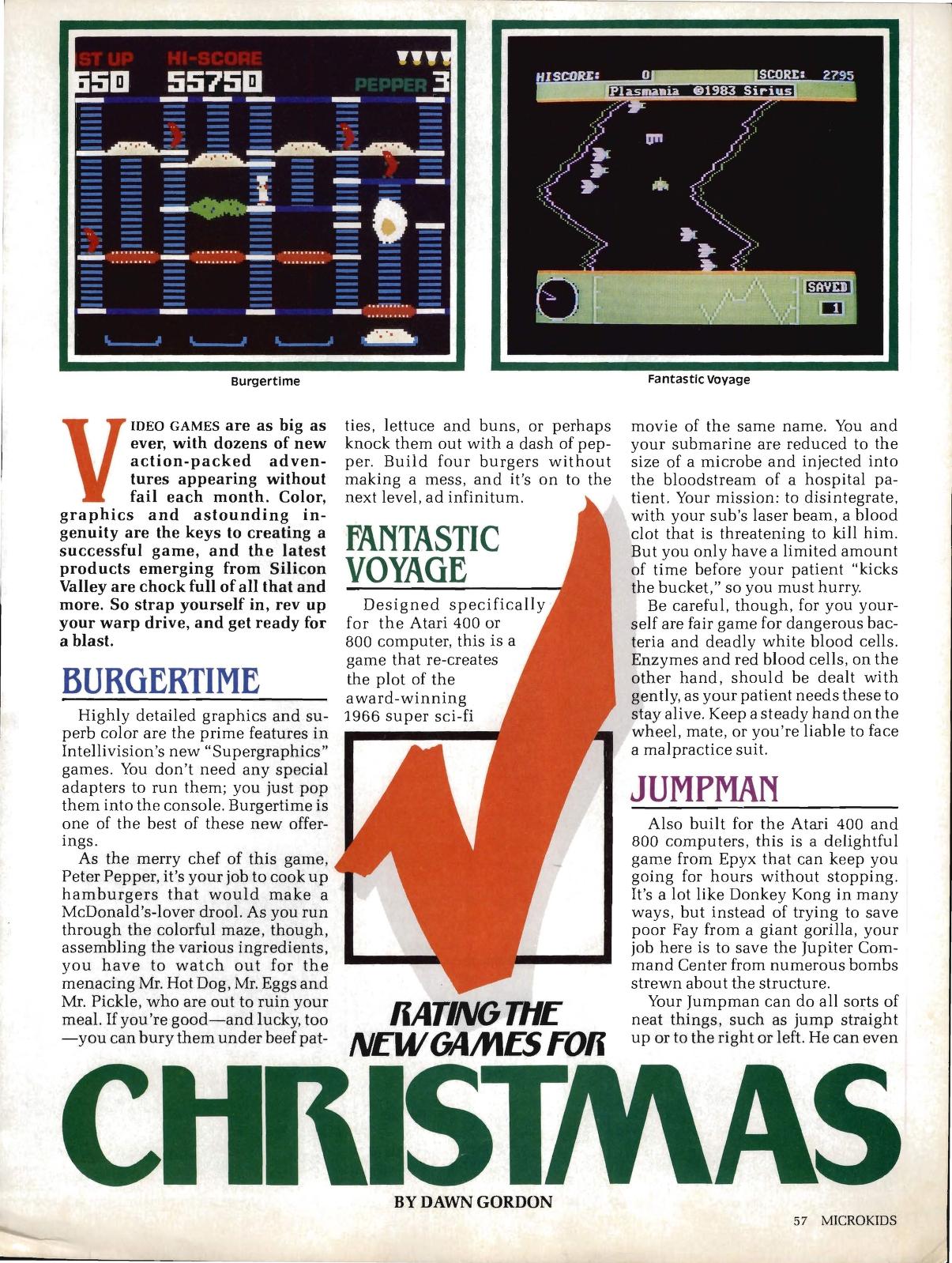
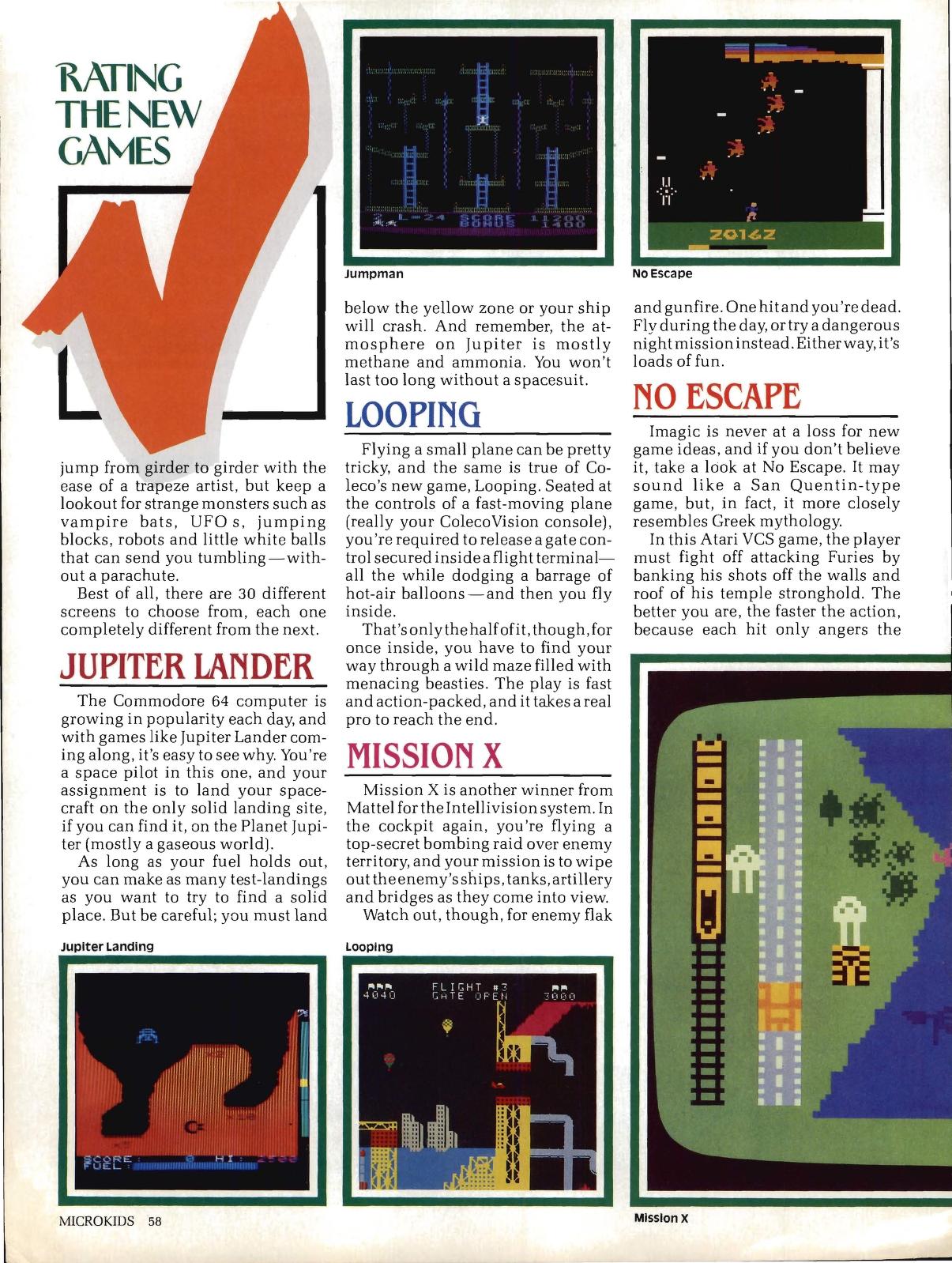
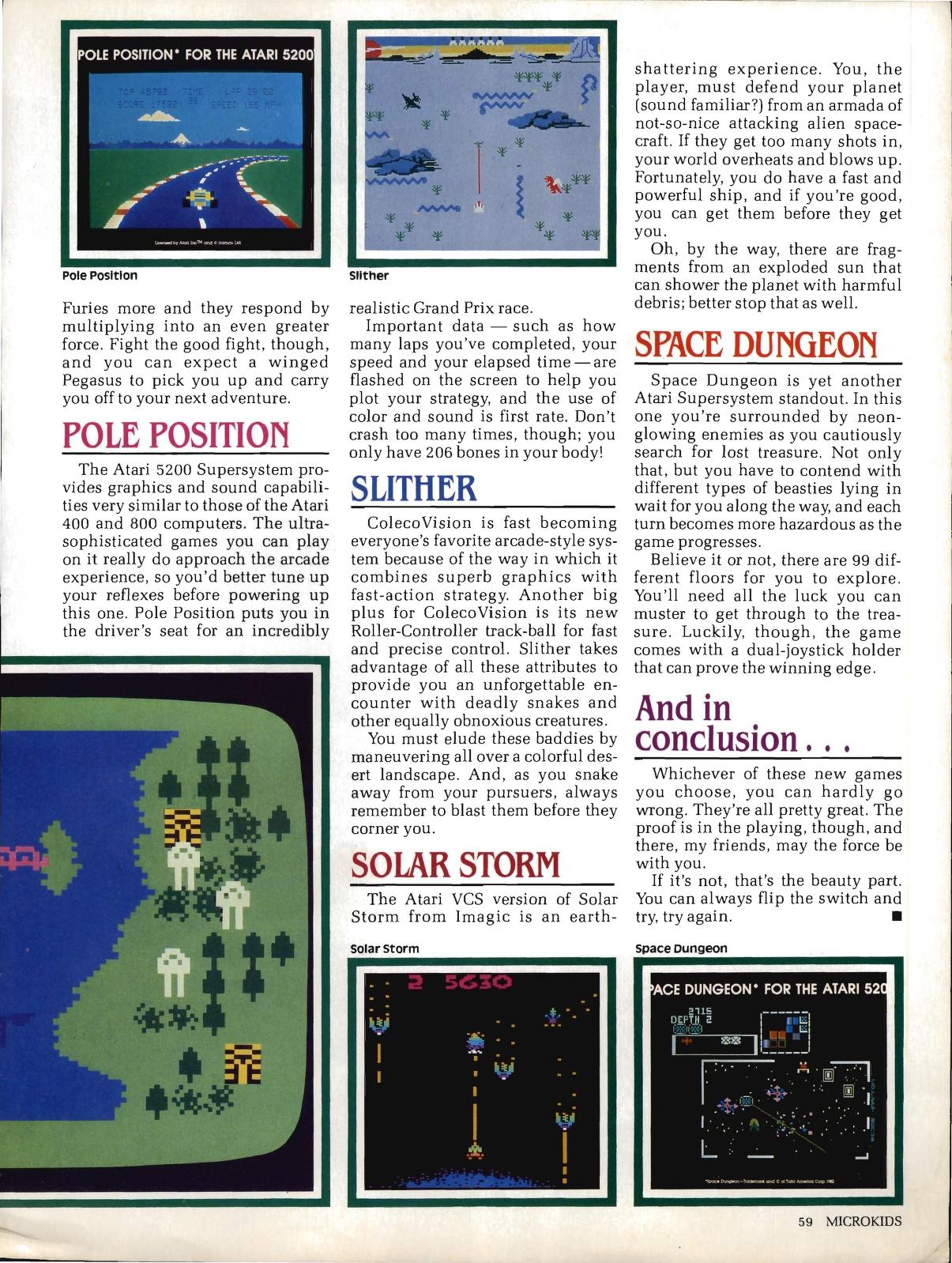
MicroKids #1 (December, 1983): ‘Rating the New Games for Christmas’

Micro 1982-1

Micro 1982-2

Micro 1982-3

Micro 1982-4

I know, I know. Your PS4 offers not games but “immersive experiences” that blur the boundary between fantasy and reality, creator and creation. I think that’s really cute! Now, how many screens can you clear on BurgerTime with three chefs, three shakes of pepper, and no way to save your progress?

(Read the whole issue at the Internet Archive.)

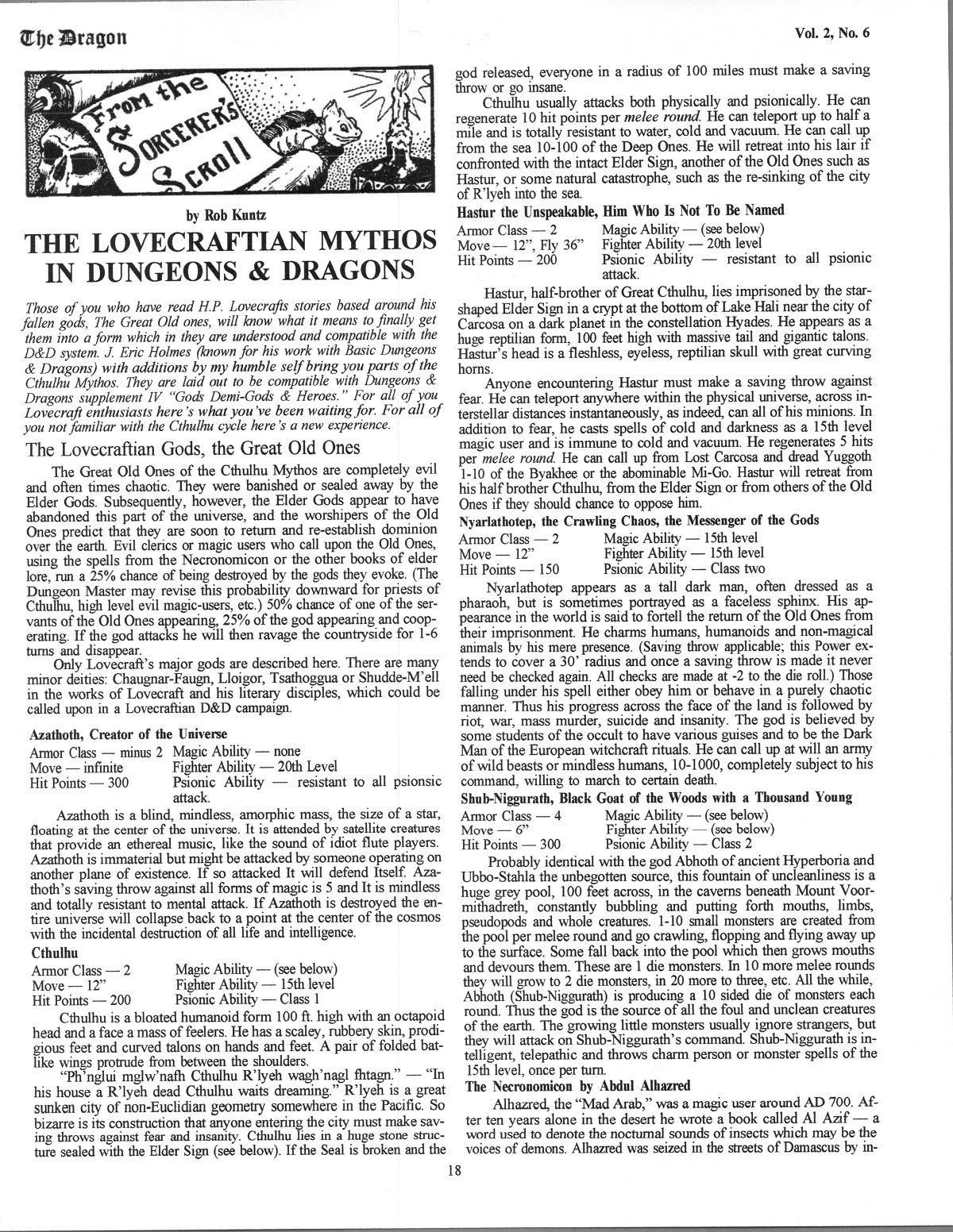
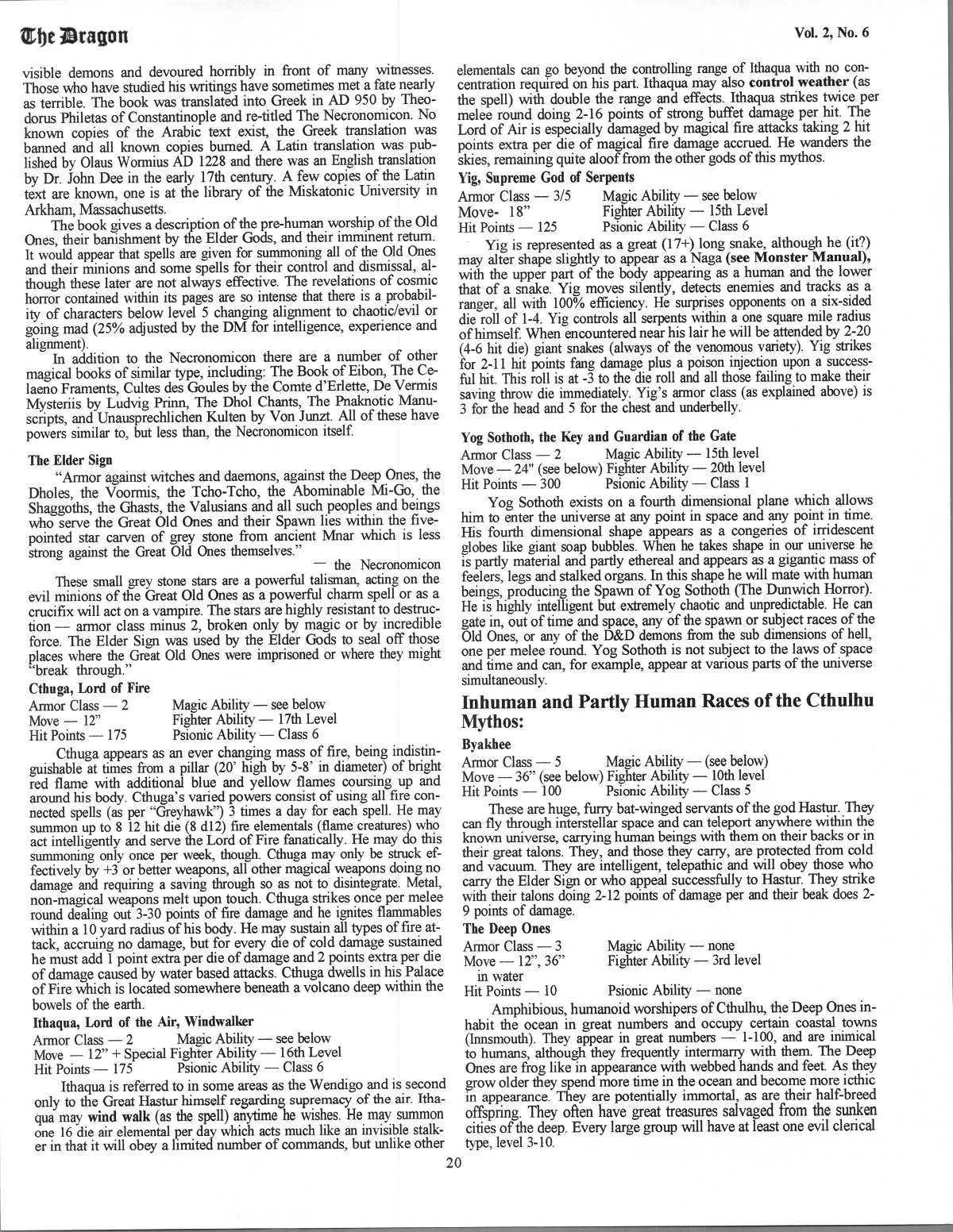
‘The Lovecraftian Mythos in Dungeons & Dragons’ from The Dragon #12 (February, 1978)

D&D Characters014

D&D Characters015

D&D Characters016

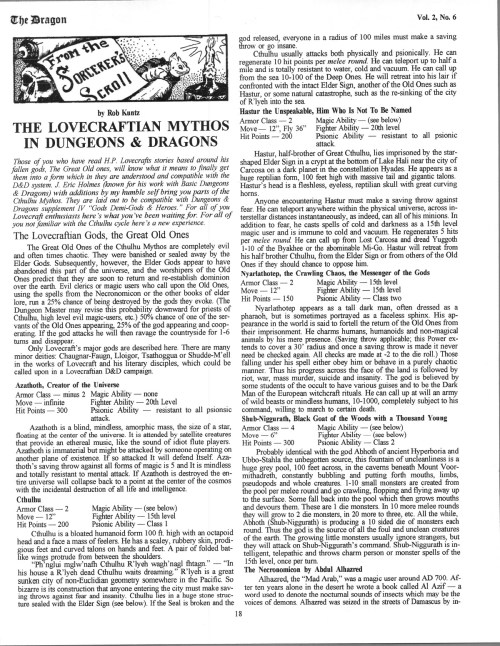
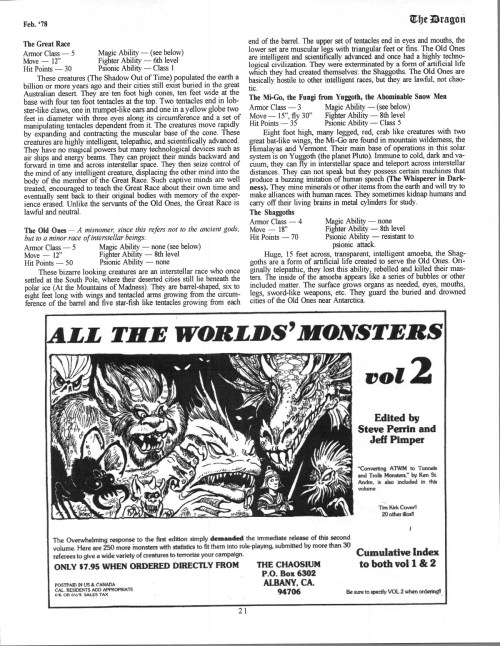
“The Lovecraftian Mythos in Dungeons & Dragons” is a fascinating and important supplement to Gods, Demi-Gods & Heroes (1976), which was itself a supplement to the original D&D set of 1974. The column was penned by two genre legends: Rob Kuntz, co-author of Gods, Demi-Gods & Heroes and the first edition Deities & Demigods (1980), and J. Eric Holmes, author of the first D&D Basic Set (1977). H.P. Lovecraft was, of course, listed as an “immediate influence” upon AD&D in Gygax’s famous Appendix N of the AD&D Dungeon Masters Guide (1979). Despite having little to do with the heroic fantasy genre as we know it, Lovecraft’s oeuvre is consistently identified with it, and has been just as influential on the development of fantasy role-playing as Tolkien and Robert E. Howard, Lovecraft’s long-distance friend.

There are a couple of reasons for this. First, the Cthulhu Mythos is fueled by occult lore and traditions: ancient magic, arcane knowledge and sacred mysteries, astral planes, psychic gateways, monsters of the deep, etc. As silly as the ’80s “satanic panic” was, the D&D universe (or multiverse) is alive with the same occult elements—employed as fictions, obviously, not facts. Second, Lovecraft, following Poe, used a journalistic approach when writing his weird fiction, sort of like a police procedural applied to supernatural phenomena. His world and its denizens are so convincing and internally consistent, in fact—so real—that actual cults have grown up around his writings and the anti-humanist, anti-rationalist philosophy they encompass. (See, for example, K.R. Bolton’s “The Influence of H.P. Lovecraft on Occultism.”)

Like Tolkien, Lovecraft experienced a dramatic resurgence in the 1960s, when alternative spirituality and the quest for altered consciousness reached a new high (so to speak). The Moral Majority resented, among other things, the spiritual independence won by young people by the end of the Summer of Love decade, and they feared that D&D and other products of the imagination would corrupt—i.e. render freethinking—a new generation of youngsters. The difference between literate hippies and early geeks is that the former wanted to replace the “technocratic” real world with a new one based on love, freedom (in politics and consciousness), and a return to nature, whereas the latter simply wanted to create and play in a sandbox of alternative realities.

The idea of inserting Lovecraft into D&D sums up the glorious absurdity at the heart of fantasy role-playing: on the one hand, we want to escape to a fictional time and place that is less complicated than the real one, a world in which magic exists; on the other hand, we want our fantasy worlds to be systematically playable, and for that to happen, statistics must be applied to said worlds and the beings inhabiting them. It’s equal parts Romanticism and Enlightenment, art and science. Hence the brilliant entry for `Azathoth, Creator of the Universe’:

If Azathoth is destroyed the entire universe will collapse back to a point at the center of the cosmos with the incidental destruction of all life and intelligence.

Talk about game over. And the creator of the universe only has 300 hit points!

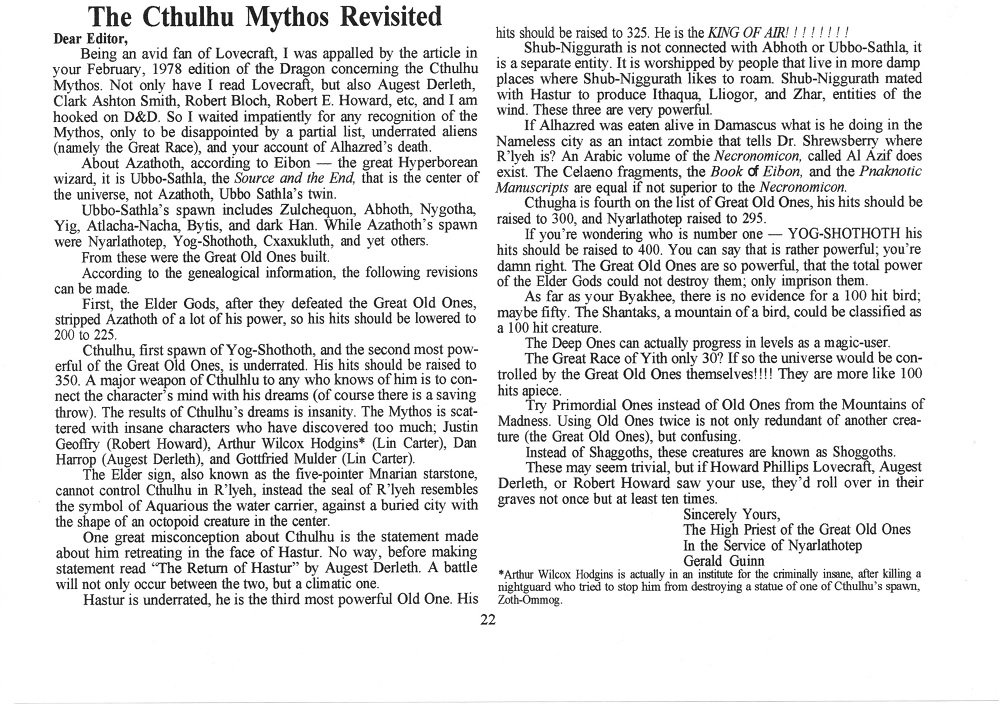
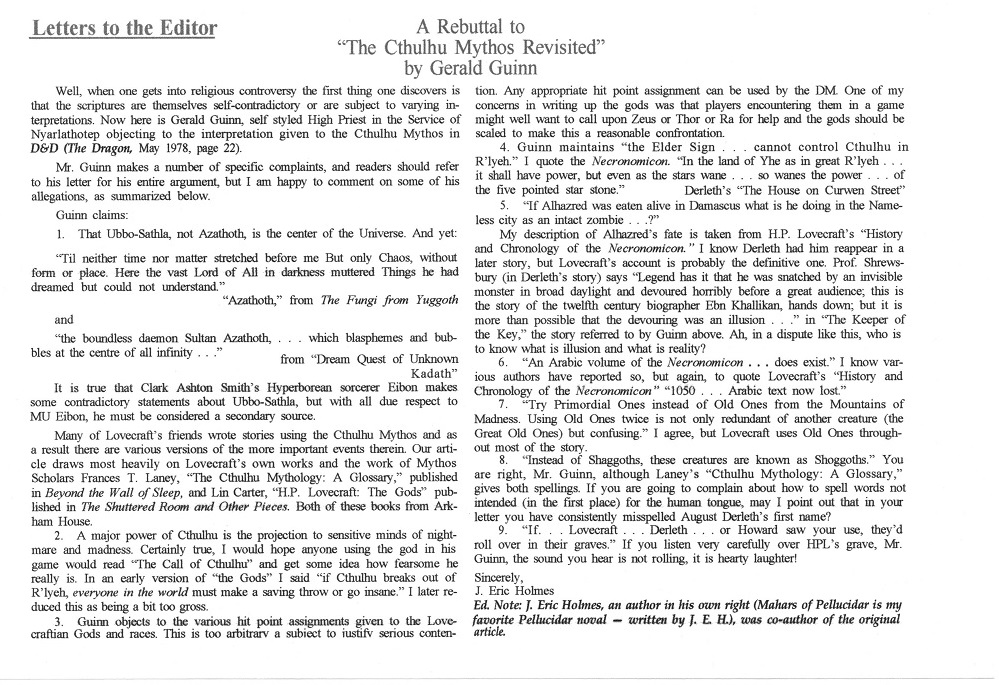
In The Dragon #14 (May, 1978), a letter from reader Gerald Guinn cheekily objected to a number of points made in the “Lovecraftian Mythos” article. J. Eric Holmes cheekily responded in The Dragon #16 (July, 1978). Both letters are below. Holmes’ response, along with the original article, are listed in Lovecraft scholar/biographer S.T. Joshi’s H.P. Lovecraft and Lovecraft Criticism: An Annotated Bibliography (1981).

A “Cthulhu Mythos” section (see tommorow’s post) expanded from the Dragon article appeared in the first edition of Deities & Demigods, but was famously removed from subsequent editions because TSR didn’t want to acknowledge its debt to Chaosium, which had acquired the rights—or the blessings of Arkham House, anyway, since Lovecraft’s works were and are in the public domain—for the Call of Cthulhu role-playing game.

For a comprehensive list of Cthulhu Mythos references in early D&D, see this post at Zenopus Archives.

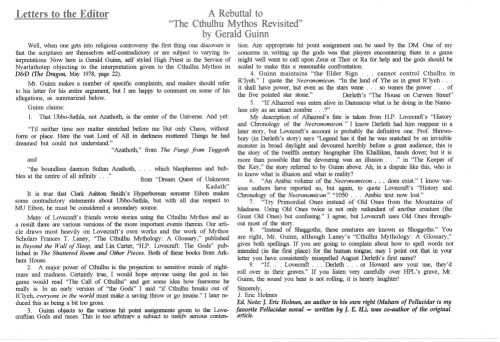
Dragon #14 May 1978 Guinn

Dragon #16 July 1978 Holmes Lovecraft


Pages

Archives

Categories

Donate Button

Join 1,117 other subscribers