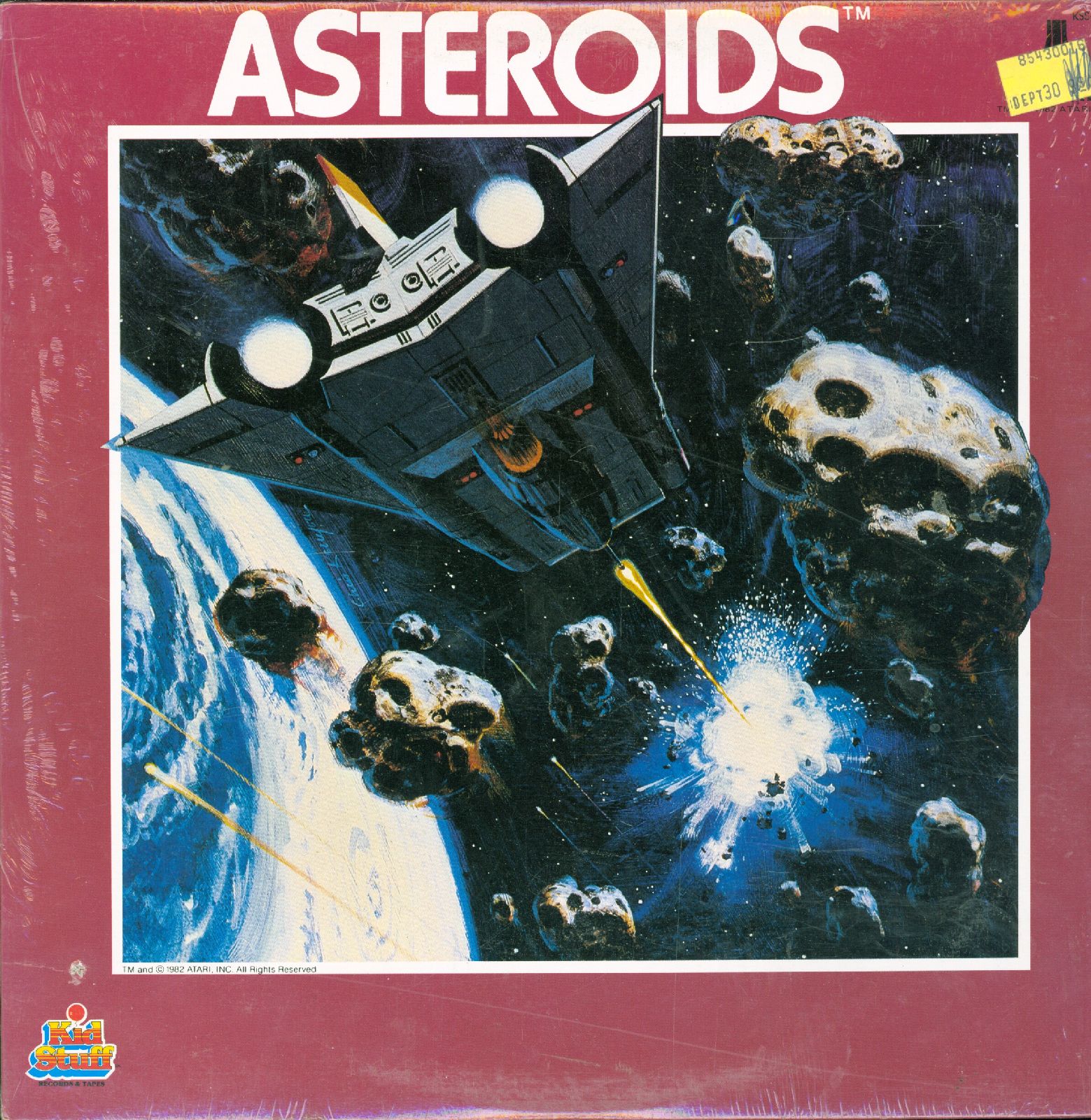
The collision of silver age sci-fi and disco was either Western civilization’s final, total surrender to decadence, or one of our finest moments. Or was it both?
Listen to side one—all the BSG music—here. Side two—“Evolution,” a Moroder classic—is here.
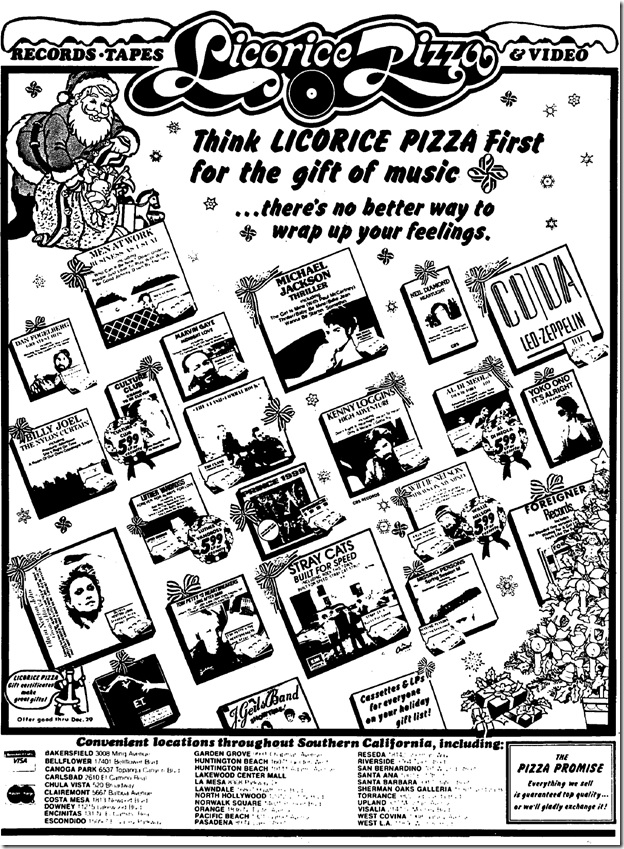
Men at Work’s Business as Usual and Michael Jackson’s Thriller are the first two cassettes I bought. Almost every album advertised here is now a classic:
Missing Persons’ debut, Spring Session M (“Walking in L.A.”, “Destination Unknown”); The Clash’s Combat Rock (“Rock the Casbah”)—I bought this one too; Marvin Gaye’s Midnight Love (“Sexual Healing”); Foreigner’s “best of” compilation Records; Culture Club’s debut, Kissing to Be Clever (“I’ll Tumble 4 Ya”, “Do You Really Want to Hurt Me?”); Led Zeppelin’s final album, Coda.
I also see Neil Diamond’s Heartlight, which I got (with my dad’s money) my mom for Christmas that year. The title track—inspired by E.T.—is easily one of the worst songs ever recorded.
Remember when I said that the Amazing Spider-Man Rockomic From Beyond the Grave (1972) was the weirdest, scariest shit ever marketed to kids? I stand corrected. That honor (for now, anyway) has been passed along to Night of the Laughing Dead. The story, by Steve Gerber, is adapted from Man-Thing Vol. 1 #5. (Beware: spoilers ahead.)
Our story begins with a weeping clown, his copious make-up smeared from tears, putting a gun to his head and pulling the trigger. The Man-Thing, a tortured, unreasoning beast who vaguely and painfully recalls his former life as a human being, hears the shot and finds the dead clown face down in the swamp. The creature picks him up, intending to bury him. The music kicks in: it sounds like a cat being sawed in half in slow motion.
Meanwhile, the clown’s girlfriend, who’s upset because she “betrayed” him, gets beat up by the carnival manager. Two hippies rescue her and they all go looking for “her clown.” They find him on the side of the road. He seems to be fine. But he’s not. Because he’s dead. The kids follow the silent apparition into the marsh.
The carnival manager and his meathead henchman, the carnival strongman, speed after the hippies and the clown’s girlfriend. They find the clown too, seemingly alive, and swerve to miss him. The truck hits a tree and explodes. The carnival manager burns to a crisp. The clown taunts the meathead in an evil clown voice, laughing the laugh of an evil, dead, insane clown. The meathead takes the bait and plows after him/it.
Not too far away, the kids, lost in the poisonous marsh, see the Man-Thing carrying the dead clown’s body. Ayla, the girlfriend, screams and rushes to her man, cradling the dead body in her arms, weeping. The hippies wonder: hey, if the clown is dead, what exactly was it we saw head into the swamp a few minutes ago?
The strongman arrives, picks up the clown corpse and implores it to “stand up and get beat to death like a man.” One of the hippies tries to stop him, and the meathead knocks him out. The Man-Thing intercedes, fighting the strongman and eventually drowning him in the swamp.
The ghost of the clown rises from the corpse and explains in the evil, insane clown voice that he’s finally found peace. You see, all clowns want to do is make people laugh, and clowns can’t make people laugh when they’re betrayed and all they feel is pain. But now, because his soul is free and there’s no more pain, he can laugh forever. He laughs his evil clown laugh, and the Man-Thing thinks to his miserable self: never has laughter made me feel so sad. Eerie rock music fades in. The End.
As Sanctum Sanctorum Comix notes, the story continues in Man-Thing #6, but Power Records didn’t produce the second act. I wonder if that’s because all the kids who listened to the first act crapped in their pants before dying of terror.
Read the whole book at Rob Kelly’s Power Records blog. Listen to the whole record below, if you dare.
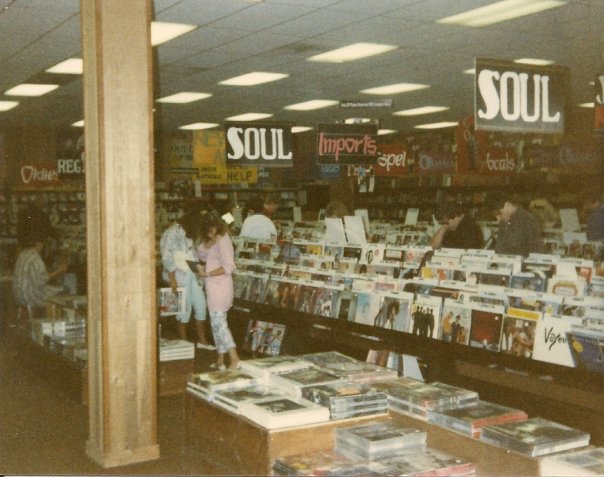
You can see promo posters for Michael Jackson’s Bad on the top right. Yes, those are cassettes lining the walls. They were put into long plastic containers to deter theft, and the containers stacked in wall units. There was a key at the register that allowed sales staff to pop the tape out.
Polliwog Records and Tapes, 1981. (Photo: Charles Curtis/Duluth Herald)
That’s not how you spell Reggae.
Tower Records, Tacoma, Washington, circa 1986
Tower Records, New York, 1984. (Photo: Edward Hausner/NYT)
The New York Tower is state of the art for the time period. Compare it to the Washington store. There are some TVs mounted next to the Purple Rain poster.
Hegewisch Records, Chicago, 1985. (Photo: Kim Tonry)
It looks like the metalheads are in line for concert tickets. First Megadeath tour? Slayer?
I really wanted to buy this album so I could stare at the fucking fantastic wrap-around cover all day long (click image to enlarge), but in 1986 I was in the punk and post-punk club, and clubs didn’t mix. We listened to Metallica’s Master of Puppets while skateboarding, but that was the extent of my metal intake.
The artist is Derek Riggs, who painted all of Iron Maiden’s ’80s album covers and created Eddie the Head, the grisly mascot who appears in Maiden artwork in different guises. Riggs says of Somewhere in Time:
This is the most complex album cover ever done by anyone… and I’m not going to do it again. It’s too much fucking work. This may be the biggest version that some of you have ever seen. there’s tons of stuff in here, you will have to look and find it for yourself. There’s more about the painting of this in the book “Run for Cover” which is available from my website. They said they wanted something a bit Bladerunner looking so I painted this.
Riggs’ covers for the singles are below as well.
P.S. I’m going back and listening to Iron Maiden’s catalog, starting from the beginning. (Thanks for the reminder, Jason.)
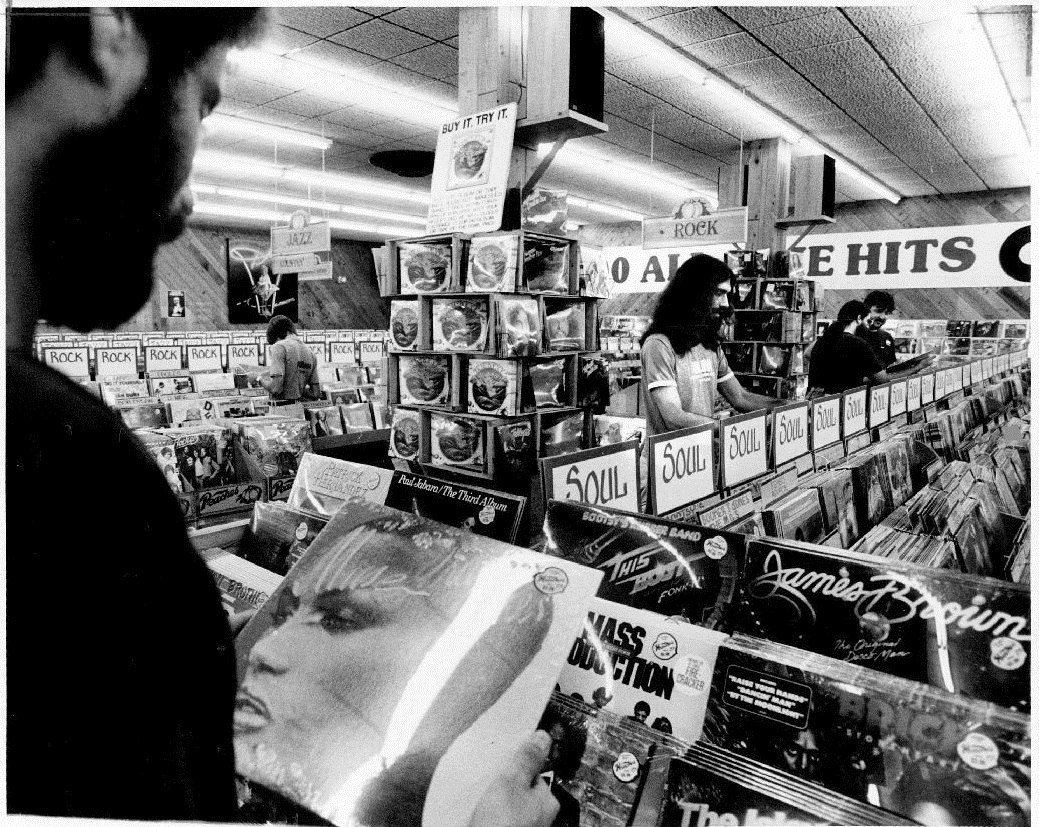
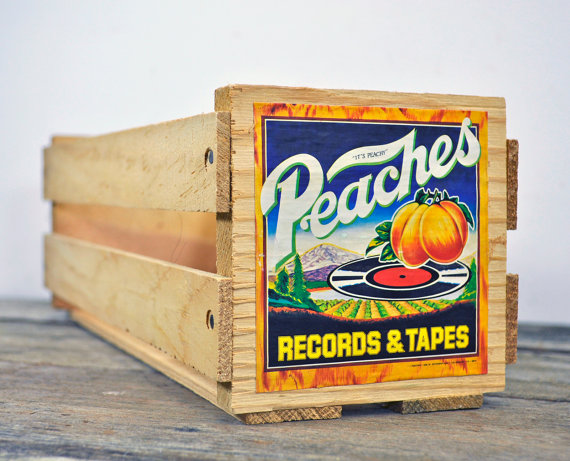
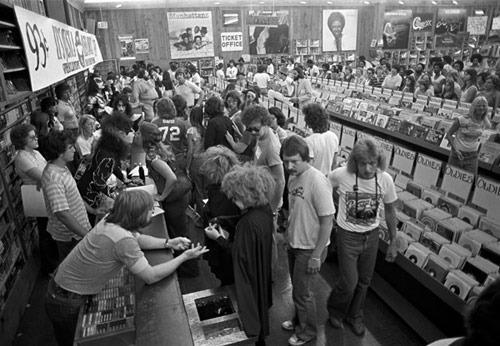
Peaches was the biggest national music chain from the mid-’70s until they went bankrupt in ’81 or ’82. I remember the logo and the distinctive crates, but by the time I became obsessed with music, the place to go in my neighborhood was Tower Records. I also made frequent stops at Music Plus and The Wherehouse.
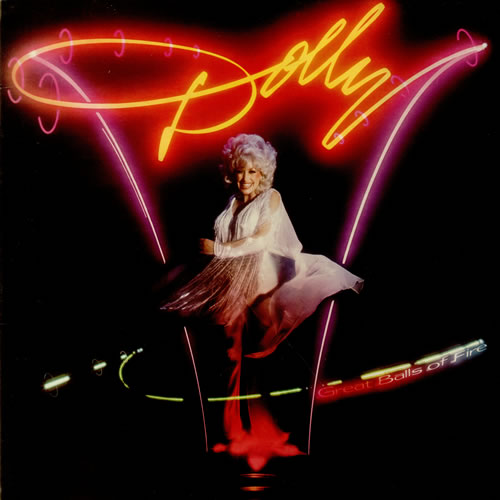
The poster on the left wall is from a 1979 Dolly Parton album, Great Balls of Fire. And check out that gorgeous diagonal wood paneling.
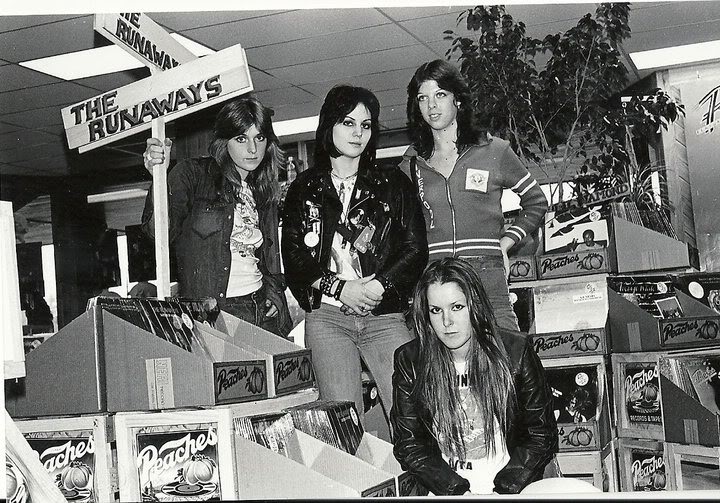
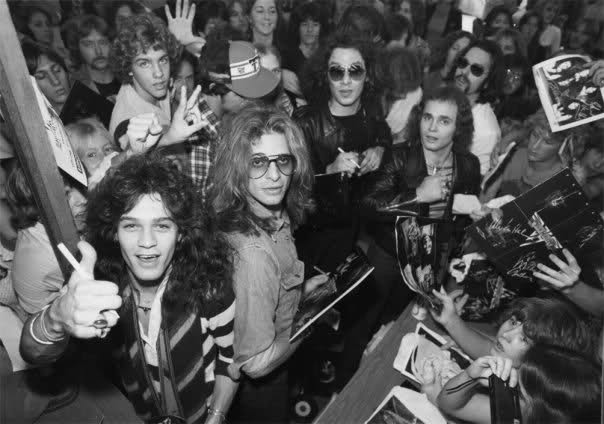
Just for the hell of it, here are some shots of ’70s rockers doing signings in Peaches.
If you own the copyright to any of the material on this site and would like said material to be removed, please contact 2warpstoneptune [at] gmail [dot] com.











 2 Warps to Neptune