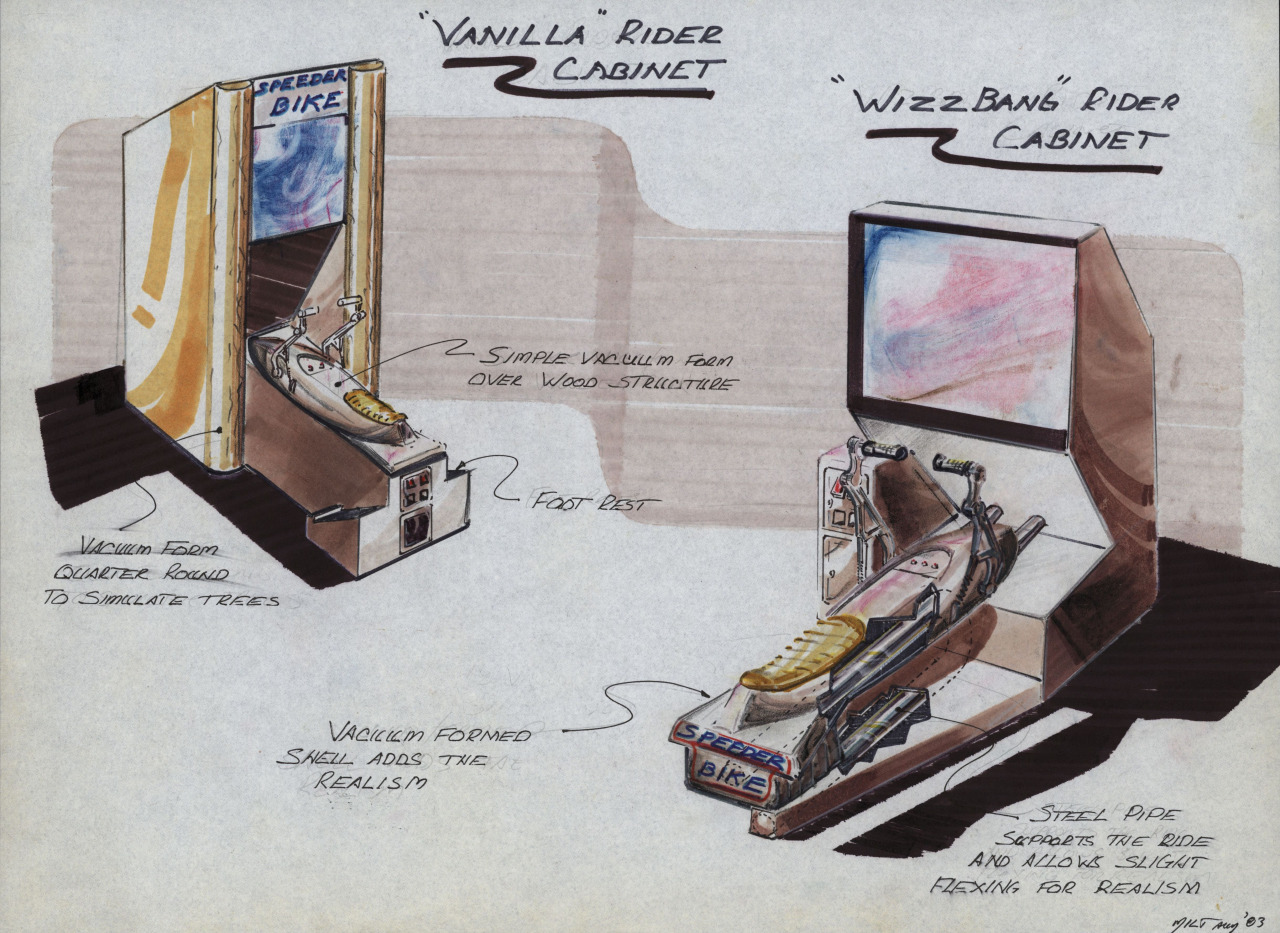
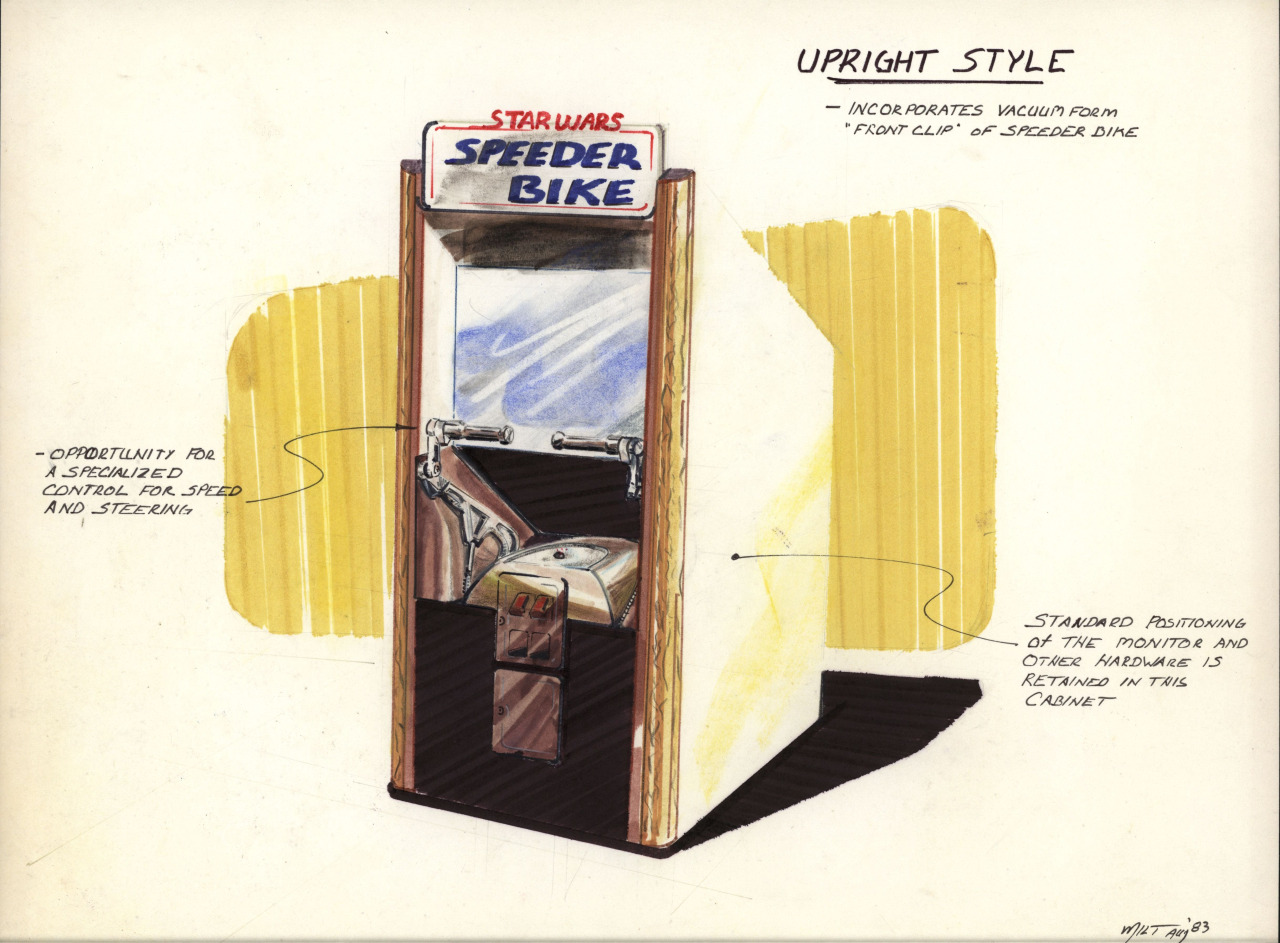
The game was unproduced, sadly, but what a cool concept. “Wizz Bang” all the way! Note that steering on the last cabinet design is “similar to Battlezone,” a very popular Atari cab released in 1980. The art is from Atari Coin-Op Division Records via the Brian Sutton-Smith Library and Archives of Play, a repository housed at The Strong National Museum of Play.
Archive for the 'Video Games' Category
Concept Art for Return of the Jedi ‘Speeder Bike’ Arcade Cabinet, 1983
Published September 25, 2015 Arcade Cabinets/Coin-Ops , Atari , Video Games 1 CommentArcade Zen (1982)
Published August 4, 2015 '80s Decor/Design/Fashion , Arcade Cabinets/Coin-Ops , Video Arcades , Video Games 3 CommentsWilliams Joust Poster, 1982
Published August 3, 2015 Arcade Cabinets/Coin-Ops , Video Game Art , Video Games 5 CommentsThe artist’s signature is on the bottom left, but I can’t read it. Let me know if you know who it is or have a closer close-up.
UPDATE: Andy Goldman pins the artist as Python Anghelo, the gentleman who actually designed the game and did the cabinet art (why was the poster art here not used for side art?), who passed away last year. Thanks again, Andy.
(Image via Video Game Auctions)
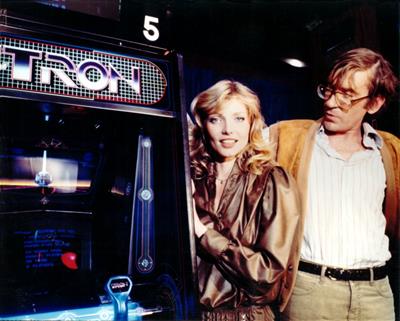
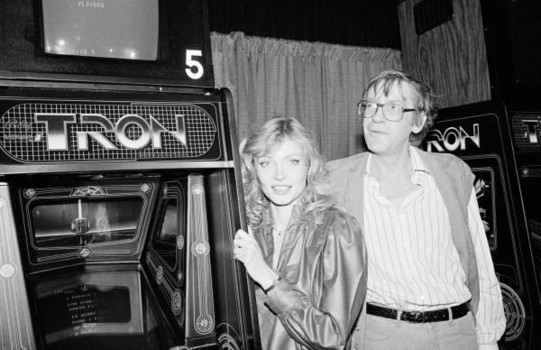
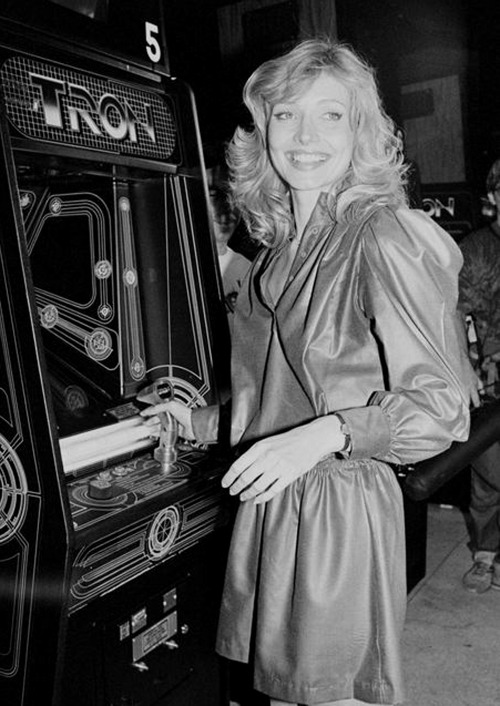
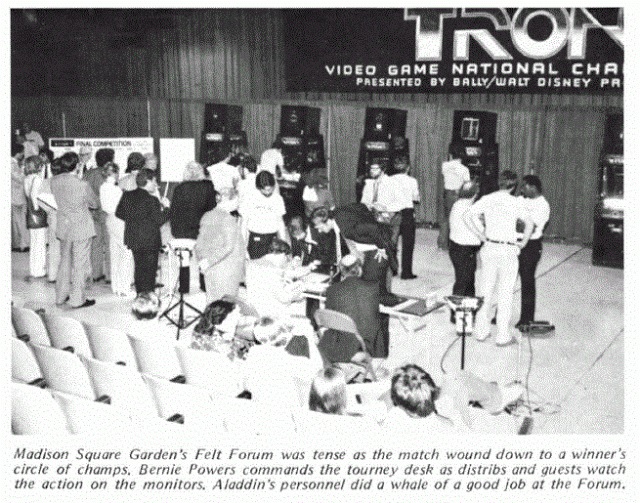
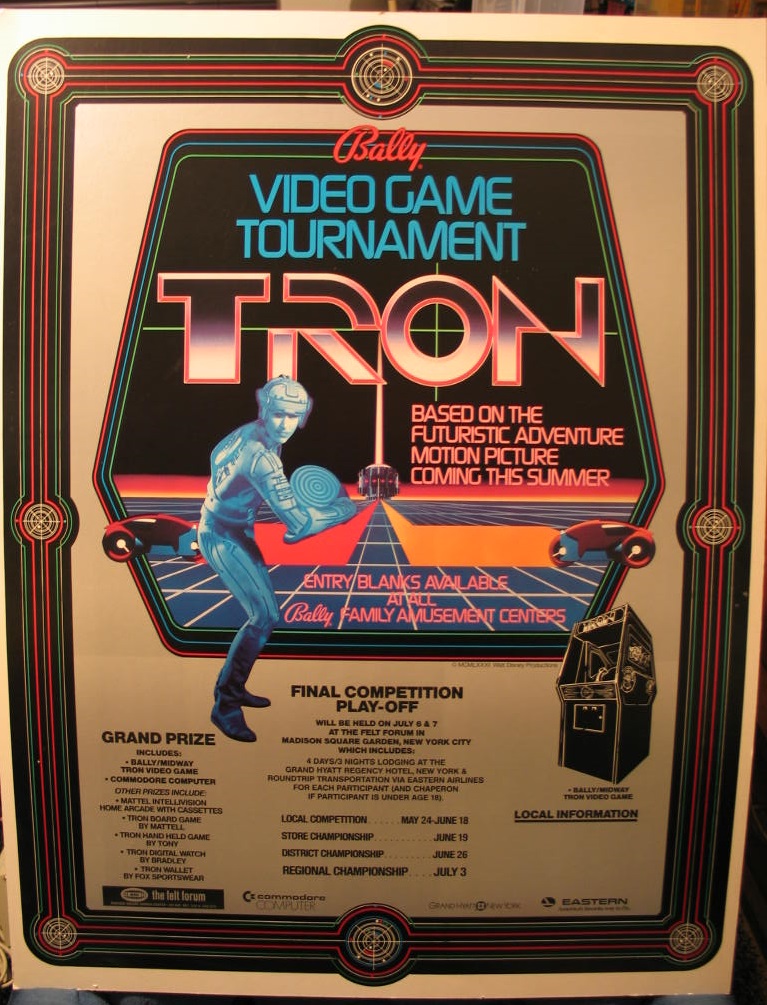
Tron Video Game Tournament, 1982
Published July 28, 2015 Arcade Cabinets/Coin-Ops , Promotions/Contests/Sweepstakes , Tron , Video Games 1 CommentThat’s Cindy Morgan (Lora/Yori) and David Warner (Dillinger/Sark/MCP) in the first two photos. One of them looks luminous, and it ain’t the one dressed like a bum. Do you remember the monitors on top of the arcade cabs? No added pressure or anything.
According to the promotional poster below, the finals were held at Madison Square Garden on July 6th and 7th, 1982. Tron premiered on July 9th.
(Images via the Tron Forums, the Examiner, Kolonai, All in for a Quarter, and the Unfiction Forums)
Atari Gauntlet Commercial, 1985
Published July 22, 2015 Arcade Cabinets/Coin-Ops , Atari , Commercials , Video Games 3 Comments
First time I’ve seen this, and I don’t know if it ever aired. According to the source, it’s from a VHS tape belonging to Alan Murphy, a graphics programmer at Atari (1980-1987) who worked on coin-op and console games, including Gauntlet and Indiana Jones and the Temple of Doom. The animation is excellent!
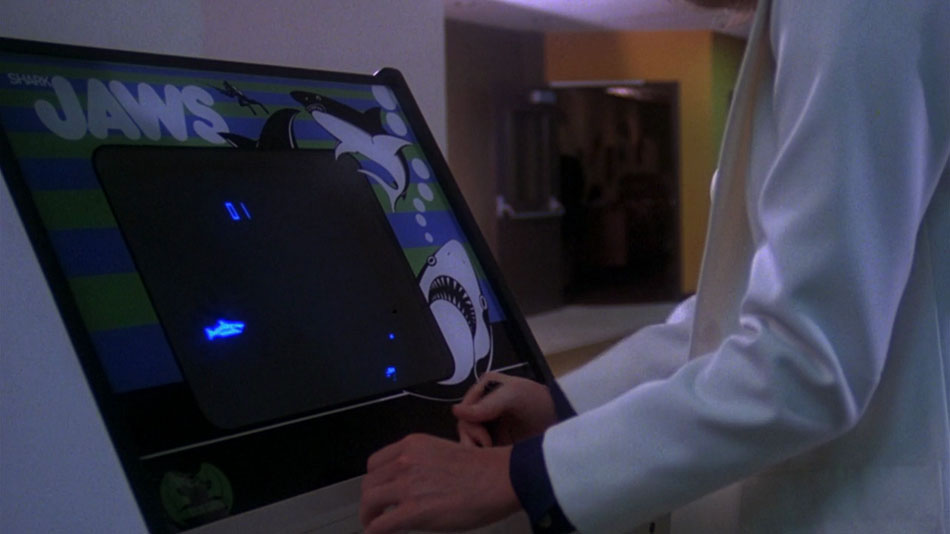
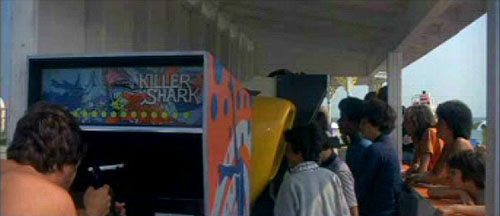
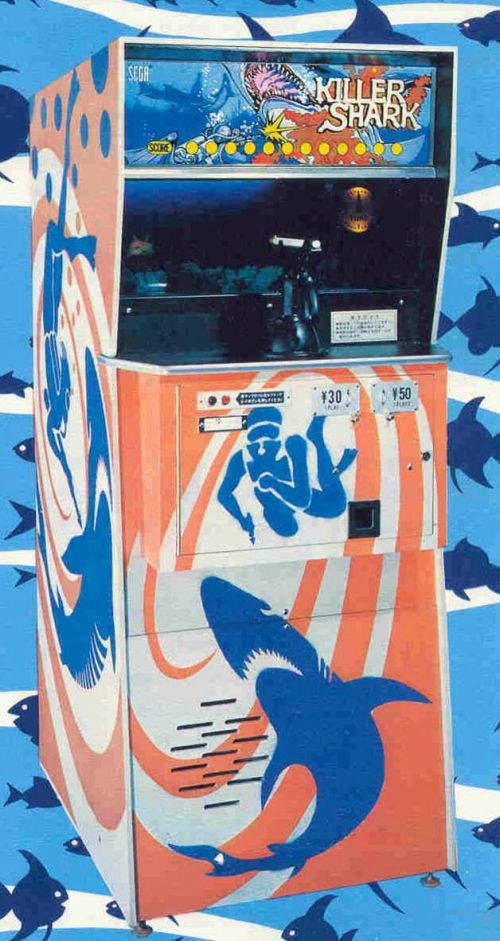
Sega’s Killer Shark Cameo in Jaws
Published June 25, 2015 Arcade Cabinets/Coin-Ops , Jaws , Roger Corman , Video Arcades , Video Games 4 CommentsThere’s an excellent article by Keith Stuart at The Guardian about Spielberg’s early interest in video game and computer technology (his father was an electrical engineer) and how the shot of Killer Shark (1972) at the beginning of the film perfectly encapsulates the entire narrative: “It’s effectively Brody’s nightmare, and his objective, rolled into one flickering image on an ancient coin-op display for a few redolent seconds.” Stuart continues:
In a movie filled with legendary cinematic moments, this brief sequence is a minor one, but as with many other elements of Steven Spielberg’s 1975 picture, it was also prescient. The director, a keen games player and watcher of pop culture trends, foresaw an era in which Hollywood would be seduced by the popularity and the visual spectacle of the emerging video game arcade scene. He got the appeal of these new entertainment machines, but he also understood how computer graphics represented a new way to present narrative to audiences – even if, in Jaws, it was a few seconds of footage.
As Stuart notes, Killer Shark was actually Sega’s last mechanical game, not a video game, the shark animation a result of a projector inside the cabinet. You can also see Computer Space (1971), the very first commercial coin-op video game, in the background of the same shot.
In the Roger Corman-produced Piranha (1978), a brilliant Jaws and eco-horror parody written by John Sayles and directed by Joe Dante, there’s a shot (below) featuring Atari’s Shark Jaws (1975): sort of a parody within a parody within a parody.
(Images via Jaws Wikia, Pinterest, and The Electronic Playground)
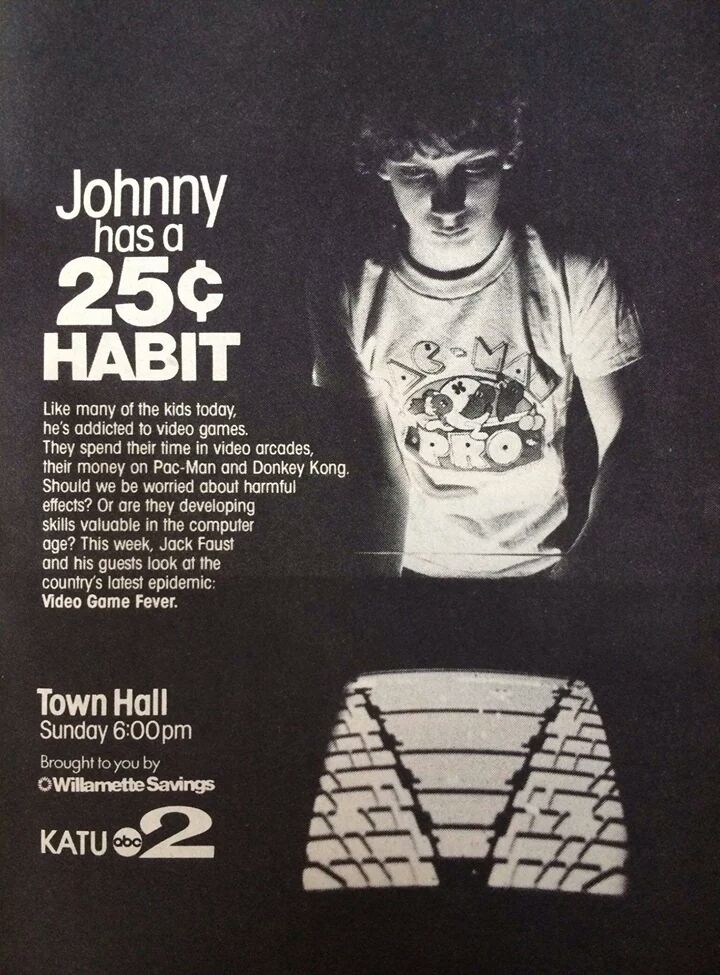
TV Guide Promo for Town Hall (1982): ‘Johnny Has a 25¢ Habit’
Published June 17, 2015 Moral Panic , TV Guide , Video Games Leave a CommentKATU is a Portland, Oregon station, and Town Hall was a public affairs show that aired between 1980 to 1993.
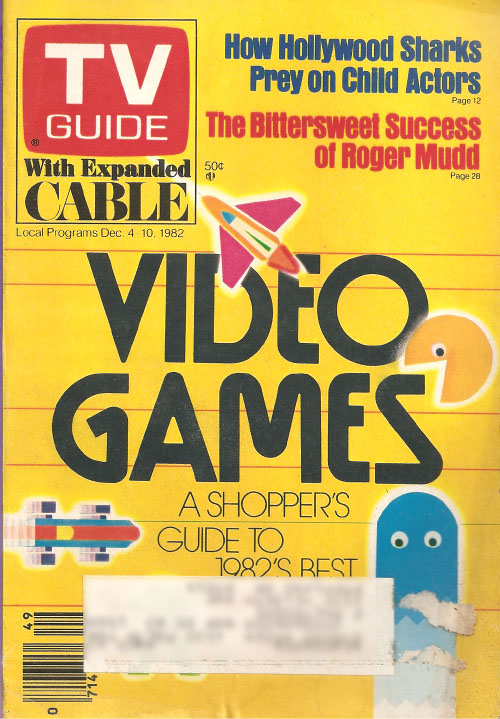
The irony is that the promo appeared in the Fall 1982 edition of TV Guide, which featured a cover story on the best video games of 1982.
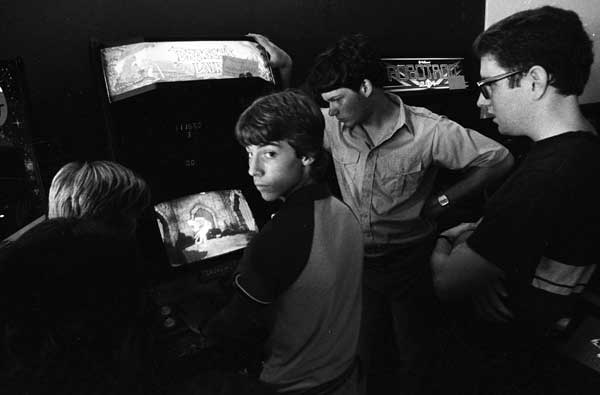
Press photo from September 13, 1983. Caption reads:
Morro Bay High School Student William Krause at the controls of Dragon’s Lair game in the Morro Bay Arcade. Krause is the current champion, and has his name posted on the machine.
Dragon’s Lair always, always had a crowd (you can see a couple of quarters on the marquee in the photo). One, it was super hard and turns were short—I was lucky if I got past the first fire ropes. Two, the Don Bluth animation, surely influenced by Dungeons & Dragons, is a sight to behold. It still ranks as some of the finest ever done. The clunky game play, in retrospect, is actually a huge drag on the overall aesthetic. You can watch the whole thing—less than 13 minutes!—here. My favorite parts are the rapids and the giant marbles.
(Image via San Luis Obispo Tribune)
Arcade Zen: Malibu Castle Golf and Games, 1982
Published May 27, 2015 Magazines/Zines , Video Arcades , Video Games 1 Comment
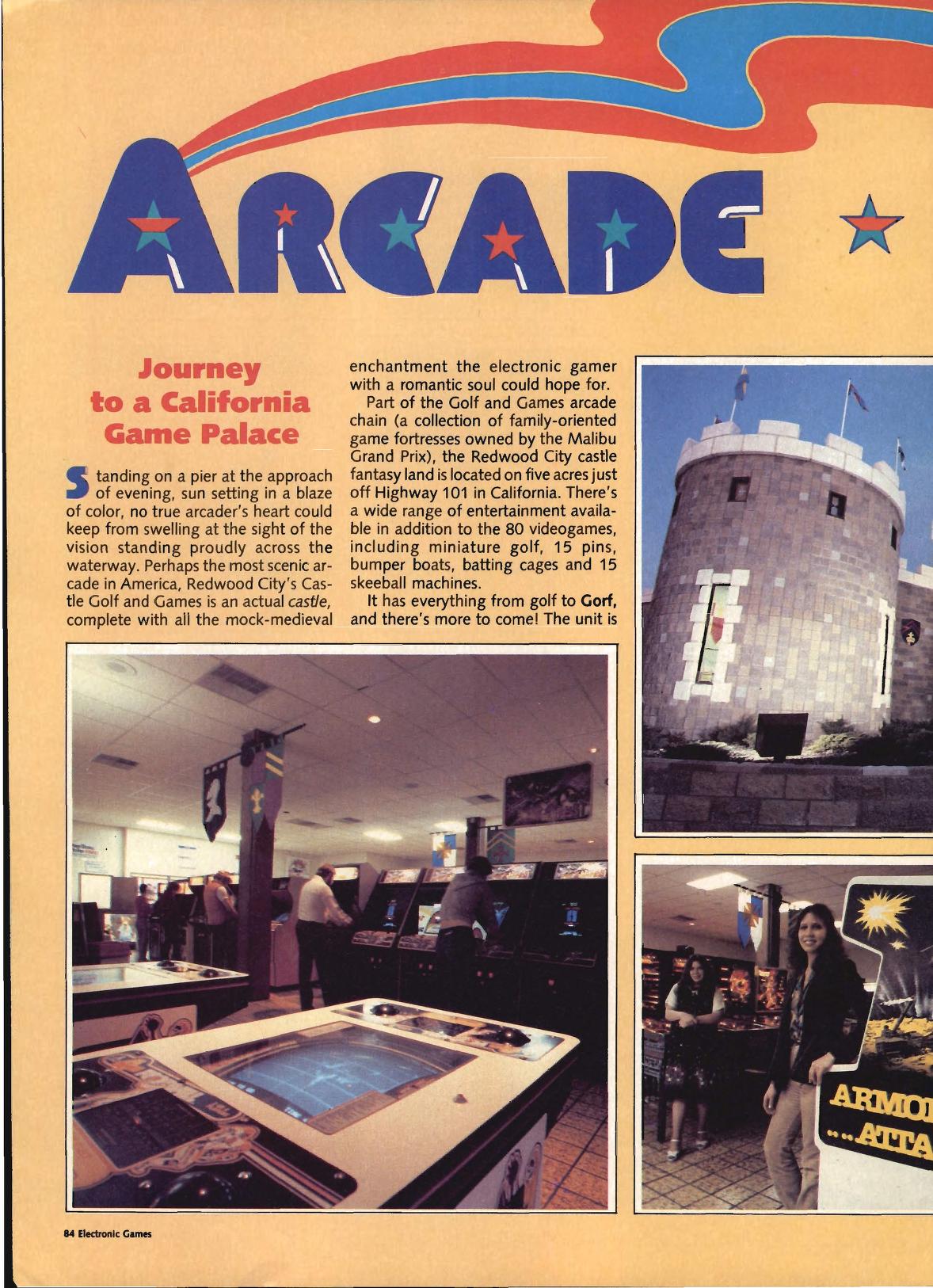
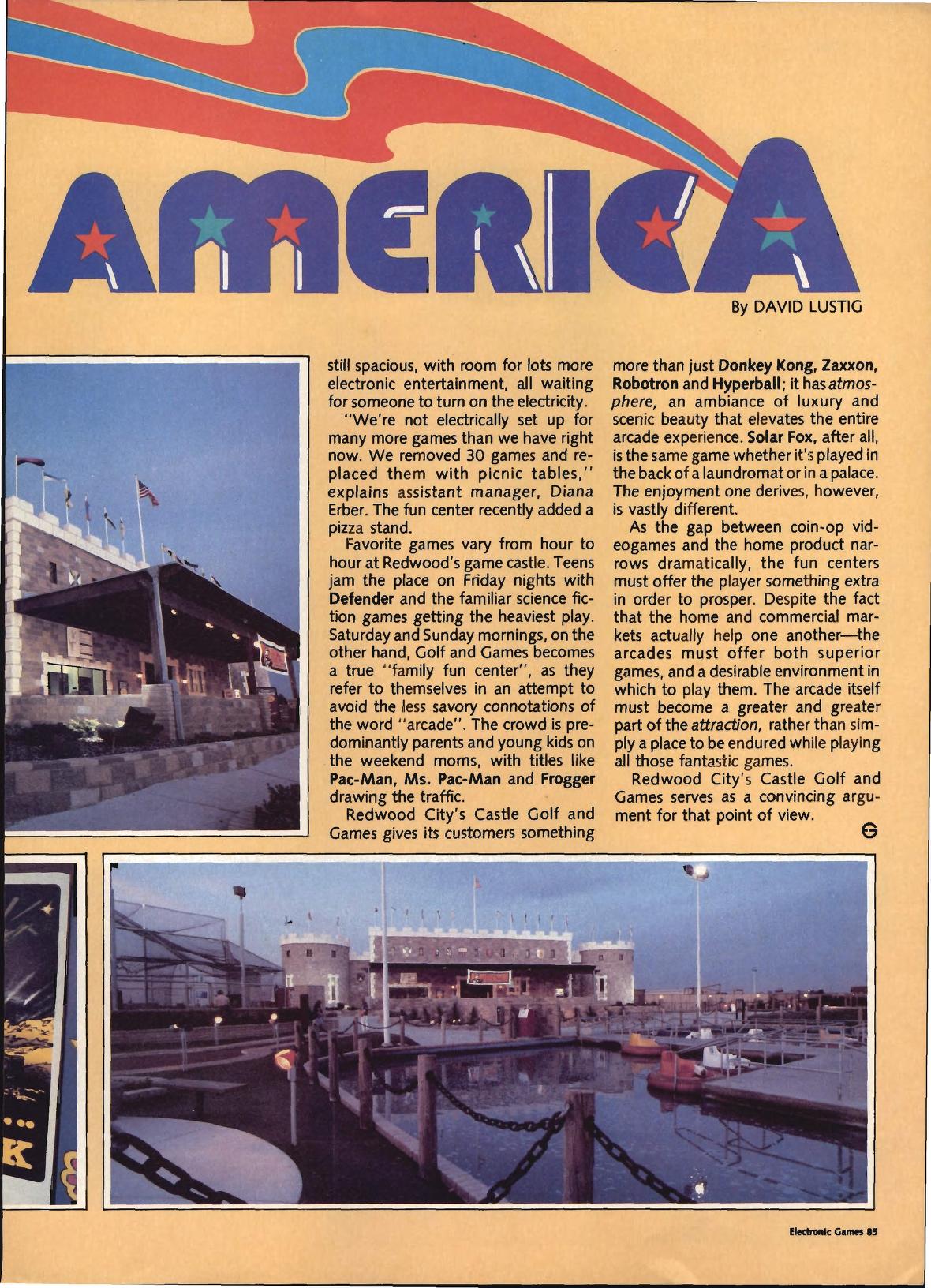
The Redwood City Golf and Games was owned by Malibu Grand Prix and survived more than 35 years. Interesting that the “the mock-medieval enchantment” of the place is so closely associated with “the electronic gamer with a romantic soul.”
The article makes some historically interesting points about the “family fun center” trying to distance itself from the “less savory connotations of the word ‘arcade'”. The Redwood City location, says the writer, had an “atmosphere” and “ambiance” that “elevates the entire arcade experience.” And because the home consoles were becoming more popular, the arcade had to “become a greater and greater part of the attraction, rather than simply a place to be endured” while playing the games.
Craig Stieglitz, who grew up in the area and managed the center for 18 years, had this to say when it closed in 2013 due to exorbitant rent:
I grew up in the area, and I came here as a kid… I got a job here for the summer, and 18 years later, here I am. That’s the sort of place this is.
Another resident added:
It’s sad—it’s a piece of your childhood taken away from you… There’s nothing quite like it out here.
The property was bought by a developer less than a month later. Upscale office buildings are in the works. God bless America.
The article is from Electronic Games #8 (October, 1982).