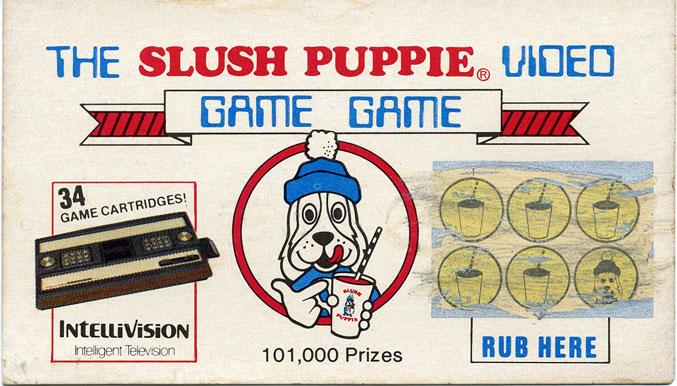
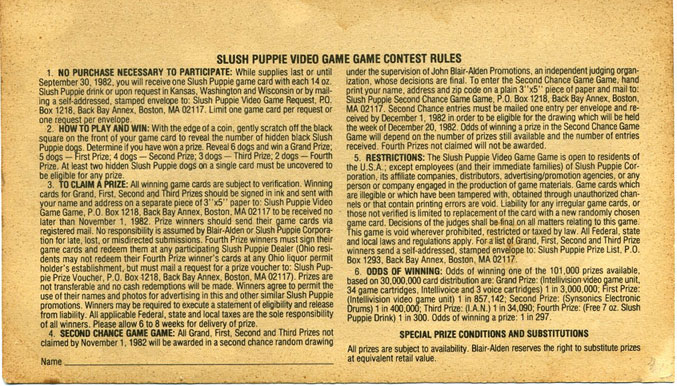
Grand prize: Intellivision video game unit, 34 game cartridges, Intellivoice and 3 voice cartridges. Second prize was Mattel’s Synsonics Electric Drums. With some tweaking, these things made some very cool sounds, and synth artists still use them today. Check out the commercial and a demo below.
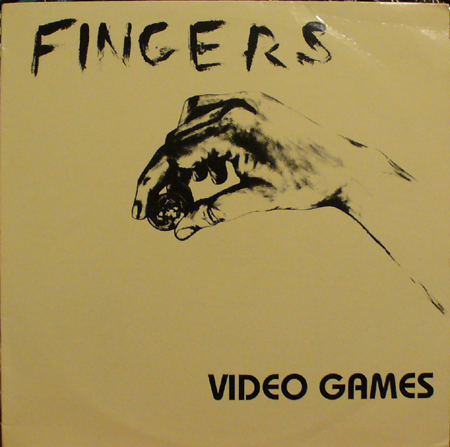
New Jersey band Fingers released one EP (AXO Records, 1982), and this is the title track. I listened to the whole album on Spotify and enjoyed it—straight ahead power pop with some catchy melodies. The message here is pretty obvious: video games have changed the nature of youth and young love. Or have they? Separated at first by our hero’s addiction to the games, boy and girl are reunited in the end—when girl succumbs to the allure of the arcade and their respective games are over (and all the quarters are gone).
“You knew that I was different from the start. You look inside and see Space Invaders in my heart. It’s never been the same since video… It’s never been the same since video… It’s never been the same since video games.”
I can make out Pleiades and Armor Attack cabinets in the arcade.
The box on top, and the game they’re playing, is NBA Basketball. The game on the bottom belongs to the Strategy Network (Intellivision cart boxes were color coded according to game type). I bet it’s Utopia, one of the first sim games and a favorite of mine.
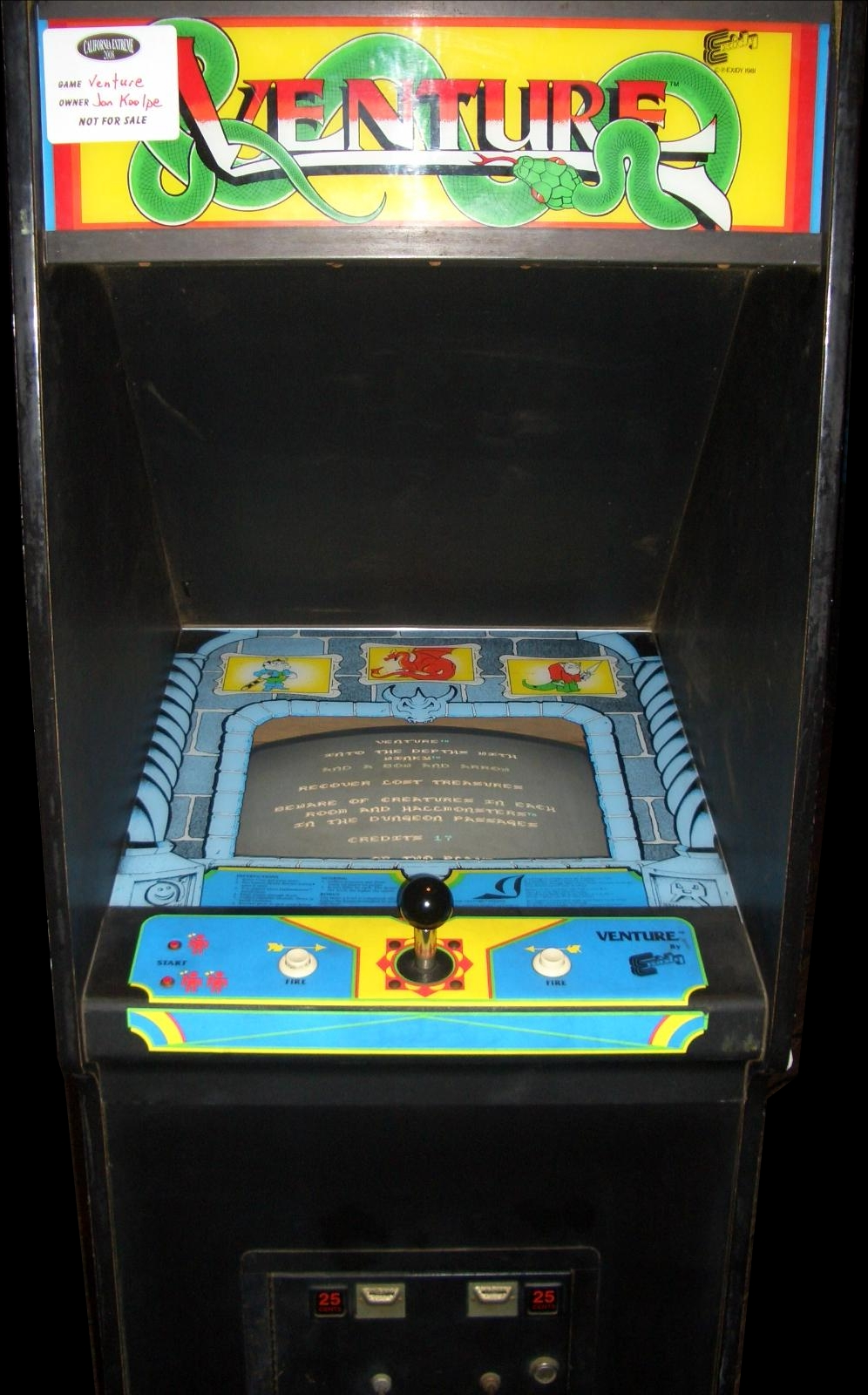
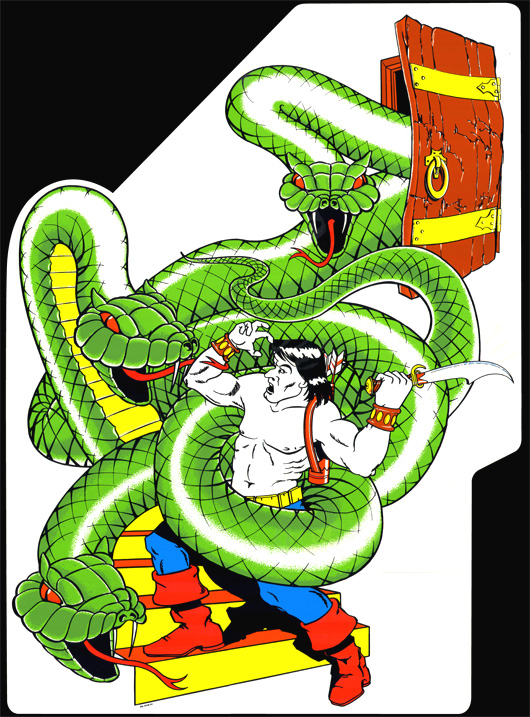
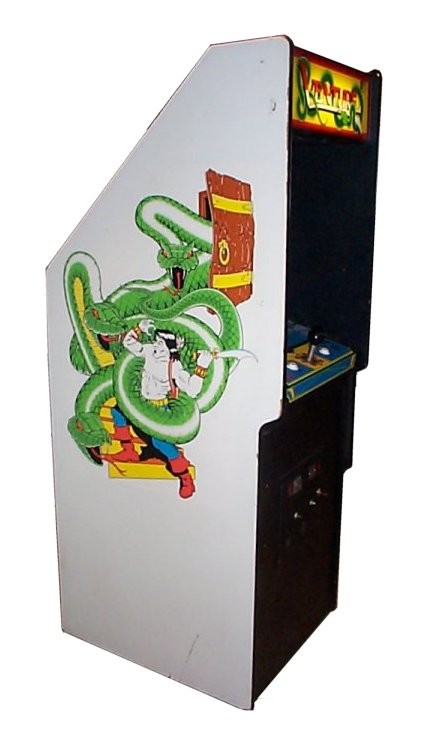
Venture is probably the first arcade game directly influenced by Dungeons & Dragons. From the original arcade flyer:
VENTURE is played in a dark dungeon of multi-levels. The player forges through one level of rooms at a time, displayed on the screen as a floor plan. Armed with bow and arrow, the player learns to avoid confrontation with the wandering green Hall Monsters…
Each room is a new and completely different challenge. For example, one room has a pot of gold of high point value, guarded by goblins. Another has a magic bow giving the players special powers when shooting at creatures. Other rooms have hazardous conditions such as shrinking walls… or deadly ooze…
After strategically and skillfully collecting all the treasures on one level, the player ventures further into the depths of the dank and threatening dungeon…
Sound familiar? As the Golden Age Arcade Historian notes, Midway’s Wizard of Wor, released the same year as Venture, also employs a fantasy theme (with a sci-fi element), but the gameplay itself is standard clear-the-maze fare. The flyers and ads for Wizard do seem to emulate the TSR vibe of the time. Here’s some of the language:
Worriors descend into various dungeon mazes, battling visible and invisible monster Worlings, and maybe the Wizard himself.
Dungeon maze patterns appear at random and have escape doors at either end. These are used for strategic exit and entry.
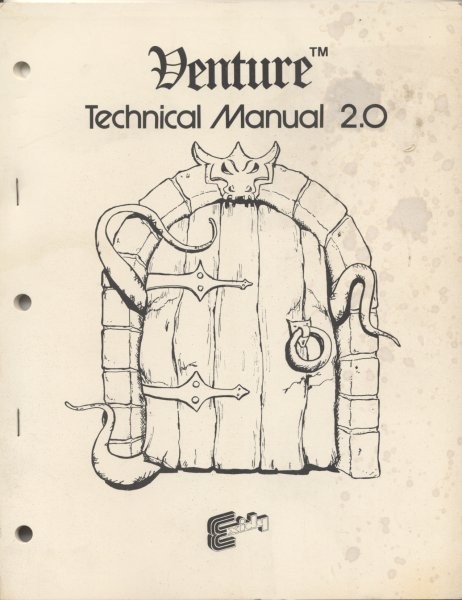
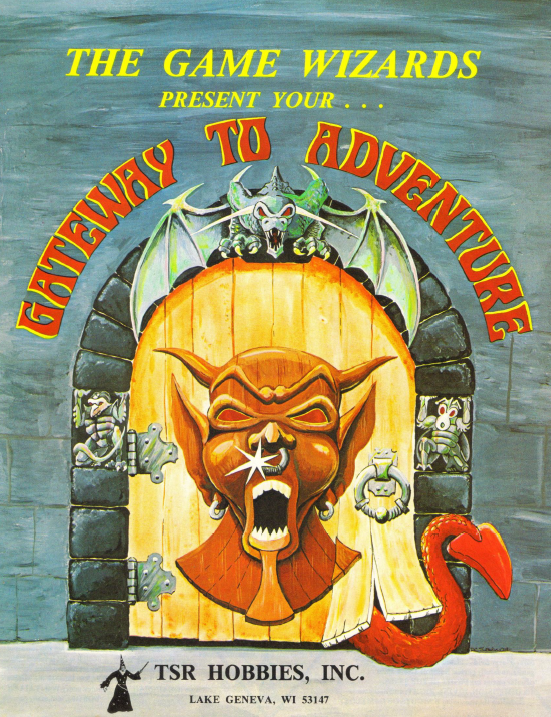
Also, compare the cover of Venture‘s Technical Manual to TSR’s “Gateway to Adventure” catalog cover circa 1980.
UPDATE (7/25/14): Post has been revised for accuracy. Thanks, Alex.
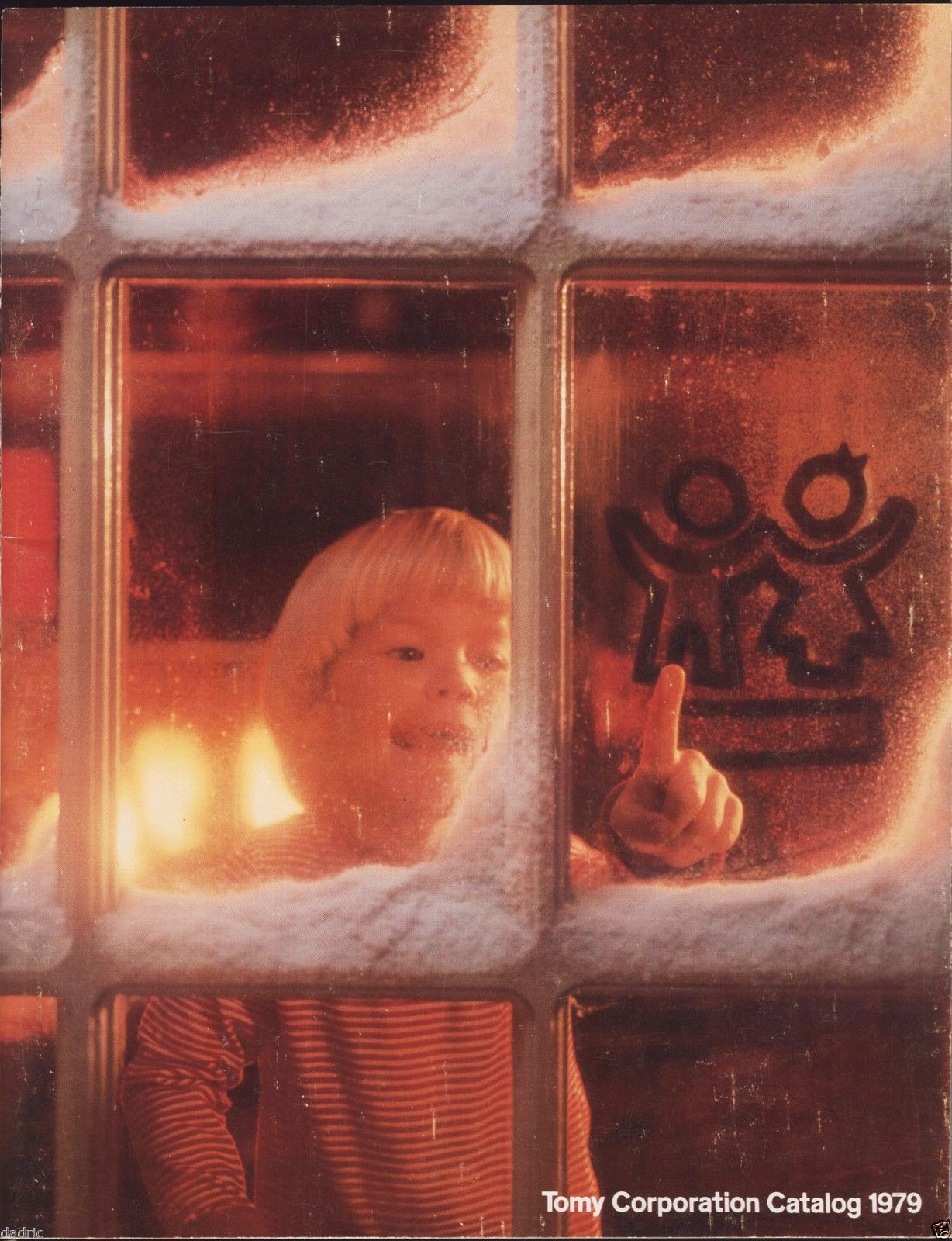
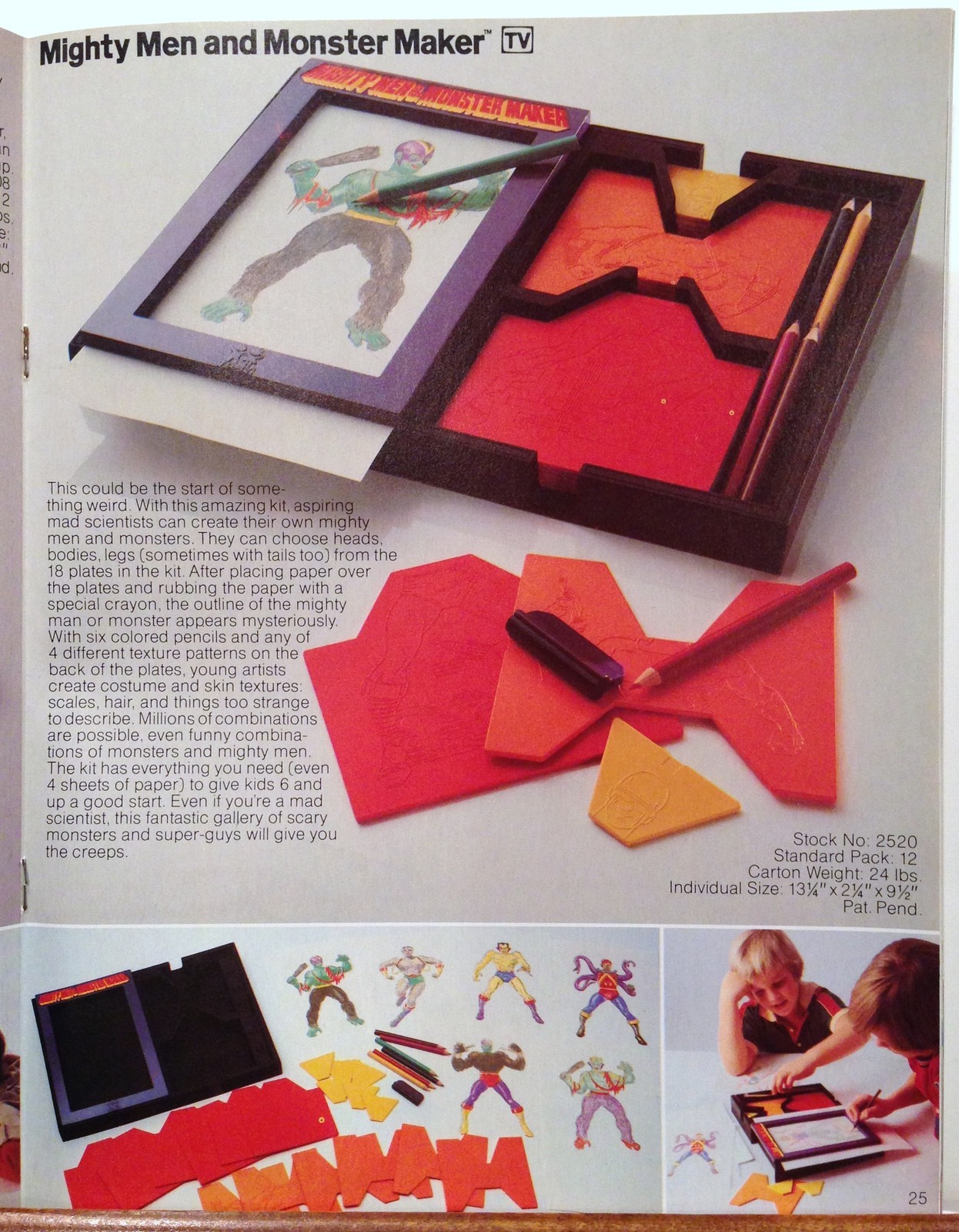
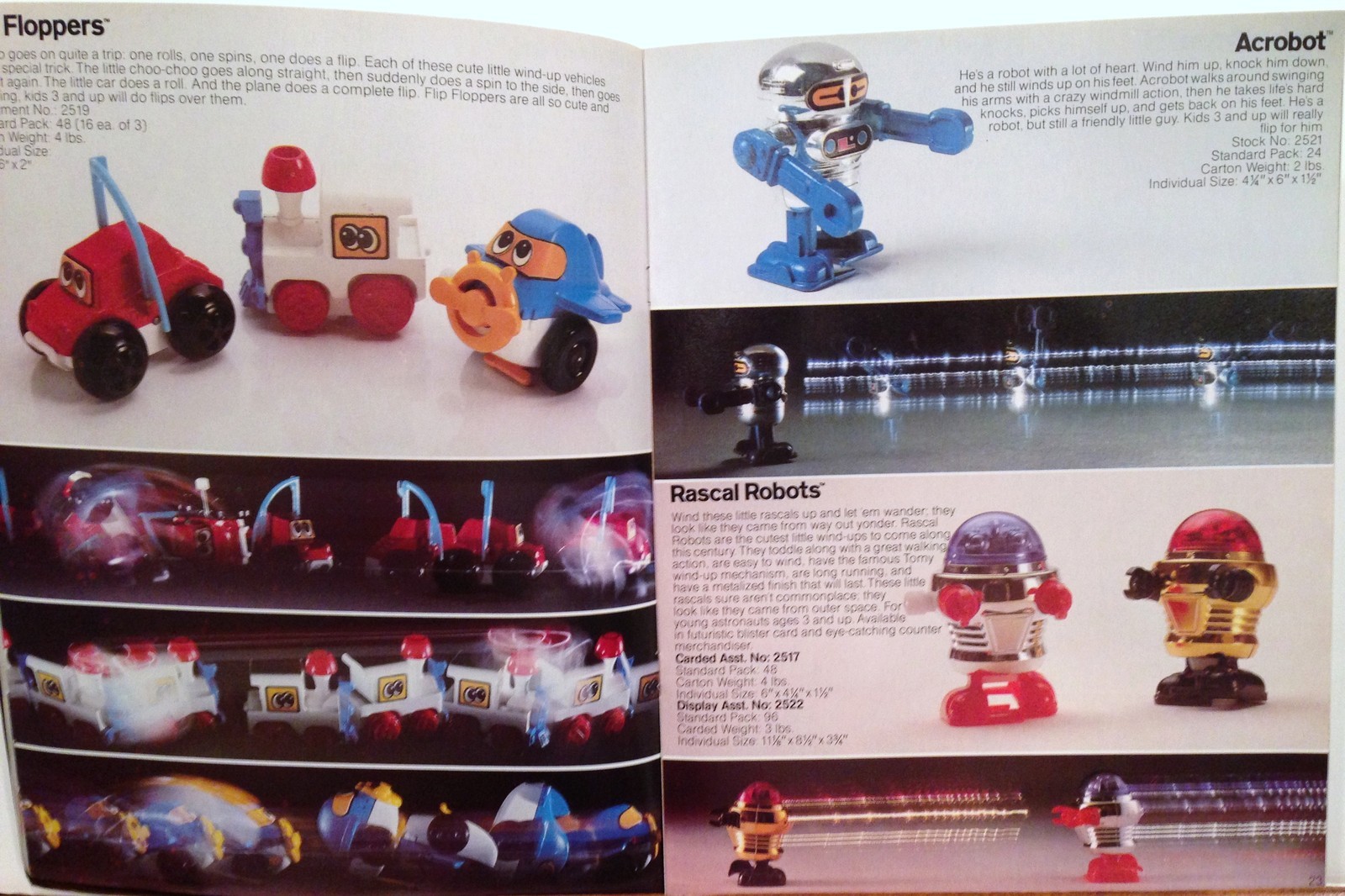
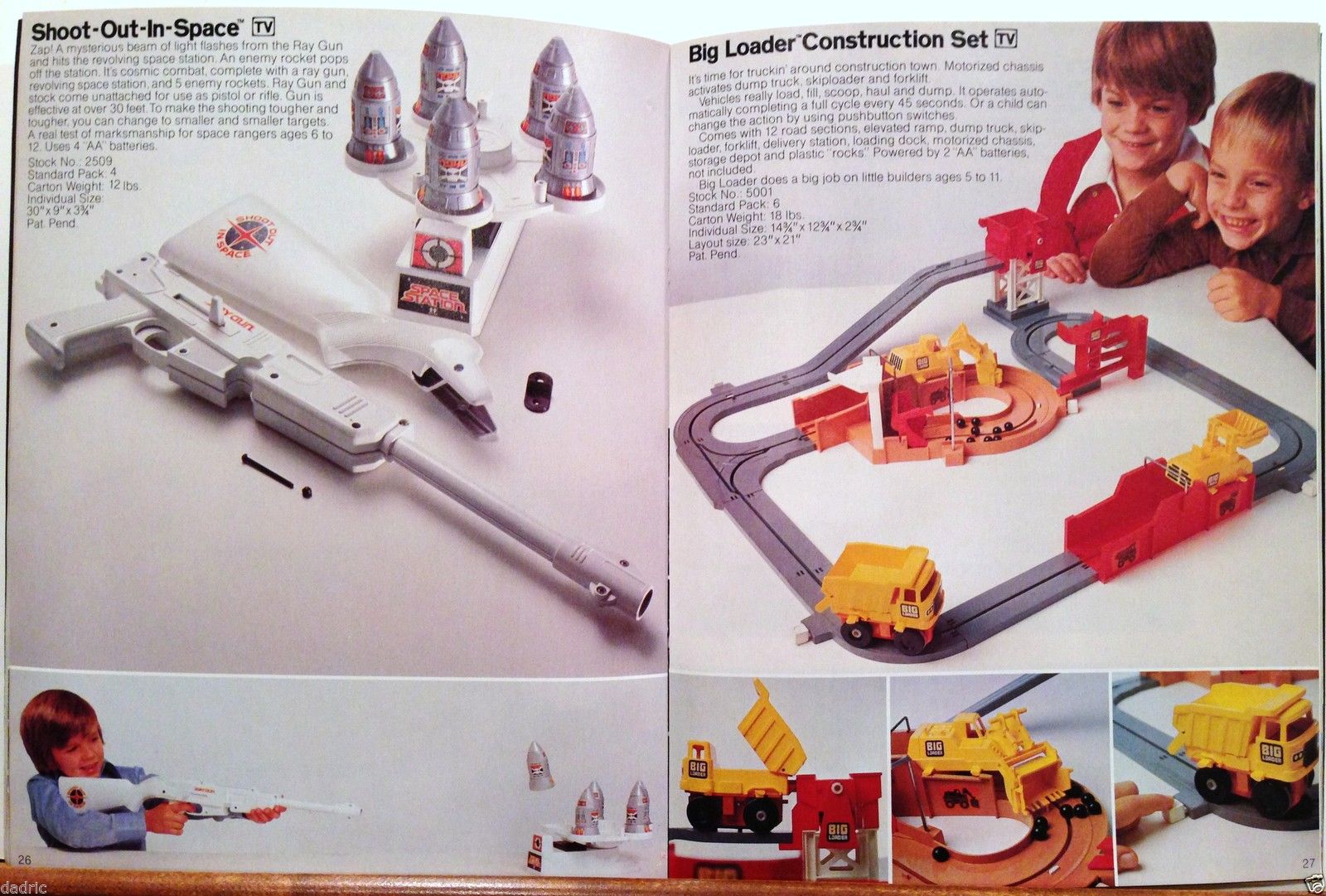
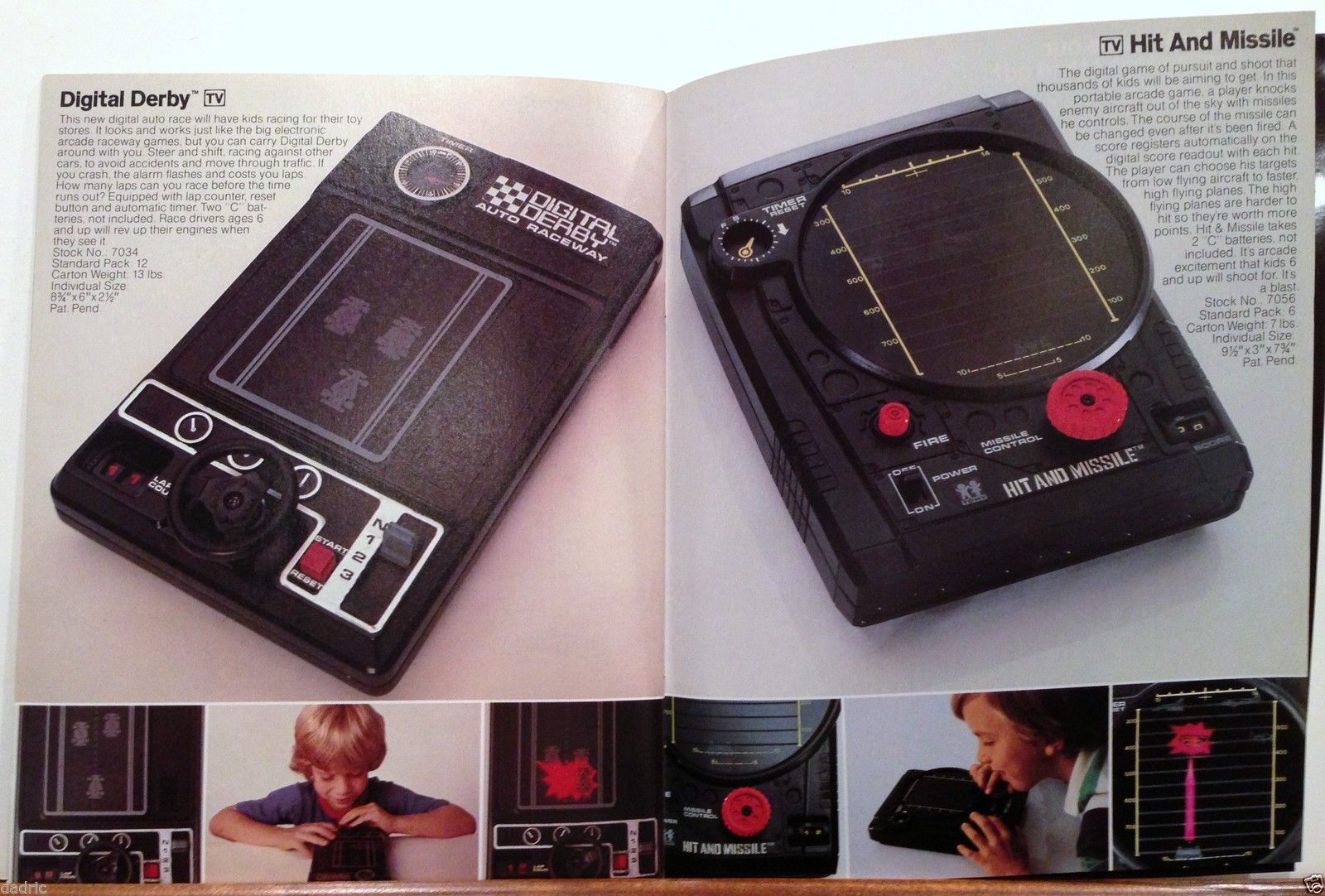
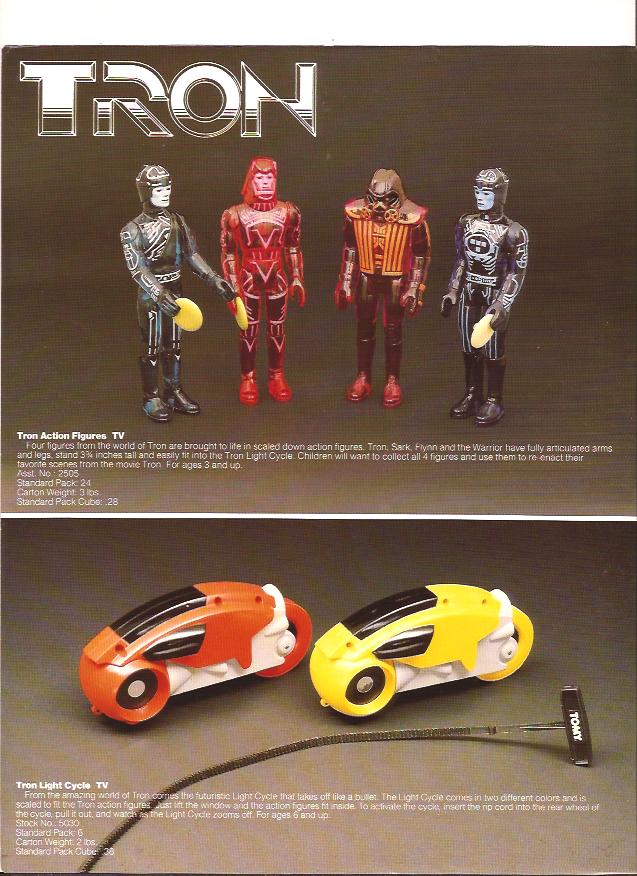
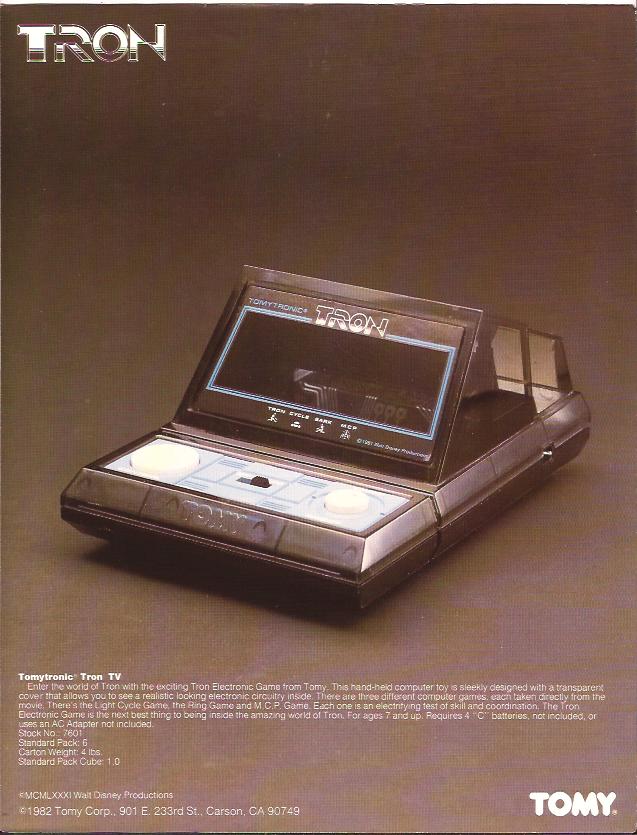
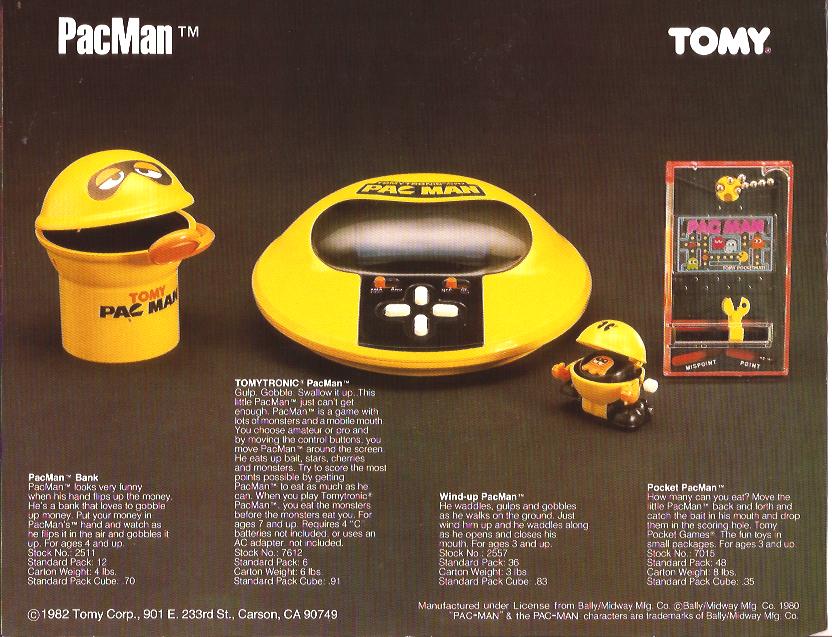
Select pages only. The Mighty Men and Monster Maker commercial is here. Note the creepy painted faces on the Tron figures, making them all look like Michael Myers. Going fully translucent was the lesser of two evils. I wanted that TomytronicTron game badly.
Most of the video, via Patrick Scott Patterson, is from a PM Magazine feature on the youngest kid competing in the “world’s largest Pac-Man tournament” at Milwaukee County Stadium, but there’s also some rare footage of workers assembling Pac-Man cabs at the Midway manufacturing plant. (It’s not actually the largest Pac-Man tournament; the “largest” refers to the size of the stadium screen on which onlookers watched the games.)
The kid qualifies for the tournament by beating his brother on the Atari 400/800 version of Pac-Man at the local computer/game shop. His dad makes an interesting point about early video games: not even the best players could beat them. You just saw how far you could get and how many points you could rack up. The save game feature, as I’ve said before, changed games and gamers forever.
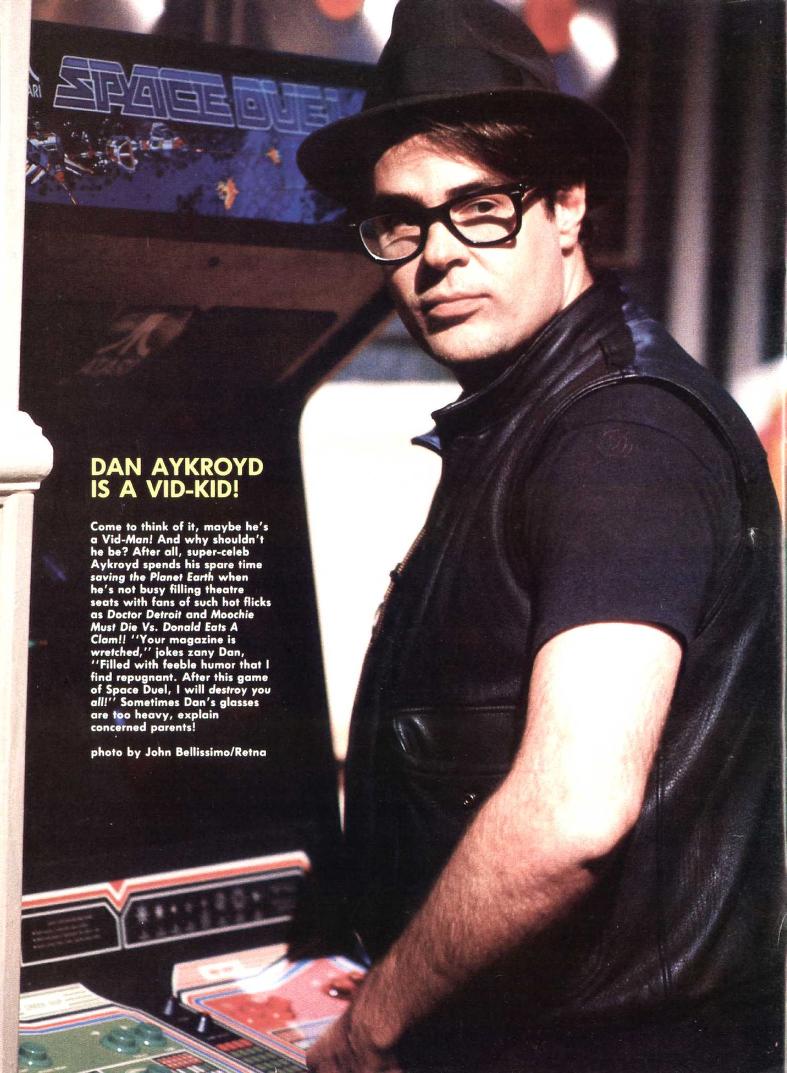
From Vidiot #5, 1983. Vidiot, “The Magazine of Video Lunacy,” was an offshoot of rock magazine Creem, and lasted only 6 issues.
It just so happens that Space Duel and Gravitar are two of my favorite cabinets. I’m a sucker for vector graphics. Space Duel also appears on the front and back covers of The Who’s It’s Hard (1982).
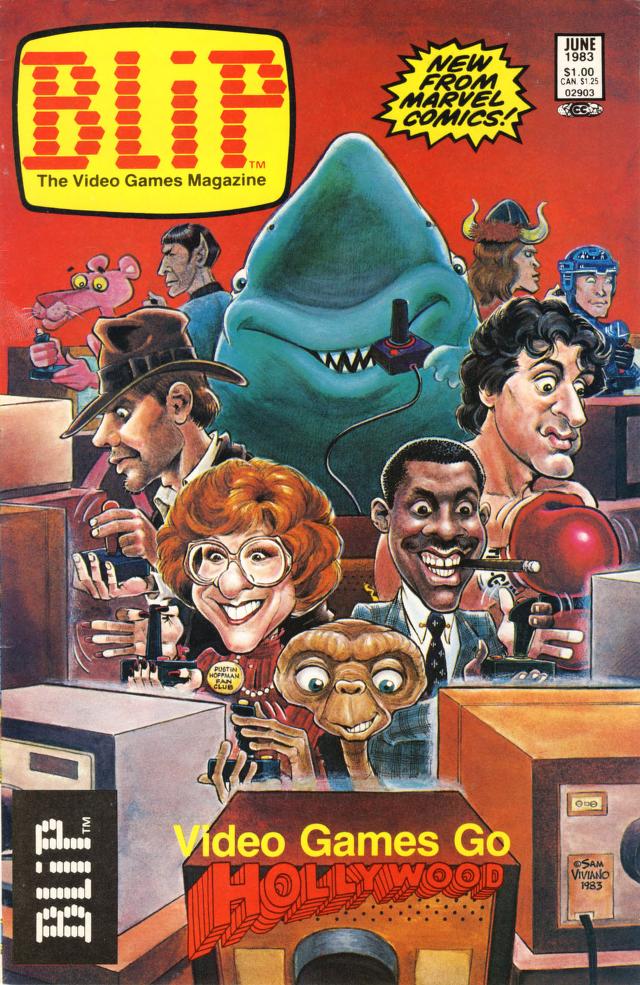
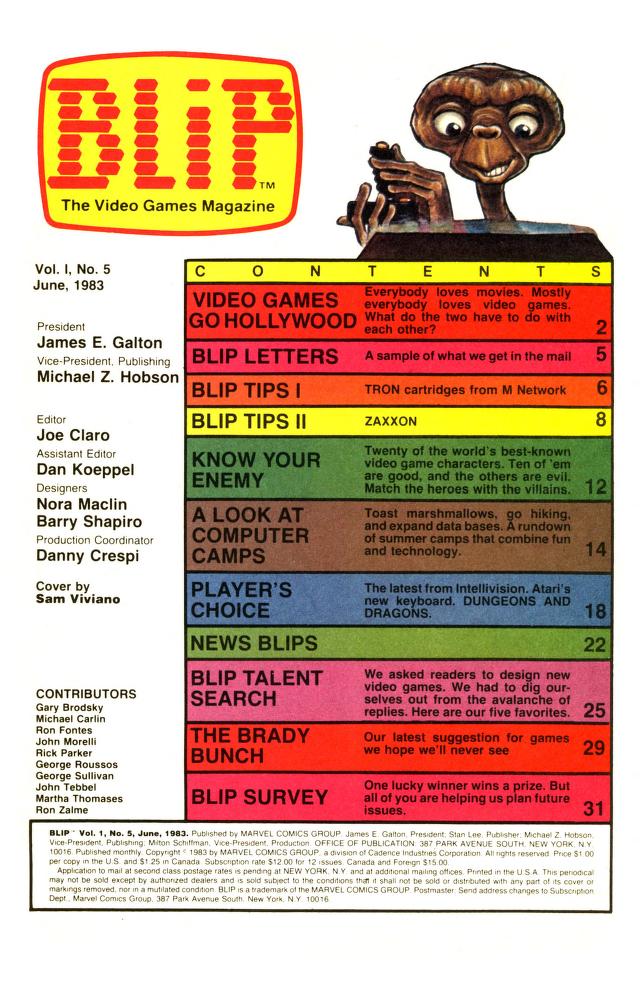
Blip was Marvel’s short-lived—seven issues only—foray into the video game world. It was colorful but silly, printed on comic stock and marketed to younger kids.
Page two talks about the development of Atari’s E.T., and refers to TRON (the movie) as a “flop.” Ripping every gamer’s favorite flick was probably not a good idea.
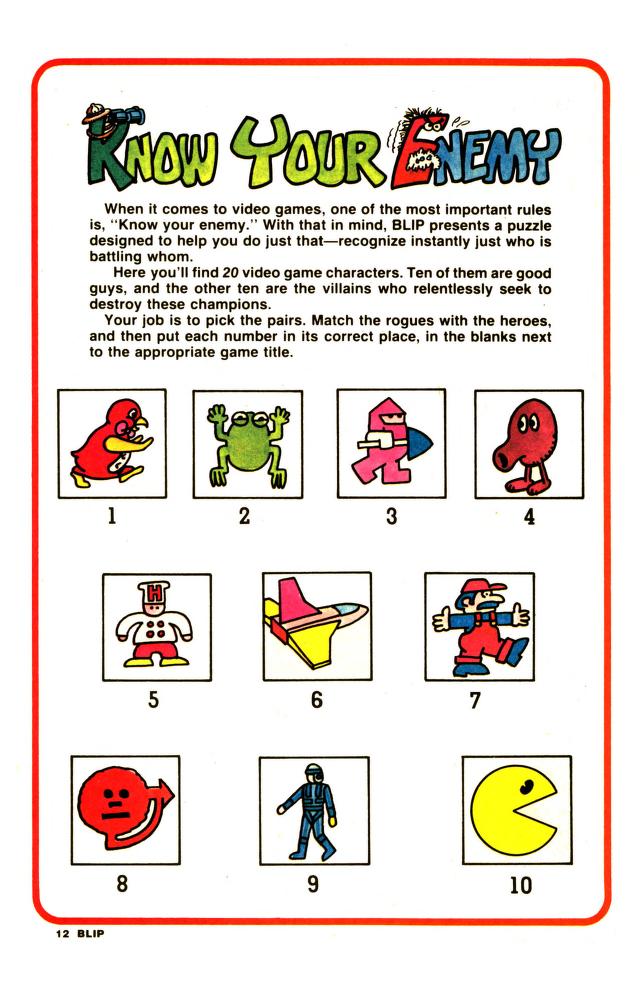
The activity on pages 12 and 13 is representative of the entire run. Kids of every age would have found it condescending.
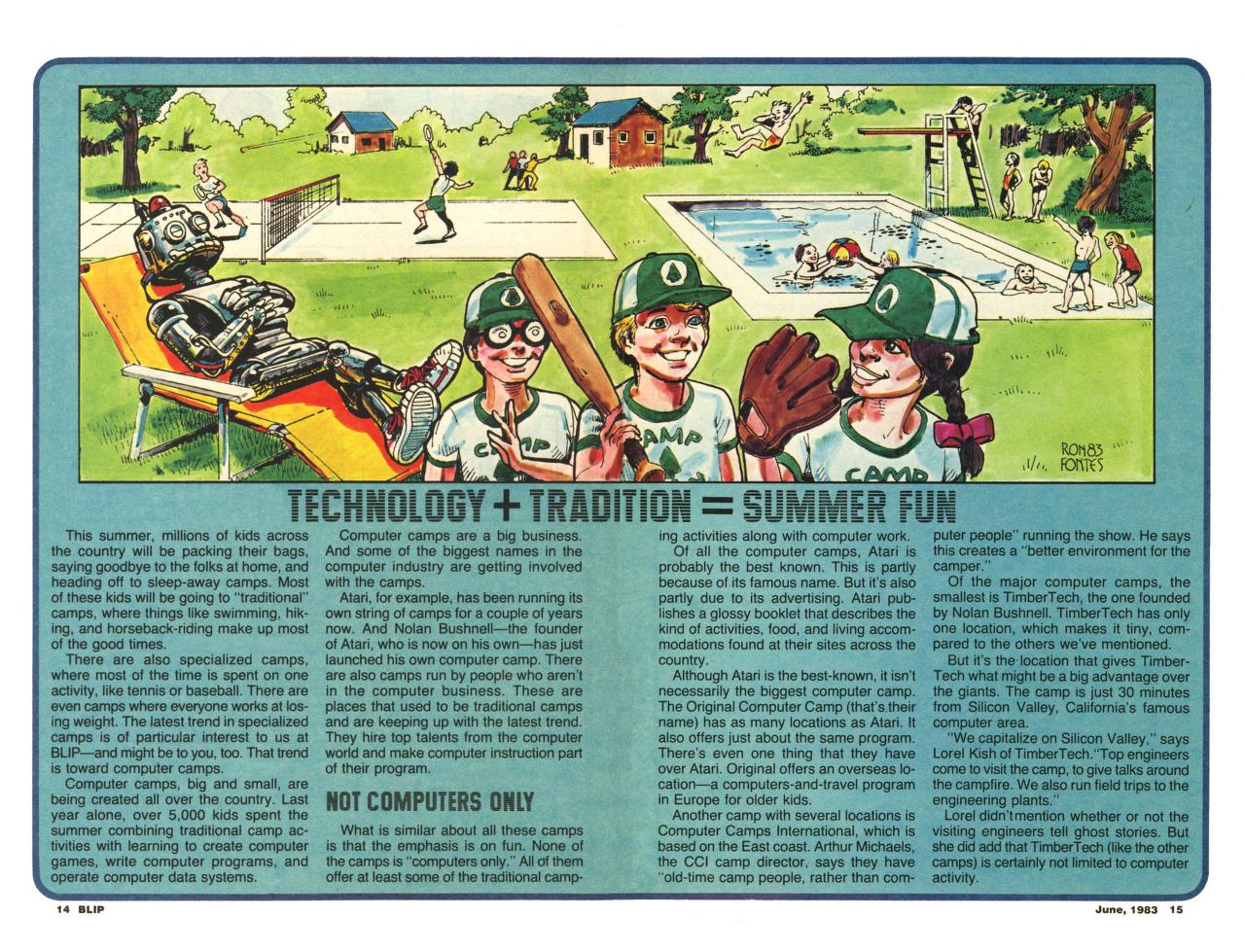
Pages 14 and 16 are about computer camp, one of my favorite subjects. I wrote about the Atari camp here. I love the robot on the lawn chair, even though it’s a clunky (pun intended) metaphor.
And, if you weren’t feeling old enough already, how about the “News Blips” on page 23?
The most amazing feature of the Concept 100 is its satellite hookup. That’s right—this car will actually have a computer that is tuned in to a satellite orbiting in space. What good is this? One big advantage is tracking. If you ever get lost, just order up a map and the satellite will find your car…
Read the whole issue, and the whole run, at archive.org.
If you own the copyright to any of the material on this site and would like said material to be removed, please contact 2warpstoneptune [at] gmail [dot] com.











 2 Warps to Neptune