
Au coeur du jeu: Inside the game, or in the heart of the game.
(Image via Atari Mania)
Surveying the Gen X landscape and the origins of geek
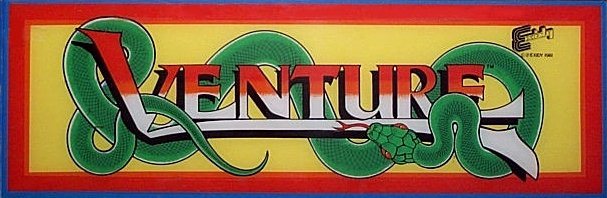
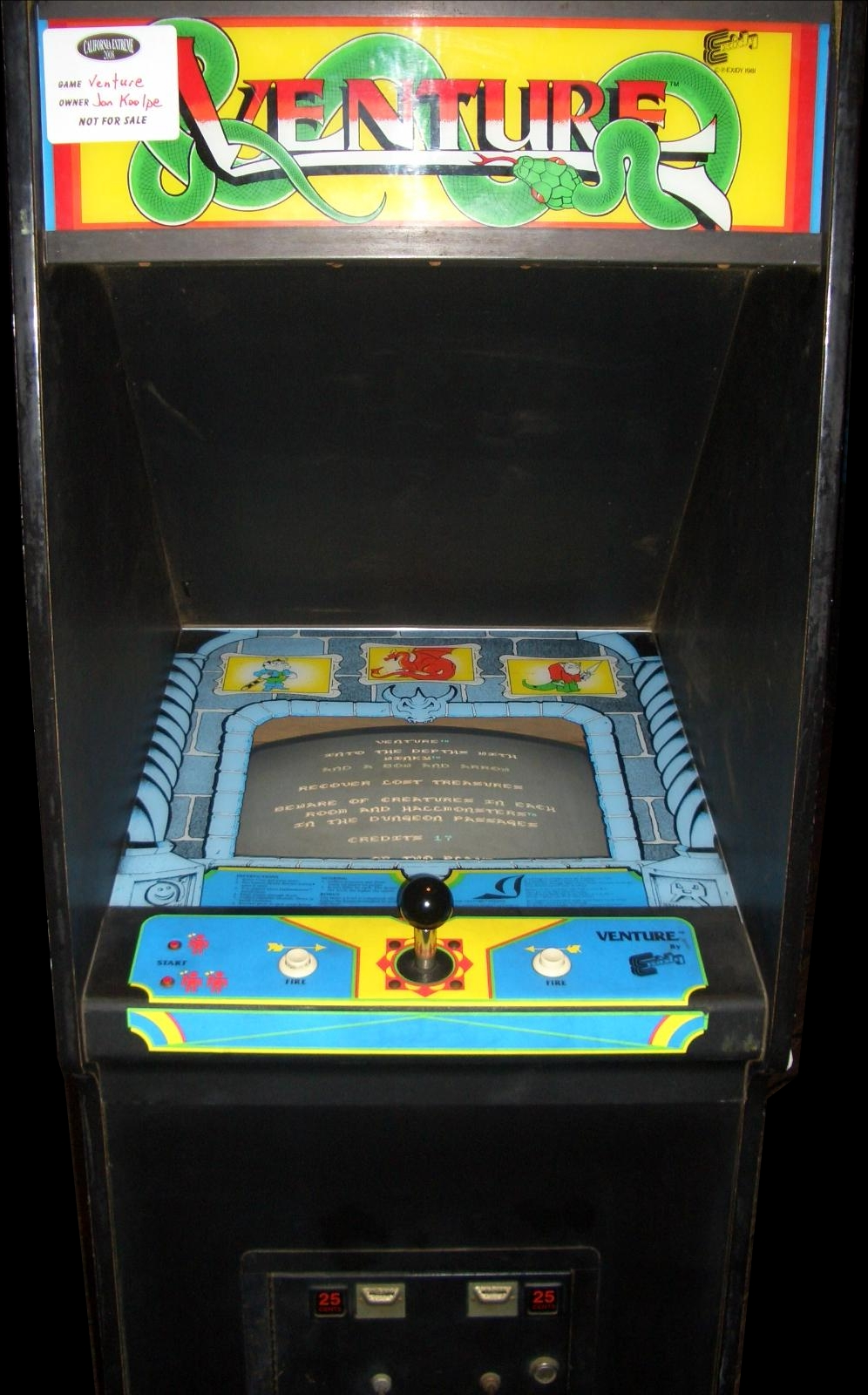
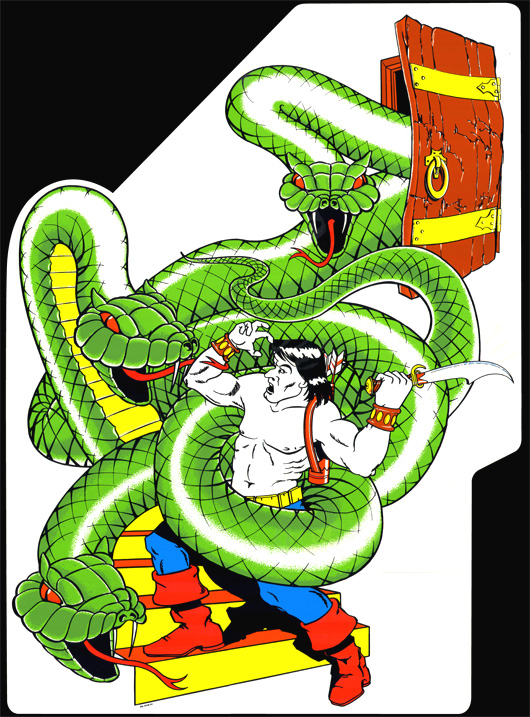
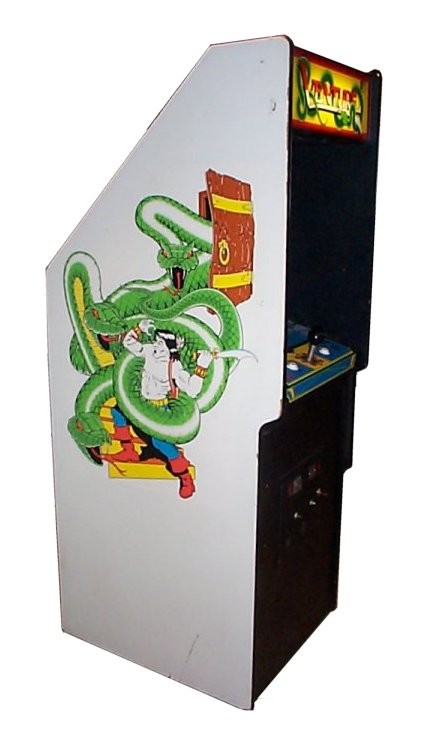
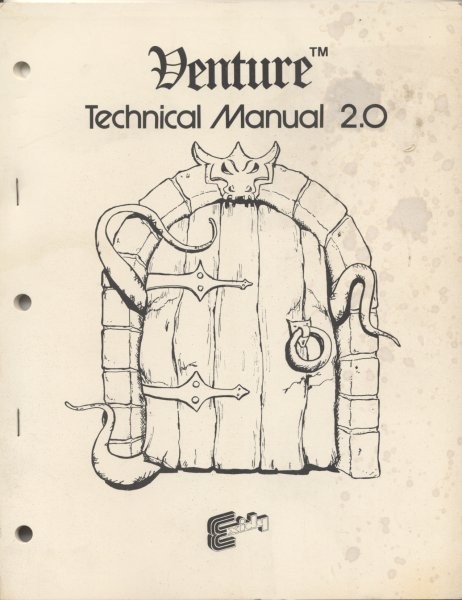
Venture is probably the first arcade game directly influenced by Dungeons & Dragons. From the original arcade flyer:
VENTURE is played in a dark dungeon of multi-levels. The player forges through one level of rooms at a time, displayed on the screen as a floor plan. Armed with bow and arrow, the player learns to avoid confrontation with the wandering green Hall Monsters…
Each room is a new and completely different challenge. For example, one room has a pot of gold of high point value, guarded by goblins. Another has a magic bow giving the players special powers when shooting at creatures. Other rooms have hazardous conditions such as shrinking walls… or deadly ooze…
After strategically and skillfully collecting all the treasures on one level, the player ventures further into the depths of the dank and threatening dungeon…
Sound familiar? As the Golden Age Arcade Historian notes, Midway’s Wizard of Wor, released the same year as Venture, also employs a fantasy theme (with a sci-fi element), but the gameplay itself is standard clear-the-maze fare. The flyers and ads for Wizard do seem to emulate the TSR vibe of the time. Here’s some of the language:
Worriors descend into various dungeon mazes, battling visible and invisible monster Worlings, and maybe the Wizard himself.
Dungeon maze patterns appear at random and have escape doors at either end. These are used for strategic exit and entry.
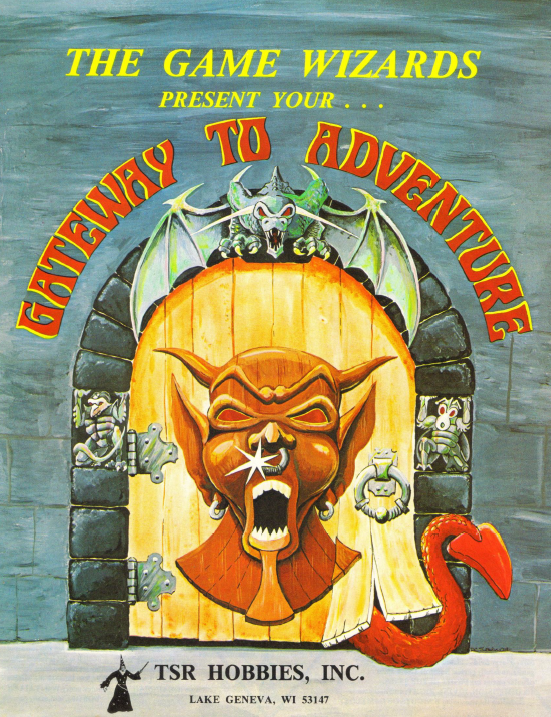
Also, compare the cover of Venture‘s Technical Manual to TSR’s “Gateway to Adventure” catalog cover circa 1980.
UPDATE (7/25/14): Post has been revised for accuracy. Thanks, Alex.
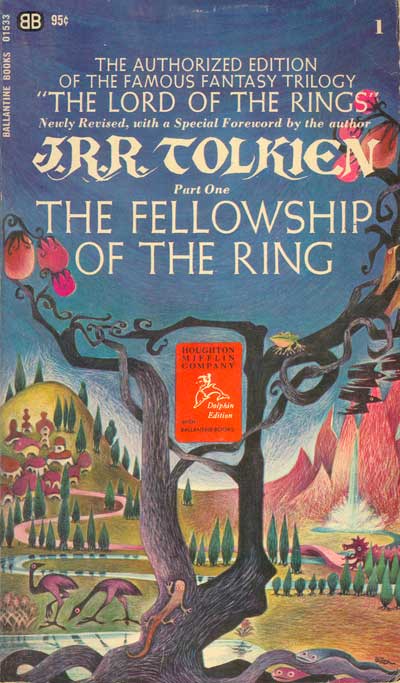


Tolkien did not initially want his trilogy to appear in so “degenerate a form” as the paperback book. What happened is that Donald Wollheim, then editor-in-chief of Ace Books, released an unauthorized edition of LOTR in 1965, believing, or claiming to believe, that the soon-to-be literary phenomenon was in the public domain. The Ace edition, being affordable at 75¢/book, sold extremely well, and Tolkien immediately came to terms with the vulgar paperback medium. Ballantine’s revised and authorized edition, priced at 95¢/book, appeared in October, 1965 (The Fellowship of the Ring and The Two Towers) and November, 1966 (The Return of the King). Said Tolkien to his son in October of 1965:
Campaign in U.S.A. has gone well. ‘Ace Books’ are in quite a spot, and many institutions have banned all their products. They are selling their pirate edition quite well, but it is being discovered to be very badly and erroneously printed; and I am getting such an advt. from the rumpus that I expect my ‘authorized’ paper-back will in fact sell more copies than it would, if there had been no trouble or competition.
Wollheim’s unscrupulous maneuver—he was eventually forced to pay Tolkien the royalties he deserved—was the single most important event in the popularization of the fantasy genre and the birth of geek culture.
You can see the spines and back covers of the original Ballantine editions at Tolkien Collector’s Guide, where I found the images above. The cover artist is Barbara Remington.
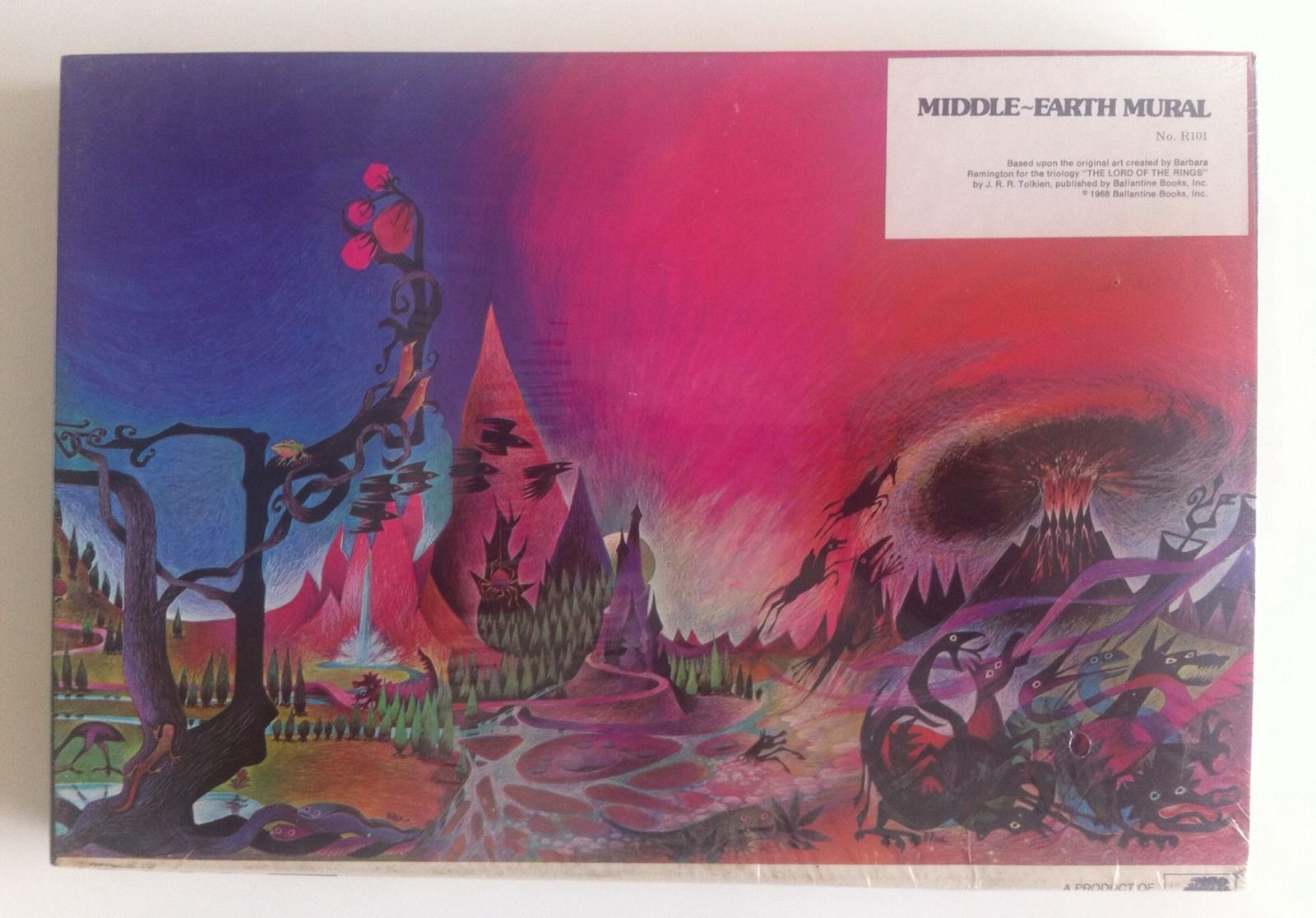

The art is from the first authorized paperback edition of The Lord of the Rings, released by Ballantine in 1965. Artist Barbara Remington famously had not read any of Tolkein’s books before completing the project; she had only heard accounts from friends. The end result befuddled and irritated Tolkien, but became hugely popular with his young fans—and most everyone attracted to mind-altering substances.
Remington’s bright canvas came in a poster version as well, seen below. The demarcations separating the individual covers are obvious.
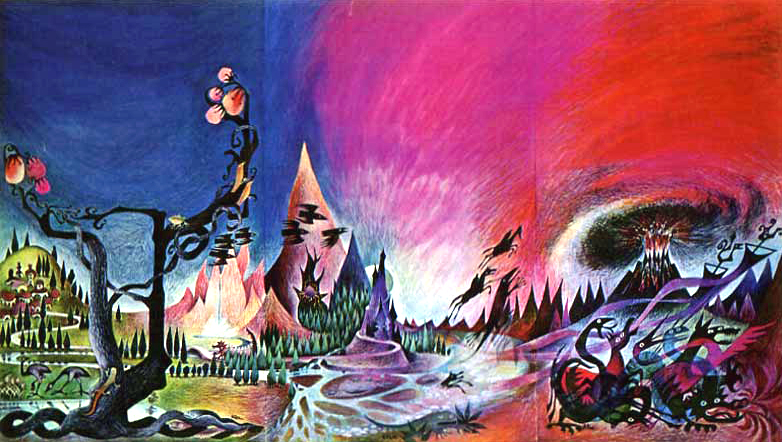
(Poster puzzle images via eBay)

From left to right: Robert Bloch, L. Sprague de Camp, and H. Warner Munn
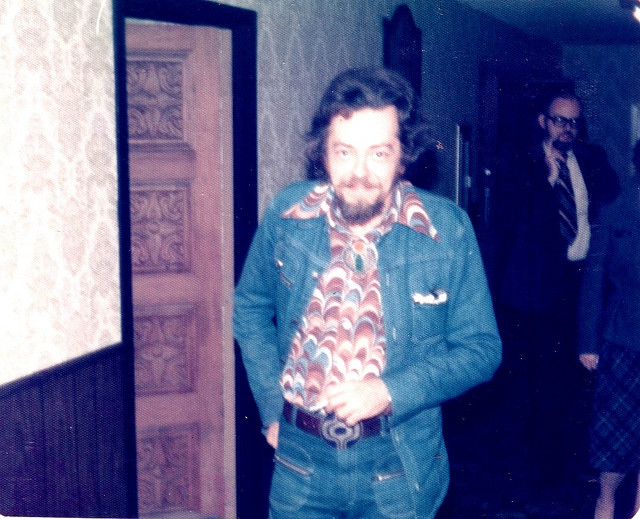
Lin Carter
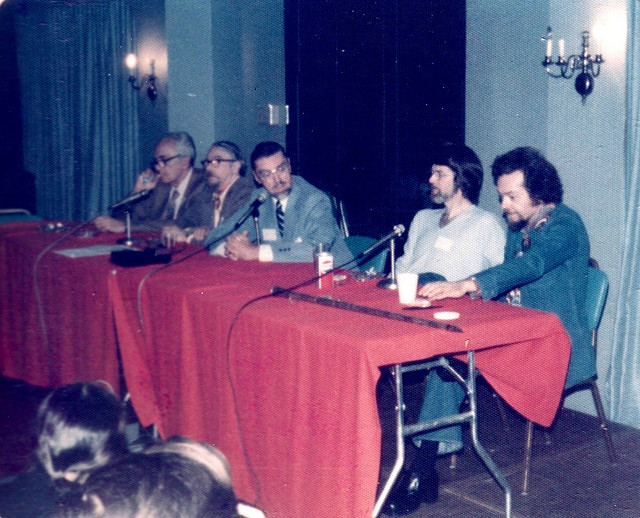
The `Epic Fantasy’ panel. From left to right: Fritz Lieber, Lester del Rey, L. Sprague de Camp, Andrew J. Offutt, and Lin Carter

Ramsey Campbell

Forrest J. Ackerman
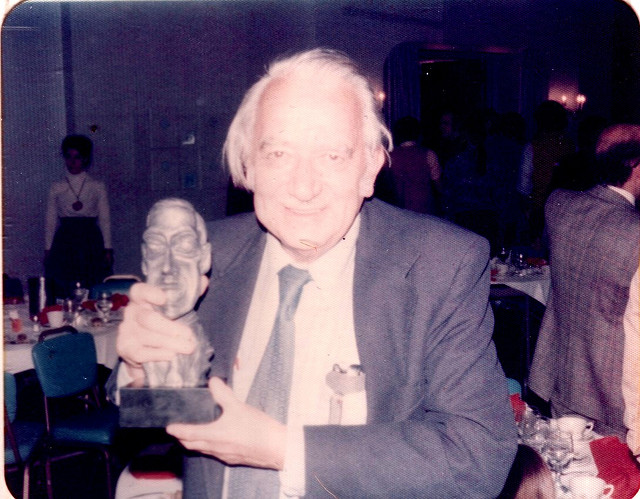
Manly Wade Wellman holding his World Fantasy Award, a bust of Lovecraft sculpted by Gahan Wilson

Chet Williamson at Lovecraft’s grave
All of the photos come from Hunding’s Flickr set, with the following note:
I attended the First World Fantasy Convention in 1975 in Providence, Rhode Island, where I took the following pictures. They were starting to fade badly, so I decided to scan them, tweak them a bit, and post them here, where they may be of historical interest.
The theme of the convention was “The Lovecraft Circle.” Quite a few noteworthy speakers attended, including Lin Carter and L. Sprague de Camp, two of heroic fantasy’s greatest popularizers. Robert Bloch, who started corresponding with Lovecraft when he was in his teens, is famous for the novel Psycho. Like many of Lovecraft’s friends and Weird Tales contributors, Bloch extended and expanded the Cthulhu Mythos in his own works.
According to this 1975 Hour article, the three-day convention began on Halloween, and 400 people were expected to attend. The Sarasota Herald-Tribune has the figure at 500.
The World Fantasy Convention was modeled after the World Science Fiction Convention (Worldcon), first established in 1939. Both conventions are still going, with focus on intelligent conversation at the expense of dressing up like comic book characters.
More pictures—including a young Jeff Jones—at the first link. You can hear audio of some of the panels at archive.org.

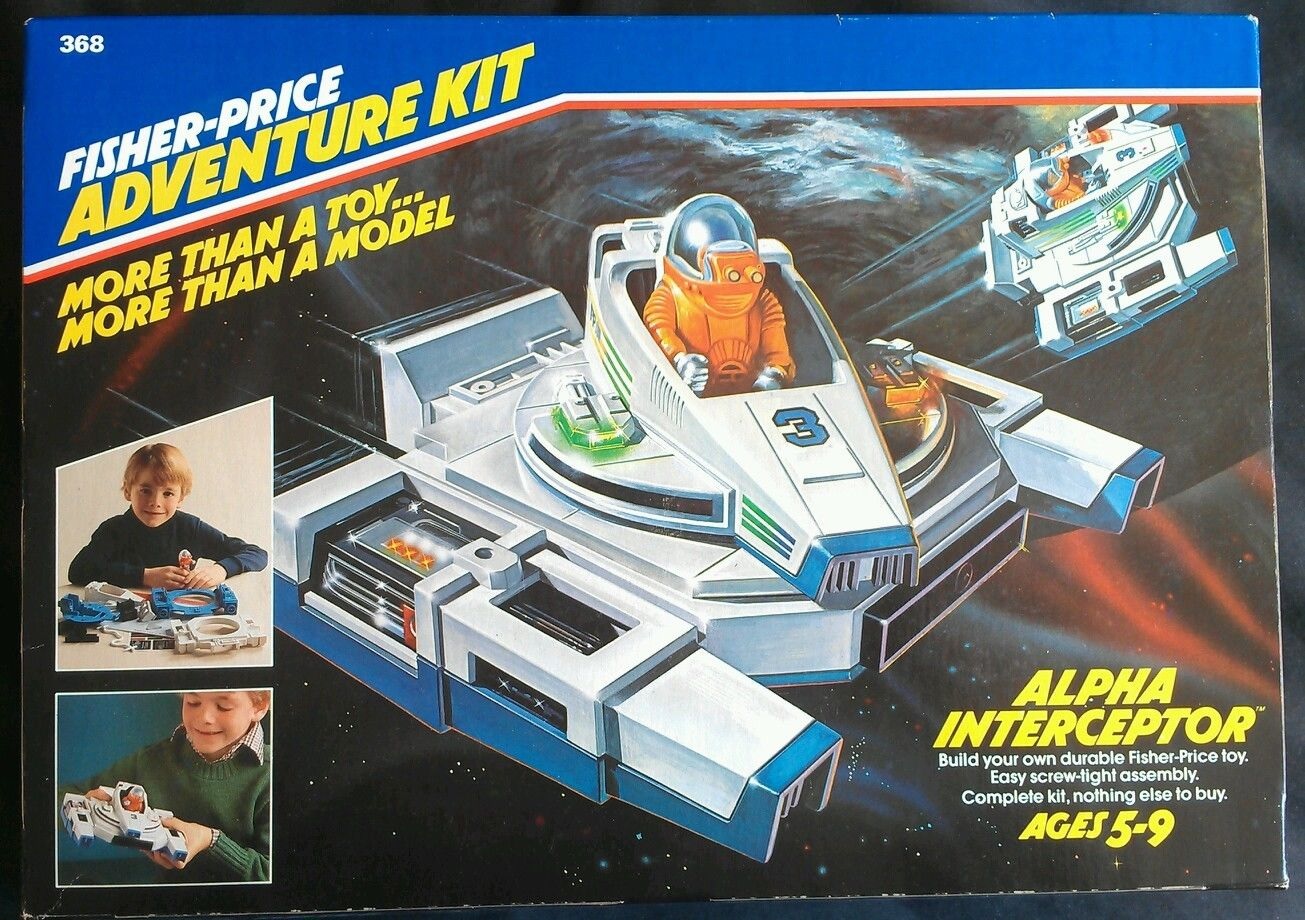

Gorgeous. And I like how Fisher-Price gets us to assemble our own toy—very Tom Sawyer. There were four Adventure Kits, three of which are seen on the back of the box. The fourth was the 4×4 Trail Boss. All of them are part of the superior Adventure People line.
(Images via The Shiplomats/eBay)


We didn’t have Child World in Southern California, but my mother did put lots of stuff on layaway. Try to explain that concept to Gen Y.
The Flying Finnegan game on the second page looks pretty sweet—for about five minutes.
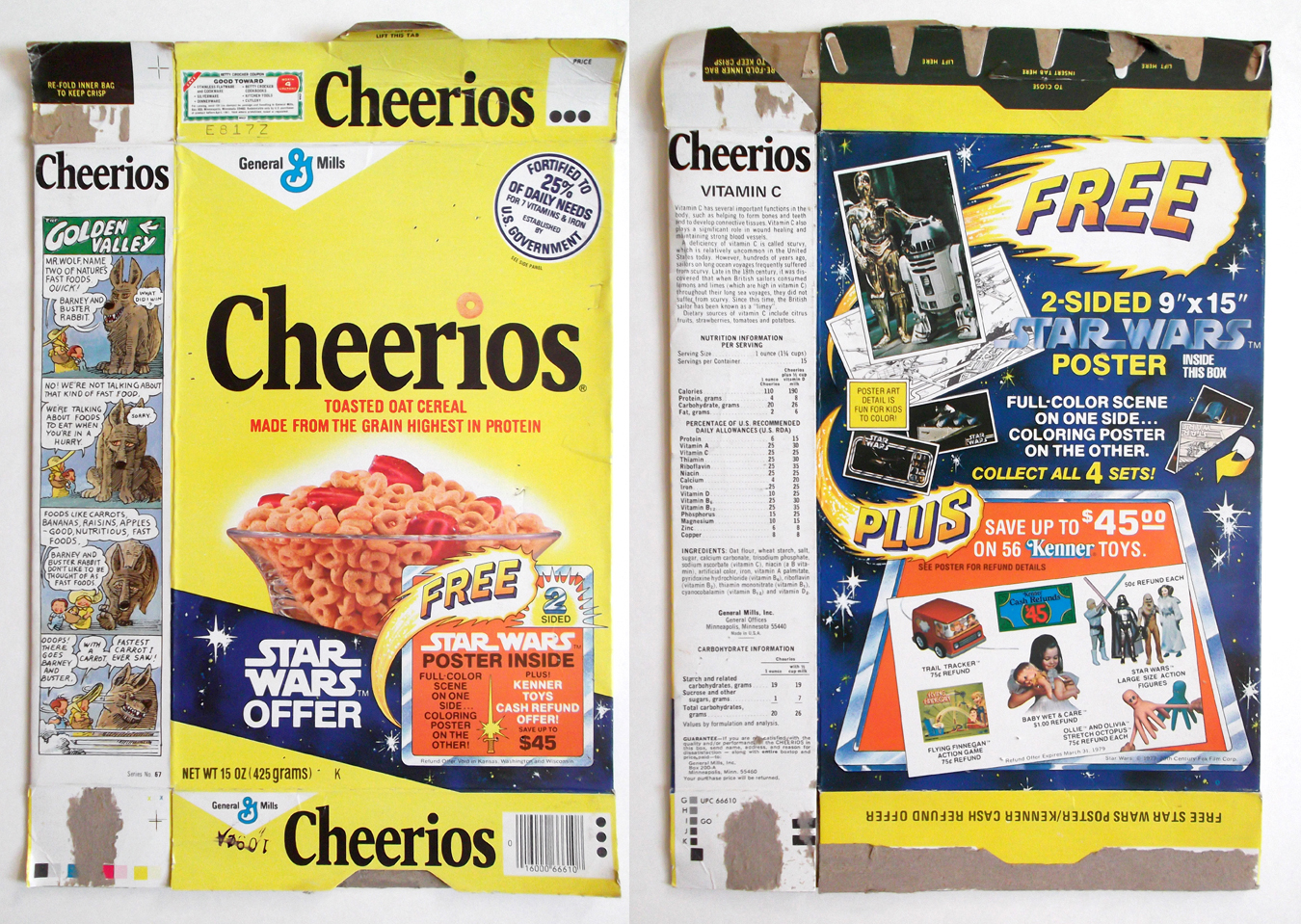
Here’s a great view of the Cheerios box appearing in the ad, courtesy of Gregg Koenig.
These are all the TSR-produced commercials I’ve been able to find so far. They aired in (from top to bottom) 1982, 1983, 1983, 1984, and 1985. I’ve posted them before with the exception of the 1984 spot, which is very well done and advertises not only the red cover Basic Set (Frank Mentzer revision), but the Marvel Super Heroes and Adventures of Indiana Jones RPGs. The 1983 Star Frontiers commercial is my favorite.
Let me know if I missed any.
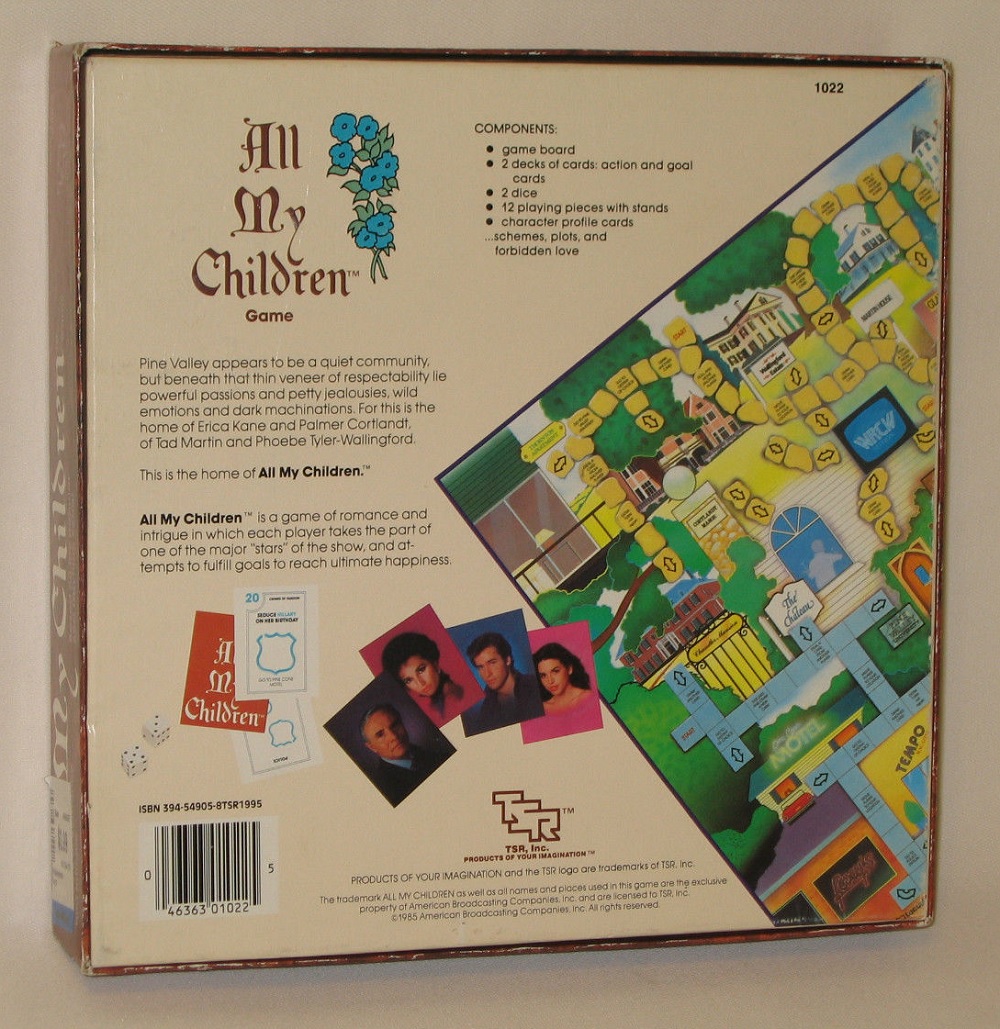
Because TSR wasn’t making enough money at the time—from $27 million in 1981-1982 to a projected $60 million in 1982-1983—the “products of your imagination” crew decided to lap up a license for the second most popular daytime soap. General Hospital, consistently first in the ratings, already had a game.
College girls (note the Yale flag in the dorm room) and yuppies are the clear marketing demographic.
“To be good, you’ve got to be bad.” Indeed. TSR had embraced the Reagan era. The shark had been jumped.


 2 Warps to Neptune