Archive for the 'Ads' Category


TV Guide Ads for TV Movies (1981 – 1985): Special ‘Midnight’ Edition

Midnight Lace 1981

Midnight Offerings 1981

midnight hour ad 1985

Midnight Lace (premiered February 9, 1981): A remake of the 1960 film of the same name, Mary Crosby (Bing Crosby’s daughter) plays a TV reporter harassed and stalked by an unseen psycho. Is she going insane, or is her assailant for real? I found the Time review of the 1960 version interesting:

Another of those recurrent thrillers in which a dear, sweet, innocent girl is pursued by a shadowy figure of evil who threatens her with all sorts of insidious molestation… Like its predecessors, Midnight Lace is not very interesting in itself, but it is uncomfortably fascinating when considered as one of the persistent fantasies of a monogamous society…

The fantasies of an entrenched monogamous society in the early sixties give way to anxiety over the seeming breakdown of that monogamous society in the eighties.

Midnight Offerings (Premiered February 27, 1981): Melissa Sue Anderson, trying to shed her good girl image from Little House on the Prairie, plays a Satan-worshiping witch wreaking havoc on her ex and his new girlfriend (Mary McDonough), the good witch. Anderson, who appeared in a nifty horror movie called Happy Birthday to Me the same year, is a really good bad girl. Otherwise, the movie is rushed and bland. Marion Ross (Mrs. C.) has a short part as a psychic. Watch the movie (lower quality) here.

The Midnight Hour (Premiered November 1, 1985): This one is a fun horror-comedy. It’s Halloween, and some mischievous high school students unwittingly release an ancient curse upon their New England town. The dead climb out of their graves and wander into the big Halloween costume party, where the head witch-vampire starts biting the living. There’s an extended, somewhat arty vampire seduction scene set to the The Smiths’ “How Soon is Now?”, likely the first time anything by the band was introduced to a mainstream American audience.

Peter DeLuise and Levar Burton play two of the students. Both of them would land the shows that made their careers two years later: 21 Jump Street and Star Trek: TNG, respectively.  Kevin McCarthy (from the original Invasion of the Body Snatchers) plays a drunk dad who gets what’s coming to him. Watch the movie (good quality) here. Here’s the dance scene. The gorgeous young witch is played by Shari Belafonte, Harry Belafonte’s daughter.

(Images via Nostalgic Collections and Randy Rodman)

(Video via bmoviereviews)

***

I’m on a short break. No new posts until next Tuesday. If there’s anything you’d like to see more of on 2W2N, let me know here or on my Facebook page.

The Renegades (1983) Was a Real Show on TV and I Can Prove It

Renegades Ad 2-26-1983

Renegades Ad 1983

Starring Patrick Swayze as Bandit!

Randy Brooks as Eagle!

Paul Mones as J.T.!

Tracy Scoggins as… uh… Tracy!

Robert Thaler as Dancer!

Brian Tochi as Dragon!

Fausto Bara as Gaucho!

And the dad from That ’70s Show (Kurtwood Smith) as Captain Scanlon!

The Renegades originally aired as a TV movie in August of  ’82. It was spun off as a series in March of 1983 and lasted for six episodes only. It’s a Mod Squad (1968 – 1973) reboot, but without the social conscience or hip vibe that made the first show so awesome. The premise was tweaked again, with better results, for 21 Jump Street (1987 – 1991).

Here’s the Renegades intro. Pay special attention to Scoggins’ dramatic head turn,  ‘Dancer’ running his hand through his feathered hair, and the uncomfortably long time the renegades stand staring at the cops. The music rules.

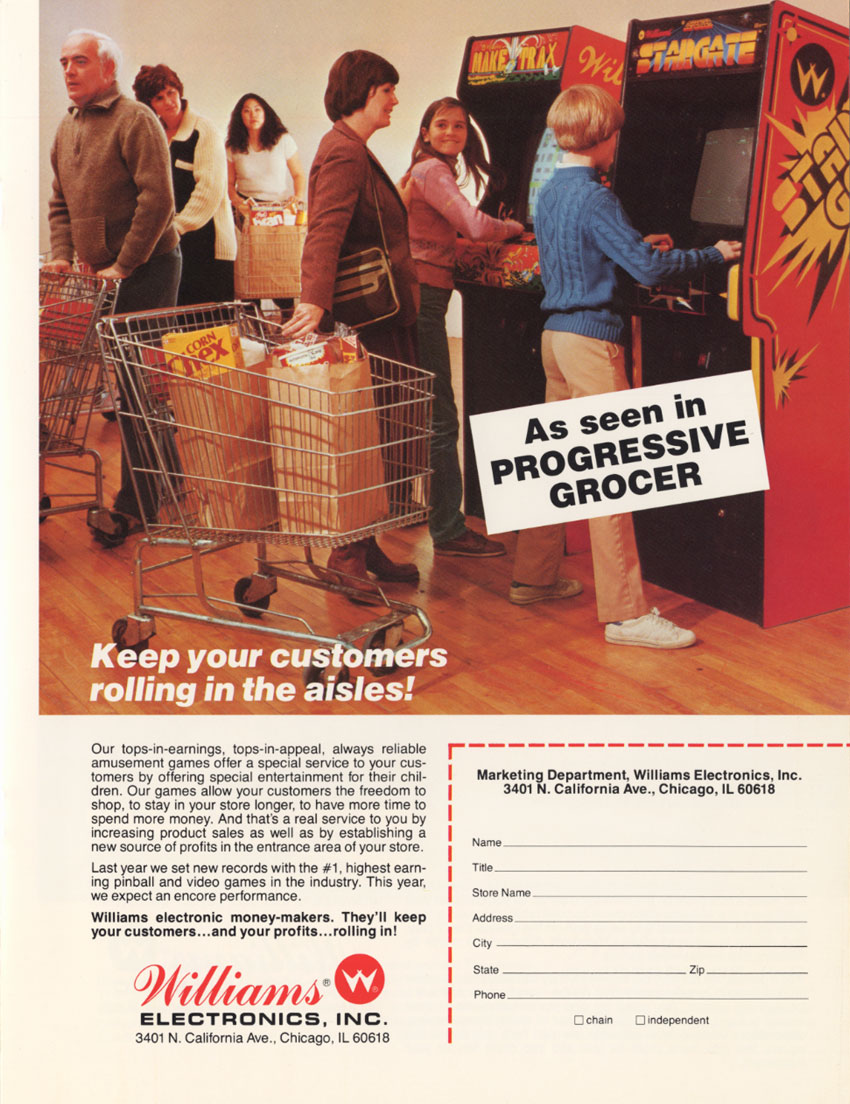
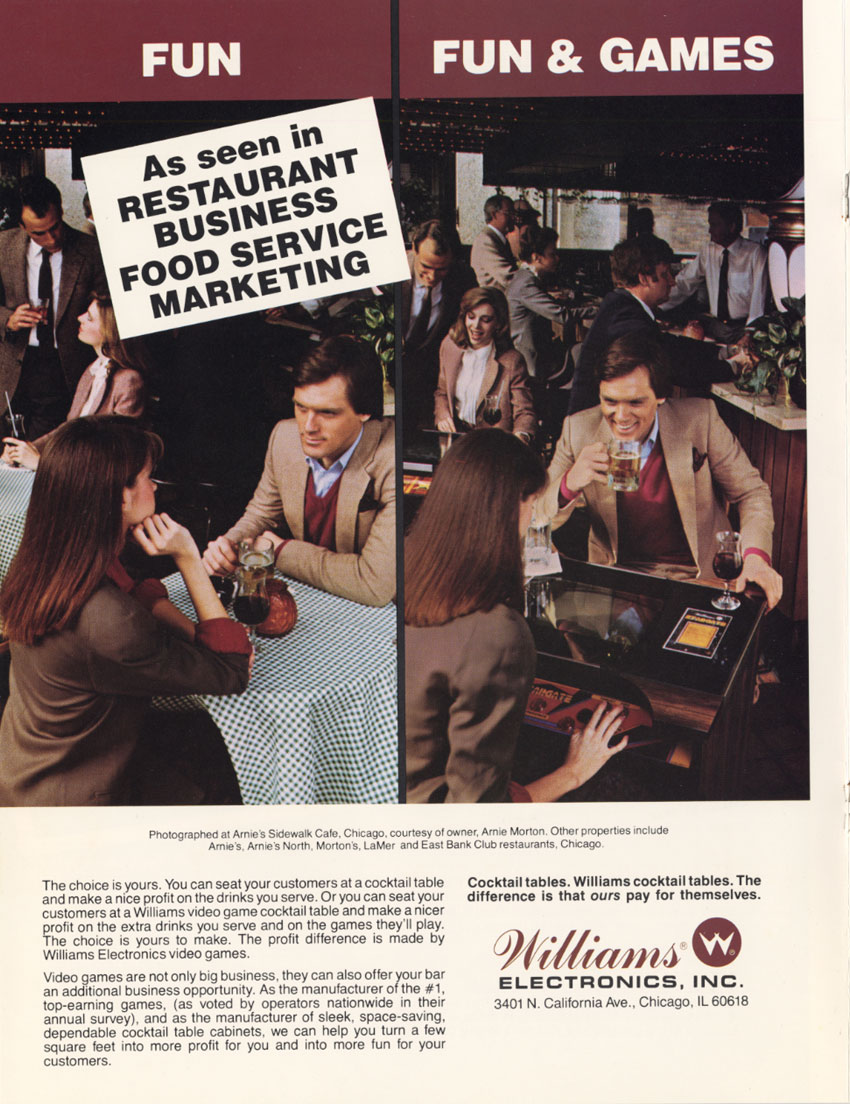
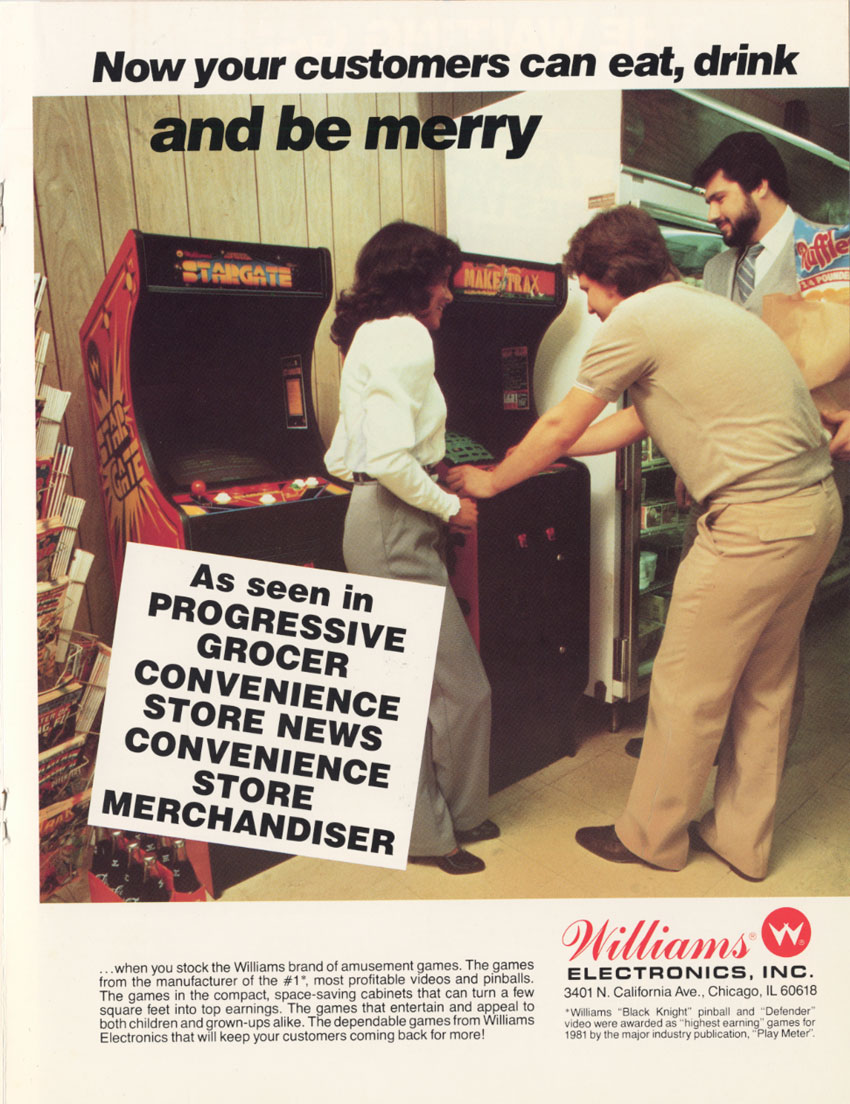
Williams Electronics Trade Ads (1982)

Williams 1982

Williams 1982-2

Williams 1982-3

Williams 1982-4

What a brilliant display of golden age video game marketing. Almost all service businesses had cabinets by ’82, but those businesses had to choose between a whole bunch of different game manufacturers. Williams (Defender, Stargate, Joust, Robotron, Sinistar) was one of the big names.

Is dad reading the Bible in the before shot of the first ad? And who the hell is that in the blue shirt? Pat? I had a handheld or two by ’82, but nothing compared to a row of cabinets. Just hearing the attract mode noises made life so much more exciting.

Check out the lady on the left peering curiously at the kids in the grocery store. She’s thinking: “Video games in the supermarket? What a great idea! Now I can bring my kids and spend way more money!”

The third ad is my favorite. Look how bored they are with one another until the cocktail cabinets arrive. And the guys at the coin-op-less bar are so miserable not because they’re stag, but because all the games are taken.

Fourth ad: Ruffles bags haven’t changed much, I guess. See all the beautifully pristine comic books on the spinner rack? That’s Captain America #268 second from the bottom.

(Images via The Arcade Flyer Archive)

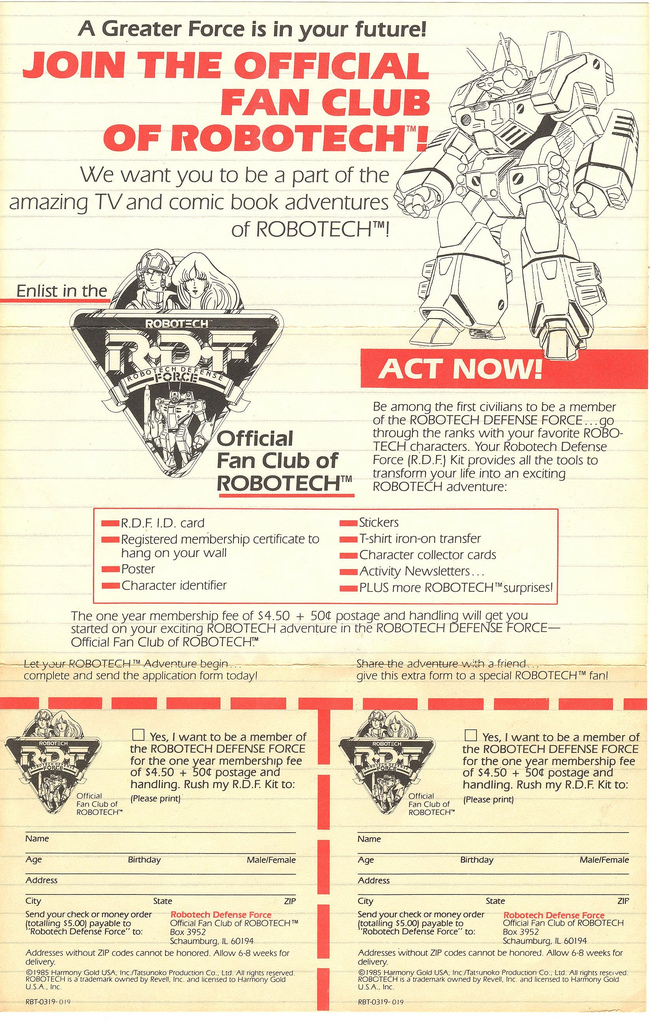
Robotech Fan Club Ad (1985)

Robotech Fan Club 1985

Is it too late to sign up?

The ad comes from zombikaze, who also gave us this 1986 convention program.

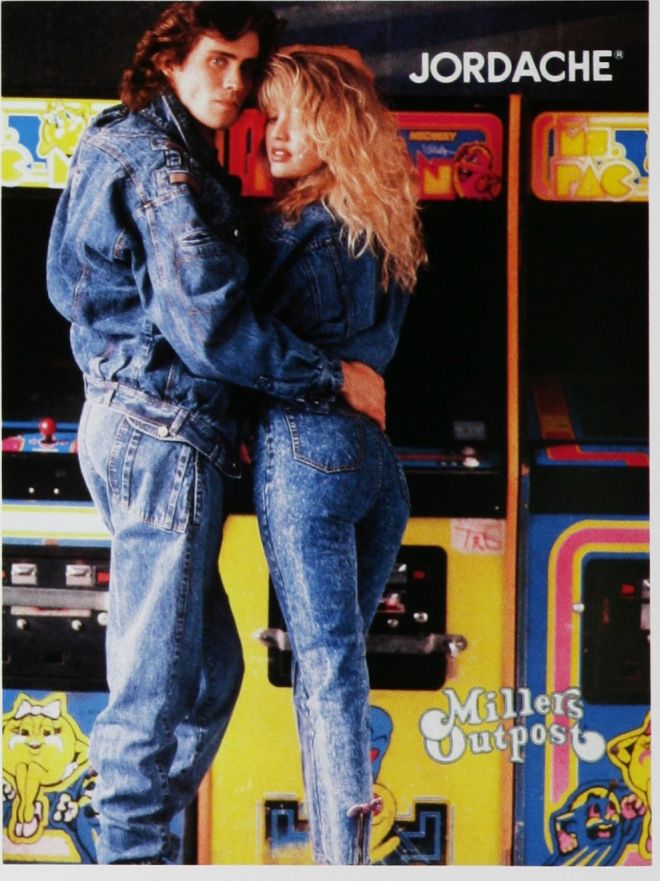
All Denim, All the Time: Jordache Ad (Circa 1987)

Jordache Ad

Despite the Pac-Man machines, I put the ad at around ’86 or ’87, when acid wash/stone wash and zippers hit it big with the sort of yuppies-in-training who wore Jordache.

The arcade background is curious, at first glance. Pac-Man (1980) and Ms. Pac-Man (1981) were old news by this time, and the rich kids hung out at arcades only to be seen by other rich kids. They didn’t want to get their hands dirty playing the games, and when they did stoop to put in a quarter, some arcade rat would smack his coin into the corner of the marquee and talk smack until the screen said `Game Over’.

Ultimately, the ad defines the arcade environment as a social advancement opportunity instead of a place of amusement and competition, and to this end it features a video game Jordache’s non-gaming clients would recognize. That game was, and still is, Pac-Man.

Miller’s Outpost would virtually abandon designer jeans shortly after this to concentrate on its home brand, Anchor Blue, and Levi’s.

(Image via The Man in the Gray Flannel Suit)

Geekery in the UK: Games Workshop and the Early Selling of ‘Mind-Games with Dice’

Games Workshop Ad 1981

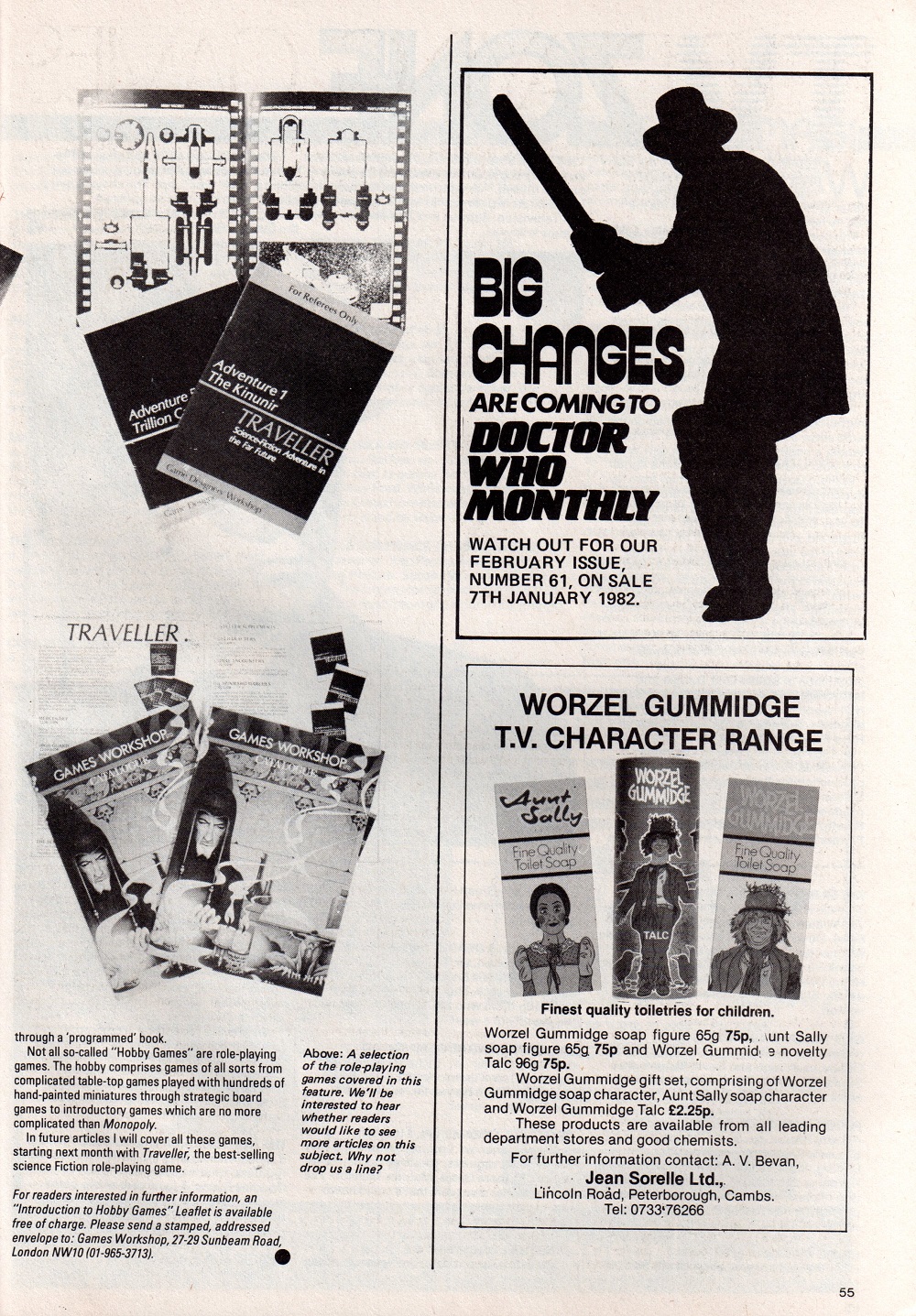
I’ve talked a little bit about TSR’s early marketing campaign in the U.S., and now, thanks to Dirk Malcolm of The Dirk Malcolm Alternative, we see how game makers won over the kids in Britain.

The ad above is from the December 1981 issue of Starburst, “the world’s longest-running magazine of sci-fi horror and fantasy.” I don’t remember seeing anything like it in the U.S. It’s very effective, the staid schoolboy quietly conjuring his inner barbarian. The message is a moral: reality comes with escape hatches, and it’s okay to use them. (For the low, low price of £7.95!)

Games Workshop was (and is, they’re still very successful) a British company that started to import D&D and other U.S.-produced RPGs in 1978. In a 2008 interview, Gary Gygax talks about granting GM, founded by Steve Jackson and Ian Livingstone, “a license to produce TSR products in the UK, even print their own material unique to the UK.” The cost of importing was high, so the deal effectively unleashed the swelling nerd-thusiasm of the new market. (There was even talk of a TSR-Games Workshop merger at one point, but the parties couldn’t come to terms.)

RPG Article 1981

RPG Article 1981-2

In the same Starburst, there’s an article (above) written by Steve Jackson introducing the concept of role-playing games. In his post, Starburst Memories: Tired of Reality?, Dirk talks about the impact it had on him at the time.

When I read this article back in 1982, everything seemed to click into place, and those mysterious games that sat in the corner of Boydell’s Toy Shop in Bolton, became a tantalizing gateway into a new world.

He also nicely describes the stark novelty of the hobby when it first appeared:

It is difficult to appreciate now how much of a conceptual leap it was to play a game that didn’t have a board. This was before Fighting Fantasy (choose your own adventure books), before Zelda, before Warhammer, before Total Warcraft and before Second Life. Most people are used to hypertextual narrative games, they are part of everyday life, but back in the early 1980s it took a leap of faith to move from Monopoly to playing mind-games with dice.

STAY TUNED: Dirk (a.k.a. Chris) has kindly agreed to participate in my Interview with a Geek series. I’m super excited about getting a non-American perspective on living life “with funny-shaped dice,” among other things.

(All images are courtesy Dirk Malcolm/Chris Hart)

TV Guide Ads for TV Movies (1980 – 1982)

The Baby Sitter 1980

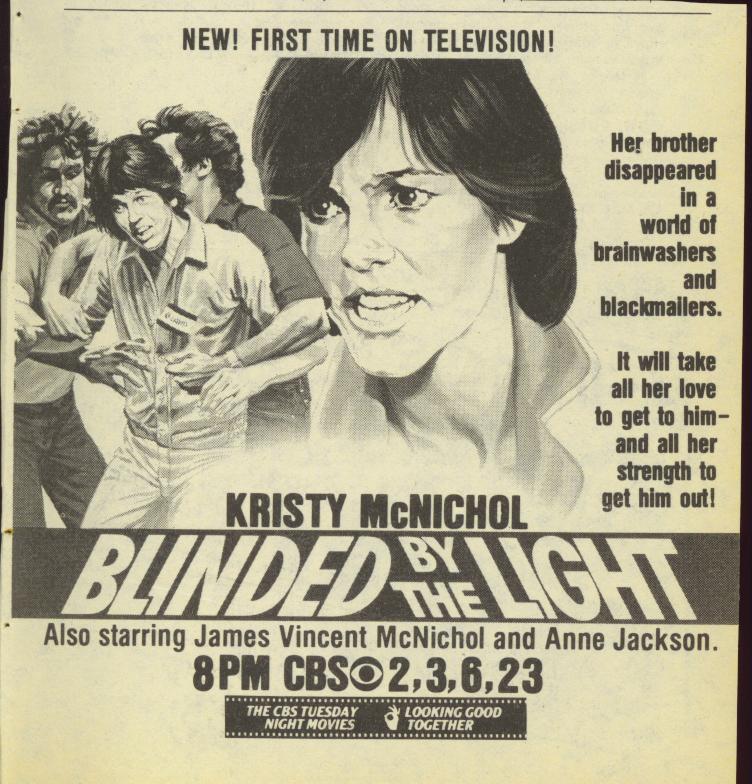
Blinded Ad 1980

Honeyboy 1982

Hotline 1982

The Babysitter (November 28, 1980): Shatner being Shatner about sums this one up: “You know nothing about her. It’s kerAAAzy! Bringing a total stranger. Into your house.” Enter gorgeous, creepy Stephanie Zimbalist (Remington Steele) giving him the googly eyes. Enter the tawdry I-do-believe-I’ve-just-been-instantly-seduced music. Shatner’s face at the end of the clip is must-see bad TV.

Blinded by the Light (December 16, 1980): Girl (Kristy McNichol) tries to rescue brother (Jimmy McNichol) from religious cult, but in the process begins to swallow the Kool-Aid herself. The terrible art makes Kristy look 40, but she was only 18 at the time. I can’t find a clip, and you don’t want to see it anyway, so check her out with Matt Dillon in my favorite scene from Little Darlings (also from 1980).

Honeyboy (October 17, 1982): One of the more important steps to becoming a responsible adult is accepting the fact that CHiPs made everyone dumber on a weekly basis, largely because Eric Estrada had no business being in front of a camera. As for Morgan Fairchild, I can’t even say the name without disintegrating into a puddle of adolescent sexual desire. Watch the trailer for Honeyboy, if you must.

Hotline (October 16, 1982): That dark, shiny, curvy hair. Those eyes. Those lips. That voice. God, I had such a crush on Steve Forrest from S.W.A.T. (Sorry, I can’t find anything on Hotline. I talk about the psycho-stalking-young-women genre here.)

(Images via Nostalgic Collections/eBay)

Processor Technology’s Sol-20: ‘The Small Computer That Won’t Fence You In’

Sol-20 10-23-77

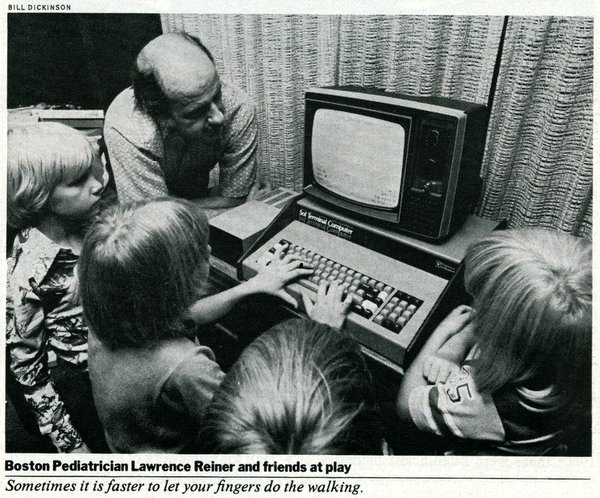
Press photo: October 23, 1977

sol computer 1977

The Sol-20 was introduced in the July 1976 issue of Popular Mechanics and released by Popular Technology Corporation in December of the same year.

The Popular Mechanics article breaks “video computer terminals” into “dumb” and “smart,” the Sol-20 being “one of the most advanced of intelligent terminals.” Why is it so advanced? Because it’s “possible for two SOL terminals to communicate with each other without human supervision.” Brilliant.

SOL-20 Article

Sol-20 Ad

The ad is great too.

A lot of semantic nonsense is being tossed around by some of the makers of so-called “personal” computers. To hear them tell it, an investment of a few hundred dollars will give you a computer to run your small business… and when day is done play games by the hour.

But the few PCs that can handle “meaningful work… don’t come for peanuts.” Interesting how the company uses “small” instead of “personal”—small actually means bigger in this case, like a small pizza is bigger than a personal pizza. And how many Americans today would understand the phrase “semantic nonsense”?

Also, plunking the computer down in a hostile environment does not make it more attractive. The desert is a wide open space without fences because it’s so dessicated that nothing can live there.

Anyway, the point of the ad is to justify the Sol-20’s price tag. There was a reason only pediatricians could afford this puppy. The Sol-20 retailed for over $2000 assembled, or about $1000 as a kit. $2000 in 1977 amounts to almost $8000 today.

Processor Technology failed to deliver a next generation, and by May of 1979 they were out of business.

Technology moved pretty fast at the dawn of the PC revolution. If you didn’t stop and rob a bank once in a while, you probably missed it.

(Images via eBay and oldcomputers.net)

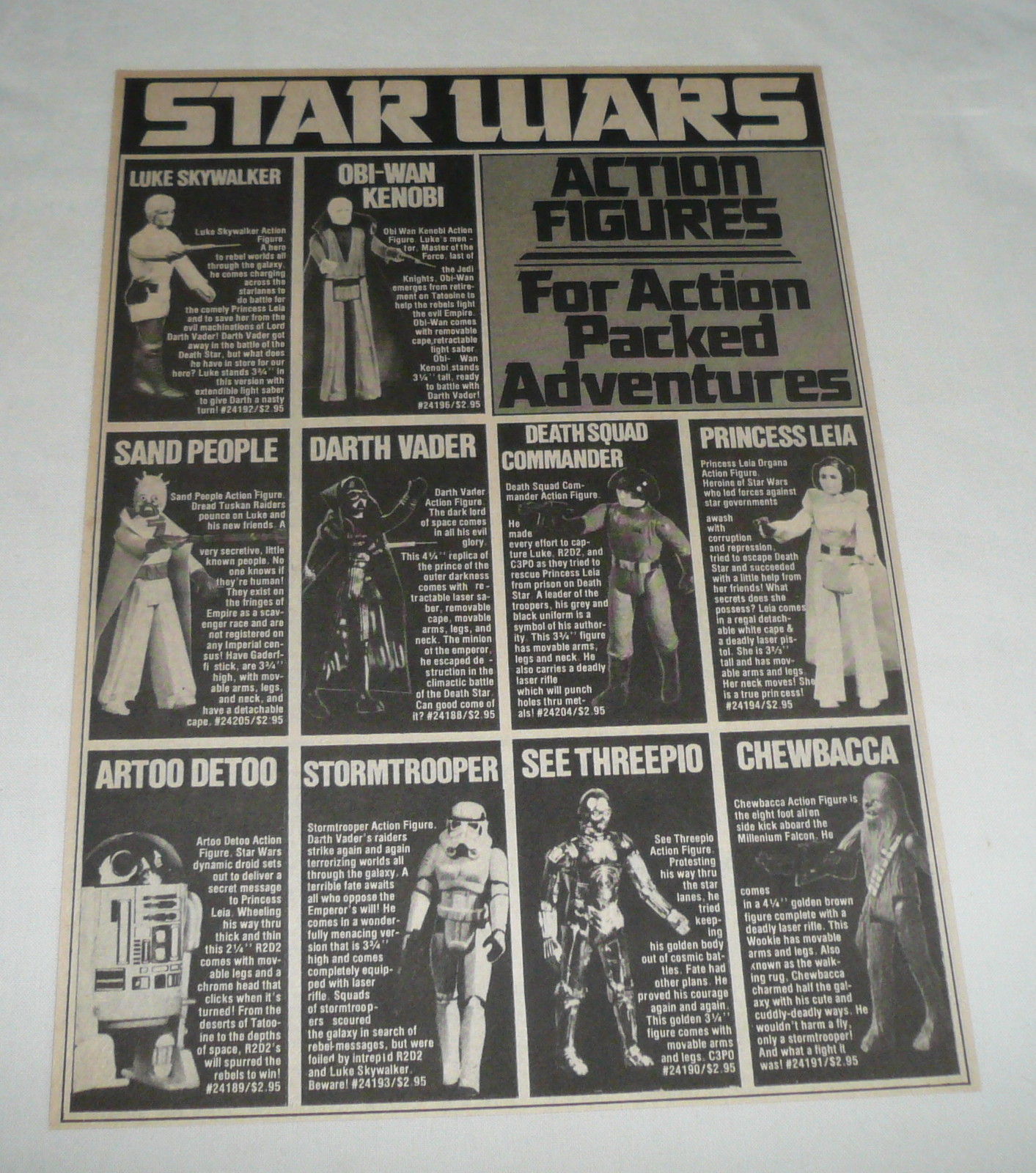
Star Wars Kenner Ad (1980)

Star Wars Kenner Ad 1980

Luke Skywalker “comes charging across the starlanes to do battle for the comely Princess Leia…” Comely?

Death Squad Commander “made every effort to capture Luke, R2D2, and C3PO as they tried to rescue Princess Leia from prison on Death Star…” There are no points for second place, Death Squad Commander. Your “laser rifle which will punch through metals” be damned.

Princess Leia: “Her neck moves! She is a true princess!” Among my criteria for Princesses is, in fact, that the prospective candidate be able to move her neck.

“Golden brown” Chewbacca “charmed half the galaxy with his cute and cuddly-deadly ways. He wouldn’t harm a fly, only a stormtrooper!”

You’ll find another hilariously written Kenner ad here.

(Image via kenyatabks/eBay)

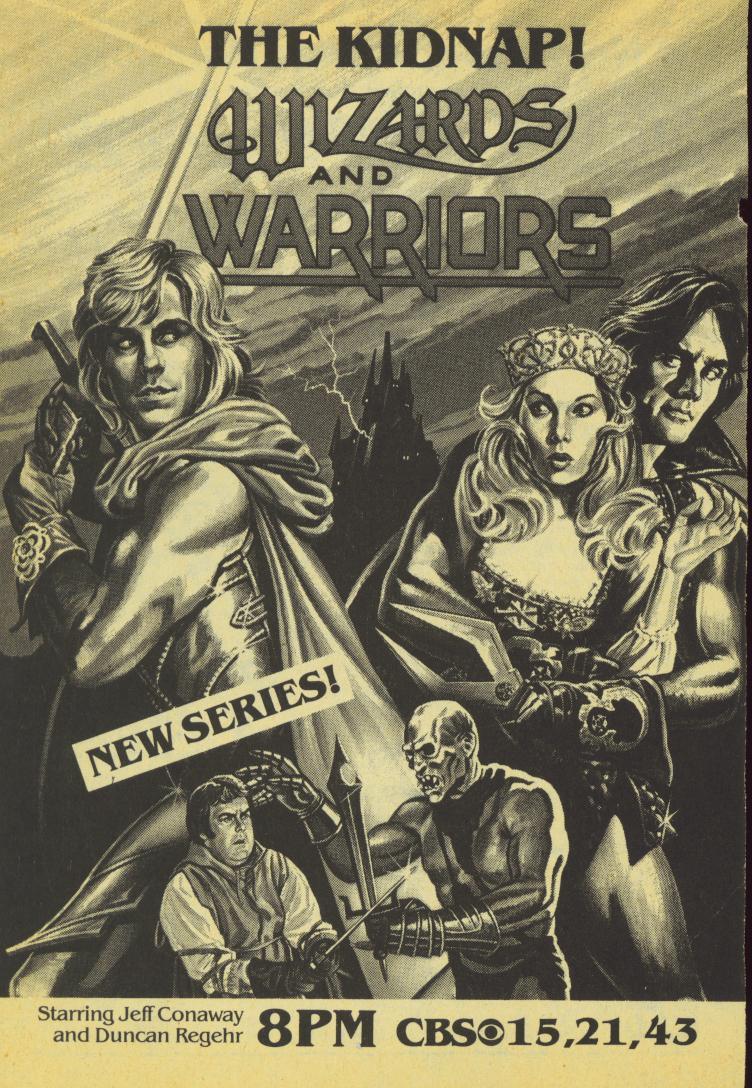
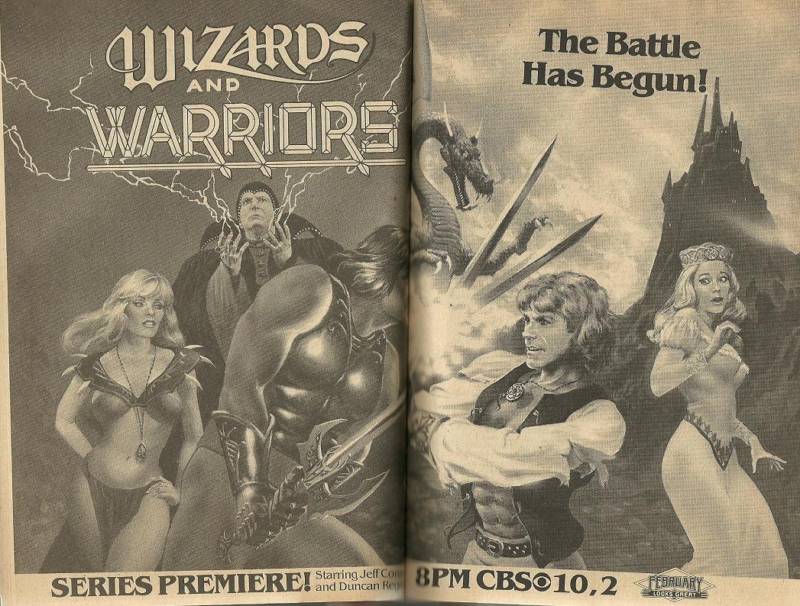
Wizards and Warriors (1983) Was a Real Show on TV and I Can Prove It

wizards & warriors ad 1983

wizards and warriors ad 1983

Real, yes. Good? No. Wizards and Warriors was developed and produced by Don Reo, a comedy veteran who had previously worked on M*A*S*H and Private Benjamin. He describes the origin of the show in a 1983 issue of Cinefantastique:

“I think the problem that most people have with fantasy is that so much of it is very grim,” said Reo, who got the idea for the show when his kids introduced him to Dungeons and Dragons. “I’ve gone to see films like EXCALIBUR, CONAN and CLASH OF THE TITANS, and those pictures were really somber. There just were not any lead characters that had a sense of humor, and when they tried it on NBC with FUGITIVE FROM THE EMPIRE, the show was so grim and boring that I was lost after the first five minutes.”

Actually, that grimness is precisely what drew us to fantasy. There was enough fluff and meandering optimism in the ’80s. Surely Reo knew how hugely successful John Milius’ Conan the Barbarian had been. Was he unfamiliar with the popularity of Robert E. Howard and Frank Frazetta, the godfathers of the grim, bloody, Romantic fantasy hero? Even The Lord of the Rings, the cornerstone of the fantasy genre, is an epic adventure as well as a sobering work about the nature of evil and the horror of war. The good-hearted humor in the series was not comedy but comic relief. Tolkien, Howard, and Frazetta were and are the main inspiration for D&D.

It takes a stroke of genius to make the fantasy-comedy combination work. The only screen example I can think of is The Princess Bride. Yes, Monty Python and the Holy Grail gets more brilliant each time I see it, but it’s pure satire. Maybe satire is what Reo was shooting for on Wizards and Warriors. He missed. (Today, he’s a writer and producer on Two and a Half Men.)

Reo mentions a show called Fugitive from the Empire, a pilot that premiered in April of 1981. The full title was The Archer: Fugitive from the Empire, a.k.a. The Archer and the Sorceress. From what I can tell, this was the first attempt at a feature length, live-action sword and sorcery movie produced for TV. The first post-D&D feature film in the same genre was Hawk the Slayer (1980).

As of now, you can watch the first episode of Wizards and Warriors here. Fugitive from the Empire is here.

(TV Guide images via eBay)


Pages

Archives

Categories

Donate Button

Join 1,117 other subscribers