Archive for the 'Make Mine Marvel' Category


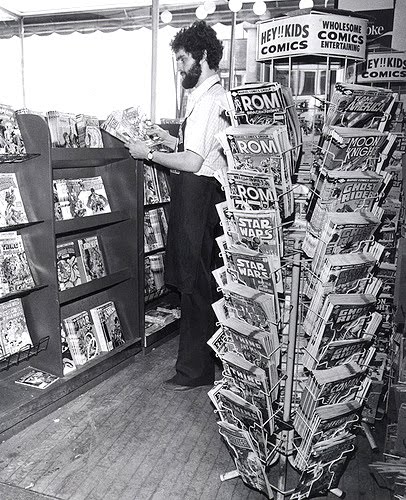
Comic Book Stand, 1975

Comic Book Rack, 1975

Photo via Detective21

Oh, how they gleam with fresh-off-the-press-ness. I can smell them from here.

Horror titles (comics and magazines) were immensely popular at the time, and comic back issues will cost you a grip today, even in poor condition. The genre saw a huge resurgence in the ’70s for a number of reasons, all of them mutually reinforcing: the commercial success of 1968’s Night of the Living Dead and especially Rosemary’s Baby; changes in the Comics Code (1971) that permitted the depiction of “vampires, ghouls and werewolves”; the proliferation of syndicated horror showcases across the nation: Fright Night (1970), Creature Double Feature (circa 1972), Chiller Thriller (circa 1974), etc. (I’ll post some of the intros later on Facebook.)

As much as I love The Tomb of Dracula and all of Marvel’s monster titles, DC really set the comics standard with The Unexpected, House of Mystery, House of Secrets, The Witching Hour, and Ghosts. Weird War (not pictured here) was a brilliant combination of the horror and war genres. If I had a choice of a full run, that’s the one I’d want.

Above the comics you’ll see some magazines, including Monsters Unleashed, Vampirella, and Famous Monsters of Filmland. The pile of Mad magazines on the bottom right is #174. Cheap!

Mad #174

Advanced Dungeons & Dragons Characters Coloring Book (1983) (Part One)

AD&D Characters FC

AD&D Characters pg. 1

AD&D Characters pg. 2

AD&D Characters pg. 3AD&D Characters pg. 4

AD&D Characters pg. 5AD&D Characters pg. 6

AD&D Characters pg. 7AD&D Characters pg. 8

AD&D Characters pg. 9AD&D Characters pg. 10


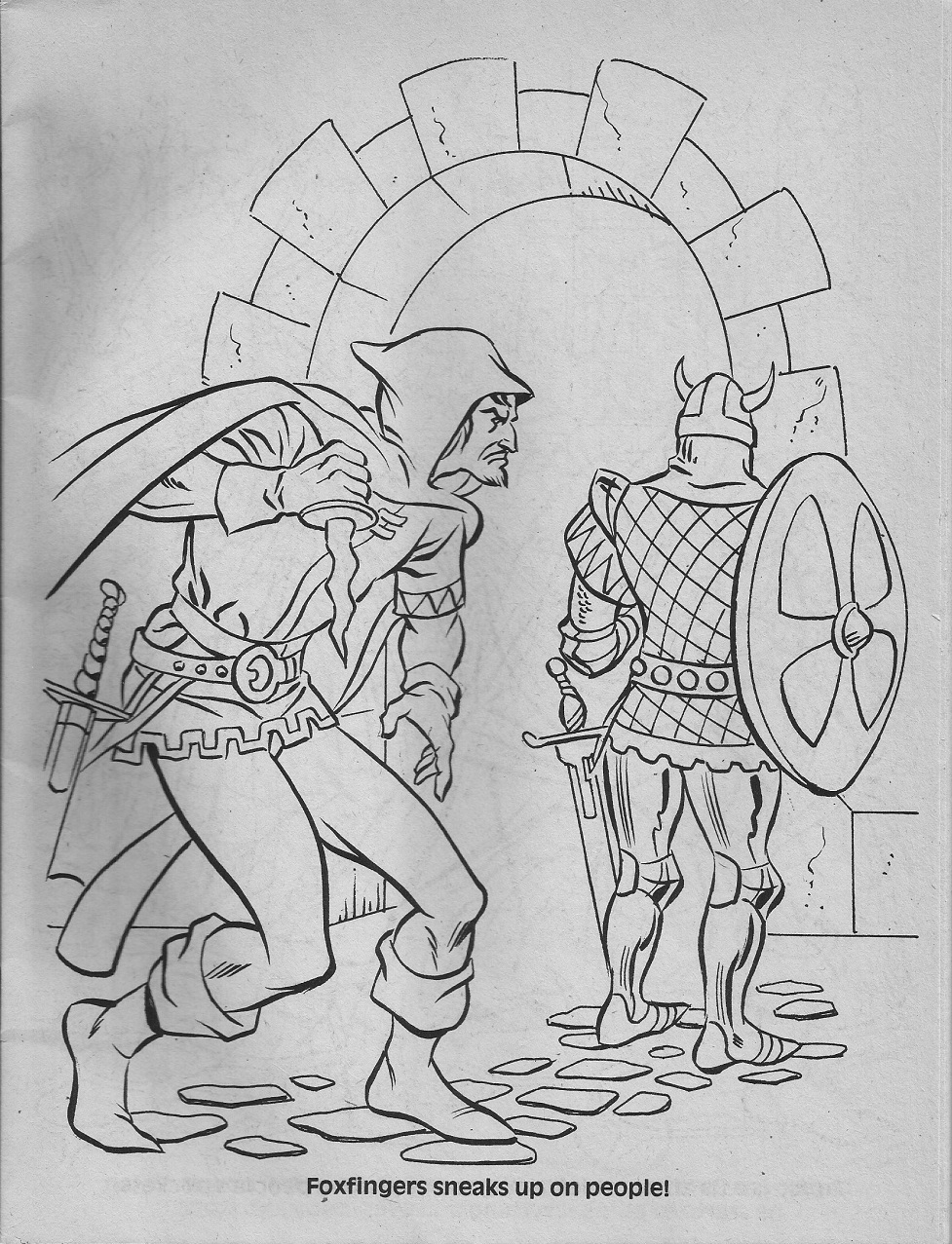
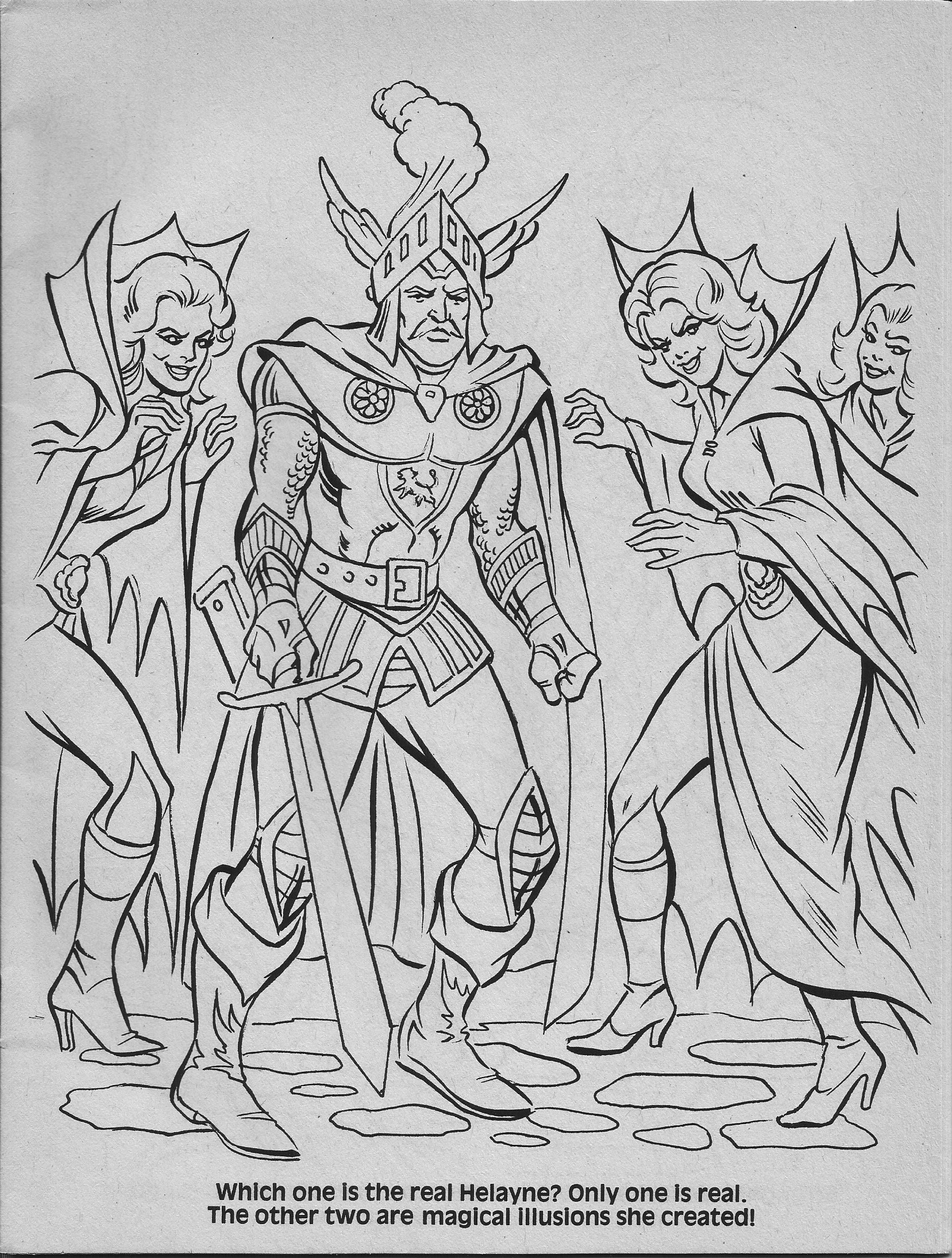
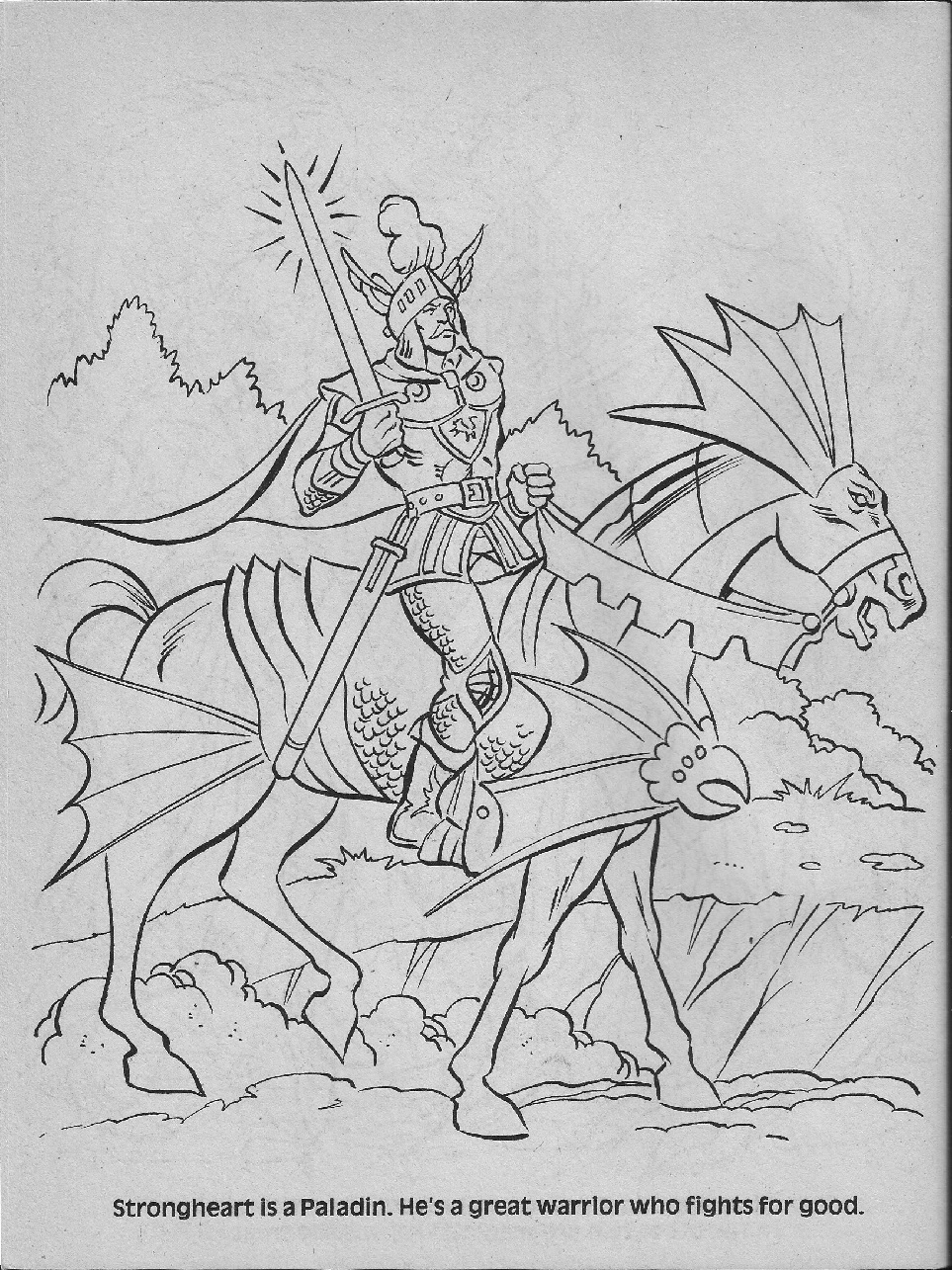
Along with the AD&D storybooks, Marvel and TSR collaborated on five coloring books featuring the same cast of characters,  some of them from the toy line, others from The Shady Dragon Inn (1983), a game aid featuring pregenerated characters (and stats for the characters in the toy line).

Jane Stine, who co-wrote The Treasure of Time (1983), wrote the Characters coloring book. Earl Norem did the cover art. Jim Mooney, who worked for DC in the ’60s and Marvel in the ’70s and ’80s, and John Tartaglione, Silver Age inker of Sgt. Fury and Daredevil, did the interior art. (The lips look unmistakably Mooney to me, so I gather he did the pencils.)

The book is essentially a visual illustration of the different D&D character class attributes, alignments, and skills. It even covers some spells (feather falling) and magic items (helm of water breathing). Unlike the storybooks, there’s a definite link to D&D‘s role-playing core.

Parts two, three, and four of the Characters Coloring Book are here, here, and here.


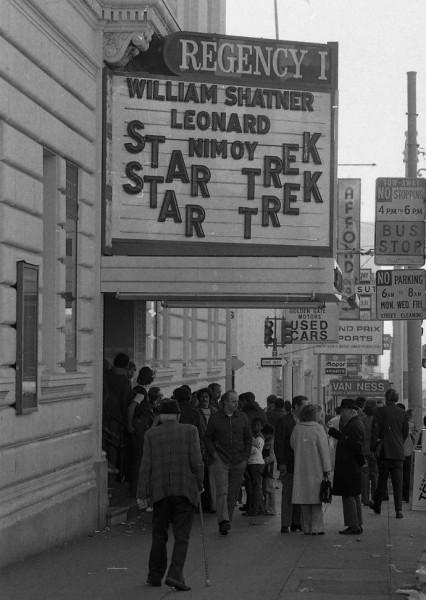
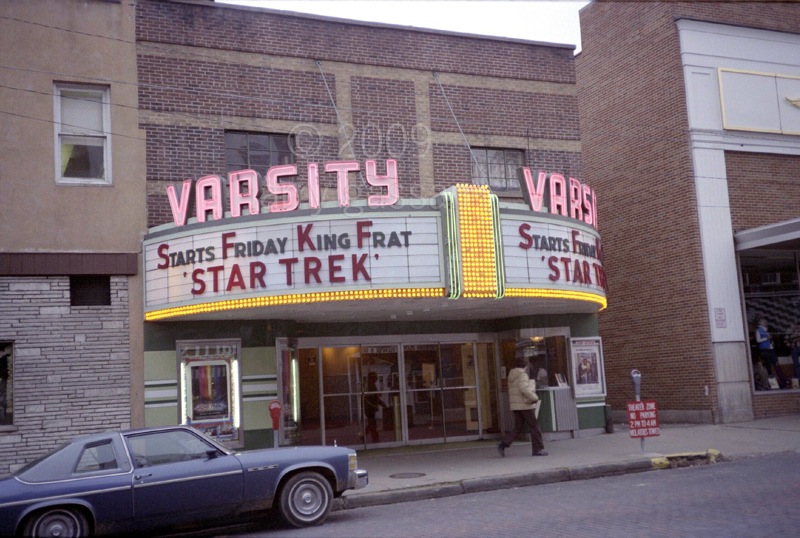
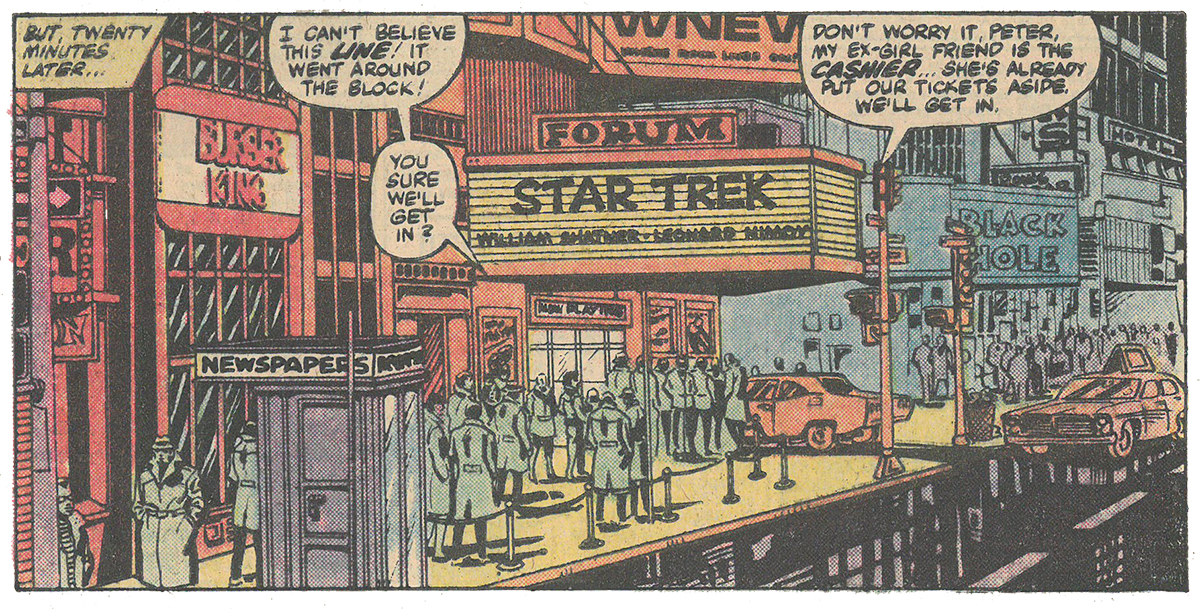
Movie Theater Marquees: Star Trek: The Motion Picture (1979)

Star Trek Marquee 1979

Photo: Gary Fong/San Francisco Chronicle, 1979

Star Trek Marquee 1979-2

Varsity Theatre, Athens, Ohio, 1979. (Photo: Larry Gassan)

Star Trek Marquee ASM #203

From Amazing Spider-Man #203, 1980. Note the Black Hole marquee in the background.

King Frat (second photo) is an Animal House hack job: frat boys stage farting contests, light farts on fire, pull down their pants and fart at girls through car windows, and similar antics involving farts (and erections). The fact that it’s sharing a marquee with Star Trek does not say much for the perception and reception of Star Trek.

(Images via the SF Chronicle, Larry Gassan/Flickr, and The Marvel Project)

Advanced Dungeons & Dragons Storybooks: The Forest of Enchantment and The Treasure of Time (1983)

AD&D Forest of Enchantment

AD&D Treasure of Time

In 1983 Marvel published a series of D&D storybooks and coloring books under license from TSR. (One year later, the roles would be reversed for the Marvel Super Heroes RPG, published by TSR under license from Marvel.) I believe these are the only two storybooks. You can read The Forest of Enchantment here. The Treasure of Time is here. Both PDFs are originally from Kuronons’ D&D Goodies Collection.

They’re kid’s books, so it’s pretty juvenile stuff, and there’s no effort to introduce the concept of role-playing (unlike the 1979 AD&D Coloring Album). All but two of the characters from LJN’s first run of AD&D action figures make appearances, so the books are basically long toy commercials.

Nevertheless, they’re notable for a few reasons: Bob Stine is Goosebumps author R.L. Stine, and Jane Stine, who founded Parachute Publishing, is his wife.

As for the art, Earl Norem did the interior work for The Forest of Enchantment, and Marie Severin did the cover and designed the book. She also illustrated The Treasure of Time. Severin was a colorist at EC until the notorious publisher was run out of town by the Comics Code. She worked for Marvel—as colorist, inker, and penciler—from 1959 until the early ’90s. She is one of the most well-respected artists in the comics field.

Famously, Severin was directed to soften the facial expression of the Hulk on one of the most innovative covers in Marvel’s history: The Hulk King Size Special #1 (1968). See both versions here. The artist who made the Green Guy too savage for public consumption? Jim Steranko.

Kid Visiting Marvel Comics Headquarters, 1983

Stan Lee 1983

Gulp.

(Photo via JHU Comic Books)

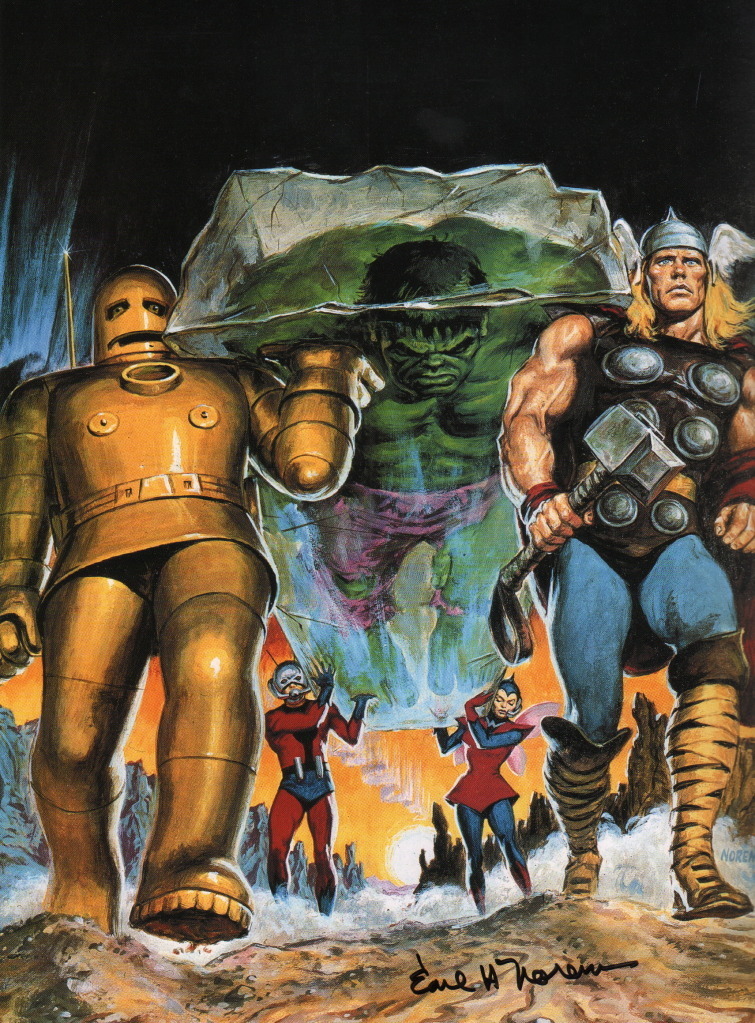
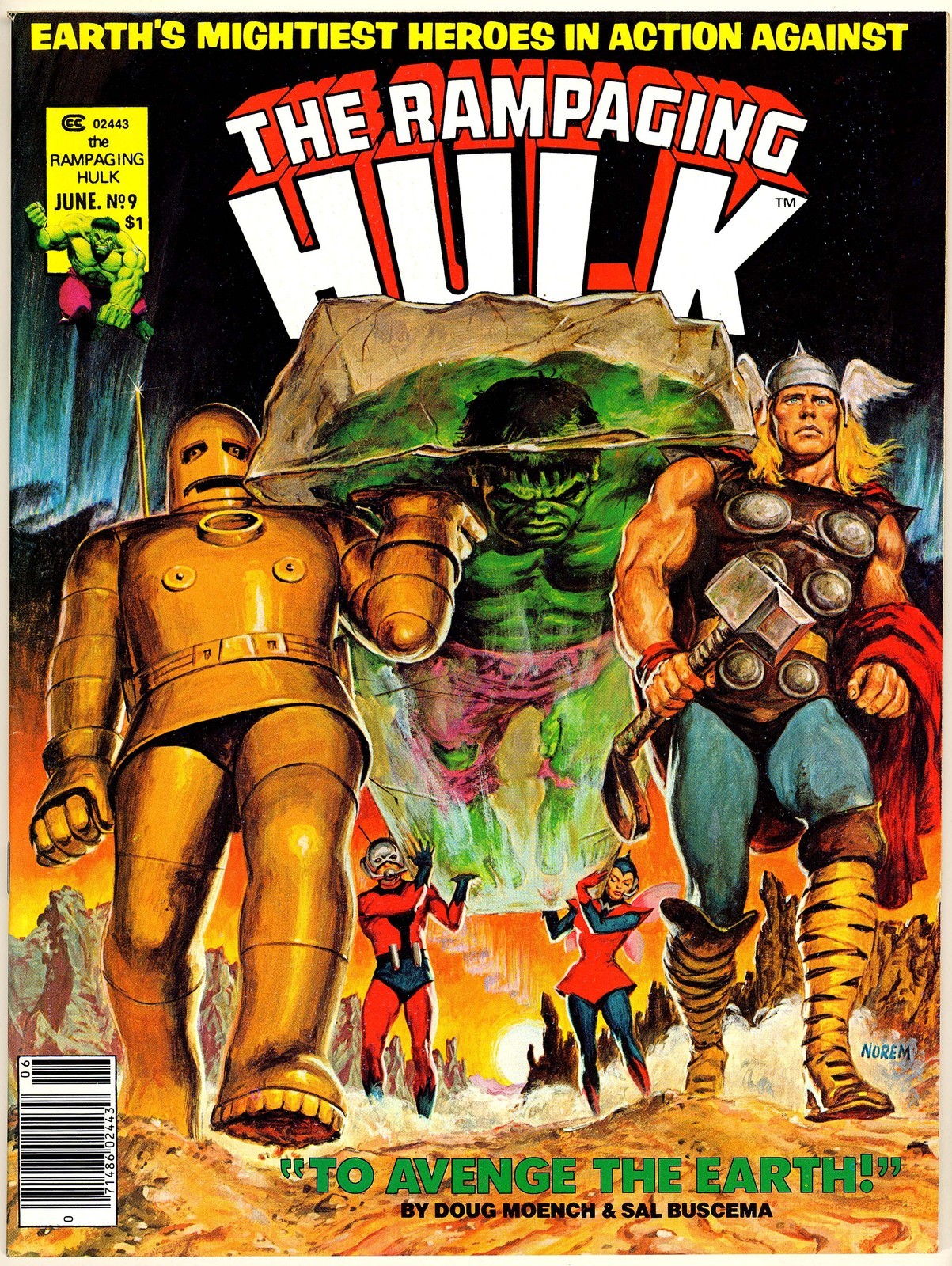
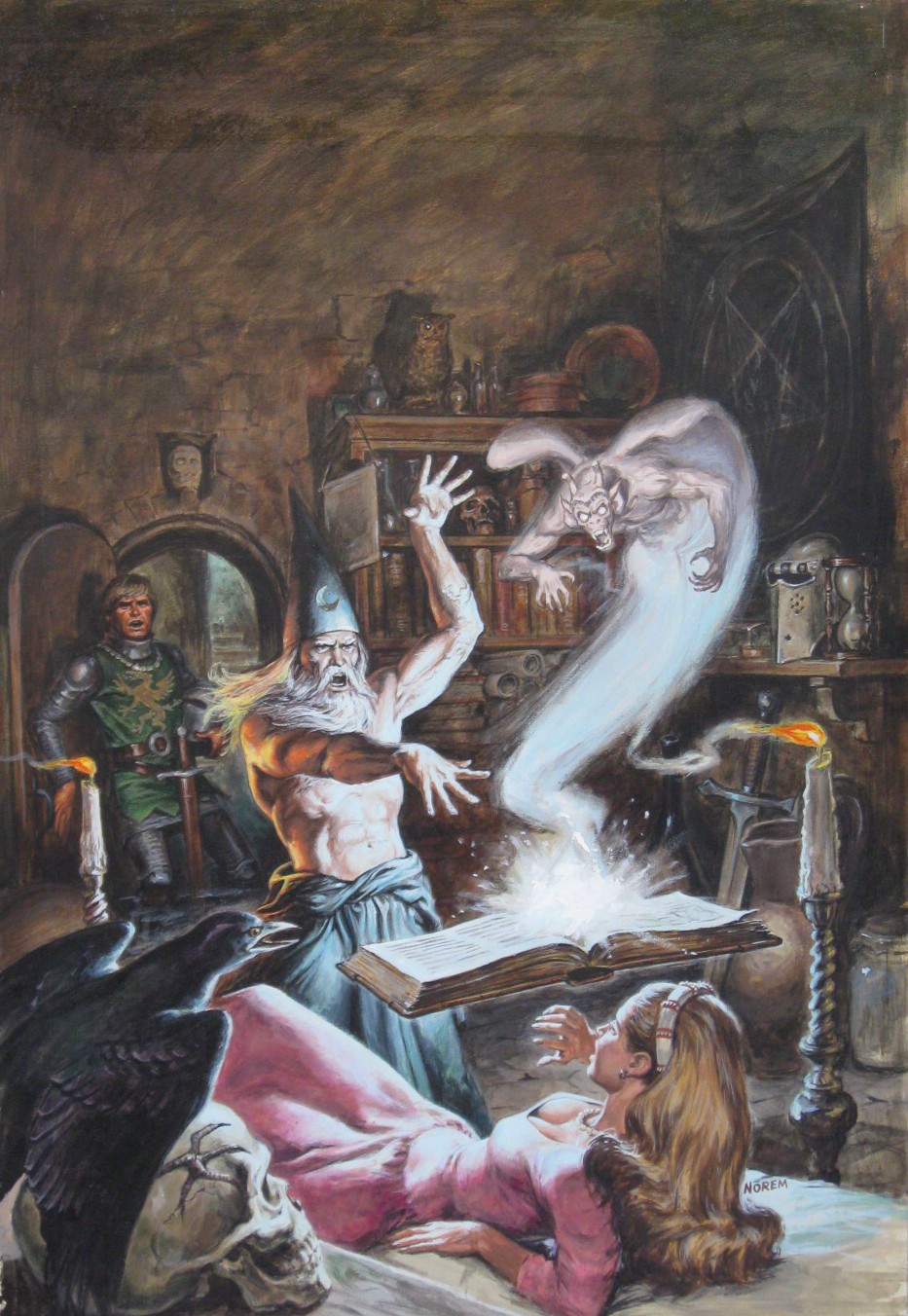
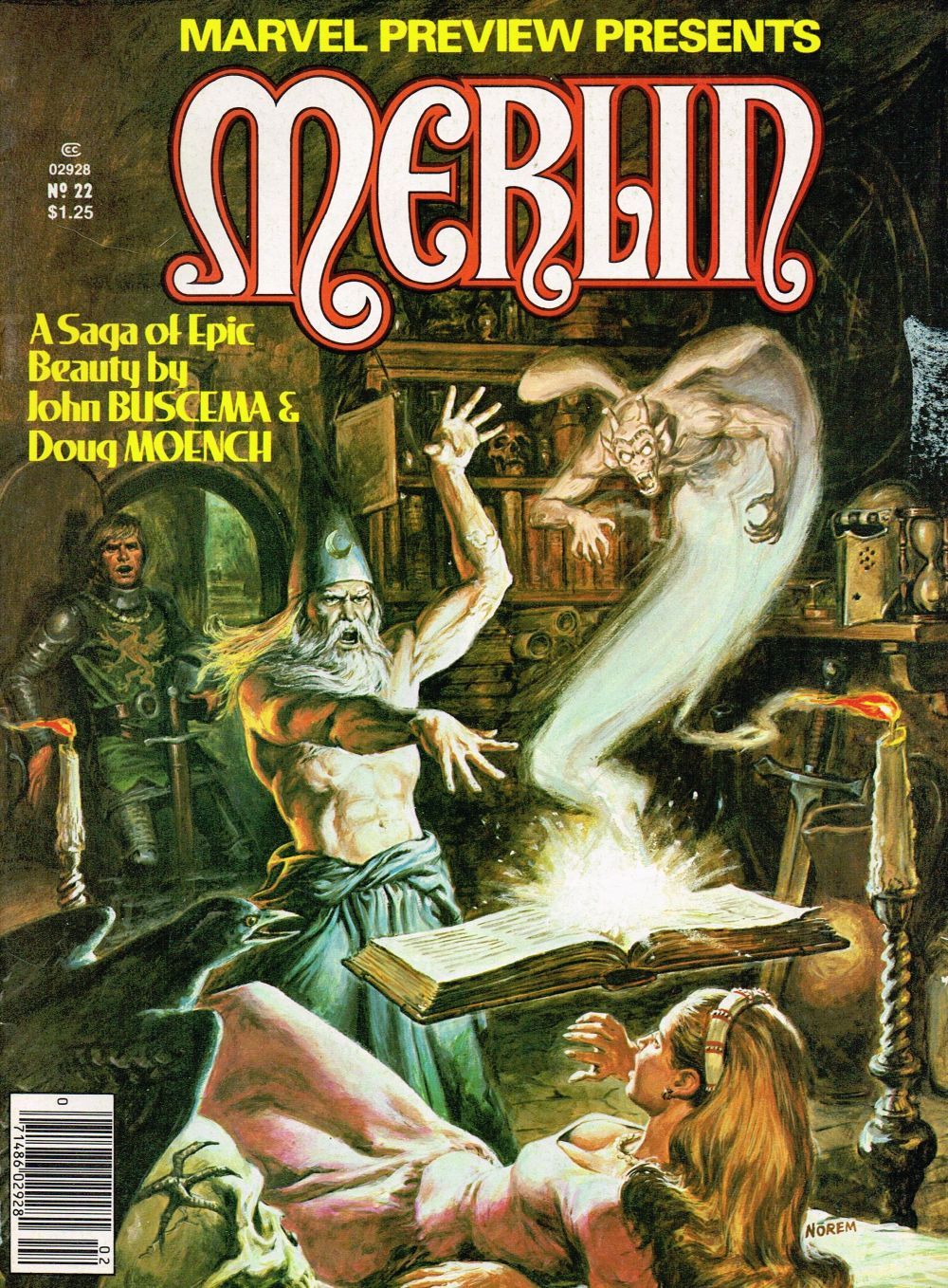
The Art of Earl Norem: The Rampaging Hulk #9 (1978) and Marvel Preview #22 (1980)

Norem Rampaging Hulk #9

Norem Rampaging Hulk #9-2

Norem Marvel Preview #22

Norem Marvel Preview #22-2

A decorated World War II veteran, Earl Norem got his start in men’s action-adventure magazines and worked steadily in that genre throughout the ’50s and ’60s. He broke into comics in the mid-’70s, doing a large number of memorable covers for Marvel’s Curtis Magazines, including Savage Sword of Conan and The Rampaging Hulk.

Norem was a major contributor to the Marvel Books imprint from 1982 to 1986 (The Amazing Spider-Man, The Transformers, G.I. Joe), elevated the Masters of the Universe image in a slew of books and magazines, and painted the covers for a Choose Your Own Adventure-style book series called Wizards, Warriors & You (1984 – 1986). I think he also did some package art for G.I. Joe. I’m trying to track down the details.

I’ll be posting Norem’s art on an ongoing basis. He deserves the attention.

Comic Book Spinner Racks, 1982

Comic Book Rack '80s

Comic Book Spinner Rack 1982

There are two racks in the first shot. Looks like a pretty awesome comic shop. I see The Spectacular Spider-Man #68, The Uncanny X-Men #159 (starring Dracula!), Star Wars #57 and #58—all of them “wholesome,” according to the banner.

The rack in the second photo is in a book store. Captain America #268 makes yet another appearance on 2W2N. That’s three times so far.

I worked in a music store in 1990, and one of my jobs was refilling the spinner rack when new comics arrived. (I had experience, after all.) I had to tear the covers off the old comics and trash the books. The covers were returned to the publisher for credit.

(Images via Blog for Rom Fans and Derf City)

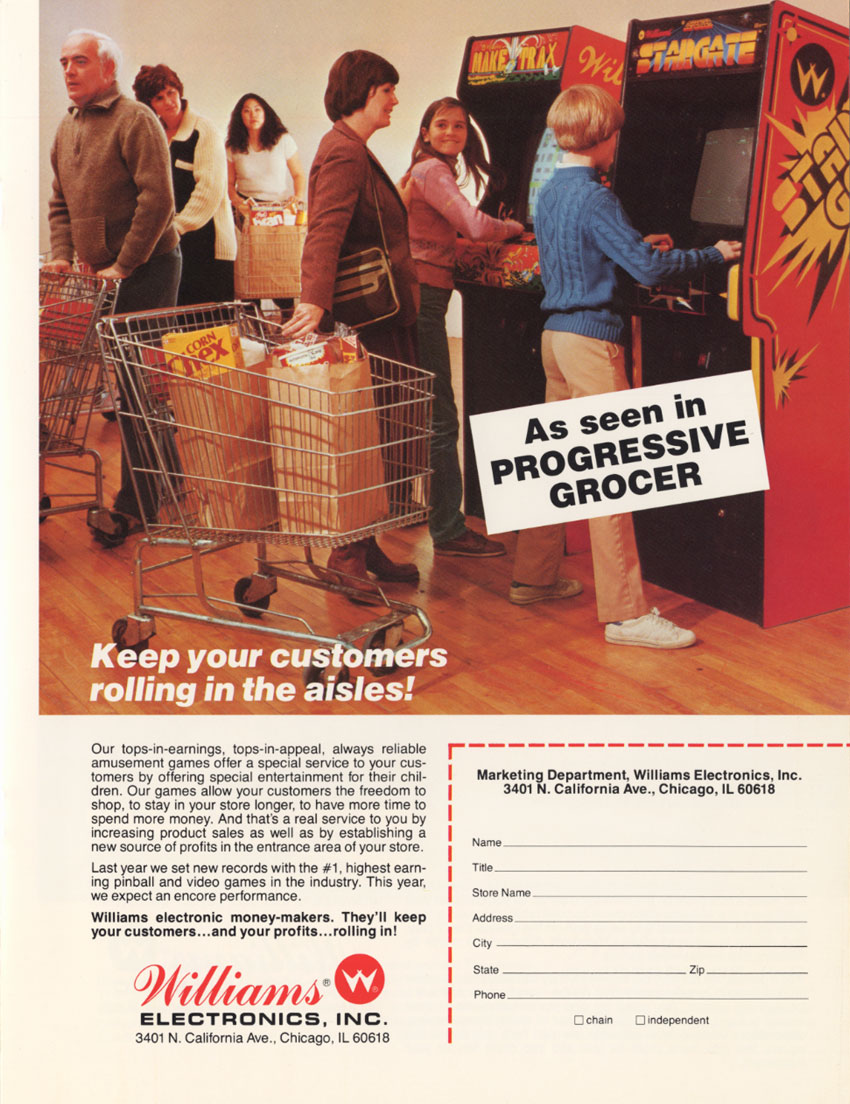
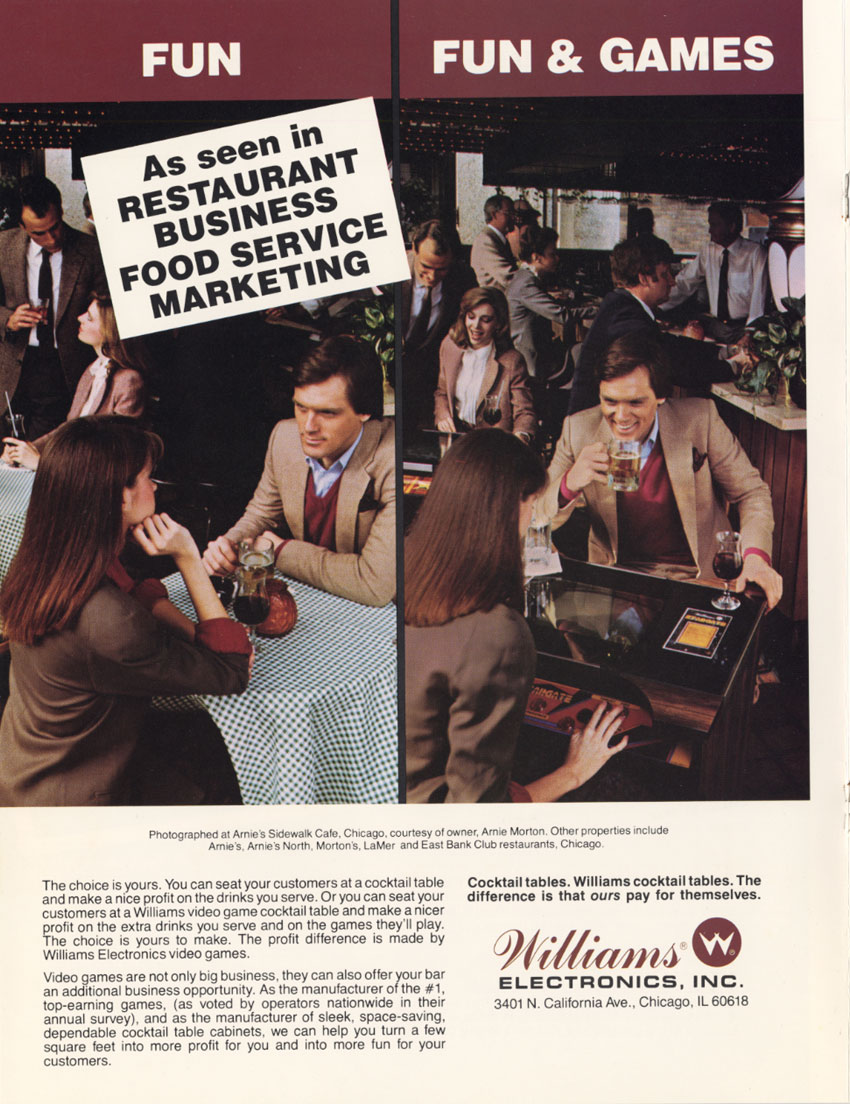
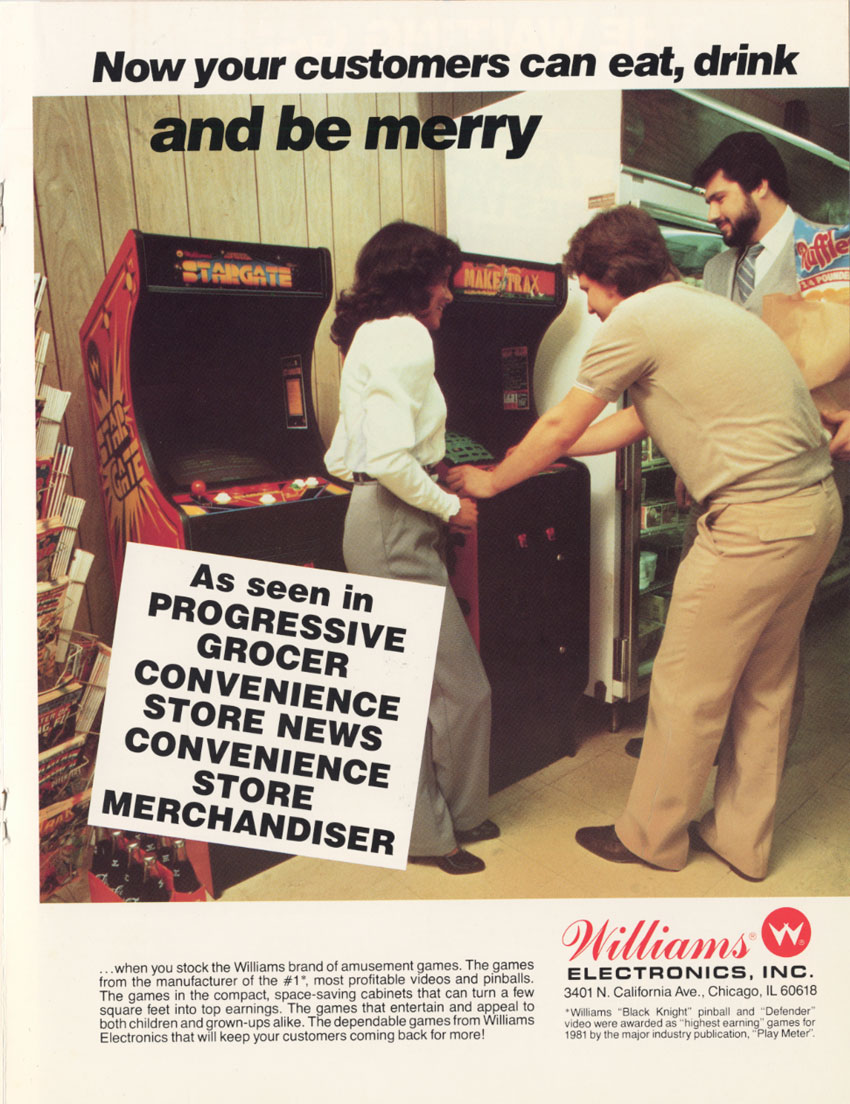
Williams Electronics Trade Ads (1982)

Williams 1982

Williams 1982-2

Williams 1982-3

Williams 1982-4

What a brilliant display of golden age video game marketing. Almost all service businesses had cabinets by ’82, but those businesses had to choose between a whole bunch of different game manufacturers. Williams (Defender, Stargate, Joust, Robotron, Sinistar) was one of the big names.

Is dad reading the Bible in the before shot of the first ad? And who the hell is that in the blue shirt? Pat? I had a handheld or two by ’82, but nothing compared to a row of cabinets. Just hearing the attract mode noises made life so much more exciting.

Check out the lady on the left peering curiously at the kids in the grocery store. She’s thinking: “Video games in the supermarket? What a great idea! Now I can bring my kids and spend way more money!”
The third ad is my favorite. Look how bored they are with one another until the cocktail cabinets arrive. And the guys at the coin-op-less bar are so miserable not because they’re stag, but because all the games are taken.

Fourth ad: Ruffles bags haven’t changed much, I guess. See all the beautifully pristine comic books on the spinner rack? That’s Captain America #268 second from the bottom.

(Images via The Arcade Flyer Archive)

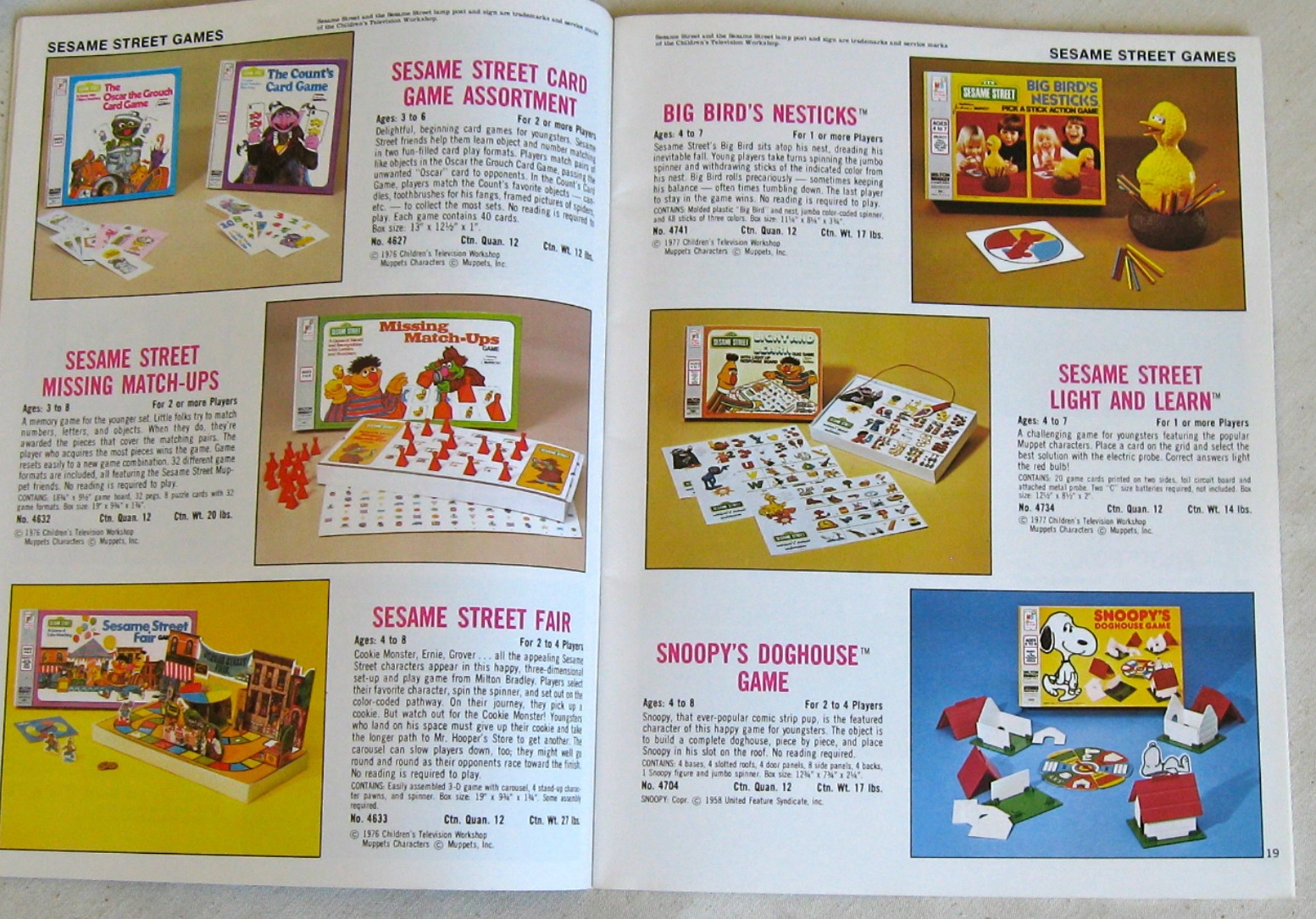
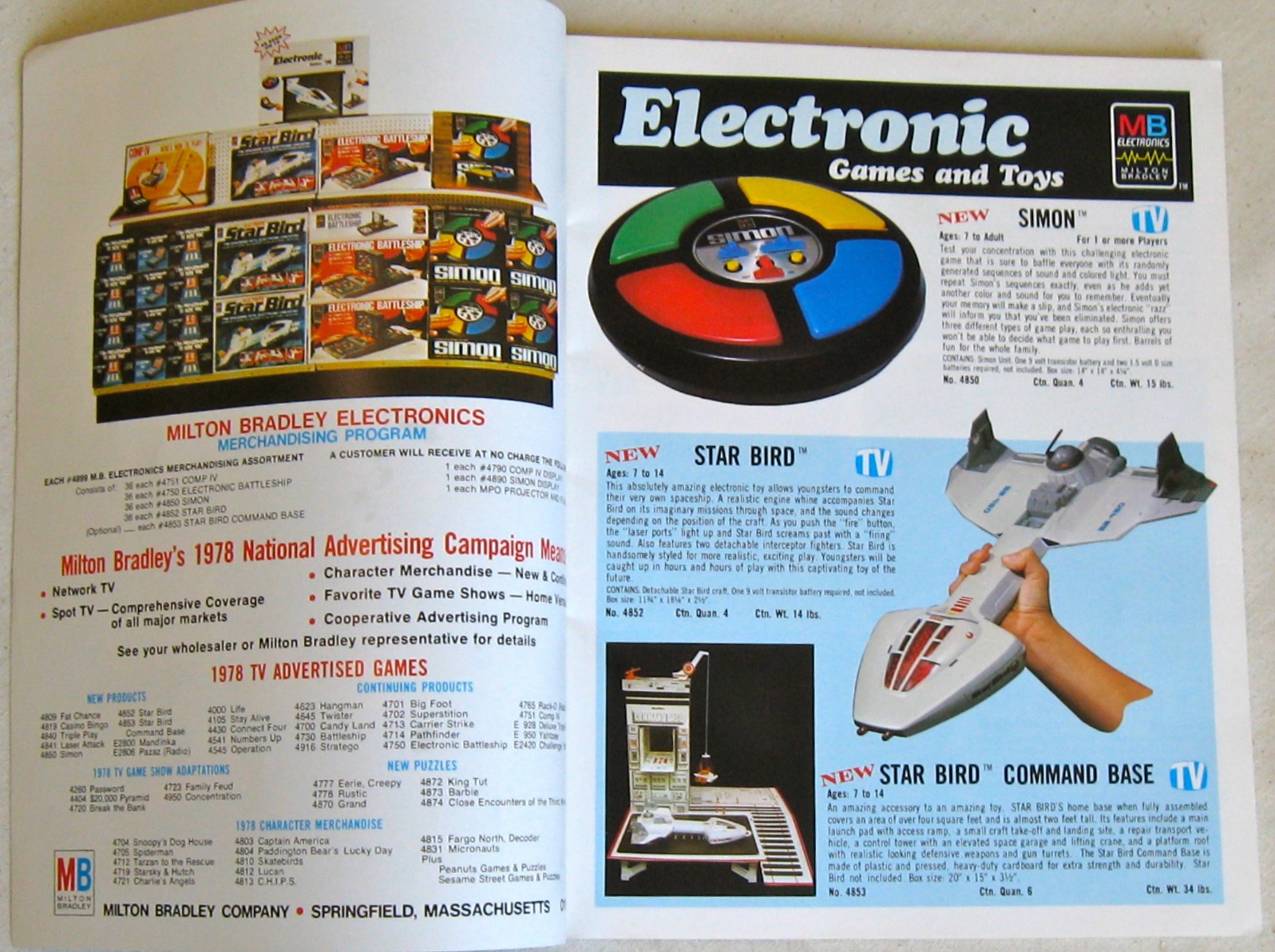
1978 Milton Bradley ‘Super Staples’ Catalog

MB Catalog 78

MB Catalog 78-2

MB Catalog 78-3

MB Catalog 78-4

MB Catalog 78-5

MB Catalog 78-6

More and more, it’s the board games I want.

The live-action Amazing Spider-Man pilot premiered in September, 1977, and the series didn’t resume until April of 1978. The live-action Captain America TV movie was heading into production for an early 1979 release. Hence the “heaviest promotional support ever” for the games.

Starsky and Hutch was in the last year of its four-year run. The Scooby-Doo game is from ’73, and Casper is from 1959. Talk about staples. Scooby has turned out to be as enduring a character as Spidey.

I’m still not feeling the Star Bird. It’s so aseptic. Cool noises or no, ships by themselves have no personalities. I think a little plastic guy came with it, but it’s not the same. Same reason I never understood the Star Wars die cast vehicles.

The corporate letter is a nice prize: “I am certain that your sales will reflect a commensurate increase.”

(Images via eBay)

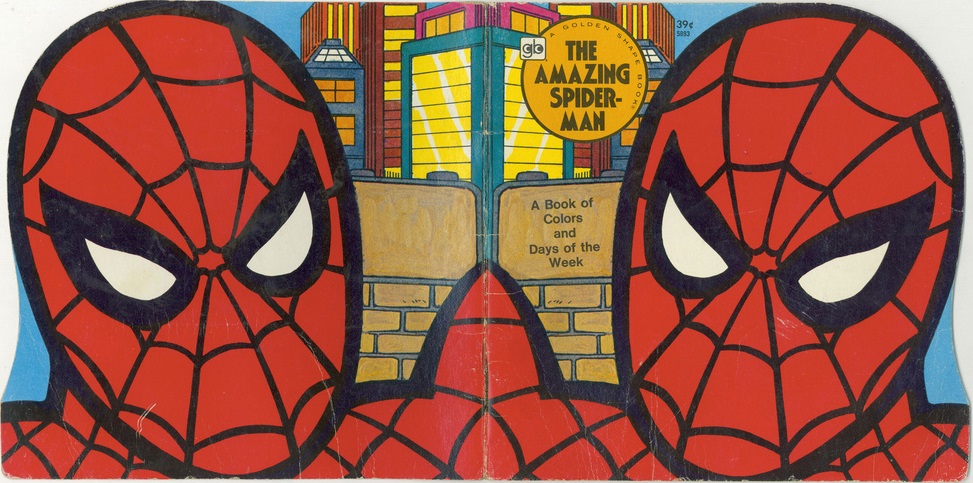
The Amazing Spider-Man: A Book of Colors and Days of the Week (1977)

ASM Book

ASM Book-2

ASM Book-3

ASM Book-4

ASM Book-5

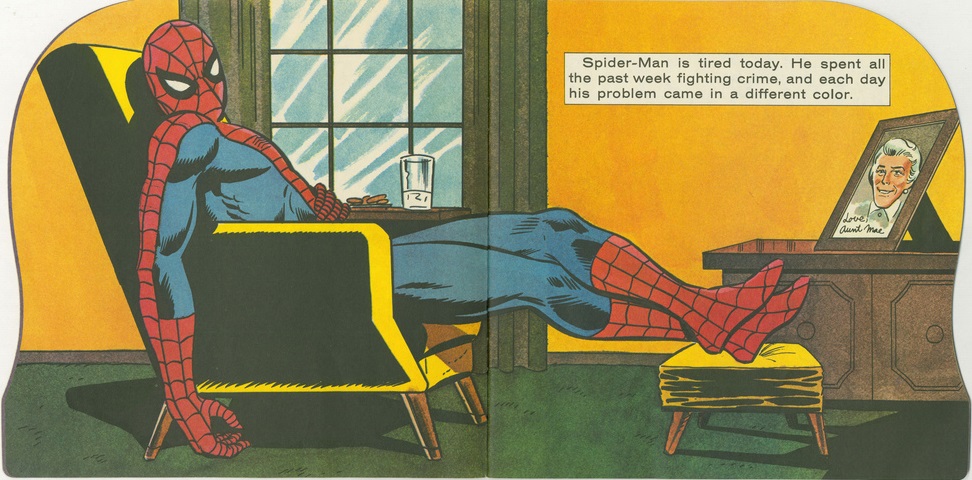
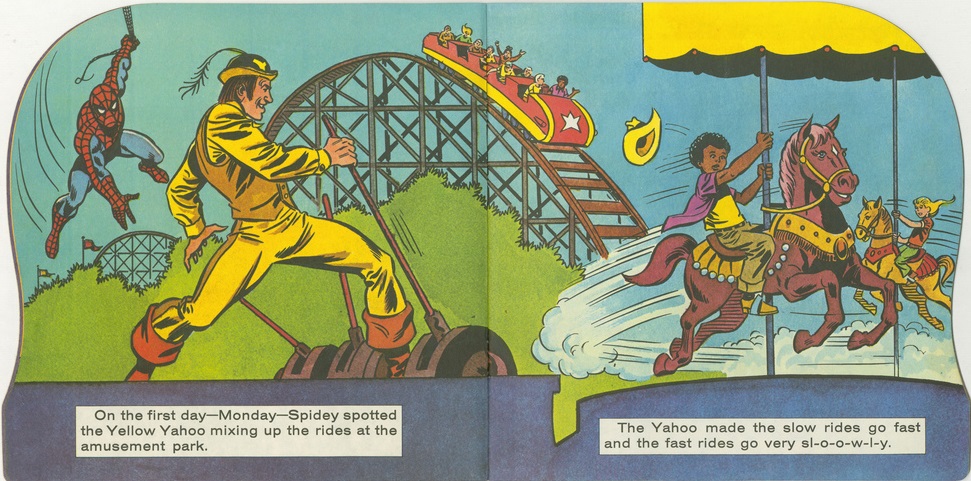
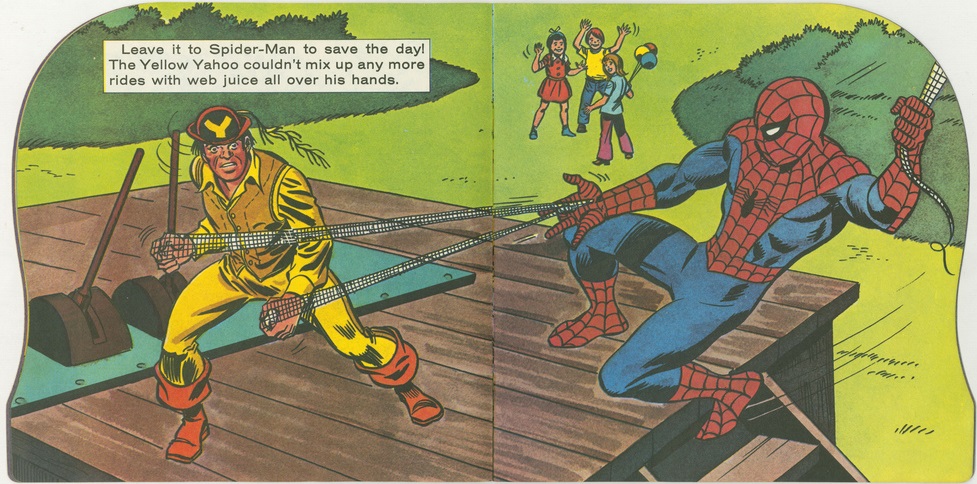
I dug this beauty out of storage with the rest of my old books when my daughter was born, and it’s currently her favorite. My copy is taking a severe beating, so I thank Greg M for saving it for future generations. (Only the first few pages are posted here.)

I can’t find anything about writer Donna Kelly, but the illustrators were well-known Marvel artists at the time, primarily inkers. Jim Mooney worked at DC for 22 years, coming to Marvel in 1968 to ink John Romita’s The Amazing Spider-Man. Mooney later penciled several books, and worked on Marvel merchandise like coloring books, children’s books, and children’s magazines. He died in 2008.

Mike Esposito (1927 – 2010) “inked virtually every major Marvel penciler on virtually every major Marvel title, from The Avengers to X-Men.”

George Roussos (1915 – 2000) was a longtime Marvel staffer best known for inking Jack Kirby on early issues of the Fantastic Four, The Avengers, and Captain America.

Remember, troops, “That web juice is sticky stuff, especially when you’re wearing feathers!”

(Note: Aunt May is spelled incorrectly—“Aunt Mae”—on Spidey’s photo of her on the book’s first page.)


Pages

Archives

Categories

Donate Button

Join 1,118 other subscribers