Archive for the 'Comic Books' Category


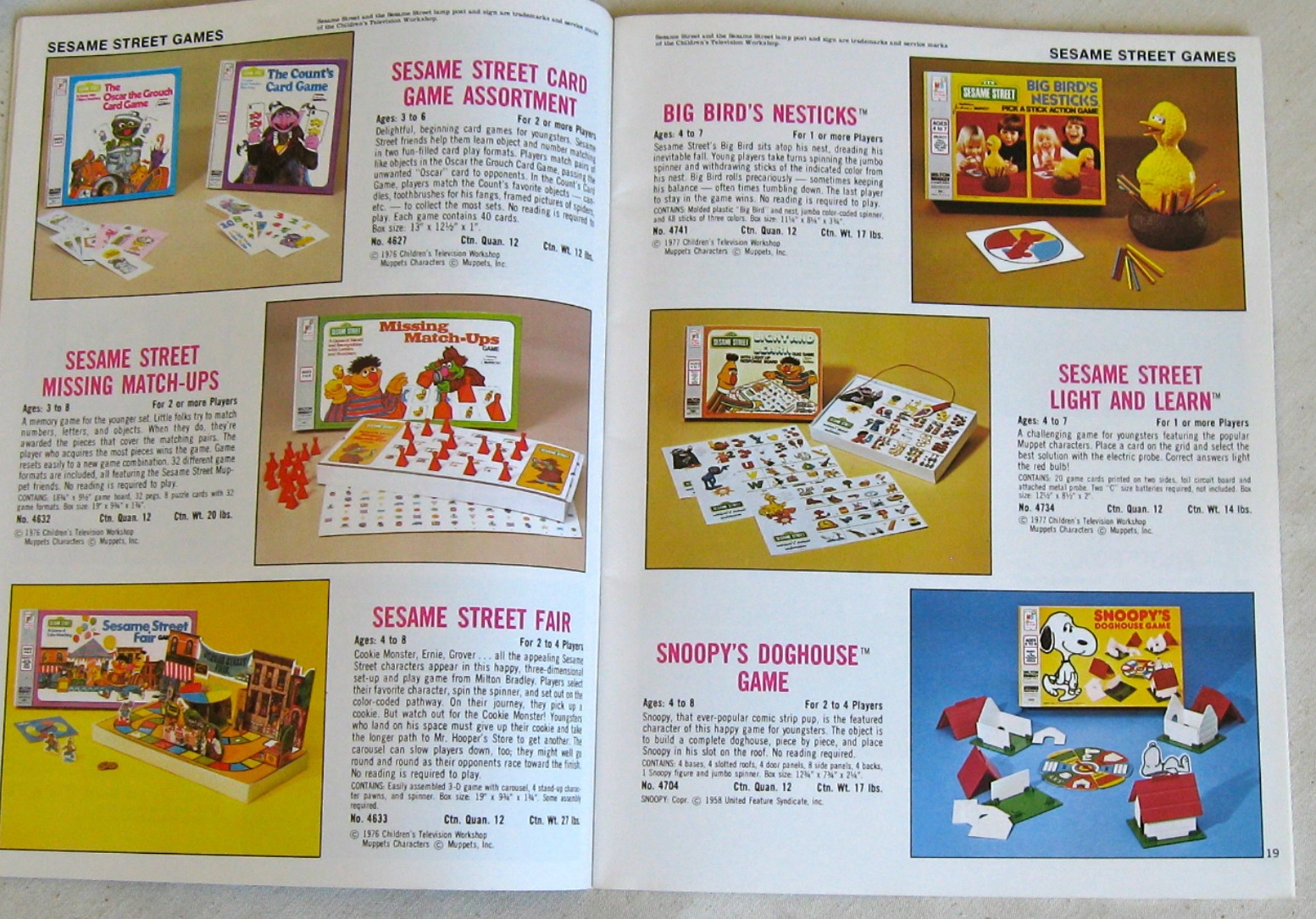
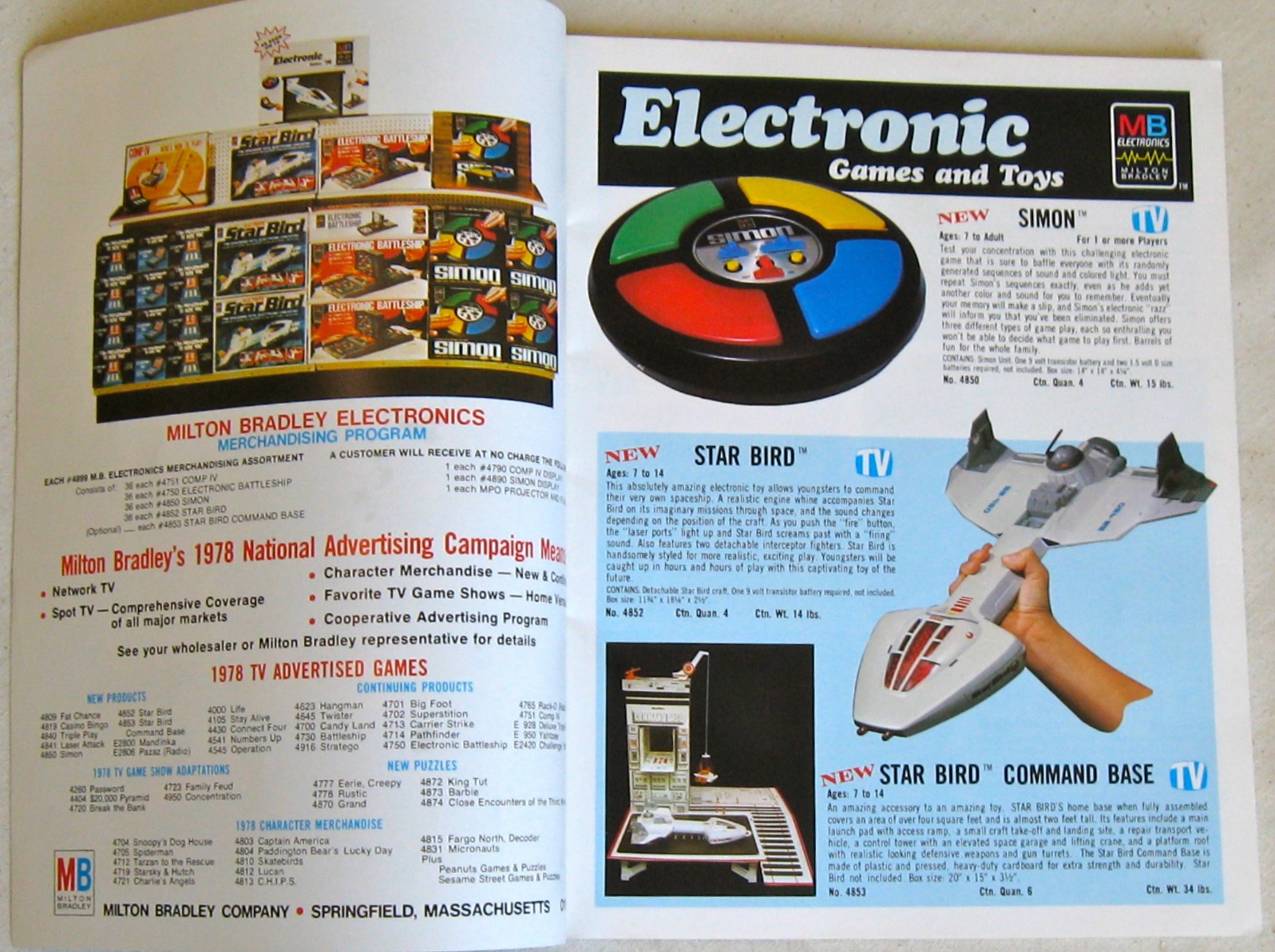
1978 Milton Bradley ‘Super Staples’ Catalog

MB Catalog 78

MB Catalog 78-2

MB Catalog 78-3

MB Catalog 78-4

MB Catalog 78-5

MB Catalog 78-6

More and more, it’s the board games I want.

The live-action Amazing Spider-Man pilot premiered in September, 1977, and the series didn’t resume until April of 1978. The live-action Captain America TV movie was heading into production for an early 1979 release. Hence the “heaviest promotional support ever” for the games.

Starsky and Hutch was in the last year of its four-year run. The Scooby-Doo game is from ’73, and Casper is from 1959. Talk about staples. Scooby has turned out to be as enduring a character as Spidey.

I’m still not feeling the Star Bird. It’s so aseptic. Cool noises or no, ships by themselves have no personalities. I think a little plastic guy came with it, but it’s not the same. Same reason I never understood the Star Wars die cast vehicles.

The corporate letter is a nice prize: “I am certain that your sales will reflect a commensurate increase.”

(Images via eBay)

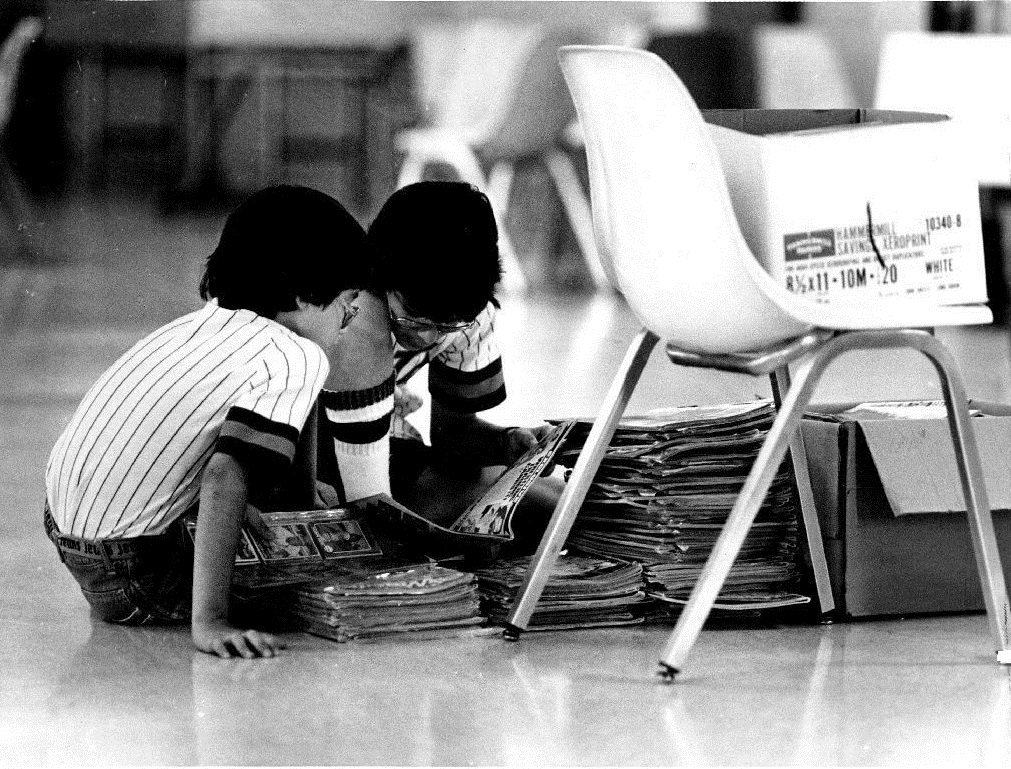
Boys Reading Comic Books, 1981

Boys Reading Comics 1981

Press photo: September 26, 1981

Looks like the kids are going to or coming from baseball practice. The collection they’re pulling out of the boxes is a mix of comics and magazines. The boy on the left is holding a sheet of baseball cards. I think the kid on the right might be reading Starlog.

(Photo via Big Ole Photos/eBay)

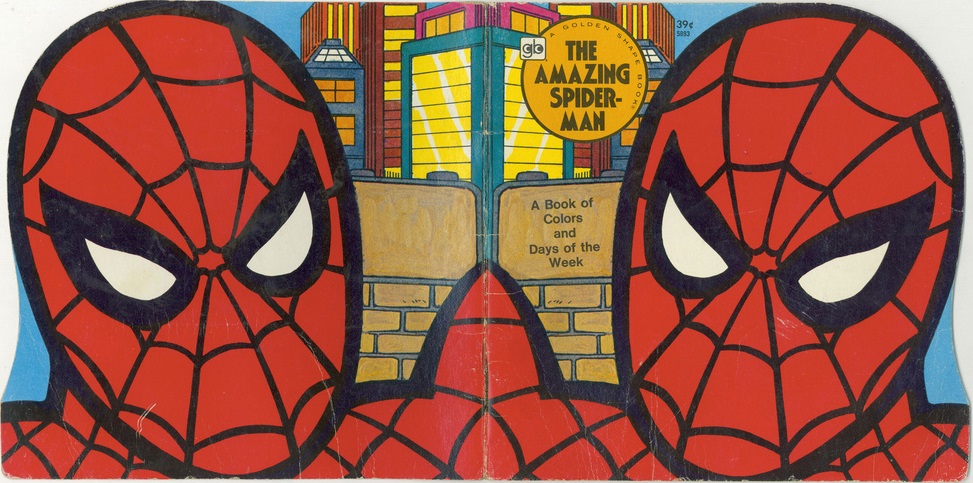
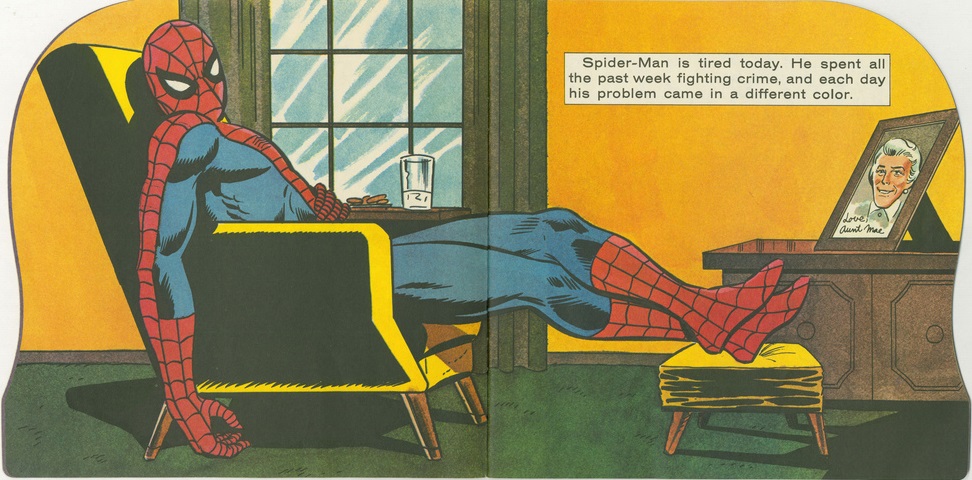
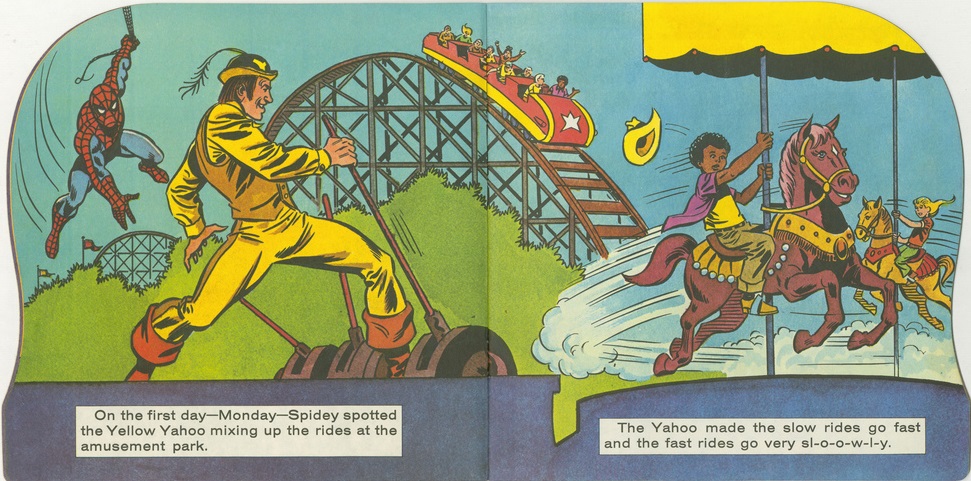
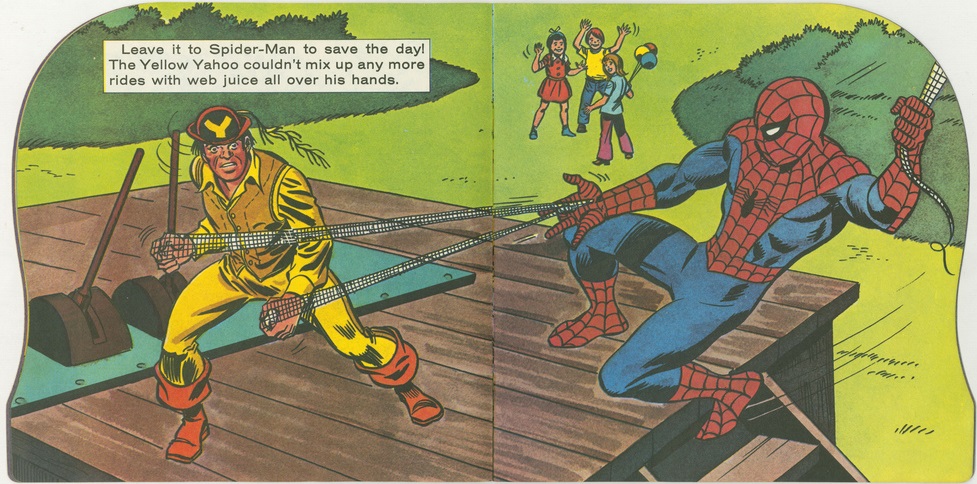
The Amazing Spider-Man: A Book of Colors and Days of the Week (1977)

ASM Book

ASM Book-2

ASM Book-3

ASM Book-4

ASM Book-5

I dug this beauty out of storage with the rest of my old books when my daughter was born, and it’s currently her favorite. My copy is taking a severe beating, so I thank Greg M for saving it for future generations. (Only the first few pages are posted here.)

I can’t find anything about writer Donna Kelly, but the illustrators were well-known Marvel artists at the time, primarily inkers. Jim Mooney worked at DC for 22 years, coming to Marvel in 1968 to ink John Romita’s The Amazing Spider-Man. Mooney later penciled several books, and worked on Marvel merchandise like coloring books, children’s books, and children’s magazines. He died in 2008.

Mike Esposito (1927 – 2010) “inked virtually every major Marvel penciler on virtually every major Marvel title, from The Avengers to X-Men.”

George Roussos (1915 – 2000) was a longtime Marvel staffer best known for inking Jack Kirby on early issues of the Fantastic Four, The Avengers, and Captain America.

Remember, troops, “That web juice is sticky stuff, especially when you’re wearing feathers!”

(Note: Aunt May is spelled incorrectly—“Aunt Mae”—on Spidey’s photo of her on the book’s first page.)

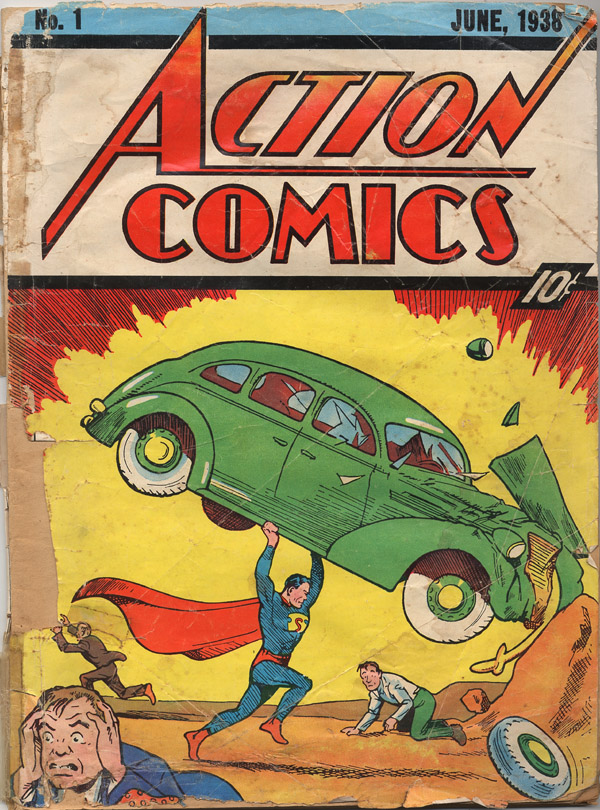
Man Finds Action Comics #1 Stuffed in Walls of Old Home

Action Comics #1

According to Hero Complex, 34-year-old David Gonzalez paid just over $10,000 for a broken down home in rural Minnesota, intending to renovate and flip it. As the guy is tearing out the walls, he finds the first appearance of Superman among the newspapers used as insulation.

For some reason, Gonzalez then took his in-laws to see the house. Bad Idea Jeans. His aunt grabbed the book (was it just laying there?), and when he yanked it back (say what?), the cover tore. ComicConnect, the auction house selling the comic, estimates that the additional damage reduced the book’s value by $75,000. The current bid is $137,000.

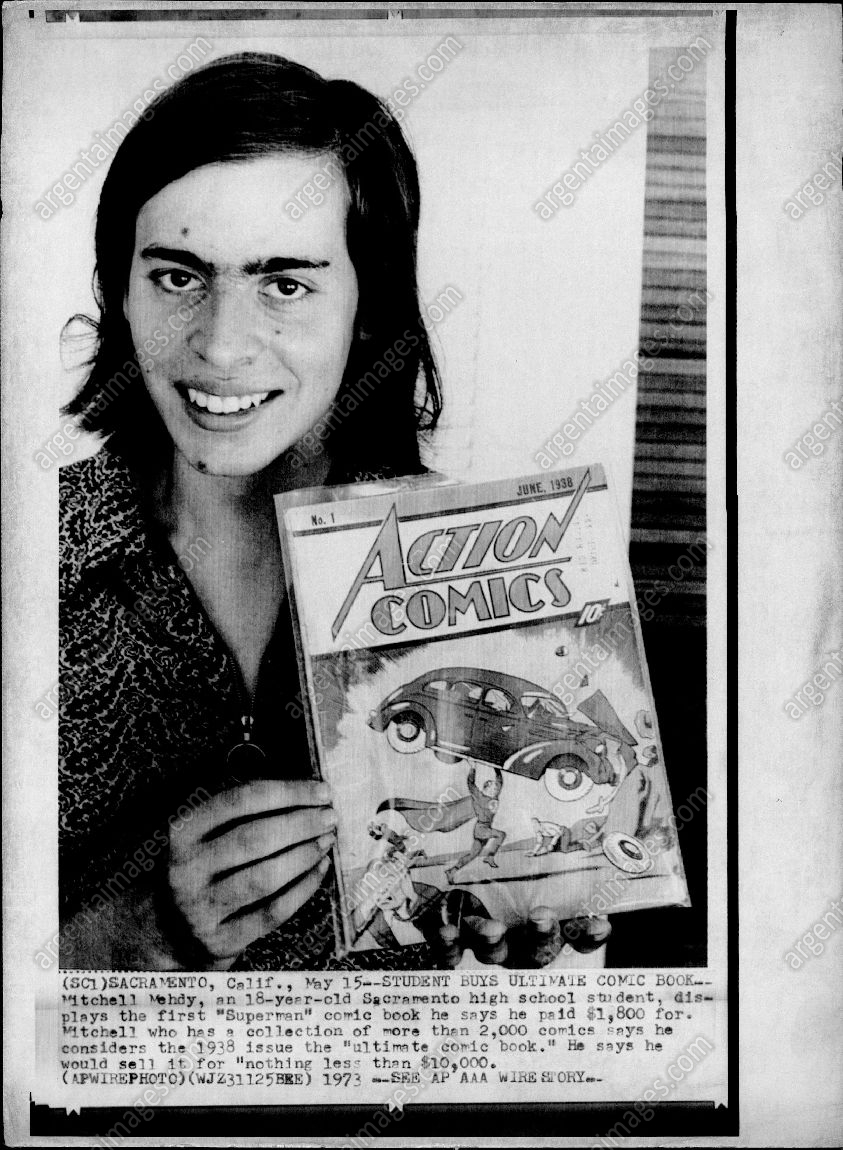
In 1973, as the press photo below shows, Action Comics #1—in better condition than Gonzalez’s copy—sold for a measly $1,800. The teen who bought it (I wish I’d had his allowance) said he would sell for “nothing less” than $10,000.

Action Comics #1 1973

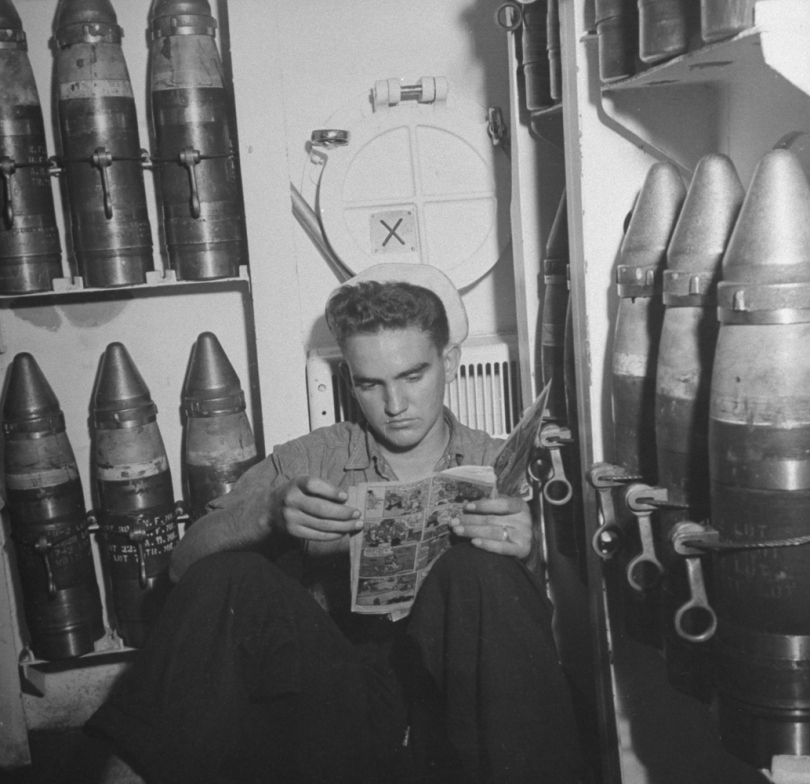
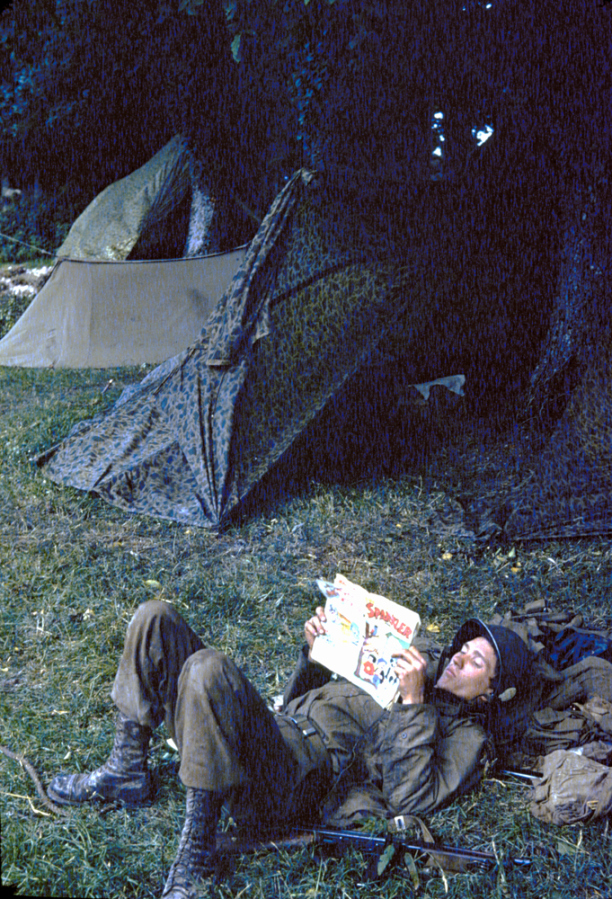
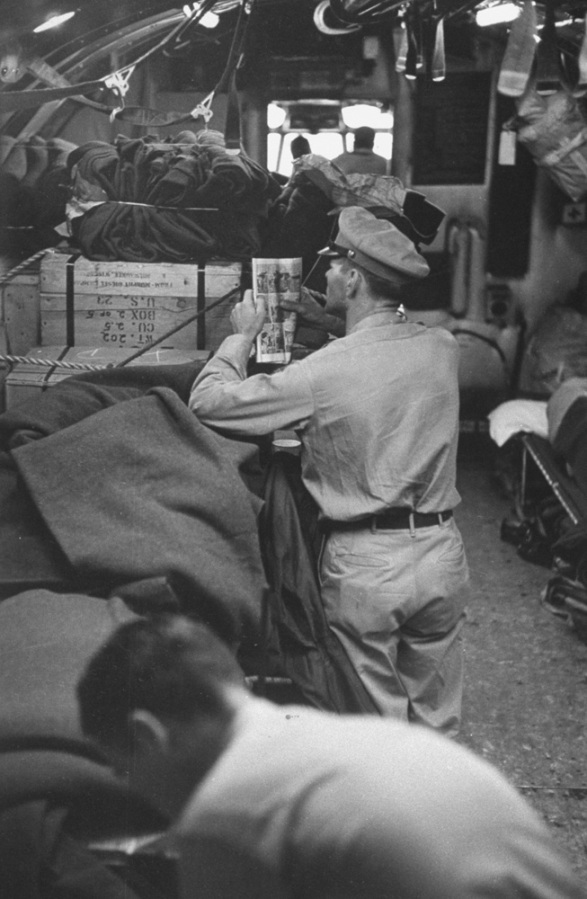
American Soldiers Reading Comic Books, 1942 – 1951

00578665.JPG

A sailor reads a comic book aboard the USS Doran in 1942

1150758.jpg

Private Ernest Dandou reads a comic book at paratrooper camp, Georgia, 1944.

00723570.JPG

Lieutenant Frank Hensley reads a comic book after loading cargo on plane, 1950

00727915.JPG

American troops read comic books during the Korean War, 1951

All of the photos above are from a Life retrospective called Life with the Comics: In Praise of a Classic American Art Form.

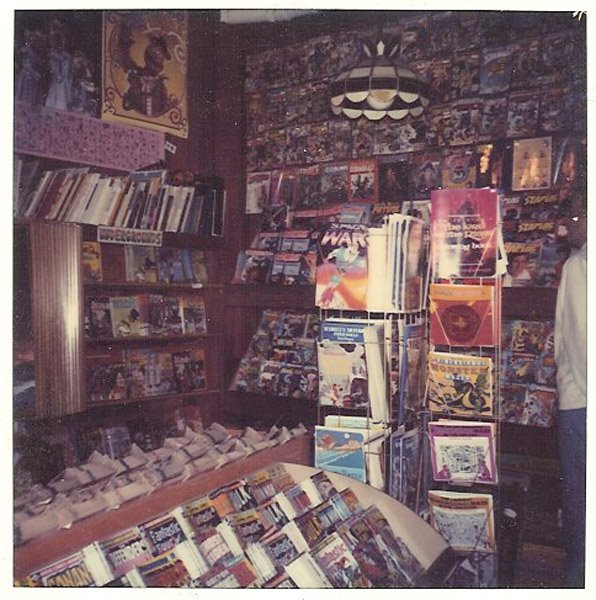
Comic Book Store, 1980

Comic Book Store 1980

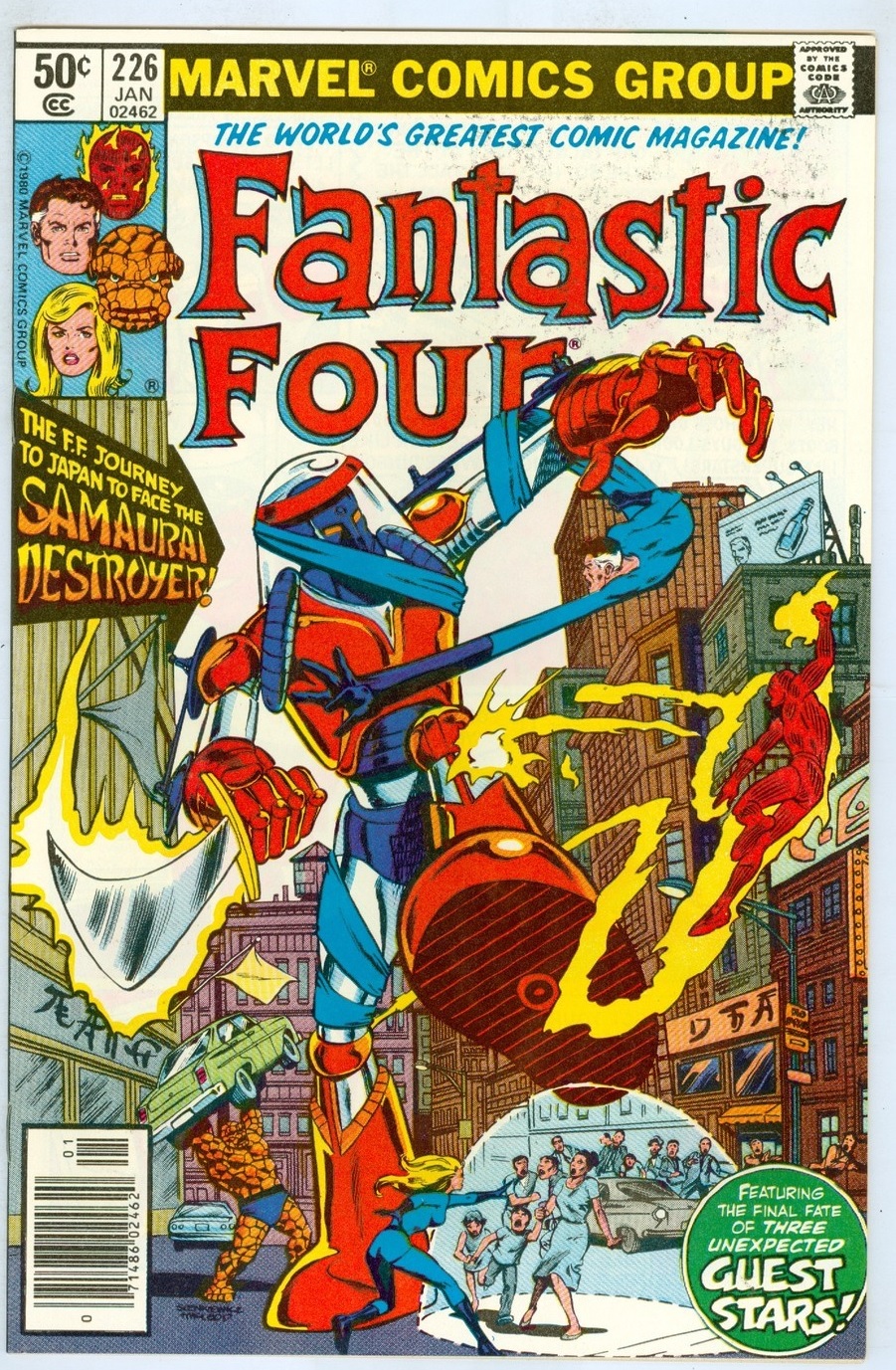
Another beautiful interior shot of a Bronze Age comic shop, this one from Flying Colors Comics. Let’s nail down the date. The best look I can get of the nearest comics is the Fantastic Four on the bottom shelf, three in from the far right. It’s FF #226, with a publication date of January, 1981. (Look for the hand of the Samurai Destroyer under the ‘sti’ of ‘Fantastic’.)

FF #226 Jan 1981

The newest book would be in full view, with back issues tucked behind it. Publication dates ran two to three months in advance, so we’re in October or November of 1980. Other than the FF, I spot Defenders #89 (pink cover) and, below it, #91 (yellow cover, same publication date as FF #226). Man, 1980. What a beautiful time to be a kid.

I’m not into DC, so I can’t identify any of the comics on the bottom rack in back of the store, but I do see, just to the right of J.R.R. Tolkien’s The Lord of the Rings Coloring Book (more on that in a sec) at the top of the spinner rack, Starlog #39 (October, 1980), with Gil Gerrard on the cover.

Starlog #39 Oct 1980

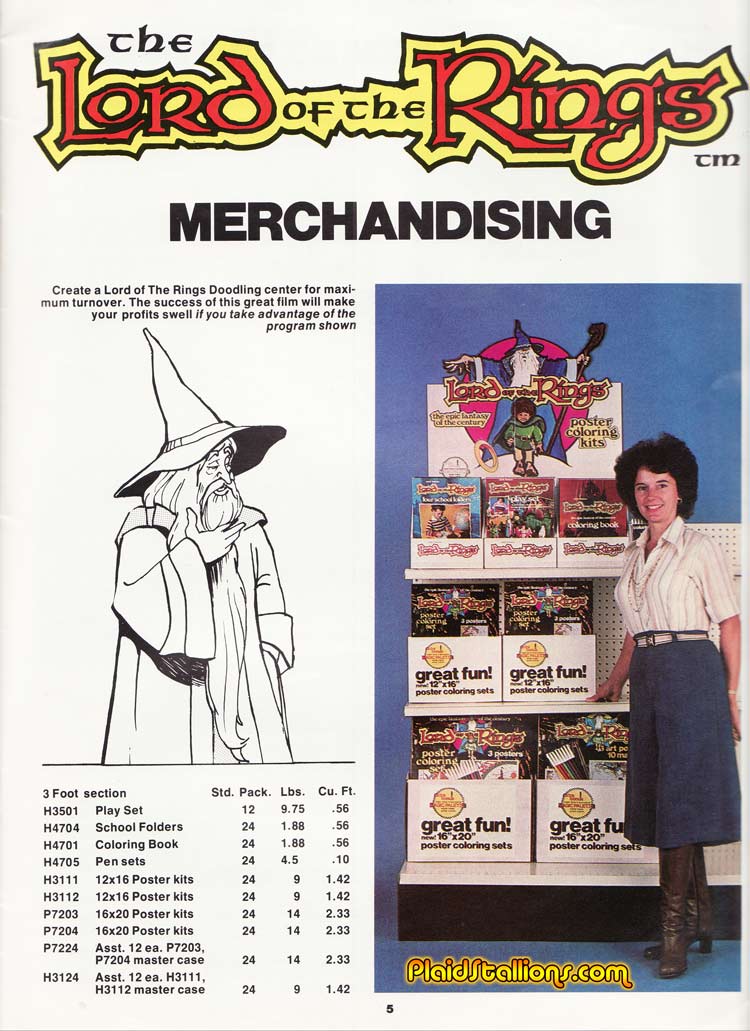
Now, the spinner rack. The LoTR coloring book was part of the promotional campaign for Ralph Bakshi’s 1978 LoTR adaptation, as you can see in this sweet catalog at Plaid Stallions.

LOTR Catalog 1979

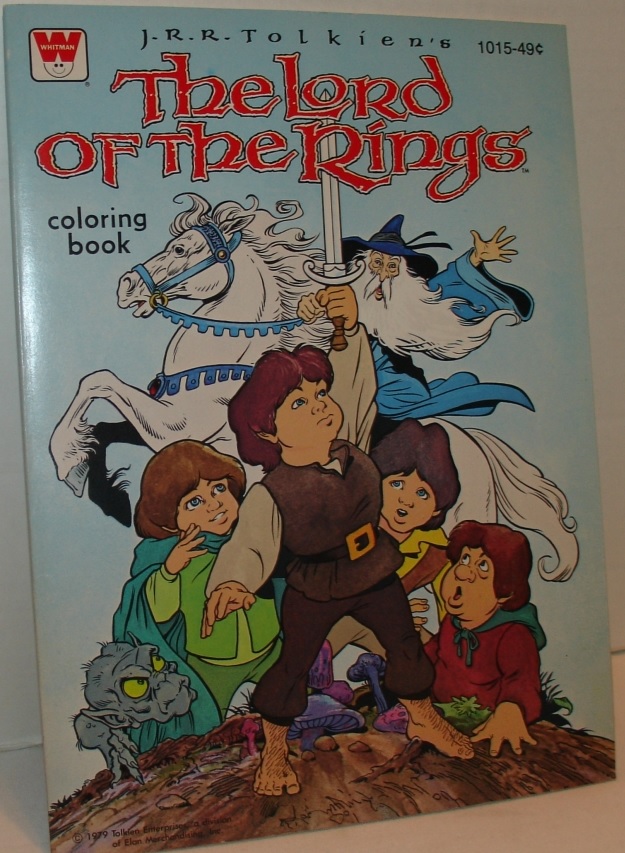
The version seen here (top right, by the weird lady’s head) and in the comic shop was originally published in 1978. An alternate cover version, seen below via eBay, came out in 1979.

LOTR Coloring Book 1979

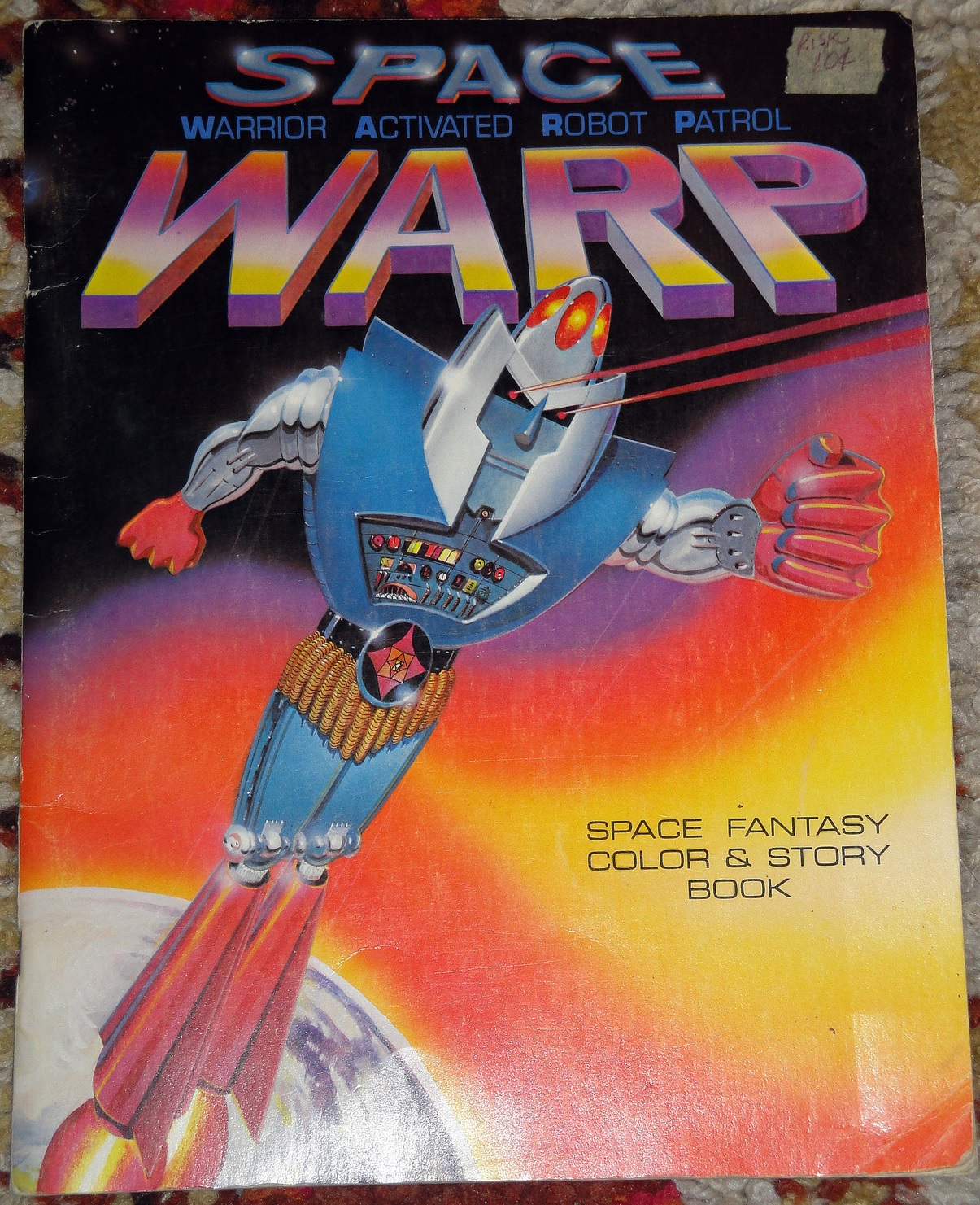
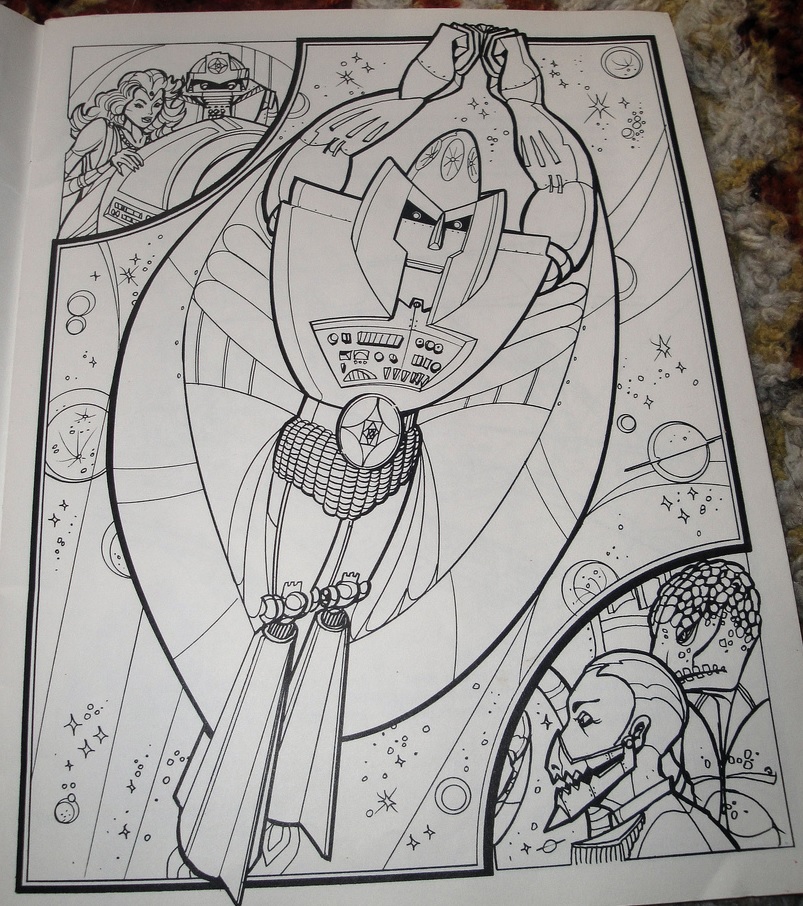
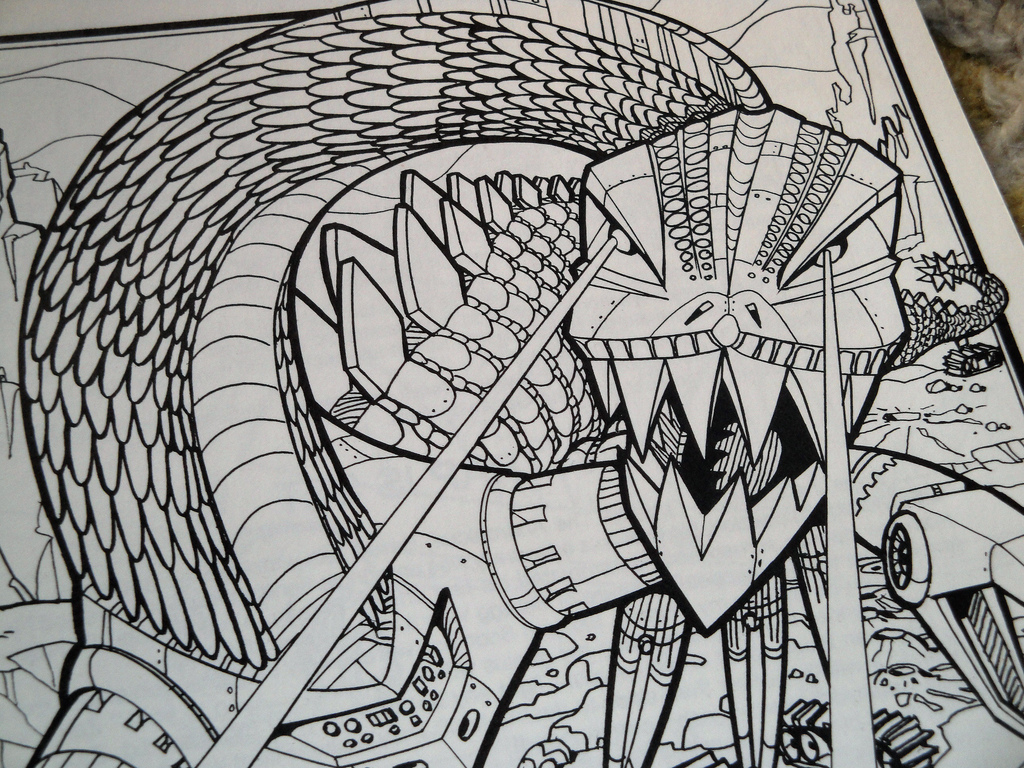
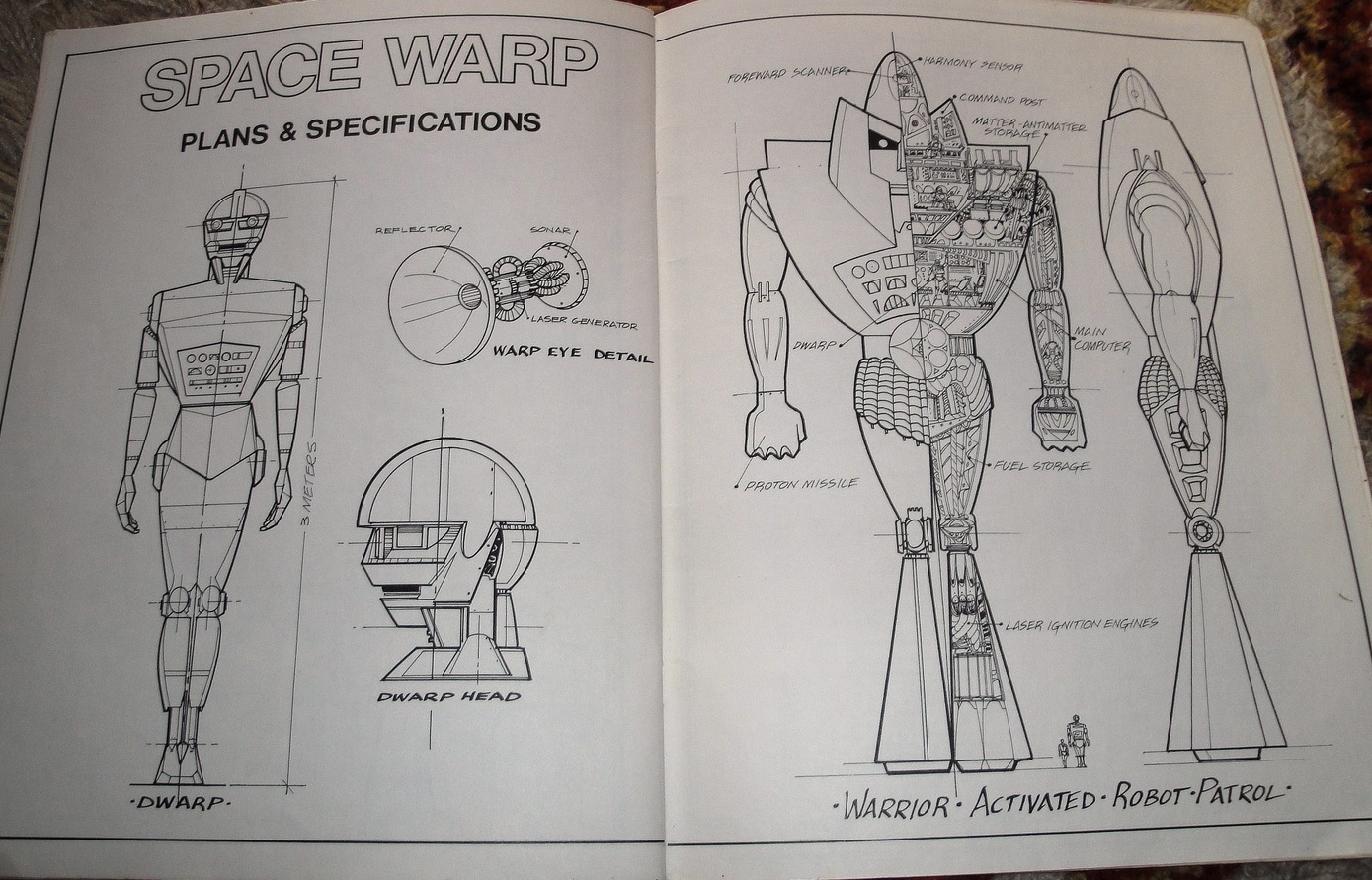
To the left of the LoTR book you’ll see what’s become a cult item in the pop art world: the Space WARP Space Fantasy Color & Story Book (1978), published by Troubador Press. I want it badly.

We have Philip Reed and Matt Doughty to thank for the pics. See more at Reed’s Flickr.

UPDATE (11/22/13): Malcolm Whyte, who ran Troubador Press for 30 years, spotted more Troubador titles on the rack: Maze Craze 4 is just beneath the LoTR book; Larry Evans’ 3-D Monster Mazes is just beneath that; and two different Evans 3-D Maze Posters volumes (“huge fold-out jobs and complex!” Malcolm notes) are beneath that.

Space Warp 1978

Space Warp 1978-2

Space Warp 1978-3

Space Warp 1978-4

Birthday Party, 1980

Birthday Party, 1980

Is this a birthday party or a funeral? Cheer up, kids! For one thing, your clothes will never again be this awesome.

(Via FotoFraulein/eBay)

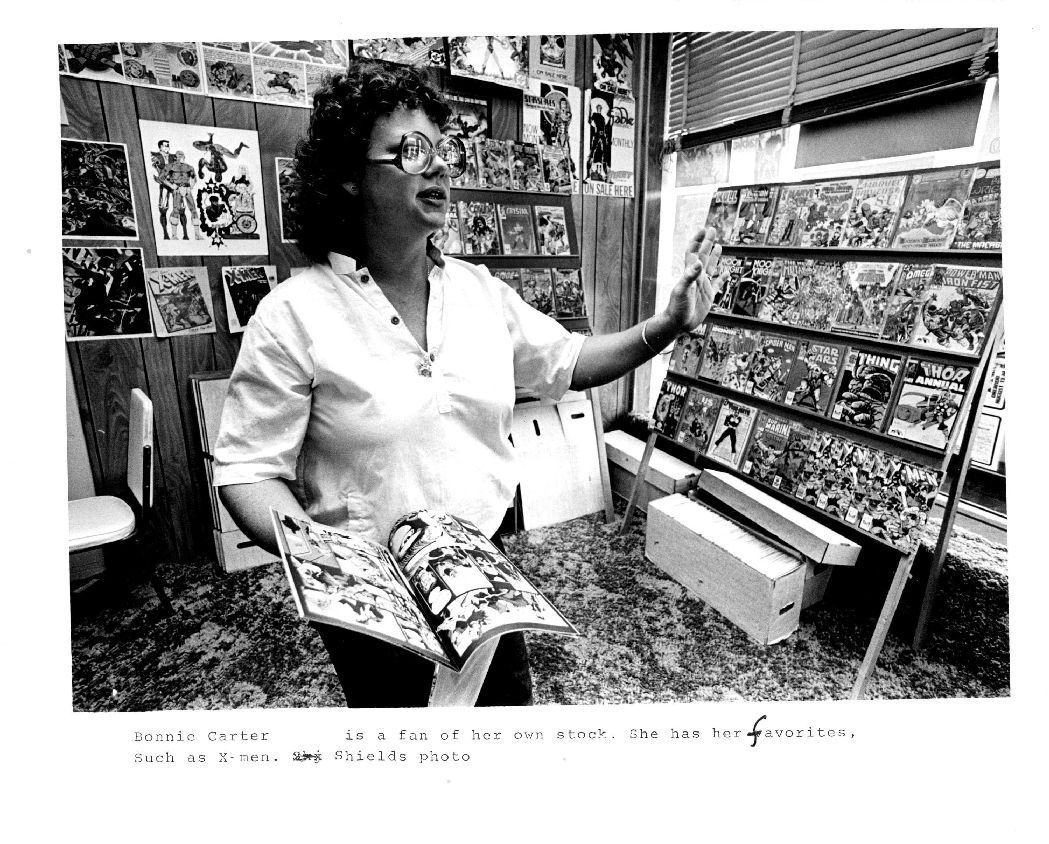
Comic Book Store, 1983

Comic Book Store 1983

Published in an unidentified newspaper on August 14, 1983. I see (click to enlarge) The Uncanny X-Men #175, What If #41, Vigilante #1, Thor #336, Thor Annual #11, The Thing #6, Star Wars #77, Frank Miller’s Ronin #2, Rom #48, The New Mutants #10, Moon Knight Special Edition #1, Marvel Universe #11, Marvel Age #8 (Stan Lee and Jim Shooter on the cover).

There’s a Starslayer (“A Celtic barbarian in the far-flung future”) poster on the upper right side of the wall. Next to it is a Jon Sable Freelance poster. Both series were written and drawn by Mike Grell (Warlord) and published by First Comics.

Interior shots of old comic shops are really rare. I’ve got one more here.

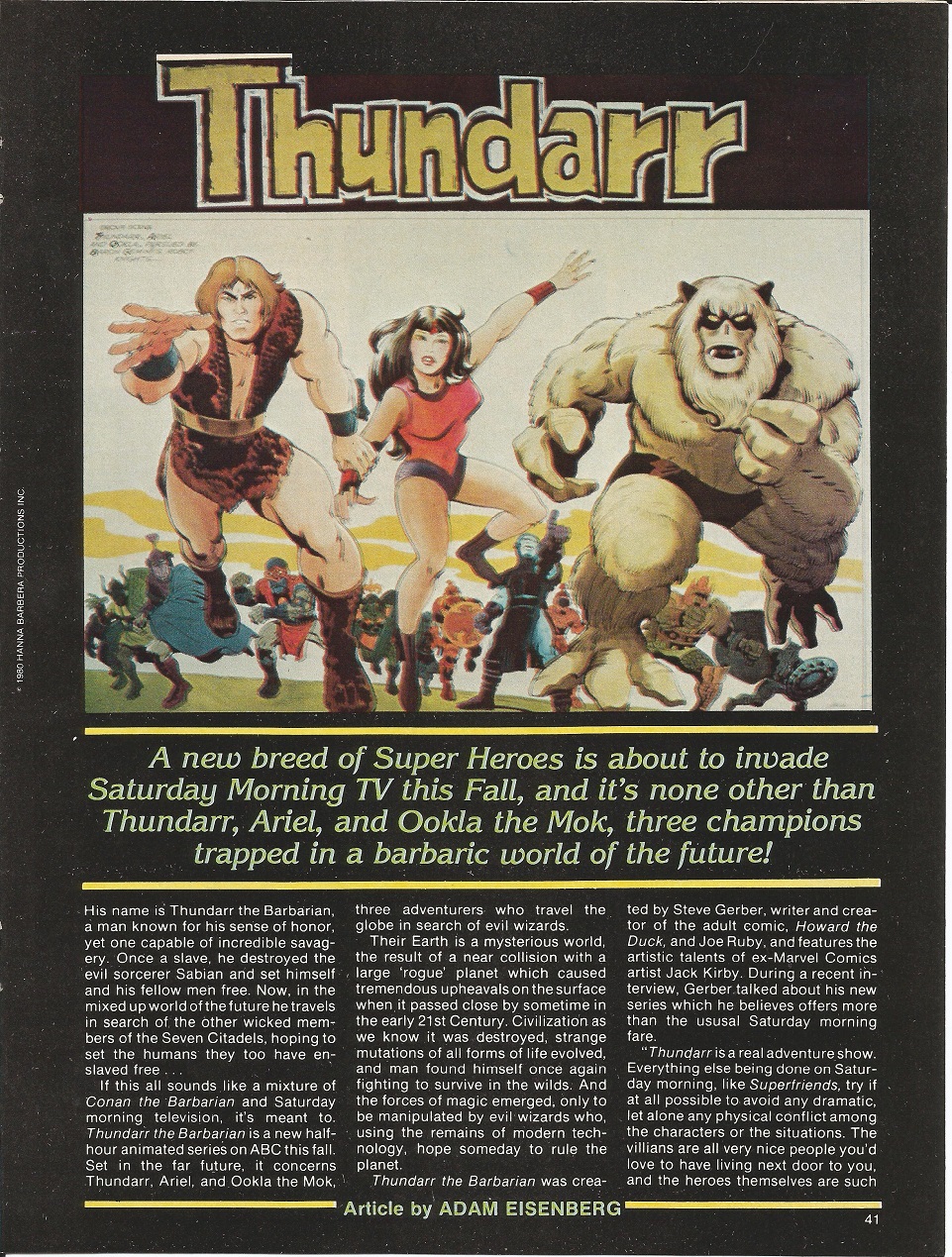
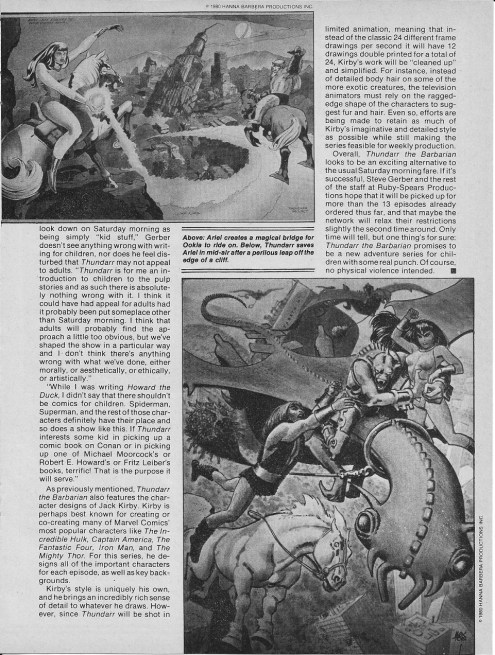
Fantastic Films #20 (December, 1980): Thundarr the Barbarian Article

FF CE #20 pg. 40

FF CE #20 pg. 41

FF CE #20 pg. 42

FF CE #20 pg. 43

Thundarr the Barbarian is, hands down, the greatest American cartoon of the 1980s. Here’s why.

(1) In the opening sequence alone, set to the darkest, most epic cartoon theme song of all time, the Moon blows up, the Earth is ravaged by tidal wave, volcanic eruption, and earthquake—“man’s civilization is cast in ruin.” Then, 2000 years later, we see the “reborn” planet, now ruled by “savagery, super science, and sorcery.” (Yeah, super science.) A massive ocean liner, illuminated by the riven moon, sticks lengthwise out of the jungle muck into the fuming, noxious atmosphere. A masked wizard conjures up a slimy, Lovecraftian demon. Thundarr, a barbarian slave, “bursts his bonds” and vows to fight for justice, waving around his “fabulous Sunsword” from the back of a white steed. Ookla the Mok is a giant, foul-tempered raccoon with fangs and a mane. Princess Ariel is a bad-ass, raven-haired sorceress.

This ain’t Super Friends, kids.

(2) The show was and is a pretty sophisticated combination of literary (When Worlds Collide, Robert E. Howard’s Conan and Solomon Kane stories, Jack Kirby’s Kamandi) and cinematic/television (Star Wars, Planet of the Apes, Seven Samurai, Kung Fu, The Lone Ranger) sources. It also predates Escape from New York and The Road Warrior, two brilliantly realized post-apocalyptic visions that have been imitated (but never bested) ever since.

(3) Alex Toth (Space Ghost, The Herculoids) designed the three main characters, while Jack Kirby (‘Nuff said) designed the secondary characters, many of the sets and backgrounds, and the Sunsword.

(4) Like the early marvel creations of Stan Lee, Jack Kirby, and Steve Ditko, Thundarr is grounded in the Western mythic tradition. The idea of the wandering hero goes back to Odysseus and especially the knight-errant (errant, from the Latin itinerant, means “traveling”) of the Medieval romance. I don’t want to overstate the importance of a cartoon about a barbarian wearing a fur monokini, but there is something of the heroic in the series, as Thundarr and his friends somberly wander the festering ruins of America seeking out the dispossessed and persecuted. Nothing lasts forever, they know, and danger is everywhere, but they choose to do what good they can with the time they’ve got.

The article above features some dazzling pre-production art from Kirby and Toth, and Thundarr co-creator (with Joe Ruby) Steve Gerber comes off as a really intelligent, quick-witted guy who is struggling to overcome serious creative restrictions. I didn’t know just how strict the censors were at the time, so I’ll quote him on it:

The Program Practices will still not allow our main character to throw a punch or to hit anybody… The criteria seems to be what children can emulate. If Thundarr sticks out his foot and trips a couple of werewolves, that’s emulable… If, on the other hand, Thundarr picks up a boulder and throws it in the path of the werewolves, thereby tripping them up, that’s not emulable, and we’re allowed to do that…

The big thing that we’ve had to overcome is that the censors tend to treat children as if they’re not just morons, but lunatics, potentially dangerous creatures.

And Thundarr’s sword posed a problem, since “knives and other sharp objects are outlawed on Saturday morning.” (The last drawing on the first page shows our hero holding a metal sword.) They couldn’t do a laser sword because of Star Wars, so they went with a “lightning sword.” I had just assumed all these years that they were trying to emulate the lightsaber.

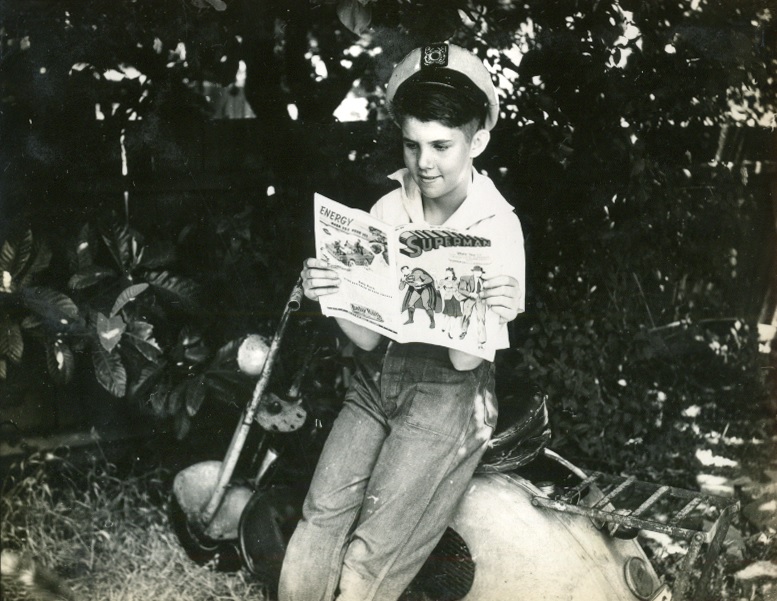
Boy Reading Comic Book, 1944

boy reading superman

boy reading superman-2

superman #30

(Images via Casa Gargantua/eBay and Esquire Comics)


Pages

Archives

Categories

Donate Button

Join 1,118 other subscribers