Archive for the 'D&D' Category


The 700 Club on a Certain Fantasy Role-Playing Game That Shall Not Be Named: ‘Only Blood Will Satisfy the Dragon’ (1993)

You may have seen this one before. I can’t resist making some comments:

  1. Can I hire that 13th century DM and his gnarly DM’s Tome™ for parties? “There’s only one way to save yourself, and that way is blood.” Cool. Everybody put your keys in the jar and pass the knife!
  2. How exactly do those dice work? Are the numbers coordinates? And why the hell does he roll again when the treasure and “power beyond imagination” are right in front of him?
  3. I’d like to be one of the shadowy figures who removes a player (or places a menacing hand on the player’s shoulder) once that player is “no more.” Do I have to apply? I bet there’s a psych test.
  4. What the hell do the kid and his dog have to do with anything? And who are they looking up at in the woods? Is Satan wearing Levi’s? Whoever it is, he’s like 20 feet tall.

The complete 700 Club episode the clip belongs to is here. Both videos are via LadySorrowIshana/YouTube.

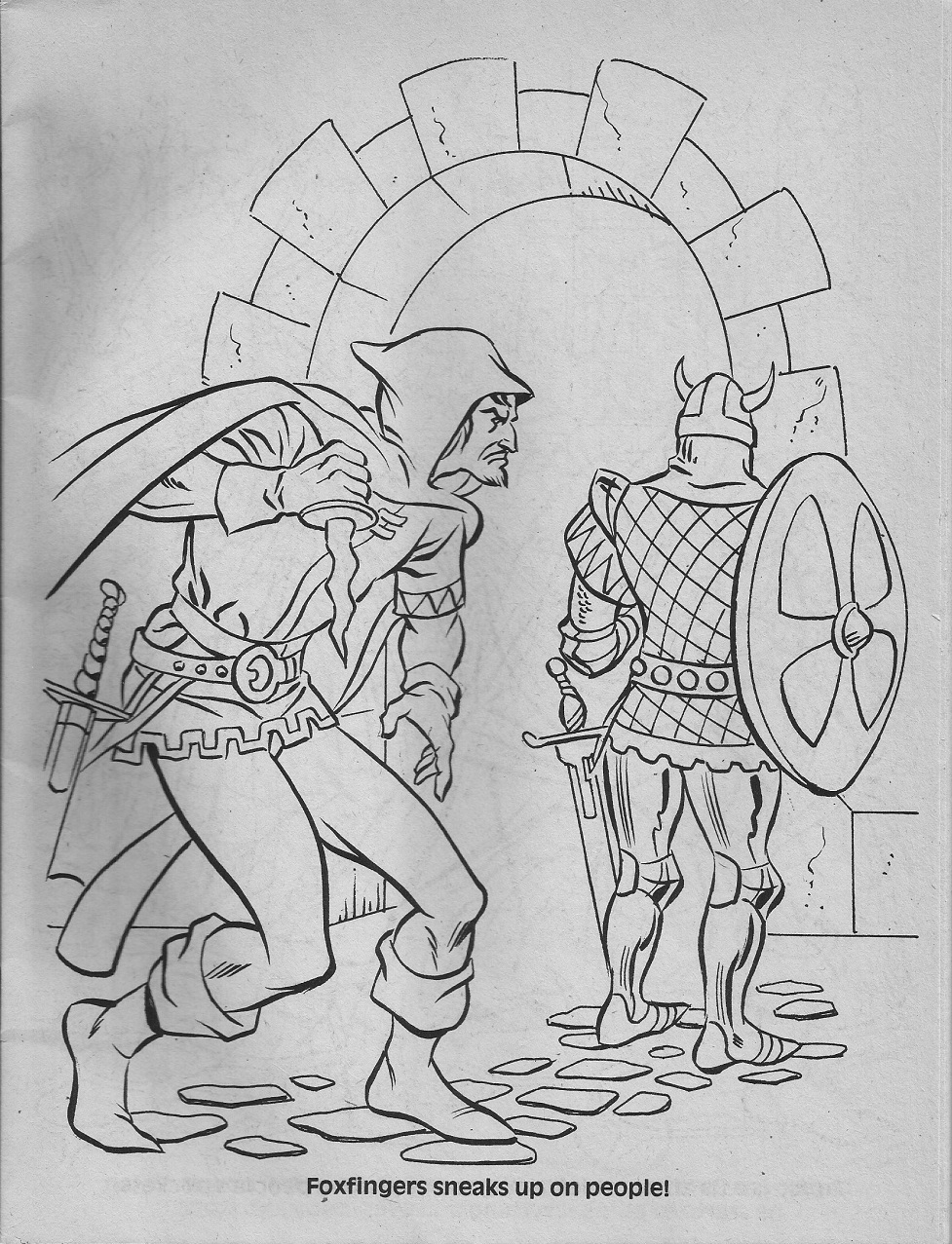
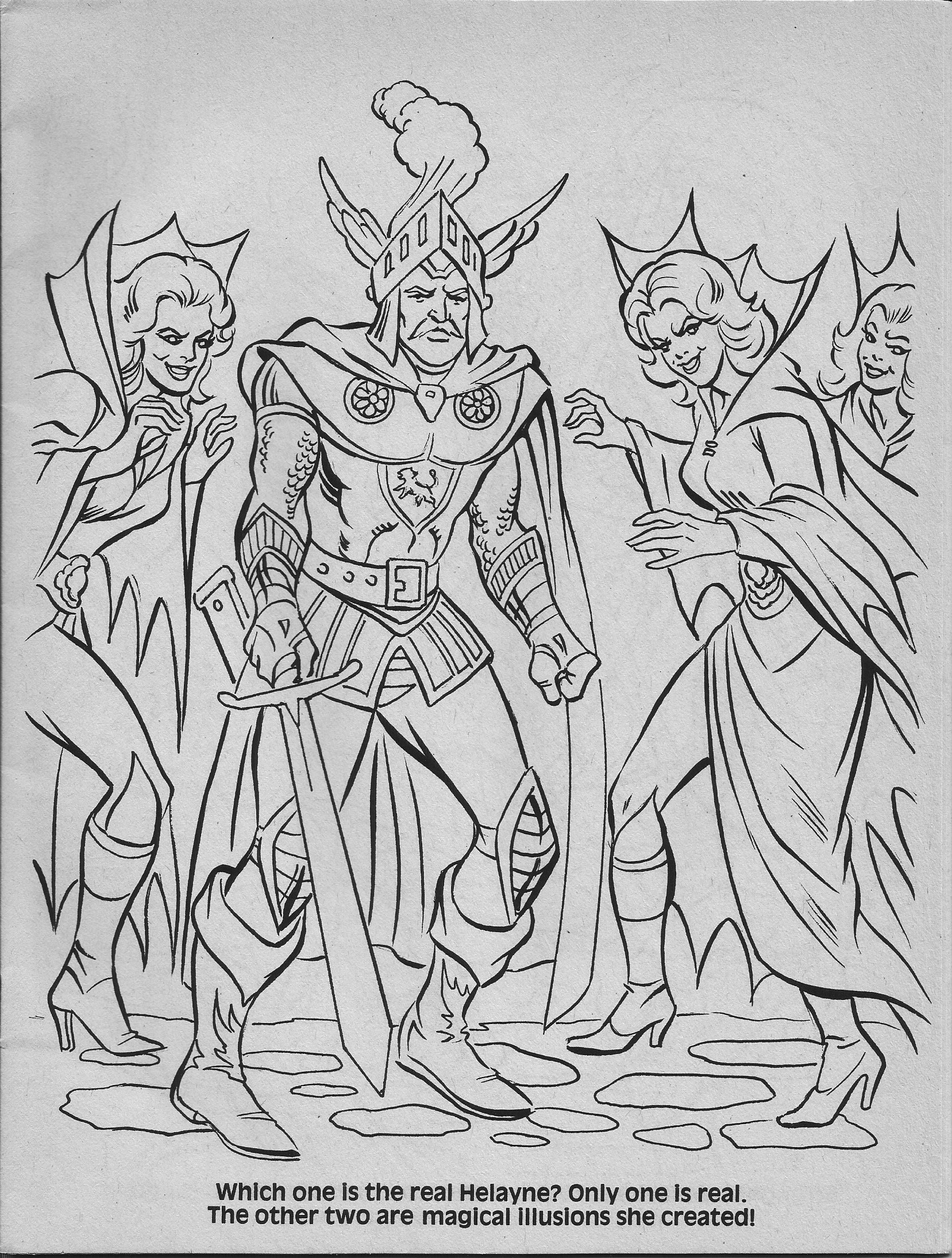
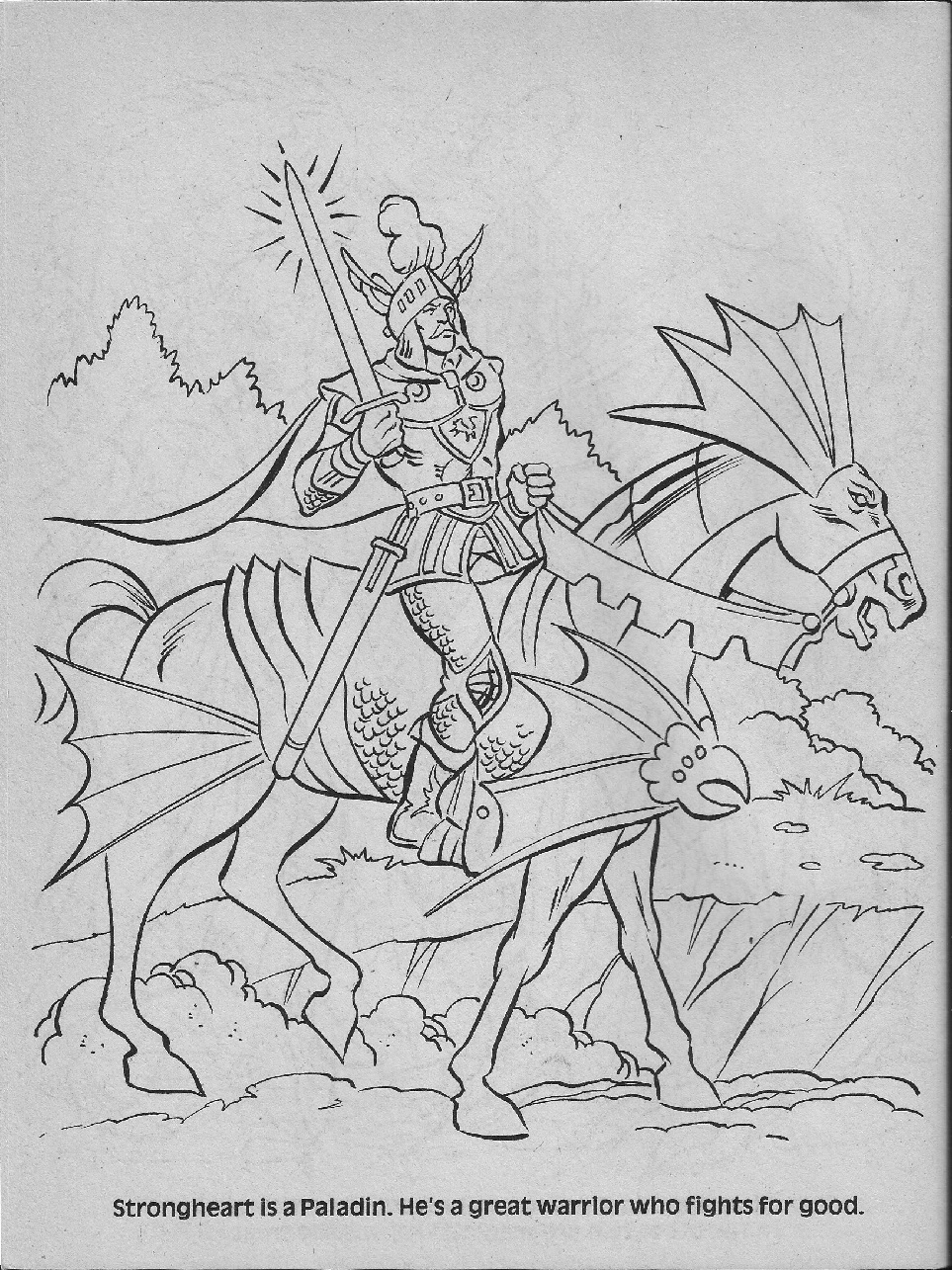
Advanced Dungeons & Dragons Characters Coloring Book (1983) (Part One)

AD&D Characters FC

AD&D Characters pg. 1

AD&D Characters pg. 2

AD&D Characters pg. 3AD&D Characters pg. 4

AD&D Characters pg. 5AD&D Characters pg. 6

AD&D Characters pg. 7AD&D Characters pg. 8

AD&D Characters pg. 9AD&D Characters pg. 10


Along with the AD&D storybooks, Marvel and TSR collaborated on five coloring books featuring the same cast of characters,  some of them from the toy line, others from The Shady Dragon Inn (1983), a game aid featuring pregenerated characters (and stats for the characters in the toy line).

Jane Stine, who co-wrote The Treasure of Time (1983), wrote the Characters coloring book. Earl Norem did the cover art. Jim Mooney, who worked for DC in the ’60s and Marvel in the ’70s and ’80s, and John Tartaglione, Silver Age inker of Sgt. Fury and Daredevil, did the interior art. (The lips look unmistakably Mooney to me, so I gather he did the pencils.)

The book is essentially a visual illustration of the different D&D character class attributes, alignments, and skills. It even covers some spells (feather falling) and magic items (helm of water breathing). Unlike the storybooks, there’s a definite link to D&D‘s role-playing core.

Parts two, three, and four of the Characters Coloring Book are here, here, and here.


Toy Aisle Zen (1980): Dungeons & Dragons Computer Labyrinth Game, Super Simon, Perfection, and More

Toy Aisle 1977-2

The D&D Computer Labyrinth Game was not a big seller, as you can see. It was expensive, and D&D hadn’t yet gone viral in the kid world. Here it is with Dark Tower in the 1981 Montgomery Ward Christmas Catalog for $44.88.

1981 Montgomery Ward Christmas Catalog P490

Super Simon was in the same catalog for $37.99. The non-electronic games pictured—Ideal’s Rebound, Galoob’s Pro Pinball, Perfection (scared the crap out of me when that board shot up)—were much cheaper.

The photo is alluring, but also frustrating: all of those aisles in the background forever unexplored, all of those endcaps flush with eternally unidentifiable carded toys.

(First image via Historic Images/eBay)

1983 Imperial Toys Catalog: `Dragons & Daggers’

Imperial 1983

Imperial 1983-2

Imperial 1983-3

I assure you that any resemblance to Dungeons & Dragons is purely coincidental…

More awesome Imperial Toys hack jobs here.

1984 Placo Toys Catalog: Advanced Dungeons & Dragons Playsets

Placo 1984

Placo 1984-2

Placo 1984-3

I’ve never seen these before, but that’s not really a surprise. The mainstream expansion of D&D starting in 1983, when the action figure line and the cartoon were released, was a decadent mess. I have fond memories of both, but neither product broke new ground or had anything to do with D&D, and what’s worse, they lived in separate universes. It was a marketing disaster.

Had the cartoon featured the grittier action figure characters and Thundarr-like production and writing, D&D might have become a much different franchise.

I do get a kick out of the toy sets, and I think they’re interesting historically. Maybe I’ll be Warduke for Halloween.

A Portrait of Young Geeks Playing D&D (1980/1981)

D&D Club 1980

From David Thiel, who gives us the entertaining back story:

It should be a surprise to no one that I was one of the founding members of the Hobart High School Dungeons & Dragons Club. Each Saturday morning, about twenty of us took over the basement of the Hobart Public Library for a half day of imaginary violence.

Here, courtesy the HHS yearbook, is the sole photo I have of me In flagrante dungeon…

Note that I was both wearing a Star Wars T-shirt and using an Empire Strikes Back school folder as a Dungeon Master’s screen. Yeah, I was stylin’.

What’s truly scary is that I’ve just realized that all these years later I can still immediately identify the D&D adventure being played by the two virgins in the background: the infamous “Queen of the Demonweb Pits.”

All this is my way of pointing out that I am indeed an old-schooler when it comes to dungeoneering […]

Read the rest of the post. No mention of the luxurious lip fuzz, David?

1981 TSR ‘Gateway to Adventure’ Catalog

TSR Catalog 1981

TSR Catalog 1981-2

TSR Catalog 1981-3

TSR Catalog 1981-4

TSR Catalog 1981-5

You can thumb through a PDF of the whole catalog at Recycled Thoughts from a Retro Gamer. You can also see the complete catalog at Mikey Walters’ Flickr. The images above are from eBay, where you can usually find a copy for $5 – $10.

The shirts are very cool, but apparently not very well-made. Here they are, courtesy of Grognardia.

D&D Shirts 1981

The D&D Basic Set advertised in the catalog is the just released 1981 edition, written by Tom Moldvay with cover art by Erol Otus. The images on the t-shirts on the top left are from Sutherland’s cover to the original Basic Set—written by M.D. and fantasy writer-promoter John Eric Holmesfrom 1977.

I found the Grognardia post via the Original D&D Discussion forums. Zenopus, who writes a terrific blog “exploring the underworld of Holmes Basic,” posted a number of different photos showing the famous Sutherland red dragon, including this beauty:

It’s from the magazine Games Merchandising (a retailer magazine), and shows the TSR booth at the Hobby Industry of America (HIA) 1981 trade show. Dig the red Face logo chairs!

TSR Booth 1981

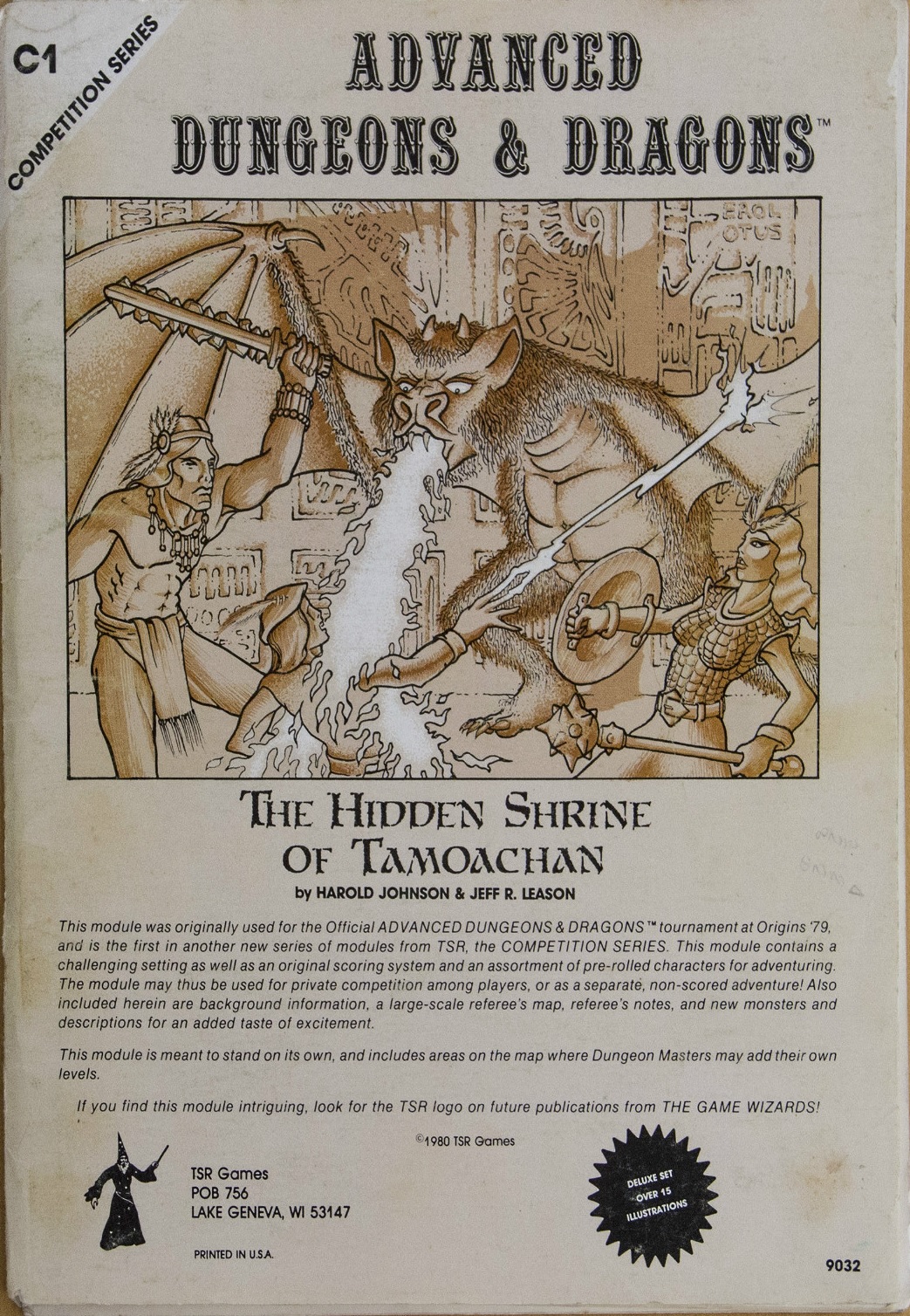
D&D Cover Art: Lost Tamoachan (1979) and The Hidden Shrine of Tamoachan (1980, 1981)

Tamoachan 1979

Tamoachan 1979-2

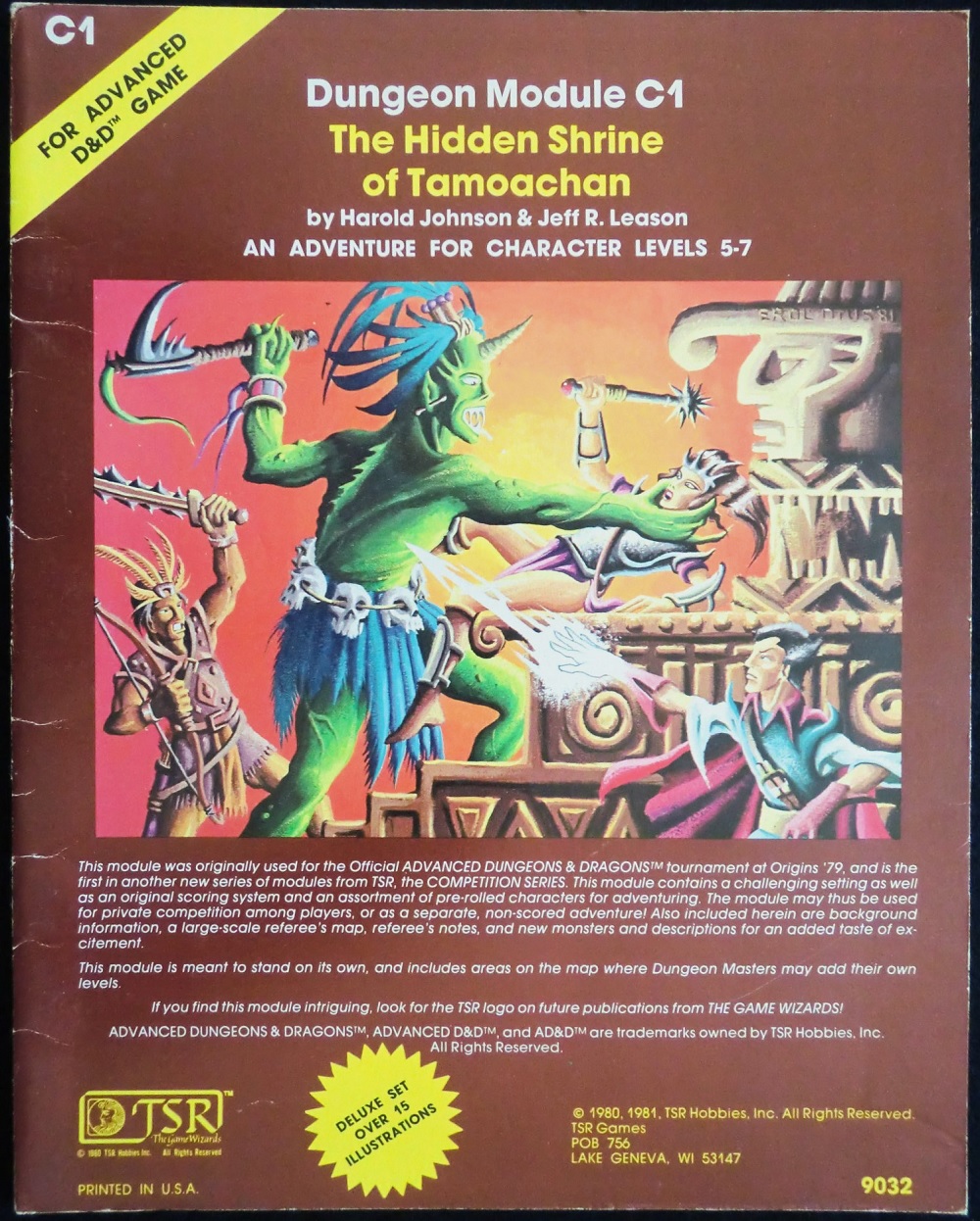
Hidden Shrine FC 1980

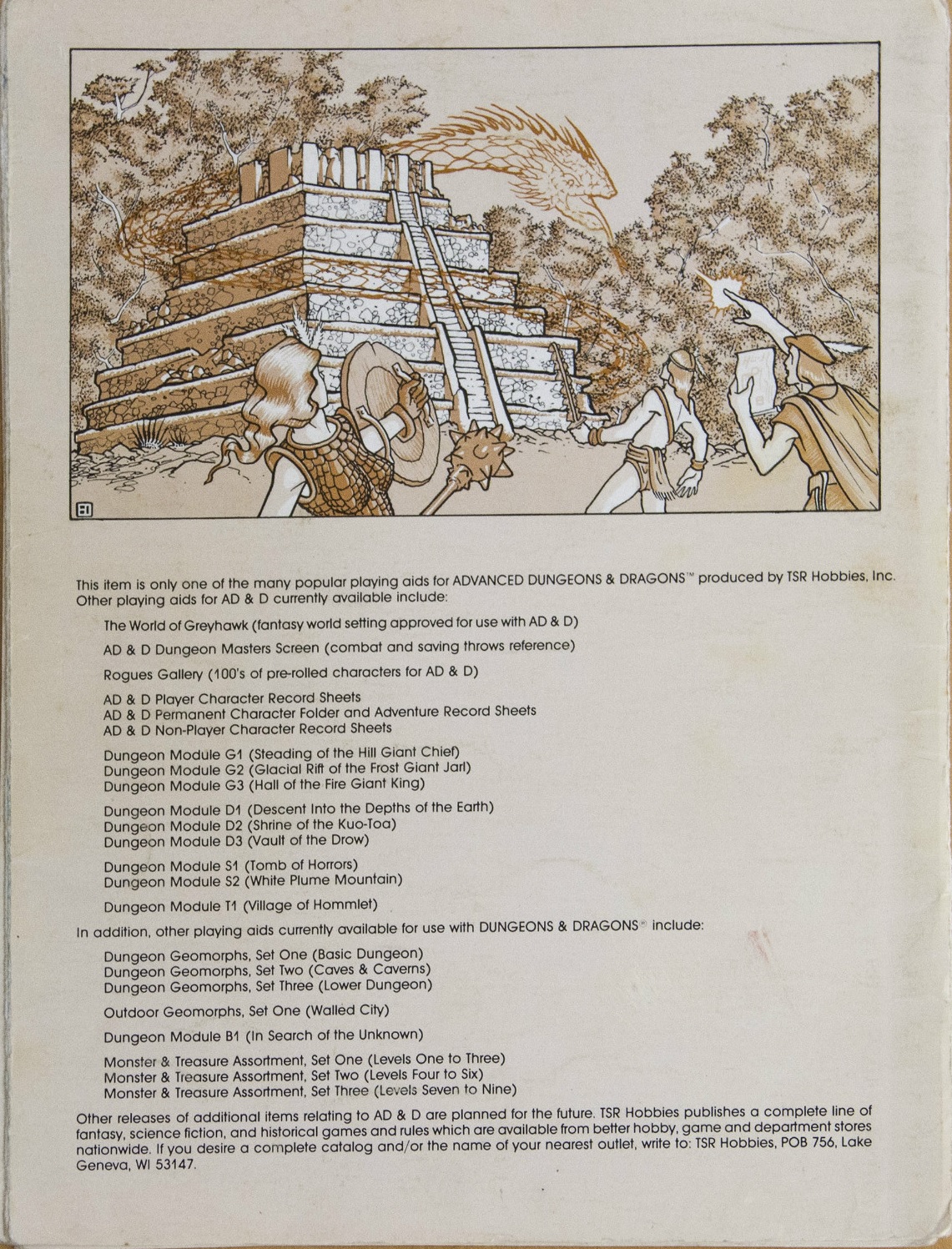
Hidden Shrine BC 1980

Tamoachan 1981

Tamoachan 1981-2

You can see how much the D&D image/brand changed in the space of only two years. Lost Tamoachan: The Hidden Shrine of Tamoachan was the bagged (unbound) tournament module used at Origins International Game Expo (known simply as ‘Origins’) in 1979. You’ll find the complete publication history at The Acaeum. (Copies are incredibly rare.) The cover art is by David C. Sutherland III, who did the original, and best, Dungeon Master’s Guide (1979) cover.

The module was renamed upon wide release in 1980, with front and back covers by Erol Otus. Without access to color, he relied on textures—the chiseled walls, the bolt of fire, the demon’s hair, the warrior’s armor. (On the back cover, it’s the combination of trees, ancient stone, translucent scales.) The Aztec art looks damn convincing, and the shadow of the wings on the walls is the kind of detail that separates Otus from other artists.

Otus did the front cover of the 1981 edition as well. Despite the gorgeous coloring and the thicker, more abstract figures that would become his trademark style, I think I prefer the earlier, more three-dimensional work. The back cover is by Jeff Dee. He uses Otus’s template for the scene, but gives it a Marvel Comics flavor. The innocence—some would argue the purity—of early D&D art, represented by the first and second editions of Tamoachan, would never be seen again.

Read some background on the module’s development at Wizards of the Coast.

(Images via Tome of Treasures and eBay)

Advanced Dungeons & Dragons Storybooks: The Forest of Enchantment and The Treasure of Time (1983)

AD&D Forest of Enchantment

AD&D Treasure of Time

In 1983 Marvel published a series of D&D storybooks and coloring books under license from TSR. (One year later, the roles would be reversed for the Marvel Super Heroes RPG, published by TSR under license from Marvel.) I believe these are the only two storybooks. You can read The Forest of Enchantment here. The Treasure of Time is here. Both PDFs are originally from Kuronons’ D&D Goodies Collection.

They’re kid’s books, so it’s pretty juvenile stuff, and there’s no effort to introduce the concept of role-playing (unlike the 1979 AD&D Coloring Album). All but two of the characters from LJN’s first run of AD&D action figures make appearances, so the books are basically long toy commercials.

Nevertheless, they’re notable for a few reasons: Bob Stine is Goosebumps author R.L. Stine, and Jane Stine, who founded Parachute Publishing, is his wife.

As for the art, Earl Norem did the interior work for The Forest of Enchantment, and Marie Severin did the cover and designed the book. She also illustrated The Treasure of Time. Severin was a colorist at EC until the notorious publisher was run out of town by the Comics Code. She worked for Marvel—as colorist, inker, and penciler—from 1959 until the early ’90s. She is one of the most well-respected artists in the comics field.

Famously, Severin was directed to soften the facial expression of the Hulk on one of the most innovative covers in Marvel’s history: The Hulk King Size Special #1 (1968). See both versions here. The artist who made the Green Guy too savage for public consumption? Jim Steranko.

Dungeons & Dragons Club, 1980

D&D Club 1980

I found this one at the Judges Guild Game Company’s Facebook page. The note reads:

In the 70’s and 80’s, JG founded and supplied Dungeons and Dragons clubs in Decatur, Illinois high schools. This is the 1980 MacArthur D&D Club, as pictured in the yearbook.

I would pay real money for an autographed 8×10, especially if Van Halen guy signs with a silver metallic Sharpie. My crush on Kathy Kirby is immediate and all-consuming. As soon as I get my hands on a functioning flux capacitor, I’m going back in time to ask her to the prom.

Judges Guild, by the way, is a fantasy game publisher founded in 1975 by Bob Bledsaw and Bill Owen. In 1976, Bledsaw and Owen got approval from Dave Arneson to create game supplements for D&D, which were successfully introduced at Gen Con IX in August of the same year.

Over the next several years, Judges Guild released some 250 products—for use with D&D as well as RuneQuest, Traveller, and other notable games—and played an influential role in the formative years of tabletop RPGs. The Judges Guild website is here.

***

On a separate but related note, I want to thank Al at Beyond the Black Gate for saying some nice things about 2 Warps to Neptune. Al is an old school gamer and game developer who has written extensively about the genre, Judges Guild included.

Anyone interested in the hobby and its history—hell, anyone who digs fantasy art and literature—should check out his blog. Start with his two-part cliffhanger, “Evolution of an Old-School Gamer.”


Pages

Archives

Categories

Donate Button

Join 1,118 other subscribers