Archive for the 'Video Games' Category


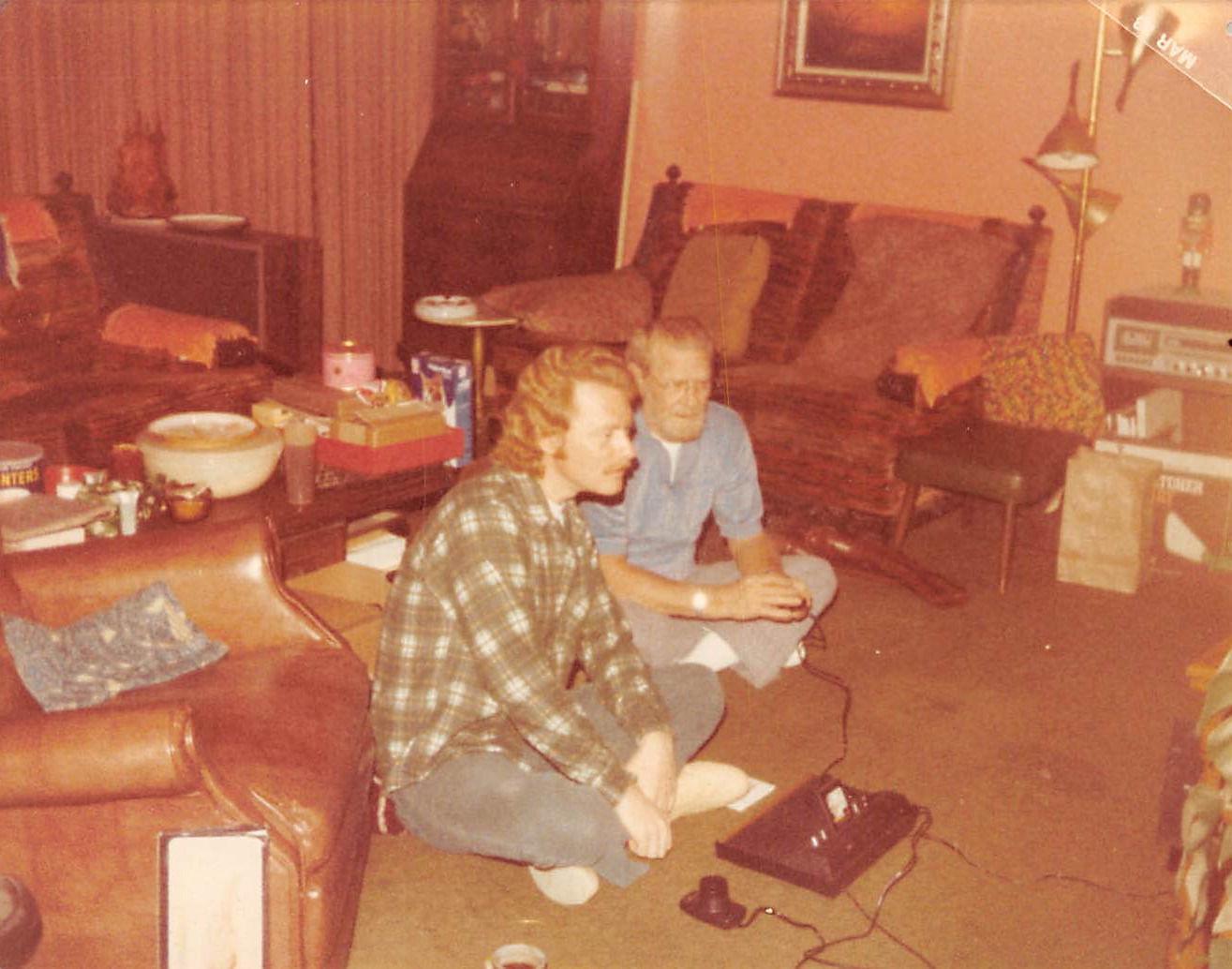
Big Kids Playing Atari, Circa 1983

Atari 1978

My first guess for the year was 1978, but the 2600 model looks like the four-switch, wood veneer version first released in 1980, and the date in the top right corner looks like ’83. I’m betting Video Olympics is what they’re playing.

There’s a record in front of the stereo I can’t identify. I wish I had that chair.

Dungeon of the Algebra Dragons (Timeworks, 1983)

Timeworks / Commodore 64 - DUNGEON OF THE ALGEBRA DRAGONS

Timeworks / Commodore 64 - DUNGEON OF THE ALGEBRA DRAGONS

There’s a demo on YouTube of Algebra Dragons from 1985 that appears to be a sequel to this game. “Press -C- to continue” brought back some memories.

Clever concept for a game. Still, I wouldn’t have made it past the first dragon.

Images are via Flickr. Click through for a bigger view.

Kid Eating Ice Cream on Star Wars Chair, Circa 1979

Star Wars 1982

I don’t care how cool that chair is, kid—put a shirt on. And take those sunglasses off inside the house!

The console is a Magnavox Odyssey². I can’t make out the LP behind the second TV.

UPDATE (2/5/15): Lefty Limbo has identified the LP as Merle Haggard’s Someday We’ll Look Back (1971). The title is eloquently relevant, is it not? Nice work, Lefty-Deckard.

(Image via eBay)

The Terminator LCD Video Game (Tiger Electronics, 1984)

Terminator LCD 1984

Terminator LCD 1984-2

“16 levels of peril from the future!” Watch a demo here.

The only Terminator-themed video game I remember is Terminator II: Judgement Day, which was a lot of fun.

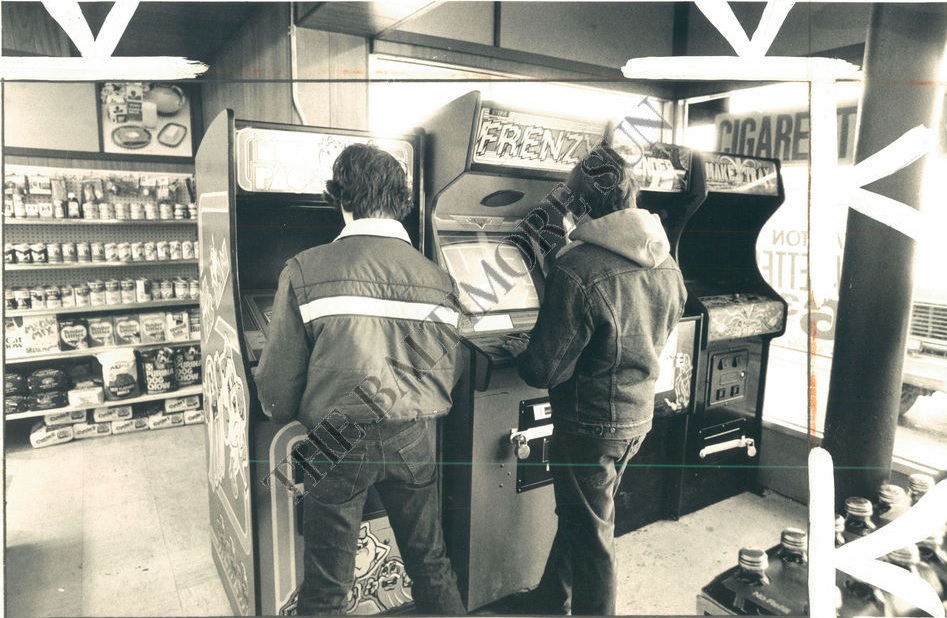
Arcade Zen (1982 – 1984): Frenzy, Omega Race, and Crossbow

Arcade 82

July 14, 1982. (Photo: Weyman Swagger/The Sun)

Original caption:

Game exhibit aims to ‘blip’ opposition. At the National Association of Counties convention, officials who may be regulating video games play at a manufacturers’ exhibit.

If this lady ever takes the stick out of her ass, she might start to enjoy herself. She’s playing Kangaroo.

Arcade 82-2

April 14, 1982. (Photo: Paul Hutchins/Evening Sun Staff)

Original caption:

Players try video games at the 7-Eleven store on Frankford Avenue, one location appealing city ban on them in certain areas.

Frenzy was the 1982 sequel to Berserk. That’s Make Trax (1981) on the far right.

Arcade 82-3

March 16, 1982. (Photo: Weyman Swagger/The Sun)

Original caption:

Video game players at Pollock Johnny’s on The Block.

Omega Race, Midway’s only vector game, came out in 1981. It was a rare sight in my parts, like Space Duel. I loved all the vector games. There was something a little magical about them.

Arcade 1-9-82

January 9, 1982. (Photo: The Sun)

Original caption:

Battling the bug-eyed monsters. Anatol Polillo, 23, aimed his sights on outer space yesterday without the help of a telescope. Instead, he pitted his reflexes against “Space Odyssey,” one of many popular video games in the Maryland Science Center’s second “Great Computer Invasion.”

The Maryland Science Center, founded in 1797, is still going strong.

Arcade 1984

The Machine Shop Arcade, August 6, 1984. (Photo: Pix L. Pearson/The Sun)

Crossbow (1983), like Venture before and Gauntlet after, was inspired by the success of D&D. I was really bad at it.

(Photos via the Tribune Photo Archive)

The Piranhas – ‘Space Invaders’ (1979)

Piranhas-1

Piranhas-2

The Piranhas were a British ska-punk band active between 1977 and 1983. ‘Space Invaders’ marks one of the earliest examples of rock/pop songs with a video game theme, yet another of my hobbies (see more here and here). The single (side two features live track “Cheap ‘N’ Nasty“) was produced by the legendary Steve Lillywhite, who produced The Psychedelic Furs, U2, Peter Gabriel, Morrisey, The Rolling Stones, and maybe my favorite band of all time, The Chameleons.

More details on the album at Discogs. Dig that album art!

Oh how I hate that bloody machine
Those aliens are really mean
I dread going into the green
Bombs drop on me in my dreams

I wanna be Space Invaders!

Centipede Board Game Designer Interviewed at CHEGheads

Centipede-3

As some of you will remember, one of my abiding interests is the collision of the board game and video game industries starting in 1980, when Milton Bradley released Pac-Man, “the family version of the arcade game.” I’ve talked about two other MB games, Berserk and Zaxxon, and speculated that board games emulating arcade games were successful in the short-term for a couple of reasons: first, the kids who couldn’t get to the arcades and didn’t have a home console might get a quick fix from a cleverly imitative board game, and second, video games in the golden age were hard as hell, and board games gave players more for their money. Ultimately, both reasons come down to money. No kid with a plentiful supply of quarters would have chosen the dining room table over the arcade.

Shannon Symonds talked to Bruce Whitehill over at the CHEGheads blog about how he designed Milton Bradley’s Centipede (1983), and it’s pretty fascinating. Whitehill couldn’t advance far enough into the arcade game to get a feel for the overall concept, so he fed quarters to a young expert to play and explain what was happening along the way. Whitehill admits that kids would rather have played the video version at the time, and concludes that

Centipede the board game was, I think, more for people like me—those who could never do that well on the arcade game but could hold their own against another player on the dining room table.

The allure of video games in the beginning was that they were video games—the physical world was old hat; we wanted to live out our fantasies on the electronic game grid. The “family version of the arcade game” was a tag marketed to parents who, Milton Bradley hoped, wanted to share in their kids’ arcade experience or, more likely, replace that arcade experience with something less expensive and less troublesome (how many car trips did parents have to make taking kids to and from the arcade?). It’s also worth noting that many arcades were competitive and intimidating, and we often had to play with a slew of other young ruffians breathing down our necks and/or talking trash. A board game at home provided a kinder, more laid back experience.

The bottom line is that tabletop game companies knew they couldn’t overturn the new digital paradigm, and creative designers like Bruce Whitehill kept them in business for a few more years. Today, Whitehill’s version of the game is almost as iconic as Atari’s.
Discs of Tron Environmental Cabinet Tour

Just found this brilliant, super comprehensive tour by supertechnoboy of the Atomic Buffalo Arcade and had to share. Can you guess how many light bulbs this thing uses? Let’s see if you get chills when the music starts.

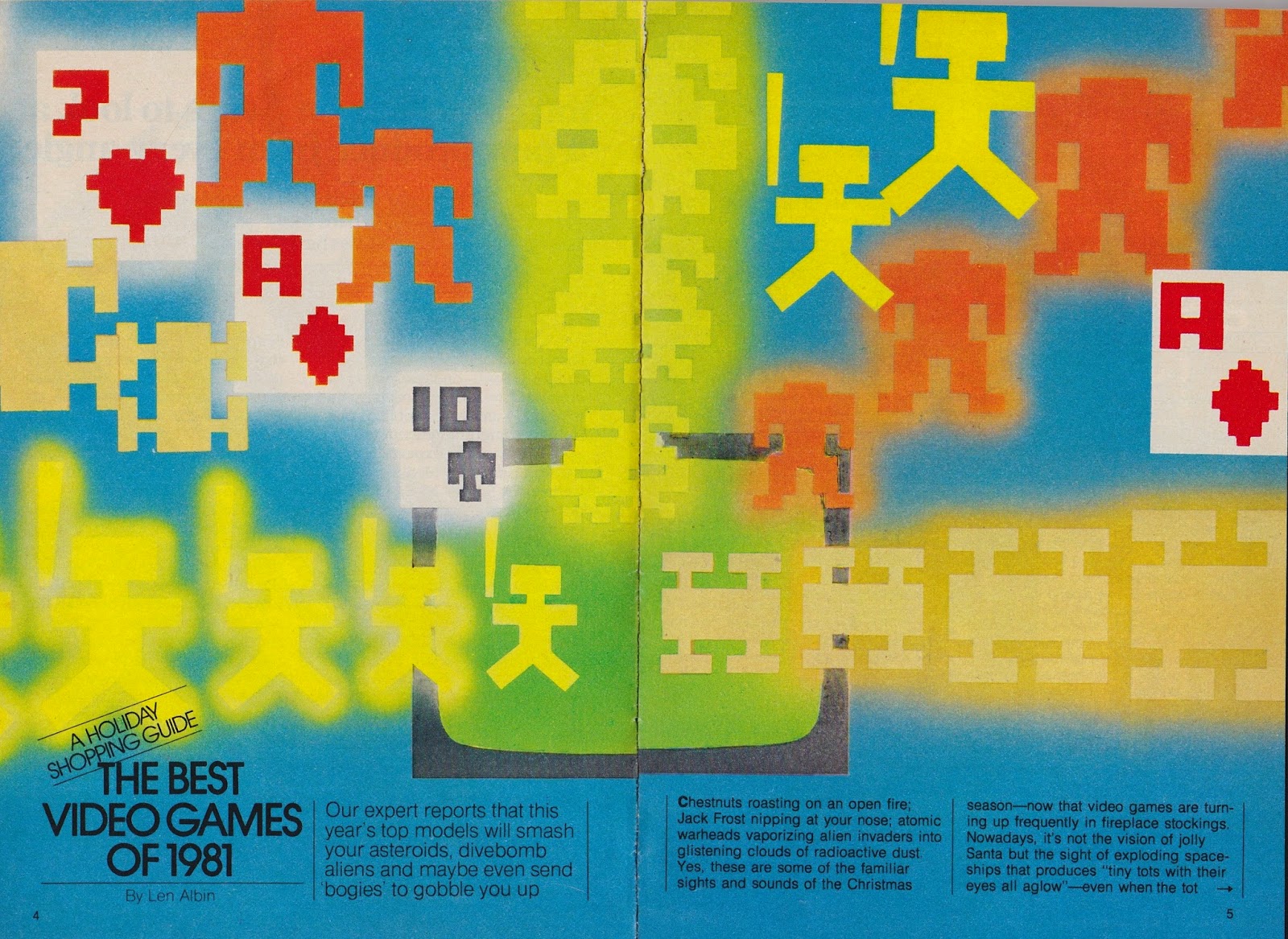
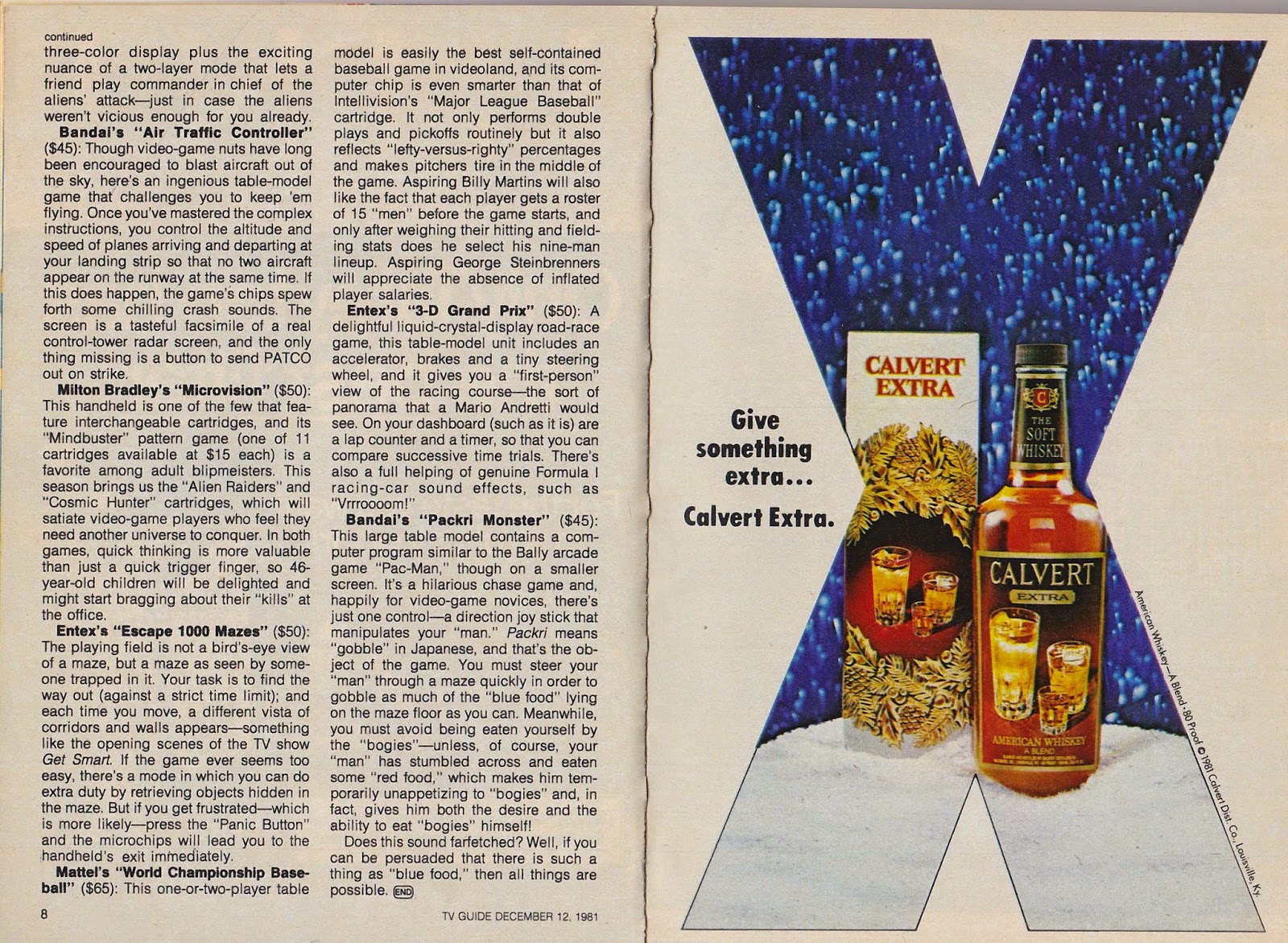
A Holiday Shopping Guide: `The Best Video Games of 1981′

TV Guide 1981-1

TV Guide 1981-2

TV Guide 1981-3

Last year I posted TV Guide’s “Best Video Games of 1982,” by Len Albin. Thanks to Tom at Garage Sale Finds, we now have the 1981 edition by the same author. Lots of handhelds listed here, including Galaxian 2, a great game from Entex that allows one person or head-to-head play, with one of the players controlling the dive-bombing aliens.

Also check out the hilarious 1974 Avon Catalog Tom found, from which you can order a Thirteen Original Colonies Pillow ($8.99), or Loop-A-Moose Game and Soap ($2.99).

Christmas Morning, 1977: Magnavox Odyssey 2000

Christmas Odyssey In Ink 1-3-78

The Odyssey 2000 (1977) was the 7th iteration of the original Odyssey, the very first home video game console, designed by Ralph H. Baer. As many of you have heard, Baer passed away on December 5th. Pong, though much more popular, was essentially a knock-off of the Odyssey’s Tennis game, and so the history of home consoles begins with Baer, not Bushnell.

The owl calculator is The Little Professor, a “learning aid” that presents mathematical problems for the user to solve. There’s an emulator, if you want to give it a go.


Pages

Archives

Categories

Donate Button

Join 1,118 other subscribers