Jr. Pac-Man came out in 1983. It was the 8th of 10 sequels. The maze was longer in Jr., and the screen scrolled to the left and right as you moved across it. That’s the edge of Super Pac-Man (1982, 3rd sequel) on the left.
The original Pac-Man (1980) revolutionized the industry because it was designed to appeal to all ages and sexes. Donkey Kong (1981) completed the democratization process, at least in terms of game play—the “story” was pure male fantasy, then and now the modus operandi of the gaming industry. Kangaroo (1982) is one of the many descendants of Donkey Kong.
The young lady here appears to be afflicted with that arcade-specific malady known as being out of quarters. I’d guess that only about 50% of my time in arcades was spent playing.
Despite the Pac-Man machines, I put the ad at around ’86 or ’87, when acid wash/stone wash and zippers hit it big with the sort of yuppies-in-training who wore Jordache.
The arcade background is curious, at first glance. Pac-Man (1980) and Ms. Pac-Man (1981) were old news by this time, and the rich kids hung out at arcades only to be seen by other rich kids. They didn’t want to get their hands dirty playing the games, and when they did stoop to put in a quarter, some arcade rat would smack his coin into the corner of the marquee and talk smack until the screen said `Game Over’.
Ultimately, the ad defines the arcade environment as a social advancement opportunity instead of a place of amusement and competition, and to this end it features a video game Jordache’s non-gaming clients would recognize. That game was, and still is, Pac-Man.
Miller’s Outpost would virtually abandon designer jeans shortly after this to concentrate on its home brand, Anchor Blue, and Levi’s.
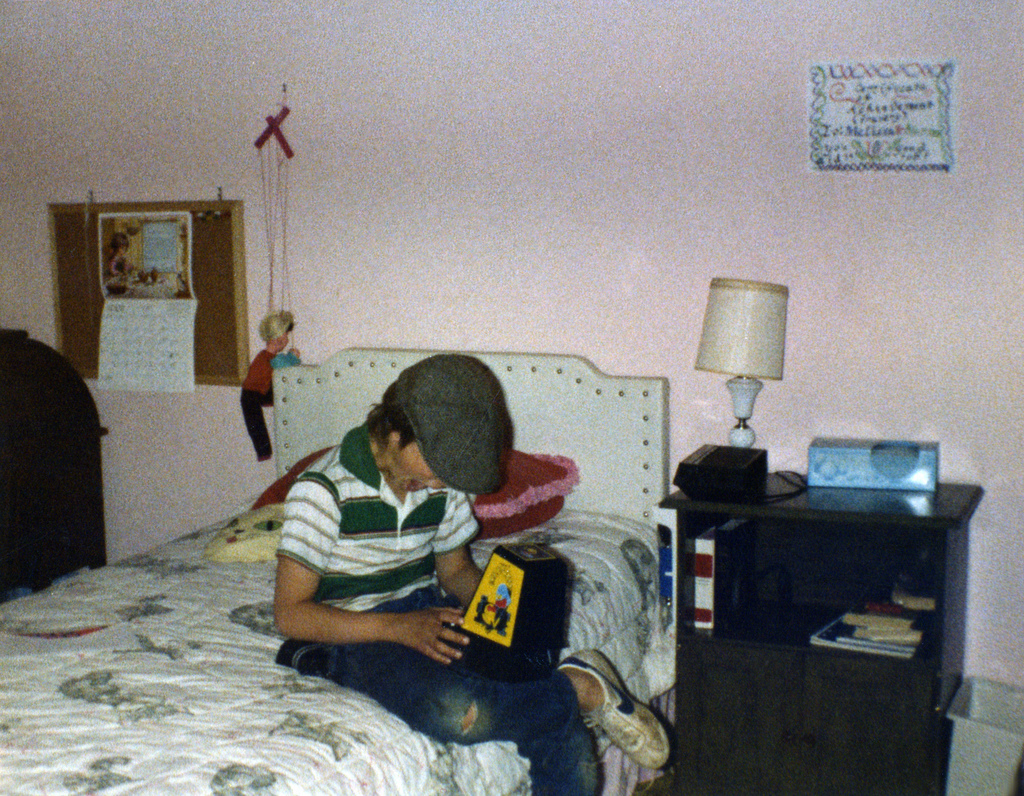
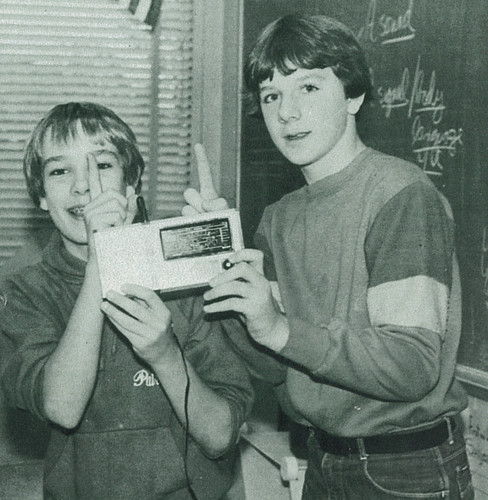
The first two photos are from Melissa Wilkins. That’s her in the first photo, and a neighborhood friend in the second. She describes the scenes here and here.
That’s Bandai’s Packri Monster in the last shot, a Pac-Man clone (duh). The photo is from jlkwak, who talks about the game and the kids who had it:
EVERYONE in the school wanted a shot at playing it. Students would literally line up in front of their table for a chance to play a round. These two fellows were the coolest kids in the middle school wing for a week.
I got my chance to play the game, once. Like the real Pac-Man, I was terrible. My turn was up very quickly.
Truth. The kids who owned these games were superstars, and turns were scarce and short.
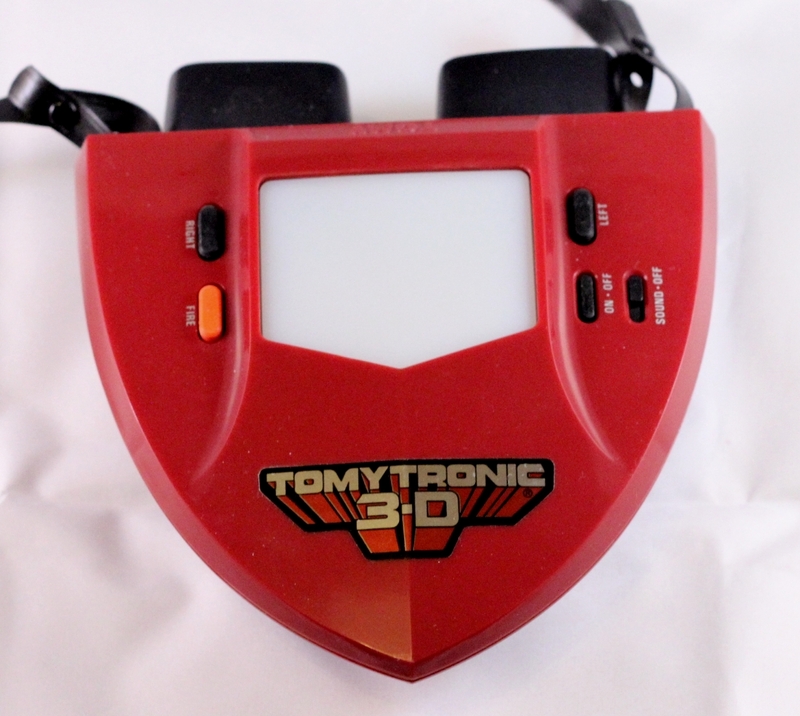
Tomytronic 3-D ranks very high up on my wanted-badly-but-never-got list. The games weren’t very good, in my opinion, but the gimmick was irresistible. For the very first time, kids could play a video game they didn’t own in complete privacy. It almost felt like we were doing something wrong.
At arcades there was always someone watching and/or waiting to play. Ditto for electronic handhelds on the playground. That sensation of always being watched, for me, was distracting. I wanted to explore whatever world the game was offering me alone and undisturbed. In retrospect, maybe it wasn’t a gimmick. Maybe the singular spaceship-binocular design was the game.
The downside was that every “pair of binoculars” was 30 bucks. That’s more than most of the non-brand LCD games, but almost $20 less than the big name tabletop arcade games. Here’s Tomytronic somewhat buried in the 1983 Sears Wishbook. I found nothing in the available 1984 catalogs.
There’s a good overview of the Tomoytronic 3-D system at Modojo that covers the privacy angle, along with technical details and individual games. And here’s a demo of Thundering Turbo. My favorite was Planet Zeon, the Star Wars clone, but the Tron-like Sky Attack was a close second.
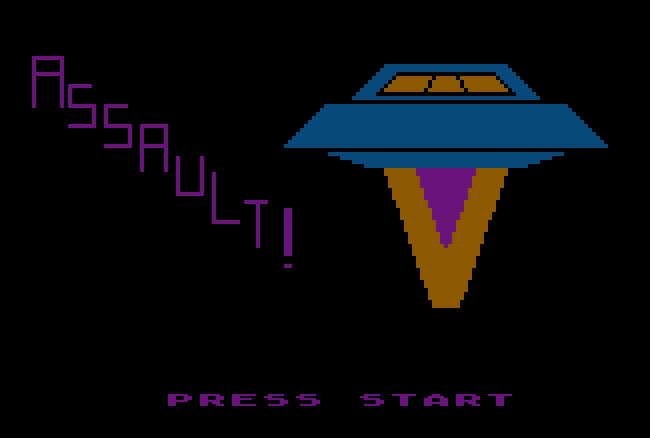
If you read my interview with Mikey Walters last month, you’ll know that he wrote an Atari BASIC game called Space Assault in 1983 that was published in A.N.A.L.O.G. magazine.
Well, Lefty Limbo and I basically begged him to get it up and running again, so he retyped all that code, plugged it into an emulator, and bam!—the Clovis Aliens are back!
I’d say we were all in the process of kicking old school alien ass (last I heard, friend J. was up to 8500 points), but in my case, the aliens are the ones doing the ass-kicking. That’s okay. The ‘Game Over’ music is so cool, I don’t really mind.
If you want to give the game a try (you really should), send me an email and I’ll pass along the game file and instructions.
A profound thanks to Mikey for giving us back a piece of 1983, and for being awesome enough to create the game in the first place.
You can see more Space Assault screenshots on his Flickr.
A really interesting early example of the arguments for and against video games, and some good arcade footage to go with it.
Ronnie Lamm, President of the Middle Country PTA Council in Long Island, received national attention at the time for convincing the residents of Brookhaven to issue a 6-month moratorium on the issuance of game permits. If she’d had her way, video games would have been banned completely.
I found some good stories on her “crusade” at the Pittsburgh Post-Gazette (July 22, 1982) and two issues of the Spokesman-Review (January 16, 1982 and June 8, 1982). She calls the games “definitely addictive” and “not wholesome,” and says the proliferation of arcades leads to an increase in robbery and drug trafficking.
In the video, she laments that when kids go to the store to pick up something for school, they drop the leftover change into a game instead of bringing it home. Her solution: get rid of the games.
Another parent complains that his son took money in advance from his paper route to play games. His solution: take away the kid’s paper route.
One of the managers and part owners of Foosball World, soft-spoken Diane Lacicero, dispatches them easily with a small dose of common sense: “You can’t expect the game room to be at fault because they [parents] don’t have the control that they should have.”
I’m not all that convinced that arcades kept kids away from drugs and other nasty habits, or that they “discharge” violent feelings, but they sure did give us a place to be with others our own age in a non-school environment. They were little communities, with a special set of rules, and we had to learn how to function within them.
Kids have nowhere to go anymore partly because of people like Ronnie Lam. As a society, we no longer raise our children as adults-in-training, giving them the independence they need to learn how to act independently and handle tough situations. Instead, we’re raising them to be codependent, inflated, and entitled.
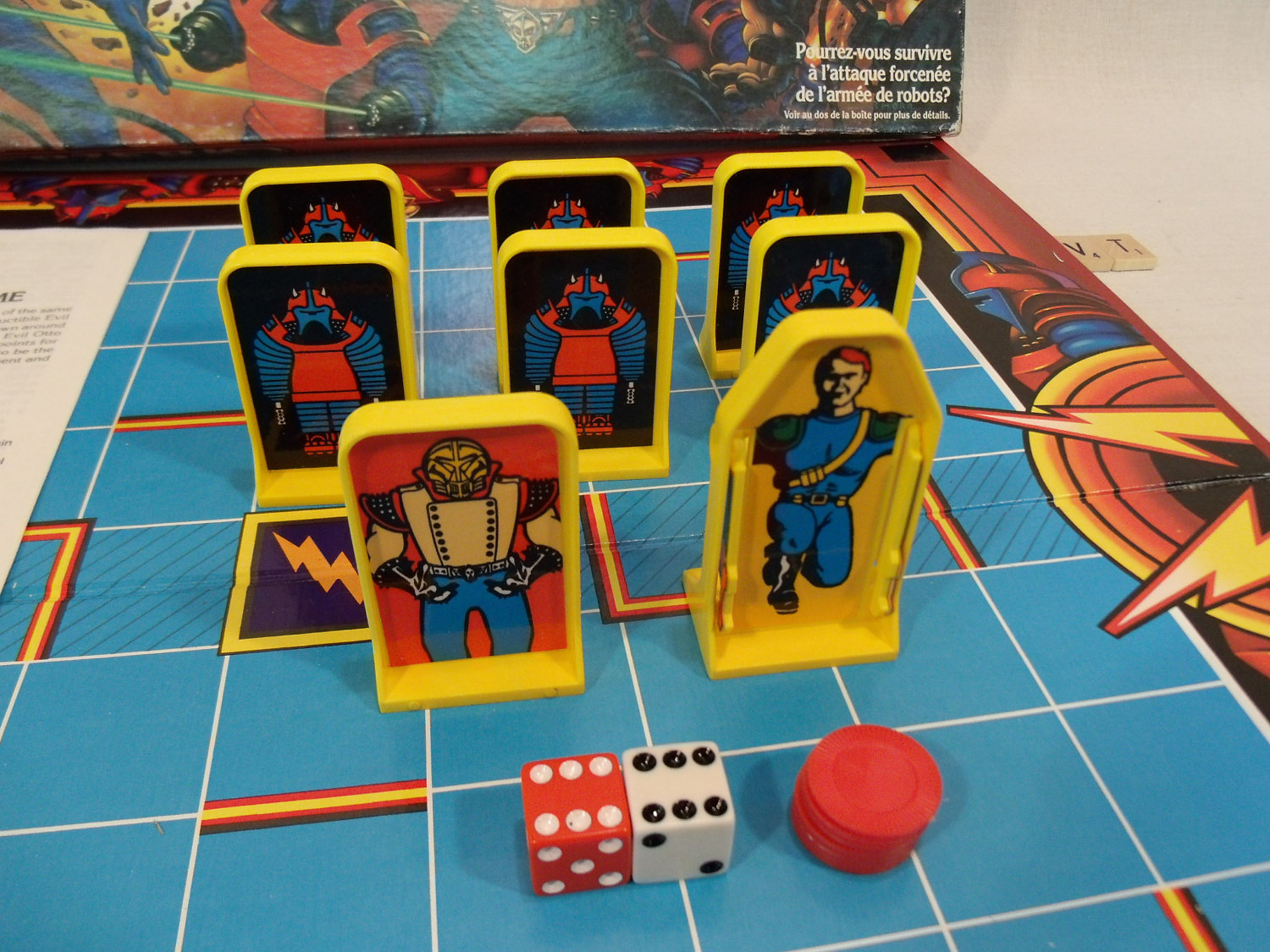
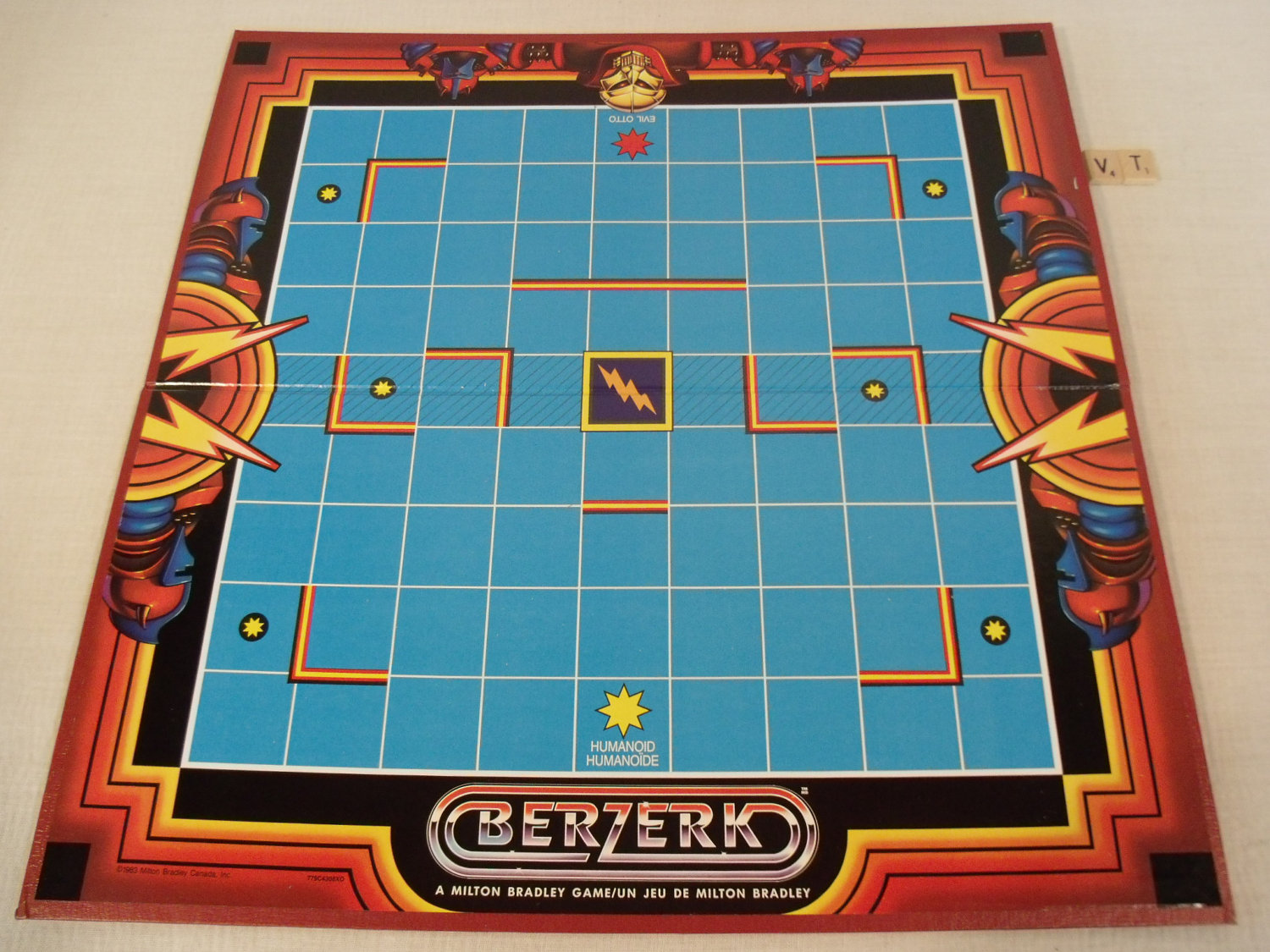
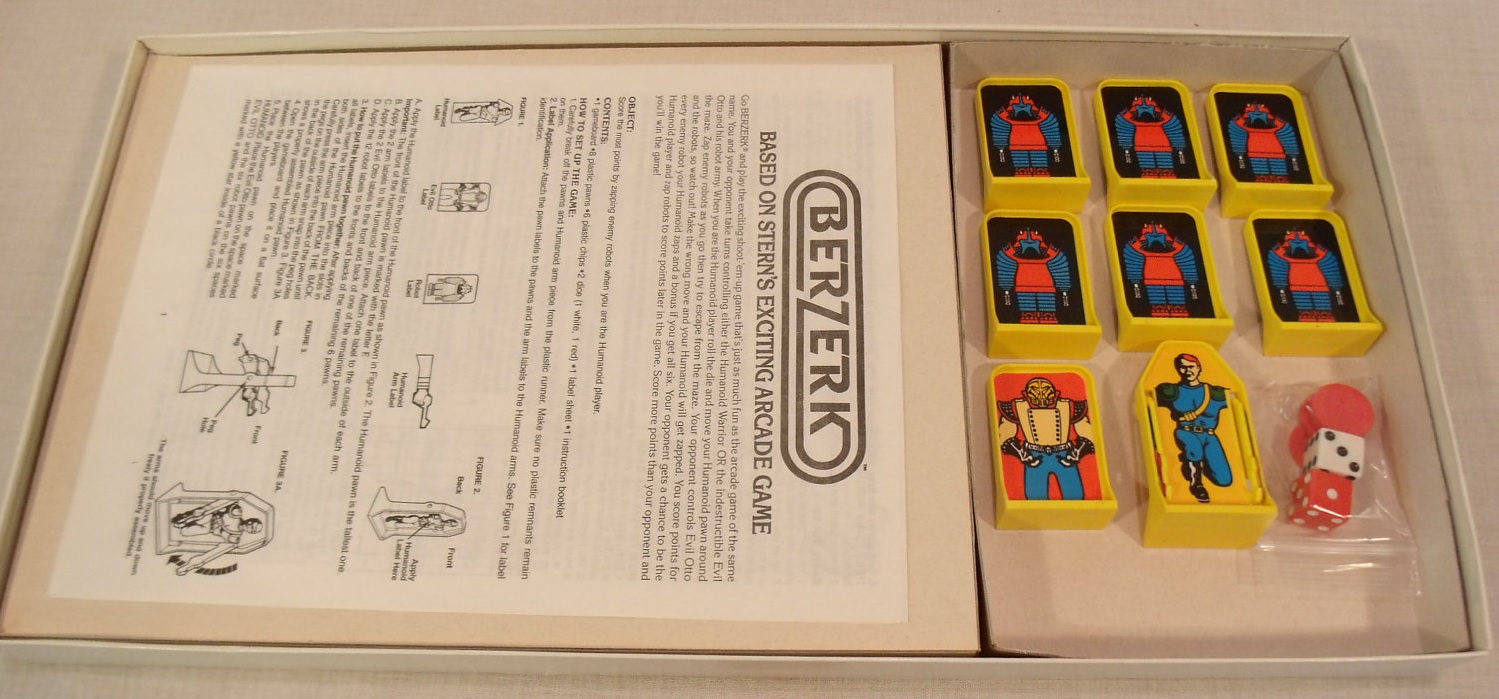
I know pop culture treasure when I see it. Look at that cover art! From the inside of the box: “Go BERSERK and play the exciting shoot-em-up game that’s just as much fun as the arcade game of the same name…”
You “shoot” your opponent by pressing down on the back of the game piece, activating laser-toting arms that swing up to knock over the enemy. (See a close-up detail of the maneuver in the last photo.)
Even though I’d love to play the game now, or at least sit down and analyze it as if I were a paleontologist and it were a well-preserved Velociraptor skeleton, in 1983 it would have been a far distant second to Berserk on a console or in an arcade. Hell, Berserk was already three years old in ’83, so I would much rather have been playing Atari’s Star Wars or, if I could find it, Discs of Tron.
And that’s what’s so curious. Themed tabletop games were meant to extend the experience of the product they referred to (i.e. The Black Hole: Space Alert Game or Star Wars: Escape from Death Star Game), but Stern’s Berserk, like nearly all Golden Age video games, had no real story or environment or universe to extend—the joy was only in playing for as long as possible. Berserk had no franchise, either, unlike Pac-Man, Donkey Kong, or Frogger, all of which had board games (and cartoons, etc.) named after them.
Tabletop games are making a comeback today, thanks in part to a diversifying gaming culture (inspired and celebrated by Wil Wheaton’s Tabletop), and thanks in part to the exhaustion starting to creep into our eyes and brains from staring at screens for so many hours every day.
It’s nice to see and touch a real game board and sit next to people in physical space. It’s nice to talk to the people you’re sitting next to, not just about the game you happen to be playing, but about whatever comes to mind as you all sit there together feeling grateful that you have the friends you have and that you’re able to be together once in a while, even if it’s only for a few hours.
Incidentally, Milton Bradley’s Berserk isn’t even listed on Board Game Geek.
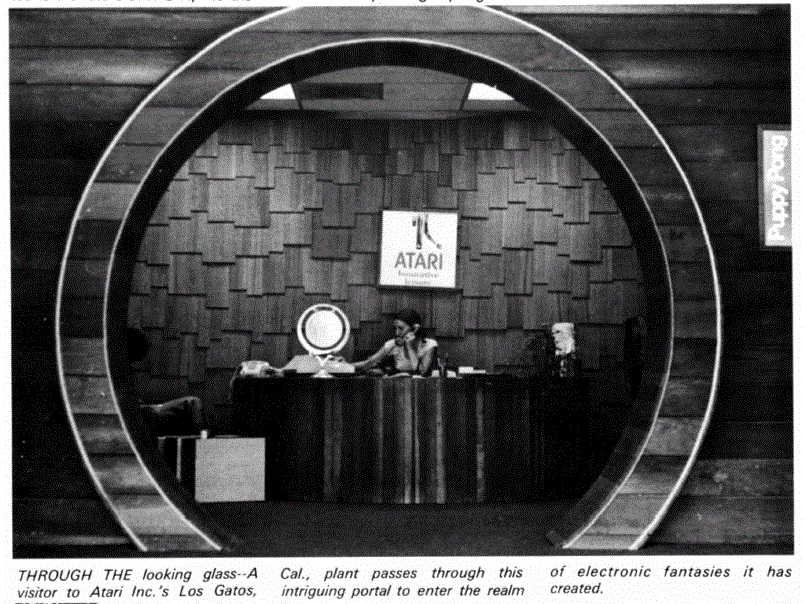
I found this gold at The Golden Age Arcade Historian, a new blog “dedicated to the history of arcade video games from the bronze and golden ages (1971 – 1984).” The photos are from one or more 1975 Play Meter magazines. Puppy Pong—you can see the edge of the poster to the right of the “intriguing portal”—refers to a cutesy table top version of Pong.
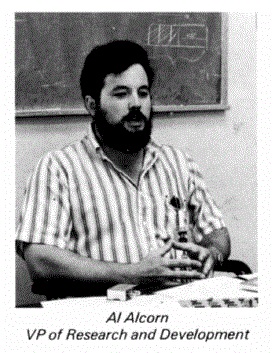
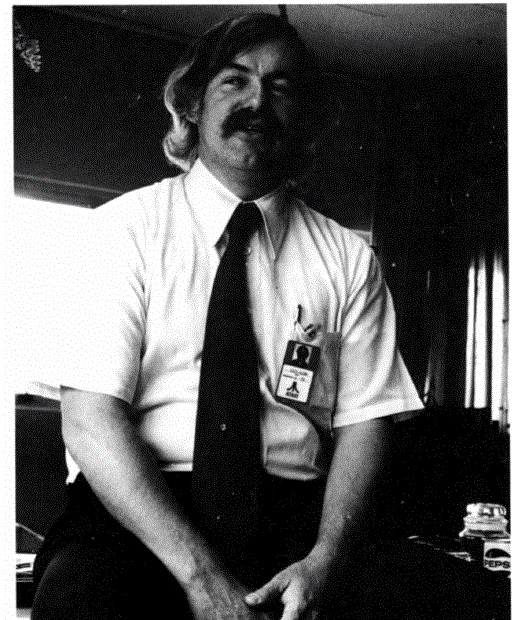
Speaking of Pong, Al Alcorn designed it. Not a bad accomplishment to put on your resume. The second guy is Joe Keenan (check the old school Pepsi can on his desk), who became president of Atari through a twist of irony. From Mental Floss:
Pinball distributors in the 1970s demanded exclusive deals for products before they would sign contracts. This would have impeded Nolan Bushnell’s ambitious plans to establish an entire industry. To get around the exclusivity requirements, Bushnell and his neighbor, Joe Keenan, secretly formed a second company that would “compete” against Atari, selling slightly modified Atari games to other distributors. They called it Kee Games. Ironically, Atari would later run into management trouble, while Kee Games continued operating smoothly and successfully. As a result, Joe Keenan was brought to Atari and promoted to president of the company.
Nolan Bushnell (third guy pictured) was, of course, the co-founder of and mastermind behind Atari. He looks kind of like a union boss in this photo. I feel like there’s a lit cigar perched on a 10-pound orange ashtray just off camera.
And here’s a February, 1973 Boston Herald article about Atari and the release of Pong.
Keith Smith, who writes The Golden Age blog, notes that Syzygy (an awful name thankfully scrapped because a hippie candle company was using it) had incorporated under the name Atari in 1972. (The article incorrectly refers to Atari co-founder Ted Dabney as Fred Dabney.)
I love how Bushnell describes the business: “leisure applications of technology.” He hoped that people would “stop for a game… and become hooked into dropping coin after coin into the slot…” I’d say things worked out pretty well for the leisure applications, slotted to become an $82 billion industry by 2017.
If you own the copyright to any of the material on this site and would like said material to be removed, please contact 2warpstoneptune [at] gmail [dot] com.


















 2 Warps to Neptune