

Archive Page 115

Boys Reading Comic Books (1970, 1973)

boys reading comics 1970

Miamicon, December, 1970. (Photo: The Miami Herald)

boy reading comic 1973

January 20, 1973. (Photo: Unknown)

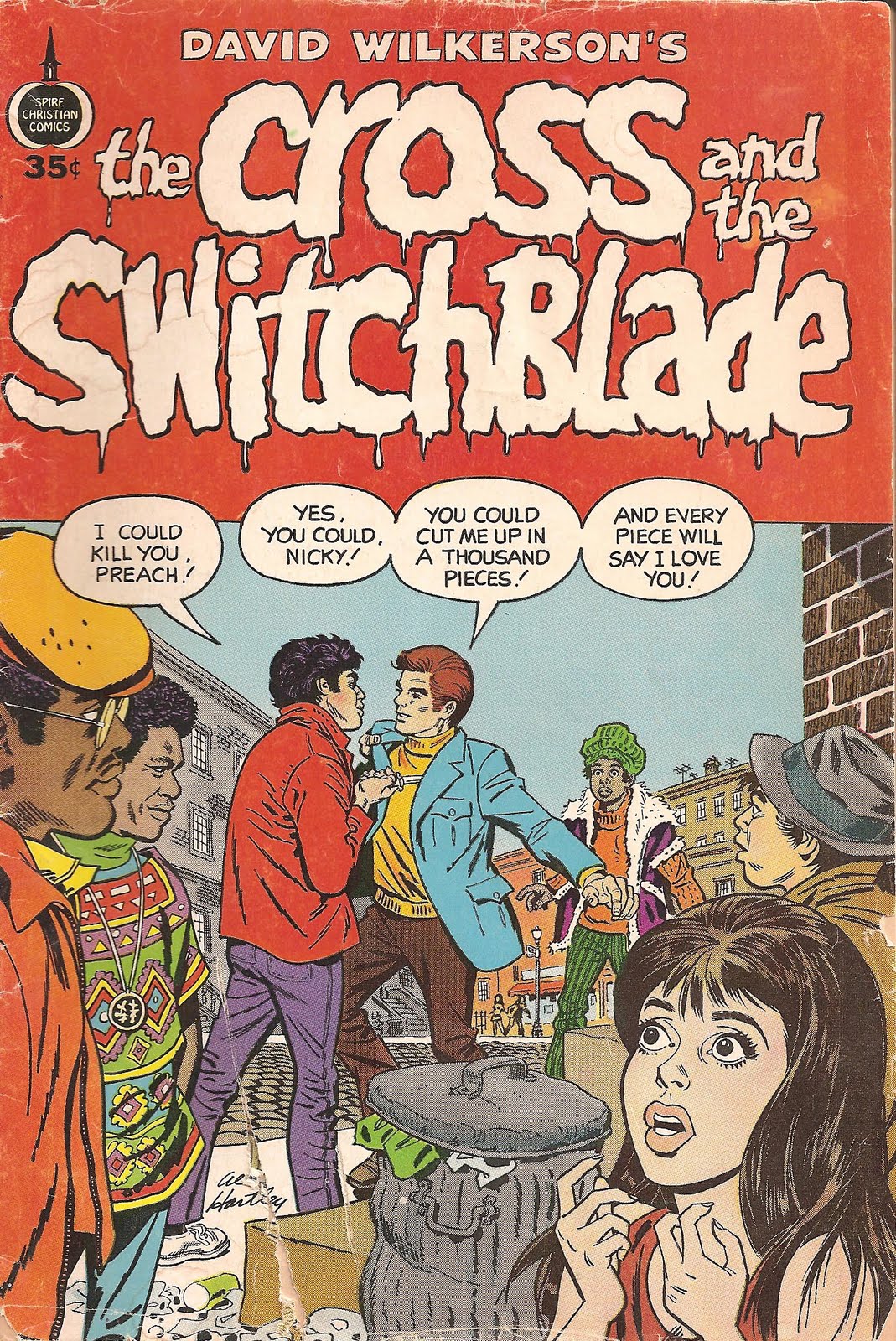
c&s comic

From Wikipedia:

The Cross and the Switchblade is a book written in 1962 by pastor David Wilkerson with John and Elizabeth Sherrill. It tells the true story of Wilkerson’s first five years in New York City, where he ministered to disillusioned youth, encouraging them to turn away from the drugs and gang violence they were involved with. The book became a best seller, with more than 15 million copies distributed in over 30 languages.

The comic book adaptation came out in 1972. I’m not so sure even one of the good pastor’s thousand pieces would be able to say I love you, but it’s the thought that counts.

(Images via Seattle Washington Archive/eBay and The Haunted Closet)

These High School Students Dare You to Mess with Their Apple II (1983)

apple II 1983

Cherry Creek High School, Englewood, CO, 1983. (Photo: Denver Post/Aaron E. Tomlinson)

Actually, these dudes are editors of the school paper, the Union Street Journal, after winning an award from the Columbia Scholastic Press Association. I love it when nerds try to look tough.

(Photo via Lexibell/eBay)

Skateboarding in the Suburbs, 1977

skateboarding 1977

February 11, 1977. (Photo: The Denver Post)

(Photo via Big Ole Photos/eBay)

TV Guide Ads for TV Movies (1978 – 1980)

bermuda depths ad 1978

ivory ape ad 1980

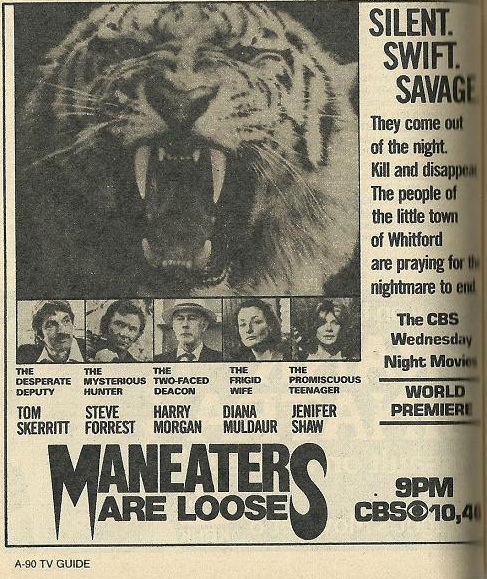
maneaters ad 5-2-78

sos titanic ad 1979

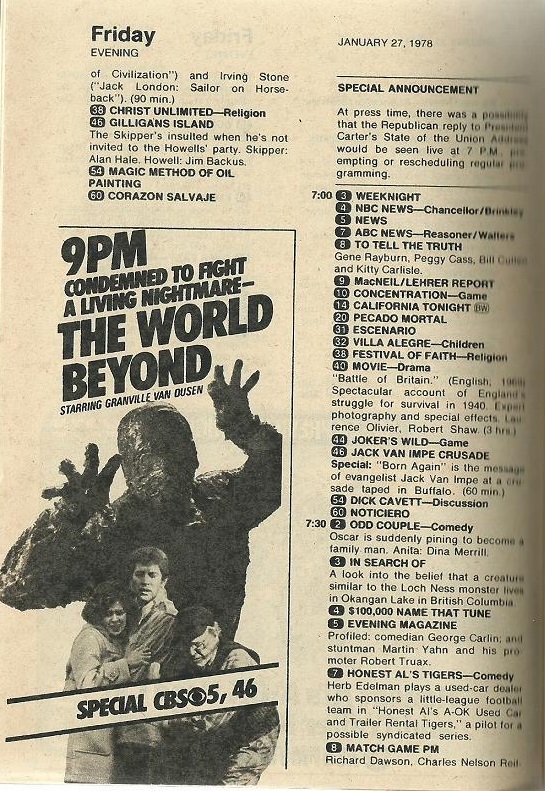
world beyond ad 1978

This might be a new regular feature. Made for TV movies were a big, big deal from the late ’60s through the mid-1980s. Even after cable was introduced, most people couldn’t afford it, so we depended on TV fare and older theatrical films that could be purchased relatively cheaply by the networks.

The Bermuda Depths premiered on January 27, 1978. Carl Weathers is the only name I recognize in the cast.

The Ivory Ape premiered on April 18, 1980. Jack Palance plays the big-game hunter hired to dispose of the escaped ape.

Maneaters Are Loose! premiered on May 3, 1978. Man-eating tigers terrorize a small California town! Star Trek‘s and Star Trek: TNG‘s Diana Muldaur plays “the frigid wife.”

S.O.S. Titanic premiered on September 23, 1979. I’m 100% certain that the two-page spread is more exciting than the movie.

The World Beyond premiered on January 21, 1978. I put this one in my YouTube queue because of the IMDB description: “A golem made of mud terrorizes a couple on a remote Maine island.” Sign me up. There’s a “Special Announcement” at the top right of the page warning of a possible preemption of normal programming due to the Republican response to President Carter’s State of the Union address.

(Images via eBay’s Cool Canoga, Randy Rodman, and Nostalgic Collections)

D&D Cover Art: Desert of Desolation (1982 – 1983)

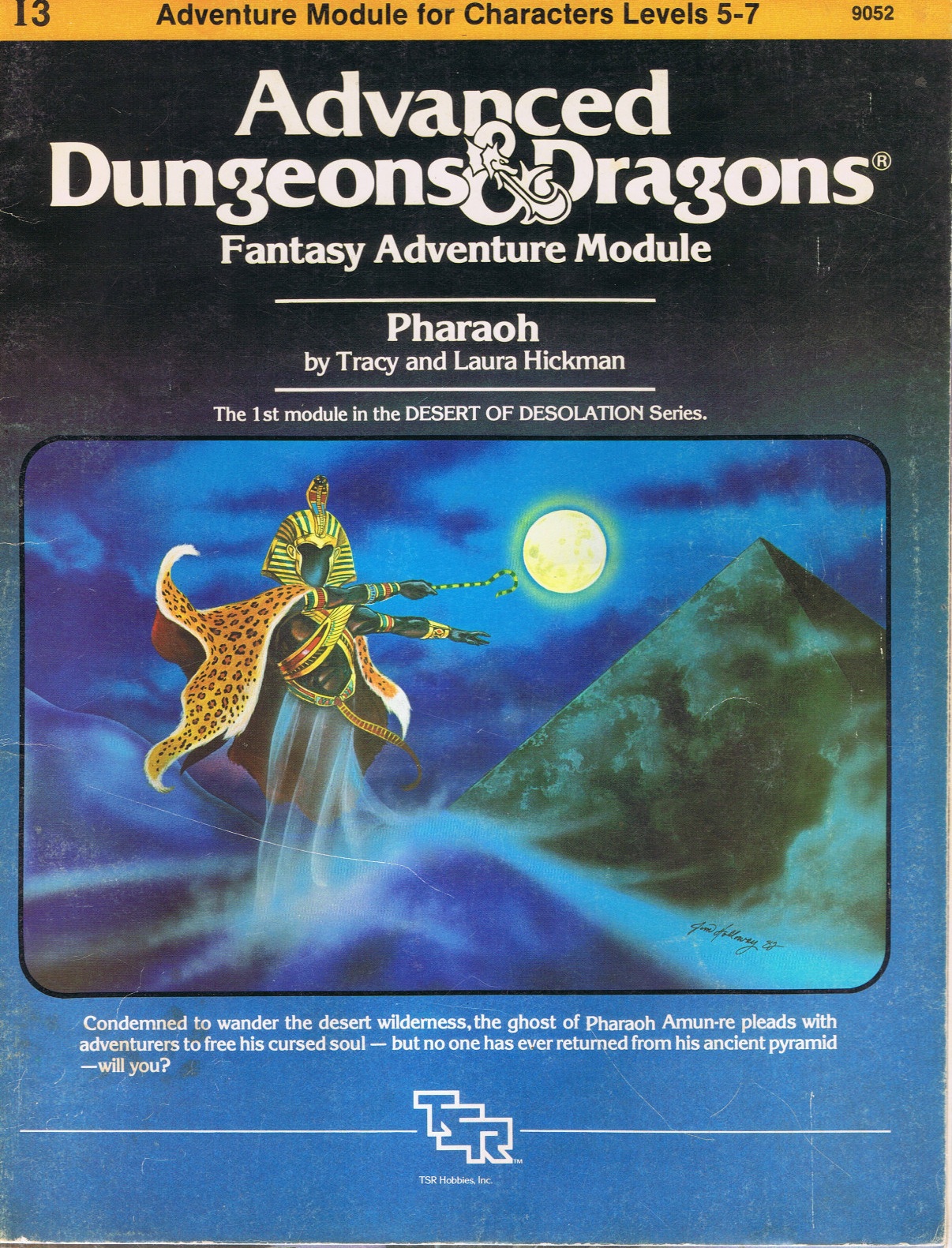
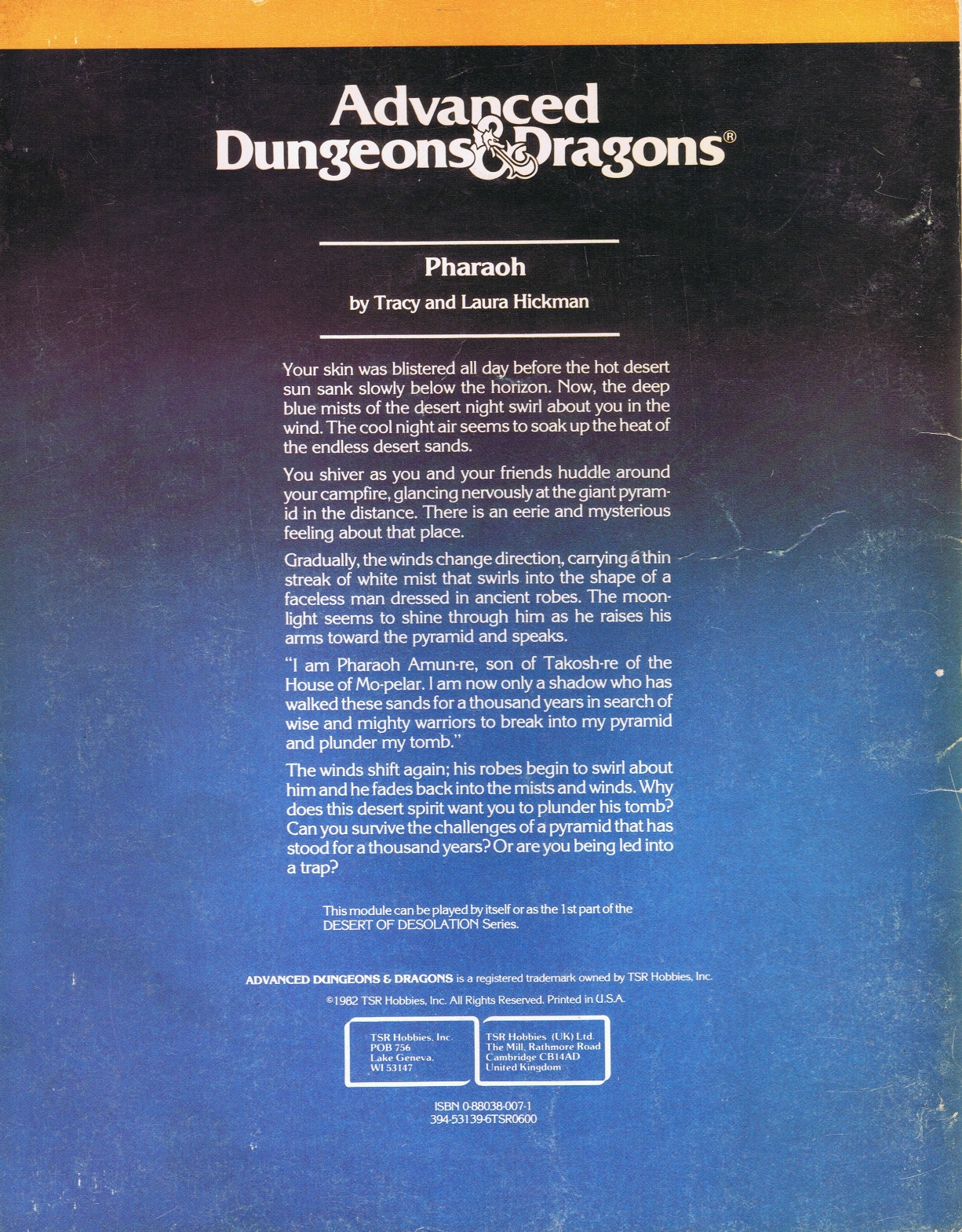
Pharaoh FC 1982

Pharaoh BC 1982

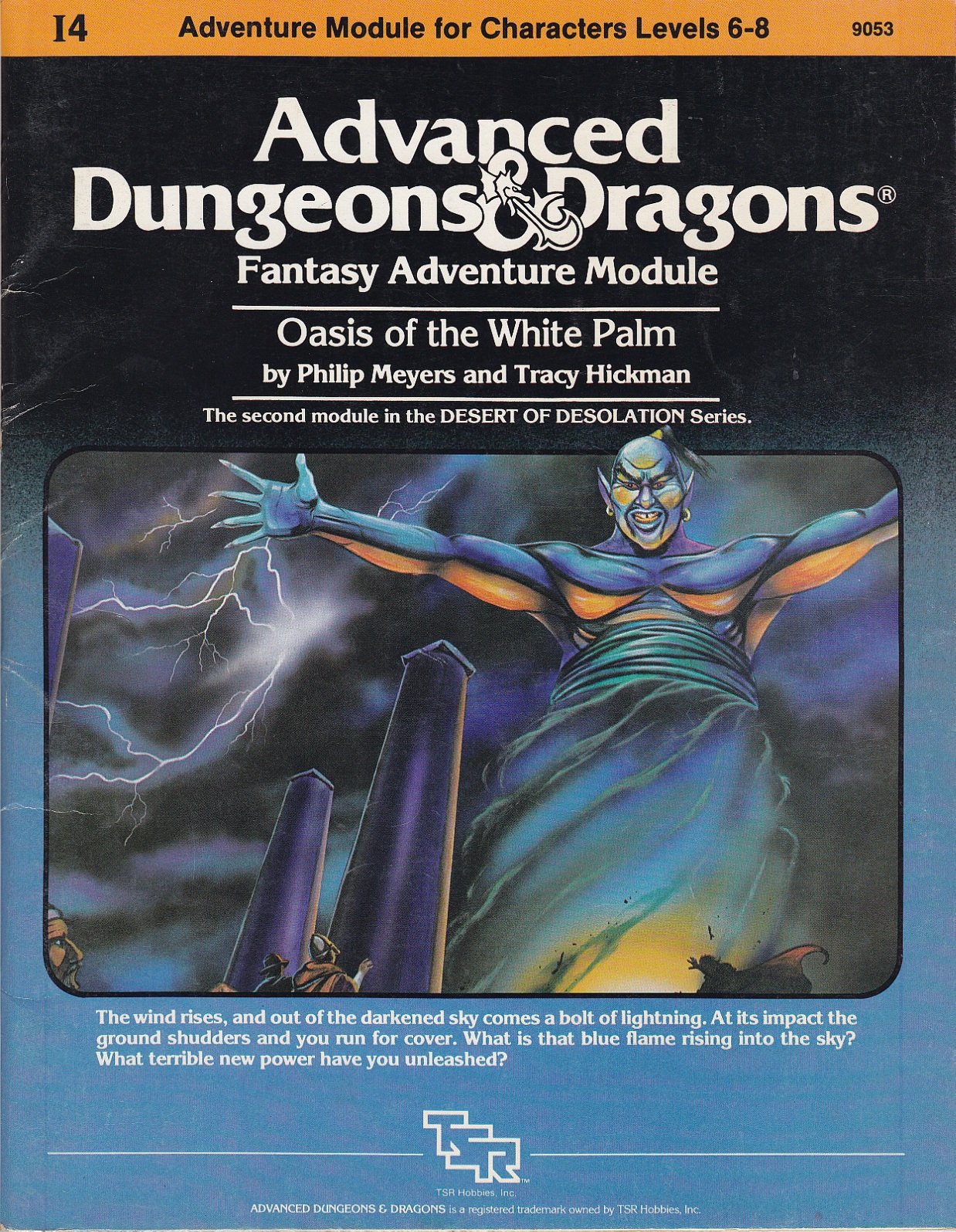
Oasis of the White Palm FC 1983

Oasis of the White Palm BC 1983

Lost Tomb of Martek FC 1983

Lost Tomb of Martek BC 1983

desert of desolation 1987

desert of desolation-2

The Desert of Desolation series included Pharaoh (1982), Oasis of the White Palm (1983), and The Lost Tomb of Martek (1983). They were all written or co-written by Tracy Hickman, who co-wrote the original Dragonlance trilogy. The exotic, uncanny module covers are by Jim Holloway.

The modules were released as a compilation, “reworked to fit into the Forgotten Realms setting,” in 1987. The compilation cover is by Keith Parkinson, whose first work for TSR appears to have been interior art for Oasis of the White Palm. Parkinson, with Larry Elmore and Jeff Easley, did much to define the polished, epic look of D&D in the mid-’80s. Here’s a painting I remember well. (See more cool Dungeon covers here.)

dungeon parkinson

Parkinson died of leukemia in 2005. He was only 47.

G.I. Joe Defiant: Space Vehicle Launch Complex (1987)

g.i. joe catalog ad 1987

This thing might be more obnoxious than the U.S.S. Flagg, but I’ll take one if you have an extra. See specs and views at Yo Joe! The commercial is below.

Great Bad Trailers for Great Bad Movies: The Beastmaster (1982)

Yeah, I just transcribed the entire voice-over for you. Please do me the favor of passing it along and sprinkling phrases of it into your everyday conversation. For example, if your coworker Bruce says, “I can’t stand this goddamn job and I think my wife is sleeping with a man who wears a ponytail,” you say: “Bruce, you really need to conquer your fears, face the unknown, and discover the incredible link between man, animal, and all that is phantasmagorical.”

It was foretold by witches. It was conceived through sorcery. And it was to be destroyed by all that is evil. But the courage of one mortal saved it.

And so, into an age of darkness, in a time of mysticism, sacrifice, and plunder, there came the only light… THE BEASTMASTER.

Born with the strength of a black tiger, the courage of an eagle, the power that made him more than any hero… more than any lover.

He was lord and master over all beasts. (AAAAAWWK). He was THE BEASTMASTER.

Behold the wonder, the horror, the fantasy, the challenge of the one warrior they called… THE BEASTMASTER.

Marc Singer is Dar. Tanya Roberts is Kiri. Rip Torn is Maax. John Amos is Seth. Together they take us on a fascinating journey back into unexplored times.

Conquer your fears. Face the unknown. And discover the incredible link between man, animal, and all that is phantasmagorical.

In the world of dungeons, dragons, and Dar: THE BEASTMASTER: The epic adventure of a new kind of hero.

Woman’s Day Magazine’s Star Wars Playset Designs (1978, 1980)

SW WD

SW WD-2

SW WD-3

SW WD-4

SW WD-5

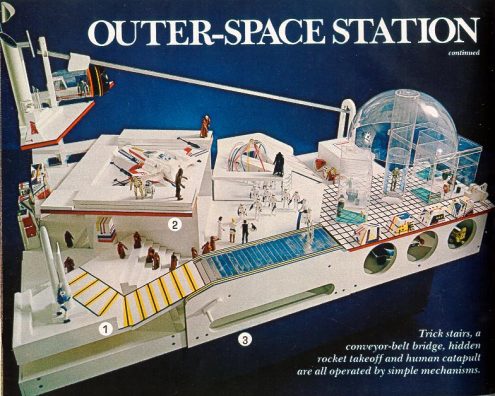
If you had told me last week that Woman’s Day magazine and Star Wars had something in common, I would have fallen on my lightsaber. Now I know better. Two issues of the magazine (November, 1978, and November, 1980) featured intricate, Star Wars-themed playset designs and do-it-yourself instructions. Actually, the Outer-Space Station from the first issue doesn’t mention Star Wars specifically (note the Micronauts stuff in the second photo), but it looks incredible nevertheless.

The instructions were ridiculously complicated. Here’s how we’re told to assemble the Solar Power Unit of the Space Station:

Materials 1/2″x24″x30″ plywood; 3/4″x12″x30″ plywood; 1″x1″x20″ pine; 1/4″x12″x24″ mirrored acrylic; 18″x36″ plastic-laminate; 12′ of 1/8″-diam. plastic aquariam tube; 18″ of No. 18 soft steel wire; 36″ of 1/4″-diam. clear acrylic dowel; 18″-wide acetate strips, 1′ each of pink, yellow, green and blue.

From 3/4″ plywood, cut pieces A, B, C and D (all 4′ high), with mitered sides following Top View diagram. Also cut 2 triangular sides and cross support for the heat (or sun) collector. From 1/2″ plywood, cut long outer side and base. Drill for acrylic pegs.

Assemble sides around base with heat collector parts. Paint edges and sides that will be visible. Laminate outer surface of outer side. Cut 1/4″ acrylic mirror: for sides with mitered corners, and for heat collector with top and bottom to fit. Sand cut edges to remove saw cuts, which will reflect in mirrors. Cut top (catwalk) and laminate. Glue mirrors and top in place.

Cut acrylic dowel pegs; insert in base holes. Cut plastic tubing for each pair of pegs. Cut colored acetate in 1/4″ strips (3″ shorter than its tube), slip into tubes and place tubes on pegs.

Trim frame pieces for heat collector from 1/2″ stock. Assemble with glue, pressing pieces together; paint. Glue frame in place with many dots of glue.

Cut and bend wire for ladder rungs. Place tape over acrylic and mark rung holes. Drill holes, remove tape and insert rungs.

Are you shitting me? Apparently the Woman’s Day editors realized that no one could actually build the Space Station, because the Empire Strikes Back sets (Hoth and Dagobah) were a bit more manageable—for someone with an endless supply of dedication and patience.

Speaking of which, I found evidence of only one of the sets completed back in the day. (Click to enlarge.)

Star Wars Stuff Spread

According to Alicia Policia on Flickr, her mom made the Hoth set between Thanksgiving and Christmas in 1980, when Alicia’s brothers were at school and Alicia, then 2 months’ old, was napping.

Ron Salvatore discusses the sets in length at the Star Wars Collectors Archive (part one here, part two here). The original instructions are posted as well. All Woman’s Day images are from Salvatore’s articles.

The Space Art of John Berkey

berkey 2

berkey 7

berkey 9

berkey 5

berkey 3

berkey

berkey 6

berkey 4

My favorite artist is J.M.W. Turner (1775 – 1851), a Romantic landscape painter and watercolorist known for his impressionistic use of light and color. John Berkey (1932 – 2008) is the Turner of the late 20th century.

Turner emphasized the terrible grandeur and capriciousness of nature, while Berkey depicted humanity’s attempt to tame that fickle grandeur through technology. Turner, like the nature he portrays, is indifferent to human beings. They are too small. In Berkey’s visions, humanity has been resurfaced, enlarged and prolonged by mechanization but also defaced by it, in effect dehumanized by the mortal impulse to break orbit and touch the infinite, to get out of the here and now.

Turner’s work revolves around the sun and contends with the interplay of light and fire with smoke and fog, storms and dust clouds. Berkey’s massive, eloquent spacecraft are self-lighting candles in the interstellar bleakness, slight visitations on a nearly universal blankness. There is a fundamental loneliness in the work of both artists. Turner’s burning skies and Berkey’s eerie ships are so lastingly sublime because the people under them and inside them are not.

Below are Turner’s famous The Fighting Temeraire tugged to her last berth to be broken up (1839) and Berkey’s Intrusion, an Unpleasant Visitor (1990). The similarities, to me, are remarkable.

fighting temeraire

berkey 8

Berkey claimed that he wasn’t a fan of science fiction because “It isn’t literature.” The statement doesn’t surprise me. He’s a Romantic in the grand tradition, and if he had depicted subject matter deemed “fine” and “high” enough (a giant dachshund, for example, or a hairy butt) by the snobs who write art columns and control art galleries and museums, he would be revered today as one of the greatest American artists of his time.

Read a 2005 interview with Berkey at City Pages.

The official website of the John Berkey Estate is here.

(Berkey images via Astrona; Turner image via WikiPaintings)

Living Room, 1978

living room 1978

Rule number 7 in the 1970s handbook: You must own and wear at least one pair of cut-off jean shorts.

Rule number 26 in the 1970s handbook: You must own and wear at least one shirt with `California’ written on it.

I dig the minimalist Del Taco logo, seen better below via mojavegirl/Flickr.

del taco logo

(First photo via Dad’s Vintage Store/eBay)


Pages

Archives

Categories

Donate Button

Join 1,118 other subscribers