

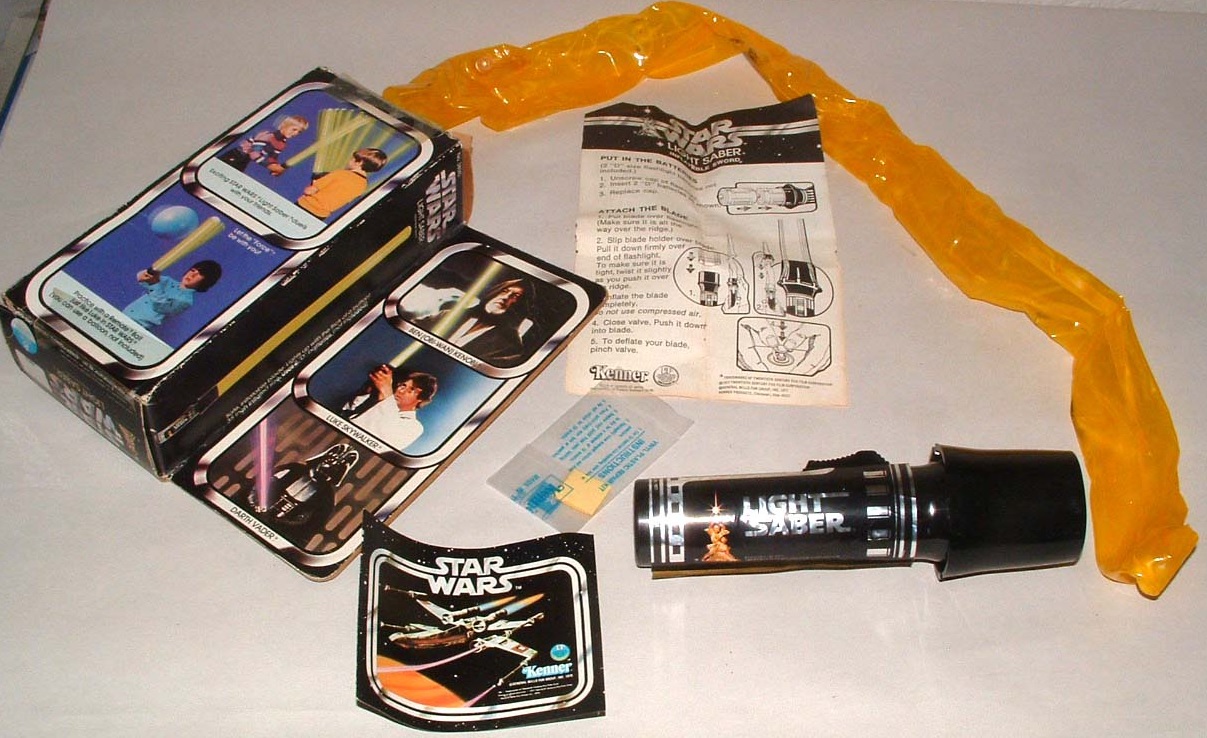
It looks so sad when it’s deflated.
Was there really a “Remote Ball” (bottom left panel in the second photo)? Is that what’s in the commercial below, or are those just balloons?
Surveying the Gen X landscape and the origins of geek
It looks so sad when it’s deflated.
Was there really a “Remote Ball” (bottom left panel in the second photo)? Is that what’s in the commercial below, or are those just balloons?


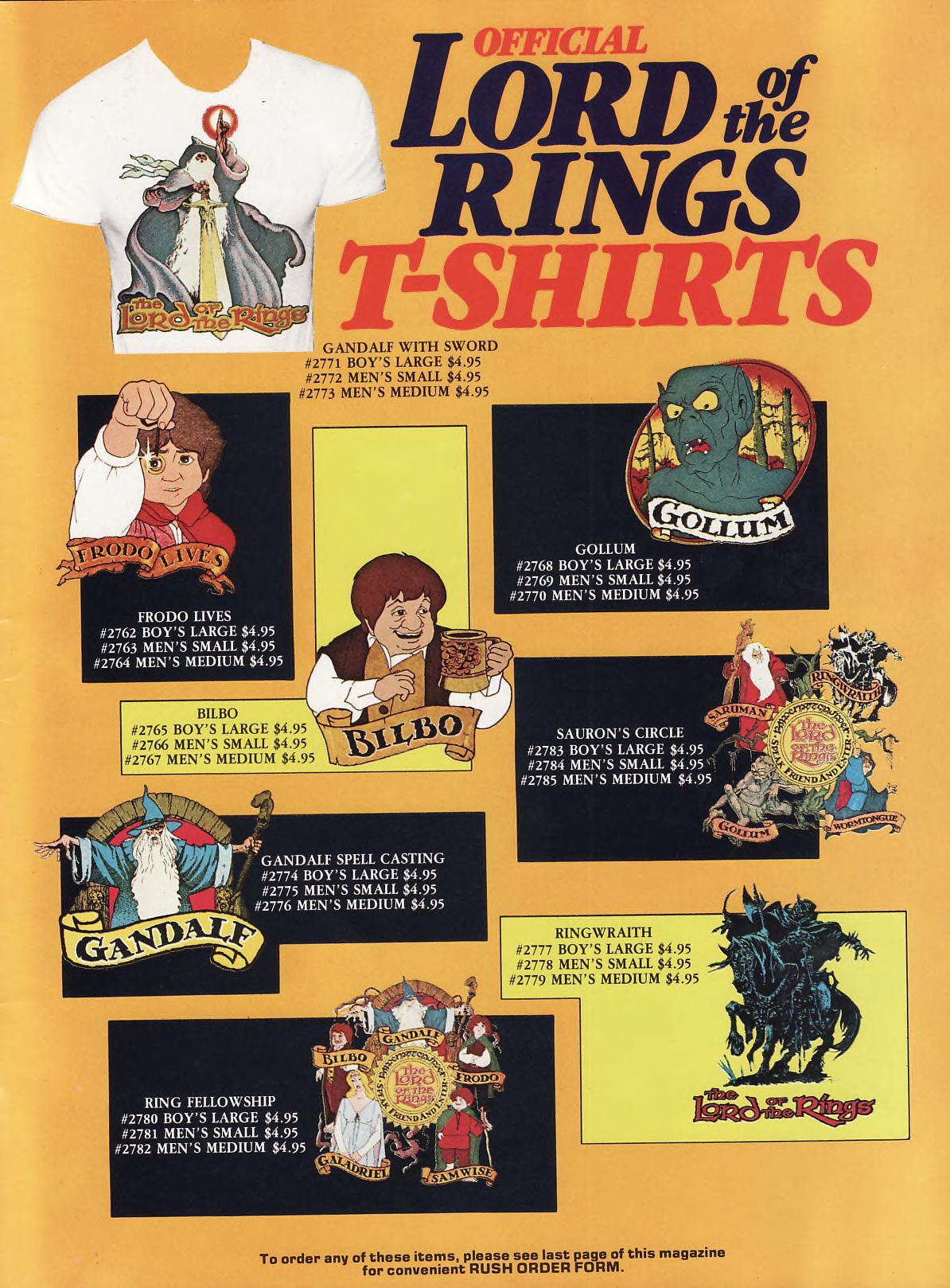

Don’t you wish you could thumb through the whole mag, written by the delightfully weird Forrest J. Ackerman? Oh, wait. You can.
If you think the Lord of the Rings “sculpture banks” are an odd choice for merchandise, wait until I post the finger puppets.
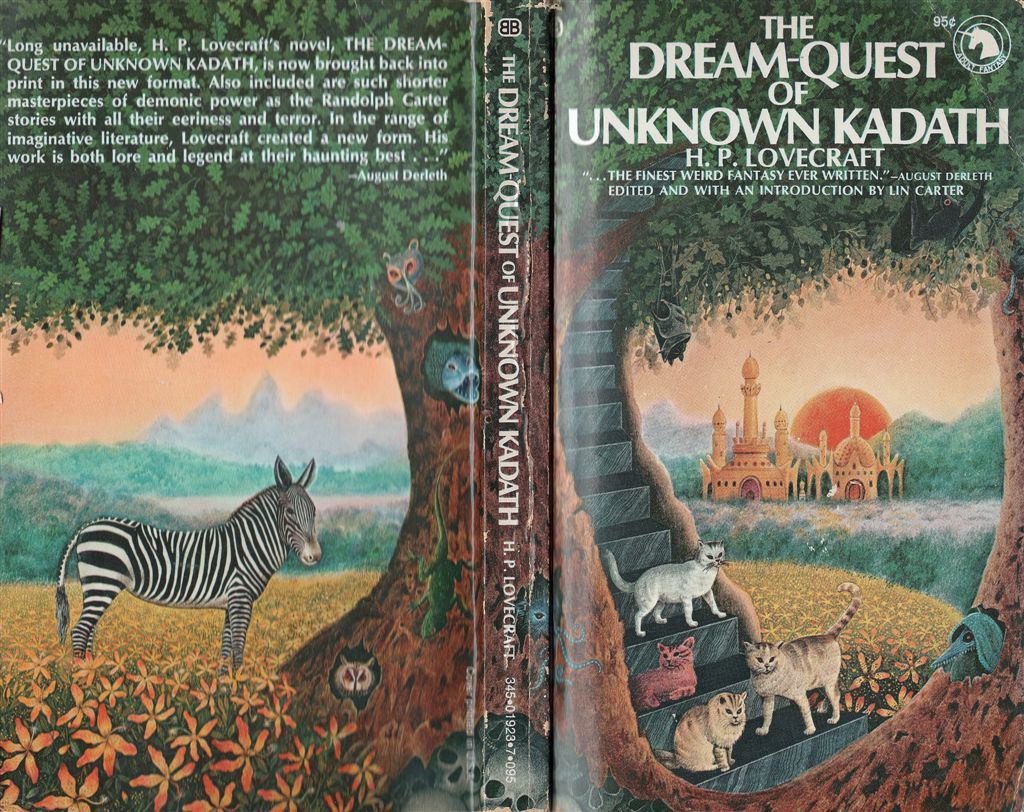
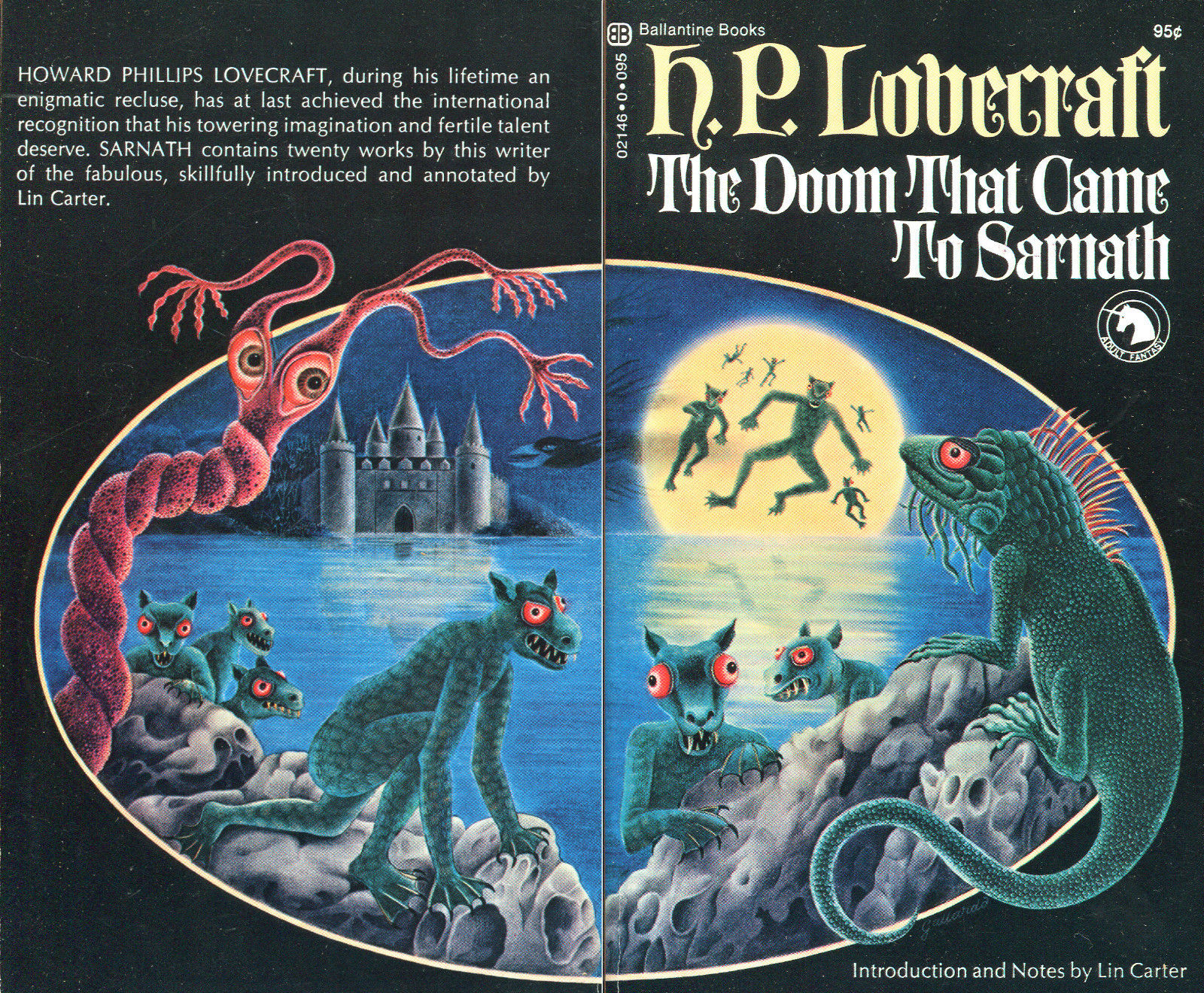
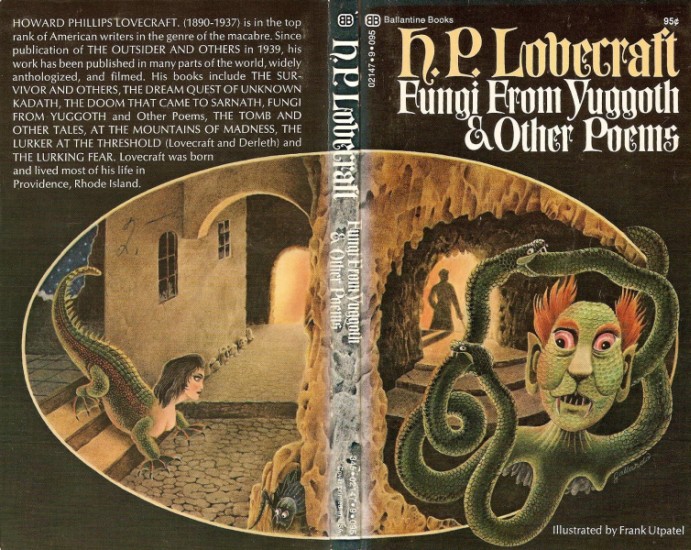
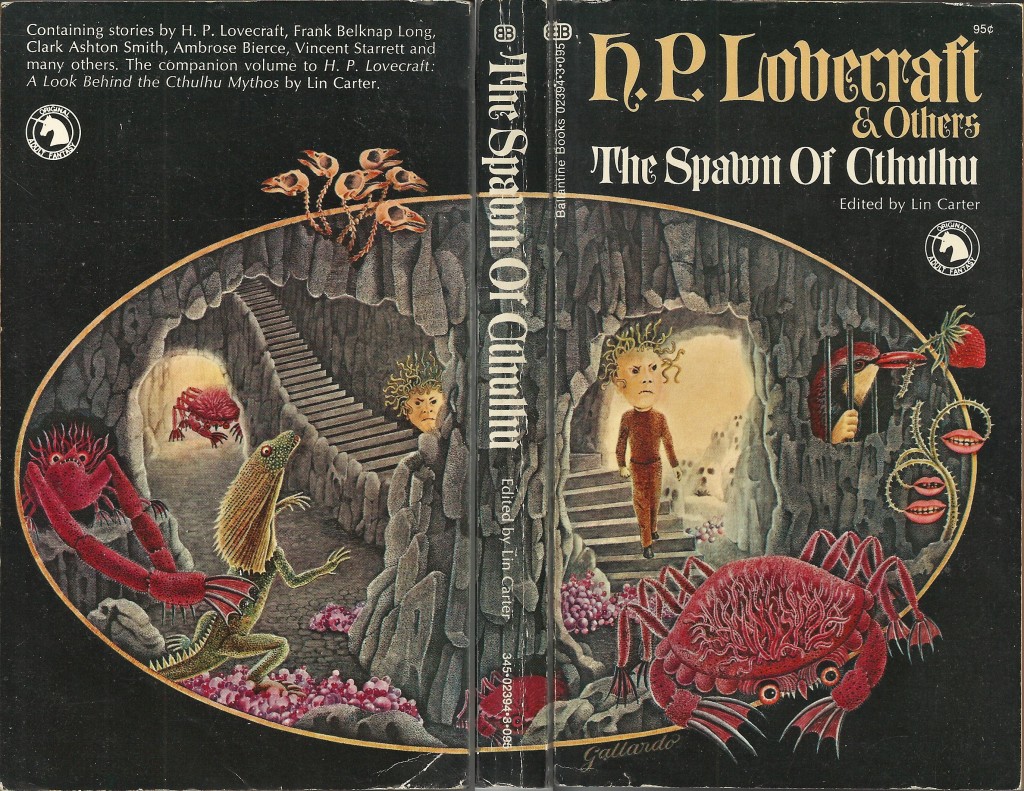
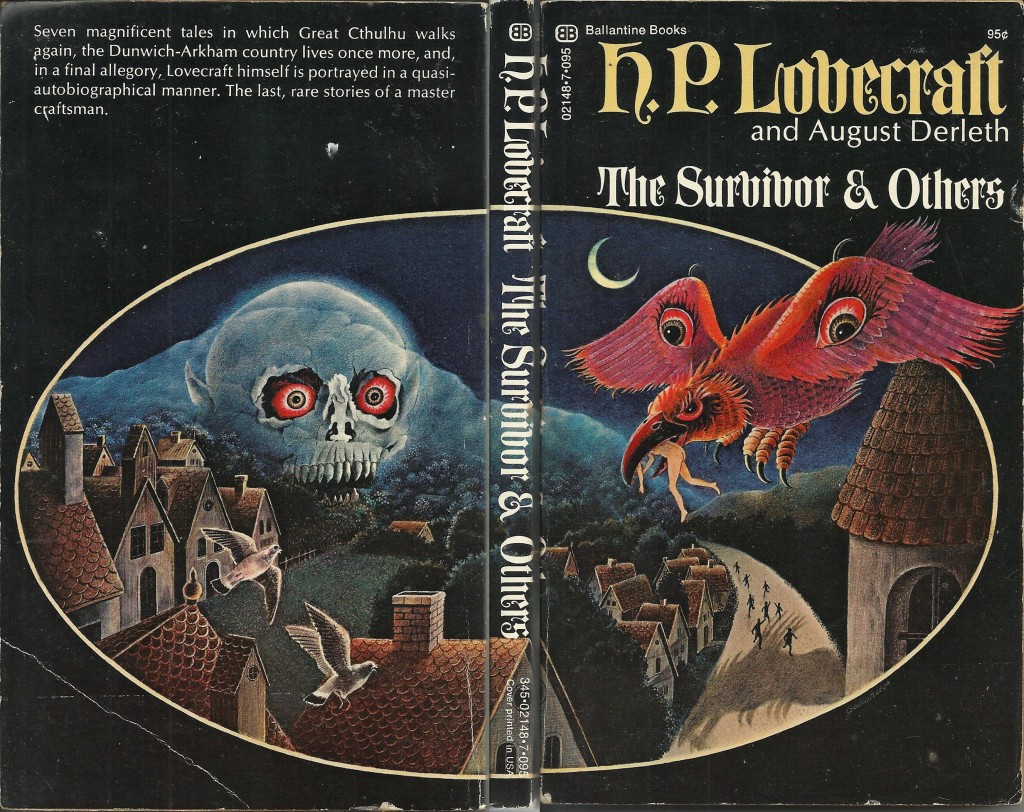
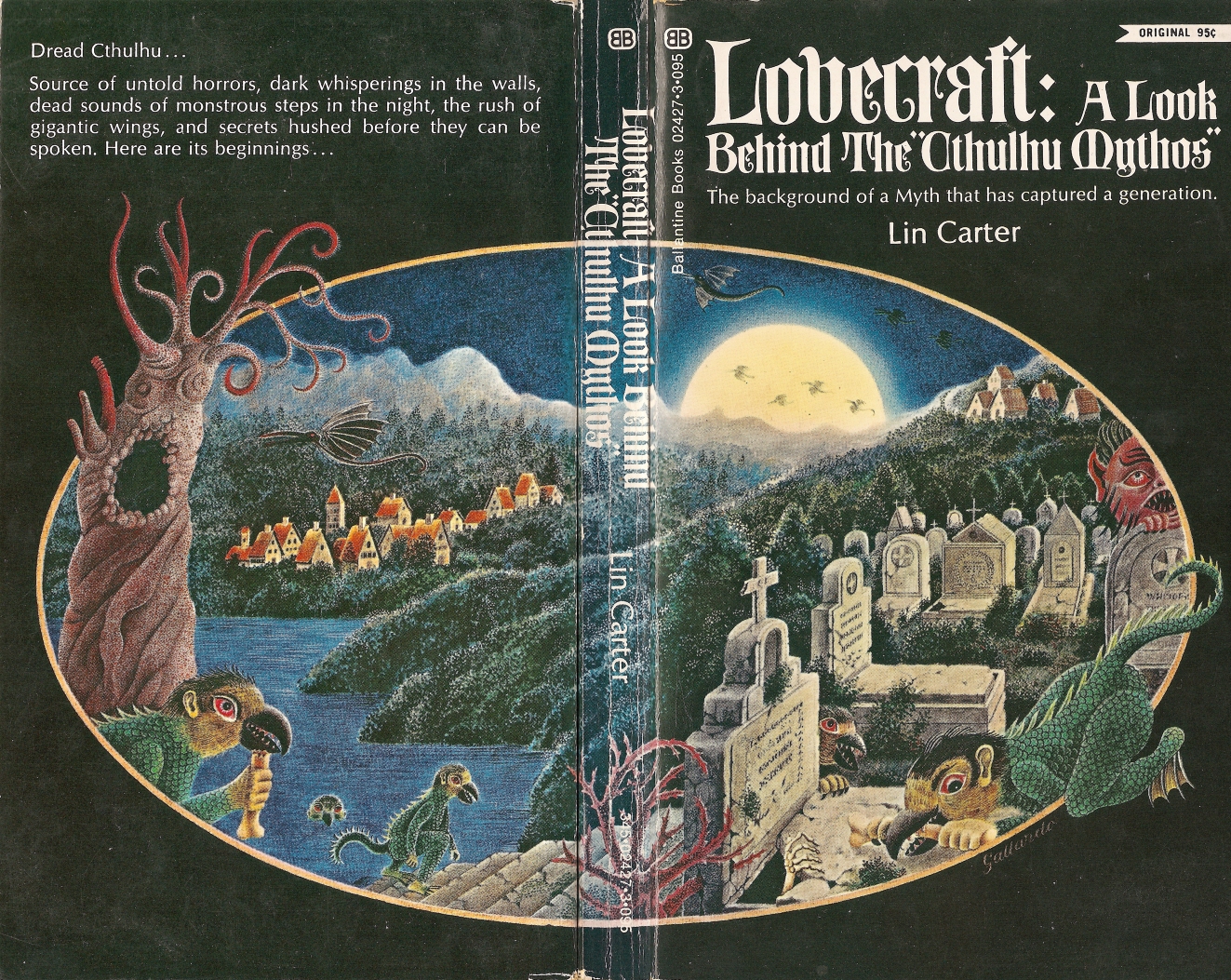
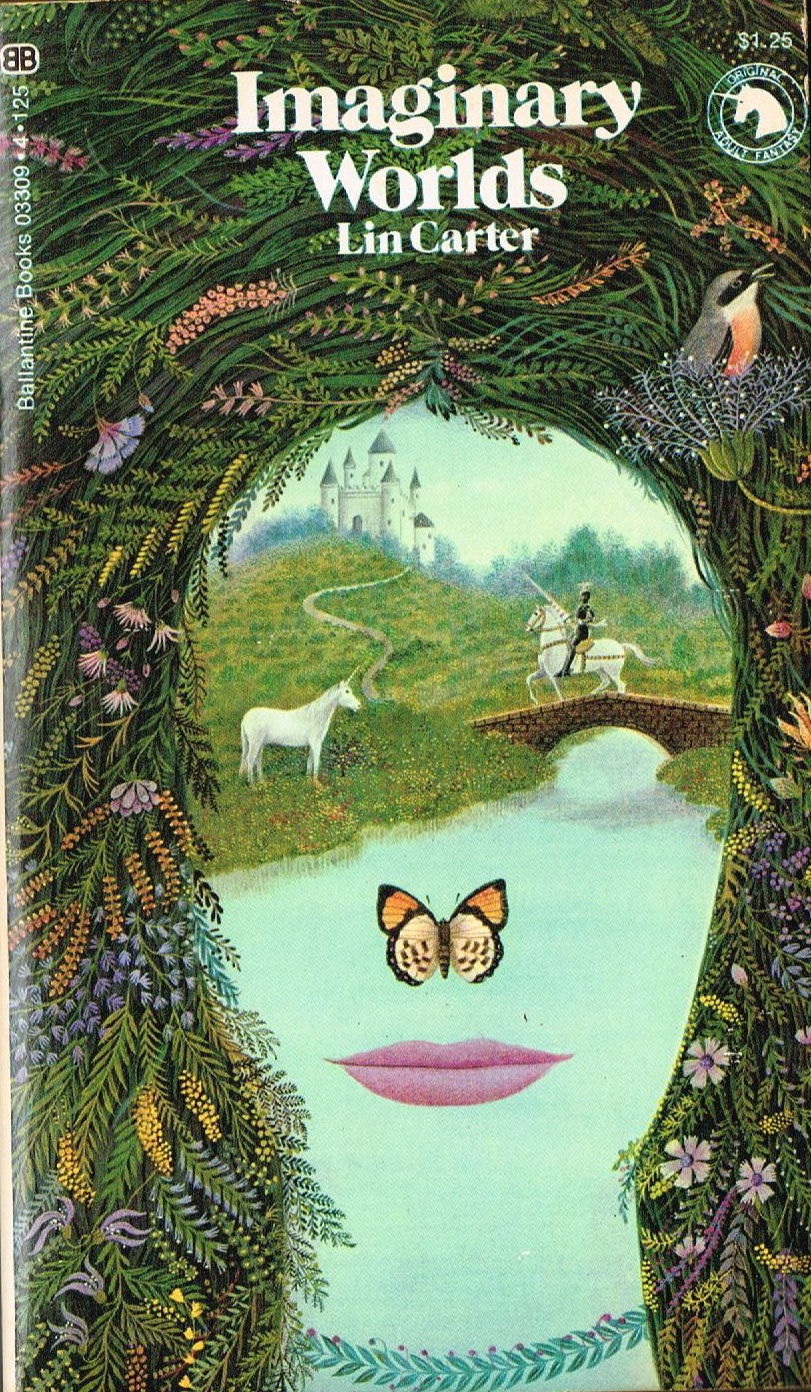
Spanish-born illustrator Gervasio Gallardo did a number of striking covers for the highly influential Ballantine Adult Fantasy series (1969 – 1974), edited by writer and fantasy literature historian Lin Carter. All of the Lovecraft volumes are featured above—I threw in Imaginary Worlds, the last volume of Carter’s non-fiction “look behind” trilogy exploring the origins of the fantasy genre. Lovecraft: A Look Behind the Cthulhu Mythos is the second volume, and Tolkien: A Look Behind ‘The Lord of the Rings’ is the first.
Bob Pepper was another notable illustrator for the same series.
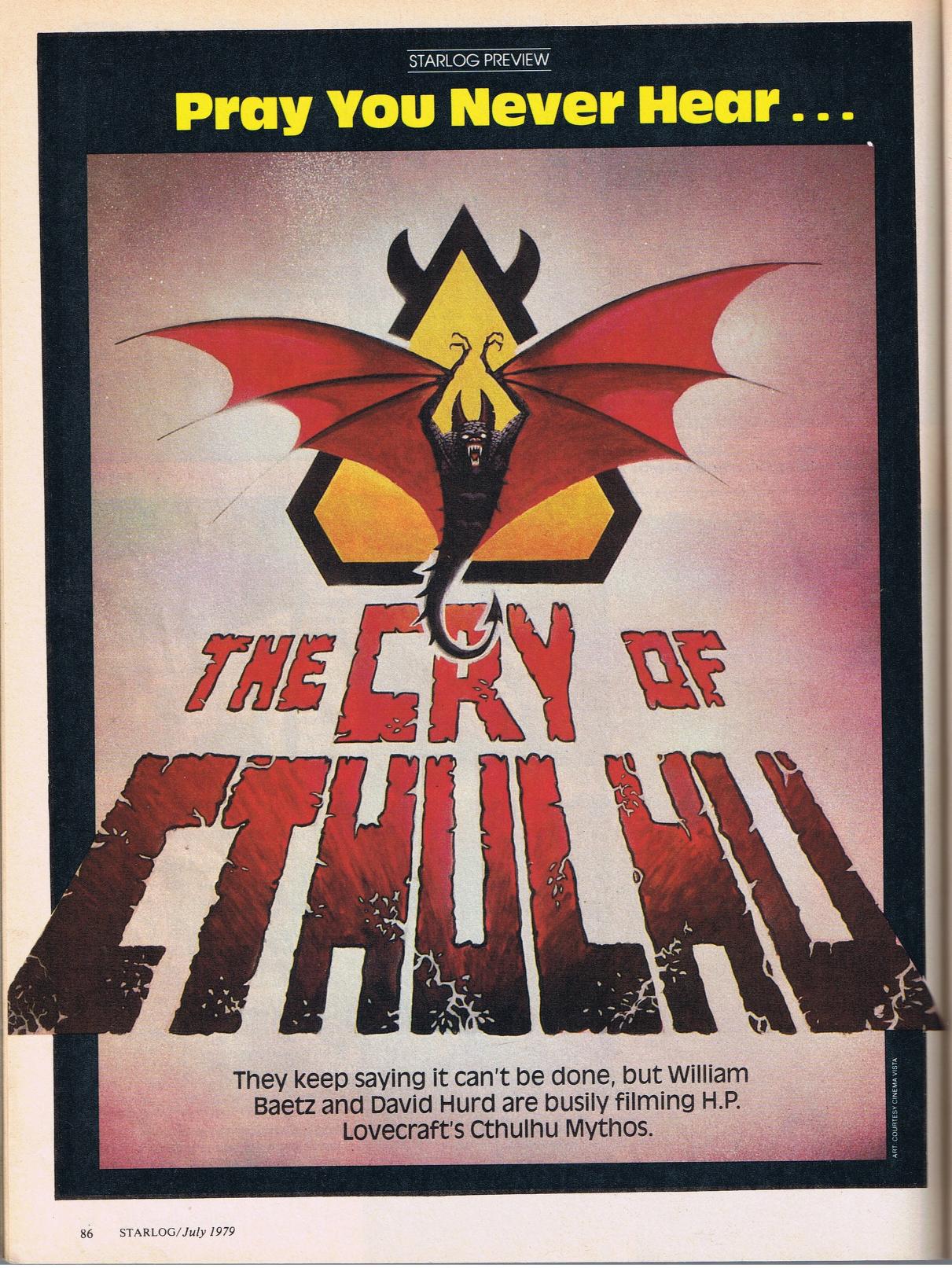

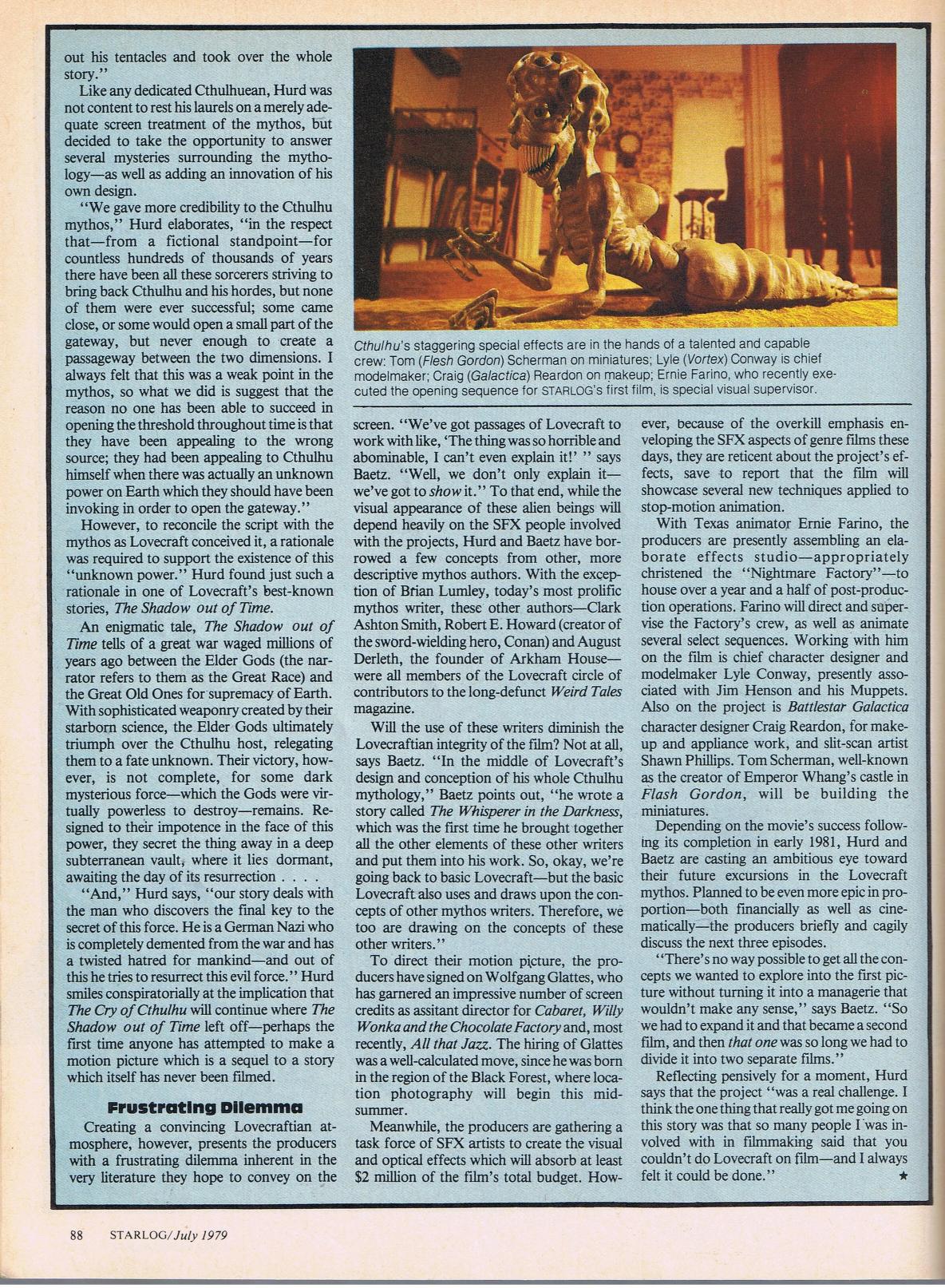
The article is from Starlog #24 (July, 1979). The “lost” Lovecraft movie reportedly secured a $7 million budget, received the blessings of Arkham House (Lovecraft’s longtime publisher and champion), and was slated to “showcase several new techniques applied to stop-motion animation.” What makes it so much more interesting is the special effects talent lined up for the project.
Ernie Farino, hired as special effects supervisor and animator, got his start on Galaxy of Terror the following year, where he met James Cameron, who hired him as special effects coordinator on The Terminator. Farino also worked as an animator on Saturday the 14th, The Thing, Spacehunter: Adventures in the Forbidden Zone, and Dreamscape.
Lyle Conway, character designer and model builder, went on to do creature design and effects for The Dark Crystal, The Blob (1988), and Deep Rising.
Craig Reardon, special make-up effects, worked on The Goonies (he created Sloth!), Poltergeist, Twilight Zone: The Movie, Dreamscape, and The Gate, to name a few.
The concept art you see in the Starlog article is by Tom Sullivan, best known for designing and animating The Book of the Dead in The Evil Dead and The Evil Dead II. Sullivan also did many beautiful illustrations for Chaosium’s Call of Cthulhu role-playing game.
The Cry of Cthulhu was supposed to be something of a sequel to Lovecraft’s The Shadow Out of Time. I don’t know specifically why the project fell apart, but I imagine it was a combination of money and studio cowardice. Based on an earlier blurb in Starlog #6 from 1977 (below), the film was initially a low-budget affair to be shot entirely in Michigan.
UPDATE (10/24/14): I interviewed Byron Craft (a.k.a. David Hurd), screenwriter and co-producer of The Cry of Cthulhu, here. I also interviewed Tom Sullivan here.

(Images via archive.org and Propnomicon)
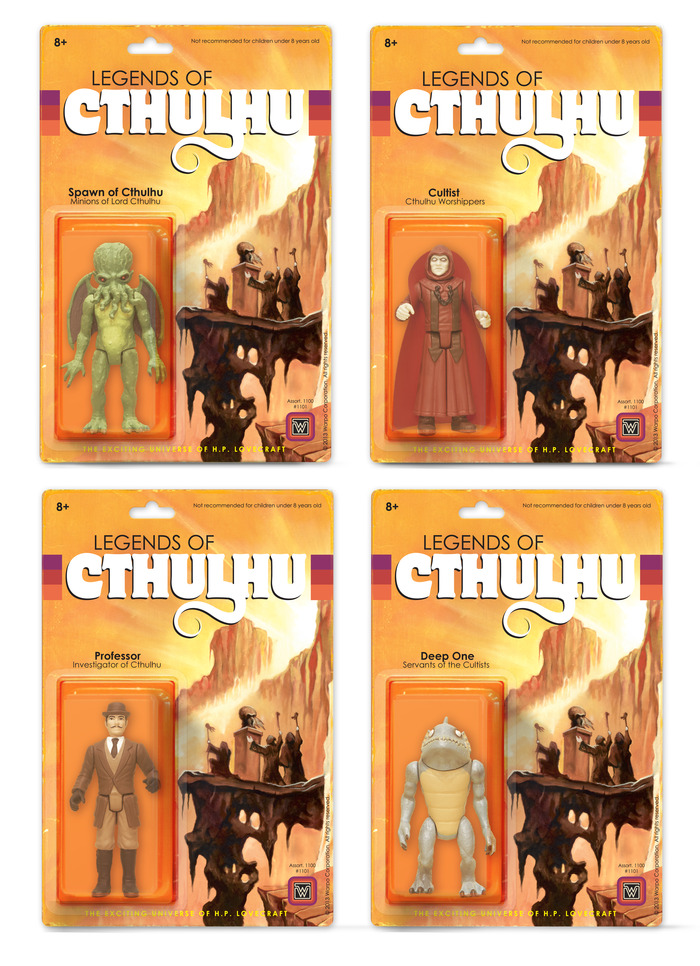
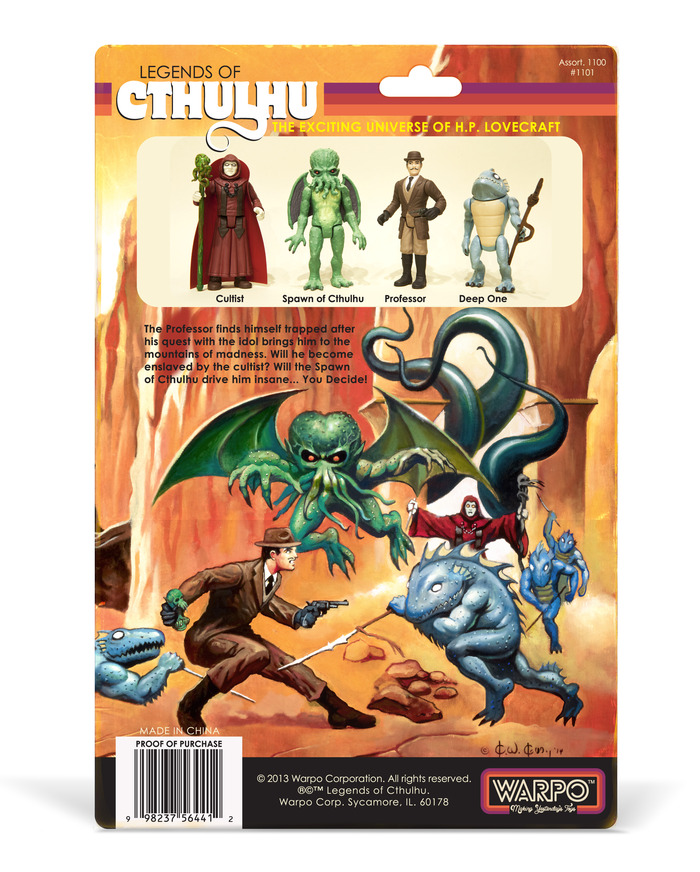
The problem with today’s obsession over all things ‘retro’ is that it’s a cultural dead end. Middle-aged geeks continue to fawn over and “repop” variations of the painted plastics they first unwrapped 30 plus years ago, but who’s going to make amazing new stuff for their kids to enjoy with the same kind of passion?
Enter Warpo Toys, a Chicago-based indie that launched its first Kickstarter last week. While the company’s owners—Bryan Katzel, Eric Lefeber, and Tommy Baldwin—are themselves toy collectors and diehard fans of ’70s and ’80s pop culture, they’re “not interested in remaking or reissuing old toys or licenses.” They aim instead “to create brand new product and tell brand new stories that haven’t been told before.” Thank the Great Old Ones!
So, while the Legends of Cthulhu line is billed as retro and marketed to adults (it had to be both to get off the ground), it’s far too beautiful, literate, and original to be lumped in with the tired mash-ups and retreads on display at every con and geek-nerd-retro-comics-superhero site from coast to coast. For starters, it’s the first time anyone’s had the balls to base a toy line on H.P. Lovecraft’s Cthulhu mythos. Second, the design and execution are as brilliant as the idea itself—no small feat. And third, the narrative is just the sort of thing precocious youngsters would rally around: it’s dark, it’s supernatural; it’s full of monsters, adventure, and mystery. Actually, it’s an open-ended universe, and just the sort of thing lasting franchises are made of.
Not surprisingly, Warpo’s initial Kickstarter goal of $65,000 was funded in a matter of days. As we speak, the company is just a few hundred dollars away from its second stretch goal of $90,000. Do check out the details (specs, concept art, prototypes, biographies, business philosophy) and the incredible amount of work and love the guys have already put into their potential game changer. Legends of Cthulhu will be the first Kickstarter I back. It’s just a matter of how much I can afford to pledge.
Oh, two more things. Eddy Mosqueda, who worked as a sculptor on the original TMNT and MOTU lines, is on the Warpo team; and the legendary Ken Kelly painted the front and back of the blister cards. Dear every major and start-up toy company today: this is how it’s done. Bow down to the cult of creativity, or face the shrieking and immemorial lunacy of cosmic irrelevance—not to mention bankruptcy.
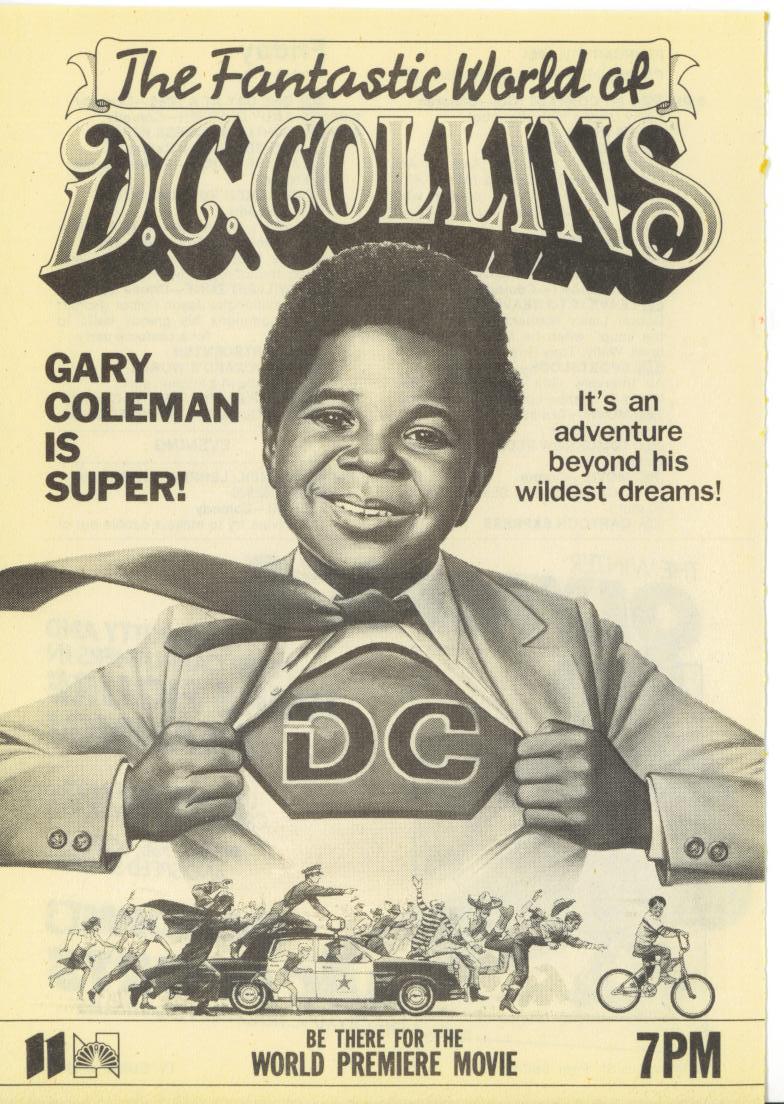
Was anyone else sitting in front of the TV when this dreck aired? In retrospect, it’s kind of interesting as an example of what the adult world saw as a generation of game-addled, reality-phobic daydreamers (the underrated Cloak and Dagger came out later the same year), with the dreamer redeeming himself in a Cold War caper. Too bad it’s unwatchable.
Here are a couple of painful reminders (watch for Jason Bateman in the first clip):



You can have the derivative, bloated TV miniseries and its crappy sequel. I’ll take this slice of kitsch gold and call it a day.

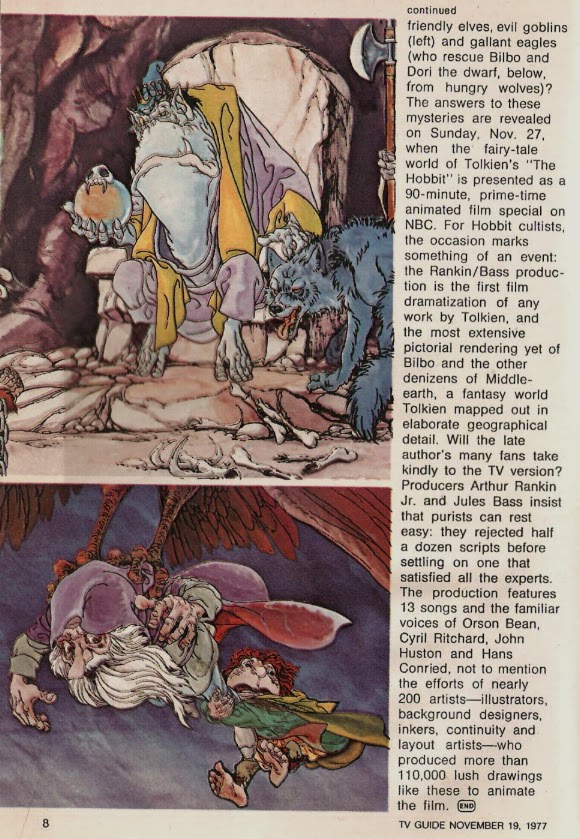
Will the late author’s many fans take kindly to the TV version? Producers Arthur Rankin Jr. and Jules Bass insist that purists can rest easy: they rejected half a dozen scripts before settling on one that satisfied all the experts. The production features 13 songs and the familiar voices of Orson Bean, Cyril Ritchard, John Huston and Hans Conried…
Italics mine.
Still, I have a soft spot in my heart for this one.
(Images via Cool Ass Cinema)

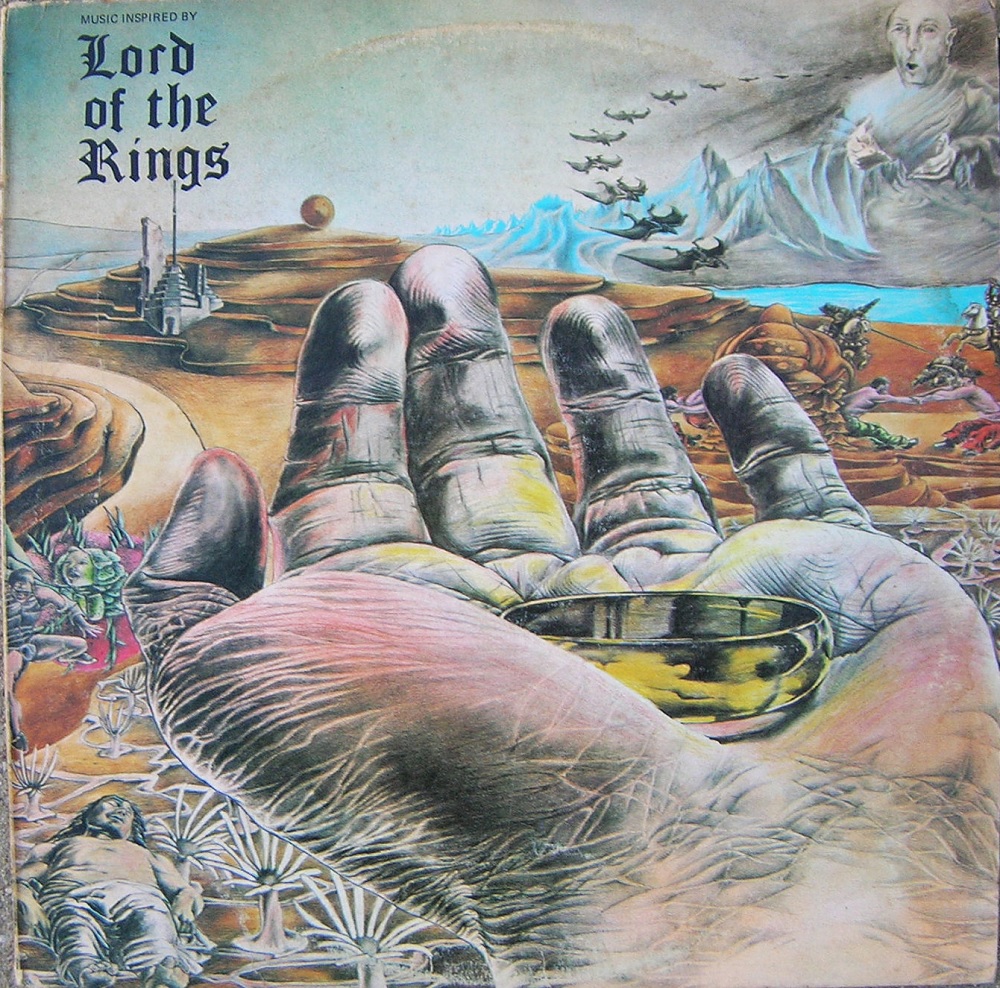
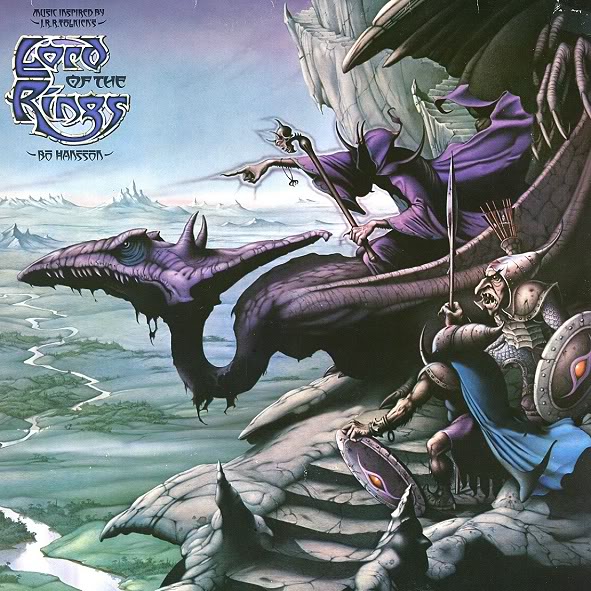

Released in his native Sweden in 1970 as Sagan Om Ringen (“The Saga of the Rings”), Bo Hansson’s Music Inspired by Lord of the Rings first appeared in the U.K. and the U.S. in 1972. It’s generally characterized as “progressive,” but it’s more of an idyllic, psychedelic suite centered around Hansson’s spacious, dreamy organ. It’s something of a masterpiece, in my opinion, and yet another insight into the connection between psychedelia and the budding fantasy genre.
You can hear the original vinyl release here, and the international version is on Spotify (and Amazon). Hansson released a number of other interesting albums, including Music Inspired by Watership Down (1977), which are currently unavailable.
The third LP pictured above shows the 1977 reissue, set to coincide with The Hobbit and Lord of the Rings animated films. The cover artist is Rodney Matthews.
(Images via Dream Chimney, Etsy, and rodneymatthews.com)


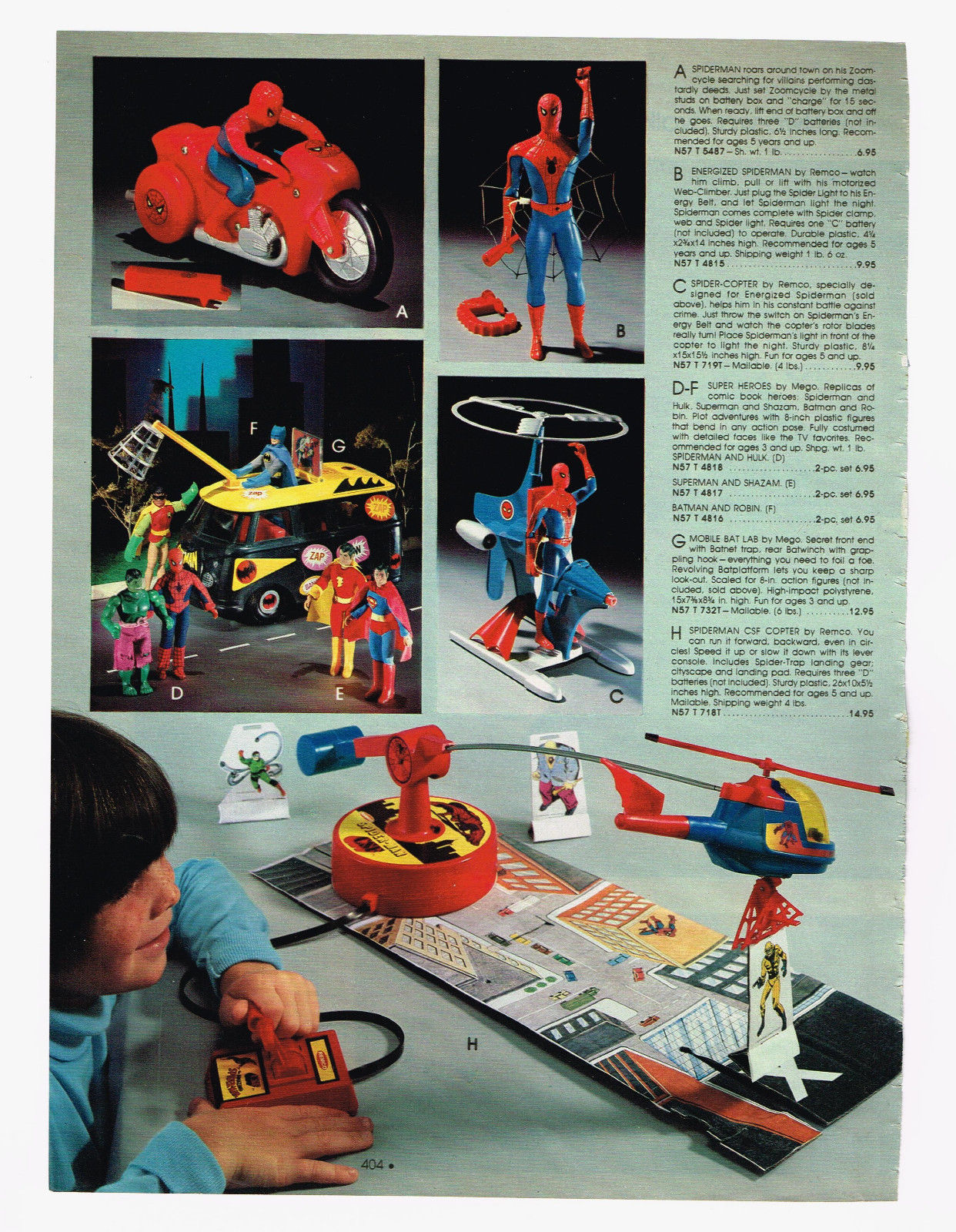

Catalog diving never gets old. We were conditioned at an early age, and the sight and smell of these filmy, glossy pages is like the ringing of Pavlov’s buzzer.
I was surprised to see that the Micronauts Battle Cruiser ($19.95) was more expensive than the Death Star ($17.95). Mego just couldn’t recover after rejecting the Star Wars license, although I think the Micronauts line, even in its last throes, is more creative.
I love the Super Joe toys, including Terron, shown at the bottom of the second page. You can see commercials here and here.
The “Sonic Ear” is new to me. It amplifies sound, which is pretty lame, but what a great looking gun to take into a space battle.
Don’t miss the Fonz watch—the strap is denim-colored, naturally—on the last page.
(Images via Yesterday’s Ads/eBay)

 2 Warps to Neptune