Archive for the 'Magazines/Zines' Category


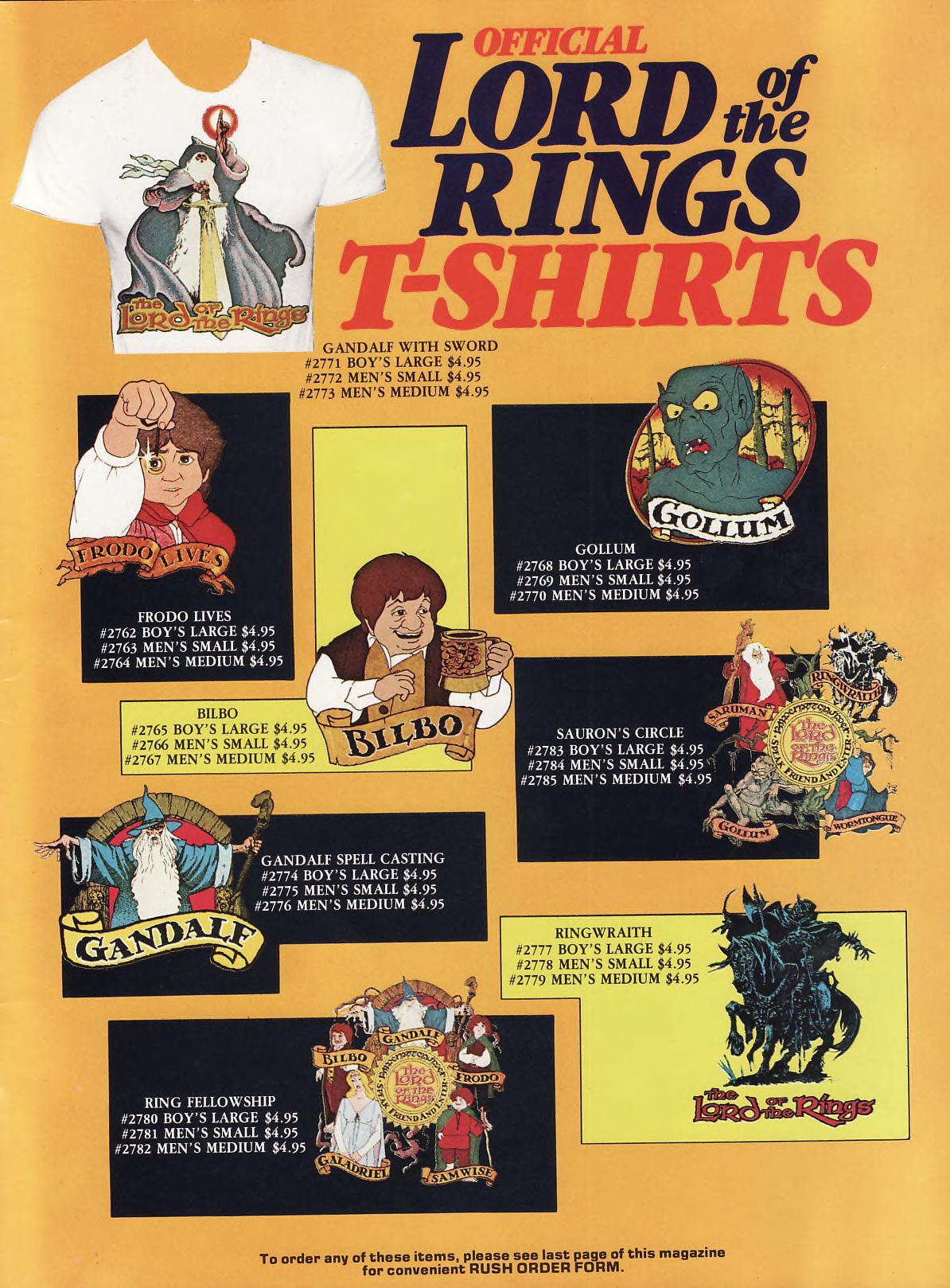
Warren Special Edition: The Lord of the Rings Magazine (June, 1979)

LOTR-1

LOTR-2

LOTR-3

LOTR-4

LOTR-5

LOTR-6

LOTR-7

Don’t you wish you could thumb through the whole mag, written by the delightfully weird Forrest J. Ackerman? Oh, wait. You can.

If you think the Lord of the Rings “sculpture banks” are an odd choice for merchandise, wait until I post the finger puppets.

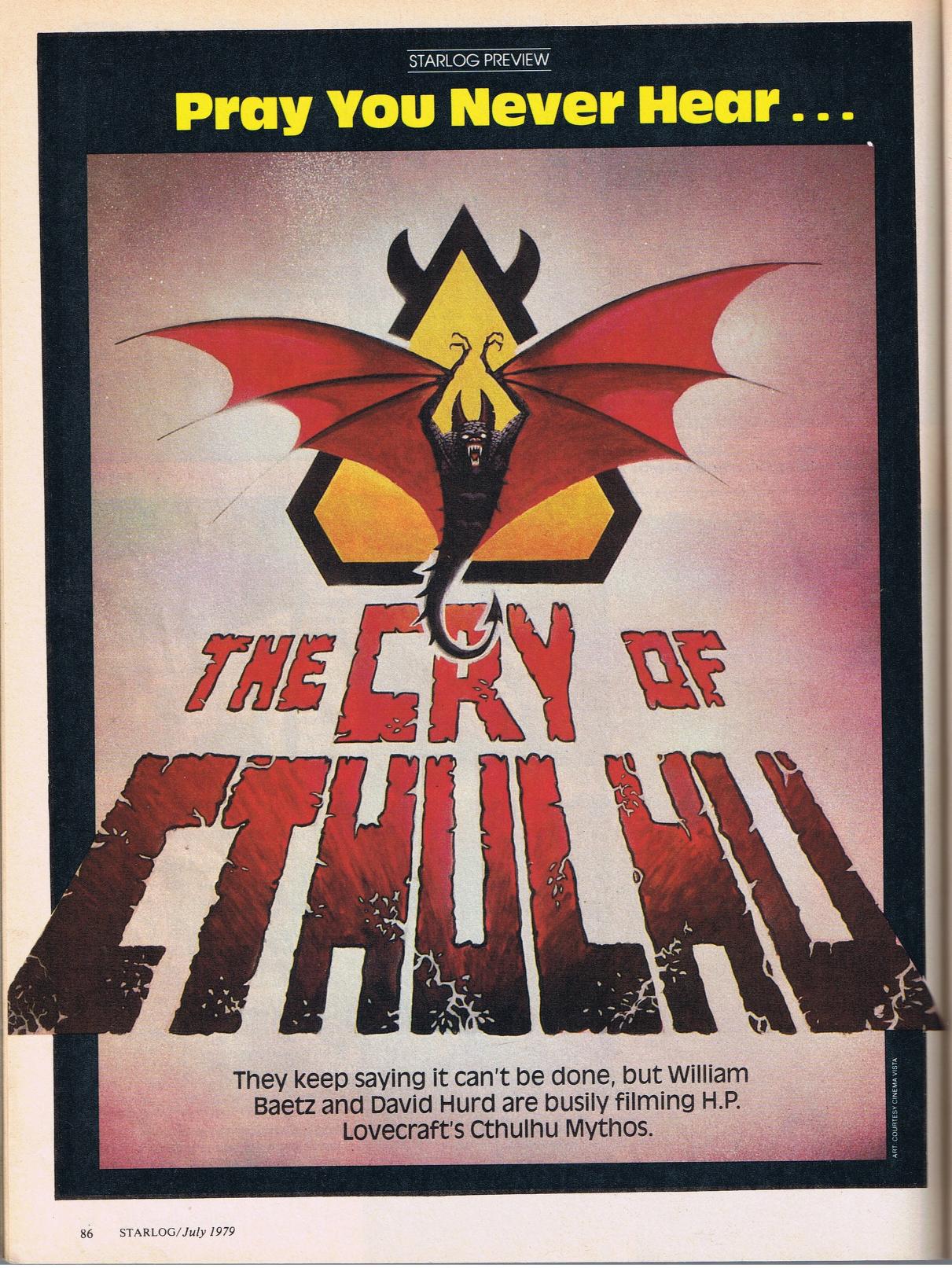
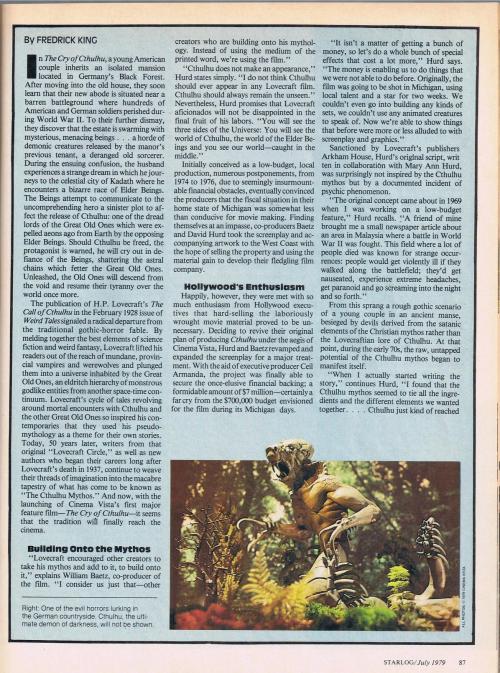
The Lovecraft Movie That Never Was: The Cry of Cthulhu

Starlog 1979-1

Starlog 1979-2

Starlog 1979-3

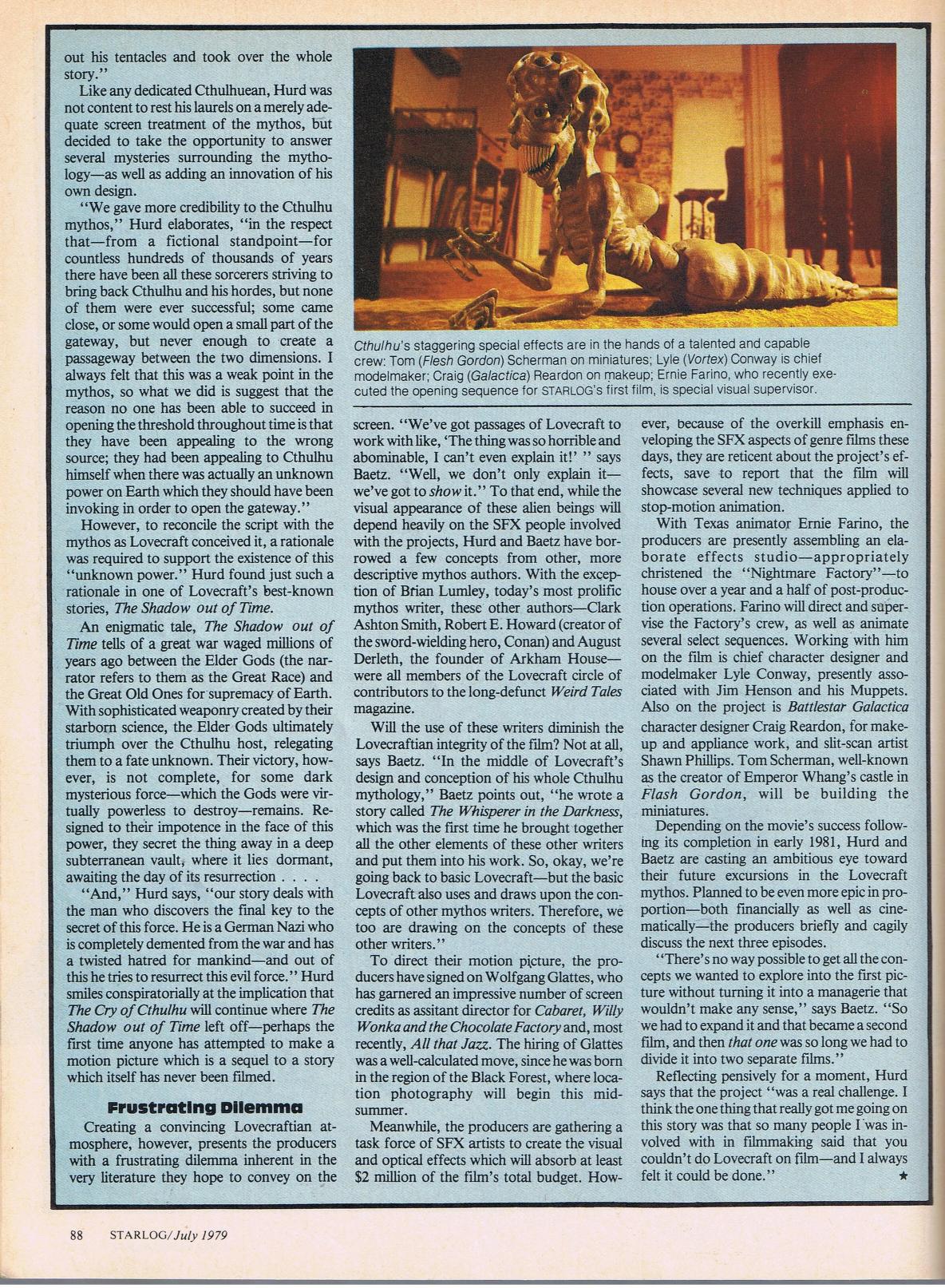
The article is from Starlog #24 (July, 1979). The “lost” Lovecraft movie reportedly secured a $7 million budget, received the blessings of Arkham House (Lovecraft’s longtime publisher and champion), and was slated to “showcase several new techniques applied to stop-motion animation.” What makes it so much more interesting is the special effects talent lined up for the project.

Ernie Farino, hired as special effects supervisor and animator, got his start on Galaxy of Terror the following year, where he met James Cameron, who hired him as special effects coordinator on The Terminator. Farino also worked as an animator on Saturday the 14th, The Thing, Spacehunter: Adventures in the Forbidden Zone, and Dreamscape.

Lyle Conway, character designer and model builder, went on to do creature design and effects for The Dark Crystal, The Blob (1988), and Deep Rising.

Craig Reardon, special make-up effects, worked on The Goonies (he created Sloth!), Poltergeist, Twilight Zone: The Movie, Dreamscape, and The Gate, to name a few.

The concept art you see in the Starlog article is by Tom Sullivan, best known for designing and animating The Book of the Dead in The Evil Dead and The Evil Dead II. Sullivan also did many beautiful illustrations for Chaosium’s Call of Cthulhu role-playing game.

The Cry of Cthulhu was supposed to be something of a sequel to Lovecraft’s The Shadow Out of Time. I don’t know specifically why the project fell apart, but I imagine it was a combination of money and studio cowardice. Based on an earlier blurb in Starlog #6 from 1977 (below), the film was initially a low-budget affair to be shot entirely in Michigan.

UPDATE (10/24/14): I interviewed Byron Craft (a.k.a. David Hurd), screenwriter and co-producer of The Cry of Cthulhu, here. I also interviewed Tom Sullivan here.
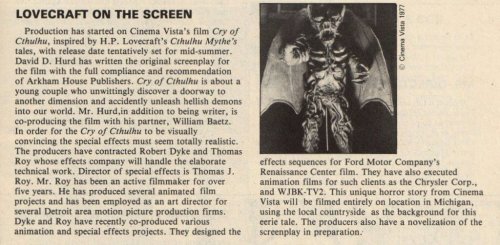
Starlog 1977

(Images via archive.org and Propnomicon)

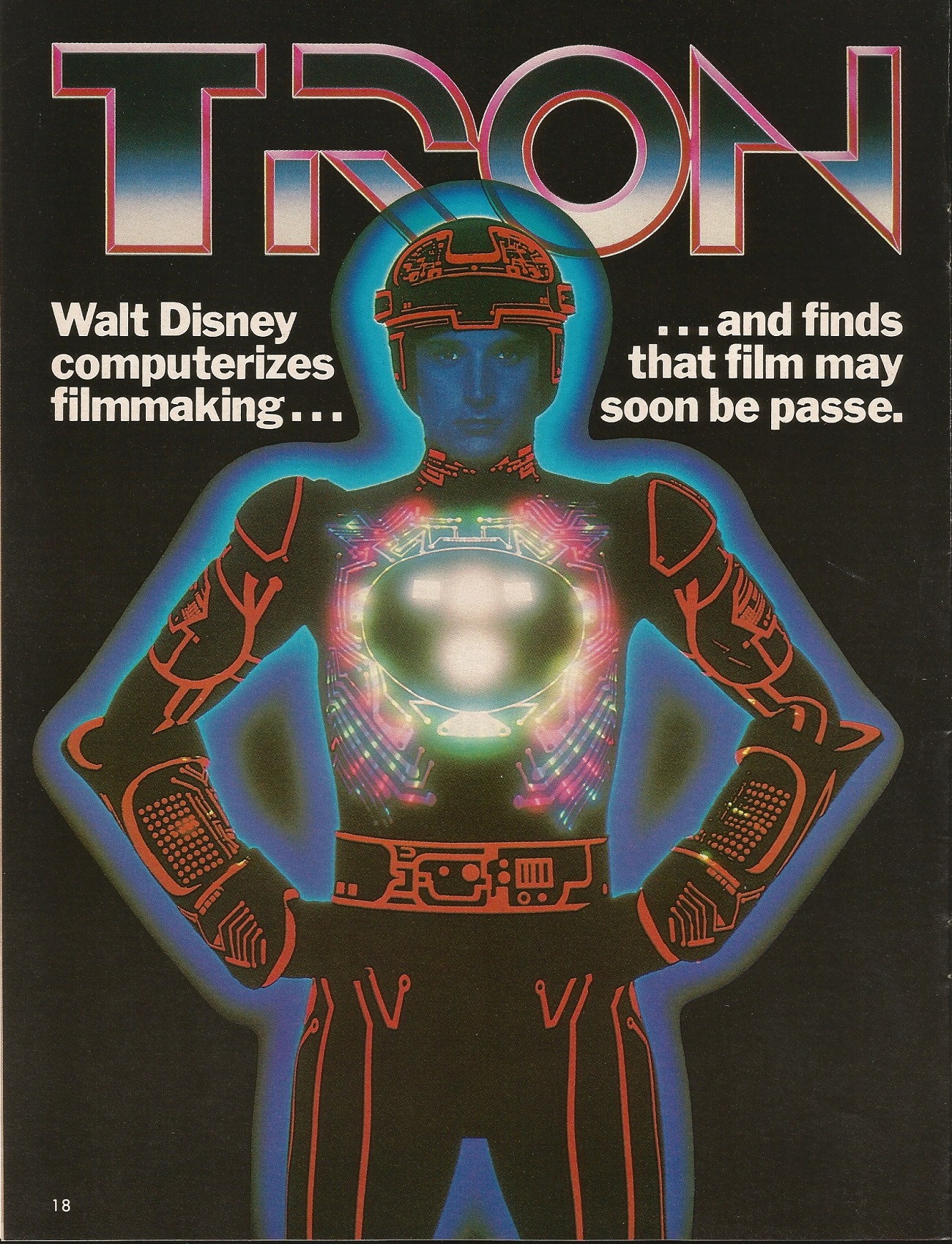
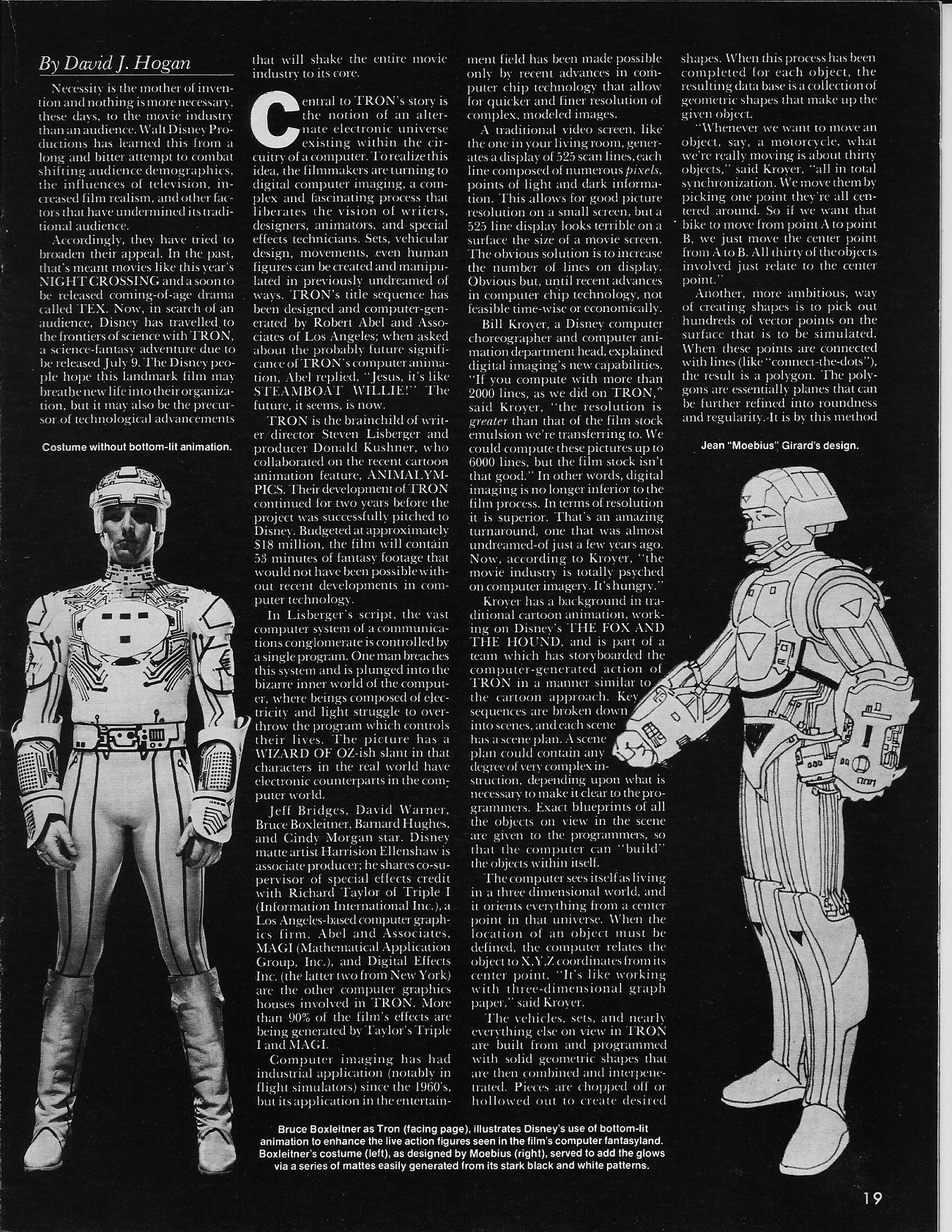
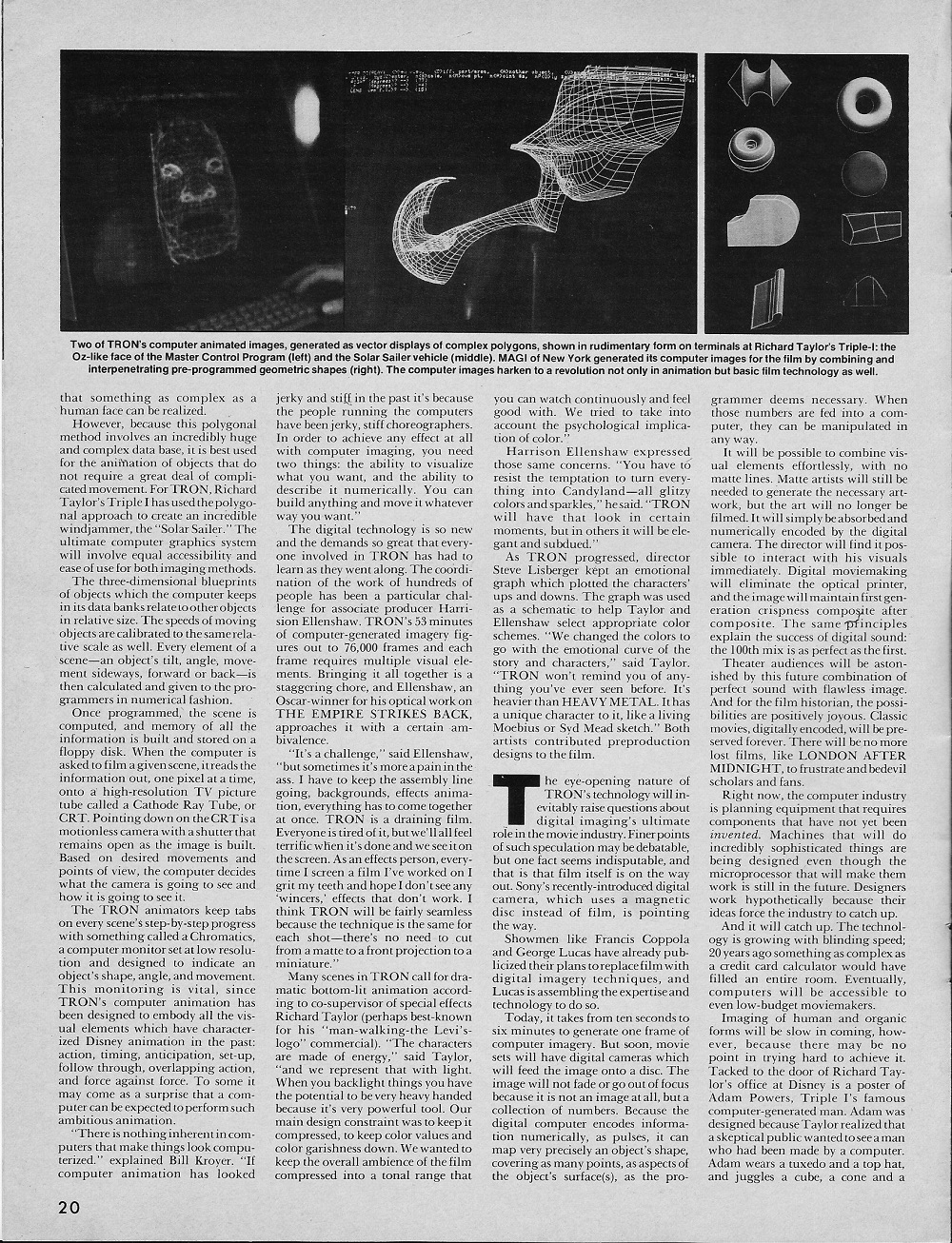
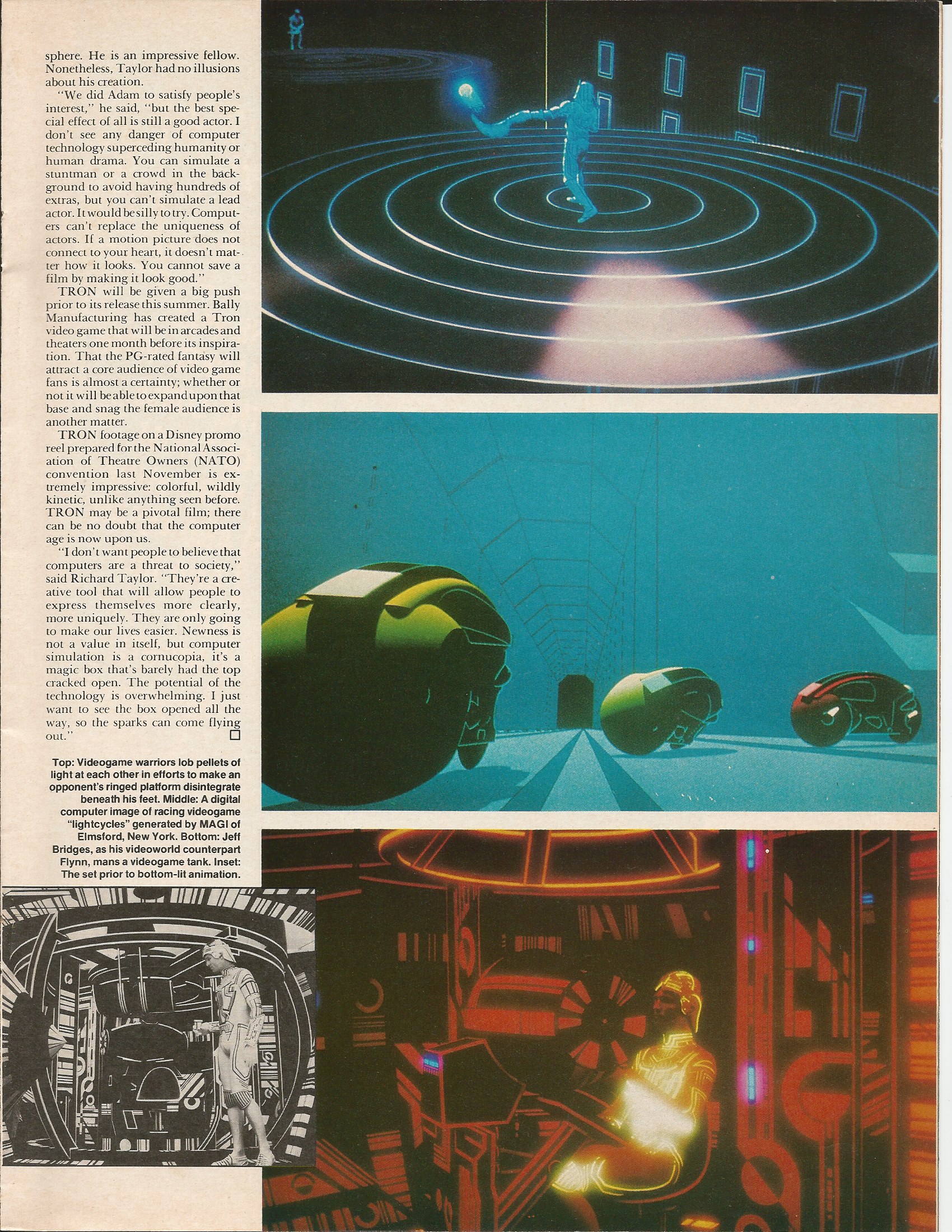
Cinefantastique Volume 12, Number 4 (1982): Tron Article

CFQ May-June 1982 pg. 18

CFQ May-June 1982 pg. 19

CFQ May-June 1982 pg. 20

CFQ May-June 1982 pg. 21

Interesting piece on the revolutionary effects of Tron, and the inevitable movement of film to a digital format. Says Richard Taylor, co-supervisor of special effects:

Computers can’t replace the uniqueness of actors. If a motion picture does not connect to your heart, it doesn’t matter how it looks. You cannot save a film by making it look good…

I don’t want people to believe that computers are a threat to society. They’re a creative tool that will allow people to express themselves more clearly, more uniquely. They are only going to make our lives easier.

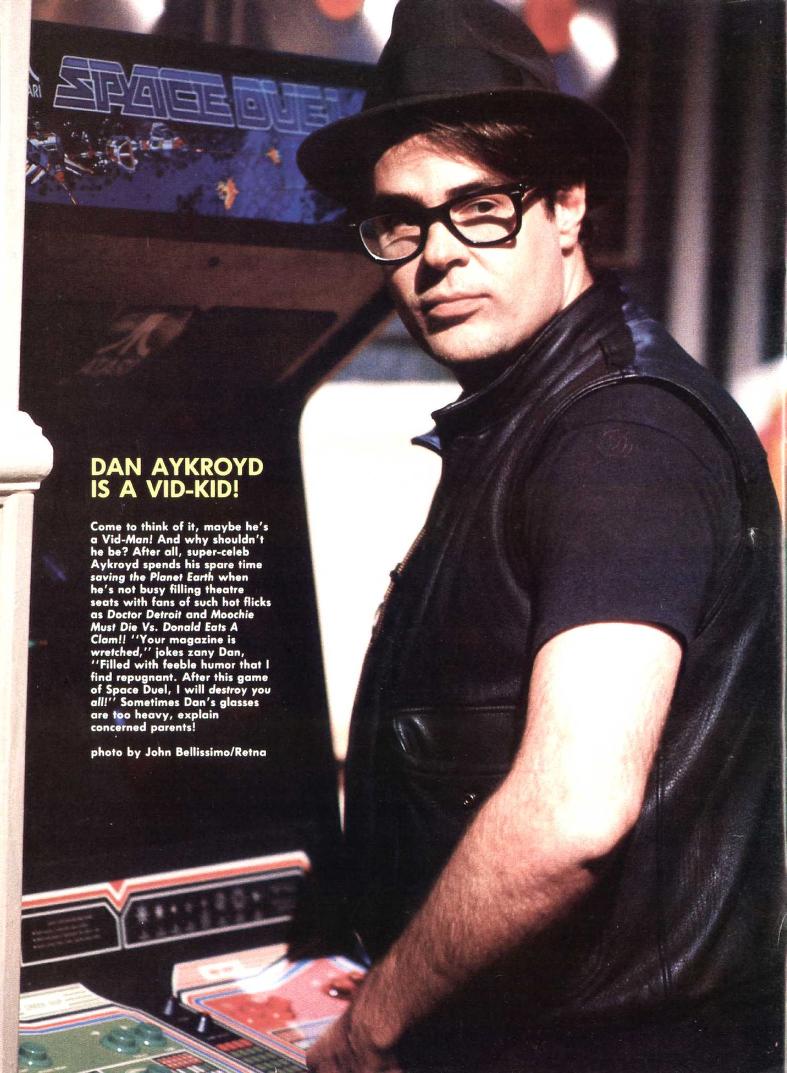
Dan Aykroyd and Duran Duran Playing Video Games, 1983

Aykroyd 1983

Duran Duran 1983

From Vidiot #5, 1983. Vidiot, “The Magazine of Video Lunacy,” was an offshoot of rock magazine Creem, and lasted only 6 issues.

It just so happens that Space Duel and Gravitar are two of my favorite cabinets. I’m a sucker for vector graphics. Space Duel also appears on the front and back covers of The Who’s It’s Hard (1982).


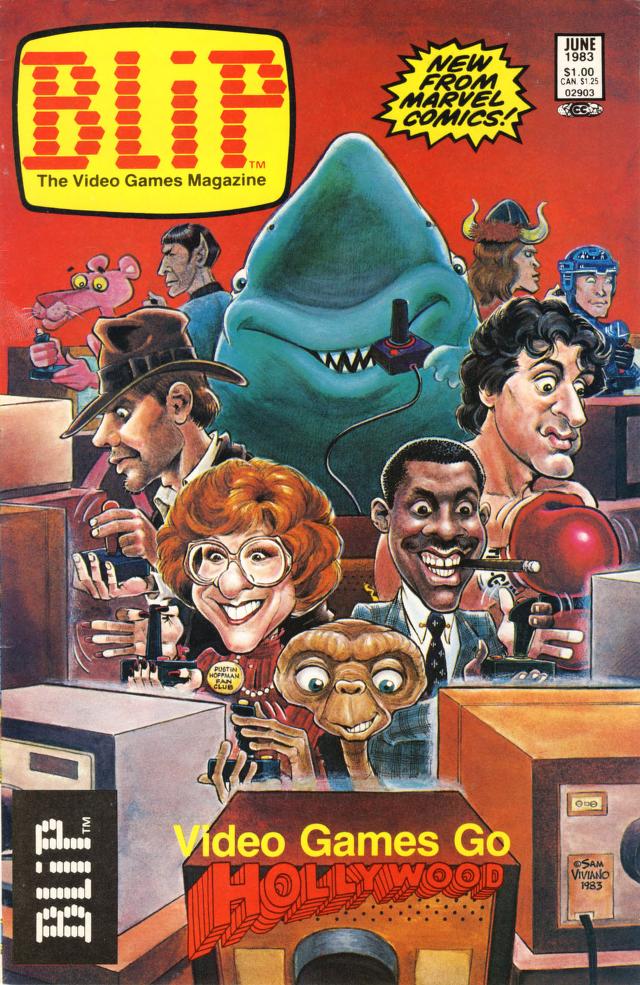
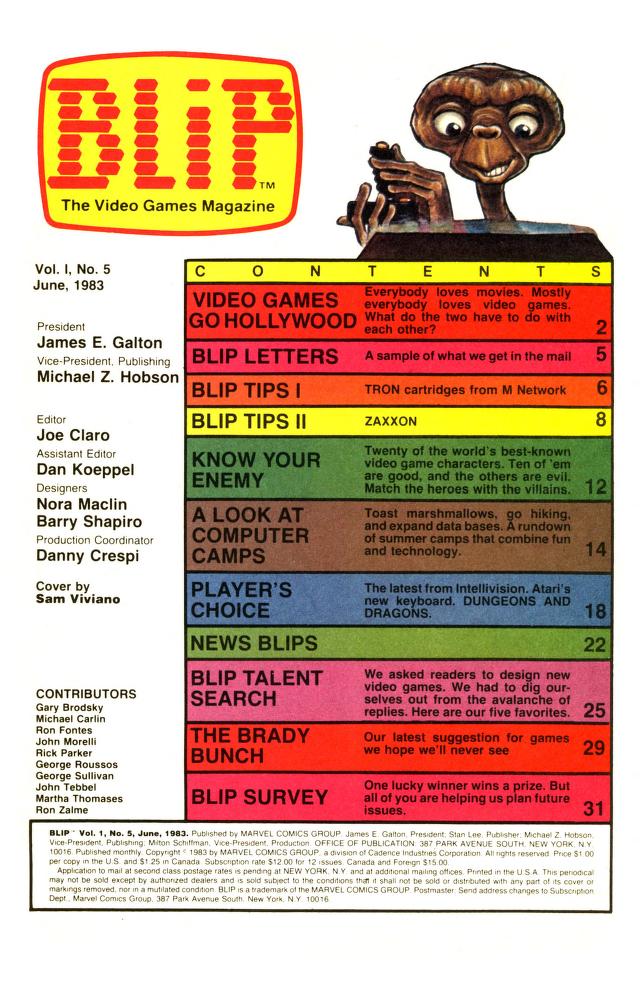
Blip #5 (June, 1983): ‘Technology + Tradition = Summer Fun’

Blip #5 1983-1

Blip #5 1983-8

Blip #5 1983-5

Blip #5 1983-6

Blip #5 1983-7


Blip #5 1983-2

Blip #5 1983-3

Blip #5 1983-4

Blip was Marvel’s short-lived—seven issues only—foray into the video game world. It was colorful but silly, printed on comic stock and marketed to younger kids.

Page two talks about the development of Atari’s E.T., and refers to TRON (the movie) as a “flop.” Ripping every gamer’s favorite flick was probably not a good idea.
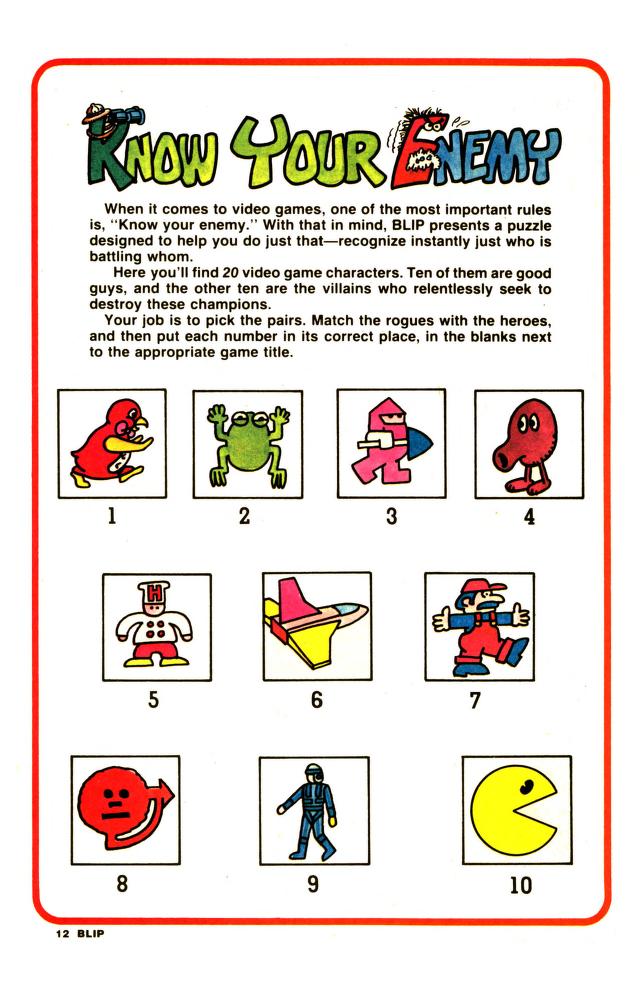
The activity on pages 12 and 13 is representative of the entire run. Kids of every age would have found it condescending.

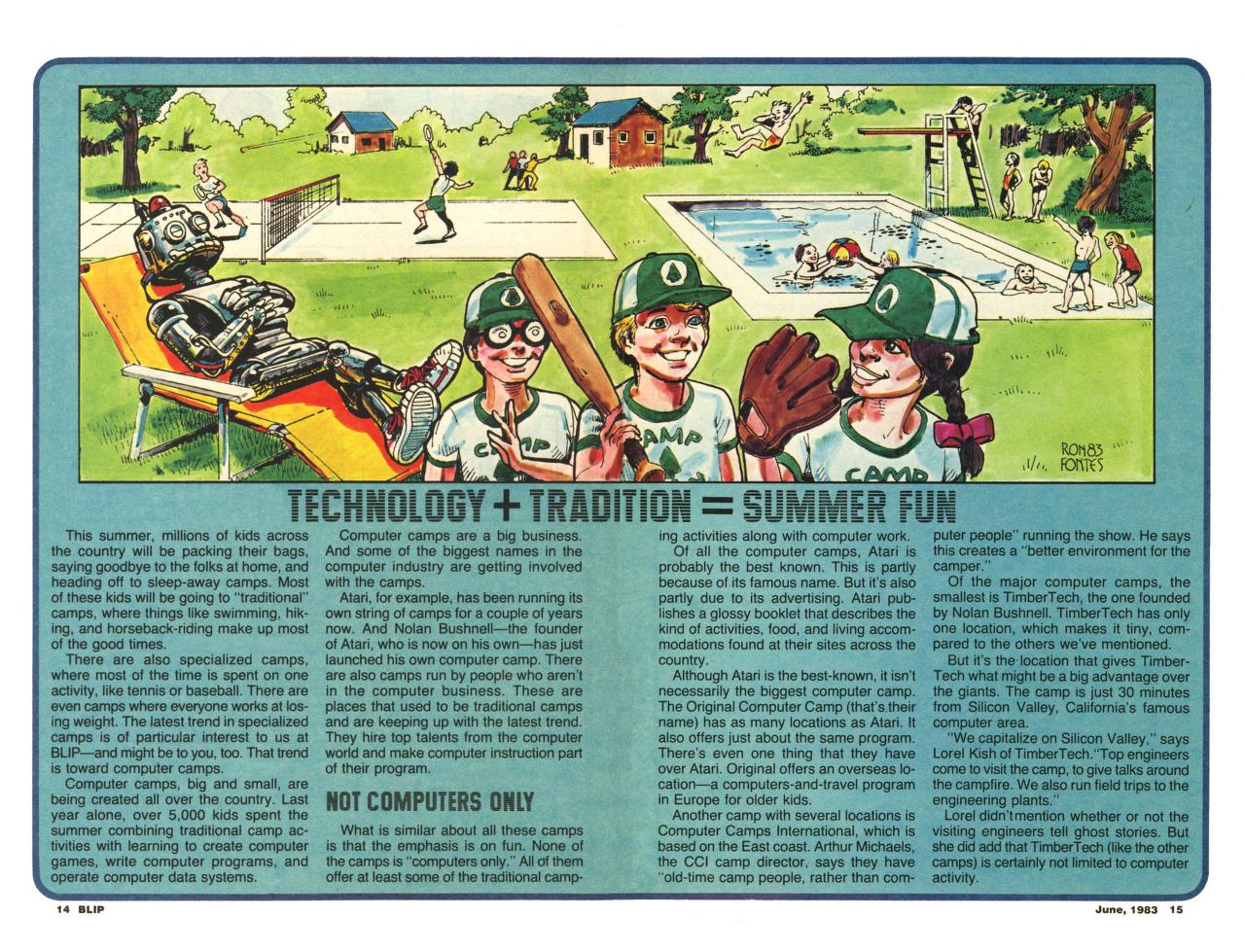
Pages 14 and 16 are about computer camp, one of my favorite subjects. I wrote about the Atari camp here. I love the robot on the lawn chair, even though it’s a clunky (pun intended) metaphor.

And, if you weren’t feeling old enough already, how about the “News Blips” on page 23?

The most amazing feature of the Concept 100 is its satellite hookup. That’s right—this car will actually have a computer that is tuned in to a satellite orbiting in space. What good is this? One big advantage is tracking. If you ever get lost, just order up a map and the satellite will find your car…

Read the whole issue, and the whole run, at archive.org.

Omni Magazine (October, 1980): L. Sprague de Camp and Dungeons & Dragons

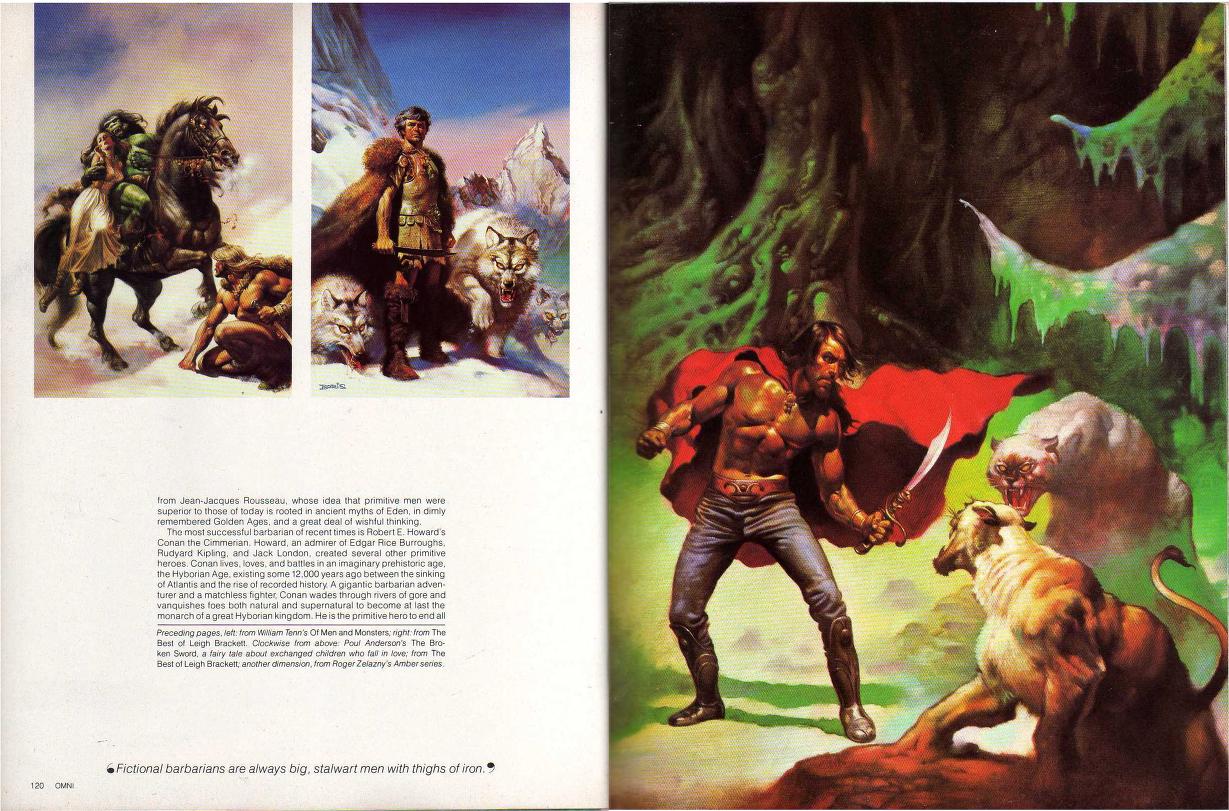
Omni 10-80 pg. 118-119

Omni 10-80 pg. 120-121

Omni 10-80 pg. 122-123

L. Sprague de Camp (1907 – 2000) was a prolific writer and popularizer of the fantasy genre, an engineer by trade, and something of a self-taught history and Classics scholar. (I just read his excellent, still relevant debunking of the Atlantis myth, Lost Continents). He edited the very first heroic fantasy or sword and sorcery anthology called Swords & Sorcery (Pyramid, 1963), which I’ll talk about in a later post. The phrase `heroic fantasy’ was coined by de Camp in 1963 (OED citation here); ‘sword and sorcery’ was coined by Fritz Leiber in 1961 (OED citation here).

His unsentimental grounding of the genre is right on, I think—from a traditional male perspective, anyway:

Heroic fantasy is alive and flourishing. The more complex, cerebral, and restrained the civilization, the more men’s minds return to a dream of earlier times, when issues of good and evil were clear-cut and a man could venture out with his sword, conquer his enemies, and win a kingdom and a beautiful woman. The idea is compelling, even though such an age probably never existed.

Here’s de Camp’s slightly less sexist description from the 1967 Ace edition of Conan:

Such a story combines the color and dash of the historical costume romance with the atavistic supernatural thrills of the weird, occult, or ghost story. When well done, it provides the purest fun of fiction of any kind. It is escape fiction wherein one escapes clear out of the real world into one where all men are strong, all women beautiful, all life adventurous, and all problems simple, and nobody even mentions the income tax or the dropout problem or socialized medicine.

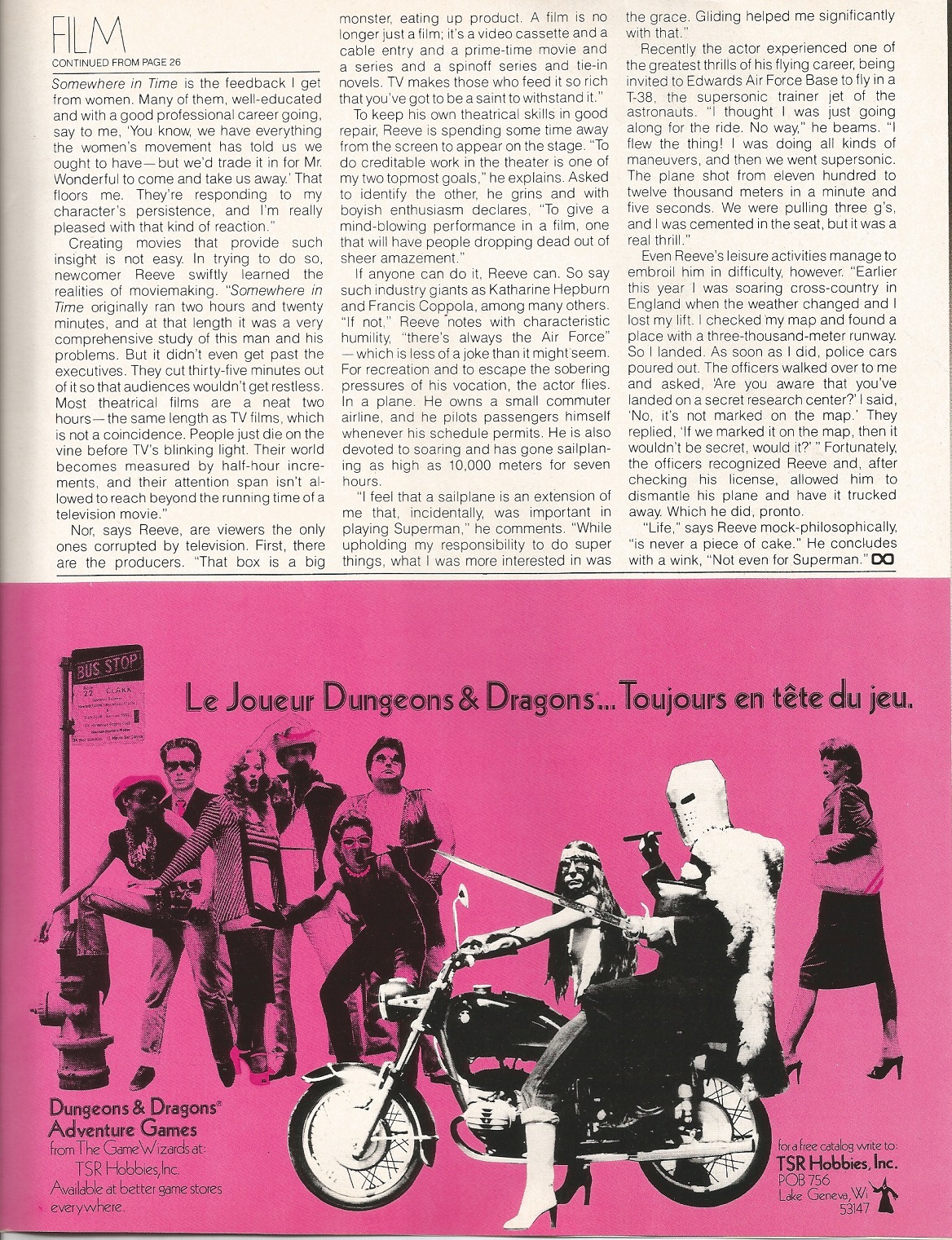
He doesn’t mention D&D, but, to prove the point of his short piece, there’s an ad near the back of the same issue (page 153 of 194).

Omni 10-80 pg. 153 of 194

What’s interesting is that the ad itself wants to be complex and cerebral, and tries to appeal to a more “sophisticated” audience. (The translation is “Play Dungeons & Dragons… Always ahead of the game.”) I’ve been going through a long run of Omni and will post all the D&D ads (and other interesting material). Archive.org has a large catalog of Omni for viewing, but the ads have been left out. That’s to be expected, considering the length of the magazine.

The Art of Earl Norem: ‘The Circus Bear That Assassinated the Nazi Butchers of Stalag 13’ (1968)

Norem 1968

Norem True Action Feb 1976

Welcome to the world of men’s adventure magazines, a genre that peaked during the placid ’50s, and continued to sell well through the late ’70s. The spread comes from a 1976 issue of True Action magazine, but Norem’s original illustration (top image) is from 1968. The story was probably reprinted several times. And why not, when you have art this good?

Nothing gets me through a Wednesday quite like an indignant circus bear bitch-slapping a cadre of deranged Nazi stooges.

`If the A-Bombs Burst’ (1951)

A-Bombs 1951

A-Bombs 1951-2

The residents of New York or Gary, Washington or San Francisco must face the crushing reality that an atom bomb destined for his [sic] neighborhood might even now be winging its way across the curve of the world.

Thank you for the pep talk, article from a 1951 issue of Popular Mechanics. I feel much better now. The photo of the man collapsing from fatal radiation burns also inspires me with a sense of security.

The diagram on page two is tremendous, isn’t it? You’re probably safe if you’re a couple of miles away from the blast, unless you’re downwind!

(Images via Modern Mechanix)

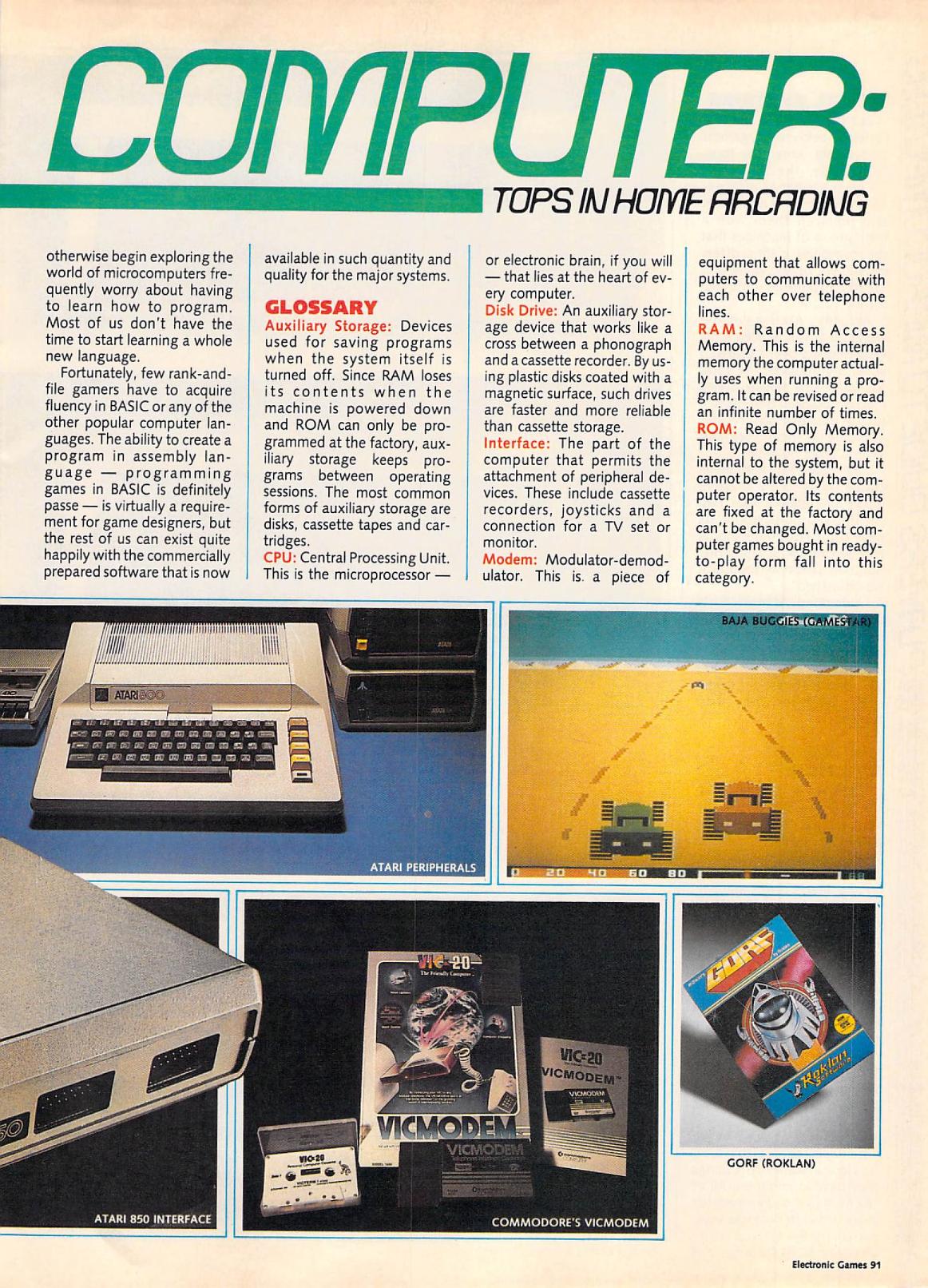
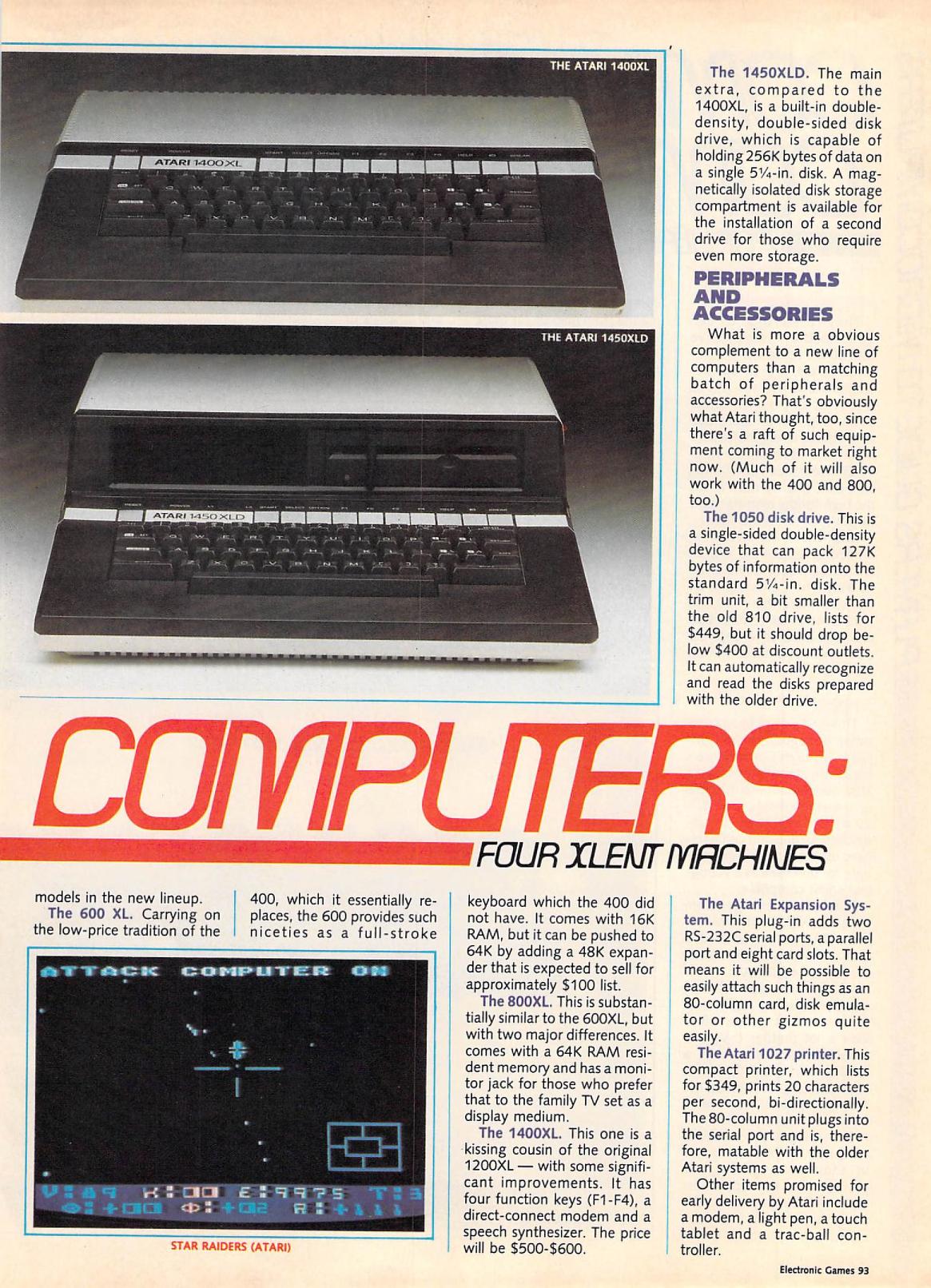
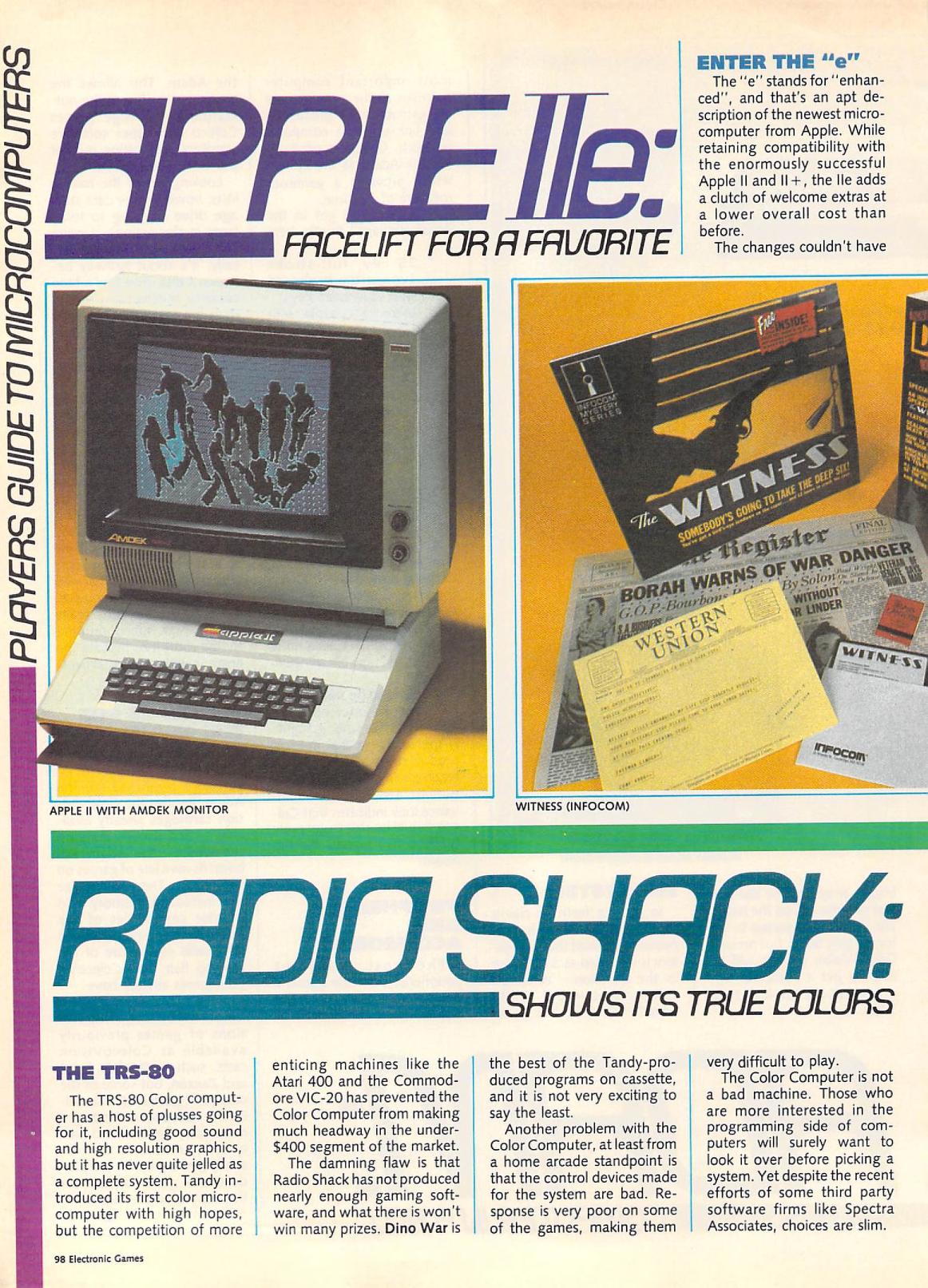
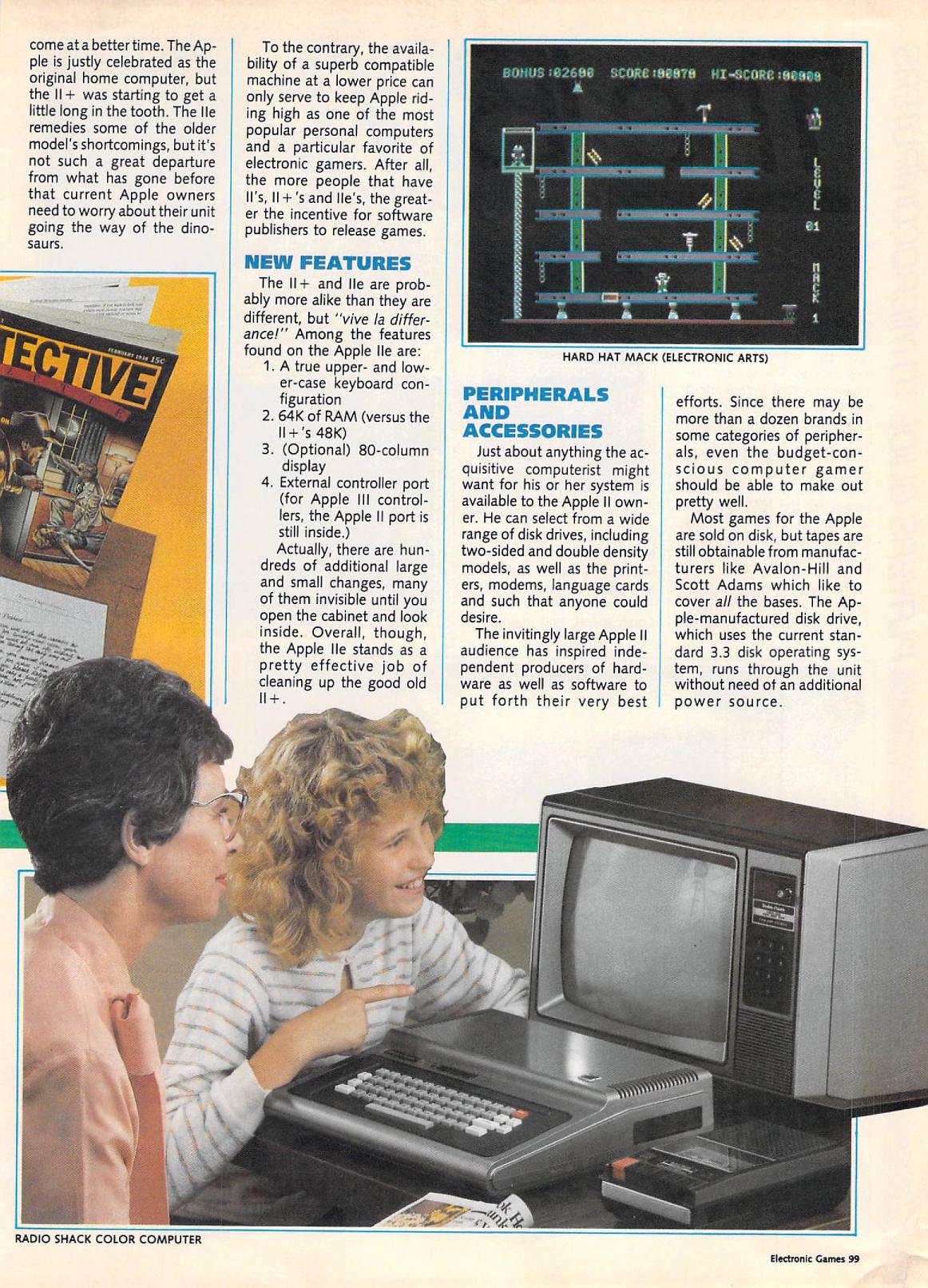
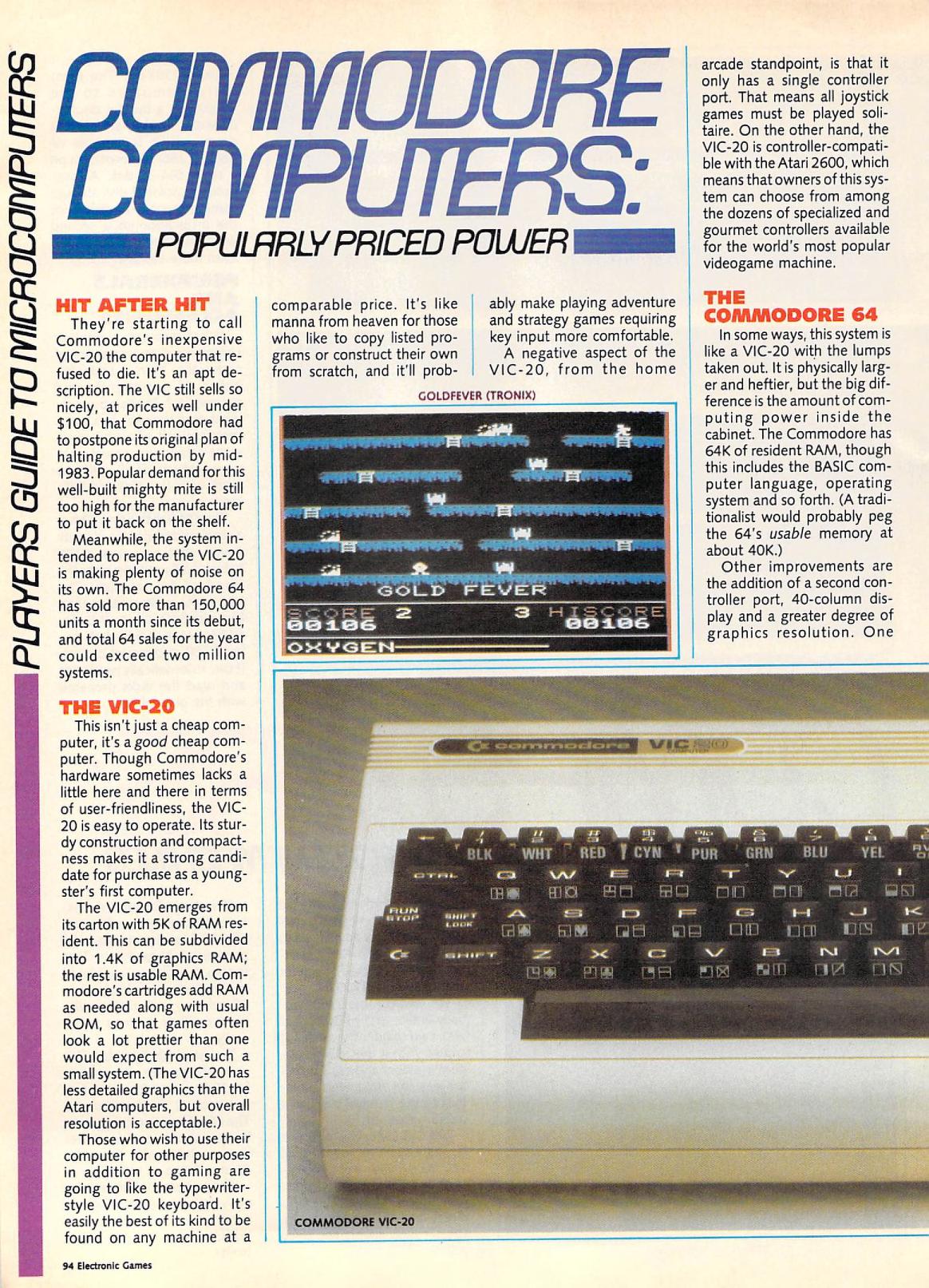
Electronic Games #22 (December, 1983): ‘Players Guide to Microcomputers’, Discs of Tron

EG #22 1983-1

EG #22 1983-2

EG #22 1983-3

EG #22 1983-4EG #22 1983-5

EG #22 1983-6EG #22 1983-7

EG #22 1983-8EG #22 1983-9

EG #22 1983-10EG #22 1983-11

EG #22 1983-12

Interesting that Coleco’s Adam, which I’d totally forgotten about, comes in ahead of Apple and the TRS-80. The first computer I got was my beloved Atari 800. That was about 1983. The first “family” computer we got was an IBM PS/2 in ’87 or ’88. My parents got a substantial discount through my high school. By that time, I had realized that learning how to program and “hack” was hard work, and the games for IBM were pretty lousy. My attention had shifted to Nintendo and my electric guitar—and girls.

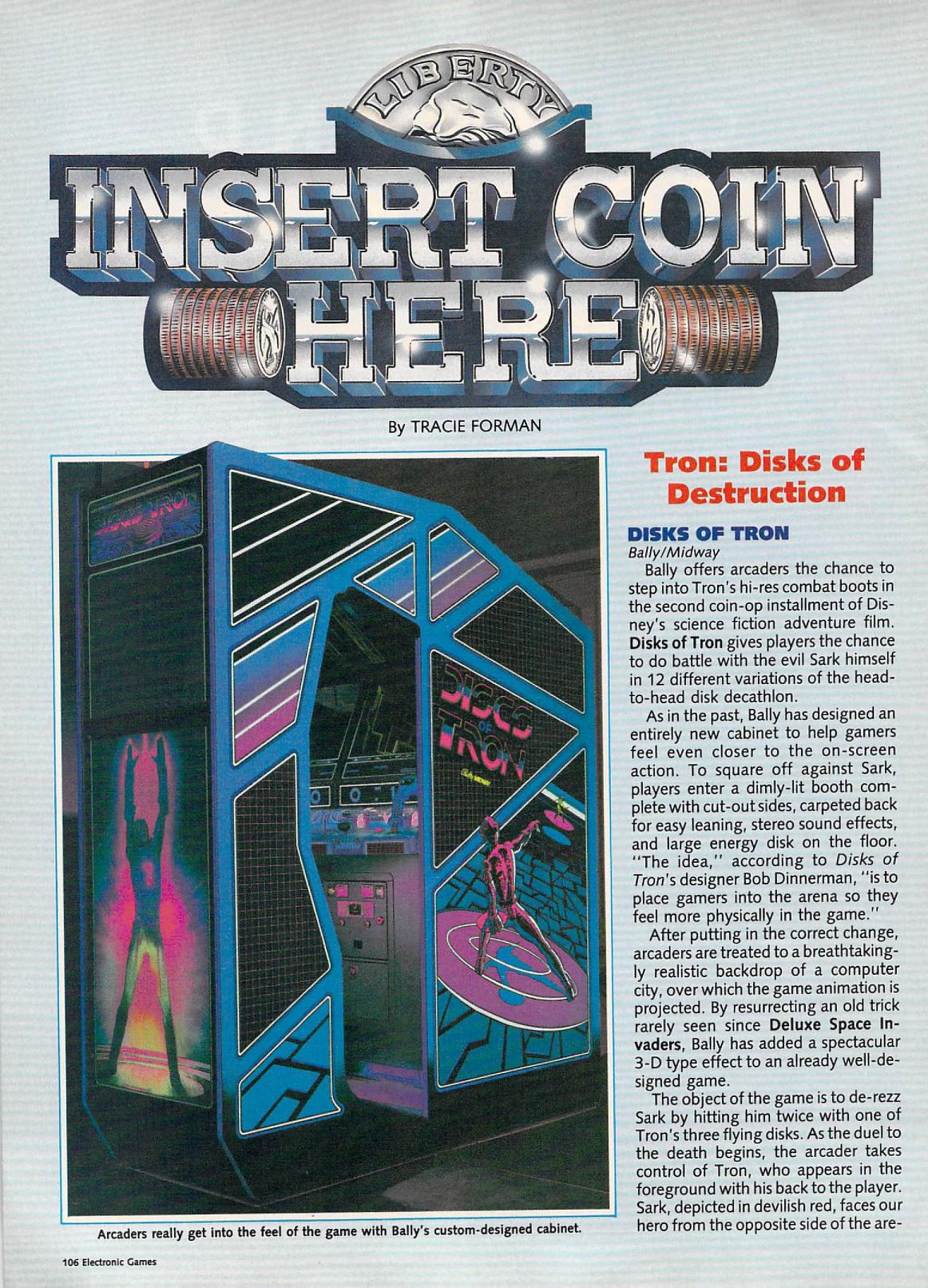
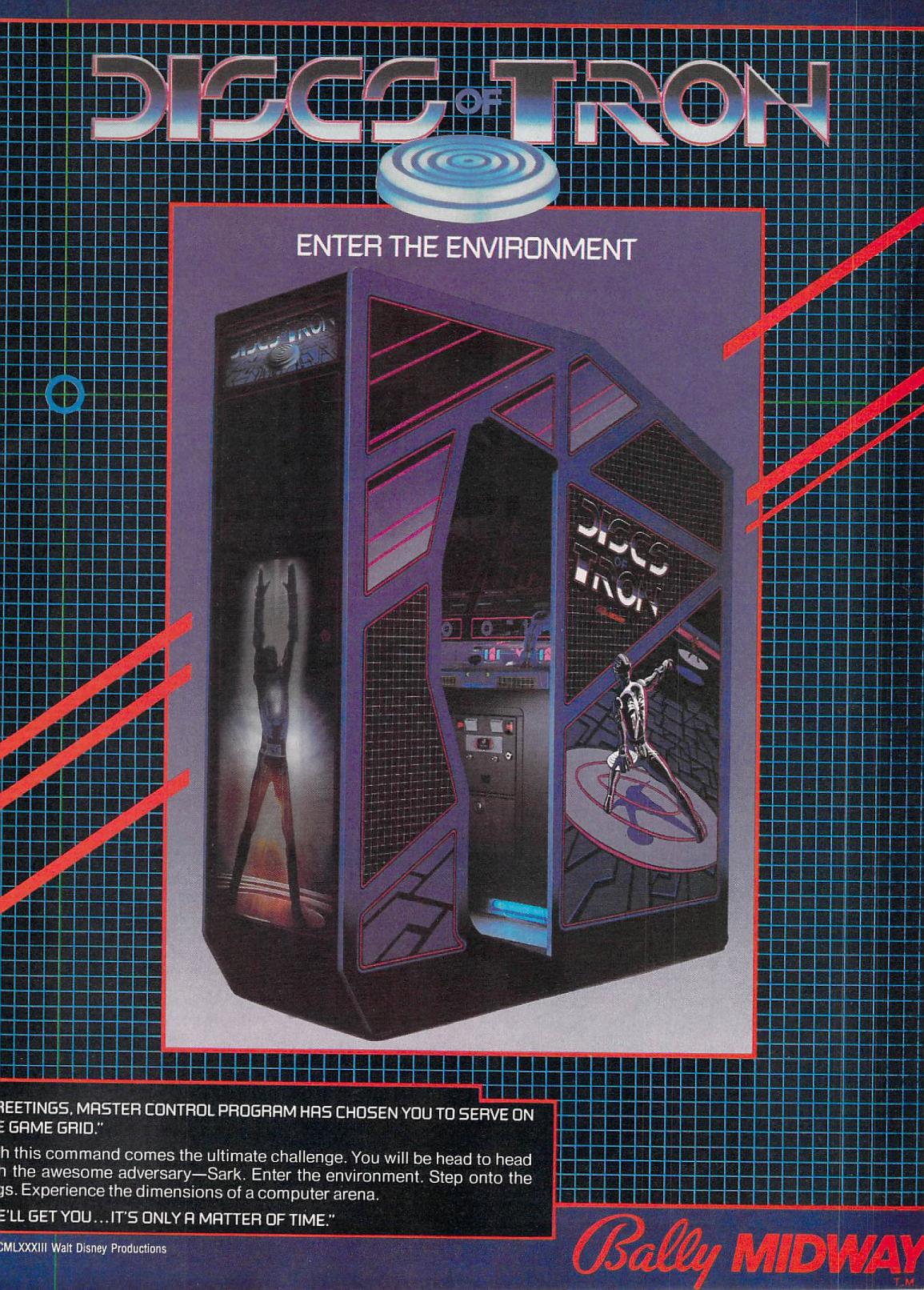
Below is a quick, fun review of my favorite video game ever, Discs of Tron, from the same issue. Read the whole magazine at archive.org.


Electronic_Games_Issue_22_Vol_02_10_1983_Dec_0105

Electronic_Games_Issue_22_Vol_02_10_1983_Dec_0106

Electronic_Games_Issue_22_Vol_02_10_1983_Dec_0107

TSR’s The Strategic Review (April, 1976)

Strategic Review April 76

Strategic Review April 76-7

Strategic Review April 76-8

Strategic Review April 76-6

Strategic Review April 76-3

Strategic Review April 76-9

Strategic Review April 76-4

Strategic Review April 76-5

Strategic Review April 76-2-2

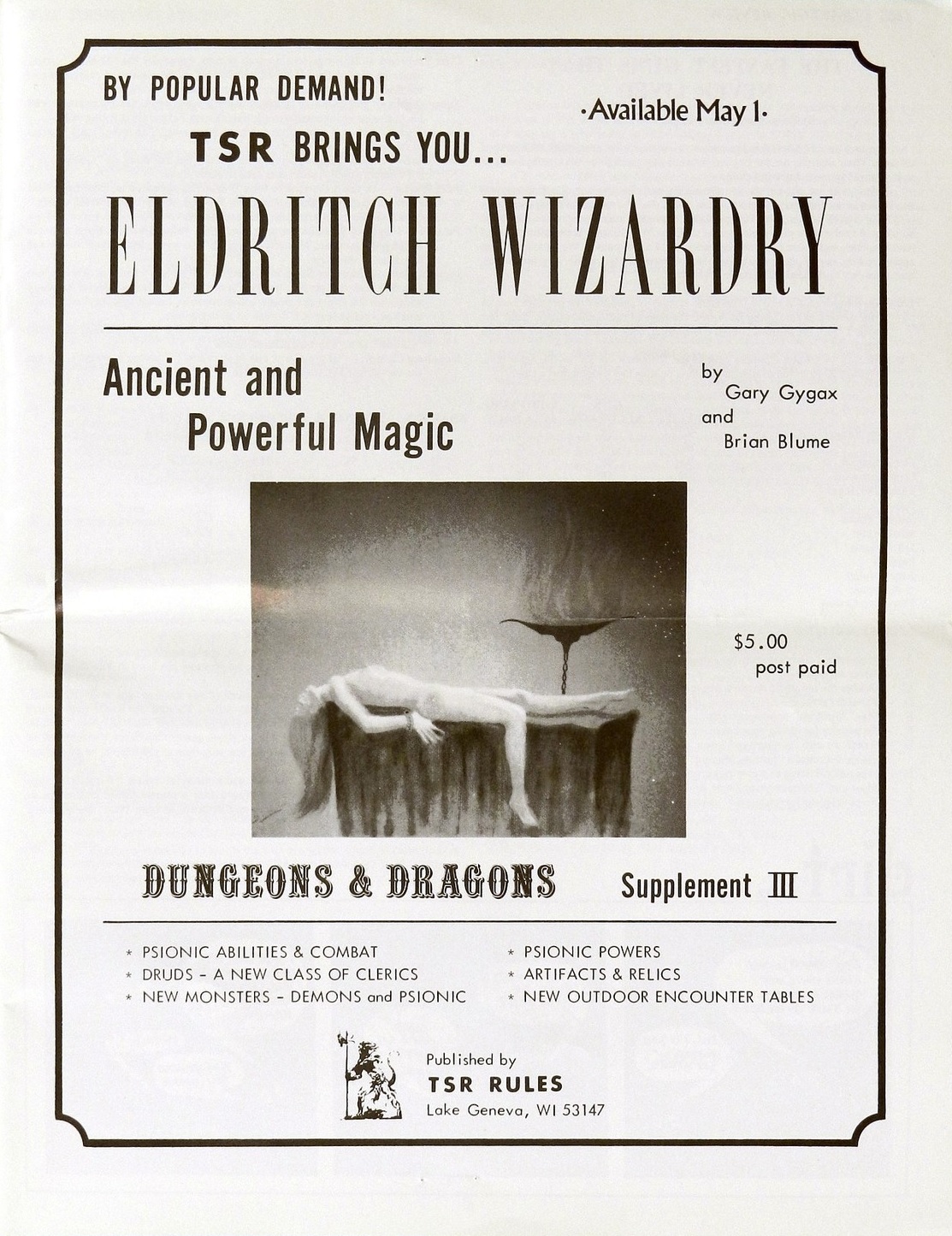
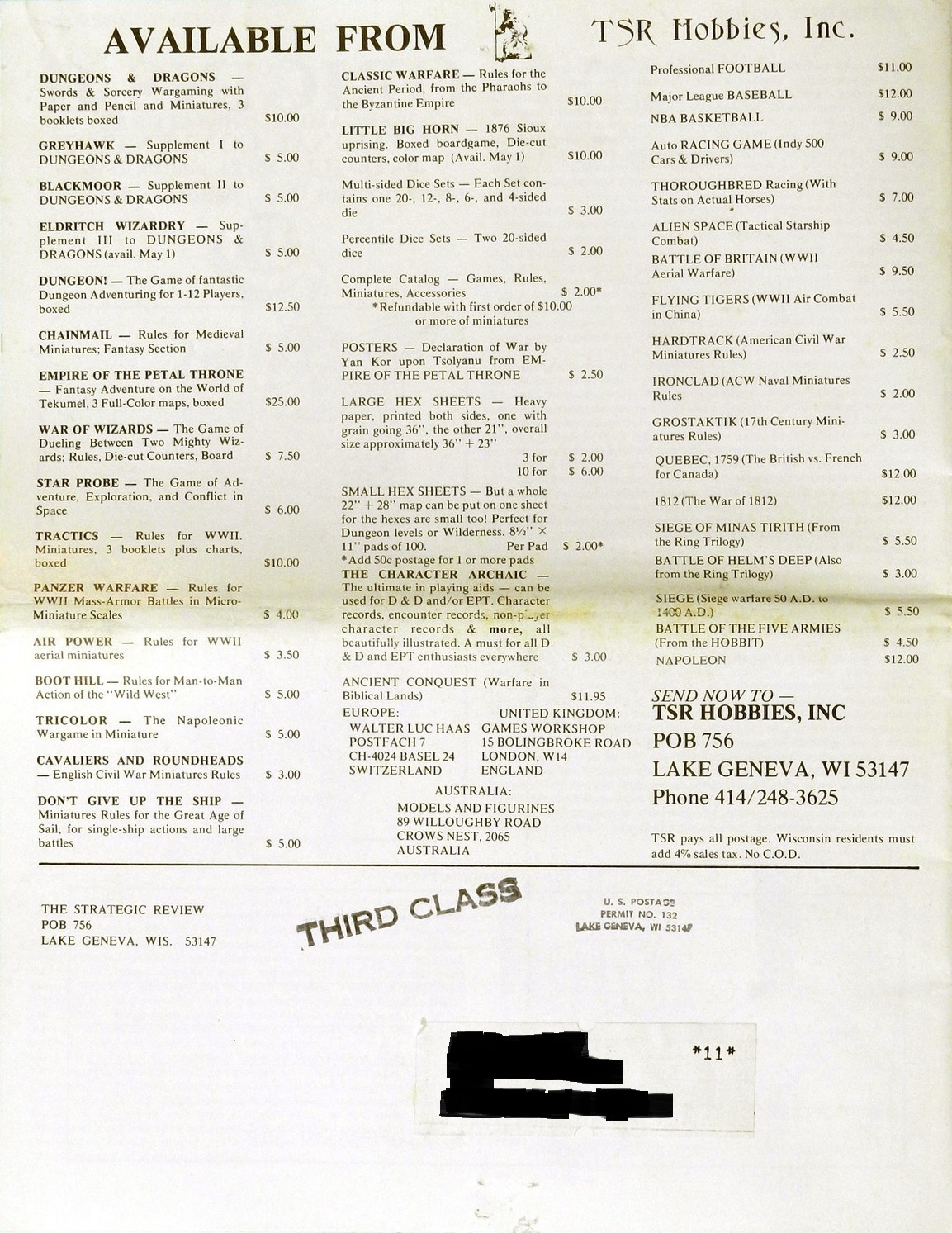
Several pages from the last issue of TSR’s first magazine, including a brilliant two-page photo spread announcing the grand opening of the now famous Dungeon Hobby Shop. The Strategic Review would become Dragon magazine in June of ’76 (see the announcement on the top left of the second photo).

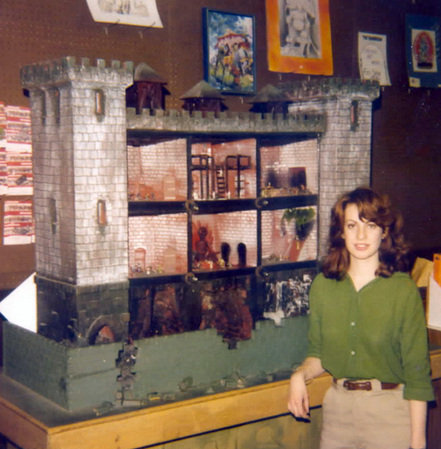
Huscarl gives a pretty comprehensive history of The Dungeon Hobby Shop (Ernie Gygax ran the place) at Wizards of the Coast. He talks about the “three-level dungeon built by Dave Sutherland,” showing “the same group of adventurers in nine vignettes as they fought their way down […] They slowly got whittled down along the way until, in the final chamber, just three of them confronted the demon lord of the dungeon.”

Dungeon Hendryx

Mary Hendryx with Sutherland’s dungeon. (Photo: Kevin Hendryx)

And below is a view of the shop counter. Behind Mary and Linda we’ve got

[…] a full range of Metagaming’s microgames, which were enormously popular around 1980; Advanced Wizard and Advanced Melee, two of the three rulebooks for Metagaming’s RPG The Fantasy Trip; a few bags of Snits! miniatures for Tom Wham’s Snit Smashing and Snits’ Revenge boardgames; and copies of the 1981 editions of D&D Basic and Expert (still my favorites). There’s also a fishbowl of `High Impact Dice’!
Dungeon Hendryx Simpson

Mary Hendryx and Linda Simpson. (Photo: Kevin Hendryx)

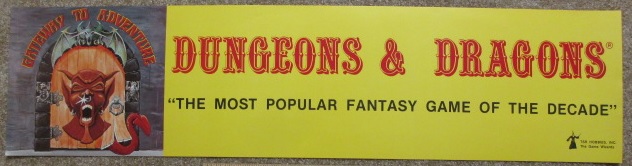
Beneath the Basic and Expert sets (Otus covers), you’ll see a “Gateway to Adventure” banner poster.

D&D Poster 1979

The photo links at the Huscarl post are down, unfortunately, but Al at Beyond the Black Gate has them on view here, along with some other spectacular shots, ads, and a beautifully illustrated Dungeon mailing envelope. (Another mailer and some order forms are at Tome of Treasures. Thanks to Zenopus for the heads up in this Grognardia post.)

(Strategic Review images via pikelett/eBay)


Pages

Archives

Categories

Donate Button

Join 1,117 other subscribers