
This thing might be more obnoxious than the U.S.S. Flagg, but I’ll take one if you have an extra. See specs and views at Yo Joe! The commercial is below.
Surveying the Gen X landscape and the origins of geek
This thing might be more obnoxious than the U.S.S. Flagg, but I’ll take one if you have an extra. See specs and views at Yo Joe! The commercial is below.
Yeah, I just transcribed the entire voice-over for you. Please do me the favor of passing it along and sprinkling phrases of it into your everyday conversation. For example, if your coworker Bruce says, “I can’t stand this goddamn job and I think my wife is sleeping with a man who wears a ponytail,” you say: “Bruce, you really need to conquer your fears, face the unknown, and discover the incredible link between man, animal, and all that is phantasmagorical.”
It was foretold by witches. It was conceived through sorcery. And it was to be destroyed by all that is evil. But the courage of one mortal saved it.
And so, into an age of darkness, in a time of mysticism, sacrifice, and plunder, there came the only light… THE BEASTMASTER.
Born with the strength of a black tiger, the courage of an eagle, the power that made him more than any hero… more than any lover.
He was lord and master over all beasts. (AAAAAWWK). He was THE BEASTMASTER.
Behold the wonder, the horror, the fantasy, the challenge of the one warrior they called… THE BEASTMASTER.
Marc Singer is Dar. Tanya Roberts is Kiri. Rip Torn is Maax. John Amos is Seth. Together they take us on a fascinating journey back into unexplored times.
Conquer your fears. Face the unknown. And discover the incredible link between man, animal, and all that is phantasmagorical.
In the world of dungeons, dragons, and Dar: THE BEASTMASTER: The epic adventure of a new kind of hero.


If you had told me last week that Woman’s Day magazine and Star Wars had something in common, I would have fallen on my lightsaber. Now I know better. Two issues of the magazine (November, 1978, and November, 1980) featured intricate, Star Wars-themed playset designs and do-it-yourself instructions. Actually, the Outer-Space Station from the first issue doesn’t mention Star Wars specifically (note the Micronauts stuff in the second photo), but it looks incredible nevertheless.
The instructions were ridiculously complicated. Here’s how we’re told to assemble the Solar Power Unit of the Space Station:
Materials 1/2″x24″x30″ plywood; 3/4″x12″x30″ plywood; 1″x1″x20″ pine; 1/4″x12″x24″ mirrored acrylic; 18″x36″ plastic-laminate; 12′ of 1/8″-diam. plastic aquariam tube; 18″ of No. 18 soft steel wire; 36″ of 1/4″-diam. clear acrylic dowel; 18″-wide acetate strips, 1′ each of pink, yellow, green and blue.
From 3/4″ plywood, cut pieces A, B, C and D (all 4′ high), with mitered sides following Top View diagram. Also cut 2 triangular sides and cross support for the heat (or sun) collector. From 1/2″ plywood, cut long outer side and base. Drill for acrylic pegs.
Assemble sides around base with heat collector parts. Paint edges and sides that will be visible. Laminate outer surface of outer side. Cut 1/4″ acrylic mirror: for sides with mitered corners, and for heat collector with top and bottom to fit. Sand cut edges to remove saw cuts, which will reflect in mirrors. Cut top (catwalk) and laminate. Glue mirrors and top in place.
Cut acrylic dowel pegs; insert in base holes. Cut plastic tubing for each pair of pegs. Cut colored acetate in 1/4″ strips (3″ shorter than its tube), slip into tubes and place tubes on pegs.
Trim frame pieces for heat collector from 1/2″ stock. Assemble with glue, pressing pieces together; paint. Glue frame in place with many dots of glue.
Cut and bend wire for ladder rungs. Place tape over acrylic and mark rung holes. Drill holes, remove tape and insert rungs.
Are you shitting me? Apparently the Woman’s Day editors realized that no one could actually build the Space Station, because the Empire Strikes Back sets (Hoth and Dagobah) were a bit more manageable—for someone with an endless supply of dedication and patience.
Speaking of which, I found evidence of only one of the sets completed back in the day. (Click to enlarge.)

According to Alicia Policia on Flickr, her mom made the Hoth set between Thanksgiving and Christmas in 1980, when Alicia’s brothers were at school and Alicia, then 2 months’ old, was napping.
Ron Salvatore discusses the sets in length at the Star Wars Collectors Archive (part one here, part two here). The original instructions are posted as well. All Woman’s Day images are from Salvatore’s articles.


My favorite artist is J.M.W. Turner (1775 – 1851), a Romantic landscape painter and watercolorist known for his impressionistic use of light and color. John Berkey (1932 – 2008) is the Turner of the late 20th century.
Turner emphasized the terrible grandeur and capriciousness of nature, while Berkey depicted humanity’s attempt to tame that fickle grandeur through technology. Turner, like the nature he portrays, is indifferent to human beings. They are too small. In Berkey’s visions, humanity has been resurfaced, enlarged and prolonged by mechanization but also defaced by it, in effect dehumanized by the mortal impulse to break orbit and touch the infinite, to get out of the here and now.
Turner’s work revolves around the sun and contends with the interplay of light and fire with smoke and fog, storms and dust clouds. Berkey’s massive, eloquent spacecraft are self-lighting candles in the interstellar bleakness, slight visitations on a nearly universal blankness. There is a fundamental loneliness in the work of both artists. Turner’s burning skies and Berkey’s eerie ships are so lastingly sublime because the people under them and inside them are not.
Below are Turner’s famous The Fighting Temeraire tugged to her last berth to be broken up (1839) and Berkey’s Intrusion, an Unpleasant Visitor (1990). The similarities, to me, are remarkable.


Berkey claimed that he wasn’t a fan of science fiction because “It isn’t literature.” The statement doesn’t surprise me. He’s a Romantic in the grand tradition, and if he had depicted subject matter deemed “fine” and “high” enough (a giant dachshund, for example, or a hairy butt) by the snobs who write art columns and control art galleries and museums, he would be revered today as one of the greatest American artists of his time.
Read a 2005 interview with Berkey at City Pages.
The official website of the John Berkey Estate is here.
(Berkey images via Astrona; Turner image via WikiPaintings)

Rule number 7 in the 1970s handbook: You must own and wear at least one pair of cut-off jean shorts.
Rule number 26 in the 1970s handbook: You must own and wear at least one shirt with `California’ written on it.
I dig the minimalist Del Taco logo, seen better below via mojavegirl/Flickr.

(First photo via Dad’s Vintage Store/eBay)


It’s not a Transformer, people. It’s a Change-Able Robot. Totally not the same thing.
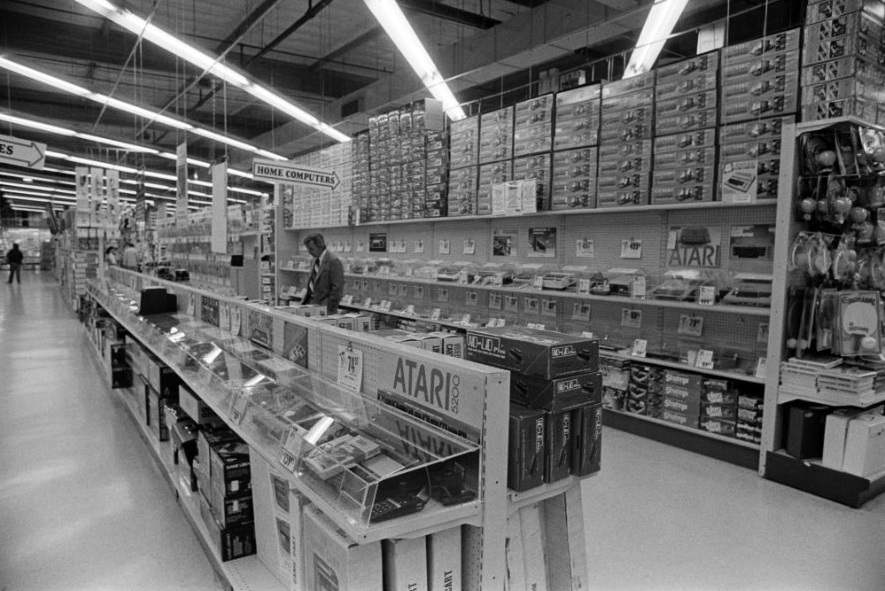

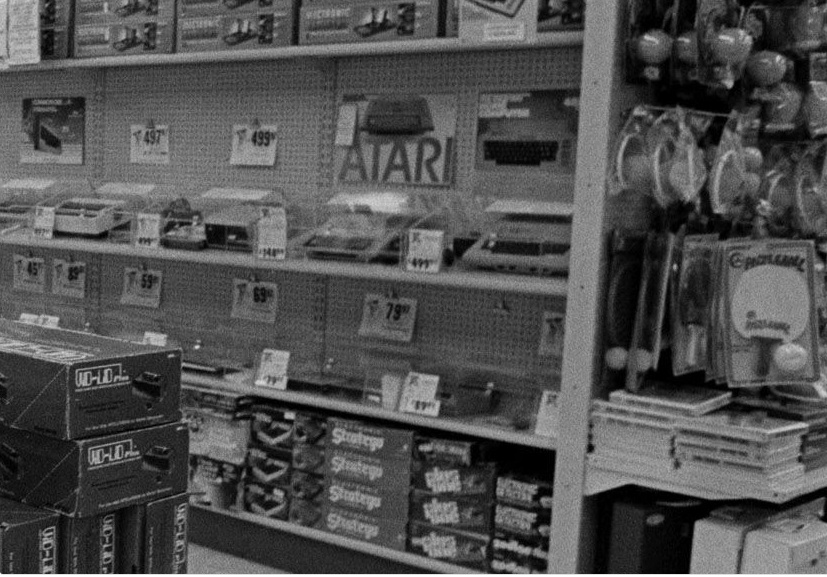

Toys “R” Us, Sunnyvale, CA, 1983. The 5200 is listed at $160.00. The Atari 800 (back shelf, far right) is $500 (it was $1000 in 1980). A snapshot of the crash.
(Images via Computer History Museum)
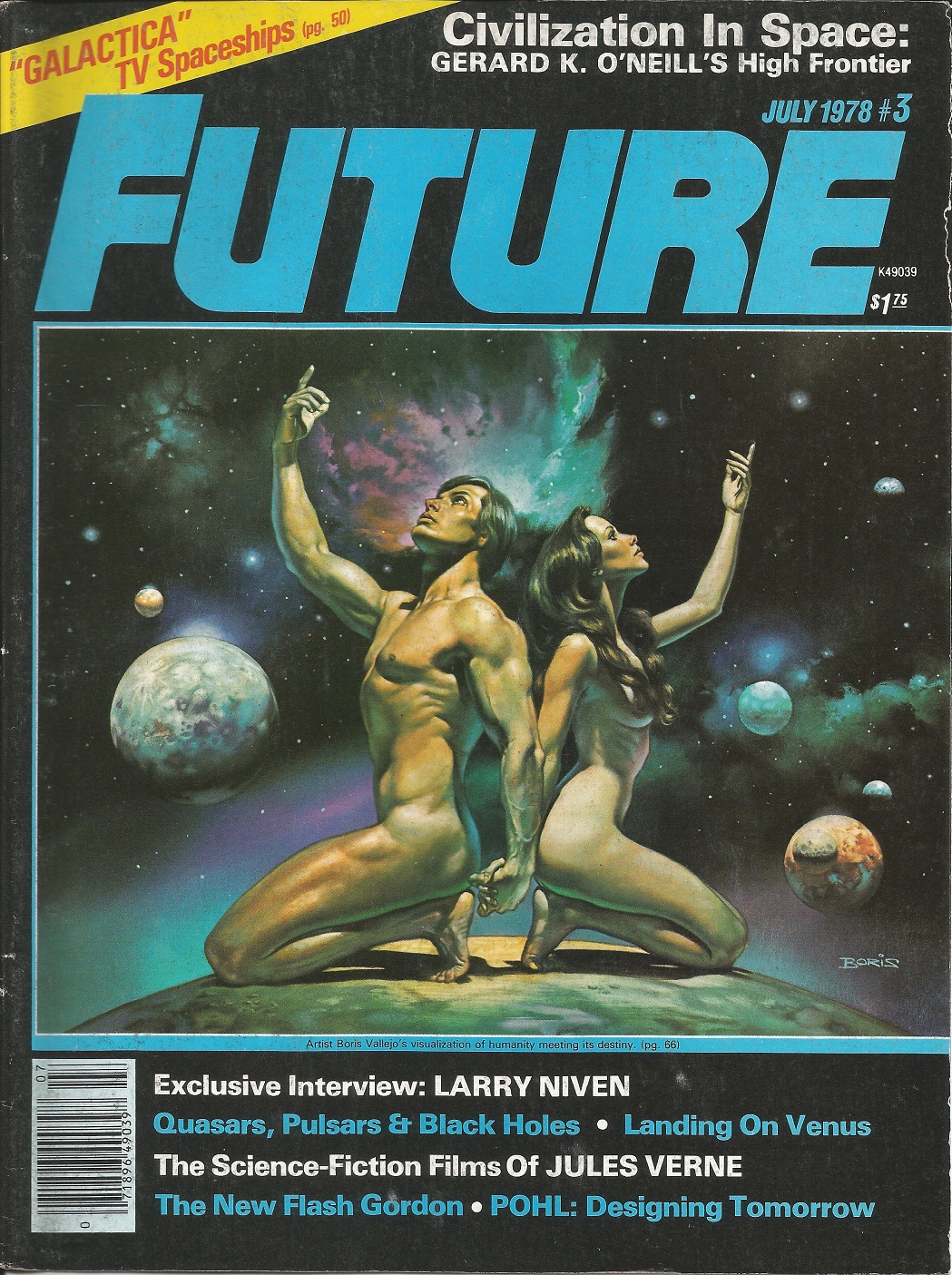

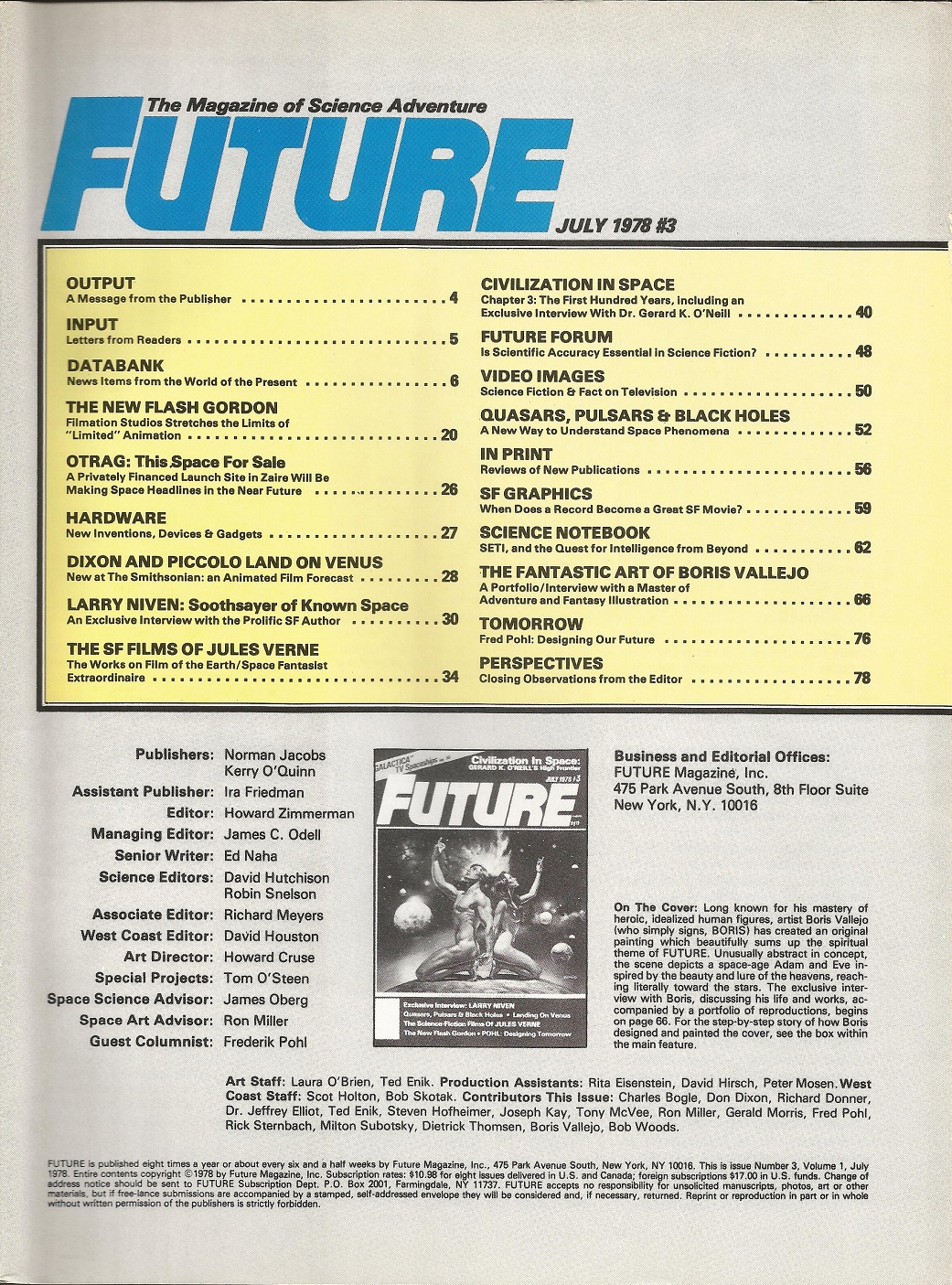

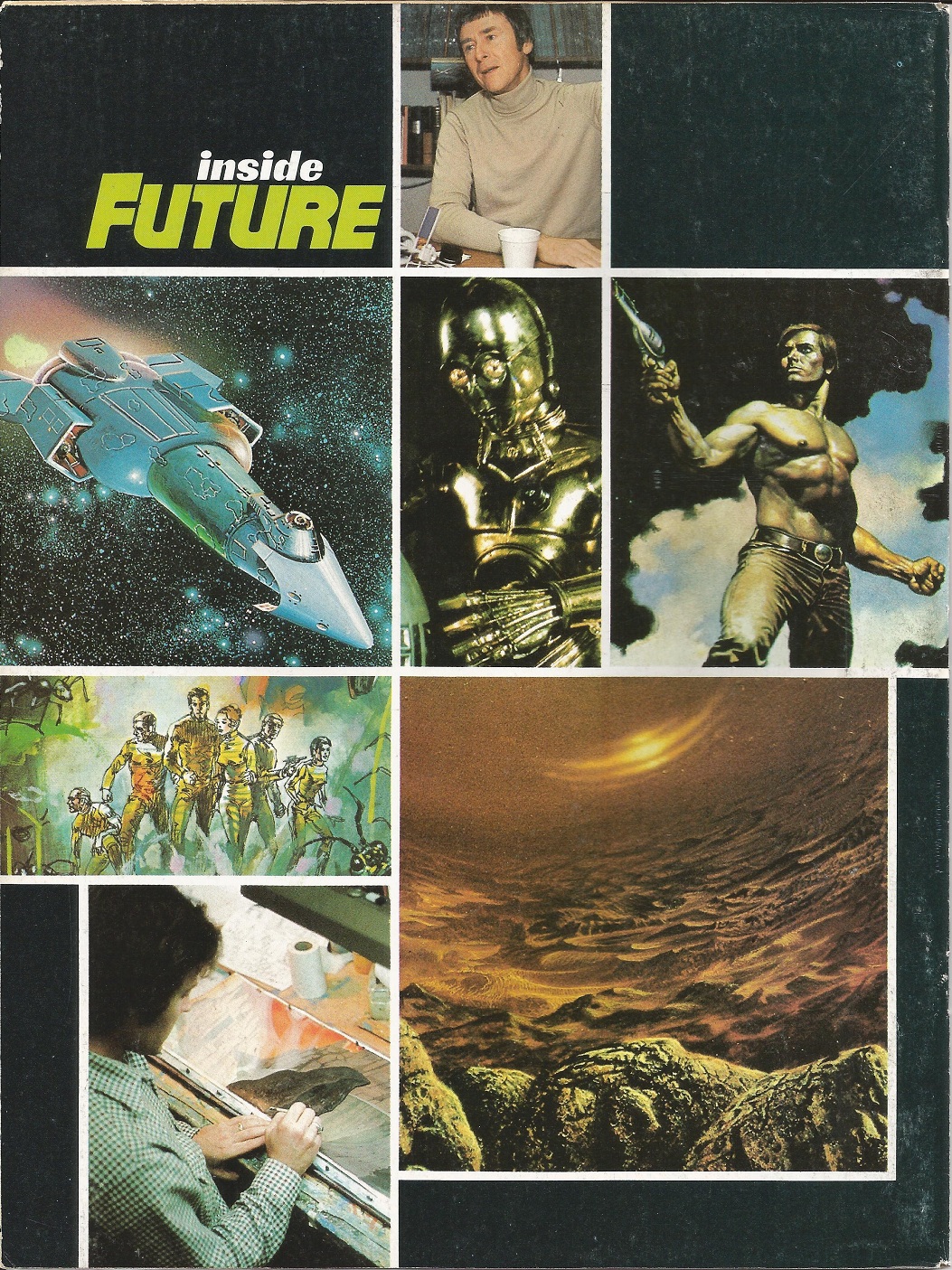


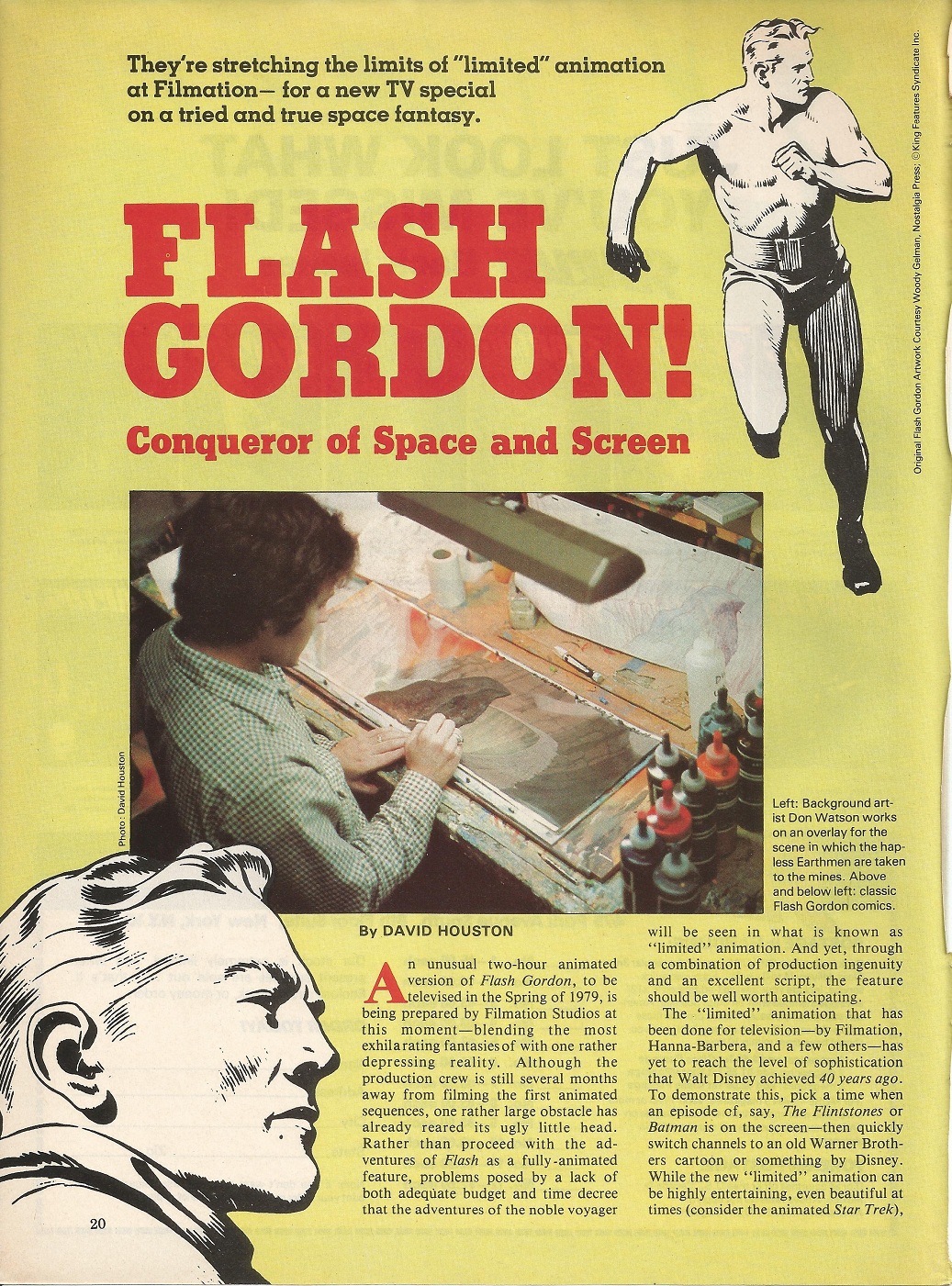

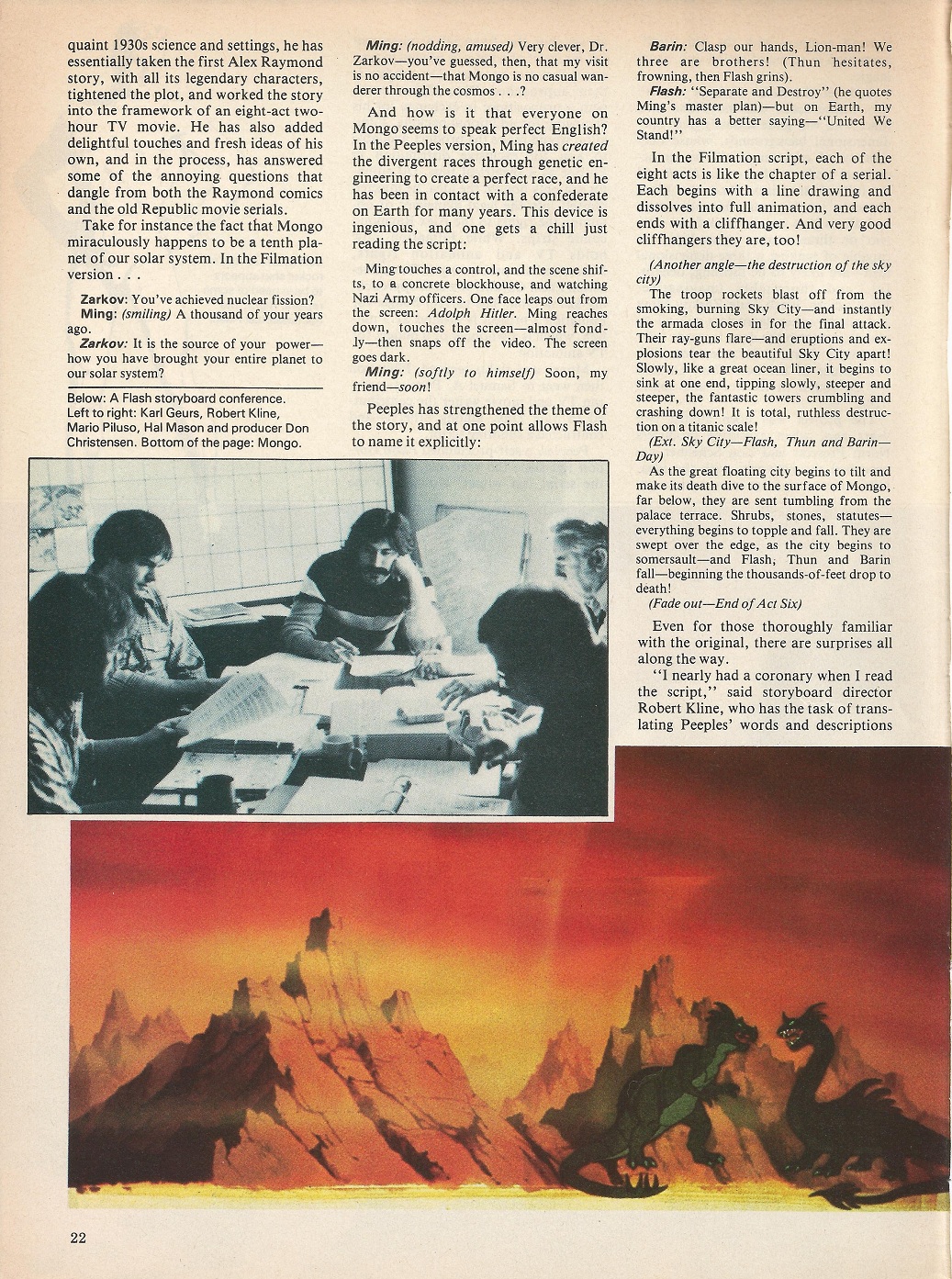


Future magazine, later called Future Life, was published from 1978 to 1981 for a total of 31 issues. It featured a combination of science fiction commentary and criticism, futurism/futurology, interviews with luminaries in relevant fields, and space exploration/travel activism. I’ve got about half of the run at this point, as well as a number of other cool sci-fi mags of the era. I’ll be scanning and posting them as time allows.
Above you’ll find the front cover of Future #3, as well as the inside front cover, table of contents, inside back cover, and back cover. (Click pages to enlarge.)
After that there’s a short piece on the Annual Toy Fair in New York (1978) discussing the post-Star Wars sci-fi trend, led by the “real stars of the show,” Mego and Kenner. I find it revealing that “three buildings with grown adults playing with toys for two weeks” is referred to as a “seeming impossibility.”
On the same page there’s a blurb on Gerard K. O’Neill and the formation of his Space Studies Institute (SSI), a non-profit organization “designed to help research the subject of space habitation.” I talked about O’Neill and his initiative here.
Following that is a feature on Filmation’s Flash Gordon, originally planned as a made-for-television animated movie. NBC later decided to turn the production into an animated TV series that ran for two seasons starting in 1979. Upon cancellation of the series in 1982, NBC went back to the original material and assembled it for a prime time movie, Flash Gordon: The Greatest Adventure of All. Neither the series nor the movie is currently available on DVD. You can see the series intro here. Watch the movie (pretty sophisticated for the time, and fun) on YouTube.
Interestingly, the producers at Filmation could not secure the necessary funding from NBC for the project, so they offered producer Dino De Laurentiis “exclusive distribution in Europe as a theatrical film” in exchange for additional backing. Laurentiis promptly agreed and “injected himself into the legal maneuver of obtaining the rights to the Alex Raymond [creator of Flash Gordon] comic strips.” Filmation ended up with animated and TV rights, while Laurentiis secured feature film rights. He immediately began working on the live-action Flash Gordon (1980).
You’ll find a nice homage and issue-by-issue synopsis of Future/Future Life at Weimar World Service, John Zipperer’s website.


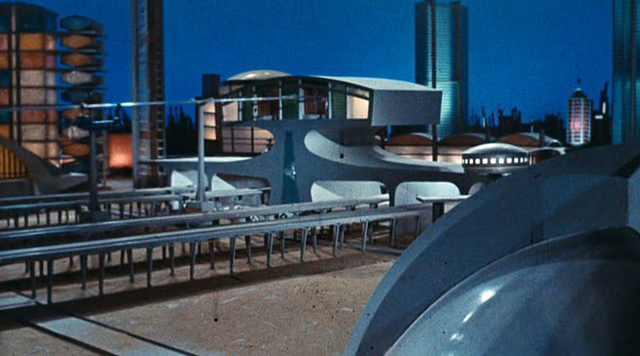




The Gamma One Quadrilogy is Wild, Wild Planet (1965), The War of the Planets (1966), War Between the Planets (1966), and The Snow Devils (1967). The films were shot consecutively in about four months using many of the same sets and actors. The miniatures seen above were used in all the films.
I’ll review Gamma One separately, as I’m a great fan of colorfully inane Italian sci-fi, this series in particular.
(All images via modern_fred/Flickr except the last one, which is from Cinema Knife Fight)




Last Friday, I posted some Don Davis art depicting huge asteroids smashing into the Earth. This Friday, I’m posting real photos of an actual meteor that exploded over Russia. See scary video here.

 2 Warps to Neptune