Archive for November, 2015


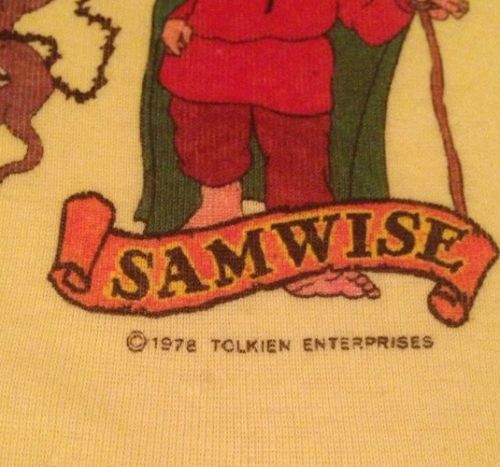
The Lord of the Rings T-Shirt (Tolkien Enterprises, 1978)

LOTR-1

LOTR-3

LOTR-2

You’ll see a “Hip-O-Potamus S.F.” on the bottom left of the shirt. That refers to an influential San Francisco company founded in 1970 by Jeffrey Axelrod and Barry Anderson. Their first job, after they had no luck selling their own designs, came when a store owner asked them to print out 200 t-shirts of an original design over the weekend. Says Jeff, who still sells some of the original Hippo Tees designs:

It just so happened that the owner of that very store was the wife of the drummer for the iconic band, the Grateful Dead. It was 1971 and she had the vision to sell t-shirts at rock concerts, and so our t-shirt venture exploded! Our first rock’n t-shirts [the company was originally called Rock-n-Roll t-shirts] went on tour with the Grateful Dead.

The company would later collaborate with promoter Bill Graham’s Winterland Productions, selling shirts at Bay Area rock shows, a practice that shortly became standard. Jeff (mushroom shirt) and Barry (far right) can be seen below, circa 1970.

You can see more of the Tolkien Enterprises Lord of the Rings t-shirt designs here and here, and a much stranger design here.

hippo-tees-founders

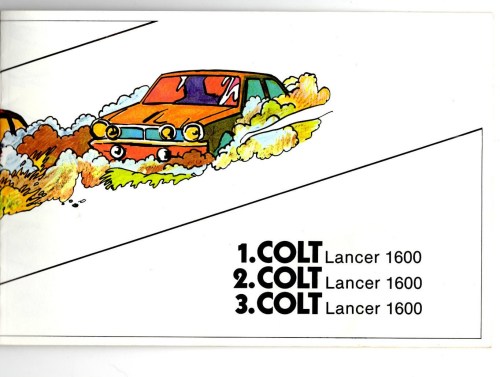
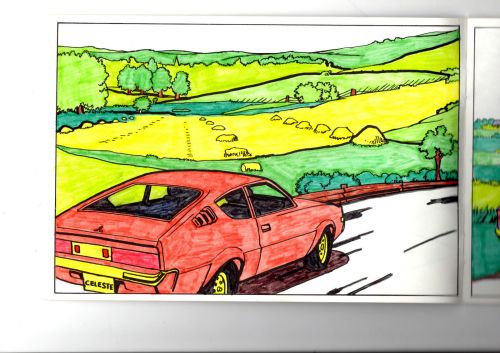
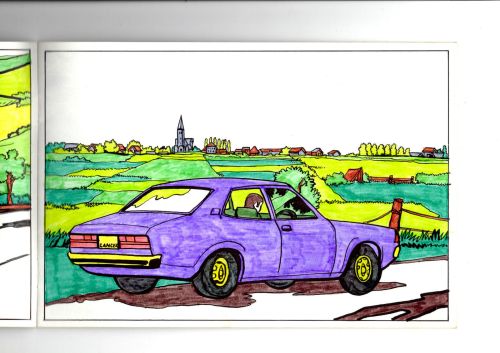
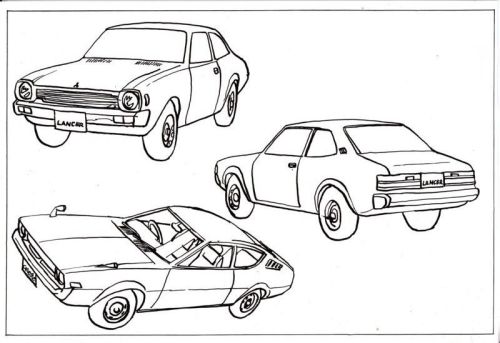
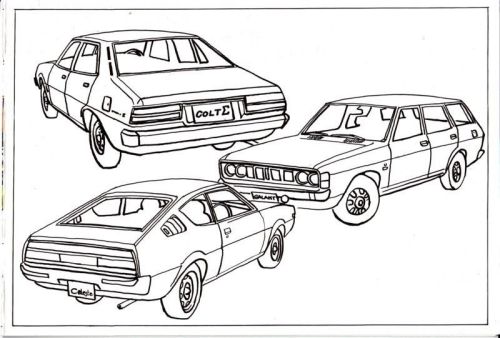
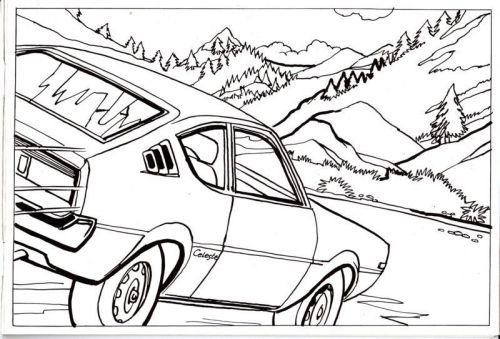
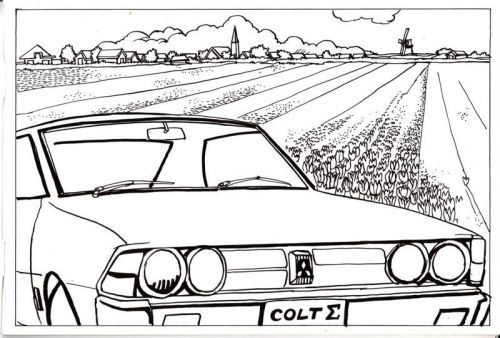
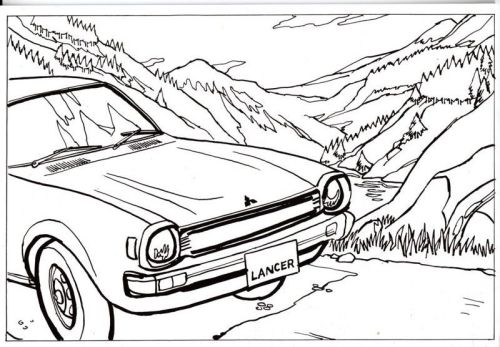
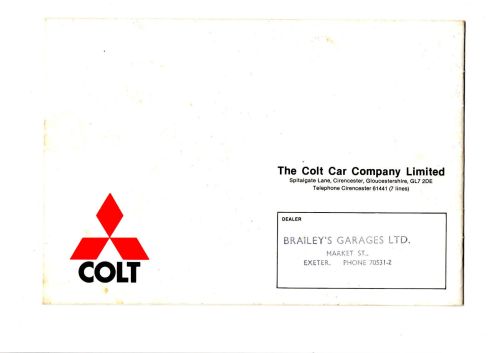
Mitsubishi Colt Lancer Promotional Coloring Book, Circa 1976

Colt 1976-1

Colt 1976-2

Colt 1976-3

Colt 1976-4

Colt 1976-5

Colt 1976-6

Colt 1976-7

Colt 1976-8

Colt 1976-9

Colt 1976-10

Colt 1976-11

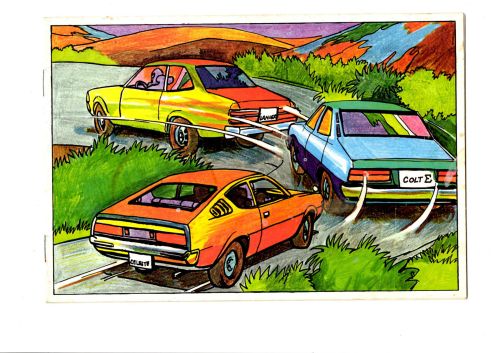
Groovy item meant to keep the kids busy at the dealership while dad and mom kicked the tires. Joginder Singh won the Safari Rally in 1973 and 1976 driving a Colt Lancer.

Cars didn’t transform in the ’70s. They just went really fast to evade the cops or catch the bad guys.

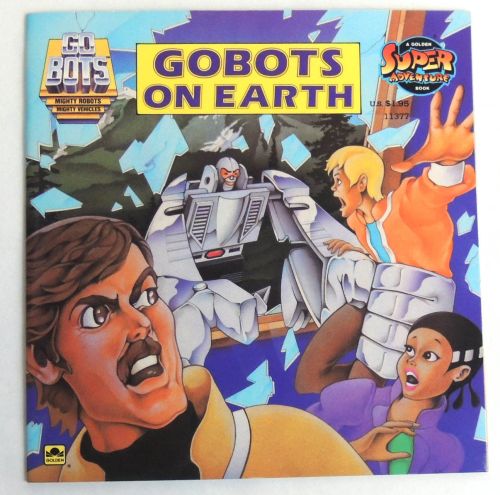
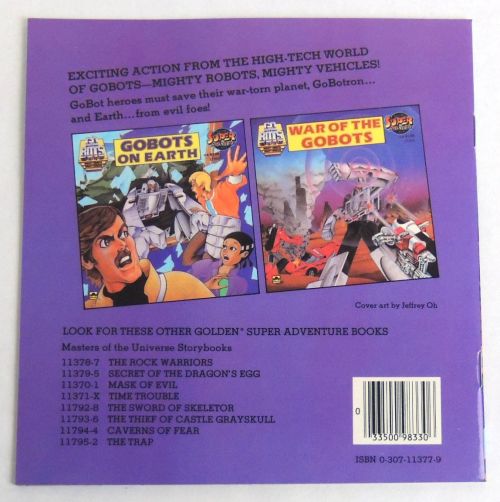
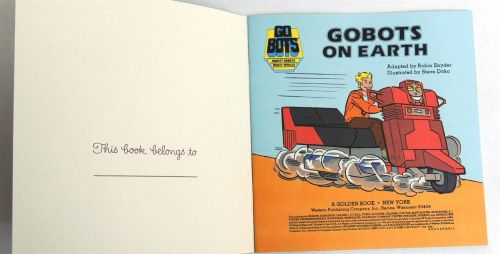
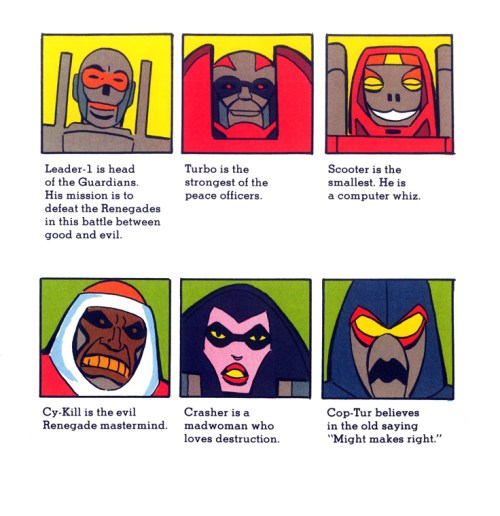
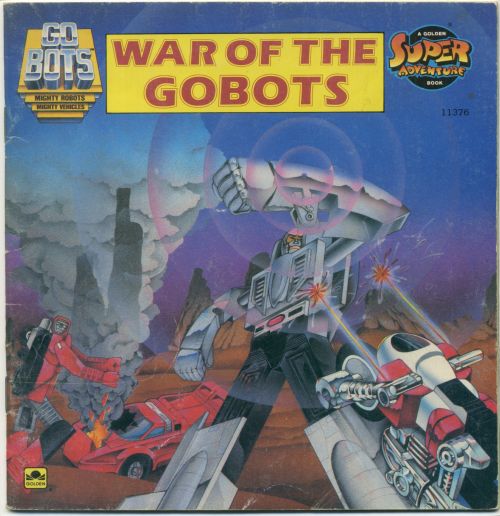
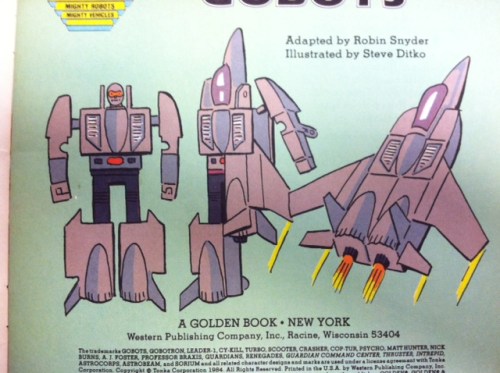
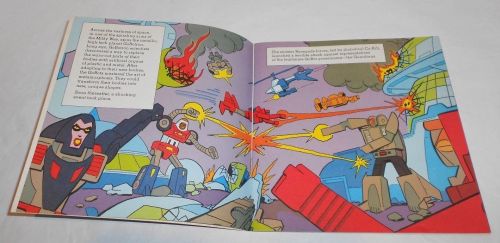
Gobots on Earth and War of the Gobots Super Adventure Books (Golden, 1984)

Gobots Ditko 1984-1

Gobots Ditko 1984-2

Gobots Ditko 1984-3

Gobots Ditko 1984-4

Gobots Ditko 1984-5

Gobots Ditko 1984-6

Gobots Ditko 1984-7

Gobots Ditko 1984-8

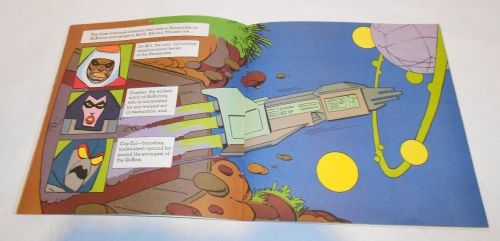
What’s interesting about these books is that they were illustrated by comics legend Steve Ditko, co-creator of Spider-Man and creator of Doctor Strange. It’s hard to believe now that someone like him would do art for a kid’s book about a second-rate transforming robot franchise, but comics artists and writers at the time held no rights to their work, and worship at the altar of pop culture was not a mainstream pursuit. Illustrators had to knock out an endless amount of pages to make a living. From a New York Post article from 2012:

To this day, Ditko has probably made very little off his billion-dollar co-creation [Spider-Man]. He has no ownership of the character and was paid a modest per-page rate at the time. He does collect royalties each time the comics are reprinted, but he says he has not earned anything off the films, despite his name appearing in the credits.

The covers of both books are illustrated by Jeffrey Oh and written by longtime Ditko collaborator and champion Robin Snyder.

(Images via eBay, Beer and Robots, and Life with Fandom)

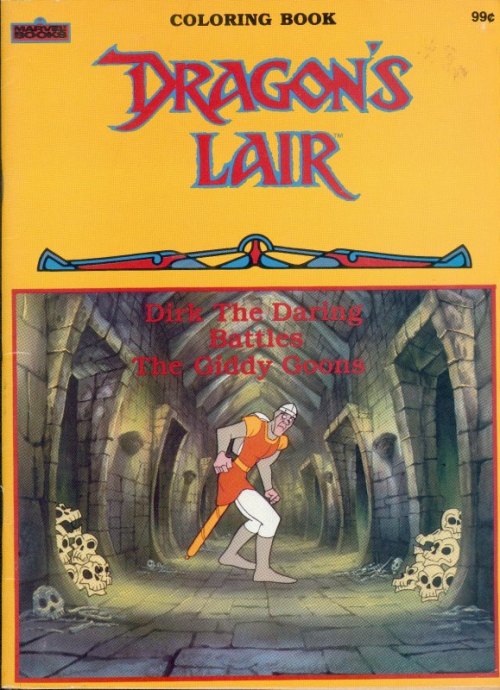
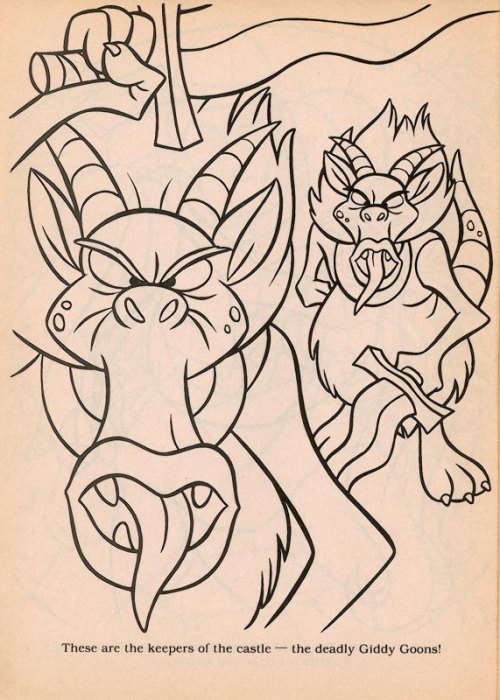
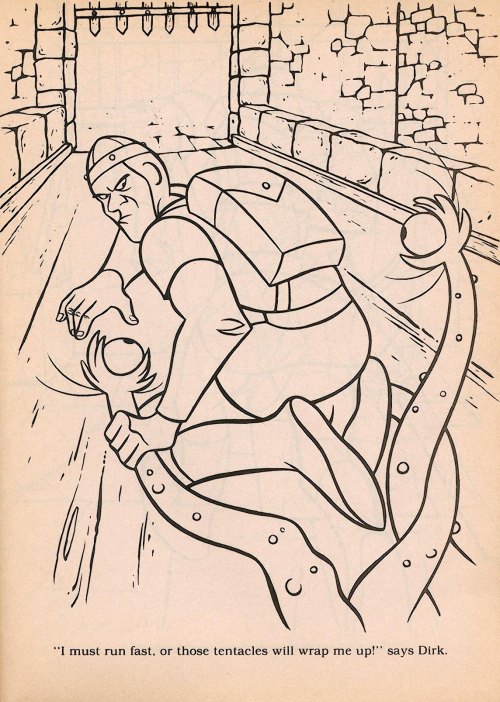
Dragon’s Lair Coloring Book: ‘Dirk the Daring Battles the Giddy Goons’ (Marvel Books, 1984)

DL 1984-1

DL 1984-2

DL 1984-3

There were two coloring books and two coloring/activity books based on Dragon’s Lair, all of them published in 1984 by Marvel Books. The second coloring book is The Magic Sword, and the coloring/activity books are Dirk the Daring Battles the Black Knight and Dirk the Daring Battles the Crypt Creeps.

More on Dragon’s Lair here, and I talk about the Marvel Books imprint here.

(Images via Dragon’s Lair Fans)

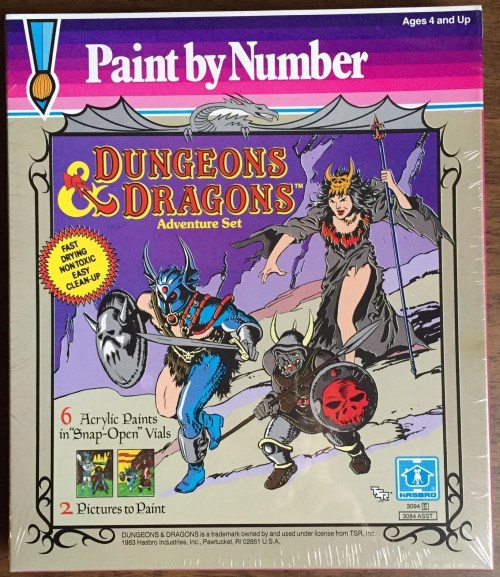
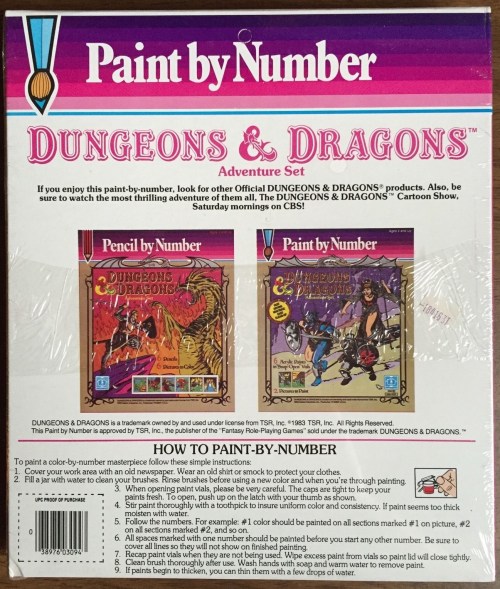
Dungeons & Dragons Paint by Number Adventure Set (Hasbro, 1983)

D&D Paint 1983

D&D Paint 1983-2

You can see the Pencil by Number Set on the back cover: the knight looks very similar to Dirk from Dragon’s Lair, surely not a coincidence. The artist on this set is uncredited. More interesting are the two Giant Advanced Dungeons & Dragons Pen and Poster Sets (Arrow, 1981)—an early license with great art by Larry Elmore, Jim Holloway, and Jim Roslof—that you can see at The Acaeum.

Hasbro also released a D&D Lite-Brite Picture Refill.

Photos are via eBay seller burntwire, who has been selling very rare merchandise from the TSR archives.

Air Travel in the 1970s: For Your Comfort, Please Unfasten Your Seatbelts and Remain Unseated

Air 1970s-1

Air 1970s-19

Air 1970s-6

Air 1970s-18

Air 1970s-11

Air 1970s-2

Air 1970s-3

Air 1970s-4

Air 1970s-12

Air 1970s-9

Air 1970s-8

Air 1970s-14

Air 1970s-17

Air 1970s-10

Air 1970s-15

Air 1970s-5

Air 1970s-7

Air 1970s-13

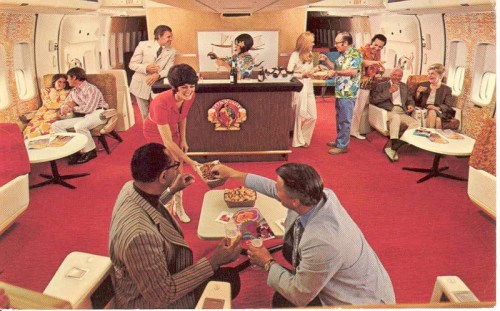
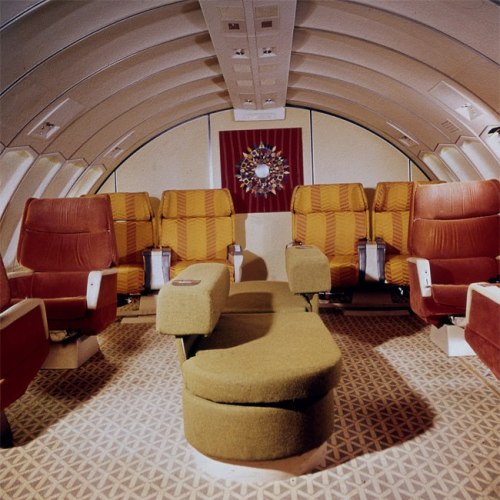
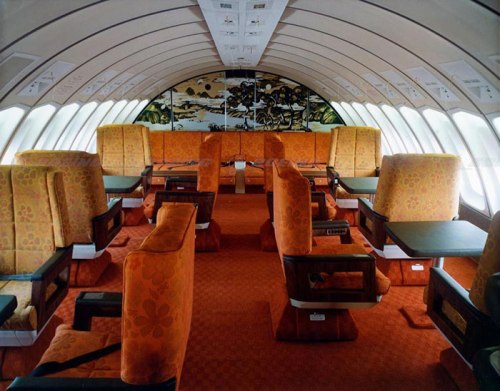
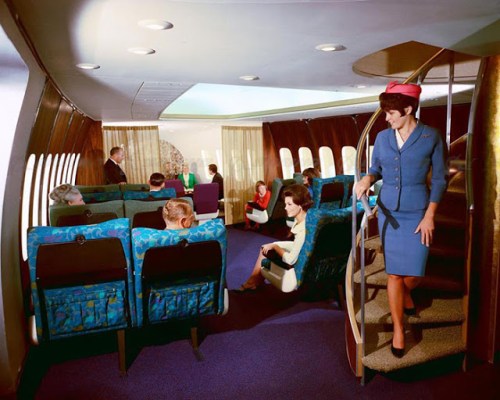
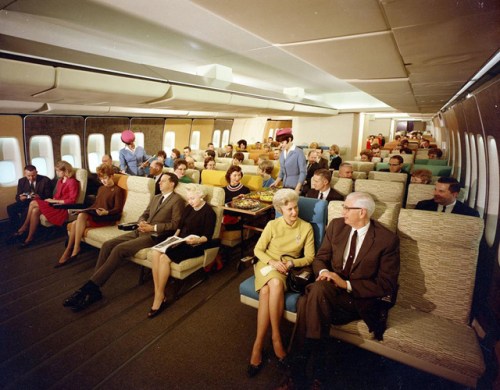
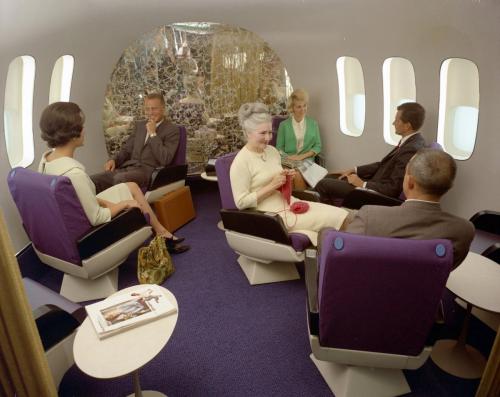
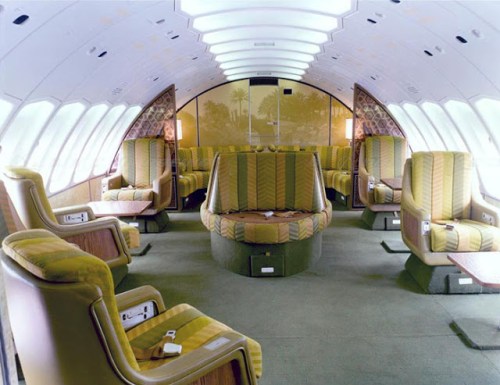
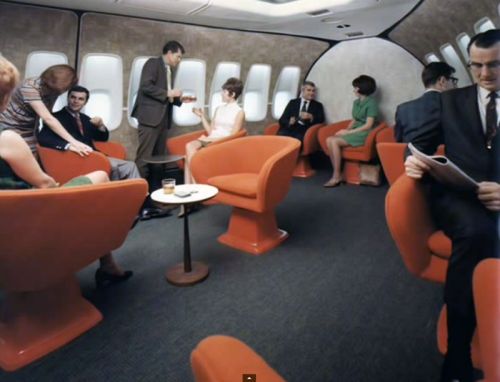
Sweet Jesus, when do we board? As horrid as flying is today, keep in mind that most of the luxury you see above was born of the early-’70s recession: airlines had to go all out to convince would-be customers to buy a plane ticket. (Almost all of these photos are of coach class. I left out the in-flight piano bar.) As flying became more affordable—mainly through the proliferation of credit cards—the amenities and leg room began to shrink.

That’s not to say corporate greed is not to blame. Airline executives have used post-9/11 security measures, many of which are certainly necessary, as cover to make air travel less comfortable while making bigger profits than ever before.

Also, to quote Henry J. Stern, the New York City Parks Commissioner in 1996, after he was pressured to remove “dangerous” monkey bars from neighborhood playgrounds: “In today’s litigious world, the children come to the playground with parents and the parents come with lawyers… Often, the parents are lawyers.” Hence the general shift from comfort—and fun—to “safety”.

(Images via Messy Nessy Chic, Travel Start, Sploid, and Vintage Everyday)

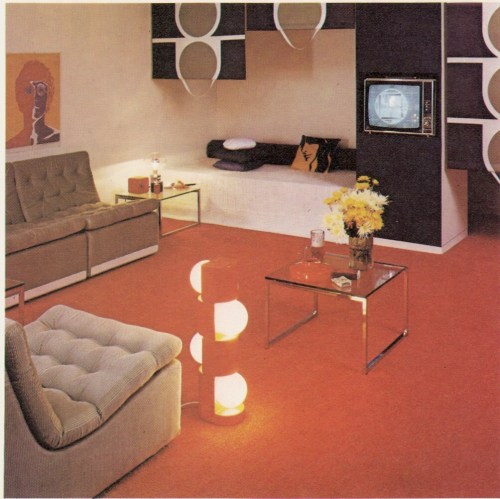
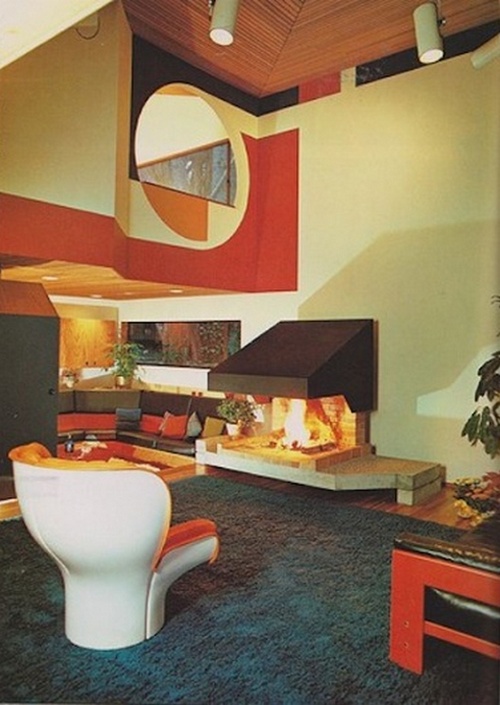
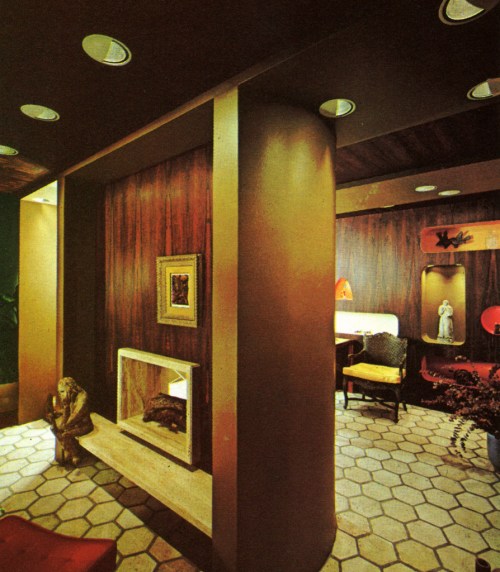
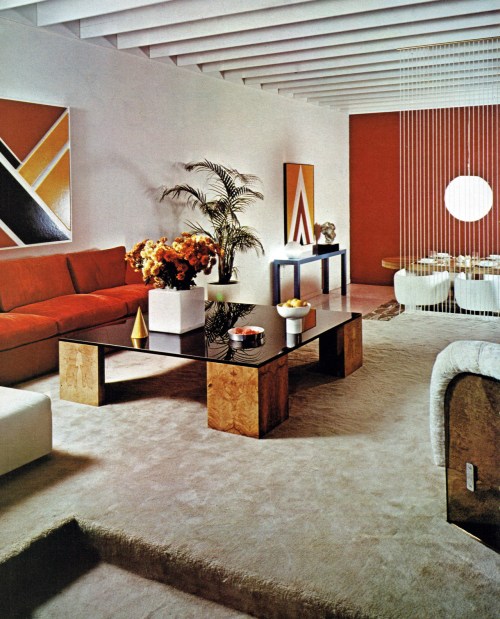
Real Living Rooms, 1971 – 1981

Living Room 1971-2

Living Room 1971-3

Living Room 1973-2

Living Room 1973-3

Living Room 1976

living room 1970s

Living Room 1976

Living Room 1978-2

Living Room 1978-3

Living Room 1981

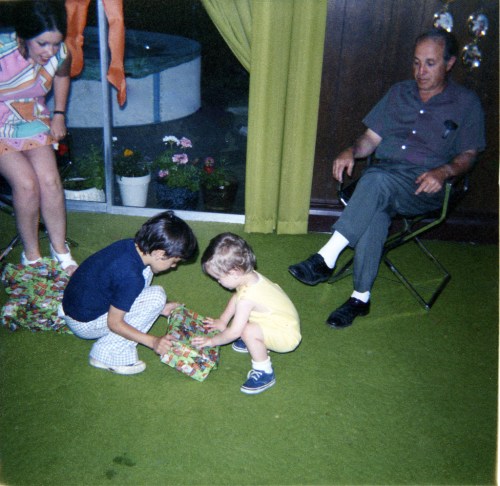
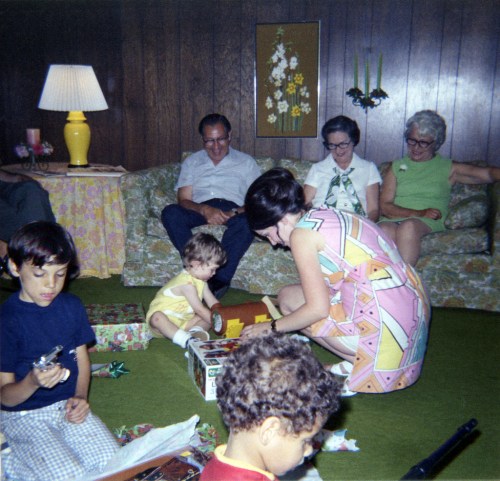
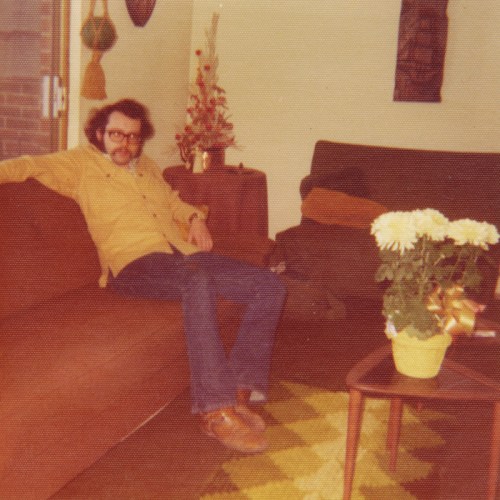
Some of these photos I’ve posted before in various categories. The others are from Kurt Clark and Michael Daddino. See here for more. Have a Pabst or two while you’re at it.

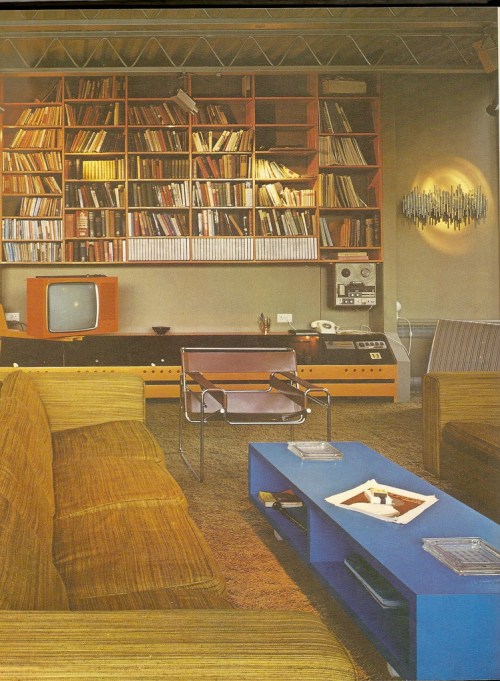
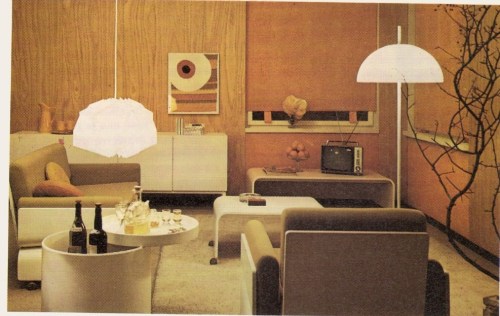
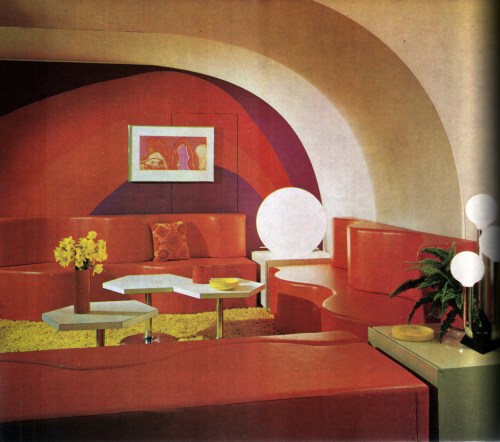
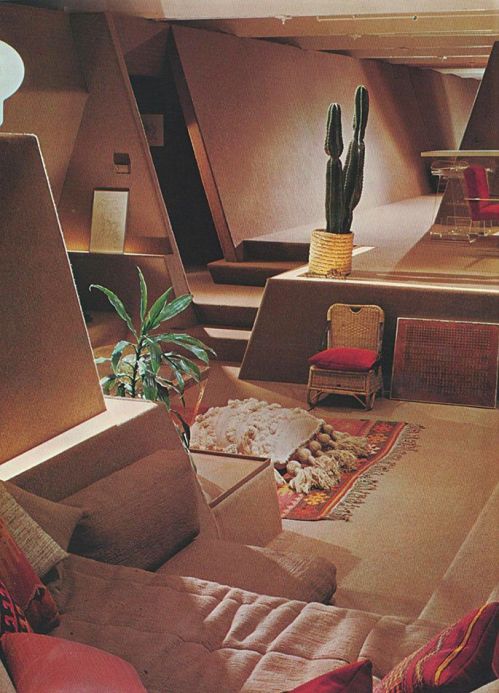
Living Room Design, 1970 – 1978

Living Room 70s

Living Room 70s-4

Living Room 70s-3

Living Room 1973

Living Room 70s-2

Living Room 70s-5

Living Room 1970

Living Room 1978

Living Room 1978

Next up is a series of real life living rooms.

(Images via Glen.H, 1970s Residential Design Pool, and Remarkably Retro)

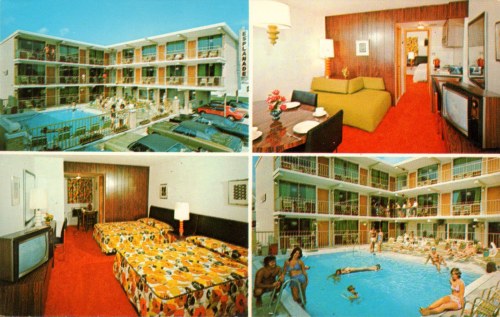
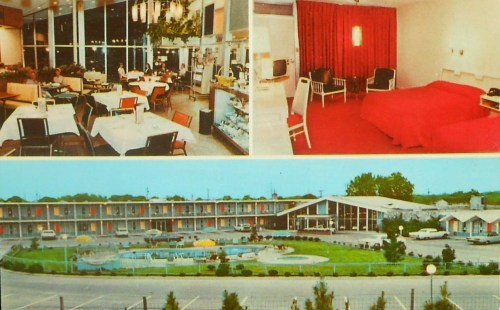
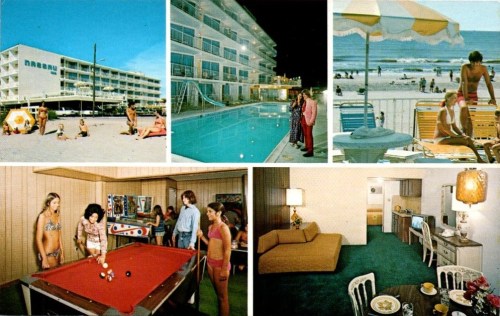
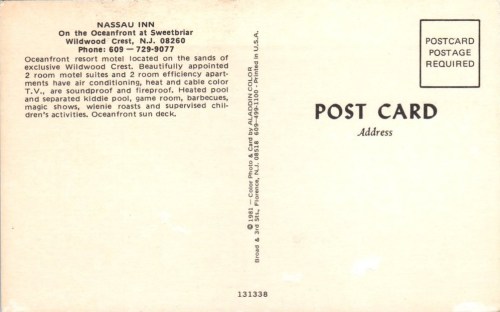
Motel Postcards, Circa 1972 – 1981

Motel Knights 1970s

Motel Knights 1970s-2

Motel Orleans 1970s

Motel Orleans 1970s-2

Motel Esplenade Wildwood 1970s

Motel Executive 1970s

Motel Holiday 1970s

Motel Holiday 1970s-2

Motel Wildwood 1981

Motel Wildwood 1981-2

The journey was once part of the vacation. Hell, the journey might have been the vacation.

There’s an arcade cabinet in the game room of the last postcard, but I can’t identify it. Paging Brad Conrad!

UPDATE (11/12/15) Tom at Garage Sale Finds nailed it. The game is Midway’s Stunt Pilot from 1971. The copyright date on the postcard is 1981, but clearly the photos are from the early ’70s.

Arcade Zen: Arnie’s Place, 1984

Arnie's Place 1984

Arnie's Place 1984-2Arnie's Place 1984-3

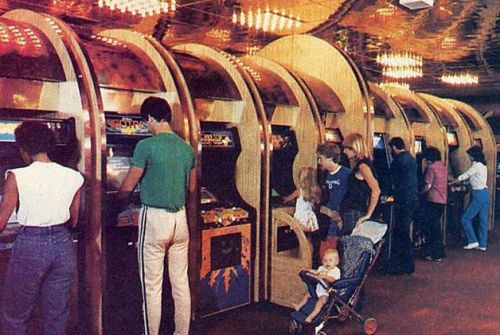
Photo and article are from Electronic Games (November, 1984). Arnold Kaye opened his “game room” in 1981, despite being refused a zoning permit by the puritanical city officials of Westport, Connecticut, and it closed in 1994, to the dismay of everyone who wasn’t a horse’s ass. One resident and father of four summed it up:

It really stinks that they forced him to close down… It’s one of the few places in town where kids can do something at night that doesn’t involve trouble. I always felt my kids were safe here.
But Kaye was tired of being harassed, and times were tough. “My threats got more and more bizarre as my frustrations grew,” he said. “All I wanted to do was provide a clean, wholesome environment for kids where they could play and have fun. I’ll always be proud of having done that.”

Kaye, a boisterous and inflexible personality, had chained himself to a Town Hall door in 1982 to protest “unfair treatment,” and in 1983 threatened to convert the arcade to a “porno movie theater” after the zoning commission didn’t approve an increase in games allowed inside the facility.

Kaye died in 2003. Thanks for fighting the good fight, Arnie.


Pages

Archives

Categories

Donate Button

Join 1,118 other subscribers